

Domain randomization for transferring deep neural networks from simulation to the real world
Open accessThe DOI matches its Crossref record; 71 of the 71 references it cites were found in a registry or an index; 8 of the 17 sources its claims cite were checked for support.
Abstract
Bridging the `reality gap' that separates simulated robotics from experiments on hardware could accelerate robotic research through improved data availability. This paper explores domain randomization, a simple technique for training models on simulated images that transfer to real images by randomizing rendering in the simulator. With enough variability in the simulator, the real world may appear to the model as just another variation. We focus on the task of object localization, which is a stepping stone to general robotic manipulation skills. We find that it is possible to train a real-world object detector that is accurate to 1.5 cm and robust to distractors and partial occlusions using only data from a simulator with non-realistic random textures. To demonstrate the capabilities of our detectors, we show they can be used to perform grasping in a cluttered environment. To our knowledge, this is the first successful transfer of a deep neural network trained only on simulated RGB images (without pre-training on real images) to the real world for the purpose of robotic control.
Overview
CoChat Summary
TL;DR
This paper introduces domain randomization: training an object detector on simulated RGB images with randomized rendering, textures, lighting, camera pose, and distractors so that the real world appears as another variation. The authors show that a detector trained only in simulation can localize objects in the real world accurately enough to grasp them in clutter.
Key findings
- Real-world object detectors trained only on simulated images localized objects to within about 1.5 cm on average, including with distractors and partial occlusions; per-object errors in Table I range from 0.6 ± 0.3 cm to 3.2 ± 5.8 cm depending on object and condition.
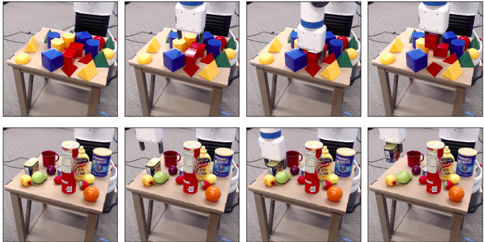
- The pipeline enabled a Fetch robot to detect and pick up the target object in 38 out of 40 trials in increasingly cluttered scenes, and a detector trained on a Spam can succeeded in 9 of 10 trials with previously unseen YCB food distractors.
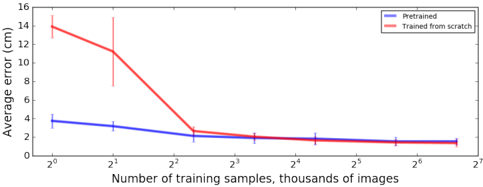
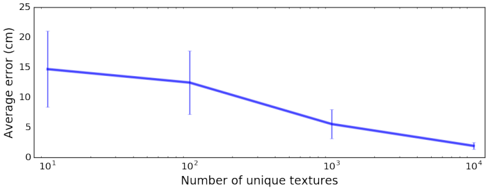
- Ablations found sensitivity to number of training images, number of unique textures, presence of distractors in training, and camera randomization; random noise had negligible effect. Performance improved up to around 50,000 training samples, and degraded significantly with fewer than 1,000 textures.
- ImageNet pretraining was not essential with enough data: random weight initialization achieved nearly the same real-world transfer performance as pretrained initialization, though pretraining helped in the low-data regime.
Methods
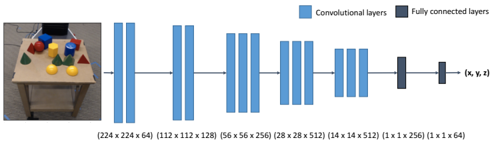
- The authors trained a modified VGG-16 convolutional neural network to map a single 224×224 monocular webcam image to Cartesian coordinates of object(s) of interest, using simulated images rendered by MuJoCo.
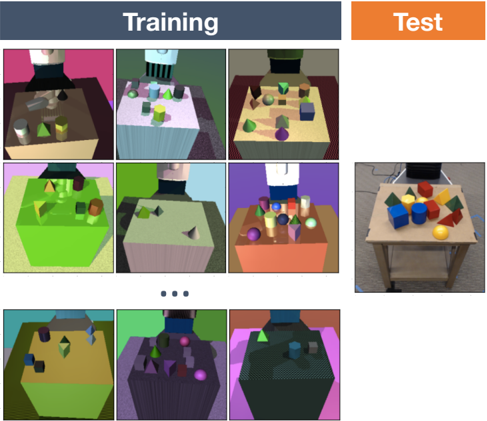
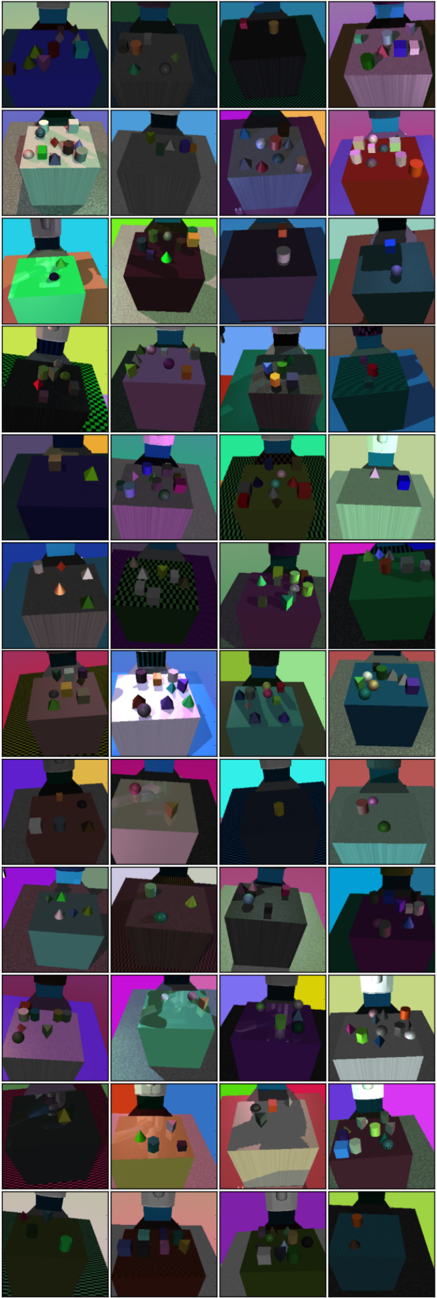
- Domain randomization varied number/shape of distractors, object positions and textures, table/floor/skybox/robot textures, camera position/orientation/field of view, number and properties of lights, and image noise. Textures were random RGB values, gradients, or checker patterns; 0–10 distractor objects were added per scene.
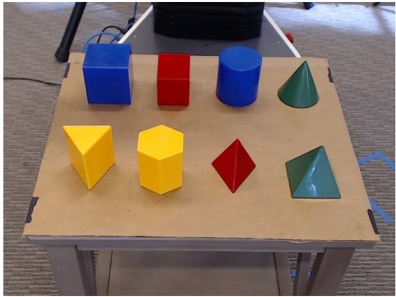
- Training used stochastic gradient descent with Adam on an L2 loss, learning rates around 1e-4, and batch sizes of 25, 50, or 100. Evaluation used 480 webcam images of eight geometric objects at 70–105 cm from a fixed camera, with 60 labeled images per object: 20 alone, 20 with distractors, and 20 partially occluded.
Limitations
- The paper states that the detectors still overfit simulated training data: simulated error was 0.3–0.5 cm versus about 1.5 cm in the real world, and no real-world validation could be done during training because no real data were assumed available.
- The paper states future work is needed for contact-rich manipulation or higher precision, and that the method fixes table height, effectively making the task 2D pose estimation from a single monocular uncalibrated camera.
- Evident from the text: evaluation is limited to eight geometric objects plus one Spam can, the test camera position remains constant across all images, and lighting and surrounding scene were not controlled.
Model-written summary. Check it against the paper before relying on it.
Integrity signals
Registry
Cites
Statistics
Figures
Verification
Claims the paper makes
2 Valid · 8 Not valid · 7 Not checked · 32 Own results and interpretations
The cited sources support only part of this claim — read each source’s verdict below.
In the paper
“Although previous work demonstrated the ability to perform robotic control using a neural network pretrained on ImageNet and fine-tuned on randomized rendered pixels [37], this paper provides the first demonstration that domain randomization can be useful for robotic tasks requiring precision.”
What the sources say
- Partly supportedcites [37] [37] Fereshteh Sadeghi and Sergey Levine. (cad) 2 RL: Real single-image flight without a single real image. arXiv preprint arXiv:1611.04201 , 2016. - sourceExperimental — accuracy not yet measured
The citation [37] is attached to the preceding claim about prior work, not to the citing authors’ claim that their own paper is the first to demonstrate precision robotics. Section 3.1 (p. 4) says LSDA pretrains a CNN on ImageNet classification data and fine-tunes it, but for object detection. It does not report robotic control or fine-tuning on randomized rendered pixels. (LLM, conf=0.84)
boostedstates a cause- Asserted: passes — The authors put it forward as true.
- Checkable: passes — It can be checked against evidence.
- Load-bearing: passes — The paper’s conclusions depend on it.
- Based: passes — The paper gives a reason why it holds.
- Partly supported
The cited sources that could be checked couldn’t confirm or dispute this claim.
In the paper
“Rather than relying on controller robustness, Yu et al. [53] use a model trained on varied physics to perform system identification using online trajectory data, but their approach is not shown to succeed in the real world.”
What the sources say
- Could not verifycites [53] [53] Wenhao Yu, C Karen Liu, and Greg Turk. Preparing for the unknown: Learning a universal policy with online system identification. arXiv preprint arXiv:1702.02453 , 2017. - sourceExperimental — accuracy not yet measured
The cited paper discusses image classification and localisation with convolutional networks (A.1, p. 10; A.2, p. 11), not Yu et al.'s approach. Searches for varied-physics training, online trajectory-based system identification, and real-world success found no passage addressing the claim. Our copy therefore cannot verify it. (LLM, conf=0.78)
plain- Asserted: passes — The authors put it forward as true.
- Checkable: passes — It can be checked against evidence.
- Load-bearing: unclear — It is unclear whether the paper’s conclusions depend on it.
- Based: passes — The paper gives a reason why it holds.
- Could not verify
The cited sources that could be checked couldn’t confirm or dispute this claim.
In the paper
“Though using realistic RGB rendering alone has had limited success for transferring to real robotic tasks [16], incorporating realistic simulation of depth information can allow models trained on rendered images to transfer reasonably well to the real world [32].”
What the sources say
- Could not verifycites [16] [16] Stephen James and Edward Johns. 3d simulation for robot arm control with deep q-learning. arXiv preprint arXiv:1609.03759 , 2016. - sourceExperimental — accuracy not yet measured
The Introduction (§1) and Conclusion (§8) describe Adam as a method for stochastic optimization, while the CNN experiment (§6.3) concerns training on image datasets. Searches for realistic RGB rendering and sim-to-real robotic transfer found no passage addressing whether RGB rendering alone has had limited success on real robotic tasks. (LLM, conf=0.78)
plain- Asserted: passes — The authors put it forward as true.
- Checkable: passes — It can be checked against evidence.
- Load-bearing: passes — The paper’s conclusions depend on it.
- Based: passes — The paper gives a reason why it holds.
- Could not verify
The cited sources that could be checked couldn’t confirm or dispute this claim.
In the paper
“However, their experiments - collision avoidance in hallways and open spaces - do not demonstrate the ability to deal with high-precision tasks.”
What the sources say
- Could not verifycites [37] [37] Fereshteh Sadeghi and Sergey Levine. (cad) 2 RL: Real single-image flight without a single real image. arXiv preprint arXiv:1611.04201 , 2016. - sourceExperimental — accuracy not yet measured
The Experiments section (p. 5) evaluates LSDA on an object-detection dataset, not Sadeghi and Levine’s collision-avoidance experiments. Searches for Sadeghi and Levine, hallway or open-space collision avoidance, and high-precision tasks found no passage addressing the claim. (LLM, conf=0.76)
plain- Asserted: passes — The authors put it forward as true.
- Checkable: passes — It can be checked against evidence.
- Load-bearing: passes — The paper’s conclusions depend on it.
- Based: passes — The paper gives a reason why it holds.
- Could not verify
A result the paper reports from its own data — it cites no other source for it, so there is none to check. The quote shows it is in the paper.
In the paper
“However, using a pre-trained model can significantly improve performance when less training data is used.”
plainstates a cause- Asserted: passes — The authors put it forward as true.
- Checkable: passes — It can be checked against evidence.
- Load-bearing: unclear — It is unclear whether the paper’s conclusions depend on it.
- Based: passes — The paper gives a reason why it holds.
29 more claims
Create a free account to see all 49 claims and to verify the 7 references still open.
- Probably not a substantial claim. 11
- It may state two separate claims as one. 8
Claims other papers make about this one
Each is checked against this paper’s own text: does it say what the citing paper says it does?
The source backs part of the claim, not all of it — or backs it for a different population, condition or comparison.
In the citing paper
“Most policies trained in simulation generalize poorly to the real-world due to agents adapting to specific visual details of the simulator.”
From Language-Based Augmentation to Address Shortcut Learning in Object-Goal Navigation (2023) · cites this paper as [8]
Experimental — accuracy not yet measuredThe source backs part of the claim, not all of it — or backs it for a different population, condition or comparison.
In the citing paper
“In robotic vision tasks including object localization [53], object detection [54], pose estimation [55], and semantic segmentation [56], the training data from simulator always have different textures, lighting, and camera positions from the realistic environments.”
From Sim-to-Real Transfer in Deep Reinforcement Learning for Robotics: a Survey (2020) · cites this paper as [53]
Experimental — accuracy not yet measuredThe source backs part of the claim, not all of it — or backs it for a different population, condition or comparison.
In the citing paper
“These artifacts limit the applicability of generative videos in physics-sensitive domains such as robotics [25,26], autonomous driving [27], simulationbased design, and scientific visualization [28].”
From PhyStruct-Video: Structured Physics State Spaces for Physically Consistent Video Generation (2025) · cites this paper as [25]
Experimental — accuracy not yet measuredThe source backs part of the claim, not all of it — or backs it for a different population, condition or comparison.
In the citing paper
“In domain randomization, the inputs during learning are “randomized” in the sense of being warped or corrupted in particular ways.”
From The overfitted brain: Dreams evolved to assist generalization (2021) · cites this paper as [144]
Experimental — accuracy not yet measuredThe source backs part of the claim, not all of it — or backs it for a different population, condition or comparison.
In the citing paper
“Domain randomization is a domain generalization technique that introduces drastic changes in the training image appearances, which forces the network to learn domain-invariant features between training and target domains [39].”
From A Fully Differentiable Framework for 2D/3D Registration and the Projective Spatial Transformers (2024) · cites this paper as [39]
Experimental — accuracy not yet measured
8 more claims about this paper
Create a free account to see every claim other papers make about this one.
Self-check
Percentages, sums and reported differences re-computed from the paper’s own numbers.
Each contradiction between two passages listed here was confirmed by an independent check.
Rated minor: it would not touch a result — a value no result rests on, a p-value that stays on the same side of the significance level, or a conflict that is clerical, resolved elsewhere in the paper, or outside its own findings.
In the paper
§ A. Experimental Setup · p. 4
“Each training sample consists of (a) a rendered image of the object and one or more distractors (also from among the geometric object set) on a simulated tabletop”
§ A. Domain randomization · p. 4
“Between 0 and 10 distractor objects are added to the table in each scene.”
Citations
Cites
Very Deep Convolutional Networks for Large-Scale Image Recognition
Simonyan, K., & Zisserman, A. (2014) · arXiv · doi:10.48550/arxiv.1409.1556 · Cited by 114,148 · cited 1×
“In particular, we use a modified version the VGG-16 architecture [42] shown in Figure 2.”
MethodAdam: A Method for Stochastic Optimization
Kingma, D. P., & Ba, J. (2014) · arXiv · doi:10.48550/arxiv.1412.6980 · Cited by 98,946 · cited 1×
“We found that using a learning rate of around 1e − 4 (as opposed to the standard 1e − 3 for Adam) improved convergence and helped avoid a common local optimum, mapping all objects to the center of the table.”
MethodLeCun, Y., Bengio, Y., & Hinton, G. (2015) · Nature · doi:10.1038/nature14539 · Cited by 84,126
Human-level control through deep reinforcement learning
Mnih, V., Kavukcuoglu, K., Silver, D., Rusu, A. A., Veness, J., Bellemare, M. G., Graves, A., Riedmiller, M., Fidjeland, A. K., Ostrovski, G., et al. (2015) · Nature · doi:10.1038/nature14236 · Cited by 30,357 · cited 3×
“Learning in simulation is especially promising for building on recent results using deep reinforcement learning to achieve human-level performance on tasks like Atari [27] and robotic control [21], [38].”
BackgroundResultHow transferable are features in deep neural networks?
Yosinski, J., Clune, J., Bengio, Y., & Lipson, H. (2014) · arXiv · doi:10.48550/arxiv.1411.1792 · Cited by 6,061 · cited 1×
“A variety of approaches have been proposed, including re-training the model in the target domain (e.g., [52]), adapting the weights of the model based on the statistics of the source and target domains (e.g., [22]), learning invariant features between domains (e.g., [47]), and learning a mapping…”
BackgroundMuJoCo: A physics engine for model-based control
Todorov, E., Erez, T., & Tassa, Y. (2012) · 2012 IEEE/RSJ International Conference on Intelligent Robots and Systems · doi:10.1109/iros.2012.6386109 · Cited by 4,767 · cited 1×
“We render images using the MuJoCo Physics Engine’s [45] built-in renderer.”
MethodTrust region policy optimization
Schulman, J., Levine, S., Moritz, P., Jordan, M. I., & Abbeel, P. (2015) · arXiv · doi:10.48550/arxiv.1502.05477 · Cited by 4,578 · cited 1×
“Learning in simulation is especially promising for building on recent results using deep reinforcement learning to achieve human-level performance on tasks like Atari [29] and robotic control [26], [41].”
ResultSelf-citationLearning Transferable Features with Deep Adaptation Networks
Long, M., Cao, Y., Wang, J., & Jordan, M. I. (2015) · arXiv · doi:10.48550/arxiv.1502.02791 · Cited by 4,505 · cited 1×
“omputer vision community has devoted significant study to the problem of adapting vision-based models trained in a source domain to a previously unseen target domain (see, e.g., [9], [14], [15], [19], [23], [25], [51]). A variety of approaches have been proposed, including re-training the model in the target domain (e.…”
BackgroundEnd-to-End Training of Deep Visuomotor Policies
Levine, S., Finn, C., Darrell, T., et al. (2015) · Journal of machine learning research · doi:10.5555/2946645.2946684 · Cited by 3,987
Describing Textures in the Wild
Cimpoi, M., Maji, S., Kokkinos, I., Mohamed, S., & Vedaldi, A. (2014) · 2014 IEEE Conference on Computer Vision and Pattern Recognition · doi:10.1109/cvpr.2014.461 · Cited by 2,438 · cited 1×
“To examine how our detectors would perform on objects with complex textures, we created simulated scenes in which the object of interest is given a texture from the Describable Textures Dataset (DTD) [4].”
Method
Research works printed but not linked: 3
- [24] David G Lowe. Three-dimensional object recognition from single two-dimensional images. Artificial intelligence , 31(3):355-395, 1987. -
- [49] Melonee Wise, Michael Ferguson, Derek King, Eric Diehr, and David Dymesich. Fetch and freight: Standard platforms for service robot applications. In Workshop on Autonomous Mobile Service Robots , 2016. -
- sucan, 0, MoveIt!
Cited by
Items 2,001–2,100 of 2,970
Adversarial robustness of deep reinforcement learning
Qu, X. (2021) · DR-NTU (Nanyang Technological University) · doi:10.32657/10356/154587 · Cited by 2
Simulation to reality and back: A robot's guide to crossing the reality gap
Collins, J. T. (2022) · Queensland University of Technology · doi:10.5204/thesis.eprints.230537 · Cited by 4
Indoor Synthetic Data Generation: A Systematic ReviewPreprint
Schieber, H., Demir, K. C., Kleinbeck, C., Yang, S. H., & Roth, D. (2023) · SSRN Electronic Journal · doi:10.2139/ssrn.4528507 · Cited by 2
Machine Learning Meets Advanced Robotic ManipulationPreprint
Nahavandi, S., Alizadehsani, R., Nahavandi, D., Lim, C. P., Kelly, K., & Bello, F. (2023) · SSRN Electronic Journal · doi:10.2139/ssrn.4587790 · Cited by 2
Self-built dataset for better generalization in point cloud registration
Wang, Q., Liang, H., Xu, J., Tu, B., Chen, P., Huang, Y.-T., & Xing, J. (2025) · Scientific Data · doi:10.1038/s41597-025-04897-x · Cited by 2
“However, for LiDAR sensors, there are obvious cross domain factors such as radar resolution, range of action, acquisition environment and other factors 3–5 , which definitely lead to a notable generalization degradation of the network 6 .”
DRIPS: Domain Randomisation for Image-based Perivascular space SegmentationPreprint
Bitar, L., Diaz, M., Coello, R. D., Hernández, M. V., Mattern, H., Neumann, K., Pfister, M., Dongmo, C., Beck, C., Mai, T. H., et al. (2025) · medRxiv · doi:10.1101/2025.10.22.25337423 · Cited by 3
Golemo, F. (2018) · theses.fr (ABES) · doi:10.70675/d4395fe3z9853z4cf5za781zf746f7e0da47 · Cited by 7
Generalization through Diversity: Improving Unsupervised Environment Design
Li, W., Varakantham, P., & Li, D. (2023) · arXiv · Cited by 3
No Regrets: Investigating and Improving Regret Approximations for Curriculum Discovery
Rutherford, A., Beukman, M., Willi, T., Lacerda, B., Hawes, N., & Foerster, J. (2024) · arXiv · doi:10.48550/arxiv.2408.15099 · Cited by 2
Generalization through Diversity: Improving Unsupervised Environment Design
Li, W., Varakantham, P., & Li, D. (2023) · Proceedings of the Thirty-Second International Joint Conference on Artificial Intelligence · doi:10.24963/ijcai.2023/601 · Cited by 3
Enhancing Pseudo Label Quality for Semi-supervised Domain-Generalized Medical Image Segmentation
Yao, H., Hu, X., & Li, X. (2022) · Proceedings of the AAAI Conference on Artificial Intelligence · doi:10.1609/aaai.v36i3.20217 · Cited by 84
“Existing DG methods can be categorized into three classes: representation learning (Zhou et al. 2020), learning strategy design (Yeo, Kar, and Zamir 2021), and data manipulation (Tobin et al. 2017).”
BackgroundMethodStRDAN: Synthetic-to-Real Domain Adaptation Network for Vehicle Re-Identification
Lee, S., Park, E., Yi, H., & Lee, S. H. (2020) · IEEE/CVF Conference on Computer Vision and Pattern Recognition Workshops (CVPRW) · doi:10.1109/cvprw50498.2020.00312 · Cited by 50
Agarwal, A., Veer, S., Ren, A. Z., & Majumdar, A. (2022) · Proceedings - IEEE International Conference on Robotics and Automation/Proceedings · doi:10.1109/icra46639.2022.9811565 · Cited by 4
“, object textures, friction properties, and lighting conditions [8]–[12], or generating new objects for manipulation by combining different shape primitives [13].”
BackgroundTrajectory-based Split Hindsight Reverse Curriculum Learning
Wu, J., Zhang, D., Zhong, S., & Qiao, H. (2021) · IEEE/RSJ International Conference on Intelligent Robots and Systems (IROS) · doi:10.1109/iros51168.2021.9636842 · Cited by 2
“Based on domain randomization [26] [27], we add noise to the object size and position on task 2.”
MethodLearning-Based Synthesis of Robust Linear Time-Invariant Controllers
Beaudoin, M.-A., & Boulet, B. (2022) · IEEE Transactions on Intelligent Vehicles · doi:10.1109/tiv.2022.3174029 · Cited by 1
“Domain randomization [4], [5] is often used to increase robustness.”
MethodDomain Adaptation for 6-DoF Pose Estimation: Deep Learning with Uncertainty
Hashimoto, S., Hirano, D., Higuchi, H., Fujimoto, K., Ito, M., Iizuka, S., Sugimoto, Y., Proffitt, R., Kobayashi, Y., & Ishihama, N. (2022) · IEEE Aerospace Conference (AERO) · doi:10.1109/aero53065.2022.9843646 · Cited by 5
GUILD - A Generator for Usable Images in Large-Scale Datasets
Roch, P., Nejad, B. S., Handte, M., & Marrón, P. J. (2022) · Lecture notes in computer science · doi:10.1007/978-3-031-20716-7_19 · Cited by 1
Bildverarbeitung in der Automation: Ausgewählte Beiträge des Jahreskolloquiums BVAu 2022
Lohweg, V. (2023) · Technologien für die intelligente Automation · doi:10.1007/978-3-662-66769-9 · Cited by 2
Using Neural Network to Optimize Bin-Picking in the SME Manufacturing Digital Transformation
Juhe, P., & Dossou, P.-E. (2023) · Lecture notes in networks and systems · doi:10.1007/978-3-031-38333-5_16 · Cited by 1
Autonomous Stair Ascending and Descending by Quadruped Wheelchairs
Akamisaka, A., & Nagao, K. (2023) · International Conference on Ubiquitous Robots (UR) · doi:10.1109/ur57808.2023.10202377 · Cited by 1
“In addition, research attempting to achieve all gait acquisition in a learning-based manner [24,25] and research to adapt policies acquired in a simulator to the real world [26-28] have recently become popular.”
BackgroundMulti-Agent Chronological Planning with Model-Agnostic Meta Reinforcement Learning
Hu, C., Xu, K., Zhu, Z., Qin, L., & Yin, Q. (2023) · Applied Sciences · doi:10.3390/app13169174 · Cited by 2
“As MADDPG is not specifically defined for multiple tasks, we introduce Domain Randomization [54,55] and provide MADDPG diverse training data from different tasks to improve its generalization (referred to as DR).”
MethodXu, Y., Pu, Z., Cai, Q., Li, F., & Chai, X. (2023) · Lecture notes in computer science · doi:10.1007/978-3-031-44223-0_5 · Cited by 1
Evolutionary Machine Learning in Robotics
Medvet, E., Nadizar, G., Pigozzi, F., & Salvato, E. (2023) · Genetic and evolutionary computation · doi:10.1007/978-981-99-3814-8_23 · Cited by 3
KI-Anwendungsfälle in der Produktion
Wagner, P., Nagel, T., Hennebold, C., Huber, M. F., & Kraus, W. (2023) · Springer eBooks · doi:10.1007/978-3-662-58532-0_167 · Cited by 3
Kobayashi, R., & Nagai, T. (2023) · Annual Conference of the Society of Instrument and Control Engineers (SICE) · doi:10.23919/sice59929.2023.10354136 · Cited by 1
“Domain randomization [11] is used in Step2 that the simulation is utilized in teacher data generation, and color data augmentation [12] is adopted in Step3 that real images are used as teacher data.”
MethodCross-domain fusion and embedded refinement-based 6D object pose tracking on textureless objects
Wang, J., Duan, G., Wang, Y., Yi, G., Dong, L., Wang, Z., Zhang, X., & Zhang, S. (2024) · Journal of Intelligent Manufacturing · doi:10.1007/s10845-023-02316-9 · Cited by 4
“The incorporation of data augmentation further bridges the domain gap between the synthetic and real images, specifi-cally including random Gaussian noise, Gaussian blur, and HSVshift Tobin et al. (2017).”
Motion-Based Domain Randomization for Detecting Honey Bees Inside a Hive
Ho, C.-H., Gilchrist, I. R., Amponsah, K. A., et al. (2024) · Electronic Imaging · doi:10.2352/ei.2024.36.8.image-240 · Cited by 1
Rashed, M., Bakr, M. H., & ElMoaqet, H. (2024) · Mediterranean Conference on Control and Automation (MED) · doi:10.1109/med61351.2024.10566189 · Cited by 1
“Addressing this shift traditionally involves domain randomization, where simulation parameters undergo extensive variations to broaden the synthetic data distribution [5].”
BackgroundZero-One Attack: Degrading Closed-Loop Neural Network Control Systems using State-Time Perturbations
Bak, S., Bogomolov, S., Hekal, A., Krish, V., Mata, A., & Rahmati, A. (2024) · ACM/IEEE International Conference on Cyber-Physical Systems (ICCPS) · doi:10.1109/iccps61052.2024.00008 · Cited by 2
“[9], [37] The closest works to ours have specifically sought to estimate expected behavior of RL systems in response to action delays.”
BackgroundMobile Robot based Personalized Thermal Comfort Scheme
Kim, H., Kim, G., Jain, A., & Lee, D. (2024) · International Conference on Ubiquitous Robots (UR) · doi:10.1109/ur61395.2024.10597472 · Cited by 1
“To mitigate the Reality Gap, we plan to apply techniques like Generalized Force Mode (GFM) [28] and Domain Randomization [29].”
MethodWang, J., Xie, L., Xie, Y., Huang, S., & Li, Y. (2024) · IEEE Journal of Selected Topics in Signal Processing · doi:10.1109/jstsp.2024.3434498 · Cited by 5
“Possible domain shift could also be simulated by enhancing the diversity of data based on some data augmentations techniques [28], by generating data in an adversarial manner [7], [29], [30], or by constructing sample interpolation [31], [32].”
Bapat, N. U., Paffenroth, R. C., & Cowlagi, R. V. (2024) · Proceedings of the ... American Control Conference/Proceedings of the American Control Conference · doi:10.23919/acc60939.2024.10644306 · Cited by 1
“Simulations are repeatedly performed with randomization of inputs and parameters with the intent of emulating real-world variability [4].”
BackgroundEmbodied Runtime Monitoring of Learning-enabled Robot Perception Components
Nair, D., Panchangam, S., Olivares-Méndez, M. A., & Hochgeschwender, N. (2024) · IEEE International Conference on Automation Science and Engineering (CASE) · doi:10.1109/case59546.2024.10711844 · Cited by 1
“This domain randomization aids the transfer of knowledge from the simulation to the real world [28].”
BackgroundAnomalous State Sequence Modeling to Enhance Safety in Reinforcement Learning
Kweider, L., Kassem, M. A., & Sandouk, U. (2024) · IEEE Access · doi:10.1109/access.2024.3486549 · Cited by 1
“Notable contributions in this area include the works by [24], [26], [27], and [28].”
BackgroundSabbella, S. R., Serrarens, P. R., Leotta, F., et al. (2024) · IEEE RO-MAN · doi:10.1109/ro-man60168.2024.10731179 · Cited by 1
“While large datasets are crucial for training high-performing machine learning models, the quality of the data and domain randomization significantly impact the model’s ability to generalize to real-world scenarios [17].”
BackgroundSynthetic training data bias in instance segmentation algorithms
Schreiber, L. R., Tarant, Y. E., & Franke, K. (2024) · SPIE Conference on Artificial Intelligence for Security and Defence Applications · doi:10.1117/12.3030822 · Cited by 1
Interactive Simulator Framework for XAI Applications in Aquatic Environments
Elsayed, A. H., El-Mihoub, T. A., Manss, C., Miedtank, A., Nolle, L., & Stahl, F. T. (2024) · Lecture notes in computer science · doi:10.1007/978-3-031-77915-2_11 · Cited by 3
Mitigating Adversarial Perturbations for Deep Reinforcement Learning via Vector Quantization
Luu, T. M., Nguyen, T., Tee, J. T. J., Kim, S., & Yoo, C. D. (2024) · IEEE/RSJ International Conference on Intelligent Robots and Systems (IROS) · doi:10.1109/iros58592.2024.10802066 · Cited by 6
“Domain randomization, as proposed in [45], aims to transfer policies from simulators to the real world.”
Synthetic Datasets for Hand Gesture Recognition
Dhulipala, P. V., Oncken, S., Claypool, S., & Kalafatis, S. (2025) · Lecture notes in electrical engineering · doi:10.1007/978-981-97-4780-1_3 · Cited by 1
Böhmer, M., Massler, P., Kühnel, S., Damarowsky, J., & Sackmann, S. (2025) · Behaviour and Information Technology · doi:10.1080/0144929x.2025.2463578 · Cited by 5
Robot Vision-Based Autonomous Navigation Method Using Sim2Real Domain Adaptation
Zhang, M., Duan, S., & Xu, C. (2024) · IEEE International Symposium on Parallel and Distributed Processing with Applications (ISPA) · doi:10.1109/ispa63168.2024.00161 · Cited by 3
“In existing work, researchers have also proposed Domain Randomization [10], [11], [12], which introduces randomness into the simulation to approximate the complexity of the real world and improve the physical reality of the simulation environment, including more accurate physical engines and sensor…”
Language-Based Augmentation to Mitigate Shortcut Learning in Object-Goal Navigation
Hoftijzer, D., Burghouts, G. J., & Spreeuwers, L. (2025) · International Journal of Semantic Computing · doi:10.1142/s1793351x25410077 · Cited by 1
Vision-Based Indoor UAV Navigation with Deep Reinforcement Learning
Guo, Y., Tang, L., Zhou, X., Zhang, J., & Chen, L. (2025) · Lecture notes in electrical engineering · doi:10.1007/978-981-96-3572-6_11 · Cited by 1
Learn to Adapt: A Policy for History-Based Online Adaptation
Farkas, P., Szőke, L., Aradi, S., & Bécsi, T. (2025) · IEEE Transactions on Emerging Topics in Computational Intelligence · doi:10.1109/tetci.2025.3552696 · Cited by 1
Synthetic Images Impact in Parking Spot Classification using Neural Networks
Cardoso, E. E., & de Almeida, P. R. L. (2025) · Anais do Computer on the Beach · doi:10.14210/cotb.v16.p113-120 · Cited by 1
“One way to address the lack of data is through the use of synthetic data [7, 8].”
InfluentialLiu, C., Cao, Y., & Zhu, H. (2025) · IEEE Journal of Biomedical and Health Informatics · doi:10.1109/jbhi.2025.3578079 · Cited by 2
VisualSimBoat: A High-Fidelity Visual Simulator for Autonomous Surface Vehicles
Salgado, A., Guerra, R. P. D. O., Vasconcellos, E. C., Gonçalves, L. M. G., & Clua, E. (2025) · Brazilian Conference on Robotics (CROS) · doi:10.1109/cros66186.2025.11066127 · Cited by 1
“Testing and validating AI models for USVs in real-world scenarios is often impractical due to high operational costs, safety concerns, and the difficulty of replicating specific environmental conditions [2].”
Temporal modeling for domain-invariant fault diagnosis in robotics digital twin systems
Kumar, P. (2026) · Intelligent Service Robotics · doi:10.1007/s11370-025-00684-0 · Cited by 1
“In robotics, Tobin et al. [25] applied domain randomization for sim-to-real transfer in vision-based tasks, and James et al. [26] proposed randomized-to-canonical adaptation for robotic grasping.”
CODA: Temporal Domain Generalization via Concept Drift Simulator
Chang, C.-Y., Chuang, Y.-N., Jiang, Z., et al. (2025) · ACM SIGKDD Conference on Knowledge Discovery and Data Mining (KDD) · doi:10.1145/3711896.3736883 · Cited by 1
“, randomization, and transformation) (Tobin et al., 2017; Tremblay et al., 2018) and diverse data generation (Liu et al.”
Chen, Q., Wu, K., Zhong, Y., Li, W., & Wang, M. (2025) · Robotica · doi:10.1017/s0263574725102038 · Cited by 4
“To mitigate this gap, techniques such as domain adaptation (DA) [11] and domain randomization (DR) [12] are frequently employed.”
A Random Convolution based Adversarial Data Augmentation for Single-Source Domain Generalization
Zhang, P., Gu, Z., Su, X., Lin, J., & Zheng, H. (2025) · Chinese Control and Decision Conference (CCDC) · doi:10.1109/ccdc65474.2025.11090773 · Cited by 1
Nagel, M., Hedrich, K., Melchert, N. F., Hinz, L., & Reithmeier, E. (2025) · Computers · doi:10.3390/computers14080341 · Cited by 2
“Domain Randomization, on the other hand, seeks to create synthetic environments so varied that the real scene can be considered simply another instance within this variation [18–20].”
End-to-end Reinforcement Learning for Autonomous Racing: Bridging the sim-to-real gap
Budai, C., Széles, T., Németh, B., & Gáspár, P. (2025) · Proceedings of the ... American Control Conference/Proceedings of the American Control Conference · doi:10.23919/acc63710.2025.11107738 · Cited by 2
“This is called the sim-to-real gap [8], which can be handled with different methods, such as real-world fine-tuning, training with disturbances, domain adaptation, and domain randomization [9].”
Comparative Benchmark of Sampling-Based and DRL Motion Planning Methods for Industrial Robotic Arms
Astorquia, I. F., Villate-Castillo, G., Tellaeche, A., & Vázquez, J. I. (2025) · Sensors · doi:10.3390/s25175282 · Cited by 6
“Solutions such as domain randomization [51], privileged training, and fine-tuning with real-world demonstrations have been proposed to mitigate these challenges, but their deployment in time-constrained manufacturing setups remains an open problem [52].”
Gomes, V. B., Marchesi, B., Gruber, Y. A., Lippmann, L., Scremin, M., & Nassu, B. T. (2025) · Journal of Control Automation and Electrical Systems · doi:10.1007/s40313-025-01204-2 · Cited by 1
“To aid the synthetic-to-real transfer of machine learning models, we employ domain randomization (Tobin et al., 2017), generating highly varied synthetic samples.”
Liu, Y., Kang, D., & Ha, S. (2025) · Proceedings - IEEE International Conference on Robotics and Automation/Proceedings · doi:10.1109/icra55743.2025.11128687 · Cited by 1
“Utilizing domain randomization [30] for effective Sim2Real Transfer, we generate diverse simulated settings randomly sampled at the beginning of each training episode.”
Embodied AI: Bridging Simulation and Reality in Robotics
Xu, P. (2025) · International Symposium on Robotics, Artificial Intelligence and Information Engineering (RAIIE) · doi:10.1109/raiie65740.2025.11140070 · Cited by 3
“Domain randomization (DR) [5] has emerged as a dominant strategy for sim-to-real transfer, following the seminal work by Tobin et al. [5], which demonstrated successful vision-based grasping policy transfer by randomizing textures, lighting, and camera parameters.”
InfluentialYang, M., Cao, H., Zhao, L., Zhang, C., & Chen, Y. (2025) · Proceedings - IEEE International Conference on Robotics and Automation/Proceedings · doi:10.1109/icra55743.2025.11128837 · Cited by 3
“For sensing discrepancies, since Tobin et al. [15] first introduce domain randomization, it is widely used in simple and stationary environments [16]–[18].”
Deep Reinforcement Learning for Coordinated Payload Transport in Biped-Wheeled Robots
Mehta, D. K., Joglekar, A., & Krovi, V. (2025) · Proceedings - IEEE International Conference on Robotics and Automation/Proceedings · doi:10.1109/icra55743.2025.11127939 · Cited by 1
“In order to facilitate a zero-shot Sim2Real transfer, domain randomization can significantly improve the training quality [21].”
Han, C., Park, S., & Woo, J. (2025) · Journal of Marine Science and Engineering · doi:10.3390/jmse13091727 · Cited by 1
Weihsbach, C., Kruse, C., Bigalke, A., & Heinrich, M. P. (2025) · Sensors · doi:10.3390/s25175603 · Cited by 8
“In such a limited case domain generalization techniques can be used to optimize the model performance for ‘any’ unseen out-of-distribution sample [7, 8, 9, 10, 11, 12, 13, 14, 15, 16].”
Learning to Drive from a World Model
Goff, M., Hogan, G., Hotz, G., Locmaria, A. D. P., Raczy, K., Schäfer, H., Shihadeh, A., Zhang, W., & Yousfi, Y. (2025) · IEEE/CVF Conference on Computer Vision and Pattern Recognition Workshops (CVPRW) · doi:10.1109/cvprw67362.2025.00184 · Cited by 15
A Generalist Agent Learning Architecture for Versatile Quadruped Locomotion
Chen, Y., Song, R., Sheng, J., Fang, X., Tan, W., Li, Y., & Zhang, W. (2025) · IEEE Transactions on Automation Science and Engineering · doi:10.1109/tase.2025.3612147 · Cited by 2
“To achieve a robust deployment of GALA in the real world, we adopt the domain randomization technique in simulation which has been applied to various robots [10], [11], [12], [44].”
Learning to Balance Mixed Adversarial Attacks for Robust Reinforcement Learning
Erdem, M., & Üre, N. K. (2025) · Machine Learning and Knowledge Extraction · doi:10.3390/make7040108 · Cited by 3
Ryu, H. S., Ju, U., & Wallraven, C. (2025) · IEEE Transactions on Visualization and Computer Graphics · doi:10.1109/tvcg.2025.3616811 · Cited by 3
“Previous efforts to bridge this gap have largely focused on refining the simulation itself—by improving physics engines or introducing domain randomization [64].”
Robot arm grasping for cluttered fasteners based on deep learning with synthetic data augmentation
Huang, Y., Yan, Q., Zhang, H., Wang, J., Liu, Q., & Li, Q. (2025) · The International Journal of Advanced Manufacturing Technology · doi:10.1007/s00170-025-16642-0 · Cited by 1
“To further minimize the disparity between virtual and real-world scenes, domain randomization techniques [30] are incorporated during rendering, a method proven effective in various applications [31–33].”
A Hierarchical Tracking Framework With Adaptive Skill Utilization and Experience Sharing
Yang, K., Xu, N., & Chen, C. (2025) · IEEE Robotics and Automation Letters · doi:10.1109/lra.2025.3619746 · Cited by 1
He, N., Yang, Z., Fan, X., Que, W., Liu, S., Xu, H., Bu, C., & Zhang, B. (2025) · IEEE Transactions on Automation Science and Engineering · doi:10.1109/tase.2025.3620908 · Cited by 1
“Despite progress in improving policy robustness via domain randomization [22], [23] and disturbance injection [24], [25], these methods face intrinsic limitations when deployed in real-world, highly dynamic environments.”
Yan, Y.-F., Yang, S., Guo, X.-Z., et al. (2025) · ACM Interational Symposium on Mobile Ad Hoc Networking and Computing · doi:10.1145/3704413.3764420 · Cited by 4
Learning a Vision-Based Footstep Planner for Hierarchical Walking Control
Kim, M. K., Acosta, B., Chaudhari, P., & Posa, M. (2025) · IEEE-RAS International Conference on Humanoid Robots (Humanoids) · doi:10.1109/humanoids65713.2025.11203087 · Cited by 3
“The problem is modeled using a Markov Decision Process (MDP) defined by a tuple of ( S , A , P , R , γ ) , where S represents a set of states s , A denotes a set of actions a .”
CCPose: high-precision six-dimensional pose estimation for industrial objects
Roovere, P. D., Daems, R., Croenen, J., & wyffels, F. (2025) · Machine Vision and Applications · doi:10.1007/s00138-025-01763-z · Cited by 2
“However, gen - erating synthetic data that accurately represent real-world distributions remains challenging, a problem known as the sim-to-real gap [ 18].”
cMALC-D: Contextual Multi-Agent LLM-Guided Curriculum Learning with Diversity-Based Context Blending
Satheesh, A., Powell, K., & Wei, H. (2025) · ACM International Conference on Information and Knowledge Management (CIKM) · doi:10.1145/3746252.3760863 · Cited by 6
Reliable Robotic Task Execution in the Face of Anomalies
Santhanam, B., Mitrevski, A., Thoduka, S., Houben, S., & Hassan, T. (2025) · IEEE Robotics and Automation Letters · doi:10.1109/lra.2025.3632090 · Cited by 4
“The sim-to-real transfer can introduce domain shift and lead to suboptimal policy performance, but strategies such as domain randomisation [9] and domain adaptation [10] address this challenge.”
AugInsert: Learning Robust Visual-Force Policies via Data Augmentation for Object Assembly Tasks
Diaz, R., Imdieke, A., Veeriah, V., & Desingh, K. (2025) · IEEE/RSJ International Conference on Intelligent Robots and Systems (IROS) · doi:10.1109/iros60139.2025.11247210 · Cited by 6
“We set thresholds d = ( d x , d y , d z ) such that during a successful insertion, | p i − h i | < d i for all axes i ∈ { x, y, z } .”
Kalaria, D., Lin, Q., & Dolan, J. M. (2025) · IEEE/RSJ International Conference on Intelligent Robots and Systems (IROS) · doi:10.1109/iros60139.2025.11246408 · Cited by 8
“To mitigate this, domain randomization is commonly employed to enhance robustness against model uncertainties [22].”
Trout, M. A., & George, J. A. (2025) · doi:10.1109/embc58623.2025.11254954 · Cited by 1
“RL agents can be trained across a large variety of potential FES-muscle activation systems in simulation and then be deployed in the real world [12].”
Autonomous UAV Flight Navigation in Confined Spaces: A Reinforcement Learning Approach
Tayar, M. S., de Oliveira, L. K., Tommaselli, F. A. G., Negri, J. D., Segreto, T. H., de Godoy, R. V., & Becker, M. (2025) · Latin American Robotics Symposium, Brazilian Symposium on Robotics and Workshop on Robotics in Education (LARS/SBR/WRE) · doi:10.1109/lars69345.2025.11273007 · Cited by 4
“The advantage of this approach has been demonstrated in achieving superhuman performance in highly dynamic tasks like autonomous drone racing, proving its capability to solve complex control problems under extreme conditions [5], [17].”
Cascaded RL-MPPI Framework for Off-Road Vehicles: Integrating Global Maps and SLAM
Ghate, A., Akinyele, O., Zhu, Q., Prucka, R. G., Figueroa-Santos, M. A., Barron, M. J., & Castanier, M. P. (2025) · IEEE Open Journal of Intelligent Transportation Systems · doi:10.1109/ojits.2025.3643797 · Cited by 1
“Another avenue is to expand training coverage via domain randomization and ensemble training to optimize worst-case returns under parameter variation [47].”
On Background Bias of Post-Hoc Concept Embeddings in Computer Vision DNNs
Schwalbe, G., Mikriukov, G., Heinert, E., Gerolymatos, S., Keser, M., Knoll, A., Rottmann, M., & Mütze, A. (2025) · Communications in computer and information science · doi:10.1007/978-3-032-08330-2_3 · Cited by 3
Visualizing the Lifespan of Industrial Objects with AI-Generated Texture Space
Khalil, J., Akar, C. A., Barouky, M., Azzam, D., Kamradt, M., & Couturier, R. (2026) · Lecture notes in computer science · doi:10.1007/978-3-032-07343-3_25 · Cited by 1
Zhao, P., Fang, Z., Ai, T., Nichols, E., Gómez, R., He, B., & Li, G. (2026) · IEEE Robotics and Automation Letters · doi:10.1109/lra.2026.3653285 · Cited by 1
Integrating reinforcement learning with visual generative models: foundations and advances
Liang, Y., Fang, Y., Li, R., Ni, Z., Su, R., & Zhang, C. (2026) · Vicinagearth. · doi:10.1007/s44336-025-00030-z · Cited by 18
“Techniques such as domain randomization [87] and adversarial training [86] have been used to enhance robustness and stress-test policies.”
Snap, Segment, Deploy: A Visual Data and Detection Pipeline for Wearable Industrial Assistants
Wen, D., Zheng, J., Liu, R., Xu, Y., Peng, K., & Stiefelhagen, R. (2025) · Conference proceedings/Conference proceedings - IEEE International Conference on Systems, Man, and Cybernetics · doi:10.1109/smc58881.2025.11342511 · Cited by 7
“More recently, diffusion models have enabled open-vocabulary or pixel-annotated synthesis with greater semantic fidelity [17].”
A Survey of Physical AI: Foundations in OpenUSD, GR00T, VLMs, and the NVIDIA Omniverse Ecosystem
Caballero-Roa, S., Martínez-Páez, J., Rahouti, M., & Ghani, N. (2025) · Computing, Communications and IoT Applications (ComComAp) · doi:10.1109/comcomap68359.2025.11353140 · Cited by 4
“The Omniverse Replicator toolkit facilitates procedural domain randomization [16], but the vision extends further with NVIDIA Cosmos, a platform for creating ºworld foundation modelsª [22].”
Roso, N., Sužnjević, M., & Markuš, N. (2025) · IEEE International Conference on Intelligent Reality (ICIR) · doi:10.1109/icir68135.2025.11361560 · Cited by 1
“Domain randomization includes changing the aspects of a simulation environment to train and test models that can be deployed in real-world scenarios with high accuracy [2].”
Learning-Based Multi-Robot Active SLAM: A Conceptual Framework and Survey
Lv, B., & Duan, S. (2026) · Applied Sciences · doi:10.3390/app16031412 · Cited by 5
Duthé, G., Abdallah, I., & Chatzi, E. (2026) · AIAA Journal · doi:10.2514/1.j065387 · Cited by 12
Augmented Reality for RObots (ARRO): Pointing Visuomotor Policies Towards Visual Robustness
Mirjalili, R., Jülg, T., Walter, F., & Burgard, W. (2026) · IEEE Robotics and Automation Letters · doi:10.1109/lra.2026.3665444 · Cited by 13
“…for imitation learning from human expert demonstrations show strong performance in both tabletop and mobile manipulation tasks [4], [5], [6], which has motivated the collection of a vast range of robotics datasets [7], [8], [9], [10], [11], [12] and concerted efforts to cu-rate and share them [13].”
Collaborative Assembly Policy Learning of a Sightless Robot
Zhang, Z., Lu, W., Yang, L., Jing, W. P., Tang, B., & Pan, J. (2025) · IEEE International Conference on Robotics and Biomimetics (ROBIO) · doi:10.1109/robio66223.2025.11377489 · Cited by 2
“1, as guidance: This step facilitates learning by aligning the policy π θ with the admittance control policy π H .”
Achieving Stable High-Speed Locomotion for Humanoid Robots with Deep Reinforcement Learning
Zhang, X., Wang, X., Zhang, L., Guo, G., Shen, X., & Zhang, W. (2025) · IEEE International Conference on Robotics and Biomimetics (ROBIO) · doi:10.1109/robio66223.2025.11377915 · Cited by 12
“Different gaits at 2.0 m/s, 3.5 m/s commanded velocities in the Humanoid-Gym and high-fidelity simulator.”
InfluentialTowards Automated Assembly Quality Inspection with Synthetic Data and Domain Randomization
Zhu, X., Henningsson, J., Li, D., et al. (2025) · IEEE/CVF International Conference on Computer Vision Workshops (ICCVW) · doi:10.1109/iccvw69036.2025.00150 · Cited by 1
“Early work by Tobin et al. [21] demonstrated its potential in robotic object detection by randomly altering colors, lighting, and object positions.”
InfluentialBridging the Sim-to-Real Gap: A Control Framework for Imitation Learning of Model Predictive Control
Kim, S., Lee, J., Han, K., & Choi, S. B. (2026) · International Journal of Control Automation and Systems · doi:10.1007/s12555-026-00040-7 · Cited by 4
“The system can be represented by the state x = [ x pos , ˙ x pos , θ , ˙ θ ] T , con-trol input u = F , and model parameters The control objective is to regulate both x pos and θ to the origin from x ( 0 ) = [ 3 , 0 , 0 , 0 ] T while ensuring the wheel force does not exceed the friction limit.”
Attentive Neural Processes for Fast Trajectory Prediction in Underwater Acoustic Networks
Salvador, F. F., Parras, J., & Zazo, S. (2026) · IEEE Journal of Oceanic Engineering · doi:10.1109/joe.2025.3647846 · Cited by 1
Peñaloza, R. J. S., Moghadam, A., & Kakhki, F. D. (2026) · International Journal of Data Science and Analytics · doi:10.1007/s41060-026-01034-8 · Cited by 1
“This is consistent with published results in synthetic-to-real transfer, where thousands, rather than tens of thousands, of highly randomized synthetic images are often sufficient for constrained inspection tasks [97, 98, 86].”
StyleAug: Style Augmentation for Multi-Agent Reinforcement Learning with Heterogeneous Observations
Yao, X., Dong, Y., & Isaac, M. (2025) · International Conference on Computer, Internet of Things and Smart City (CIoTSC) · doi:10.1109/ciotsc67482.2025.11413058 · Cited by 1
“In single-agent visual RL, pixel-level transformations such as RAD [10] and DrQ [11], [12] mitigate overfitting to spurious cues, while domain randomization [13], [14] enhances sim-to-real transfer by exposing policies to diverse environments.”
Chen, X., Chen, X., Wang, W., Jia, X., Yu, G., & Li, F. (2026) · IEEE Transactions on Geoscience and Remote Sensing · doi:10.1109/tgrs.2026.3671643 · Cited by 3
Multi‐Task Learning for Airport Surface Surveillance: A Review
Fu, D., Wang, X., Wu, F., Han, S., Liang, B., Li, W., & Yang, K. (2026) · Expert Systems · doi:10.1111/exsy.70227 · Cited by 2
Zhao, H., Zeng, C., Zhuang, L., Zhao, Y., Xue, S., Wang, H. E., Zhao, X., Li, Z., Li, K., Huang, S., et al. (2026) · IEEE Robotics and Automation Letters · doi:10.1109/lra.2026.3671535 · Cited by 29
“While these methods yield certain advancements, their effectiveness is fundamentally limited by the simulator’s capabilities.”
AMPD: Adaptive Motion Planning Diffusion for Robot Motion Planning in Complex Environments
Chen, X., Jiang, Y., & Lu, R. (2026) · IEEE Transactions on Consumer Electronics · doi:10.1109/tce.2026.3673342 · Cited by 1
“Improved OOD generalization and robustness: Incorporate domain randomization, hard-sample mining, and uncertainty-aware modeling to handle unseen obstacle morphologies and perception noise [44].”
From knowing to doing: Learning diverse motor skills through instruction learning
Ye, L., Cheng, Y., Li, J., Wang, X., Liang, B., & Peng, Y. (2026) · Biomimetic Intelligence and Robotics · doi:10.1016/j.birob.2026.100286 · Cited by 13
Metadata
- Authors
- Tobin, J., Fong, R., Ray, A., Schneider, J., Zaremba, W., & Abbeel, P.
- Affiliations
- University of California, Berkeley (US)
- OpenAI (United States) (US)
- International Computer Science Institute (US)
- ORCID
- Abbeel, Pieter
- Venue
- 2017 IEEE/RSJ International Conference on Intelligent Robots and Systems (IROS)
- Publisher
- IEEE
- Published
- 2017-09
- Pages
- 23-30
- ISSN
- 2153-0858 (ISSN-L)
- OpenAlex
- W2605102758
- Semantic Scholar
- 32ceb28e45a445df4d89df281bb0e3ab5aab1a2a
- Cited by
- 3,124
- References
- 69
- Citations by year
- 2026: 413 · 2025: 433 · 2024: 336 · 2023: 403 · 2022: 374 · 2021: 422 · 2020: 352 · 2019: 256 · 2018: 106 · 2017: 25
- FWCI
- 92.18
- Type
- conference paper
- Language
- en
- Open access
- green
- arxiv.org
- Locations
- IEEE/RSJ International Conference on Intelligent Robots and Systems (IROS) (publishedVersion)
- arXiv (Cornell University) (submittedVersion)
- arXiv (Cornell University)
- Topics
- Physical Sciences › Computer Science › Artificial Intelligence › Reinforcement Learning in Robotics
- Physical Sciences › Engineering › Control and Systems Engineering › Robot Manipulation and Learning
- Physical Sciences › Computer Science › Artificial Intelligence › Domain Adaptation and Few-Shot Learning
- Keywords
- domain randomization, sim-to-real transfer, reality gap, object detection, object localization, robotic grasping, cluttered environments, distractor robustness, partial occlusion, robotic manipulation
About these checks
Registry, retraction, Cites and statistics results are computed, not judged, with one exception: a printed reference that no index lists is read once by a model before it counts as a citation error. Claims are extracted by a model and kept only when their quote appears verbatim in the text; each cited source is then checked, with a model’s help, for whether it says what the claim relies on. Those verdicts can be wrong — read the claim’s quote and the cited source before relying on one.
The claim verdicts this report counts are experimental: their accuracy is not yet measured.
A language model drew the claims from the paper on 2026-10-10, under version 3 of the claim definition (model deepseek-v4.1-flash, prompt extract-v3).
A second model labelled each claim on 2026-10-10 (model jev-1.13-20260917, definition revision gold-guideline-v0.2).
Cited sources are checked with a language model’s help (gpt-6-sol).
Statistics and arithmetic are recomputed, not judged.
Confidence bands are shown only for fields calibrated on our annotated test set. None is calibrated yet, so no band is shown.
What counts as a claim ›How we measure confidence ›How we check this ›
Are you an author, or do you see a problem with this page? Request a review
Data sources
Bibliographic data: Semantic Scholar, OpenAlex, Crossref.
Contains information from the Semantic Scholar Academic Graph Datasets, made available under the ODC Attribution License (ODC-BY 1.0).
Semantic Scholar’s data is described in: Kinney, R., et al. (2023). The Semantic Scholar Open Data Platform. arXiv:2301.10140.
