

Domain randomization for transferring deep neural networks from simulation to the real world
Open accessThe DOI matches its Crossref record; 71 of the 71 references it cites were found in a registry or an index; 8 of the 17 sources its claims cite were checked for support.
Abstract
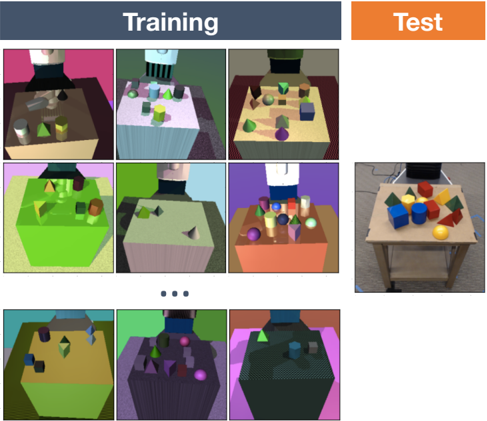
Bridging the `reality gap' that separates simulated robotics from experiments on hardware could accelerate robotic research through improved data availability. This paper explores domain randomization, a simple technique for training models on simulated images that transfer to real images by randomizing rendering in the simulator. With enough variability in the simulator, the real world may appear to the model as just another variation. We focus on the task of object localization, which is a stepping stone to general robotic manipulation skills. We find that it is possible to train a real-world object detector that is accurate to 1.5 cm and robust to distractors and partial occlusions using only data from a simulator with non-realistic random textures. To demonstrate the capabilities of our detectors, we show they can be used to perform grasping in a cluttered environment. To our knowledge, this is the first successful transfer of a deep neural network trained only on simulated RGB images (without pre-training on real images) to the real world for the purpose of robotic control.
Overview
CoChat Summary
TL;DR
This paper introduces domain randomization: training an object detector on simulated RGB images with randomized rendering, textures, lighting, camera pose, and distractors so that the real world appears as another variation. The authors show that a detector trained only in simulation can localize objects in the real world accurately enough to grasp them in clutter.
Key findings
- Real-world object detectors trained only on simulated images localized objects to within about 1.5 cm on average, including with distractors and partial occlusions; per-object errors in Table I range from 0.6 ± 0.3 cm to 3.2 ± 5.8 cm depending on object and condition.
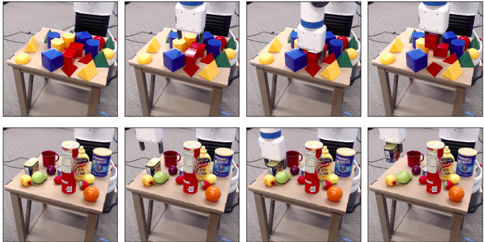
- The pipeline enabled a Fetch robot to detect and pick up the target object in 38 out of 40 trials in increasingly cluttered scenes, and a detector trained on a Spam can succeeded in 9 of 10 trials with previously unseen YCB food distractors.
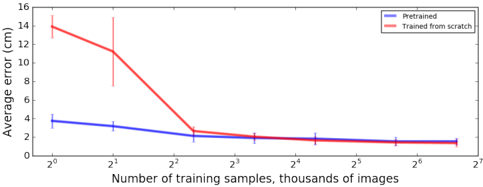
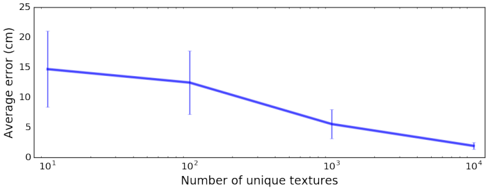
- Ablations found sensitivity to number of training images, number of unique textures, presence of distractors in training, and camera randomization; random noise had negligible effect. Performance improved up to around 50,000 training samples, and degraded significantly with fewer than 1,000 textures.
- ImageNet pretraining was not essential with enough data: random weight initialization achieved nearly the same real-world transfer performance as pretrained initialization, though pretraining helped in the low-data regime.
Methods
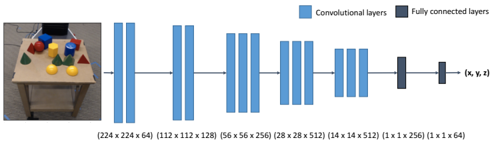
- The authors trained a modified VGG-16 convolutional neural network to map a single 224×224 monocular webcam image to Cartesian coordinates of object(s) of interest, using simulated images rendered by MuJoCo.
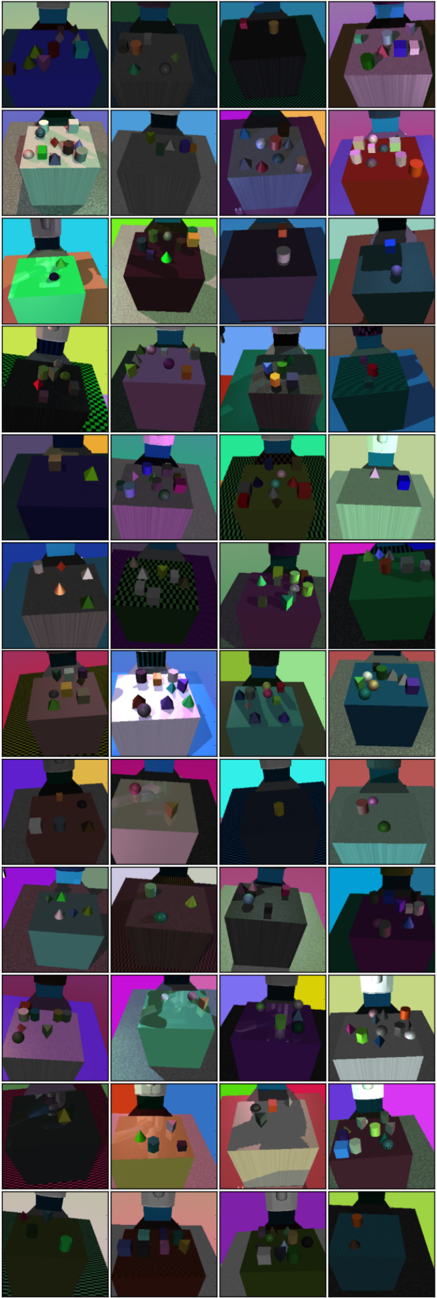
- Domain randomization varied number/shape of distractors, object positions and textures, table/floor/skybox/robot textures, camera position/orientation/field of view, number and properties of lights, and image noise. Textures were random RGB values, gradients, or checker patterns; 0–10 distractor objects were added per scene.
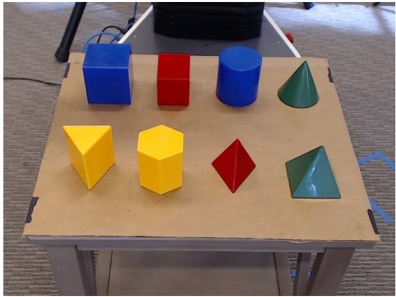
- Training used stochastic gradient descent with Adam on an L2 loss, learning rates around 1e-4, and batch sizes of 25, 50, or 100. Evaluation used 480 webcam images of eight geometric objects at 70–105 cm from a fixed camera, with 60 labeled images per object: 20 alone, 20 with distractors, and 20 partially occluded.
Limitations
- The paper states that the detectors still overfit simulated training data: simulated error was 0.3–0.5 cm versus about 1.5 cm in the real world, and no real-world validation could be done during training because no real data were assumed available.
- The paper states future work is needed for contact-rich manipulation or higher precision, and that the method fixes table height, effectively making the task 2D pose estimation from a single monocular uncalibrated camera.
- Evident from the text: evaluation is limited to eight geometric objects plus one Spam can, the test camera position remains constant across all images, and lighting and surrounding scene were not controlled.
Model-written summary. Check it against the paper before relying on it.
Integrity signals
Registry
Cites
Statistics
Figures
Verification
Claims the paper makes
2 Valid · 8 Not valid · 7 Not checked · 32 Own results and interpretations
The cited sources support only part of this claim — read each source’s verdict below.
In the paper
“Although previous work demonstrated the ability to perform robotic control using a neural network pretrained on ImageNet and fine-tuned on randomized rendered pixels [37], this paper provides the first demonstration that domain randomization can be useful for robotic tasks requiring precision.”
What the sources say
- Partly supportedcites [37] [37] Fereshteh Sadeghi and Sergey Levine. (cad) 2 RL: Real single-image flight without a single real image. arXiv preprint arXiv:1611.04201 , 2016. - sourceExperimental — accuracy not yet measured
The citation [37] is attached to the preceding claim about prior work, not to the citing authors’ claim that their own paper is the first to demonstrate precision robotics. Section 3.1 (p. 4) says LSDA pretrains a CNN on ImageNet classification data and fine-tunes it, but for object detection. It does not report robotic control or fine-tuning on randomized rendered pixels. (LLM, conf=0.84)
boostedstates a cause- Asserted: passes — The authors put it forward as true.
- Checkable: passes — It can be checked against evidence.
- Load-bearing: passes — The paper’s conclusions depend on it.
- Based: passes — The paper gives a reason why it holds.
- Partly supported
The cited sources that could be checked couldn’t confirm or dispute this claim.
In the paper
“Rather than relying on controller robustness, Yu et al. [53] use a model trained on varied physics to perform system identification using online trajectory data, but their approach is not shown to succeed in the real world.”
What the sources say
- Could not verifycites [53] [53] Wenhao Yu, C Karen Liu, and Greg Turk. Preparing for the unknown: Learning a universal policy with online system identification. arXiv preprint arXiv:1702.02453 , 2017. - sourceExperimental — accuracy not yet measured
The cited paper discusses image classification and localisation with convolutional networks (A.1, p. 10; A.2, p. 11), not Yu et al.'s approach. Searches for varied-physics training, online trajectory-based system identification, and real-world success found no passage addressing the claim. Our copy therefore cannot verify it. (LLM, conf=0.78)
plain- Asserted: passes — The authors put it forward as true.
- Checkable: passes — It can be checked against evidence.
- Load-bearing: unclear — It is unclear whether the paper’s conclusions depend on it.
- Based: passes — The paper gives a reason why it holds.
- Could not verify
The cited sources that could be checked couldn’t confirm or dispute this claim.
In the paper
“Though using realistic RGB rendering alone has had limited success for transferring to real robotic tasks [16], incorporating realistic simulation of depth information can allow models trained on rendered images to transfer reasonably well to the real world [32].”
What the sources say
- Could not verifycites [16] [16] Stephen James and Edward Johns. 3d simulation for robot arm control with deep q-learning. arXiv preprint arXiv:1609.03759 , 2016. - sourceExperimental — accuracy not yet measured
The Introduction (§1) and Conclusion (§8) describe Adam as a method for stochastic optimization, while the CNN experiment (§6.3) concerns training on image datasets. Searches for realistic RGB rendering and sim-to-real robotic transfer found no passage addressing whether RGB rendering alone has had limited success on real robotic tasks. (LLM, conf=0.78)
plain- Asserted: passes — The authors put it forward as true.
- Checkable: passes — It can be checked against evidence.
- Load-bearing: passes — The paper’s conclusions depend on it.
- Based: passes — The paper gives a reason why it holds.
- Could not verify
The cited sources that could be checked couldn’t confirm or dispute this claim.
In the paper
“However, their experiments - collision avoidance in hallways and open spaces - do not demonstrate the ability to deal with high-precision tasks.”
What the sources say
- Could not verifycites [37] [37] Fereshteh Sadeghi and Sergey Levine. (cad) 2 RL: Real single-image flight without a single real image. arXiv preprint arXiv:1611.04201 , 2016. - sourceExperimental — accuracy not yet measured
The Experiments section (p. 5) evaluates LSDA on an object-detection dataset, not Sadeghi and Levine’s collision-avoidance experiments. Searches for Sadeghi and Levine, hallway or open-space collision avoidance, and high-precision tasks found no passage addressing the claim. (LLM, conf=0.76)
plain- Asserted: passes — The authors put it forward as true.
- Checkable: passes — It can be checked against evidence.
- Load-bearing: passes — The paper’s conclusions depend on it.
- Based: passes — The paper gives a reason why it holds.
- Could not verify
A result the paper reports from its own data — it cites no other source for it, so there is none to check. The quote shows it is in the paper.
In the paper
“However, using a pre-trained model can significantly improve performance when less training data is used.”
plainstates a cause- Asserted: passes — The authors put it forward as true.
- Checkable: passes — It can be checked against evidence.
- Load-bearing: unclear — It is unclear whether the paper’s conclusions depend on it.
- Based: passes — The paper gives a reason why it holds.
29 more claims
Create a free account to see all 49 claims and to verify the 7 references still open.
- Probably not a substantial claim. 11
- It may state two separate claims as one. 8
Claims other papers make about this one
Each is checked against this paper’s own text: does it say what the citing paper says it does?
The source backs part of the claim, not all of it — or backs it for a different population, condition or comparison.
In the citing paper
“Most policies trained in simulation generalize poorly to the real-world due to agents adapting to specific visual details of the simulator.”
From Language-Based Augmentation to Address Shortcut Learning in Object-Goal Navigation (2023) · cites this paper as [8]
Experimental — accuracy not yet measuredThe source backs part of the claim, not all of it — or backs it for a different population, condition or comparison.
In the citing paper
“In robotic vision tasks including object localization [53], object detection [54], pose estimation [55], and semantic segmentation [56], the training data from simulator always have different textures, lighting, and camera positions from the realistic environments.”
From Sim-to-Real Transfer in Deep Reinforcement Learning for Robotics: a Survey (2020) · cites this paper as [53]
Experimental — accuracy not yet measuredThe source backs part of the claim, not all of it — or backs it for a different population, condition or comparison.
In the citing paper
“These artifacts limit the applicability of generative videos in physics-sensitive domains such as robotics [25,26], autonomous driving [27], simulationbased design, and scientific visualization [28].”
From PhyStruct-Video: Structured Physics State Spaces for Physically Consistent Video Generation (2025) · cites this paper as [25]
Experimental — accuracy not yet measuredThe source backs part of the claim, not all of it — or backs it for a different population, condition or comparison.
In the citing paper
“In domain randomization, the inputs during learning are “randomized” in the sense of being warped or corrupted in particular ways.”
From The overfitted brain: Dreams evolved to assist generalization (2021) · cites this paper as [144]
Experimental — accuracy not yet measuredThe source backs part of the claim, not all of it — or backs it for a different population, condition or comparison.
In the citing paper
“Domain randomization is a domain generalization technique that introduces drastic changes in the training image appearances, which forces the network to learn domain-invariant features between training and target domains [39].”
From A Fully Differentiable Framework for 2D/3D Registration and the Projective Spatial Transformers (2024) · cites this paper as [39]
Experimental — accuracy not yet measured
8 more claims about this paper
Create a free account to see every claim other papers make about this one.
Self-check
Percentages, sums and reported differences re-computed from the paper’s own numbers.
Each contradiction between two passages listed here was confirmed by an independent check.
Rated minor: it would not touch a result — a value no result rests on, a p-value that stays on the same side of the significance level, or a conflict that is clerical, resolved elsewhere in the paper, or outside its own findings.
In the paper
§ A. Experimental Setup · p. 4
“Each training sample consists of (a) a rendered image of the object and one or more distractors (also from among the geometric object set) on a simulated tabletop”
§ A. Domain randomization · p. 4
“Between 0 and 10 distractor objects are added to the table in each scene.”
Citations
Cites
Very Deep Convolutional Networks for Large-Scale Image Recognition
Simonyan, K., & Zisserman, A. (2014) · arXiv · doi:10.48550/arxiv.1409.1556 · Cited by 114,148 · cited 1×
“In particular, we use a modified version the VGG-16 architecture [42] shown in Figure 2.”
MethodAdam: A Method for Stochastic Optimization
Kingma, D. P., & Ba, J. (2014) · arXiv · doi:10.48550/arxiv.1412.6980 · Cited by 98,946 · cited 1×
“We found that using a learning rate of around 1e − 4 (as opposed to the standard 1e − 3 for Adam) improved convergence and helped avoid a common local optimum, mapping all objects to the center of the table.”
MethodLeCun, Y., Bengio, Y., & Hinton, G. (2015) · Nature · doi:10.1038/nature14539 · Cited by 84,126
Human-level control through deep reinforcement learning
Mnih, V., Kavukcuoglu, K., Silver, D., Rusu, A. A., Veness, J., Bellemare, M. G., Graves, A., Riedmiller, M., Fidjeland, A. K., Ostrovski, G., et al. (2015) · Nature · doi:10.1038/nature14236 · Cited by 30,357 · cited 3×
“Learning in simulation is especially promising for building on recent results using deep reinforcement learning to achieve human-level performance on tasks like Atari [27] and robotic control [21], [38].”
BackgroundResultHow transferable are features in deep neural networks?
Yosinski, J., Clune, J., Bengio, Y., & Lipson, H. (2014) · arXiv · doi:10.48550/arxiv.1411.1792 · Cited by 6,061 · cited 1×
“A variety of approaches have been proposed, including re-training the model in the target domain (e.g., [52]), adapting the weights of the model based on the statistics of the source and target domains (e.g., [22]), learning invariant features between domains (e.g., [47]), and learning a mapping…”
BackgroundMuJoCo: A physics engine for model-based control
Todorov, E., Erez, T., & Tassa, Y. (2012) · 2012 IEEE/RSJ International Conference on Intelligent Robots and Systems · doi:10.1109/iros.2012.6386109 · Cited by 4,767 · cited 1×
“We render images using the MuJoCo Physics Engine’s [45] built-in renderer.”
MethodTrust region policy optimization
Schulman, J., Levine, S., Moritz, P., Jordan, M. I., & Abbeel, P. (2015) · arXiv · doi:10.48550/arxiv.1502.05477 · Cited by 4,578 · cited 1×
“Learning in simulation is especially promising for building on recent results using deep reinforcement learning to achieve human-level performance on tasks like Atari [29] and robotic control [26], [41].”
ResultSelf-citationLearning Transferable Features with Deep Adaptation Networks
Long, M., Cao, Y., Wang, J., & Jordan, M. I. (2015) · arXiv · doi:10.48550/arxiv.1502.02791 · Cited by 4,505 · cited 1×
“omputer vision community has devoted significant study to the problem of adapting vision-based models trained in a source domain to a previously unseen target domain (see, e.g., [9], [14], [15], [19], [23], [25], [51]). A variety of approaches have been proposed, including re-training the model in the target domain (e.…”
BackgroundEnd-to-End Training of Deep Visuomotor Policies
Levine, S., Finn, C., Darrell, T., et al. (2015) · Journal of machine learning research · doi:10.5555/2946645.2946684 · Cited by 3,987
Describing Textures in the Wild
Cimpoi, M., Maji, S., Kokkinos, I., Mohamed, S., & Vedaldi, A. (2014) · 2014 IEEE Conference on Computer Vision and Pattern Recognition · doi:10.1109/cvpr.2014.461 · Cited by 2,438 · cited 1×
“To examine how our detectors would perform on objects with complex textures, we created simulated scenes in which the object of interest is given a texture from the Describable Textures Dataset (DTD) [4].”
Method
Research works printed but not linked: 3
- [24] David G Lowe. Three-dimensional object recognition from single two-dimensional images. Artificial intelligence , 31(3):355-395, 1987. -
- [49] Melonee Wise, Michael Ferguson, Derek King, Eric Diehr, and David Dymesich. Fetch and freight: Standard platforms for service robot applications. In Workshop on Autonomous Mobile Service Robots , 2016. -
- sucan, 0, MoveIt!
Cited by
Items 2,201–2,300 of 2,970
Robust contact-rich manipulation through implicit motor adaptation
Xue, T., Razmjoo, A., Shetty, S., & Calinon, S. (2025) · The International Journal of Robotics Research · doi:10.1177/02783649251344638 · Cited by 6
“To enable robust sim-to-real transfer, commonly adopted methods include domain randomization (DR) (Tobin et al. 2017; Muratore et al. 2018) and domain adaptation (DA) (Bousmalis et al. 2018; Arndt et al. 2020; Chebotar et al. Figure 1.”
Digital Twin for Robotic Vision: A Blender-Based Approach
Karoly, A. I., Károly, Á., & Galambos, P. (2025) · IEEE International Symposium on Applied Computational Intelligence and Informatics (SACI) · doi:10.1109/saci66288.2025.11030084 · Cited by 1
“From this environment, they automatically extracted ground-truth box annotations A key challenge in the previously discussed approaches is adapting models trained on synthetic data for real-world addressed through domain randomization [21].”
Enhancing Robustness of Locomotion Policy for Quadrupedal Robot With Deep Disturbance Observer
Muhamad, F., Kusuma, A. A. K. A., Park, J., & Kim, J. (2025) · IEEE Robotics and Automation Letters · doi:10.1109/lra.2025.3595037 · Cited by 3
“Domain randomization is a common strategy to bridge the simulation-to-reality gap by introducing noise and disturbances during training [8].”
Abouelazm, A., Weinstein, T., Joseph, T., Schörner, P., & Zöllner, J. M. (2025) · IEEE Intelligent Vehicles Symposium · doi:10.1109/iv64158.2025.11097458 · Cited by 5
“Domain Randomization (DR) [14] introduces variability by randomly generating scenarios during training, enabling agents to learn generalizable driving behaviors rather than memorizing specific details of the environment.”
Reservoir Computing Encodes Physical Adaptations for Reinforcement Learning
Giannetto, C., Atadjanov, I. R., Iida, F., & Abdulali, A. (2025) · Proceedings - IEEE International Conference on Robotics and Automation/Proceedings · doi:10.1109/icra55743.2025.11127876 · Cited by 1
“Domain randomization has been a prominent approach, wherein RL agents are trained across a wide range of simulated environments with randomized physical parameters to improve their ability to generalize to real-world scenarios [8], [5], [9].”
Sim-to-Real: Tiny Deep Learning Agents on Resource-Constrained Embedded Microcontrollers
Klotz, S., Kulkarni, S., Joglekar, N., Bucksch, T., Goswami, D., & Mueller-Gritschneder, D. (2025) · IEEE Conference on Control Technology and Applications (CCTA) · doi:10.1109/ccta53793.2025.11151414 · Cited by 1
“Domain-randomization [8] is a technique to introduce sufficient simulated variability at the training time.”
On the Impact of Pretraining with Simulated Data on Anomaly Detection in CPS - A Case Study
Jaufmann, R., Widulle, N., Ehrhardt, J., Vranješ, D., & Niggemann, O. (2025) · IEEE International Conference on Emerging Technologies and Factory Automation (ETFA) · doi:10.1109/etfa65518.2025.11205786 · Cited by 1
Learning Bipedal Locomotion on Gear-Driven Humanoid Robot Using Foot-Mounted IMUs
Katayama, S., Koda, Y., Nagatsuka, N., & Kinoshita, M. (2025) · IEEE-RAS International Conference on Humanoid Robots (Humanoids) · doi:10.1109/humanoids65713.2025.11203170 · Cited by 4
Gait in Eight: Efficient On-Robot Learning for Omnidirectional Quadruped Locomotion
Bohlinger, N., Kinzel, J., Palenicek, D., Antczak, Ł., & Peters, J. (2025) · IEEE/RSJ International Conference on Intelligent Robots and Systems (IROS) · doi:10.1109/iros60139.2025.11246447 · Cited by 10
“While a plethora of domain randomization is necessary to zero-shot transfer policies trained in simulation to the real world [13], [14], this creates a significant embodiment gap between the widely randomized and approximated dynamics of the simulated robot and the specific, nuanced dynamics of the…”
Pan, H., Huang, K., Chen, X., et al. (2025) · IEEE/RSJ International Conference on Intelligent Robots and Systems (IROS) · doi:10.1109/iros60139.2025.11247117 · Cited by 1
“Recent innovations in DR technique [13] have improved exploration and generalization.”
Enhanced RRT motion planning for autonomous vehicles: a review on safety testing applications
Kaonain, T. E., Rahman, M. A. A., Ariff, M. H. M., Anuar, M. S. M., Ahmad, F., & Yusoff, S. Z. P. S. (2025) · Open Engineering · doi:10.1515/eng-2025-0148 · Cited by 1
“Techniques such as domain randomization and sim-to-real transfer learning improve model robustness by exposing planning algorithms to varied simulated conditions, thus enhancing their performance when deployed in real-world scenarios [67, 68].”
Policy Gradient for LQR with Domain Randomization
Fujinami, T., Lee, B. D., Matni, N., & Pappas, G. J. (2025) · IEEE Conference on Decision and Control (CDC) · doi:10.1109/cdc57313.2025.11312642 · Cited by 12
“Emails: { ftesshu, brucele, nmatni, pappasg @seas.upenn.edu A. Related Work a) Domain Randomization: Domain randomization, introduced by Tobin et al. [1], is widely used for enabling sim-to-real transfer .”
Towards Agentic Manufacturing Using Sim2Real and DRL Approaches
López-Juárez, I., Castillo-Barrientos, L. A., Anguiano‐Gijón, C. A., & Lotfi, A. (2025) · IEEE CHILEAN Conference on Electrical, Electronics Engineering, Information and Communication Technologies (CHILECON) · doi:10.1109/chilecon66915.2025.11476444 · Cited by 1
“This includes changes in simulation parameters (e.g., scale, mass, lighting), task dynamics, and sensory noise—a technique known as domain randomization [21].”
Adapting Control Policies from Simulation to Reality Using a Pairwise Loss
Viereck, U., Peng, X., Saenko, K., & Platt, R. (2020) · Springer proceedings in advanced robotics · doi:10.1007/978-3-030-33950-0_23 · Cited by 1
“variety of recent literature on simulation-to-reality learning for robotics tasks. One example is recent work that uses “domain randomization” of simulated images to affect better transfer to reality [8]. Another example is work using GANs to affect the transfer [1]. In contrast, the approach followed here is simpler…”
MethodAn Active Learning Framework for Efficient Robust Policy Search
Narayanaswami, S. K., Sudarsanam, N., & Ravindran, B. (2022) · Joint International Conference on Data Science & Management of Data (CODS-COMAD) · doi:10.1145/3493700.3493712 · Cited by 1
“(2016)), simulated with the MuJoCo Physics simulator (Todorov et al. (2012)).”
MethodNakata, Y., & Arai, S. (2019) · Transactions of the Japanese Society for Artificial Intelligence · doi:10.1527/tjsai.g-j73 · Cited by 1
Instance-specific 6-DoF Object Pose Estimation from Minimal Annotations
Singh, R., Kumagai, I., Gabas, A., Benallegue, M., Yoshiyasu, Y., & Kanehiro, F. (2020) · IEEE/SICE International Symposium on System Integration (SII) · doi:10.1109/sii46433.2020.9026239 · Cited by 1
“To bridge the gap between the train dataset so generated and the actual test case data, we use a recently proposed Domain Randomization (DR) method [20].”
MethodKwon, Y., Kaneko, T., Tsurumine, Y., Sasaki, H., Motonaka, K., Miyoshi, S., & Matsubara, T. (2020) · IEEE/SICE International Symposium on System Integration (SII) · doi:10.1109/sii46433.2020.9025842 · Cited by 2
“Therefore, we may consider utilizing a sim-to-real transferring method [16].”
MethodGrasping Novel Objects by Semi-supervised Domain Adaptation
Cai, J., Zhang, Z., & Cheng, H. (2019) · IEEE International Conference on Real-time Computing and Robotics (RCAR) · doi:10.1109/rcar47638.2019.9043954 · Cited by 1
Reinforcement Learning in Navigation and Cooperative Mapping
Cruz, J. A., Cardoso, H. L., Reis, L. P., & Sousa, A. J. (2020) · IEEE International Conference on Autonomous Robot Systems and Competitions · doi:10.1109/icarsc49921.2020.9096136 · Cited by 1
“An example of a method used to bridge the gap between a simulated environment and a real-life environment is adding noise to the simulated environment [13].”
MethodInstance Segmentation by Semi-Supervised Learning and Image Synthesis
Oba, T., & Ukita, N. (2020) · IEICE Transactions on Information and Systems · doi:10.1587/transinf.2019mvp0016 · Cited by 1
“While all aforementioned methods [1], [17], [19], [20] use a 3D CG simulator, it is di ffi cult to prepare a variety of 3D object models.”
BackgroundMethodInfluentialSperling, M., Bouteiller, Y., de Azambuja, R., & Beltrame, G. (2020) · Canadian Conference on Computer and Robot Vision · doi:10.1109/crv50864.2020.00024 · Cited by 1
“This recently led many researchers to use domain randomization as an effective tool for generalization, e.g. in sim-to-real for robotics [28], [29], [30].”
MethodCrashing to Learn, Learning to Survive: Planning in Dynamic Environments via Domain Randomization
Menon, S. S., Vignesh, R., & Mohan, S. (2020) · Mechanisms and machine science · doi:10.1007/978-3-030-48989-2_56 · Cited by 1
Future-Frame Prediction for Fast-Moving Objects with Motion Blur
Lee, D., Oh, Y. J., & Lee, I. (2020) · Sensors · doi:10.3390/s20164394 · Cited by 3
“The model for synthetic data can be trained using synthetic data, but it is desirable to use real data to train a model that processes real data [5,10,40].”
MethodGandana, C. E., Disu, J. D. K., Xie, H., & Gu, L. (2020) · IEEE International Conference on Industry 4.0, Artificial Intelligence, and Communications Technology (IAICT) · doi:10.1109/iaict50021.2020.9172009 · Cited by 1
“The learned policies also could be transferred to the real-world environment, as discussed in the prior works [26]– [30].”
BackgroundA Real-Time Actor-Critic Architecture for Continuous Control
Jiao, Z., & Oh, J. C. (2020) · Lecture notes in computer science · doi:10.1007/978-3-030-55789-8_47 · Cited by 1
ProbRobScene: A Probabilistic Specification Language for 3D Robotic Manipulation Environments
Innes, C., & Ramamoorthy, S. (2021) · Proceedings - IEEE International Conference on Robotics and Automation/Proceedings · doi:10.1109/icra48506.2021.9562038 · Cited by 6
“Traditional methods of data augmentation like domain randomization [10] rely on randomly perturbing an unstructured image space.”
MethodBuild complementary models on human feedback for simulation to the real world
Deng, Z., Xiang, Y., & Kang, Z. (2021) · Knowledge-Based Systems · doi:10.1016/j.knosys.2021.106854 · Cited by 1
Nair, V., Rhee, P., Yang, J., et al. (2020) · IEEE International Geoscience and Remote Sensing Symposium (IGARSS) · doi:10.1109/igarss39084.2020.9324180 · Cited by 1
Usability Study of Learning-Based Pose Estimation of Industrial Objects from Synthetic Depth Data
Thalhammer, S., Patten, T., & Vincze, M. (2021) · IFIP advances in information and communication technology · doi:10.1007/978-3-030-72632-4_21 · Cited by 1
“The generally applicable approach of domain randomization [25] is used for dataset creation and rendering.”
Learning Human Vehicle Interactions using Simulated Data
Liu, C., & Kim, T. S. (2021) · International Conference on Artificial Intelligence in Information and Communication (ICAIIC) · doi:10.1109/icaiic51459.2021.9415199 · Cited by 1
“We follow common practices in the literature and generate samples with randomized textures on both the foreground and background as it has shown to lead to better performance [28] despite worse visual realism.”
MethodOn Assessing the Usefulness of Proxy Domains for Developing and Evaluating Embodied Agents
Courchesne, A., Censi, A., & Paull, L. (2021) · IEEE/RSJ International Conference on Intelligent Robots and Systems (IROS) · doi:10.1109/iros51168.2021.9635977 · Cited by 1
End-to-end Multi-Instance Robotic Reaching from Monocular Vision
Zhuang, Z., Yu, X., & Mahony, R. E. (2021) · Proceedings - IEEE International Conference on Robotics and Automation/Proceedings · doi:10.1109/icra48506.2021.9561518 · Cited by 1
Sim2Air - Synthetic Aerial Dataset for UAV Monitoring
Barišić, A., Petric, F., & Bogdan, S. (2022) · IEEE Robotics and Automation Letters · doi:10.1109/lra.2022.3147337 · Cited by 55
“[5] proposed domain randomization in task of object grasping by randomizing the RGB values of the object texture.”
BackgroundClustered Problems and Machine Learning Methodologies: A New Approach
Álvarez, D. D., Væhrens, L., & Berger, U. (2021) · Lecture notes in mechanical engineering · doi:10.1007/978-3-030-90700-6_50 · Cited by 1
Naoya, R., 北風, 裕., & Matsumura, R. (2021) · International Conference on Intelligent Systems and Image Processing (ICISIP) · doi:10.12792/icisip2021.032 · Cited by 1
Makki, A., Hadi, A., Tarvirdizadeh, B., & Teimouri, M. (2021) · RSI International Conference on Robotics and Mechatronics (ICRoM) · doi:10.1109/icrom54204.2021.9663469 · Cited by 1
Object class-agnostic segmentation for practical CNN utilization in industry
Gouda, A., Ghanem, A., Kaiser, P., & ten Hompel, M. (2021) · International Conference on Mechanical Engineering and Robotics Research (ICMERR) · doi:10.1109/icmerr54363.2021.9680821 · Cited by 1
POPDNet: Primitive Object Pose Detection Network Based on Voxel Data with Three Cartesian Channels
Makki, A., Hadi, A., Tarvirdizadeh, B., & Teimouri, M. (2021) · International Conference on Signal Processing and Intelligent Systems (ICSPIS) · doi:10.1109/icspis54653.2021.9729364 · Cited by 1
Manyari, Y. E., Dolle, L., & Callet, P. L. (2022) · IEEE International Conference on Autonomous Robot Systems and Competitions · doi:10.1109/icarsc55462.2022.9784774 · Cited by 1
Invariance Through Latent Alignment
Yoneda, T., Yang, G., Walter, M. R., & Stadie, B. C. (2022) · Robotics: Science and Systems · doi:10.15607/rss.2022.xviii.064 · Cited by 14
“These works can largely be placed under two categories—the first category, including domain randomization [37], data augmentation [11], invariant risk minimization [4, 43], and meta-learning [7], all make the assumption that one has a rough idea of what type of perceptual change is going to occur during deployment.”
BackgroundSolving a Simple Geduldspiele Cube with a Robotic Gripper via Sim-to-Real Transfer
Yoo, J.-H., Jung, H.-J., Kim, J.-H., Sim, D.-H., & Yoon, H. U. (2022) · Applied Sciences · doi:10.3390/app121910124 · Cited by 1
Object Detection-Based Reinforcement Learning for Autonomous Point-to-Point Navigation
Lewis, T., Ibarra, A., & Jamshidi, M. M. (2022) · World Automation Congress (WAC) · doi:10.23919/wac55640.2022.9934448 · Cited by 1
Constrained differentiable cross-entropy method for safe model-based reinforcement learning
Mottahedi, S., & Pavlak, G. S. (2022) · ACM International Conference on Systems for Energy-Efficient Buildings, Cities, and Transportation (BuildSys) · doi:10.1145/3563357.3564055 · Cited by 2
“In addition, transferring policies learned in a simulation environment has proven to be challenging due to model uncertainties [13, 47] and mismatch between real and simulated observations.”
BackgroundPivot-Guided Embedding for Domain Generalization
Seong, H. S., Choi, J., Jeong, W., & Heo, J. (2022) · IEEE Access · doi:10.1109/access.2022.3225970 · Cited by 1
“The purpose of data augmentation in DG is to enlarge the source domain distribution into a wider span [5], [8], [18], [19], [20], [21], [22], [23], [24], [25], [26], [27], which can improve the robustness of the models to novel domains.”
BackgroundPankov, S. (2023) · International Journal of Control Automation and Systems · doi:10.1007/s12555-021-0466-5 · Cited by 1
“[33] Josh Tobin, Rachel Fong, Alex Ray, Jonas Schneider, Wojciech Zaremba, and Pieter Abbeel.”
BackgroundMethodMINERVAS: Massive INterior EnviRonments VirtuAl Synthesis
Ren, H., Zhang, H., Zheng, J., Zheng, J., Tang, R., Huo, Y., Bao, H., & Wang, R. (2022) · Computer Graphics Forum · doi:10.1111/cgf.14657 · Cited by 1
“• Diverse data: Domain randomization is a common technique to boost the model performance in the real case [TFR ∗ 17].”
MethodMulti-Fidelity Reinforcement Learning with Gaussian ProcessesPreprint
Suryan, V., Gondhalekar, N., & Tokekar, P. (2017) · arXiv (Cornell University) · doi:10.48550/arxiv.1712.06489 · Cited by 1
“However, it is important to note that the goal in these methods is to reduce the reality gap by using a parameterized simulator [1], [14].”
BackgroundTowards Accurate Task Accomplishment with Low-Cost Robotic ArmsPreprint
Zuo, Y., Qiu, W., Xie, L., Zhong, F., Wang, Y., & Yuille, A. (2018) · arXiv (Cornell University) · Cited by 2
Cloth Manipulation Using Random-Forest-Based Imitation LearningPreprint
Jia, B., Pan, Z., Hu, Z., et al. (2018) · arXiv (Cornell University) · doi:10.48550/arxiv.1802.09661 · Cited by 1
“A similar technique is used in [42].”
Watermark retrieval from 3D printed objects via synthetic data trainingPreprint
Zhang, X., Jia, N., & Ivrissimtzis, I. P. (2019) · arXiv (Cornell University) · doi:10.48550/arxiv.1905.09706 · Cited by 1
“As UnrealStereo requires designers at artist level, domain randomization (DR) [Tobin et al., 2017] has been recently proposed to address this limitation.”
BackgroundComparing Task Simplifications to Learn Closed-Loop Object Picking Using Deep Reinforcement Learning
Breyer, M., Furrer, F., Novkovic, T., Siegwart, R., & Nieto, J. (2018) · arXiv · doi:10.48550/arxiv.1803.04996 · Cited by 1
“representation that generalizes to the real-world [32], [33].”
BackgroundAdversarial Feature Training for Generalizable Robotic Visuomotor ControlPreprint
Chen, X., Ghadirzadeh, A., Björkman, M., et al. (2019) · arXiv (Cornell University) · doi:10.48550/arxiv.1909.07745 · Cited by 1
Robot Sound Interpretation: Combining Sight and Sound in Learning-Based ControlPreprint
Chang, P., Liu, S., Chen, H., et al. (2019) · arXiv (Cornell University) · doi:10.48550/arxiv.1909.09172 · Cited by 1
“To narrow the gap between rendered and real-world images, we use domain randomization to learn robust visual features [41].”
MethodLearning Resilient Behaviors for Navigation Under Uncertainty Environments.Preprint
Fan, T., Long, P., Liu, W., Pan, J., Yang, R., & Manocha, D. (2019) · arXiv (Cornell University) · Cited by 3
Evaluating visually grounded language capabilities using microworlds
Kuhnle, A. (2019) · Apollo (University of Cambridge) · doi:10.17863/cam.49177 · Cited by 1
“Recent ‘sim2real’ approaches (Tobin et al., 2017) try to bridge the gap to reality with increasingly realistic and flexible simulations, however, integration with language is still in its infancy and offers a range of possibilities for future work on data generation.”
BackgroundDeep Reinforcement Learning with Linear Quadratic Regulator RegionsPreprint
Fernandez, G. I., Togashi, C., Hong, D. W., & Yang, L. F. (2020) · arXiv (Cornell University) · doi:10.48550/arxiv.2002.09820 · Cited by 7
“Researchers have been successsful in applying this technique on drones and robotic hands to complete difficult tasks (Tobin et al., 2017; Loquercio et al., 2019; Akkaya et al., 2019).”
MethodDonderici, B., New, C., & Xu, C. (2020) · arXiv (Cornell University) · doi:10.48550/arxiv.2002.09818 · Cited by 1
Closing the Modelling Gap: Transfer Learning from a Low-Fidelity Simulator for Autonomous Driving
Balakrishnan, A. (2020) · UWSpace (University of Waterloo) · Cited by 2
Kiemel, J. C., Weitemeyer, R., Meißner, P., et al. (2020) · arXiv (Cornell University) · Cited by 1
Learning Resilient Behaviors for Navigation Under UncertaintyPreprint
Fan, T., Long, P., Liu, W., et al. (2019) · arXiv (Cornell University) · doi:10.48550/arxiv.1910.09998 · Cited by 1
“To address the above issues, some related work [6]–[8] attempted to expand the domain of the training data by increasing its diversity.”
BackgroundLearning From Context-Agnostic Synthetic Data.Preprint
Jin, C., & Rinard, M. (2020) · arXiv (Cornell University) · Cited by 1
Dialog as a Vehicle for Lifelong LearningPreprint
Padmakumar, A., & Mooney, R. J. (2020) · arXiv (Cornell University) · doi:10.48550/arxiv.2006.14767 · Cited by 1
“Recent work has tried to address this issue using simulation techniques to increase the robustness of differences in the task and domain from training and operation time (Tobin et al., 2017, 2018).”
MethodSelf-Adapting Recurrent Models for Object Pushing from Learning in SimulationPreprint
Lin, C., Görner, M., Ruppel, P., et al. (2020) · arXiv (Cornell University) · doi:10.48550/arxiv.2007.13421 · Cited by 1
“Performing robotic learning in simulation has recently become especially promising for reaching human-level performance in various tasks such as tool use [12], object localization [18] and games like Atari [20].”
BackgroundHollenstein, J., Renaudo, E., Saveriano, M., & Piater, J. (2020) · arXiv (Cornell University) · doi:10.48550/arxiv.2010.12974 · Cited by 3
“One important method for bridging this gap is Domain randomization (Tobin et al. 2017; Sadeghi and Levine 2017; James, Davison, and Johns 2017): instead of one simulated environment, learning is done using a distribution of models with varying properties such as mass, friction, and force/torque…”
MethodTAMPC: A Controller for Escaping Traps in Novel EnvironmentsPreprint
Zhong, S., Zhang, Z., Fazeli, N., et al. (2020) · arXiv (Cornell University) · doi:10.48550/arxiv.2010.12516 · Cited by 1
“This includes methods such as metalearning [16], [17], domain randomization [18], [19], Sim-toreal [20], and other transfer learning [21] methods.”
Method"What, not how": Solving an under-actuated insertion task from scratchPreprint
Vezzani, G., Neunert, M., Wulfmeier, M., Jeong, R., Lampe, T., Siegel, N., Hafner, R., Abdolmaleki, A., Riedmiller, M., & Nori, F. (2020) · arXiv (Cornell University) · doi:10.48550/arxiv.2010.15492 · Cited by 1
“Several works circumvent these issues by using demonstrations [26, 11, 23, 27], transferring simulated solutions to the real world [9, 28, 29] or by learning a model of the environment [15].”
BackgroundContact Localization for Robot Arms in Motion without Torque SensingPreprint
Liang, J., & Kroemer, O. (2020) · arXiv (Cornell University) · doi:10.48550/arxiv.2011.03142 · Cited by 1
“Because there are mismatches in simulated and real dynamics (sim-to-real gap), we use Domain Randomization [30] to generate data across a distribution of robot dynamics models.”
MethodProtective Policy TransferPreprint
Yu, W., Liu, C. K., & Turk, G. (2020) · arXiv (Cornell University) · doi:10.48550/arxiv.2012.06662 · Cited by 1
“There has been extensive research in transferring control policies from one domain to another [1]–[4] as well as incorporating safety in robotic control [5]–[8].”
BackgroundEnsemble of Discriminators for Domain Adaptation in Multiple Sound Source 2D LocalizationPreprint
Moing, G. L., Agravante, D. J., Inoue, T., Vongkulbhisal, J., Munawar, A., Tachibana, R., & Vinayavekhin, P. (2020) · arXiv (Cornell University) · doi:10.48550/arxiv.2012.05908 · Cited by 1
“Method S+ uses domain randomization [30] by using TrainS+ instead of TrainS in method S.”
BackgroundMethodInfluentialSimulation-Driven Machine Learning Control of a Forestry Crane Manipulator
Andersson, J. (2020) · Uppsala University Publications (Uppsala University) · Cited by 1
DROID: Minimizing the Reality Gap using Single-Shot Human DemonstrationPreprint
Tsai, Y.-Y., Xu, H., Ding, Z., et al. (2021) · arXiv (Cornell University) · doi:10.48550/arxiv.2102.11003 · Cited by 1
“the real world [18] or by collecting real world data for optimizing the simulated model parameters [19]–[21].”
BackgroundOta, K., Jha, D. K., Romeres, D., et al. (2020) · arXiv (Cornell University) · doi:10.48550/arxiv.2011.07193 · Cited by 1
“However, these simulators still cannot model or represent the physical system accurately enough for control, and this has driven a lot of work in the area of sim-to-real transfer [27], [28], [29].”
BackgroundManipulator-Independent Representations for Visual ImitationPreprint
Zhou, Y., Aytar, Y., & Bousmalis, K. (2021) · arXiv (Cornell University) · doi:10.48550/arxiv.2103.09016 · Cited by 1
“Encoder Encoder The main target in domain randomization [30, 36] is to randomize the observations and dynamics of the simulated environment with the hope that an agent trained under this setting will be robust to real-world visual observations and dynamics.”
BackgroundBlazer: Laser Scanning Simulation using Physically Based RenderingPreprint
Grans, S., & Tingelstad, L. (2021) · arXiv (Cornell University) · doi:10.48550/arxiv.2104.05430 · Cited by 1
“Later works have been done where entire scenes rendered in 3D were used, which have achieved better result[13, 29].”
BackgroundLearning to Communicate with Strangers via Channel Randomisation MethodsPreprint
Cope, D., & Schoots, N. (2021) · arXiv (Cornell University) · doi:10.48550/arxiv.2104.09557 · Cited by 4
“Domain Randomisation: Domain randomisation is a training-time technique for improving zeroshot performance of a learning system when it is transported to a new domain (Tobin et al., 2017; Mehta et al., 2019; Hu et al., 2020), which becomes relevant when the agent can not be directly trained in the target environment.”
Zhang, H.-B., Yang, D., Wang, H., Zhao, B., Lan, X., Ding, J., & Zheng, N. (2021) · IEEE Robotics and Automation Letters · doi:10.48550/arxiv.2104.14118 · Cited by 56
Projector-Guided Non-Holonomic Mobile 3D PrintingPreprint
Xu, X., Wang, Z., & Feng, C. (2021) · arXiv (Cornell University) · doi:10.48550/arxiv.2105.08950 · Cited by 1
“Position-based visual servoing (PBVS) [11–14] evaluates the error feedback from the observed object in the 3D Cartesian space.”
BackgroundHigh-Quality Diversification for Task-Oriented Dialogue SystemsPreprint
Tang, Z., Kulkarni, H., & Yang, G. H. (2021) · arXiv (Cornell University) · doi:10.48550/arxiv.2106.00891 · Cited by 4
Instance-optimality in optimal value estimation: Adaptivity via variance-reduced Q-learningPreprint
Khamaru, K., Xia, E., Wainwright, M. J., et al. (2021) · arXiv (Cornell University) · doi:10.48550/arxiv.2106.14352 · Cited by 1
“found use cases across a wide range of application domains (e.g., [17], [26], [31]).”
Aligning an optical interferometer with beam divergence control and continuous action spacePreprint
Makarenko, S., Sorokin, D., Ulanov, A. E., & Lvovsky, A. I. (2021) · arXiv (Cornell University) · doi:10.48550/arxiv.2107.04457 · Cited by 6
“[11] proposed a simple technique called domain randomization: they trained an object detection model on simulated images with different textures, lights, object and camera positions, and demonstrated that such a model achieves high accuracy in the real world.”
BackgroundMethodPetersen, E., Potdevin, Y., Mohammadi, E., Zidowitz, S., Breyer, S., Nowotka, D., Henn, S., Pechmann, L., Leucker, M., Rostalski, P., et al. (2021) · arXiv (Cornell University) · Cited by 1
ManiSkill: Learning-from-Demonstrations Benchmark for Generalizable Manipulation Skills.Preprint
Mu, T., Ling, Z., Xiang, F., Yang, D., Li, X., Tao, S., Huang, Z., Jia, Z., & Su, H. (2021) · arXiv (Cornell University) · Cited by 9
Simulation-based Bayesian inference for multi-fingered robotic graspingPreprint
Marlier, N., Brüls, O., & Louppe, G. (2021) · arXiv (Cornell University) · doi:10.48550/arxiv.2109.14275 · Cited by 7
“To overcome this issue, we use domain randomization [25] with nuisance parameters on the position and the orientation of the camera, the minimum and maximum distance of the depth, the field of view, and the coefficient of lateral and spinning frictions µ and γ .”
MethodOTTR: Off-Road Trajectory Tracking using Reinforcement LearningPreprint
Nagariya, A., Kalathil, D. M., & Saripalli, S. (2021) · arXiv (Cornell University) · doi:10.48550/arxiv.2110.02332 · Cited by 2
“Domain randomization [9], [10], [11] is the standard approach used for overcoming the sim-to-real gap, which involves randomizing the dynamics and the simulation parameters during the learning.”
MethodDistilling Motion Planner Augmented Policies into Visual Control Policies for Robot ManipulationPreprint
Liu, I.-C. A., Uppal, S., Sukhatme, G. S., Lim, J. J., Englert, P. A. J., & Lee, Y. (2021) · arXiv (Cornell University) · doi:10.48550/arxiv.2111.06383 · Cited by 6
“DR is a promising approach for modelling transferable policies using a multitude of variations in simulation during training [34, 35], which makes the policy invariant to changes that are insignificant for the task.”
BackgroundSheng, K., Zhang, S., Zhang, S., He, Y., Beau, M., Qu, P., Liu, X., Zhang, Y., Ma, L., & Du, K. (2022) · bioRxiv (Cold Spring Harbor Laboratory) · doi:10.1101/2022.10.03.510694 · Cited by 2
Effective Explainable Artificial Intelligence using Visual Explanations in Images
Ibrahim, R. (2022) · Carleton University's Institutional Repository (MacOdrum Library, Carleton University) · doi:10.22215/etd/2022-15159 · Cited by 2
Kadi, H. A., & Terzić, K. (2022) · Preprints.org · doi:10.20944/preprints202212.0305.v1 · Cited by 1
DOPESLAM: A high-precision ROS-based semantic SLAM systemPreprint
Roch, J., & Najjaran, H. (2023) · Research Square · doi:10.21203/rs.3.rs-1895628/v2 · Cited by 1
Transductive transfer learning for visual recognition
Huang, J. (2023) · DR-NTU (Nanyang Technological University) · doi:10.32657/10356/164573 · Cited by 1
Machine learning of dissection photographs and surface scanning for quantitative 3D neuropathologyPreprint
Gazula, H., Tregidgo, H. F. J., Billot, B., Balbastre, Y., Williams-Ramirez, J., Herisse, R., Deden-Binder, L. J., Casamitjana, A., Melief, E. J., Latimer, C. S., et al. (2024) · eLife · doi:10.7554/elife.91398.3 · Cited by 2
Horeličan, T., & Žalud, L. (2024) · SSRN Electronic Journal · doi:10.2139/ssrn.4769856 · Cited by 1
Synthesising integrated robot behaviour through reinforcement learning for homeostasisPreprint
Yoshida, N., Kanazawa, H., & Kuniyoshi, Y. (2024) · bioRxiv (Cold Spring Harbor Laboratory) · doi:10.1101/2024.06.03.597087 · Cited by 6
Bio-Inspired Adaptive Control of Robotic Manipulators for Grasping in Orbital Space Missions
Ogundipe, C. (2024) · Carleton University's Institutional Repository (MacOdrum Library, Carleton University) · doi:10.22215/etd/2024-15987 · Cited by 1
HVAngleEst: A Dataset for End-to-end Automated Hallux Valgus Angle Measurement from X-Ray Images
Wang, Q., Ji, D., Wang, J., Liu, L., Yang, X., Zhang, Y., Liang, J., Liu, P., & Zhao, H. (2025) · Scientific Data · doi:10.1038/s41597-025-05261-9 · Cited by 1
“Current research demonstrates that properly designed multi-modal training not only fails to confuse the AI algorithm but instead can force it to learn more robust and generalizable features 17 .”
Improving neuropathological reconstruction fidelity via AI slice imputation
Aguirre, M., Williams-Ramirez, J., Zemlyanker, D., Hu, X., Deden-Binder, L. J., Herisse, R., Montine, M., Connors, T. R., Mount, C., MacDonald, C. L., et al. (2026) · Acta Neuropathologica Communications · doi:10.21203/rs.3.rs-9117500/v1 · Cited by 1
Hoffmann, N. (2024) · theses.fr (ABES) · doi:10.70675/4b34cf1bz4966z45bez85eaz34ed156df22c · Cited by 1
Kinetix: Investigating the Training of General Agents through Open-Ended Physics-Based Control Tasks
Matthews, M., Beukman, M., Lu, C., & Foerster, J. (2024) · arXiv · doi:10.48550/arxiv.2410.23208 · Cited by 1
“Domain Randomisation (Jakobi, 1997; Tobin et al., 2017, DR), where levels are sampled from an uninformed distribution, can be considered a degenerate form of this paradigm, where a constant utility is assigned to each level.”
Cheng, Y., Zhao, P., Wang, F., Block, D. J., & Hovakimyan, N. (2022) · IEEE Robotics and Automation Letters · doi:10.1109/lra.2022.3169309 · Cited by 36
“Related work Robust/adversarial training: Domain/dynamics randomization was proposed to close the sim-to-real (S2R) gap [5]– [7] when transferring a policy from a simulator to the real world.”
BackgroundMethodInfluential
Metadata
- Authors
- Tobin, J., Fong, R., Ray, A., Schneider, J., Zaremba, W., & Abbeel, P.
- Affiliations
- University of California, Berkeley (US)
- OpenAI (United States) (US)
- International Computer Science Institute (US)
- ORCID
- Abbeel, Pieter
- Venue
- 2017 IEEE/RSJ International Conference on Intelligent Robots and Systems (IROS)
- Publisher
- IEEE
- Published
- 2017-09
- Pages
- 23-30
- ISSN
- 2153-0858 (ISSN-L)
- OpenAlex
- W2605102758
- Semantic Scholar
- 32ceb28e45a445df4d89df281bb0e3ab5aab1a2a
- Cited by
- 3,124
- References
- 69
- Citations by year
- 2026: 413 · 2025: 433 · 2024: 336 · 2023: 403 · 2022: 374 · 2021: 422 · 2020: 352 · 2019: 256 · 2018: 106 · 2017: 25
- FWCI
- 92.18
- Type
- conference paper
- Language
- en
- Open access
- green
- arxiv.org
- Locations
- IEEE/RSJ International Conference on Intelligent Robots and Systems (IROS) (publishedVersion)
- arXiv (Cornell University) (submittedVersion)
- arXiv (Cornell University)
- Topics
- Physical Sciences › Computer Science › Artificial Intelligence › Reinforcement Learning in Robotics
- Physical Sciences › Engineering › Control and Systems Engineering › Robot Manipulation and Learning
- Physical Sciences › Computer Science › Artificial Intelligence › Domain Adaptation and Few-Shot Learning
- Keywords
- domain randomization, sim-to-real transfer, reality gap, object detection, object localization, robotic grasping, cluttered environments, distractor robustness, partial occlusion, robotic manipulation
About these checks
Registry, retraction, Cites and statistics results are computed, not judged, with one exception: a printed reference that no index lists is read once by a model before it counts as a citation error. Claims are extracted by a model and kept only when their quote appears verbatim in the text; each cited source is then checked, with a model’s help, for whether it says what the claim relies on. Those verdicts can be wrong — read the claim’s quote and the cited source before relying on one.
The claim verdicts this report counts are experimental: their accuracy is not yet measured.
A language model drew the claims from the paper on 2026-10-10, under version 3 of the claim definition (model deepseek-v4.1-flash, prompt extract-v3).
A second model labelled each claim on 2026-10-10 (model jev-1.13-20260917, definition revision gold-guideline-v0.2).
Cited sources are checked with a language model’s help (gpt-6-sol).
Statistics and arithmetic are recomputed, not judged.
Confidence bands are shown only for fields calibrated on our annotated test set. None is calibrated yet, so no band is shown.
What counts as a claim ›How we measure confidence ›How we check this ›
Are you an author, or do you see a problem with this page? Request a review
Data sources
Bibliographic data: Semantic Scholar, OpenAlex, Crossref.
Contains information from the Semantic Scholar Academic Graph Datasets, made available under the ODC Attribution License (ODC-BY 1.0).
Semantic Scholar’s data is described in: Kinney, R., et al. (2023). The Semantic Scholar Open Data Platform. arXiv:2301.10140.
