

Domain randomization for transferring deep neural networks from simulation to the real world
Open accessThe DOI matches its Crossref record; 71 of the 71 references it cites were found in a registry or an index; 8 of the 17 sources its claims cite were checked for support.
Abstract
Bridging the `reality gap' that separates simulated robotics from experiments on hardware could accelerate robotic research through improved data availability. This paper explores domain randomization, a simple technique for training models on simulated images that transfer to real images by randomizing rendering in the simulator. With enough variability in the simulator, the real world may appear to the model as just another variation. We focus on the task of object localization, which is a stepping stone to general robotic manipulation skills. We find that it is possible to train a real-world object detector that is accurate to 1.5 cm and robust to distractors and partial occlusions using only data from a simulator with non-realistic random textures. To demonstrate the capabilities of our detectors, we show they can be used to perform grasping in a cluttered environment. To our knowledge, this is the first successful transfer of a deep neural network trained only on simulated RGB images (without pre-training on real images) to the real world for the purpose of robotic control.
Overview
CoChat Summary
TL;DR
This paper introduces domain randomization: training an object detector on simulated RGB images with randomized rendering, textures, lighting, camera pose, and distractors so that the real world appears as another variation. The authors show that a detector trained only in simulation can localize objects in the real world accurately enough to grasp them in clutter.
Key findings
- Real-world object detectors trained only on simulated images localized objects to within about 1.5 cm on average, including with distractors and partial occlusions; per-object errors in Table I range from 0.6 ± 0.3 cm to 3.2 ± 5.8 cm depending on object and condition.
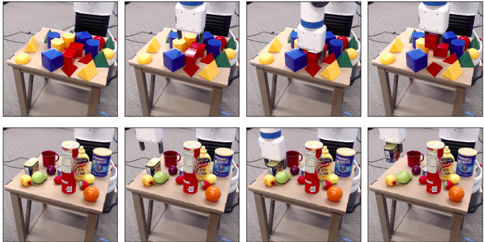
- The pipeline enabled a Fetch robot to detect and pick up the target object in 38 out of 40 trials in increasingly cluttered scenes, and a detector trained on a Spam can succeeded in 9 of 10 trials with previously unseen YCB food distractors.
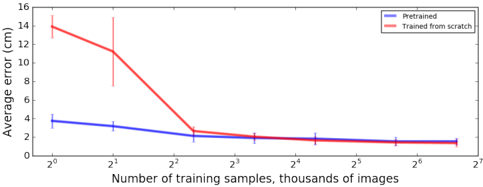
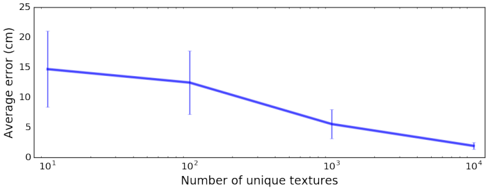
- Ablations found sensitivity to number of training images, number of unique textures, presence of distractors in training, and camera randomization; random noise had negligible effect. Performance improved up to around 50,000 training samples, and degraded significantly with fewer than 1,000 textures.
- ImageNet pretraining was not essential with enough data: random weight initialization achieved nearly the same real-world transfer performance as pretrained initialization, though pretraining helped in the low-data regime.
Methods
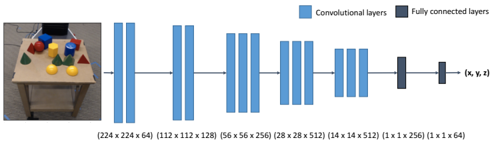
- The authors trained a modified VGG-16 convolutional neural network to map a single 224×224 monocular webcam image to Cartesian coordinates of object(s) of interest, using simulated images rendered by MuJoCo.
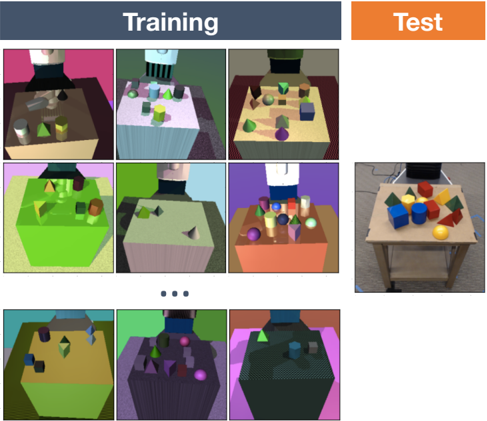
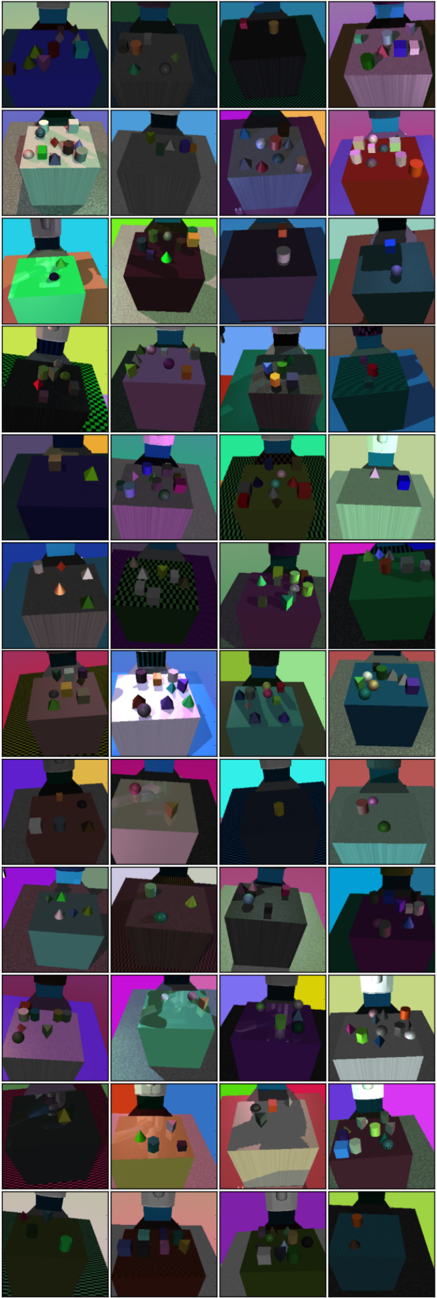
- Domain randomization varied number/shape of distractors, object positions and textures, table/floor/skybox/robot textures, camera position/orientation/field of view, number and properties of lights, and image noise. Textures were random RGB values, gradients, or checker patterns; 0–10 distractor objects were added per scene.
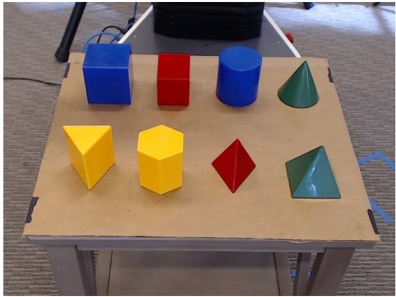
- Training used stochastic gradient descent with Adam on an L2 loss, learning rates around 1e-4, and batch sizes of 25, 50, or 100. Evaluation used 480 webcam images of eight geometric objects at 70–105 cm from a fixed camera, with 60 labeled images per object: 20 alone, 20 with distractors, and 20 partially occluded.
Limitations
- The paper states that the detectors still overfit simulated training data: simulated error was 0.3–0.5 cm versus about 1.5 cm in the real world, and no real-world validation could be done during training because no real data were assumed available.
- The paper states future work is needed for contact-rich manipulation or higher precision, and that the method fixes table height, effectively making the task 2D pose estimation from a single monocular uncalibrated camera.
- Evident from the text: evaluation is limited to eight geometric objects plus one Spam can, the test camera position remains constant across all images, and lighting and surrounding scene were not controlled.
Model-written summary. Check it against the paper before relying on it.
Integrity signals
Registry
Cites
Statistics
Figures
Verification
Claims the paper makes
2 Valid · 8 Not valid · 7 Not checked · 32 Own results and interpretations
The cited sources support only part of this claim — read each source’s verdict below.
In the paper
“Although previous work demonstrated the ability to perform robotic control using a neural network pretrained on ImageNet and fine-tuned on randomized rendered pixels [37], this paper provides the first demonstration that domain randomization can be useful for robotic tasks requiring precision.”
What the sources say
- Partly supportedcites [37] [37] Fereshteh Sadeghi and Sergey Levine. (cad) 2 RL: Real single-image flight without a single real image. arXiv preprint arXiv:1611.04201 , 2016. - sourceExperimental — accuracy not yet measured
The citation [37] is attached to the preceding claim about prior work, not to the citing authors’ claim that their own paper is the first to demonstrate precision robotics. Section 3.1 (p. 4) says LSDA pretrains a CNN on ImageNet classification data and fine-tunes it, but for object detection. It does not report robotic control or fine-tuning on randomized rendered pixels. (LLM, conf=0.84)
boostedstates a cause- Asserted: passes — The authors put it forward as true.
- Checkable: passes — It can be checked against evidence.
- Load-bearing: passes — The paper’s conclusions depend on it.
- Based: passes — The paper gives a reason why it holds.
- Partly supported
The cited sources that could be checked couldn’t confirm or dispute this claim.
In the paper
“Rather than relying on controller robustness, Yu et al. [53] use a model trained on varied physics to perform system identification using online trajectory data, but their approach is not shown to succeed in the real world.”
What the sources say
- Could not verifycites [53] [53] Wenhao Yu, C Karen Liu, and Greg Turk. Preparing for the unknown: Learning a universal policy with online system identification. arXiv preprint arXiv:1702.02453 , 2017. - sourceExperimental — accuracy not yet measured
The cited paper discusses image classification and localisation with convolutional networks (A.1, p. 10; A.2, p. 11), not Yu et al.'s approach. Searches for varied-physics training, online trajectory-based system identification, and real-world success found no passage addressing the claim. Our copy therefore cannot verify it. (LLM, conf=0.78)
plain- Asserted: passes — The authors put it forward as true.
- Checkable: passes — It can be checked against evidence.
- Load-bearing: unclear — It is unclear whether the paper’s conclusions depend on it.
- Based: passes — The paper gives a reason why it holds.
- Could not verify
The cited sources that could be checked couldn’t confirm or dispute this claim.
In the paper
“Though using realistic RGB rendering alone has had limited success for transferring to real robotic tasks [16], incorporating realistic simulation of depth information can allow models trained on rendered images to transfer reasonably well to the real world [32].”
What the sources say
- Could not verifycites [16] [16] Stephen James and Edward Johns. 3d simulation for robot arm control with deep q-learning. arXiv preprint arXiv:1609.03759 , 2016. - sourceExperimental — accuracy not yet measured
The Introduction (§1) and Conclusion (§8) describe Adam as a method for stochastic optimization, while the CNN experiment (§6.3) concerns training on image datasets. Searches for realistic RGB rendering and sim-to-real robotic transfer found no passage addressing whether RGB rendering alone has had limited success on real robotic tasks. (LLM, conf=0.78)
plain- Asserted: passes — The authors put it forward as true.
- Checkable: passes — It can be checked against evidence.
- Load-bearing: passes — The paper’s conclusions depend on it.
- Based: passes — The paper gives a reason why it holds.
- Could not verify
The cited sources that could be checked couldn’t confirm or dispute this claim.
In the paper
“However, their experiments - collision avoidance in hallways and open spaces - do not demonstrate the ability to deal with high-precision tasks.”
What the sources say
- Could not verifycites [37] [37] Fereshteh Sadeghi and Sergey Levine. (cad) 2 RL: Real single-image flight without a single real image. arXiv preprint arXiv:1611.04201 , 2016. - sourceExperimental — accuracy not yet measured
The Experiments section (p. 5) evaluates LSDA on an object-detection dataset, not Sadeghi and Levine’s collision-avoidance experiments. Searches for Sadeghi and Levine, hallway or open-space collision avoidance, and high-precision tasks found no passage addressing the claim. (LLM, conf=0.76)
plain- Asserted: passes — The authors put it forward as true.
- Checkable: passes — It can be checked against evidence.
- Load-bearing: passes — The paper’s conclusions depend on it.
- Based: passes — The paper gives a reason why it holds.
- Could not verify
A result the paper reports from its own data — it cites no other source for it, so there is none to check. The quote shows it is in the paper.
In the paper
“However, using a pre-trained model can significantly improve performance when less training data is used.”
plainstates a cause- Asserted: passes — The authors put it forward as true.
- Checkable: passes — It can be checked against evidence.
- Load-bearing: unclear — It is unclear whether the paper’s conclusions depend on it.
- Based: passes — The paper gives a reason why it holds.
29 more claims
Create a free account to see all 49 claims and to verify the 7 references still open.
- Probably not a substantial claim. 11
- It may state two separate claims as one. 8
Claims other papers make about this one
Each is checked against this paper’s own text: does it say what the citing paper says it does?
The source backs part of the claim, not all of it — or backs it for a different population, condition or comparison.
In the citing paper
“Most policies trained in simulation generalize poorly to the real-world due to agents adapting to specific visual details of the simulator.”
From Language-Based Augmentation to Address Shortcut Learning in Object-Goal Navigation (2023) · cites this paper as [8]
Experimental — accuracy not yet measuredThe source backs part of the claim, not all of it — or backs it for a different population, condition or comparison.
In the citing paper
“In robotic vision tasks including object localization [53], object detection [54], pose estimation [55], and semantic segmentation [56], the training data from simulator always have different textures, lighting, and camera positions from the realistic environments.”
From Sim-to-Real Transfer in Deep Reinforcement Learning for Robotics: a Survey (2020) · cites this paper as [53]
Experimental — accuracy not yet measuredThe source backs part of the claim, not all of it — or backs it for a different population, condition or comparison.
In the citing paper
“These artifacts limit the applicability of generative videos in physics-sensitive domains such as robotics [25,26], autonomous driving [27], simulationbased design, and scientific visualization [28].”
From PhyStruct-Video: Structured Physics State Spaces for Physically Consistent Video Generation (2025) · cites this paper as [25]
Experimental — accuracy not yet measuredThe source backs part of the claim, not all of it — or backs it for a different population, condition or comparison.
In the citing paper
“In domain randomization, the inputs during learning are “randomized” in the sense of being warped or corrupted in particular ways.”
From The overfitted brain: Dreams evolved to assist generalization (2021) · cites this paper as [144]
Experimental — accuracy not yet measuredThe source backs part of the claim, not all of it — or backs it for a different population, condition or comparison.
In the citing paper
“Domain randomization is a domain generalization technique that introduces drastic changes in the training image appearances, which forces the network to learn domain-invariant features between training and target domains [39].”
From A Fully Differentiable Framework for 2D/3D Registration and the Projective Spatial Transformers (2024) · cites this paper as [39]
Experimental — accuracy not yet measured
8 more claims about this paper
Create a free account to see every claim other papers make about this one.
Self-check
Percentages, sums and reported differences re-computed from the paper’s own numbers.
Each contradiction between two passages listed here was confirmed by an independent check.
Rated minor: it would not touch a result — a value no result rests on, a p-value that stays on the same side of the significance level, or a conflict that is clerical, resolved elsewhere in the paper, or outside its own findings.
In the paper
§ A. Experimental Setup · p. 4
“Each training sample consists of (a) a rendered image of the object and one or more distractors (also from among the geometric object set) on a simulated tabletop”
§ A. Domain randomization · p. 4
“Between 0 and 10 distractor objects are added to the table in each scene.”
Citations
Cites
Very Deep Convolutional Networks for Large-Scale Image Recognition
Simonyan, K., & Zisserman, A. (2014) · arXiv · doi:10.48550/arxiv.1409.1556 · Cited by 114,148 · cited 1×
“In particular, we use a modified version the VGG-16 architecture [42] shown in Figure 2.”
MethodAdam: A Method for Stochastic Optimization
Kingma, D. P., & Ba, J. (2014) · arXiv · doi:10.48550/arxiv.1412.6980 · Cited by 98,946 · cited 1×
“We found that using a learning rate of around 1e − 4 (as opposed to the standard 1e − 3 for Adam) improved convergence and helped avoid a common local optimum, mapping all objects to the center of the table.”
MethodLeCun, Y., Bengio, Y., & Hinton, G. (2015) · Nature · doi:10.1038/nature14539 · Cited by 84,126
Human-level control through deep reinforcement learning
Mnih, V., Kavukcuoglu, K., Silver, D., Rusu, A. A., Veness, J., Bellemare, M. G., Graves, A., Riedmiller, M., Fidjeland, A. K., Ostrovski, G., et al. (2015) · Nature · doi:10.1038/nature14236 · Cited by 30,357 · cited 3×
“Learning in simulation is especially promising for building on recent results using deep reinforcement learning to achieve human-level performance on tasks like Atari [27] and robotic control [21], [38].”
BackgroundResultHow transferable are features in deep neural networks?
Yosinski, J., Clune, J., Bengio, Y., & Lipson, H. (2014) · arXiv · doi:10.48550/arxiv.1411.1792 · Cited by 6,061 · cited 1×
“A variety of approaches have been proposed, including re-training the model in the target domain (e.g., [52]), adapting the weights of the model based on the statistics of the source and target domains (e.g., [22]), learning invariant features between domains (e.g., [47]), and learning a mapping…”
BackgroundMuJoCo: A physics engine for model-based control
Todorov, E., Erez, T., & Tassa, Y. (2012) · 2012 IEEE/RSJ International Conference on Intelligent Robots and Systems · doi:10.1109/iros.2012.6386109 · Cited by 4,767 · cited 1×
“We render images using the MuJoCo Physics Engine’s [45] built-in renderer.”
MethodTrust region policy optimization
Schulman, J., Levine, S., Moritz, P., Jordan, M. I., & Abbeel, P. (2015) · arXiv · doi:10.48550/arxiv.1502.05477 · Cited by 4,578 · cited 1×
“Learning in simulation is especially promising for building on recent results using deep reinforcement learning to achieve human-level performance on tasks like Atari [29] and robotic control [26], [41].”
ResultSelf-citationLearning Transferable Features with Deep Adaptation Networks
Long, M., Cao, Y., Wang, J., & Jordan, M. I. (2015) · arXiv · doi:10.48550/arxiv.1502.02791 · Cited by 4,505 · cited 1×
“omputer vision community has devoted significant study to the problem of adapting vision-based models trained in a source domain to a previously unseen target domain (see, e.g., [9], [14], [15], [19], [23], [25], [51]). A variety of approaches have been proposed, including re-training the model in the target domain (e.…”
BackgroundEnd-to-End Training of Deep Visuomotor Policies
Levine, S., Finn, C., Darrell, T., et al. (2015) · Journal of machine learning research · doi:10.5555/2946645.2946684 · Cited by 3,987
Describing Textures in the Wild
Cimpoi, M., Maji, S., Kokkinos, I., Mohamed, S., & Vedaldi, A. (2014) · 2014 IEEE Conference on Computer Vision and Pattern Recognition · doi:10.1109/cvpr.2014.461 · Cited by 2,438 · cited 1×
“To examine how our detectors would perform on objects with complex textures, we created simulated scenes in which the object of interest is given a texture from the Describable Textures Dataset (DTD) [4].”
Method
Research works printed but not linked: 3
- [24] David G Lowe. Three-dimensional object recognition from single two-dimensional images. Artificial intelligence , 31(3):355-395, 1987. -
- [49] Melonee Wise, Michael Ferguson, Derek King, Eric Diehr, and David Dymesich. Fetch and freight: Standard platforms for service robot applications. In Workshop on Autonomous Mobile Service Robots , 2016. -
- sucan, 0, MoveIt!
Cited by
Items 601–700 of 2,970
Zero-Shot Autonomous Vehicle Policy Transfer: From Simulation to Real-World via Adversarial Learning
Chalaki, B., Beaver, L. E., Remer, B., Jang, K., Vinitsky, E., Bayen, A. M., & Malikopoulos, A. A. (2020) · International Conference on Control and Automation · doi:10.1109/icca51439.2020.9264552 · Cited by 49
“transfer from simulation to real-world testbeds [21], [32].”
BackgroundDehban, A., Borrego, J., de Figueiredo, R. P., Moreno, P., Bernardino, A. J. M., & Santos-Victor, J. (2019) · IEEE/RSJ International Conference on Intelligent Robots and Systems (IROS) · doi:10.1109/iros40897.2019.8968139 · Cited by 83
“Additionally, we believe [17] has introduced a very powerful idea, however, there are some extra add-ons and limitations which should be peeled by the sort of ablation studies presented here: Relying on object’s mesh.”
BackgroundMethodInfluentialScheck, T., Seidel, R., & Hirtz, G. (2020) · IEEE Winter Conference on Applications of Computer Vision · doi:10.1109/wacv45572.2020.9093563 · Cited by 42
“For a better generalization of the fine-tuned model data augmentation methods are applied ([24, 43, 45]).”
MethodGeneralizable control for multiparameter quantum metrology
Xu, H., Wang, L., Yuan, H., & Wang, X. (2021) · Physical Review A · doi:10.1103/physreva.103.042615 · Cited by 30
A Dirichlet Process Mixture of Robust Task Models for Scalable Lifelong Reinforcement Learning
Wang, Z., Chen, C., & Dong, D. (2022) · IEEE Transactions on Cybernetics · doi:10.1109/tcyb.2022.3170485 · Cited by 36
“Therefore, we employ the domain randomization approach [30], [31] to train the prior parameters θ − for each task model.”
MethodStability Verification in Stochastic Control Systems via Neural Network Supermartingales
Lechner, M., Žikelić, Đ., Chatterjee, K., & Henzinger, T. A. (2022) · Proceedings of the AAAI Conference on Artificial Intelligence · doi:10.1609/aaai.v36i7.20695 · Cited by 62
Digital Twin (DT)-CycleGAN: Enabling Zero-Shot Sim-to-Real Transfer of Visual Grasping Models
Liu, D., Chen, Y., & Wu, Z. (2023) · IEEE Robotics and Automation Letters · doi:10.1109/lra.2023.3254460 · Cited by 43
“of image content which is invariant in real-world scenarios [7], [8], [9], [10].”
BackgroundLu, J., Liu, F., Girerd, C., & Yip, M. C. (2023) · Proceedings - IEEE International Conference on Robotics and Automation/Proceedings · doi:10.1109/icra48891.2023.10161066 · Cited by 40
“We applied Domain Randomization [35] so that the trained network can generalize to the real images.”
MethodLiu, C., van Kampen, E., & de Croon, G. (2022) · IEEE International Conference on Robotics and Automation · doi:10.1109/icra48891.2023.10160324 · Cited by 29
“We use domain randomization [34] to train a policy that can deal”
MethodClement, L., & Kelly, J. W. (2018) · IEEE Robotics and Automation Letters · doi:10.1109/lra.2018.2799741 · Cited by 29
“However, there is mounting evidence that models trained on synthetic data can nevertheless be useful for vision tasks in real environments [28]–[31].”
BackgroundLearning Real-World Robot Policies by Dreaming
Piergiovanni, A., Wu, A., & Ryoo, M. S. (2019) · IEEE/RSJ International Conference on Intelligent Robots and Systems (IROS) · doi:10.1109/iros40897.2019.8967559 · Cited by 38
“Other works have explored transferring policies learned in simulated environments to real environments for robots [31], [32], [33]; however, these environment simulators are handcrafted rather than learned from data.”
BackgroundSegmenting Unseen Industrial Components In A Heavy Clutter Using RGB-D Fusion And Synthetic Data
Back, S., Kim, J., Kang, R., Choi, S., & Lee, K. (2020) · Proceedings - International Conference on Image Processing · doi:10.1109/icip40778.2020.9190804 · Cited by 32
“On the other hand, domain randomization [9] can be promising since it can be used for the sim-to-real transfer of the deep learning model by utilizing only synthetic data, while domain adaptation [10] requires real data for feature learning.”
BackgroundMethodThe Ingredients of Real-World Robotic Reinforcement LearningPreprint
Zhu, H., Yu, J., Gupta, A., Shah, D., Hartikainen, K., Singh, A., Kumar, V., & Levine, S. (2020) · arXiv (Cornell University) · doi:10.48550/arxiv.2004.12570 · Cited by 218
“Much of the focus in prior work has been on improving the efficiency and generalization of RL algorithms to make real-world training feasible, or else on utilizing simulation and transferring policies into the real world (Tzeng et al., 2015; Tobin et al., 2017; Peng et al., 2017; Clavera et al., 2018; Kang et al., 201…”
BackgroundTriFinger: An Open-Source Robot for Learning DexterityPreprint
Wüthrich, M., Widmaier, F., Grimminger, F., Akpo, J. B., Joshi, S., Agrawal, V., Hammoud, B., Khadiv, M., Bogdanović, M., Berenz, V., et al. (2020) · arXiv (Cornell University) · doi:10.48550/arxiv.2008.03596 · Cited by 69
“However, results obtained in simulation experiments do often not translate to real systems (e.g. Tobin et al., 2017; James et al., 2019).”
Contrastive Behavioral Similarity Embeddings for Generalization in Reinforcement LearningPreprint
Agarwal, R., Machado, M. C., Castro, P. S., & Bellemare, M. G. (2021) · arXiv (Cornell University) · doi:10.48550/arxiv.2101.05265 · Cited by 188
“…et al., 2020a), regularization (Cobbe et al., 2019; Farebrother et al., 2018), noise injection (Igl et al., 2019), and diverse training conditions (Tobin et al., 2017); they rarely exploit properties of the sequential decision making problem such as similarity in actions across temporal…”
BackgroundvesselFM: A Foundation Model for Universal 3D Blood Vessel Segmentation
Wittmann, B., Wattenberg, Y., Amiranashvili, T., Shit, S., & Menze, B. (2025) · 2025 IEEE/CVF Conference on Computer Vision and Pattern Recognition (CVPR) · doi:10.1109/cvpr52734.2025.01944 · Cited by 25
“We employ a combination of Dice and cross-entropy loss functions, weighted by 0.9 and 0.1.”
InfluentialReinforcement Learning Based Pushing and Grasping Objects from Ungraspable Poses
Zhang, H., Liang, H., Lin, C., Lyu, J., Zeng, L., Feng, P., & Zhang, J. (2023) · Proceedings - IEEE International Conference on Robotics and Automation/Proceedings · doi:10.1109/icra48891.2023.10160491 · Cited by 36
“One approach is to use the domain randomization method to train a more robust policy that randomly changes color, texture, lighting, and camera position [16], [17].”
MethodGeneSIS-Rt: Generating Synthetic Images for Training Secondary Real-World Tasks
Stein, G. J., & Roy, N. (2018) · 2018 IEEE International Conference on Robotics and Automation (ICRA) · doi:10.1109/icra.2018.8462971 · Cited by 22
A mask R-CNN based method for inspecting cable brackets in aircraft
Zhao, G. L., Hu, J., Xiao, W., & Zou, J. (2020) · Chinese Journal of Aeronautics · doi:10.1016/j.cja.2020.09.024 · Cited by 29
End-to-End 6DoF Pose Estimation From Monocular RGB Images
Zou, W., Wu, D., Tian, S., Xiang, C., Li, X., & Zhang, L. (2021) · IEEE Transactions on Consumer Electronics · doi:10.1109/tce.2021.3057137 · Cited by 32
“(AAE) is applied to estimate the object rotation using a Domain Randomisation [35] Strategy.”
MethodTowards Resilient Artificial Intelligence: Survey and Research Issues
Eigner, O., Eresheim, S., Kieseberg, P., Klausner, L. D., Pirker, M., Priebe, T., Tjoa, S., Marulli, F., & Mercaldo, F. (2021) · IEEE International Conference on Cyber Security and Resilience (CSR) · doi:10.1109/csr51186.2021.9527986 · Cited by 44
“These approaches can be seen as specific examples of domain randomisation [59, 60].”
BackgroundSynthetic Training Data Generation for Visual Object Identification on Load Carriers
Schoepflin, D., Holst, D., Gomse, M., & Schüppstuhl, T. (2021) · Procedia CIRP · doi:10.1016/j.procir.2021.11.211 · Cited by 26
Unsupervised Sim-to-Real Adaptation for Environmental Recognition in Assistive Walking
Chen, C., Zhang, K., Leng, Y., Chen, X., & Fu, C. (2022) · IEEE Transactions on Neural Systems and Rehabilitation Engineering · doi:10.1109/tnsre.2022.3176410 · Cited by 26
Yang, X., Fan, X., Wang, J., & Lee, K. (2022) · IEEE Robotics and Automation Letters · doi:10.1109/lra.2022.3180403 · Cited by 29
On the Road to Online Adaptation for Semantic Image Segmentation
Volpi, R., de Jorge, P., Larlus, D., & Csurka, G. (2022) · IEEE Computer Society Conference on Computer Vision and Pattern Recognition/Proceedings - IEEE Computer Society Conference on Computer Vision and Pattern Recognition/Proceedings · doi:10.1109/cvpr52688.2022.01859 · Cited by 42
“Domain randomization [77, 99] and domain generalization [88, 106] can be used to boost robustness as well.”
BackgroundMethodMa, S., Song, K., Niu, M., Tian, H., Wang, Y., & Yan, Y. (2023) · Advanced Engineering Informatics · doi:10.1016/j.aei.2023.102274 · Cited by 31
gym-gazebo2, a toolkit for reinforcement learning using ROS 2 and GazeboPreprint
Lopez, N. G., Nuin, Y., Moral, E. B., Juan, L. U. S., Rueda, A. S., Vilches, V. M., & Kojcev, R. (2019) · arXiv (Cornell University) · doi:10.48550/arxiv.1903.06278 · Cited by 51
“Another important aspect would be incorporating domain randomization features [22], [17], which can be used in combination with Recurrent Neural Networks (RNNs) [23], [24].”
MethodTartanAir: A Dataset to Push the Limits of Visual SLAMPreprint
Wang, W., Zhu, D., Wang, X., et al. (2020) · arXiv (Cornell University) · doi:10.48550/arxiv.2003.14338 · Cited by 25
“A large number of studies show that by domain randomization [23], [24], namely increasing the”
BackgroundLearning to Generate Novel Domains for Domain GeneralizationPreprint
Zhou, K., Yang, Y., Hospedales, T. M., et al. (2020) · arXiv (Cornell University) · doi:10.48550/arxiv.2007.03304 · Cited by 25
“, the most straightforward way to improve model generalization is increasing the diversity of available source domains [49] (see Fig.”
InfluentialOn the Transfer of Disentangled Representations in Realistic Settings
Dittadi, A., Träuble, F., Locatello, F., Wüthrich, M., Agrawal, V., Winther, O., Bauer, S., & Schölkopf, B. (2020) · arXiv (Cornell University) · doi:10.48550/arxiv.2010.14407 · Cited by 23
“Moreover, sim2real transfer is of major interest in the robotic learning community, because of limited data and supervision in the real world (Tobin et al., 2017; Rusu et al., 2017; Peng et al., 2018; James et al., 2019; Yan et al., 2020; Andrychowicz et al., 2020).”
BackgroundXu, L.-Q., Liu, H., Xiao, B., Luo, X., DharmarajVeeramani, & Zhu, Z. (2024) · Advanced Engineering Informatics · doi:10.1016/j.aei.2024.102699 · Cited by 32
Empty Cities: Image Inpainting for a Dynamic-Object-Invariant Space
Bescos, B., Neira, J., Siegwart, R., & Cadena, C. (2019) · Proceedings - IEEE International Conference on Robotics and Automation/Proceedings · doi:10.1109/icra.2019.8794417 · Cited by 35
“Models trained on synthetic data can be useful for real world vision tasks [27]–[30].”
BackgroundA multiscale model of terrain dynamics for real-time earthmoving simulation
Servin, M., Berglund, T., & Nystedt, S. (2021) · Advanced Modeling and Simulation in Engineering Sciences · doi:10.1186/s40323-021-00196-3 · Cited by 24
“, from the simlation domain to the physical domain, using domain randomization [50].”
MethodMAMBPO: Sample-efficient multi-robot reinforcement learning using learned world models
Willemsen, D., Coppola, M., & de Croon, G. (2021) · IEEE/RSJ International Conference on Intelligent Robots and Systems (IROS) · doi:10.1109/iros51168.2021.9635836 · Cited by 56
“A solution could be to combine sim-to-real learning [17] with model-”
BackgroundMonocular Visual Autonomous Landing System for Quadcopter Drones Using Software in the Loop
Saavedra-Ruiz, M., Pinto-Vargas, A. M., & Romero-Cano, V. (2021) · IEEE Aerospace and Electronic Systems Magazine · doi:10.1109/maes.2021.3115208 · Cited by 32
“All the parameters for the vision and control systems employed in the Gazebobased simulation were directly transferred to the real-world quad-rotor in a zero-shot† sim2real (simulation to reality) fashion in order to validate that these simple approaches can be effectively transferred to the vehicle without additional…”
MethodGrasp Pre-shape Selection by Synthetic Training: Eye-in-hand Shared Control on the Hannes Prosthesis
Vasile, F., Maiettini, E., Pasquale, G., Florio, A., Boccardo, N., & Natale, L. (2022) · IEEE/RSJ International Conference on Intelligent Robots and Systems (IROS) · doi:10.1109/iros47612.2022.9981035 · Cited by 29
“In order to cover the well-known sim-to-real gap [34] and to generalize to novel conditions,”
InfluentialSolution of World Robot Challenge 2020 Partner Robot Challenge (Real Space)
Ono, T., Kanaoka, D., Shiba, T., Tokuno, S., Yano, Y., Mizutani, A., Matsumoto, I., Amano, H., & Tamukoh, H. (2022) · Advanced Robotics · doi:10.1080/01691864.2022.2115315 · Cited by 41
“Domain randomizationwas initially proposed for Sim2Real for reinforcement learning and has shown that it can be applied to the real world if the simulator is sufficiently diverse [37].”
BackgroundVision-Guided Quadrupedal Locomotion in the Wild with Multi-Modal Delay Randomization
Imai, C. S., Zhang, M., Zhang, Y., Kierebiński, M., Yang, R., Qin, Y., & Wang, X. (2022) · IEEE/RSJ International Conference on Intelligent Robots and Systems (IROS) · doi:10.1109/iros47612.2022.9981072 · Cited by 49
Unsupervised Adversarial Domain Adaptation for Sim-to-Real Transfer of Tactile Images
Jing, X., Qian, K., Jianu, T., & Luo, S. (2023) · IEEE Transactions on Instrumentation and Measurement · doi:10.1109/tim.2023.3268458 · Cited by 31
“Therefore, the optimal target models ( G S → R and G R → S ) can be obtained according to the following optimization problem : We adopt the method of alternating iterative training [29], which is beneficial for convergence.”
MethodNVR-Net: Normal Vector Guided Regression Network for Disentangled 6D Pose Estimation
Feng, G., Xu, T.-B., Liu, F., Liu, M., & Wei, Z. (2023) · IEEE Transactions on Circuits and Systems for Video Technology · doi:10.1109/tcsvt.2023.3290617 · Cited by 28
“However, the domain gap between synthetic and real data causes performance to deteriorate [45].”
BackgroundLearning a Single Near-hover Position Controller for Vastly Different Quadcopters
Zhang, D., Loquercio, A., Wu, X., Kumar, A., Malik, J., & Mueller, M. W. (2023) · Proceedings - IEEE International Conference on Robotics and Automation/Proceedings · doi:10.1109/icra48891.2023.10160836 · Cited by 31
“We select four baselines from prior work: Robust , which consists of a policy trained without access to environment factors or body parameters [35], [34]; SysID , which directly predicts the ground-truth parameters e t [36] instead of the low-dimensional intrinsics vector; LTF , which essentially…”
Policy Iteration for Linear Quadratic Games With Stochastic Parameters
Gravell, B., Ganapathy, K., & Summers, T. H. (2020) · IEEE Control Systems Letters · doi:10.1109/lcsys.2020.3001883 · Cited by 26
“In machine learning, domain randomization is a heuristic for inducing robustness of a classifier by randomly changing the parameters of the environment (domain) during training [17].”
BackgroundMethodTesting the Safety of Self-driving Vehicles by Simulating Perception and Prediction
Wong, K., Zhang, Q., Liang, M., Yang, B., Liao, R., Sadat, A., & Urtasun, R. (2020) · Lecture notes in computer science · doi:10.1007/978-3-030-58574-7_19 · Cited by 24
“In domain randomization, researchers have successfully used random noise to bridge this gap during training [39, 48, 41, 36, 37].”
MethodHesse, L. S., Kuling, G., Veta, M., & Martel, A. L. (2020) · IEEE Transactions on Biomedical Engineering · doi:10.1109/tbme.2020.3016602 · Cited by 28
“Recent studies showed that style transfer can force a network to focus on shape features [17] and that it can increase classification performance on a new domain [20].”
BackgroundFunk, N., Schaff, C., Madan, R., Yoneda, T., Urain, J., Watson, J., Gordon, E. K., Widmaier, F., Bauer, S., Srinivasa, S. S., et al. (2021) · IEEE Robotics and Automation Letters · doi:10.1109/lra.2021.3129139 · Cited by 38
“Surprisingly, the learned policies are able to transfer to the real system without any additional finetuning or algorithms such as domain randomization [54].”
BackgroundA Survey of Embodied AI: From Simulators to Research TasksPreprint
Duan, J., Yu, S., Tan, H. L., et al. (2021) · arXiv (Cornell University) · doi:10.48550/arxiv.2103.04918 · Cited by 24
“However, Sim2Real [27]–[29] and robotics in the physical world will not be covered in this paper.”
BackgroundInfluentialTraoré, R., Caselles-Dupré, H., Lesort, T., Sun, T., Díaz-Rodríguez, N., & Filliat, D. (2019) · arXiv · doi:10.48550/arxiv.1906.04452 · Cited by 24
Action Image Representation: Learning Scalable Deep Grasping Policies with Zero Real World Data
Khansari, M., Kappler, D., Luo, J., Bingham, J., & Kalakrishnan, M. (2020) · 2020 IEEE International Conference on Robotics and Automation (ICRA) · doi:10.1109/icra40945.2020.9197415 · Cited by 23
“Researchers have used domain randomization [23], [22], [10] or trained pixel-to-pixel networks, converting either from simulated images to real images [4], or vice versa [11].”
MethodZhu, J., Bolsterlee, B., Song, Y., & Meijering, E. H. W. (2024) · Medical Image Analysis · doi:10.1016/j.media.2024.103422 · Cited by 41
Robot obstacle avoidance system using deep reinforcement learning
Zhu, X., Liang, Y., Sun, H., Wang, X., & Ren, B. (2021) · Industrial Robot the international journal of robotics research and application · doi:10.1108/ir-06-2021-0127 · Cited by 23
Müller, M. S., Jazdi, N., & Weyrich, M. (2022) · IFAC-PapersOnLine · doi:10.1016/j.ifacol.2022.04.181 · Cited by 31
“Concrete approaches of how this works are proposed in (Tobin et al., 2017).”
BackgroundAdversarial Domain Generalization with MixStyle
Fu, J. Y., Zhong, Y., & Yang, F. (2022) · International Conference on Advanced Robotics and Mechatronics (ICARM) · doi:10.1109/icarm54641.2022.9959388 · Cited by 27
“Moreover, one method [19] [20] is based on meta-learning and the other [21] [22] based on new data generated from limited training samples that can simulate complex environments.”
MethodEfficient Hybrid-Supervised Deep Reinforcement Learning for Person Following Robot
Pang, L., Zhang, Y., Coleman, S., & Cao, H. (2019) · Journal of Intelligent & Robotic Systems · doi:10.1007/s10846-019-01030-0 · Cited by 26
“Previous research has applied this end-to-end approach into robot systems, among which deep neural networks (DNNs) are the most commonly applied tools [22–26].”
BackgroundMethodLee, H., Park, H., Serhat, G., Sun, H., & Kuchenbecker, K. J. (2020) · Proceedings - IEEE International Conference on Robotics and Automation/Proceedings · doi:10.1109/icra40945.2020.9196732 · Cited by 23
Learning to Scaffold the Development of Robotic Manipulation Skills
Shao, L., Migimatsu, T., & Bohg, J. (2020) · Proceedings - IEEE International Conference on Robotics and Automation/Proceedings · doi:10.1109/icra40945.2020.9197134 · Cited by 39
“To reduce the domain gap between simulation and the real world, we utilize domain randomization [26]”
MethodZhang, F., Leitner, J., Milford, M. J., & Corke, P. (2017) · arXiv (Cornell University) · Cited by 21
Graph Neural Networks for Decentralized Multi-Robot Path PlanningPreprint
Li, Q., Gama, F., Ribeiro, A., et al. (2019) · arXiv (Cornell University) · doi:10.17863/cam.55132 · Cited by 23
StyleGAN2 Distillation for Feed-forward Image ManipulationPreprint
Viazovetskyi, Y., Ivashkin, V., & Kashin, E. (2020) · European Conference on Computer Vision · doi:10.48550/arxiv.2003.03581 · Cited by 164
“To perform well on real world images, this data need to overcome both appearance gap [22,15,51,52,49] and content gap [28,46].”
BackgroundA Review of Single-Source Deep Unsupervised Visual Domain AdaptationPreprint
Zhao, S.-C., Yue, X., Zhang, S.-H., Li, B., Zhao, H., Wu, B.-C., Krishna, R., Gonzalez, J. E., Sangiovanni-Vincentelli, A., Seshia, S., et al. (2020) · IEEE Transactions on Neural Networks and Learning Systems · doi:10.48550/arxiv.2009.00155 · Cited by 356
Chen, J., Yu, C., Li, G., Tang, W., Ji, S., Yang, X., Xu, B., Yang, H., & Wang, Y. (2025) · IEEE Robotics and Automation Letters · doi:10.1109/lra.2025.3583620 · Cited by 42
“While domain randomization [32] is a common technique for improving generalization, its reliance on randomizing task parameters often requires a large number of samples to achieve reliable results.”
Safety robustness of reinforcement learning policies: A view from robust control
Xiong, H., & Diao, X. (2020) · Neurocomputing · doi:10.1016/j.neucom.2020.09.055 · Cited by 26
SimPose: Effectively Learning DensePose and Surface Normals of People from Simulated Data
Zhu, T., Karlsson, P., & Bregler, C. (2020) · Lecture notes in computer science · doi:10.1007/978-3-030-58526-6_14 · Cited by 32
“Domain randomization [43] generates an aggressively diverse training set which varies all factors instead of the training label, and causes the network to learn the inherited information and ignore the distracting randomness.”
BackgroundMethodData Farming in Production Systems - A Review on Potentials, Challenges and Exemplary Applications
Lechler, T., Sjarov, M., & Franke, J. E. (2021) · Procedia CIRP · doi:10.1016/j.procir.2021.01.156 · Cited by 32
The Portiloop: A deep learning-based open science tool for closed-loop brain stimulation
Valenchon, N., Bouteiller, Y., Jourde, H. R., L'Heureux, X., Sobral, M., Coffey, E. B. J., & Beltrame, G. (2022) · PLoS ONE · doi:10.1371/journal.pone.0270696 · Cited by 28
“To further illustrate the final performance of the system, Fig”
Self-Supervised Real-to-Sim Scene Generation
Prakash, A., Debnath, S., Lafleche, J.-F., Cameracci, E., State, G., Birchfield, S. T., & Law, M. T. (2021) · IEEE/CVF International Conference on Computer Vision (ICCV) · doi:10.1109/iccv48922.2021.01574 · Cited by 33
“Most prior work addresses the appearance gap by image translations [8, 17, 23, 24, 32, 71], clever feature alignment [7, 34, 37, 48, 64, 30] and domain randomization [41, 54, 56].”
BackgroundShibata, K., Jimbo, T., & Matsubara, T. (2021) · Proceedings - IEEE International Conference on Robotics and Automation/Proceedings · doi:10.1109/icra48506.2021.9561274 · Cited by 34
“To address this issue, we plan to make multiagent policies more robust using domain randomization [27] and evaluate the trained policies quantitatively.”
MethodLet it Snow: On the Synthesis of Adverse Weather Image Data
Rothmeier, T., & Huber, W. (2021) · IEEE International Conference on Intelligent Transportation Systems (ITSC) · doi:10.1109/itsc48978.2021.9565008 · Cited by 36
Deep Reinforcement Learning With Adversarial Training for Automated Excavation Using Depth Images
Osa, T., & Aizawa, M. (2022) · IEEE Access · doi:10.1109/access.2022.3140781 · Cited by 27
“To address this issue, recent studies employ domain-randomization techniques [48]–[50].”
MethodHayashi, K., Sakaino, S., & Tsuji, T. (2022) · IEEE Access · doi:10.1109/access.2022.3155255 · Cited by 28
“To solve this problem, Sim2real, in which robots repeat trials in a simulation environment instead of the real world, was proposed [2].”
BackgroundDeep Reinforcement Learning for UAV Intelligent Mission Planning
Yue, L., Yang, R., Zhang, Y., Yu, L., & Wang, Z. (2022) · Complexity · doi:10.1155/2022/3551508 · Cited by 24
Acquisitions with random shim values enhance AI-driven NMR shimming
Becker, M., Lehmkuhl, S., Kesselheim, S., Korvink, J. G., & Jouda, M. (2022) · Journal of Magnetic Resonance · doi:10.1016/j.jmr.2022.107323 · Cited by 21
A Weakly Supervised Semi-Automatic Image Labeling Approach for Deformable Linear Objects
Caporali, A., Pantano, M., Janisch, L., Regulin, D., Palli, G., & Lee, D. (2023) · IEEE Robotics and Automation Letters · doi:10.1109/lra.2023.3234799 · Cited by 24
“This method is already applied to the problem of three-dimensional pose estimation of DLOs tips by [31] but is also used in related research areas [32], [33], [34], [35], [36], [37].”
MethodWu, C., Bi, X., Pfrommer, J., Cebulla, A., Mangold, S., & Beyerer, J. (2023) · IEEE Winter Conference on Applications of Computer Vision · doi:10.1109/wacv56688.2023.00451 · Cited by 43
“This is a common strategy used in robotics for learning robot movement controls [2, 33] and robotic-related vision tasks [42, 24, 29].”
Teaching a Robot to Grasp Real Fish by Imitation Learning from a Human Supervisor in Virtual Reality
Dyrstad, J. S., Øye, E. R., Stahl, A., & Mathiassen, J. R. (2018) · IEEE/RSJ International Conference on Intelligent Robots and Systems (IROS) · doi:10.1109/iros.2018.8593954 · Cited by 28
“called domain randomization has been shown to enable robust training on synthetic data that directly works on realworld data without additional training [15].”
BackgroundBejjani, W., Doğar, M. R., & Leonetti, M. (2019) · IEEE/RSJ International Conference on Intelligent Robots and Systems (IROS) · doi:10.1109/iros40897.2019.8967717 · Cited by 24
“in approaching real-world manipulation tasks using end-toend learning [2], [3], [4].”
BackgroundLearning Resilient Behaviors for Navigation Under Uncertainty
Fan, T., Long, P., Liu, W., Pan, J., Yang, R., & Manocha, D. (2020) · Proceedings - IEEE International Conference on Robotics and Automation/Proceedings · doi:10.1109/icra40945.2020.9196785 · Cited by 25
“To address the above issues, some related work [6]–[8] attempted to expand the domain of the training data by increasing its diversity.”
BackgroundTrustworthy Building Fire Detection Framework With Simulation-Based Learning
Kim, Y.-J., Kim, H., Lee, S.-G., & Kim, W.-T. (2021) · IEEE Access · doi:10.1109/access.2021.3071552 · Cited by 28
“Furthermore, low-fidelity sensors in a simulation environment are often unable to reproduce noise that can be generated by actual IoT devices due to sensor errors or equipment faults [20].”
BackgroundVuong, Q., Vikram, S., Su, H., Gao, S., & Christensen, H. I. (2019) · arXiv (Cornell University) · doi:10.48550/arxiv.1903.11774 · Cited by 69
“Domain randomization is a promising direction of research that has demonstrated impressive results using RL algorithms to control real robots ([12], [13], [14], [15], [16]).”
BackgroundBlind spot detection for safe sim-to-real transfer
Ramakrishnan, R., Kamar, E., Dey, D., Horvitz, E., & Shah, J. (2020) · Journal of Artificial Intelligence Research · doi:10.1613/jair.1.11436 · Cited by 21
“Domain randomization represents one method of developing such robust policies (Tobin et al., 2017; Zhang et al., 2017; Peng et al., 2018; van Baar et al., 2018).”
BackgroundMethodMeta-Sim: Learning to Generate Synthetic Datasets
Kar, A., Prakash, A., Liu, M.-Y., Cameracci, E., Yuan, J., Rusiniak, M., Acuna, D., Torralba, A., & Fidler, S. (2019) · 2019 IEEE/CVF International Conference on Computer Vision (ICCV) · doi:10.1109/iccv.2019.00465 · Cited by 21
“Addressing the domain gap issue has led to a plethora of work on synthetic-to-real domain adaptation [17, 27, 54, 10, 43, 34, 45].”
BackgroundD-VAT: End-to-End Visual Active Tracking for Micro Aerial Vehicles
Dionigi, A., Felicioni, S., Leomanni, M., & Costante, G. (2024) · IEEE Robotics and Automation Letters · doi:10.1109/lra.2024.3385700 · Cited by 38
“Moreover, we exploit domain randomization [27] to facilitate the development of the robustness and generalization capabilities needed to directly deploy the DRL agent in more complex photorealistic environments.”
MethodDeep Imitation Learning of Sequential Fabric Smoothing Policies
Seita, D., Ganapathi, A., Hoque, R., Hwang, M., Cen, E., Tanwani, A. K., Balakrishna, A., Thananjeyan, B., Ichnowski, J., Jamali, N., et al. (2019) · Cited by 23
Iterative residual tuning for system identification and sim-to-real robot learning
Allevato, A., Short, E. S., Pryor, M., & Thomaz, A. L. (2020) · Autonomous Robots · doi:10.1007/s10514-020-09925-w · Cited by 26
Deep Template-based Object Instance Detection
Mercier, J.-P., Garon, M., Giguère, P., & Lalonde, J. (2021) · IEEE Winter Conference on Applications of Computer Vision · doi:10.1109/wacv48630.2021.00155 · Cited by 37
“Inspired from the success of domain randomization [36, 37], we added randomness to the simulation parameters in order to reduce the domain gap between synthetic and real images.”
BackgroundMethodDomain Generalization via Feature Variation Decorrelation
Liu, C., Wang, L., Li, K., & Fu, Y. (2021) · ACM International Conference on Multimedia (ACM MM) · doi:10.1145/3474085.3475311 · Cited by 26
“Other than typical augmentation techniques, [33] is the first work applying domain randomization to generate new data which could simulate the complex environments based on the training samples.”
MethodDeep reinforcement learning for multi-agent interaction
Ahmed, I. H., Brewitt, C., Carlucho, I., Christianos, F., Dunion, M., Fosong, E., Garcin, S., Guo, S., Gyevnár, B., McInroe, T., et al. (2022) · AI Communications · doi:10.3233/aic-220116 · Cited by 28
“One commonly employed approach to address generalisation in RL is to train the agent over multiple tasks that are randomly sampled from a distribution [49].”
AdaptiveON: Adaptive Outdoor Local Navigation Method for Stable and Reliable Actions
Liang, J., Weerakoon, K., Guan, T., Karapetyan, N., & Manocha, D. (2022) · IEEE Robotics and Automation Letters · doi:10.1109/lra.2022.3229907 · Cited by 25
Moonen, S., Vanherle, B., de Hoog, J., Bourgana, T., Bey-Temsamani, A., & Michiels, N. (2023) · IEEE/CVF Winter Conference on Applications of Computer Vision Workshops (WACVW) · doi:10.1109/wacvw58289.2023.00065 · Cited by 36
“[21], that domain randomization is a powerful tool to successfully exploit synthetic data for training deep learning models, we argue that CAD2Render should support a wide set of complex variations.”
BackgroundClose the Optical Sensing Domain Gap by Physics-Grounded Active Stereo Sensor Simulation
Zhang, X., Chen, R., Li, A., Xiang, F., Qin, Y., Gu, J., Ling, Z., Liu, M., Zeng, P., Han, S., et al. (2023) · IEEE Transactions on Robotics · doi:10.1109/tro.2023.3235591 · Cited by 53
“Domain randomization applies random augmentation on training data to enforce the learning-based methods to extract task-relevant features and be more robust to data corruption [21], [22], [23].”
MethodFine-Grained Detection of Pavement Distress Based on Integrated Data Using Digital Twin
Wang, W., Xu, X., Peng, J., Hu, W., & Wu, D. (2023) · Applied Sciences · doi:10.3390/app13074549 · Cited by 28
Recent Advances of Deep Robotic Affordance Learning: A Reinforcement Learning Perspective
Yang, X.-T., Ji, Z., Wu, J., & Lai, Y. (2023) · IEEE Transactions on Cognitive and Developmental Systems · doi:10.1109/tcds.2023.3277288 · Cited by 27
“It can be applied to image textures [20], [25], [70], [71], camera parameters [72] and physical properties [69].”
BackgroundMethodMaximum Entropy Population-Based Training for Zero-Shot Human-AI Coordination
Zhao, R., Song, J., Yuan, Y., Hu, H., Gao, Y., Wu, Y., Sun, Z., & Yang, W. (2023) · Proceedings of the AAAI Conference on Artificial Intelligence · doi:10.1609/aaai.v37i5.25758 · Cited by 109
“The idea of MEP shares a common intuition with domain randomization, where some features of the environment are changed randomly during training to make the policy robust to that feature (Tobin et al. 2017; Peng et al. 2018; Tan et al. 2018; Akkaya et al. 2019; Tang et al. 2020).”
Background6IMPOSE: bridging the reality gap in 6D pose estimation for robotic grasping
Cao, H., Dirnberger, L., Bernardini, D., Piazza, C., & Caccamo, M. (2023) · Frontiers in Robotics and AI · doi:10.3389/frobt.2023.1176492 · Cited by 30
Shakerimov, A., Alizadeh, T., & Varol, H. A. (2023) · IEEE Access · doi:10.1109/access.2023.3339568 · Cited by 39
“Despite its benefits, domain randomization demands expert involvement and multiple iterations for optimal behavior [22].”
BackgroundRolling Bearing Fault Diagnosis Method Based On Dual Invariant Feature Domain Generalization
Xie, Y., Shi, J., Gao, C., Yang, G., Zhao, Z., Guan, G., & Chen, D. Y. (2024) · IEEE Transactions on Instrumentation and Measurement · doi:10.1109/tim.2024.3364263 · Cited by 27
“Existing methods for domain generalization mainly include data augmentation [17], [18], domain-invariant features learning [19], and meta-learning [20].”
MethodGen2Sim: Scaling up Robot Learning in Simulation with Generative Models
Katara, P., Xian, Z., & Fragkiadaki, K. (2024) · Proceedings - IEEE International Conference on Robotics and Automation/Proceedings · doi:10.1109/icra57147.2024.10610566 · Cited by 111
“While domain randomization [80] randomly re-textures simulated assets, TEXTure produces diverse yet plausible texture augmentations.”
BackgroundBad Design Smells in Benchmark NIDS Datasets
Flood, R., Engelen, G., Aspinall, D., & Desmet, L. (2024) · IEEE European Symposium on Security and Privacy · doi:10.1109/eurosp60621.2024.00042 · Cited by 77
“Although this process is artificial, it is similar to domain randomisation in computer vision, where arbitrary synthetic data has been leveraged to improve model generalisation [103].”
MethodTransferring Generalizable Motor Primitives From Simulation to Real World
Hazara, M., & Kyrki, V. (2019) · IEEE Robotics and Automation Letters · doi:10.1109/lra.2019.2900768 · Cited by 29
“In [4], visual features such as lighting and texture have been randomized in the”
From Simulation to Reality: CNN Transfer Learning for Scene Classification
Bird, J. J., Faria, D. R., Ekárt, A., & Ayrosa, P. P. S. (2020) · IEEE International Conference on Intelligent Systems · doi:10.1109/is48319.2020.9199968 · Cited by 30
“tion within a real-world simulation, which, when transferred to real-world data, could recognise objects within an error of around 1.5 centimetres [24].”
BackgroundInfluentialLearning Robust Task Priorities and Gains for Control of Redundant Robots
Penco, L., Hoffman, E. M., Modugno, V., et al. (2020) · IEEE Robotics and Automation Letters · doi:10.1109/lra.2020.2972847 · Cited by 21
“Another common approach that can help achieving the adaptability of the learned solution on new scenarios is Domain Randomization (DR) [16], which consists in randomizing some aspects of the simulation to enrich the range of possible environments experienced by the learner.”
Background
Metadata
- Authors
- Tobin, J., Fong, R., Ray, A., Schneider, J., Zaremba, W., & Abbeel, P.
- Affiliations
- University of California, Berkeley (US)
- OpenAI (United States) (US)
- International Computer Science Institute (US)
- ORCID
- Abbeel, Pieter
- Venue
- 2017 IEEE/RSJ International Conference on Intelligent Robots and Systems (IROS)
- Publisher
- IEEE
- Published
- 2017-09
- Pages
- 23-30
- ISSN
- 2153-0858 (ISSN-L)
- OpenAlex
- W2605102758
- Semantic Scholar
- 32ceb28e45a445df4d89df281bb0e3ab5aab1a2a
- Cited by
- 3,124
- References
- 69
- Citations by year
- 2026: 413 · 2025: 433 · 2024: 336 · 2023: 403 · 2022: 374 · 2021: 422 · 2020: 352 · 2019: 256 · 2018: 106 · 2017: 25
- FWCI
- 92.18
- Type
- conference paper
- Language
- en
- Open access
- green
- arxiv.org
- Locations
- IEEE/RSJ International Conference on Intelligent Robots and Systems (IROS) (publishedVersion)
- arXiv (Cornell University) (submittedVersion)
- arXiv (Cornell University)
- Topics
- Physical Sciences › Computer Science › Artificial Intelligence › Reinforcement Learning in Robotics
- Physical Sciences › Engineering › Control and Systems Engineering › Robot Manipulation and Learning
- Physical Sciences › Computer Science › Artificial Intelligence › Domain Adaptation and Few-Shot Learning
- Keywords
- domain randomization, sim-to-real transfer, reality gap, object detection, object localization, robotic grasping, cluttered environments, distractor robustness, partial occlusion, robotic manipulation
About these checks
Registry, retraction, Cites and statistics results are computed, not judged, with one exception: a printed reference that no index lists is read once by a model before it counts as a citation error. Claims are extracted by a model and kept only when their quote appears verbatim in the text; each cited source is then checked, with a model’s help, for whether it says what the claim relies on. Those verdicts can be wrong — read the claim’s quote and the cited source before relying on one.
The claim verdicts this report counts are experimental: their accuracy is not yet measured.
A language model drew the claims from the paper on 2026-10-10, under version 3 of the claim definition (model deepseek-v4.1-flash, prompt extract-v3).
A second model labelled each claim on 2026-10-10 (model jev-1.13-20260917, definition revision gold-guideline-v0.2).
Cited sources are checked with a language model’s help (gpt-6-sol).
Statistics and arithmetic are recomputed, not judged.
Confidence bands are shown only for fields calibrated on our annotated test set. None is calibrated yet, so no band is shown.
What counts as a claim ›How we measure confidence ›How we check this ›
Are you an author, or do you see a problem with this page? Request a review
Data sources
Bibliographic data: Semantic Scholar, OpenAlex, Crossref.
Contains information from the Semantic Scholar Academic Graph Datasets, made available under the ODC Attribution License (ODC-BY 1.0).
Semantic Scholar’s data is described in: Kinney, R., et al. (2023). The Semantic Scholar Open Data Platform. arXiv:2301.10140.
