

Domain randomization for transferring deep neural networks from simulation to the real world
Open accessThe DOI matches its Crossref record; 71 of the 71 references it cites were found in a registry or an index; 8 of the 17 sources its claims cite were checked for support.
Abstract
Bridging the `reality gap' that separates simulated robotics from experiments on hardware could accelerate robotic research through improved data availability. This paper explores domain randomization, a simple technique for training models on simulated images that transfer to real images by randomizing rendering in the simulator. With enough variability in the simulator, the real world may appear to the model as just another variation. We focus on the task of object localization, which is a stepping stone to general robotic manipulation skills. We find that it is possible to train a real-world object detector that is accurate to 1.5 cm and robust to distractors and partial occlusions using only data from a simulator with non-realistic random textures. To demonstrate the capabilities of our detectors, we show they can be used to perform grasping in a cluttered environment. To our knowledge, this is the first successful transfer of a deep neural network trained only on simulated RGB images (without pre-training on real images) to the real world for the purpose of robotic control.
Overview
CoChat Summary
TL;DR
This paper introduces domain randomization: training an object detector on simulated RGB images with randomized rendering, textures, lighting, camera pose, and distractors so that the real world appears as another variation. The authors show that a detector trained only in simulation can localize objects in the real world accurately enough to grasp them in clutter.
Key findings
- Real-world object detectors trained only on simulated images localized objects to within about 1.5 cm on average, including with distractors and partial occlusions; per-object errors in Table I range from 0.6 ± 0.3 cm to 3.2 ± 5.8 cm depending on object and condition.
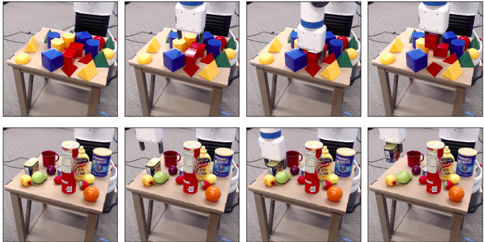
- The pipeline enabled a Fetch robot to detect and pick up the target object in 38 out of 40 trials in increasingly cluttered scenes, and a detector trained on a Spam can succeeded in 9 of 10 trials with previously unseen YCB food distractors.
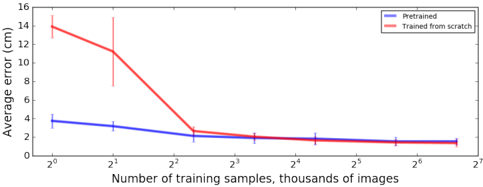
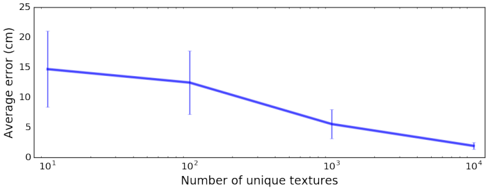
- Ablations found sensitivity to number of training images, number of unique textures, presence of distractors in training, and camera randomization; random noise had negligible effect. Performance improved up to around 50,000 training samples, and degraded significantly with fewer than 1,000 textures.
- ImageNet pretraining was not essential with enough data: random weight initialization achieved nearly the same real-world transfer performance as pretrained initialization, though pretraining helped in the low-data regime.
Methods
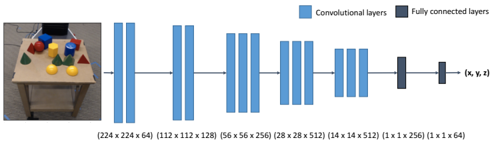
- The authors trained a modified VGG-16 convolutional neural network to map a single 224×224 monocular webcam image to Cartesian coordinates of object(s) of interest, using simulated images rendered by MuJoCo.
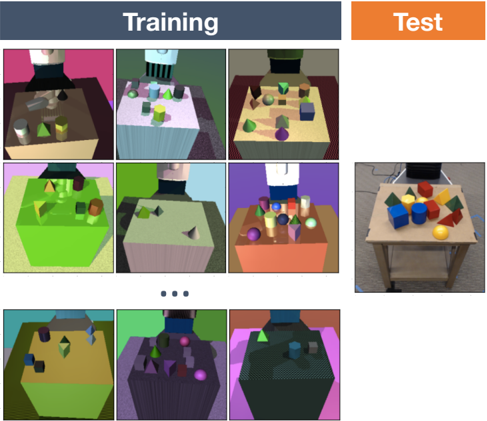
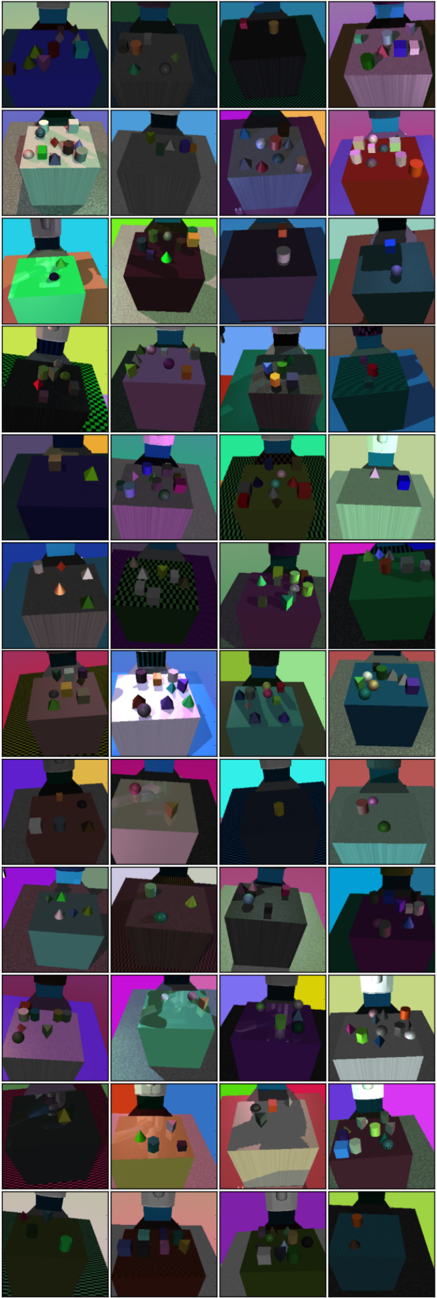
- Domain randomization varied number/shape of distractors, object positions and textures, table/floor/skybox/robot textures, camera position/orientation/field of view, number and properties of lights, and image noise. Textures were random RGB values, gradients, or checker patterns; 0–10 distractor objects were added per scene.
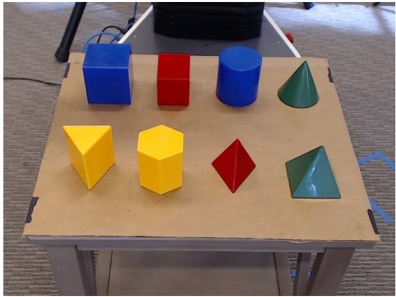
- Training used stochastic gradient descent with Adam on an L2 loss, learning rates around 1e-4, and batch sizes of 25, 50, or 100. Evaluation used 480 webcam images of eight geometric objects at 70–105 cm from a fixed camera, with 60 labeled images per object: 20 alone, 20 with distractors, and 20 partially occluded.
Limitations
- The paper states that the detectors still overfit simulated training data: simulated error was 0.3–0.5 cm versus about 1.5 cm in the real world, and no real-world validation could be done during training because no real data were assumed available.
- The paper states future work is needed for contact-rich manipulation or higher precision, and that the method fixes table height, effectively making the task 2D pose estimation from a single monocular uncalibrated camera.
- Evident from the text: evaluation is limited to eight geometric objects plus one Spam can, the test camera position remains constant across all images, and lighting and surrounding scene were not controlled.
Model-written summary. Check it against the paper before relying on it.
Integrity signals
Registry
Cites
Statistics
Figures
Verification
Claims the paper makes
2 Valid · 8 Not valid · 7 Not checked · 32 Own results and interpretations
The cited sources support only part of this claim — read each source’s verdict below.
In the paper
“Although previous work demonstrated the ability to perform robotic control using a neural network pretrained on ImageNet and fine-tuned on randomized rendered pixels [37], this paper provides the first demonstration that domain randomization can be useful for robotic tasks requiring precision.”
What the sources say
- Partly supportedcites [37] [37] Fereshteh Sadeghi and Sergey Levine. (cad) 2 RL: Real single-image flight without a single real image. arXiv preprint arXiv:1611.04201 , 2016. - sourceExperimental — accuracy not yet measured
The citation [37] is attached to the preceding claim about prior work, not to the citing authors’ claim that their own paper is the first to demonstrate precision robotics. Section 3.1 (p. 4) says LSDA pretrains a CNN on ImageNet classification data and fine-tunes it, but for object detection. It does not report robotic control or fine-tuning on randomized rendered pixels. (LLM, conf=0.84)
boostedstates a cause- Asserted: passes — The authors put it forward as true.
- Checkable: passes — It can be checked against evidence.
- Load-bearing: passes — The paper’s conclusions depend on it.
- Based: passes — The paper gives a reason why it holds.
- Partly supported
The cited sources that could be checked couldn’t confirm or dispute this claim.
In the paper
“Rather than relying on controller robustness, Yu et al. [53] use a model trained on varied physics to perform system identification using online trajectory data, but their approach is not shown to succeed in the real world.”
What the sources say
- Could not verifycites [53] [53] Wenhao Yu, C Karen Liu, and Greg Turk. Preparing for the unknown: Learning a universal policy with online system identification. arXiv preprint arXiv:1702.02453 , 2017. - sourceExperimental — accuracy not yet measured
The cited paper discusses image classification and localisation with convolutional networks (A.1, p. 10; A.2, p. 11), not Yu et al.'s approach. Searches for varied-physics training, online trajectory-based system identification, and real-world success found no passage addressing the claim. Our copy therefore cannot verify it. (LLM, conf=0.78)
plain- Asserted: passes — The authors put it forward as true.
- Checkable: passes — It can be checked against evidence.
- Load-bearing: unclear — It is unclear whether the paper’s conclusions depend on it.
- Based: passes — The paper gives a reason why it holds.
- Could not verify
The cited sources that could be checked couldn’t confirm or dispute this claim.
In the paper
“Though using realistic RGB rendering alone has had limited success for transferring to real robotic tasks [16], incorporating realistic simulation of depth information can allow models trained on rendered images to transfer reasonably well to the real world [32].”
What the sources say
- Could not verifycites [16] [16] Stephen James and Edward Johns. 3d simulation for robot arm control with deep q-learning. arXiv preprint arXiv:1609.03759 , 2016. - sourceExperimental — accuracy not yet measured
The Introduction (§1) and Conclusion (§8) describe Adam as a method for stochastic optimization, while the CNN experiment (§6.3) concerns training on image datasets. Searches for realistic RGB rendering and sim-to-real robotic transfer found no passage addressing whether RGB rendering alone has had limited success on real robotic tasks. (LLM, conf=0.78)
plain- Asserted: passes — The authors put it forward as true.
- Checkable: passes — It can be checked against evidence.
- Load-bearing: passes — The paper’s conclusions depend on it.
- Based: passes — The paper gives a reason why it holds.
- Could not verify
The cited sources that could be checked couldn’t confirm or dispute this claim.
In the paper
“However, their experiments - collision avoidance in hallways and open spaces - do not demonstrate the ability to deal with high-precision tasks.”
What the sources say
- Could not verifycites [37] [37] Fereshteh Sadeghi and Sergey Levine. (cad) 2 RL: Real single-image flight without a single real image. arXiv preprint arXiv:1611.04201 , 2016. - sourceExperimental — accuracy not yet measured
The Experiments section (p. 5) evaluates LSDA on an object-detection dataset, not Sadeghi and Levine’s collision-avoidance experiments. Searches for Sadeghi and Levine, hallway or open-space collision avoidance, and high-precision tasks found no passage addressing the claim. (LLM, conf=0.76)
plain- Asserted: passes — The authors put it forward as true.
- Checkable: passes — It can be checked against evidence.
- Load-bearing: passes — The paper’s conclusions depend on it.
- Based: passes — The paper gives a reason why it holds.
- Could not verify
A result the paper reports from its own data — it cites no other source for it, so there is none to check. The quote shows it is in the paper.
In the paper
“However, using a pre-trained model can significantly improve performance when less training data is used.”
plainstates a cause- Asserted: passes — The authors put it forward as true.
- Checkable: passes — It can be checked against evidence.
- Load-bearing: unclear — It is unclear whether the paper’s conclusions depend on it.
- Based: passes — The paper gives a reason why it holds.
29 more claims
Create a free account to see all 49 claims and to verify the 7 references still open.
- Probably not a substantial claim. 11
- It may state two separate claims as one. 8
Claims other papers make about this one
Each is checked against this paper’s own text: does it say what the citing paper says it does?
The source backs part of the claim, not all of it — or backs it for a different population, condition or comparison.
In the citing paper
“Most policies trained in simulation generalize poorly to the real-world due to agents adapting to specific visual details of the simulator.”
From Language-Based Augmentation to Address Shortcut Learning in Object-Goal Navigation (2023) · cites this paper as [8]
Experimental — accuracy not yet measuredThe source backs part of the claim, not all of it — or backs it for a different population, condition or comparison.
In the citing paper
“In robotic vision tasks including object localization [53], object detection [54], pose estimation [55], and semantic segmentation [56], the training data from simulator always have different textures, lighting, and camera positions from the realistic environments.”
From Sim-to-Real Transfer in Deep Reinforcement Learning for Robotics: a Survey (2020) · cites this paper as [53]
Experimental — accuracy not yet measuredThe source backs part of the claim, not all of it — or backs it for a different population, condition or comparison.
In the citing paper
“These artifacts limit the applicability of generative videos in physics-sensitive domains such as robotics [25,26], autonomous driving [27], simulationbased design, and scientific visualization [28].”
From PhyStruct-Video: Structured Physics State Spaces for Physically Consistent Video Generation (2025) · cites this paper as [25]
Experimental — accuracy not yet measuredThe source backs part of the claim, not all of it — or backs it for a different population, condition or comparison.
In the citing paper
“In domain randomization, the inputs during learning are “randomized” in the sense of being warped or corrupted in particular ways.”
From The overfitted brain: Dreams evolved to assist generalization (2021) · cites this paper as [144]
Experimental — accuracy not yet measuredThe source backs part of the claim, not all of it — or backs it for a different population, condition or comparison.
In the citing paper
“Domain randomization is a domain generalization technique that introduces drastic changes in the training image appearances, which forces the network to learn domain-invariant features between training and target domains [39].”
From A Fully Differentiable Framework for 2D/3D Registration and the Projective Spatial Transformers (2024) · cites this paper as [39]
Experimental — accuracy not yet measured
8 more claims about this paper
Create a free account to see every claim other papers make about this one.
Self-check
Percentages, sums and reported differences re-computed from the paper’s own numbers.
Each contradiction between two passages listed here was confirmed by an independent check.
Rated minor: it would not touch a result — a value no result rests on, a p-value that stays on the same side of the significance level, or a conflict that is clerical, resolved elsewhere in the paper, or outside its own findings.
In the paper
§ A. Experimental Setup · p. 4
“Each training sample consists of (a) a rendered image of the object and one or more distractors (also from among the geometric object set) on a simulated tabletop”
§ A. Domain randomization · p. 4
“Between 0 and 10 distractor objects are added to the table in each scene.”
Citations
Cites
Very Deep Convolutional Networks for Large-Scale Image Recognition
Simonyan, K., & Zisserman, A. (2014) · arXiv · doi:10.48550/arxiv.1409.1556 · Cited by 114,148 · cited 1×
“In particular, we use a modified version the VGG-16 architecture [42] shown in Figure 2.”
MethodAdam: A Method for Stochastic Optimization
Kingma, D. P., & Ba, J. (2014) · arXiv · doi:10.48550/arxiv.1412.6980 · Cited by 98,946 · cited 1×
“We found that using a learning rate of around 1e − 4 (as opposed to the standard 1e − 3 for Adam) improved convergence and helped avoid a common local optimum, mapping all objects to the center of the table.”
MethodLeCun, Y., Bengio, Y., & Hinton, G. (2015) · Nature · doi:10.1038/nature14539 · Cited by 84,126
Human-level control through deep reinforcement learning
Mnih, V., Kavukcuoglu, K., Silver, D., Rusu, A. A., Veness, J., Bellemare, M. G., Graves, A., Riedmiller, M., Fidjeland, A. K., Ostrovski, G., et al. (2015) · Nature · doi:10.1038/nature14236 · Cited by 30,357 · cited 3×
“Learning in simulation is especially promising for building on recent results using deep reinforcement learning to achieve human-level performance on tasks like Atari [27] and robotic control [21], [38].”
BackgroundResultHow transferable are features in deep neural networks?
Yosinski, J., Clune, J., Bengio, Y., & Lipson, H. (2014) · arXiv · doi:10.48550/arxiv.1411.1792 · Cited by 6,061 · cited 1×
“A variety of approaches have been proposed, including re-training the model in the target domain (e.g., [52]), adapting the weights of the model based on the statistics of the source and target domains (e.g., [22]), learning invariant features between domains (e.g., [47]), and learning a mapping…”
BackgroundMuJoCo: A physics engine for model-based control
Todorov, E., Erez, T., & Tassa, Y. (2012) · 2012 IEEE/RSJ International Conference on Intelligent Robots and Systems · doi:10.1109/iros.2012.6386109 · Cited by 4,767 · cited 1×
“We render images using the MuJoCo Physics Engine’s [45] built-in renderer.”
MethodTrust region policy optimization
Schulman, J., Levine, S., Moritz, P., Jordan, M. I., & Abbeel, P. (2015) · arXiv · doi:10.48550/arxiv.1502.05477 · Cited by 4,578 · cited 1×
“Learning in simulation is especially promising for building on recent results using deep reinforcement learning to achieve human-level performance on tasks like Atari [29] and robotic control [26], [41].”
ResultSelf-citationLearning Transferable Features with Deep Adaptation Networks
Long, M., Cao, Y., Wang, J., & Jordan, M. I. (2015) · arXiv · doi:10.48550/arxiv.1502.02791 · Cited by 4,505 · cited 1×
“omputer vision community has devoted significant study to the problem of adapting vision-based models trained in a source domain to a previously unseen target domain (see, e.g., [9], [14], [15], [19], [23], [25], [51]). A variety of approaches have been proposed, including re-training the model in the target domain (e.…”
BackgroundEnd-to-End Training of Deep Visuomotor Policies
Levine, S., Finn, C., Darrell, T., et al. (2015) · Journal of machine learning research · doi:10.5555/2946645.2946684 · Cited by 3,987
Describing Textures in the Wild
Cimpoi, M., Maji, S., Kokkinos, I., Mohamed, S., & Vedaldi, A. (2014) · 2014 IEEE Conference on Computer Vision and Pattern Recognition · doi:10.1109/cvpr.2014.461 · Cited by 2,438 · cited 1×
“To examine how our detectors would perform on objects with complex textures, we created simulated scenes in which the object of interest is given a texture from the Describable Textures Dataset (DTD) [4].”
Method
Research works printed but not linked: 3
- [24] David G Lowe. Three-dimensional object recognition from single two-dimensional images. Artificial intelligence , 31(3):355-395, 1987. -
- [49] Melonee Wise, Michael Ferguson, Derek King, Eric Diehr, and David Dymesich. Fetch and freight: Standard platforms for service robot applications. In Workshop on Autonomous Mobile Service Robots , 2016. -
- sucan, 0, MoveIt!
Cited by
Items 701–800 of 2,970
Scenic: Language-Based Scene Generation.Preprint
Fremont, D. J., Yue, X., Dreossi, T., Ghosh, S., Sangiovanni-Vincentelli, A. L., & Seshia, S. A. (2018) · arXiv (Cornell University) · Cited by 23
Towards Practical Multi-Object Manipulation using Relational Reinforcement LearningPreprint
Li, R., Jabri, A., Darrell, T. J., et al. (2019) · arXiv (Cornell University) · doi:10.48550/arxiv.1912.11032 · Cited by 21
“In RL settings, this idea has translated into domain randomization [31].”
MethodSim-to-Real Transfer for Vision-and-Language NavigationPreprint
Anderson, P., Shrivastava, A., Truong, J., Majumdar, A., Parikh, D., Batra, D., & Lee, S. (2020) · arXiv (Cornell University) · doi:10.48550/arxiv.2011.03807 · Cited by 110
“To mitigate the impact of visual differences between sim and real, we train the VLN agent and the subgoal model using domain randomization [24].”
MethodAn Empirical Study of Assumptions in Bayesian OptimisationPreprint
Cowen-Rivers, A. I., Lyu, W., Tutunov, R., Wang, Z., Grosnit, A., Griffiths, R., Hao, J., Wang, J., Peters, J., & Ammar, H. B. (2020) · arXiv (Cornell University) · Cited by 25
Learning Periodic Tasks from Human Demonstrations
Yang, J., Zhang, J., Settle, C., Rai, A., Antonova, R., & Bohg, J. (2022) · 2022 International Conference on Robotics and Automation (ICRA) · doi:10.1109/icra46639.2022.9812402 · Cited by 21
“Some works utilize large-scale training in simulation and transfer the learned policies to the real robot [40], [41].”
BackgroundReplay-Guided Adversarial Environment Design
Jiang, M., Dennis, M., Parker-Holder, J., Foerster, J., Grefenstette, E., & Rocktäschel, T. (2021) · arXiv · doi:10.48550/arxiv.2110.02439 · Cited by 21
“The DCD framework also encompasses adaptive domain randomization methods [DR, 20, 15], which have seen success in assisting sim2real transfer for robotics [39, 16, 1, 25].”
MethodADAPT: Zero-Shot Adaptive Policy Transfer for Stochastic Dynamical Systems
Harrison, J., Garg, A., Ivanovic, B., Zhu, Y., Savarese, S., Fei-Fei, L., & Pavone, M. (2017) · arXiv · doi:10.48550/arxiv.1707.04674 · Cited by 21
BrackishMOT: The Brackish Multi-Object Tracking Dataset
Pedersen, M., Lehotský, D., Nikolov, I. A., & Moeslund, T. B. (2023) · Lecture notes in computer science · doi:10.1007/978-3-031-31435-3_2 · Cited by 37
Solo: Data Discovery Using Natural Language Questions Via A Self-Supervised Approach
Wang, Q., & Fernandez, R. C. (2023) · Proceedings of the ACM on Management of Data · doi:10.1145/3626756 · Cited by 44
“A small set of triples are returned and together with the question are sent to the released relevance model (t3) to predict the most relevant tables.”
BackgroundStyle-transfer GANs for bridging the domain gap in synthetic pose estimator training
Rojtberg, P., Pöllabauer, T., & Kuijper, A. (2020) · IEEE International Conference on Artificial Intelligence and Virtual Reality (AIVR) · doi:10.1109/aivr50618.2020.00039 · Cited by 24
Reducing Tactile Sim2Real Domain Gaps via Deep Texture Generation Networks
Jianu, T., Gomes, D. F., & Luo, S. (2022) · Proceedings - IEEE International Conference on Robotics and Automation/Proceedings · doi:10.1109/icra46639.2022.9811801 · Cited by 37
“When the training images are collected in simulation for Sim2Real learning, one other form of augmentation is to directly augment the simulation data, by randomising object colours, scene illumination or the environment physics [9].”
BackgroundMethodKarimi, M., & Ahmadi, M. (2021) · IEEE Robotics and Automation Letters · doi:10.1109/lra.2021.3133934 · Cited by 22
Don’t Touch What Matters: Task-Aware Lipschitz Data Augmentation for Visual Reinforcement Learning
Yuan, Z., Ma, G., Mu, Y., Xia, B., Yuan, B., Wang, X., Luo, P., & Xu, H. (2022) · International Joint Conference on Artificial Intelligence · doi:10.24963/ijcai.2022/514 · Cited by 47
Policy Fusion Transfer: The Knowledge Transfer for Different Robot Peg-in-Hole Insertion Assemblies
Men, Y., Jin, L., Cui, T., Bai, Y., Li, F., & Song, R. (2023) · IEEE Transactions on Instrumentation and Measurement · doi:10.1109/tim.2023.3305709 · Cited by 20
“[24] successfully transferred the deep neural network trained on RGB images in simulation to the real world for the first time by using the method of domain”
MethodLearning Keypoints for Robotic Cloth Manipulation Using Synthetic Data
Lips, T., Gusseme, V.-L. D., & wyffels, F. (2024) · IEEE Robotics and Automation Letters · doi:10.1109/lra.2024.3405335 · Cited by 37
“We train detectors for both T-shirts, towels and shorts and obtain an average precision of 64% and an average keypoint distance of 18 pixels.”
MethodRepAugment: Input-Agnostic Representation-Level Augmentation for Respiratory Sound Classification
Kim, J.-W., Toikkanen, M., Bae, S., Kim, M., & Jung, H.-Y. (2024) · Annual International Conference of the IEEE Engineering in Medicine and Biology Society (EMBC) · doi:10.1109/embc53108.2024.10782363 · Cited by 39
“They are related to domain randomization [20], which involves the random alteration of samples while ensuring that they remain closely aligned with the underlying data manifold.”
BackgroundPhysics-based scene-level reasoning for object pose estimation in clutter
Mitash, C., Boularias, A., & Bekris, K. E. (2019) · The International Journal of Robotics Research · doi:10.1177/0278364919846551 · Cited by 22
“There is also a wide interest in bridging the domain gap between simulated and real images by domain randomization (Tobin et al. (2017)) or with a generative learning technique (Shrivastava et al. (2017)).”
BackgroundTransferring Visuomotor Learning from Simulation to the Real World for Robotics Manipulation Tasks
Nguyen, P. D. H., Fischer, T., Chang, H. J., Pattacini, U., Metta, G., & Demiris, Y. (2018) · IEEE/RSJ International Conference on Intelligent Robots and Systems (IROS) · doi:10.1109/iros.2018.8594519 · Cited by 20
“domain randomization techniques [23], [24].”
Adaptive Curriculum Generation from Demonstrations for Sim-to-Real Visuomotor Control
Hermann, L., Argus, M. J., Eitel, A., Amiranashvili, A., Burgard, W., & Brox, T. (2020) · Proceedings - IEEE International Conference on Robotics and Automation/Proceedings · doi:10.1109/icra40945.2020.9197108 · Cited by 32
“For sim-to-real transfer of our policy we build upon an efficient technique called domain randomization [22].”
MethodRobust Reinforcement Learning-based Autonomous Driving Agent for Simulation and Real World
Almasi, P., Moni, R., & Gyires-Tóth, B. (2020) · International Joint Conference on Neural Networks (IJCNN) · doi:10.1109/ijcnn48605.2020.9207497 · Cited by 34
“[17] uses this method for object localization on real-world images by training a neural network in a simulator with generated images.”
MethodA Learning-based Robotic Bin-picking with Flexibly Customizable Grasping Conditions
Tachikake, H., & Watanabe, W. (2020) · IEEE/RSJ International Conference on Intelligent Robots and Systems (IROS) · doi:10.1109/iros45743.2020.9340904 · Cited by 22
“Domain Randomization [11], [22] could be an attractive alternative for reducing the collection of real-world data.”
BackgroundObject Detection And Autoencoder-Based 6d Pose Estimation For Highly Cluttered Bin Picking
Höfer, T., Shamsafar, F., Benbarka, N., & Zell, A. (2021) · Proceedings - International Conference on Image Processing · doi:10.1109/icip42928.2021.9506304 · Cited by 28
“To bridge the gap to reality, random augmentations and domain randomization techniques have been applied [15, 16].”
MethodRobust Adversarial Reinforcement Learning with Dissipation Inequation Constraint
Zhai, P., Luo, J., Dong, Z., Zhang, L., Wang, S., & Yang, D. (2022) · Proceedings of the AAAI Conference on Artificial Intelligence · doi:10.1609/aaai.v36i5.20481 · Cited by 32
“One effective method to learn robustness is domain randomization (Peng et al. 2018; Tobin et al. 2017) whereby a professionally knowledgeable designer determines the uncertain model components in the task.”
MethodInsights and Example Use Cases on Industrial Transfer Learning
Maschler, B., Vietz, H., Tercan, H., Bitter, C., Meisen, T., & Weyrich, M. (2022) · Procedia CIRP · doi:10.1016/j.procir.2022.05.017 · Cited by 24
Yue, X., Zhang, Y., Zhao, S., et al. (2019) · arXiv (Cornell University) · doi:10.48550/arxiv.1909.00889 · Cited by 20
“This is partially due to the community’s recent exploration to embodied vision [46, 62, 2], in which the perception has to be embodied and purposive for an agent to actively perceive and/or navigate through a physical environment [7, 10].”
BackgroundInfluentialGeneralized Hindsight for Reinforcement Learning
Li, A. C., Pinto, L., & Abbeel, P. (2020) · neural information processing systems · doi:10.48550/arxiv.2002.11708 · Cited by 72
“Another way of getting generalizable policies is through domain randomization (Sadeghi & Levine, 2016; Tobin et al., 2017), i.e. train an unconditional policy across all of the domains in the multi-task learning setting.”
BackgroundSelf-citationVisuoSpatial Foresight for Multi-Step, Multi-Task Fabric ManipulationPreprint
Hoque, R., Seita, D., Balakrishna, A., et al. (2020) · arXiv (Cornell University) · doi:10.48550/arxiv.2003.09044 · Cited by 20
“Finally, to enable transfer of policies trained in simulation to the real-world, we adjust the domain randomization [58] techniques so that color, brightness, and positional hyperparameters are fixed per episode to ensure that the video prediction model learns to only focus on predicting changes in…”
MethodKadi, H. A., & Terzić, K. (2023) · Sensors · doi:10.3390/s23052389 · Cited by 27
“Whilst only Lee et al. (2021) [229] collect real-world data, most learning-based methods operate in simulated environments, where some apply domain randomisation [81] to achieve Sim2Real [38,227,233,237].”
BackgroundMethodInfluentialRanjan, P., & Girdhar, A. (2023) · OPJU International Technology Conference on Smart Computing for Innovation and Advancement in Industry (OTCON) · doi:10.1109/otcon56053.2023.10114005 · Cited by 19
Park, S.-Y., Lee, C., Kim, H., & Ahn, S. (2024) · IEEE Access · doi:10.1109/access.2024.3359268 · Cited by 21
“Tobin et al. argued that DRL through domain randomization in simulations has limitations in completely resolving the Sim2Real gap [23].”
BackgroundSim-to-real transfer of adaptive control parameters for AUV stabilisation under current disturbance
Chaffre, T., Wheare, J., Lammas, A., Santos, P. E., Chenadec, G. L., Sammut, K., & Clément, B. (2024) · The International Journal of Robotics Research · doi:10.1177/02783649241272115 · Cited by 31
“Various techniques exist to reduce the reality gap between simulation and the real world, such as Domain Randomisation (DR) (Tobin et al. 2017).”
InfluentialWang, Z., Chen, C., & Dong, D. (2022) · IEEE Transactions on Neural Networks and Learning Systems · doi:10.1109/tnnls.2022.3160173 · Cited by 22
Learning Interactive Driving Policies via Data-driven Simulation
Wang, T.-H. J., Amini, A., Schwarting, W., Gilitschenski, I., Karaman, S., & Rus, D. L. (2022) · Proceedings - IEEE International Conference on Robotics and Automation/Proceedings · doi:10.1109/icra46639.2022.9812407 · Cited by 28
“However, synthetically generated images are typically still insufficient to enable zero shot transfer of learned policies and require techniques such as domain-randomization [19], [20] or style transfer [10] to enable real-world deployment of learned policies.”
BackgroundA Deep Learning Driven Algorithmic Pipeline for Autonomous Navigation in Row-Based Crops
Cerrato, S., Mazzia, V., Salvetti, F., Martini, M., Angarano, S., Navone, A., & Chiaberge, M. (2024) · IEEE Access · doi:10.1109/access.2024.3465873 · Cited by 43
“Moreover, we make exclusive usage of synthetic data and domain randomization, [24], to enable affordable supervised learning and simultaneously bridge the domain gap between simulation and reality.”
BackgroundMethodGeneralization in transfer learning: robust control of robot locomotion
Ada, S. E., Uğur, E., & Akın, H. L. (2022) · Robotica · doi:10.1017/s0263574722000625 · Cited by 36
“[4] compared regularization techniques for deep reinforcement learning such as policy network size reduction, soft actor critic entropy regularizer[11], multi-domain learning[12], structured control net [13] and adversarially robust policy learning(APRL)[14] using AUC.”
MethodDeep reinforcement learning for real-world quadrupedal locomotion: a comprehensive review
Zhang, H., Li, H., & Wang, D. (2022) · Intelligence & Robotics · doi:10.20517/ir.2022.20 · Cited by 32
“A straightforward approach is domain randomization, a class ofmethods that uses a wide range of environmental parameters and sensor noises to learn robust robot behaviors [39,77,78].”
BackgroundLearning to Grasp on the Moon from 3D Octree Observations with Deep Reinforcement Learning
Orsula, A., Bøgh, S., Olivares-Méndez, M. A., & Martínez, C. (2022) · IEEE/RSJ International Conference on Intelligent Robots and Systems (IROS) · doi:10.1109/iros47612.2022.9981661 · Cited by 35
“Here, RGB images are commonly used [16], [19], [20], where depth maps or their inclusion in RGB-D data are also common [17].”
MethodAutonomous Decision-Making for Aerobraking via Parallel Randomized Deep Reinforcement Learning
Falcone, G., & Putnam, Z. R. (2022) · IEEE Transactions on Aerospace and Electronic Systems · doi:10.1109/taes.2022.3221697 · Cited by 21
“Studies focusing on generalization are booming and one particular research direction attempts to tackle generalization is domain randomization (DR), which consists of randomizing the environment and the dynamics across a distribution of parameters [50], [51], [52], [53].”
BackgroundLearning to Drive by Watching YouTube Videos: Action-Conditioned Contrastive Policy Pretraining
Zhang, Q., Peng, Z., & Zhou, B. (2022) · Lecture notes in computer science · doi:10.1007/978-3-031-19809-0_7 · Cited by 62
“Visual and physical attributes of the environment and the agent can be randomized through domain randomization [35,2,28].”
BackgroundAutomatic Image Generation Pipeline for Instance Segmentation of Deformable Linear Objects
Dirr, J., Gebauer, D., Yao, J., et al. (2023) · Sensors · doi:10.3390/s23063013 · Cited by 19
“In domain randomization, various and even unrealistic expressions of scenes are generated to generalize models to the real world by showing enough variability in the training data [20].”
BackgroundKadokawa, Y., Zhu, L., Tsurumine, Y., & Matsubara, T. (2023) · Robotics and Autonomous Systems · doi:10.1016/j.robot.2023.104425 · Cited by 29
Synthetic Data for Defect Segmentation on Complex Metal Surfaces
Fulir, J., Bosnar, L., Hagen, H., & Gospodnetić, P. (2023) · IEEE/CVF Conference on Computer Vision and Pattern Recognition Workshops (CVPRW) · doi:10.1109/cvprw59228.2023.00465 · Cited by 31
“Domain randomization [46] is a technique which enlarges the variance of the source domain to increase the chance of covering the target domain, while making it possible for the model to learn more robust features.”
BackgroundCortical Analysis of Heterogeneous Clinical Brain MRI Scans for Large-Scale Neuroimaging Studies
Gopinath, K. K., Greve, D. N., Das, S., Arnold, S., Magdamo, C., & Iglesias, J. E. (2023) · Lecture notes in computer science · doi:10.1007/978-3-031-43993-3_4 · Cited by 33
AnyStar: Domain randomized universal star-convex 3D instance segmentation
Dey, N., Abulnaga, S. M., Billot, B., Türk, E. A., Grant, P. E., Dalca, A. V., & Golland, P. (2024) · IEEE Winter Conference on Applications of Computer Vision · doi:10.1109/wacv57701.2024.00742 · Cited by 36
“Instead of synthesizing high-fidelity photorealistic training data, domain randomization methods [21, 48, 49] anticipate domain shifts at deployment by synthesizing unrealistic training examples with much higher variability using fully-controllable generative models.”
BackgroundMethodPereida, K., Kooijman, D., Duivenvoorden, R. R. P. R., & Schoellig, A. P. (2018) · International Journal of Adaptive Control and Signal Processing · doi:10.1002/acs.2887 · Cited by 26
“In the work of Tobin et al, 19 simulated images generated by randomizing rendering in a simulator were used to train models for object localization.”
MethodROADS: Randomization for Obstacle Avoidance and Driving in Simulation
Pouyanfar, S., Saleem, M., George, N., & Chen, S. (2019) · IEEE/CVF Conference on Computer Vision and Pattern Recognition Workshops (CVPRW) · doi:10.1109/cvprw.2019.00166 · Cited by 26
“[25] proposed DR for object localization and robot manipulation.”
BackgroundInfluentialGanapathi, A., Sundaresan, P., Thananjeyan, B., Balakrishna, A., Seita, D., Grannen, J., Hwang, M., Hoque, R., Gonzalez, J. E., Jamali, N., et al. (2020) · Cited by 21
Automated Quantitative Analyses of Fatigue-Induced Surface Damage by Deep Learning
Thomas, A., Durmaz, A. R., Straub, T., & Eberl, C. (2020) · Materials · doi:10.3390/ma13153298 · Cited by 18
“Research in the field of data augmentation is still ongoing and new techniques including oversampling based augmentation such as neural style transfer [35], generative adversarial networks (GANs) [36] and image mixing [37] flourish.”
BackgroundOne Billion Audio Sounds from GPU-Enabled Modular Synthesis
Turian, J. P., Shier, J., Tzanetakis, G., McNally, K., & Henry, M. (2021) · International Conference on Digital Audio Effects (DAFx) · doi:10.23919/dafx51585.2021.9768246 · Cited by 45
“[12] argue that learning over synthesized data enables transfer learning to the real-world.”
BackgroundLim, J. X.-Y., & Pham, Q. (2021) · Virtual and Physical Prototyping · doi:10.1080/17452759.2021.1927762 · Cited by 19
“Recent approaches in using synthetic training data proved to be rather successful (Buls et al. 2018; Dwibedi, Misra, and Hebert 2017; Tobin et al. 2017, 2019; Rajpura, Bojinov, and Hedge 2017; Danielczuk et al. 2019).”
BackgroundMethodInfluentialLearning of Parameters in Behavior Trees for Movement Skills
Mayr, M., Chatzilygeroudis, K. I., Ahmad, F., Nardi, L., & Krueger, V. (2021) · IEEE/RSJ International Conference on Intelligent Robots and Systems (IROS) · doi:10.1109/iros51168.2021.9636292 · Cited by 29
Lee, J., Roh, S., Shin, J., & Sohn, K. (2019) · Sensors · doi:10.3390/s19051227 · Cited by 24
“Recently in robotics, this kind of domain randomization skill along with a reliable simulator is being widely adopted to overcome the difficulty in securing labeled data to train robots [12,13].”
BackgroundToward Sim-to-Real Directional Semantic Grasping
Iqbal, S., Tremblay, J., Campbell, A., Leung, K., To, T., Cheng, J., Leitch, E., McKay, D., & Birchfield, S. T. (2020) · Proceedings - IEEE International Conference on Robotics and Automation/Proceedings · doi:10.1109/icra40945.2020.9197310 · Cited by 30
“During training, domain randomization [13] is applied to bridge the reality gap.”
Adapting Object Detectors with Conditional Domain NormalizationPreprint
Su, P., Wang, K., Zeng, X., et al. (2020) · arXiv (Cornell University) · doi:10.48550/arxiv.2003.07071 · Cited by 19
“It has achieved noticeable progress in various machine learning tasks, from image classification [23, 24, 27], semantic segmentation [37, 40, 48], object detection [34, 47] to reinforcement learning [20, 29, 39].”
BackgroundMethodInfluentialSim-to-real: Six-legged Robot Control with Deep Reinforcement Learning and Curriculum Learning
Qin, B., Gao, Y., & Bai, Y. (2019) · 2019 4th International Conference on Robotics and Automation Engineering (ICRAE) · doi:10.1109/icrae48301.2019.9043822 · Cited by 18
“Previous studies on sim-to-real have been carried out [20,21,22].”
BackgroundAsymmetric self-play for automatic goal discovery in robotic manipulation
OpenAI, O., Plappert, M., Sampedro, R., Xu, T., Akkaya, I., Kosaraju, V., Welinder, P., D'Sa, R., Petron, A., Pinto, H. P. D. O., et al. (2021) · arXiv · doi:10.48550/arxiv.2101.04882 · Cited by 18
“Domain randomization (Sadeghi & Levine, 2017b; Tobin et al., 2017; OpenAI et al., 2020) manually defines a distribution of simulated environments, but in service of generalizing to the same task in the real world.”
BackgroundSelf-citationExamining the simulation-to-reality gap of a wheel loader digging in deformable terrain
Aoshima, K., & Servin, M. (2024) · Multibody System Dynamics · doi:10.1007/s11044-024-10005-5 · Cited by 27
“In [41], the reality gap from simulators with low fidelity rendering was bridged by randomizing scene properties such as lighting, textures, and camera placement.”
BackgroundDomain Generalization Through Data Augmentation: A Survey of Methods, Applications, and Challenges
Mai, J., Gao, C.-Z., & Bao, J. (2025) · Mathematics · doi:10.3390/math13050824 · Cited by 27
Learning contact-rich whole-body manipulation with example-guided reinforcement learning
Barreiros, J. A. L., Önol, A. Ö., Zhang, M., Creasey, S., Goncalves, A., Beaulieu, A., Bhat, A. D., Tsui, K., & Alspach, A. N. (2025) · Science Robotics · doi:10.1126/scirobotics.ads6790 · Cited by 46
A Hybrid Learning Method for System Identification and Optimal Control
Schubnel, B., Carrillo, R. E., Alet, P., & Hutter, A. (2020) · IEEE Transactions on Neural Networks and Learning Systems · doi:10.1109/tnnls.2020.3016906 · Cited by 22
“, [10] and [11].”
Design and Flight Test Validation of an AI-Based Longitudinal Flight Controller for Fixed-wing UASs
Chowdhury, M., & Keshmiri, S. (2022) · IEEE Aerospace Conference (AERO) · doi:10.1109/aero53065.2022.9843777 · Cited by 19
Wada, D., Araujo-Estrada, S. A., & Windsor, S. P. (2022) · IEEE Robotics and Automation Letters · doi:10.1109/lra.2022.3205442 · Cited by 23
“An example is the domain randomization approach, where parameters in the source domain, such as the visual appearance of objects [16], [17], [18], or dynamic parameters of the system [11], [12], [19], [20], are randomized during training so that the controllers learn”
BackgroundRobotic Manipulations of Cylinders and Ellipsoids by Ellipse Detection With Domain Randomization
Dong, H., Zhou, J., Qiu, C., Prasad, D. K., & Chen, I. (2022) · IEEE/ASME Transactions on Mechatronics · doi:10.1109/tmech.2022.3193895 · Cited by 21
“2) Allowing for domain randomization technology [21], we build a mathematical model to create synthetic ellipse datasets by Blenderproc [24] to realize sim-to-real transfer for the proposed supervised learning model.”
BackgroundMethodLearning Reward Functions for Robotic Manipulation by Observing Humans
Alakuijala, M., Dulac-Arnold, G., Mairal, J., Ponce, J., & Schmid, C. (2023) · Proceedings - IEEE International Conference on Robotics and Automation/Proceedings · doi:10.1109/icra48891.2023.10161178 · Cited by 36
The New Agronomists: Language Models are Experts in Crop Management
Wu, J., Lai, Z., Chen, S., Tao, R., Pan, Z., & Hovakimyan, N. (2024) · IEEE/CVF Conference on Computer Vision and Pattern Recognition Workshops (CVPRW) · doi:10.1109/cvprw63382.2024.00543 · Cited by 47
“To enhance the robustness of our trained management policies against the challenges posed by the sim-to-real gap , we plan to incorporate domain and dynamics randomization techniques, as suggested in previous studies [54, 66].”
Zhang, Z., Zhu, Y., & Zhu, S. C. (2020) · IEEE/RSJ International Conference on Intelligent Robots and Systems (IROS) · doi:10.1109/iros45743.2020.9340843 · Cited by 24
“In general, Sim2Real can be categorized into three different strategies: domain adaptation [13], [14], [15], system identification [16], and domain randomization [17].”
BackgroundUnsupervised state representation learning with robotic priors: a robustness benchmarkPreprint
Lesort, T., Seurin, M., Li, X., Díaz-Rodríguez, N., & Filliat, D. (2017) · arXiv (Cornell University) · doi:10.48550/arxiv.1709.05185 · Cited by 26
“• Dataset 4: Colorful75 : We added domain randomization [22], i.e., every object and the table changes color from sequence to sequence.”
BackgroundSemantic Redundancies in Image-Classification Datasets: The 10% You Don't NeedPreprint
Birodkar, V., Mobahi, H., & Bengio, S. (2019) · arXiv (Cornell University) · doi:10.48550/arxiv.1901.11409 · Cited by 102
“Limited study along this direction includes [Lin et al., 2018], which proposes a modified loss function to deal with the class imbalance inherent in object detection datasets and [Tobin et al., 2017], which”
BackgroundDistributionally Robust Reinforcement LearningPreprint
Smirnova, E., Dohmatob, E., & Mary, J. (2019) · arXiv (Cornell University) · doi:10.48550/arxiv.1902.08708 · Cited by 77
“…the problem of poor test performance in RL, previous works proposed heuristics, such as injecting noise at training time (Lillicrap et al., 2016; Plappert et al., 2017) or including randomization over system parameters directly during training (Tobin et al., 2017; Andrychowicz et al., 2018).”
BackgroundMethodUnnatural Language Processing: Bridging the Gap Between Synthetic and Natural Language DataPreprint
Marzoev, A., Madden, S. R., Kaashoek, M. F., Cafarella, M., & Andreas, J. (2020) · arXiv (Cornell University) · doi:10.48550/arxiv.2004.13645 · Cited by 34
“Various techniques have been proposed for bridging this this “reality gap" (Tobin et al., 2017).”
BackgroundSchraml, D., & Notni, G. (2024) · Sensors · doi:10.3390/s24020649 · Cited by 17
Domain Adaptation using a Gradient Reversal Layer with Instance Weighting
Osumi, K., Yamashita, T., & Fujiyoshi, H. (2019) · Machine Vision Applications · doi:10.23919/mva.2019.8757975 · Cited by 23
“These results show similarities with the characteristics of domain randomization [11], which improves recognition and detection performance by learning various domains simultaneously.”
ResultTRANS-AM: Transfer Learning by Aggregating Dynamics Models for Soft Robotic Assembly
Tanaka, K., Yonetani, R., Hamaya, M., Lee, R., von Drigalski, F., & Ijiri, Y. (2021) · Proceedings - IEEE International Conference on Robotics and Automation/Proceedings · doi:10.1109/icra48506.2021.9561081 · Cited by 26
“…transfer between different state-transition dynamics would become critical not only when adapting acquired skills to unseen environmental setups but also when leveraging simulations in sim2real [8], [44] or when learning tasks in non-stationary environments via continual learning [45], [46].”
BackgroundLearning to Centralize Dual-Arm Assembly
Alles, M., & Aljalbout, E. (2022) · Frontiers in Robotics and AI · doi:10.3389/frobt.2022.830007 · Cited by 26
“The main goal of domain randomization is to subject the agent to samples based on diverse simulation parameters concerning the object [27] and the dynamics properties [22].”
BackgroundWang, Q., Sánchez, F. R., McCarthy, R., Bulens, D. C., McGuinness, K., O'Connor, N. E., Wüthrich, M., Widmaier, F., Bauer, S., & Redmond, S. J. (2022) · Expert Systems · doi:10.1111/exsy.13205 · Cited by 25
Cassinis, L. P., Park, T. H., Stacey, N., D’Amico, S., Menicucci, A., Gill, E. K. A., Ahrns, I., & Sánchez-Gestido, M. (2023) · Advances in Space Research · doi:10.1016/j.asr.2023.02.021 · Cited by 29
“By doing that, Tobin et al. (2017) showed that a CNN can generalize from synthetic environments to new domains by using an unrealistic but diverse set of random textures.”
BackgroundDigital-Twin-Assisted Skill Learning for 3C Assembly Tasks
Sun, F., Liu, N., Wang, X., Sun, R., Miao, S., Kang, Z., Fang, B., Liu, H., Zhao, Y., & Huang, H. (2024) · IEEE Transactions on Cybernetics · doi:10.1109/tcyb.2024.3368148 · Cited by 19
“One feasible method is to conduct policy learning in a simulated environment and then transfer the learned policy to the real-world environment [55].”
MethodLearning Agile Bipedal Motions on a Quadrupedal Robot
Li, Y., Li, J., Fu, W., & Wu, Y. (2024) · Proceedings - IEEE International Conference on Robotics and Automation/Proceedings · doi:10.1109/icra57147.2024.10611442 · Cited by 37
“Sim-to-real transfer: Domain randomization is a powerful technique to bridge the sim-to-real gap when deploying a policy trained in simulation to a real robot [36], [37], [38].”
BackgroundComprehensive Review of Robotics Operating System-Based Reinforcement Learning in Robotics
Aljamal, M., Patel, S. H., & Mahmood, A. (2025) · Applied Sciences · doi:10.3390/app15041840 · Cited by 24
A generic visual perception domain randomisation framework for Gazebo
Borrego, J., de Figueiredo, R. P., Dehban, A., Moreno, P., Bernardino, A. J. M., & Santos-Victor, J. (2018) · IEEE International Conference on Autonomous Robot Systems and Competitions · doi:10.1109/icarsc.2018.8374189 · Cited by 20
“In a similar setting to their previous work [16], the authors proposed a data generation pipeline for training deep learning methods in the task of object grasping.”
BackgroundLoing, V., Marlet, R., & Aubry, M. (2018) · International Journal of Computer Vision · doi:10.1007/s11263-018-1102-6 · Cited by 25
“Independently of our work, Tobin et al (2017) recently proposed a similar strategy, that they call domain randomization, for localizing a block and grasping it with a robot.”
BackgroundMethodInfluentialRobust Reinforcement Learning-based Autonomous Driving Agent for Simulation and Real World
Almási, P., Moni, R., & Gyires-Tóth, B. (2020) · Repository of the Academy's Library (Library of the Hungarian Academy of Sciences) · Cited by 17
Artificial Dummies for Urban Dataset Augmentation
Vobecký, A., Hurych, D., Uřičář, M., Pérez, P., & Šivic, J. (2021) · Proceedings of the AAAI Conference on Artificial Intelligence · doi:10.1609/aaai.v35i3.16373 · Cited by 17
“The two prime examples are: (i) recent advances in domain randomization in robotics (Tobin et al. 2017; Loing, Marlet, and Aubry 2018) where object detectors are trained using synthetic scenes with random foreground and background textures, and (ii) optical flow estimators trained using the flying chairs dataset (Doso…”
BackgroundKleeberger, K., Volk, M., Moosmann, M., Thiessenhusen, E., Roth, F., Bormann, R., & Huber, M. F. (2020) · IEEE/RSJ International Conference on Intelligent Robots and Systems (IROS) · doi:10.1109/iros45743.2020.9341709 · Cited by 20
“In this work, we execute each predefined grasp pose in a physics simulation and transfer the gained experience to the real world using domain randomization [12] to increase generalization.”
MethodInfluentialNooshiri, N., Bean, C. J., Dahm, T., Grigoli, F., Kristjánsdóttir, S., Obermann, A., & Wiemer, S. (2021) · Geophysical Journal International · doi:10.1093/gji/ggab511 · Cited by 18
Continuous Motion Planning for Industrial Robots based on Direct Sensory Input
Meyes, R., Scheiderer, C., & Meisen, T. (2018) · Procedia CIRP · doi:10.1016/j.procir.2018.03.067 · Cited by 17
Odonkor, P., & Lewis, K. E. (2018) · Journal of Mechanical Design · doi:10.1115/1.4041629 · Cited by 19
Beyond Supervised Learning: A Computer Vision Perspective
Chum, L., Subramanian, A., Balasubramanian, V. N., & Jawahar, C. V. (2019) · Journal of the Indian Institute of Science · doi:10.1007/s41745-019-0099-3 · Cited by 21
“Recently, a stream of works in domain randomization 188,219,224 claims Figure 2: Data collected in real-world setting may not have sufficient diversity in terms of illumination, viewpoints, etc. Synthetic data produced through virtual visual models help to get around this bottle-neck.”
BackgroundCoarse-to-Fine for Sim-to-Real: Sub-Millimetre Precision Across Wide Task Spaces
Valassakis, E., Di Palo, N., & Johns, E. (2021) · 2021 IEEE/RSJ International Conference on Intelligent Robots and Systems (IROS) · doi:10.1109/iros51168.2021.9636388 · Cited by 17
“2) Overcoming the Reality Gap: Operating in the zeroshot setting creates the problem of the “reality gap”, which we overcome by using domain randomisation [28], [30].”
BackgroundRegularization Matters in Policy OptimizationPreprint
Liu, Z., Li, X., Kang, B., & Darrell, T. (2019) · arXiv (Cornell University) · doi:10.48550/arxiv.1910.09191 · Cited by 67
“The generalization gap can come from different modes/levels/difficulties of a game (Farebrother et al., 2018), simulation vs. real world (Tobin et al., 2017), parameter variations (Pattanaik et al., 2018), or different random seeds in environment generation (Zhang et al., 2018b).”
BackgroundMethodInfluentialDynamics Generalization via Information Bottleneck in Deep Reinforcement LearningPreprint
Lu, X., Lee, K., Abbeel, P., & Tiomkin, S. (2020) · arXiv (Cornell University) · doi:10.48550/arxiv.2008.00614 · Cited by 47
“Secondly, it may enable efficient sim-to-real policy transfers [5], as the agent may quickly adapt to the differences in dynamics between the training environment and the testing environment.”
BackgroundSelf-citationChen, B., (Sasha), A. S., Lewis, G., Armeni, I., Savarese, S., Zamir, A., Malik, J., & Pinto, L. (2020) · arXiv (Cornell University) · doi:10.48550/arxiv.2011.06698 · Cited by 43
“[43, 44, 45, 46, 47] suggests using simulators to augment training with all the variation likely to be present at testing.”
BackgroundTransient Non-Stationarity and Generalisation in Deep Reinforcement Learning
Igl, M., Farquhar, G., Luketina, J., Boehmer, W., & Whiteson, S. (2020) · arXiv · doi:10.48550/arxiv.2006.05826 · Cited by 17
“Several possibilities have been proposed to further improve generalisation, including to provide more diverse training environments [Tobin et al., 2017], inject noise into the environment [Stulp et al., 2011, Lee et al., 2020], incorporate inductive biases in the architecture [Kansky et al., 2017],…”
BackgroundQi, J., Gao, H., Su, H., Huo, M., Yu, H., & Deng, Z. (2024) · IEEE Transactions on Industrial Electronics · doi:10.1109/tie.2024.3360604 · Cited by 19
Microgrid control under uncertainty
Halev, A., Liu, Y., & Liu, X. (2024) · Engineering Applications of Artificial Intelligence · doi:10.1016/j.engappai.2024.109360 · Cited by 20
Simulation and the reality gap: Moments in a prehistory of synthetic data
Steinhoff, J., & Hind, S. (2025) · Big Data & Society · doi:10.1177/20539517241309884 · Cited by 25
“Thus, data synthesis via simulation remains a non-trivial task, as a body of technical literature demonstrates (Alkhalifah et al., 2022; Tobin et al., 2017).”
Hierarchically depicting vehicle trajectory with stability in complex environments
Han, Z., Tian, M., Gongye, Z., Xue, D., Xing, J., Wang, Q., Gao, Y., Wang, J., Xu, C., & Gao, F. (2025) · Science Robotics · doi:10.1126/scirobotics.ads4551 · Cited by 31
Overcoming Blind Spots in the Real World: Leveraging Complementary Abilities for Joint Execution
Ramakrishnan, R., Kamar, E. S., Nushi, B., Dey, D., Shah, J., & Horvitz, E. (2019) · Proceedings of the AAAI Conference on Artificial Intelligence · doi:10.1609/aaai.v33i01.33016137 · Cited by 22
“For handling complex, real-world tasks, many agents are first trained in simulation environments (Tobin et al. 2017; Mahler et al. 2017; OpenAI et al. 2018).”
BackgroundSiame-se(3): regression in se(3) for end-to-end visual servoing
Felton, S., Fromont, É., & Marchand, É. (2021) · Proceedings - IEEE International Conference on Robotics and Automation/Proceedings · doi:10.1109/icra48506.2021.9561488 · Cited by 27
“Indeed, it has been shown that networks trained in simulated environments tend to transfer poorly to real world situations [35], [31], and that”
BackgroundLifelong Topological Visual Navigation
Wiyatno, R. R., Xu, A., & Paull, L. (2022) · IEEE Robotics and Automation Letters · doi:10.1109/lra.2022.3189164 · Cited by 23
“Training RL policies requires significant computation and time however, and typically involve additional sim-to-real transfer method such as domain randomization [10] that in practice tend to not scale well in real-world.”
Metadata
- Authors
- Tobin, J., Fong, R., Ray, A., Schneider, J., Zaremba, W., & Abbeel, P.
- Affiliations
- University of California, Berkeley (US)
- OpenAI (United States) (US)
- International Computer Science Institute (US)
- ORCID
- Abbeel, Pieter
- Venue
- 2017 IEEE/RSJ International Conference on Intelligent Robots and Systems (IROS)
- Publisher
- IEEE
- Published
- 2017-09
- Pages
- 23-30
- ISSN
- 2153-0858 (ISSN-L)
- OpenAlex
- W2605102758
- Semantic Scholar
- 32ceb28e45a445df4d89df281bb0e3ab5aab1a2a
- Cited by
- 3,124
- References
- 69
- Citations by year
- 2026: 413 · 2025: 433 · 2024: 336 · 2023: 403 · 2022: 374 · 2021: 422 · 2020: 352 · 2019: 256 · 2018: 106 · 2017: 25
- FWCI
- 92.18
- Type
- conference paper
- Language
- en
- Open access
- green
- arxiv.org
- Locations
- IEEE/RSJ International Conference on Intelligent Robots and Systems (IROS) (publishedVersion)
- arXiv (Cornell University) (submittedVersion)
- arXiv (Cornell University)
- Topics
- Physical Sciences › Computer Science › Artificial Intelligence › Reinforcement Learning in Robotics
- Physical Sciences › Engineering › Control and Systems Engineering › Robot Manipulation and Learning
- Physical Sciences › Computer Science › Artificial Intelligence › Domain Adaptation and Few-Shot Learning
- Keywords
- domain randomization, sim-to-real transfer, reality gap, object detection, object localization, robotic grasping, cluttered environments, distractor robustness, partial occlusion, robotic manipulation
About these checks
Registry, retraction, Cites and statistics results are computed, not judged, with one exception: a printed reference that no index lists is read once by a model before it counts as a citation error. Claims are extracted by a model and kept only when their quote appears verbatim in the text; each cited source is then checked, with a model’s help, for whether it says what the claim relies on. Those verdicts can be wrong — read the claim’s quote and the cited source before relying on one.
The claim verdicts this report counts are experimental: their accuracy is not yet measured.
A language model drew the claims from the paper on 2026-10-10, under version 3 of the claim definition (model deepseek-v4.1-flash, prompt extract-v3).
A second model labelled each claim on 2026-10-10 (model jev-1.13-20260917, definition revision gold-guideline-v0.2).
Cited sources are checked with a language model’s help (gpt-6-sol).
Statistics and arithmetic are recomputed, not judged.
Confidence bands are shown only for fields calibrated on our annotated test set. None is calibrated yet, so no band is shown.
What counts as a claim ›How we measure confidence ›How we check this ›
Are you an author, or do you see a problem with this page? Request a review
Data sources
Bibliographic data: Semantic Scholar, OpenAlex, Crossref.
Contains information from the Semantic Scholar Academic Graph Datasets, made available under the ODC Attribution License (ODC-BY 1.0).
Semantic Scholar’s data is described in: Kinney, R., et al. (2023). The Semantic Scholar Open Data Platform. arXiv:2301.10140.
