

Domain randomization for transferring deep neural networks from simulation to the real world
Open accessThe DOI matches its Crossref record; 71 of the 71 references it cites were found in a registry or an index; 8 of the 17 sources its claims cite were checked for support.
Abstract
Bridging the `reality gap' that separates simulated robotics from experiments on hardware could accelerate robotic research through improved data availability. This paper explores domain randomization, a simple technique for training models on simulated images that transfer to real images by randomizing rendering in the simulator. With enough variability in the simulator, the real world may appear to the model as just another variation. We focus on the task of object localization, which is a stepping stone to general robotic manipulation skills. We find that it is possible to train a real-world object detector that is accurate to 1.5 cm and robust to distractors and partial occlusions using only data from a simulator with non-realistic random textures. To demonstrate the capabilities of our detectors, we show they can be used to perform grasping in a cluttered environment. To our knowledge, this is the first successful transfer of a deep neural network trained only on simulated RGB images (without pre-training on real images) to the real world for the purpose of robotic control.
Overview
CoChat Summary
TL;DR
This paper introduces domain randomization: training an object detector on simulated RGB images with randomized rendering, textures, lighting, camera pose, and distractors so that the real world appears as another variation. The authors show that a detector trained only in simulation can localize objects in the real world accurately enough to grasp them in clutter.
Key findings
- Real-world object detectors trained only on simulated images localized objects to within about 1.5 cm on average, including with distractors and partial occlusions; per-object errors in Table I range from 0.6 ± 0.3 cm to 3.2 ± 5.8 cm depending on object and condition.
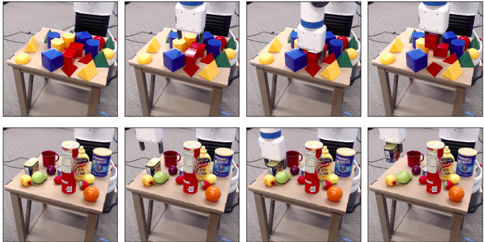
- The pipeline enabled a Fetch robot to detect and pick up the target object in 38 out of 40 trials in increasingly cluttered scenes, and a detector trained on a Spam can succeeded in 9 of 10 trials with previously unseen YCB food distractors.
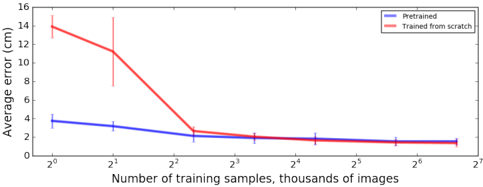
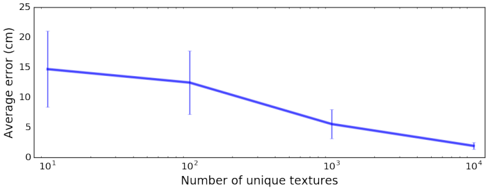
- Ablations found sensitivity to number of training images, number of unique textures, presence of distractors in training, and camera randomization; random noise had negligible effect. Performance improved up to around 50,000 training samples, and degraded significantly with fewer than 1,000 textures.
- ImageNet pretraining was not essential with enough data: random weight initialization achieved nearly the same real-world transfer performance as pretrained initialization, though pretraining helped in the low-data regime.
Methods
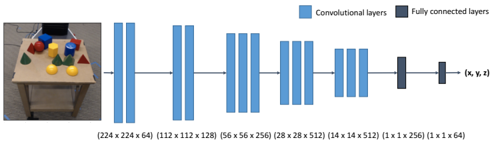
- The authors trained a modified VGG-16 convolutional neural network to map a single 224×224 monocular webcam image to Cartesian coordinates of object(s) of interest, using simulated images rendered by MuJoCo.
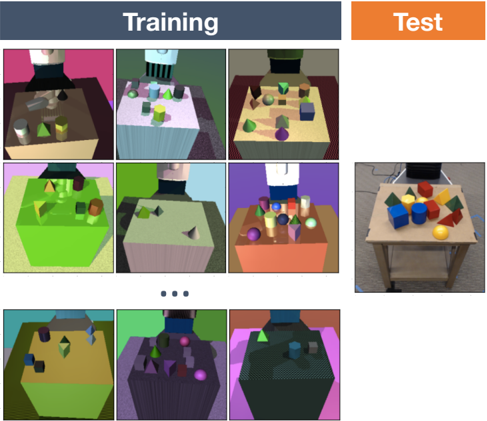
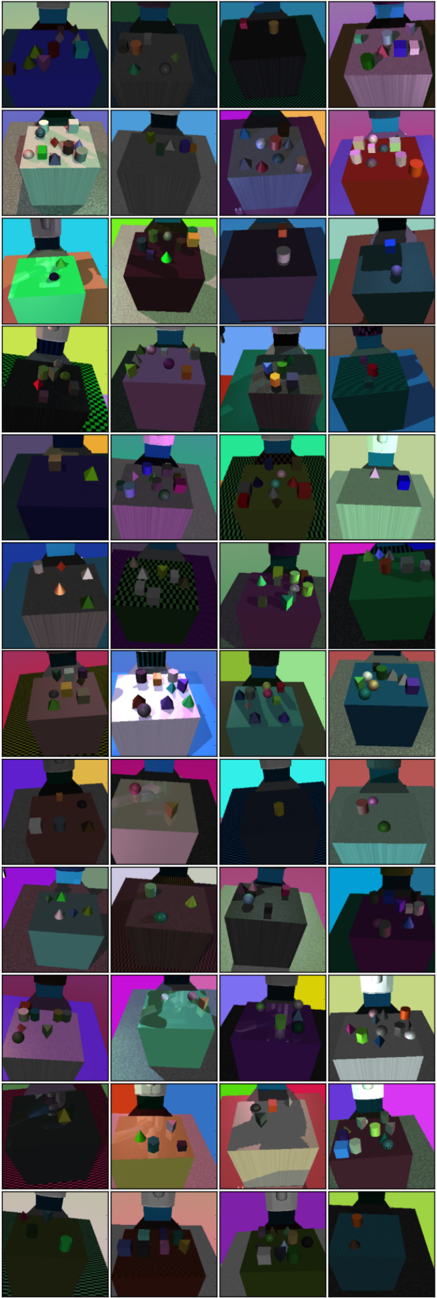
- Domain randomization varied number/shape of distractors, object positions and textures, table/floor/skybox/robot textures, camera position/orientation/field of view, number and properties of lights, and image noise. Textures were random RGB values, gradients, or checker patterns; 0–10 distractor objects were added per scene.
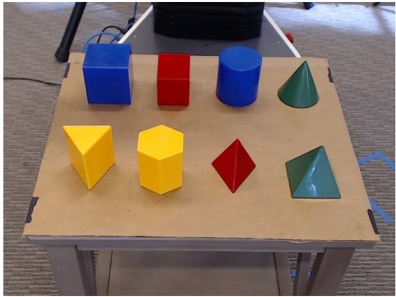
- Training used stochastic gradient descent with Adam on an L2 loss, learning rates around 1e-4, and batch sizes of 25, 50, or 100. Evaluation used 480 webcam images of eight geometric objects at 70–105 cm from a fixed camera, with 60 labeled images per object: 20 alone, 20 with distractors, and 20 partially occluded.
Limitations
- The paper states that the detectors still overfit simulated training data: simulated error was 0.3–0.5 cm versus about 1.5 cm in the real world, and no real-world validation could be done during training because no real data were assumed available.
- The paper states future work is needed for contact-rich manipulation or higher precision, and that the method fixes table height, effectively making the task 2D pose estimation from a single monocular uncalibrated camera.
- Evident from the text: evaluation is limited to eight geometric objects plus one Spam can, the test camera position remains constant across all images, and lighting and surrounding scene were not controlled.
Model-written summary. Check it against the paper before relying on it.
Integrity signals
Registry
Cites
Statistics
Figures
Verification
Claims the paper makes
2 Valid · 8 Not valid · 7 Not checked · 32 Own results and interpretations
The cited sources support only part of this claim — read each source’s verdict below.
In the paper
“Although previous work demonstrated the ability to perform robotic control using a neural network pretrained on ImageNet and fine-tuned on randomized rendered pixels [37], this paper provides the first demonstration that domain randomization can be useful for robotic tasks requiring precision.”
What the sources say
- Partly supportedcites [37] [37] Fereshteh Sadeghi and Sergey Levine. (cad) 2 RL: Real single-image flight without a single real image. arXiv preprint arXiv:1611.04201 , 2016. - sourceExperimental — accuracy not yet measured
The citation [37] is attached to the preceding claim about prior work, not to the citing authors’ claim that their own paper is the first to demonstrate precision robotics. Section 3.1 (p. 4) says LSDA pretrains a CNN on ImageNet classification data and fine-tunes it, but for object detection. It does not report robotic control or fine-tuning on randomized rendered pixels. (LLM, conf=0.84)
boostedstates a cause- Asserted: passes — The authors put it forward as true.
- Checkable: passes — It can be checked against evidence.
- Load-bearing: passes — The paper’s conclusions depend on it.
- Based: passes — The paper gives a reason why it holds.
- Partly supported
The cited sources that could be checked couldn’t confirm or dispute this claim.
In the paper
“Rather than relying on controller robustness, Yu et al. [53] use a model trained on varied physics to perform system identification using online trajectory data, but their approach is not shown to succeed in the real world.”
What the sources say
- Could not verifycites [53] [53] Wenhao Yu, C Karen Liu, and Greg Turk. Preparing for the unknown: Learning a universal policy with online system identification. arXiv preprint arXiv:1702.02453 , 2017. - sourceExperimental — accuracy not yet measured
The cited paper discusses image classification and localisation with convolutional networks (A.1, p. 10; A.2, p. 11), not Yu et al.'s approach. Searches for varied-physics training, online trajectory-based system identification, and real-world success found no passage addressing the claim. Our copy therefore cannot verify it. (LLM, conf=0.78)
plain- Asserted: passes — The authors put it forward as true.
- Checkable: passes — It can be checked against evidence.
- Load-bearing: unclear — It is unclear whether the paper’s conclusions depend on it.
- Based: passes — The paper gives a reason why it holds.
- Could not verify
The cited sources that could be checked couldn’t confirm or dispute this claim.
In the paper
“Though using realistic RGB rendering alone has had limited success for transferring to real robotic tasks [16], incorporating realistic simulation of depth information can allow models trained on rendered images to transfer reasonably well to the real world [32].”
What the sources say
- Could not verifycites [16] [16] Stephen James and Edward Johns. 3d simulation for robot arm control with deep q-learning. arXiv preprint arXiv:1609.03759 , 2016. - sourceExperimental — accuracy not yet measured
The Introduction (§1) and Conclusion (§8) describe Adam as a method for stochastic optimization, while the CNN experiment (§6.3) concerns training on image datasets. Searches for realistic RGB rendering and sim-to-real robotic transfer found no passage addressing whether RGB rendering alone has had limited success on real robotic tasks. (LLM, conf=0.78)
plain- Asserted: passes — The authors put it forward as true.
- Checkable: passes — It can be checked against evidence.
- Load-bearing: passes — The paper’s conclusions depend on it.
- Based: passes — The paper gives a reason why it holds.
- Could not verify
The cited sources that could be checked couldn’t confirm or dispute this claim.
In the paper
“However, their experiments - collision avoidance in hallways and open spaces - do not demonstrate the ability to deal with high-precision tasks.”
What the sources say
- Could not verifycites [37] [37] Fereshteh Sadeghi and Sergey Levine. (cad) 2 RL: Real single-image flight without a single real image. arXiv preprint arXiv:1611.04201 , 2016. - sourceExperimental — accuracy not yet measured
The Experiments section (p. 5) evaluates LSDA on an object-detection dataset, not Sadeghi and Levine’s collision-avoidance experiments. Searches for Sadeghi and Levine, hallway or open-space collision avoidance, and high-precision tasks found no passage addressing the claim. (LLM, conf=0.76)
plain- Asserted: passes — The authors put it forward as true.
- Checkable: passes — It can be checked against evidence.
- Load-bearing: passes — The paper’s conclusions depend on it.
- Based: passes — The paper gives a reason why it holds.
- Could not verify
A result the paper reports from its own data — it cites no other source for it, so there is none to check. The quote shows it is in the paper.
In the paper
“However, using a pre-trained model can significantly improve performance when less training data is used.”
plainstates a cause- Asserted: passes — The authors put it forward as true.
- Checkable: passes — It can be checked against evidence.
- Load-bearing: unclear — It is unclear whether the paper’s conclusions depend on it.
- Based: passes — The paper gives a reason why it holds.
29 more claims
Create a free account to see all 49 claims and to verify the 7 references still open.
- Probably not a substantial claim. 11
- It may state two separate claims as one. 8
Claims other papers make about this one
Each is checked against this paper’s own text: does it say what the citing paper says it does?
The source backs part of the claim, not all of it — or backs it for a different population, condition or comparison.
In the citing paper
“Most policies trained in simulation generalize poorly to the real-world due to agents adapting to specific visual details of the simulator.”
From Language-Based Augmentation to Address Shortcut Learning in Object-Goal Navigation (2023) · cites this paper as [8]
Experimental — accuracy not yet measuredThe source backs part of the claim, not all of it — or backs it for a different population, condition or comparison.
In the citing paper
“In robotic vision tasks including object localization [53], object detection [54], pose estimation [55], and semantic segmentation [56], the training data from simulator always have different textures, lighting, and camera positions from the realistic environments.”
From Sim-to-Real Transfer in Deep Reinforcement Learning for Robotics: a Survey (2020) · cites this paper as [53]
Experimental — accuracy not yet measuredThe source backs part of the claim, not all of it — or backs it for a different population, condition or comparison.
In the citing paper
“These artifacts limit the applicability of generative videos in physics-sensitive domains such as robotics [25,26], autonomous driving [27], simulationbased design, and scientific visualization [28].”
From PhyStruct-Video: Structured Physics State Spaces for Physically Consistent Video Generation (2025) · cites this paper as [25]
Experimental — accuracy not yet measuredThe source backs part of the claim, not all of it — or backs it for a different population, condition or comparison.
In the citing paper
“In domain randomization, the inputs during learning are “randomized” in the sense of being warped or corrupted in particular ways.”
From The overfitted brain: Dreams evolved to assist generalization (2021) · cites this paper as [144]
Experimental — accuracy not yet measuredThe source backs part of the claim, not all of it — or backs it for a different population, condition or comparison.
In the citing paper
“Domain randomization is a domain generalization technique that introduces drastic changes in the training image appearances, which forces the network to learn domain-invariant features between training and target domains [39].”
From A Fully Differentiable Framework for 2D/3D Registration and the Projective Spatial Transformers (2024) · cites this paper as [39]
Experimental — accuracy not yet measured
8 more claims about this paper
Create a free account to see every claim other papers make about this one.
Self-check
Percentages, sums and reported differences re-computed from the paper’s own numbers.
Each contradiction between two passages listed here was confirmed by an independent check.
Rated minor: it would not touch a result — a value no result rests on, a p-value that stays on the same side of the significance level, or a conflict that is clerical, resolved elsewhere in the paper, or outside its own findings.
In the paper
§ A. Experimental Setup · p. 4
“Each training sample consists of (a) a rendered image of the object and one or more distractors (also from among the geometric object set) on a simulated tabletop”
§ A. Domain randomization · p. 4
“Between 0 and 10 distractor objects are added to the table in each scene.”
Citations
Cites
Very Deep Convolutional Networks for Large-Scale Image Recognition
Simonyan, K., & Zisserman, A. (2014) · arXiv · doi:10.48550/arxiv.1409.1556 · Cited by 114,148 · cited 1×
“In particular, we use a modified version the VGG-16 architecture [42] shown in Figure 2.”
MethodAdam: A Method for Stochastic Optimization
Kingma, D. P., & Ba, J. (2014) · arXiv · doi:10.48550/arxiv.1412.6980 · Cited by 98,946 · cited 1×
“We found that using a learning rate of around 1e − 4 (as opposed to the standard 1e − 3 for Adam) improved convergence and helped avoid a common local optimum, mapping all objects to the center of the table.”
MethodLeCun, Y., Bengio, Y., & Hinton, G. (2015) · Nature · doi:10.1038/nature14539 · Cited by 84,126
Human-level control through deep reinforcement learning
Mnih, V., Kavukcuoglu, K., Silver, D., Rusu, A. A., Veness, J., Bellemare, M. G., Graves, A., Riedmiller, M., Fidjeland, A. K., Ostrovski, G., et al. (2015) · Nature · doi:10.1038/nature14236 · Cited by 30,357 · cited 3×
“Learning in simulation is especially promising for building on recent results using deep reinforcement learning to achieve human-level performance on tasks like Atari [27] and robotic control [21], [38].”
BackgroundResultHow transferable are features in deep neural networks?
Yosinski, J., Clune, J., Bengio, Y., & Lipson, H. (2014) · arXiv · doi:10.48550/arxiv.1411.1792 · Cited by 6,061 · cited 1×
“A variety of approaches have been proposed, including re-training the model in the target domain (e.g., [52]), adapting the weights of the model based on the statistics of the source and target domains (e.g., [22]), learning invariant features between domains (e.g., [47]), and learning a mapping…”
BackgroundMuJoCo: A physics engine for model-based control
Todorov, E., Erez, T., & Tassa, Y. (2012) · 2012 IEEE/RSJ International Conference on Intelligent Robots and Systems · doi:10.1109/iros.2012.6386109 · Cited by 4,767 · cited 1×
“We render images using the MuJoCo Physics Engine’s [45] built-in renderer.”
MethodTrust region policy optimization
Schulman, J., Levine, S., Moritz, P., Jordan, M. I., & Abbeel, P. (2015) · arXiv · doi:10.48550/arxiv.1502.05477 · Cited by 4,578 · cited 1×
“Learning in simulation is especially promising for building on recent results using deep reinforcement learning to achieve human-level performance on tasks like Atari [29] and robotic control [26], [41].”
ResultSelf-citationLearning Transferable Features with Deep Adaptation Networks
Long, M., Cao, Y., Wang, J., & Jordan, M. I. (2015) · arXiv · doi:10.48550/arxiv.1502.02791 · Cited by 4,505 · cited 1×
“omputer vision community has devoted significant study to the problem of adapting vision-based models trained in a source domain to a previously unseen target domain (see, e.g., [9], [14], [15], [19], [23], [25], [51]). A variety of approaches have been proposed, including re-training the model in the target domain (e.…”
BackgroundEnd-to-End Training of Deep Visuomotor Policies
Levine, S., Finn, C., Darrell, T., et al. (2015) · Journal of machine learning research · doi:10.5555/2946645.2946684 · Cited by 3,987
Describing Textures in the Wild
Cimpoi, M., Maji, S., Kokkinos, I., Mohamed, S., & Vedaldi, A. (2014) · 2014 IEEE Conference on Computer Vision and Pattern Recognition · doi:10.1109/cvpr.2014.461 · Cited by 2,438 · cited 1×
“To examine how our detectors would perform on objects with complex textures, we created simulated scenes in which the object of interest is given a texture from the Describable Textures Dataset (DTD) [4].”
Method
Research works printed but not linked: 3
- [24] David G Lowe. Three-dimensional object recognition from single two-dimensional images. Artificial intelligence , 31(3):355-395, 1987. -
- [49] Melonee Wise, Michael Ferguson, Derek King, Eric Diehr, and David Dymesich. Fetch and freight: Standard platforms for service robot applications. In Workshop on Autonomous Mobile Service Robots , 2016. -
- sucan, 0, MoveIt!
Cited by
Items 101–200 of 2,970
Variable Compliance Control for Robotic Peg-in-Hole Assembly: A Deep-Reinforcement-Learning Approach
Beltran-Hernandez, C. C., Petit, D., Ramirez-Alpizar, I. G., & Harada, K. (2020) · Applied Sciences · doi:10.3390/app10196923 · Cited by 177
“To close the reality gap between the physics simulator and real-world dynamics, we used domain randomization [45].”
MethodAblation Studies in Artificial Neural Networks
Meyes, R., Lu, M., de Puiseau, C. W., & Meisen, T. (2019) · arXiv (Cornell University) · doi:10.48550/arxiv.1901.08644 · Cited by 168
“Examples are visual object recognition, object detection and semantic segmentation in the field of computer vision (CV) [1–5], speech recognition and speech separation in the field of natural language processing (NLP) [6–10] or self-learning agents based on deep reinforcement learning (DRL) for video games [11–14], cl…”
BackgroundA Berkeley View of Systems Challenges for AI
Stoica, I., Song, D., Popa, R. A., Patterson, D., Mahoney, M. W., Katz, R., Joseph, A. D., Jordan, M., Hellerstein, J. M., Gonzalez, J. E., et al. (2017) · arXiv · doi:10.48550/arxiv.1712.05855 · Cited by 171
“While algorithmic approaches have been proposed to reduce the number of real-world interactions needed to learn policies [99, 111, 112], more generally there is a need for Simulated Reality (SR) architectures, in which an agent can continually simulate and predict the outcome of the next action…”
BackgroundSelf-citationExperiment-free exoskeleton assistance via learning in simulation
Luo, S., Jiang, M., Zhang, S., Zhu, J., Yu, S., Dominguez Silva, I., Wang, T., Rouse, E., Zhou, B., Yuk, H., et al. (2024) · Nature · doi:10.1038/s41586-024-07382-4 · Cited by 166
“To tackle this challenge and bridge the sim2real gap, our solution incorporated domain randomization, a machine learning technique that was first proposed by Tobin et al. to facilitate bridging the sim2real gap for object localization 59 .”
Domain Randomization and Generative Models for Robotic Grasping
Tobin, J., Biewald, L., Duan, R., Andrychowicz, M., Handa, A., Kumar, V., McGrew, B., Ray, A., Schneider, J., Welinder, P., et al. (2018) · 2018 IEEE/RSJ International Conference on Intelligent Robots and Systems (IROS) · doi:10.1109/iros.2018.8593933 · Cited by 155
“Recently domain randomization has shown promise in transferring deep neural networks for robotics tasks from simulation to the real world by randomizing physics [30] and appearance properties [41], [46], [54].”
BackgroundMethodSelf-citationMixStyle Neural Networks for Domain Generalization and Adaptation
Zhou, K., Yang, Y., Qiao, Y., & Xiang, T. (2024) · International Journal of Computer Vision · doi:10.1007/s11263-023-01913-8 · Cited by 173
“…the cross-entropy loss. f and f ′ are feature maps extracted at a certain layer for x and x ′ , respectively. µ ( ) and σ ( ) represent functions for computing channel-wise means and standard deviations, respectively. λ is an instance-specific, random weight sampled from the beta distribution.”
On the use of simulation in robotics: Opportunities, challenges, and suggestions for moving forward
Choi, H., Crump, C., Duriez, C., Elmquist, A., Hager, G., Han, D., Hearl, F., Hodgins, J., Jain, A., Leve, F., et al. (2021) · Proceedings of the National Academy of Sciences · doi:10.1073/pnas.1907856118 · Cited by 162
“En-hancing the transferability attribute of simulation-learned control policies represents an area of active research (5 – 7).”
BackgroundRL-CycleGAN: Reinforcement Learning Aware Simulation-to-Real
Rao, K., Harris, C., Irpan, A., Levine, S., Ibarz, J., & Khansari, M. (2020) · 2020 IEEE/CVF Conference on Computer Vision and Pattern Recognition (CVPR) · doi:10.1109/cvpr42600.2020.01117 · Cited by 160
“training images automatically [3] to randomizing the simulation environment in the hopes that such randomization will improve the transferability of the learned representations [27, 29, 18, 24, 17].”
BackgroundDense Object Nets: Learning Dense Visual Object Descriptors By and For Robotic Manipulation
Florence, P., Manuelli, L., & Tedrake, R. (2018) · arXiv (Cornell University) · doi:10.48550/arxiv.1806.08756 · Cited by 142
“Since we have autonomously acquired object masks, we can domain randomize [25] the background (Figure 1c top) to encourage consistency – rather than memorizing the background (i.”
BackgroundSPEED+: Next-Generation Dataset for Spacecraft Pose Estimation across Domain Gap
Park, T. H., Martens, M., Lecuyer, G., Izzo, D., & D'Amico, S. (2022) · 2022 IEEE Aerospace Conference (AERO) · doi:10.1109/aero53065.2022.9843439 · Cited by 170
“While it is possible to train a more domain-invariant CNN model using methods such as domain randomization [13,14] and texture randomization [4, 15], its use in space missions requires a validation of performance in a highly representative space environment prior to mission deployment.”
A Review on IoT Deep Learning UAV Systems for Autonomous Obstacle Detection and Collision Avoidance
Fraga-Lamas, P., Ramos, L., Mondéjar-Guerra, V., & Fernández-Caramés, T. M. (2019) · Remote Sensing · doi:10.3390/rs11182144 · Cited by 153
“Transfer learning from models trained on virtual worlds, but applied to real data, have also been studied in the literature [59,63–65].”
MethodWambugu, N. M., Chen, Y., Xiao, Z., Tan, K., Wei, M., Liu, X., & Li, J. (2021) · International Journal of Applied Earth Observation and Geoinformation · doi:10.1016/j.jag.2021.102603 · Cited by 193
“Several researchers have proposed domain randomization as one of the approaches to bridge the reality gap (Tobin et al., 2017), an active research area that can enable synthetic data to work well in practical and real-life applications.”
BackgroundMethodEnd-to-End Active Object Tracking and Its Real-World Deployment via Reinforcement Learning
Luo, W., Sun, P., Zhong, F., Liu, W., Zhang, T., & Wang, Y. (2019) · IEEE Transactions on Pattern Analysis and Machine Intelligence · doi:10.1109/tpami.2019.2899570 · Cited by 236
“Using environment augmentation for improving the generalization of a learned model has previously been explored in a large amount of work on robotics, including methods for obstacle avoidance [43], navigation [44], and robot manipulation [45], [46], [47], [48].”
BackgroundMethodBatch normalization embeddings for deep domain generalization
Segù, M., Tonioni, A., & Tombari, F. (2022) · Pattern Recognition · doi:10.1016/j.patcog.2022.109115 · Cited by 193
“…specific classifiers, weighted by the inverse of the distances. model parameters to obtain consistent performance across domains via ad-hoc training policies [49, 46, 50, 27], while a different line of work requires modifications to the model architecture to achieve domain invariance [21, 25, 10, 36].”
A Critical Review of Communications in Multi-robot Systems
Gielis, J., Shankar, A., & Prorok, A. (2022) · Current Robotics Reports · doi:10.1007/s43154-022-00090-9 · Cited by 239
“Learning-based methods have proven effective at designing robot control policies for an increasing number of tasks [121, 122].”
iGibson 1.0: A Simulation Environment for Interactive Tasks in Large Realistic Scenes
Shen, B., Xia, F., Li, C., Martin-Martin, R., Fan, L., Wang, G., Perez-D'Arpino, C., Buch, S., Srivastava, S., Tchapmi, L., et al. (2021) · 2021 IEEE/RSJ International Conference on Intelligent Robots and Systems (IROS) · doi:10.1109/iros51168.2021.9636667 · Cited by 178
Transferring policy of deep reinforcement learning from simulation to reality for robotics
Ju, H., Juan, R., Gomez, R., Nakamura, K., & Li, G. (2022) · Nature Machine Intelligence · doi:10.1038/s42256-022-00573-6 · Cited by 147
Deep learning in robotics: survey on model structures and training strategies
Karoly, A. I., Galambos, P., Kuti, J., & Rudas, I. J. (2021) · IEEE Transactions on Systems, Man, and Cybernetics: Systems · doi:10.1109/tsmc.2020.3018325 · Cited by 146
“Sim-to-real approaches that utilize randomization are based on the idea, that if a model is able to perform well in the highly randomized source domain, it must have great generalization properties, so it should be able to adapt to the real-world domain as well [30], [91].”
BackgroundInfluentialPhotorealistic Image Synthesis for Object Instance Detection
Hodaň, T., Vineet, V., Gal, R., Shalev, E., Hanzelka, J., Connell, T., Urbina, P., Sinha, S. N., & Guenter, B. K. (2019) · Proceedings - International Conference on Image Processing · doi:10.1109/icip.2019.8803821 · Cited by 187
“In contrast, domain randomization methods reduce the gap by randomizing the rendering parameters and have been used in object localization and pose estimation [29, 30, 31].”
BackgroundMethodStyleGAN2 Distillation for Feed-Forward Image Manipulation
Viazovetskyi, Y., Ivashkin, V., & Kashin, E. (2020) · Lecture notes in computer science · doi:10.1007/978-3-030-58542-6_11 · Cited by 198
“To perform well on real world images, this data need to overcome both appearance gap [22,15,51,52,49] and content gap [28,46].”
BackgroundBrain imaging with portable low-field MRI
Kimberly, W. T., Sorby-Adams, A. J., WEBB, A. G., Wu, E. X., Beekman, R. B., Bowry, R., Schiff, S. J., de Havenon, A., Shen, F. X., Sze, G. K., et al. (2023) · Nature Reviews Bioengineering · doi:10.1038/s44222-023-00086-w · Cited by 190
“To facilitate NICU scanning, early investigations involved a 0.17 T system deployed in the United Kingdom, enabling imaging of infants aged approximately 16.3 days, including 43 with suspected pathology 118 .”
InfluentialRLOC: Terrain-Aware Legged Locomotion Using Reinforcement Learning and Optimal Control
Gangapurwala, S., Geisert, M., Orsolino, R., Fallon, M. F., & Havoutis, I. (2022) · IEEE Transactions on Robotics · doi:10.1109/tro.2022.3172469 · Cited by 212
“As a solution, domain randomization [27] techniques have been used to train policies that are robust to unaccountable factors [19], [21].”
MethodAugmented Autoencoders: Implicit 3D Orientation Learning for 6D Object Detection
Sundermeyer, M., Márton, Z.-C., Durner, M., & Triebel, R. (2019) · International Journal of Computer Vision · doi:10.1007/s11263-019-01243-8 · Cited by 182
“Tobin et al. (2017) demonstrated the potential of the DR paradigm for 3D shape detection using CNNs. Hinterstoisser et al. (2017) showed that by training only the head network of FasterRCNN of Ren et al. (2015) with randomized synthetic views of a textured 3D model, it also generalizes well to real…”
BackgroundRobotic assembly of timber joints using reinforcement learning
Apolinarska, A. A., Pacher, M., Li, H., Cote, N., Pastrana, R., Gramazio, F., & Köhler, M. (2021) · Automation in Construction · doi:10.1016/j.autcon.2021.103569 · Cited by 180
“The presented solution (see Section 4) uses a distributed DDPG algorithm [16], leverages human demonstrations [26], and applies domain randomization [21,27] to bridge the gap between simulation and reality.”
MethodParameter-free Online Test-time Adaptation
Boudiaf, M., Mueller, R., Ayed, I. B., & Bertinetto, L. (2022) · IEEE Computer Society Conference on Computer Vision and Pattern Recognition/Proceedings - IEEE Computer Society Conference on Computer Vision and Pattern Recognition/Proceedings · doi:10.1109/cvpr52688.2022.00816 · Cited by 354
Deep Reinforcement Learning for Soft, Flexible Robots: Brief Review with Impending Challenges
Bhagat, S., Banerjee, H., Tse, Z. T. H., & Ren, H. (2019) · Robotics · doi:10.3390/robotics8010004 · Cited by 160
“[112] randomized the lighting conditions, viewing angles and texture of objects to ensure the agent is manifested to disparities in the factors of variation.”
BackgroundDiscovery of Latent 3D Keypoints via End-to-end Geometric Reasoning
Suwajanakorn, S., Snavely, N., Tompson, J., & Norouzi, M. (2018) · neural information processing systems · doi:10.48550/arxiv.1807.03146 · Cited by 258
“Further improvements may be achieved by leveraging recent work in domain adaptation [24, 54, 50, 5, 58].”
BackgroundReal-time gun detection in CCTV: An open problem
González, J. L. S., Zaccaro, C., Álvarez-García, J. A., Morillo, L. M. S., & Caparrini, F. S. (2020) · Neural Networks · doi:10.1016/j.neunet.2020.09.013 · Cited by 157
“This technique was introduced by Tobin et al. [44].”
MethodRapid locomotion via reinforcement learning
Margolis, G. B., Yang, G., Paigwar, K., Chen, T., & Agrawal, P. (2024) · The International Journal of Robotics Research · doi:10.1177/02783649231224053 · Cited by 231
“To this end, we constructed an aggregate metric that captures the diversity of commands the controller can actuate given some maximum error tolerance.”
BackgroundRobot Learning From Randomized Simulations: A Review
Muratore, F., Ramos, F., Turk, G., Yu, W., Gienger, M., & Peters, J. (2022) · Frontiers in Robotics and AI · doi:10.3389/frobt.2022.799893 · Cited by 128
“Tobin et al. (2017) learned an object detector for robot grasping using a fixed domain parameter distribution, and bridged the gap with a deep NN policy trained exclusively on simulated RGB images.”
BackgroundSatish, V., Mahler, J., & Goldberg, K. (2019) · IEEE Robotics and Automation Letters · doi:10.1109/lra.2019.2895878 · Cited by 141
“The training environment ξ models the distribution of rewards, states, and point clouds using analytic models based on physics and geometry [1] with domain randomization for robust sim-to-real transfer [11].”
BackgroundMethodCat-Like Jumping and Landing of Legged Robots in Low Gravity Using Deep Reinforcement Learning
Rudin, N., Kolvenbach, H., Tsounis, V., & Hutter, M. (2021) · IEEE Transactions on Robotics · doi:10.1109/tro.2021.3084374 · Cited by 174
“We handle model mismatches between the simulation and the real robot using domain randomization [29].”
MethodNavigating to objects in the real world
Gervet, T., Chintala, S., Batra, D., Malik, J., & Chaplot, D. S. (2023) · Science Robotics · doi:10.1126/scirobotics.adf6991 · Cited by 125
“Domain randomization [99] — randomizing environmental factors that are hard to simulate accurately during training to make policies robust to these factors — has been applied successfully in domains where randomization is straightforward like dexterous manipulation [100] where one needs to randomize over physics and s…”
BackgroundAligning Cyber Space With Physical World: A Comprehensive Survey on Embodied AI
Liu, Y., Chen, W., Bai, Y., Liang, X., Li, G., Gao, W., & Lin, L. (2025) · IEEE/ASME Transactions on Mechatronics · doi:10.1109/tmech.2025.3574943 · Cited by 536
“Domain Randomization [227], [228], [229] increases model generalization by varying simulation parameters to cover real-world conditions.”
DreamCoder: growing generalizable, interpretable knowledge with wake–sleep Bayesian program learning
Ellis, K., Wong, L., Nye, M., Sablé-Meyer, M., Cary, L., Anaya Pozo, L., Hewitt, L., Solar-Lezama, A., & Tenenbaum, J. B. (2023) · Philosophical Transactions of the Royal Society A: Mathematical, Physical and Engineering Sciences · doi:10.1098/rsta.2022.0050 · Cited by 125
“ly recombining latent building blocks and motifs acquired from the training data in creative ways never seen in its waking experience, but ideal for training a broadly generalizable recognition model (29). Inspired by the classic AI ‘copy demo’ – where an agent looks at a tower made of toy blocks then re-creates it (3…”
BackgroundMulti-Task Domain Adaptation for Deep Learning of Instance Grasping from Simulation
Fang, K., Bai, Y., Hinterstoißer, S., Savarese, S., & Kalakrishnan, M. (2018) · Proceedings - IEEE International Conference on Robotics and Automation/Proceedings · doi:10.1109/icra.2018.8461041 · Cited by 137
“One alternative solution to large scale data collection in robotics is to run robot experiments in simulation [4], [5], [6], [7], [8], [9].”
Unseen Object Instance Segmentation for Robotic Environments
Xie, C., Yu, X., Mousavian, A., & Fox, D. (2021) · IEEE Transactions on Robotics · doi:10.1109/tro.2021.3060341 · Cited by 220
“Many methods employ some level of rendering randomization [59], [60], [61], [9], [62], [63], including lighting conditions and textures.”
BackgroundMethodOptLayer - Practical Constrained Optimization for Deep Reinforcement Learning in the Real World
Pham, T.-H., De Magistris, G., & Tachibana, R. (2018) · 2018 IEEE International Conference on Robotics and Automation (ICRA) · doi:10.1109/icra.2018.8460547 · Cited by 122
“Our work would thus benefit from further advances in learning perception and control under uncertainties [5], [6].”
BackgroundIncreasing generality in machine learning through procedural content generation
Risi, S., & Togelius, J. (2020) · Nature Machine Intelligence · doi:10.1038/s42256-020-0208-z · Cited by 122
“In addition to trying to encourage machine learning systems to be more robust and general, another use case of domain randomization is to facilitate the transfer of policies trained in a simulator to the real world [10, 40, 41, 42].”
BackgroundMethodInfluentialDivergence-Agnostic Unsupervised Domain Adaptation by Adversarial Attacks
Li, J., Du, Z., Zhu, L., Ding, Z., Lü, K., & Shen, H. T. (2021) · IEEE Transactions on Pattern Analysis and Machine Intelligence · doi:10.1109/tpami.2021.3109287 · Cited by 140
Rapid Locomotion via Reinforcement Learning
Margolis, G. B., Yang, G., Paigwar, K., Chen, T., & Agrawal, P. (2022) · Robotics: Science and Systems · doi:10.15607/rss.2022.xviii.022 · Cited by 219
Scalable agent alignment via reward modeling: a research direction
Leike, J., Krueger, D., Everitt, T., Martic, M., Maini, V., & Legg, S. (2018) · arXiv · doi:10.48550/arxiv.1811.07871 · Cited by 121
“In the absence of such a solution we could rely on out-of-distribution detection to be able to defer to a human operator or widening the training distribution to encompass all relevant cases (Tobin et al., 2017).”
MethodVigilance Estimation Using a Wearable EOG Device in Real Driving Environment
Zheng, W., Gao, K., Li, G., Liu, W., Chao, L., Liu, J., Wang, G., & Lu, B. (2019) · IEEE Transactions on Intelligent Transportation Systems · doi:10.1109/tits.2018.2889962 · Cited by 123
“, domain adaptation [69] and domain randomization [70].”
BackgroundRobust multi-task learning and online refinement for spacecraft pose estimation across domain gap
Park, T. H., & D’Amico, S. (2024) · Advances in Space Research · doi:10.1016/j.asr.2023.03.036 · Cited by 125
“In these cases, the CNN models are trained on abundant synthetic images with extensive data augmentation or domain randomization (Tobin et al., 2017) to render them as domain-agnostic as possible.”
MethodBayesSim: Adaptive Domain Randomization Via Probabilistic Inference for Robotics Simulators
Ramos, F., Possas, R., & Fox, D. (2019) · Robotics: Science and Systems XV · doi:10.15607/rss.2019.xv.029 · Cited by 111
“Simulation parameters could vary from physical settings like damping, friction and object masses [25] to visual parameters like objects textures, shapes and etc [38].”
BackgroundHierarchical Reinforcement Learning for Air-to-Air Combat
Pope, A. P., Ide, J. S., Mićović, D., Díaz, H., Rosenbluth, D., Ritholtz, L., Twedt, J. C., Walker, T. T., Alcedo, K., & Javorsek, D. (2021) · International Conference on Unmanned Aircraft Systems (ICUAS) · doi:10.1109/icuas51884.2021.9476700 · Cited by 159
“…environment is the first step in this direction: modification and additions to the observation space (incorporating domain randomization techniques [52], imperfect information, partial/estimated knowledge, etc.) and incorporating different platform aerodynamics models (quad-copter, small fixed-wing…”
BackgroundGao, C., Killeen, B. D., Hu, Y., Grupp, R. B., Taylor, R. H., Armand, M., & Unberath, M. (2023) · Nature Machine Intelligence · doi:10.1038/s42256-023-00629-1 · Cited by 183
“In general computer vision, the Sim-2Real problem has been explored extensively for self-driving perception 31–36 and robotic manipulation 37–42 .”
BackgroundToward next-generation learned robot manipulation
Cui, J., & Trinkle, J. (2021) · Science Robotics · doi:10.1126/scirobotics.abd9461 · Cited by 157
“(55) advocated a straightforward technique called domain randomization.”
BackgroundMethodLearning Dexterous Grasping with Object-Centric Visual Affordances
Mandikal, P., & Grauman, K. (2021) · 2021 IEEE International Conference on Robotics and Automation (ICRA) · doi:10.1109/icra48506.2021.9561802 · Cited by 113
“We are also encouraged by recent successes translating policies trained only in simulation to real-world dexterous robots using domain randomization [3], [49].”
Pauly, L., Rharbaoui, W., Shneider, C., Rathinam, A., Gaudillière, V., & Aouada, D. (2023) · Acta Astronautica · doi:10.1016/j.actaastro.2023.08.001 · Cited by 121
“Hence, the expectation is that the model will be less prone to the domain gap [164].”
BackgroundWeighted and Class-Specific Maximum Mean Discrepancy for Unsupervised Domain Adaptation
Yan, H., Li, Z., Wang, Q., Li, P., Xu, Y. D., & Zuo, W. (2019) · IEEE Transactions on Multimedia · doi:10.1109/tmm.2019.2953375 · Cited by 121
“Considering that synthetic and real images usually are of different distributions, pixel-level UDA is also beneficial to reduce the distribution gap between synthetic and real domains [57] [58].”
BackgroundDeep Learning on Monocular Object Pose Detection and Tracking: A Comprehensive Overview
Fan, Z., Zhu, Y., He, Y., Sun, Q. L., Liu, H., & He, J. Y. D. (2022) · ACM Computing Surveys · doi:10.1145/3524496 · Cited by 139
“The superior performance of SE(3)-TrackerNet mostly comes from the rotation translation disentanglement scheme, the Lie Algebra rotation representation, and the DR data enhancement strategy [144].”
MethodDeep Imitation Learning of Sequential Fabric Smoothing From an Algorithmic Supervisor
Seita, D., Ganapathi, A., Hoque, R., Hwang, M., Cen, E., Tanwani, A. K., Balakrishna, A., Thananjeyan, B., Ichnowski, J., Jamali, N., et al. (2020) · 2020 IEEE/RSJ International Conference on Intelligent Robots and Systems (IROS) · doi:10.1109/iros45743.2020.9341608 · Cited by 109
“We use domain randomization [47] during training.”
MethodA review on deep reinforcement learning for fluid mechanics: An update
Viquerat, J., Méliga, P., Larcher, A., & Hachem, E. (2022) · Physics of Fluids · doi:10.1063/5.0128446 · Cited by 130
“660 Typical examples include learning a model of the environment in such a way that errors in the model do 661 not degrade the asymptotic performance [71, 72], or wrapping redundant states into equivalent classes 662 of canonical spaces [73] to increase the data efficiency; using data augmentation and randomization 66…”
MethodA Survey of Synthetic Data Augmentation Methods in Machine Vision
Mumuni, A., Mumuni, F., & Gerrar, N. K. (2024) · Machine Intelligence Research · doi:10.1007/s11633-022-1411-7 · Cited by 204
“The use of generative modeling techniques (e.g, [105, 184, 185]) as a means to endow simple 3D models with photorealistic appearance and desirable visual characteristics has recently gained attention.”
BackgroundLearning to Collide: An Adaptive Safety-Critical Scenarios Generating Method
Ding, W., Chen, B., Xu, M., & Zhao, D. X. (2020) · IEEE/RSJ International Conference on Intelligent Robots and Systems (IROS) · doi:10.1109/iros45743.2020.9340696 · Cited by 177
Scenic: a language for scenario specification and data generation
Fremont, D. J., Kim, E., Dreossi, T., Ghosh, S., Yue, X., Sangiovanni-Vincentelli, A. L., & Seshia, S. A. (2023) · Machine Learning · doi:10.1007/s10994-021-06120-5 · Cited by 112
“There has been a large amount of work on generating synthetic data for specific applications, including text recognition [28], text localization [27], robotic object grasping [57], and autonomous driving [30,11].”
BackgroundGeneralization in Reinforcement Learning by Soft Data Augmentation
Hansen, N., & Wang, X. (2021) · 2021 IEEE International Conference on Robotics and Automation (ICRA) · doi:10.1109/icra48506.2021.9561103 · Cited by 111
“An example of the former is random cropping [9], [39], whereas examples of the latter are domain randomization [12], [13] and random convolution [9], [16].”
BackgroundSim-to-Real Transfer for Biped Locomotion
Yu, W., Kumar, V. C., Turk, G., & Liu, C. K. (2019) · 2019 IEEE/RSJ International Conference on Intelligent Robots and Systems (IROS) · doi:10.1109/iros40897.2019.8968053 · Cited by 101
“Specifically, we randomly set the control frequency to be in [25, 33]Hz for each rollout, add a bias to the estimated orientation drawn from U(−0.”
MethodAn Annotation Saved is an Annotation Earned: Using Fully Synthetic Training for Object Detection
Hinterstoißer, S., Pauly, O., Heibel, H., Marek, M., & Bokeloh, M. (2019) · IEEE International Conference on Computer Vision Workshops · doi:10.1109/iccvw.2019.00340 · Cited by 161
“Our method falls into the category of domain randomization [30, 31, 32, 20, 2].”
BackgroundMethodInfluentialDigital Twin for Human–Robot Interactions by Means of Industry 4.0 Enabling Technologies
Gallala, A., Kumar, A. A., Hichri, B., & Plapper, P. (2022) · Sensors · doi:10.3390/s22134950 · Cited by 129
“The applied model was adapted and modified from [46].”
MethodSim-to-(Multi)-Real: Transfer of Low-Level Robust Control Policies to Multiple Quadrotors
Molchanov, A., Chen, T., Hönig, W., Preiss, J. A., Ayanian, N., & Sukhatme, G. S. (2019) · IEEE/RSJ International Conference on Intelligent Robots and Systems (IROS) · doi:10.1109/iros40897.2019.8967695 · Cited by 151
“We also investigate how we can improve simto-real transfer (S2R) by applying domain randomization, a technique that trains over a distribution of the system dynamics to help trained policies be more resistant to a simulator’s discrepancies from reality [1]–[4].”
MethodRPC: A Large-Scale Retail Product Checkout DatasetPreprint
Wei, X.-S., Cui, Q., Yang, L., Wang, P., & Liu, L. (2019) · arXiv (Cornell University) · doi:10.48550/arxiv.1901.07249 · Cited by 172
“In another work [28], a deep neutral network is trained on simulated images but can successfully generalize to real images by resorting to the variability in the simulator.”
BackgroundResultVR-Goggles for Robots: Real-to-Sim Domain Adaptation for Visual Control
Zhang, J., Tai, L., Yun, P., Xiong, Y., Liu, M., Boedecker, J., & Burgard, W. (2019) · IEEE Robotics and Automation Letters · doi:10.1109/lra.2019.2894216 · Cited by 109
Martinez-Gonzalez, P., Oprea, S., Garcia-Garcia, A., Jover-Alvarez, A., Orts-Escolano, S., & Garcia-Rodriguez, J. (2020) · Virtual Reality · doi:10.1007/s10055-019-00399-5 · Cited by 107
Towards Generalization in Target-Driven Visual Navigation by Using Deep Reinforcement Learning
Devo, A., Mezzetti, G., Costante, G., Fravolini, M. L., & Valigi, P. (2020) · IEEE Transactions on Robotics · doi:10.1109/tro.2020.2994002 · Cited by 107
“Like for the Maze level, we follow the approach in [49] to achieve good generalization capabilities across domains.”
MethodGlobal and Local Texture Randomization for Synthetic-to-Real Semantic Segmentation
Peng, D., Lei, Y., Liu, L., Zhang, P., & Liu, J. (2021) · IEEE Transactions on Image Processing · doi:10.1109/tip.2021.3096334 · Cited by 147
“Based on the observations above, another growing trend of SRSS is Domain Generalization (DG) [10], [11], [12], [13].”
Addressing Model Vulnerability to Distributional Shifts Over Image Transformation Sets
Volpi, R., & Murino, V. (2019) · 2019 IEEE/CVF International Conference on Computer Vision (ICCV) · doi:10.1109/iccv.2019.00807 · Cited by 102
Mohammed, M. Q., Kwek, L. C., & Chua, S. C. (2020) · IEEE Access · doi:10.1109/access.2020.3027923 · Cited by 128
“In [148], the authors also learned object detection in a complex scenario during simulation training by using visual variations.”
BackgroundA survey on human-aware robot navigation
Möller, R., Furnari, A., Battiato, S., Härmä, A., & Farinella, G. M. (2021) · Robotics and Autonomous Systems · doi:10.1016/j.robot.2021.103837 · Cited by 144
“A similar task, namely object localisation and robot grasping was tackled by Tobin et al. [139] by varying the textures in the simulated environment.”
MethodCamera-to-Robot Pose Estimation from a Single Image
Lee, T. E., Tremblay, J., To, T., Cheng, J., Mosier, T., Kroemer, O., Fox, D., & Birchfield, S. T. (2020) · Proceedings - IEEE International Conference on Robotics and Automation/Proceedings · doi:10.1109/icra40945.2020.9196596 · Cited by 166
“The network is trained entirely on synthetic images, relying on domain randomization [5] to bridge the reality gap.”
BackgroundMethodCatch & Carry: reusable neural controllers for vision-guided whole-body tasks
Merel, J., Tunyasuvunakool, S., Ahuja, A., Tassa, Y., Hasenclever, L., Pham, V., Erez, T., Wayne, G., & Heess, N. (2020) · ACM Transactions on Graphics · doi:10.1145/3386569.3392474 · Cited by 175
“…there is a growing literature on approaches involving transfer of policies trained in simulation to real world systems (sim-to-real) [Rusu et al. 2017; Sadeghi and Levine 2017; Tobin et al. 2017; Andrychowicz et al. 2018; Zhu et al. 2018; Tan et al. 2018; Hwangbo et al. 2019; Xie et al. 2019].”
BackgroundTyree, S., Tremblay, J., To, T., Cheng, J., Mosier, T., Smith, J., & Birchfield, S. T. (2022) · IEEE/RSJ International Conference on Intelligent Robots and Systems (IROS) · doi:10.1109/iros47612.2022.9981838 · Cited by 172
“For DOPE, models were trained from synthetic images using domain randomization [25].”
MethodDreamCoder: bootstrapping inductive program synthesis with wake-sleep library learning
Ellis, K., Wong, C., Nye, M., Sablé-Meyer, M., Morales, L., Hewitt, L., Cary, L., Solar-Lezama, A., & Tenenbaum, J. B. (2021) · Proceedings of the 42nd ACM SIGPLAN International Conference on Programming Language Design and Implementation · doi:10.1145/3453483.3454080 · Cited by 103
“8E), compositionally recombining latent building blocks and motifs acquired from the training data in ways never seen in its waking experience, but ideal for training a broadly generalizable recognition model [55].”
BackgroundLuo, S., Androwis, G. J., Adamovich, S., Nunez, E. H., Su, H., & Zhou, X. A. (2023) · Journal of NeuroEngineering and Rehabilitation · doi:10.1186/s12984-023-01147-2 · Cited by 108
Morales, E. F., Murrieta-Cid, R., Becerra, I., & Esquivel-Basaldua, M. A. (2021) · Intelligent Service Robotics · doi:10.1007/s11370-021-00398-z · Cited by 101
Visual dexterity: In-hand reorientation of novel and complex object shapes
Chen, T., Tippur, M. H., Wu, S., Kumar, V., Adelson, E. H., & Agrawal, P. (2023) · Science Robotics · doi:10.1126/scirobotics.adc9244 · Cited by 272
“Thesystematic choices of identifying the manipulator dynamics (details in Materials and Methods); domain randomization ( 32 ); the design of reward function; and the hardware considerations, including the number of fingers and the fingertip material, reduced the sim-to-real gap.”
BackgroundLearning to Drive from Simulation without Real World Labels
Bewley, A., Rigley, J., Liu, Y., Hawke, J., Shen, R., Lam, V.-D., & Kendall, A. (2019) · 2019 International Conference on Robotics and Automation (ICRA) · doi:10.1109/icra.2019.8793668 · Cited by 98
“[28] address this problem by exploiting a simulator’s ability to render significant amounts of random colours and textures with the assumption that visual variation observed in the real world is covered.”
BackgroundBalsa: Learning a Query Optimizer Without Expert Demonstrations
Yang, Z., Chiang, W.-L., Luan, F. S., Mittal, G., Luo, M., & Stoica, I. G. (2022) · ACM SIGMOD International Conference on Management of Data (SIGMOD) · doi:10.1145/3514221.3517885 · Cited by 184
“To avoid disastrous plans, Balsa employs simulation-to-reality learning [30].”
Hierarchical Reinforcement Learning for Air Combat at DARPA's AlphaDogfight Trials
Pope, A. P., Ide, J. S., Mićović, D., Díaz, H., Twedt, J. C., Alcedo, K., Walker, T. T., Rosenbluth, D., Ritholtz, L., & Javorsek, D. (2022) · IEEE Transactions on Artificial Intelligence · doi:10.1109/tai.2022.3222143 · Cited by 128
Synthetic Datasets for Autonomous Driving: A Survey
Song, Z., He, Z., Li, X., Ma, Q., Ming, R., Mao, Z., Pei, H., Peng, L., Hu, J., Yao, D., et al. (2023) · IEEE Transactions on Intelligent Vehicles · doi:10.1109/tiv.2023.3331024 · Cited by 163
“…the gap between synthetic and real-world data, researchers are exploring methods for generating more realistic synthetic datasets, including domain randomization [104], [106], [107], [108], image translation [109], [110], [111], and unsupervised domain adaptation [112], [113], [114], [115], [116].”
Meta Reinforcement Learning for Sim-to-real Domain Adaptation
Arndt, K., Hazara, M., Ghadirzadeh, A., & Kyrki, V. (2019) · arXiv · doi:10.48550/arxiv.1909.12906 · Cited by 98
Meta reinforcement learning for sim-to-real domain adaptation
Arndt, K., Hazara, M., Ghadirzadeh, A., & Kyrki, V. (2020) · 2020 IEEE International Conference on Robotics and Automation (ICRA) · doi:10.1109/icra40945.2020.9196540 · Cited by 97
“The idea can be applied both to perception [8], [22]– [24] and to the dynamics of the system [25], [26].”
Backgrounddel Real, A. J., Andreiana, D. S., Roldán, Á. O., Bustos, A. H., & Acevedo, L. (2022) · Applied Sciences · doi:10.3390/app122312377 · Cited by 129
“On the one hand, visual randomisation addresses the inclusion of randomness in the observation, such as changing the camera location, artificial light, and textures [227].”
BackgroundPaulin, G., & Ivašić-Kos, M. (2023) · Artificial Intelligence Review · doi:10.1007/s10462-022-10358-3 · Cited by 140
“Unlike DR, where performance is saturated around 50 K images (Tobin et al. 2017), SDR achieves saturation with 10 K images.”
BackgroundMethodInfluentialFully neuromorphic vision and control for autonomous drone flight
Paredes-Vallés, F., Hagenaars, J. J., Dupeyroux, J., Stroobants, S., Xu, Y., & de Croon, G. (2024) · Science Robotics · doi:10.1126/scirobotics.adi0591 · Cited by 159
“We use domain randomization [71] to obtain a more robust controller and reduce the reality gap: for each of the ten repeats, a random constant bias U (−0.”
BackgroundMethod(2021) · Journal of Machine Learning Research · Cited by 224
“One popular way of forcing a deep neural network to abstract away complex variables such as texture and color is domain randomization [389, 38], which is discussed in greater detail later in this section.”
BackgroundMethodData Augmentation for Leaf Segmentation and Counting Tasks in Rosette Plants
Kuznichov, D., Zvirin, A., Honen, Y., & Kimmel, R. (2019) · IEEE/CVF Conference on Computer Vision and Pattern Recognition Workshops (CVPRW) · doi:10.1109/cvprw.2019.00314 · Cited by 109
“The reasoning is that with enough variability in the simulator, images from the real world should appear to the model as just another variation [43].”
BackgroundWon, D.-O., Müller, K., & Lee, S. (2020) · Science Robotics · doi:10.1126/scirobotics.abb9764 · Cited by 106
“− 1 otherwise (4) and the rt is determined by using the distance error t GR between the desired position and the actual position and it is realized through execution.”
MethodMineRL: A Large-Scale Dataset of Minecraft Demonstrations
Guss, W. H., Houghton, B., Topin, N., Wang, P., Codel, C., Veloso, M., & Salakhutdinov, R. (2019) · Proceedings of the Twenty-Eighth International Joint Conference on Artificial Intelligence · doi:10.24963/ijcai.2019/339 · Cited by 94
Generation of GelSight Tactile Images for Sim2Real Learning
Gomes, D. F., Paoletti, P., & Luo, S. (2021) · IEEE Robotics and Automation Letters · doi:10.1109/lra.2021.3063925 · Cited by 123
“is [2], where an object detector is pre-trained in randomized simulation environments, and then tested in a real scene.”
BackgroundAdversarial Motion Priors Make Good Substitutes for Complex Reward Functions
Escontrela, A., Peng, X. B., Yu, W., Zhang, T., Işçen, A., Goldberg, K. Y., & Abbeel, P. (2022) · IEEE/RSJ International Conference on Intelligent Robots and Systems (IROS) · doi:10.1109/iros47612.2022.9981973 · Cited by 221
“We apply domain randomization to facilitate transfer of learned behaviors from simulation to the real world [56].”
MethodSelf-citationTowards Generalization and Simplicity in Continuous Control
Rajeswaran, A., Lowrey, K., Todorov, E., & Kakade, S. (2017) · arXiv · doi:10.48550/arxiv.1703.02660 · Cited by 94
Robust Mean Teacher for Continual and Gradual Test-Time Adaptation
Döbler, M., Marsden, R. A., & Yang, B. (2023) · IEEE Computer Society Conference on Computer Vision and Pattern Recognition/Proceedings - IEEE Computer Society Conference on Computer Vision and Pattern Recognition/Proceedings · doi:10.1109/cvpr52729.2023.00744 · Cited by 211
“The idea of domain randomization [43,45] uses different synthesis parameters of simulation environments during the learning process to improve generalization.”
BackgroundTay, Y., Wang, S., Luu, A. T., Fu, J., Phan, M. C., Yuan, X., Rao, J., Hui, S. C., & Zhang, A. (2019) · Proceedings of the 57th Annual Meeting of the Association for Computational Linguistics · doi:10.18653/v1/p19-1486 · Cited by 88
“train our models with diverse views of the same story which is inspired by domain randomization (Tobin et al., 2017).”
BackgroundResultInfluentialLearning a State Representation and Navigation in Cluttered and Dynamic Environments
Hoeller, D., Wellhausen, L., Farshidian, F., & Hutter, M. (2021) · IEEE Robotics and Automation Letters · doi:10.1109/lra.2021.3068639 · Cited by 127
Cat-Like Jumping and Landing of Legged Robots in Low Gravity Using Deep Reinforcement Learning
Rudin, N., Kolvenbach, H., Tsounis, V., & Hutter, M. (2022) · Repository for Publications and Research Data (ETH Zurich) · doi:10.3929/ethz-b-000490128 · Cited by 92
Open-Sourced Reinforcement Learning Environments for Surgical Robotics
Richter, F., Orosco, R. K., & Yip, M. C. (2019) · arXiv · doi:10.48550/arxiv.1903.02090 · Cited by 92
“There has also been recent success in robotic manipulation and specifically grasping, and with evidence that the learned policies are transferable from simulation to real robots [4], [5].”
BackgroundJointly Learning to Construct and Control Agents using Deep Reinforcement Learning
Schaff, C., Yunis, D., Chakrabarti, A., & Walter, M. R. (2019) · Proceedings - IEEE International Conference on Robotics and Automation/Proceedings · doi:10.1109/icra.2019.8793537 · Cited by 166
“Data-driven and learning-based methods, such as deep reinforcement learning, have proven effective at designing control policies for an increasing number of tasks [7–9].”
MethodLearning Fast Adaptation With Meta Strategy Optimization
Yu, W., Tan, J., Bai, Y., Coumans, E., & Ha, S. (2020) · IEEE Robotics and Automation Letters · doi:10.1109/lra.2020.2974685 · Cited by 87
“Different techniques have been proposed to train robust policies, such as domain randomization [4], [14], [15], [17], adversarial perturbation [18], and”
Method
Metadata
- Authors
- Tobin, J., Fong, R., Ray, A., Schneider, J., Zaremba, W., & Abbeel, P.
- Affiliations
- University of California, Berkeley (US)
- OpenAI (United States) (US)
- International Computer Science Institute (US)
- ORCID
- Abbeel, Pieter
- Venue
- 2017 IEEE/RSJ International Conference on Intelligent Robots and Systems (IROS)
- Publisher
- IEEE
- Published
- 2017-09
- Pages
- 23-30
- ISSN
- 2153-0858 (ISSN-L)
- OpenAlex
- W2605102758
- Semantic Scholar
- 32ceb28e45a445df4d89df281bb0e3ab5aab1a2a
- Cited by
- 3,124
- References
- 69
- Citations by year
- 2026: 413 · 2025: 433 · 2024: 336 · 2023: 403 · 2022: 374 · 2021: 422 · 2020: 352 · 2019: 256 · 2018: 106 · 2017: 25
- FWCI
- 92.18
- Type
- conference paper
- Language
- en
- Open access
- green
- arxiv.org
- Locations
- IEEE/RSJ International Conference on Intelligent Robots and Systems (IROS) (publishedVersion)
- arXiv (Cornell University) (submittedVersion)
- arXiv (Cornell University)
- Topics
- Physical Sciences › Computer Science › Artificial Intelligence › Reinforcement Learning in Robotics
- Physical Sciences › Engineering › Control and Systems Engineering › Robot Manipulation and Learning
- Physical Sciences › Computer Science › Artificial Intelligence › Domain Adaptation and Few-Shot Learning
- Keywords
- domain randomization, sim-to-real transfer, reality gap, object detection, object localization, robotic grasping, cluttered environments, distractor robustness, partial occlusion, robotic manipulation
About these checks
Registry, retraction, Cites and statistics results are computed, not judged, with one exception: a printed reference that no index lists is read once by a model before it counts as a citation error. Claims are extracted by a model and kept only when their quote appears verbatim in the text; each cited source is then checked, with a model’s help, for whether it says what the claim relies on. Those verdicts can be wrong — read the claim’s quote and the cited source before relying on one.
The claim verdicts this report counts are experimental: their accuracy is not yet measured.
A language model drew the claims from the paper on 2026-10-10, under version 3 of the claim definition (model deepseek-v4.1-flash, prompt extract-v3).
A second model labelled each claim on 2026-10-10 (model jev-1.13-20260917, definition revision gold-guideline-v0.2).
Cited sources are checked with a language model’s help (gpt-6-sol).
Statistics and arithmetic are recomputed, not judged.
Confidence bands are shown only for fields calibrated on our annotated test set. None is calibrated yet, so no band is shown.
What counts as a claim ›How we measure confidence ›How we check this ›
Are you an author, or do you see a problem with this page? Request a review
Data sources
Bibliographic data: Semantic Scholar, OpenAlex, Crossref.
Contains information from the Semantic Scholar Academic Graph Datasets, made available under the ODC Attribution License (ODC-BY 1.0).
Semantic Scholar’s data is described in: Kinney, R., et al. (2023). The Semantic Scholar Open Data Platform. arXiv:2301.10140.
