

Domain randomization for transferring deep neural networks from simulation to the real world
Open accessThe DOI matches its Crossref record; 71 of the 71 references it cites were found in a registry or an index; 8 of the 17 sources its claims cite were checked for support.
Abstract
Bridging the `reality gap' that separates simulated robotics from experiments on hardware could accelerate robotic research through improved data availability. This paper explores domain randomization, a simple technique for training models on simulated images that transfer to real images by randomizing rendering in the simulator. With enough variability in the simulator, the real world may appear to the model as just another variation. We focus on the task of object localization, which is a stepping stone to general robotic manipulation skills. We find that it is possible to train a real-world object detector that is accurate to 1.5 cm and robust to distractors and partial occlusions using only data from a simulator with non-realistic random textures. To demonstrate the capabilities of our detectors, we show they can be used to perform grasping in a cluttered environment. To our knowledge, this is the first successful transfer of a deep neural network trained only on simulated RGB images (without pre-training on real images) to the real world for the purpose of robotic control.
Overview
CoChat Summary
TL;DR
This paper introduces domain randomization: training an object detector on simulated RGB images with randomized rendering, textures, lighting, camera pose, and distractors so that the real world appears as another variation. The authors show that a detector trained only in simulation can localize objects in the real world accurately enough to grasp them in clutter.
Key findings
- Real-world object detectors trained only on simulated images localized objects to within about 1.5 cm on average, including with distractors and partial occlusions; per-object errors in Table I range from 0.6 ± 0.3 cm to 3.2 ± 5.8 cm depending on object and condition.
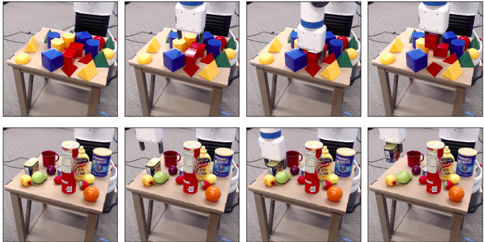
- The pipeline enabled a Fetch robot to detect and pick up the target object in 38 out of 40 trials in increasingly cluttered scenes, and a detector trained on a Spam can succeeded in 9 of 10 trials with previously unseen YCB food distractors.
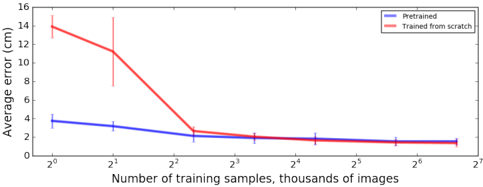
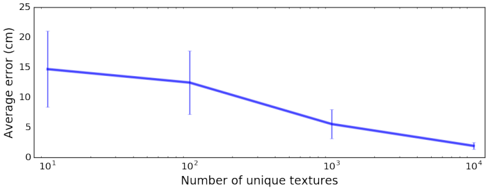
- Ablations found sensitivity to number of training images, number of unique textures, presence of distractors in training, and camera randomization; random noise had negligible effect. Performance improved up to around 50,000 training samples, and degraded significantly with fewer than 1,000 textures.
- ImageNet pretraining was not essential with enough data: random weight initialization achieved nearly the same real-world transfer performance as pretrained initialization, though pretraining helped in the low-data regime.
Methods
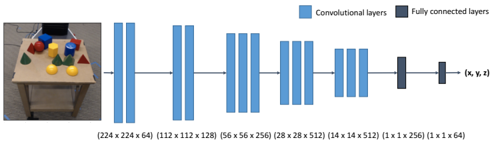
- The authors trained a modified VGG-16 convolutional neural network to map a single 224×224 monocular webcam image to Cartesian coordinates of object(s) of interest, using simulated images rendered by MuJoCo.
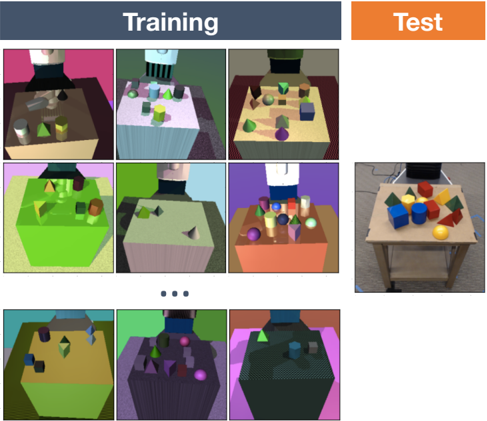
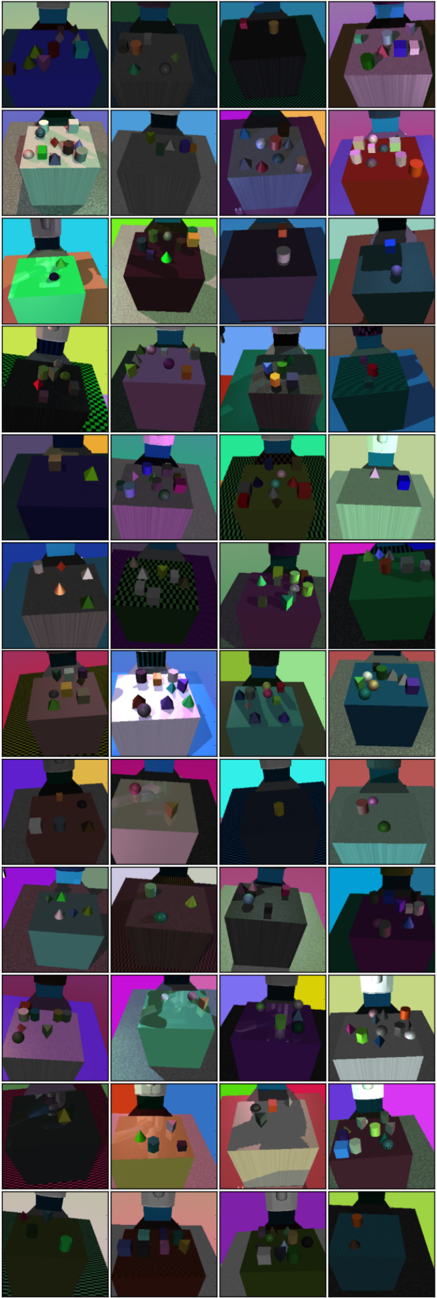
- Domain randomization varied number/shape of distractors, object positions and textures, table/floor/skybox/robot textures, camera position/orientation/field of view, number and properties of lights, and image noise. Textures were random RGB values, gradients, or checker patterns; 0–10 distractor objects were added per scene.
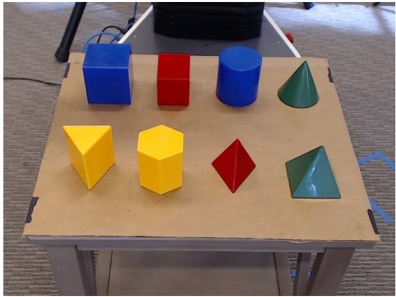
- Training used stochastic gradient descent with Adam on an L2 loss, learning rates around 1e-4, and batch sizes of 25, 50, or 100. Evaluation used 480 webcam images of eight geometric objects at 70–105 cm from a fixed camera, with 60 labeled images per object: 20 alone, 20 with distractors, and 20 partially occluded.
Limitations
- The paper states that the detectors still overfit simulated training data: simulated error was 0.3–0.5 cm versus about 1.5 cm in the real world, and no real-world validation could be done during training because no real data were assumed available.
- The paper states future work is needed for contact-rich manipulation or higher precision, and that the method fixes table height, effectively making the task 2D pose estimation from a single monocular uncalibrated camera.
- Evident from the text: evaluation is limited to eight geometric objects plus one Spam can, the test camera position remains constant across all images, and lighting and surrounding scene were not controlled.
Model-written summary. Check it against the paper before relying on it.
Integrity signals
Registry
Cites
Statistics
Figures
Verification
Claims the paper makes
2 Valid · 8 Not valid · 7 Not checked · 32 Own results and interpretations
The cited sources support only part of this claim — read each source’s verdict below.
In the paper
“Although previous work demonstrated the ability to perform robotic control using a neural network pretrained on ImageNet and fine-tuned on randomized rendered pixels [37], this paper provides the first demonstration that domain randomization can be useful for robotic tasks requiring precision.”
What the sources say
- Partly supportedcites [37] [37] Fereshteh Sadeghi and Sergey Levine. (cad) 2 RL: Real single-image flight without a single real image. arXiv preprint arXiv:1611.04201 , 2016. - sourceExperimental — accuracy not yet measured
The citation [37] is attached to the preceding claim about prior work, not to the citing authors’ claim that their own paper is the first to demonstrate precision robotics. Section 3.1 (p. 4) says LSDA pretrains a CNN on ImageNet classification data and fine-tunes it, but for object detection. It does not report robotic control or fine-tuning on randomized rendered pixels. (LLM, conf=0.84)
boostedstates a cause- Asserted: passes — The authors put it forward as true.
- Checkable: passes — It can be checked against evidence.
- Load-bearing: passes — The paper’s conclusions depend on it.
- Based: passes — The paper gives a reason why it holds.
- Partly supported
The cited sources that could be checked couldn’t confirm or dispute this claim.
In the paper
“Rather than relying on controller robustness, Yu et al. [53] use a model trained on varied physics to perform system identification using online trajectory data, but their approach is not shown to succeed in the real world.”
What the sources say
- Could not verifycites [53] [53] Wenhao Yu, C Karen Liu, and Greg Turk. Preparing for the unknown: Learning a universal policy with online system identification. arXiv preprint arXiv:1702.02453 , 2017. - sourceExperimental — accuracy not yet measured
The cited paper discusses image classification and localisation with convolutional networks (A.1, p. 10; A.2, p. 11), not Yu et al.'s approach. Searches for varied-physics training, online trajectory-based system identification, and real-world success found no passage addressing the claim. Our copy therefore cannot verify it. (LLM, conf=0.78)
plain- Asserted: passes — The authors put it forward as true.
- Checkable: passes — It can be checked against evidence.
- Load-bearing: unclear — It is unclear whether the paper’s conclusions depend on it.
- Based: passes — The paper gives a reason why it holds.
- Could not verify
The cited sources that could be checked couldn’t confirm or dispute this claim.
In the paper
“Though using realistic RGB rendering alone has had limited success for transferring to real robotic tasks [16], incorporating realistic simulation of depth information can allow models trained on rendered images to transfer reasonably well to the real world [32].”
What the sources say
- Could not verifycites [16] [16] Stephen James and Edward Johns. 3d simulation for robot arm control with deep q-learning. arXiv preprint arXiv:1609.03759 , 2016. - sourceExperimental — accuracy not yet measured
The Introduction (§1) and Conclusion (§8) describe Adam as a method for stochastic optimization, while the CNN experiment (§6.3) concerns training on image datasets. Searches for realistic RGB rendering and sim-to-real robotic transfer found no passage addressing whether RGB rendering alone has had limited success on real robotic tasks. (LLM, conf=0.78)
plain- Asserted: passes — The authors put it forward as true.
- Checkable: passes — It can be checked against evidence.
- Load-bearing: passes — The paper’s conclusions depend on it.
- Based: passes — The paper gives a reason why it holds.
- Could not verify
The cited sources that could be checked couldn’t confirm or dispute this claim.
In the paper
“However, their experiments - collision avoidance in hallways and open spaces - do not demonstrate the ability to deal with high-precision tasks.”
What the sources say
- Could not verifycites [37] [37] Fereshteh Sadeghi and Sergey Levine. (cad) 2 RL: Real single-image flight without a single real image. arXiv preprint arXiv:1611.04201 , 2016. - sourceExperimental — accuracy not yet measured
The Experiments section (p. 5) evaluates LSDA on an object-detection dataset, not Sadeghi and Levine’s collision-avoidance experiments. Searches for Sadeghi and Levine, hallway or open-space collision avoidance, and high-precision tasks found no passage addressing the claim. (LLM, conf=0.76)
plain- Asserted: passes — The authors put it forward as true.
- Checkable: passes — It can be checked against evidence.
- Load-bearing: passes — The paper’s conclusions depend on it.
- Based: passes — The paper gives a reason why it holds.
- Could not verify
A result the paper reports from its own data — it cites no other source for it, so there is none to check. The quote shows it is in the paper.
In the paper
“However, using a pre-trained model can significantly improve performance when less training data is used.”
plainstates a cause- Asserted: passes — The authors put it forward as true.
- Checkable: passes — It can be checked against evidence.
- Load-bearing: unclear — It is unclear whether the paper’s conclusions depend on it.
- Based: passes — The paper gives a reason why it holds.
29 more claims
Create a free account to see all 49 claims and to verify the 7 references still open.
- Probably not a substantial claim. 11
- It may state two separate claims as one. 8
Claims other papers make about this one
Each is checked against this paper’s own text: does it say what the citing paper says it does?
The source backs part of the claim, not all of it — or backs it for a different population, condition or comparison.
In the citing paper
“Most policies trained in simulation generalize poorly to the real-world due to agents adapting to specific visual details of the simulator.”
From Language-Based Augmentation to Address Shortcut Learning in Object-Goal Navigation (2023) · cites this paper as [8]
Experimental — accuracy not yet measuredThe source backs part of the claim, not all of it — or backs it for a different population, condition or comparison.
In the citing paper
“In robotic vision tasks including object localization [53], object detection [54], pose estimation [55], and semantic segmentation [56], the training data from simulator always have different textures, lighting, and camera positions from the realistic environments.”
From Sim-to-Real Transfer in Deep Reinforcement Learning for Robotics: a Survey (2020) · cites this paper as [53]
Experimental — accuracy not yet measuredThe source backs part of the claim, not all of it — or backs it for a different population, condition or comparison.
In the citing paper
“These artifacts limit the applicability of generative videos in physics-sensitive domains such as robotics [25,26], autonomous driving [27], simulationbased design, and scientific visualization [28].”
From PhyStruct-Video: Structured Physics State Spaces for Physically Consistent Video Generation (2025) · cites this paper as [25]
Experimental — accuracy not yet measuredThe source backs part of the claim, not all of it — or backs it for a different population, condition or comparison.
In the citing paper
“In domain randomization, the inputs during learning are “randomized” in the sense of being warped or corrupted in particular ways.”
From The overfitted brain: Dreams evolved to assist generalization (2021) · cites this paper as [144]
Experimental — accuracy not yet measuredThe source backs part of the claim, not all of it — or backs it for a different population, condition or comparison.
In the citing paper
“Domain randomization is a domain generalization technique that introduces drastic changes in the training image appearances, which forces the network to learn domain-invariant features between training and target domains [39].”
From A Fully Differentiable Framework for 2D/3D Registration and the Projective Spatial Transformers (2024) · cites this paper as [39]
Experimental — accuracy not yet measured
8 more claims about this paper
Create a free account to see every claim other papers make about this one.
Self-check
Percentages, sums and reported differences re-computed from the paper’s own numbers.
Each contradiction between two passages listed here was confirmed by an independent check.
Rated minor: it would not touch a result — a value no result rests on, a p-value that stays on the same side of the significance level, or a conflict that is clerical, resolved elsewhere in the paper, or outside its own findings.
In the paper
§ A. Experimental Setup · p. 4
“Each training sample consists of (a) a rendered image of the object and one or more distractors (also from among the geometric object set) on a simulated tabletop”
§ A. Domain randomization · p. 4
“Between 0 and 10 distractor objects are added to the table in each scene.”
Citations
Cites
Very Deep Convolutional Networks for Large-Scale Image Recognition
Simonyan, K., & Zisserman, A. (2014) · arXiv · doi:10.48550/arxiv.1409.1556 · Cited by 114,148 · cited 1×
“In particular, we use a modified version the VGG-16 architecture [42] shown in Figure 2.”
MethodAdam: A Method for Stochastic Optimization
Kingma, D. P., & Ba, J. (2014) · arXiv · doi:10.48550/arxiv.1412.6980 · Cited by 98,946 · cited 1×
“We found that using a learning rate of around 1e − 4 (as opposed to the standard 1e − 3 for Adam) improved convergence and helped avoid a common local optimum, mapping all objects to the center of the table.”
MethodLeCun, Y., Bengio, Y., & Hinton, G. (2015) · Nature · doi:10.1038/nature14539 · Cited by 84,126
Human-level control through deep reinforcement learning
Mnih, V., Kavukcuoglu, K., Silver, D., Rusu, A. A., Veness, J., Bellemare, M. G., Graves, A., Riedmiller, M., Fidjeland, A. K., Ostrovski, G., et al. (2015) · Nature · doi:10.1038/nature14236 · Cited by 30,357 · cited 3×
“Learning in simulation is especially promising for building on recent results using deep reinforcement learning to achieve human-level performance on tasks like Atari [27] and robotic control [21], [38].”
BackgroundResultHow transferable are features in deep neural networks?
Yosinski, J., Clune, J., Bengio, Y., & Lipson, H. (2014) · arXiv · doi:10.48550/arxiv.1411.1792 · Cited by 6,061 · cited 1×
“A variety of approaches have been proposed, including re-training the model in the target domain (e.g., [52]), adapting the weights of the model based on the statistics of the source and target domains (e.g., [22]), learning invariant features between domains (e.g., [47]), and learning a mapping…”
BackgroundMuJoCo: A physics engine for model-based control
Todorov, E., Erez, T., & Tassa, Y. (2012) · 2012 IEEE/RSJ International Conference on Intelligent Robots and Systems · doi:10.1109/iros.2012.6386109 · Cited by 4,767 · cited 1×
“We render images using the MuJoCo Physics Engine’s [45] built-in renderer.”
MethodTrust region policy optimization
Schulman, J., Levine, S., Moritz, P., Jordan, M. I., & Abbeel, P. (2015) · arXiv · doi:10.48550/arxiv.1502.05477 · Cited by 4,578 · cited 1×
“Learning in simulation is especially promising for building on recent results using deep reinforcement learning to achieve human-level performance on tasks like Atari [29] and robotic control [26], [41].”
ResultSelf-citationLearning Transferable Features with Deep Adaptation Networks
Long, M., Cao, Y., Wang, J., & Jordan, M. I. (2015) · arXiv · doi:10.48550/arxiv.1502.02791 · Cited by 4,505 · cited 1×
“omputer vision community has devoted significant study to the problem of adapting vision-based models trained in a source domain to a previously unseen target domain (see, e.g., [9], [14], [15], [19], [23], [25], [51]). A variety of approaches have been proposed, including re-training the model in the target domain (e.…”
BackgroundEnd-to-End Training of Deep Visuomotor Policies
Levine, S., Finn, C., Darrell, T., et al. (2015) · Journal of machine learning research · doi:10.5555/2946645.2946684 · Cited by 3,987
Describing Textures in the Wild
Cimpoi, M., Maji, S., Kokkinos, I., Mohamed, S., & Vedaldi, A. (2014) · 2014 IEEE Conference on Computer Vision and Pattern Recognition · doi:10.1109/cvpr.2014.461 · Cited by 2,438 · cited 1×
“To examine how our detectors would perform on objects with complex textures, we created simulated scenes in which the object of interest is given a texture from the Describable Textures Dataset (DTD) [4].”
Method
Research works printed but not linked: 3
- [24] David G Lowe. Three-dimensional object recognition from single two-dimensional images. Artificial intelligence , 31(3):355-395, 1987. -
- [49] Melonee Wise, Michael Ferguson, Derek King, Eric Diehr, and David Dymesich. Fetch and freight: Standard platforms for service robot applications. In Workshop on Autonomous Mobile Service Robots , 2016. -
- sucan, 0, MoveIt!
Cited by
Items 201–300 of 2,970
Underwater Soft Robot Modeling and Control With Differentiable Simulation
Du, T., Hughes, J., Wah, S., Matusik, W., & Rus, D. L. (2021) · IEEE Robotics and Automation Letters · doi:10.1109/lra.2021.3070305 · Cited by 114
CaTGrasp: Learning Category-Level Task-Relevant Grasping in Clutter from Simulation
Wen, B., Lian, W., Bekris, K. E., & Schaal, S. (2022) · Proceedings - IEEE International Conference on Robotics and Automation/Proceedings · doi:10.1109/icra46639.2022.9811568 · Cited by 118
“To do so, synthetic data are generated in PyBullet simulation [49], aiming for physical fidelity [13], [50], while leveraging domain randomization [12].”
MethodSatellite Pose Estimation Competition 2021: Results and Analyses
Park, T. H., Märtens, M., Jawaid, M., Wang, Z., Chen, B., Chin, T.-J., Izzo, D., & D’Amico, S. (2023) · Acta Astronautica · doi:10.1016/j.actaastro.2023.01.002 · Cited by 91
Large-scale 6D Object Pose Estimation Dataset for Industrial Bin-Picking
Kleeberger, K., Landgraf, C., & Huber, M. F. (2019) · IEEE/RSJ International Conference on Intelligent Robots and Systems (IROS) · doi:10.1109/iros40897.2019.8967594 · Cited by 112
“As demonstrated in [20], our synthetic dataset along with domain randomization [17] can be used to get robust and accurate 6D pose estimates on our real-world scenes.”
BackgroundFreire, P. J., Srivallapanondh, S., Spinnler, B., Napoli, A., Costa, N. M. S., Prilepsky, J. E., & Turitsyn, S. K. (2024) · Journal of Lightwave Technology · doi:10.1109/jlt.2024.3386886 · Cited by 120
“Domain randomization is a systematic approach for data generation aiming to improve the generalization and the robustness of machine learning models in new environments [38].”
BackgroundDeepRacer: Autonomous Racing Platform for Experimentation with Sim2Real Reinforcement Learning
Balaji, B., Mallya, S., Genç, Ş., Gupta, S., Dirac, L., Khare, V. R., Roy, G., Sun, T., Tao, Y., Townsend, B., et al. (2020) · Proceedings - IEEE International Conference on Robotics and Automation/Proceedings · doi:10.1109/icra40945.2020.9197465 · Cited by 165
“Methods include adding noise in dynamics [23], [2] and imagery [12], [52], learning model ensembles [53], [54], adding adversarial noise [25], [55] and assessing simulation bias [24].”
BackgroundLearning-based robotic grasping: A review
Xie, Z., Liang, X., & Canale, R. (2023) · Frontiers in Robotics and AI · doi:10.3389/frobt.2023.1038658 · Cited by 114
“Domain randomization (Tobin et al., 2017) can be the key to transfer the learning of simulated data.”
BackgroundDeceptionNet: Network-Driven Domain Randomization
Zakharov, S., Kehl, W., & Ilic, S. (2019) · 2019 IEEE/CVF International Conference on Computer Vision (ICCV) · doi:10.1109/iccv.2019.00062 · Cited by 78
“Domain randomization methods [47, 21, 29, 52, 45] have no access to any target domain and employ the rather simple technique of randomly perturbing (synthetic) source data during training to make the tasks networks robust to perceptual differences.”
BackgroundMethodIto, H., Yamamoto, K., Hiroki, M. O. R. I., & Ogata, T. (2022) · Science Robotics · doi:10.1126/scirobotics.aax8177 · Cited by 112
“To reduce the trial-and-error process in the real world, research on “simulation-to-real transfer,” which transfers learning results in a simulation environment, is conducted ( 12 – 14 ).”
BackgroundPyRep: Bringing V-REP to Deep Robot Learning
James, S., Freese, M., & Davison, A. J. (2019) · arXiv (Cornell University) · doi:10.48550/arxiv.1906.11176 · Cited by 83
“• Training on a large amount of simulation data with potentially a small amount of real-world data, and find ways of transferring this knowledge from simulation to the real world [4, 5, 6, 7, 8].”
BackgroundNie, Y., Zamzam, A. S., & Brandt, A. R. (2021) · Solar Energy · doi:10.1016/j.solener.2021.05.095 · Cited by 94
HEBO: An Empirical Study of Assumptions in Bayesian Optimisation
Cowen-Rivers, A. I., Lyu, W., Tutunov, R., Wang, Z., Grosnit, A., Griffiths, R., Maraval, A., Hao, J., Wang, J., Peters, J., et al. (2022) · Journal of Artificial Intelligence Research · doi:10.1613/jair.1.13643 · Cited by 237
Meta-Reinforcement Learning for Robotic Industrial Insertion Tasks
Schoettler, G., Nair, A., Ojea, J. A., Levine, S., & Solowjow, E. (2020) · IEEE/RSJ International Conference on Intelligent Robots and Systems (IROS) · doi:10.1109/iros45743.2020.9340848 · Cited by 119
“on a wide distribution of tasks in simulation assuming that the real world task is captured in that distribution [24], [25], [26], [27].”
BackgroundVision-Language Navigation with Random Environmental Mixup
Liu, C., Zhu, F., Chang, X., Liang, X., Ge, Z., & Shen, Y.-D. (2021) · 2021 IEEE/CVF International Conference on Computer Vision (ICCV) · doi:10.1109/iccv48922.2021.00167 · Cited by 80
“Data augmentation has also been investigated in RL, including domain randomization [52, 42, 44], cutout [13] and random convolution [32].”
MethodLearning Optimal Controllers for Linear Systems With Multiplicative Noise via Policy Gradient
Gravell, B., Esfahani, P. M., & Summers, T. H. (2020) · IEEE Transactions on Automatic Control · doi:10.1109/tac.2020.3037046 · Cited by 146
“Additionally, intentional injection of multiplicative noise into learning algorithms is known to enhance robustness of policies from ad hoc work on domain randomization [22].”
BackgroundObject Detection Using Sim2Real Domain Randomization for Robotic Applications
Horváth, D., Erdős, G., Istenes, Z., Horváth, T., & Földi, S. (2022) · IEEE Transactions on Robotics · doi:10.1109/tro.2022.3207619 · Cited by 122
“[14] trained a modified version of VGG-16 [19] deep neural network architecture for object localization.”
BackgroundParallel Learning: Overview and Perspective for Computational Learning Across Syn2Real and Sim2Real
Miao, Q., Lv, Y., Huang, M., Wang, X., & Wang, F. (2023) · IEEE/CAA Journal of Automatica Sinica · doi:10.1109/jas.2023.123375 · Cited by 94
“[84] presented mirror-generative NMT (MGNMT) which is also a single unified model like [81] but additionally introduced two language models to collaborate with the unified model during decoding.”
BackgroundBharadhwaj, H., Vakil, J., Sharma, M., Gupta, A., Tulsiani, S., & Kumar, V. (2024) · 2024 IEEE International Conference on Robotics and Automation (ICRA) · doi:10.1109/icra57147.2024.10611293 · Cited by 81
“Large-scale simulations [12]–[15] have also been leveraged with the hope of first learning a general multi-task policy [16]–[21] and then transferring it to real world via sim2real[22]–[25].”
KETO: Learning Keypoint Representations for Tool Manipulation
Qin, Z., Fang, K., Zhu, Y., Fei-Fei, L., & Savarese, S. (2020) · 2020 IEEE International Conference on Robotics and Automation (ICRA) · doi:10.1109/icra40945.2020.9196971 · Cited by 78
Learning From Synthetic Shadows for Shadow Detection and Removal
Inoue, N., & Yamasaki, T. (2020) · IEEE Transactions on Circuits and Systems for Video Technology · doi:10.1109/tcsvt.2020.3047977 · Cited by 95
“Inspired by domain randomization [44], we obtain a set of parameters, where each of them is easy to sample from an interpretable yet straightforward prior distribution and independent of each other.”
MethodRetinaGAN: An Object-aware Approach to Sim-to-Real Transfer
Ho, D., Rao, K., Xu, Z., Jang, E., Khansari, M., & Bai, Y. (2021) · Proceedings - IEEE International Conference on Robotics and Automation/Proceedings · doi:10.1109/icra48506.2021.9561157 · Cited by 142
“With domain randomization, a policy is trained with randomized simulation parameters and scene configurations which produce differences in visual appearance [6], [7], [8], [9], [10], [11].”
MethodConcept2Robot: Learning manipulation concepts from instructions and human demonstrations
Shao, L., Migimatsu, T., Zhang, Q., Yang, K., & Bohg, J. (2021) · The International Journal of Robotics Research · doi:10.1177/02783649211046285 · Cited by 80
“We can utilize domain randomization (Tobin et al., 2017) for transferring the policy learned from simulation to the real world.”
MethodYe, F., Zhang, S., Wang, P., & Chan, C. (2021) · IEEE Intelligent Vehicles Symposium · doi:10.1109/iv48863.2021.9575880 · Cited by 121
“On the one hand, randomizing the simulator environment has been applied to generalize the trained policies [67].”
BackgroundChoi, J., Park, K.-S., Kim, M., & Seok, S. (2019) · Proceedings - IEEE International Conference on Robotics and Automation/Proceedings · doi:10.1109/icra.2019.8793979 · Cited by 91
“These works showed that dynamics randomization improves robustness of the agents in challenging real-world robotics tasks such as locomotion of quadruped robots [19] or object manipulation using robotic arms [20], [21].”
BackgroundMethodPandian, J. A., Geetharamani, G., & Annette, B. (2019) · IEEE International Conference on Advanced Computing (IACC) · doi:10.1109/iacc48062.2019.8971580 · Cited by 98
“Mainly, it transforms the style into the content image to generate a new artistic output image [23, 24].”
BackgroundFeature-Based Style Randomization for Domain Generalization
Wang, Y., Qi, L., Shi, Y., & Gao, Y. (2022) · IEEE Transactions on Circuits and Systems for Video Technology · doi:10.1109/tcsvt.2022.3152615 · Cited by 92
“Tobin et al. [57] explore domain randomization, which generates simulated images by rendering background, changing illumination, transforming colorization and trains models on them to reduce the gap between simulated images and real images.”
BackgroundMethodA Benchmark Comparison of Learned Control Policies for Agile Quadrotor Flight
Kaufmann, E., Bauersfeld, L., & Scaramuzza, D. (2022) · Proceedings - IEEE International Conference on Robotics and Automation/Proceedings · doi:10.1109/icra46639.2022.9811564 · Cited by 133
Rotating without Seeing: Towards In-hand Dexterity through Touch
Yin, Z.-H., Huang, B., Qin, Y., Chen, Q., & Wang, X. (2023) · Robotics: Science and Systems · doi:10.15607/rss.2023.xix.036 · Cited by 204
Hoskere, V., Narazaki, Y., & Spencer, B. F. (2022) · Sensors · doi:10.3390/s22020532 · Cited by 83
“As noted in [29,38] randomization is a crucial means of enforcing generalization.”
BackgroundOn reliability of reinforcement learning based production scheduling systems: a comparative survey
de Puiseau, C. W., Meyes, R., & Meisen, T. (2022) · Journal of Intelligent Manufacturing · doi:10.1007/s10845-022-01915-2 · Cited by 95
“Tobin et al. (2017) introduced domain randomization, which introduces synthetic variance in the observation space during training and has shown to improve generalization capabilities for the transfer from simulation to reality.”
BackgroundScheikl, P. M., Tagliabue, E., Gyenes, B., Wagner, M., Dall’Alba, D., Fiorini, P., & Mathis-Ullrich, F. (2022) · IEEE Robotics and Automation Letters · doi:10.1109/lra.2022.3227873 · Cited by 125
“Index Terms —Computer vision for medical robotics, reinforcement learning, surgical robotics: Laparoscopy.”
BackgroundUnsupervised Clustering for Deep Learning: A tutorial survey
Karoly, A. I., Fuller, R. C., & Galambos, P. (2018) · Acta Polytechnica Hungarica · doi:10.12700/aph.15.8.2018.8.2 · Cited by 97
“In the case of simulator-based labeling, for example, there is no need for the time consuming manual labeling of the data [9].”
MethodMonte-Carlo Tree Search for Efficient Visually Guided Rearrangement PlanningPreprint
Labbé, Y., Zagoruyko, S., Kalevatykh, I., Ivan Laptev, A., Carpentier, J., Aubry, M., & Šivic, J. (2019) · arXiv (Cornell University) · Cited by 78
Data-Efficient Domain Randomization With Bayesian Optimization
Muratore, F., Eilers, C., Gienger, M., & Peters, J. (2021) · IEEE Robotics and Automation Letters · doi:10.1109/lra.2021.3052391 · Cited by 77
“A few examples that are: (i) object detection [21], (ii) synthetic object generation for grasp planning [8], and (iii) autonomous drone flight [22].”
BackgroundData-efficient Domain Randomization with Bayesian Optimization
Muratore, F., Eilers, C., Gienger, M., & Peters, J. (2020) · arXiv · doi:10.48550/arxiv.2003.02471 · Cited by 77
Predicting with Confidence on Unseen Distributions
Guillory, D., Shankar, V., Ebrahimi, S., Darrell, T., & Schmidt, L. (2021) · IEEE/CVF International Conference on Computer Vision (ICCV) · doi:10.1109/iccv48922.2021.00117 · Cited by 190
“One line of work, Domain Generalization, has focused on the problem of learning models that adapt well to various forms of distribution shift [55, 31, 40, 14, 54].”
BackgroundFeature Stylization and Domain-aware Contrastive Learning for Domain Generalization
Jeon, S., Hong, K., Lee, P., Lee, J., & Byun, H. (2021) · ACM International Conference on Multimedia (ACM MM) · doi:10.1145/3474085.3475271 · Cited by 109
“Recently, domain randomization [26, 49, 60, 61] is another generative stream which diversifies the textures of source domain images, allowing the model to learn texture invariant representations.”
BackgroundInfluentialSimulation to scaled city: zero-shot policy transfer for traffic control via autonomous vehicles
Jang, K., Vinitsky, E., Chalaki, B., Remer, B., Beaver, L. E., Malikopoulos, A. A., & Bayen, A. M. (2019) · ACM/IEEE International Conference on Cyber-Physical Systems (ICCPS) · doi:10.1145/3302509.3313784 · Cited by 88
“Techniques used to tackle this problem include domain randomization [24], in which noise is injected into the state space to enforce robustness with respect to unobserved states.”
MethodPetersen, E., Potdevin, Y., Mohammadi, E., Zidowitz, S., Breyer, S., Nowotka, D., Henn, S., Pechmann, L., Leucker, M., Rostalski, P., et al. (2022) · IEEE Access · doi:10.1109/access.2022.3178382 · Cited by 113
“Domain randomization is one approach that has been proposed for solving this problem by incentivizing successful concept learning [127], [128].”
BackgroundSimulation-assisted machine learning
Deist, T. M., Patti, A., Wang, Z., Krane, D., Sorenson, T., & Craft, D. (2019) · Bioinformatics · doi:10.1093/bioinformatics/btz199 · Cited by 88
“Varying the simulation conditions during training, called domain randomization, is used to improve model generalization (Tobin et al., 2017).”
MethodVisuoSpatial Foresight for Multi-Step, Multi-Task Fabric Manipulation
Hoque, R., Seita, D., Balakrishna, A., Ganapathi, A., Tanwani, A., Jamali, N., Yamane, K., Iba, S., & Goldberg, K. (2020) · Robotics: Science and Systems XVI · doi:10.15607/rss.2020.xvi.034 · Cited by 74
“Finally, to enable transfer of policies trained in simulation to the real-world, we adjust the domain randomization [58] techniques so that color, brightness, and positional hyperparameters are fixed per episode to ensure that the video prediction model learns to only focus on predicting changes in…”
MethodTwo-Shot Spatially-Varying BRDF and Shape Estimation
Boss, M., Jampani, V., Kim, K., Lensch, H. P. A., & Kautz, J. (2020) · IEEE Computer Society Conference on Computer Vision and Pattern Recognition/Proceedings - IEEE Computer Society Conference on Computer Vision and Pattern Recognition/Proceedings · doi:10.1109/cvpr42600.2020.00404 · Cited by 117
“This strategy is similar to domain randomization [55] (DR) that is shown to be useful in high-level semantic tasks such as object detection [56].”
MethodContinual Adaptation of Visual Representations via Domain Randomization and Meta-learning
Volpi, R., Larlus, D., & Rogez, G. (2021) · 2021 IEEE/CVF Conference on Computer Vision and Pattern Recognition (CVPR) · doi:10.1109/cvpr46437.2021.00442 · Cited by 72
“Motivated by results on domain randomization [58, 65] and single-source domain generalization [60], we propose to heavily perturb the distribution of the current domain to increase the probability that samples from future domains will be closer to the current data distribution—hence (generally) requiring a lighter ada…”
BackgroundA Survey of Deep Learning Applications to Autonomous Vehicle Control
Kuutti, S., Bowden, R., Jin, Y., Barber, P., & Fallah, S. (2021) · IEEE Transactions on Intelligent Transportation Systems · doi:10.1109/tits.2019.2962338 · Cited by 96
“policies from simulation to the real world [199]–[202].”
BackgroundMeta-Sim2: Unsupervised Learning of Scene Structure for Synthetic Data Generation
Devaranjan, J., Kar, A., & Fidler, S. (2020) · Lecture Notes in Computer Science · doi:10.1007/978-3-030-58520-4_42 · Cited by 73
“Grammar) is a form of Domain Randomization [62,48], which has been shown to be crucial for sim-to-real adaptation.”
BackgroundCross-Domain Complementary Learning Using Pose for Multi-Person Part Segmentation
Lin, K., Wang, L., Luo, K., Chen, Y., Liu, Z., & Sun, M. (2020) · IEEE Transactions on Circuits and Systems for Video Technology · doi:10.1109/tcsvt.2020.2995122 · Cited by 90
Guided Constrained Policy Optimization for Dynamic Quadrupedal Robot Locomotion
Gangapurwala, S., Mitchell, A., & Havoutis, I. (2020) · IEEE Robotics and Automation Letters · doi:10.1109/lra.2020.2979656 · Cited by 88
“These issues of RL have been tackled using techniques such as actuator modeling [15], implementing a modular training approach [16], introducing domain randomization [17], increasing policy generalization [18] and adding noise to observations and actions in the training environments.”
MethodState-Only Imitation Learning for Dexterous Manipulation
Radosavovic, I., Wang, X., Pinto, L., & Malik, J. (2021) · IEEE/RSJ International Conference on Intelligent Robots and Systems (IROS) · doi:10.1109/iros51168.2021.9636557 · Cited by 148
“These policies can be deployed to the real robot with domain randomization [11], [12].”
BackgroundDeep Differentiable Grasp Planner for High-DOF Grippers
Liu, M., Pan, Z., Xu, K., Ganguly, K., & Manocha, D. (2020) · Robotics: Science and Systems · doi:10.15607/rss.2020.xvi.066 · Cited by 121
“More recent techniques aim at improving the data efficiency of learning-based planners and also making the planner robust in challenging settings involving arbitrary approaching directions [14], more general gripper types [10, 27], and model discrepancies [20, 45].”
BackgroundAdapting Object Detectors with Conditional Domain Normalization
Su, P., Wang, K., Zeng, X., Tang, S., Chen, D., Qiu, D., & Wang, X. (2020) · Lecture notes in computer science · doi:10.1007/978-3-030-58621-8_24 · Cited by 108
“It has achieved noticeable progress in various machine learning tasks, from image classification [23, 24, 27], semantic segmentation [37, 40, 48], object detection [34, 47] to reinforcement learning [20, 29, 39].”
BackgroundMethodInfluentialDelay-aware model-based reinforcement learning for continuous control
Chen, B., Xu, M., Li, L., & Zhao, D. X. (2021) · Neurocomputing · doi:10.1016/j.neucom.2021.04.015 · Cited by 119
Haptic perception using optoelectronic robotic flesh for embodied artificially intelligent agents
Barreiros, J. A. L., Xu, A., Pugach, S., Iyengar, N., Troxell, G. W., Cornwell, A., Hong, S., Selman, B., & Shepherd, R. F. (2022) · Science Robotics · doi:10.1126/scirobotics.abi6745 · Cited by 81
“Another example would be to use reinforcement learning in combination with our robotic flesh, which could form the basis of an embodied agent that can learn by itself to feel touch without supervision by touching its own body in the real world or in simulation ( 55 ).”
BackgroundComputational Foundations of Natural Intelligence
van Gerven, M. A. J. (2017) · Frontiers in Computational Neuroscience · doi:10.3389/fncom.2017.00112 · Cited by 93
“That is, there may exist a reality gap (Tobin et al., 2017), where skills acquired in virtual worlds do not carry over to the real world.”
BackgroundInfluentialEversberg, L., & Lambrecht, J. (2021) · Sensors · doi:10.3390/s21237901 · Cited by 97
“Tobin et al. [20] explored the concept of domain randomization (DR) in order to bridge the gap between a low-fidelity simulation environment and the real world.”
Leveraging Synthetic Data in Object Detection on Unmanned Aerial Vehicles
Kiefer, B., Ott, D., & Zell, A. (2022) · Proceedings - International Conference on Pattern Recognition/Proceedings/International Conference on Pattern Recognition · doi:10.1109/icpr56361.2022.9956710 · Cited by 105
Scaling Robot Learning with Semantically Imagined Experience
Yu, T., Xiao, T., Tompson, J., Stone, A., Wang, S., Brohan, A., Singh, J., Tan, C., M, D., Peralta, J., et al. (2023) · Robotics: Science and Systems XIX · doi:10.15607/rss.2023.xix.027 · Cited by 72
Yang, N., Chen, S., Zhang, H., & Berry, R. (2024) · IEEE Communications Surveys & Tutorials · doi:10.1109/comst.2024.3405075 · Cited by 114
“…in edge servers, three perspectives can be considered: (1) Environment design: design different communication environments that guide RL training [209], (e.g., domain randomization, curriculum learning); (2) System learning: learn the various features of MEC network environments [237], (e.g.,…”
BackgroundMethodThe overfitted brain: Dreams evolved to assist generalization
Hoel, E. (2021) · Patterns · doi:10.1016/j.patter.2021.100244 · Cited by 70
Virtual-to-Real: Learning to Control in Visual Semantic Segmentation
Hong, Z.-W., Chen, Y.-M., Yang, H.-K., Su, S.-Y., Shann, T.-Y., Chang, Y.-H., Ho, B. H.-L., Tu, C.-C., Hsiao, T.-C., Hsiao, H.-W., et al. (2018) · Proceedings of the Twenty-Seventh International Joint Conference on Artificial Intelligence · doi:10.24963/ijcai.2018/682 · Cited by 68
Automated Excavator Based on Reinforcement Learning and Multibody System Dynamics
Kurinov, I., Orzechowski, G., Hämäläinen, P., & Mikkola, A. (2020) · IEEE Access · doi:10.1109/access.2020.3040246 · Cited by 72
You Only Demonstrate Once: Category-Level Manipulation from Single Visual Demonstration
Wen, B., Lian, W., Bekris, K., & Schaal, S. (2022) · Robotics: Science and Systems XVIII · doi:10.15607/rss.2022.xviii.044 · Cited by 70
“domain gap, domain randomization [42] is employed by extensively randomizing the object instance types, physical parameters, object’s initial poses, and the table height.”
MethodEstimating 3D Motion and Forces of Person-Object Interactions From Monocular Video
Li, Z., Sedlář, J., Carpentier, J., Laptev, I., Mansard, N., & Šivic, J. (2019) · IEEE Computer Society Conference on Computer Vision and Pattern Recognition/Proceedings - IEEE Computer Society Conference on Computer Vision and Pattern Recognition/Proceedings · doi:10.1109/cvpr.2019.00884 · Cited by 102
“In addition, domain randomization [42, 63] is applied to handle the variance of instances and changes in appearance in the videos caused by illumination: the geometrically transformed shape is filled with pixels from a random image (foreground) and pasted on another random image (background).”
MethodYamashita, R., Long, J., Banda, S., Shen, J., & Rubin, D. L. (2021) · IEEE Transactions on Medical Imaging · doi:10.1109/tmi.2021.3101985 · Cited by 69
“[32] showed that an object detection model that generalizes to real-world images can be trained by using unrealistic simulated images with a diverse set of random textures, rather than by making the simulated images as realistic as possible.”
Background3DStyleNet: Creating 3D Shapes with Geometric and Texture Style Variations
Yin, K., Gao, J., Shugrina, M., Khamis, S., & Fidler, S. (2021) · IEEE/CVF International Conference on Computer Vision (ICCV) · doi:10.1109/iccv48922.2021.01223 · Cited by 89
“For texture-based augmentation, we compare with b) random texture replacement akin to domain randomization work [53], where for each of the 221 objects we randomly select 221 COCO [31] images as new textures (yielding 221 × 221 combinations), and c) using image style transfer [28] to transfer the texture image style f…”
MethodNICO++: Towards Better Benchmarking for Domain Generalization
Zhang, X., He, Y., Xu, R., Han, Y., Shen, Z., & Cui, P. (2023) · IEEE Computer Society Conference on Computer Vision and Pattern Recognition/Proceedings - IEEE Computer Society Conference on Computer Vision and Pattern Recognition/Proceedings · doi:10.1109/cvpr52729.2023.01539 · Cited by 136
“, 2020], and data augmentation methods [Yue et al., 2019; Tobin et al., 2017; Peng et al., 2018; Khirodkar et al., 2019; Tremblay et al., 2018; Prakash et al., 2019; Shankar et al., 2018; Volpi et al., 2018; Zhou et al., 2020].”
MethodRisk Averse Robust Adversarial Reinforcement Learning
Pan, X., Seita, D., Gao, Y., & Canny, J. (2019) · 2019 International Conference on Robotics and Automation (ICRA) · doi:10.1109/icra.2019.8794293 · Cited by 69
“have grown popular, including domain randomization [33], [38] and dynamics randomization [28].”
BackgroundReinforcement Learning Testbed for Power-Consumption Optimization
Moriyama, T., Magistris, G. D., Tatsubori, M., Pham, T.-H., Munawar, A., & Tachibana, R. (2018) · Communications in computer and information science · doi:10.1007/978-981-13-2853-4_4 · Cited by 122
“Domain adaptation and transfer learning [13,4] constitute important steps towards the application of such model-based DRL techniques.”
MethodLearning to See before Learning to Act: Visual Pre-training for Manipulation
Yen-Chen, L., Zeng, A., Song, S., Isola, P., & Lin, T.-Y. (2020) · 2020 IEEE International Conference on Robotics and Automation (ICRA) · doi:10.1109/icra40945.2020.9197331 · Cited by 64
“environments [22] or bridging the gap between simulation and reality [23, 24, 25, 26].”
BackgroundScalable sim-to-real transfer of soft robot designs
Kriegman, S., Nasab, A. M., Shah, D., Steele, H., Branin, G., Levin, M. G., Bongard, J., & Kramer-Bottiglio, R. K. (2020) · IEEE International Conference on Soft Robotics (RoboSoft) · doi:10.1109/robosoft48309.2020.9116004 · Cited by 100
“[36] 2017 1 1 Rusu et al.”
Robust High-Speed Running for Quadruped Robots via Deep Reinforcement Learning
Bellegarda, G., Chen, Y., Liu, Z., & Nguyen, Q. (2022) · IEEE/RSJ International Conference on Intelligent Robots and Systems (IROS) · doi:10.1109/iros47612.2022.9982132 · Cited by 96
“There are several methods to improve the robustness of policies trained in simulation, such as domain randomization [34], [35] and dynamics randomization [36]–”
MethodUnseen Object Amodal Instance Segmentation via Hierarchical Occlusion Modeling
Back, S., Lee, J., Kim, T., Noh, S., Kang, R., Bak, S., & Lee, K. (2022) · Proceedings - IEEE International Conference on Robotics and Automation/Proceedings · doi:10.1109/icra46639.2022.9811646 · Cited by 100
“to learn the concept of object-ness from a large amount of domain-randomized [25] synthetic data.”
BackgroundAdapting Rapid Motor Adaptation for Bipedal Robots
Kumar, A., Li, Z., Zeng, J., Pathak, D., Sreenath, K., & Malik, J. (2022) · IEEE/RSJ International Conference on Intelligent Robots and Systems (IROS) · doi:10.1109/iros47612.2022.9981091 · Cited by 152
“Alternatively, several works use domain randomization which varies the system properties in simulation in order to cover the uncertainty in the real world [17]–[19], [23], [31], [32], [35]–[38].”
BackgroundSimulation, Learning, and Application of Vision-Based Tactile Sensing at Large Scale
Luu, Q. K., Nguyen, N. H., & Ho, V. A. (2023) · IEEE Transactions on Robotics · doi:10.1109/tro.2023.3245983 · Cited by 89
“applications [26] and tactile sensing devices [18], [22].”
BackgroundCNN-Based Target Recognition and Identification for Infrared Imaging in Defense Systems
d’Acremont, A., Fablet, R., Baussard, A., & Quin, G. (2019) · Sensors · doi:10.3390/s19092040 · Cited by 82
“For instance, in Reference [35], a robotic arm was trained in a simulated environment involving varied lighting and colour conditions before its deployment in real situations.”
BackgroundRobotic Perception of Transparent Objects: A Review
Jiang, J., Cao, G., Deng, J., Do, T.-T., & Luo, S. (2023) · IEEE Transactions on Artificial Intelligence · doi:10.1109/tai.2023.3326120 · Cited by 105
Social Interaction‐Aware Dynamical Models and Decision‐Making for Autonomous Vehicles
Crosato, L., Tian, K., Shum, H. P. H., Ho, E. S. L., Wang, Y., & Wei, C. (2023) · Advanced Intelligent Systems · doi:10.1002/aisy.202300575 · Cited by 93
Shahid, A. A., Piga, D., Braghin, F., & Roveda, L. (2022) · Autonomous Robots · doi:10.1007/s10514-022-10034-z · Cited by 90
“Due to unrealistic rendering capabilities of simulation engines, visuomotor policies learned in simulation demand additional sim-to-real techniques (Tobin et al. 2017) to perform in real world settings.”
BackgroundA Review of End-to-End Autonomous Driving in Urban Environments
Coelho, D., & de Oliveira, M. A. R. (2022) · IEEE Access · doi:10.1109/access.2022.3192019 · Cited by 94
Assessing Transferability From Simulation to Reality for Reinforcement Learning
Muratore, F., Gienger, M., & Peters, J. (2021) · IEEE Transactions on Pattern Analysis and Machine Intelligence · doi:10.1109/tpami.2019.2952353 · Cited by 65
Learning One-Shot Imitation From Humans Without Humans
Bonardi, A., James, S., & Davison, A. J. (2020) · IEEE Robotics and Automation Letters · doi:10.1109/lra.2020.2977835 · Cited by 65
“textures, lighting, and camera position to the simulated scenes, has seen great success in numerous vision-based robotics applications [5]–[7], [35], [36].”
BackgroundCosyPose: Consistent Multi-view Multi-object 6D Pose Estimation
Labbé, Y., Carpentier, J., Aubry, M., & Šivic, J. (2020) · Lecture notes in computer science · doi:10.1007/978-3-030-58520-4_34 · Cited by 604
“We add random textures on the CAD models following work on domain randomization [49–51].”
MethodDiscriminative adversarial domain generalization with meta-learning based cross-domain validation
Chen, K., Zhuang, D., & Chang, J. M. (2021) · Neurocomputing · doi:10.1016/j.neucom.2021.09.046 · Cited by 79
Reinforcement Learning for Pick and Place Operations in Robotics: A Survey
Lobbezoo, A., Qian, Y., & Kwon, H. (2021) · Robotics · doi:10.3390/robotics10030105 · Cited by 87
“The goal of domain randomization is to make the online test scene appear as a training sample with different randomizations than previously experienced [56].”
BackgroundDai, Q., Zhang, J., Li, Q., Wu, T., Dong, H., Liu, Z., Tan, P., & Wang, H. (2022) · Lecture notes in computer science · doi:10.1007/978-3-031-19842-7_22 · Cited by 124
Gherardini, M., Mazomenos, E. B., Menciassi, A., & Stoyanov, D. V. (2020) · Computer Methods and Programs in Biomedicine · doi:10.1016/j.cmpb.2020.105420 · Cited by 67
Offline-Online Learning of Deformation Model for Cable Manipulation With Graph Neural Networks
Wang, C., Zhang, Y., Zhang, X., Wu, Z., Zhu, X., Jin, S., Tang, T., & Tomizuka, M. (2022) · IEEE Robotics and Automation Letters · doi:10.1109/lra.2022.3158376 · Cited by 103
“Another approach is to randomize several aspects of the domain to provide enough variability in training [10]–[12].”
BackgroundSynthetic Image Dataset Development for Vision-Based Construction Equipment Detection
Lee, J. G., Hwang, J., Chi, S., & Seo, J. (2022) · Journal of Computing in Civil Engineering · doi:10.1061/(asce)cp.1943-5487.0001035 · Cited by 69
A Survey of Generalisation in Deep Reinforcement LearningPreprint
Kirk, R., Zhang, A., Grefenstette, E., & Rocktäschel, T. (2021) · arXiv (Cornell University) · Cited by 63
SplitNet: Sim2Sim and Task2Task Transfer for Embodied Visual Navigation
Gordon, D., Kadian, A., Parikh, D., Hoffman, J., & Batra, D. (2019) · 2019 IEEE/CVF International Conference on Computer Vision (ICCV) · doi:10.1109/iccv.2019.00111 · Cited by 57
“Transferring learned policies from simulation to the real-world (Sim2Real) has become an area of broad interest [24, 26, 33] yet there still exists a sizable performance gap for most algorithms.”
BackgroundGoing Beyond Real Data: A Robust Visual Representation for Vehicle Re-identification
Zheng, Z., Jiang, M., Wang, Z., Wang, J., Bai, Z., Zhang, X., Yu, X., Tan, X., Yang, Y., Wen, S., et al. (2020) · IEEE/CVF Conference on Computer Vision and Pattern Recognition Workshops (CVPRW) · doi:10.1109/cvprw50498.2020.00307 · Cited by 68
“For instance, domain randomization [26] is introduced to generate images by rendering the 3D model of a vehicle with the specified poses and colors.”
MethodLifelong Incremental Reinforcement Learning With Online Bayesian Inference
Wang, Z., Chen, C., & Dong, D. (2021) · IEEE Transactions on Neural Networks and Learning Systems · doi:10.1109/tnnls.2021.3055499 · Cited by 77
Yokoya, N., YAMANOI, K., He, W. P., Baier, G., Adriano, B., Miura, H., & Oishi, S. (2020) · IEEE Transactions on Geoscience and Remote Sensing · doi:10.1109/tgrs.2020.3035469 · Cited by 80
There’s Plenty of Room Right Here: Biological Systems as Evolved, Overloaded, Multi-Scale Machines
Bongard, J., & Levin, M. G. (2023) · Biomimetics · doi:10.3390/biomimetics8010110 · Cited by 110
Review of Deep Reinforcement Learning and Its Application in Modern Renewable Power System Control
Li, Q., Lin, T., Yu, Q., Du, H. L., Li, J., & Fu, X. (2023) · Energies · doi:10.3390/en16104143 · Cited by 86
Towards Practical Multi-Object Manipulation using Relational Reinforcement Learning
Li, R., Jabri, A., Darrell, T., & Agrawal, P. (2020) · 2020 IEEE International Conference on Robotics and Automation (ICRA) · doi:10.1109/icra40945.2020.9197468 · Cited by 78
“In RL settings, this idea has translated into domain randomization [31].”
MethodBi-Directional Domain Adaptation for Sim2Real Transfer of Embodied Navigation Agents
Truong, J., Chernova, S., & Batra, D. (2021) · IEEE Robotics and Automation Letters · doi:10.1109/lra.2021.3062303 · Cited by 62
“(reality)? The status quo in machine learning is to pre-train a policy in simulation using large amounts of simulation data (potentially with domain randomization [8]) and then fine-tune this policy on the robot using the small amount of real data.”
BackgroundVision-driven Compliant Manipulation for Reliable; High-Precision Assembly Tasks
Morgan, A. S., Wen, B., Liang, J., Boularias, A., Dollar, A. M., & Bekris, K. E. (2021) · Robotics: Science and Systems · doi:10.15607/rss.2021.xvii.070 · Cited by 87
“The synthetic data generation process is physics-aware and aims for generalization and high-fidelity by leveraging domain randomization techniques [54], as shown in Fig.”
MethodDIRL: Domain-Invariant Representation Learning for Generalizable Semantic Segmentation
Xu, Q., Yao, L., Jiang, Z., Jiang, G., Chu, W., Han, W.-H., Zhāng, W., Wang, C., & Tai, Y. Y. (2022) · Proceedings of the AAAI Conference on Artificial Intelligence · doi:10.1609/aaai.v36i3.20193 · Cited by 101
“…learning paradigm for single-source DG. Single-source DG methods can be divided into two categories: 1) Image-level based methods: Enrich the variation of synthetic images in the source domain through domain randomization (Tobin et al. 2017; Volpi et al. 2018; Yue et al. 2019; Huang et al. 2021).”
BackgroundMethodOpportunities and Challenges in Data-Centric AI
Kumar, S., Datta, S., Singh, V., Singh, S. K., & Sharma, R. (2024) · IEEE Access · doi:10.1109/access.2024.3369417 · Cited by 114
“Domain randomization [33], [80] is a technique that can be used to generate a variety of realistic data by varying the parameters of a simulator.”
MethodSituational Fusion of Visual Representation for Visual Navigation
Shen, W., Xu, D., Zhu, Y., Fei-Fei, L., Guibas, L. J., & Savarese, S. (2019) · IEEE/CVF International Conference on Computer Vision (ICCV) · doi:10.1109/iccv.2019.00297 · Cited by 73
“A series of methods have been developed to improve the generalization of policy learning towards novel visual observations [36], noisy environment dynamics [23, 30], and new task instances [31, 41].”
Background
Metadata
- Authors
- Tobin, J., Fong, R., Ray, A., Schneider, J., Zaremba, W., & Abbeel, P.
- Affiliations
- University of California, Berkeley (US)
- OpenAI (United States) (US)
- International Computer Science Institute (US)
- ORCID
- Abbeel, Pieter
- Venue
- 2017 IEEE/RSJ International Conference on Intelligent Robots and Systems (IROS)
- Publisher
- IEEE
- Published
- 2017-09
- Pages
- 23-30
- ISSN
- 2153-0858 (ISSN-L)
- OpenAlex
- W2605102758
- Semantic Scholar
- 32ceb28e45a445df4d89df281bb0e3ab5aab1a2a
- Cited by
- 3,124
- References
- 69
- Citations by year
- 2026: 413 · 2025: 433 · 2024: 336 · 2023: 403 · 2022: 374 · 2021: 422 · 2020: 352 · 2019: 256 · 2018: 106 · 2017: 25
- FWCI
- 92.18
- Type
- conference paper
- Language
- en
- Open access
- green
- arxiv.org
- Locations
- IEEE/RSJ International Conference on Intelligent Robots and Systems (IROS) (publishedVersion)
- arXiv (Cornell University) (submittedVersion)
- arXiv (Cornell University)
- Topics
- Physical Sciences › Computer Science › Artificial Intelligence › Reinforcement Learning in Robotics
- Physical Sciences › Engineering › Control and Systems Engineering › Robot Manipulation and Learning
- Physical Sciences › Computer Science › Artificial Intelligence › Domain Adaptation and Few-Shot Learning
- Keywords
- domain randomization, sim-to-real transfer, reality gap, object detection, object localization, robotic grasping, cluttered environments, distractor robustness, partial occlusion, robotic manipulation
About these checks
Registry, retraction, Cites and statistics results are computed, not judged, with one exception: a printed reference that no index lists is read once by a model before it counts as a citation error. Claims are extracted by a model and kept only when their quote appears verbatim in the text; each cited source is then checked, with a model’s help, for whether it says what the claim relies on. Those verdicts can be wrong — read the claim’s quote and the cited source before relying on one.
The claim verdicts this report counts are experimental: their accuracy is not yet measured.
A language model drew the claims from the paper on 2026-10-10, under version 3 of the claim definition (model deepseek-v4.1-flash, prompt extract-v3).
A second model labelled each claim on 2026-10-10 (model jev-1.13-20260917, definition revision gold-guideline-v0.2).
Cited sources are checked with a language model’s help (gpt-6-sol).
Statistics and arithmetic are recomputed, not judged.
Confidence bands are shown only for fields calibrated on our annotated test set. None is calibrated yet, so no band is shown.
What counts as a claim ›How we measure confidence ›How we check this ›
Are you an author, or do you see a problem with this page? Request a review
Data sources
Bibliographic data: Semantic Scholar, OpenAlex, Crossref.
Contains information from the Semantic Scholar Academic Graph Datasets, made available under the ODC Attribution License (ODC-BY 1.0).
Semantic Scholar’s data is described in: Kinney, R., et al. (2023). The Semantic Scholar Open Data Platform. arXiv:2301.10140.
