

The DOI matches its Crossref record; 27 of the 27 references it cites were found in a registry or an index.
Circadian alignment of early onset caloric restriction promotes longevity in male C57BL/6J mice
Abstract
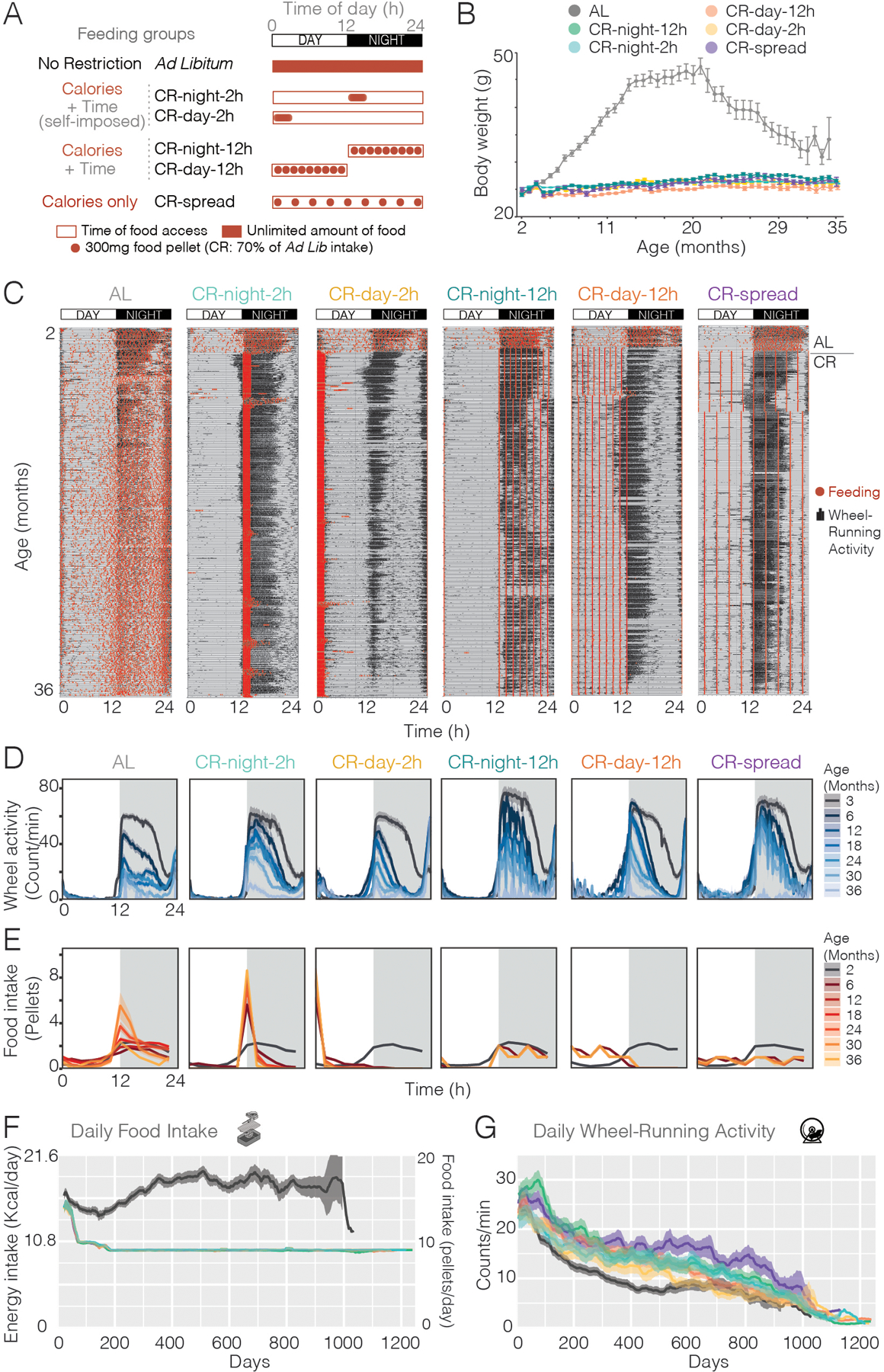
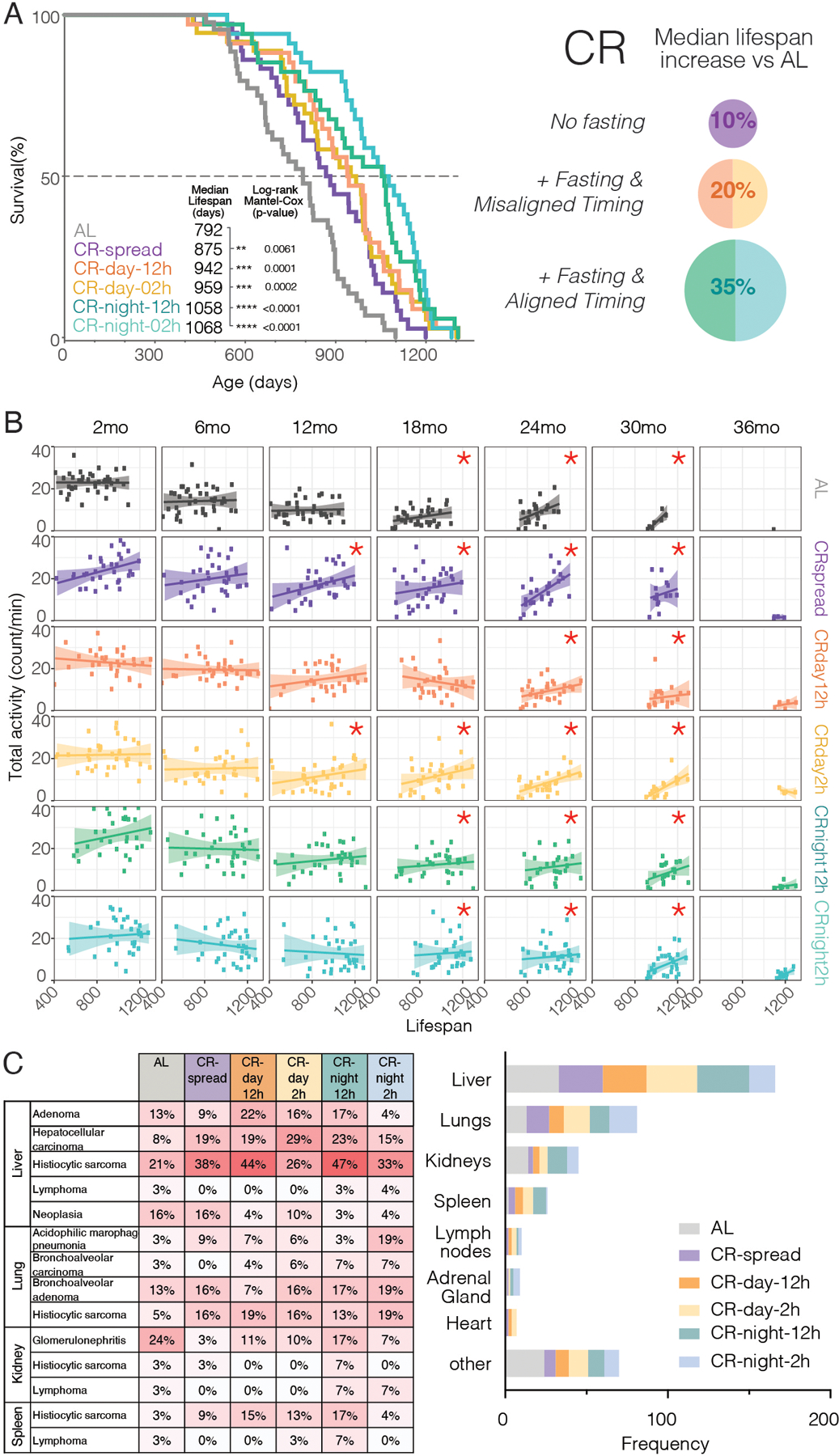
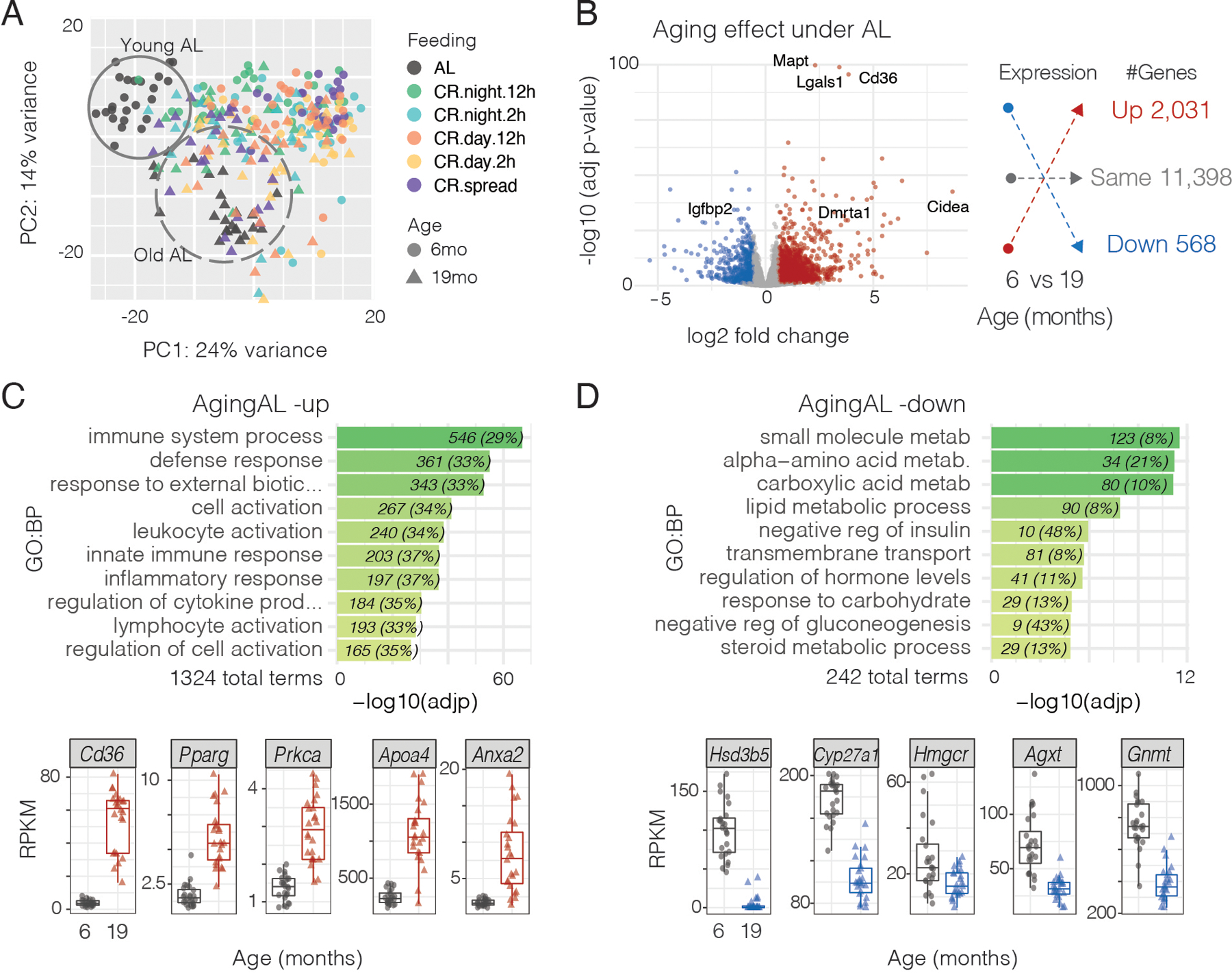
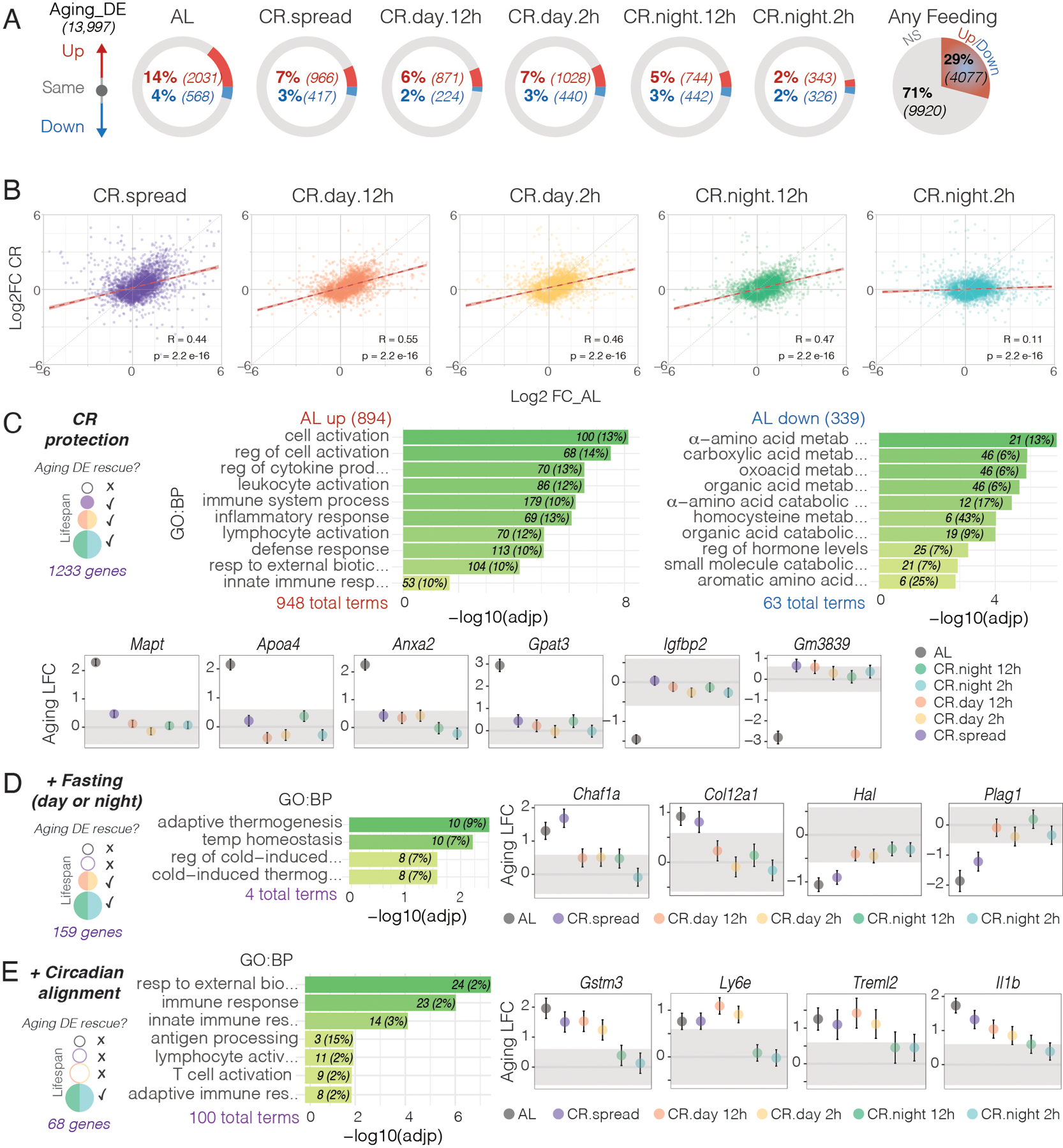
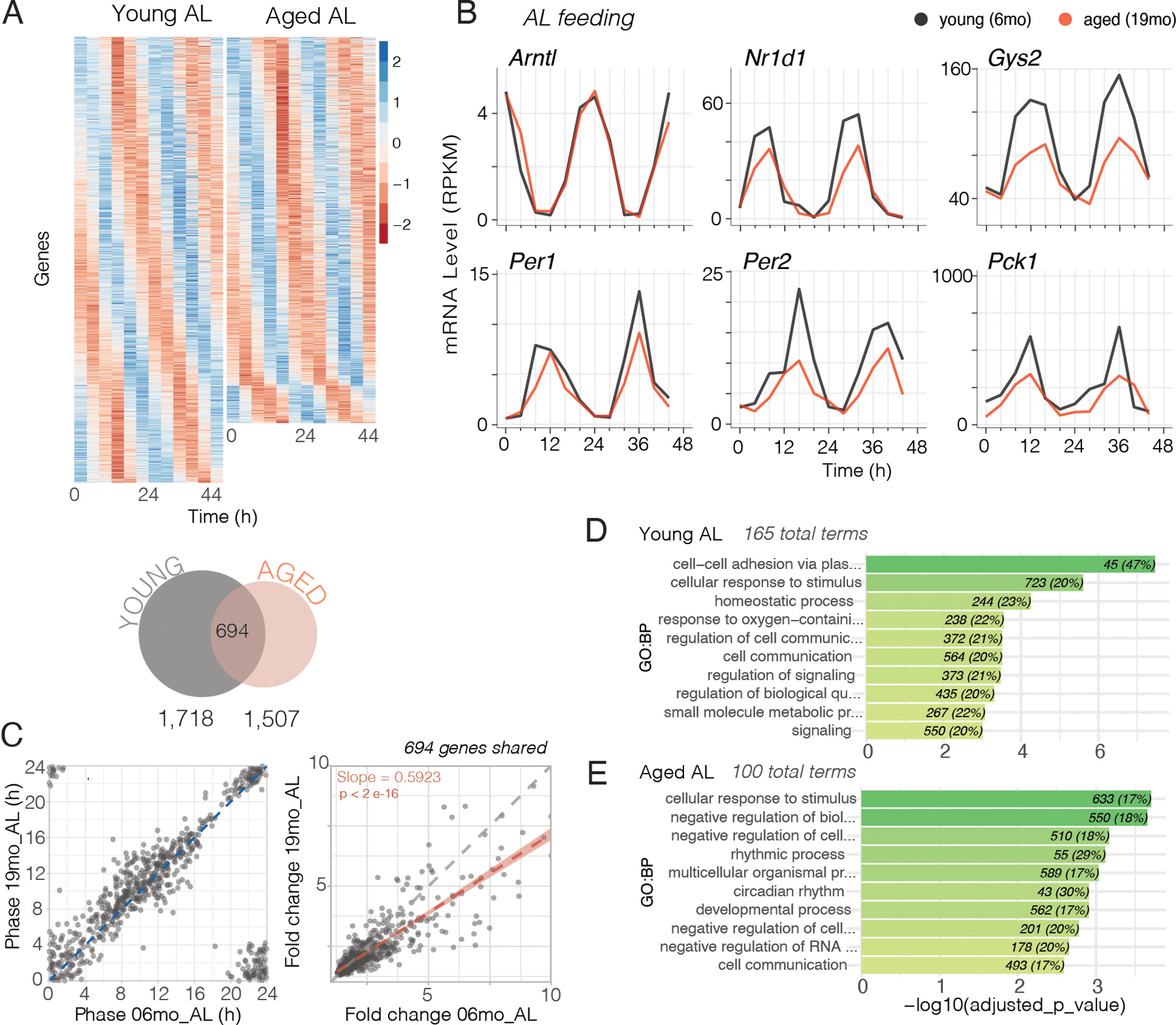
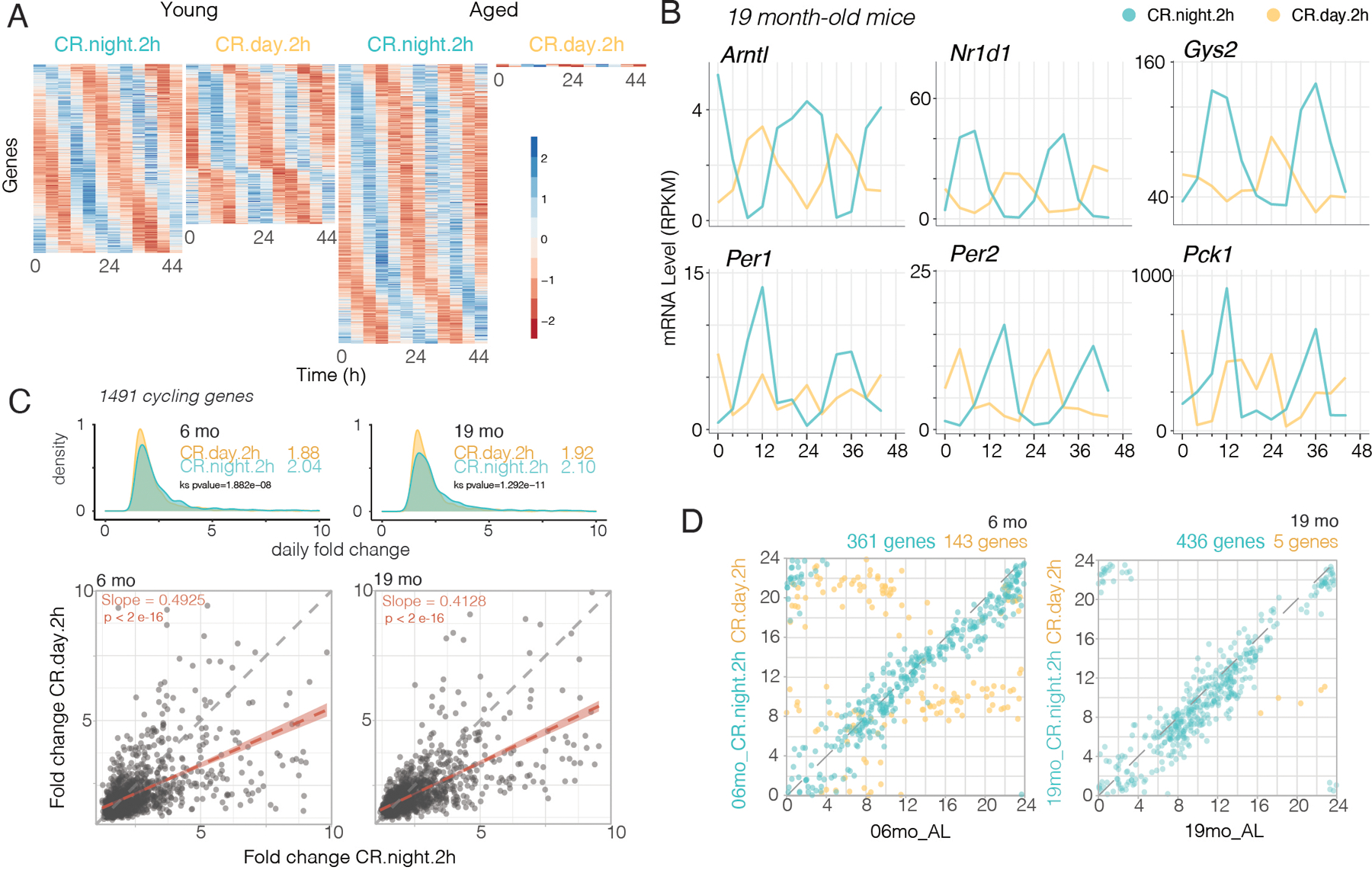
Caloric restriction (CR) prolongs life span, yet the mechanisms by which it does so remain poorly understood. Under CR, mice self-impose chronic cycles of 2-hour feeding and 22-hour fasting, raising the question of if it is calories, fasting, or time of day that is the cause of this increased life span. We show here that 30% CR was sufficient to extend the life span by 10%; however, a daily fasting interval and circadian alignment of feeding acted together to extend life span by 35% in male C57BL/6J mice. These effects were independent of body weight. Aging induced widespread increases in gene expression associated with inflammation and decreases in the expression of genes encoding components of metabolic pathways in liver from ad libitum–fed mice. CR at night ameliorated these aging-related changes. Our results show that circadian interventions promote longevity and provide a perspective to further explore mechanisms of aging.
Overview
The claims and statistics of this paper haven’t been checked yet.
Run the check — free, no account needed. It reads the open-access text and checks the sources it cites.
Integrity signals
Registry
Cites
Statistics
Figures
Verification
Claims the paper makes
The claims and statistics of this paper haven’t been checked yet.
Run the check — free, no account needed. It reads the open-access text and checks the sources it cites.
Claims other papers make about this one
Each is checked against this paper’s own text: does it say what the citing paper says it does?
The source backs part of the claim, not all of it — or backs it for a different population, condition or comparison.
In the citing paper
“| | Mouse | Caloric restriction by 30% of male C57B/6J mice | Lifespan extension of 10% to 30% | 149 |”
From Hallmarks of aging: An expanding universe (2023) · cites this paper as [149]
Experimental — accuracy not yet measuredThe cited source says what the claim attributes to it.
In the citing paper
“Dietary restriction regimens are particularly successful in extending lifespan in male C57B/6J mice, if the animals are completely deprived from nutrients during daytime 149 .”
From Hallmarks of aging: An expanding universe (2023) · cites this paper as [149]
Self-check
Percentages, sums and reported differences re-computed from the paper’s own numbers.
The self-check needs the paper’s full text.
Citations
Cites
Moderated estimation of fold change and dispersion for RNA-seq data with DESeq2
Love, M. I., Huber, W., & Anders, S. (2014) · Genome Biology · doi:10.1186/s13059-014-0550-8 · Cited by 95,106
STAR: ultrafast universal RNA-seq aligner
Dobin, A., Davis, C. A., Schlesinger, F., Drenkow, J., Zaleski, C., Jha, S., Batut, P., Chaisson, M., & Gingeras, T. R. (2013) · Bioinformatics · doi:10.1093/bioinformatics/bts635 · Cited by 51,709
Cutadapt removes adapter sequences from high-throughput sequencing reads
Martin, M. (2011) · EMBnet.journal · doi:10.14806/ej.17.1.200 · Cited by 33,889
Extending Healthy Life Span—From Yeast to Humans
Fontana, L., Partridge, L., & Longo, V. D. (2010) · Science · doi:10.1126/science.1172539 · Cited by 3,023
Damiola, F., Le Minh, N., Preitner, N., Kornmann, B., Fleury-Olela, F., & Schibler, U. (2000) · Genes & Development · doi:10.1101/gad.183500 · Cited by 2,394
Hatori, M., Vollmers, C., Zarrinpar, A., DiTacchio, L., Bushong, E. A., Gill, S., Leblanc, M., Chaix, A., Joens, M., Fitzpatrick, J. A. J., et al. (2012) · Cell Metabolism · doi:10.1016/j.cmet.2012.04.019 · Cited by 1,986
Circadian integration of metabolism and energetics
Bass, J., & Takahashi, J. S. (2010) · Science · doi:10.1126/science.1195027 · Cited by 1,910
Self-citationTranscriptional architecture and chromatin landscape of the core circadian clock in mammals
Koike, N., Yoo, S.-H., Huang, H.-C., Kumar, V., Lee, C., Kim, T.-K., & Takahashi, J. S. (2012) · Science · doi:10.1126/science.1226339 · Cited by 1,464
Self-citationKondratov, R. V., Kondratova, A. A., Gorbacheva, V. Y., Vykhovanets, O. V., & Antoch, M. P. (2006) · Genes & Development · doi:10.1101/gad.1432206 · Cited by 1,188
Impact of caloric restriction on health and survival in rhesus monkeys from the NIA study
Mattison, J. A., Roth, G. S., Beasley, T. M., Tilmont, E. M., Handy, A. M., Herbert, R. L., Longo, D. L., Allison, D. B., Young, J. E., Bryant, M., et al. (2012) · Nature · doi:10.1038/nature11432 · Cited by 1,145
Circadian physiology of metabolism
Panda, S. (2016) · Science · doi:10.1126/science.aah4967 · Cited by 1,092
Chaix, A., Zarrinpar, A., Miu, P., & Panda, S. (2014) · Cell Metabolism · doi:10.1016/j.cmet.2014.11.001 · Cited by 956 · cited 1×
“Also, mice fed a high-fat diet restricted to an 8-hour window during the night were protected against diet-induced obesity, hepatic steatosis, hyperinsulinemia, and inflammation compared to mice fed ad libitum (AL) (18, 19).”
BackgroundWilkinson, M. J., Manoogian, E. N. C., Zadourian, A., Lo, H., Fakhouri, S., Shoghi, A., Wang, X., Fleischer, J. G., Navlakha, S., Panda, S., et al. (2020) · Cell Metabolism · doi:10.1016/j.cmet.2019.11.004 · Cited by 927
Caloric restriction improves health and survival of rhesus monkeys
Mattison, J. A., Colman, R. J., Beasley, T. M., Allison, D. B., Kemnitz, J. W., Roth, G. S., Ingram, D. K., Weindruch, R., de Cabo, R., & Anderson, R. M. (2017) · Nature Communications · doi:10.1038/ncomms14063 · Cited by 838
Caloric restriction reduces age-related and all-cause mortality in rhesus monkeys
Colman, R. J., Beasley, T. M., Kemnitz, J. W., Johnson, S. C., Weindruch, R., & Anderson, R. M. (2014) · Nature Communications · doi:10.1038/ncomms4557 · Cited by 711
Crosstalk between components of circadian and metabolic cycles in mammals
Asher, G., & Schibler, U. (2011) · Cell Metabolism · doi:10.1016/j.cmet.2011.01.006 · Cited by 601
Glucagon-like peptide 1 in health and disease
Andersen, A., Lund, A., Knop, F. K., & Vilsbøll, T. (2018) · Nature Reviews Endocrinology · doi:10.1038/s41574-018-0016-2 · Cited by 543
Circadian Mechanisms in Medicine
Allada, R., & Bass, J. (2021) · New England Journal of Medicine · doi:10.1056/nejmra1802337 · Cited by 519
The circadian clock and pathology of the ageing brain
Kondratova, A. A., & Kondratov, R. V. (2012) · Nature Reviews Neuroscience · doi:10.1038/nrn3208 · Cited by 482
Effects of Sex, Strain, and Energy Intake on Hallmarks of Aging in Mice
Mitchell, S. J., Madrigal-Matute, J., Scheibye-Knudsen, M., Fang, E., Aon, M., González-Reyes, J. A., Cortassa, S., Kaushik, S., Gonzalez-Freire, M., Patel, B., et al. (2016) · Cell Metabolism · doi:10.1016/j.cmet.2016.05.027 · Cited by 451 · cited 5×
“Di Francesco A, Di Germanio C, Bernier M, de Cabo R, A time to fast.”
MethodResultInfluentialTime-restricted feeding attenuates age-related cardiac decline in Drosophila
Gill, S., Le, H. D., Melkani, G. C., & Panda, S. (2015) · Science · doi:10.1126/science.1256682 · Cited by 272
Circadian autophagy drives iTRF-mediated longevity
Ulgherait, M., Midoun, A. M., Park, S. J., Gatto, J. A., Tener, S. J., Siewert, J., Klickstein, N., Canman, J. C., Ja, W. W., & Shirasu-Hiza, M. (2021) · Nature · doi:10.1038/s41586-021-03934-0 · Cited by 226
Katewa, S. D., Akagi, K., Bose, N., Rakshit, K., Camarella, T., Zheng, X., Hall, D., Davis, S., Nelson, C. S., Brem, R. B., et al. (2016) · Cell Metabolism · doi:10.1016/j.cmet.2015.10.014 · Cited by 173
Pak, H. H., Haws, S. A., Green, C. L., Koller, M., Lavarias, M. T., Richardson, N. E., Yang, S. E., Dumas, S. N., Sonsalla, M., Bray, L., et al. (2021) · Nature Metabolism · doi:10.1038/s42255-021-00466-9 · Cited by 171
Self-citationSkeletal muscle transcriptome in healthy aging
Tumasian, R. A., Harish, A., Kundu, G., Yang, J.-H., Ubaida-Mohien, C., Gonzalez-Freire, M., Kaileh, M., Zukley, L. M., Chia, C. W., Lyashkov, A., et al. (2021) · Nature Communications · doi:10.1038/s41467-021-22168-2 · Cited by 126
The road ahead for health and lifespan interventions
Gonzalez-Freire, M., Diaz-Ruiz, A., Hauser, D., Martinez-Romero, J., Ferrucci, L., Bernier, M., & de Cabo, R. (2020) · Ageing Research Reviews · doi:10.1016/j.arr.2020.101037 · Cited by 118
Patel, S. A., Chaudhari, A., Gupta, R., Velingkaar, N., & Kondratov, R. V. (2016) · The FASEB Journal · doi:10.1096/fj.15-282475 · Cited by 94
Research works printed but not linked: 79
- 10.1093/jn/116.4.641 · DOI
- 10.1016/j.cell.2016.07.031 · DOI · Paper page
- 10.1126/science.aau2095 · DOI
- 10.1126/science.abe7365 · DOI
- 10.1016/j.cmet.2017.06.007 · DOI
- 10.1016/j.cmet.2018.08.011 · DOI
- 10.1073/pnas.0909591106 · DOI · Paper page
- 10.7554/eLife.04617 · DOI
- 10.1016/j.arr.2013.09.002 · DOI
- 10.1016/j.cell.2017.07.042 · DOI
- 10.1016/j.cell.2017.07.035 · DOI
- 10.1016/j.cmet.2016.06.001 · DOI · Paper page
- 10.1038/oby.2009.264 · DOI · Paper page
- 10.3233/NHA-160006 · DOI
- 10.1038/s41467-021-22922-6 · DOI
- 10.1093/cdn/nzaa031 · DOI
- 10.1126/science.aah4965 · DOI
- 10.1073/pnas.1413965111 · DOI
- V. S. Valentinuzzi, K. Scarbrough, J. S. Takahashi, F. W. Turek, Effects of aging on the circadian rhythm of wheel-running activity in C57BL/6 mice. Am. J. Physiol. 273, R1957–R1964 (1997). 9435649
- 10.1093/gerona/57.11.B379 · DOI
- 10.1093/sleep/zsz157 · DOI
- 10.1186/2046-2395-2-14 · DOI
- 10.1016/j.celrep.2019.03.064 · DOI
- 10.1016/j.cmet.2020.04.018 · DOI
- 10.1126/scisignal.272re3 · DOI · Paper page
- 10.1371/journal.pgen.1000752 · DOI
- 10.3389/fimmu.2017.01515 · DOI
- 10.1186/s12967-019-02138-5 · DOI
- 10.1002/hep.21863 · DOI
- 10.1002/hep.22159 · DOI
- 10.1002/prca.200900074 · DOI
- 10.1186/s13046-019-1318-5 · DOI
- 10.1038/gim.2017.105 · DOI
- 10.2147/OTT.S107050 · DOI
- 10.1186/s13073-019-0704-0 · DOI
- 10.1002/cptx.55 · DOI
- 10.1186/s12986-018-0243-5 · DOI
- 10.3389/fendo.2017.00044 · DOI
- 10.1146/annurev-nutr-082018-124320 · DOI
- 10.1177/0748730419892105 · DOI
- 10.1016/j.cell.2015.03.015 · DOI · Paper page
- 10.1016/j.cell.2013.11.034 · DOI
- 10.1038/s42255-021-00395-7 · DOI
- 10.1016/j.cmet.2016.03.007 · DOI
- 10.1017/S0029665117003962 · DOI
- 10.1073/pnas.0806717105 · DOI · Paper page
- 10.1038/nature09253 · DOI · Paper page
- 10.18632/aging.100241 · DOI
- K. Scarbrough, S. Losee-Olson, E. P. Wallen, F. W. Turek, Aging and photoperiod affect entrainment and quantitative aspects of locomotor behavior in Syrian hamsters. Am. J. Physiol. 272, R1219–R1225 (1997). 9140023
- 10.1073/pnas.152318499 · DOI
- 10.1016/j.arr.2005.07.001 · DOI
- 10.1016/j.exger.2008.05.007 · DOI
- 10.18632/aging.100116 · DOI
- 10.1038/s41467-020-15617-x · DOI
- 10.3389/fneur.2015.00043 · DOI
- 10.1016/j.molcel.2020.04.010 · DOI
- 10.1101/sqb.2011.76.010520 · DOI
- 10.1016/j.cell.2009.08.031 · DOI
- 10.1016/j.cell.2008.06.050 · DOI · Paper page
- 10.1038/nature05767 · DOI · Paper page
- 10.1074/jbc.M506225200 · DOI
- 10.1073/pnas.0811410106 · DOI
- 10.1126/science.1172156 · DOI · Paper page
- 10.1016/j.cell.2008.07.002 · DOI · Paper page
- 10.1126/science.1170803 · DOI · Paper page
- 10.1126/science.1171641 · DOI · Paper page
- 10.1038/s41580-018-0096-9 · DOI · Paper page
- 10.1111/j.1474-9726.2009.00478.x · DOI
- 10.1007/s11357-021-00421-2 · DOI
- 10.15252/embj.2018100862 · DOI
- 10.1016/S0076-6879(05)93008-5 · DOI
- 10.1016/bs.mie.2014.10.059 · DOI
- 10.1126/science.aba2658 · DOI
- 10.1093/bioinformatics/btq189 · DOI
- 10.1177/0748730410379711 · DOI
- 10.1093/bioinformatics/btw405 · DOI
- 10.1177/0748730414553029 · DOI
- 10.12688/f1000research.24956.2 · DOI · Paper page
- 10.1016/j.mad.2004.07.003 · DOI · Paper page
Cited by
Sorted by citations
Hallmarks of aging: An expanding universe
López-Otín, C., Blasco, M. A., Partridge, L., Serrano, M., & Kroemer, G. (2023) · Cell · doi:10.1016/j.cell.2022.11.001 · Cited by 6,549
Meléndez-Fernández, O. H., Liu, J. A., & Nelson, R. J. (2023) · International Journal of Molecular Sciences · doi:10.3390/ijms24043392 · Cited by 227
Atlas of the aging mouse brain reveals white matter as vulnerable foci
Hahn, O., Foltz, A. G., Atkins, M., Kedir, B., Moran-Losada, P., Guldner, I. H., Munson, C., Kern, F., Pálovics, R., Lu, N., et al. (2023) · Cell · doi:10.1016/j.cell.2023.07.027 · Cited by 213
Regulators of health and lifespan extension in genetically diverse mice on dietary restriction
Di Francesco, A., Deighan, A. G., Litichevskiy, L., Chen, Z., Luciano, A., Robinson, L., Garland, G., Donato, H., Schott, W., Wright, K. M., et al. (2023) · doi:10.1101/2023.11.28.568901 · Cited by 194
Whittaker, D. S., Akhmetova, L., Carlin, D., Romero, H., Welsh, D. K., Colwell, C. S., & Desplats, P. (2023) · Cell Metabolism · doi:10.1016/j.cmet.2023.07.014 · Cited by 147
Metadata
- Authors
- Acosta-Rodríguez, V., Rijo-Ferreira, F., Izumo, M., Xu, P., Wight-Carter, M., Green, C. B., & Takahashi, J. S.
- Affiliations
- Department of Neuroscience, Peter O’Donnell Jr. Brain Institute, University of Texas Southwestern Medical Center, Dallas, TX 75390, USA.
- Animal Resources Center, University of Texas Southwestern Medical Center, Dallas, TX 75390, USA.
- Venue
- Science
- Published
- 2022-06-10
- Volume
- 376
- Issue
- 6598
- Pages
- 1192-1202
- ISSN
- 0036-8075
- 1095-9203
- PMC
- PMC9262309
- Cited by
- 390
- References
- 27
- Language
- en
About these checks
Registry, retraction, Cites and statistics results are computed, not judged, with one exception: a printed reference that no index lists is read once by a model before it counts as a citation error. Claims are extracted by a model and kept only when their quote appears verbatim in the text; each cited source is then checked, with a model’s help, for whether it says what the claim relies on. Those verdicts can be wrong — read the claim’s quote and the cited source before relying on one.
Statistics and arithmetic are recomputed, not judged.
Confidence bands are shown only for fields calibrated on our annotated test set. None is calibrated yet, so no band is shown.
What counts as a claim ›How we measure confidence ›How we check this ›
Are you an author, or do you see a problem with this page? Request a review
