

Analysis of the Upper Respiratory Tract Microbiotas as the Source of the Lung and Gastric Microbiotas in Healthy Individuals
Open accessThe DOI matches its Crossref record; 45 of the 46 references it cites were found in a registry or an index.
Abstract
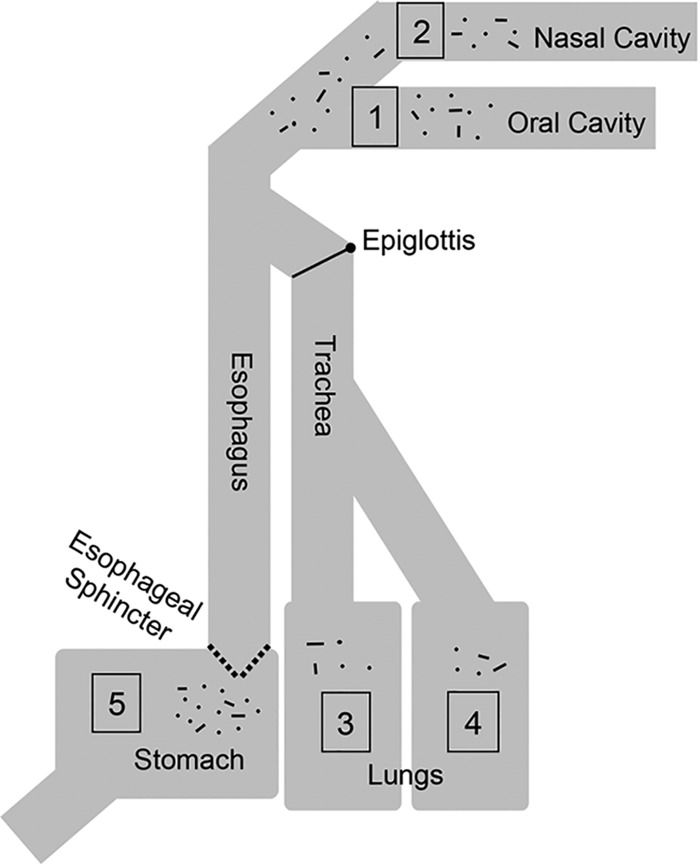
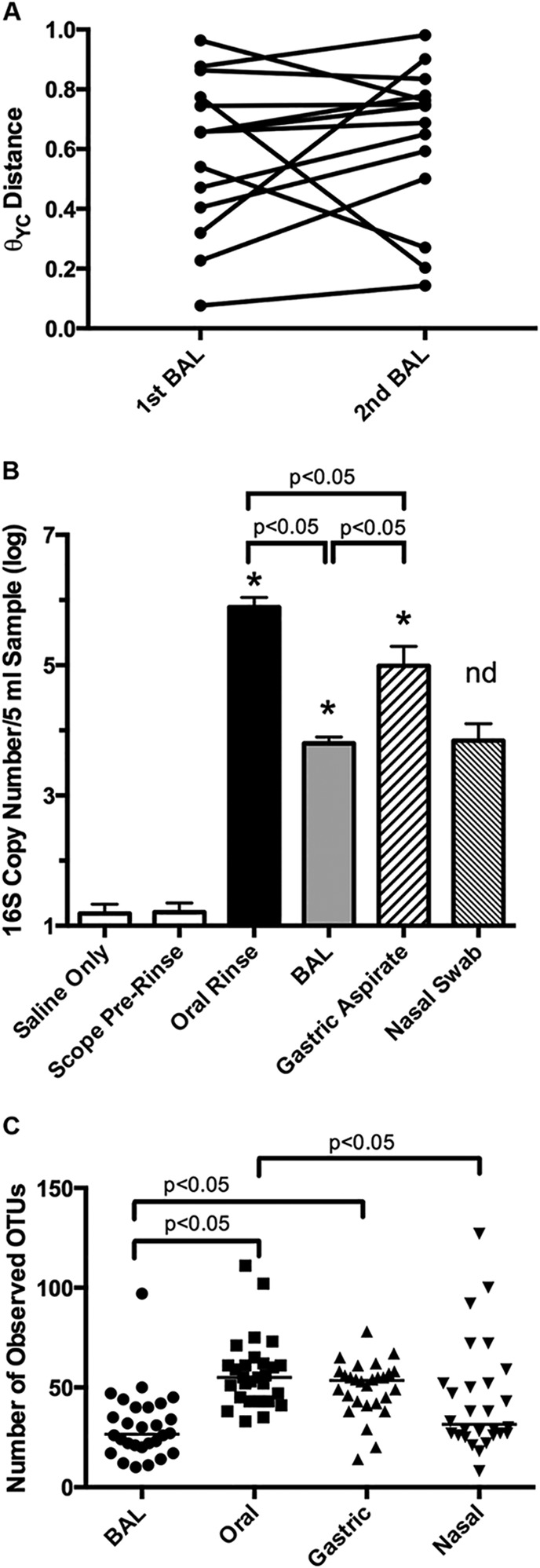
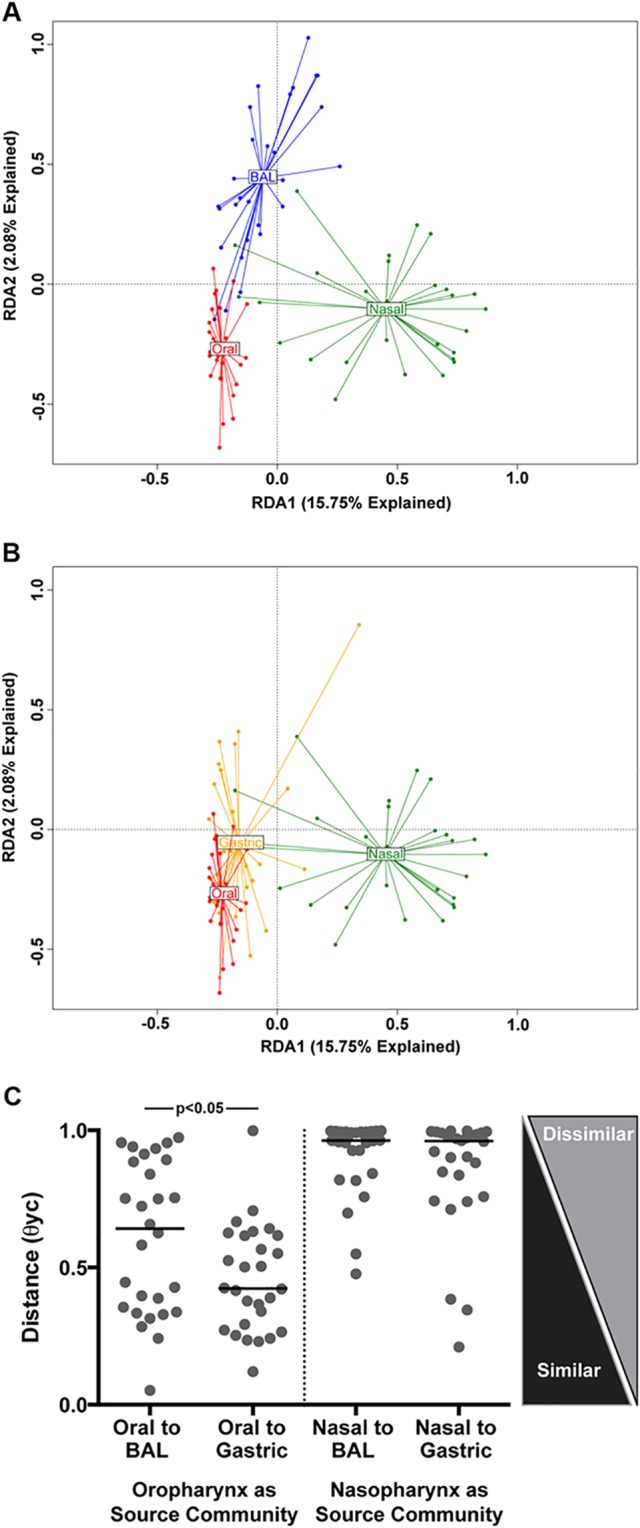
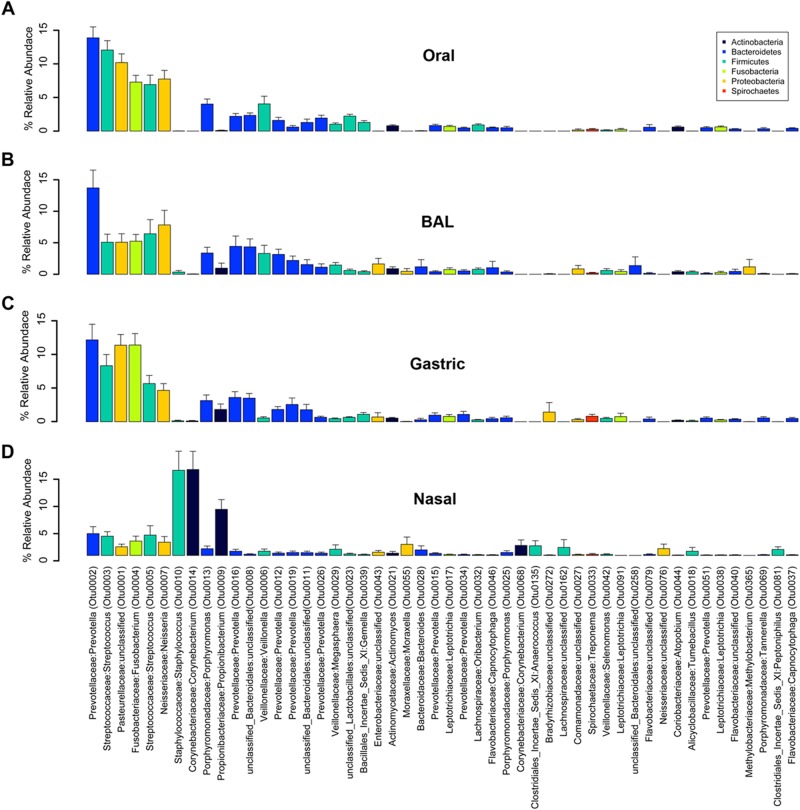
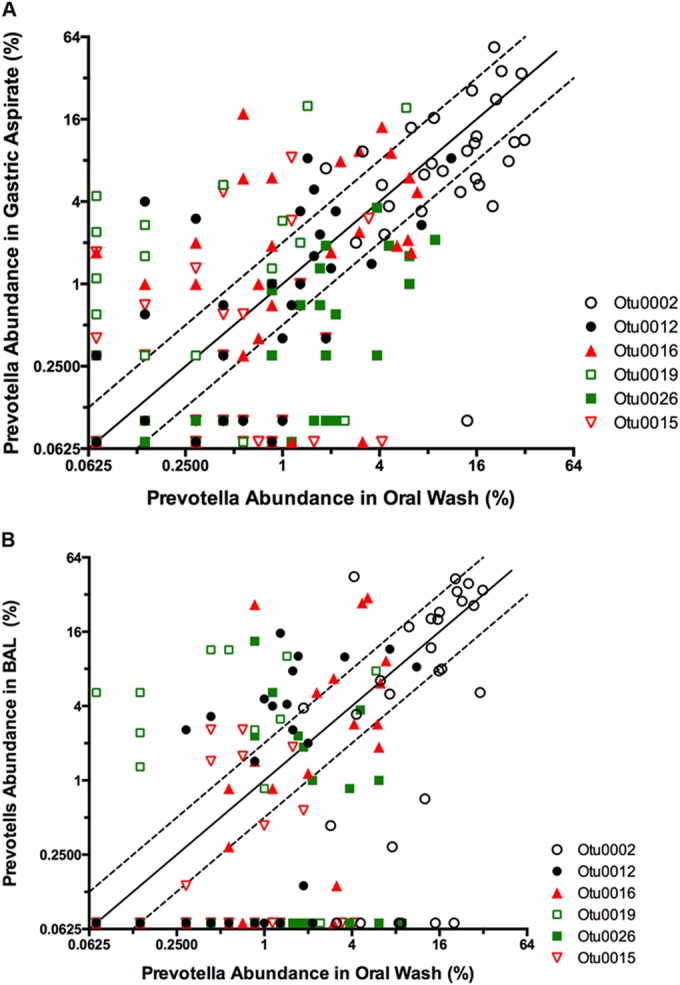
No studies have examined the relationships between bacterial communities along sites of the upper aerodigestive tract of an individual subject. Our objective was to perform an intrasubject and intersite analysis to determine the contributions of two upper mucosal sites (mouth and nose) as source communities for the bacterial microbiome of lower sites (lungs and stomach). Oral wash, bronchoalveolar lavage (BAL) fluid, nasal swab, and gastric aspirate samples were collected from 28 healthy subjects. Extensive analysis of controls and serial intrasubject BAL fluid samples demonstrated that sampling of the lungs by bronchoscopy was not confounded by oral microbiome contamination. By quantitative PCR, the oral cavity and stomach contained the highest bacterial signal levels and the nasal cavity and lungs contained much lower levels. Pyrosequencing of 16S rRNA gene amplicon libraries generated from these samples showed that the oral and gastric compartments had the greatest species richness, which was significantly greater in both than the richness measured in the lungs and nasal cavity. The bacterial communities of the lungs were significantly different from those of the mouth, nose, and stomach, while the greatest similarity was between the oral and gastric communities. However, the bacterial communities of healthy lungs shared significant membership with the mouth, but not the nose, and marked subject-subject variation was noted. In summary, microbial immigration from the oral cavity appears to be the significant source of the lung microbiome during health, but unlike the stomach, the lungs exhibit evidence of selective elimination of Prevotella bacteria derived from the upper airways. IMPORTANCE We have demonstrated that the bacterial communities of the healthy lung overlapped those found in the mouth but were found at lower concentrations, with lower membership and a different community composition. The nasal microbiome, which was distinct from the oral microbiome, appeared to contribute little to the composition of the lung microbiome in healthy subjects. Our studies of the nasal, oral, lung, and stomach microbiomes within an individual illustrate the microbiological continuity of the aerodigestive tract in healthy adults and provide culture-independent microbiological support for the concept that microaspiration is common in healthy individuals.
Overview
The claims and statistics of this paper haven’t been checked yet.
Free: it reads the open-access text and checks the first 5 claims that cite a source we can check. Create a free account to check every claim.
Integrity signals
Registry
Cites
Statistics
Figures
Verification
Claims the paper makes
The claims and statistics of this paper haven’t been checked yet.
Free: it reads the open-access text and checks the first 5 claims that cite a source we can check. Create a free account to check every claim.
Claims other papers make about this one
Each is checked against this paper’s own text: does it say what the citing paper says it does?
The source backs part of the claim, not all of it — or backs it for a different population, condition or comparison.
In the citing paper
“Culture-independent microbiota studies have confirmed that the lung microbiota largely resembles the URT microbiota when studied in healthy individuals74,75,76.”
From The microbiota of the respiratory tract: gatekeeper to respiratory health (2017) · cites this paper as [74]
Experimental — accuracy not yet measuredThe source backs part of the claim, not all of it — or backs it for a different population, condition or comparison.
In the citing paper
“The oropharynx seems to be the main source of the lung microbiota in adults74, whereas in children the source is more likely to be both the nasopharynx and oropharynx76.”
From The microbiota of the respiratory tract: gatekeeper to respiratory health (2017) · cites this paper as [74]
Experimental — accuracy not yet measuredThe source backs part of the claim, not all of it — or backs it for a different population, condition or comparison.
In the citing paper
“A specific challenge in microbiota surveys of the respiratory tract is the low density of bacterial communities that are found there, particularly in healthy individuals; densities as low as 102–103 bacteria ml−1 have been reported in bronchoalveolar lavages (BALs) of healthy individuals74,153.”
From The microbiota of the respiratory tract: gatekeeper to respiratory health (2017) · cites this paper as [74]
Experimental — accuracy not yet measuredThe source backs part of the claim, not all of it — or backs it for a different population, condition or comparison.
In the citing paper
“In healthy individuals, the microbial community richness (i.e., the total number of bacterial taxa) is lower in the LRT than that in the URT”
From Respiratory viral infection-induced microbiome alterations and secondary bacterial pneumonia. (2018) · cites this paper as [76]
Experimental — accuracy not yet measuredIn the citing paper
“The contribution of the gastric microbiota to the microbial community in the LRT through gastric–oesophageal reflux has, until now, been suggested to be negligible74.”
From The microbiota of the respiratory tract: gatekeeper to respiratory health (2017) · cites this paper as [74]
2 more claims about this paper
Create a free account to see every claim other papers make about this one.
Self-check
Percentages, sums and reported differences re-computed from the paper’s own numbers.
The self-check needs the paper’s full text.
Citations
Cites
Schloss, P. D., Westcott, S. L., Ryabin, T., Hall, J. R., Hartmann, M., Hollister, E. B., Lesniewski, R. A., Oakley, B. B., Parks, D. H., Robinson, C. J., et al. (2009) · Applied and Environmental Microbiology · doi:10.1128/aem.01541-09 · Cited by 19,549 · cited 1×
“0 (39, 40) as described previously (37, 38,”
A new method for non-parametric multivariate analysis of variance
Anderson, M. J. (2001) · Austral Ecology · doi:10.1111/j.1442-9993.2001.01070.pp.x · Cited by 13,828 · cited 4×
“The same relationships of the four sites were confirmed when tested by AMOVA or PERMANOVA (Table 1).”
MethodInfluentialStructure, function and diversity of the healthy human microbiome
The Human Microbiome Project Consortium (2012) · Nature · doi:10.1038/nature11234 · Cited by 11,726
Topographical and Temporal Diversity of the Human Skin Microbiome
Grice, E. A., Kong, H. H., Conlan, S., Deming, C. B., Davis, J., Young, A. C., Program, N. C. S., Bouffard, G. G., Blakesley, R. W., Murray, P. R., et al. (2009) · Science · doi:10.1126/science.1171700 · Cited by 2,953
Reducing the Effects of PCR Amplification and Sequencing Artifacts on 16S rRNA-Based Studies
Schloss, P. D., Gevers, D., & Westcott, S. L. (2011) · PLoS ONE · doi:10.1371/journal.pone.0027310 · Cited by 2,112 · cited 2×
“The YC distance (1 YC) between bacterial communities measures differences in community structure (44) and was selected because it weighs rare and abundant OTUs more evenly than other metrics such as Bray-Curtis or Morisita-Horn (39).”
BackgroundQuantifying the roles of immigration and chance in shaping prokaryote community structure
Sloan, W. T., Lunn, M., Woodcock, S., Head, I. M., Nee, S., & Curtis, T. P. (2006) · Environmental Microbiology · doi:10.1111/j.1462-2920.2005.00956.x · Cited by 1,887 · cited 1×
“tomized R script based on the neutral model (42) was then used to identify”
MethodDisordered Microbial Communities in Asthmatic Airways
Hilty, M., Burke, C., Pedro, H., Cardenas, P., Bush, A., Bossley, C., Davies, J., Ervine, A., Poulter, L., Pachter, L., et al. (2010) · PLoS ONE · doi:10.1371/journal.pone.0008578 · Cited by 1,824 · cited 1×
“During states of ill health, such as viral upper respiratory tract infections, allergies, or sinus infections, the liquid flow from the nasal cavity increases, and this clearly has the potential to affect the lung microbiome, consistent with studies of rhinovirus infection and asthmatics that highlighted changes in th…”
BackgroundMolecular analysis of the bacterial microbiota in the human stomach
Bik, E. M., Eckburg, P. B., Gill, S. R., Nelson, K. E., Purdom, E. A., Francois, F., Perez-Perez, G., Blaser, M. J., & Relman, D. A. (2006) · Proceedings of the National Academy of Sciences · doi:10.1073/pnas.0506655103 · Cited by 1,158
Topographical Continuity of Bacterial Populations in the Healthy Human Respiratory Tract
Charlson, E. S., Bittinger, K., Haas, A. R., Fitzgerald, A. S., Frank, I., Yadav, A., Bushman, F. D., & Collman, R. G. (2011) · American Journal of Respiratory and Critical Care Medicine · doi:10.1164/rccm.201104-0655oc · Cited by 1,144 · cited 1×
“Within an individual, the similarity between the oral and lung microbiomes varied widely, with some individuals having a lung microbiome that was almost identical to their oral microbiome, similar to a previous report (9), while in others the two sites were markedly different.”
ResultAnalysis of the lung microbiome in the “healthy” smoker and in COPD.
Erb-Downward, J. R., Thompson, D. L., Han, M. K., Freeman, C. M., McCloskey, L., Schmidt, L. A., Young, V. B., Toews, G. B., Curtis, J. L., Sundaram, B., et al. (2011) · PLoS ONE · doi:10.1371/journal.pone.0016384 · Cited by 973
Self-citation
Cited by
Items 201–300 of 838
Microbiome in interstitial lung disease
Salisbury, M. L., Han, M. K., Dickson, R. P., & Molyneaux, P. L. (2017) · Current Opinion in Pulmonary Medicine · doi:10.1097/mcp.0000000000000399 · Cited by 53
Self-citationImmunomodulatory Properties of Vitamin D in the Intestinal and Respiratory Systems
Hamza, F. N., Daher, S., Fakhoury, H. M. A., Grant, W. B., Kvietys, P. R., & AlKattan, K. M. (2023) · Nutrients · doi:10.3390/nu15071696 · Cited by 234
“Of note, a significant fraction of the oral microbiota is also delivered to the lungs by micro-aspiration [62,63].”
How low can we go? The implications of low bacterial load in respiratory microbiota studies
Marsh, R. L., Nelson, M. T., Pope, C. E., Leach, A. J., Hoffman, L. R., Chang, A. B., & Smith‐Vaughan, H. (2018) · Pneumonia · doi:10.1186/s41479-018-0051-8 · Cited by 56
“Some respiratory studies [31, 47] have used touchdown-PCR in which the annealing temperature is varied to improve amplicon specificity [48]; however, this method may not improve amplicon yield.”
BackgroundInfluentialAlterations in Oral–Nasal–Pharyngeal Microbiota and Salivary Proteins in Mouth-Breathing Children
Fan, C., Guo, L., Gu, H., Huo, Y., & Lin, H. (2020) · Frontiers in Microbiology · doi:10.3389/fmicb.2020.575550 · Cited by 62
Sulaiman, I., Wu, B. G., Chung, M. C., Isaacs, B., Tsay, J.-C. J., Holub, M., Barnett, C. R., Kwok, B., Kugler, M. C., Natalini, J. G., et al. (2023) · American Journal of Respiratory and Critical Care Medicine · doi:10.1164/rccm.202210-1865oc · Cited by 60
Species-level evaluation of the human respiratory microbiome
Ibironke, O. A., McGuinness, L. R., Lu, S., Wang, Y., Hussain, S., Weisel, C. P., & Kerkhof, L. J. (2020) · GigaScience · doi:10.1093/gigascience/giaa038 · Cited by 49
“For example, lung bacterial communities were found in lower abundance compared to the upper respiratory tract [25] and differences between lung and upper respiratory bacterial communities have been described at the genus: family: phylum level [29, 33, 43].”
Short, B., Carson, S., Devlin, A., Reihill, J. A., Crilly, A., Mackay, W. G., Ramage, G., Williams, C., Lundy, F. T., McGarvey, L. P., et al. (2021) · Critical Reviews in Microbiology · doi:10.1080/1040841x.2020.1863330 · Cited by 60
“16S RNA sequencing has shown that the oral microbiome is similar to the lung (Bassis et al. 2015), indicating a relationship between oral and lung microbiomes.”
Oral microbial dysbiosis in patients with periodontitis and chronic obstructive pulmonary disease
Liu, S., Xie, G., Chen, M., He, Y., Yu, W., Chen, X., Mao, W., Liu, N., Zhang, Y., Chang, Q., et al. (2023) · Frontiers in Cellular and Infection Microbiology · doi:10.3389/fcimb.2023.1121399 · Cited by 56
“Microbial migration from the oral cavity appears to be a significant source of the lung microbiome through microaspiration and inhalation (Bassis et al., 2015).”
BackgroundInsights into the role of the respiratory tract microbiome in defense against bacterial pneumonia
Drigot, Z., & Clark, S. E. (2024) · Current Opinion in Microbiology · doi:10.1016/j.mib.2024.102428 · Cited by 55
The microbiome of the human lower airways: a next generation sequencing perspective
Aho, V. T. E., Pereira, P. A. B., Haahtela, T., Pawankar, R., Auvinen, P., & Koskinen, K. (2015) · World Allergy Organization Journal · doi:10.1186/s40413-015-0074-z · Cited by 47
“On the other hand, recent studies have shown that the BAL microbiome can be sampled without upper respiratory tract contamination [45] and that the lung microbes differ significantly from oral and gastric bacterial community [49].”
ResultRespiratory microbiota and lower respiratory tract disease
Lanaspa, M., Bassat, Q., Medeiros, M. M., & Muñoz‐Almagro, C. (2017) · Expert Review of Anti-infective Therapy · doi:10.1080/14787210.2017.1349609 · Cited by 54
Age-related differences in the respiratory microbiota of chickens
Glendinning, L., McLachlan, G., & Vervelde, L. (2017) · PLoS ONE · doi:10.1371/journal.pone.0188455 · Cited by 50
Dai, W., Wang, H., Zhou, Q., Feng, X., Lu, Z., Li, D., Yang, Z., Liu, Y., Li, Y., Xie, G., et al. (2018) · Emerging Microbes & Infections · doi:10.1038/s41426-018-0097-y · Cited by 52
Zhang, Y., Shen, F., Yang, Y., Niu, M., Chen, D., Chen, L., Wang, S., Zheng, Y., Sun, Y., Zhou, F., et al. (2022) · Environmental Science & Technology · doi:10.1021/acs.est.2c00688 · Cited by 49
Protected sampling is preferable in bronchoscopic studies of the airway microbiome
Grønseth, R., Drengenes, C., Wiker, H. G., Tangedal, S., Xue, Y., Husebø, G. R., Svanes, Ø., Lehmann, S., Aardal, M. E., Hoang, T., et al. (2017) · ERJ Open Research · doi:10.1183/23120541.00019-2017 · Cited by 48
Cystic fibrosis respiratory microbiota: unraveling complexity to inform clinical practice
Caverly, L. J., & LiPuma, J. J. (2018) · Expert Review of Respiratory Medicine · doi:10.1080/17476348.2018.1513331 · Cited by 55
Bernard, L., Colom, A., Monard, S., Namouchi, A., Cescato, M., Garnier, H., Leon‐Icaza, S. A., Métais, A., Dumas, A., Corral, D., et al. (2021) · The Journal of Immunology · doi:10.4049/jimmunol.2001044 · Cited by 54
Lung Microbiome in Idiopathic Pulmonary Fibrosis and Other Interstitial Lung Diseases
Amati, F., Stainer, A., Mantero, M., Gramegna, A., Simonetta, E., Suigo, G., Voza, A., Nambiar, A. M., Cariboni, U., Oldham, J. M., et al. (2022) · International Journal of Molecular Sciences · doi:10.3390/ijms23020977 · Cited by 49
“A shift in the balance of any of these factors can result in an altered microbiome and pulmonary disease [22].”
BackgroundZhang, J., Wu, Y., Liu, J., Yang, Y., Li, H., Wu, X., Zheng, X., Liang, Y., Tu, C., Chen, M., et al. (2022) · Advanced Science · doi:10.1002/advs.202203115 · Cited by 55
Lung antimicrobial proteins and peptides: from host defense to therapeutic strategies
Di, Y. P., Kuhn, J., & Mangoni, M. L. (2024) · Physiological Reviews · doi:10.1152/physrev.00039.2023 · Cited by 51
Microbiological profiles of sputum and gastric juice aspirates in Cystic Fibrosis patients
Al-Momani, H., Perry, A., Stewart, C. J., Jones, R., Krishnan, A., Robertson, A. G., Bourke, S., Doe, S. J., Cummings, S. P., Anderson, A., et al. (2016) · Scientific Reports · doi:10.1038/srep26985 · Cited by 50
Lee, S. Y., Aogáin, M. M., Fam, K. D., Chia, K. L., Ali, N. A. B. M., Yap, M. M. C., Yap, P. H., Chotirmall, S. H., & Lim, C. L. (2019) · PLoS ONE · doi:10.1371/journal.pone.0225636 · Cited by 47
Role of pulmonary microorganisms in the development of chronic obstructive pulmonary disease
Liu, J., Ran, Z., Wang, F., Xin, C., Xiong, B., & Song, Z. (2020) · Critical Reviews in Microbiology · doi:10.1080/1040841x.2020.1830748 · Cited by 48
“There are numerous bacteria in the lungs of healthy individuals and patients with lung diseases (Hilty et al. 2010; Erb-Downward et al. 2011;Bassis et al. 2015; Moffatt and Cookson 2017); the average square centimetre of bronchus contains 2000 bacterial genomes (Hilty et al. 2010).”
BackgroundInfluentialD’Souza, S. M., Houston, K. V., Keenan, L., Yoo, B. S., Parekh, P. J., & Johnson, D. A. (2021) · World Journal of Gastroenterology · doi:10.3748/wjg.v27.i18.2054 · Cited by 55
Kotlyarov, S. N., & Котлярова, А. А. (2021) · International Journal of Molecular Sciences · doi:10.3390/ijms22147634 · Cited by 57
The role of anaerobic bacteria in the cystic fibrosis airway
Sherrard, L. J., Bell, S. C., & Tunney, M. M. (2016) · Current Opinion in Pulmonary Medicine · doi:10.1097/mcp.0000000000000299 · Cited by 52
Chellappan, D. K., Ning, Q. L. S., Min, S. K. S., Bin, S. Y., Pang, J.-C., Shi, T. P., Mei, S. W. E., Yee, T. H., Qi, O. J., Thangavelu, L. P., et al. (2019) · Chemico-Biological Interactions · doi:10.1016/j.cbi.2019.108732 · Cited by 48
Ecological Succession of Polymicrobial Communities in the Cystic Fibrosis Airways
Khanolkar, R. A., Clark, S. T., Wang, P. W., Hwang, D. M., Yau, Y. C. W., Waters, V. J., & Guttman, D. S. (2020) · mSystems · doi:10.1128/msystems.00809-20 · Cited by 52
The human respiratory tract microbial community structures in healthy and cystic fibrosis infants
Pust, M., Wiehlmann, L., Davenport, C., Rudolf, I., Dittrich, A., & Tümmler, B. (2020) · npj Biofilms and Microbiomes · doi:10.1038/s41522-020-00171-7 · Cited by 50
Lung cancer: a new frontier for microbiome research and clinical translation
Mur, L. A. J., Huws, S., Cameron, S. J. S., Lewis, P. D., & Lewis, K. E. (2018) · ecancermedicalscience · doi:10.3332/ecancer.2018.866 · Cited by 43
“The lung microbiome is also distinctive to that of the upper respiratory tract [6] which displays greater similarities to that found in the stomach [7], although there are distinctive oral microbiomes reflecting discrete habitats [8].”
BackgroundEspuela‐Ortiz, A., Lorenzo-Díaz, F., Baez‐Ortega, A., Eng, C. S., Hernandez‐Pacheco, N., Oh, S. S., LeNoir, M. A., Burchard, E. G., Flores, C., & Pino-Yanes, M. D. M. (2019) · Pediatric Pulmonology · doi:10.1002/ppul.24504 · Cited by 45
Microbiome Modulation as a Novel Strategy to Treat and Prevent Respiratory Infections
Mindt, B. C., & DiGiandomenico, A. (2022) · Antibiotics · doi:10.3390/antibiotics11040474 · Cited by 50
Development of a Stable Lung Microbiome in Healthy Neonatal Mice
Kostrić, M., Milger, K., Krauss‐Etschmann, S., Engel, M., Vestergaard, G., Schloter, M., & Schöler, A. (2017) · Microbial Ecology · doi:10.1007/s00248-017-1068-x · Cited by 52
Wang, H., Dai, W., Feng, X., Zhou, Q., Wang, H., Yang, Y., Li, S. C., & Zheng, Y. (2018) · BioMed Research International · doi:10.1155/2018/6515670 · Cited by 49
Bioaerosols Play a Major Role in the Nasopharyngeal Microbiota Content in Agricultural Environment
Mbareche, H., Veillette, M., Pilote, J., Létourneau, V., & Duchaine, C. (2019) · International Journal of Environmental Research and Public Health · doi:10.3390/ijerph16081375 · Cited by 44
“In addition, Prevotella spp., which was strikingly more abundant in nasopharynx samples, is a well-known agent involved in upper respiratory tract infections [81] [82] [83] .”
BackgroundAltered Airway Microbiota Composition in Patients With Pulmonary Hypertension
Zhang, C., Zhang, T., Lu, W., Duan, X., Luo, X., Liu, S., Chen, Y., Li, Y., Chen, J., Liao, J., et al. (2020) · Hypertension · doi:10.1161/hypertensionaha.120.15025 · Cited by 44
“The oropharynx seems to be the main entrance of the lung microbiota.(13) Many clinical studies suggested that the lower respiratory tract microbiota shares considerable similarity to that of the oropharynx in both healthy subjects(14) and patients with chronic lung diseases.”
BackgroundRelationship between intestinal microbiota, diet and biological systems: an integrated view
Ferreira, R. D. S., Mendonça, L. A. B. M., Ribeiro, C. F. A., Calças, N. C., Guimarães, R. D. C. A., do Nascimento, V. A., Freitas, K. D. C., Carvalho, C. M. E., de Castro, A. P., & Franco, O. L. (2020) · Critical Reviews in Food Science and Nutrition · doi:10.1080/10408398.2020.1836605 · Cited by 50
“In both conditions, COPD, CF and even bronchiectasis are associated with occasional microbial infections and changes in the pulmonary microbial community (Bassis et al. 2015; Madan et al., 2012).”
BackgroundDietary Fibers: Effects, Underlying Mechanisms and Possible Role in Allergic Asthma Management
Verstegen, R. E. M., Kostadinova, A. I., Merenciana, Z., Garssen, J., Folkerts, G., Hendriks, R. W., & Willemsen, L. E. M. (2021) · Nutrients · doi:10.3390/nu13114153 · Cited by 46
“Similarities between the bacterial communities of the oral cavity and the lungs indicate that the microbiota of the latter is influenced by the microbiome of the oral cavity and GI-tract due to micro-aspiration, the unintentional aspiration of very small amounts of gastric contents [51,52].”
BackgroundThe Airway Microbiome-IL-17 Axis: a Critical Regulator of Chronic Inflammatory Disease
Mannion, J. M., McLoughlin, R. M., & Lalor, S. J. (2022) · Clinical Reviews in Allergy & Immunology · doi:10.1007/s12016-022-08928-y · Cited by 43
“Streptococcus, Haemophilus, Moraxella, Pseudomonas, Fusobacterium and Porphyromonas taxa are also commonly identified in this dynamic community that results from microaspiration of bacteria and other microbes in oropharyngeal secretions, and ongoing outward movement through mucociliary clearance and the cough reflex […”
BackgroundTwo sampling methods yield distinct microbial signatures in the nasopharynges of asthmatic children
Pérez‐Losada, M., Crandall, K. A., & Freishtat, R. J. (2016) · Microbiome · doi:10.1186/s40168-016-0170-5 · Cited by 44
“Similarly, microbial profiles observed in our children also looked different from those described in the nasopharynx of adults [19, 36, 37].”
Berbers, R.-M., Hoesein, F. A. A. M., Ellerbroek, P. M., van Montfrans, J. M., Dalm, V. A. S. H., van Hagen, P. M., Paganelli, F. L., Viveen, M. C., Rogers, M. R. C., de Jong, P. A., et al. (2020) · Frontiers in Immunology · doi:10.3389/fimmu.2020.01245 · Cited by 43
“While the oropharyngeal microbiota has been found to partially overlap with pulmonary microbiota (53, 54), they are still distinct communities with important differences in bacterial load and composition (53, 54).”
BackgroundIshak, A., & Everard, M. L. (2017) · Frontiers in Pediatrics · doi:10.3389/fped.2017.00019 · Cited by 41
“In this way, they come to dominate a niche, which under normal conditions appears to contain a dynamic microbial community that is constantly being cleared and replenished, predominantly by micro-aspiration but also through inhalation (22, 23).”
BackgroundComparing microbiotas in the upper aerodigestive and lower respiratory tracts of lambs
Glendinning, L., Collie, D., Wright, S. H., Rutherford, K., & McLachlan, G. (2017) · Microbiome · doi:10.1186/s40168-017-0364-5 · Cited by 49
“Subclinical microaspiration of pharyngeal secretions is a feature of health and this can contribute to the lung microbiota composition [16], and the microbiome of the human lungs more closely resembles that of the mouth than that of the nose or the lower gastrointestinal tract [17].”
BackgroundThe Human Respiratory Microbiome: Implications and Impact
Mitchell, A. B., & Glanville, A. R. (2018) · Seminars in Respiratory and Critical Care Medicine · doi:10.1055/s-0037-1617441 · Cited by 43
The Lung Microbiome: A Central Mediator of Host Inflammation and Metabolism in Lung Cancer Patients?
Weinberg, F. D., Dickson, R. P., Nagrath, D., & Ramnath, N. (2020) · Cancers · doi:10.3390/cancers13010013 · Cited by 44
“In general, the microbiota of the healthy lung most closely resembles that of the mouth, likely a result of microaspirations that occur during sleep when cough and laryngeal reflexes are diminished [5,16,17].”
BackgroundSelf-citationPérez‐Losada, M., Graham, R. J., Coquillette, M., Jafarey, A., Castro‐Nallar, E., Aira, M., Freishtat, R. J., & Mansbach, J. M. (2017) · PLoS ONE · doi:10.1371/journal.pone.0182520 · Cited by 43
Kloepfer, K. M., Deschamp, A. R., Ross, S. E., Peterson‐Carmichael, S. L., Hemmerich, C. M., Rusch, D. B., & Davis, S. D. (2018) · Pediatric Pulmonology · doi:10.1002/ppul.23953 · Cited by 42
“In healthy adults, differences exist between the upper and lower airway microbiota.(1,2) Overlap exists between the oral and lung microbiota while the nasal microbiota does not share bacterial communities with either location in healthy adults.”
BackgroundLower Airway Virology in Health and Disease—From Invaders to Symbionts
Jankauskaitė, L., Misevičienė, V., Vaidelienė, L., & Kėvalas, R. (2018) · Medicina · doi:10.3390/medicina54050072 · Cited by 38
“In addition, novel viral agents, such as the Anelloviridae family of viruses, have been identified in healthy human lung, stable chronic disease conditions, and blood samples [3,10,14,15,19].”
BackgroundEarly life inter-kingdom interactions shape the immunological environment of the airways
Pattaroni, C., Macowan, M. G., Chatzis, R., Daunt, C., Čustović, A., Shields, M. D., Power, U. F., Grigg, J., Roberts, G. C., Ghazal, P., et al. (2022) · Microbiome · doi:10.1186/s40168-021-01201-y · Cited by 40
Smoking related environmental microbes affecting the pulmonary microbiome in Chinese population
Liu, X., Sun, W., Ma, W., Wang, H., Xu, K., Zhao, L., & He, Y. (2022) · The Science of The Total Environment · doi:10.1016/j.scitotenv.2022.154652 · Cited by 37
Microbiome in chronic obstructive pulmonary disease
Monsó, E. (2017) · Annals of Translational Medicine · doi:10.21037/atm.2017.04.20 · Cited by 39
“The local environment of the bronchial tree and the lung is able to modify the microbiome after the aspiration of secretions, however, as shown by the higher relative abundance of specific OTUs part of the Prevotella genus in respiratory samples (9).”
BackgroundTargeting the Pulmonary Microbiota to Fight against Respiratory Diseases
Li, Z., Li, Y., Sun, Q., Wei, J., Li, B., Qiu, Y., Liu, K., Shao, D., & Ma, Z. (2022) · Cells · doi:10.3390/cells11050916 · Cited by 43
“Therefore, the lung microbiota might quite possibly originate from the oral microbiota through the microaspiration, which usually occurred during the sleep process when the tone of the oral and pharyngeal muscles is diminished [23].”
BackgroundHow recent advances in molecular tests could impact the diagnosis of pneumonia
Murdoch, D. R. (2016) · Expert Review of Molecular Diagnostics · doi:10.1586/14737159.2016.1156536 · Cited by 40
“Molecular diagnostic techniques clearly have a central role in these metagenomic analyses [82,83], providing another opportunity for next generation sequencing technology.”
BackgroundDifferential flora in the microenvironment of lung tumor and paired adjacent normal tissues
Mao, Q., Ma, W., Wang, Z., Liang, Y., Zhang, T., Yang, Y., Xia, W., Jiang, F., Hu, J., & Xu, L. (2020) · Carcinogenesis · doi:10.1093/carcin/bgaa044 · Cited by 39
Shen, D., Guo, Z., Huang, K., Dai, P., Jin, X., Li, Y., & Li, C. (2021) · Journal of Hazardous Materials · doi:10.1016/j.jhazmat.2021.126710 · Cited by 39
The respiratory microbiome in childhood asthma
van Beveren, G. J., Said, H., van Houten, M. A., & Bogaert, D. (2023) · Journal of Allergy and Clinical Immunology · doi:10.1016/j.jaci.2023.10.001 · Cited by 47
Sung, J. Y., Hwang, Y., Shin, M. H., Park, M. S., Lee, S. H., Yong, D., & Lee, K. (2017) · Annals of Laboratory Medicine · doi:10.3343/alm.2018.38.2.110 · Cited by 41
Exploration of lung mycobiome in the patients with non-small-cell lung cancer
Zhao, Y., Yi, J., Xiang, J., Jia, W. P., Chen, A., Chen, L., Zheng, L., Zhou, W. H., Wu, M., Yu, Z., et al. (2023) · BMC Microbiology · doi:10.1186/s12866-023-02790-4 · Cited by 37
Paediatric respiratory infections
Everard, M. L. (2016) · European Respiratory Review · doi:10.1183/16000617.0084-2015 · Cited by 40
Lu, J., Carmody, L. A., Opron, K., Simon, R. H., Kalikin, L. M., Caverly, L. J., & LiPuma, J. J. (2020) · mSystems · doi:10.1128/msystems.00296-20 · Cited by 41
“Microbiologic continuity of the aerodigestive tract has been identified in healthy individuals (27) as well as in persons with CF (28), where similarity between oral and gastric communities”
Lipinksi, J. H., Ranjan, P., Dickson, R. P., & O’Dwyer, D. N. (2024) · The Journal of Immunology · doi:10.4049/jimmunol.2300716 · Cited by 41
Self-citationSantiago, G. L. D. S., Brusselle, G., Dauwe, K., Deschaght, P., Verhofstede, C., Vaneechoutte, D., Deschepper, E., Jordens, P., Joos, G., & Vaneechoutte, M. (2017) · BMC Microbiology · doi:10.1186/s12866-017-1022-6 · Cited by 37
“Discussion The oral microbiome has been shown to be the primary source of the healthy lung microbiome [18, 19] and indeed culture-independent studies have confirmed that the microbiome of the lungs more closely resembles that of the oropharynx than it does for instance that of other possible source communities, such a…”
BackgroundWang, J., Lesko, M. B., Badri, M. H., Kapoor, B. C., Wu, B. G., Li, Y., Smaldone, G. C., Bonneau, R., Kurtz, Z. D., Condos, R., et al. (2017) · ERJ Open Research · doi:10.1183/23120541.00008-2017 · Cited by 41
Osman, R., Malmuthuge, N., González‐Cano, P., & Griebel, P. J. (2017) · Annual Review of Animal Biosciences · doi:10.1146/annurev-animal-030117-014611 · Cited by 43
Dawoodbhoy, F. M., Patel, B. K., Patel, K. H., Bhatia, M., Lee, C. N., & Moochhala, S. (2020) · Shock · doi:10.1097/shk.0000000000001654 · Cited by 40
“Previous studies have represented one of the most well-accepted theories for the reducing ICU mortality rate in sepsis/ARDS patients, which is that similar low-density bacterial communities (approximately 10(2)– 10(3) bacteria/mL) present in a healthy individual’s lungs when compared with the bacterial communities tha…”
BackgroundThe Habitat Filters of Microbiota-Nourishing Immunity
Miller, B. M., & Bäumler, A. J. (2021) · Annual Review of Immunology · doi:10.1146/annurev-immunol-101819-024945 · Cited by 38
Devi, P., Maurya, R., Mehta, P., Shamim, U., Yadav, A., Chattopadhyay, P., Kanakan, A., Khare, K., Vasudevan, J. S., Sahni, S., et al. (2022) · Microbiology Spectrum · doi:10.1128/spectrum.02311-21 · Cited by 39
“A proposed mechanism is enrichment and subsequent migration of nasopharyngeal microbial species into the lungs, resulting in pneumonia and emphysema conditions (57).”
BackgroundThe microbiome-metabolome crosstalk in the pathogenesis of respiratory fungal diseases
Gonçalves, S. M., Lagrou, K., Duarte-Oliveira, C., Maertens, J. A., Cunha, C., & Carvalho, A. (2017) · Virulence · doi:10.1080/21505594.2016.1257458 · Cited by 32
Zhang, Y., Zhang, L., Mao, L., Fan, J., Jiang, X., Li, N., Fan, Y., Jiang, Z., Qin, X., Qiu, F., et al. (2022) · American Journal of Respiratory Cell and Molecular Biology · doi:10.1165/rcmb.2021-0515oc · Cited by 32
Drengenes, C., Eagan, T., Haaland, I., Wiker, H. G., & Nielsen, R. (2021) · BMC Genomics · doi:10.1186/s12864-020-07252-z · Cited by 38
High Throughput Identification of Antimicrobial Peptides from Fish Gastrointestinal Microbiota
Dong, B., Yi, Y., Liang, L., & Shi, Q. (2017) · Toxins · doi:10.3390/toxins9090266 · Cited by 32
Christian Martin, H., Guzior, D. V., Gonzalez, C. T., Okros, M., Mielke, J., Padillo, L., Querido, G., Gil, M., Thomas, R. G., McClelland, M., et al. (2023) · Respiratory Research · doi:10.1186/s12931-023-02630-z · Cited by 42
Munck, C., Helby, J., Westergaard, C. G., Porsbjerg, C. M., Backer, V., & Hansen, L. H. (2016) · PLoS ONE · doi:10.1371/journal.pone.0158622 · Cited by 33
Leveraging 3D Model Systems to Understand Viral Interactions with the Respiratory Mucosa
Iverson, E., Kaler, L., Agostino, E. L., Song, D., Duncan, G. A., & Scull, M. A. (2020) · Viruses · doi:10.3390/v12121425 · Cited by 30
Lung microbial-host interface through the lens of multi-omics
Singh, S., Natalini, J. G., & Segal, L. N. (2022) · Mucosal Immunology · doi:10.1038/s41385-022-00541-8 · Cited by 32
The Microbiome in COPD: Emerging Potential for Microbiome-Targeted Interventions
Millares, L., & Monsó, E. (2022) · International Journal of COPD · doi:10.2147/copd.s371958 · Cited by 35
“This microbial penetration in the bronchial tree is a main determinant of the bacterial composition and load in the lower airway, which in the healthy subject is dominated by phyla commonly found in the oropharynx, as are Bacteroides and Firmicutes, with Prevotella and Veillonella as predominant genera.(4,5)”
BackgroundThe Lung Allograft Microbiome Associates with Pepsin, Inflammation, and Primary Graft Dysfunction
McGinniss, J. E., Whiteside, S. A., Deek, R. A., Simón‐Soro, Á., Graham-Wooten, J., Oyster, M. L., Brown, M., Cantu, E., Diamond, J. M., Li, H., et al. (2022) · American Journal of Respiratory and Critical Care Medicine · doi:10.1164/rccm.202112-2786oc · Cited by 33
Pérez‐Cobas, A. E., Ginévra, C., Rusniok, C., Jarraud, S., & Buchrieser, C. (2023) · Cell Reports Medicine · doi:10.1016/j.xcrm.2023.101167 · Cited by 33
Commensal Oral Microbiota, Disease Severity, and Mortality in Fibrotic Lung Disease
O’Dwyer, D. N., Kim, J. S., Ma, S., Ranjan, P., Das, P., Lipinski, J. H., Metcalf, J. D., Falkowski, N. R., Yow, E. S., Anstrom, K. J., et al. (2024) · American Journal of Respiratory and Critical Care Medicine · doi:10.1164/rccm.202308-1357oc · Cited by 38
Self-citationThapa, R., Magar, A. T., Shrestha, J., Panth, N., Idrees, S., Sadaf, T., Bashyal, S., Elwakil, B. H., Sugandhi, V. V., Rojekar, S. V., et al. (2024) · MedComm · doi:10.1002/mco2.70018 · Cited by 34
Altered respiratory microbiota composition and functionality associated with asthma early in life
Bataineh, M. T. A., Hamoudi, R., Dash, N. R., Ramakrishnan, R. K., Almasalmeh, M. A., Sharif, H. A., Al‐Hajjaj, M. S., & Hamid, Q. A. (2020) · BMC Infectious Diseases · doi:10.1186/s12879-020-05427-3 · Cited by 37
Exploring the role of respiratory microbiome in lung cancer: A systematic review
Perrone, F., Belluomini, L., Mazzotta, M., Bianconi, M., Noia, V. D., Meacci, F., Montrone, M., Pignataro, D., Prelaj, A., Rinaldi, S., et al. (2021) · Critical Reviews in Oncology/Hematology · doi:10.1016/j.critrevonc.2021.103404 · Cited by 33
Alsayed, A. R., Abed, A. I., Khader, H. A., Al-Shdifat, L., Hasoun, L., Al‐Rshaidat, M. M. D., Alkhatib, M., & Zihlif, M. A. (2023) · International Journal of Molecular Sciences · doi:10.3390/ijms24044086 · Cited by 39
Role of gut-lung microbiome crosstalk in COVID-19
Srinath, B. S., Shastry, R. P., & Bajire, S. K. (2020) · Research on Biomedical Engineering · doi:10.1007/s42600-020-00113-4 · Cited by 30
Association between periodontal disease and chronic obstructive pulmonary disease
Lin, P., Liu, A., Tsuchiya, Y., Noritake, K., Ohsugi, Y., Toyoshima, K., Tsukahara, Y., Shiba, T., Nitta, H., Aoki, A., et al. (2023) · Japanese Dental Science Review · doi:10.1016/j.jdsr.2023.10.004 · Cited by 38
“Several studies have reported that the microbiome of the lungs more closely resembles that of the oropharynx rather than that of the nasopharynx or the lower gastrointestinal tract in healthy individuals [72 – 74].”
Ioannou, P., Katsoulieris, E. N., & Afratis, N. A. (2025) · International Journal of Molecular Sciences · doi:10.3390/ijms26083621 · Cited by 36
“The skin microbiome plays a crucial role in forming a protective barrier against pathogens and supporting wound healing, while the respiratory microbiome is essential for immune defense and mucosal integrity [7,8].”
Airway Macrophage and Dendritic Cell Subsets in the Resting Human Lung
Patel, V. I., & Metcalf, J. P. (2018) · Critical Reviews in Immunology · doi:10.1615/critrevimmunol.2018026459 · Cited by 38
Angebault, C., Payen, M., Woerther, P., Rodriguez, C., & Botterel, F. (2020) · PLoS ONE · doi:10.1371/journal.pone.0232215 · Cited by 33
“The major bacterial taxa identified in P2 (especially Streptococcus, Veillonella, and Prevotella) are known to be usual inhabitants of the upper respiratory tract of healthy humans [1,14,46,47], which is concordant with P2 status as a patient hospitalized for surgery without comorbidities.”
BackgroundTan, J., Wang, S., Dick, G. J., Young, V. B., Sherman, D. H., Burns, M. A., & Lin, X. N. (2020) · Integrative Biology · doi:10.1093/intbio/zyaa021 · Cited by 30
“For example, touchdown polymerase chain reaction (TD-PCR) has been used to study low-biomass microbial systems [68] and could be applied to 16S amplicon sequencing of individual microfluidic droplets.”
MethodSelf-citationDifferences and similarities between the upper and lower airway: focusing on innate immunity
Cho, H., Ha, J., Lee, S. N., Kim, C., Wang, D.-Y., & Yoon, J. (2021) · Rhinology Journal · doi:10.4193/rhin21.046 · Cited by 41
“Staphylococcacea was dominant in the nasal cavity, but this type of Firmicutes bacterium was not significantly detected in the oral cavity, BALF, or gastric samples ((16)).”
BackgroundInfluentialAssessing saliva microbiome collection and processing methods
Armstrong, A. J. S., Parmar, V., & Blaser, M. J. (2021) · npj Biofilms and Microbiomes · doi:10.1038/s41522-021-00254-z · Cited by 31
Sharma, N., Wille, K. M., Athira, S. S., Zhi, D., Hough, K. P., Diaz‐Guzman, E., Zhang, K., Kumar, R., Rangarajan, S., Eipers, P. G., et al. (2017) · The Journal of Heart and Lung Transplantation · doi:10.1016/j.healun.2017.07.007 · Cited by 31
The Oral Microbiome and Lung Diseases
Pu, C. Y., Seshadri, M., Manuballa, S., & Yendamuri, S. (2020) · Current Oral Health Reports · doi:10.1007/s40496-020-00259-1 · Cited by 32
Bacterial topography of the upper and lower respiratory tract in pigs
Pirolo, M., Espinosa‐Gongora, C., Alberdi, A., Eisenhofer, R., Soverini, M., Eriksen, E. Ø., Pedersen, K. S., & Guardabassi, L. (2023) · Animal Microbiome · doi:10.1186/s42523-023-00226-y · Cited by 36
“Interactions between URT and LRT profile of bacterial communities have been studied in various animal species [3, 4, 12], but no information is available for pigs.”
BackgroundAge-related oral microbiota dysbiosis and systemic diseases
Deng, L., Guan, G., Cannon, R. D., & Mei, L. (2025) · Microbial Pathogenesis · doi:10.1016/j.micpath.2025.107717 · Cited by 35
Cummings, L. A., Hoogestraat, D. R., Rassoulian-Barrett, S. L., Rosenthal, C. A., Salipante, S. J., Cookson, B. T., & Hoffman, N. G. (2020) · Scientific Reports · doi:10.1038/s41598-020-62424-x · Cited by 33
Wang, C., Li, Q., Tang, C. X., Zhao, X., He, Q., Tang, X., & Ren, J. (2021) · Immunity Inflammation and Disease · doi:10.1002/iid3.483 · Cited by 30
“Culture‐independent techniques have shown great benefits for deeply dissecting the composition of bacterial flora, even for ultra‐low‐diversity communities.(45,46) Here, we sought to characterize associations between microbiologic culture results and microbiome profiles.”
BackgroundSaliva and Lung Microbiome Associations with Electronic Cigarette Use and Smoking
Ying, K. L., Brasky, T. M., Freudenheim, J. L., McElroy, J., Nickerson, Q. A., Song, M., Weng, D. Y., Wewers, M. D., Whiteman, N. B., Mathé, E. A., et al. (2022) · Cancer Prevention Research · doi:10.1158/1940-6207.capr-21-0601 · Cited by 32
Sohrabi, M., NAIR, R. G., Samaranayake, L. P., Zhang, L., Zulfiker, A. H. M., Ahmetagic, A., Good, D. M., & Wei, M. Q. (2016) · Journal of Microbiological Methods · doi:10.1016/j.mimet.2016.01.013 · Cited by 31
Sustaining Quality Improvement: Long-Term Reduction of Nonventilator Hospital-Acquired Pneumonia
Baker, D. L., Quinn, B., Ewan, V. C., & Giuliano, K. K. (2018) · Journal of Nursing Care Quality · doi:10.1097/ncq.0000000000000359 · Cited by 31
“Cost savings were calculated using the published costs of $28 000 to $40 000/per case of NV-HAP.2,5,7 Between 2012 and 2014, 164 NV-HAP cases were avoided, saving an estimated $4.5 million to $6.5 million.”
BackgroundInfluential
Metadata
- Authors
- Bassis, C. M., Erb-Downward, J. R., Dickson, R. P., Freeman, C. M., Schmidt, T. M., Young, V. B., Beck, J. M., Curtis, J. L., & Huffnagle, G. B.
- Affiliations
- University of Michigan (US)
- Division of Pulmonary and Critical Care Medicine, Department of Internal Medicine, University of Michigan Medical School, Ann Arbor, Michigan, USA
- VA Eastern Colorado Health Care System (US)
- Corresponding author
- Huffnagle, Gary B.
- ORCID
- Venue
- mBio
- Publisher
- American Society for Microbiology
- Published
- 2015-05
- Volume
- 6
- Issue
- 2
- Pages
- e00037-e00037
- ISSN
- 2150-7511 (ISSN-L)
- 2161-2129
- PMC
- PMC4358017
- OpenAlex
- W2166358290
- Cited by
- 839
- References
- 46
- Citations by year
- 2026: 51 · 2025: 70 · 2024: 83 · 2023: 74 · 2022: 106 · 2021: 89 · 2020: 84 · 2019: 63 · 2018: 80 · 2017: 71 · 2016: 50 · 2015: 18
- FWCI
- 98.72
- Type
- journal article
- Language
- en
- Open access
- gold
- doi.org
- Licence
- cc-by-nc-sa
- creativecommons.org/licenses/by-nc-sa/3.0/ (vor)
- journals.asm.org/non-commercial-tdm-license (tdm)
- Locations
- mBio (publishedVersion, cc-by-nc-sa)
- PubMed Central (publishedVersion, cc-by-nc-sa)
- PubMed (publishedVersion)
- DOAJ (DOAJ: Directory of Open Access Journals) (submittedVersion, cc-by-sa)
- Funders
- National Heart, Lung, and Blood Institute (U01HL098961, L30 HL120241, T32HL00774921, R01HL114447, T32HL007749)
- National Institute of Diabetes and Digestive and Kidney Diseases (P30DK034933)
- Topics
- Health Sciences › Dentistry › Periodontics › Oral microbiology and periodontitis research
- Life Sciences › Biochemistry, Genetics and Molecular Biology › Molecular Biology › Gut microbiota and health
- Physical Sciences › Environmental Science › Ecology › Microbial Community Ecology and Physiology
- Keywords
- lung microbiome, gastric microbiota, oral microbiota, nasal microbiota, upper respiratory tract, aerodigestive tract, microaspiration, Prevotella, bronchoalveolar lavage
- MeSH terms
- Bacteria, DNA, Bacterial, DNA, Ribosomal, Humans, Lung, Molecular Sequence Data, Mouth, Nasal Cavity, RNA, Ribosomal, 16S, Stomach, Sequence Analysis, DNA, Real-Time Polymerase Chain Reaction, Microbiota, Healthy Volunteers
About these checks
Registry, retraction, Cites and statistics results are computed, not judged, with one exception: a printed reference that no index lists is read once by a model before it counts as a citation error. Claims are extracted by a model and kept only when their quote appears verbatim in the text; each cited source is then checked, with a model’s help, for whether it says what the claim relies on. Those verdicts can be wrong — read the claim’s quote and the cited source before relying on one.
Statistics and arithmetic are recomputed, not judged.
Confidence bands are shown only for fields calibrated on our annotated test set. None is calibrated yet, so no band is shown.
What counts as a claim ›How we measure confidence ›How we check this ›
Are you an author, or do you see a problem with this page? Request a review
Data sources
Bibliographic data: Semantic Scholar, OpenAlex, Crossref.
Contains information from the Semantic Scholar Academic Graph Datasets, made available under the ODC Attribution License (ODC-BY 1.0).
Semantic Scholar’s data is described in: Kinney, R., et al. (2023). The Semantic Scholar Open Data Platform. arXiv:2301.10140.
