

Analysis of the Upper Respiratory Tract Microbiotas as the Source of the Lung and Gastric Microbiotas in Healthy Individuals
Open accessThe DOI matches its Crossref record; 45 of the 46 references it cites were found in a registry or an index.
Abstract
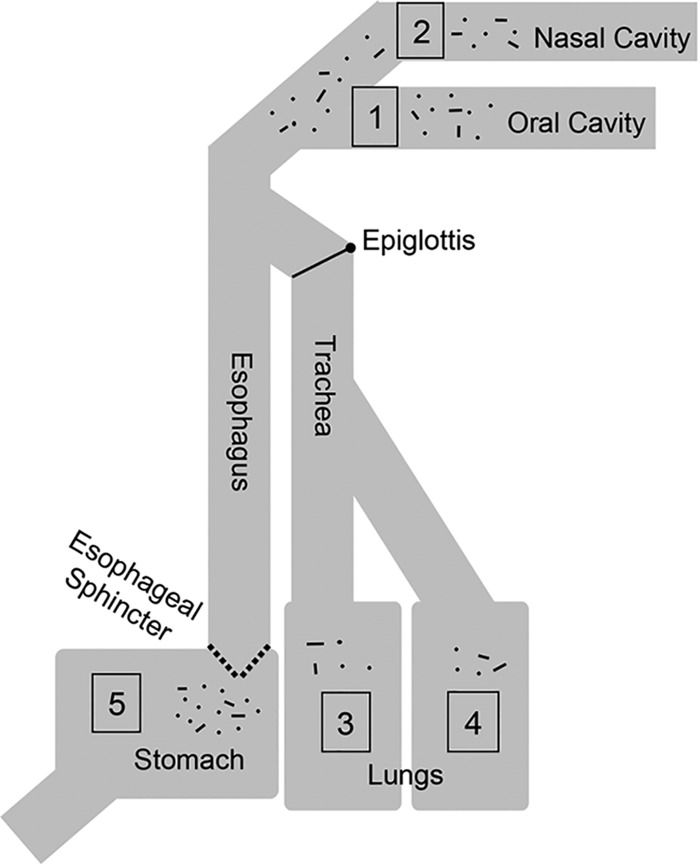
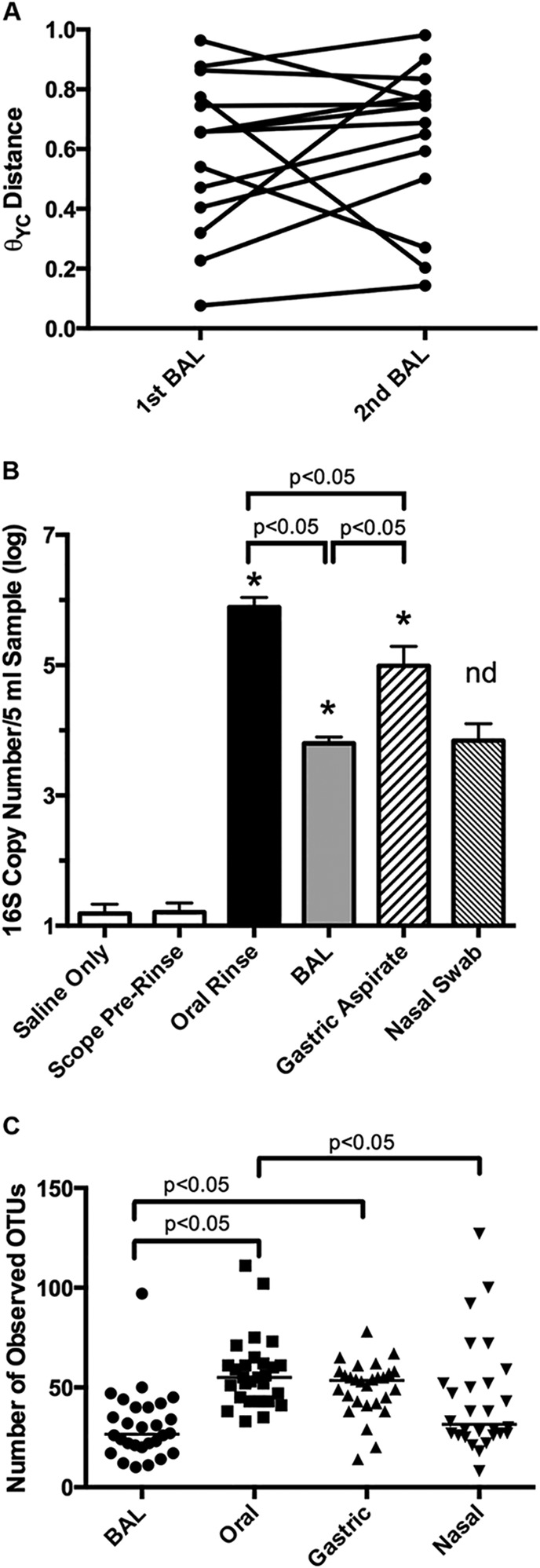
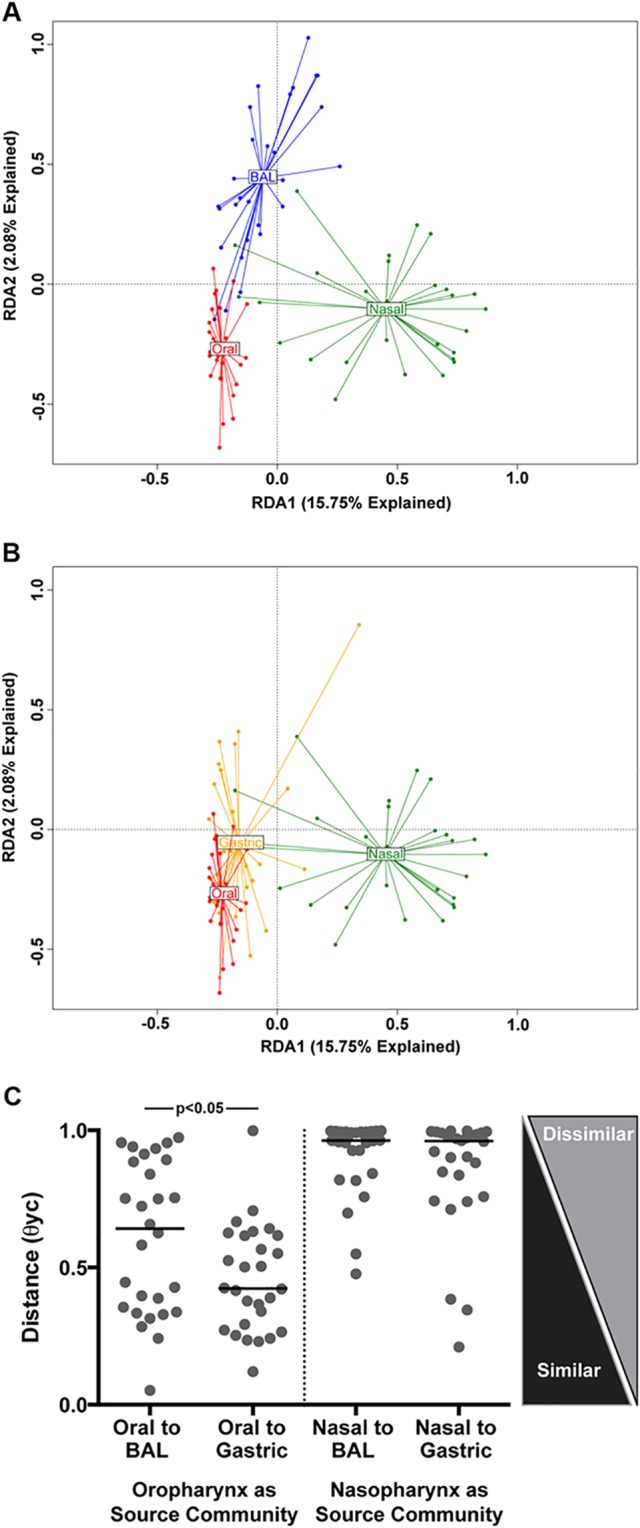
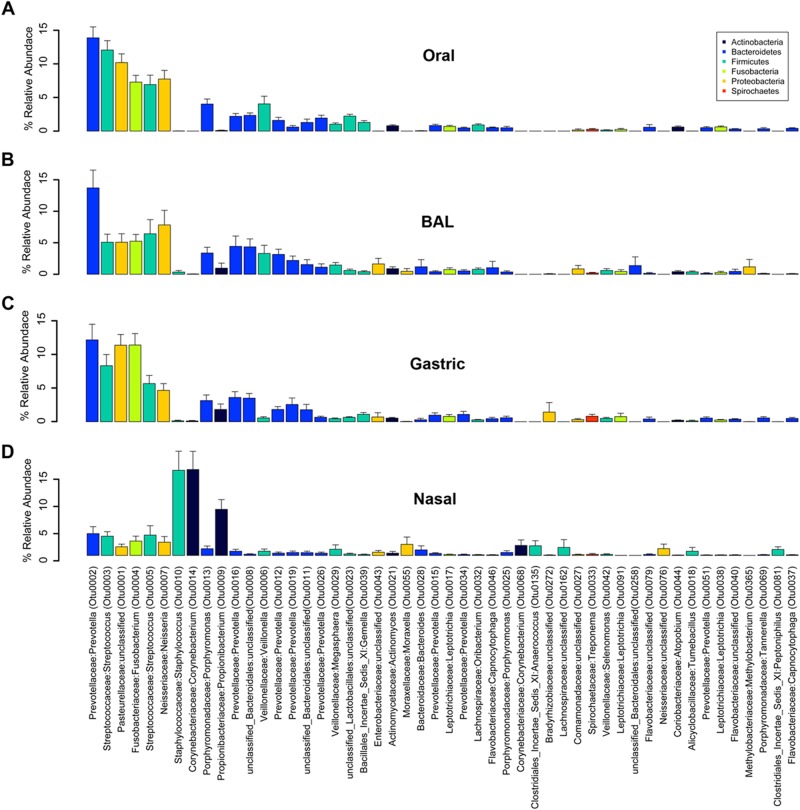
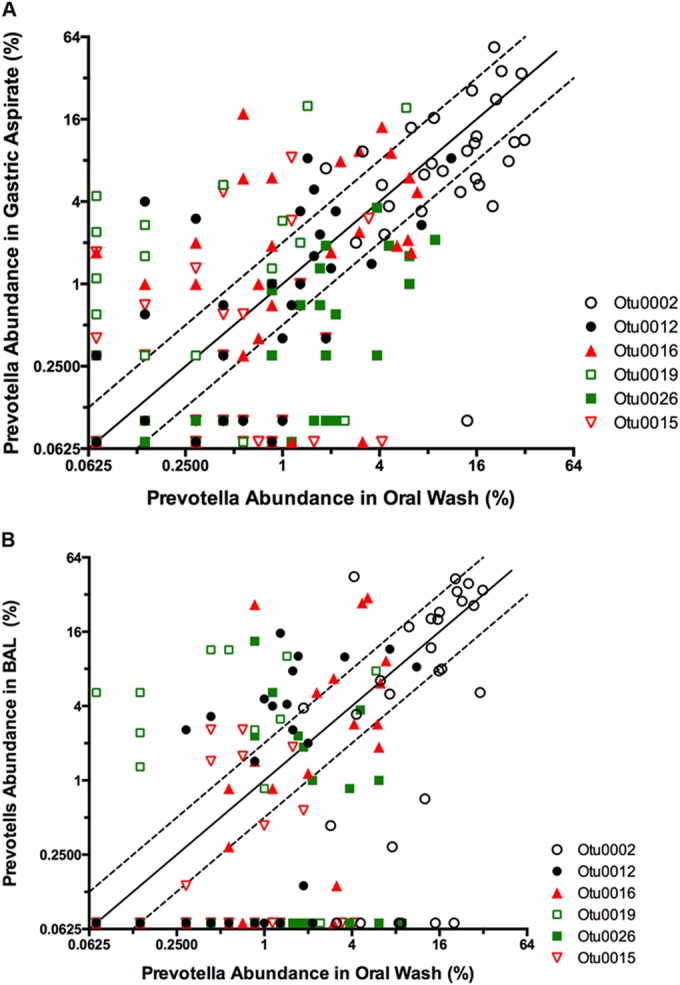
No studies have examined the relationships between bacterial communities along sites of the upper aerodigestive tract of an individual subject. Our objective was to perform an intrasubject and intersite analysis to determine the contributions of two upper mucosal sites (mouth and nose) as source communities for the bacterial microbiome of lower sites (lungs and stomach). Oral wash, bronchoalveolar lavage (BAL) fluid, nasal swab, and gastric aspirate samples were collected from 28 healthy subjects. Extensive analysis of controls and serial intrasubject BAL fluid samples demonstrated that sampling of the lungs by bronchoscopy was not confounded by oral microbiome contamination. By quantitative PCR, the oral cavity and stomach contained the highest bacterial signal levels and the nasal cavity and lungs contained much lower levels. Pyrosequencing of 16S rRNA gene amplicon libraries generated from these samples showed that the oral and gastric compartments had the greatest species richness, which was significantly greater in both than the richness measured in the lungs and nasal cavity. The bacterial communities of the lungs were significantly different from those of the mouth, nose, and stomach, while the greatest similarity was between the oral and gastric communities. However, the bacterial communities of healthy lungs shared significant membership with the mouth, but not the nose, and marked subject-subject variation was noted. In summary, microbial immigration from the oral cavity appears to be the significant source of the lung microbiome during health, but unlike the stomach, the lungs exhibit evidence of selective elimination of Prevotella bacteria derived from the upper airways. IMPORTANCE We have demonstrated that the bacterial communities of the healthy lung overlapped those found in the mouth but were found at lower concentrations, with lower membership and a different community composition. The nasal microbiome, which was distinct from the oral microbiome, appeared to contribute little to the composition of the lung microbiome in healthy subjects. Our studies of the nasal, oral, lung, and stomach microbiomes within an individual illustrate the microbiological continuity of the aerodigestive tract in healthy adults and provide culture-independent microbiological support for the concept that microaspiration is common in healthy individuals.
Overview
The claims and statistics of this paper haven’t been checked yet.
Free: it reads the open-access text and checks the first 5 claims that cite a source we can check. Create a free account to check every claim.
Integrity signals
Registry
Cites
Statistics
Figures
Verification
Claims the paper makes
The claims and statistics of this paper haven’t been checked yet.
Free: it reads the open-access text and checks the first 5 claims that cite a source we can check. Create a free account to check every claim.
Claims other papers make about this one
Each is checked against this paper’s own text: does it say what the citing paper says it does?
The source backs part of the claim, not all of it — or backs it for a different population, condition or comparison.
In the citing paper
“Culture-independent microbiota studies have confirmed that the lung microbiota largely resembles the URT microbiota when studied in healthy individuals74,75,76.”
From The microbiota of the respiratory tract: gatekeeper to respiratory health (2017) · cites this paper as [74]
Experimental — accuracy not yet measuredThe source backs part of the claim, not all of it — or backs it for a different population, condition or comparison.
In the citing paper
“The oropharynx seems to be the main source of the lung microbiota in adults74, whereas in children the source is more likely to be both the nasopharynx and oropharynx76.”
From The microbiota of the respiratory tract: gatekeeper to respiratory health (2017) · cites this paper as [74]
Experimental — accuracy not yet measuredThe source backs part of the claim, not all of it — or backs it for a different population, condition or comparison.
In the citing paper
“A specific challenge in microbiota surveys of the respiratory tract is the low density of bacterial communities that are found there, particularly in healthy individuals; densities as low as 102–103 bacteria ml−1 have been reported in bronchoalveolar lavages (BALs) of healthy individuals74,153.”
From The microbiota of the respiratory tract: gatekeeper to respiratory health (2017) · cites this paper as [74]
Experimental — accuracy not yet measuredThe source backs part of the claim, not all of it — or backs it for a different population, condition or comparison.
In the citing paper
“In healthy individuals, the microbial community richness (i.e., the total number of bacterial taxa) is lower in the LRT than that in the URT”
From Respiratory viral infection-induced microbiome alterations and secondary bacterial pneumonia. (2018) · cites this paper as [76]
Experimental — accuracy not yet measuredIn the citing paper
“The contribution of the gastric microbiota to the microbial community in the LRT through gastric–oesophageal reflux has, until now, been suggested to be negligible74.”
From The microbiota of the respiratory tract: gatekeeper to respiratory health (2017) · cites this paper as [74]
2 more claims about this paper
Create a free account to see every claim other papers make about this one.
Self-check
Percentages, sums and reported differences re-computed from the paper’s own numbers.
The self-check needs the paper’s full text.
Citations
Cites
Schloss, P. D., Westcott, S. L., Ryabin, T., Hall, J. R., Hartmann, M., Hollister, E. B., Lesniewski, R. A., Oakley, B. B., Parks, D. H., Robinson, C. J., et al. (2009) · Applied and Environmental Microbiology · doi:10.1128/aem.01541-09 · Cited by 19,549 · cited 1×
“0 (39, 40) as described previously (37, 38,”
A new method for non-parametric multivariate analysis of variance
Anderson, M. J. (2001) · Austral Ecology · doi:10.1111/j.1442-9993.2001.01070.pp.x · Cited by 13,828 · cited 4×
“The same relationships of the four sites were confirmed when tested by AMOVA or PERMANOVA (Table 1).”
MethodInfluentialStructure, function and diversity of the healthy human microbiome
The Human Microbiome Project Consortium (2012) · Nature · doi:10.1038/nature11234 · Cited by 11,726
Topographical and Temporal Diversity of the Human Skin Microbiome
Grice, E. A., Kong, H. H., Conlan, S., Deming, C. B., Davis, J., Young, A. C., Program, N. C. S., Bouffard, G. G., Blakesley, R. W., Murray, P. R., et al. (2009) · Science · doi:10.1126/science.1171700 · Cited by 2,953
Reducing the Effects of PCR Amplification and Sequencing Artifacts on 16S rRNA-Based Studies
Schloss, P. D., Gevers, D., & Westcott, S. L. (2011) · PLoS ONE · doi:10.1371/journal.pone.0027310 · Cited by 2,112 · cited 2×
“The YC distance (1 YC) between bacterial communities measures differences in community structure (44) and was selected because it weighs rare and abundant OTUs more evenly than other metrics such as Bray-Curtis or Morisita-Horn (39).”
BackgroundQuantifying the roles of immigration and chance in shaping prokaryote community structure
Sloan, W. T., Lunn, M., Woodcock, S., Head, I. M., Nee, S., & Curtis, T. P. (2006) · Environmental Microbiology · doi:10.1111/j.1462-2920.2005.00956.x · Cited by 1,887 · cited 1×
“tomized R script based on the neutral model (42) was then used to identify”
MethodDisordered Microbial Communities in Asthmatic Airways
Hilty, M., Burke, C., Pedro, H., Cardenas, P., Bush, A., Bossley, C., Davies, J., Ervine, A., Poulter, L., Pachter, L., et al. (2010) · PLoS ONE · doi:10.1371/journal.pone.0008578 · Cited by 1,824 · cited 1×
“During states of ill health, such as viral upper respiratory tract infections, allergies, or sinus infections, the liquid flow from the nasal cavity increases, and this clearly has the potential to affect the lung microbiome, consistent with studies of rhinovirus infection and asthmatics that highlighted changes in th…”
BackgroundMolecular analysis of the bacterial microbiota in the human stomach
Bik, E. M., Eckburg, P. B., Gill, S. R., Nelson, K. E., Purdom, E. A., Francois, F., Perez-Perez, G., Blaser, M. J., & Relman, D. A. (2006) · Proceedings of the National Academy of Sciences · doi:10.1073/pnas.0506655103 · Cited by 1,158
Topographical Continuity of Bacterial Populations in the Healthy Human Respiratory Tract
Charlson, E. S., Bittinger, K., Haas, A. R., Fitzgerald, A. S., Frank, I., Yadav, A., Bushman, F. D., & Collman, R. G. (2011) · American Journal of Respiratory and Critical Care Medicine · doi:10.1164/rccm.201104-0655oc · Cited by 1,144 · cited 1×
“Within an individual, the similarity between the oral and lung microbiomes varied widely, with some individuals having a lung microbiome that was almost identical to their oral microbiome, similar to a previous report (9), while in others the two sites were markedly different.”
ResultAnalysis of the lung microbiome in the “healthy” smoker and in COPD.
Erb-Downward, J. R., Thompson, D. L., Han, M. K., Freeman, C. M., McCloskey, L., Schmidt, L. A., Young, V. B., Toews, G. B., Curtis, J. L., Sundaram, B., et al. (2011) · PLoS ONE · doi:10.1371/journal.pone.0016384 · Cited by 973
Self-citation
Cited by
Items 401–500 of 838
Agard, M., Ozer, E. A., Morris, A. R., Aillon, R. P., & Hauser, A. R. (2019) · Infection and Immunity · doi:10.1128/iai.00871-18 · Cited by 18
Human Respiratory and Gut Microbiomes—Do They Really Contribute to Respiratory Health?
Durack, J., & Christophersen, C. T. (2020) · Frontiers in Pediatrics · doi:10.3389/fped.2020.00528 · Cited by 18
“Microbial composition of the lower airway is more reflective of the oral microbiota (2, 3, 47, 105, 106).”
BackgroundYang, F., Yang, Y., Chen, Y., Li, G., Zhang, G., Chen, L., Zhang, Z., Mai, Q., & Zeng, G. (2021) · Frontiers in Microbiology · doi:10.3389/fmicb.2020.512581 · Cited by 23
“Developing new strategies against tuberculosis such as a better vaccine or a host-directed therapy can be aided by the increasing understanding of the immune responses against M. tuberculosis infection (Kaufmann, 2006; Bhatt and Salgame, 2007; Kaufmann et al., 2010).”
BackgroundJo, A., Won, J., Gil, C. H., Kim, S. G., Lee, K., Yoon, S. S., & Kim, H. J. (2021) · npj Biofilms and Microbiomes · doi:10.1038/s41522-022-00290-3 · Cited by 16
Dalton, K. R., Louis, L. M., Fandiño-Del-Río, M., Rule, A. M., Pool, W., Randolph, K., Thomas, S. B., Davis, M. F., & Quirós-Alcalá, L. (2022) · Environmental Research · doi:10.1016/j.envres.2022.114125 · Cited by 21
Li, W., Sun, B., Li, H., An, Z., Li, J., Jiang, J., Song, J., & Wu, W. (2023) · Ecotoxicology and Environmental Safety · doi:10.1016/j.ecoenv.2023.115156 · Cited by 17
Tsai, C., Wong, K., Lee, W., Hsieh, K., Hung, P., Niu, C.-K., & Yu, H. (2017) · Pediatrics & Neonatology · doi:10.1016/j.pedneo.2016.09.004 · Cited by 19
Introduction to Techniques and Methodologies for Characterizing the Human Respiratory Virome
Mitchell, A. B., & Glanville, A. R. (2018) · Methods in molecular biology · doi:10.1007/978-1-4939-8682-8_9 · Cited by 17
High-throughput 16S rDNA sequencing of the pulmonary microbiome of rats with allergic asthma
Xiong, Y., Hu, S., Zhou, H., Zeng, H., He, X., Huang, D., & Li, X. (2019) · Genes & Diseases · doi:10.1016/j.gendis.2019.03.006 · Cited by 20
“In a healthy state, pulmonary microbiome composition is similar to that of the upper respiratory tract.(29,30) The abundance and composition of the microbiome are affected by many factors, including birth mode, feeding type, genetics, and smoking.”
BackgroundBertelsen, A. K., Elborn, J. S., & Schock, B. C. (2019) · Journal of Cystic Fibrosis · doi:10.1016/j.jcf.2019.09.005 · Cited by 19
Host microbiome in tuberculosis: disease, treatment, and immunity perspectives
Pant, A., Das, B., & Arimbasseri, G. A. (2023) · Frontiers in Microbiology · doi:10.3389/fmicb.2023.1236348 · Cited by 21
“Compared with gut, the lung microbiota is transient and more dynamic with low bacterial burden and influenced by influx and elimination of microbiota (Beck et al., 2012; Dickson et al., 2014; Bassis et al., 2015).”
BackgroundThe lung microbiome in patients with pneumocystosis
Kehrmann, J., Veckollari, B., Schmidt, D., Schildgen, O., Schildgen, O., Wagner, N., Zeschnigk, M., Klein‐Hitpaß, L., Witzke, O., Buer, J., et al. (2017) · BMC Pulmonary Medicine · doi:10.1186/s12890-017-0512-5 · Cited by 19
“The oral microbiome usually is the primary source for the bacterial microbiota of the lungs [19, 20] with Prevotella, Veillonella and Streptococcus as the dominating genera.”
BackgroundDo combined upper airway cultures identify lower airway infections in children with chronic cough?
Hare, K. M., Chang, A. B., Smith‐Vaughan, H., Bauert, P., Spain, B., Beissbarth, J., & Grimwood, K. (2019) · Pediatric Pulmonology · doi:10.1002/ppul.24336 · Cited by 15
“The anatomy of the upper airway in children may facilitate recurrent microaspiration of heavily bacteria‐laden nasal secretions,(8,11) while in adults repeated microaspiration of oropharyngeal secretions is thought to be important.(18,19) Recent studies have also used 16S rRNA gene sequencing to characterize the micro…”
BackgroundResultBrewer, M. R., Maffei, D., Cerise, J. E., Ahn, S., DeVoti, J. A., Codipilly, C. N., Lee, A., & Weinberger, B. I. (2019) · The Journal of Maternal-Fetal & Neonatal Medicine · doi:10.1080/14767058.2019.1681961 · Cited by 15
“healthy patients during sleep [36,37], and this has”
BackgroundSystems Biology and Bile Acid Signalling in Microbiome-Host Interactions in the Cystic Fibrosis Lung
Woods, D. F., Flynn, S., Caparros-Martin, J. A., Stick, S. M., Reen, F. J., & O’Gara, F. (2021) · Antibiotics · doi:10.3390/antibiotics10070766 · Cited by 17
“The nascent microbial sources of the lung microbiota can be of environmental, gut, skin, oral and pharyngeal origin [43,51,52].”
BackgroundChallenges in understanding lung microbiome: It is NOT like the gut microbiome
Chang, D., Cruz, C. S. D., & Sharma, L. (2019) · Respirology · doi:10.1111/resp.13759 · Cited by 16
Tseng, Y.-C., Liao, K., Lin, W., Li, C., Chang, C.-B., Hsu, J.-W., Chan, C.-P., Chen, C., Wang, H.-P., Chien, H.-C., et al. (2025) · npj Biofilms and Microbiomes · doi:10.1038/s41522-025-00654-5 · Cited by 19
The lung microbiome in interstitial lung disease
Mikhail, S. G., & O’Dwyer, D. N. (2025) · Breathe · doi:10.1183/20734735.0167-2024 · Cited by 17
A review and roadmap of the skin, lung and gut microbiota in systemic sclerosis
Teaw, S., Hinchcliff, M., & Cheng, M. (2021) · Rheumatology · doi:10.1093/rheumatology/keab262 · Cited by 15
Wichmann, C., Rösch, P., & Popp, J. (2021) · Analytical and Bioanalytical Chemistry · doi:10.1007/s00216-021-03488-0 · Cited by 14
“On average, BAL fluid contains 7 × 10(4) cells/ml [26, 27], but samples with as few as 1000 cells/ml have been reported [28].”
BackgroundWang, H., Hu, J., Wu, J., Ji, P., Shang, A., & Li, D. (2022) · Cancers · doi:10.3390/cancers14215394 · Cited by 17
“On the basis of long-term and verified data (through mucosal dispersion, swallowing, and microaerosols or oral secretions), some researchers have argued that the oral bacteria may be the major source of lung bacteria [30].”
BackgroundTopography of respiratory tract and gut microbiota in mice with influenza A virus infection
Chen, Q., Liu, M., Lin, Y., Wang, K., Li, J., Li, P., Yang, L., Jia, L., Zhang, B., Guo, H., et al. (2023) · Frontiers in Microbiology · doi:10.3389/fmicb.2023.1129690 · Cited by 21
Oral Cavity is the Gateway to the Body: Role of Oral Health Professionals: A Narrative Review
Iyer, P. (2023) · Journal of the California Dental Association · doi:10.1080/19424396.2023.2193372 · Cited by 23
Lung microbiome on admission in critically ill patients with acute bacterial and viral pneumonia
Marimón, J. M., Sorarrain, A., Ercibengoa, M., Azcue, N., Alonso, M. M., & Vidaur, L. (2023) · Scientific Reports · doi:10.1038/s41598-023-45007-4 · Cited by 18
“Even so, we could not rule out that the respiratory microbiome of some of them was altered due to the microaspirations of an altered oropharyngeal microbiota 8 .”
BackgroundLi, Y., Rao, G., Zhu, G., Cheng, C., Yuan, L., Li, C., Gao, J., Tang, J., Wang, Z., & Li, W. (2023) · Thoracic Cancer · doi:10.1111/1759-7714.15166 · Cited by 14
“…studies on the microbiota in the airways have primarily relied on samples obtained from bronchoalveolar lavage (BAL), bronchoscopic brushing, or sputum, 3,41 – 46 which might be contaminated by oral microbiota in the upper respiratory tract, which affects the analysis and judgment of lung microbes.”
BackgroundOral microbiota and respiratory diseases: advances and perspectives
Liu, X., Shi, F., Zeng, J., Bi, J., Mo, C., Chai, Y., Wu, B., & Xu, S. (2025) · Clinical Microbiology Reviews · doi:10.1128/cmr.00150-24 · Cited by 20
“The lung microbiota of healthy individuals more closely resembles that of the oropharynx than the nasopharynx or lower gastrointestinal tract (29–31).”
Role of the lung microbiome in HIV pathogenesis
Shenoy, M. K., & Lynch, S. V. (2017) · Current Opinion in HIV and AIDS · doi:10.1097/coh.0000000000000427 · Cited by 15
Culture-Independent Analysis of Pediatric Bronchoalveolar Lavage Specimens
Zachariah, P., Ryan, C., Nadimpalli, S. S., Coscia, G., Kolb, M., Smith, H., Foca, M. D., Saiman, L. M., & Planet, P. J. (2018) · Annals of the American Thoracic Society · doi:10.1513/annalsats.201802-146oc · Cited by 14
The Challenges of Eradicating Pediatric Helicobacter pylori Infection in the Era of Probiotics
Meliţ, L. E., Mărginean, C. O., & Săsăran, M. O. (2022) · Children · doi:10.3390/children9060795 · Cited by 19
Protocol for microbial profiling of low-biomass upper respiratory tract samples
Odendaal, M.-L., Chu, M. L. J. N., Arp, K., van Beveren, G. J., Biesbroek, G., Binkowska, J. M., Bosch, T., Groot, J. A., Hasrat, R., Kuiling, S., et al. (2025) · STAR Protocols · doi:10.1016/j.xpro.2025.103740 · Cited by 13
The Respiratory Tract Microbiome and Human Health
de Córdoba‐Ansón, P. F., Linares‐Ambohades, I., Baquero, F., Coque, T. M., & Pérez‐Cobas, A. E. (2025) · Microbial Biotechnology · doi:10.1111/1751-7915.70147 · Cited by 21
“The primary sources of microorganisms in the RT are principally the oral and then the nasal microbiomes (Figure 1), and the microbes descend to the lungs through different mechanisms, such as microaspiration or dispersion (Bassis et al. 2015; Dickson et al. 2017).”
Deepika, Alsharari, Z. D., Ahmad, M. F., Singh, J., Yadav, M., Kumari, A., Kumar, A., Matthews, K. R., Aluko, R. E., Raposo, A., et al. (2025) · Frontiers in Nutrition · doi:10.3389/fnut.2025.1624803 · Cited by 15
Oral mucosa immunity: ultimate strategy to stop spreading of pandemic viruses
Jang, H., Matsuoka, M., & Freire, M. (2023) · Frontiers in Immunology · doi:10.3389/fimmu.2023.1220610 · Cited by 16
Li, W., Liu, W., Yang, H., Wang, X., Wang, Z., & Liu, Z. (2024) · BMC Oral Health · doi:10.1186/s12903-024-04635-6 · Cited by 17
“The lung microbiota exhibits a higher degree of similarity to the oral microbiota than to the nasal microbiota in both healthy individuals and those with COPD, suggesting that oral bacteria may be an important source of lung bacteria in both groups [8, 9].”
BackgroundOriano, M., Zorzetto, L., Guagliano, G., Bertoglio, F., van Uden, S., Visai, L., & Petrini, P. (2020) · Frontiers in Bioengineering and Biotechnology · doi:10.3389/fbioe.2020.539319 · Cited by 13
Knudsen, K. S., Lehmann, S., Nielsen, R., Tangedal, S., Haaland, I., Hiemstra, P. S., & Eagan, T. (2022) · PLoS ONE · doi:10.1371/journal.pone.0262082 · Cited by 15
Metabolomics of Respiratory Diseases
Moitra, S., Bandyopadhyay, A., & Lacy, P. (2022) · Handbook of experimental pharmacology · doi:10.1007/164_2022_614 · Cited by 17
Aspiration: /aspə’rāSH(ə)n/: Noun: An Ambiguous Term Used for a Diagnosis of Uncertainty
Ferguson, J., Ravert, B., & Michael, G. (2018) · Clinical Pulmonary Medicine · doi:10.1097/cpm.0000000000000277 · Cited by 14
Microbiota and IPF: hidden and detected relationships.
Fabbrizzi, A., Nannini, G., Lavorini, F., Tomassetti, S., & Amedei, A. (2021) · Sarcoidosis vasculitis and diffuse lung diseases · doi:10.36141/svdld.v38i3.11365 · Cited by 17
Yan, C., Chen, Y., Tian, Y., Hu, S., Wang, H., Zhang, X., Chu, Q., Huang, S., & Sun, W. (2025) · Cellular Oncology · doi:10.1007/s13402-025-01103-3 · Cited by 14
“Due to the high compositional similarity between the lung and oral microbiota, the oral cavity is considered the main source of healthy lung microbiota [40–43]and microaspiration is regarded as the predominant entry route [7, 39, 44–46].”
Zhou, M., Liu, Y., Yin, X., Gong, J., & Li, J. (2025) · Discover Oncology · doi:10.1007/s12672-025-03440-z · Cited by 16
Vendl, C., Nelson, T. M., Ferrari, B. C., Thomas, T., & Rogers, T. L. (2021) · BMC Microbiology · doi:10.1186/s12866-020-02076-z · Cited by 18
Konovalovas, A., Armalytė, J., Klimkaitė, L., Liveikis, T., Jonaitytė, B., Danila, E., Bironaitė, D., Mieliauskaitė, D., Bagdonas, E., & Aldonytė, R. (2024) · Microbiology Spectrum · doi:10.1128/spectrum.04144-23 · Cited by 14
“Bacteria from both oral and nasal cavities can be introduced to the lungs; however, it has been previously observed that the healthy lower respiratory tract microbiome is more similar to the oral microbiota and most similar to the one found in the orophar ynx (43–45).”
Panumasvivat, J., Pratchayasakul, W., Sapbamrer, R., Chattipakorn, N., & Chattipakorn, S. C. (2023) · Archives of Toxicology · doi:10.1007/s00204-023-03452-0 · Cited by 15
“The LRT microbiome varies as a result of micro-aspiration and translocation of microbes from the URT, and the upper gastrointestinal tract (Bassis et al. 2015; Dickson and Huffnagle 2015).”
BackgroundChanges in upper airways microbiota in ventilator-associated pneumonia
Alagna, L., Mancabelli, L., Magni, F., Chatenoud, L., Bassi, G., Bianco, S. D., Fumagalli, R., Turroni, F., Mangioni, D., Migliorino, G. M., et al. (2023) · Intensive Care Medicine Experimental · doi:10.1186/s40635-023-00496-5 · Cited by 18
“These results strengthen the concept of heterogeneity of lung microbiota [5, 9, 36, 37], making it particularly difficult to identify common profiles associated with VAP development, also because it is impossible to ascertain a causal effect of dysbiosis on VAP.”
BackgroundGut Microbiota and Respiratory Infections: Insights from Mendelian Randomization
Huang, S., Li, J., Zhu, Z., Liu, X., Shen, T., Wang, Y., Ma, Q., Wang, X., Yang, G., Guo, G., et al. (2023) · Microorganisms · doi:10.3390/microorganisms11082108 · Cited by 14
“The URT, being more exposed to the external environment, is colonized by a diverse range of microbial species soon after birth, with Actinobacteria being a dominant phylum [59,60].”
BackgroundHong, L., Chen, Y., & Ye, L. (2021) · Bioengineered · doi:10.1080/21655979.2021.1997563 · Cited by 17
“In upper respiratory tract infection, there is a higher probability in the alteration of lung microbial composition [32].”
BackgroundOral Microbiota and Carcinogenesis: Exploring the Systemic Impact of Oral Pathogens
Nikolić, N., Pucar, A., Tomić, U., Petrović, S., Mihailović, Đ., Jovanović, A., & Radunović, M. (2025) · Pathogens · doi:10.3390/pathogens14121233 · Cited by 16
“Although this microbiota is modest (10 3 –10 5 cells/g of tissue) [90,92] compared to microbiota of the skin or gut (10 11 –10 12 cells/g of luminal content in gut) [93], its role in homeostasis and disease is important.”
Upper respiratory tract microbiota is associated with small airway function and asthma severity
Li, Y., Zou, C., Li, J., Wang, W., Guo, Y., Zhao, L., Jiang, C., Zhao, P., & An, X. (2023) · BMC Microbiology · doi:10.1186/s12866-023-02757-5 · Cited by 12
“Indeed, several bacterial taxa, including Streptococcus pneumonia, Staphylococcus aureus, Moraxella catarrhalis, Pseudomonas aeruginosa, and Haemophilus influenza, were reported to be associated with asthma exacerbation or development [10, 11].”
BackgroundSaliva microbiome in relation to SARS-CoV-2 infection in a prospective cohort of healthy US adults
Armstrong, A. J. S., Horton, D. B., Andrews, T., Greenberg, P. J., Roy, J., Gennaro, M. L., Carson, J. L., Panettieri, R. A., Barrett, E. S., & Blaser, M. J. (2023) · EBioMedicine · doi:10.1016/j.ebiom.2023.104731 · Cited by 12
“23,24 Oral microbiota also contribute to the lung microbiome, 25 – 27 and their presence has been associated with in fl ammation.”
BackgroundInteractions between NCR+ILC3s and the Microbiome in the Airways Shape Asthma Severity
Ham, J., Kim, J., Choi, S.-M., Park, J., Baek, M.-G., Kim, Y. C., Sohn, K., Cho, S., Yang, S., Bae, Y., et al. (2021) · Immune Network · doi:10.4110/in.2021.21.e25 · Cited by 13
“Of these, Bacteroidetes and Firmicutes are the most abundant phyla, followed by Proteobacteria and, to a lesser extent, Actinobacteria and Fusobacteria (23,24).”
BackgroundEmerging cellular and molecular interactions between the lung microbiota and lung diseases
Li, X., & Meng, X. (2021) · Critical Reviews in Microbiology · doi:10.1080/1040841x.2021.1992345 · Cited by 11
“Moreover, the stronger similarity of the lung microbiota to that of the mouth than to that of the nose supports the hypothesis that the oropharynx is the major source of the lung microbiome in adults (Bassis et al. 2015).”
BackgroundMethodInfluentialWang, T., Xing, Y., Peng, B., Yang, K., Zhang, C., Chen, Y., Geng, G., Li, Q., Fu, J., Li, M., et al. (2022) · Hypertension · doi:10.1161/hypertensionaha.122.19182 · Cited by 13
Hare, K. M., Marsh, R. L., Smith‐Vaughan, H., Bauert, P., & Chang, A. B. (2015) · Journal of Medical Microbiology · doi:10.1099/jmm.0.000173 · Cited by 11
“In a second microbiome study, sequential BAL specimens were obtained from two lobes, with no significant difference in bacterial community composition, and the authors concluded that sampling of the lungs by bronchoscopy was not confounded by oral microbiome contamination (Bassis et al., 2015).”
BackgroundHu, Q., Dai, W., Zhou, Q., Fu, D. B., Zheng, Y., Wang, W., Liu, Y., Yang, Q. Z., Dai, D., Liu, S., et al. (2017) · Scientific Reports · doi:10.1038/s41598-017-11311-z · Cited by 13
Fallopian Tube Microbiota: Evidence Beyond DNA
Pelzer, E., Willner, D. L., Huygens, F., Hafner, L. M., Lourie, R., & Buttini, M. (2018) · Future Microbiology · doi:10.2217/fmb-2018-0118 · Cited by 11
Zeineldin, M. M., Lowe, J. F., & Aldridge, B. M. (2020) · Frontiers in Veterinary Science · doi:10.3389/fvets.2020.00115 · Cited by 17
“These findings are similar to those reported in studies of the nasal microbiota of pigs (26, 27) and the upper respiratory tract of humans (28).”
ResultYifei Sanjie Formula Treats Chronic Obstructive Pulmonary Disease by Remodeling Pulmonary Microbiota
Wu, Y., Meng, H., Qiao, B., Li, N., Zhang, Q., Jia, W., Xing, H., Li, Y., Yuan, J., & Yang, Z. (2022) · Frontiers in Medicine · doi:10.3389/fmed.2022.927607 · Cited by 12
“However, risk factors for COPD, including cigarette smoke and inhaling contaminated air, can affect the composition of the pulmonary microbiota (59).”
BackgroundLiu, L., Zhao, W., Zhang, H., Shang, Y., Huang, W., & Cheng, Q. (2025) · Frontiers in Microbiology · doi:10.3389/fmicb.2025.1550783 · Cited by 14
Prevotella intermedia Synergistically Exacerbates Pneumonia Induced by Oral Streptococci
Ashizawa, H., Iwanaga, N., Nemoto, K., Hirayama, T., Yoshida, M., Takeda, K., Ide, S., Tashiro, M., Hosogaya, N., Takazono, T., et al. (2025) · The Journal of Infectious Diseases · doi:10.1093/infdis/jiaf278 · Cited by 12
“The lungs are exposed to numerous microbes through trans-missible infections, microaspiration, or direct mucosal translocation of oral bacteria [1, 2].”
Fukui, S., Morimoto, S., Ichinose, K., Nakashima, S., Ishimoto, H., Hara, A., Kakugawa, T., Sakamoto, N., Tsuji, Y., Aramaki, T., et al. (2020) · Scientific Reports · doi:10.1038/s41598-020-66178-4 · Cited by 10
Stubbendieck, R. M., Zelasko, S. E., Safdar, N., & Currie, C. R. (2021) · Microbiology Spectrum · doi:10.1128/spectrum.01669-21 · Cited by 14
“These findings are similar to those obtained in other surveys comparing the overall diversity of human nasal and oral microbiomes (26).”
ResultImmunonutrition and SARS-CoV-2 Infection in Children with Obesity
D’Auria, E., Calcaterra, V., Verduci, E., Ghezzi, M., Lamberti, R., Vizzuso, S., Baldassarre, P., Pendezza, E., Perico, V., Bosetti, A., et al. (2022) · Nutrients · doi:10.3390/nu14091701 · Cited by 11
Oral Bacteria Dysbiosis in Patients with Linezolid-Induced Black Hairy Tongue: A Case Series
Shangguan, Y., Ji, Z., Guo, W., Hu, W., Li, X., & Xu, K. (2022) · Infection and Drug Resistance · doi:10.2147/idr.s373266 · Cited by 10
“The microbial community of human respiratory tract is continuous.(19) Although the respiratory tract microbial communities varied in terms of diversity, oropharynx samples can be used to analyze the alteration of community structure associated with tuberculosis.”
BackgroundHu, Q., Liu, B., Fan, Y., Zheng, Y., Wen, F., Yu, U., & Wang, W. (2022) · Frontiers in Cellular and Infection Microbiology · doi:10.3389/fcimb.2022.1011254 · Cited by 12
“…in Cellular and Infection Microbiology 11 major source of the microbiome in the lower respiratory tract, explains the striking similarity between the composition of the microbiota in the oropharynx and that in the lower respiratory tract (Sahin-Yilmaz and Naclerio, 2011; Bassis et al., 2015).”
BackgroundShabaldin, A. V., Шабалдина, Е. В., & Simbirtsev, A. S. (2018) · Russian Journal of Infection and Immunity · doi:10.15789/2220-7619-2017-4-341-349 · Cited by 10
van der Does, A. M., Amatngalim, G. D., Keijser, B. J. F., Hiemstra, P. S., & Villenave, R. (2018) · Vaccines · doi:10.3390/vaccines6030049 · Cited by 10
The environment shapes swine lung bacterial communities
McCumber, A. W., Kim, Y. J., Isikhuemhen, O. S., Tighe, R. M., & Gunsch, C. K. (2020) · The Science of The Total Environment · doi:10.1016/j.scitotenv.2020.143623 · Cited by 9
Repeated bronchoscopy in health and obstructive lung disease: is the airway microbiome stable?
Nielsen, R., Xue, Y., Jonassen, I., Haaland, I., Kommedal, Ø., Wiker, H. G., Drengenes, C., Bakke, P. S., & Eagan, T. (2021) · BMC Pulmonary Medicine · doi:10.1186/s12890-021-01687-0 · Cited by 11
“Figure 6 shows the taxonomic distribution at the genus level for all the paired exams for the PBAL1 sorted by the beta-diversity measure Yue-Clayton index, which previously has been used to examine similarity in paired samples of the lung microbiome [18, 19].”
MethodEricsson, A. C., Personett, A. R., Rindt, H., Grobman, M., & Reinero, C. R. (2020) · PLoS ONE · doi:10.1371/journal.pone.0228085 · Cited by 11
“It may therefore not be surprising that several recent studies applying culture-independent sequencing approaches have detected rich microbial communities residing within the distal respiratory tract of healthy humans[2, 3], dogs[4], cats[5, 6], sheep[7], pigs[8], cattle[9], horses[10], chickens[11], and rodents[12].”
BackgroundRespiratory Tract Oncobiome in Lung Carcinogenesis: Where Are We Now?
Czarnecka, K. H., Kordiak, J., Brzeziańska‐Lasota, E., & Pastuszak‐Lewandoska, D. (2023) · Cancers · doi:10.3390/cancers15204935 · Cited by 12
“…showed that bacteria from the phyla Bacteroidetes (in particular the genus Prevotella ), Firmicutes (genera Streptococcus , Veillonella ), Proteobacteria (genus Acinetobacter ), and Actinobacteria (genus Corynebacterium ) were most abundant in the lungs of healthy individuals [21,22,25–27].”
BackgroundEffect of a Proton Pump Inhibitor on the Duodenum Microbiome of Gastric Ulcer Patients
Lim, J.-H., Shin, J., & Park, J. (2022) · Life · doi:10.3390/life12101505 · Cited by 13
“Gastric acid works to kill potential pathogens that might otherwise enter the digestive system from the oral cavity [11].”
BackgroundThe Upper Respiratory Tract Microbiome Network Impacted by SARS-CoV-2
Li, W., & Ma, Z. S. (2022) · Microbial Ecology · doi:10.1007/s00248-022-02148-9 · Cited by 9
“URT microbiome, as gatekeeper of the respiratory system, is one of the most important sources of lower respiratory tract and lung microbiome [2, 32, 35, 45].”
Host-specific signatures of the respiratory microbiota in domestic animals
Zeineldin, M. M., & Barakat, R. (2023) · Research in Veterinary Science · doi:10.1016/j.rvsc.2023.105037 · Cited by 11
Man, M. A., Ungur, R. A., Motoc, N. Ş., Pop, L., Berindan‐Neagoe, I., & Ruta, V. M. (2023) · Diagnostics · doi:10.3390/diagnostics13193157 · Cited by 11
Sze, M. A., Xu, S., Leung, J. M., Vucic, E. A., Shaipanich, T., Moghadam, A., Harris, M., Guillemi, S. A., Sinha, S., Nislow, C., et al. (2016) · BMC Pulmonary Medicine · doi:10.1186/s12890-016-0303-4 · Cited by 10
“These data are also consistent with the evolving concept that the lung microbiome is propagated by upper airway seeding [29, 30].”
ResultThe Microbiota in Immunity and Inflammation
Maynard, C. L. (2019) · Elsevier eBooks · doi:10.1016/b978-0-7020-6896-6.00014-4 · Cited by 13
Ngunjiri, J. M., Taylor, K. J. M., Ji, H., Abundo, M. C., Ghorbani, A., Mahesh, K. C., & Lee, C.-W. (2021) · PeerJ · doi:10.7717/peerj.11806 · Cited by 10
“This has also been observed with human lung models, in which lung microbiota are more similar to oral cavity or tracheal microbiota than nasal cavitymicrobiota under both healthy and diseased conditions (Bassis et al., 2015; Boutin et al., 2015; Charlson et al., 2011; Segal et al., 2013).”
BackgroundInborn errors of immunity and related microbiome
Hazime, R., Eddehbi, F.-E., Elmojadili, S., Lakhouaja, N., Souli, I., Salami, A., M’raouni, B., Brahim, I., Oujidi, M., Guennouni, M., et al. (2022) · Frontiers in Immunology · doi:10.3389/fimmu.2022.982772 · Cited by 10
“The microbiota of the lungs is more similar to the oral microbiome than other localizations (110).”
BackgroundCOVID-19 and the Microbiome: The Gut-Lung Connection
Aan, F. J., Glibetić, N., Montoya‐Uribe, V., & Matter, M. L. (2021) · Elsevier eBooks · doi:10.1016/b978-0-12-819265-8.00048-6 · Cited by 14
Informed development of a multi‐species biofilm in chronic obstructive pulmonary disease
Short, B., Delaney, C., Johnston, W., Litherland, G. J., Lockhart, J. C., Williams, C., Mackay, W. G., & Ramage, G. (2024) · Apmis · doi:10.1111/apm.13386 · Cited by 9
“Generally, the micro-biome of healthy lungs resembles that of the oral cavity, and this remains consistent in COPD [9, 17].”
BackgroundDynamic balance of the lung microbiome in health and respiratory diseases
Wang, X., Bi, L., Li, J., Liu, D., Li, W., & Wang, Z. (2025) · Chinese Medical Journal · doi:10.1097/cm9.0000000000003712 · Cited by 9
“[49] Core genera in the lower respiratory tract include Pseudomonas , Streptococcus (23%), Prevotella (23%), Veillonella (20%), Fusobacterium , Haemophilus , and Porphyromonas .”
InfluentialTowards airway microbiome engineering for improving respiratory health
Hern, K. E., & Prindle, A. B. (2025) · Advanced Drug Delivery Reviews · doi:10.1016/j.addr.2025.115662 · Cited by 8
“In comparison to the gut, the airway is much less nutrient-rich leading to a total bacterial biomass several orders of magnitude lower in abundance [31,39].”
InfluentialZou, X., Cao, H., Hong, L., Suo, L., Wang, C., Chang, K., Ni, Y., Liu, B., & Cao, B. (2025) · Signal Transduction and Targeted Therapy · doi:10.1038/s41392-025-02365-x · Cited by 16
“14 Several studies have shown that episodic aspiration with oral commensals can decrease susceptibility to Streptococcus pneumoniae in mice through innate immune priming.”
Interplay between bacteria and pulmonary immune system in respiratory infections
Li, J., Yang, L., Qin, X., Zhao, M., & Wang, S. (2026) · hLife · doi:10.1016/j.hlife.2025.09.006 · Cited by 8
“While the lung microbiota in healthy adults shares similarities with that of the oropharynx, there are distinct differences in microbial composition, with certain bacterial genera being more prominent in the lungs [80,81].”
Qian, K., Deng, Y. S., Krimsky, W. S., Feng, Y., Peng, J., Tai, Y., Peng, H., & Jiang, L. (2022) · Frontiers in Oncology · doi:10.3389/fonc.2022.811279 · Cited by 9
“The results regarding bacterial burdens detected via PSB and BAL were comparable to the values reported in previous studies (22, 23).”
ResultSubgingival microbial diversity and respiratory decline: A cross‐sectional study
Winning, L., Moran, G. P., McClory, M., Karim, I. A. E., Lundy, F. T., Patterson, C., Linden, D. A., Cullen, K. M., Kee, F., & Linden, G. J. (2023) · Journal Of Clinical Periodontology · doi:10.1111/jcpe.13819 · Cited by 7
“Studies have demonstrated that in healthy individuals, the microbiome of the lungs more closely resembles that of the oropharynx rather than the nasopharynx or the lower gastrointestinal tract (Bassis et al., 2015; Huffnagle et al., 2017; Morris et al., 2013).”
BackgroundSong, Y., Kim, M. S., Chung, J., & Na, H. S. (2023) · Diagnostics · doi:10.3390/diagnostics13101784 · Cited by 9
“The microbiome is a most diverse ecosystem, comprising numerous communities [26] compose the . well-reflected in known as mycobiome, has not received as much scrutiny despite its ecological and clinical importance [30], as evidenced by its relative lack of attention [28].”
BackgroundA steroid‐resistant cockroach allergen model is associated with lung and cecal microbiome changes
Asai, N., Ethridge, A. D., Fonseca, W., Yagi, K., Rasky, A. J., Morris, S. B., Falkowski, N. R., Huang, Y. J., Huffnagle, G. B., & Lukacs, N. W. (2023) · Physiological Reports · doi:10.14814/phy2.15761 · Cited by 8
“Lungs were previously thought to be sterile organs normally absent of microbiome (Bassis et al., 2015; Dickson et al., 2015).”
BackgroundSelf-citationGao, X., Yin, P., Ren, Y., Yu, L., Tian, F., Zhao, J., Chen, W., Xue, Y., & Zhai, Q. (2023) · Nutrients · doi:10.3390/nu15224738 · Cited by 10
“In addition, it was not possible to determine whether gastric fluid could be analyzed together with samples from the gastric antrum; therefore, we discarded the samples of gastric fluid [18,24] (Figure S1).”
BackgroundThe Most Recent Insights into the Roots of Gastric Cancer
Meliţ, L. E., Mărginean, C. O., & Balas, R. B. (2024) · Life · doi:10.3390/life14010095 · Cited by 13
The oral microbiome of newly diagnosed tuberculosis patients; a pilot study
Shahzad, M. A., Saeed, M., Amin, H., Binmadi, N. O., Ullah, Z., Bibi, S., & Andrew, S. C. (2024) · Genomics · doi:10.1016/j.ygeno.2024.110816 · Cited by 8
Airway bacterial microbiome signatures correlate with occupational pneumoconiosis progression
Ma, H., Dong, Z., Zhang, X., Liu, C., Liu, Z., Zhou, X. F., He, J., & Zhang, S. (2024) · Ecotoxicology and Environmental Safety · doi:10.1016/j.ecoenv.2024.116875 · Cited by 9
The lung microbiome in children with HIV-bronchiectasis: a cross-sectional pilot study
Masekela, R., Vosloo, S., Venter, S. N., de Beer, Z. W., & Green, R. J. (2018) · BMC Pulmonary Medicine · doi:10.1186/s12890-018-0632-6 · Cited by 9
Aerodigestive dysbiosis in children with chronic cough
Kazachkov, M. Y., Kapoor, B. C., Malecha, P. W., Wu, B. G., Li, Y., Levine, J. J., Erkman, J. L., Fitzgerald, K. C., Moy, L. C., & Segal, L. N. (2018) · Pediatric Pulmonology · doi:10.1002/ppul.24115 · Cited by 11
“For each sample, the V4 region of the bacterial 16S rRNA gene was amplified in duplicate reactions, using primer set 515F/806R, which nearly universally amplifies bacterial and archaeal 16S rRNA genes.(6,7) Sequencing was performed in MiSeq (Illumina) to produce 150 base-paired end reads.”
MethodWhat is the Relevance of Gastric Microbiota Beyond H. pylori?
Schütte, K., Malfertheiner, P., & Schulz, C. (2019) · Current Treatment Options in Gastroenterology · doi:10.1007/s11938-019-00245-2 · Cited by 9
Vital Members in the More Dysbiotic Oropharyngeal Microbiotas in H7N9-Infected Patients
Zha, H., Lu, H., Wu, J., Chang, K., Wang, Q., Zhang, H., Li, J., Luo, Q., Lu, Y., & Li, L. (2020) · Frontiers in Medicine · doi:10.3389/fmed.2020.00396 · Cited by 9
“Oropharyngeal microbiota was believed as an important source of lung microbiota in human adults and children (11, 44, 45).”
BackgroundAnalysis of Microbial Diversity in Caseous Necrosis of Tuberculosis Foci
Андреевна, О. Е., Огарков, О. Б., Suzdalnitsky, A. E., Хромова, П. А., Sinkov, V. V., Plotnikov, A. O., Belkova, N. L., & Николаевна, Ж. С. (2021) · Molecular Genetics Microbiology and Virology · doi:10.3103/s0891416821030058 · Cited by 8
“Most bacteria in the lower lungs originate from the upper respiratory tract and mouth [17].”
BackgroundPragman, A. A., Fieberg, A. M., Reilly, C. S., & Wendt, C. H. (2021) · BMJ Open · doi:10.1136/bmjopen-2021-050271 · Cited by 9
The Metabolic Potential of the Human Lung Microbiome
Semmler, F., Belisário‐Ferrari, M. R., Kulosa, M., & Kaysser, L. (2024) · Microorganisms · doi:10.3390/microorganisms12071448 · Cited by 7
Metadata
- Authors
- Bassis, C. M., Erb-Downward, J. R., Dickson, R. P., Freeman, C. M., Schmidt, T. M., Young, V. B., Beck, J. M., Curtis, J. L., & Huffnagle, G. B.
- Affiliations
- University of Michigan (US)
- Division of Pulmonary and Critical Care Medicine, Department of Internal Medicine, University of Michigan Medical School, Ann Arbor, Michigan, USA
- VA Eastern Colorado Health Care System (US)
- Corresponding author
- Huffnagle, Gary B.
- ORCID
- Venue
- mBio
- Publisher
- American Society for Microbiology
- Published
- 2015-05
- Volume
- 6
- Issue
- 2
- Pages
- e00037-e00037
- ISSN
- 2150-7511 (ISSN-L)
- 2161-2129
- PMC
- PMC4358017
- OpenAlex
- W2166358290
- Cited by
- 839
- References
- 46
- Citations by year
- 2026: 51 · 2025: 70 · 2024: 83 · 2023: 74 · 2022: 106 · 2021: 89 · 2020: 84 · 2019: 63 · 2018: 80 · 2017: 71 · 2016: 50 · 2015: 18
- FWCI
- 98.72
- Type
- journal article
- Language
- en
- Open access
- gold
- doi.org
- Licence
- cc-by-nc-sa
- creativecommons.org/licenses/by-nc-sa/3.0/ (vor)
- journals.asm.org/non-commercial-tdm-license (tdm)
- Locations
- mBio (publishedVersion, cc-by-nc-sa)
- PubMed Central (publishedVersion, cc-by-nc-sa)
- PubMed (publishedVersion)
- DOAJ (DOAJ: Directory of Open Access Journals) (submittedVersion, cc-by-sa)
- Funders
- National Heart, Lung, and Blood Institute (U01HL098961, L30 HL120241, T32HL00774921, R01HL114447, T32HL007749)
- National Institute of Diabetes and Digestive and Kidney Diseases (P30DK034933)
- Topics
- Health Sciences › Dentistry › Periodontics › Oral microbiology and periodontitis research
- Life Sciences › Biochemistry, Genetics and Molecular Biology › Molecular Biology › Gut microbiota and health
- Physical Sciences › Environmental Science › Ecology › Microbial Community Ecology and Physiology
- Keywords
- lung microbiome, gastric microbiota, oral microbiota, nasal microbiota, upper respiratory tract, aerodigestive tract, microaspiration, Prevotella, bronchoalveolar lavage
- MeSH terms
- Bacteria, DNA, Bacterial, DNA, Ribosomal, Humans, Lung, Molecular Sequence Data, Mouth, Nasal Cavity, RNA, Ribosomal, 16S, Stomach, Sequence Analysis, DNA, Real-Time Polymerase Chain Reaction, Microbiota, Healthy Volunteers
About these checks
Registry, retraction, Cites and statistics results are computed, not judged, with one exception: a printed reference that no index lists is read once by a model before it counts as a citation error. Claims are extracted by a model and kept only when their quote appears verbatim in the text; each cited source is then checked, with a model’s help, for whether it says what the claim relies on. Those verdicts can be wrong — read the claim’s quote and the cited source before relying on one.
Statistics and arithmetic are recomputed, not judged.
Confidence bands are shown only for fields calibrated on our annotated test set. None is calibrated yet, so no band is shown.
What counts as a claim ›How we measure confidence ›How we check this ›
Are you an author, or do you see a problem with this page? Request a review
Data sources
Bibliographic data: Semantic Scholar, OpenAlex, Crossref.
Contains information from the Semantic Scholar Academic Graph Datasets, made available under the ODC Attribution License (ODC-BY 1.0).
Semantic Scholar’s data is described in: Kinney, R., et al. (2023). The Semantic Scholar Open Data Platform. arXiv:2301.10140.
