

Analysis of the Upper Respiratory Tract Microbiotas as the Source of the Lung and Gastric Microbiotas in Healthy Individuals
Open accessThe DOI matches its Crossref record; 45 of the 46 references it cites were found in a registry or an index.
Abstract
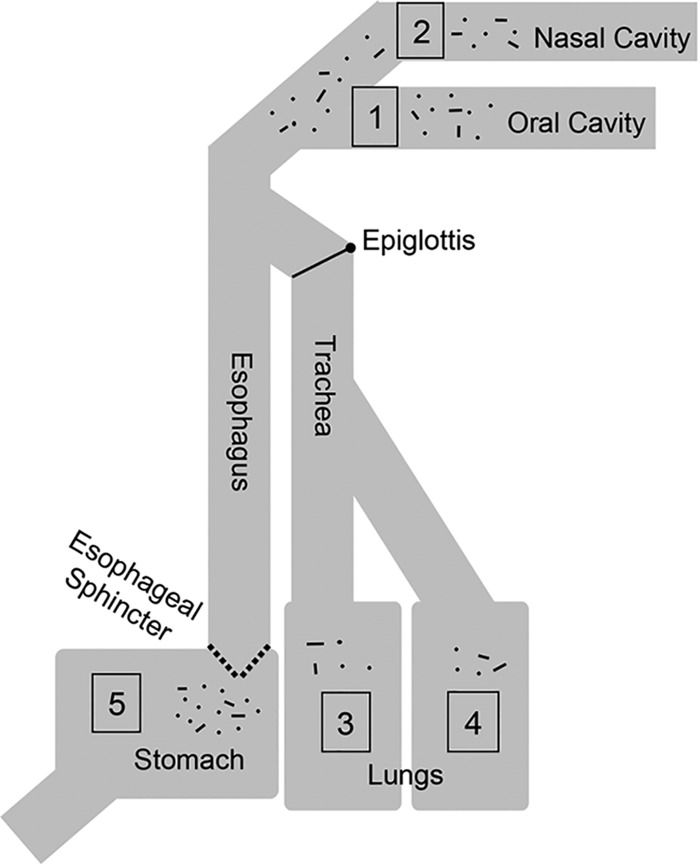
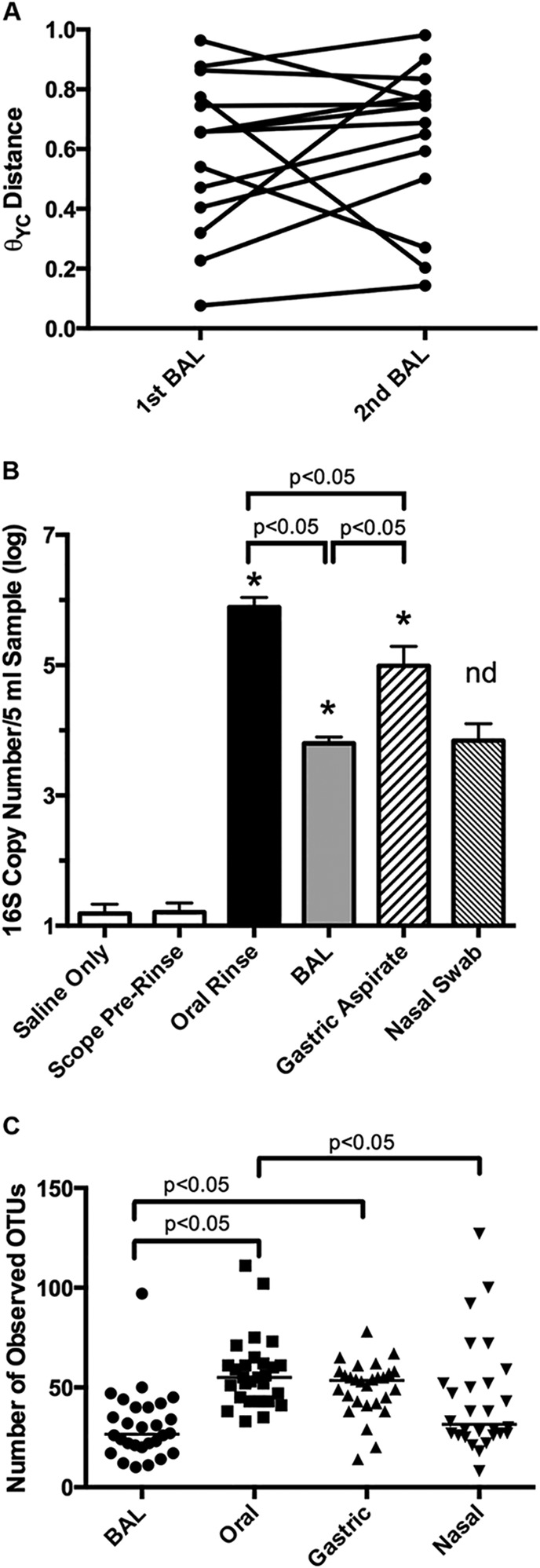
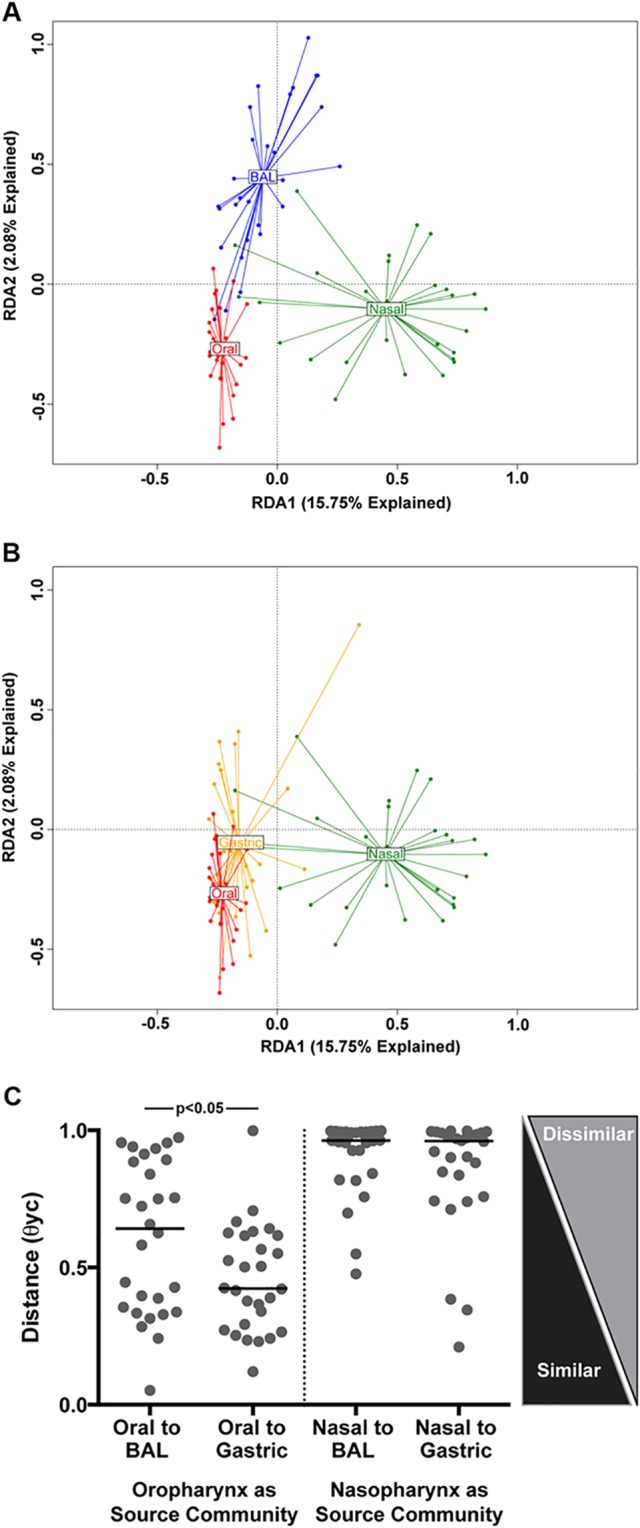
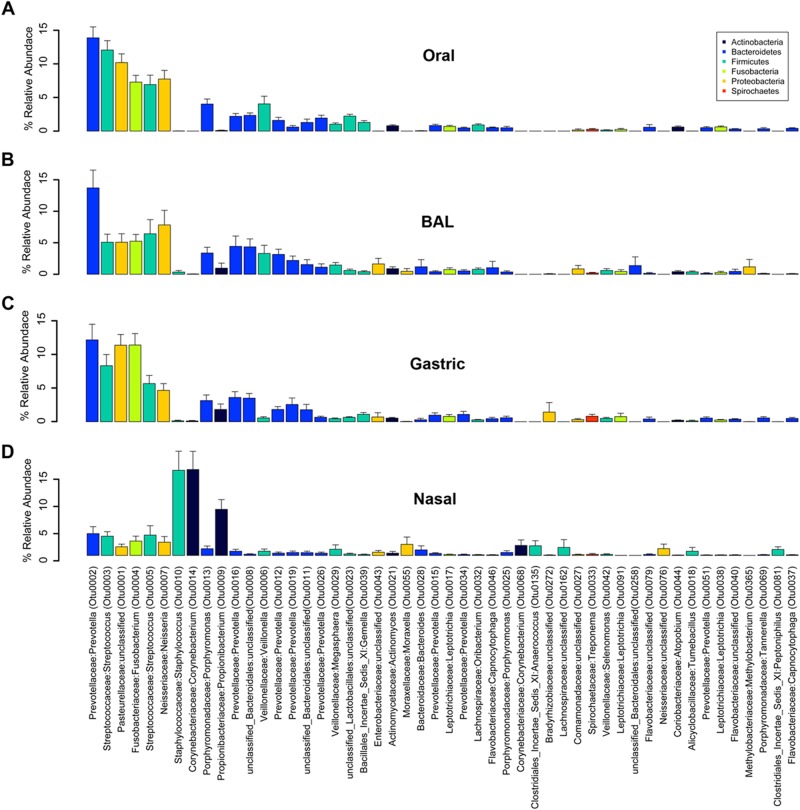
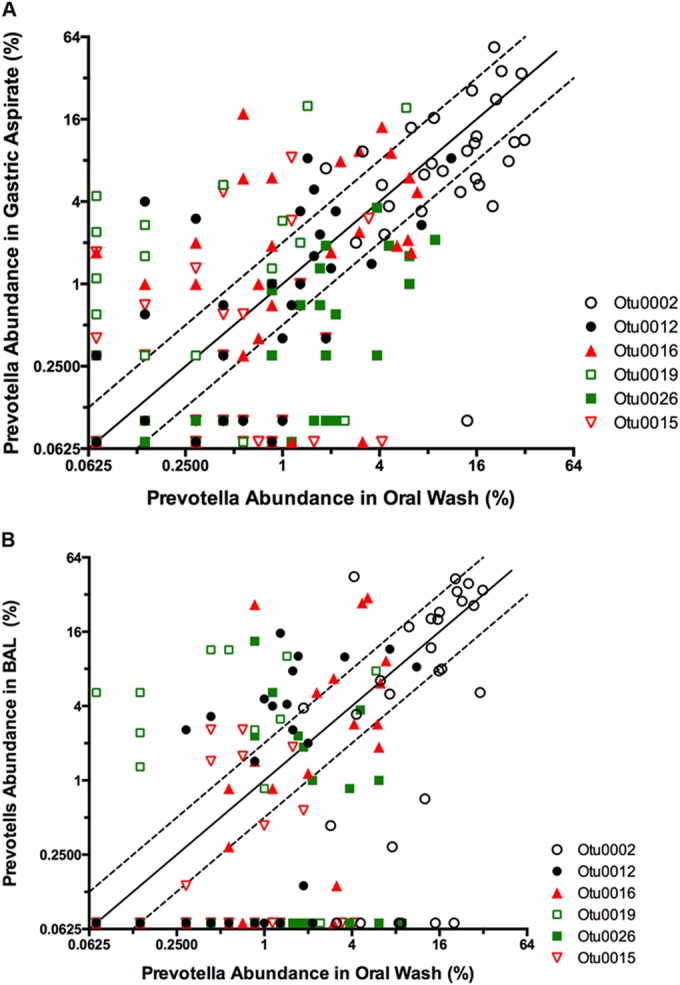
No studies have examined the relationships between bacterial communities along sites of the upper aerodigestive tract of an individual subject. Our objective was to perform an intrasubject and intersite analysis to determine the contributions of two upper mucosal sites (mouth and nose) as source communities for the bacterial microbiome of lower sites (lungs and stomach). Oral wash, bronchoalveolar lavage (BAL) fluid, nasal swab, and gastric aspirate samples were collected from 28 healthy subjects. Extensive analysis of controls and serial intrasubject BAL fluid samples demonstrated that sampling of the lungs by bronchoscopy was not confounded by oral microbiome contamination. By quantitative PCR, the oral cavity and stomach contained the highest bacterial signal levels and the nasal cavity and lungs contained much lower levels. Pyrosequencing of 16S rRNA gene amplicon libraries generated from these samples showed that the oral and gastric compartments had the greatest species richness, which was significantly greater in both than the richness measured in the lungs and nasal cavity. The bacterial communities of the lungs were significantly different from those of the mouth, nose, and stomach, while the greatest similarity was between the oral and gastric communities. However, the bacterial communities of healthy lungs shared significant membership with the mouth, but not the nose, and marked subject-subject variation was noted. In summary, microbial immigration from the oral cavity appears to be the significant source of the lung microbiome during health, but unlike the stomach, the lungs exhibit evidence of selective elimination of Prevotella bacteria derived from the upper airways. IMPORTANCE We have demonstrated that the bacterial communities of the healthy lung overlapped those found in the mouth but were found at lower concentrations, with lower membership and a different community composition. The nasal microbiome, which was distinct from the oral microbiome, appeared to contribute little to the composition of the lung microbiome in healthy subjects. Our studies of the nasal, oral, lung, and stomach microbiomes within an individual illustrate the microbiological continuity of the aerodigestive tract in healthy adults and provide culture-independent microbiological support for the concept that microaspiration is common in healthy individuals.
Overview
The claims and statistics of this paper haven’t been checked yet.
Free: it reads the open-access text and checks the first 5 claims that cite a source we can check. Create a free account to check every claim.
Integrity signals
Registry
Cites
Statistics
Figures
Verification
Claims the paper makes
The claims and statistics of this paper haven’t been checked yet.
Free: it reads the open-access text and checks the first 5 claims that cite a source we can check. Create a free account to check every claim.
Claims other papers make about this one
Each is checked against this paper’s own text: does it say what the citing paper says it does?
The source backs part of the claim, not all of it — or backs it for a different population, condition or comparison.
In the citing paper
“Culture-independent microbiota studies have confirmed that the lung microbiota largely resembles the URT microbiota when studied in healthy individuals74,75,76.”
From The microbiota of the respiratory tract: gatekeeper to respiratory health (2017) · cites this paper as [74]
Experimental — accuracy not yet measuredThe source backs part of the claim, not all of it — or backs it for a different population, condition or comparison.
In the citing paper
“The oropharynx seems to be the main source of the lung microbiota in adults74, whereas in children the source is more likely to be both the nasopharynx and oropharynx76.”
From The microbiota of the respiratory tract: gatekeeper to respiratory health (2017) · cites this paper as [74]
Experimental — accuracy not yet measuredThe source backs part of the claim, not all of it — or backs it for a different population, condition or comparison.
In the citing paper
“A specific challenge in microbiota surveys of the respiratory tract is the low density of bacterial communities that are found there, particularly in healthy individuals; densities as low as 102–103 bacteria ml−1 have been reported in bronchoalveolar lavages (BALs) of healthy individuals74,153.”
From The microbiota of the respiratory tract: gatekeeper to respiratory health (2017) · cites this paper as [74]
Experimental — accuracy not yet measuredThe source backs part of the claim, not all of it — or backs it for a different population, condition or comparison.
In the citing paper
“In healthy individuals, the microbial community richness (i.e., the total number of bacterial taxa) is lower in the LRT than that in the URT”
From Respiratory viral infection-induced microbiome alterations and secondary bacterial pneumonia. (2018) · cites this paper as [76]
Experimental — accuracy not yet measuredIn the citing paper
“The contribution of the gastric microbiota to the microbial community in the LRT through gastric–oesophageal reflux has, until now, been suggested to be negligible74.”
From The microbiota of the respiratory tract: gatekeeper to respiratory health (2017) · cites this paper as [74]
2 more claims about this paper
Create a free account to see every claim other papers make about this one.
Self-check
Percentages, sums and reported differences re-computed from the paper’s own numbers.
The self-check needs the paper’s full text.
Citations
Cites
Schloss, P. D., Westcott, S. L., Ryabin, T., Hall, J. R., Hartmann, M., Hollister, E. B., Lesniewski, R. A., Oakley, B. B., Parks, D. H., Robinson, C. J., et al. (2009) · Applied and Environmental Microbiology · doi:10.1128/aem.01541-09 · Cited by 19,549 · cited 1×
“0 (39, 40) as described previously (37, 38,”
A new method for non-parametric multivariate analysis of variance
Anderson, M. J. (2001) · Austral Ecology · doi:10.1111/j.1442-9993.2001.01070.pp.x · Cited by 13,828 · cited 4×
“The same relationships of the four sites were confirmed when tested by AMOVA or PERMANOVA (Table 1).”
MethodInfluentialStructure, function and diversity of the healthy human microbiome
The Human Microbiome Project Consortium (2012) · Nature · doi:10.1038/nature11234 · Cited by 11,726
Topographical and Temporal Diversity of the Human Skin Microbiome
Grice, E. A., Kong, H. H., Conlan, S., Deming, C. B., Davis, J., Young, A. C., Program, N. C. S., Bouffard, G. G., Blakesley, R. W., Murray, P. R., et al. (2009) · Science · doi:10.1126/science.1171700 · Cited by 2,953
Reducing the Effects of PCR Amplification and Sequencing Artifacts on 16S rRNA-Based Studies
Schloss, P. D., Gevers, D., & Westcott, S. L. (2011) · PLoS ONE · doi:10.1371/journal.pone.0027310 · Cited by 2,112 · cited 2×
“The YC distance (1 YC) between bacterial communities measures differences in community structure (44) and was selected because it weighs rare and abundant OTUs more evenly than other metrics such as Bray-Curtis or Morisita-Horn (39).”
BackgroundQuantifying the roles of immigration and chance in shaping prokaryote community structure
Sloan, W. T., Lunn, M., Woodcock, S., Head, I. M., Nee, S., & Curtis, T. P. (2006) · Environmental Microbiology · doi:10.1111/j.1462-2920.2005.00956.x · Cited by 1,887 · cited 1×
“tomized R script based on the neutral model (42) was then used to identify”
MethodDisordered Microbial Communities in Asthmatic Airways
Hilty, M., Burke, C., Pedro, H., Cardenas, P., Bush, A., Bossley, C., Davies, J., Ervine, A., Poulter, L., Pachter, L., et al. (2010) · PLoS ONE · doi:10.1371/journal.pone.0008578 · Cited by 1,824 · cited 1×
“During states of ill health, such as viral upper respiratory tract infections, allergies, or sinus infections, the liquid flow from the nasal cavity increases, and this clearly has the potential to affect the lung microbiome, consistent with studies of rhinovirus infection and asthmatics that highlighted changes in th…”
BackgroundMolecular analysis of the bacterial microbiota in the human stomach
Bik, E. M., Eckburg, P. B., Gill, S. R., Nelson, K. E., Purdom, E. A., Francois, F., Perez-Perez, G., Blaser, M. J., & Relman, D. A. (2006) · Proceedings of the National Academy of Sciences · doi:10.1073/pnas.0506655103 · Cited by 1,158
Topographical Continuity of Bacterial Populations in the Healthy Human Respiratory Tract
Charlson, E. S., Bittinger, K., Haas, A. R., Fitzgerald, A. S., Frank, I., Yadav, A., Bushman, F. D., & Collman, R. G. (2011) · American Journal of Respiratory and Critical Care Medicine · doi:10.1164/rccm.201104-0655oc · Cited by 1,144 · cited 1×
“Within an individual, the similarity between the oral and lung microbiomes varied widely, with some individuals having a lung microbiome that was almost identical to their oral microbiome, similar to a previous report (9), while in others the two sites were markedly different.”
ResultAnalysis of the lung microbiome in the “healthy” smoker and in COPD.
Erb-Downward, J. R., Thompson, D. L., Han, M. K., Freeman, C. M., McCloskey, L., Schmidt, L. A., Young, V. B., Toews, G. B., Curtis, J. L., Sundaram, B., et al. (2011) · PLoS ONE · doi:10.1371/journal.pone.0016384 · Cited by 973
Self-citation
Cited by
Items 601–700 of 838
Порушення мікробіоти дихальних шляхів у дітей з респіраторними захворюваннями (літературний огляд)
Koreniuk, O. S. (2021) · CHILD`S HEALTH · doi:10.22141/2224-0551.13.5.2018.141569 · Cited by 5
Zakharova, I. N., Berezhnaya, I. V., Klimov, L., Каsyanova, A. N., Dedikova, O. V., & Анатольевич, К. К. (2019) · Meditsinskiy sovet = Medical Council · doi:10.21518/2079-701x-2019-2-173-182 · Cited by 3
Microbiota - The Unseen Players in Adult Asthmatic Airways
Öztürk, A. B., Ranjan, R., Rani, A., Yazıcı, D., & Bavbek, S. (2021) · Turkish Thoracic Journal · doi:10.5152/turkthoracj.2020.19085 · Cited by 3
Challenges in Understanding the Lung Microbiota
Molehin, O. R., Elekofehinti, O. O., Ohunayo, A. S., & Adetuyi, O. A. (2022) · Springer eBooks · doi:10.1007/978-981-16-8957-4_18 · Cited by 3
The Microbiota in Immunity and Inflammation
Maynard, C. L. (2023) · Elsevier eBooks · doi:10.1016/b978-0-7020-8165-1.00022-8 · Cited by 3
Identification of a dynamic middle ear microbiome in healthy adultsPreprint
Lee, J., Kashefi, K., & Reguera, G. (2020) · doi:10.21203/rs.2.24429/v1 · Cited by 3
“Indeed, this is a proteobacterial group of oropharyngeal and oral 300 commensals that grows best aerobically [39] yet can disperse into the lower respiratory airways 301 and lungs via saliva aerosols [40].”
BackgroundHuang, Y. J. (2017) · Elsevier eBooks · doi:10.1016/b978-0-323-48552-4.00015-9 · Cited by 2
Siegel, N. A., Jimenez, M. T., Rocha, C. S., Rolston, M. R., Dandekar, S., Solnick, J. V., & Miller, L. A. (2024) · Scientific Reports · doi:10.1038/s41598-024-59514-5 · Cited by 3
Yan, C.-X., Sun, K., Xia Shuang, Z. H. U., Zhang, M., Liu, X., Luan, Y., Wu, X., Zhu, M., Liu, W., & Jin, L. (2024) · Journal of Functional Foods · doi:10.1016/j.jff.2024.106272 · Cited by 2
[Research and Progress on the Association of Porphyromonas gingivalis with Lung Cancer].
Yin, Y., Zhang, J., Guo, Q., & Shen, C. (2024) · PubMed Central · doi:10.3779/j.issn.1009-3419.2024.101.28 · Cited by 3
Status and outlook of pulmonary tuberculosis coinfection
Wu, Y., Wang, C., & Li, Y. (2025) · Journal of Research in Medical Sciences · doi:10.4103/jrms.jrms_446_23 · Cited by 6
“[65,66] For proper maintenance of intestinal flora, (1) probiotics can inhibit the growth of harmful pathogenic microorganisms by competing for nutrients, thus competitively inhibiting adhesion to epithelial cells, lowering intestinal pH, and secreting antimicrobial compounds, while improving…”
Li, N., Dong, Z., Zhang, S., Ma, J., & Liu, S. (2025) · Current Research in Microbial Sciences · doi:10.1016/j.crmicr.2025.100531 · Cited by 2
“The microenvironmental conditions that chiefly determine the growth of lung microorganisms include oxygen tension, temperature, the deposition of inhaled particles, and the abundance and activation state of host inflammatory cells (Dickson et al., 2015; Yi et al., 2022).”
Effect of periodontal therapy on the oral microbiome and lung function: an intervention study
Røsland, A., Amin, H., Lie, S. A., Malinovschi, A., Bunæs, D. F., & Bertelsen, R. J. (2026) · Frontiers in Cellular and Infection Microbiology · doi:10.3389/fcimb.2026.1725666 · Cited by 2
“Research has revealed that bacterial communities in healthy lungs signi fi cantly overlap with those in the oral cavity, albeit at lower concentrations (Bassis et al., 2015), suggesting a possible link between oral and pulmonary microbiota.”
Lv, Y., Xiao, Z., Kuang, L., Omindo, W. W., Zhan, X., Tang, W., Liu, X., Wang, X., Fu, L., Zhang, R., et al. (2026) · European journal of medical research · doi:10.1186/s40001-026-04408-7 · Cited by 2
“By comparing the microbiota in the saliva, nasopharyngeal swabs, and BALF of healthy individuals, researchers have identified the presence of microorganisms such as Prevotella , Veil-lonella , Rothia , Streptococcus , and Porphyromonas across the lungs, oral cavity, and nasopharynx [39, 40].”
DeClercq, V., Murphy, R. E., Zinck, N., Langille, M. G. I., & Wallace, A. (2026) · Journal of Oral Microbiology · doi:10.1080/20002297.2026.2675065 · Cited by 2
“Furthermore, there is an overlap of the lung microbiota (BALF and tumour) with bacterial communities from the oral cavity [41,52–54], suggesting that there may be a translocation of microbes from the mouth to the lungs.”
Analysis of microbial diversity in the caseous necrosis of the tuberculosis foci
Андреевна, О. Е., Огарков, О. Б., Suzdalnitsky, A. E., Хромова, П. А., Sinkov, V. V., Plotnikov, A. O., Belkova, N. L., & Николаевна, Ж. С. (2021) · Molecular Genetics Microbiology and Virology (Russian) · doi:10.17116/molgen20213903118 · Cited by 3
Sputum Bacterial Metacommunities in Distinguishing Heterogeneity in Respiratory Health and Disease
Si, J., Choi, Y., Raes, J., Ko, G., & You, H. J. (2022) · Frontiers in Microbiology · doi:10.3389/fmicb.2022.719541 · Cited by 2
“However, other studies show that Prevotella in the lung is protective because of its limited inflammatory capacity and its ability to increase pulmonary tolerance to respiratory pathogens (Bassis et al., 2015; Dickson et al., 2015).”
ResultLDMD: A database of microbes in human lung disease
Xu, L., Yang, J., Liang, W., Chen, J., Sun, Z., Zhang, Q., Liu, X., Qiao, F., & Li, J. (2023) · Frontiers in Microbiology · doi:10.3389/fmicb.2022.1085079 · Cited by 3
Microbiome therapeutics in respiratory illnesses
Yadav, M. (2023) · Elsevier eBooks · doi:10.1016/b978-0-323-99336-4.00005-7 · Cited by 3
Respiratory Delivery of Probiotics to Improve Lung Health
Byun, A. S., Vitetta, L., Chan, H., & Kwok, P. C. L. (2023) · AAPS introductions in the pharmaceutical sciences · doi:10.1007/978-3-031-47567-2_7 · Cited by 6
Al-Momani, H., Aolymat, I., & Mahmoud, S. A. H. (2024) · Medicine · doi:10.1097/md.0000000000038074 · Cited by 3
“[102] Additionally, earlier studies have high-lighted a relationship between EER and a number of respiratory tract problems, including wheezing, post-nasal drip, coughing, sore throats, tight chests, and continuous throat clearing.”
BackgroundThe interaction between respiratory allergies and infection
Green, R. J. (2015) · UpSpace Institutional Repository (University of Pretoria) · Cited by 2
The Lung-Gut-Cross Talk in Chronic Airways Diseases
Wouters, E. F. �. (2026) · Barcelona Respiratory Network · doi:10.23866/brnrev:2018-0020 · Cited by 3
ETIOLOGICAL STRUCTURE AND ECOLOGICAL SIGNIFICANCE OF OPPORTUNISTIC PATHOGENS IN BRONCHITIS
Коваленко, Н. І., Zamaziy, T. M., Novikova, I. V., & Тараненко, Г. П. (2020) · World of Medicine and Biology · doi:10.26724/2079-8334-2020-4-74-68-72 · Cited by 2
PECULIARITIES OF DENTAL MICROBIAL COMPOSITION IN PATIENTS WITH A CONFIRMED SARS-COV-2 DIAGNOSIS
Nasibullina, A., & Valishin, D. A. (2022) · The actual problems in dentistry · doi:10.18481/2077-7566-21-17-4-56-61 · Cited by 2
Microbiome in Chronic Lung Diseases
Mammen, M. J., & Sethi, S. (2017) · Barcelona Respiratory Network · doi:10.23866/brnrev:2017-m0042 · Cited by 5
The early-life microbiome: the key to respiratory health?
de Koff, E. M., Pattaroni, C., Marsland, B. J., & Bogaert, D. (2019) · European Respiratory Society eBooks · doi:10.1183/2312508x.10015818 · Cited by 3
Gut-lung cross talk in COVID-19 pathology and fatality rate
El-Ansary, A. K., Balto, H. A. G., & Al‐Hadlaq, S. M. (2022) · Elsevier eBooks · doi:10.1016/b978-0-323-90769-9.00037-2 · Cited by 2
The Microbiome in Acute Lung Injury and ARDS
Kitsios, G. D., Franz, C. A., & McVerry, B. J. (2022) · Respiratory medicine · doi:10.1007/978-3-030-87104-8_11 · Cited by 1
Correlation between Microbiota and Oncogenesis: Research Progress
宋, 晓. (2020) · Bioprocess · doi:10.12677/bp.2020.103003 · Cited by 2
Features of the nasal microbiota in patients with allergic rhinitis: A review
Saichenko, I. A., Alidzhanova, F. P., Zyuzina, D. V., Diukova, M. A., Bayburdyan, D. G., & Raevskii, K. P. (2024) · Consilium Medicum · doi:10.26442/20751753.2024.9.202675 · Cited by 2
The Respiratory Microbiome: Beyond the Culture
Monsó, E. (2017) · Archivos de Bronconeumología · doi:10.1016/j.arbr.2016.11.038 · Cited by 2
Inhalation therapy in children: new opportunities
Эдуардовна, Л. Э., & Zaytseva, O. V. (2019) · PULMONOLOGIYA · doi:10.18093/0869-0189-2019-29-4-499-507 · Cited by 2
Microbiota Targeted Via Nanotechnology for Lung Cancer Therapy: Challenges and Future Perspectives
Yadav, M., & Verma, A. K. (2022) · Springer eBooks · doi:10.1007/978-981-16-8957-4_20 · Cited by 3
Saliva As A Non-Invasive Specimen For COPD AssessmentPreprint
Dias, S., Valente, C., Andrade, L., Marques, A. S. P. D. D., & Sousa, A. (2021) · Research Square · doi:10.21203/rs.3.rs-940216/v1 · Cited by 2
The Upper Airway Microbiome and Lung Injury in COVID-19
McGinniss, J. E., & Collman, R. G. (2021) · American Journal of Respiratory and Critical Care Medicine · doi:10.1164/rccm.202109-2226ed · Cited by 2
Chemical Composition of Refluxate
Brownlee, I. A. (2018) · Springer eBooks · doi:10.1007/978-3-319-90525-9_3 · Cited by 1
THE ROLE OF ORAL MICROBIOCENOSIS DISORDERS IN THE FORMATION OF SOMATIC AND DENTAL PATHOLOGY
Gurina, A., Нагаева, М., Zaitseva, M., Lebedev, A., & Kuratova, L. (2022) · The actual problems in dentistry · doi:10.18481/2077-7566-2022-18-2-15-22 · Cited by 1
Microflora of the lungs in health and disease, the impact of vaccination
Zolotov, M. O., Zhestkov, A. V., Lyamin, A. V., & Дмитриевич, Ф. В. (2022) · PULMONOLOGIYA · doi:10.18093/0869-0189-2022-4144 · Cited by 1
Quispe-Medina, K. M., Pacheco-Aranibar, J., Ruelas, A. S. M., Gamez-Bernabé, C., Zapana-Begazo, R., Aliaga, I. P., Villanueva-Salas, J. A., & Bernabé-Ortiz, J. C. (2023) · Current Issues in Molecular Biology · doi:10.3390/cimb45120627 · Cited by 1
“…microbiota resembles the oropharyngeal microbiota, which makes it possible to affirm that this is the main source of germs in the lower airway due to the frequent microaspirations documented in healthy individuals and the fact that they are more frequent in various respiratory diseases [3,4].”
BackgroundMethodMulti-omics in Study of Lung Microbiome
Roy, D., Roy, P., & Saha, S. (2024) · Springer eBooks · doi:10.1007/978-981-97-1844-3_12 · Cited by 2
Exploring the human microbiome: Its role and impact on overall health and disease prevention
Alotaibi, F. M., Almazam, A. A., Alenezi, S. Z., Alanazi, M. H., Lamfon, N. A., Albalawi, A. E. A., Al-Nasser, N. S., & Altheyab, S. A. (2018) · International Journal of Health Sciences · doi:10.53730/ijhs.v2ns1.15085 · Cited by 1
“However, recent studies employing culture-independent methods have revealed that both the upper and lower respiratory tracts are inhabited by a low biomass of diverse microbes (99, 100).”
ResultBai, X., Rayner, S., Skuggen, L. E., Engseth, K. K., Bjørnstad, P. M., Dalland, M., Gilfillan, G. D., Bjørås, M., & Matussek, A. (2025) · Scientific Reports · doi:10.1038/s41598-024-84682-9 · Cited by 1
“This aligns with findings from studies comparing the oral and nasal bacterial microbiota from same participants 16,17 , although the saliva and nasal samples were from different participants in this study.”
Inui, T., Tsuchiya, M., Watanabe, T., Sada, M., Mouri, A., IWANARI, S., & Kamimura, M. (2025) · Internal Medicine · doi:10.2169/internalmedicine.4825-24 · Cited by 1
“Oral and respiratory tract bacterial flora are similar, and the mechanism underlying bacterial migration from the oral cavity to the respiratory tract is thought to involve aspiration or aerosol inhalation (13).”
The Lung Microbiome and Its Impact on Obstructive Sleep Apnea: A Diagnostic Frontier
Karkala, A., Kotoulas, S., Tzinas, A., Massa, E., Mouloudi, E. K., Gkakou, F., & Pataka, A. (2025) · Diagnostics · doi:10.3390/diagnostics15111431 · Cited by 1
“However, bacterial density in the LRT is orders of magnitude lower than in the URT [3] with community composition closely mirroring that of the oropharynx and representing a significant biomass gradient, where transient perturbations can have extended effects on host inflammatory response [2].”
InfluentialGenomic diversity in Porphyromonas: evidence of Porphyromonas catoniae commensality in lungs
Velo‐Suárez, L., Moalic, Y., Guilloux, C.-A., Ame, J., Lamoureux, C., Gouriou, S., Berre, R. L., Beauruelle, C., & Héry-Arnaud, G. (2025) · Microbial Genomics · doi:10.1099/mgen.0.001411 · Cited by 1
“The lung microbiota has a complex ecology rich in anaerobes, offering insights into disease progression [1–15].”
Lung Microbiota in Acute Respiratory Failure and Acute Respiratory Distress Syndrome
Cutuli, S. L., Tanzarella, E. S., Lombardi, G., Palladini, A., Franchini, E. O., Posteraro, B., Sanguinetti, M., PASCALE, G. D., & Antonelli, M. M. (2025) · Current anesthesiology reports · doi:10.1007/s40140-025-00700-0 · Cited by 1
Nasopharyngeal and oral microbiota profiling in SARS-CoV-2 infected pregnant women
Giovannini, N., Limena, A., Ercolino, C., Renteria, S. U., Strati, F., Giuffrè, M. R., Maragno, P., Carbone, I. F., Facciotti, F., Ceriotti, F., et al. (2025) · Scientific Reports · doi:10.1038/s41598-025-19344-5 · Cited by 1
“Only in 37 of the 43 participants was it possible to perform both nasopharyngeal and oral microbiota analysis (18 non-infected, 11 asymptomatic, and 8 symptomatic SARS-CoV-2-infected women).”
Shu, P., Wang, X., Zhu, J., & Wang, Q. (2026) · BMC Pulmonary Medicine · doi:10.1186/s12890-026-04127-z · Cited by 1
“The abundance of microbiota species within the respiratory tract varies, primarily originating from the oral cavity/oropharynx, with diet influencing the composition of dietary live microorganisms [15, 16].”
Fan, W., Tan, T., Yang, C., Cao, Y., Jin, C., Liu, X., Shang, K., Wang, J., Xu, J., & Li, Y. (2026) · Respiratory Research · doi:10.1186/s12931-026-03551-3 · Cited by 2
“Growing evidence implicates airway microbial dysbiosis in the progression of ARDS [39].”
Dong, H., Wang, X., Ma, T., Shan, T., He, W., Zhang, G., Xia, Z., Yang, W., Chen, L., Niu, P., et al. (2026) · Ecotoxicology and Environmental Safety · doi:10.1016/j.ecoenv.2026.119931 · Cited by 2
Harnessing the lung microbiome for precision management of fibrotic lung disease
Leroy, S., Roméo, B., Belaïd, A., Brest, P., Marquette, C., Vouret‐Craviari, V., Hofman, V., Hofman, P. M., & Mograbi, B. (2026) · Trends in Molecular Medicine · doi:10.1016/j.molmed.2026.02.002 · Cited by 3
Gschwendtner, S., Kovacevic, D., Gaede, K. I., Herzmann, C., Overmann, J., Schloter, M., & Krauss‐Etschmann, S. (2026) · Respiratory Research · doi:10.1186/s12931-026-03644-z · Cited by 2
“BAL-NS hubs included ASV assigned to Prevotella spp., and Fusobacterium , genera common in healthy lower airways and thought to originate from microaspiration of oral communities [32].”
InfluentialSteinberg, R., Pust, M., Arias-Rojas, A., Pishchany, G., Ramsey, K. A., Kieninger, E., Moeller, A., Casaulta, C., Hilty, M., Latzin, P., et al. (2026) · Cell Host & Microbe · doi:10.1016/j.chom.2026.03.019 · Cited by 1
Ali, H., Xie, B., Yang, J., & Nadeem, U. (2026) · Cancers · doi:10.3390/cancers18121948 · Cited by 1
“Although anatomically distinct, the gut and lung are both mucosal organs that interface with the external environment and share a common embryologic origin [165,166].”
The Impact of Plant-Derived Foods and Medicines on the Lung–Gut Axis and Microbiota Cross-Talk
Vivatvakin, S., & Werawatganon, D. (2026) · Molecules · doi:10.3390/molecules31152699 · Cited by 1
Yuan, H., LI, B. C., Shen, C., Xie, L., & Hou, F. (2026) · Microorganisms · doi:10.3390/microorganisms14081758 · Cited by 1
“Anatomical continuity makes the lower-airway microbiota partly resemble the oral community, while oxygen tension, nutrient availability, pH, airway architecture, and immune tone impose local selection [16,17].”
Stoner, S. N., Larson, E. D., Fulte, S., Shaw, S. C., Fish, E. R., Janoff, E. N., Mack, M., & Clark, S. E. (2026) · Proceedings of the National Academy of Sciences · doi:10.1073/pnas.2623525123 · Cited by 2
Gerritsen, J., & Younes, J. A. (2017) · Wageningen Academic Publishers eBooks · doi:10.3920/978-90-8686-839-1_13 · Cited by 1
Respiratory and Gut Microbiota in Allergy and Asthma
Turkalj, M. (2019) · The Central European Journal of Paediatrics · doi:10.5457/p2005-114.228 · Cited by 1
“It is known that the respiratory mucosa in healthy individuals is inhabited by niche-specific bacterial communities (1, 33).”
BackgroundAnalysis of bronchoalveolar lavage fluid metatranscriptomes among patients with COVID-19 disease
Jochum, M. D., Lee, M., Curry, K. D., Zaksas, V., Vitalis, E. A., Treangen, T. J., Aagaard, K. M., & Ternus, K. L. (2022) · Scientific Reports · doi:10.1038/s41598-022-25463-0 · Cited by 2
Lv, G., Wu, X., Wang, Z., Wu, K., Ang, G., Cui, S., Shi, Y., Wang, Y., & Liu, D. (2022) · Frontiers in Oncology · doi:10.3389/fonc.2022.1072474 · Cited by 1
“The microbiota of the upper respiratory tract and the lung are similar in humans (29, 30).”
BackgroundFlahaut, M., Leprohon, P., Pham, N.-P., Gingras, H., Bourbeau, J., Papadopoulou, B., Maltais, F., & Ouellette, M. (2023) · Scientific Reports · doi:10.1038/s41598-023-43821-4 · Cited by 2
Yinhuang buccal tablet alters airway microbiota composition and metabolite profile in healthy humans
Li, Z., Liu, T., Wang, S., Chen, T., Wang, X., Xu, X., & Liu, Q. (2024) · Journal of Ethnopharmacology · doi:10.1016/j.jep.2024.118043 · Cited by 1
Bényei, É. B., Nazeer, R. R., Askenasy, I., Mancini, L., Ho, P.-M., Sivarajan, G. A. C., Swain, J. E. V., & Welch, M. (2024) · Advances in microbial physiology/Advances in Microbial Physiology · doi:10.1016/bs.ampbs.2024.04.002 · Cited by 2
Duan, S., Shao, M., Zhang, C., Zhao, J., Zhu, F., Luo, N., Lei, L., Zhong, T., & Hu, T. (2024) · BMC Microbiology · doi:10.1186/s12866-024-03594-w · Cited by 1
Microbiome in Defence Against Pathogens
Ramanathan, J. (2024) · Springer eBooks · doi:10.1007/978-3-031-70088-0_16 · Cited by 3
Li, Y., Zou, C., Jiang, F., Wang, F., Zhang, H. B., Wang, H., & Wang, W. (2025) · International Archives of Allergy and Immunology · doi:10.1159/000546208 · Cited by 1
The microbiome in chronic inflammatory airway disease: A threatened species
Green, R. J., Niekerk, A. V., Jeevarathnum, A. C., Feldman, C. H., & Richards, O. B. O. T. S. A. A. G. A. (2016) · South African Medical Journal · doi:10.7196/samj.2016.v106i8.11159 · Cited by 1
Role of Microbiome in Lung Injury
Viscardi, R. M., & Ambalavanan, N. (2019) · Elsevier eBooks · doi:10.1016/b978-0-323-54605-8.00005-2 · Cited by 2
Foesel, B. U., Pfeiffer, S., Raj, A. C. D., Krauss‐Etschmann, S., & Schloter, M. (2019) · European Respiratory Society eBooks · doi:10.1183/2312508x.10015718 · Cited by 2
Lee, E., & Hong, S. (2021) · Current Opinion in Allergy and Clinical Immunology · doi:10.1097/aci.0000000000000738 · Cited by 1
“The airway microbiome in healthy subjects contains higher levels of Bacteroidetes phylum [11], Prevotella species [16], Firmicutes phylum, Proteobacteria phylum, and Actinobacteria phylum [17].”
BackgroundThe Role of the Microbiome in Asthma Inception and Phenotype
White, S. R., & Huang, Y. J. (2022) · Respiratory medicine · doi:10.1007/978-3-030-87104-8_5 · Cited by 1
Immune Suppression in Lung Disease: Lung Transplantation and HIV
McGinniss, J. E., Bernasconi, E., Twigg, H. L., & Morris, A. (2022) · Respiratory medicine · doi:10.1007/978-3-030-87104-8_10 · Cited by 1
Microbiome in Upper Respiratory Tract Infections
Mittal, P., Mittal, M., Rawat, U., & Ambika (2022) · Springer eBooks · doi:10.1007/978-981-16-8957-4_17 · Cited by 1
Microbiome in Pulmonary Tuberculosis
Rakshit, A., Verma, A., Verma, S., Bhatti, G. K., Khurana, A., Bhatti, J. S., Jawalekar, S. S., & Navik, U. (2022) · Springer eBooks · doi:10.1007/978-981-16-8957-4_11 · Cited by 1
Lung Microbiota and Its Impact on the Mucosal Immune Phenotype
Wu, B. G., & Segal, L. N. (2018) · ASM Press eBooks · doi:10.1128/9781555819705.ch7 · Cited by 3
Bartley, J. (2023) · Springer eBooks · doi:10.1007/978-3-031-12386-3_38 · Cited by 1
Sayıner, A., & Çetinkaya, P. D. (2023) · Springer eBooks · doi:10.1007/978-3-031-22483-6_37-1 · Cited by 1
Marinò, P. (2017) · ORCA Online Research @Cardiff (Cardiff University) · Cited by 1
Fungi In Asthma - Investigation Of The Lung Mycobiome And Characterisation Of Allergens
Rick, E. (2019) · Figshare · Cited by 1
Host Factors in Defense against Bacterial and Fungal Pneumonia
Bettina, A. M. (2016) · doi:10.18130/v3pc7z · Cited by 1
Sun, N., Zhang, X., Hou, Y., & Zhong, T. (2022) · bioRxiv (Cold Spring Harbor Laboratory) · doi:10.1101/2022.10.25.513807 · Cited by 1
“Up to now, accumulating evidence shows that oral cavity is the site of the primary source community of lung microbiota (acquired via micro aspiration and inhalation) (11, 12).”
BackgroundKanungo, S., Bonilla‐Rosso, G., Sarton-Lohéac, G., Küffer, M., Hilty, M., Geiser, T., Engel, P., & Das, S. (2023) · bioRxiv (Cold Spring Harbor Laboratory) · doi:10.1101/2023.12.22.572891 · Cited by 3
Respiratory and Gut Microbiota Correlate with Lung Function Recovery after Severe COVID-19Preprint
Stadler, S. V., Stickley, L., Bernasconi, E., Guney, S., Trompette, A., Piquilloud, L., Funke-Chambour, M., von Garnier, C., & Ubags, N. D. J. (2026) · medRxiv · doi:10.64898/2026.02.09.26345630 · Cited by 1
Bernard, L. (2020) · theses.fr (ABES) · doi:10.70675/589a776dz18d9z4813z9d6fzd73632aa4df7 · Cited by 1
Title: Homeostasis and its Disruption in the Lung Microbiome
Dickson, R. P., Erb‐Downward, J. R., & Huffnagle, G. B. (2015)
Self-citationEarly-life development of the respiratory microbiome : -cystic fibrosis and healthy infants-
Prevaes, S. (2016) · Utrecht University Repository (Utrecht University)
Quantitative Inferences from the Lung Microbiome
Tipton, L. (2017) · D-Scholarship@Pitt (University of Pittsburgh)
Lung Microbiota in Tuberculosis. There are No Small Roles, Only Small Actors
Cervantes, J. (2017) · Mycobacterial Diseases · doi:10.4172/2161-1068.1000244
“Identification of the composition of the lung microbiome has shown that it overlaps with that of the oropharyngeal cavity [2].”
BackgroundThe distal airway microbiome after lung transplantation: A driver of immune regulation?
Mitchell, A. B., & Glanville, A. R. (2017) · The Journal of Heart and Lung Transplantation · doi:10.1016/j.healun.2017.11.017
Breathe (in the air) : pulmonary immunology in multiple sclerosis
Hagemann-Jensen, M. (2018) · Figshare
Das Mikrobiom des infizierten Magens und Duodenums: Helicobacter pylori und andere Bakterien
Schulz, C., Macke, L., Frost, F., Suerbaum, S., Malfertheiner, P., & Mayerle, J. V. (2018) · Die Gastroenterologie · doi:10.1007/s11377-018-0233-1
“Eine jüngere Arbeit zeigt überlappende bakterielle Profile in bronchoalveolären Lavagen, Abstrichen ausMund- undNasenhöhle undAspiraten desMagens, was einen dominierenden Einfluss der transienten Flora auf die Zusammensetzung des gastralenMikrobioms suggeriert [5].”
BackgroundThe Human Respiratory Microbiome: The End of the Beginning?
Mitchell, A. B., & Glanville, A. R. (2018) · Springer eBooks · doi:10.1007/978-3-319-90933-2_8
Agustí, A. G. N., Monsó, E., & Dorca, J. (2018) · Barcelona Respiratory Network · doi:10.23866/brnrev:2018-0002
Use of Bronchoscopy and Bronchoalveolar Lavage in the Evaluation of Chronic Pulmonary Aspiration
Das, S. (2018) · Springer eBooks · doi:10.1007/978-3-319-97025-7_8
The lung microbiome in obstructive airways disease: potential pathogenetic roles
Chung, K. F., Huffnagle, G. B., & Huang, Y. J. (2019) · European Respiratory Society eBooks · doi:10.1183/2312508x.10016118 · Cited by 1
Self-citationCompromised immunity and the microbiome: transplantation, cancer and HIV
Bernasconi, E., Aubert, J., Koutsokera, A., Nicod, L. P., & Twigg, H. L. (2019) · European Respiratory Society eBooks · doi:10.1183/2312508x.10031818
Metadata
- Authors
- Bassis, C. M., Erb-Downward, J. R., Dickson, R. P., Freeman, C. M., Schmidt, T. M., Young, V. B., Beck, J. M., Curtis, J. L., & Huffnagle, G. B.
- Affiliations
- University of Michigan (US)
- Division of Pulmonary and Critical Care Medicine, Department of Internal Medicine, University of Michigan Medical School, Ann Arbor, Michigan, USA
- VA Eastern Colorado Health Care System (US)
- Corresponding author
- Huffnagle, Gary B.
- ORCID
- Venue
- mBio
- Publisher
- American Society for Microbiology
- Published
- 2015-05
- Volume
- 6
- Issue
- 2
- Pages
- e00037-e00037
- ISSN
- 2150-7511 (ISSN-L)
- 2161-2129
- PMC
- PMC4358017
- OpenAlex
- W2166358290
- Cited by
- 839
- References
- 46
- Citations by year
- 2026: 51 · 2025: 70 · 2024: 83 · 2023: 74 · 2022: 106 · 2021: 89 · 2020: 84 · 2019: 63 · 2018: 80 · 2017: 71 · 2016: 50 · 2015: 18
- FWCI
- 98.72
- Type
- journal article
- Language
- en
- Open access
- gold
- doi.org
- Licence
- cc-by-nc-sa
- creativecommons.org/licenses/by-nc-sa/3.0/ (vor)
- journals.asm.org/non-commercial-tdm-license (tdm)
- Locations
- mBio (publishedVersion, cc-by-nc-sa)
- PubMed Central (publishedVersion, cc-by-nc-sa)
- PubMed (publishedVersion)
- DOAJ (DOAJ: Directory of Open Access Journals) (submittedVersion, cc-by-sa)
- Funders
- National Heart, Lung, and Blood Institute (U01HL098961, L30 HL120241, T32HL00774921, R01HL114447, T32HL007749)
- National Institute of Diabetes and Digestive and Kidney Diseases (P30DK034933)
- Topics
- Health Sciences › Dentistry › Periodontics › Oral microbiology and periodontitis research
- Life Sciences › Biochemistry, Genetics and Molecular Biology › Molecular Biology › Gut microbiota and health
- Physical Sciences › Environmental Science › Ecology › Microbial Community Ecology and Physiology
- Keywords
- lung microbiome, gastric microbiota, oral microbiota, nasal microbiota, upper respiratory tract, aerodigestive tract, microaspiration, Prevotella, bronchoalveolar lavage
- MeSH terms
- Bacteria, DNA, Bacterial, DNA, Ribosomal, Humans, Lung, Molecular Sequence Data, Mouth, Nasal Cavity, RNA, Ribosomal, 16S, Stomach, Sequence Analysis, DNA, Real-Time Polymerase Chain Reaction, Microbiota, Healthy Volunteers
About these checks
Registry, retraction, Cites and statistics results are computed, not judged, with one exception: a printed reference that no index lists is read once by a model before it counts as a citation error. Claims are extracted by a model and kept only when their quote appears verbatim in the text; each cited source is then checked, with a model’s help, for whether it says what the claim relies on. Those verdicts can be wrong — read the claim’s quote and the cited source before relying on one.
Statistics and arithmetic are recomputed, not judged.
Confidence bands are shown only for fields calibrated on our annotated test set. None is calibrated yet, so no band is shown.
What counts as a claim ›How we measure confidence ›How we check this ›
Are you an author, or do you see a problem with this page? Request a review
Data sources
Bibliographic data: Semantic Scholar, OpenAlex, Crossref.
Contains information from the Semantic Scholar Academic Graph Datasets, made available under the ODC Attribution License (ODC-BY 1.0).
Semantic Scholar’s data is described in: Kinney, R., et al. (2023). The Semantic Scholar Open Data Platform. arXiv:2301.10140.
