

Analysis of the Upper Respiratory Tract Microbiotas as the Source of the Lung and Gastric Microbiotas in Healthy Individuals
Open accessThe DOI matches its Crossref record; 45 of the 46 references it cites were found in a registry or an index.
Abstract
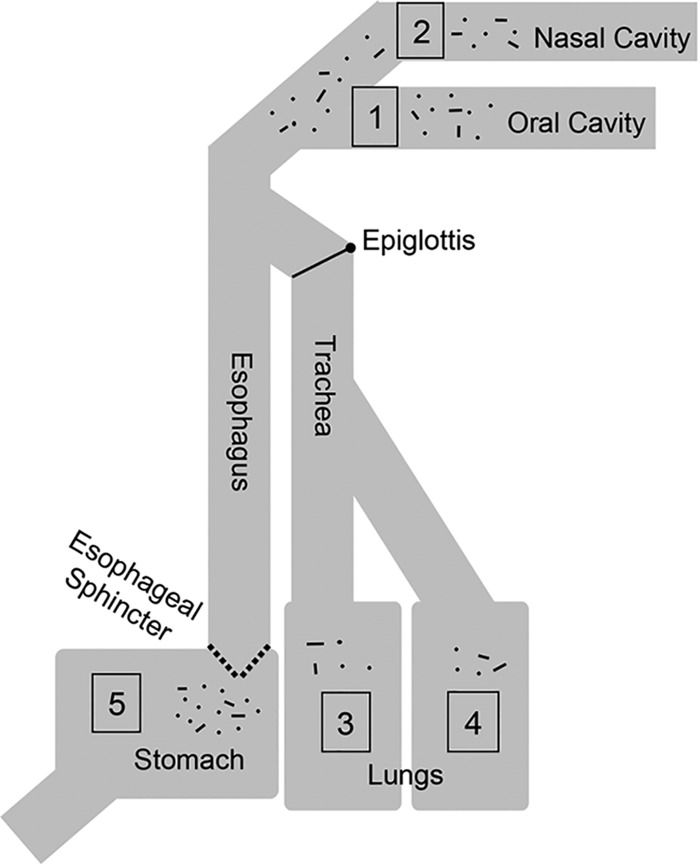
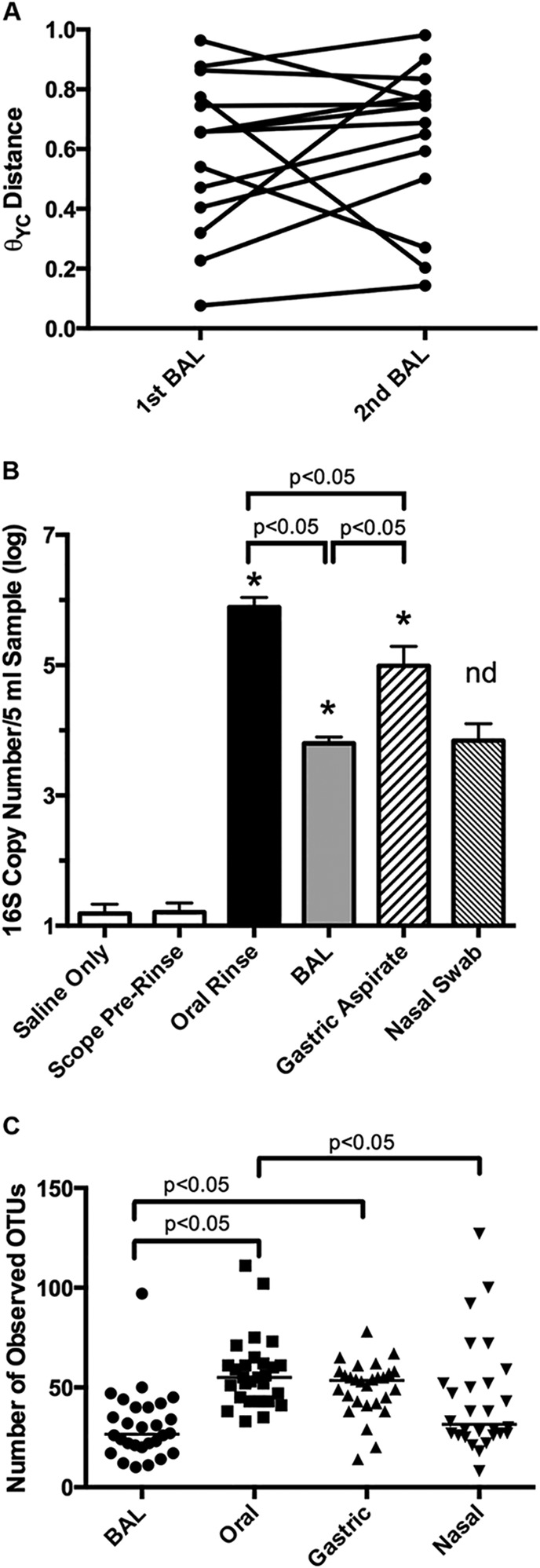
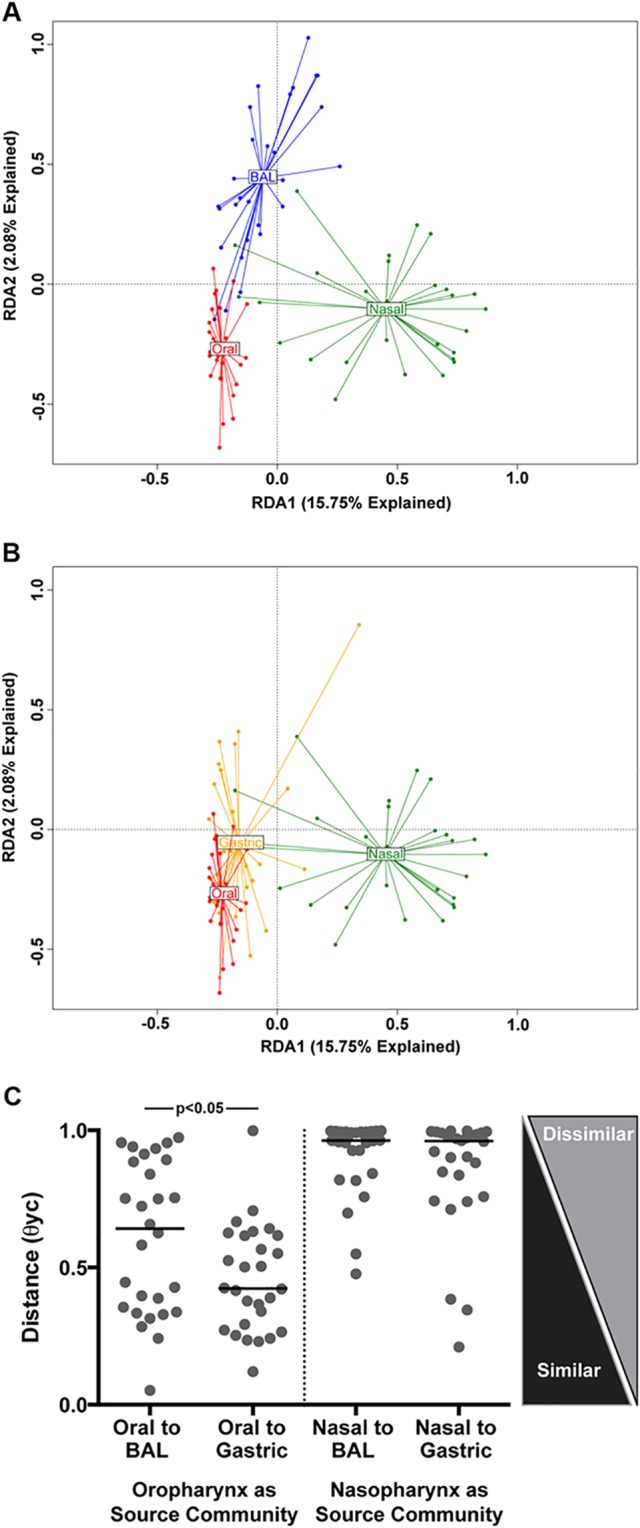
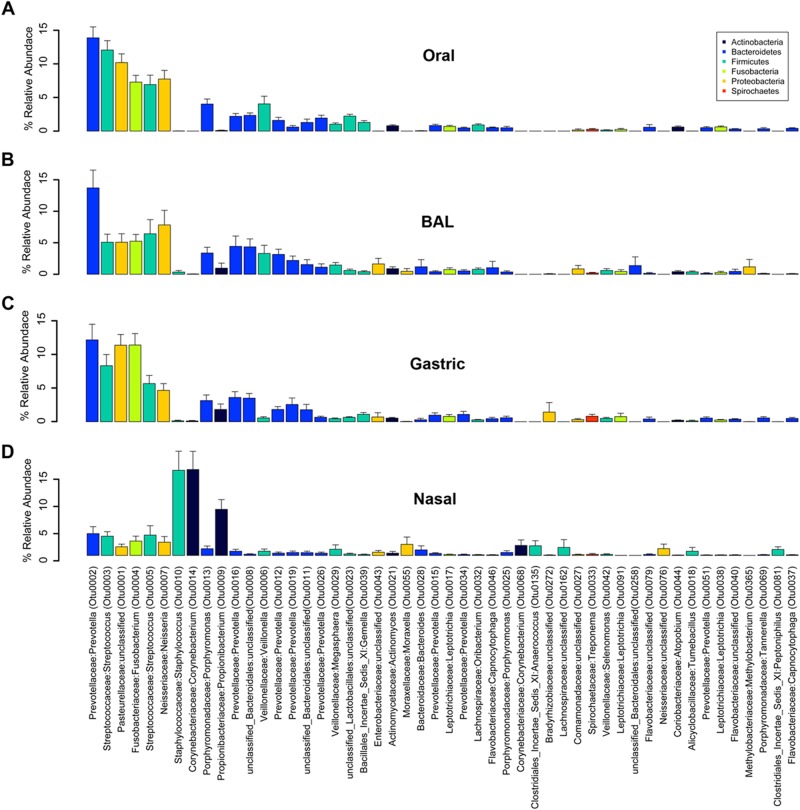
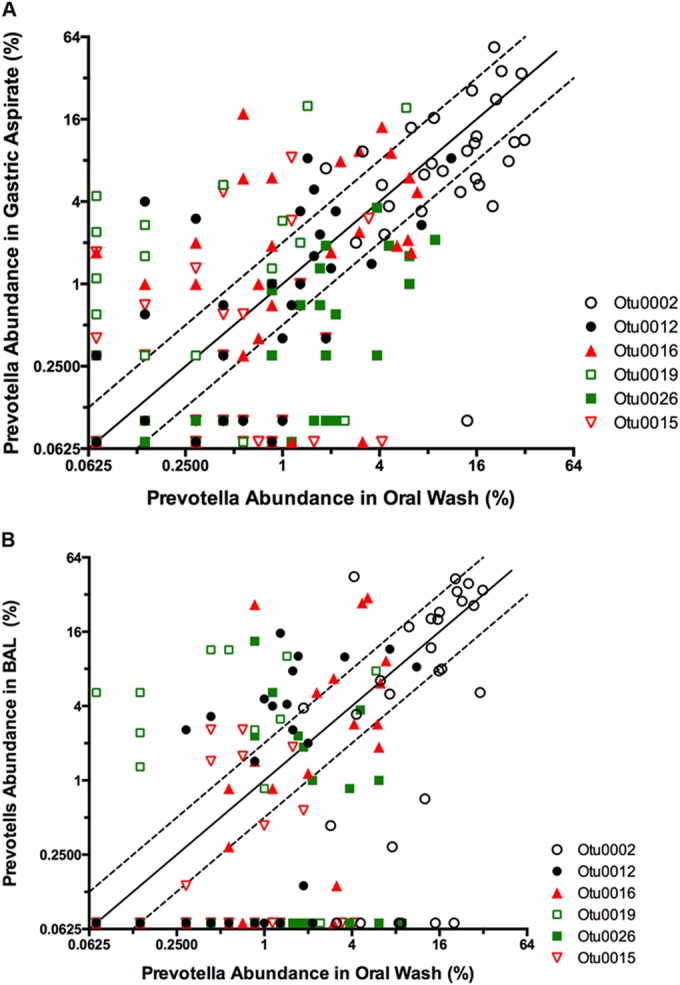
No studies have examined the relationships between bacterial communities along sites of the upper aerodigestive tract of an individual subject. Our objective was to perform an intrasubject and intersite analysis to determine the contributions of two upper mucosal sites (mouth and nose) as source communities for the bacterial microbiome of lower sites (lungs and stomach). Oral wash, bronchoalveolar lavage (BAL) fluid, nasal swab, and gastric aspirate samples were collected from 28 healthy subjects. Extensive analysis of controls and serial intrasubject BAL fluid samples demonstrated that sampling of the lungs by bronchoscopy was not confounded by oral microbiome contamination. By quantitative PCR, the oral cavity and stomach contained the highest bacterial signal levels and the nasal cavity and lungs contained much lower levels. Pyrosequencing of 16S rRNA gene amplicon libraries generated from these samples showed that the oral and gastric compartments had the greatest species richness, which was significantly greater in both than the richness measured in the lungs and nasal cavity. The bacterial communities of the lungs were significantly different from those of the mouth, nose, and stomach, while the greatest similarity was between the oral and gastric communities. However, the bacterial communities of healthy lungs shared significant membership with the mouth, but not the nose, and marked subject-subject variation was noted. In summary, microbial immigration from the oral cavity appears to be the significant source of the lung microbiome during health, but unlike the stomach, the lungs exhibit evidence of selective elimination of Prevotella bacteria derived from the upper airways. IMPORTANCE We have demonstrated that the bacterial communities of the healthy lung overlapped those found in the mouth but were found at lower concentrations, with lower membership and a different community composition. The nasal microbiome, which was distinct from the oral microbiome, appeared to contribute little to the composition of the lung microbiome in healthy subjects. Our studies of the nasal, oral, lung, and stomach microbiomes within an individual illustrate the microbiological continuity of the aerodigestive tract in healthy adults and provide culture-independent microbiological support for the concept that microaspiration is common in healthy individuals.
Overview
The claims and statistics of this paper haven’t been checked yet.
Free: it reads the open-access text and checks the first 5 claims that cite a source we can check. Create a free account to check every claim.
Integrity signals
Registry
Cites
Statistics
Figures
Verification
Claims the paper makes
The claims and statistics of this paper haven’t been checked yet.
Free: it reads the open-access text and checks the first 5 claims that cite a source we can check. Create a free account to check every claim.
Claims other papers make about this one
Each is checked against this paper’s own text: does it say what the citing paper says it does?
The source backs part of the claim, not all of it — or backs it for a different population, condition or comparison.
In the citing paper
“Culture-independent microbiota studies have confirmed that the lung microbiota largely resembles the URT microbiota when studied in healthy individuals74,75,76.”
From The microbiota of the respiratory tract: gatekeeper to respiratory health (2017) · cites this paper as [74]
Experimental — accuracy not yet measuredThe source backs part of the claim, not all of it — or backs it for a different population, condition or comparison.
In the citing paper
“The oropharynx seems to be the main source of the lung microbiota in adults74, whereas in children the source is more likely to be both the nasopharynx and oropharynx76.”
From The microbiota of the respiratory tract: gatekeeper to respiratory health (2017) · cites this paper as [74]
Experimental — accuracy not yet measuredThe source backs part of the claim, not all of it — or backs it for a different population, condition or comparison.
In the citing paper
“A specific challenge in microbiota surveys of the respiratory tract is the low density of bacterial communities that are found there, particularly in healthy individuals; densities as low as 102–103 bacteria ml−1 have been reported in bronchoalveolar lavages (BALs) of healthy individuals74,153.”
From The microbiota of the respiratory tract: gatekeeper to respiratory health (2017) · cites this paper as [74]
Experimental — accuracy not yet measuredThe source backs part of the claim, not all of it — or backs it for a different population, condition or comparison.
In the citing paper
“In healthy individuals, the microbial community richness (i.e., the total number of bacterial taxa) is lower in the LRT than that in the URT”
From Respiratory viral infection-induced microbiome alterations and secondary bacterial pneumonia. (2018) · cites this paper as [76]
Experimental — accuracy not yet measuredIn the citing paper
“The contribution of the gastric microbiota to the microbial community in the LRT through gastric–oesophageal reflux has, until now, been suggested to be negligible74.”
From The microbiota of the respiratory tract: gatekeeper to respiratory health (2017) · cites this paper as [74]
2 more claims about this paper
Create a free account to see every claim other papers make about this one.
Self-check
Percentages, sums and reported differences re-computed from the paper’s own numbers.
The self-check needs the paper’s full text.
Citations
Cites
Schloss, P. D., Westcott, S. L., Ryabin, T., Hall, J. R., Hartmann, M., Hollister, E. B., Lesniewski, R. A., Oakley, B. B., Parks, D. H., Robinson, C. J., et al. (2009) · Applied and Environmental Microbiology · doi:10.1128/aem.01541-09 · Cited by 19,549 · cited 1×
“0 (39, 40) as described previously (37, 38,”
A new method for non-parametric multivariate analysis of variance
Anderson, M. J. (2001) · Austral Ecology · doi:10.1111/j.1442-9993.2001.01070.pp.x · Cited by 13,828 · cited 4×
“The same relationships of the four sites were confirmed when tested by AMOVA or PERMANOVA (Table 1).”
MethodInfluentialStructure, function and diversity of the healthy human microbiome
The Human Microbiome Project Consortium (2012) · Nature · doi:10.1038/nature11234 · Cited by 11,726
Topographical and Temporal Diversity of the Human Skin Microbiome
Grice, E. A., Kong, H. H., Conlan, S., Deming, C. B., Davis, J., Young, A. C., Program, N. C. S., Bouffard, G. G., Blakesley, R. W., Murray, P. R., et al. (2009) · Science · doi:10.1126/science.1171700 · Cited by 2,953
Reducing the Effects of PCR Amplification and Sequencing Artifacts on 16S rRNA-Based Studies
Schloss, P. D., Gevers, D., & Westcott, S. L. (2011) · PLoS ONE · doi:10.1371/journal.pone.0027310 · Cited by 2,112 · cited 2×
“The YC distance (1 YC) between bacterial communities measures differences in community structure (44) and was selected because it weighs rare and abundant OTUs more evenly than other metrics such as Bray-Curtis or Morisita-Horn (39).”
BackgroundQuantifying the roles of immigration and chance in shaping prokaryote community structure
Sloan, W. T., Lunn, M., Woodcock, S., Head, I. M., Nee, S., & Curtis, T. P. (2006) · Environmental Microbiology · doi:10.1111/j.1462-2920.2005.00956.x · Cited by 1,887 · cited 1×
“tomized R script based on the neutral model (42) was then used to identify”
MethodDisordered Microbial Communities in Asthmatic Airways
Hilty, M., Burke, C., Pedro, H., Cardenas, P., Bush, A., Bossley, C., Davies, J., Ervine, A., Poulter, L., Pachter, L., et al. (2010) · PLoS ONE · doi:10.1371/journal.pone.0008578 · Cited by 1,824 · cited 1×
“During states of ill health, such as viral upper respiratory tract infections, allergies, or sinus infections, the liquid flow from the nasal cavity increases, and this clearly has the potential to affect the lung microbiome, consistent with studies of rhinovirus infection and asthmatics that highlighted changes in th…”
BackgroundMolecular analysis of the bacterial microbiota in the human stomach
Bik, E. M., Eckburg, P. B., Gill, S. R., Nelson, K. E., Purdom, E. A., Francois, F., Perez-Perez, G., Blaser, M. J., & Relman, D. A. (2006) · Proceedings of the National Academy of Sciences · doi:10.1073/pnas.0506655103 · Cited by 1,158
Topographical Continuity of Bacterial Populations in the Healthy Human Respiratory Tract
Charlson, E. S., Bittinger, K., Haas, A. R., Fitzgerald, A. S., Frank, I., Yadav, A., Bushman, F. D., & Collman, R. G. (2011) · American Journal of Respiratory and Critical Care Medicine · doi:10.1164/rccm.201104-0655oc · Cited by 1,144 · cited 1×
“Within an individual, the similarity between the oral and lung microbiomes varied widely, with some individuals having a lung microbiome that was almost identical to their oral microbiome, similar to a previous report (9), while in others the two sites were markedly different.”
ResultAnalysis of the lung microbiome in the “healthy” smoker and in COPD.
Erb-Downward, J. R., Thompson, D. L., Han, M. K., Freeman, C. M., McCloskey, L., Schmidt, L. A., Young, V. B., Toews, G. B., Curtis, J. L., Sundaram, B., et al. (2011) · PLoS ONE · doi:10.1371/journal.pone.0016384 · Cited by 973
Self-citation
Cited by
Items 501–600 of 838
The microbiome and gut–lung axis in nontuberculous mycobacterial pulmonary disease
Thompson, R. N., Blumenthal, A., Morrison, M., & Thomson, R. M. (2025) · PLoS Pathogens · doi:10.1371/journal.ppat.1013603 · Cited by 8
Competitive advantage of oral streptococci for colonization of the middle ear mucosa
Jacob, K. M., & Reguera, G. (2022) · Biofilm · doi:10.1016/j.bioflm.2022.100067 · Cited by 10
“2), which 193 are species that colonize the mucosa of the oropharynx (31, 32) and disperse via saliva 194 aerosols (33).”
BackgroundJo, A., Kim, K.-S., Won, J., Shin, H., Kim, S., Kim, B., Kim, D. J., Cho, J., & Kim, H. J. (2024) · Communications Biology · doi:10.1038/s42003-024-06706-4 · Cited by 8
“Thus, insights into the microbiota of the human nasal mucus can provide fun-damentalinformationaboutthesusceptibilityofanindividualtorespiratoryviralinfectionsandfactorscontributingtorelatedimmunemechanisms 10,11 .”
BackgroundThe Lung Microbiome in Health and Respiratory Diseases
Marimón, J. M. (2018) · Clinical Pulmonary Medicine · doi:10.1097/cpm.0000000000000268 · Cited by 9
The mycobiomes and bacteriomes of sputum, saliva, and home dust
Niemeier‐Walsh, C., Ryan, P., Meller, J., Ollberding, N. J., Adhikari, A., Indugula, R., & Reponen, T. A. (2020) · Indoor Air · doi:10.1111/ina.12750 · Cited by 8
Tranberg, A., Klarin, B., Johansson, J., & Påhlman, L. I. (2020) · MicrobiologyOpen · doi:10.1002/mbo3.1151 · Cited by 10
“The microbiome of the oropharynx and that of the lower respiratory tract resemble each other, probably due to the microaspiration of oropharyngeal microbiota (Bassis et al., 2015).”
BackgroundOral seeding and niche-adaptation of middle ear biofilms in health
Lee, J., Jacob, K. M., Kashefi, K., & Reguera, G. (2021) · Biofilm · doi:10.1016/j.bioflm.2020.100041 · Cited by 10
“) that locally selects for the growth of specific taxa, increasing their representation in saliva and their dispersal potential to other parts of the gastrointestinal tract and the lower respiratory airways [1].”
BackgroundAsseri, A. A., Khattab, N., Ezmigna, D. R., Awadalla, N. J., Daines, C. L., & Morgan, W. J. (2021) · Children · doi:10.3390/children8121161 · Cited by 8
“However, the positive prediction was between 50% and 60%, and that should be interpreted carefully given the high rate of nasopharyngeal bacterial colonization among children [38].”
BackgroundPlönes, T., Pollok, A., Jöckel, K., Kampe, S., Darwiche, K., Taube, C., Buer, J., & Aigner, C. (2022) · Journal of Thoracic Disease · doi:10.21037/jtd-21-1178 · Cited by 7
The Human Microbiome in the Lung: Are Infections Contributing to Lung Health and Disease?
Gates, K. L., & Martínez, F. J. (2016) · Chronic Obstructive Pulmonary Diseases Journal of the COPD Foundation · doi:10.15326/jcopdf.3.1.2015.0174 · Cited by 7
The Microbiome and Pulmonary Immune Function
Baker, J. M., & Dickson, R. P. (2024) · Clinics in Chest Medicine · doi:10.1016/j.ccm.2024.10.006 · Cited by 6
Self-citationFan, Y., Meng, S., Song, Y., Zhang, Y., Song, Y., Chen, Z., & Xie, K. (2025) · International Immunopharmacology · doi:10.1016/j.intimp.2025.114222 · Cited by 6
Purcell, M., Ackland, J., Staples, K. J., Freeman, A. T., & Wilkinson, T. M. A. (2025) · European Respiratory Review · doi:10.1183/16000617.0284-2024 · Cited by 12
“…: tumour necrosis factor-α ; TLR: Toll-like receptor. https://doi.org/10.1183/16000617.0284-2024 The virome specifically presents unique methodological challenges due to the diverse array of viral genome types (double-stranded DNA, single-stranded DNA, double-stranded RNA and single-stranded RNA)…”
InfluentialWhole genome sequencing of the pulmonary microbiome in interstitial lung disease subtypes
Knudsen, K. S., Husebø, G. R., Nielsen, R., Paytuví-Gallart, A., Malinverni, R., Sanseverino, W., Lehmann, S., & Eagan, T. (2025) · Respiratory Research · doi:10.1186/s12931-025-03404-5 · Cited by 8
“The bacterial DNA density in the upper airways is at least 100 times higher than in the lower airways, raising concerns about contamination [55].”
Zhang, H. C., Bao, X., Li, C., Liang, Y., Pan, N., Fu, Y., Ma, B., Wang, T., Chen, J., Zhang, L., et al. (2025) · Microbiome · doi:10.1186/s40168-025-02205-8 · Cited by 7
“However, with the advancement of high-throughput molecular sequencing technologies, the existence, composition, and relative abundance of the lung microbiota have gradually been revealed [6, 7].”
Snoring may transmit infectious aerosols from the upper to the lower respiratory tract
Bax, A., Shen, Y., Kakeshpour, T., & Fennelly, K. P. (2022) · Medical Hypotheses · doi:10.1016/j.mehy.2022.110966 · Cited by 7
“Substantial inter-subject differences of the quantity of microbial import from the mouth to the lungs were also noted [6].”
BackgroundInfluentialShajiei, A., Liu, L., Seinen, J., Dieperink, W., Hammerschmidt, S., van Dijl, J. M., & Harmsen, H. J. M. (2022) · Virulence · doi:10.1080/21505594.2022.2146568 · Cited by 11
“Such dysbiosis of microbial communities in the respiratory tract was most profoundly observed in patients who developed ventilator-associated pneumonia (VAP) [17].”
Gijs, P.-J., Daccord, C., Bernasconi, E., Brutsche, M. H., Clarenbach, C. F., Hostettler, K., Guler, S. A., Mercier, L., Ubags, N. D. J., Funke-Chambour, M., et al. (2023) · ERJ Open Research · doi:10.1183/23120541.00720-2022 · Cited by 8
Pandey, A., Lieu, C. H., & Kim, S. S. (2023) · Cancers · doi:10.3390/cancers15143562 · Cited by 8
“Oropharyngeal MB samples have demonstrated the MB’s overlap with esophageal samples [13,14], but there is significant variability between the oral mucosal and esophageal mucosal MB [15,16], and they should not be considered substitutes for direct esophageal sampling via a core needle biopsy or resection.”
BackgroundSalivary microbiome of healthy women of reproductive age
Cauwenberghs, E., Oerlemans, E. F. M., Wittouck, S., Allonsius, C. N., Gehrmann, T., Ahannach, S., Boeck, I. D., Spacova, I., Bron, P. A., Donders, G. G. G., et al. (2023) · mBio · doi:10.1128/mbio.00300-23 · Cited by 7
“airways (4).”
The lower airway microbiome in paediatric health and chronic disease
Campbell, S., Gerasimidis, K., Milling, S. W. F., Dicker, A., Hansen, R., & Langley, R. (2024) · Paediatric Respiratory Reviews · doi:10.1016/j.prrv.2024.02.001 · Cited by 11
The Oral–Lung Microbiome Axis in Connective Tissue Disease-Related Interstitial Lung Disease
Bongers, K. S., Massett, A., & O’Dwyer, D. N. (2024) · Seminars in Respiratory and Critical Care Medicine · doi:10.1055/s-0044-1785673 · Cited by 7
The Microbiome in Asthma Heterogeneity: The Role of Multi‐Omic Investigations
Huang, Y. J. (2025) · Immunological Reviews · doi:10.1111/imr.70015 · Cited by 10
“The evidence establishing this comes from several carefully conducted studies in both healthy adults and persons with chronic asthma [19, 29, 30, 71].”
InfluentialMicrobiome and Gastroesophageal Disease: Pathogenesis and Implications for Therapy
D’Souza, S. M., Cundra, L. B., Yoo, B. S., Parekh Parth, J., & Johnson, D. A. (2020) · Annals of Clinical Gastroenterology and Hepatology · doi:10.29328/journal.acgh.1001018 · Cited by 8
“There is a notable similarity of prevalent genera such as Streptococcus , Prevotella , Haemophilus, Fusobacterium , and Neisseria , which are highly prevalent in both the stomach and oral cavity [9].”
Potential Biotics for Nutritional Improvement of Health via Microbiome-Gut-Brain Axis
Niazi, M. K., & Hassan, F. (2022) · Advanced Gut & Microbiome Research · doi:10.1155/2022/9976555 · Cited by 7
Magnetic-activated cell sorting identifies a unique lung microbiome community
Dunlap, D. G., Yang, L., Qin, S., Ries, J., Li, K., Fitch, A., Huang, L., McVerry, B. J., Methé, B. A., & Morris, A. (2023) · Microbiome · doi:10.1186/s40168-022-01434-5 · Cited by 9
“Studying the lung microbiome is challenging given its low biomass, the propensity to detect contaminating bacteria using next-generation sequencing techniques, and the inability to determine functional impact of pulmonary microbes [1, 2].”
BackgroundShi, X., Gao, Z., Lin, Q., Zhao, L., Ma, Q., Kang, Y., & Yu, J. M. (2019) · Genomics Proteomics & Bioinformatics · doi:10.1016/j.gpb.2018.03.009 · Cited by 9
Cho, S. Y., Choi, J., Lee, S. H., Choi, Y., Hwang, S. W., & Kim, Y. J. (2021) · PLoS ONE · doi:10.1371/journal.pone.0259596 · Cited by 6
Shimizu, M., Miyanaga, A., Seike, M., Matsuda, K., Matsumoto, M., Noro, R., Fujita, K., Mano, Y., Furuya, N., Kubota, K., et al. (2022) · Thoracic Cancer · doi:10.1111/1759-7714.14463 · Cited by 4
De- “bug”-ing the microbiome in lung cancer
Birla, P., & Shaikh, F. Y. (2022) · Cancer and Metastasis Reviews · doi:10.1007/s10555-022-10036-4 · Cited by 7
McGinniss, J. E., & Collman, R. G. (2018) · American Journal of Respiratory and Critical Care Medicine · doi:10.1164/rccm.201803-0586ed · Cited by 6
Zhao, M., Tian, J., Hou, W., Yin, L., & Li, W. (2024) · Frontiers in Microbiology · doi:10.3389/fmicb.2024.1416385 · Cited by 6
A comprehensive insight of complex interplay of microbiota in pulmonary diseases
Yu, J., Li, P., Yu, Y., Ma, Y., Zuo, S., Chen, H., Guo, F., & Sun, Y. (2024) · Discover Medicine · doi:10.1007/s44337-024-00063-1 · Cited by 8
“In healthy lungs, bacterial enclaves overlap with those found in the oral cavity, albeit at reduced quantities, with less diverse membership, and a distinct configuration [72].”
Al-Momani, H., Nelson, A., Balawi, H. A., Balawi, D. A., Aolymat, I., Khasawneh, A. I., Tabl, H. A. E.-M., Alsheikh, A. D. I., Zueter, A., Pearson, J. P., et al. (2025) · Scientific Reports · doi:10.1038/s41598-025-85806-5 · Cited by 5
The role of the oral microbiota in allergic diseases: Current understandings and future trends
Zhang, R., Shi, J., Xu, Y., Yao, S., Raghavan, V., & Wang, J. (2025) · Microbiological Research · doi:10.1016/j.micres.2025.128254 · Cited by 6
The Nasal Microbiome and Associations With Environmental Exposures and Respiratory Health
Pérez-García, J., Bozack, A. K., Rifas‐Shiman, S. L., Zhou, Y., Sordillo, J. E., Coull, B. A., Luttmann‐Gibson, H., Schwartz, J. D., Hivert, M., Oken, E., et al. (2025) · Allergy · doi:10.1111/all.70089 · Cited by 10
Kang, K., Kim, J., Yim, J., & Kim, D. (2026) · Gut Microbes · doi:10.1080/19490976.2025.2612428 · Cited by 9
“145,146 This inherent ecological volatility complicates the definition of a universal ‘healthy’ lung microbiome and requires careful consideration when interpreting disease-associated dysbiosis in TB and NTM-PD.”
Role of nasal microbiota in regulating host anti-influenza immunity in dogs
Geng, J., Dong, Y., Huang, H., Wen, X., Xu, T., Zhao, Y., & Liu, Y. (2025) · Microbiome · doi:10.1186/s40168-025-02031-y · Cited by 6
“Given the anatomical continuity between the nasal cavity and the LRT, it is likely that the nasal microbiome plays a crucial role in shaping the lung microbiome [64, 65].”
Horvath, M., Yang, R., Castaneda, D. C., Callender, M., Aiken, E. S., Voigt, A. Y., Caldwell, R., Fachi, J. L., Luccia, B. D., Scholar, Z., et al. (2025) · BMC Biology · doi:10.1186/s12915-025-02129-7 · Cited by 6
“, Neisseria , Prevotella , and Rothia [13, 14].”
Galeeva, J. S., Starikova, E. V., Fedorov, D. E., Manolov, A. I., Pavlenko, A. V., Konanov, D. N., Krivonos, D. V., Babenko, V. V., Klimina, K. M., Veselovsky, V. A., et al. (2023) · Frontiers in Microbiomes · doi:10.3389/frmbi.2023.1067019 · Cited by 6
Zhou, H., Pei, Y., Xie, Q., Nie, W., Liu, X., Xia, H., & Jiang, J. (2024) · Frontiers in Cellular and Infection Microbiology · doi:10.3389/fcimb.2024.1492881 · Cited by 7
Dickson, R. P., & Cox, M. J. (2019) · European Respiratory Society eBooks · doi:10.1183/2312508x.10015418 · Cited by 8
Self-citationGonçalves, P., Charbit, B., Lenoir, C., Duffy, D., Fischer, A., & Santo, J. P. D. (2020) · Journal of Allergy and Clinical Immunology · doi:10.1016/j.jaci.2020.01.002 · Cited by 5
Porto, B. N., & Moraes, T. J. (2021) · Expert Review of Respiratory Medicine · doi:10.1080/17476348.2021.1893168 · Cited by 9
Exploring Human Bacterial Diversity Toward Prevention of Infectious Disease and Health Promotion
Yousuf, B., & Mishra, A. (2018) · Elsevier eBooks · doi:10.1016/b978-0-12-814849-5.00029-0 · Cited by 7
Non-cystic fibrosis bronchiectasis: The long road to multidrug resistant bacteria
Menéndez, R., Sahuquillo-Arce, J. M., Méndez, R., & Hernández-Cabezas, A. (2016) · Community Acquired Infection · doi:10.4103/2225-6482.198491 · Cited by 7
Charting the landscape of intratumoral microbiota in lung cancer: From bench to bedside
Yu, Y., Wu, K., Song, H., & Wang, K. (2025) · Biochimica et Biophysica Acta (BBA) - Reviews on Cancer · doi:10.1016/j.bbcan.2025.189348 · Cited by 4
Liao, W., Li, S.-W., Hsing, E.-W., Hsiao, S.-H., Chang, I. Y., Chen, Y.-C., Chen, Y.-Y., Pan, Y., & Hsieh, Y. (2025) · Frontiers in Cellular and Infection Microbiology · doi:10.3389/fcimb.2025.1537182 · Cited by 4
Jiang, H., Ye, P., Chen, S., Zhao, J., Chen, L., Sun, Q., Jia, W., Liu, H., & Feng, X. (2025) · Applied Microbiology and Biotechnology · doi:10.1007/s00253-025-13555-6 · Cited by 4
Respiratory microbiome-host interaction on lung carcinogenesis, immunity, and immunotherapy
Wang, P., Ge, C., Jing, X., Han, Q., Wang, M., Huang, M., & Xiang, Z. (2025) · Frontiers in Immunology · doi:10.3389/fimmu.2025.1676302 · Cited by 7
The Gut–Lung Microbiome Crosstalk and Pulmonary Disease
Beyoğlu, D., & Idle, J. R. (2026) · Biomolecules · doi:10.3390/biom16060833 · Cited by 5
“Microaspiration of oral secretions from oropharyngeal and nasopharyngeal source communities, which occurs even in healthy individuals (particularly during sleep), is the primary driver of bacterial influx [29,30].”
Lindon, S., Shah, S., Gifford, D. R., Lood, C., Gomis-Font, M. A., Kaur, D., Oliver, A., MacLean, R. C., & Wheatley, R. M. (2024) · Evolution Letters · doi:10.1093/evlett/qrae030 · Cited by 8
“The respiratory microbiome can provide protection against pathogen colonization (reviewed here: Dickson & Huffnagle, 2015; Dickson et al., 2016; Man et al., 2017; Natalini et al., 2023; Yagi et al., 2021).”
Nikitashina, L., Chen, X., Radosa, L., Li, K., Straßburger, M., Seelbinder, B., Böhnke, W., Vielreicher, S., Nietzsche, S., Heinekamp, T., et al. (2025) · Cell Reports · doi:10.1016/j.celrep.2025.115442 · Cited by 6
Ye, H.-L., Meng, X.-Q., Li, H., Sun, X., Lin, W.-Z., Zhou, L.-J., Zhang, J., Hou, C., Xu, S., Chen, B., et al. (2025) · Frontiers in Cellular and Infection Microbiology · doi:10.3389/fcimb.2025.1595500 · Cited by 7
Dasgupta, S. (2025) · OMICS A Journal of Integrative Biology · doi:10.1177/15578100251358958 · Cited by 7
“It is also important to note that microbial compositions differ between samples of the upper and lower respiratory tract (Bassis et al., 2015; Durack et al., 2018; Huang, 2025).”
Chen, X., Wu, L., Wu, R., & Jiajia, D. (2025) · The Clinical Respiratory Journal · doi:10.1111/crj.70099 · Cited by 4
Oh, J. Y., Ko, Y. K., Jeon, M. H., Doo, H. M., Roh, S., & Gim, J. (2025) · Scientific Reports · doi:10.1038/s41598-025-90776-9 · Cited by 4
“The lungs selectively eliminate Prevotella bacteria from the upper airways, a process not seen in the stomach 19 .”
[The Relationship Between Oral Microbiota and Chronic Obstructive Pulmonary Disease].
Yang, H., Zhang, Z., & Wang, Z. (2023) · 四川大学学报:医学版 · doi:10.12182/20230160502 · Cited by 5
Xue-Meng, C., Liu, G.-W., Xiao-Mei, L., Fan-Fang, Z., & Xiao, J.-F. (2023) · Experimental Lung Research · doi:10.1080/01902148.2023.2264947 · Cited by 5
“1,2,27 However, studies exploring the relationship between mechanical ventilation and (c-sV6). the colored part represents the significantly different taxonomic trends of the bacterial microbiota. red or green shading depicts bacterial taxa significantly higher in each experimental group, while…”
BackgroundBacterial Biomarkers of the Oropharyngeal and Oral Cavity during SARS-CoV-2 Infection
Bourumeau, W., Tremblay, K., Jourdan, G., Girard, C., & Laprise, C. (2023) · Microorganisms · doi:10.3390/microorganisms11112703 · Cited by 5
“It is the main source of the pulmonary microbiome in adults, which makes it an interesting region to study as it represents the health status of the airway microbiome [7,11,22].”
BackgroundJian, L., He, X., Yang, K.-L., Zhao, Y., Dai, E., Chen, W.-J., Raj, A. K., Li, D., Zhuang, M., Yin, X., et al. (2024) · Microbiology Spectrum · doi:10.1128/spectrum.00216-24 · Cited by 4
“The OP is a crucial link between the LRT, gastrointestinal tract, and other parts of the URT, making it susceptible to a wide variety of external and internal microorganisms and characterized by a high prevalence of Streptococcus , Neisseria , as well as anaerobic bacteria such as Veillonella and Prevotella (2, 3).”
InfluentialApproaches to Sampling the Respiratory Microbiome
Dickson, R. P. (2022) · Respiratory medicine · doi:10.1007/978-3-030-87104-8_1 · Cited by 7
Self-citationLima-Engelmann, K., & Schneider, M. (2022) · Current Nutraceuticals · doi:10.2174/2665978604666221122112434 · Cited by 4
Ray, A., Kale, S. L., & Ramonell, R. P. (2023) · American Journal of Respiratory Cell and Molecular Biology · doi:10.1165/rcmb.2023-0057ws · Cited by 4
Exploring the Pathoprofiles of SARS-COV-2 Infected Human Gut–Lungs Microbiome Crosstalks
Nandi, S., Ahmed, S., Saxena, A., & Saxena, A. K. (2023) · Springer eBooks · doi:10.1007/978-981-99-1463-0_12 · Cited by 7
Does dental caries play a role on the asthma development?—systematic review and meta-analysis
Zhai, Y., Gao, L., & Yu, G. (2023) · Journal of Clinical Pediatric Dentistry · doi:10.22514/jocpd.2023.040 · Cited by 10
Perioperative implications of thoracic decortications: a retrospective cohort study
Gorman, J., Funk, D. J., Srinathan, S., Embil, J. M., Girling, L. G., & Kowalski, S. (2017) · Canadian Journal of Anesthesia/Journal canadien d anesthésie · doi:10.1007/s12630-017-0896-y · Cited by 4
Septic Patients in the Intensive Care Unit Present Different Nasal Microbiotas
Tan, X.-L., Liu, H., Long, J., Jiang, Z., Luo, Y., Zhao, X., Cai, S., Zhong, X., Cen, Z., Su, J., et al. (2019) · Future Microbiology · doi:10.2217/fmb-2018-0349 · Cited by 6
“Staphylococcus and Corynebacterium were the most abundant species in the ICU workers’ nasal microbiome, which is consistent with a previous study [31] but inconsistent with the Wilson report suggesting that the microbiota of healthy subjects is dominated by Propionibacterium acnes and Staphylococcus epidermidis [32].”
ResultSeinen, J., Dieperink, W., Mekonnen, S. A., Lisotto, P., Harmsen, H. J. M., Hiemstra, B., Ott, A., Schultz, D., Lalk, M., Oswald, S., et al. (2019) · Virulence · doi:10.1080/21505594.2019.1682797 · Cited by 5
“A mechanical ventilation machine [1] supplies the intubated patient [2] with warm humidified air.”
BackgroundMicrobiome and gastroesophageal disease: Pathogenesis and implications for therapy
D’Souza, S. M., Cundra, L. B., Yoo, B. S., Parekh, P. J., & Johnson, D. A. (2020) · Gastroenterology Hepatology and Endoscopy · doi:10.15761/ghe.1000199 · Cited by 4
Microbiome in Chronic Lung Diseases
Mammen, M. J., & Sethi, S. (2017) · Barcelona Respiratory Network · doi:10.24875/brn.m17000010 · Cited by 4
Rao, R. N. K. Y., Dsouza, J. M., & Mathew, J. L. (2021) · Systematic Reviews · doi:10.1186/s13643-021-01806-2 · Cited by 4
Infectious complications following bronchoscopy: does sedation play a role?
Aguñín, P. R. (2018) · Journal of Lung Pulmonary & Respiratory Research · doi:10.15406/jlprr.2018.05.00174 · Cited by 4
Another piece in the ‘research mosaic’ that describes the role of the lung microbiome in COPD
Huffnagle, G. B. (2016) · Thorax · doi:10.1136/thoraxjnl-2015-207415 · Cited by 4
“This is consistent with other recent studies of the healthy lung microbiome, including those from our group, 14 – 17 and the myth that the healthy lungs are ‘ free from bacteria ’ should be laid to rest once and for all, as we have discussed in more detail recently.”
ResultSelf-citationChristian Martin, H., Guzior, D. V., Gonzalez, C. T., Okros, M., Mielke, J., Padillo, L., Querido, G., Gil, M., Thomas, R. G., McClelland, M., et al. (2023) · Research Square · doi:10.21203/rs.3.rs-3356170/v1 · Cited by 4
The Human Microbiome—A Physiologic Perspective
Yang, X. J., Louwies, T., Mars, R. A. T., & Kashyap, P. (2024) · Comprehensive physiology · doi:10.1002/cphy.c230013 · Cited by 15
Microbiome and Communication Disorders: A Tutorial for Clinicians
Venkatraman, A., Davis, R. J., Tseng, W., & Thibeault, S. L. (2024) · Journal of Speech Language and Hearing Research · doi:10.1044/2024_jslhr-24-00436 · Cited by 3
Microbiome in Neuroblastoma: A Virgin Island in the World of Onco-Microbiome
Giri, A. K., Subramanian, P., Periyasamy, L., Aravindan, S., & Aravindan, N. (2025) · Cells · doi:10.3390/cells14151218 · Cited by 3
“Direct exposure through medical procedures, including ventilators, can introduce stable microbial populations like Klebsiella pneumoniae [10].”
Management of community-acquired pneumonia in immunocompetent adults: updated Swedish guidelines
Sansone, M., Hedlund, J., Lundqvist, A., Nilsson, A. C., Inghammar, M., Spindler, C., Nauclér, P., & Athlin, S. (2025) · Scandinavian Journal of Infectious Diseases · doi:10.1080/23744235.2025.2543077 · Cited by 4
“The historical view of the area below the larynx as a sterile environment has also been questioned in recent years [376 – 378].”
Lung microbiome dynamics in health and lung cancer
Kanteres, T., Angelakopoulou, I. M., Angelakopoulou, E. A., Tsolaki, F., Tagarakis, G. I., Manika, Κ., Exindari, M., & Gioula, G. (2025) · Microbial Genomics · doi:10.1099/mgen.0.001509 · Cited by 5
“…approaches (e.g. 16S rRNA sequencing) indicate that lung microbiota mostly derive from the oral microbiome through oropharyngeal aspiration [40–43] and the GI tract through microaspiration of gastro-oesophageal reflux contents [39], while nasal secretions seem to contribute very little to…”
Airway sensory systems: breathing new life into microbiota-brain communication
Mann‐Nüttel, R., Armbruster, M., Mandal, S., & Forsythe, P. (2025) · Frontiers in Cellular Neuroscience · doi:10.3389/fncel.2025.1632805 · Cited by 4
Liang, L., Cao, S., Zhao, Y., Liu, B. Y., Wang, J., Gong, P., Wang, Y., Hao, G., ZhangMu, X., Lu, N., et al. (2026) · Journal of Neuroinflammation · doi:10.1186/s12974-026-03808-0 · Cited by 4
“These phyla are crucial for maintaining the balance and functionality of the lung microbial ecosystem [20].”
Mu, Z., Zhou, R., Hao, W., Chen, Y., Zhu, X., Gu, L., & Lin, Q. (2026) · Frontiers in Immunology · doi:10.3389/fimmu.2026.1883855 · Cited by 3
Al-Momani, H., Mashal, S., Balawi, D. A., Almasri, M., Al-Shudifat, A.-E., Khasawneh, A. I., Pearson, J. P., & Ward, C. (2023) · BMC Pulmonary Medicine · doi:10.1186/s12890-023-02638-7 · Cited by 3
“microaspiration of gastric contents may be common in healthy individuals [24].”
BackgroundMicrobiota of the upper respiratory tract in children with chronic adenoiditis
Владимировна, А. И., Ilyenkova, N. A., Vakhrushev, S. G., & Romanova, N. I. (2024) · Consilium Medicum · doi:10.26442/20751753.2024.12.202570 · Cited by 3
UPPER RESPIRATORY DYSBIOSIS IN CHILDREN
Шабалдина, Е. В., & Shabaldin, A. V. (2017) · Fundamental and Clinical Medicine · doi:10.23946/2500-0764-2017-2-1-65-74 · Cited by 3
“Молекулярно-генетические исследования лишь подтвердили значимость Staphylococcus aureus, Streptococcus pneumoniae, Moraxella catarrhalis, Streptococcus pyogenes и Pseudomonas aeruginosa в формировании патологии верхних дыхательных путей у детей [20].”
Le poumon est sensible aux effets locaux et à distance des microbiotes
Mathieu, E., Marquant, Q., Descamps, D., Riffault, S., Saint‐Criq, V., & Thomas, M. (2021) · Nutrition Clinique et Métabolisme · doi:10.1016/j.nupar.2021.04.002 · Cited by 6
Zhang, Z., Yu, W., Li, G., He, Y., Shi, Z., Wu, J., Ma, X., Zhu, Y., Zhao, L., Liu, S., et al. (2022) · BMC Oral Health · doi:10.1186/s12903-022-02501-x · Cited by 6
“Hence, exploring the extent of the oral microbiome through non-invasive operations may reflect more internal respiratory tract characterizations [18, 19].”
Asthma Phenotypes and the Microbiome
Ndum, O. S., & Huang, Y. J. (2016) · EMJ Allergy & Immunology · doi:10.33590/emjallergyimmunol/10310151 · Cited by 3
Nanomedicine at the Pulmonary Frontier: Immune-Centric Approaches for Respiratory Disease Treatment
Kaur, J. K., Sharma, A., Passi, G., Dey, P., Khajuria, A., Alajangi, H. K., Jaiswal, P. K., Barnwal, R. P., & Singh, G. (2024) · Immunological Investigations · doi:10.1080/08820139.2023.2298398 · Cited by 3
The human microbiota and its therapeutic options
Chen, Y., & Li, L. (2024) · Elsevier eBooks · doi:10.1016/b978-0-12-818619-0.00056-3 · Cited by 3
Chen, H., Zeng, Y., Cai, G. X., Gu, W., & Yang, Y. (2024) · Frontiers in Microbiology · doi:10.3389/fmicb.2024.1323842 · Cited by 3
Li, C., Lv, M., Liu, H., Lin, Y.-X., Pan, J.-B., You, C., & Su, J. (2024) · Microbiology Spectrum · doi:10.1128/spectrum.03791-23 · Cited by 4
“Previous studies have reported that Corynebac terium, Acinetobacter, and Pseudomonas were common bacterial communities in the nasal cavity or sinuses, both in healthy individuals and patients with chronic rhinosinusi tis (14, 23, 24, 34).”
BackgroundResultInfluentialMen, Z., Chen, Z., Gu, X., Wang, Y., Zhang, X., Fang, F., Shen, M., Huang, S., Wu, S., Zhou, L., et al. (2024) · European Journal of Clinical Microbiology & Infectious Diseases · doi:10.1007/s10096-024-04980-y · Cited by 6
Thakur, P. B., Bullock, H. A., Stevens, J., Kumar, A., Maines, T. R., & Belser, J. A. (2025) · Microbiology Spectrum · doi:10.1128/spectrum.00977-25 · Cited by 5
“As the URT hosts different bacterial species than the LRT or the avian GI tract (27), we next examined if human and avian IAV could associate with bacteria from the mammalian URT and if such associations adversely impacted viral infectivity.”
Dietary Iron Intake Impacts the Microbial Composition of the Murine Intestinal and Lung Microbiome
Essilfie, A., Smith, A., Watts, R. E., Maniam, P., Lamont, I. L., Frazer, D. M., Anderson, G. J., & Reid, D. W. (2025) · Nutrients · doi:10.3390/nu17162696 · Cited by 3
“The gut–lung axis (GLA) is proposed to work in a bi-directional manner, with the lung potentially being the source of some gut microbes and vice versa [30,31].”
Microbiome Based Diseases Diagnostics
Yadav, M., & Bhambi, M. (2020) · Elsevier eBooks · doi:10.1016/b978-0-12-819265-8.00012-7 · Cited by 3
El microbioma respiratorio: más alla del cultivo
Monsó, E. (2017) · Archivos de Bronconeumología · doi:10.1016/j.arbres.2016.11.008 · Cited by 4
The human microbiome, from Achilles armour to Nessus’ shirt
Tralau, T., & Luch, A. (2017) · Archives of Toxicology · doi:10.1007/s00204-017-1951-8 · Cited by 3
'Suppurative lung disease' in children
Everard, M. L. (2018) · Pediatric Respirology and Critical Care Medicine · doi:10.4103/prcm.prcm_6_18 · Cited by 4
Metadata
- Authors
- Bassis, C. M., Erb-Downward, J. R., Dickson, R. P., Freeman, C. M., Schmidt, T. M., Young, V. B., Beck, J. M., Curtis, J. L., & Huffnagle, G. B.
- Affiliations
- University of Michigan (US)
- Division of Pulmonary and Critical Care Medicine, Department of Internal Medicine, University of Michigan Medical School, Ann Arbor, Michigan, USA
- VA Eastern Colorado Health Care System (US)
- Corresponding author
- Huffnagle, Gary B.
- ORCID
- Venue
- mBio
- Publisher
- American Society for Microbiology
- Published
- 2015-05
- Volume
- 6
- Issue
- 2
- Pages
- e00037-e00037
- ISSN
- 2150-7511 (ISSN-L)
- 2161-2129
- PMC
- PMC4358017
- OpenAlex
- W2166358290
- Cited by
- 839
- References
- 46
- Citations by year
- 2026: 51 · 2025: 70 · 2024: 83 · 2023: 74 · 2022: 106 · 2021: 89 · 2020: 84 · 2019: 63 · 2018: 80 · 2017: 71 · 2016: 50 · 2015: 18
- FWCI
- 98.72
- Type
- journal article
- Language
- en
- Open access
- gold
- doi.org
- Licence
- cc-by-nc-sa
- creativecommons.org/licenses/by-nc-sa/3.0/ (vor)
- journals.asm.org/non-commercial-tdm-license (tdm)
- Locations
- mBio (publishedVersion, cc-by-nc-sa)
- PubMed Central (publishedVersion, cc-by-nc-sa)
- PubMed (publishedVersion)
- DOAJ (DOAJ: Directory of Open Access Journals) (submittedVersion, cc-by-sa)
- Funders
- National Heart, Lung, and Blood Institute (U01HL098961, L30 HL120241, T32HL00774921, R01HL114447, T32HL007749)
- National Institute of Diabetes and Digestive and Kidney Diseases (P30DK034933)
- Topics
- Health Sciences › Dentistry › Periodontics › Oral microbiology and periodontitis research
- Life Sciences › Biochemistry, Genetics and Molecular Biology › Molecular Biology › Gut microbiota and health
- Physical Sciences › Environmental Science › Ecology › Microbial Community Ecology and Physiology
- Keywords
- lung microbiome, gastric microbiota, oral microbiota, nasal microbiota, upper respiratory tract, aerodigestive tract, microaspiration, Prevotella, bronchoalveolar lavage
- MeSH terms
- Bacteria, DNA, Bacterial, DNA, Ribosomal, Humans, Lung, Molecular Sequence Data, Mouth, Nasal Cavity, RNA, Ribosomal, 16S, Stomach, Sequence Analysis, DNA, Real-Time Polymerase Chain Reaction, Microbiota, Healthy Volunteers
About these checks
Registry, retraction, Cites and statistics results are computed, not judged, with one exception: a printed reference that no index lists is read once by a model before it counts as a citation error. Claims are extracted by a model and kept only when their quote appears verbatim in the text; each cited source is then checked, with a model’s help, for whether it says what the claim relies on. Those verdicts can be wrong — read the claim’s quote and the cited source before relying on one.
Statistics and arithmetic are recomputed, not judged.
Confidence bands are shown only for fields calibrated on our annotated test set. None is calibrated yet, so no band is shown.
What counts as a claim ›How we measure confidence ›How we check this ›
Are you an author, or do you see a problem with this page? Request a review
Data sources
Bibliographic data: Semantic Scholar, OpenAlex, Crossref.
Contains information from the Semantic Scholar Academic Graph Datasets, made available under the ODC Attribution License (ODC-BY 1.0).
Semantic Scholar’s data is described in: Kinney, R., et al. (2023). The Semantic Scholar Open Data Platform. arXiv:2301.10140.
