

Analysis of the Upper Respiratory Tract Microbiotas as the Source of the Lung and Gastric Microbiotas in Healthy Individuals
Open accessThe DOI matches its Crossref record; 45 of the 46 references it cites were found in a registry or an index.
Abstract
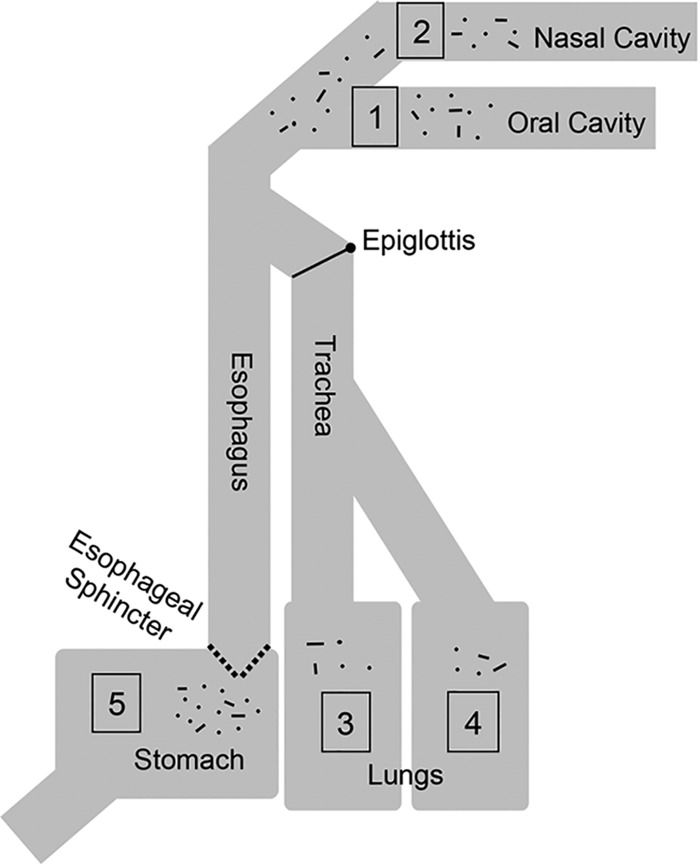
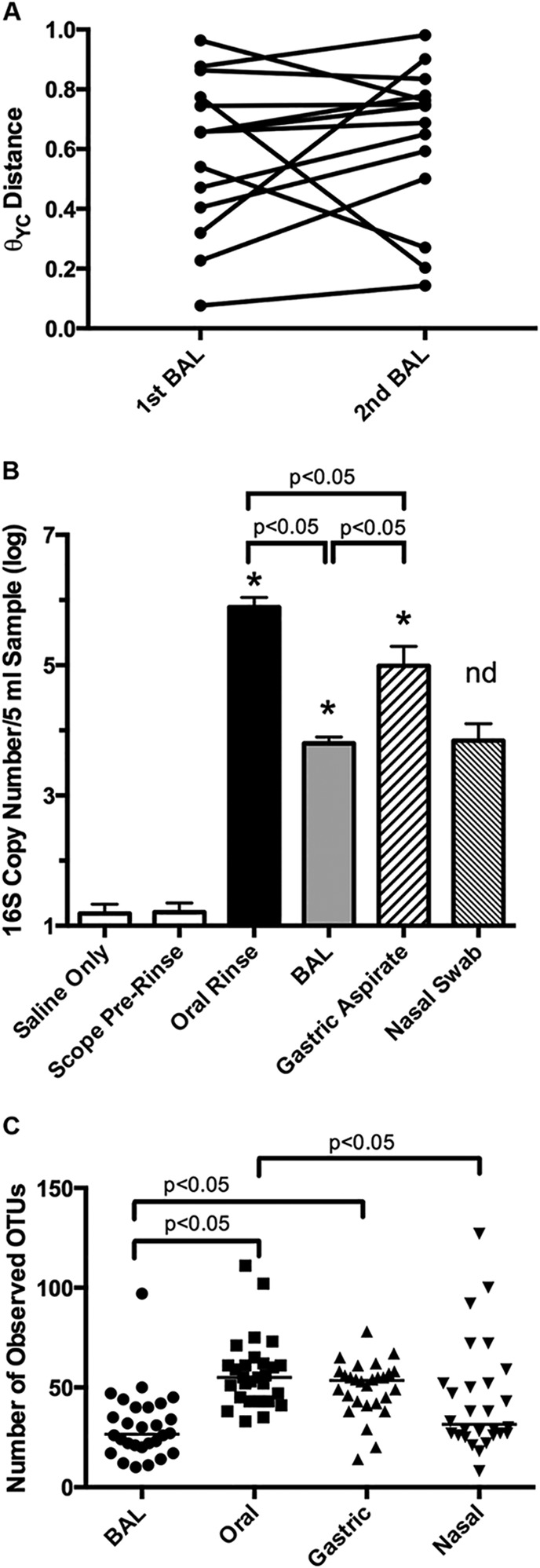
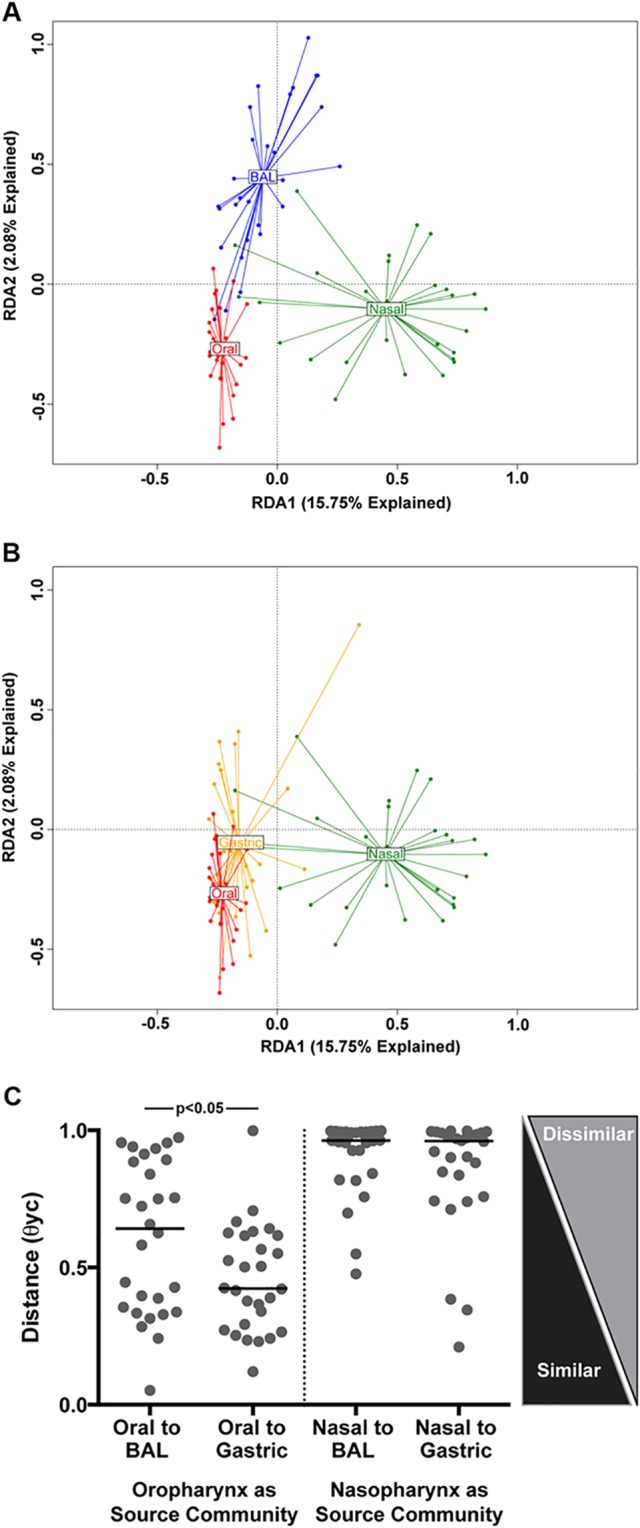
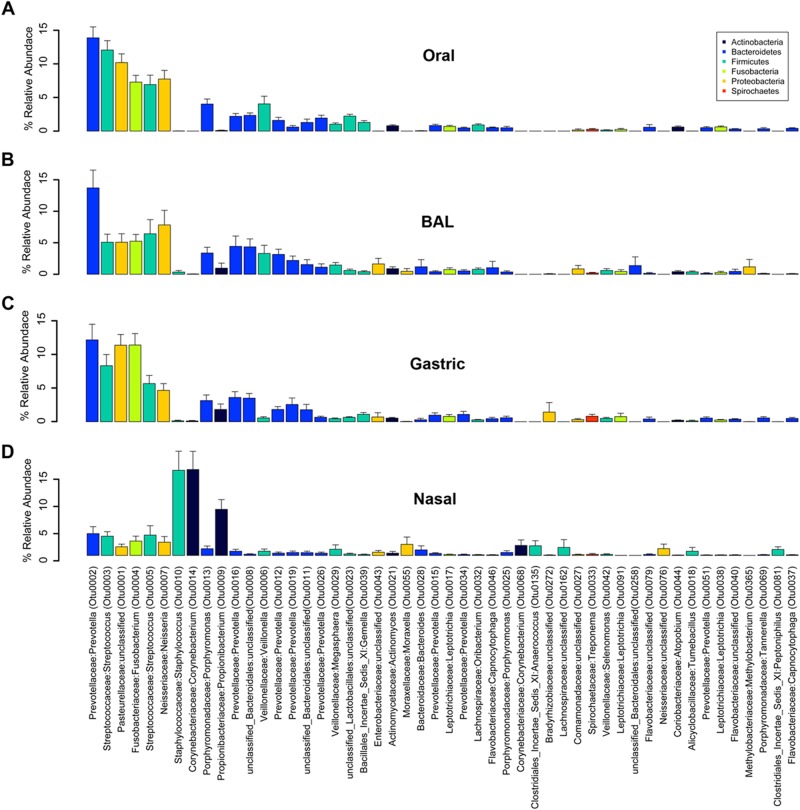
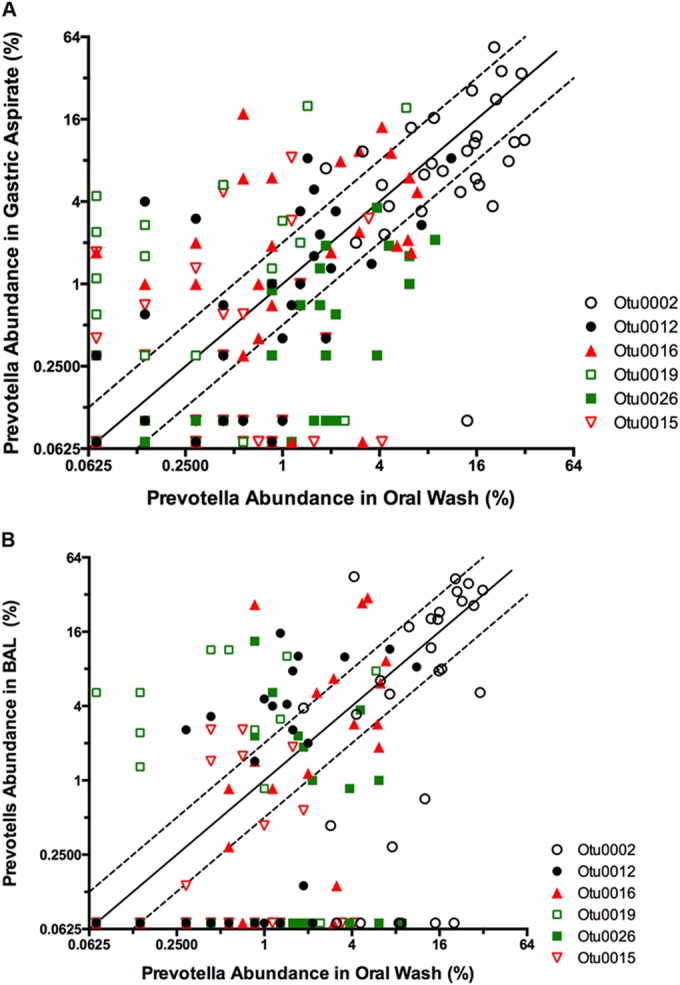
No studies have examined the relationships between bacterial communities along sites of the upper aerodigestive tract of an individual subject. Our objective was to perform an intrasubject and intersite analysis to determine the contributions of two upper mucosal sites (mouth and nose) as source communities for the bacterial microbiome of lower sites (lungs and stomach). Oral wash, bronchoalveolar lavage (BAL) fluid, nasal swab, and gastric aspirate samples were collected from 28 healthy subjects. Extensive analysis of controls and serial intrasubject BAL fluid samples demonstrated that sampling of the lungs by bronchoscopy was not confounded by oral microbiome contamination. By quantitative PCR, the oral cavity and stomach contained the highest bacterial signal levels and the nasal cavity and lungs contained much lower levels. Pyrosequencing of 16S rRNA gene amplicon libraries generated from these samples showed that the oral and gastric compartments had the greatest species richness, which was significantly greater in both than the richness measured in the lungs and nasal cavity. The bacterial communities of the lungs were significantly different from those of the mouth, nose, and stomach, while the greatest similarity was between the oral and gastric communities. However, the bacterial communities of healthy lungs shared significant membership with the mouth, but not the nose, and marked subject-subject variation was noted. In summary, microbial immigration from the oral cavity appears to be the significant source of the lung microbiome during health, but unlike the stomach, the lungs exhibit evidence of selective elimination of Prevotella bacteria derived from the upper airways. IMPORTANCE We have demonstrated that the bacterial communities of the healthy lung overlapped those found in the mouth but were found at lower concentrations, with lower membership and a different community composition. The nasal microbiome, which was distinct from the oral microbiome, appeared to contribute little to the composition of the lung microbiome in healthy subjects. Our studies of the nasal, oral, lung, and stomach microbiomes within an individual illustrate the microbiological continuity of the aerodigestive tract in healthy adults and provide culture-independent microbiological support for the concept that microaspiration is common in healthy individuals.
Overview
The claims and statistics of this paper haven’t been checked yet.
Free: it reads the open-access text and checks the first 5 claims that cite a source we can check. Create a free account to check every claim.
Integrity signals
Registry
Cites
Statistics
Figures
Verification
Claims the paper makes
The claims and statistics of this paper haven’t been checked yet.
Free: it reads the open-access text and checks the first 5 claims that cite a source we can check. Create a free account to check every claim.
Claims other papers make about this one
Each is checked against this paper’s own text: does it say what the citing paper says it does?
The source backs part of the claim, not all of it — or backs it for a different population, condition or comparison.
In the citing paper
“Culture-independent microbiota studies have confirmed that the lung microbiota largely resembles the URT microbiota when studied in healthy individuals74,75,76.”
From The microbiota of the respiratory tract: gatekeeper to respiratory health (2017) · cites this paper as [74]
Experimental — accuracy not yet measuredThe source backs part of the claim, not all of it — or backs it for a different population, condition or comparison.
In the citing paper
“The oropharynx seems to be the main source of the lung microbiota in adults74, whereas in children the source is more likely to be both the nasopharynx and oropharynx76.”
From The microbiota of the respiratory tract: gatekeeper to respiratory health (2017) · cites this paper as [74]
Experimental — accuracy not yet measuredThe source backs part of the claim, not all of it — or backs it for a different population, condition or comparison.
In the citing paper
“A specific challenge in microbiota surveys of the respiratory tract is the low density of bacterial communities that are found there, particularly in healthy individuals; densities as low as 102–103 bacteria ml−1 have been reported in bronchoalveolar lavages (BALs) of healthy individuals74,153.”
From The microbiota of the respiratory tract: gatekeeper to respiratory health (2017) · cites this paper as [74]
Experimental — accuracy not yet measuredThe source backs part of the claim, not all of it — or backs it for a different population, condition or comparison.
In the citing paper
“In healthy individuals, the microbial community richness (i.e., the total number of bacterial taxa) is lower in the LRT than that in the URT”
From Respiratory viral infection-induced microbiome alterations and secondary bacterial pneumonia. (2018) · cites this paper as [76]
Experimental — accuracy not yet measuredIn the citing paper
“The contribution of the gastric microbiota to the microbial community in the LRT through gastric–oesophageal reflux has, until now, been suggested to be negligible74.”
From The microbiota of the respiratory tract: gatekeeper to respiratory health (2017) · cites this paper as [74]
2 more claims about this paper
Create a free account to see every claim other papers make about this one.
Self-check
Percentages, sums and reported differences re-computed from the paper’s own numbers.
The self-check needs the paper’s full text.
Citations
Cites
Schloss, P. D., Westcott, S. L., Ryabin, T., Hall, J. R., Hartmann, M., Hollister, E. B., Lesniewski, R. A., Oakley, B. B., Parks, D. H., Robinson, C. J., et al. (2009) · Applied and Environmental Microbiology · doi:10.1128/aem.01541-09 · Cited by 19,549 · cited 1×
“0 (39, 40) as described previously (37, 38,”
A new method for non-parametric multivariate analysis of variance
Anderson, M. J. (2001) · Austral Ecology · doi:10.1111/j.1442-9993.2001.01070.pp.x · Cited by 13,828 · cited 4×
“The same relationships of the four sites were confirmed when tested by AMOVA or PERMANOVA (Table 1).”
MethodInfluentialStructure, function and diversity of the healthy human microbiome
The Human Microbiome Project Consortium (2012) · Nature · doi:10.1038/nature11234 · Cited by 11,726
Topographical and Temporal Diversity of the Human Skin Microbiome
Grice, E. A., Kong, H. H., Conlan, S., Deming, C. B., Davis, J., Young, A. C., Program, N. C. S., Bouffard, G. G., Blakesley, R. W., Murray, P. R., et al. (2009) · Science · doi:10.1126/science.1171700 · Cited by 2,953
Reducing the Effects of PCR Amplification and Sequencing Artifacts on 16S rRNA-Based Studies
Schloss, P. D., Gevers, D., & Westcott, S. L. (2011) · PLoS ONE · doi:10.1371/journal.pone.0027310 · Cited by 2,112 · cited 2×
“The YC distance (1 YC) between bacterial communities measures differences in community structure (44) and was selected because it weighs rare and abundant OTUs more evenly than other metrics such as Bray-Curtis or Morisita-Horn (39).”
BackgroundQuantifying the roles of immigration and chance in shaping prokaryote community structure
Sloan, W. T., Lunn, M., Woodcock, S., Head, I. M., Nee, S., & Curtis, T. P. (2006) · Environmental Microbiology · doi:10.1111/j.1462-2920.2005.00956.x · Cited by 1,887 · cited 1×
“tomized R script based on the neutral model (42) was then used to identify”
MethodDisordered Microbial Communities in Asthmatic Airways
Hilty, M., Burke, C., Pedro, H., Cardenas, P., Bush, A., Bossley, C., Davies, J., Ervine, A., Poulter, L., Pachter, L., et al. (2010) · PLoS ONE · doi:10.1371/journal.pone.0008578 · Cited by 1,824 · cited 1×
“During states of ill health, such as viral upper respiratory tract infections, allergies, or sinus infections, the liquid flow from the nasal cavity increases, and this clearly has the potential to affect the lung microbiome, consistent with studies of rhinovirus infection and asthmatics that highlighted changes in th…”
BackgroundMolecular analysis of the bacterial microbiota in the human stomach
Bik, E. M., Eckburg, P. B., Gill, S. R., Nelson, K. E., Purdom, E. A., Francois, F., Perez-Perez, G., Blaser, M. J., & Relman, D. A. (2006) · Proceedings of the National Academy of Sciences · doi:10.1073/pnas.0506655103 · Cited by 1,158
Topographical Continuity of Bacterial Populations in the Healthy Human Respiratory Tract
Charlson, E. S., Bittinger, K., Haas, A. R., Fitzgerald, A. S., Frank, I., Yadav, A., Bushman, F. D., & Collman, R. G. (2011) · American Journal of Respiratory and Critical Care Medicine · doi:10.1164/rccm.201104-0655oc · Cited by 1,144 · cited 1×
“Within an individual, the similarity between the oral and lung microbiomes varied widely, with some individuals having a lung microbiome that was almost identical to their oral microbiome, similar to a previous report (9), while in others the two sites were markedly different.”
ResultAnalysis of the lung microbiome in the “healthy” smoker and in COPD.
Erb-Downward, J. R., Thompson, D. L., Han, M. K., Freeman, C. M., McCloskey, L., Schmidt, L. A., Young, V. B., Toews, G. B., Curtis, J. L., Sundaram, B., et al. (2011) · PLoS ONE · doi:10.1371/journal.pone.0016384 · Cited by 973
Self-citation
Cited by
Items 301–400 of 838
Anaerobes in cystic fibrosis patients’ airways
Lamoureux, C., Guilloux, C.-A., Beauruelle, C., Jolivet‐Gougeon, A., & Héry-Arnaud, G. (2019) · Critical Reviews in Microbiology · doi:10.1080/1040841x.2018.1549019 · Cited by 36
“Others authors found evidence that lung bacteria are able to replicate within the lungs, explaining the fact that lungs harbour a significant distinct microbial community from the mouth, nose or stomach (Bassis et al. 2015).”
BackgroundInfluentialPragman, A. A., Knutson, K. A., Gould, T. J., Hodgson, S. W., Isaacson, R. E., Reilly, C., & Wendt, C. H. (2019) · PLoS ONE · doi:10.1371/journal.pone.0219962 · Cited by 26
Nagai, M., Moriyama, M., & Ichinohe, T. (2021) · mBio · doi:10.1128/mbio.01598-21 · Cited by 29
“tract contains commensal bacteria (12, 13), intranasal administration of the hemagglu-”
BackgroundData Mining of Lung Microbiota in Cystic Fibrosis Patients
Li, J., Hao, C., Ren, L., Xiao, Y. B., Wang, J., & Qin, X. (2016) · PLoS ONE · doi:10.1371/journal.pone.0164510 · Cited by 30
Millares, L., Bermudo, G., Pérez‐Brocal, V., Domingo, C., García-Núñez, M., Pomares, X., Moyá, A., & Monsó, E. (2017) · BMC Microbiology · doi:10.1186/s12866-017-0933-6 · Cited by 30
“The respiratory tract extends from the nasal and oropharyngeal cavities to the alveoli and includes niches with specific patterns in their microbiome composition [12, 13].”
BackgroundWurm, P., Dörner, E., Kremer, C., Spranger, J., Maddox, C., Halwachs, B., Harrison, U., Blanchard, T. G., Haas, R., Högenauer, C., et al. (2018) · mSystems · doi:10.1128/msystems.00262-18 · Cited by 34
“Consistent with previous studies on the stomach (30, 41, 43, 48, 53), we demonstrated large interindividual variations in the relative abundances of the two dominant taxa in the human and animal stomach (Firmicutes and Bacteroidetes).”
BackgroundResultChakraborty, P., Banerjee, D., Majumder, P., & Sarkar, J. (2024) · Medicine in Microecology · doi:10.1016/j.medmic.2024.100104 · Cited by 29
Milczewska, J., Syunyaeva, Z., Żabińska-Jaroń, A., Sands, D., & Thee, S. A. (2024) · European Respiratory Review · doi:10.1183/16000617.0068-2024 · Cited by 31
“The upper respiratory tract is dominated by species from the genera Streptococcus , Haemophilus , Moraxella , Corynebacterium and Staphylococcus [28].”
Markers of Dental Health Correlate with Daily Respiratory Symptoms in COPD
Gaeckle, N. T., Heyman, B., Criner, A. J., & Criner, G. J. (2018) · Chronic Obstructive Pulmonary Diseases Journal of the COPD Foundation · doi:10.15326/jcopdf.5.2.2017.0159 · Cited by 29
Tavárez, Z. Q., Li, D., Croft, D. P., Gill, S. R., Ossip, D. J., & Rahman, I. (2020) · Frontiers in Microbiology · doi:10.3389/fmicb.2020.589501 · Cited by 31
Nasal and Fecal Microbiota and Immunoprofiling of Infants With and Without RSV Bronchiolitis
Alba, C., Aparicio, M., Martínez, F. G., González-Sánchez, M. I., Pérez-Moreno, J., del Castillo, B. T., Rodríguez, J. M., Fernández, R. R., & Fernández, L. (2021) · Frontiers in Microbiology · doi:10.3389/fmicb.2021.667832 · Cited by 28
Niemeier‐Walsh, C., Ryan, P., Meller, J., Ollberding, N. J., Adhikari, A., & Reponen, T. A. (2021) · PLoS ONE · doi:10.1371/journal.pone.0244341 · Cited by 26
“The alpha and beta diversity results make sense when considering that while the growth conditions in the lungs and the oral cavity are quite different, the migration of microbes into the airways occurs primarily through microaspiration of saliva [2].”
BackgroundDiagnostic and prognostic potential of the oral and gut microbiome for lung adenocarcinoma
Lim, M. Y., Hong, S. P., Hwang, K. H., Lim, E. J., Han, J., & Nam, Y. (2021) · Clinical and Translational Medicine · doi:10.1002/ctm2.508 · Cited by 26
Altered Ecology of the Respiratory Tract Microbiome and Nosocomial Pneumonia
Pérez‐Cobas, A. E., Baquero, F., de Pablo, R., Soriano, C., & Coque, T. M. (2022) · Frontiers in Microbiology · doi:10.3389/fmicb.2021.709421 · Cited by 34
“As the gastrointestinal microbiome (GIM), the RTM constitutes a continuous ecosystem with a longitudinal and transversal gradient of microbial diversity from the nasal and oral cavities to the alveoli (Bassis et al., 2015).”
BackgroundPresence of Tropheryma whipplei in Different Body Sites in a Cohort of Healthy Subjects
Qin, S., Clausen, E. S., Lucht, L. A., Michael, H., Beck, J. M., Curtis, J. L., Freeman, C. M., & Morris, A. (2016) · American Journal of Respiratory and Critical Care Medicine · doi:10.1164/rccm.201601-0162le · Cited by 22
“Gastric aspirate samples were obtained from 29 individuals simultaneously, as previously described (11).”
MethodSelf-citationZheng, L., Liu, C., Wang, H., Zhang, J., Mao, L., Dong, X., Hu, S., Li, N., Pi, D., Qiu, J., et al. (2024) · Microbiome · doi:10.1186/s40168-024-01772-6 · Cited by 33
“The lung is previously considered to be a sterile environment and is initially excluded from the Human Microbi-ome Project priority organ system list [1–4].”
BackgroundMethodInfluentialBacterial Pathogens and the Microbiome
Vickery, T. W., & Ramakrishnan, V. R. (2016) · Otolaryngologic Clinics of North America · doi:10.1016/j.otc.2016.08.004 · Cited by 27
“In addition to dietary factors, the upper airway microbiota are a known source of microbes that colonize the lung and stomach.(53) Ultimately, the aggregate of bacterial taxa in the sinus niche need to be better studied at a metagenome level to begin deciphering community function and how specific bacterial ecosystems…”
Respiratory Dysbiosis in Canine Bacterial Pneumonia: Standard Culture vs. Microbiome Sequencing
Vientós‐Plotts, A. I., Ericsson, A. C., Rindt, H., & Reinero, C. R. (2019) · Frontiers in Veterinary Science · doi:10.3389/fvets.2019.00354 · Cited by 30
Saliva as a non-invasive specimen for COPD assessment
Dias, S., Valente, C., Andrade, L., Marques, A. S. P. D. D., & Sousa, A. (2022) · Respiratory Research · doi:10.1186/s12931-022-01935-9 · Cited by 25
Paine, S. K., Rout, U. K., Bhattacharyya, C., Parai, D., Alam, M., Nanda, R. R., Tripathi, D., Choudhury, P., Kundu, C. N., Pati, S., et al. (2022) · npj Biofilms and Microbiomes · doi:10.1038/s41522-022-00330-y · Cited by 24
Shigdel, R., Johannessen, A., Huang, L., Peddada, S., Real, F. G., Ringel‐Kulka, T., Svanes, C., & Bertelsen, R. J. (2023) · Respiratory Research · doi:10.1186/s12931-023-02491-6 · Cited by 25
“The oral microbiota may affect the microbial community in the lung through micro aspiration and mucosal dispersal [4].”
BackgroundVientós‐Plotts, A. I., Ericsson, A. C., & Reinero, C. R. (2023) · Journal of Veterinary Internal Medicine · doi:10.1111/jvim.16824 · Cited by 30
McCann, J. R., Mason, S. N., Auten, R. L., Geme, J. W. S., & Seed, P. C. (2016) · Infection and Immunity · doi:10.1128/iai.01539-15 · Cited by 27
The respiratory microbiome of HIV-infected individuals
Lawani, M. B., & Morris, A. (2016) · Expert Review of Anti-infective Therapy · doi:10.1080/14787210.2016.1206469 · Cited by 30
“the lung largely by microaspiration [37] and the constitution of the healthy lung microbiome is determined by equilibrium”
BackgroundThe pulmonary microbiome: challenges of a new paradigm
Costa, A. N., da Costa, F. M., Campos, S. V., Salles, R. K., & Athanazio, R. A. (2018) · Jornal Brasileiro de Pneumologia · doi:10.1590/s1806-37562017000000209 · Cited by 40
“However, the microbiome of the lower respiratory tract is now recognized to be similar to that of the oropharynx, leading to the concept that microbial migration from this region is the major determinant of the lung microbiome in healthy individuals.(22) Microaspiration appears to play a key role in shaping the lung m…”
BackgroundLi, X., Chen, M., Chen, T., Xie, L., Luo, Q., Fan, X., Yin, Y., Meng, S., Jin, Z., He, Y., et al. (2025) · Journal of Translational Medicine · doi:10.1186/s12967-025-06433-2 · Cited by 29
“It is widely accepted that LRT microbiota is mainly derived from URT microbiota migration [53].”
The Spectrum of Interactions between Cryptococcus neoformans and Bacteria
Mayer, F. L., & Kronstad, J. W. (2019) · Journal of Fungi · doi:10.3390/jof5020031 · Cited by 28
“Recent studies however suggest that the lungs have a distinct microbiota [67,68].”
BackgroundTransferrable protection by gut microbes against STING-associated lung disease
Platt, D. J., Lawrence, D., Rodgers, R., Schriefer, L. A., Qian, W. P., Miner, C. A., Menos, A. M., Kennedy, E. A., Peterson, S. T., Stinson, W. A., et al. (2021) · Cell Reports · doi:10.1016/j.celrep.2021.109113 · Cited by 26
“These distinct microbial communities do not exist in isolation and can influence the microbiota in other organs (Bassis et al., 2015).”
Cheng, J., Zhou, L., & Wang, H. (2024) · Frontiers in Cellular and Infection Microbiology · doi:10.3389/fcimb.2024.1296295 · Cited by 24
Xie, L., Luo, G., Yang, Z., Wu, W.-C., Chen, J.-T., Ren, Y., Zeng, Z., Ye, G., Pan, Y., Zhao, W.-J., et al. (2024) · Journal of Infection · doi:10.1016/j.jinf.2024.01.017 · Cited by 24
“10 11–13 Previous studies have shown that commensal microbes in the upper airways may protect the host from pandemic respiratory pathogens such as influenza virus.”
BackgroundMcMurray, C. L., Hardy, K. J., Calus, S., Loman, N. J., & Hawkey, P. M. (2016) · Microbiome · doi:10.1186/s40168-016-0210-1 · Cited by 23
Zhang, S., Huo, X., Zhang, Y., Lu, X., Xu, C., & Xu, X. (2019) · Chemosphere · doi:10.1016/j.chemosphere.2019.04.032 · Cited by 23
“5 directly attacks the respiratory tract, which is coated with mucosal fluid that provides protection against opportunistic pathogen colonization (Huttenhower et al., 2012; Morris et al., 2013; Bassis et al., 2015; Huffnagle et al., 2017; Li et al., 2017; Peters et al., 2017; Wang et al., 2017).”
BackgroundChakraborty, S. (2020) · OSF Preprints (OSF Preprints) · doi:10.31219/osf.io/usztn · Cited by 27
Wilson, K. R., Gressier, E., McConville, M. J., & Bedoui, S. (2022) · Frontiers in Immunology · doi:10.3389/fimmu.2022.897462 · Cited by 23
Bano, Y., Shrivastava, A., Shukla, P. K., Chaudhary, A. A., Khan, S.-U.-D., & Khan, S. (2024) · Critical Reviews in Microbiology · doi:10.1080/1040841x.2024.2324864 · Cited by 23
Three distinct pneumotypes characterize the microbiome of the lung in BALB/cJ mice
Scheiermann, J., & Klinman, D. M. (2017) · PLoS ONE · doi:10.1371/journal.pone.0180561 · Cited by 27
The Alteration of Nasopharyngeal and Oropharyngeal Microbiota in Children with MPP and Non-MPP
Lu, Z., Dai, W., Liu, Y., Zhou, Q., Wang, H., Li, D., Yang, Z., Li, Y., Xie, G., Li, S. C., et al. (2017) · Genes · doi:10.3390/genes8120380 · Cited by 22
“In addition, we observe a higher similarity between NP and OP microbiota in patients, which can be explained by a robust intrusion of pathogens through the nasal cavity and the transmission from NP to OP and lung [29,30].”
BackgroundRudder, C. D., Calatayud, M., Lebeer, S., & de Wiele, T. V. (2020) · mSphere · doi:10.1128/msphere.00916-19 · Cited by 25
“Nevertheless, Chao1 estimators of richness in the coculture setup were similar to those reported from nasal communities in healthy individuals (41, 51, 54).”
ResultPulmonary and intestinal microbiota dynamics during Gram-negative pneumonia-derived sepsis
Wolff, N. S., Jacobs, M. C., Wiersinga, W. J., & Hugenholtz, F. (2021) · Intensive Care Medicine Experimental · doi:10.1186/s40635-021-00398-4 · Cited by 25
“The lung microbiome has previously been described to closely resemble that of the oropharynx, and contains species such as Streptococcus, Veillonella and Prevotella, which take up 20–30% of the microbiota composition [17, 22].”
BackgroundRhoades, N. S., Davies, M., Lewis, S. A., Cinco, I. R., Kohama, S. G., Bermudez, L. E., Winthrop, K. L., Fuss, C., Mattison, J. A., Spindel, E. R., et al. (2022) · Cell Reports · doi:10.1016/j.celrep.2022.110725 · Cited by 22
“…animals in our study (41/70) had diverse lung microbial communities with little or no Tropheryma and were dominated by microbes typically found in the oral cavity, which has been well established as the primary source of the lung microbio me in humans (Bassis et al., 2015; Dickson et al., 2017).”
Microbiota and the Response to Vaccines Against Respiratory Virus
Gonçalves, J. I. B., Borges, T. J., & de Souza, A. P. D. (2022) · Frontiers in Immunology · doi:10.3389/fimmu.2022.889945 · Cited by 23
The Microbiome in Systemic Sclerosis: Pathophysiology and Therapeutic Potential
Kim, S., Park, H. J., & Lee, S. (2022) · International Journal of Molecular Sciences · doi:10.3390/ijms232416154 · Cited by 28
Association of lung-intestinal microecology and lung cancer therapy
Kong, L., Chen, X.-Y., Lu, X., Caiyin, Q., & Yang, D. (2023) · Chinese Medicine · doi:10.1186/s13020-023-00742-8 · Cited by 22
Rudder, C. D., Calatayud, M., Lebeer, S., & de Wiele, T. V. (2018) · Microbiome · doi:10.1186/s40168-018-0462-z · Cited by 27
“(based on 16S copy numbers in sample) [75].”
BackgroundEffect of an antimicrobial drug on lung microbiota in healthy dogs
Fastrès, A., Taminiau, B., Vangrinsven, E., Tutunaru, A.-C., Moyse, E. V., Farnir, F., Daube, G., & Clercx, C. (2019) · Heliyon · doi:10.1016/j.heliyon.2019.e02802 · Cited by 24
Recent progress in experimental and human disease-associated multi-species biofilms
Bai, F., Cai, Z., & Yang, L. (2019) · Computational and Structural Biotechnology Journal · doi:10.1016/j.csbj.2019.09.010 · Cited by 26
“The healthy lung appears to be populated by multi resident bacterial species, such as Staphylococcaceae, Propionibacteriaceae, Corynebacteriaceae, Streptococcaceae, Veillonellaceae, Neisseriaceae and Fusobacteriaceae, among other lineages [111,112], that migrate to the distal airways from the oral cavity [109].”
BackgroundPérez‐Losada, M., Crandall, K. A., & Freishtat, R. J. (2016) · AIMS Microbiology · doi:10.3934/microbiol.2016.2.108 · Cited by 23
“…the nasopharynges of asthmatic children and adolescents in this study (see green spheres in Figure 2) have also been detected in previous 16S metataxonomic studies of nasal microbiotas in infants [18,19,29,42] and adults [43–45] with and without respiratory infections, but in different proportions.”
The human microbiome: A promising target for lung cancer treatment
Sun, Y. H., Wen, M., Liu, Y., Wang, Y., Jing, P., Gu, Z., Jiang, T., & Wang, W. (2023) · Frontiers in Immunology · doi:10.3389/fimmu.2023.1091165 · Cited by 30
“compared the microbial composition in the oral and nasal cavities, lungs, and stomach of healthy adults and found that the microbial communities in gastric juices and alveolar lavage fluid (BAL) were mainly derived from the inhalation and colonization of oropharyngeal flora (21).”
BackgroundHuman nasal microbiota shifts in healthy and chronic respiratory disease conditions
Konovalovas, A., Armalytė, J., Klimkaitė, L., Liveikis, T., Jonaitytė, B., Danila, E., Bironaitė, D., Mieliauskaitė, D., Bagdonas, E., & Aldonytė, R. (2024) · BMC Microbiology · doi:10.1186/s12866-024-03294-5 · Cited by 25
“As our study confirmed, the upper airway (nose and nasopharynx) does not accurately represent the microbiome composition of the lower airways and lungs, which has been previously observed in other studies [37].”
ResultIntegrating the microbiota of the respiratory tract with the unified airway model
Hanshew, A. S., Jetté, M. E., Rosen, S. P., & Thibeault, S. L. (2017) · Respiratory Medicine · doi:10.1016/j.rmed.2017.03.019 · Cited by 22
“These shared traits likely extend to similar niche characteristics that support bacterial communities in similar mucosal surfaces, and some have even suggested that the respiratory tract should be viewed as a single ecosystem [41].”
Dabrowski, A. N., Shrivastav, A., Conrad, C., Komma, K., Weigel, M., Dietert, K., Gruber, A. D., Bertrams, W., Wilhelm, J., Schmeck, B., et al. (2019) · Frontiers in Immunology · doi:10.3389/fimmu.2019.02106 · Cited by 25
“Themicrobiota is considered to include all microbes (bacteria, archaea, viruses, fungi, and protozoa) associated with and within the organism (22).”
BackgroundWang, C., Zhang, L., Kan, C., He, J., Liang, W., Xia, R., Zhu, L., Yang, J., Jiang, X., Ma, W., et al. (2025) · npj Biofilms and Microbiomes · doi:10.1038/s41522-025-00762-2 · Cited by 30
“These correlations are likely due to microbial aspiration, which introduces microorganisms from the upper to the lower respiratory tract, a process that can be exacerbated during respiratory infections 51,52 .”
Zeineldin, M. M., Elolimy, A. A., & Barakat, R. (2020) · FEMS Microbiology Ecology · doi:10.1093/femsec/fiaa127 · Cited by 26
Green, A. E., Howarth, D., Chaguza, C., Echlin, H., Langendonk, R. F., Munro, C., Barton, T. E., Hinton, J. C. D., Bentley, S. D., Rosch, J. W., et al. (2021) · Molecular Biology and Evolution · doi:10.1093/molbev/msab018 · Cited by 20
“2000; Human Microbiome Project 2012), whereas the lung microbiome is thought to be more closely related to that of the oral cavity (Bassis et al. 2015).”
BackgroundLung Microbiome in Human Health and Diseases
Chauhan, N. S. (2021) · Elsevier eBooks · doi:10.1016/b978-0-12-819265-8.00077-2 · Cited by 26
Emerging trends and hotspot in gut–lung axis research from 2011 to 2021: a bibliometrics analysis
Wang, Z., Bai, C., Hu, T., Luo, C., Yu, H., Ma, X., Liu, T., & Gu, X. (2022) · BioMedical Engineering OnLine · doi:10.1186/s12938-022-00987-8 · Cited by 22
The Lung Microbiome in COPD and Lung Cancer: Exploring the Potential of Metal-Based Drugs
O’Shaughnessy, M., Sheils, O. M., & Baird, A. (2023) · International Journal of Molecular Sciences · doi:10.3390/ijms241512296 · Cited by 25
“They identified a core COPD lung microbiome that included Pseudomonas, Streptococcus, Prevotella, Fusobacterium, Haemophilus, Veillonella, and Porphyromonas [80].”
BackgroundHoisington, A. J., Stearns‐Yoder, K. A., Kovacs, E. J., Postolache, T. T., & Brenner, L. A. (2024) · Current Environmental Health Reports · doi:10.1007/s40572-024-00437-8 · Cited by 22
“The gut and lung microbiota and the oral and lung microbiota share some similar microbes, at least in the upper respiratory tract [169, 170].”
Exploring the Link between Helicobacter pylori, Gastric Microbiota and Gastric Cancer
Sgamato, C., Rocco, A., Compare, D., Priadko, K., Romano, M., & Nardone, G. (2024) · Antibiotics · doi:10.3390/antibiotics13060484 · Cited by 26
“Interestingly, more than 65% of the bacterial phylotypes in the stomach also inhabit the human mouth [25,26].”
BackgroundMorinaga, Y., Take, Y., Sasaki, D., Ota, K., Kaku, N., Uno, N., Sakamoto, K., Kosai, K., Miyazaki, T., Hasegawa, H., et al. (2019) · PLoS ONE · doi:10.1371/journal.pone.0222589 · Cited by 24
“The lung is classically thought to be sterile; however, recent molecular methods have revealed that bacteria are also present in the lungs of healthy people at low levels, compared to the upper respiratory tract (URT) [2, 9, 10].”
BackgroundChronic obstructive pulmonary disease and the airway microbiome: A review for clinicians
Luo, L., Tang, J., Du, X., & Li, N. (2024) · Respiratory Medicine · doi:10.1016/j.rmed.2024.107586 · Cited by 27
Monsó, E. (2019) · Archivos de Bronconeumología · doi:10.1016/j.arbres.2019.04.017 · Cited by 19
Duvallet, C., Larson, K., Snapper, S. B., Iosim, S., Lee, A., Freer, K., May, K. E., Alm, E. J., & Rosen, R. (2019) · PLoS ONE · doi:10.1371/journal.pone.0216453 · Cited by 20
Guryanova, S. V., Гигани, О. Б., Gudima, G. O., Kataeva, A. M., & Kolesnikova, N. V. (2022) · Life · doi:10.3390/life12020192 · Cited by 20
“In the case of impaired functions of the cells of the pulmonary epithelium, for example, damage to the cilia of the mucous membrane or an excessive amount of secreted mucus, observed during allergic processes, colonization by microorganisms occurs, which can lead to infectious pathologies [9].”
BackgroundKorgan, A. C., Foxx, C. L., Hashmi, H., Sago, S. A., Stamper, C. E., Heinze, J. D., O’Leary, M. E., King, J. L., Perrot, T. S., Lowry, C. A., et al. (2022) · Scientific Reports · doi:10.1038/s41598-022-14095-z · Cited by 24
Asthma and Wheeze Severity and the Oropharyngeal Microbiota in Children and Adolescents
Thorsen, J., Stokholm, J., Rasmussen, M. A., Roggenbuck, M., Vissing, N. H., Mortensen, M. S., Brejnrod, A., Fleming, L., Bush, A., Roberts, G. C., et al. (2022) · Annals of the American Thoracic Society · doi:10.1513/annalsats.202110-1152oc · Cited by 25
Macrophages and the microbiome in chronic obstructive pulmonary disease
Sandhu, K. K., Scott, A., Tatler, A. L., Belchamber, K. B. R., & Cox, M. J. (2024) · European Respiratory Review · doi:10.1183/16000617.0053-2024 · Cited by 27
“…in the microenvironments between the URT and LRT, e.g. colder surface and wall temperatures of the upper trachea and bronchial tree compared to the core body temperature, there is a clear overlap between the microbiota residing in the oral cavity and the lungs of healthy individuals [60].”
THE HUMAN MICROBIOTA: THE ROLE OF MICROBIAL COMMUNITIES IN HEALTH AND DISEASE
Botero, L. E., Delgado-Serrano, L., Hernández, M. L. C., Portillo, P. D., & Eder, M. M. Z. (2015) · Acta Biológica Colombiana · doi:10.15446/abc.v21n1.49761 · Cited by 22
“…analysis, recent culture-independent studies have shown that healthy lungs are colonized by diverse bacteria (Hilty et al., 2010; Charlson et al., 2011; Erb-Downward et al., 2011; Huang et al., 2011; Segal and Blaser, 2014), and that many of these come from the oral cavity (Bassis et al., 2015).”
BackgroundProfiling of lung microbiota in the patients with obstructive sleep apnea
Lu, D., Yao, X., Abulimiti, A., Cai, L., Zhou, L., Hong, J., & Li, N. (2018) · Medicine · doi:10.1097/md.0000000000011175 · Cited by 20
Farne, H. A., Groves, H., Gill, S. K., Stokes, I., McCulloch, S., Karoly, E. D., Trujillo‐Torralbo, M., Johnston, S. L., Mallia, P., & Tregoning, J. S. (2018) · Frontiers in Cellular and Infection Microbiology · doi:10.3389/fcimb.2018.00432 · Cited by 19
“If there are differences between upper and lower airway metabolomes it may determine growth tropism of bacteria (Bassis et al., 2015).”
BackgroundThe lung microbiome and transplantation
Mitchell, A. B. (2019) · Current Opinion in Organ Transplantation · doi:10.1097/mot.0000000000000631 · Cited by 21
Qi, J., Cai, D., Cui, Y., Tan, T., Zou, H., Guo, W., Xie, Y., Guo, H., Chen, S., Ma, X., et al. (2021) · Frontiers in Microbiology · doi:10.3389/fmicb.2020.630280 · Cited by 20
The consequence of matrix dysfunction on lung immunity and the microbiome in COPD
Hussell, T., Lui, S., Jagger, C. P., Morgan, D. J., & Brand, O. J. (2018) · European Respiratory Review · doi:10.1183/16000617.0032-2018 · Cited by 23
Monsó, E. (2019) · Archivos de Bronconeumología · doi:10.1016/j.arbr.2019.04.014 · Cited by 18
The Role of Gut and Airway Microbiota in Pulmonary Arterial Hypertension
Huang, L., Zhang, H., Liu, Y., & Long, Y. (2022) · Frontiers in Microbiology · doi:10.3389/fmicb.2022.929752 · Cited by 20
Respiratory tract microbiome and pneumonia
Narendrakumar, L., & Ray, A. (2022) · Progress in molecular biology and translational science · doi:10.1016/bs.pmbts.2022.07.002 · Cited by 20
The lower airways microbiota and antimicrobial peptides indicate dysbiosis in sarcoidosis
Knudsen, K. S., Lehmann, S., Nielsen, R., Tangedal, S., Paytuví-Gallart, A., Sanseverino, W., Martinsen, E. M. H., Hiemstra, P. S., & Eagan, T. (2022) · Microbiome · doi:10.1186/s40168-022-01362-4 · Cited by 20
“The bacterial DNA density in the upper airways is at least 100-fold higher than in the lower airways [33].”
BackgroundCharacterization of tongue coating microbiome from patients with colorectal cancer
Chen, Q., Huang, X., Zhang, H., Jiang, X., Zeng, X., Li, W., Su, H., Chen, Y., Lin, F., Li, M., et al. (2024) · Journal of Oral Microbiology · doi:10.1080/20002297.2024.2344278 · Cited by 20
Early-life upper airway microbiota are associated with decreased lower respiratory tract infections
Zelasko, S. E., Swaney, M. H., Sandstrom, S., Lee, K. E., Dixon, J., Riley, C., Watson, L., Godfrey, J. J., Ledrowski, N., Rey, F. E., et al. (2024) · Journal of Allergy and Clinical Immunology · doi:10.1016/j.jaci.2024.11.008 · Cited by 20
Webb, K. A., Olagoke, O. S., Baird, T., Neill, J., Pham, A., Wells, T. J., Ramsay, K. A., Bell, S. C., Sarovich, D. S., & Price, E. P. (2022) · Microbial Genomics · doi:10.1099/mgen.0.000754 · Cited by 26
Oropharyngeal Microbiota in Frail Older Patients Unaffected by Time in Hospital
Ewan, V. C., Reid, W. D. K., Shirley, M., Simpson, A. J., Rushton, S., & Wade, W. G. (2018) · Frontiers in Cellular and Infection Microbiology · doi:10.3389/fcimb.2018.00042 · Cited by 21
“…with the emergence of respiratory pathogens in the oropharynx being associated with subsequent pulmonary infection (Heo et al., 2008; Ewan et al., 2015; Yeh et al., 2016), via misdirection of these organisms into the respiratory tree (microaspiration) (Bassis et al., 2015; Dickson et al., 2017).”
BackgroundInfluentialLower airway microbiota in COPD and healthy controls
Tangedal, S., Nielsen, R., Aanerud, M., Drengenes, C., Husebø, G. R., Lehmann, S., Knudsen, K. S., Hiemstra, P. S., & Eagan, T. (2024) · Thorax · doi:10.1136/thorax-2023-220455 · Cited by 23
“5 34 It is conceivable that the decrease in evenness but maintenance of richness and PD can be attributed to a continuous influx of upper airway microbiota, with certain taxa thriving more in the inflamed airways, thus diminishing evenness.”
BackgroundUpper respiratory microbial communities of healthy populations are shaped by niche and age
Zelasko, S. E., Swaney, M. H., Sandstrom, S., Davenport, T. C., Seroogy, C. M., Gern, J. E., Kalan, L., & Currie, C. R. (2024) · Microbiome · doi:10.1186/s40168-024-01940-8 · Cited by 21
“Microbes entering the oral cavity pass to the digestive tract by swallowing and to the airways through micro-aspiration of oropharyngeal secretions [2–4].”
BackgroundThe Role of the Oral Microbiome and Dental Caries in Respiratory Health: A Systematic Review
Zygmunt, Ł., Kiryk, S., Wesołek, K., Kiryk, J., Nawrot-Hadzik, I., Rybak, Z., Sztyler, K., Małyszek, A., Matys, J., & Dobrzyński, M. (2025) · Journal of Clinical Medicine · doi:10.3390/jcm14217670 · Cited by 21
Crosstalk between Body Microbiota and the Regulation of Immunity
Rojas, C., Gálvez‐Jirón, F., Solminihac, J. D., Padilla, C., Cárcamo, I., Villalón, N., Kurte, M., & Pino‐Lagos, K. (2022) · Journal of Immunology Research · doi:10.1155/2022/6274265 · Cited by 19
“…of the phylum Firmicutes , Bacteriodetes , Proteobacteria , Fusobacteria , and Actinobacteria , while the species of Prevotella (Bacteroidetes) , Veillonella , Streptococcus (Firmicutes) , Pseudomonas , and Haemophilus (Proteobacteria) are the most characteristic in healthy individuals [51 – 53].”
Fucarino, A., Burgio, S., Paladino, L., Bavisotto, C. C., Pitruzzella, A., Bucchieri, F., & Cappello, F. (2022) · Anatomia · doi:10.3390/anatomia1020019 · Cited by 23
Microbial and Immune Regulation of the Gut-Lung Axis during Viral-Bacterial Coinfection
Lane, S., Hilliam, Y., & Bomberger, J. M. (2022) · Journal of Bacteriology · doi:10.1128/jb.00295-22 · Cited by 19
Diversity of Microbial Signatures in Asthmatic Airways
Alamri, A. M. (2021) · International Journal of General Medicine · doi:10.2147/ijgm.s304339 · Cited by 17
“A previous study has assessed microbial diversity and quantity at multiple sites, including the mouth, nose, lung, and stomach in healthy individuals.(11) Interestingly, sequencing of 16S rRNA amplicon libraries demonstrated that the oral cavity and gastric fluid had the highest microbial burdens with comparable diver…”
BackgroundThe microbiota-related coinfections in COVID-19 patients: a real challenge
Mohapatra, R. K., Dhama, K., Mishra, S., Sarangi, A. K., Kandi, V., Tiwari, R., & Pintilie, L. (2021) · Beni-Suef University Journal of Basic and Applied Sciences · doi:10.1186/s43088-021-00134-7 · Cited by 17
Mărginean, C. O., Meliţ, L. E., & Săsăran, M. O. (2021) · Journal of Clinical Medicine · doi:10.3390/jcm10153258 · Cited by 19
The association between the respiratory tract microbiome and clinical outcomes in patients with COPD
Yu, S., Zhang, H., Wan, L., Xue, M. F., Zhang, Y., & Gao, X. (2022) · Microbiological Research · doi:10.1016/j.micres.2022.127244 · Cited by 19
Topography of the respiratory, oral, and guttural pouch bacterial and fungal microbiotas in horses
Bond, S. L., McMullen, C., Timsit, E., & Léguillette, R. (2023) · Journal of Veterinary Internal Medicine · doi:10.1111/jvim.16612 · Cited by 16
“Rather, the oropharynx shares most similarity with the lung community structure.(12,13) Given that horses are obligate nasal breathers, it was interesting to find that the largest bacterial diversity occurred in the deep nostrils and trachea (both proximal and distal), with significantly higher diversity in the trache…”
BackgroundStudy of the Relationship between Mucosal Immunity and Commensal Microbiota: A Bibliometric Analysis
Wang, S., Wu, J., Ran, D., Ou, G., Chen, Y., Xu, H., Deng, L., & Chen, X. (2023) · Nutrients · doi:10.3390/nu15102398 · Cited by 17
“As a result, the lung is not sterile and not the same nor synchronized with the changes in the intestinal microbiota [81].”
BackgroundAdvances in co-pathogenesis of the united airway diseases
Xu, X., Yin, J., Yang, Y., Liu, H., Yu, J., Luo, X., Zhang, Y., & Song, X. (2024) · Respiratory Medicine · doi:10.1016/j.rmed.2024.107580 · Cited by 18
David, S. C., Schaub, A., Terrettaz, C., Motos, G., Costa, L. J., Nolan, D. S., Augugliaro, M., Wynn, H. K., Glas, I., Pohl, M. O., et al. (2024) · Journal of Virology · doi:10.1128/jvi.00409-24 · Cited by 16
“Airborne respiratory bacteria have been detected in expelled droplets and aerosols of saliva and sputum from human patients (11, 12); these include commensal species such as Pseudomonas aeruginosa, Staphylo coccus aureus, and Klebsiella pneumoniae (13, 14), as well as disease-associated aero sol-borne bacteria like…”
BackgroundInfluentialZhou, X., Shen, S., & Wang, Z. (2024) · Scientific Reports · doi:10.1038/s41598-024-77273-1 · Cited by 16
“Many microorganisms colonize the gut, and specific microbial communities have been found in lungs that were previously considered sterile 28 .”
BackgroundThe neonate respiratory microbiome
Pirr, S. M., Willers, M., & Viemann, D. (2025) · Acta Physiologica · doi:10.1111/apha.14266 · Cited by 18
Ritchie, N. D., Ijaz, U. Z., & Evans, T. J. (2017) · BMC Genomics · doi:10.1186/s12864-017-4215-3 · Cited by 19
“Studies have shown that the microbiome at this site resembles the skin microbiome [1] and is distinct from the lung microbiome, which would appear to be derived from the oral bacterial communities [26, 27].”
The Role of Lower Airway Dysbiosis in Asthma: Dysbiosis and Asthma
Lu, J., Xiong, L., Zhang, X., Liu, Z., Wang, S., Zhang, C., Zheng, J., Wang, G., Zheng, R., Simpson, J. L., et al. (2017) · Mediators of Inflammation · doi:10.1155/2017/3890601 · Cited by 19
Short term dynamics of the sputum microbiome among COPD patients
Sinha, R., Weissenburger-Moser, L. A., Clarke, J., Smith, L. M., Heires, A. J., Romberger, D. J., & LeVan, T. D. (2018) · PLoS ONE · doi:10.1371/journal.pone.0191499 · Cited by 17
Metadata
- Authors
- Bassis, C. M., Erb-Downward, J. R., Dickson, R. P., Freeman, C. M., Schmidt, T. M., Young, V. B., Beck, J. M., Curtis, J. L., & Huffnagle, G. B.
- Affiliations
- University of Michigan (US)
- Division of Pulmonary and Critical Care Medicine, Department of Internal Medicine, University of Michigan Medical School, Ann Arbor, Michigan, USA
- VA Eastern Colorado Health Care System (US)
- Corresponding author
- Huffnagle, Gary B.
- ORCID
- Venue
- mBio
- Publisher
- American Society for Microbiology
- Published
- 2015-05
- Volume
- 6
- Issue
- 2
- Pages
- e00037-e00037
- ISSN
- 2150-7511 (ISSN-L)
- 2161-2129
- PMC
- PMC4358017
- OpenAlex
- W2166358290
- Cited by
- 839
- References
- 46
- Citations by year
- 2026: 51 · 2025: 70 · 2024: 83 · 2023: 74 · 2022: 106 · 2021: 89 · 2020: 84 · 2019: 63 · 2018: 80 · 2017: 71 · 2016: 50 · 2015: 18
- FWCI
- 98.72
- Type
- journal article
- Language
- en
- Open access
- gold
- doi.org
- Licence
- cc-by-nc-sa
- creativecommons.org/licenses/by-nc-sa/3.0/ (vor)
- journals.asm.org/non-commercial-tdm-license (tdm)
- Locations
- mBio (publishedVersion, cc-by-nc-sa)
- PubMed Central (publishedVersion, cc-by-nc-sa)
- PubMed (publishedVersion)
- DOAJ (DOAJ: Directory of Open Access Journals) (submittedVersion, cc-by-sa)
- Funders
- National Heart, Lung, and Blood Institute (U01HL098961, L30 HL120241, T32HL00774921, R01HL114447, T32HL007749)
- National Institute of Diabetes and Digestive and Kidney Diseases (P30DK034933)
- Topics
- Health Sciences › Dentistry › Periodontics › Oral microbiology and periodontitis research
- Life Sciences › Biochemistry, Genetics and Molecular Biology › Molecular Biology › Gut microbiota and health
- Physical Sciences › Environmental Science › Ecology › Microbial Community Ecology and Physiology
- Keywords
- lung microbiome, gastric microbiota, oral microbiota, nasal microbiota, upper respiratory tract, aerodigestive tract, microaspiration, Prevotella, bronchoalveolar lavage
- MeSH terms
- Bacteria, DNA, Bacterial, DNA, Ribosomal, Humans, Lung, Molecular Sequence Data, Mouth, Nasal Cavity, RNA, Ribosomal, 16S, Stomach, Sequence Analysis, DNA, Real-Time Polymerase Chain Reaction, Microbiota, Healthy Volunteers
About these checks
Registry, retraction, Cites and statistics results are computed, not judged, with one exception: a printed reference that no index lists is read once by a model before it counts as a citation error. Claims are extracted by a model and kept only when their quote appears verbatim in the text; each cited source is then checked, with a model’s help, for whether it says what the claim relies on. Those verdicts can be wrong — read the claim’s quote and the cited source before relying on one.
Statistics and arithmetic are recomputed, not judged.
Confidence bands are shown only for fields calibrated on our annotated test set. None is calibrated yet, so no band is shown.
What counts as a claim ›How we measure confidence ›How we check this ›
Are you an author, or do you see a problem with this page? Request a review
Data sources
Bibliographic data: Semantic Scholar, OpenAlex, Crossref.
Contains information from the Semantic Scholar Academic Graph Datasets, made available under the ODC Attribution License (ODC-BY 1.0).
Semantic Scholar’s data is described in: Kinney, R., et al. (2023). The Semantic Scholar Open Data Platform. arXiv:2301.10140.
