

Analysis of the Upper Respiratory Tract Microbiotas as the Source of the Lung and Gastric Microbiotas in Healthy Individuals
Open accessThe DOI matches its Crossref record; 45 of the 46 references it cites were found in a registry or an index.
Abstract
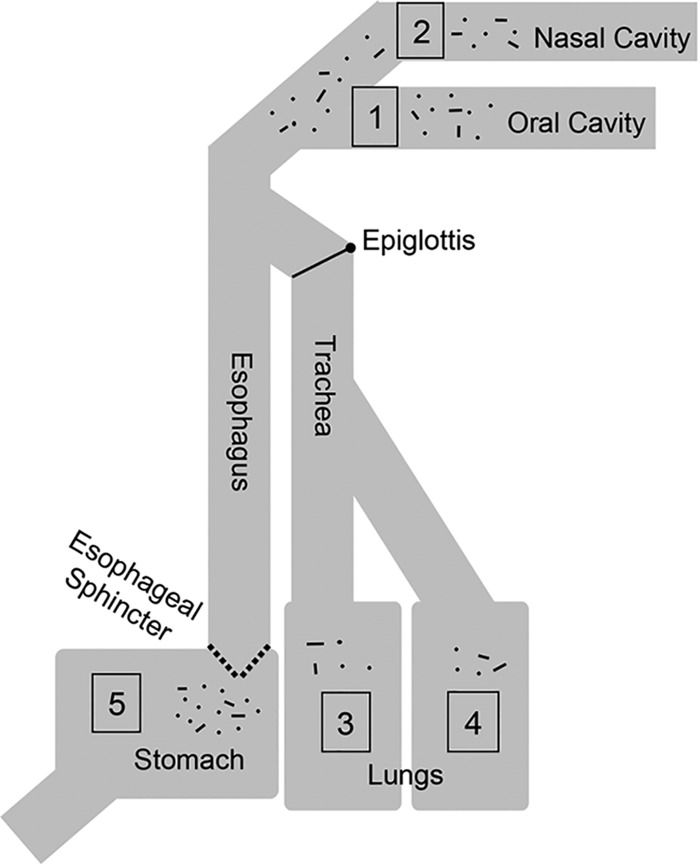
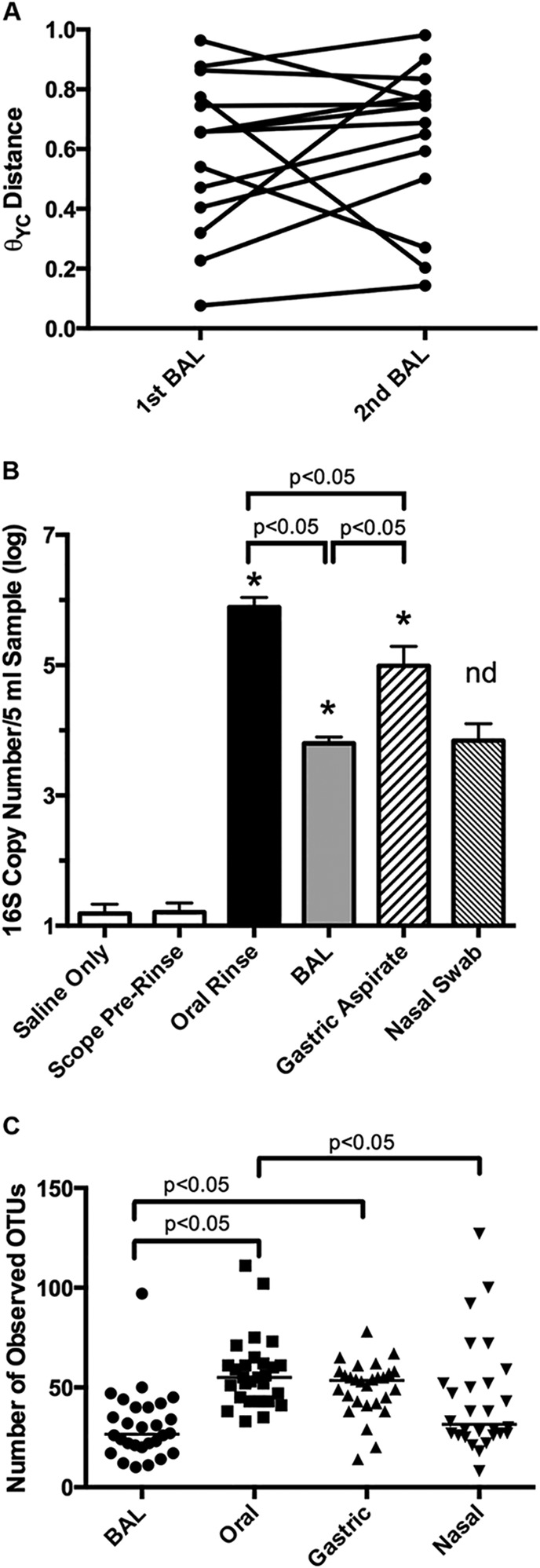
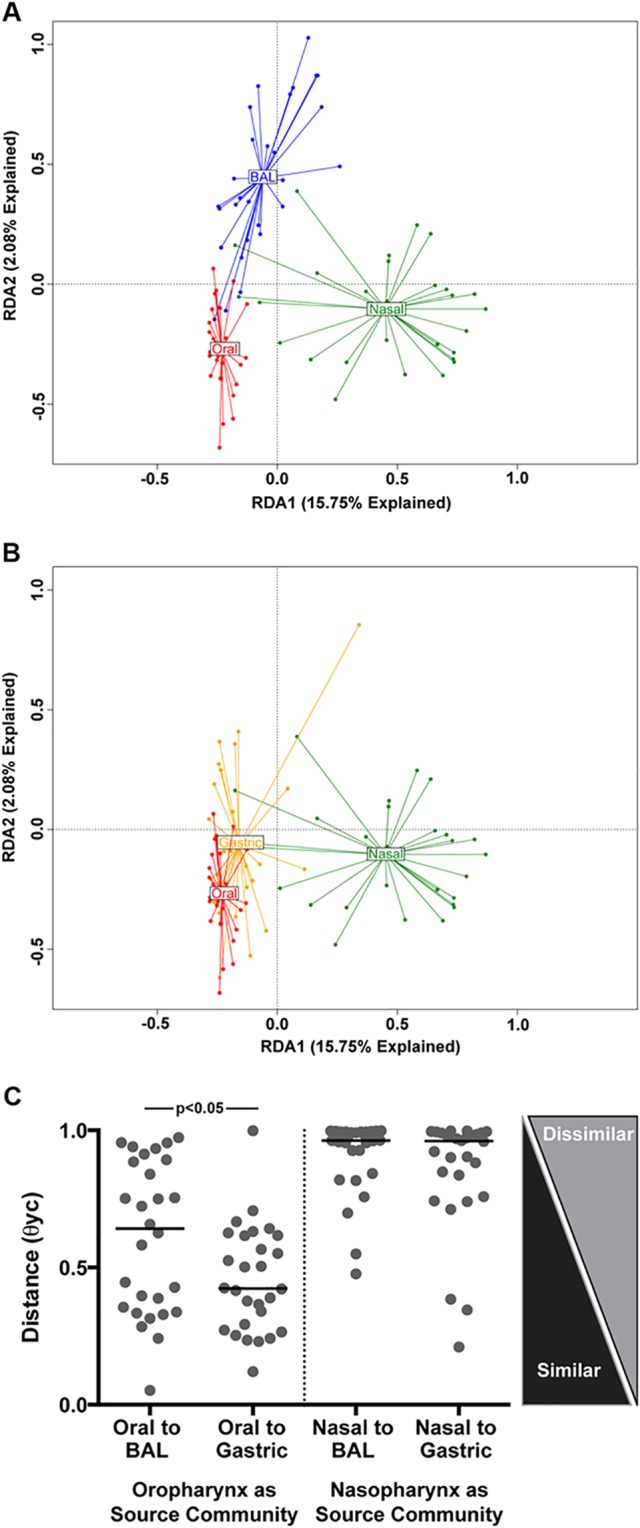
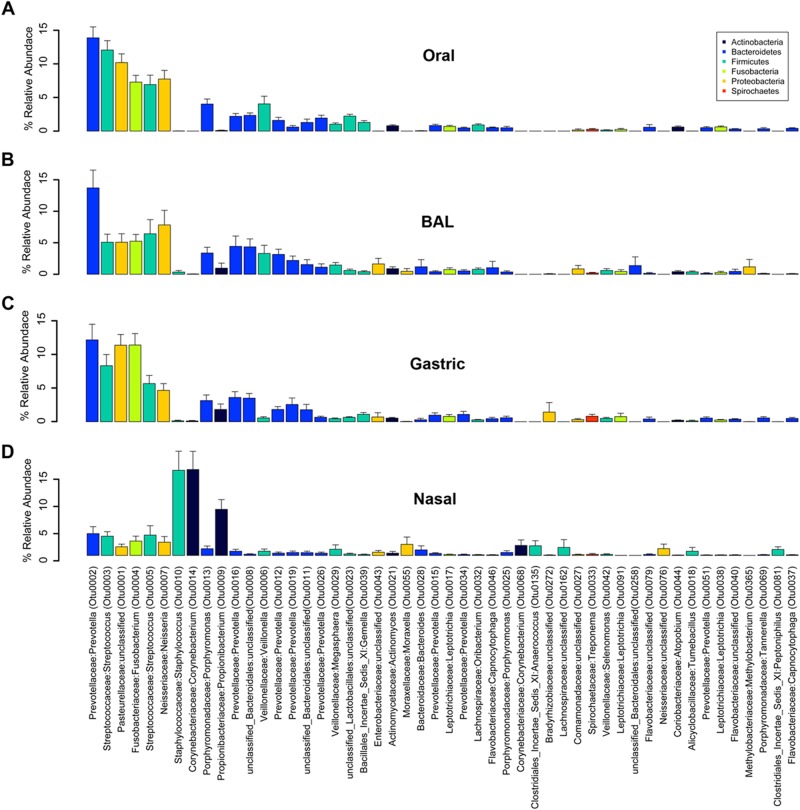
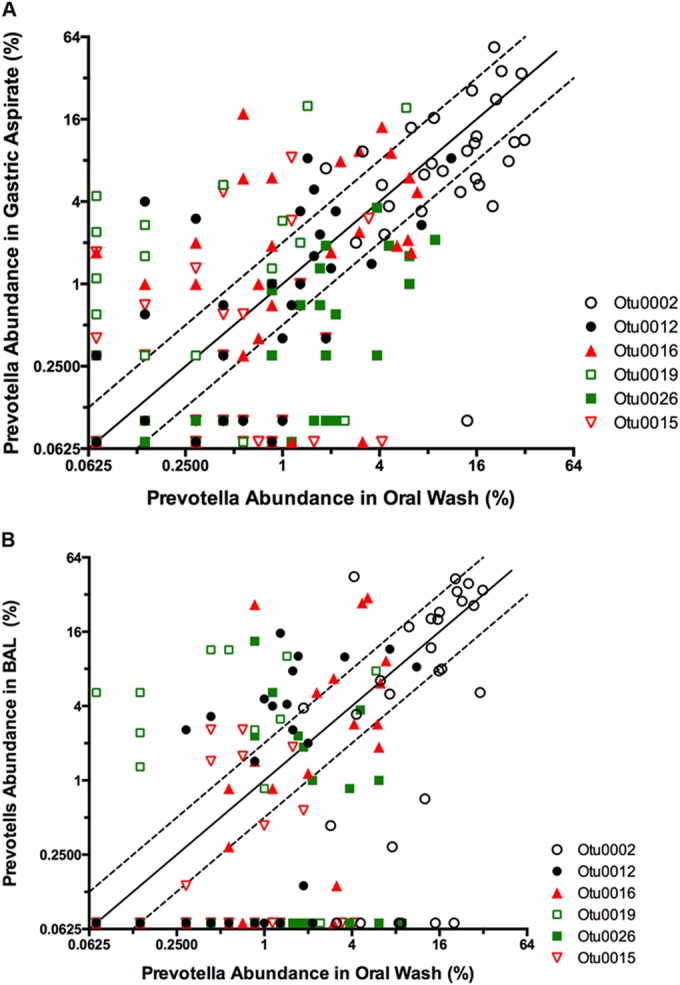
No studies have examined the relationships between bacterial communities along sites of the upper aerodigestive tract of an individual subject. Our objective was to perform an intrasubject and intersite analysis to determine the contributions of two upper mucosal sites (mouth and nose) as source communities for the bacterial microbiome of lower sites (lungs and stomach). Oral wash, bronchoalveolar lavage (BAL) fluid, nasal swab, and gastric aspirate samples were collected from 28 healthy subjects. Extensive analysis of controls and serial intrasubject BAL fluid samples demonstrated that sampling of the lungs by bronchoscopy was not confounded by oral microbiome contamination. By quantitative PCR, the oral cavity and stomach contained the highest bacterial signal levels and the nasal cavity and lungs contained much lower levels. Pyrosequencing of 16S rRNA gene amplicon libraries generated from these samples showed that the oral and gastric compartments had the greatest species richness, which was significantly greater in both than the richness measured in the lungs and nasal cavity. The bacterial communities of the lungs were significantly different from those of the mouth, nose, and stomach, while the greatest similarity was between the oral and gastric communities. However, the bacterial communities of healthy lungs shared significant membership with the mouth, but not the nose, and marked subject-subject variation was noted. In summary, microbial immigration from the oral cavity appears to be the significant source of the lung microbiome during health, but unlike the stomach, the lungs exhibit evidence of selective elimination of Prevotella bacteria derived from the upper airways. IMPORTANCE We have demonstrated that the bacterial communities of the healthy lung overlapped those found in the mouth but were found at lower concentrations, with lower membership and a different community composition. The nasal microbiome, which was distinct from the oral microbiome, appeared to contribute little to the composition of the lung microbiome in healthy subjects. Our studies of the nasal, oral, lung, and stomach microbiomes within an individual illustrate the microbiological continuity of the aerodigestive tract in healthy adults and provide culture-independent microbiological support for the concept that microaspiration is common in healthy individuals.
Overview
The claims and statistics of this paper haven’t been checked yet.
Free: it reads the open-access text and checks the first 5 claims that cite a source we can check. Create a free account to check every claim.
Integrity signals
Registry
Cites
Statistics
Figures
Verification
Claims the paper makes
The claims and statistics of this paper haven’t been checked yet.
Free: it reads the open-access text and checks the first 5 claims that cite a source we can check. Create a free account to check every claim.
Claims other papers make about this one
Each is checked against this paper’s own text: does it say what the citing paper says it does?
The source backs part of the claim, not all of it — or backs it for a different population, condition or comparison.
In the citing paper
“Culture-independent microbiota studies have confirmed that the lung microbiota largely resembles the URT microbiota when studied in healthy individuals74,75,76.”
From The microbiota of the respiratory tract: gatekeeper to respiratory health (2017) · cites this paper as [74]
Experimental — accuracy not yet measuredThe source backs part of the claim, not all of it — or backs it for a different population, condition or comparison.
In the citing paper
“The oropharynx seems to be the main source of the lung microbiota in adults74, whereas in children the source is more likely to be both the nasopharynx and oropharynx76.”
From The microbiota of the respiratory tract: gatekeeper to respiratory health (2017) · cites this paper as [74]
Experimental — accuracy not yet measuredThe source backs part of the claim, not all of it — or backs it for a different population, condition or comparison.
In the citing paper
“A specific challenge in microbiota surveys of the respiratory tract is the low density of bacterial communities that are found there, particularly in healthy individuals; densities as low as 102–103 bacteria ml−1 have been reported in bronchoalveolar lavages (BALs) of healthy individuals74,153.”
From The microbiota of the respiratory tract: gatekeeper to respiratory health (2017) · cites this paper as [74]
Experimental — accuracy not yet measuredThe source backs part of the claim, not all of it — or backs it for a different population, condition or comparison.
In the citing paper
“In healthy individuals, the microbial community richness (i.e., the total number of bacterial taxa) is lower in the LRT than that in the URT”
From Respiratory viral infection-induced microbiome alterations and secondary bacterial pneumonia. (2018) · cites this paper as [76]
Experimental — accuracy not yet measuredIn the citing paper
“The contribution of the gastric microbiota to the microbial community in the LRT through gastric–oesophageal reflux has, until now, been suggested to be negligible74.”
From The microbiota of the respiratory tract: gatekeeper to respiratory health (2017) · cites this paper as [74]
2 more claims about this paper
Create a free account to see every claim other papers make about this one.
Self-check
Percentages, sums and reported differences re-computed from the paper’s own numbers.
The self-check needs the paper’s full text.
Citations
Cites
Schloss, P. D., Westcott, S. L., Ryabin, T., Hall, J. R., Hartmann, M., Hollister, E. B., Lesniewski, R. A., Oakley, B. B., Parks, D. H., Robinson, C. J., et al. (2009) · Applied and Environmental Microbiology · doi:10.1128/aem.01541-09 · Cited by 19,549 · cited 1×
“0 (39, 40) as described previously (37, 38,”
A new method for non-parametric multivariate analysis of variance
Anderson, M. J. (2001) · Austral Ecology · doi:10.1111/j.1442-9993.2001.01070.pp.x · Cited by 13,828 · cited 4×
“The same relationships of the four sites were confirmed when tested by AMOVA or PERMANOVA (Table 1).”
MethodInfluentialStructure, function and diversity of the healthy human microbiome
The Human Microbiome Project Consortium (2012) · Nature · doi:10.1038/nature11234 · Cited by 11,726
Topographical and Temporal Diversity of the Human Skin Microbiome
Grice, E. A., Kong, H. H., Conlan, S., Deming, C. B., Davis, J., Young, A. C., Program, N. C. S., Bouffard, G. G., Blakesley, R. W., Murray, P. R., et al. (2009) · Science · doi:10.1126/science.1171700 · Cited by 2,953
Reducing the Effects of PCR Amplification and Sequencing Artifacts on 16S rRNA-Based Studies
Schloss, P. D., Gevers, D., & Westcott, S. L. (2011) · PLoS ONE · doi:10.1371/journal.pone.0027310 · Cited by 2,112 · cited 2×
“The YC distance (1 YC) between bacterial communities measures differences in community structure (44) and was selected because it weighs rare and abundant OTUs more evenly than other metrics such as Bray-Curtis or Morisita-Horn (39).”
BackgroundQuantifying the roles of immigration and chance in shaping prokaryote community structure
Sloan, W. T., Lunn, M., Woodcock, S., Head, I. M., Nee, S., & Curtis, T. P. (2006) · Environmental Microbiology · doi:10.1111/j.1462-2920.2005.00956.x · Cited by 1,887 · cited 1×
“tomized R script based on the neutral model (42) was then used to identify”
MethodDisordered Microbial Communities in Asthmatic Airways
Hilty, M., Burke, C., Pedro, H., Cardenas, P., Bush, A., Bossley, C., Davies, J., Ervine, A., Poulter, L., Pachter, L., et al. (2010) · PLoS ONE · doi:10.1371/journal.pone.0008578 · Cited by 1,824 · cited 1×
“During states of ill health, such as viral upper respiratory tract infections, allergies, or sinus infections, the liquid flow from the nasal cavity increases, and this clearly has the potential to affect the lung microbiome, consistent with studies of rhinovirus infection and asthmatics that highlighted changes in th…”
BackgroundMolecular analysis of the bacterial microbiota in the human stomach
Bik, E. M., Eckburg, P. B., Gill, S. R., Nelson, K. E., Purdom, E. A., Francois, F., Perez-Perez, G., Blaser, M. J., & Relman, D. A. (2006) · Proceedings of the National Academy of Sciences · doi:10.1073/pnas.0506655103 · Cited by 1,158
Topographical Continuity of Bacterial Populations in the Healthy Human Respiratory Tract
Charlson, E. S., Bittinger, K., Haas, A. R., Fitzgerald, A. S., Frank, I., Yadav, A., Bushman, F. D., & Collman, R. G. (2011) · American Journal of Respiratory and Critical Care Medicine · doi:10.1164/rccm.201104-0655oc · Cited by 1,144 · cited 1×
“Within an individual, the similarity between the oral and lung microbiomes varied widely, with some individuals having a lung microbiome that was almost identical to their oral microbiome, similar to a previous report (9), while in others the two sites were markedly different.”
ResultAnalysis of the lung microbiome in the “healthy” smoker and in COPD.
Erb-Downward, J. R., Thompson, D. L., Han, M. K., Freeman, C. M., McCloskey, L., Schmidt, L. A., Young, V. B., Toews, G. B., Curtis, J. L., Sundaram, B., et al. (2011) · PLoS ONE · doi:10.1371/journal.pone.0016384 · Cited by 973
Self-citation
Cited by
Items 101–200 of 838
The microbiota in pneumonia: From protection to predisposition
Thibeault, C., Suttorp, N., & Opitz, B. (2021) · Science Translational Medicine · doi:10.1126/scitranslmed.aba0501 · Cited by 114
Zhou, Z., Liu, Y., Lin, Z., Shuai, X., Zhu, L., Xu, L., Meng, L.-X., Sun, Y., & Chen, H. (2021) · Environment International · doi:10.1016/j.envint.2021.106501 · Cited by 121
Influence of cigarette smoking on the human duodenal mucosa-associated microbiota
Shanahan, E. R., Shah, A., Koloski, N. A., Walker, M. M., Talley, N. J., Morrison, M., & Holtmann, G. (2018) · Microbiome · doi:10.1186/s40168-018-0531-3 · Cited by 125
Composition and immunological significance of the upper respiratory tract microbiota
Schenck, L. P., Surette, M. G., & Bowdish, D. M. E. (2016) · FEBS Letters · doi:10.1002/1873-3468.12455 · Cited by 122
“Culture independent approaches identified the presence of microbial DNA that originated primarily from the oral cavity [26, 27].”
Topography of the respiratory tract bacterial microbiota in cattle
McMullen, C., Alexander, T. W., Léguillette, R., Workentine, M. L., & Timsit, E. (2020) · Microbiome · doi:10.1186/s40168-020-00869-y · Cited by 133
Chen, C., Wang, Z., Wang, J., Ding, C., Sun, C., Liu, P., Xu, X., Liu, Y., Chen, B., & Gu, B. (2020) · Translational Lung Cancer Research · doi:10.21037/tlcr-19-590 · Cited by 107
“As saliva and sputum samples are susceptible to interference by the oral microbiota and it is usually difficult to obtain lung tissue specimens from patients with advanced lung cancer, and some experts believe that BALF is a viable option for sampling of the lung microbiome because BALF microbiome will not be confound…”
BackgroundContribution of the Mucosal Microbiota to Bovine Respiratory Health
Zeineldin, M. M., Lowe, J. F., & Aldridge, B. M. (2019) · Trends in Microbiology · doi:10.1016/j.tim.2019.04.005 · Cited by 124
Neonatal gut and respiratory microbiota: coordinated development through time and space
Grier, A., McDavid, A., Wang, B., Qiu, X., Java, J., Bandyopadhyay, S., Yang, H., Holden-Wiltse, J., Kessler, H. A., Gill, A. L., et al. (2018) · Microbiome · doi:10.1186/s40168-018-0566-5 · Cited by 97
Muhlebach, M. S., Hatch, J., Einarsson, G. G., McGrath, S., Gilipin, D. F., Lavelle, G., Mirković, B., Murray, M., McNally, P., Gotman, N., et al. (2018) · European Respiratory Journal · doi:10.1183/13993003.00242-2018 · Cited by 104
The Oral-Lung Axis: The Impact of Oral Health on Lung Health
Gaeckle, N. T., Pragman, A. A., Pendleton, K. M., Baldomero, A. K., & Criner, G. J. (2020) · Respiratory Care · doi:10.4187/respcare.07332 · Cited by 107
“fewer similarities with the lung microbiota.(15) This supports the role of salivary flow and microaspiration as the main mechanisms that foster the population of the lung microbiome.”
BackgroundHorn, K. J., Schopper, M. A., Drigot, Z., & Clark, S. E. (2022) · Nature Communications · doi:10.1038/s41467-022-31074-0 · Cited by 105
“Primers (ACTCCTACGGGAGGCAGCAGT and ATTACCGCGGCTGCTGGC) were used with iTaqTM Universal SYBR® Green Supermix (BioRad) and 1 μL template DNA, with reactions performed on a CFX ConnectTM Real-Time System (BioRad) under the following cycle conditions: (1) 94 °C 4 min; (2) 40 cycles of 15 s at 95 °C, 30 s at 60 °C, and (3)…”
MethodPossible role of gut microbes and host's immune response in gut-lung homeostasis
Rastogi, S., Mohanty, S., Sharma, S., & Tripathi, P. (2022) · Frontiers in Immunology · doi:10.3389/fimmu.2022.954339 · Cited by 94
“The community composition also includes other native residents such as saprophytic protozoa, primarily Trichomonas tenax and Entamoeba gingivalis and fungi such as Saccharomyces cerevisiae and Candida albicans (22, 23).”
BackgroundProbiotics for the airways: Potential to improve epithelial and immune homeostasis
Martens, K., Pugin, B., Boeck, I. D., Spacova, I., Steelant, B., Seys, S., Lebeer, S., & Hellings, P. W. (2018) · Allergy · doi:10.1111/all.13495 · Cited by 105
“As the first culture-independent report on the presence of a healthy lung microbiota,(96) studies demonstrated the complex microbial communities residing in both the upper and the lower airways of healthy individuals.(97,98) A dysbiosis of the microbiota has been shown in chronic airway diseases which, interestingly,…”
BackgroundKim, H. J., Jo, A., Jeon, Y. J., An, S., Lee, K., Yoon, S. S., & Choi, J. Y. (2019) · Microbiome · doi:10.1186/s40168-019-0691-9 · Cited by 105
Valverde-Molina, J., & García-Marcos, L. (2023) · Nutrients · doi:10.3390/nu15030486 · Cited by 92
“Colonisation of the lower airway is closely related to its anatomy and function, with migration from the upper airway being the main source in healthy individuals [51].”
BackgroundLung Microbiome in Asthma: Current Perspectives
Loverdos, K., Bellos, G., Kokolatou, L., Vasileiadis, I., Giamarellos‐Bourboulis, E. J., Pecchiari, M., Koulouris, N. G., Koutsoukou, A., & Rovina, N. (2019) · Journal of Clinical Medicine · doi:10.3390/jcm8111967 · Cited by 94
“These alterations comprised Proteobacteria enrichment and Bacteroidetes (specifically Prevotella) and Fusobacteria depletion in all corticosteroid groups, with decreased Veillonella and increased Pseudomonas abundance in those on ICS only and OCS, respectively.”
BackgroundInfluentialLung tissue microbial profile in lung cancer is distinct from emphysema.
Liu, Y., O’Brien, J. L., Ajami, N. J., Scheurer, M. E., Amirian, E. S., Armstrong, G., Tsavachidis, S., Thrift, A. P., Jiao, L., Wong, M. C., et al. (2018) · Europe PMC (PubMed Central) · Cited by 107
Loudon, A. H., Venkataraman, A., Treuren, W. V., Woodhams, D. C., Parfrey, L. W., McKenzie, V. J., Knight, R. D., Schmidt, T. M., & Harris, R. N. (2016) · Frontiers in Microbiology · doi:10.3389/fmicb.2016.00333 · Cited by 90
“The principles of island biogeography have provided insights into the maintenance of host-associated bacterial communities previously, although these principles have rarely been applied in this context or to microbial communities in general (Horner-Devine et al., 2004; Bell et al., 2005; Fierer, 2008; Johnson and Winq…”
BackgroundSelf-citationKyo, M., Nishioka, K., Nakaya, T., Kida, Y., Tanabe, Y., Ohshimo, S., & Shime, N. (2019) · Respiratory Research · doi:10.1186/s12931-019-1203-y · Cited by 100
Role of microbiota on lung homeostasis and diseases
Wang, J., Li, F., & Tian, Z. (2017) · Science China Life Sciences · doi:10.1007/s11427-017-9151-1 · Cited by 106
“However, the culture-independent techniques of microbial identification indicate the presence of a lung resident microbiota in mammals (Bassis et al., 2015; Morris et al., 2013) .”
BackgroundGupta, N., Kumar, R. K., & Agrawal, B. (2018) · Frontiers in Immunology · doi:10.3389/fimmu.2018.00709 · Cited by 106
The respiratory microbiome: an underappreciated player in the human response to inhaled pollutants?
Adar, S. D., Huffnagle, G. B., & Curtis, J. L. (2016) · Annals of Epidemiology · doi:10.1016/j.annepidem.2016.03.010 · Cited by 88
“bronchoscopic process have been allayed based on results of protected specimen brushing [20,23], both bronchoalveolar lavage and”
Self-citationMicrobiome Changes during Tuberculosis and Antituberculous Therapy
Hong, B., Maulén, N. P., Adami, A. J., Granados, H., Balcells, M. E., & Cervantes, J. (2016) · Clinical Microbiology Reviews · doi:10.1128/cmr.00096-15 · Cited by 104
Liu, J., Chen, X., Dou, M., He, H., Ju, M., Ji, S., Zhou, J., Chen, C., Zhang, D., Miao, C., et al. (2019) · Journal of Thoracic Disease · doi:10.21037/jtd.2019.05.77 · Cited by 96
Santacroce, L., Man, A., Charitos, I. A., Haxhirexha, K., & Topi, S. (2021) · Frontiers in Bioscience-Landmark · doi:10.52586/4930 · Cited by 96
Lloréns‐Rico, V., Gregory, A., Weyenbergh, J. V., Jansen, S., Buyten, T. V., Qian, J., Braz, M., Menezes, S. M., Mol, P. V., Vanderbeke, L., et al. (2021) · Nature Communications · doi:10.1038/s41467-021-26500-8 · Cited by 94
Bovine respiratory microbiota of feedlot cattle and its association with disease
Chai, J., Capik, S. F., Kegley, B., Richeson, J. T., Powell, J. G., & Zhao, J. (2022) · Veterinary Research · doi:10.1186/s13567-021-01020-x · Cited by 87
“It is not well documented whether TTW or BAL is the best approach to investigate the LRT microbiome in cattle.”
BackgroundInfluentialUpper Respiratory Symptoms, Gut Health and Mucosal Immunity in Athletes
Colbey, C., Cox, A. J., Pyne, D. B., Zhang, P., Cripps, A. W., & West, N. P. (2018) · Sports Medicine · doi:10.1007/s40279-017-0846-4 · Cited by 72
“A comparison in 28 healthy individuals of the microbiome of the upper airways also revealed significant differences in the composition of the nasal and oral microbiome but a significant overlap between the microbe composition of the oral cavity and the lungs [98].”
BackgroundLung inflammation and disease: A perspective on microbial homeostasis and metabolism
Méndez, R., Banerjee, S., Bhattacharya, S. K., & Banerjee, S. (2018) · IUBMB Life · doi:10.1002/iub.1969 · Cited by 95
“have suggested that these sources of contamination may have less impact than previously understood (42).”
BackgroundWelch, C. B., Ryman, V. E., Pringle, T. D., & Lourenco, J. M. (2022) · Microorganisms · doi:10.3390/microorganisms10071391 · Cited by 113
“In contrast, the LRT contains the larynx, trachea, bronchi, bronchioles, and alveoli [141].”
BackgroundInfluentialPotential contribution of beneficial microbes to face the COVID-19 pandemic
Antunes, A. E. C., Vinderola, G., Xavier-Santos, D., & Sivieri, K. (2020) · Food Research International · doi:10.1016/j.foodres.2020.109577 · Cited by 92
Bond, S. L., Timsit, E., Workentine, M. L., Alexander, T. W., & Léguillette, R. (2017) · BMC Microbiology · doi:10.1186/s12866-017-1092-5 · Cited by 101
“Interestingly, in healthy humans, the nasal microbiota contributed very little to the composition of the local bacterial communities in the lung, however, there was an overlap with the communities observed in the mouth [43].”
BackgroundCommensal bacteria in the upper respiratory tract regulate susceptibility to infection
Clark, S. E. (2020) · Current Opinion in Immunology · doi:10.1016/j.coi.2020.03.010 · Cited by 94
Type 2–high asthma is associated with a specific indoor mycobiome and microbiome
Vandenborght, L., Enaud, R., Urien, C., Coron, N., Girodet, P., Ferreira, S., Berger, P., & Delhaès, L. (2020) · Journal of Allergy and Clinical Immunology · doi:10.1016/j.jaci.2020.08.035 · Cited by 89
Claassen-Weitz, S., Lim, K. Y. L., Mullally, C. A., Zar, H. J., & Nicol, M. P. (2021) · Clinical Microbiology and Infection · doi:10.1016/j.cmi.2021.05.034 · Cited by 99
Robust airway microbiome signatures in acute respiratory failure and hospital-acquired pneumonia
Montassier, E., Kitsios, G. D., Radder, J. E., Bastard, Q. L., Kelly, B. J., Panzer, A. R., Lynch, S. V., Calfee, C. S., Dickson, R. P., & Roquilly, A. (2023) · Nature Medicine · doi:10.1038/s41591-023-02617-9 · Cited by 97
“Data from 327 samples collected from healthy individuals were obtained from four studies 8,25–27 .”
MethodSelf-citationCharacterization of the upper and lower respiratory tract microbiota in Piedmontese calves
Nicola, I., Cerutti, F., Grego, E., Bertone, I., Gianella, P., D’Angelo, A., Peletto, S., & Bellino, C. (2017) · Microbiome · doi:10.1186/s40168-017-0372-5 · Cited by 105
“In healthy individuals, the lung microbiota partly overlaps with the oral microbiota [5, 62], which is the main source of the composition of the lung microbiota owing to the constant flow of saliva from the mouth, while much less liquid flows from the nose [60].”
BackgroundResultThe importance of airway and lung microbiome in the critically ill
Martín‐Loeches, I., Dickson, R. P., Torres, A., Hanberger, H., Lipman, J., Antonelli, M. M., PASCALE, G. D., Bozza, F. A., Vincent, J., Murthy, S., et al. (2020) · Critical Care · doi:10.1186/s13054-020-03219-4 · Cited by 90
Self-citationEricsson, A. C., Personett, A. R., Grobman, M., Rindt, H., & Reinero, C. R. (2016) · PLoS ONE · doi:10.1371/journal.pone.0154646 · Cited by 87
Huang, Y. J., Erb‐Downward, J. R., Dickson, R. P., Curtis, J. L., Huffnagle, G. B., & Han, M. K. (2016) · Translational research · doi:10.1016/j.trsl.2016.06.007 · Cited by 91
Self-citationCystic fibrosis lung microbiome: Opportunities to reconsider management of airway infection
Caverly, L. J., Zhao, J., & LiPuma, J. J. (2015) · Pediatric Pulmonology · doi:10.1002/ppul.23243 · Cited by 86
“Bassis et al.(49) used deep sequencing to compare microbiota in sets of mouthwash, BAL fluid, nasal swab, and gastric aspirate samples from 28 healthy subjects.”
BackgroundTarabichi, Y., Li, K., Hu, S., Nguyen, C., Wang, X., Elashoff, D., Saira, K., Frank, B., Bihan, M., Ghedin, E., et al. (2015) · Microbiome · doi:10.1186/s40168-015-0133-2 · Cited by 77
“While the lower respiratory tract had classically been considered sterile, there is growing evidence that it harbors its own microbiota [8, 9] and that this niche is informed to some extent by the contents of the nasopharyngeal and oral compartments [10–14].”
BackgroundLinking microbiota and respiratory disease
Hauptmann, M., & Schaible, U. E. (2016) · FEBS Letters · doi:10.1002/1873-3468.12421 · Cited by 89
Haig, S., Kotlarz, N., LiPuma, J. J., & Raskin, L. M. (2018) · mBio · doi:10.1128/mbio.02354-17 · Cited by 97
Respiratory microbiome in mechanically ventilated patients: a narrative review
Fromentin, M., Ricard, J.-D., & Roux, D. (2021) · Intensive Care Medicine · doi:10.1007/s00134-020-06338-2 · Cited by 81
Das, S., Bernasconi, E., Koutsokera, A., Wurlod, D.-A., Tripathi, V., Bonilla‐Rosso, G., Aubert, J., Derkenne, M.-F., Mercier, L., Pattaroni, C., et al. (2021) · Nature Communications · doi:10.1038/s41467-021-22344-4 · Cited by 79
Kim, H. J., Kim, Y., Kim, K.-H., Choi, J., Kim, Y., Yun, S., Sharma, L., Cruz, C. S. D., Lee, J. S., Oh, Y., et al. (2017) · Experimental & Molecular Medicine · doi:10.1038/emm.2017.7 · Cited by 74
Luna, P. N., Hasegawa, K., Ajami, N. J., Espinola, J. A., Henke, D., Petrosino, J. F., Piedra, P. A., Sullivan, A. F., Camargo, C. A., Shaw, C. A., et al. (2018) · Microbiome · doi:10.1186/s40168-017-0385-0 · Cited by 76
“Although prior studies have demonstrated strong correlations between upper and lower airway microbiology [15, 16] and virology [17], other data have suggested significant spatial variation in the composition and structure of the upper and lower airway microbiota [18, 19].”
ResultThe Lung Microbiome and Pneumonia
Pettigrew, M. M., Tanner, W. D., & Harris, A. D. (2020) · The Journal of Infectious Diseases · doi:10.1093/infdis/jiaa702 · Cited by 78
“The field lacks noninvasive sampling methods for the lower respiratory tract and published articles differ in sample collection methods (eg, endotracheal aspirates [ETA], bronchoalveolar lavage [BAL], or sputum) [8, 10, 11].”
BackgroundInfluentialMicrobiota dysbiosis in lung cancer: evidence of association and potential mechanisms
Xu, N., Wang, L., Li, C., Ding, C., Li, C., Fan, W., Chen, C., & Gu, B. (2020) · Translational Lung Cancer Research · doi:10.21037/tlcr-20-156 · Cited by 76
The Genetics and Genomics of Asthma
Willis‐Owen, S. A. G., Cookson, W., & Moffatt, M. F. (2018) · Annual Review of Genomics and Human Genetics · doi:10.1146/annurev-genom-083117-021651 · Cited by 85
Yuan, Z., Xiao, S., Li, S., Suo, B., Wang, Y., Meng, L., Liu, Z., Yin, Z., Xue, Y., & Zhou, L. (2021) · Helicobacter · doi:10.1111/hel.12848 · Cited by 69
The Microbiome and the Pathophysiology of Asthma
Sullivan, A., Hunt, E. B., MacSharry, J. A., & Murphy, D. M. (2016) · Respiratory Research · doi:10.1186/s12931-016-0479-4 · Cited by 83
“, compared samples from healthy subjects collected by oral wash, BAL fluid, nasal swab and gastric aspirates and demonstrated that the oral microbiome did not contaminate BAL samples [22].”
BackgroundInfluentialThe lung microbiome: clinical and therapeutic implications
Fabbrizzi, A., Amedei, A., Lavorini, F., Renda, T., & Fontana, G. A. (2019) · Internal and Emergency Medicine · doi:10.1007/s11739-019-02208-y · Cited by 73
“Although the lungs are subjected to constant immigration from the oropharynx, their microbiome is distinctive to that of the upper respiratory tract which, in turn, displays greater similarities to that of the stomach [20].”
BackgroundA Landscape of Opportunities for Microbial Ecology Research
Mony, C., Vandenkoornhuyse, P., Bohannan, B. J. M., Peay, K., & Leibold, M. A. (2020) · Frontiers in Microbiology · doi:10.3389/fmicb.2020.561427 · Cited by 82
Radaic, A., Ganther, S., Kamarajan, P., Grandis, J. R., Yom, S. S., & Kapila, Y. L. (2021) · Periodontology 2000 · doi:10.1111/prd.12388 · Cited by 71
Xiao, G., Cai, Z., Guo, Q., Ye, T., Tang, Y., Guan, P., Zhang, J., Ou, M., Fu, X., Ren, L., et al. (2022) · Microbiology Spectrum · doi:10.1128/spectrum.01901-21 · Cited by 71
Lewandowska, D. W., Schreiber, P. W., Schuurmans, M. M., Ruehe, B., Zagordi, O., Bayard, C., Greiner, M. A., Geissberger, F. D., Capaul, R., Zbinden, A., et al. (2017) · PLoS ONE · doi:10.1371/journal.pone.0177340 · Cited by 65
“All bacteriophages identified primarily infect bacteria known to colonize the upper respiratory tract [30] .”
BackgroundMeta-analysis of the lung microbiota in pulmonary tuberculosis
Hong, B., Paulson, J. N., Stine, O. C., Weinstock, G. M., & Cervantes, J. (2018) · Tuberculosis · doi:10.1016/j.tube.2018.02.006 · Cited by 66
Wen, Z., Xie, G., Zhou, Q., Qiu, C., Li, J., Hu, Q., Dai, W., Li, D., Zheng, Y., & Wen, F. (2018) · BioMed Research International · doi:10.1155/2018/6362716 · Cited by 72
“Contrary to the NP, the OP microbial environment is abundantwith nutrition due to food ingestion and esophageal reflux, which implicates amore stable andmassivemicrobiota than that of the NP niche [39, 40].”
BackgroundMicrobiota and Immunity during Respiratory Infections: Lung and Gut Affair
Marrella, V., Nicchiotti, F., & Cassani, B. (2024) · International Journal of Molecular Sciences · doi:10.3390/ijms25074051 · Cited by 79
“Indeed, the bacterial community of the LRT largely resembles the oral microbiota composition [12,13].”
BackgroundThe development of lower respiratory tract microbiome in mice
Singh, N., Vats, A., Sharma, A., Arora, A., & Kumar, A. (2017) · Microbiome · doi:10.1186/s40168-017-0277-3 · Cited by 77
“…main route of passage of bacteria into the lower respiratory tract are microaspira-tions from the oral cavity (with oral commensals) and the upper respiratory tract [14] and it remains to be understood as to why only a few selected bacteria can settle down and enrich in the lower respiratory tract.”
Cenci, A., Macchia, I., Sorsa, V. L., Sbarigia, C., Donna, V. D., & Pietraforte, D. (2022) · Frontiers in Microbiology · doi:10.3389/fmicb.2022.871645 · Cited by 81
Kullberg, R. F. J., de Brabander, J., Boers, L. S., Biemond, J. J., Nossent, E. J., Heunks, L. M. A., Vlaar, A. P. J., Bonta, P. I., van der Poll, T., Duitman, J., et al. (2022) · American Journal of Respiratory and Critical Care Medicine · doi:10.1164/rccm.202202-0274oc · Cited by 67
“Changes in upper respiratory tract microbiota, however, do not reflect alveolar changes (21), and only a few studies—mainly small scale—described lower respiratory tract microbiota during COVID-19 (18, 19, 22).”
BackgroundMahboubi, M. A., Carmody, L. A., Foster, B. K., Kalikin, L. M., VanDevanter, D. R., & LiPuma, J. J. (2015) · Journal of Clinical Microbiology · doi:10.1128/jcm.02299-15 · Cited by 66
Microbiota and COVID-19: Long-term and complex influencing factors
Gang, J., Wang, H., Xue, X., & Zhang, S. J. (2022) · Frontiers in Microbiology · doi:10.3389/fmicb.2022.963488 · Cited by 65
“The oral microbiota is a significant source for the lung microbiota in healthy humans (Bassis et al., 2015).”
BackgroundUnderstanding respiratory microbiome–immune system interactions in health and disease
Simone, S. K. D., Rudloff, I., Nold‐Petry, C. A., Forster, S. C., & Nold, M. F. (2023) · Science Translational Medicine · doi:10.1126/scitranslmed.abq5126 · Cited by 67
Respiratory Microbiome of New-Born Infants
Gallacher, D. J., & Kotecha, S. (2016) · Frontiers in Pediatrics · doi:10.3389/fped.2016.00010 · Cited by 76
“In healthy adult subjects who underwent microbiome analysis from the oral cavity, nasal cavity, lungs and stomach, the lung microbiome closely resembled the microbiome of the oral cavity more than other sites (30).”
BackgroundBronchiectasis in Children: Current Concepts in Immunology and Microbiology
Pizzutto, S. J., Hare, K. M., & Upham, J. W. (2017) · Frontiers in Pediatrics · doi:10.3389/fped.2017.00123 · Cited by 66
“Studies using 16S rRNA gene sequencing found that bacterial communities of the healthy lung overlapped those found in the mouth but at lower concentrations, while NP samples showed a different composition (151, 152).”
MethodBingula, R., Filaire, E., Molnar, I., Delmas, E., Berthon, J., Vasson, M., Bernalier‐Donadille, A., & Filaire, M. (2020) · Respiratory Research · doi:10.1186/s12931-020-01392-2 · Cited by 74
“It was previously suggested that these and other typically oral bacteria are found in low abundance in healthy lungs, due to their constant elimination [54].”
BackgroundThe Protective Effects of Helicobacter pylori Infection on Allergic Asthma
Zuo, Z. T., Ma, Y., Sun, Y., Bai, C., Ling, C.-H., & Yuan, F. L. (2020) · International Archives of Allergy and Immunology · doi:10.1159/000508330 · Cited by 71
Airway Microbiota and the Implications of Dysbiosis in Asthma
Durack, J., Boushey, H. A., & Lynch, S. V. (2016) · Current Allergy and Asthma Reports · doi:10.1007/s11882-016-0631-8 · Cited by 68
Lehtinen, M. J., Hibberd, A. A., Männikkö, S., Yeung, N., Kauko, T., Forssten, S. D., Lehtoranta, L., Lahtinen, S. J., Stahl, B., Lyra, A., et al. (2018) · Scientific Reports · doi:10.1038/s41598-018-29793-w · Cited by 66
Sun, J., Ding, X., Liu, S., Duan, X., Liang, H., & Sun, T. (2020) · Stem Cell Research & Therapy · doi:10.1186/s13287-020-01902-5 · Cited by 67
“The composition of the microbiome in healthy lungs is determined by the migration, clearance balance, and growth rate of microorganisms [54, 55].”
BackgroundNasal Microbiota, Olfactory Health, Neurological Disorders and Aging—A Review
Thangaleela, S., Sivamaruthi, B. S., Kesika, P., Bharathi, M., & Chaiyasut, C. (2022) · Microorganisms · doi:10.3390/microorganisms10071405 · Cited by 67
“The ambient air and the gastric–esophageal reflux are responsible for the LRT microbial load [57].”
BackgroundMicrobiome dysbiosis and epigenetic modulations in lung cancer: From pathogenesis to therapy
Khan, F. H., Bhat, B. A., Sheikh, B. A., Tariq, L., Padmanabhan, R., Verma, J. P., Shukla, A. C., Dowlati, A., & Abbas, A. (2021) · Seminars in Cancer Biology · doi:10.1016/j.semcancer.2021.07.005 · Cited by 65
Stricker, S., Hain, T., Chao, C., & Rudloff, S. (2022) · International Journal of Molecular Sciences · doi:10.3390/ijms23126791 · Cited by 67
“The bacterial composition within the lower airways is shaped by immigration (inhalation, microaspiration), elimination (cough, mucociliary clearance, host defense) and local growth conditions (oxygen, availability of nutrients such as carbon sources and iron) [23,25,33].”
BackgroundLaboratory contamination in airway microbiome studies
Drengenes, C., Wiker, H. G., Kalananthan, T., Nordeide, E., Eagan, T., & Nielsen, R. (2019) · BMC Microbiology · doi:10.1186/s12866-019-1560-1 · Cited by 74
Gut-Lung Microbiota in Chronic Pulmonary Diseases: Evolution, Pathogenesis, and Therapeutics
Shi, C. Y., Yu, C.-H., Yu, W. Y., & Ying, H. (2021) · Canadian Journal of Infectious Diseases and Medical Microbiology · doi:10.1155/2021/9278441 · Cited by 65
“It has been proven that the lung-based microorganisms play the biologic roles primarily through regulation of the immune system [10, 30, 31].”
BackgroundThe microbiome at the pulmonary alveolar niche and its role in Mycobacterium tuberculosis infection
Adami, A. J., & Cervantes, J. (2015) · Tuberculosis · doi:10.1016/j.tube.2015.07.004 · Cited by 62
“The first one described that bacterial communities of healthy lungs shared significant similarity with the mouth, but not the nose, suggesting that microbial migration from the oral cavity might be the source of the lung microbiome during health, [6].”
BackgroundResultInfluentialPorphyromonas: A neglected potential key genus in human microbiomes
Guilloux, C.-A., Lamoureux, C., Beauruelle, C., & Héry-Arnaud, G. (2020) · Anaerobe · doi:10.1016/j.anaerobe.2020.102230 · Cited by 63
The developing hypopharyngeal microbiota in early life
Mortensen, M. S., Brejnrod, A., Roggenbuck, M., Al‐Soud, W. A., Balle, C., Krogfelt, K. A., Stokholm, J., Thorsen, J., Waage, J., Rasmussen, M. A., et al. (2016) · Microbiome · doi:10.1186/s40168-016-0215-9 · Cited by 58
“Others have shown that there is a microbiological continuity within the airways of healthy adults, where the lower airways are distinct from the upper airways, but contains many of the same bacteria [15].”
BackgroundThe Lung Microbiome: A New Frontier for Lung and Brain Disease
Chen, J., Li, T., Ye, C., Zhong, J., Huang, J., Ke, Y., & Sun, H. (2023) · International Journal of Molecular Sciences · doi:10.3390/ijms24032170 · Cited by 60
“The oral microbial community had a high biomass, while the lung microbial community had a low biomass [3,7,10,30,31].”
BackgroundShi, T., Wang, J., Dong, J., Hu, P., & Guo, Q. (2023) · Pathogens · doi:10.3390/pathogens12091110 · Cited by 62
“In terms of anatomical relationship, the oral cavity and the lower respiratory tract are continuous, making the oral cavity a major source of microbiota in the lung [55].”
BackgroundOral microbiome in human health and diseases
Tian, S., Ding, T., & Li, H. (2024) · mLife · doi:10.1002/mlf2.12136 · Cited by 77
“The oral and respiratory tracts are interconnected, allowing oral bacteria to migrate and potentially affect the respiratory system, including the lungs 89 – 91 .”
BackgroundWu, X., Chen, J., Xu, M., Zhu, D., Wang, X., Chen, Y., Wu, J., Cui, C., Zhang, W., & Yu, L. (2017) · Journal of Oral Microbiology · doi:10.1080/20002297.2017.1324725 · Cited by 59
“great association of microbiota in oral and respiratory tissues in healthy individuals [12,13].”
BackgroundLung Microbiota and Its Impact on the Mucosal Immune Phenotype
Wu, B. G., & Segal, L. N. (2017) · Microbiology Spectrum · doi:10.1128/microbiolspec.bad-0005-2016 · Cited by 61
Microbiome and Allergy: New Insights and Perspectives
Zubeldia‐Varela, E., Barker‐Tejeda, T. C., Obeso, D., Villaseñor, A., Barber, D., & Pérez‐Gordo, M. (2022) · Journal of Investigational Allergology and Clinical Immunology · doi:10.18176/jiaci.0852 · Cited by 64
The bacterial microbiota in inflammatory lung diseases
Huffnagle, G. B., & Dickson, R. P. (2015) · Clinical Immunology · doi:10.1016/j.clim.2015.05.022 · Cited by 61
“We have recently concluded studies that compared nasal, oral, lung and gastric microbiota within the same individual and have provided culture-independent microbiological support for the concept that microaspiration of upper airway microbiota is common in healthy individuals [16].”
InfluentialSelf-citationCritical Relevance of Stochastic Effects on Low-Bacterial-Biomass 16S rRNA Gene Analysis
Erb‐Downward, J. R., Falkowski, N. R., D’Souza, J. C., McCloskey, L., McDonald, R. A., Brown, C. A., Shedden, K., Dickson, R. P., Freeman, C. M., Stringer, K. A., et al. (2020) · mBio · doi:10.1128/mbio.00258-20 · Cited by 57
Self-citationMucus, Microbiomes and Pulmonary Disease
Meldrum, O. W., & Chotirmall, S. H. (2021) · Biomedicines · doi:10.3390/biomedicines9060675 · Cited by 55
Choo, J. M., Abell, G. C. J., Thomson, R. M., Morgan, L. C., WATERER, G. W., Gordon, D., Taylor, S., Leong, L. E. X., Wesselingh, S. L., Burr, L. D., et al. (2018) · mSphere · doi:10.1128/msphere.00103-18 · Cited by 63
“The close resemblance between microbiota of the oropharynx and microbiota of healthy lungs suggests frequent dispersal of bacteria between these sites (12).”
Lung Microbiome Is Influenced by the Environment and Asthmatic Status in an Equine Model of Asthma
Fillion-Bertrand, G., Dickson, R. P., Boivin, R., Lavoie, J., Huffnagle, G. B., & Leclère, M. (2019) · American Journal of Respiratory Cell and Molecular Biology · doi:10.1165/rcmb.2017-0228oc · Cited by 63
Self-citationXia, M., Lei, L., Zhao, L.-Y., Xu, W., Zhang, H., Li, M., Hu, J., Cheng, R., & Hu, T. (2025) · npj Biofilms and Microbiomes · doi:10.1038/s41522-024-00623-4 · Cited by 60
“Among the oral, nasal, gastric and pulmonary microbiota within the sameindividual,theoralandgastricmicrobiotaaremostsimilarinbacterial compositionanddiversity,illustratingthemicrobialcontinuityfromthe mouthtostomachinhealthyadults 21 .”
Fermentation trip: amazing microbes, amazing metabolisms
Feng, R., Chen, L., & Chen, K. (2018) · Annals of Microbiology · doi:10.1007/s13213-018-1384-5 · Cited by 60
“These microbes then become indivisible parts from normal bacteria or symbiotic microorganisms (Bassis et al. 2015; Thomas-White et al. 2016).”
BackgroundZhang, I., Pletcher, S. D., Goldberg, A. N., Barker, B. M., & Cope, E. K. (2017) · Frontiers in Microbiology · doi:10.3389/fmicb.2017.02477 · Cited by 51
“Reflective of this, the microbial communities that inhabit the respiratory tract exhibit niche specificity; compositionally distinct communities exist between the nares, sinuses, oral cavity, oropharynx and lower airway in healthy individuals (Lemon et al., 2010; Bassis et al., 2015).”
BackgroundDistribution characteristics of bioaerosols inside pig houses and the respiratory tract of pigs
Tang, Q., Huang, K., Liu, J., Jin, X., & Li, C. (2021) · Ecotoxicology and Environmental Safety · doi:10.1016/j.ecoenv.2021.112006 · Cited by 54
The lung microbiome in lung transplantation
McGinniss, J. E., Whiteside, S. A., Simón‐Soro, Á., Diamond, J. M., Christie, J. D., Bushman, F. D., & Collman, R. G. (2021) · The Journal of Heart and Lung Transplantation · doi:10.1016/j.healun.2021.04.014 · Cited by 57
Oral Microbiota as Novel Biomarkers for Colorectal Cancer Screening
Rezasoltani, S., Aghdaei, H. A., Jasemi, S., Gazouli, M., Dovrolis, N., Sadeghi, A., Schlüter, H., Zali, M. R., Sechi, L. A., & Feizabadi, M. M. (2022) · Cancers · doi:10.3390/cancers15010192 · Cited by 56
Unraveling the gut-Lung axis: Exploring complex mechanisms in disease interplay
Eladham, M. W., Selvakumar, B., Sharif‐Askari, N. S., Sharif‐Askari, F. S., Ibrahim, S. M., & Halwani, R. (2024) · Heliyon · doi:10.1016/j.heliyon.2024.e24032 · Cited by 55
Metadata
- Authors
- Bassis, C. M., Erb-Downward, J. R., Dickson, R. P., Freeman, C. M., Schmidt, T. M., Young, V. B., Beck, J. M., Curtis, J. L., & Huffnagle, G. B.
- Affiliations
- University of Michigan (US)
- Division of Pulmonary and Critical Care Medicine, Department of Internal Medicine, University of Michigan Medical School, Ann Arbor, Michigan, USA
- VA Eastern Colorado Health Care System (US)
- Corresponding author
- Huffnagle, Gary B.
- ORCID
- Venue
- mBio
- Publisher
- American Society for Microbiology
- Published
- 2015-05
- Volume
- 6
- Issue
- 2
- Pages
- e00037-e00037
- ISSN
- 2150-7511 (ISSN-L)
- 2161-2129
- PMC
- PMC4358017
- OpenAlex
- W2166358290
- Cited by
- 839
- References
- 46
- Citations by year
- 2026: 51 · 2025: 70 · 2024: 83 · 2023: 74 · 2022: 106 · 2021: 89 · 2020: 84 · 2019: 63 · 2018: 80 · 2017: 71 · 2016: 50 · 2015: 18
- FWCI
- 98.72
- Type
- journal article
- Language
- en
- Open access
- gold
- doi.org
- Licence
- cc-by-nc-sa
- creativecommons.org/licenses/by-nc-sa/3.0/ (vor)
- journals.asm.org/non-commercial-tdm-license (tdm)
- Locations
- mBio (publishedVersion, cc-by-nc-sa)
- PubMed Central (publishedVersion, cc-by-nc-sa)
- PubMed (publishedVersion)
- DOAJ (DOAJ: Directory of Open Access Journals) (submittedVersion, cc-by-sa)
- Funders
- National Heart, Lung, and Blood Institute (U01HL098961, L30 HL120241, T32HL00774921, R01HL114447, T32HL007749)
- National Institute of Diabetes and Digestive and Kidney Diseases (P30DK034933)
- Topics
- Health Sciences › Dentistry › Periodontics › Oral microbiology and periodontitis research
- Life Sciences › Biochemistry, Genetics and Molecular Biology › Molecular Biology › Gut microbiota and health
- Physical Sciences › Environmental Science › Ecology › Microbial Community Ecology and Physiology
- Keywords
- lung microbiome, gastric microbiota, oral microbiota, nasal microbiota, upper respiratory tract, aerodigestive tract, microaspiration, Prevotella, bronchoalveolar lavage
- MeSH terms
- Bacteria, DNA, Bacterial, DNA, Ribosomal, Humans, Lung, Molecular Sequence Data, Mouth, Nasal Cavity, RNA, Ribosomal, 16S, Stomach, Sequence Analysis, DNA, Real-Time Polymerase Chain Reaction, Microbiota, Healthy Volunteers
About these checks
Registry, retraction, Cites and statistics results are computed, not judged, with one exception: a printed reference that no index lists is read once by a model before it counts as a citation error. Claims are extracted by a model and kept only when their quote appears verbatim in the text; each cited source is then checked, with a model’s help, for whether it says what the claim relies on. Those verdicts can be wrong — read the claim’s quote and the cited source before relying on one.
Statistics and arithmetic are recomputed, not judged.
Confidence bands are shown only for fields calibrated on our annotated test set. None is calibrated yet, so no band is shown.
What counts as a claim ›How we measure confidence ›How we check this ›
Are you an author, or do you see a problem with this page? Request a review
Data sources
Bibliographic data: Semantic Scholar, OpenAlex, Crossref.
Contains information from the Semantic Scholar Academic Graph Datasets, made available under the ODC Attribution License (ODC-BY 1.0).
Semantic Scholar’s data is described in: Kinney, R., et al. (2023). The Semantic Scholar Open Data Platform. arXiv:2301.10140.
