

Analysis of the Upper Respiratory Tract Microbiotas as the Source of the Lung and Gastric Microbiotas in Healthy Individuals
Open accessThe DOI matches its Crossref record; 45 of the 46 references it cites were found in a registry or an index.
Abstract
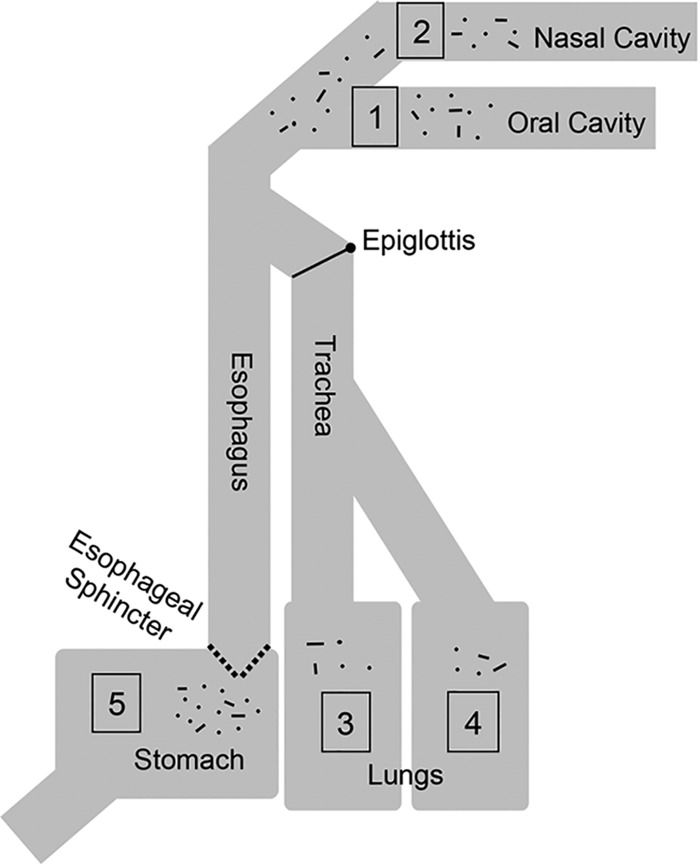
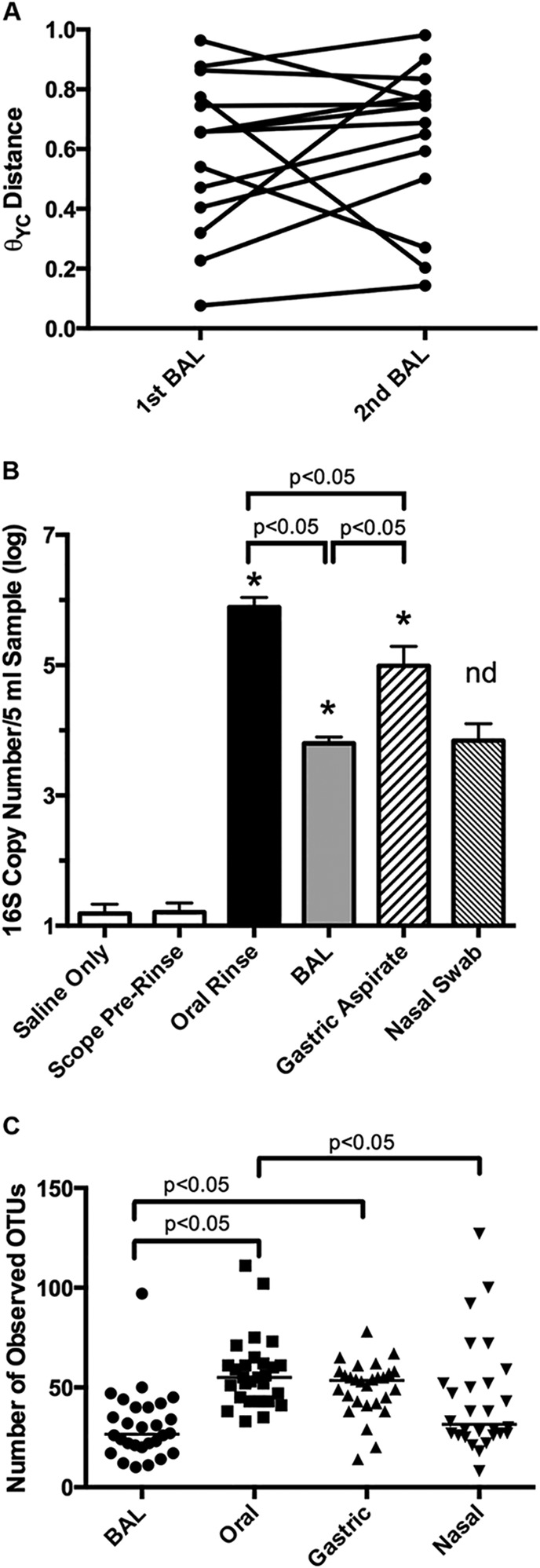
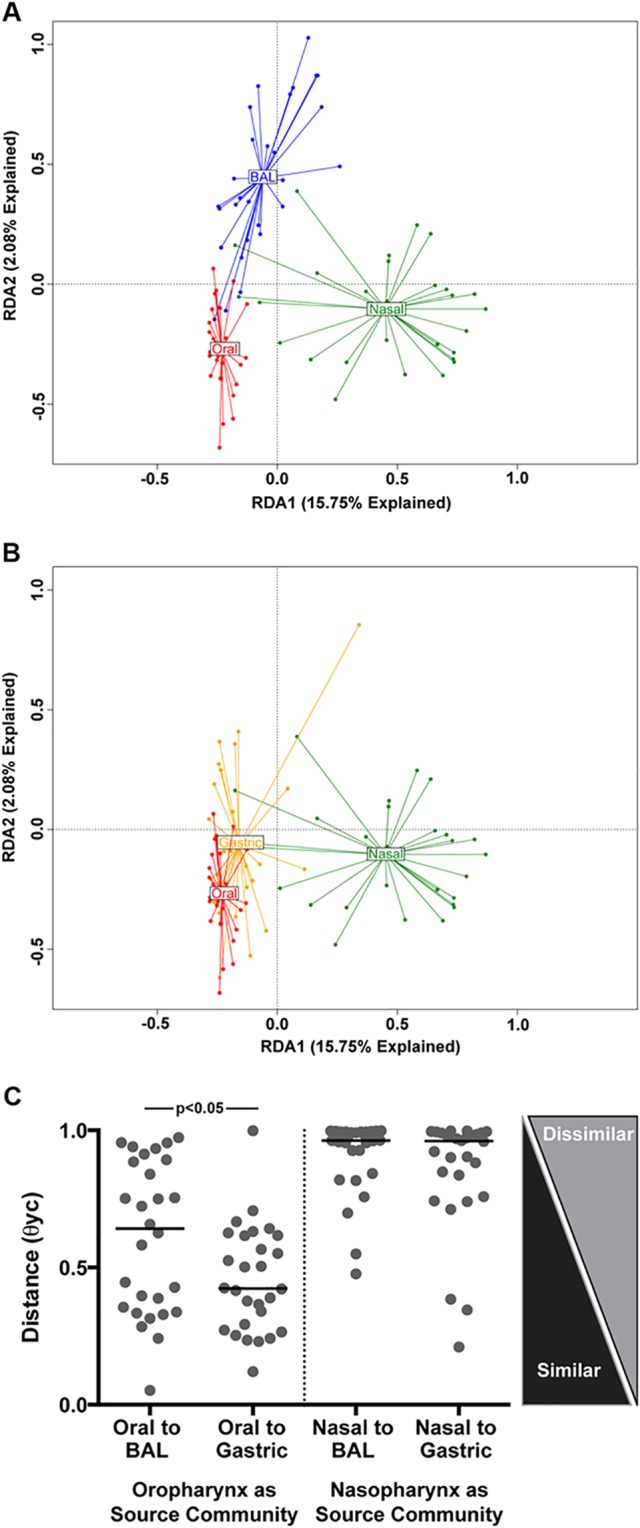
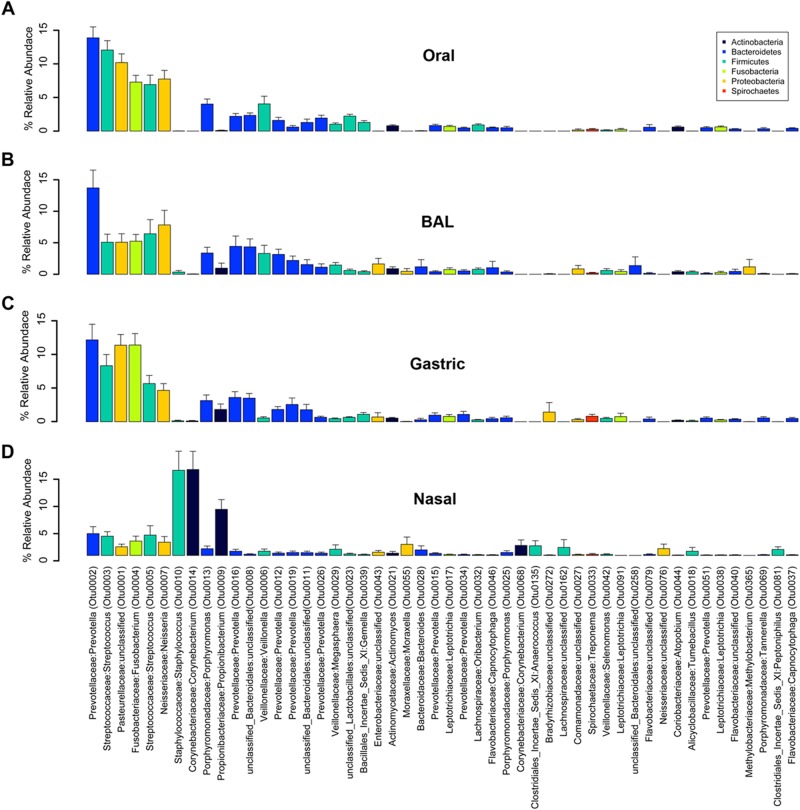
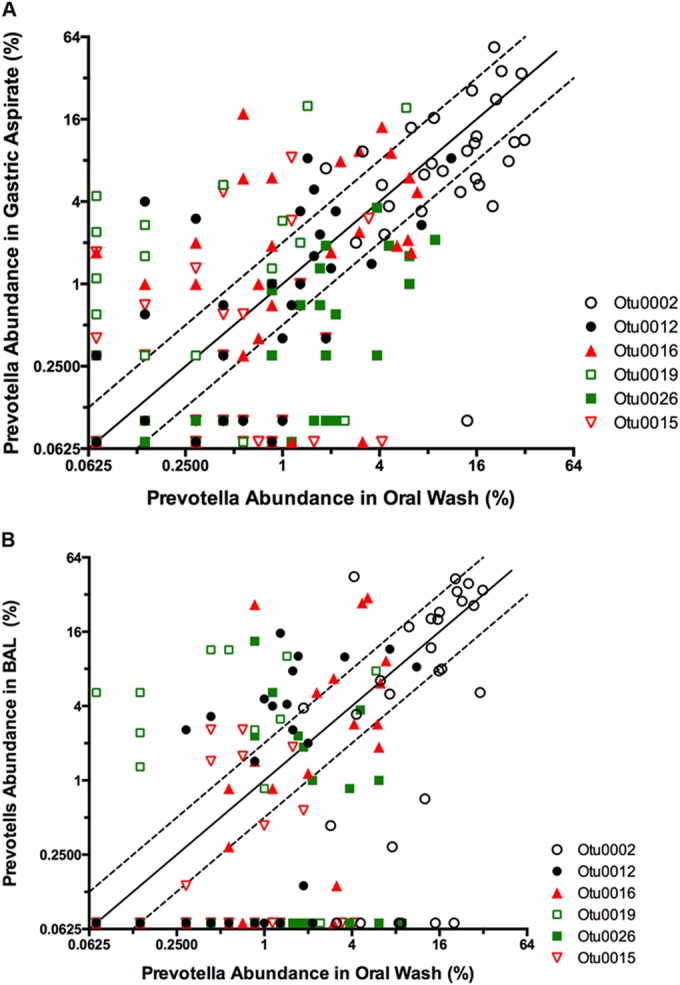
No studies have examined the relationships between bacterial communities along sites of the upper aerodigestive tract of an individual subject. Our objective was to perform an intrasubject and intersite analysis to determine the contributions of two upper mucosal sites (mouth and nose) as source communities for the bacterial microbiome of lower sites (lungs and stomach). Oral wash, bronchoalveolar lavage (BAL) fluid, nasal swab, and gastric aspirate samples were collected from 28 healthy subjects. Extensive analysis of controls and serial intrasubject BAL fluid samples demonstrated that sampling of the lungs by bronchoscopy was not confounded by oral microbiome contamination. By quantitative PCR, the oral cavity and stomach contained the highest bacterial signal levels and the nasal cavity and lungs contained much lower levels. Pyrosequencing of 16S rRNA gene amplicon libraries generated from these samples showed that the oral and gastric compartments had the greatest species richness, which was significantly greater in both than the richness measured in the lungs and nasal cavity. The bacterial communities of the lungs were significantly different from those of the mouth, nose, and stomach, while the greatest similarity was between the oral and gastric communities. However, the bacterial communities of healthy lungs shared significant membership with the mouth, but not the nose, and marked subject-subject variation was noted. In summary, microbial immigration from the oral cavity appears to be the significant source of the lung microbiome during health, but unlike the stomach, the lungs exhibit evidence of selective elimination of Prevotella bacteria derived from the upper airways. IMPORTANCE We have demonstrated that the bacterial communities of the healthy lung overlapped those found in the mouth but were found at lower concentrations, with lower membership and a different community composition. The nasal microbiome, which was distinct from the oral microbiome, appeared to contribute little to the composition of the lung microbiome in healthy subjects. Our studies of the nasal, oral, lung, and stomach microbiomes within an individual illustrate the microbiological continuity of the aerodigestive tract in healthy adults and provide culture-independent microbiological support for the concept that microaspiration is common in healthy individuals.
Overview
The claims and statistics of this paper haven’t been checked yet.
Free: it reads the open-access text and checks the first 5 claims that cite a source we can check. Create a free account to check every claim.
Integrity signals
Registry
Cites
Statistics
Figures
Verification
Claims the paper makes
The claims and statistics of this paper haven’t been checked yet.
Free: it reads the open-access text and checks the first 5 claims that cite a source we can check. Create a free account to check every claim.
Claims other papers make about this one
Each is checked against this paper’s own text: does it say what the citing paper says it does?
The source backs part of the claim, not all of it — or backs it for a different population, condition or comparison.
In the citing paper
“Culture-independent microbiota studies have confirmed that the lung microbiota largely resembles the URT microbiota when studied in healthy individuals74,75,76.”
From The microbiota of the respiratory tract: gatekeeper to respiratory health (2017) · cites this paper as [74]
Experimental — accuracy not yet measuredThe source backs part of the claim, not all of it — or backs it for a different population, condition or comparison.
In the citing paper
“The oropharynx seems to be the main source of the lung microbiota in adults74, whereas in children the source is more likely to be both the nasopharynx and oropharynx76.”
From The microbiota of the respiratory tract: gatekeeper to respiratory health (2017) · cites this paper as [74]
Experimental — accuracy not yet measuredThe source backs part of the claim, not all of it — or backs it for a different population, condition or comparison.
In the citing paper
“A specific challenge in microbiota surveys of the respiratory tract is the low density of bacterial communities that are found there, particularly in healthy individuals; densities as low as 102–103 bacteria ml−1 have been reported in bronchoalveolar lavages (BALs) of healthy individuals74,153.”
From The microbiota of the respiratory tract: gatekeeper to respiratory health (2017) · cites this paper as [74]
Experimental — accuracy not yet measuredThe source backs part of the claim, not all of it — or backs it for a different population, condition or comparison.
In the citing paper
“In healthy individuals, the microbial community richness (i.e., the total number of bacterial taxa) is lower in the LRT than that in the URT”
From Respiratory viral infection-induced microbiome alterations and secondary bacterial pneumonia. (2018) · cites this paper as [76]
Experimental — accuracy not yet measuredIn the citing paper
“The contribution of the gastric microbiota to the microbial community in the LRT through gastric–oesophageal reflux has, until now, been suggested to be negligible74.”
From The microbiota of the respiratory tract: gatekeeper to respiratory health (2017) · cites this paper as [74]
2 more claims about this paper
Create a free account to see every claim other papers make about this one.
Self-check
Percentages, sums and reported differences re-computed from the paper’s own numbers.
The self-check needs the paper’s full text.
Citations
Cites
Schloss, P. D., Westcott, S. L., Ryabin, T., Hall, J. R., Hartmann, M., Hollister, E. B., Lesniewski, R. A., Oakley, B. B., Parks, D. H., Robinson, C. J., et al. (2009) · Applied and Environmental Microbiology · doi:10.1128/aem.01541-09 · Cited by 19,549 · cited 1×
“0 (39, 40) as described previously (37, 38,”
A new method for non-parametric multivariate analysis of variance
Anderson, M. J. (2001) · Austral Ecology · doi:10.1111/j.1442-9993.2001.01070.pp.x · Cited by 13,828 · cited 4×
“The same relationships of the four sites were confirmed when tested by AMOVA or PERMANOVA (Table 1).”
MethodInfluentialStructure, function and diversity of the healthy human microbiome
The Human Microbiome Project Consortium (2012) · Nature · doi:10.1038/nature11234 · Cited by 11,726
Topographical and Temporal Diversity of the Human Skin Microbiome
Grice, E. A., Kong, H. H., Conlan, S., Deming, C. B., Davis, J., Young, A. C., Program, N. C. S., Bouffard, G. G., Blakesley, R. W., Murray, P. R., et al. (2009) · Science · doi:10.1126/science.1171700 · Cited by 2,953
Reducing the Effects of PCR Amplification and Sequencing Artifacts on 16S rRNA-Based Studies
Schloss, P. D., Gevers, D., & Westcott, S. L. (2011) · PLoS ONE · doi:10.1371/journal.pone.0027310 · Cited by 2,112 · cited 2×
“The YC distance (1 YC) between bacterial communities measures differences in community structure (44) and was selected because it weighs rare and abundant OTUs more evenly than other metrics such as Bray-Curtis or Morisita-Horn (39).”
BackgroundQuantifying the roles of immigration and chance in shaping prokaryote community structure
Sloan, W. T., Lunn, M., Woodcock, S., Head, I. M., Nee, S., & Curtis, T. P. (2006) · Environmental Microbiology · doi:10.1111/j.1462-2920.2005.00956.x · Cited by 1,887 · cited 1×
“tomized R script based on the neutral model (42) was then used to identify”
MethodDisordered Microbial Communities in Asthmatic Airways
Hilty, M., Burke, C., Pedro, H., Cardenas, P., Bush, A., Bossley, C., Davies, J., Ervine, A., Poulter, L., Pachter, L., et al. (2010) · PLoS ONE · doi:10.1371/journal.pone.0008578 · Cited by 1,824 · cited 1×
“During states of ill health, such as viral upper respiratory tract infections, allergies, or sinus infections, the liquid flow from the nasal cavity increases, and this clearly has the potential to affect the lung microbiome, consistent with studies of rhinovirus infection and asthmatics that highlighted changes in th…”
BackgroundMolecular analysis of the bacterial microbiota in the human stomach
Bik, E. M., Eckburg, P. B., Gill, S. R., Nelson, K. E., Purdom, E. A., Francois, F., Perez-Perez, G., Blaser, M. J., & Relman, D. A. (2006) · Proceedings of the National Academy of Sciences · doi:10.1073/pnas.0506655103 · Cited by 1,158
Topographical Continuity of Bacterial Populations in the Healthy Human Respiratory Tract
Charlson, E. S., Bittinger, K., Haas, A. R., Fitzgerald, A. S., Frank, I., Yadav, A., Bushman, F. D., & Collman, R. G. (2011) · American Journal of Respiratory and Critical Care Medicine · doi:10.1164/rccm.201104-0655oc · Cited by 1,144 · cited 1×
“Within an individual, the similarity between the oral and lung microbiomes varied widely, with some individuals having a lung microbiome that was almost identical to their oral microbiome, similar to a previous report (9), while in others the two sites were markedly different.”
ResultAnalysis of the lung microbiome in the “healthy” smoker and in COPD.
Erb-Downward, J. R., Thompson, D. L., Han, M. K., Freeman, C. M., McCloskey, L., Schmidt, L. A., Young, V. B., Toews, G. B., Curtis, J. L., Sundaram, B., et al. (2011) · PLoS ONE · doi:10.1371/journal.pone.0016384 · Cited by 973
Self-citation
Cited by
Items 801–838 of 838
Regard, L. (2019) · theses.fr (ABES) · doi:10.70675/0fc2d43fz2ce6z48b6za17bz193a5ee24f49
Bingula, R. (2019) · theses.fr (ABES) · doi:10.70675/0634dca5z63c4z42bdza47azaf2d4eb69fd8 · Cited by 1
Rôle du microbiote dans les interactions hôte-pathogène dans la tuberculose
Dumas, A. (2018) · theses.fr (ABES) · doi:10.70675/6773a408zdb52z44bbzb51ez3998deaf3ded
The organoid revolution to assess mycobacterial pulmonary infections
Leon‐Icaza, S. A. (2022) · theses.fr (ABES) · doi:10.70675/6e135d5fzb953z4ffcz9041z2684784040ad
Impact du microbiote intestinal sur les surinfections bactériennes post-grippales
Sencio, V. (2020) · theses.fr (ABES) · doi:10.70675/15f9ad6cz34d4z4d8azac75zece70c0fd094
Stavart, C., Gohy, S., Lebeer, S., Bambeke, F. V., Crabbé, A., & Pilette, C. (2026) · Frontiers in Cellular and Infection Microbiology · doi:10.3389/fcimb.2026.1796523 · Cited by 1
“…, Streptococcus , Cutibacterium and Dolosigranulum in the nasopharynx; and Streptococcus , Veillonella , and Prevotella in the oropharynx (Bassis et al., 2015; Odendaal et al., 2024; Quinn-Bohmann et al., 2024), although these patterns vary with geography, lifestyle, host genetics and…”
Hernandez, C. J. R., Cruz‐Cruz, A. D., Shrestha, C. L., Terekhova, M., Chen, P., Perpich, J. D., Potempa, B. A., Carey, K., Rohlfing, M. M., Peeples, M. E., et al. (2026) · Proceedings of the National Academy of Sciences · doi:10.1073/pnas.2503100123
“Given the presence of oral microbes in the human upper airways, including Pg (16, 18, 19), we investigated whether Pg or Pg - derived virulence factors modulate host susceptibility to respiratory viruses such as RSV. Concordant with our observations in the gingival epithelium, Pg suppressed IFNs…”
InfluentialYu, Y., Huang, P., Hu, X., Yang, S., Feng, J., Zhang, M., & Jie, Z. (2026) · International Journal of COPD · doi:10.2147/copd.s573807
“6 Studies have found that healthy individuals also experience microaspiration in daily life, 7 and compared to nasal microbiota, oral microbiota composition shows higher similarity with pulmonary microbiota, 8 suggesting a close relationship between oral microorganisms and pulmonary diseases.”
InfluentialHron, B. M., Zhang, Y. J., Golden, C., Chalmers, C., Nemec, G. E., Delaney, E., Ozcan, E., Kim, M., Jalali, L., Solari, T., et al. (2026) · Journal of Parenteral and Enteral Nutrition · doi:10.1002/jpen.70097
“20,31,32 However, when we look at relative abundance of bacteria genera in patients on blenderized tube compared with formula, Prevotella was lower with blenderized tube feeds.”
The triangular relationship between vitamin D, the respiratory microbiome, and pneumonia
Ali, N. (2026) · European journal of medical research · doi:10.1186/s40001-026-04560-0
Multi-site microbiomes’ response to chronic obstructive pulmonary disease
Liu, M., Zhang, W., Zhang, J., Lv, N., Wu, X., Alalawy, A. I., Zhao, W., Bao, H., & Wu, J. (2026) · Microbiology Spectrum · doi:10.1128/spectrum.00007-26
Zuo, T., Lu, Y., & Li, Y. P. (2025) · Springer handbooks · doi:10.1007/978-3-032-01636-2_37
He, T., Cairang, Z., Xu, Y., Shangguan, Y., Wang, B. L., & Song, Y. (2026) · International Journal of COPD · doi:10.2147/copd.s605196
“11 Although a recent meta-analysis noted inter-study heterogeneity and failed to confirm significant alpha diversity reductions across all comparisons, 12 the preponderance of evidence supports an association between microbiota dysbiosis and COPD progression.”
Zhao, Y., Gao, Y., Li, X., Georgian, E. M., Pinkerton, K. E., & Zhang, C. (2026) · Frontiers in Cellular and Infection Microbiology · doi:10.3389/fcimb.2026.1739520
“…microbiota overlaps with that of the upper respiratory tract, supporting the notion that upper respiratory tract and even oral contents enter the lower respiratory tract via direct downstream mucosal diffusion and microaspiration (Bassis et al., 2015; Kloepfer et al., 2018; Brewer et al., 2021).”
Oral microbiota dysbiosis and the oral-X axis in chronic diseases
Li, E., Huang, J., Yao, J., Lei, M., & Wu, M. (2026) · Genes & Diseases · doi:10.1016/j.gendis.2026.102274 · Cited by 3
Gao, G., Wei, Z., Zhang, Q., Wang, Y., Zhao, Z., Wang, Y., Bao, H., & Lv, Y. (2026) · BMC Microbiology · doi:10.1186/s12866-026-05319-7
“Notably, this phenomenon may be specific to diseased states, as prior studies have shown that the nasal microbiome contributes minimally to the lung microbiota in healthy individuals [6].”
Machnicki, P., Czarnecka, K. H., Kordiak, J., Lewandowski, K., Bielec, F., Płoszaj, T., Brzeziańska‐Lasota, E., & Pastuszak‐Lewandoska, D. (2026) · Cancers · doi:10.3390/cancers18132105
Alanazi, A. (2026) · Journal of Clinical Laboratory Analysis · doi:10.1002/jcla.70307
The Composition of Dental Plaque in Patients With Pulmonary Hypertension
Song, J., Xing, Y., Liu, C., Yi, X., Hu, L., Hong, R., Luo, X., Jiang, C., Zhou, S., Hu, X., et al. (2026) · Comprehensive physiology · doi:10.1002/cph4.70238
Tawil, A. E., Korban, J., Abbas, H., Kaakour, I. A., Yassine, F., & Bilen, M. (2026) · Microorganisms · doi:10.3390/microorganisms14081688
“They further support mucosal barrier integrity via interactions with airway epithelium that influence barrier structure, mucus production, and mucociliary clearance [4]. munity composition [6,8].”
Zhang, Z., Gao, L., Guan, L., Qian, Z., Li, J., & Tong, Z. (2026) · Journal of Translational Medicine · doi:10.1186/s12967-026-08697-8
“A growing body of evidence supports the existence of an integrated oral–lung axis, whereby oral microbes modulate the pulmonary microenvironment and its function via micro-aspiration, shared mucosal immunity, and the exchange of microbial metabolites [5–7].”
Stoner, S. N., Fairbanks-Mahnke, A., & Clark, S. E. (2026) · Journal of Bacteriology · doi:10.1128/jb.00228-26
“The highest density of Prevotella occurs in the upper respiratory tract, particularly in the oral cavity and oropharynx, with detection also noted in tonsillar tissue and the nasopharynx (66, 69, 70).”
Kageyama, S., Kan‐o, K., Asakawa, M., Ogata, H., Ogawa, T., Shiota, A., Jo, A., Ishii, Y., & Takeshita, T. (2026) · ISME Host Microbe · doi:10.1093/ismehm/aazag005
Xiao, S., Lin, F., Li, Y., & Zhuang, Q. (2026) · Brain Behavior & Immunity - Health · doi:10.1016/j.bbih.2026.101335
“The lower airway is continuously seeded by oral microbiota through microaspiration, and its composition is shaped by the balance of microbial immigration, clearance, and local growth conditions (Dickson and Huffnagle, 2015).”
Yang, Y., Cui, J., Dong, X., Huang, Y., An, J., Cui, T., Ou, X., Liu, T., Gao, X., Zhang, H., et al. (2026) · Pathogens · doi:10.3390/pathogens15090883
“…have shown that S. pneumoniae , S. aureus , M. catarrhalis , P. aeruginosa and H. influenza are associated with asthma exacerbation and development [73,74]; the respiratory microbiota of asthma is mainly composed of pathogenic bacteria such as Haemophilus , Streptococcus , and Moraxella ; and…”
Cannon, M. L., Peldyak, J., Reynolds, P. R., & Ferrer, G. (2026) · Microorganisms · doi:10.3390/microorganisms14091913
Liu, X., Ding, G., Jin, L., Song, W., Li, Y., Chen, X., & Cui, J. (2026) · Frontiers in Immunology · doi:10.3389/fimmu.2026.1939497
Cervantes‐Guevara, G., Zepeda-Gutiérrez, L. A., Hernández-Mora, F. J., Ambriz-Alarcón, M. A., Vicente-Hernández, B., Ramírez-Ochoa, S., Cervantes-Pérez, G., González‐Ojeda, A., Fuentes‐Orozco, C., Cervantes‐Cardona, G. A., et al. (2026) · IntechOpen eBooks · doi:10.5772/intechopen.1018024
Xiao, S., Zhuang, Q., Cui, G., & Li, Y. (2026) · Microbiology Spectrum · doi:10.1128/spectrum.01263-26
The role of the respiratory microbiome in acute and chronic respiratory diseases
Heinzinger, L. R., Segal, L. N., & Dickson, R. P. (2026) · Nature Reviews Microbiology · doi:10.1038/s41579-026-01377-w · Cited by 3
Self-citationYang, Y., Tang, X., Chen, R., & Wang, Z. (2026) · Respirology · doi:10.1002/resp.70329 · Cited by 1
Natural products shape microbial ecology and disease in the cystic fibrosis airway
Bhowmik, N., & Stubbendieck, R. M. (2026) · Natural Product Reports · doi:10.1039/d6np00067c · Cited by 1
Dong, H., & Xin, H. (2026) · iScience · doi:10.1016/j.isci.2026.117985
“In healthy adults, bronchoalveolar lavage microbiota overlapped with oral communities and were more similar to oral than nasal microbiota, although bacterial burden was substantially lower in the lung 12 (Figure 1).”
Oral colonization patterns according to ventilatory support modality in critically ill patients
Oliveira, L. V., Antoniassi, M. E. C., Alcântara, S. F. M., Pereira, L. J., Carvalho, I. C., Pereira, C. V., & Garcia, N. G. (2026) · Journal of Infection Prevention · doi:10.1177/17571774261502347
Metadata
- Authors
- Bassis, C. M., Erb-Downward, J. R., Dickson, R. P., Freeman, C. M., Schmidt, T. M., Young, V. B., Beck, J. M., Curtis, J. L., & Huffnagle, G. B.
- Affiliations
- University of Michigan (US)
- Division of Pulmonary and Critical Care Medicine, Department of Internal Medicine, University of Michigan Medical School, Ann Arbor, Michigan, USA
- VA Eastern Colorado Health Care System (US)
- Corresponding author
- Huffnagle, Gary B.
- ORCID
- Venue
- mBio
- Publisher
- American Society for Microbiology
- Published
- 2015-05
- Volume
- 6
- Issue
- 2
- Pages
- e00037-e00037
- ISSN
- 2150-7511 (ISSN-L)
- 2161-2129
- PMC
- PMC4358017
- OpenAlex
- W2166358290
- Cited by
- 839
- References
- 46
- Citations by year
- 2026: 51 · 2025: 70 · 2024: 83 · 2023: 74 · 2022: 106 · 2021: 89 · 2020: 84 · 2019: 63 · 2018: 80 · 2017: 71 · 2016: 50 · 2015: 18
- FWCI
- 98.72
- Type
- journal article
- Language
- en
- Open access
- gold
- doi.org
- Licence
- cc-by-nc-sa
- creativecommons.org/licenses/by-nc-sa/3.0/ (vor)
- journals.asm.org/non-commercial-tdm-license (tdm)
- Locations
- mBio (publishedVersion, cc-by-nc-sa)
- PubMed Central (publishedVersion, cc-by-nc-sa)
- PubMed (publishedVersion)
- DOAJ (DOAJ: Directory of Open Access Journals) (submittedVersion, cc-by-sa)
- Funders
- National Heart, Lung, and Blood Institute (U01HL098961, L30 HL120241, T32HL00774921, R01HL114447, T32HL007749)
- National Institute of Diabetes and Digestive and Kidney Diseases (P30DK034933)
- Topics
- Health Sciences › Dentistry › Periodontics › Oral microbiology and periodontitis research
- Life Sciences › Biochemistry, Genetics and Molecular Biology › Molecular Biology › Gut microbiota and health
- Physical Sciences › Environmental Science › Ecology › Microbial Community Ecology and Physiology
- Keywords
- lung microbiome, gastric microbiota, oral microbiota, nasal microbiota, upper respiratory tract, aerodigestive tract, microaspiration, Prevotella, bronchoalveolar lavage
- MeSH terms
- Bacteria, DNA, Bacterial, DNA, Ribosomal, Humans, Lung, Molecular Sequence Data, Mouth, Nasal Cavity, RNA, Ribosomal, 16S, Stomach, Sequence Analysis, DNA, Real-Time Polymerase Chain Reaction, Microbiota, Healthy Volunteers
About these checks
Registry, retraction, Cites and statistics results are computed, not judged, with one exception: a printed reference that no index lists is read once by a model before it counts as a citation error. Claims are extracted by a model and kept only when their quote appears verbatim in the text; each cited source is then checked, with a model’s help, for whether it says what the claim relies on. Those verdicts can be wrong — read the claim’s quote and the cited source before relying on one.
Statistics and arithmetic are recomputed, not judged.
Confidence bands are shown only for fields calibrated on our annotated test set. None is calibrated yet, so no band is shown.
What counts as a claim ›How we measure confidence ›How we check this ›
Are you an author, or do you see a problem with this page? Request a review
Data sources
Bibliographic data: Semantic Scholar, OpenAlex, Crossref.
Contains information from the Semantic Scholar Academic Graph Datasets, made available under the ODC Attribution License (ODC-BY 1.0).
Semantic Scholar’s data is described in: Kinney, R., et al. (2023). The Semantic Scholar Open Data Platform. arXiv:2301.10140.
