

Analysis of the Upper Respiratory Tract Microbiotas as the Source of the Lung and Gastric Microbiotas in Healthy Individuals
Open accessThe DOI matches its Crossref record; 45 of the 46 references it cites were found in a registry or an index.
Abstract
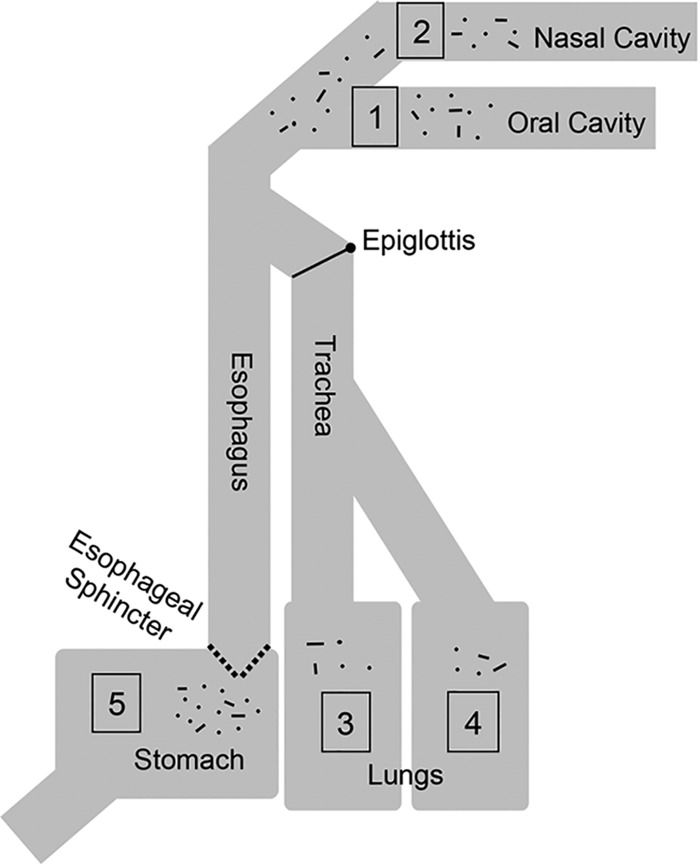
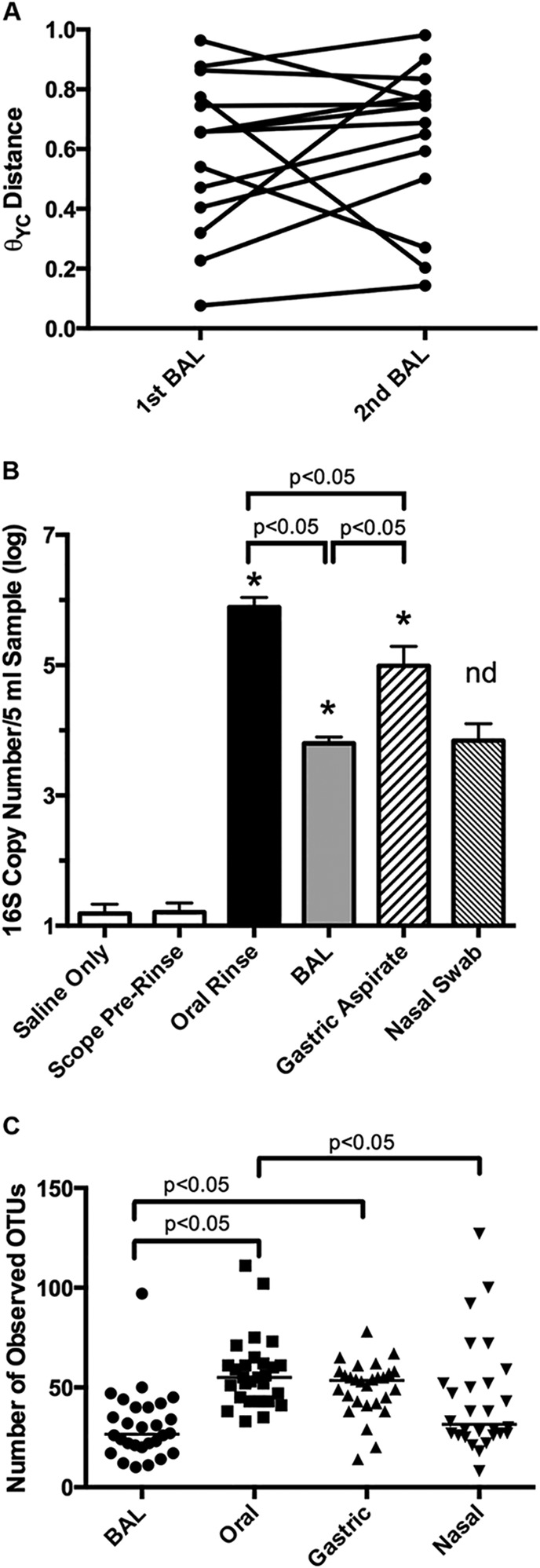
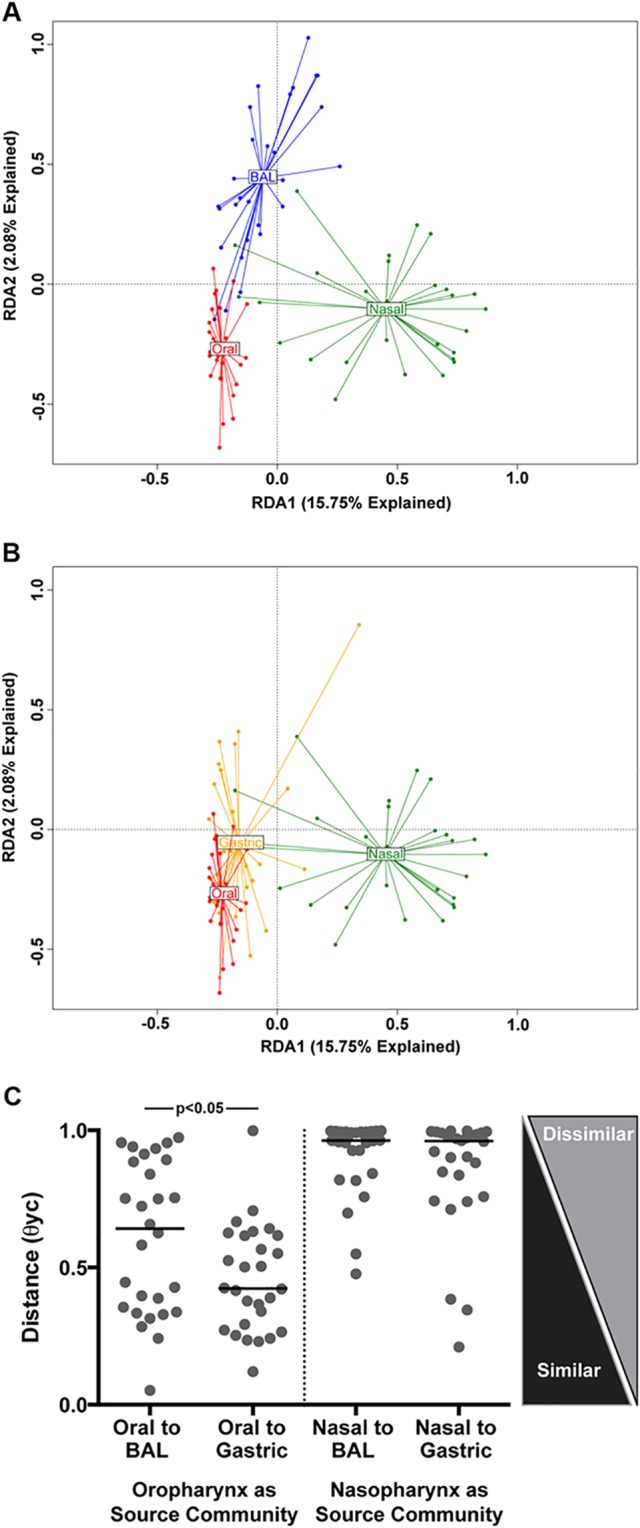
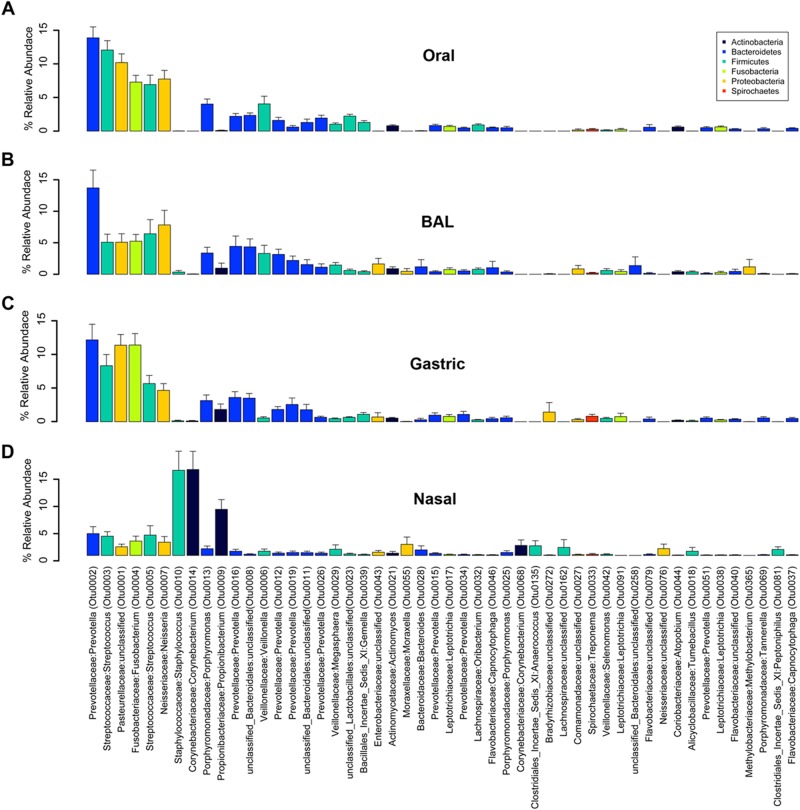
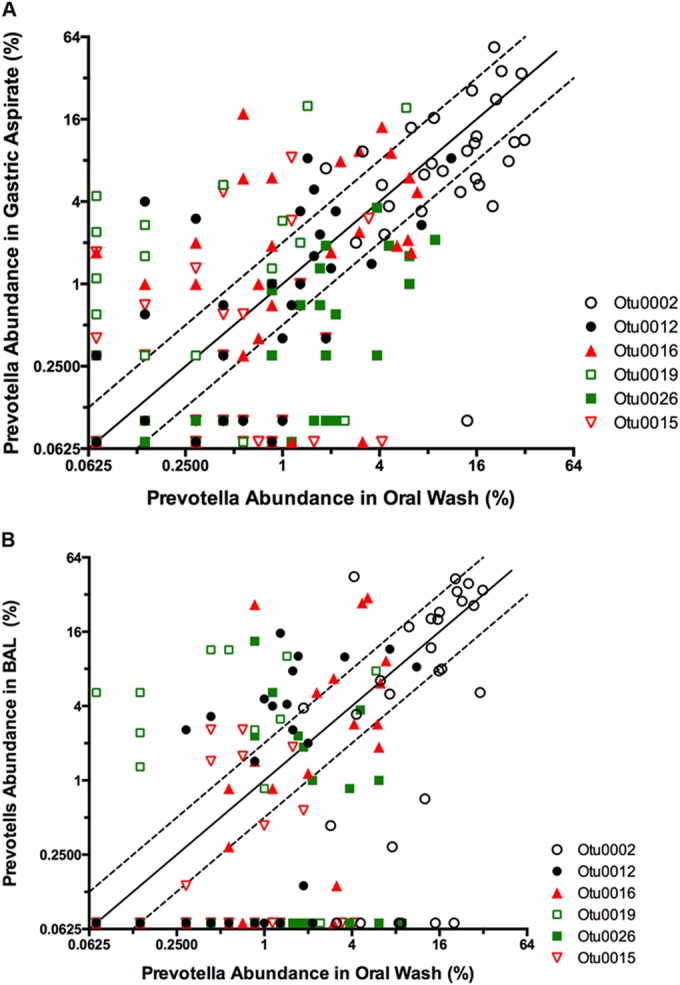
No studies have examined the relationships between bacterial communities along sites of the upper aerodigestive tract of an individual subject. Our objective was to perform an intrasubject and intersite analysis to determine the contributions of two upper mucosal sites (mouth and nose) as source communities for the bacterial microbiome of lower sites (lungs and stomach). Oral wash, bronchoalveolar lavage (BAL) fluid, nasal swab, and gastric aspirate samples were collected from 28 healthy subjects. Extensive analysis of controls and serial intrasubject BAL fluid samples demonstrated that sampling of the lungs by bronchoscopy was not confounded by oral microbiome contamination. By quantitative PCR, the oral cavity and stomach contained the highest bacterial signal levels and the nasal cavity and lungs contained much lower levels. Pyrosequencing of 16S rRNA gene amplicon libraries generated from these samples showed that the oral and gastric compartments had the greatest species richness, which was significantly greater in both than the richness measured in the lungs and nasal cavity. The bacterial communities of the lungs were significantly different from those of the mouth, nose, and stomach, while the greatest similarity was between the oral and gastric communities. However, the bacterial communities of healthy lungs shared significant membership with the mouth, but not the nose, and marked subject-subject variation was noted. In summary, microbial immigration from the oral cavity appears to be the significant source of the lung microbiome during health, but unlike the stomach, the lungs exhibit evidence of selective elimination of Prevotella bacteria derived from the upper airways. IMPORTANCE We have demonstrated that the bacterial communities of the healthy lung overlapped those found in the mouth but were found at lower concentrations, with lower membership and a different community composition. The nasal microbiome, which was distinct from the oral microbiome, appeared to contribute little to the composition of the lung microbiome in healthy subjects. Our studies of the nasal, oral, lung, and stomach microbiomes within an individual illustrate the microbiological continuity of the aerodigestive tract in healthy adults and provide culture-independent microbiological support for the concept that microaspiration is common in healthy individuals.
Overview
The claims and statistics of this paper haven’t been checked yet.
Free: it reads the open-access text and checks the first 5 claims that cite a source we can check. Create a free account to check every claim.
Integrity signals
Registry
Cites
Statistics
Figures
Verification
Claims the paper makes
The claims and statistics of this paper haven’t been checked yet.
Free: it reads the open-access text and checks the first 5 claims that cite a source we can check. Create a free account to check every claim.
Claims other papers make about this one
Each is checked against this paper’s own text: does it say what the citing paper says it does?
The source backs part of the claim, not all of it — or backs it for a different population, condition or comparison.
In the citing paper
“Culture-independent microbiota studies have confirmed that the lung microbiota largely resembles the URT microbiota when studied in healthy individuals74,75,76.”
From The microbiota of the respiratory tract: gatekeeper to respiratory health (2017) · cites this paper as [74]
Experimental — accuracy not yet measuredThe source backs part of the claim, not all of it — or backs it for a different population, condition or comparison.
In the citing paper
“The oropharynx seems to be the main source of the lung microbiota in adults74, whereas in children the source is more likely to be both the nasopharynx and oropharynx76.”
From The microbiota of the respiratory tract: gatekeeper to respiratory health (2017) · cites this paper as [74]
Experimental — accuracy not yet measuredThe source backs part of the claim, not all of it — or backs it for a different population, condition or comparison.
In the citing paper
“A specific challenge in microbiota surveys of the respiratory tract is the low density of bacterial communities that are found there, particularly in healthy individuals; densities as low as 102–103 bacteria ml−1 have been reported in bronchoalveolar lavages (BALs) of healthy individuals74,153.”
From The microbiota of the respiratory tract: gatekeeper to respiratory health (2017) · cites this paper as [74]
Experimental — accuracy not yet measuredThe source backs part of the claim, not all of it — or backs it for a different population, condition or comparison.
In the citing paper
“In healthy individuals, the microbial community richness (i.e., the total number of bacterial taxa) is lower in the LRT than that in the URT”
From Respiratory viral infection-induced microbiome alterations and secondary bacterial pneumonia. (2018) · cites this paper as [76]
Experimental — accuracy not yet measuredIn the citing paper
“The contribution of the gastric microbiota to the microbial community in the LRT through gastric–oesophageal reflux has, until now, been suggested to be negligible74.”
From The microbiota of the respiratory tract: gatekeeper to respiratory health (2017) · cites this paper as [74]
2 more claims about this paper
Create a free account to see every claim other papers make about this one.
Self-check
Percentages, sums and reported differences re-computed from the paper’s own numbers.
The self-check needs the paper’s full text.
Citations
Cites
Schloss, P. D., Westcott, S. L., Ryabin, T., Hall, J. R., Hartmann, M., Hollister, E. B., Lesniewski, R. A., Oakley, B. B., Parks, D. H., Robinson, C. J., et al. (2009) · Applied and Environmental Microbiology · doi:10.1128/aem.01541-09 · Cited by 19,549 · cited 1×
“0 (39, 40) as described previously (37, 38,”
A new method for non-parametric multivariate analysis of variance
Anderson, M. J. (2001) · Austral Ecology · doi:10.1111/j.1442-9993.2001.01070.pp.x · Cited by 13,828 · cited 4×
“The same relationships of the four sites were confirmed when tested by AMOVA or PERMANOVA (Table 1).”
MethodInfluentialStructure, function and diversity of the healthy human microbiome
The Human Microbiome Project Consortium (2012) · Nature · doi:10.1038/nature11234 · Cited by 11,726
Topographical and Temporal Diversity of the Human Skin Microbiome
Grice, E. A., Kong, H. H., Conlan, S., Deming, C. B., Davis, J., Young, A. C., Program, N. C. S., Bouffard, G. G., Blakesley, R. W., Murray, P. R., et al. (2009) · Science · doi:10.1126/science.1171700 · Cited by 2,953
Reducing the Effects of PCR Amplification and Sequencing Artifacts on 16S rRNA-Based Studies
Schloss, P. D., Gevers, D., & Westcott, S. L. (2011) · PLoS ONE · doi:10.1371/journal.pone.0027310 · Cited by 2,112 · cited 2×
“The YC distance (1 YC) between bacterial communities measures differences in community structure (44) and was selected because it weighs rare and abundant OTUs more evenly than other metrics such as Bray-Curtis or Morisita-Horn (39).”
BackgroundQuantifying the roles of immigration and chance in shaping prokaryote community structure
Sloan, W. T., Lunn, M., Woodcock, S., Head, I. M., Nee, S., & Curtis, T. P. (2006) · Environmental Microbiology · doi:10.1111/j.1462-2920.2005.00956.x · Cited by 1,887 · cited 1×
“tomized R script based on the neutral model (42) was then used to identify”
MethodDisordered Microbial Communities in Asthmatic Airways
Hilty, M., Burke, C., Pedro, H., Cardenas, P., Bush, A., Bossley, C., Davies, J., Ervine, A., Poulter, L., Pachter, L., et al. (2010) · PLoS ONE · doi:10.1371/journal.pone.0008578 · Cited by 1,824 · cited 1×
“During states of ill health, such as viral upper respiratory tract infections, allergies, or sinus infections, the liquid flow from the nasal cavity increases, and this clearly has the potential to affect the lung microbiome, consistent with studies of rhinovirus infection and asthmatics that highlighted changes in th…”
BackgroundMolecular analysis of the bacterial microbiota in the human stomach
Bik, E. M., Eckburg, P. B., Gill, S. R., Nelson, K. E., Purdom, E. A., Francois, F., Perez-Perez, G., Blaser, M. J., & Relman, D. A. (2006) · Proceedings of the National Academy of Sciences · doi:10.1073/pnas.0506655103 · Cited by 1,158
Topographical Continuity of Bacterial Populations in the Healthy Human Respiratory Tract
Charlson, E. S., Bittinger, K., Haas, A. R., Fitzgerald, A. S., Frank, I., Yadav, A., Bushman, F. D., & Collman, R. G. (2011) · American Journal of Respiratory and Critical Care Medicine · doi:10.1164/rccm.201104-0655oc · Cited by 1,144 · cited 1×
“Within an individual, the similarity between the oral and lung microbiomes varied widely, with some individuals having a lung microbiome that was almost identical to their oral microbiome, similar to a previous report (9), while in others the two sites were markedly different.”
ResultAnalysis of the lung microbiome in the “healthy” smoker and in COPD.
Erb-Downward, J. R., Thompson, D. L., Han, M. K., Freeman, C. M., McCloskey, L., Schmidt, L. A., Young, V. B., Toews, G. B., Curtis, J. L., Sundaram, B., et al. (2011) · PLoS ONE · doi:10.1371/journal.pone.0016384 · Cited by 973
Self-citation
Cited by
Items 701–800 of 838
THE MICROBIOTA OF LOWER AIRWAYS IN PATIENTS WITH CHRONIC OBSTRUCTIVE LUNG DISEASES
Александровна, М. С., Danilina, G. А., Smirnova, M. Y., Osipova, G. L., Gervazieva, V. B., Konischeva, A. Y., & Оspelnikova, Т. P. (2018) · Journal of microbiology epidemiology immunobiology · doi:10.36233/0372-9311-2018-5-53-60
Use of Diagnostic Metagenomics in the Clinical Microbiology Laboratory
Mitchell, S. L. (2019) · American Society for Clinical Laboratory Science · doi:10.29074/ascls.119.001768 · Cited by 3
The Airway Microbiome and Bronchopulmonary Dysplasia
Lal, C. V., Dolma, K., & Ambalavanan, N. (2019) · Elsevier eBooks · doi:10.1016/b978-0-323-68353-1.00010-5
Respiratory Microbiome in Children
Kim, D. H. (2019) · Pediatric Infection & Vaccine · doi:10.14776/piv.2019.26.e24
Lee, S. Y. (2020) · DR-NTU (Nanyang Technological University) · doi:10.32657/10356/136835
Potential use of synbiotics in ENT diseases
Гаращенко, Т. И., & Тарасова, Г. Д. (2020) · Meditsinskiy sovet = Medical Council · doi:10.21518/2079-701x-2020-4-85-92 · Cited by 2
Jo, A., Won, J., Chil, C. H., Choi, J. Y., Lee, K., Yoon, S. S., & Kim, H. J. (2020) · bioRxiv (Cold Spring Harbor Laboratory) · doi:10.1101/2020.08.03.235648
The development of the respiratory microbiota in infants and children
Powell, E. A. (2019) · doi:10.25560/82376
Bronchoalveolar Lavage: Microbial Evaluation
Downes, K. J., Bouso, J. M., & Planet, P. J. (2020) · Respiratory medicine · doi:10.1007/978-3-030-54924-4_9 · Cited by 1
Héry-Arnaud, G. (2020) · Revue Francophone des Laboratoires · doi:10.1016/s1773-035x(20)30356-7 · Cited by 2
Nagai, M., Moriyama, M., & Ichinohe, T. (2020) · Research Square · doi:10.21203/rs.3.rs-129105/v1
Neu, J. (2021) · Elsevier eBooks · doi:10.1016/b978-0-12-820590-7.00006-1
Optimized Analysis of the Lung Allograft Microbiota from Bronchoalveolar Lavage Fluid
Prescod, J. (2018) · TSpace (University of Toronto)
Elimination and irrigation therapy to optimize the state of the nasal microbiome in children
Chelpachenko, O. E., Danilova, E. I., & In, C. (2021) · Meditsinskiy sovet = Medical Council · doi:10.21518/2079-701x-2021-1-50-58
Dunlap, D. G., Yang, L., Qin, S., Ries, J., Li, K., Fitch, A. C., Huang, L., McVerry, B. J., Methé, B. A., & Morris, A. M. (2021) · medRxiv · doi:10.1101/2021.06.02.21258247
Portezan, C. N., & Capel, L. M. M. (2021) · Brazilian Journal of Development · doi:10.34117/bjdv7n8-597 · Cited by 1
Druzhinin, V. G., Matskova, L. V., Сергеевич, Д. П., Baranova, E. D., Volobaev, V. P., Minina, V. I., Викторович, Л. А., & Paradnikova, S. A. (2020) · Research Square · doi:10.21203/rs.3.rs-56277/v1
“The lung microbiome shows great interindividual variability [9, 22].”
BackgroundWu, Y., Qiao, B., Zhang, Q., Jia, W.-Q., Meng, H., Xing, H., Li, Y., Yang, Z., & Yuan, J. (2021) · Research Square · doi:10.21203/rs.3.rs-850383/v1
Respiratory microbiome and its susceptibility to Mycobacterium tuberculosis infection
Semail, N. (2019) · Universiti Sains Malaysia Institutional Repository (Universiti Sains Malaysia)
Microbiome and Inflammation in Antibody Deficiency
Berbers, R.-M. (2021) · Utrecht University Repository (Utrecht University) · doi:10.33540/254
Jude, M. S. (2021) · cIRcle (University of British Columbia) · doi:10.14288/1.0402634
Dzikowiec, M., & Pastuszak‐Lewandoska, D. (2021) · Postępy Higieny i Medycyny Doświadczalnej · doi:10.2478/ahem-2021-0008 · Cited by 1
Mechanical ventilation affects the microecology of the rat respiratory tractPreprint
Xue-Meng, C., Liu, G.-W., Xiao-Mei, L., Fan-Fang, Z., & Xiao, J.-F. (2021) · bioRxiv (Cold Spring Harbor Laboratory) · doi:10.1101/2021.12.07.471701
ENFRENTAMIENTO DE LA RESPIRACIÓN DISFUNCIONAL EN NIÑOS Y ADOLESCENTES
Barker, N., & Everard, M. L. (2021) · Neumología Pediátrica · doi:10.51451/np.v10i3.353
Nagai, M., Moriyama, M., & Ichinohe, T. (2020) · bioRxiv (Cold Spring Harbor Laboratory) · doi:10.1101/2020.12.25.424300
“While upper respiratory tract contains commensal bacteria (Bassis et al., 2015; Clark, 2020), intranasal administration of split vaccine alone was insufficient to induce the vaccine-specific nasal IgA response (Ichinohe et al., 2005; Jangra et al., 2020), suggesting that the amounts of commensal…”
BackgroundThe Respiratory Microbiome in Health and Disease
Invernizzi, R., & Molyneaux, P. L. (2021) · Elsevier eBooks · doi:10.1016/b978-0-08-102723-3.00196-7
Unlocking the Mysteries of the Human Microbiome to Combat COVID-19
Muthuirulan, P., Bandyopadhyay, M., Mamillapalli, S., & Sharma, P. (2022) · Springer eBooks · doi:10.1007/978-981-16-7672-7_11
Rhoades, N. S., Davies, M., Lewis, S. A., Cinco, I. R., Kohama, S. G., Bermudez, L. E., Winthrop, K. L., Fuss, C., Mattison, J. A., Spindel, E. R., et al. (2022) · bioRxiv (Cold Spring Harbor Laboratory) · doi:10.1101/2022.02.08.479578
“The oral cavity has been well established as the primary source of the lung microbiome in humans (30, 74).”
BackgroundYadav, M., & Bhambi, M. (2021) · Elsevier eBooks · doi:10.1016/b978-0-12-819265-8.00078-4
Probióticos – uma espada ou um escudo no desfecho da COVID-19?
de Abreu, J. A. C., de Freitas, N. L., AZEVEDO, P. R. G., & Brandão, F. (2022) · Research Society and Development · doi:10.33448/rsd-v11i4.27165 · Cited by 1
Tang, Q., Huang, K., Liu, J., Jin, X., & Li, C. (2020) · doi:10.21203/rs.3.rs-40832/v1
“There are several factors affecting the composition and diversity of pulmonary microbiota, the type and number of microorganisms immigrating into the lungs; the elimination race of microorganisms from the lung, and the reproduction rates of the microorganism itself in the lungs[31, 32].”
BackgroundSchröder, J. (2020) · Faculty Opinions – Post-Publication Peer Review of the Biomedical Literature · doi:10.3410/f.735855705.793576333
Rao, R. N. K. Y., & Mathew, J. L. (2020) · Research Square · doi:10.21203/rs.3.rs-121893/v1
Meyer, K. (2018) · Faculty Opinions – Post-Publication Peer Review of the Biomedical Literature · doi:10.3410/f.727835771.793551709
Cotter, P. D., & Barton, W. (2019) · Faculty Opinions – Post-Publication Peer Review of the Biomedical Literature · doi:10.3410/f.727307658.793567408
Vientós‐Plotts, A. I. (2022) · MOspace Institutional Repository (University of Missouri) · doi:10.32469/10355/91692
Gijs, P.-J., Daccord, C., Bernasconi, E., Brutsche, M. H., Clarenbach, C. F., Hostettler, K., Guler, S. A., Mercier, L., Ubags, N. D. J., Funke-Chambour, M., et al. (2022) · medRxiv · doi:10.1101/2022.09.14.22279909
Guohui, J., Wu, K., Dong, T., Zhang, J., Liu, D., Dong, W., & Chen, J. (2022) · Health care science · doi:10.1002/hcs2.15
“The lung microbiota has been defined as core constituents harbored in airways, which has changed the long ‐ term concept of the sterile airway notion in pulmonary medicine [8].”
BackgroundSun, N., Zhang, X., Hou, Y., & Zhong, T. (2022) · Research Square · doi:10.21203/rs.3.rs-2217588/v1 · Cited by 1
The Microbiome in Critically Ill Patients
Tulli, G., & Zuanetti, G. (2022) · Springer eBooks · doi:10.1007/978-3-031-14612-1_7
A Meta-analysis Reveals Gastric Microbes Associated with Atrophic GastritisPreprint
Gao, X., Yin, P., Ren, Y., Yu, L., Tian, F., Zhao, J., Chen, W., Xue, Y., & Zhai, Q. (2023) · Research Square · doi:10.21203/rs.3.rs-2647637/v1
Lung Microbiome in Tuberculosis
Cervantes, J. (2023) · Integrated science · doi:10.1007/978-3-031-15955-8_46
The Human Microbiome and Respiratory Diseases
Zolnikova, O. Y., & Ivashkin, V. T. (2023) · Springer eBooks · doi:10.1007/978-981-99-1463-0_14
Jo, A., Kim, K.-S., Won, J., Shin, H., Kim, S., Kim, B., Kim, D. J., Cho, J., & Kim, H. J. (2023) · Research Square · doi:10.21203/rs.3.rs-3044970/v1
Chronic infection: as an ecological model for emergence of the chronic obstructive pulmonary disease
Alekseev, D. V., Lyamin, A. V., & Kaiumov, K. A. (2023) · Novel Research in Microbiology Journal · doi:10.21608/nrmj.2023.319451
Lindon, S., Shah, S., Gifford, D. R., Gomis-Font, M. A., Kaur, D., Oliver, A., MacLean, R. C., & Wheatley, R. M. (2023) · bioRxiv (Cold Spring Harbor Laboratory) · doi:10.1101/2023.11.14.567137
Im, R., Гилева, О. С., Маратовна, А. Г., Kabirova, M., Анатольевна, Г. И., Urgunaliev, B. K., Азнагулов, А. А., Хасанова, Г. Ф., Раилевна, Г. Г., Чернышева, Н. Д., et al. (2023) · Clinical Dentistry (Russia) · doi:10.37988/1811-153x_2023_2_38
Multi-Site Microbiome Composition in Atopic Dermatitis: A Case-Control Study
Pitlick, M. M., Johnson, S. P., Mullakary, R. M., Taneja, V., & Joshi, A. Y. (2024) · Annals of Dermatology · doi:10.5021/ad.22.117
“Previous studies have shown that the microbiome of healthy lungs is primarily composed of microbes from the oral cavity 8,9 .”
BackgroundMicrobial Association with Adenoid Hypertrophy in Nasal Cavity and Adenoid TissuesPreprint
jiang, H., Ye, P., Sun, Q., Zhao, J., Chen, L., Chen, S., Jia, W., Liu, H., & Feng, X. (2024) · Research Square · doi:10.21203/rs.3.rs-3935050/v1
Zoonotic Negative-Sense RNA Viruses
(2024) · Frontiers research topics · doi:10.3389/978-2-8325-4589-8
Rodriguez, Y., Morris, M., Barragan, J. A., Gardner, J., Hong, B., & Cervantes, J. (2024) · Clinical Infection and Immunity · doi:10.14740/cii167
Zhang, Z., Yu, W., Li, G., He, Y., Shi, Z., Wu, J., Ma, X., Zhu, Y., Zhao, L., Liu, S., et al. (2022) · Figshare · doi:10.6084/m9.figshare.21541986
Lu, B., Zuo, X., Deng, J., Gong, X., Wu, N., Li, Y., Zheng, J., Li, J., & Lv, D. (2024) · Research Square · doi:10.21203/rs.3.rs-4169602/v1
Marushko, Y. V., Yesipova, S. I., & Bovkun, O. А. (2024) · Modern pediatrics Ukraine · doi:10.15574/sp.2024.137.58
Ji, J., Wang, Q., Xiao, S., Yan, X., Fang, L., Ding, P., & Wang, J. (2024) · Research Square · doi:10.21203/rs.3.rs-4508947/v1
Reply to Ward et al. : Integrating Aerodigestive Investigations in Progressive Pulmonary Fibrosis
O’Dwyer, D. N., Kim, J. S., & Noth, I. (2024) · American Journal of Respiratory and Critical Care Medicine · doi:10.1164/rccm.202406-1123le
The Epigenetic Impact of the Human Microbiota on Host Cells
Stein, R. A., Cui, R., Faussete, K. C., & Riber, L. (2024) · Springer eBooks · doi:10.1007/978-981-97-3790-1_5
Genomic Diversity in Porphyromonas : Evidence of P. catoniae Commensality in LungsPreprint
Velo‐Suárez, L., Moalic, Y., Guilloux, C.-A., Ame, J., Lamoureux, C., Gouriou, S., Berre, R. L., Beauruelle, C., & Héry-Arnaud, G. (2024) · bioRxiv (Cold Spring Harbor Laboratory) · doi:10.1101/2024.11.09.622806
Dynamic microbiotal changes in the human lung
Zhang, C., Georgian, E. M., & Pinkerton, K. E. (2024) · Elsevier eBooks · doi:10.1016/b978-0-323-91824-4.00018-6
Imran, M., & Ahmad, B. (2024) · Springer eBooks · doi:10.1007/978-981-97-6948-3_2 · Cited by 2
Bibi, N., & Yasmin, A. (2024) · Springer eBooks · doi:10.1007/978-981-97-6948-3_3
Sokolova, Т. S., Николаевна, М. В., Nogai, A. A., Fedorova, O. S., & Ogorodova, L. M. (2025) · Bulletin of Siberian Medicine · doi:10.20538/1682-0363-2024-4-197-204
刘, 荟. (2025) · Advances in Clinical Medicine · doi:10.12677/acm.2025.153711
Hu, J.-Y., An, X., Yang, P.-C., Tan, R.-Z., Chen, T.-Y., Chen, J.-T., Tao, Y.-F., Li, X.-X., Sun, R.-B., Zhang, S.-Y., et al. (2025) · Animals · doi:10.3390/ani15081105 · Cited by 1
Virion stripping: A new role for bacterial proteasesPreprint
Hernandez, C. J. R., Terekhova, M., Chen, P., Perpich, J. D., Potempa, B. A., Carey, K., Peeples, M. E., Grayson, M. H., Potempa, J., Artyomov, M. N., et al. (2025) · bioRxiv (Cold Spring Harbor Laboratory) · doi:10.1101/2025.05.03.652018
“The presence of Porphyromonas sp in human airways (18, 20, 21) drove our interest, given its role in modulating epithelial antiviral immunity (22).”
Deciphering the microbial landscape of lower respiratory tract in health and respiratory diseasesPreprint
Cheng, C., Li, Y., Wang, S., Wang, H., Liu, D., Wang, Q., Che, Y., Xue, L., Chao, N., He, X., et al. (2025) · Research Square · doi:10.1101/2025.06.11.659233
“It have been reported that oral bacteria are likely the source of lung microbiota in healthy individuals [31].”
Jin, S., Li, J., Wu, C., Wang, Y., Ren, Y., Lin, Q., Liu, J., Lin, Q., Ma, X., & Wang, J. (2025) · SSRN Electronic Journal · doi:10.2139/ssrn.5346491
Wei, Y., Wang, Y., Sun, S., Zhao, Z., Lu, W., Ma, Y., Chen, J., Xu, L., & Li, K. (2025) · Frontiers in Cellular and Infection Microbiology · doi:10.3389/fcimb.2025.1562791 · Cited by 1
“This study established an Achromobacter -dominant airway secretion microbiota pro fi le in diseased neonates, which could be attributed to the differing microbiota components of the nasopharynx and tracheal aspirate (Charlson et al., 2011; Bassis et al., 2015).”
Distinct trajectory of gut microbiota driven by a human oral commensal: insights from a murine study
Lin, W., Lee, S., Li, C., Chang, C.-B., Chien, H.-C., Wang, J., Hsieh, S., Wu, S., & Tseng, Y.-C. (2025) · Journal of Oral Microbiology · doi:10.1080/20002297.2025.2569524
“As a source of gut microbes, it modulates the gut microbiota through the continuous introduction of oral microorganisms and their products [8,9].”
Host-Microbe Crosstalk in the Lung Microenvironment
CARPANELLI, C., Gualdi, F., & Battaglini, D. (2025) · Springer eBooks · doi:10.1007/978-3-032-01024-7_27
Antiseptics in the perioperative period in children with Pirogov-Waldeyer's ring hypertrophy
Isachenko, V. S., Евгеньевич, Ш. Л., Дроздова, М. В., & Николаевна, Л. С. (2025) · Meditsinskiy sovet = Medical Council · doi:10.21518/ms2025-462
Microbial association related to infectious diseases
Rana, Q. U. A., Jali, I., Sajjad, W., Khan, A. S., Ali, S., Din, G., & Irfan, M. (2020) · International Journal of Biosciences (IJB) · doi:10.12692/ijb/16.5.245-255
Knudsen, K. S., Lehmann, S., Nielsen, R., Tangedal, S., Paytuvi-Gallart, A., Sanseverino, W., Martinsen, E. M. H., Hiemstra, P. S., & Eagan, T. (2022) · Figshare · doi:10.6084/m9.figshare.21359817
Zhang, Z., Yu, W., Li, G., He, Y., Shi, Z., Wu, J., Ma, X., Zhu, Y., Zhao, L., Liu, S., et al. (2022) · Figshare · doi:10.6084/m9.figshare.21541989
Zheng, L., Liu, C., Wang, H., Zhang, J., Mao, L., Dong, X., Hu, S., Li, N., Pi, D., Qiu, J., et al. (2024) · Figshare · doi:10.6084/m9.figshare.25426738
Additional file 1 of Magnetic-activated cell sorting identifies a unique lung microbiome community
Dunlap, D. G., Yang, L., Qin, S., Li, K., Fitch, A. C., Huang, L., McVerry, B. J., Hand, T. W., Methé, B. A., & Morris, A. (2024) · Figshare · doi:10.6084/m9.figshare.26591687
Zheng, L., Liu, C., Wang, H., Zhang, J., Mao, L., Dong, X., Hu, S., Li, N., Pi, D., Qiu, J., et al. (2024) · Figshare · doi:10.6084/m9.figshare.25426977
Shigdel, R., Johannessen, A., Lin, H., Peddada, S., Gómez Real, F., Ringel‐Kulka, T., Svanes, C., & Bertelsen, R. J. (2023) · Figshare · doi:10.6084/m9.figshare.23672448
Nielsen, R., Xue, Y., Jonassen, I., Haaland, I., Kommedal, Ø., Wiker, H. G., Drengenes, C., Bakke, P. S., & Eagan, T. (2021) · Figshare · doi:10.6084/m9.figshare.16921604
Additional file 1 of Changes in upper airways microbiota in ventilator-associated pneumonia
Alagna, L., Mancabelli, L., Magni, F., Chatenoud, L., Bassi, G., Bianco, S. D., Fumagalli, R., Turroni, F., Mangioni, D., Migliorino, G. M., et al. (2024) · Figshare · doi:10.6084/m9.figshare.26572441
Additional file 1 of Saliva as a non-invasive specimen for COPD assessment
Melo-Dias, S., Valente, C., Andrade, L., Marques, A. S. P. D. D., & Sousa, A. (2022) · Figshare · doi:10.6084/m9.figshare.19092499
Al-Momani, H., Mashal, S., Al Balawi, D., Almasri, M., AL-Shudifat, A.-E., Khasawneh, A. I., Pearson, J. P., & Ward, C. (2024) · Figshare · doi:10.6084/m9.figshare.26616826
Drengenes, C., Eagan, T., Haaland, I., Wiker, H. G., & Nielsen, R. (2021) · Figshare · doi:10.6084/m9.figshare.13520725
Drengenes, C., Eagan, T., Haaland, I., Wiker, H. G., & Nielsen, R. (2021) · Figshare · doi:10.6084/m9.figshare.13520710
Drengenes, C., Eagan, T., Haaland, I., Wiker, H. G., & Nielsen, R. (2021) · Figshare · doi:10.6084/m9.figshare.13520728
Knudsen, K. S., Lehmann, S., Nielsen, R., Tangedal, S., Paytuvi-Gallart, A., Sanseverino, W., Martinsen, E. M. H., Hiemstra, P. S., & Eagan, T. (2022) · Figshare · doi:10.6084/m9.figshare.21359814
Additional file 1 of Exploration of lung mycobiome in the patients with non-small-cell lung cancer
Zhao, Y., Yi, J., Xiang, J., Jia, W., Chen, A., Chen, L., Zheng, L., Zhou, W., Wu, M., Yu, Z., et al. (2023) · Figshare · doi:10.6084/m9.figshare.22619464
Li, Y., Zou, C., Li, J., Wang, W., Guo, Y., Zhao, L., Jiang, C., Zhao, P., & An, X. (2023) · Figshare · doi:10.6084/m9.figshare.22608692
Drengenes, C., Eagan, T., Haaland, I., Wiker, H. G., & Nielsen, R. (2021) · Figshare · doi:10.6084/m9.figshare.13520734
Additional file 1 of Bacterial topography of the upper and lower respiratory tract in pigs
Pirolo, M., Espinosa‐Gongora, C., Alberdi, A., Eisenhofer, R., Soverini, M., Eriksen, E. Ø., Pedersen, K. S., & Guardabassi, L. (2024) · Figshare · doi:10.6084/m9.figshare.26561677
Drengenes, C., Eagan, T., Haaland, I., Wiker, H. G., & Nielsen, R. (2021) · Figshare · doi:10.6084/m9.figshare.13520731
Christian Martin, H., Guzior, D. V., Gonzalez, C. T., Okros, M., Mielke, J., Padillo, L., Querido, G., Gil, M., Thomas, R. G., McClelland, M., et al. (2024) · Figshare · doi:10.6084/m9.figshare.26655229
Jo, S. J., Kim, S. W., Kim, J. O., Shin, S.-H., Kim, S., Lee, H., Yeo, C. D., Lee, S. H., Yoo, I. Y., & Park, Y.-J. (2025) · Diagnostics · doi:10.3390/diagnostics16010091
“Although BAL specimens are less prone to contamination, they are not immune [20,21].”
Park, S.-H., Won, J., Jin, S., Kim, S., Shin, H., Lim, S. H., Bang, Y., & Kim, H. J. (2025) · iScience · doi:10.1016/j.isci.2025.114579 · Cited by 1
“15 Importantly, studies on the reaction of the colonizing microbiome in the respiratory mucosa to an inhaled virus increasingly consider the contribution of virus restriction at the initial stage of infection.”
Lluansí, A., Guitart, C., Blanco-Fuertes, M., Hernández, L., Henares, D., Martí‐Castellote, C., Penela‐Sánchez, D., González-Comino, G., Cisneros, M., Balaguer, M., et al. (2026) · medRxiv · doi:10.64898/2026.01.13.26343576
Jablonska, S., Kula, A., & Putonti, C. (2026) · Frontiers in Microbiomes · doi:10.3389/frmbi.2026.1691965
263Chapter 11 Gut Microbiome in Connection with Various Organ Axes: Role and Regulation
Saranraj, P., Gayathri, K., Lokeshwari, B., Jelura, L. C., Kesavardhini, K., & Subhalakshmi, U. (2025) · De Gruyter eBooks · doi:10.1515/9783112205150-011
Huang, Y., Cai, Q., Chen, Y., Amutijiang, D., Lu, Y., Huang, W., & Li, L. (2026) · Frontiers in Cellular and Infection Microbiology · doi:10.3389/fcimb.2026.1779296 · Cited by 1
“These differences may re fl ect the admixture of oral and nasal microbiota in sputum samples, as well as the distinct microenvironments and host bacterial distributions in the upper versus lower respiratory tracts (Bassis et al., 2015; Huffnagle et al., 2017; Man et al., 2017).”
Huang, X., Chen, J., Lin, W., & Lin, B. (2026) · Frontiers in Medicine · doi:10.3389/fmed.2026.1804074
“Experimental studies have shown that these procedures alter gene expression related to anaerobic bacteria and biofilms, potentially causing lower respiratory tract dysbiosis and predisposing patients to infections (1, 35).”
Metadata
- Authors
- Bassis, C. M., Erb-Downward, J. R., Dickson, R. P., Freeman, C. M., Schmidt, T. M., Young, V. B., Beck, J. M., Curtis, J. L., & Huffnagle, G. B.
- Affiliations
- University of Michigan (US)
- Division of Pulmonary and Critical Care Medicine, Department of Internal Medicine, University of Michigan Medical School, Ann Arbor, Michigan, USA
- VA Eastern Colorado Health Care System (US)
- Corresponding author
- Huffnagle, Gary B.
- ORCID
- Venue
- mBio
- Publisher
- American Society for Microbiology
- Published
- 2015-05
- Volume
- 6
- Issue
- 2
- Pages
- e00037-e00037
- ISSN
- 2150-7511 (ISSN-L)
- 2161-2129
- PMC
- PMC4358017
- OpenAlex
- W2166358290
- Cited by
- 839
- References
- 46
- Citations by year
- 2026: 51 · 2025: 70 · 2024: 83 · 2023: 74 · 2022: 106 · 2021: 89 · 2020: 84 · 2019: 63 · 2018: 80 · 2017: 71 · 2016: 50 · 2015: 18
- FWCI
- 98.72
- Type
- journal article
- Language
- en
- Open access
- gold
- doi.org
- Licence
- cc-by-nc-sa
- creativecommons.org/licenses/by-nc-sa/3.0/ (vor)
- journals.asm.org/non-commercial-tdm-license (tdm)
- Locations
- mBio (publishedVersion, cc-by-nc-sa)
- PubMed Central (publishedVersion, cc-by-nc-sa)
- PubMed (publishedVersion)
- DOAJ (DOAJ: Directory of Open Access Journals) (submittedVersion, cc-by-sa)
- Funders
- National Heart, Lung, and Blood Institute (U01HL098961, L30 HL120241, T32HL00774921, R01HL114447, T32HL007749)
- National Institute of Diabetes and Digestive and Kidney Diseases (P30DK034933)
- Topics
- Health Sciences › Dentistry › Periodontics › Oral microbiology and periodontitis research
- Life Sciences › Biochemistry, Genetics and Molecular Biology › Molecular Biology › Gut microbiota and health
- Physical Sciences › Environmental Science › Ecology › Microbial Community Ecology and Physiology
- Keywords
- lung microbiome, gastric microbiota, oral microbiota, nasal microbiota, upper respiratory tract, aerodigestive tract, microaspiration, Prevotella, bronchoalveolar lavage
- MeSH terms
- Bacteria, DNA, Bacterial, DNA, Ribosomal, Humans, Lung, Molecular Sequence Data, Mouth, Nasal Cavity, RNA, Ribosomal, 16S, Stomach, Sequence Analysis, DNA, Real-Time Polymerase Chain Reaction, Microbiota, Healthy Volunteers
About these checks
Registry, retraction, Cites and statistics results are computed, not judged, with one exception: a printed reference that no index lists is read once by a model before it counts as a citation error. Claims are extracted by a model and kept only when their quote appears verbatim in the text; each cited source is then checked, with a model’s help, for whether it says what the claim relies on. Those verdicts can be wrong — read the claim’s quote and the cited source before relying on one.
Statistics and arithmetic are recomputed, not judged.
Confidence bands are shown only for fields calibrated on our annotated test set. None is calibrated yet, so no band is shown.
What counts as a claim ›How we measure confidence ›How we check this ›
Are you an author, or do you see a problem with this page? Request a review
Data sources
Bibliographic data: Semantic Scholar, OpenAlex, Crossref.
Contains information from the Semantic Scholar Academic Graph Datasets, made available under the ODC Attribution License (ODC-BY 1.0).
Semantic Scholar’s data is described in: Kinney, R., et al. (2023). The Semantic Scholar Open Data Platform. arXiv:2301.10140.
