

The Cochrane Collaboration's tool for assessing risk of bias in randomised trials
Open accessThe DOI matches its Crossref record; 25 of the 26 references it cites were found in a registry or an index; none of the 1 sources its claims cite is checked for support yet.
Abstract
Flaws in the design, conduct, analysis, and reporting of randomised trials can cause the effect of an intervention to be underestimated or overestimated. The Cochrane Collaboration’s tool for assessing risk of bias aims to make the process clearer and more accurate
Overview
CoChat Summary
TL;DR
The paper presents the Cochrane Collaboration’s risk of bias tool for randomised trials, covering six bias domains with item-level support for judgment and low/unclear/high risk judgments. It describes the tool’s development, evaluation, and recommended use in systematic reviews and meta-analyses.
Key findings
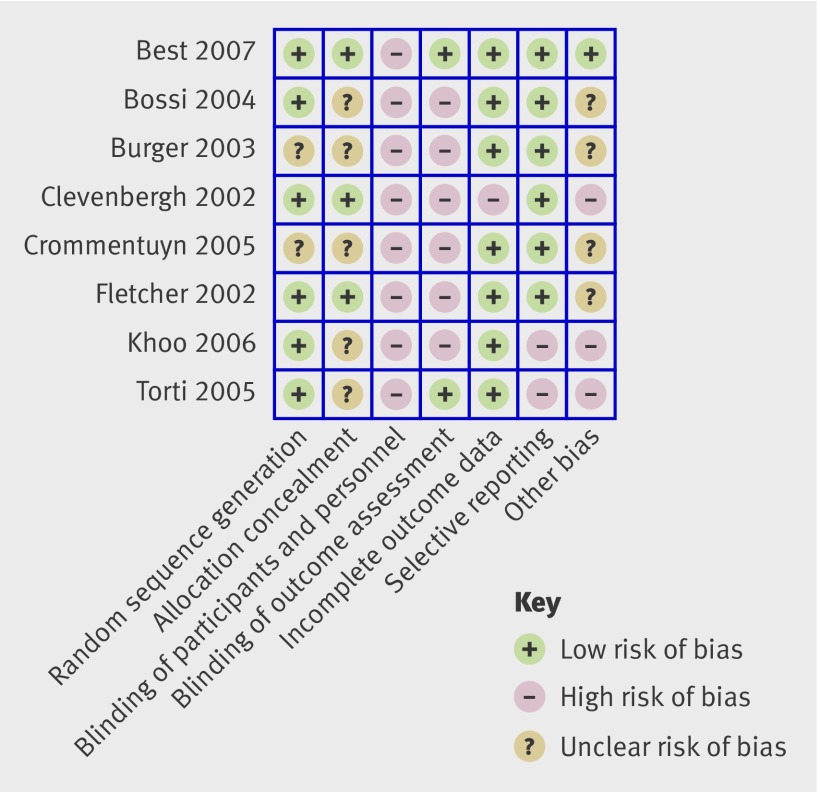
- The tool assesses six domains: selection bias, performance bias, detection bias, attrition bias, reporting bias, and other bias; each item has a support-for-judgment description and a judgment of low, unclear, or high risk of material bias.
- In evaluation, of 187 surveyed authors, 88% took longer than 10 minutes to complete the tool, 44% longer than 20 minutes, and 7% longer than an hour, but 83% considered the time taken acceptable.
- A cited study found a mean of 8.8 minutes per person for a single predetermined outcome using the tool compared with 1.5 minutes for a previous rating scale for quality of reporting; larger effect sizes were observed on average in studies rated at high risk of bias compared with low risk.
- Incomplete outcome data and selective reporting were the most difficult items to assess, with reported kappa measures of agreement of 0.32 (fair) and 0.13 (slight), respectively.
Methods
- The tool was developed at a May 2005 meeting by informal consensus, based on seven principles; detailed criteria and guidance were developed by pairs of authors and refined through feedback, email iterations, presentations, workshops, and pilot work, then published in February 2008.
- Evaluation began in early 2009 as a three-stage project: focus groups with review authors who had used the tool, three online surveys of review authors who had used the tool, review authors who had not used it, and editorial teams, plus a March 2010 meeting to consider revisions.
- The paper is a methods/guidance article describing the tool, its principles, presentation, summary assessment, and use in synthesis; survey findings are reported descriptively.
Limitations
- The paper states that the reliability of the tool has not been extensively studied and that, by explicitly incorporating judgments, agreements between assessors may not be as high as for some other tools.
- It states continuing uncertainty and great variation in practice over how to assess potential for bias in specific domains, how to summarise bias assessments across domains, and how to incorporate bias assessments into meta-analyses.
- Evident from the text: the evaluation reports selected survey percentages without a response rate or full survey methodology, and the reliability evidence cited is preliminary and limited.
Model-written summary. Check it against the paper before relying on it.
Integrity signals
Registry
Cites
Statistics
Figures
Verification
Claims the paper makes
0 Valid · 3 Not valid · 1 Not checked · 20 Own results and interpretations
In the paper
“This was published in February 2008 and adopted as the recommended method throughout the Cochrane Collaboration.”
What the sources say
- Not matchedcites [9] 9. Higgins JPT, Green S, eds. Cochrane handbook for systematic reviews of interventions . Wiley, 2008.
Couldn’t be matched to a paper, so it can’t be checked.
- Not matched
A result the paper reports from its own data — it cites no other source for it, so there is none to check. The quote shows it is in the paper.
In the paper
“The Cochrane Collaboration has developed a new tool for assessing risk of bias in randomised trials”
A result the paper reports from its own data — it cites no other source for it, so there is none to check. The quote shows it is in the paper.
In the paper
“The 2010 evaluation of the initial version found wide acceptance of the need for the risk of bias tool, with a consensus that it represents an improvement over methods previously recommended by the Collaboration or widely used in systematic reviews.”
A result the paper reports from its own data — it cites no other source for it, so there is none to check. The quote shows it is in the paper.
In the paper
“Participants in the focus groups noted that the tool took longer to complete than previous methods.”
A result the paper reports from its own data — it cites no other source for it, so there is none to check. The quote shows it is in the paper.
In the paper
“We believe our risk of bias tool is one of the most comprehensive approaches to assessing the potential for bias in randomised trials included in systematic reviews or meta-analyses.”
19 more claims
Create a free account to see all 24 claims and every source verdict.
Claims other papers make about this one
Each is checked against this paper’s own text: does it say what the citing paper says it does?
The source backs part of the claim, not all of it — or backs it for a different population, condition or comparison.
In the citing paper
“The methodological quality of the RCTs was assessed using the Cochrane collaboration’s Risk Interventions Risk of Bias Tool (Higgins et al., 2011) reporting each of its five domains (adequate randomization and allocation, blinding, loss to follow-up, selective reporting, and other sources of potential bias) into a low risk of bias, high risk of bias, or unclear risk of bias.”
From Augmentation strategies for treatment resistant major depression: A systematic review and network meta-analysis (2022) · cites this paper as Higgins et al., 2011
Experimental — accuracy not yet measuredThe source backs part of the claim, not all of it — or backs it for a different population, condition or comparison.
In the citing paper
“Checklists and protocols for gauging the quality of evidence in a systematic fashion 8,9 also do not single out these problematic reports.”
From Fraudulent studies are undermining the reliability of systematic reviews: on the prevalence of problematic images in preclinical depression studies (2025) · cites this paper as [9]
Experimental — accuracy not yet measuredThe source backs part of the claim, not all of it — or backs it for a different population, condition or comparison.
In the citing paper
“When assessing the risk of bias, seven general principles are relevant, based on theoretical considerations, empirical work, and the experience with assessing risk of bias in RCTs and other studies [55–57].”
From COSMOS-E: Guidance on conducting systematic reviews and meta-analyses of observational studies of etiology (2019) · cites this paper as [55]
Experimental — accuracy not yet measuredThe source backs part of the claim, not all of it — or backs it for a different population, condition or comparison.
In the citing paper
“Four reviewers (J.d.P.-C., B.d.P.-C., R.M.A.-R., and J.R.-M.) independently assessed the risk of bias of the included studies according to version 2 of the Cochrane riskof-bias tool for randomized trials (RoB 2) (26).”
From Optimal Dose and Type of Physical Activity to Improve Glycemic Control in People Diagnosed With Type 2 Diabetes: A Systematic Review and Meta-analysis (2024) · cites this paper as [26]
Experimental — accuracy not yet measuredThe source backs part of the claim, not all of it — or backs it for a different population, condition or comparison.
In the citing paper
“RCTs were appraised using the Cochrane RoB 2 tool and observational studies using methodological index for non-randomized studies (MINORS).13,14”
From Perioperative Analgesia and Postoperative Nausea and Vomiting Management in Otoplasty: A Systematic Review (2026) · cites this paper as [13]
Experimental — accuracy not yet measured
113 more claims about this paper
Create a free account to see every claim other papers make about this one.
Citations
Cites
Cochrane Handbook for Systematic Reviews of Interventions: Cochrane Book Series
(2008) · doi:10.1002/9780470712184 · Cited by 25,048
Self-citationGRADE: an emerging consensus on rating quality of evidence and strength of recommendations
Guyatt, G. H., Oxman, A. D., Vist, G. E., Kunz, R., Falck-Ytter, Y., Alonso-Coello, P., & Schünemann, H. J. (2008) · BMJ · doi:10.1136/bmj.39489.470347.ad · Cited by 23,305
Self-citationAssessing Risk of Bias in Included Studies
Higgins, J. P., & Altman, D. G. (2008) · Cochrane Handbook for Systematic Reviews of Interventions · doi:10.1002/9780470712184.ch8 · Cited by 3,396
Self-citationAssessing the quality of controlled clinical trials
Jüni, P., Altman, D. G., & Egger, M. (2001) · BMJ · doi:10.1136/bmj.323.7303.42 · Cited by 3,309
Self-citationWood, L., Egger, M., Gluud, L. L., Schulz, K. F., Jüni, P., Altman, D. G., Gluud, C., Martin, R. M., Wood, A. J. G., & Sterne, J. A. C. (2008) · BMJ · doi:10.1136/bmj.39465.451748.ad · Cited by 2,538
Self-citationSystematic Reviews in Health Care : Meta-Analysis in Context
Egger, M., Smith, G. D., & Altman, D. G. (2000) · Cited by 2,413
Self-citationThe Hazards of Scoring the Quality of Clinical Trials for Meta-analysis
Jüni, P. (1999) · JAMA · doi:10.1001/jama.282.11.1054 · Cited by 1,981
Self-citationMoher, D., Jadad, A. R., Nichol, G., Penman, M., Tugwell, P., & Walsh, S. (1995) · Controlled Clinical Trials · doi:10.1016/0197-2456(94)00031-w · Cited by 1,308
Self-citationControlling the risk of spurious findings from meta-regression
Higgins, J. P. T., & Thompson, S. G. (2004) · Statistics in Medicine · doi:10.1002/sim.1752 · Cited by 1,267
Self-citationDiscrepancies between Meta-Analyses and Subsequent Large Randomized, Controlled Trials
LeLorier, J., Grégoire, G., Benhaddad, A., Lapierre, J., & Derderian, F. (1997) · New England Journal of Medicine · doi:10.1056/nejm199708213370806 · Cited by 1,171
Research works printed but not linked: 3
- [9]9. Higgins JPT, Green S, eds. Cochrane handbook for systematic reviews of interventions . Wiley, 2008.
- [16]16. No commercial reuse: See rights and reprints http://www.bmj.com/permissions Subscribe: http://www.bmj.com/subscribe BMJ 2008;336:924-6.
- [17]17. Schünemann HJ, Oxman AD, Higgins JPT, Vist GE, Glasziou P, Guyatt GH, et al. Presenting results and "Summary of findings" tables. In: Higgins JPT, Green S, eds. Cochrane handbook for systematic reviews of interventions . Wiley, 2008:335-8.
Cited by
Items 701–800 of 2,382
Leenarts, L. E. W., Diehle, J., Doreleijers, T. A. H., Jansma, E. P., & Lindauer, R. J. L. (2013) · European Child & Adolescent Psychiatry · doi:10.1007/s00787-012-0367-5 · Cited by 231
Quirk, H., Blake, H., Tennyson, R., Randell, T. L., & Glazebrook, C. (2014) · Diabetic Medicine · doi:10.1111/dme.12531 · Cited by 232
Kessels, E., Husson, O., & Van der Feltz-Cornelis, C. M. (2018) · Neuropsychiatric Disease and Treatment · doi:10.2147/ndt.s150464 · Cited by 233
Kaufman, J. A., Barnes, G. D., Chaer, R. A., Cuschieri, J., Eberhardt, R. T., Johnson, M. S., Kuo, W. T., Murin, S., Patel, S., Rajasekhar, A., et al. (2020) · Journal of Vascular and Interventional Radiology · doi:10.1016/j.jvir.2020.06.014 · Cited by 230
Comparing the clinical efficacy of COVID-19 vaccines: a systematic review and network meta-analysis
Rotshild, V., Hirsh-Raccah, B., Miskin, I., Muszkat, M., & Matok, I. (2021) · Scientific Reports · doi:10.1038/s41598-021-02321-z · Cited by 233
Huang, L., Yin, Y., Yang, L., Wang, C., Li, Y., & Zhou, Z. (2017) · JAMA Pediatrics · doi:10.1001/jamapediatrics.2017.0057 · Cited by 230
Knoll, T., Omar, M. I., Maclennan, S., Hernández, V., Canfield, S., Yuan, Y., Bruins, M., Marconi, L., Van Poppel, H., N’Dow, J., et al. (2018) · European Urology · doi:10.1016/j.eururo.2017.08.016 · Cited by 230
Georgopoulos, V., Akin-Akinyosoye, K., Zhang, W., McWilliams, D. F., Hendrick, P., & Walsh, D. A. (2019) · Pain · doi:10.1097/j.pain.0000000000001590 · Cited by 228
Dawson, J., Béjot, Y., Christensen, L. M., De Marchis, G. M., Dichgans, M., Hagberg, G., Heldner, M. R., Milionis, H., Li, L., Pezzella, F. R., et al. (2022) · European Stroke Journal · doi:10.1177/23969873221100032 · Cited by 226
Aday, J. S., Heifets, B. D., Pratscher, S. D., Bradley, E., Rosen, R., & Woolley, J. D. (2022) · Psychopharmacology · doi:10.1007/s00213-022-06123-7 · Cited by 237
A Meta-Analysis of Social Skills Training and Related Interventions for Psychosis
Turner, D. T., McGlanaghy, E., Cuijpers, P., van der Gaag, M., Karyotaki, E., & MacBeth, A. (2018) · Schizophrenia Bulletin · doi:10.1093/schbul/sbx146 · Cited by 232
Noba, L., Rodgers, S., Chandler, C., Balfour, A., Hariharan, D., & Yip, V. S. (2020) · Journal of Gastrointestinal Surgery · doi:10.1007/s11605-019-04499-0 · Cited by 231
Asano, M., & Finlayson, M. L. (2014) · Multiple Sclerosis International · doi:10.1155/2014/798285 · Cited by 230
Interventions designed to reduce sedentary behaviours in young people: a review of reviews
Biddle, S. J. H., Petrolini, I., & Pearson, N. (2014) · British Journal of Sports Medicine · doi:10.1136/bjsports-2013-093078 · Cited by 230
Trends in guideline implementation: a scoping systematic review
and the members of the Guidelines International Network Implementation Working Group, Gagliardi, A. R., & Alhabib, S. (2015) · Implementation Science · doi:10.1186/s13012-015-0247-8 · Cited by 229
Anticoagulant and side-effects of protamine in cardiac surgery: a narrative review
Boer, C., Meesters, M. I., Veerhoek, D., & Vonk, A. B. A. (2018) · British Journal of Anaesthesia · doi:10.1016/j.bja.2018.01.023 · Cited by 226
Anand, T. N., Joseph, L. M., Geetha, A. V., Prabhakaran, D., & Jeemon, P. (2019) · The Lancet Global Health · doi:10.1016/s2214-109x(19)30077-4 · Cited by 228
Williams, J., Allen, L., Wickramasinghe, K., Mikkelsen, B., Roberts, N., & Townsend, N. (2018) · Journal of Global Health · doi:10.7189/jogh.08.020409 · Cited by 228
Coles, N. A., Larsen, J. T., & Lench, H. C. (2019) · Psychological Bulletin · doi:10.1037/bul0000194 · Cited by 228
Psychiatric symptoms caused by cannabis constituents: a systematic review and meta-analysis
Hindley, G., Beck, K., Borgan, F., Ginestet, C. E., McCutcheon, R., Kleinloog, D., Ganesh, S., Radhakrishnan, R., D'Souza, D. C., & Howes, O. D. (2020) · The Lancet Psychiatry · doi:10.1016/s2215-0366(20)30074-2 · Cited by 227
Effects of Brief Mindfulness-Based Interventions on Health-Related Outcomes: a Systematic Review
Howarth, A., Smith, J. G., Perkins-Porras, L., & Ussher, M. (2019) · Mindfulness · doi:10.1007/s12671-019-01163-1 · Cited by 219
Seganfredo, F. B., Blume, C. A., Moehlecke, M., Giongo, A., Casagrande, D. S., Spolidoro, J. V. N., Padoin, A. V., Schaan, B. D., & Mottin, C. C. (2017) · Obesity Reviews · doi:10.1111/obr.12541 · Cited by 228
Trejo-Avila, M., Bozada-Gutiérrez, K., Valenzuela-Salazar, C., Herrera-Esquivel, J., & Moreno-Portillo, M. (2021) · International Journal of Colorectal Disease · doi:10.1007/s00384-021-03839-4 · Cited by 226
Ginger on Human Health: A Comprehensive Systematic Review of 109 Randomized Controlled Trials
Anh, N. H., Kim, S. J., Long, N. P., Min, J. E., Yoon, Y. C., Lee, E. G., Kim, M., Kim, T. J., Yang, Y. Y., Son, E. Y., et al. (2020) · Nutrients · doi:10.3390/nu12010157 · Cited by 227
“The Cochrane Collaboration’s tool was employed to evaluate the risk of bias in individual research for quality assessment [16].”
Iguacel, I., Miguel-Berges, M. L., Gómez-Bruton, A., Moreno, L. A., & Julián, C. (2019) · Nutrition Reviews · doi:10.1093/nutrit/nuy045 · Cited by 222
Liu, M., Gao, Y., Yuan, Y., Yang, K., Shi, S., Zhang, J., & Tian, J. (2020) · Pharmacological Research · doi:10.1016/j.phrs.2020.104896 · Cited by 227
Grant, S., Colaiaco, B., Motala, A., Shanman, R., Booth, M., Sorbero, M., & Hempel, S. (2017) · Journal of Addiction Medicine · doi:10.1097/adm.0000000000000338 · Cited by 220
Silva, F. M., Kramer, C. K., de Almeida, J. C., Steemburgo, T., Gross, J. L., & Azevedo, M. J. (2013) · Nutrition Reviews · doi:10.1111/nure.12076 · Cited by 226
Rigato, M., Monami, M., & Fadini, G. P. (2017) · Circulation Research · doi:10.1161/circresaha.116.309045 · Cited by 226
Effects of Evening Exercise on Sleep in Healthy Participants: A Systematic Review and Meta-Analysis
Stutz, J., Eiholzer, R., & Spengler, C. M. (2019) · Sports Medicine · doi:10.1007/s40279-018-1015-0 · Cited by 224
Cai, T., Abel, L., Langford, O., Monaghan, G., Aronson, J. K., Stevens, R. J., Lay-Flurrie, S., Koshiaris, C., McManus, R. J., Hobbs, F. D. R., et al. (2021) · BMJ · doi:10.1136/bmj.n1537 · Cited by 223
Floege, J., Jayne, D. R. W., Sanders, J.-S. F., Tesar, V., & Rovin, B. H. (2024) · Kidney International · doi:10.1016/j.kint.2023.10.008 · Cited by 218
Virtual reality in research and rehabilitation of gait and balance in Parkinson disease
Canning, C. G., Allen, N. E., Nackaerts, E., Paul, S. S., Nieuwboer, A., & Gilat, M. (2020) · Nature Reviews Neurology · doi:10.1038/s41582-020-0370-2 · Cited by 224
Kowalewski, M., Pawliszak, W., Malvindi, P. G., Bokszanski, M. P., Perlinski, D., Raffa, G. M., Kowalkowska, M. E., Zaborowska, K., Navarese, E. P., Kolodziejczak, M., et al. (2016) · The Journal of Thoracic and Cardiovascular Surgery · doi:10.1016/j.jtcvs.2015.08.042 · Cited by 225
Relationship of nutritional status and oral health in elderly: Systematic review with meta-analysis
Toniazzo, M. P., Amorim, P. D. S., Muniz, F. W. M. G., & Weidlich, P. (2018) · Clinical Nutrition · doi:10.1016/j.clnu.2017.03.014 · Cited by 222
Kelleher, C., Hakimi, Z., Zur, R., Siddiqui, E., Maman, K., Aballéa, S., Nazir, J., & Chapple, C. (2018) · European Urology · doi:10.1016/j.eururo.2018.03.020 · Cited by 224
Asad, Z. U. A., Yousif, A., Khan, M. S., Al-Khatib, S. M., & Stavrakis, S. (2019) · Circulation: Arrhythmia and Electrophysiology · doi:10.1161/circep.119.007414 · Cited by 224
Internet interventions for chronic pain including headache: a systematic review
Buhrman, M., Gordh, T., & Andersson, G. (2016) · Internet Interventions · doi:10.1016/j.invent.2015.12.001 · Cited by 223
Psychological interventions for resilience enhancement in adults
Helmreich, I., Kunzler, A., Chmitorz, A., König, J., Binder, H., Wessa, M., & Lieb, K. (2017) · Cochrane Database of Systematic Reviews · doi:10.1002/14651858.cd012527 · Cited by 223
Strand, V., Ahadieh, S., French, J., Geier, J., Krishnaswami, S., Menon, S., Checchio, T., Tensfeldt, T. G., Hoffman, E., Riese, R., et al. (2015) · Arthritis Research & Therapy · doi:10.1186/s13075-015-0880-2 · Cited by 223
Breedvelt, J. J. F., Amanvermez, Y., Harrer, M., Karyotaki, E., Gilbody, S., Bockting, C. L. H., Cuijpers, P., & Ebert, D. D. (2019) · Frontiers in Psychiatry · doi:10.3389/fpsyt.2019.00193 · Cited by 222
Immunosenescence Study of T Cells: A Systematic Review
Rodriguez, I. J., Lalinde Ruiz, N., Llano León, M., Martínez Enríquez, L., Montilla Velásquez, M. D. P., Ortiz Aguirre, J. P., Rodríguez Bohórquez, O. M., Velandia Vargas, E. A., Hernández, E. D., & Parra López, C. A. (2021) · Frontiers in Immunology · doi:10.3389/fimmu.2020.604591 · Cited by 217
Donnan, J. R., Grandy, C. A., Chibrikov, E., Marra, C. A., Aubrey-Bassler, K., Johnston, K., Swab, M., Hache, J., Curnew, D., Nguyen, H., et al. (2019) · BMJ Open · doi:10.1136/bmjopen-2018-022577 · Cited by 222
“risk of bias assessment Each included study was critically appraised using the Cochrane Collaboration domain-based tool for assessing the risk of bias for RCTs.(32) This tool captures six main sources of bias, including: randomisation sequence, allocation concealment, blinding of participant and researcher, blinded ou…”
InfluentialQian, F., Korat, A. A., Malik, V., & Hu, F. B. (2016) · Diabetes Care · doi:10.2337/dc16-0513 · Cited by 222
Doupnik, S. K., Rudd, B., Schmutte, T., Worsley, D., Bowden, C. F., McCarthy, E., Eggan, E., Bridge, J. A., & Marcus, S. C. (2020) · JAMA Psychiatry · doi:10.1001/jamapsychiatry.2020.1586 · Cited by 222
Tsoi, K. K. F., Chan, J. Y. C., Ng, Y.-M., Lee, M. M. Y., Kwok, T. C. Y., & Wong, S. Y. S. (2018) · Journal of the American Medical Directors Association · doi:10.1016/j.jamda.2017.12.009 · Cited by 221
Dafni, U., Tsourti, Z., Vervita, K., & Peters, S. (2019) · Lung Cancer · doi:10.1016/j.lungcan.2019.05.029 · Cited by 221
Freeman, A. M., Petrilli, K., Lees, R., Hindocha, C., Mokrysz, C., Curran, H. V., Saunders, R., & Freeman, T. P. (2019) · Neuroscience & Biobehavioral Reviews · doi:10.1016/j.neubiorev.2019.09.036 · Cited by 222
Reboussin, D. M., Allen, N. B., Griswold, M. E., Guallar, E., Hong, Y., Lackland, D. T., Miller, E. (. R., Polonsky, T., Thompson-Paul, A. M., & Vupputuri, S. (2018) · Journal of the American College of Cardiology · doi:10.1016/j.jacc.2017.11.004 · Cited by 221
Schwingshackl, L., Lampousi, A.-M., Portillo, M. P., Romaguera, D., Hoffmann, G., & Boeing, H. (2017) · Nutrition & Diabetes · doi:10.1038/nutd.2017.12 · Cited by 221
Xu, X.-L., Liu, X.-D., Liang, M., & Luo, B.-M. (2018) · Radiology · doi:10.1148/radiol.2017162756 · Cited by 221
Alammar, N., Wang, L., Saberi, B., Nanavati, J., Holtmann, G., Shinohara, R. T., & Mullin, G. E. (2019) · BMC Complementary and Alternative Medicine · doi:10.1186/s12906-018-2409-0 · Cited by 132
The Development and Evaluation of a Literature-Based Dietary Index for Gut Microbiota
Kase, B. E., Liese, A. D., Zhang, J., Murphy, E. A., Zhao, L., & Steck, S. E. (2024) · Nutrients · doi:10.3390/nu16071045 · Cited by 221
Harrison, A., Fernández de la Cruz, L., Enander, J., Radua, J., & Mataix-Cols, D. (2016) · Clinical Psychology Review · doi:10.1016/j.cpr.2016.05.007 · Cited by 215
Meron, D., Hedger, N., Garner, M., & Baldwin, D. S. (2015) · Neuroscience & Biobehavioral Reviews · doi:10.1016/j.neubiorev.2015.07.012 · Cited by 220
Kim, N. J., Belland, B. R., & Walker, A. E. (2018) · Educational Psychology Review · doi:10.1007/s10648-017-9419-1 · Cited by 220
Potter, C., Bastounis, A., Hartmann-Boyce, J., Stewart, C., Frie, K., Tudor, K., Bianchi, F., Cartwright, E., Cook, B., Rayner, M., et al. (2021) · Environment and Behavior · doi:10.1177/0013916521995473 · Cited by 219
“Using a predefined and piloted data extraction form, including an adapted version of the Cochrane risk-of-bias tool (Higgins et al., 2011; Kaur et al., 2017), study data were extracted in duplicate and inconsistencies were resolved through discussion or referral to a third reviewer.”
Empirically Supported Treatment: Recommendations for a New Model
Tolin, D. F., McKay, D., Forman, E. M., Klonsky, E. D., & Thombs, B. D. (2015) · Clinical Psychology: Science and Practice · doi:10.1111/cpsp.12122 · Cited by 219
Kamenov, K., Twomey, C., Cabello, M., Prina, A. M., & Ayuso-Mateos, J. L. (2017) · Psychological Medicine · doi:10.1017/s0033291716002774 · Cited by 218
Watt, J., Tricco, A. C., Talbot-Hamon, C., Pham, B., Rios, P., Grudniewicz, A., Wong, C., Sinclair, D., & Straus, S. E. (2018) · BMC Medicine · doi:10.1186/s12916-017-0986-2 · Cited by 220
Hyun, M. H., Lee, Y., Kim, J. H., Lee, C. U., Jung, Y. K., Seo, Y. S., Yim, H. J., Yeon, J. E., & Byun, K. S. (2018) · Hepatology · doi:10.1002/hep.29883 · Cited by 219
Papadopoulos, I., Koulouglioti, C., Lazzarino, R., & Ali, S. (2020) · BMJ Open · doi:10.1136/bmjopen-2019-033096 · Cited by 212
Van Heghe, A., Mordant, G., Dupont, J., Dejaeger, M., Laurent, M. R., & Gielen, E. (2022) · Calcified Tissue International · doi:10.1007/s00223-021-00913-5 · Cited by 212
Domhardt, M., Geßlein, H., von Rezori, R. E., & Baumeister, H. (2019) · Depression and Anxiety · doi:10.1002/da.22860 · Cited by 218
Grønfeldt, B. M., Lindberg Nielsen, J., Mieritz, R. M., Lund, H., & Aagaard, P. (2020) · Scandinavian Journal of Medicine & Science in Sports · doi:10.1111/sms.13632 · Cited by 218
“Range (18-32) ND Untrained in strength training Dropouts ND, adverse”
InfluentialEfficacy and safety of empagliflozin for type 2 diabetes: a systematic review and meta‐analysis
Liakos, A., Karagiannis, T., Athanasiadou, E., Sarigianni, M., Mainou, M., Papatheodorou, K., Bekiari, E., & Tsapas, A. (2014) · Diabetes, Obesity and Metabolism · doi:10.1111/dom.12307 · Cited by 219
Colquitt, J. L., Loveman, E., O'Malley, C., Azevedo, L. B., Mead, E., Al-Khudairy, L., Ells, L. J., Metzendorf, M.-I., & Rees, K. (2016) · Cochrane Database of Systematic Reviews · doi:10.1002/14651858.cd012105 · Cited by 217
Bruce, R., Chauvin, A., Trinquart, L., Ravaud, P., & Boutron, I. (2016) · BMC Medicine · doi:10.1186/s12916-016-0631-5 · Cited by 218
Extended‐release injectable naltrexone for opioid use disorder: a systematic review
Jarvis, B. P., Holtyn, A. F., Subramaniam, S., Tompkins, D. A., Oga, E. A., Bigelow, G. E., & Silverman, K. (2018) · Addiction · doi:10.1111/add.14180 · Cited by 217
Kahwati, L. C., Weber, R. P., Pan, H., Gourlay, M., LeBlanc, E., Coker-Schwimmer, M., & Viswanathan, M. (2018) · JAMA · doi:10.1001/jama.2017.21640 · Cited by 220
Grape, S., Kirkham, K. R., Frauenknecht, J., & Albrecht, E. (2019) · Anaesthesia · doi:10.1111/anae.14657 · Cited by 216
de Valle, M. K., Gallego-García, M., Williamson, P., & Wade, T. D. (2021) · Body Image · doi:10.1016/j.bodyim.2021.10.001 · Cited by 221
Schwingshackl, L., & Hoffmann, G. (2013) · Journal of the Academy of Nutrition and Dietetics · doi:10.1016/j.jand.2013.07.010 · Cited by 218
Pearson, M., Dieberg, G., & Smart, N. (2015) · Archives of Physical Medicine and Rehabilitation · doi:10.1016/j.apmr.2015.02.011 · Cited by 217
The link between COVID-19 and VItamin D (VIVID): A systematic review and meta-analysis
Bassatne, A., Basbous, M., Chakhtoura, M., El Zein, O., Rahme, M., & El-Hajj Fuleihan, G. (2021) · Metabolism · doi:10.1016/j.metabol.2021.154753 · Cited by 217
Procedure-Related Complications of Catheter Ablation for Atrial Fibrillation
Benali, K., Khairy, P., Hammache, N., Petzl, A., Da Costa, A., Verma, A., Andrade, J. G., & Macle, L. (2023) · Journal of the American College of Cardiology · doi:10.1016/j.jacc.2023.03.418 · Cited by 209
Antibiotics for acute pyelonephritis in children
Bloomfield, P., Hodson, E., & Craig, J. (2005) · Cochrane Database of Systematic Reviews · doi:10.1002/14651858.cd003772.pub2 · Cited by 218
Khan, S. U., Khan, M. U., Riaz, H., Valavoor, S., Zhao, D., Vaughan, L., Okunrintemi, V., Riaz, I. B., Khan, M. S., Kaluski, E., et al. (2019) · Annals of Internal Medicine · doi:10.7326/m19-0341 · Cited by 216
Huo, Y. R., Chan, M. V., Habib, A.-R., Lui, I., & Ridley, L. (2020) · The British Journal of Radiology · doi:10.1259/bjr.20190866 · Cited by 216
Wijnen, B., Van Mastrigt, G., Redekop, W., Majoie, H., De Kinderen, R., & Evers, S. (2016) · Expert Review of Pharmacoeconomics & Outcomes Research · doi:10.1080/14737167.2016.1246961 · Cited by 215
Chibinski, A. C., Wambier, L. M., Feltrin, J., Loguercio, A. D., Wambier, D. S., & Reis, A. (2017) · Caries Research · doi:10.1159/000478668 · Cited by 216
“Risk of Bias in Individual Studies Quality assessments of the included trials were evaluated by 2 independent reviewers (A.C.R.C. and L.M.W.), using the Cochrane Collaboration tool for assessing the risk of bias in randomized trials [Higgins et al., 2011].”
Environmental Risk Factors Associated with Child Stunting: A Systematic Review of the Literature
Vilcins, D., Sly, P. D., & Jagals, P. (2018) · Annals of Global Health · doi:10.29024/aogh.2361 · Cited by 215
Nuñez, N. A., Joseph, B., Pahwa, M., Kumar, R., Resendez, M. G., Prokop, L. J., Veldic, M., Seshadri, A., Biernacka, J. M., Frye, M. A., et al. (2022) · Journal of Affective Disorders · doi:10.1016/j.jad.2021.12.134 · Cited by 215
Çakici, N., van Beveren, N. J. M., Judge-Hundal, G., Koola, M. M., & Sommer, I. E. C. (2019) · Psychological Medicine · doi:10.1017/s0033291719001995 · Cited by 213
Agnelli, G., Belch, J. J. F., Baumgartner, I., Giovas, P., & Hoffmann, U. (2020) · Atherosclerosis · doi:10.1016/j.atherosclerosis.2019.09.012 · Cited by 213
Nillni, Y. I., Mehralizade, A., Mayer, L., & Milanovic, S. (2018) · Clinical Psychology Review · doi:10.1016/j.cpr.2018.06.004 · Cited by 207
Currie, G., Taylor, A. H. M., Fujita, T., Ohtsu, H., Lindhardt, M., Rossing, P., Boesby, L., Edwards, N. C., Ferro, C. J., Townend, J. N., et al. (2016) · BMC Nephrology · doi:10.1186/s12882-016-0337-0 · Cited by 214
Mantovani, A., Byrne, C. D., & Targher, G. (2022) · The Lancet Gastroenterology & Hepatology · doi:10.1016/s2468-1253(21)00261-2 · Cited by 230
Treatment of Latent Tuberculosis Infection: An Updated Network Meta-analysis
Zenner, D., Beer, N., Harris, R. J., Lipman, M. C., Stagg, H. R., & van der Werf, M. J. (2017) · Annals of Internal Medicine · doi:10.7326/m17-0609 · Cited by 214
Cognitive bias research in forensic science: A systematic review
Cooper, G. S., & Meterko, V. (2019) · Forensic Science International · doi:10.1016/j.forsciint.2019.01.016 · Cited by 212
Becker, C., Zumbrunn, S., Beck, K., Vincent, A., Loretz, N., Müller, J., Amacher, S. A., Schaefert, R., & Hunziker, S. (2021) · JAMA Network Open · doi:10.1001/jamanetworkopen.2021.19346 · Cited by 209
Stein, A. T., Carl, E., Cuijpers, P., Karyotaki, E., & Smits, J. A. J. (2021) · Psychological Medicine · doi:10.1017/s0033291720000239 · Cited by 213
Comparison of gefitinib, erlotinib and afatinib in non‐small cell lung cancer: A meta‐analysis
Yang, Z., Hackshaw, A., Feng, Q., Fu, X., Zhang, Y., Mao, C., & Tang, J. (2017) · International Journal of Cancer · doi:10.1002/ijc.30691 · Cited by 212
Angelis, A., & Kanavos, P. (2017) · Social Science & Medicine · doi:10.1016/j.socscimed.2017.06.024 · Cited by 211
Johnson, G. A., & Vindrola-Padros, C. (2017) · Social Science & Medicine · doi:10.1016/j.socscimed.2017.07.029 · Cited by 210
Kennedy, C. E., Fonner, V. A., Armstrong, K. A., Denison, J. A., Yeh, P. T., O’Reilly, K. R., & Sweat, M. D. (2019) · Systematic Reviews · doi:10.1186/s13643-018-0925-0 · Cited by 212
Rygård, S. L., Butler, E., Granholm, A., Møller, M. H., Cohen, J., Finfer, S., Perner, A., Myburgh, J., Venkatesh, B., & Delaney, A. (2018) · Intensive Care Medicine · doi:10.1007/s00134-018-5197-6 · Cited by 211
The limited prosocial effects of meditation: A systematic review and meta-analysis
Kreplin, U., Farias, M., & Brazil, I. A. (2018) · Scientific Reports · doi:10.1038/s41598-018-20299-z · Cited by 211
Jung, E., Kong, S. Y., Ro, Y. S., Ryu, H. H., & Shin, S. D. (2022) · International Journal of Environmental Research and Public Health · doi:10.3390/ijerph19148272 · Cited by 211
García‐Hermoso, A., Cerrillo‐Urbina, A. J., Herrera‐Valenzuela, T., Cristi‐Montero, C., Saavedra, J. M., & Martínez‐Vizcaíno, V. (2016) · Obesity Reviews · doi:10.1111/obr.12395 · Cited by 211
Metadata
- Authors
- Higgins, J. P. T., Altman, D. G., Gotzsche, P. C., Juni, P., Moher, D., Oxman, A. D., Savovic, J., Schulz, K. F., Weeks, L., Sterne, J. A. C., Cochrane Bias Methods Group, & Cochrane Statistical Methods Group
- Affiliations
- MRC Biostatistics Unit (GB)
- University of Oxford (GB)
- University of Ottawa (CA)
- Nasjonalt Kunnskapssenter for Helsetjenesten (NO)
- Family Health International 360 (US)
- Ottawa Hospital Research Institute (CA)
- University of Bristol (GB)
- Corresponding author
- Higgins, J. P. T.
- Venue
- BMJ
- Publisher
- BMJ
- Published
- 2011-10-18
- Volume
- 343
- Issue
- oct18 2
- Pages
- d5928-d5928
- ISSN
- 0007-1447 (ISSN-L)
- 0959-8138
- 1468-5833
- PMC
- PMC3196245
- OpenAlex
- W2098923148
- Cited by
- 33,817
- References
- 26
- Citations by year
- 2026: 1970 · 2025: 3214 · 2024: 3745 · 2023: 3530 · 2022: 4008 · 2021: 4125 · 2020: 3755 · 2019: 2714 · 2018: 2012 · 2017: 1569 · 2016: 1203 · 2015: 881 · 2014: 591 · 2013: 342 · 2012: 97
- FWCI
- 352.06
- Type
- journal article
- Language
- en
- Open access
- hybrid
- doi.org
- Licence
- cc-by-nc
- Locations
- BMJ (publishedVersion, cc-by-nc)
- Europe PMC (PubMed Central) (publishedVersion, cc-by-nc)
- PubMed Central (publishedVersion, cc-by-nc)
- PubMed (publishedVersion)
- Research at the University of Copenhagen (University of Copenhagen) (publishedVersion)
- Bristol Research (University of Bristol) (publishedVersion)
- Bern Open Repository and Information System (University of Bern) (submittedVersion, cc-by-nc)
- Open Access CRIS of the University of Bern
- Funders
- Cancer Research UK (C-5592)
- Canadian Institutes of Health Research
- Topics
- Social Sciences › Decision Sciences › Statistics, Probability and Uncertainty › Meta-analysis and systematic reviews
- Physical Sciences › Mathematics › Statistics and Probability › Statistical Methods in Clinical Trials
- Physical Sciences › Mathematics › Statistics and Probability › Statistical Methods in Epidemiology
- Keywords
- risk of bias, Cochrane risk of bias tool, randomised trials, trial design flaws, trial conduct, trial analysis, trial reporting, bias assessment
- MeSH terms
- Humans, Research Design, Bias, Randomized Controlled Trials as Topic, Risk Assessment
About these checks
Registry, retraction, Cites and statistics results are computed, not judged, with one exception: a printed reference that no index lists is read once by a model before it counts as a citation error. Claims are extracted by a model and kept only when their quote appears verbatim in the text; each cited source is then checked, with a model’s help, for whether it says what the claim relies on. Those verdicts can be wrong — read the claim’s quote and the cited source before relying on one.
A language model drew the claims from the paper on 2026-09-24 (prompt extract-v1).
Statistics and arithmetic are recomputed, not judged.
Confidence bands are shown only for fields calibrated on our annotated test set. None is calibrated yet, so no band is shown.
What counts as a claim ›How we measure confidence ›How we check this ›
Are you an author, or do you see a problem with this page? Request a review
Data sources
Bibliographic data: Semantic Scholar, OpenAlex, Crossref.
Contains information from the Semantic Scholar Academic Graph Datasets, made available under the ODC Attribution License (ODC-BY 1.0).
Semantic Scholar’s data is described in: Kinney, R., et al. (2023). The Semantic Scholar Open Data Platform. arXiv:2301.10140.
