

The Cochrane Collaboration's tool for assessing risk of bias in randomised trials
Open accessThe DOI matches its Crossref record; 25 of the 26 references it cites were found in a registry or an index; none of the 1 sources its claims cite is checked for support yet.
Abstract
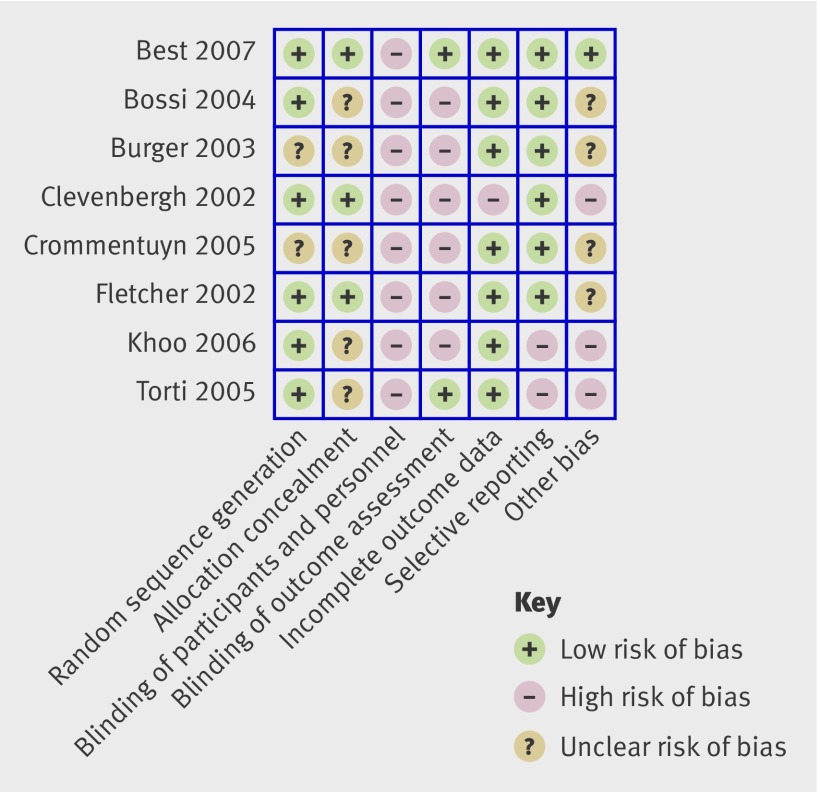
Flaws in the design, conduct, analysis, and reporting of randomised trials can cause the effect of an intervention to be underestimated or overestimated. The Cochrane Collaboration’s tool for assessing risk of bias aims to make the process clearer and more accurate
Overview
CoChat Summary
TL;DR
The paper presents the Cochrane Collaboration’s risk of bias tool for randomised trials, covering six bias domains with item-level support for judgment and low/unclear/high risk judgments. It describes the tool’s development, evaluation, and recommended use in systematic reviews and meta-analyses.
Key findings
- The tool assesses six domains: selection bias, performance bias, detection bias, attrition bias, reporting bias, and other bias; each item has a support-for-judgment description and a judgment of low, unclear, or high risk of material bias.
- In evaluation, of 187 surveyed authors, 88% took longer than 10 minutes to complete the tool, 44% longer than 20 minutes, and 7% longer than an hour, but 83% considered the time taken acceptable.
- A cited study found a mean of 8.8 minutes per person for a single predetermined outcome using the tool compared with 1.5 minutes for a previous rating scale for quality of reporting; larger effect sizes were observed on average in studies rated at high risk of bias compared with low risk.
- Incomplete outcome data and selective reporting were the most difficult items to assess, with reported kappa measures of agreement of 0.32 (fair) and 0.13 (slight), respectively.
Methods
- The tool was developed at a May 2005 meeting by informal consensus, based on seven principles; detailed criteria and guidance were developed by pairs of authors and refined through feedback, email iterations, presentations, workshops, and pilot work, then published in February 2008.
- Evaluation began in early 2009 as a three-stage project: focus groups with review authors who had used the tool, three online surveys of review authors who had used the tool, review authors who had not used it, and editorial teams, plus a March 2010 meeting to consider revisions.
- The paper is a methods/guidance article describing the tool, its principles, presentation, summary assessment, and use in synthesis; survey findings are reported descriptively.
Limitations
- The paper states that the reliability of the tool has not been extensively studied and that, by explicitly incorporating judgments, agreements between assessors may not be as high as for some other tools.
- It states continuing uncertainty and great variation in practice over how to assess potential for bias in specific domains, how to summarise bias assessments across domains, and how to incorporate bias assessments into meta-analyses.
- Evident from the text: the evaluation reports selected survey percentages without a response rate or full survey methodology, and the reliability evidence cited is preliminary and limited.
Model-written summary. Check it against the paper before relying on it.
Integrity signals
Registry
Cites
Statistics
Figures
Verification
Claims the paper makes
0 Valid · 3 Not valid · 1 Not checked · 20 Own results and interpretations
In the paper
“This was published in February 2008 and adopted as the recommended method throughout the Cochrane Collaboration.”
What the sources say
- Not matchedcites [9] 9. Higgins JPT, Green S, eds. Cochrane handbook for systematic reviews of interventions . Wiley, 2008.
Couldn’t be matched to a paper, so it can’t be checked.
- Not matched
A result the paper reports from its own data — it cites no other source for it, so there is none to check. The quote shows it is in the paper.
In the paper
“The Cochrane Collaboration has developed a new tool for assessing risk of bias in randomised trials”
A result the paper reports from its own data — it cites no other source for it, so there is none to check. The quote shows it is in the paper.
In the paper
“The 2010 evaluation of the initial version found wide acceptance of the need for the risk of bias tool, with a consensus that it represents an improvement over methods previously recommended by the Collaboration or widely used in systematic reviews.”
A result the paper reports from its own data — it cites no other source for it, so there is none to check. The quote shows it is in the paper.
In the paper
“Participants in the focus groups noted that the tool took longer to complete than previous methods.”
A result the paper reports from its own data — it cites no other source for it, so there is none to check. The quote shows it is in the paper.
In the paper
“We believe our risk of bias tool is one of the most comprehensive approaches to assessing the potential for bias in randomised trials included in systematic reviews or meta-analyses.”
19 more claims
Create a free account to see all 24 claims and every source verdict.
Claims other papers make about this one
Each is checked against this paper’s own text: does it say what the citing paper says it does?
The source backs part of the claim, not all of it — or backs it for a different population, condition or comparison.
In the citing paper
“The methodological quality of the RCTs was assessed using the Cochrane collaboration’s Risk Interventions Risk of Bias Tool (Higgins et al., 2011) reporting each of its five domains (adequate randomization and allocation, blinding, loss to follow-up, selective reporting, and other sources of potential bias) into a low risk of bias, high risk of bias, or unclear risk of bias.”
From Augmentation strategies for treatment resistant major depression: A systematic review and network meta-analysis (2022) · cites this paper as Higgins et al., 2011
Experimental — accuracy not yet measuredThe source backs part of the claim, not all of it — or backs it for a different population, condition or comparison.
In the citing paper
“Checklists and protocols for gauging the quality of evidence in a systematic fashion 8,9 also do not single out these problematic reports.”
From Fraudulent studies are undermining the reliability of systematic reviews: on the prevalence of problematic images in preclinical depression studies (2025) · cites this paper as [9]
Experimental — accuracy not yet measuredThe source backs part of the claim, not all of it — or backs it for a different population, condition or comparison.
In the citing paper
“When assessing the risk of bias, seven general principles are relevant, based on theoretical considerations, empirical work, and the experience with assessing risk of bias in RCTs and other studies [55–57].”
From COSMOS-E: Guidance on conducting systematic reviews and meta-analyses of observational studies of etiology (2019) · cites this paper as [55]
Experimental — accuracy not yet measuredThe source backs part of the claim, not all of it — or backs it for a different population, condition or comparison.
In the citing paper
“Four reviewers (J.d.P.-C., B.d.P.-C., R.M.A.-R., and J.R.-M.) independently assessed the risk of bias of the included studies according to version 2 of the Cochrane riskof-bias tool for randomized trials (RoB 2) (26).”
From Optimal Dose and Type of Physical Activity to Improve Glycemic Control in People Diagnosed With Type 2 Diabetes: A Systematic Review and Meta-analysis (2024) · cites this paper as [26]
Experimental — accuracy not yet measuredThe source backs part of the claim, not all of it — or backs it for a different population, condition or comparison.
In the citing paper
“RCTs were appraised using the Cochrane RoB 2 tool and observational studies using methodological index for non-randomized studies (MINORS).13,14”
From Perioperative Analgesia and Postoperative Nausea and Vomiting Management in Otoplasty: A Systematic Review (2026) · cites this paper as [13]
Experimental — accuracy not yet measured
113 more claims about this paper
Create a free account to see every claim other papers make about this one.
Citations
Cites
Cochrane Handbook for Systematic Reviews of Interventions: Cochrane Book Series
(2008) · doi:10.1002/9780470712184 · Cited by 25,048
Self-citationGRADE: an emerging consensus on rating quality of evidence and strength of recommendations
Guyatt, G. H., Oxman, A. D., Vist, G. E., Kunz, R., Falck-Ytter, Y., Alonso-Coello, P., & Schünemann, H. J. (2008) · BMJ · doi:10.1136/bmj.39489.470347.ad · Cited by 23,305
Self-citationAssessing Risk of Bias in Included Studies
Higgins, J. P., & Altman, D. G. (2008) · Cochrane Handbook for Systematic Reviews of Interventions · doi:10.1002/9780470712184.ch8 · Cited by 3,396
Self-citationAssessing the quality of controlled clinical trials
Jüni, P., Altman, D. G., & Egger, M. (2001) · BMJ · doi:10.1136/bmj.323.7303.42 · Cited by 3,309
Self-citationWood, L., Egger, M., Gluud, L. L., Schulz, K. F., Jüni, P., Altman, D. G., Gluud, C., Martin, R. M., Wood, A. J. G., & Sterne, J. A. C. (2008) · BMJ · doi:10.1136/bmj.39465.451748.ad · Cited by 2,538
Self-citationSystematic Reviews in Health Care : Meta-Analysis in Context
Egger, M., Smith, G. D., & Altman, D. G. (2000) · Cited by 2,413
Self-citationThe Hazards of Scoring the Quality of Clinical Trials for Meta-analysis
Jüni, P. (1999) · JAMA · doi:10.1001/jama.282.11.1054 · Cited by 1,981
Self-citationMoher, D., Jadad, A. R., Nichol, G., Penman, M., Tugwell, P., & Walsh, S. (1995) · Controlled Clinical Trials · doi:10.1016/0197-2456(94)00031-w · Cited by 1,308
Self-citationControlling the risk of spurious findings from meta-regression
Higgins, J. P. T., & Thompson, S. G. (2004) · Statistics in Medicine · doi:10.1002/sim.1752 · Cited by 1,267
Self-citationDiscrepancies between Meta-Analyses and Subsequent Large Randomized, Controlled Trials
LeLorier, J., Grégoire, G., Benhaddad, A., Lapierre, J., & Derderian, F. (1997) · New England Journal of Medicine · doi:10.1056/nejm199708213370806 · Cited by 1,171
Research works printed but not linked: 3
- [9]9. Higgins JPT, Green S, eds. Cochrane handbook for systematic reviews of interventions . Wiley, 2008.
- [16]16. No commercial reuse: See rights and reprints http://www.bmj.com/permissions Subscribe: http://www.bmj.com/subscribe BMJ 2008;336:924-6.
- [17]17. Schünemann HJ, Oxman AD, Higgins JPT, Vist GE, Glasziou P, Guyatt GH, et al. Presenting results and "Summary of findings" tables. In: Higgins JPT, Green S, eds. Cochrane handbook for systematic reviews of interventions . Wiley, 2008:335-8.
Cited by
Items 1,001–1,100 of 2,382
Atraumatic versus conventional lumbar puncture needles: a systematic review and meta-analysis
Nath, S., Koziarz, A., Badhiwala, J. H., Alhazzani, W., Jaeschke, R., Sharma, S., Banfield, L., Shoamanesh, A., Singh, S., Nassiri, F., et al. (2018) · The Lancet · doi:10.1016/s0140-6736(17)32451-0 · Cited by 180
Fink, H. A., Jutkowitz, E., McCarten, J. R., Hemmy, L. S., Butler, M., Davila, H., Ratner, E., Calvert, C., Barclay, T. R., Brasure, M., et al. (2018) · Annals of Internal Medicine · doi:10.7326/m17-1529 · Cited by 183
A systematic review of tailored eHealth interventions for weight loss
Ryan, K., Dockray, S., & Linehan, C. (2019) · DIGITAL HEALTH · doi:10.1177/2055207619826685 · Cited by 183
“Quality of methodology was assessed by authors KR and SD using the Cochrane Collaboration’s tool for assessing risk of bias for RCTs.26 Bias was assessed as a judgement (high, low, or unclear) in the following domains of bias: selection, performance, detection, attrition, reporting and other bias.”
Relationship Between Primary/Mechanical and Secondary/Biological Implant Stability
Monje, A., Ravidà, A., Wang, H.-L., Helms, J., & Brunski, J. (2019) · The International Journal of Oral & Maxillofacial Implants · doi:10.11607/jomi.19suppl.g1 · Cited by 182
Carlsson, T., Molander, F., Taylor, M. J., Jonsson, U., & Bölte, S. (2021) · Development and Psychopathology · doi:10.1017/s0954579420000620 · Cited by 182
Cardiotoxicity associated with immune checkpoint inhibitor therapy: a meta‐analysis
Rubio‐Infante, N., Ramírez‐Flores, Y. A., Castillo, E. C., Lozano, O., García‐Rivas, G., & Torre‐Amione, G. (2021) · European Journal of Heart Failure · doi:10.1002/ejhf.2289 · Cited by 179
Xie, W., Dai, P., Qin, Y., Wu, M., Yang, B., & Yu, X. (2020) · BMC Pregnancy and Childbirth · doi:10.1186/s12884-020-02892-1 · Cited by 182
Papamichou, D., Panagiotakos, D. B., & Itsiopoulos, C. (2019) · Nutrition, Metabolism and Cardiovascular Diseases · doi:10.1016/j.numecd.2019.02.004 · Cited by 182
Uhlig, C., Bluth, T., Schwarz, K., Deckert, S., Heinrich, L., De Hert, S., Landoni, G., Serpa Neto, A., Schultz, M. J., Pelosi, P., et al. (2016) · Anesthesiology · doi:10.1097/aln.0000000000001120 · Cited by 182
Amick, H. R., Gartlehner, G., Gaynes, B. N., Forneris, C., Asher, G. N., Morgan, L. C., Coker-Schwimmer, E., Boland, E., Lux, L. J., Gaylord, S., et al. (2015) · BMJ · doi:10.1136/bmj.h6019 · Cited by 181
Cai, X., Yang, W., Gao, X., Chen, Y., Zhou, L., Zhang, S., Han, X., & Ji, L. (2018) · Obesity · doi:10.1002/oby.22066 · Cited by 181
Attridge, M., Creamer, J., Ramsden, M., Cannings-John, R., & Hawthorne, K. (2014) · Cochrane Database of Systematic Reviews · doi:10.1002/14651858.cd006424.pub3 · Cited by 181
Xiao, J., Alkhers, N., Kopycka-Kedzierawski, D. T., Billings, R. J., Wu, T. T., Castillo, D. A., Rasubala, L., Malmstrom, H., Ren, Y., & Eliav, E. (2019) · Caries Research · doi:10.1159/000495187 · Cited by 181
Xu, D., Chen, V. L., Steiner, C. A., Berinstein, J. A., Eswaran, S., Waljee, A. K., Higgins, P. D. R., & Owyang, C. (2019) · American Journal of Gastroenterology · doi:10.14309/ajg.0000000000000198 · Cited by 181
“The Cochrane risk-of-bias tool was used to evaluate the quality of each eligible study for randomization, allocation, blinding of participants, personnel and outcome assessment, complete outcome data addressed, selective outcome reporting, and other sources of bias (27).”
Rimmer, E., Houston, B. L., Kumar, A., Abou-Setta, A. M., Friesen, C., Marshall, J. C., Rock, G., Turgeon, A. F., Cook, D. J., Houston, D. S., et al. (2014) · Critical Care · doi:10.1186/s13054-014-0699-2 · Cited by 181
Schwingshackl, L., Dias, S., Strasser, B., & Hoffmann, G. (2013) · PLoS ONE · doi:10.1371/journal.pone.0082853 · Cited by 180
Coghill, D., Banaschewski, T., Cortese, S., Asherson, P., Brandeis, D., Buitelaar, J., Daley, D., Danckaerts, M., Dittmann, R. W., Doepfner, M., et al. (2023) · European Child & Adolescent Psychiatry · doi:10.1007/s00787-021-01871-x · Cited by 180
Casagrande, M., Forte, G., Favieri, F., & Corbo, I. (2022) · International Journal of Environmental Research and Public Health · doi:10.3390/ijerph19148457 · Cited by 180
Chang, L., Chey, W. D., Imdad, A., Almario, C. V., Bharucha, A. E., Diem, S., Greer, K. B., Hanson, B., Harris, L. A., Ko, C., et al. (2023) · Gastroenterology · doi:10.1053/j.gastro.2023.03.214 · Cited by 185
Khan, A., Tansel, A., White, D. L., Kayani, W. T., Bano, S., Lindsay, J., El-Serag, H. B., & Kanwal, F. (2016) · Clinical Gastroenterology and Hepatology · doi:10.1016/j.cgh.2015.07.047 · Cited by 179
Roberts, M. Y., Curtis, P. R., Sone, B. J., & Hampton, L. H. (2019) · JAMA Pediatrics · doi:10.1001/jamapediatrics.2019.1197 · Cited by 179
Ciocanel, O., Power, K., Eriksen, A., & Gillings, K. (2017) · Journal of Youth and Adolescence · doi:10.1007/s10964-016-0555-6 · Cited by 179
Tricco, A. C., Cardoso, R., Thomas, S. M., Motiwala, S., Sullivan, S., Kealey, M. R., Hemmelgarn, B., Ouimet, M., Hillmer, M. P., Perrier, L., et al. (2015) · Implementation Science · doi:10.1186/s13012-016-0370-1 · Cited by 179
Miller, L. E., Gondusky, J. S., Bhattacharyya, S., Kamath, A. F., Boettner, F., & Wright, J. (2018) · The Journal of Arthroplasty · doi:10.1016/j.arth.2017.11.011 · Cited by 179
Ishaque, S., Karnon, J., Chen, G., Nair, R., & Salter, A. B. (2019) · Quality of Life Research · doi:10.1007/s11136-018-2016-z · Cited by 179
Piga, M., Cangemi, I., Mathieu, A., & Cauli, A. (2017) · Seminars in Arthritis and Rheumatism · doi:10.1016/j.semarthrit.2017.03.014 · Cited by 178
Abdelhamid, A., Bunn, D., Copley, M., Cowap, V., Dickinson, A., Gray, L., Howe, A., Killett, A., Lee, J., Li, F., et al. (2016) · BMC Geriatrics · doi:10.1186/s12877-016-0196-3 · Cited by 178
Sleep and Pain: A Systematic Review of Studies of Mediation
Whibley, D., AlKandari, N., Kristensen, K., Barnish, M., Rzewuska, M., Druce, K. L., & Tang, N. K. Y. (2019) · The Clinical Journal of Pain · doi:10.1097/ajp.0000000000000697 · Cited by 178
Yebyo, H. G., Aschmann, H. E., Kaufmann, M., & Puhan, M. A. (2019) · American Heart Journal · doi:10.1016/j.ahj.2018.12.007 · Cited by 178
“The median of the proportion of participants with type 2 diabetes was 14% (3-95); hypertension, 42% (27-84); male sex, 61% (48-77); smoker, 28% (17-45) and white Caucasian, 92% (83-95).”
Thomas, G., Tahir, M. R., Bongers, B. C., Kallen, V. L., Slooter, G. D., & van Meeteren, N. L. (2019) · European Journal of Anaesthesiology · doi:10.1097/eja.0000000000001030 · Cited by 178
Safety and effectiveness of acellular pertussis vaccination during pregnancy: a systematic review
Vygen-Bonnet, S., Hellenbrand, W., Garbe, E., von Kries, R., Bogdan, C., Heininger, U., Röbl-Mathieu, M., & Harder, T. (2020) · BMC Infectious Diseases · doi:10.1186/s12879-020-4824-3 · Cited by 178
“Assessment of risk of bias and quality of evidence For randomized controlled trials (RCTs), the Cochrane risk of bias tool was used to assess the following domains: random sequence generation, allocation concealment, blinding of participants and personnel, blinding of outcome assessment, incomplete outcome data, selec…”
Peer‐assisted learning in medical education: A systematic review and meta‐analysis
Brierley, C., Ellis, L., & Reid, E. R. (2022) · Medical Education · doi:10.1111/medu.14672 · Cited by 178
Bennett, S. D., Cuijpers, P., Ebert, D. D., McKenzie Smith, M., Coughtrey, A. E., Heyman, I., Manzotti, G., & Shafran, R. (2019) · Journal of Child Psychology and Psychiatry · doi:10.1111/jcpp.13010 · Cited by 162
Borde, R., Smith, J. J., Sutherland, R., Nathan, N., & Lubans, D. R. (2017) · Obesity Reviews · doi:10.1111/obr.12517 · Cited by 177
Stall, N. M., Kim, S. J., Hardacre, K. A., Shah, P. S., Straus, S. E., Bronskill, S. E., Lix, L. M., Bell, C. M., & Rochon, P. A. (2019) · Journal of the American Geriatrics Society · doi:10.1111/jgs.15690 · Cited by 177
Reynolds, A. N., Akerman, A., Kumar, S., Diep Pham, H. T., Coffey, S., & Mann, J. (2022) · BMC Medicine · doi:10.1186/s12916-022-02328-x · Cited by 177
Yoon, H. H., Jin, Z., Kour, O., Kankeu Fonkoua, L. A., Shitara, K., Gibson, M. K., Prokop, L. J., Moehler, M., Kang, Y.-K., Shi, Q., et al. (2022) · JAMA Oncology · doi:10.1001/jamaoncol.2022.3707 · Cited by 177
Kurniawan, M. H., Handiyani, H., Nuraini, T., Hariyati, R. T. S., & Sutrisno, S. (2024) · Annals of Medicine · doi:10.1080/07853890.2024.2302980 · Cited by 177
Kerschbaumer, A., Smolen, J. S., Dougados, M., de Wit, M., Primdahl, J., McInnes, I., van der Heijde, D., Baraliakos, X., Falzon, L., & Gossec, L. (2020) · Annals of the Rheumatic Diseases · doi:10.1136/annrheumdis-2020-217163 · Cited by 177
Best, K. P., Gold, M., Kennedy, D., Martin, J., & Makrides, M. (2016) · The American Journal of Clinical Nutrition · doi:10.3945/ajcn.115.111104 · Cited by 177
Paul, S., Saxena, A., Terrin, N., Viveiros, K., Balk, E. M., & Wong, J. B. (2016) · Annals of Internal Medicine · doi:10.7326/m15-1121 · Cited by 177
Li, B.-Z., Threapleton, D. E., Wang, J.-Y., Xu, J.-M., Yuan, J.-Q., Zhang, C., Li, P., Ye, Q.-L., Guo, B., Mao, C., et al. (2015) · BMJ · doi:10.1136/bmj.h4052 · Cited by 176
Seiler, A., Klaas, V., Tröster, G., & Fagundes, C. P. (2017) · Psycho-Oncology · doi:10.1002/pon.4489 · Cited by 176
Maimaris, W., Paty, J., Perel, P., Legido-Quigley, H., Balabanova, D., Nieuwlaat, R., & Mckee, M. (2013) · PLoS Medicine · doi:10.1371/journal.pmed.1001490 · Cited by 176
CT Scans and Cancer Risks: A Systematic Review and Dose-response Meta-analysis
Cao, C.-F., Ma, K.-L., Shan, H., Liu, T.-F., Zhao, S.-Q., Wan, Y., Jun-Zhang, & Wang, H.-Q. (2022) · BMC Cancer · doi:10.1186/s12885-022-10310-2 · Cited by 176
Yan, E., Veitch, M., Saripella, A., Alhamdah, Y., Butris, N., Tang-Wai, D. F., Tartaglia, M. C., Nagappa, M., Englesakis, M., He, D., et al. (2023) · Journal of Clinical Anesthesia · doi:10.1016/j.jclinane.2023.111221 · Cited by 176
Smithers, L. G., Sawyer, A. C. P., Chittleborough, C. R., Davies, N. M., Davey Smith, G., & Lynch, J. W. (2018) · Nature Human Behaviour · doi:10.1038/s41562-018-0461-x · Cited by 175
AGA technical review on gastric intestinal metaplasia-natural history and clinical outcomes
Gawron, A. J., Shah, S. C., Altayar, O., Davitkov, P., Morgan, D., Turner, K., & Mustafa, R. A. (2020) · Gastroenterology · doi:10.1053/j.gastro.2019.12.001 · Cited by 175
The Effect of Physical Activity on Sleep Quality and Sleep Disorder: A Systematic Review
Alnawwar, M. A., Alraddadi, M. I., Algethmi, R. A., Salem, G. A., Salem, M. A., & Alharbi, A. A. (2023) · Cureus · doi:10.7759/cureus.43595 · Cited by 253
ACCF/AHA Clinical Practice Guideline Methodology Summit Report
Jacobs, A. K., Kushner, F. G., Ettinger, S. M., Guyton, R. A., Anderson, J. L., Ohman, E. M., Albert, N. M., Antman, E. M., Arnett, D. K., Bertolet, M., et al. (2013) · Journal of the American College of Cardiology · doi:10.1016/j.jacc.2012.09.025 · Cited by 175
Reboussin, D. M., Allen, N. B., Griswold, M. E., Guallar, E., Hong, Y., Lackland, D. T., Miller, E. (. R., Polonsky, T., Thompson-Paul, A. M., & Vupputuri, S. (2018) · Hypertension · doi:10.1161/hyp.0000000000000067 · Cited by 175
Vancomycin and the Risk of AKI: A Systematic Review and Meta-Analysis
Sinha Ray, A., Haikal, A., Hammoud, K. A., & Yu, A. S. L. (2016) · Clinical Journal of the American Society of Nephrology · doi:10.2215/cjn.05920616 · Cited by 175
Cochrane’s risk of bias tool in the context of psychotherapy outcome research
Munder, T., & Barth, J. (2018) · Psychotherapy Research · doi:10.1080/10503307.2017.1411628 · Cited by 174
Le Berre, M., Maimon, G., Sourial, N., Guériton, M., & Vedel, I. (2017) · Journal of the American Geriatrics Society · doi:10.1111/jgs.14828 · Cited by 174
Crocker, T. F., Lam, N., Jordão, M., Brundle, C., Prescott, M., Forster, A., Ensor, J., Gladman, J., & Clegg, A. (2023) · Journal of Clinical Epidemiology · doi:10.1016/j.jclinepi.2023.06.015 · Cited by 174
A principal component analysis is conducted for a case series quality appraisal checklist
Guo, B., Moga, C., Harstall, C., & Schopflocher, D. (2016) · Journal of Clinical Epidemiology · doi:10.1016/j.jclinepi.2015.07.010 · Cited by 174
Jibril, F., Sharaby, S., Mohamed, A., & Wilby, K. J. (2015) · The Canadian Journal of Hospital Pharmacy · doi:10.4212/cjhp.v68i3.1458 · Cited by 174
Giuliano, C., Karahalios, A., Neil, C., Allen, J., & Levinger, I. (2017) · International Journal of Cardiology · doi:10.1016/j.ijcard.2016.11.023 · Cited by 174
Kanji, T., Gandhi, M., Clase, C. M., & Yang, R. (2015) · BMC Nephrology · doi:10.1186/s12882-015-0047-z · Cited by 174
Risk Factors for Recurrence after anal fistula surgery: A meta-analysis
Mei, Z., Wang, Q., Zhang, Y., Liu, P., Ge, M., Du, P., Yang, W., & He, Y. (2019) · International Journal of Surgery · doi:10.1016/j.ijsu.2019.08.003 · Cited by 174
Ruffault, A., Czernichow, S., Hagger, M. S., Ferrand, M., Erichot, N., Carette, C., Boujut, E., & Flahault, C. (2017) · Obesity Research & Clinical Practice · doi:10.1016/j.orcp.2016.09.002 · Cited by 173
Wilkinson, K., Wei, Y., Szwajcer, A., Rabbani, R., Zarychanski, R., Abou-Setta, A. M., & Mahmud, S. M. (2017) · Vaccine · doi:10.1016/j.vaccine.2017.03.092 · Cited by 173
Zhao, H., Wang, H., Sun, F., Lyu, S., & An, Y. (2017) · Critical Care · doi:10.1186/s13054-017-1760-8 · Cited by 173
Was Eysenck right after all? A reassessment of the effects of psychotherapy for adult depression
Cuijpers, P., Karyotaki, E., Reijnders, M., & Ebert, D. D. (2019) · Epidemiology and Psychiatric Sciences · doi:10.1017/s2045796018000057 · Cited by 173
Liyana Amin, N. A., Tam, W. W. S., & Shorey, S. (2018) · International Journal of Nursing Studies · doi:10.1016/j.ijnurstu.2018.03.021 · Cited by 167
Zhang, M.-F., Wen, Y.-S., Liu, W.-Y., Peng, L.-F., Wu, X.-D., & Liu, Q.-W. (2015) · Medicine · doi:10.1097/md.0000000000000897 · Cited by 172
A systematic review of factors that contribute to nocebo effects
Webster, R. K., Weinman, J., & Rubin, G. J. (2016) · Health Psychology · doi:10.1037/hea0000416 · Cited by 172
Strohmaier, S. (2020) · Mindfulness · doi:10.1007/s12671-020-01319-4 · Cited by 163
Ballesio, A., Aquino, M. R. J. V., Feige, B., Johann, A. F., Kyle, S. D., Spiegelhalder, K., Lombardo, C., Rücker, G., Riemann, D., & Baglioni, C. (2018) · Sleep Medicine Reviews · doi:10.1016/j.smrv.2017.01.006 · Cited by 172
Palpacuer, C., Duprez, R., Huneau, A., Locher, C., Boussageon, R., Laviolle, B., & Naudet, F. (2018) · Addiction · doi:10.1111/add.13974 · Cited by 172
Razza, L. B., Moffa, A. H., Moreno, M. L., Carvalho, A. F., Padberg, F., Fregni, F., & Brunoni, A. R. (2018) · Progress in Neuro-Psychopharmacology and Biological Psychiatry · doi:10.1016/j.pnpbp.2017.10.016 · Cited by 172
Systematic Review of the Toxicity of Long-Course Oral Corticosteroids in Children
Aljebab, F., Choonara, I., & Conroy, S. (2017) · PLOS ONE · doi:10.1371/journal.pone.0170259 · Cited by 172
Dental Restorative Digital Workflow: Digital Smile Design from Aesthetic to Function
Cervino, G., Fiorillo, L., Arzukanyan, A. V., Spagnuolo, G., & Cicciù, M. (2019) · Dentistry Journal · doi:10.3390/dj7020030 · Cited by 172
Atkinson, N. S. S., Ket, S., Bassett, P., Aponte, D., De Aguiar, S., Gupta, N., Horimatsu, T., Ikematsu, H., Inoue, T., Kaltenbach, T., et al. (2019) · Gastroenterology · doi:10.1053/j.gastro.2019.04.014 · Cited by 172
Li, B., Khan, S., Salata, K., Hussain, M. A., de Mestral, C., Greco, E., Aljabri, B. A., Forbes, T. L., Verma, S., & Al-Omran, M. (2019) · Journal of Vascular Surgery · doi:10.1016/j.jvs.2019.01.076 · Cited by 172
Ramsey, W. A., Heidelberg, R. E., Gilbert, A. M., Heneghan, M. B., Badawy, S. M., & Alberts, N. M. (2020) · Psycho-Oncology · doi:10.1002/pon.5280 · Cited by 172
Nickow, A., Oreopoulos, P., & Quan, V. (2020) · doi:10.3386/w27476 · Cited by 171
Almutairi, A. R., Zhou, L., Gellad, W. F., Lee, J. K., Slack, M. K., Martin, J. R., & Lo-Ciganic, W.-H. (2017) · Clinical Therapeutics · doi:10.1016/j.clinthera.2017.05.358 · Cited by 171
Tran, A., Yates, J., Lau, A., Lampron, J., & Matar, M. (2018) · Journal of Trauma and Acute Care Surgery · doi:10.1097/ta.0000000000001816 · Cited by 171
Moffa, A. H., Martin, D., Alonzo, A., Bennabi, D., Blumberger, D. M., Benseñor, I. M., Daskalakis, Z., Fregni, F., Haffen, E., Lisanby, S. H., et al. (2020) · Progress in Neuro-Psychopharmacology and Biological Psychiatry · doi:10.1016/j.pnpbp.2019.109836 · Cited by 171
“This instrument assesses the risks of selection, performance, detection, attrition, reporting and other biases according to standardized criteria, focusing on internal quality and methodological judgment on the reported data (Higgins et al., 2011).”
Campbell, K. L., Zadravec, K., Bland, K. A., Chesley, E., Wolf, F., & Janelsins, M. C. (2020) · Physical Therapy · doi:10.1093/ptj/pzz090 · Cited by 171
Aune, D., Sen, A., Henriksen, T., Saugstad, O. D., & Tonstad, S. (2016) · European Journal of Epidemiology · doi:10.1007/s10654-016-0176-0 · Cited by 170
Yao, K., Zeng, L., He, Q., Wang, W., Lei, J., & Zou, X. (2017) · Medical Science Monitor · doi:10.12659/msm.902600 · Cited by 170
Effects of post-ICU follow-up on subject outcomes: A systematic review and meta-analysis
Rosa, R. G., Ferreira, G. E., Viola, T. W., Robinson, C. C., Kochhann, R., Berto, P. P., Biason, L., Cardoso, P. R., Falavigna, M., & Teixeira, C. (2019) · Journal of Critical Care · doi:10.1016/j.jcrc.2019.04.014 · Cited by 170
Huntriss, R., Campbell, M., & Bedwell, C. (2018) · European Journal of Clinical Nutrition · doi:10.1038/s41430-017-0019-4 · Cited by 170
A meta-analysis on heart rate variability biofeedback and depressive symptoms
Pizzoli, S. F. M., Marzorati, C., Gatti, D., Monzani, D., Mazzocco, K., & Pravettoni, G. (2021) · Scientific Reports · doi:10.1038/s41598-021-86149-7 · Cited by 170
Postoperative pain treatment after total knee arthroplasty: A systematic review
Karlsen, A. P. H., Wetterslev, M., Hansen, S. E., Hansen, M. S., Mathiesen, O., & Dahl, J. B. (2017) · PLOS ONE · doi:10.1371/journal.pone.0173107 · Cited by 170
Larsen, C., & Shahinas, J. (2020) · Journal of Clinical Medicine Research · doi:10.14740/jocmr4090 · Cited by 170
Spinelli, C., Wisener, M., & Khoury, B. (2019) · Journal of Psychosomatic Research · doi:10.1016/j.jpsychores.2019.03.003 · Cited by 170
Sherifali, D., Ali, M. U., Ploeg, J., Markle-Reid, M., Valaitis, R., Bartholomew, A., Fitzpatrick-Lewis, D., & McAiney, C. (2018) · Journal of Medical Internet Research · doi:10.2196/10668 · Cited by 151
“Risk of bias was assessed using the Cochrane risk of bias framework [26], which evaluates the level of bias for sequence generation, allocation concealment, blinding, completeness of outcome assessment, selective reporting, and other biases.”
Wakelin, K. E., Perman, G., & Simonds, L. M. (2022) · Clinical Psychology & Psychotherapy · doi:10.1002/cpp.2586 · Cited by 170
Whelehan, P., Evans, A., Wells, M., & MacGillivray, S. (2013) · The Breast · doi:10.1016/j.breast.2013.03.003 · Cited by 169
Lely, J. C. G., Smid, G. E., Jongedijk, R. A., W. Knipscheer, J., & Kleber, R. J. (2019) · European Journal of Psychotraumatology · doi:10.1080/20008198.2018.1550344 · Cited by 169
Herrera, D., Matesanz, P., Martín, C., Oud, V., Feres, M., & Teughels, W. (2020) · Journal of Clinical Periodontology · doi:10.1111/jcpe.13230 · Cited by 169
Psychotherapies for depression in low- and middle-income countries: a meta-analysis
Cuijpers, P., Karyotaki, E., Reijnders, M., Purgato, M., & Barbui, C. (2018) · World Psychiatry · doi:10.1002/wps.20493 · Cited by 159
McLean, G., Band, R., Saunderson, K., Hanlon, P., Murray, E., Little, P., McManus, R. J., Yardley, L., & Mair, F. S. (2016) · Journal of Hypertension · doi:10.1097/hjh.0000000000000859 · Cited by 168
Alhazzani, W., Lim, W., Jaeschke, R. Z., Murad, M. H., Cade, J., & Cook, D. J. (2013) · Critical Care Medicine · doi:10.1097/ccm.0b013e31828cf104 · Cited by 168
Apps As Learning Tools: A Systematic Review
Griffith, S. F., Hagan, M. B., Heymann, P., Heflin, B. H., & Bagner, D. M. (2020) · Pediatrics · doi:10.1542/peds.2019-1579 · Cited by 168
Pellegrini, M., Cioffi, I., Evangelista, A., Ponzo, V., Goitre, I., Ciccone, G., Ghigo, E., & Bo, S. (2020) · Reviews in Endocrine and Metabolic Disorders · doi:10.1007/s11154-019-09524-w · Cited by 168
“7 Risk of bias assessment The validity of the studies was independently assessed by two authors (MP, SB) using two tools: 1) the “Risk of bias” tool developed by the Cochrane Collaboration for RCTs [30] and 2) the ‘Risk Of Bias in Non-randomized Studies of Interventions’ (ROBINS-I) tool for evaluating risk of bias in…”
McIsaac, D. I., Kidd, G., Gillis, C., Branje, K., Al-Bayati, M., Baxi, A., Grudzinski, A. L., Boland, L., Veroniki, A.-A., Wolfe, D., et al. (2025) · BMJ · doi:10.1136/bmj-2024-081164 · Cited by 168
Metadata
- Authors
- Higgins, J. P. T., Altman, D. G., Gotzsche, P. C., Juni, P., Moher, D., Oxman, A. D., Savovic, J., Schulz, K. F., Weeks, L., Sterne, J. A. C., Cochrane Bias Methods Group, & Cochrane Statistical Methods Group
- Affiliations
- MRC Biostatistics Unit (GB)
- University of Oxford (GB)
- University of Ottawa (CA)
- Nasjonalt Kunnskapssenter for Helsetjenesten (NO)
- Family Health International 360 (US)
- Ottawa Hospital Research Institute (CA)
- University of Bristol (GB)
- Corresponding author
- Higgins, J. P. T.
- Venue
- BMJ
- Publisher
- BMJ
- Published
- 2011-10-18
- Volume
- 343
- Issue
- oct18 2
- Pages
- d5928-d5928
- ISSN
- 0007-1447 (ISSN-L)
- 0959-8138
- 1468-5833
- PMC
- PMC3196245
- OpenAlex
- W2098923148
- Cited by
- 33,817
- References
- 26
- Citations by year
- 2026: 1970 · 2025: 3214 · 2024: 3745 · 2023: 3530 · 2022: 4008 · 2021: 4125 · 2020: 3755 · 2019: 2714 · 2018: 2012 · 2017: 1569 · 2016: 1203 · 2015: 881 · 2014: 591 · 2013: 342 · 2012: 97
- FWCI
- 352.06
- Type
- journal article
- Language
- en
- Open access
- hybrid
- doi.org
- Licence
- cc-by-nc
- Locations
- BMJ (publishedVersion, cc-by-nc)
- Europe PMC (PubMed Central) (publishedVersion, cc-by-nc)
- PubMed Central (publishedVersion, cc-by-nc)
- PubMed (publishedVersion)
- Research at the University of Copenhagen (University of Copenhagen) (publishedVersion)
- Bristol Research (University of Bristol) (publishedVersion)
- Bern Open Repository and Information System (University of Bern) (submittedVersion, cc-by-nc)
- Open Access CRIS of the University of Bern
- Funders
- Cancer Research UK (C-5592)
- Canadian Institutes of Health Research
- Topics
- Social Sciences › Decision Sciences › Statistics, Probability and Uncertainty › Meta-analysis and systematic reviews
- Physical Sciences › Mathematics › Statistics and Probability › Statistical Methods in Clinical Trials
- Physical Sciences › Mathematics › Statistics and Probability › Statistical Methods in Epidemiology
- Keywords
- risk of bias, Cochrane risk of bias tool, randomised trials, trial design flaws, trial conduct, trial analysis, trial reporting, bias assessment
- MeSH terms
- Humans, Research Design, Bias, Randomized Controlled Trials as Topic, Risk Assessment
About these checks
Registry, retraction, Cites and statistics results are computed, not judged, with one exception: a printed reference that no index lists is read once by a model before it counts as a citation error. Claims are extracted by a model and kept only when their quote appears verbatim in the text; each cited source is then checked, with a model’s help, for whether it says what the claim relies on. Those verdicts can be wrong — read the claim’s quote and the cited source before relying on one.
A language model drew the claims from the paper on 2026-09-24 (prompt extract-v1).
Statistics and arithmetic are recomputed, not judged.
Confidence bands are shown only for fields calibrated on our annotated test set. None is calibrated yet, so no band is shown.
What counts as a claim ›How we measure confidence ›How we check this ›
Are you an author, or do you see a problem with this page? Request a review
Data sources
Bibliographic data: Semantic Scholar, OpenAlex, Crossref.
Contains information from the Semantic Scholar Academic Graph Datasets, made available under the ODC Attribution License (ODC-BY 1.0).
Semantic Scholar’s data is described in: Kinney, R., et al. (2023). The Semantic Scholar Open Data Platform. arXiv:2301.10140.
