

Effects of screentime on the health and well-being of children and adolescents: a systematic review of reviews
Open accessThe DOI matches its Crossref record; 29 of the 29 references it cites were found in a registry or an index.
Abstract
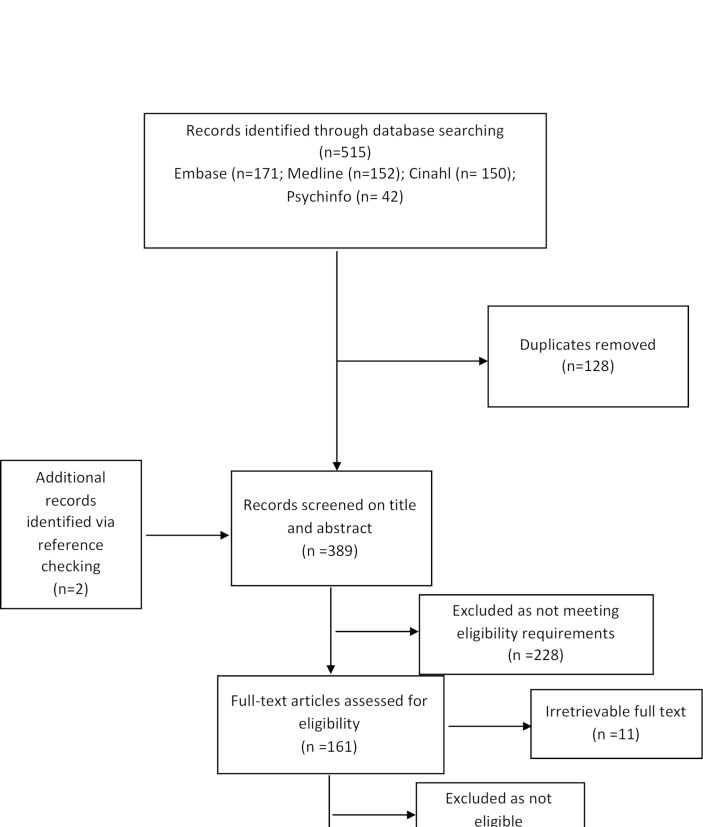
Objectives: To systematically examine the evidence of harms and benefits relating to time spent on screens for children and young people’s (CYP) health and well-being, to inform policy. Methods: Systematic review of reviews undertaken to answer the question ‘What is the evidence for health and well-being effects of screentime in children and adolescents (CYP)?’ Electronic databases were searched for systematic reviews in February 2018. Eligible reviews reported associations between time on screens (screentime; any type) and any health/well-being outcome in CYP. Quality of reviews was assessed and strength of evidence across reviews evaluated. Results: 13 reviews were identified (1 high quality, 9 medium and 3 low quality). 6 addressed body composition; 3 diet/energy intake; 7 mental health; 4 cardiovascular risk; 4 for fitness; 3 for sleep; 1 pain; 1 asthma. We found moderately strong evidence for associations between screentime and greater obesity/adiposity and higher depressive symptoms; moderate evidence for an association between screentime and higher energy intake, less healthy diet quality and poorer quality of life. There was weak evidence for associations of screentime with behaviour problems, anxiety, hyperactivity and inattention, poorer self-esteem, poorer well-being and poorer psychosocial health, metabolic syndrome, poorer cardiorespiratory fitness, poorer cognitive development and lower educational attainments and poor sleep outcomes. There was no or insufficient evidence for an association of screentime with eating disorders or suicidal ideation, individual cardiovascular risk factors, asthma prevalence or pain. Evidence for threshold effects was weak. We found weak evidence that small amounts of daily screen use is not harmful and may have some benefits. Conclusions: There is evidence that higher levels of screentime is associated with a variety of health harms for CYP, with evidence strongest for adiposity, unhealthy diet, depressive symptoms and quality of life. Evidence to guide policy on safe CYP screentime exposure is limited. PROSPERO registration number: CRD42018089483.
Overview
The claims and statistics of this paper haven’t been checked yet.
Free: it reads the open-access text and checks the first 5 claims that cite a source we can check. Create a free account to check every claim.
Integrity signals
Registry
Cites
Statistics
Figures
Verification
Claims the paper makes
The claims and statistics of this paper haven’t been checked yet.
Free: it reads the open-access text and checks the first 5 claims that cite a source we can check. Create a free account to check every claim.
Claims other papers make about this one
Each is checked against this paper’s own text: does it say what the citing paper says it does?
The source backs part of the claim, not all of it — or backs it for a different population, condition or comparison.
In the citing paper
“The results of the current review largely align with past systematic reviews, which have concluded that there is a positive association between screen time and depressive symptoms (Hoare et al., 2016;Liu et al., 2016;Stiglic & Viner, 2019;Wang et al., 2019), and a weak association between screen time and both anxiety and self-esteem (Stiglic & Viner, 2019).”
From The relationship between screen time and mental health in young people: A systematic review of longitudinal studies (2021) · cites this paper as Stiglic & Viner, 2019
Experimental — accuracy not yet measuredThe source backs part of the claim, not all of it — or backs it for a different population, condition or comparison.
In the citing paper
“This may partly be driven by the detrimental effects of screen time on mental health, including increased severity of anxiety and depressive symptoms, which have been well documented (Stiglic & Viner, 2019).”
From Social Media and Mental Health: Benefits, Risks, and Opportunities for Research and Practice (2020) · cites this paper as Stiglic & Viner, 2019
Experimental — accuracy not yet measuredThe cited source says what the claim attributes to it.
In the citing paper
“Possible mechanisms include more sedentary behavior250 and greater energy intake for children, teens, and young adults.251”
From Digital Ecosystems, Children, and Adolescents: Technical Report (2026) · cites this paper as [251]
The cited source says what the claim attributes to it.
In the citing paper
“More screen time has been associated with depressive symptoms among children and adolescents in several systematic reviews [11, 12, 43–50].”
From Screen time and mental health: a prospective analysis of the Adolescent Brain Cognitive Development (ABCD) Study (2024) · cites this paper as [48]
In the citing paper
“A systematic review of 13 published reviews concluded that there is moderately strong evidence for a positive association between screen time and depressive symptoms in children and adolescents, but not behavior problems, anxiety, hyperactivity and inattention, self-esteem, well-being, and psychosocial health (Stiglic & Viner, 2019).”
From The relationship between screen time and mental health in young people: A systematic review of longitudinal studies (2021) · cites this paper as Stiglic & Viner, 2019
1 more claim about this paper
Create a free account to see every claim other papers make about this one.
Self-check
Percentages, sums and reported differences re-computed from the paper’s own numbers.
The self-check needs the paper’s full text.
Citations
Cites
Liberati, A., Altman, D. G., Tetzlaff, J., Mulrow, C., Gøtzsche, P. C., Ioannidis, J. P. A., Clarke, M., Devereaux, P. J., Kleijnen, J., & Moher, D. (2009) · PLoS Medicine · doi:10.1371/journal.pmed.1000100 · Cited by 28,164
Liberati, A., Altman, D. G., Tetzlaff, J., Mulrow, C., Gotzsche, P. C., Ioannidis, J. P. A., Clarke, M., Devereaux, P. J., Kleijnen, J., & Moher, D. (2009) · BMJ · doi:10.1136/bmj.b2700 · Cited by 17,648
Systematic review of sedentary behaviour and health indicators in school-aged children and youth.
Tremblay, M. S., LeBlanc, A. G., Kho, M. E., Saunders, T. J., Larouche, R., Colley, R. C., Goldfield, G., & Gorber, S. (2011) · International Journal of Behavioral Nutrition and Physical Activity · doi:10.1186/1479-5868-8-98 · Cited by 2,085
Gross, K. S., Brandner, D. D., Martinez, L. A., Olive, M. F., Meisel, R. L., & Mermelstein, P. G. (2016) · PLOS ONE · doi:10.1371/journal.pone.0162755 · Cited by 1,609
Screen time and sleep among school-aged children and adolescents: a systematic literature review
Hale, L., & Guan, S. (2015) · Sleep Medicine Reviews · doi:10.1016/j.smrv.2014.07.007 · Cited by 1,468
Carson, V., Hunter, S., Kuzik, N., Gray, C. E., Poitras, V. J., Chaput, J.-P., Saunders, T. J., Katzmarzyk, P. T., Okely, A. D., Connor Gorber, S., et al. (2016) · Applied Physiology, Nutrition, and Metabolism · doi:10.1139/apnm-2015-0630 · Cited by 1,380
Children and Adolescents and Digital Media
Reid Chassiakos, Y. (., Radesky, J., Christakis, D., Moreno, M. A., Cross, C., COUNCIL ON COMMUNICATIONS AND MEDIA, Hill, D., Ameenuddin, N., Hutchinson, J., Levine, A., et al. (2016) · Pediatrics · doi:10.1542/peds.2016-2593 · Cited by 1,340
Przybylski, A. K., & Weinstein, N. (2017) · Psychological Science · doi:10.1177/0956797616678438 · Cited by 890
Wu, X. Y., Han, L. H., Zhang, J. H., Luo, S., Hu, J. W., & Sun, K. (2017) · PLOS ONE · doi:10.1371/journal.pone.0187668 · Cited by 664 · cited 1×
“HRQOL as a formal measured construct was examined by Wu et al, 22 who reported consistent evidence that greater screentime was associated with lower measured HRQOL in 11/13 cross-sectional and 4/4 longitudinal studies.”
MethodHoare, E., Milton, K., Foster, C., & Allender, S. (2016) · International Journal of Behavioral Nutrition and Physical Activity · doi:10.1186/s12966-016-0432-4 · Cited by 616 · cited 1×
“Only Hoare et al 20 reported on associations with anxiety, and found moderate evidence for a positive association between screentime duration and severity of anxiety symptoms.”
Background
Cited by
Items 901–1,000 of 1,000
Psychosocial Effects and Public Health Challenges of COVID-19 Pandemic in India
Das, S., & Richards, J. (2021) · IntechOpen eBooks · doi:10.5772/intechopen.99093 · Cited by 1
Virgara, R., Phillips, A., Lewis, L. K., Richardson, M., & Maher, C. A. (2021) · Research Square · doi:10.21203/rs.3.rs-955933/v1
“The enablers were ranked (from most important to least important): (1) staff understanding, (2) adequate and appropriate staff training, (3) OSHC family education and understanding of the PA and ST guidelines, and (4) workplace policy.”
BackgroundInfluentialSheldrick, M. P. R. (2021) · Cronfa (Swansea University) · doi:10.23889/suthesis.58523 · Cited by 1
Encouraging Your Child to Be Physically Active
Kramer, M. S. (2021) · Springer eBooks · doi:10.1007/978-3-030-74765-7_17
A cross-sectional study of online medical education in the COVID-19 era
Kumar, A., Singh, G., Pandey, A., & Rawat, J. (2021) · Journal of Medical Society · doi:10.4103/jms.jms_68_21
Gilchrist, J. D., Battista, K., Patte, K. A., Faulkner, G., Carson, V., & Leatherdale, S. T. (2020) · Research Square · doi:10.21203/rs.3.rs-33268/v1
Федорович, Г. И., Игоревна, Г. Е., Алексеевич, М. Л., Михайлович, Ф. В., & Евгеньевич, П. В. (2014) · CyberDOI · doi:10.24411/1683-805x-2014-00038
Nonlinear Optical Microscopy of Murine Abdominal Aortic Aneurysm
Wilson, K. E., Yrineo, A. A., Adelsperger, A. R., Schroeder, H. D., Zhang, D., Zhang, J., Liao, C., Damen, F. W., Cheng, J., Phillips, E. H., et al. (2014) · Purdue e-Pubs (Purdue University System)
Caffarelli, C., Santamaria, F., Procaccianti, M., Piro, E., Cave, V. D., Borrelli, M., Santoro, A., Grassi, F., Bernasconi, S., & Corsello, G. (2021) · The Italian Journal of Pediatrics/Italian journal of pediatrics · doi:10.1186/s13052-021-01184-4 · Cited by 1
“There is considerable evidence that higher levels of screen time are associated with a variety of health harms, with evidence strongest for adiposity, unhealthy diet, depressive symptoms, and quality of life [196].”
BackgroundNursing infants, young children and their families
(2022) · Cambridge University Press eBooks · doi:10.1017/9781108980944.007
Cieśla, E., Lelonek, M., Zaręba, M., & Suliga, E. (2021) · Anthropological Review · doi:10.2478/anre-2021-0031
EARLY INITIATION OF TELEVISION VIEWING: DOES IT MAKE A DIFFERENCE IN DEVELOPMENTAL FUNCTIONING?
Dharmani, A., Malhi, P., Bharti, B., & Suthar, R. (2021) · GLOBAL JOURNAL FOR RESEARCH ANALYSIS · doi:10.36106/gjra/6201780
Mitchell, A. E. (2022) · Cambridge University Press eBooks · doi:10.1017/9781108980944.009 · Cited by 1
Hastie, M. (2022) · F1000Research · doi:10.12688/f1000research.75661.1
THE IMPACT OF ONLINE ACTIVITIES ON STUDENTS’ HEALTH AND THE IMPORTANCE OF TIME MANAGEMENT
Hațegan, C. B., Talaș, D. A., & TRIFU, R. N. (2021) · Education and new developments · doi:10.36315/2021end067
Ellis, D. A. (2020) · Cambridge University Press eBooks · doi:10.1017/9781108671408.008
Ellis, D. A. (2020) · Cambridge University Press eBooks · doi:10.1017/9781108671408.001
Ellis, D. A. (2020) · Cambridge University Press eBooks · doi:10.1017/9781108671408.004
Ellis, D. A. (2020) · Cambridge University Press eBooks · doi:10.1017/9781108671408.002
Ellis, D. A. (2020) · Cambridge University Press eBooks · doi:10.1017/9781108671408.009
Ellis, D. A. (2020) · Cambridge University Press eBooks · doi:10.1017/9781108671408.007
Parental Perspectives Regarding the Impact of the COVID-19 Pandemic on Their Children
Tanti, S., Troost, J. P., Samuels, E. M., McKay, A. S., Kowalski-Dobson, T., Vereen, D. R., Gorka, N., Nambiar, V., Key, K., Campbell, B., et al. (2022) · Childhood Obesity · doi:10.1089/chi.2021.0216
“18 In addition, access to the National School Lunch Program, which serves as the primary food source for > 30 million US children and adolescents, was restricted.”
Gurtner, M., Smith, M., Gage, R., Howey-Brown, A., Wang, X., Latavao, T., Deng, J. D., Zwanenburg, S. P., Stanley, J., & Signal, L. N. (2022) · doi:10.2196/preprints.39017
The association of mobile screen time and elevated blood pressure during the COVID-19 pandemic
Nathania, J., Sidharta, V. M., Prastowo, N. A., & Hananta, L. (2022) · International Journal of Physical Education Sports and Health · doi:10.22271/kheljournal.2022.v9.i1g.2367 · Cited by 1
Impact Analysis of COVID-19 on Various Indian Sectors
Nayak, S., Thakur, G., & Shekokar, N. M. (2022) · Advances in intelligent systems and computing · doi:10.1007/978-981-16-9573-5_13
Shivaramakrishna, H. R. (2020) · Indian Journal of Public Health Research & Development · doi:10.37506/ijphrd.v11i5.9300
The impact of algorithmic decision-making processes on young people’s well-being (Preprint)Preprint
Vallejos, E. P., Dowthwaite, L., Creswich, H., Portillo, V., Koene, A. R., Jirotka, M. D., McCarthy, A., & McAuley, D. (2019) · doi:10.2196/preprints.17529
Rocca, D. (2020) · Oxford University Press eBooks · doi:10.1093/oso/9780190874698.003.0005
Ellis, D. A. (2020) · Cambridge University Press eBooks · doi:10.1017/9781108671408.010
قياس مدى أهمية تدريس مادة التربية البدنية أثناء أزمة کورونا من وجهة نظر أولياء الأمور في دولة الکويت
الشمري, س. م. (2022) · Mağallaẗ Kulliyyaẗ Al-Tarbiyyaẗ, Ǧāmiʿaẗ Al-Iskandariyyaẗ/Mağallaẗ Kulliyyaẗ Al-Tarbiyyaẗ, Ǧāmiʿaẗ Al-Iskandariyyaẗ · doi:10.21608/jealex.2022.239451
Shalani, B., Azadfallah, P., & Farahani, H. (2022) · خانواده پژوهی · doi:10.52547/jfr.17.4.589 · Cited by 1
Parker, H., Burkart, S. A., Reesor-Oyer, L. M., Smith, M. T., Dugger, R., von Klinggraeff, L., Weaver, R. G., Beets, M. W., & Armstrong, B. (2022) · doi:10.2196/preprints.40572
Slussareff, M., & Lukavská, K. (2021) · Psychiatrie pro praxi · doi:10.36290/psy.2021.039
Situationally Triggered Consumption: The Effect of Sports Viewing on Snacking IncidencePreprint
Tsai, Y.-L., Mochon, D., Ratchford, M., & Girju, M. (2022) · SSRN Electronic Journal · doi:10.2139/ssrn.4171310
Torjinski, M., & Horwood, S. (2022) · Research Square · doi:10.21203/rs.3.rs-1939095/v1
Nhatuve, D., & Madzokere, A. W. (2022) · EAST AFRICAN JOURNAL OF EDUCATION AND SOCIAL SCIENCES · doi:10.4314/eajess.v3i4.197 · Cited by 1
“…tiredness and difficulties to sleep were not only experienced by individuals involved in this study, but have been also reported in other studies such as Stiglic and Viner (2019), Toombs, Mushquash, Mah et al. (2022), Abou Hashish, Baatiah, Bashaweeh & Kattan (2022) and Wehbe et al. (2022).”
ResultMoore, H. (2022) · Queensland University of Technology · doi:10.5204/thesis.eprints.235040
Monk, J. (2022) · Open Access Victoria University of Wellington | Te Herenga Waka (Figshare) · doi:10.26686/wgtn.21357816
A influência das mídias sociais no consumo alimentar infantil
Martins, A. M., & Farinazzi-Machado, F. M. V. (2022) · Research Society and Development · doi:10.33448/rsd-v11i14.36935 · Cited by 6
EFFECTS OF PHYSICAL ACTIVITY PROGRAM BASED ON TECHNOLOGICAL PROGRESS: EXER-GAMES AS HEALTH PROMOTERS
Gomis-Gomis, M. J., Chacón-Borrego, F., & Pérez-Turpin, J. A. (2022) · Journal of Sport and Health Research · doi:10.58727/jshr.92830 · Cited by 3
FAMILY RITUALS AND PROBLEMATIC SMARTPHONE USE IN ADOLESCENTS
Maulida, I. S., Anindhita, V., & Abidin, F. A. (2023) · Jurnal Ilmu Keluarga dan Konsumen · doi:10.24156/jikk.2023.16.1.13 · Cited by 1
Bhurtel, R., Pokhrel, R. P., & Sharma, S. (2022) · Journal of Lumbini Medical College · doi:10.22502/jlmc.v10i1.481 · Cited by 2
Horwood, S., & Torjinski, M. (2023) · PsyArXiv (OSF Preprints) · doi:10.31234/osf.io/67nwh
Tundia, M. N., & Thakrar, D. V. (2023) · Health Promotion & Physical Activity · doi:10.55225/hppa.489 · Cited by 2
Adolescenti e pandemia: interventi di promozione della salute nella scuola
Pierazzuoli, F., Gorla, L., Santona, A. M. R., Galletti, C. R., & Codazzi, D. (2023) · TERAPIA FAMILIARE · doi:10.3280/tf2023-131005
Turner, R. P. (2023) · Elsevier eBooks · doi:10.1016/b978-0-323-89827-0.00008-5
Sosa, F. V., Persola, J. D. S., Sebrian, M. F. T. R., Phillips, A. L. R. C., Liparizi, J. D. P., de Andrade, R. K. F., de Melo, D. B. F., Souza, S. S. F., de Araujo, S. F., Dias, A. E. N. D. R., et al. (2023) · International Journal of Health Science · doi:10.22533/at.ed.1593502307074
Lima, L. M. L. (2023) · Digital Library of Theses and Dissertations (Universidade de São Paulo) · doi:10.11606/t.5.2023.tde-24082023-123326
Promouvoir l'activité physique en milieu scolaire : un défi nécessaire mais incertain
Bois, J. E., & Trudeau, F. (2023) · Elsevier eBooks · doi:10.1016/b978-2-294-78220-6.00014-7
Choi, J., & Chen, J. I. (2022) · Journal of Emerging Investigators · doi:10.59720/21-187
“Screen time has already been found to correlate with adverse effects such as increased obesity, higher depressive symptoms, and poorer quality of life (4).”
BackgroundDurasi Screen Time Smartphone dengan Keluhan Mata Kering pada Mahasiswa
Salsabila, G., Yulianto, F. A., & Faizal, S. (2023) · Jurnal Integrasi Kesehatan & Sains · doi:10.29313/jiks.v5i2.11519
Vicente‐Rodríguez, G., Lozano Berges, G., & Gómez‐Bruton, A. (2023) · Universidad de Zaragoza eBooks · doi:10.26754/uz.978-84-18321-63-4 · Cited by 1
Obesity and Metabolic Syndrome in the United States
Osei, A. D., Ohene-Kyei, E. T., & Echouffo-Tcheugui, J. B. (2023) · Springer eBooks · doi:10.1007/978-3-319-12125-3_55-1
Rodrigues, M. C. S., Tesch, L., Cabral, R., Pires, D. F., Magnago, E. D., Sandrini, T. L., Varela, O. F., de Oliveira, P. P., Roldi, H. L., & Moreira, L. D. (2023) · Brazilian Journal of Implantology and Health Sciences · doi:10.36557/2674-8169.2023v5n5p4092-4105
Uzun, A. D., Sapmaz, Ş. Y., Çakır, B., Kale, M. K., Bılaç, Ö., & Kandemır, H. (2023) · Çocuk ve Gençlik Ruh Sağlığı Dergisi / Turkish Journal of Child and Adolescent Mental Health · doi:10.4274/tjcamh.galenos.2022.24085
Edukasi Screen Time pada Anak di Masyarakat Kota Tasikmalaya
Husna, H. N., Izfadllillah, T., Wardani, G. A., Pratama, A., Rahma, A. A., & Micola, M. Y. (2023) · Nuansa Akademik Jurnal Pembangunan Masyarakat · doi:10.47200/jnajpm.v8i2.1829 · Cited by 7
“Screen time juga berhubungan dengan obesitas (Marsh, Ni Mhurchu, dan Maddison 2013) dan kurangnya waktu untuk berolahraga (Stiglic dan Viner 2019) sehingga menyebabkan perubahan struktur tubuh yang tidak baik (Guerrero et al. 2019).”
BackgroundImpact of Screen Time on Speech and Language Acquisition among Children
Hussain, A., Bibi, S., & Bushra, R. (2023) · Academy of Education and Social Sciences Review · doi:10.48112/aessr.v3i4.617
Risk Factors and Mental Health Issues in Adolescence: an Analysis of the Indian Setting
-, S. M. (2023) · International Journal For Multidisciplinary Research · doi:10.36948/ijfmr.2023.v05i06.10865
Tripathi, A., Agarwal, R., Kharya, P., & Khan, I. A. (2022) · The Pan-American Journal of Ophthalmology · doi:10.4103/pajo.pajo_49_22
Wariyapperuma, U. M., Atapattu, P. M., & Fernando, A. P. S. (2024) · Asian Journal of Internal Medicine · doi:10.4038/ajim.v3i1.142 · Cited by 1
Lieberoth, A., Størup, J. O., & Winther-Lindqvist, D. A. (2022) · BUKS - Tidsskrift for Børne- & Ungdomskultur · doi:10.7146/buks.v38i66.133783 · Cited by 2
Zdravje in dobro počutje študentov
Ferjan, M. B., Buzeti, J., Stare, J., & Mar, Š. (2024) · doi:10.18690/um.fov.3.2024.8 · Cited by 1
(2023) · Retz eBooks · doi:10.3917/retz.cordi.2023.01.0158
Zhang, B., Jin, Y., Zhu, S., Xiang, W., Xin, J., Niu, H., Feng, J., Hong, P., Li, X., & Yang, W. (2024) · Research Square · doi:10.21203/rs.3.rs-4081257/v1 · Cited by 3
Megyeri, G. (2024) · CUB Ph.D. Dissertations (Corvinus University of Budapest) · doi:10.14267/phd.2024025
Janda, D., Gába, A., Ayala, A. M. C., Timperio, A. F., Andrýsková, L., Piler, P., & Arundell, L. (2024) · medRxiv · doi:10.1101/2024.05.16.24307481
“On the other hand, excessive screen time, a specific domain of SB, was found to be associated with elevated risk of obesity and depressive symptoms in children and adolescents [12].”
BackgroundChild, Adolescent, and Adult Development
Morelli, L. W., Rubin, D. H., & Hazen, E. P. (2024) · Elsevier eBooks · doi:10.1016/b978-0-443-11844-9.00005-9
Interactions between Parents and Children: The Impact of the COVID-19 Pandemic
Steinbach, M., Kammer, P. V., da Silva, C. A., dos Santos, K. F., de Lima, V. A. S., Massignan, C., & Bolan, M. (2024) · Revista Psicologia e Saúde · doi:10.20435/pssa.v15i1.2351 · Cited by 1
“Behavior changes had been evidenced pre - -COVID-19 (Stiglic, & Viner, 2019), but isolation may have exacerbated these effects.”
Tempo de tela e a influência na saúde mental de crianças e adolescentes
Faria, A. P. R. D. C., Bruce, C. R., Zany, G. V. R. D. S., do Nascimento, J. A. L., Avinte, R. K. P., Coêlho, P. D. L. P., dos Santos, M. L. F., & dos Santos, E. B. (2024) · Caderno Pedagógico · doi:10.54033/cadpedv21n6-254 · Cited by 4
Llaguno, N. S., Guglielmi, V., Tsunemi, M. H., Pedrazzoli, M., Pinheiro, E. M., & Avelar, A. F. M. (2023) · Rev. Soc. Bras. Enferm. Ped · doi:10.31508/1676-379320230041i · Cited by 1
“(17,28) Thus, using electronic devices may be associated with lower TST.”
MethodO sono de crianças em período escolar
Llaguno, N. S., Guglielmi, V., Tsunemi, M. H., Pedrazzoli, M., Pinheiro, E. M., & Avelar, A. F. M. (2023) · Rev. Soc. Bras. Enferm. Ped · doi:10.31508/1676-379320230041
Livingstone, S., & Blum‐Ross, A. (2020) · Oxford University Press eBooks · doi:10.1093/oso/9780190874698.002.0003
Rocca, D. (2020) · Oxford University Press eBooks · doi:10.1093/oso/9780190874698.005.0001
Shi, J. C., Tan, J. J. M., Ong, H. E., Aljuboori, D., Alomairah, S. A., Carras, M. C., & Thrul, J. (2024) · F1000Research · doi:10.12688/f1000research.149317.1
Chavanthi, N., & rao, D. R. (2023) · THE RESEARCH RESERVOIR · doi:10.47211/trr.2023.v09i01.019 · Cited by 1
Leão, M., Jerónimo, A., & Pereira, H. V. (2024) · Retos · doi:10.47197/retos.v59.107218 · Cited by 1
Ferreira, J. S., Fernandes, J. L., Soler, I. M., dos Santos, M. M., de Moura, B. C., Tonatto, G. C. C., Guedes, R. E., Barrachini, L., Dias, L. A., Cruz, J. I. D., et al. (2024) · Contribuciones a las Ciencias Sociales · doi:10.55905/revconv.17n.8-086
Tempo de tela e a repercussão cognitiva em adolescentes
Frota, F. P. D. A., Porto, G. R., & Filho, C. A. A. D. (2024) · Revista Eletrônica Acervo Saúde · doi:10.25248/reas.e17077.2024 · Cited by 21
“…de utilização de dispositivos eletrônicos ou o uso excessivo desses recursos digitais têm sido correlacionados com efeitos adversos, enquanto uma utilização moderada, geralmente definida entre 2 e 4 horas por dia, está associada a benefícios cognitivos e psicossociais (STIGLIC N e VINER RM, 2019).”
BackgroundAspectos psicológicos da gravidez e parto
Coelho, G. M., Oliveira, V. M., de Campos, R. V., Lemos, I. C., de Paula, R. M., Alencar, R. A., Oliveira, D. D. S., Pereira, A. S., Silva, C. A., Cruz, J. I. D., et al. (2024) · Contribuciones a las Ciencias Sociales · doi:10.55905/revconv.17n.8-140
Atenção integrada à saúde da criança com necessidades especiais
Bastos, S. C., Coelho, G. M., Souza, E. G. D., de Moura, B. C., Farias, J. D. A., Oliveira, D. D. S., Pereira, A. S., Felix, D. R., Zamboni, S. B., Silva, A. C. G. M., et al. (2024) · Contribuciones a las Ciencias Sociales · doi:10.55905/revconv.17n.8-139
Physical Activity, Screen Time and Sleep
Stewart, L. (2024) · Wiley eBooks · doi:10.1002/9781119798873.ch6
Digital environments: Additional environmental layers for environmental health behavior
Santos, O. (2024) · Elsevier eBooks · doi:10.1016/b978-0-12-824000-7.00001-5
Bonin, S., Harnois‐Leblanc, S., Béland, M., Simoneau, G., Mathieu, M.-E., Barnett, T. A., Sabiston, C. M., & Henderson, M. (2024) · Journal of Affective Disorders · doi:10.1016/j.jad.2024.08.138 · Cited by 1
Study of the Effects of Screen Exposure on Developmental Levels in Autistic Children
齐, 晶. (2024) · Advances in Social Sciences · doi:10.12677/ass.2024.138747
Grant, L., Mitchell, P. B., & Hulvershorn, L. A. (2024) · Springer eBooks · doi:10.1007/978-3-030-51366-5_21
de Oliveira, B. L. C. A., Soares, F. A., Aquino, P. D. S., Pinheiro, P. N. D. C., Alves, G. S., & Pinheiro, A. K. B. (2024) · Revista Brasileira de Epidemiologia · doi:10.1590/1980-549720240045.2
Morawska, A., Mitchell, A. E., & Tooth, L. R. (2024) · Gezinstherapie Wereldwijd · doi:10.1007/s12440-024-00233-8
Hesketh, K. R., & Dodd, H. F. (2024) · SSRN Electronic Journal · doi:10.2139/ssrn.4999133
de Paz-Cantos, S., González‐Marrón, A., Lidón‐Moyano, C., Lara, M. C., Díez-Izquierdo, A., & Martínez-Sánchez, J. M. (2024) · Revista Latino-Americana de Enfermagem · doi:10.1590/1518-8345.7276.4378
Patrón de uso de smartphones y tablets en niños de hasta 5 años en España: estudio transversal
de Paz-Cantos, S., González‐Marrón, A., Lidón‐Moyano, C., Lara, M. C., Díez-Izquierdo, A., & Martínez-Sánchez, J. M. (2024) · Revista Latino-Americana de Enfermagem · doi:10.1590/1518-8345.7276.4376
Becker, D. D. L., & Donelli, T. M. S. (2024) · Springer eBooks · doi:10.1007/978-3-031-69224-6_19 · Cited by 3
AJTES Vol 8; No 2; Supplement 8 - November 2024; Abstracts Book - ACTES 2024
Dogjani, A., Haxhirexha, K., Puyana, J. C., Georgiou, C., Mariani, D., Zago, M., Pfeifer, R., Teuben, M. P. J., Shehu, A., Hasani, I., et al. (2024) · Albanian Journal of Trauma and Emergency Surgery · doi:10.32391/ajtes.v8i2.8.431 · Cited by 1
The causal effect of screen uses versus reading on the brain development in early adolescents
Li, M., Zhao, R., Xu, X., Chen, R., Chen, R., Zhang, Y., Zhao, Z., Dang, X., & Wu, D. (2024) · Proceedings on CD-ROM - International Society for Magnetic Resonance in Medicine. Scientific Meeting and Exhibition/Proceedings of the International Society for Magnetic Resonance in Medicine, Scientific Meeting and Exhibition · doi:10.58530/2024/1161
Araya-Flores, A., Núñez-Carrillo, E., Tolvett-Tolvett, D., Sánchez-Ramírez, C., Cofré-Bolados, C., Vera-Salazar, R. F., & Márquez, J. L. (2024) · Computers in Human Behavior · doi:10.1016/j.chb.2024.108528
Gale, E. L., Williams, A. J., & Cecil, J. E. (2024) · Research Square · doi:10.21203/rs.3.rs-5386674/v1
Suh, J. H. (2025) · Applied Neuropsychology Child · doi:10.1080/21622965.2024.2449536
“…studies suggests that prolonged screen time is linked to a variety of negative mental health outcomes, including increased risks of anxiety, depression, and behavioral problems (Hmidan et al., 2023; Muppalla et al., 2023; Priftis & Panagiotakos, 2023; Santos et al., 2023; Stiglic & Viner, 2019).”
Schreiber Alvarez, K. O. (2024) · Universidad Científica del Sur · doi:10.21142/te.2024.3459
Metadata
- Authors
- Stiglic, N., & Viner, R. M.
- Affiliations
- University College London (GB)
- Corresponding author
- Viner, Russell M
- ORCID
- Viner, Russell M
- Venue
- BMJ Open
- Publisher
- BMJ
- Published
- 2019-01
- Volume
- 9
- Issue
- 1
- Pages
- e023191
- ISSN
- 2044-6055 (ISSN-L)
- PMC
- PMC6326346
- OpenAlex
- W2907375908
- Cited by
- 1,259
- References
- 29
- Citations by year
- 2026: 193 · 2025: 193 · 2024: 179 · 2023: 161 · 2022: 201 · 2021: 148 · 2020: 142 · 2019: 37
- FWCI
- 38.03
- Type
- journal article
- Language
- en
- Open access
- gold
- doi.org
- Licence
- cc-by-nc
- Locations
- BMJ Open (publishedVersion, cc-by-nc)
- Europe PMC (PubMed Central) (publishedVersion, other-oa)
- PubMed Central (publishedVersion, cc-by-nc)
- PubMed (publishedVersion)
- DOAJ (DOAJ: Directory of Open Access Journals) (submittedVersion)
- UCL Discovery (University College London) (submittedVersion)
- Funders
- National Institute for Health and Care Research (NF-SI-0515-10085)
- Topics
- Social Sciences › Education › Child Development and Digital Technology
- Health Sciences › Medicine › Public Health, Environmental and Occupational Health › Physical Activity and Health
- Social Sciences › Sociology and Political Science › Impact of Technology on Adolescents
- Keywords
- screen time, children and adolescents, child health, well-being, obesity, adiposity, depressive symptoms, diet quality, energy intake, sleep, cardiorespiratory fitness, cognitive development, educational attainment, quality of life, mental health, cardiovascular risk, threshold effects
- MeSH terms
- Screen Time, Adolescent, Adolescent Behavior, Child, Child Behavior, Child, Preschool, Depression, Feeding Behavior, Humans, Quality of Life, Review Literature as Topic, Exercise, Pediatric Obesity
About these checks
Registry, retraction, Cites and statistics results are computed, not judged, with one exception: a printed reference that no index lists is read once by a model before it counts as a citation error. Claims are extracted by a model and kept only when their quote appears verbatim in the text; each cited source is then checked, with a model’s help, for whether it says what the claim relies on. Those verdicts can be wrong — read the claim’s quote and the cited source before relying on one.
Statistics and arithmetic are recomputed, not judged.
Confidence bands are shown only for fields calibrated on our annotated test set. None is calibrated yet, so no band is shown.
What counts as a claim ›How we measure confidence ›How we check this ›
Are you an author, or do you see a problem with this page? Request a review
Data sources
Bibliographic data: Semantic Scholar, OpenAlex, Crossref.
Contains information from the Semantic Scholar Academic Graph Datasets, made available under the ODC Attribution License (ODC-BY 1.0).
Semantic Scholar’s data is described in: Kinney, R., et al. (2023). The Semantic Scholar Open Data Platform. arXiv:2301.10140.
