

Effects of screentime on the health and well-being of children and adolescents: a systematic review of reviews
Open accessThe DOI matches its Crossref record; 29 of the 29 references it cites were found in a registry or an index.
Abstract
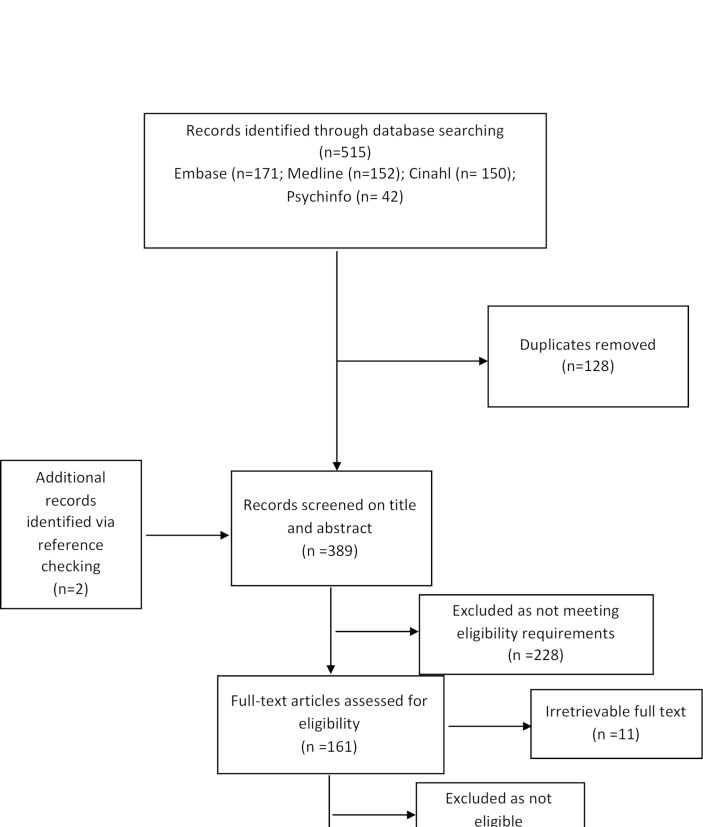
Objectives: To systematically examine the evidence of harms and benefits relating to time spent on screens for children and young people’s (CYP) health and well-being, to inform policy. Methods: Systematic review of reviews undertaken to answer the question ‘What is the evidence for health and well-being effects of screentime in children and adolescents (CYP)?’ Electronic databases were searched for systematic reviews in February 2018. Eligible reviews reported associations between time on screens (screentime; any type) and any health/well-being outcome in CYP. Quality of reviews was assessed and strength of evidence across reviews evaluated. Results: 13 reviews were identified (1 high quality, 9 medium and 3 low quality). 6 addressed body composition; 3 diet/energy intake; 7 mental health; 4 cardiovascular risk; 4 for fitness; 3 for sleep; 1 pain; 1 asthma. We found moderately strong evidence for associations between screentime and greater obesity/adiposity and higher depressive symptoms; moderate evidence for an association between screentime and higher energy intake, less healthy diet quality and poorer quality of life. There was weak evidence for associations of screentime with behaviour problems, anxiety, hyperactivity and inattention, poorer self-esteem, poorer well-being and poorer psychosocial health, metabolic syndrome, poorer cardiorespiratory fitness, poorer cognitive development and lower educational attainments and poor sleep outcomes. There was no or insufficient evidence for an association of screentime with eating disorders or suicidal ideation, individual cardiovascular risk factors, asthma prevalence or pain. Evidence for threshold effects was weak. We found weak evidence that small amounts of daily screen use is not harmful and may have some benefits. Conclusions: There is evidence that higher levels of screentime is associated with a variety of health harms for CYP, with evidence strongest for adiposity, unhealthy diet, depressive symptoms and quality of life. Evidence to guide policy on safe CYP screentime exposure is limited. PROSPERO registration number: CRD42018089483.
Overview
The claims and statistics of this paper haven’t been checked yet.
Free: it reads the open-access text and checks the first 5 claims that cite a source we can check. Create a free account to check every claim.
Integrity signals
Registry
Cites
Statistics
Figures
Verification
Claims the paper makes
The claims and statistics of this paper haven’t been checked yet.
Free: it reads the open-access text and checks the first 5 claims that cite a source we can check. Create a free account to check every claim.
Claims other papers make about this one
Each is checked against this paper’s own text: does it say what the citing paper says it does?
The source backs part of the claim, not all of it — or backs it for a different population, condition or comparison.
In the citing paper
“The results of the current review largely align with past systematic reviews, which have concluded that there is a positive association between screen time and depressive symptoms (Hoare et al., 2016;Liu et al., 2016;Stiglic & Viner, 2019;Wang et al., 2019), and a weak association between screen time and both anxiety and self-esteem (Stiglic & Viner, 2019).”
From The relationship between screen time and mental health in young people: A systematic review of longitudinal studies (2021) · cites this paper as Stiglic & Viner, 2019
Experimental — accuracy not yet measuredThe source backs part of the claim, not all of it — or backs it for a different population, condition or comparison.
In the citing paper
“This may partly be driven by the detrimental effects of screen time on mental health, including increased severity of anxiety and depressive symptoms, which have been well documented (Stiglic & Viner, 2019).”
From Social Media and Mental Health: Benefits, Risks, and Opportunities for Research and Practice (2020) · cites this paper as Stiglic & Viner, 2019
Experimental — accuracy not yet measuredThe cited source says what the claim attributes to it.
In the citing paper
“Possible mechanisms include more sedentary behavior250 and greater energy intake for children, teens, and young adults.251”
From Digital Ecosystems, Children, and Adolescents: Technical Report (2026) · cites this paper as [251]
The cited source says what the claim attributes to it.
In the citing paper
“More screen time has been associated with depressive symptoms among children and adolescents in several systematic reviews [11, 12, 43–50].”
From Screen time and mental health: a prospective analysis of the Adolescent Brain Cognitive Development (ABCD) Study (2024) · cites this paper as [48]
In the citing paper
“A systematic review of 13 published reviews concluded that there is moderately strong evidence for a positive association between screen time and depressive symptoms in children and adolescents, but not behavior problems, anxiety, hyperactivity and inattention, self-esteem, well-being, and psychosocial health (Stiglic & Viner, 2019).”
From The relationship between screen time and mental health in young people: A systematic review of longitudinal studies (2021) · cites this paper as Stiglic & Viner, 2019
1 more claim about this paper
Create a free account to see every claim other papers make about this one.
Self-check
Percentages, sums and reported differences re-computed from the paper’s own numbers.
The self-check needs the paper’s full text.
Citations
Cites
Liberati, A., Altman, D. G., Tetzlaff, J., Mulrow, C., Gøtzsche, P. C., Ioannidis, J. P. A., Clarke, M., Devereaux, P. J., Kleijnen, J., & Moher, D. (2009) · PLoS Medicine · doi:10.1371/journal.pmed.1000100 · Cited by 28,164
Liberati, A., Altman, D. G., Tetzlaff, J., Mulrow, C., Gotzsche, P. C., Ioannidis, J. P. A., Clarke, M., Devereaux, P. J., Kleijnen, J., & Moher, D. (2009) · BMJ · doi:10.1136/bmj.b2700 · Cited by 17,648
Systematic review of sedentary behaviour and health indicators in school-aged children and youth.
Tremblay, M. S., LeBlanc, A. G., Kho, M. E., Saunders, T. J., Larouche, R., Colley, R. C., Goldfield, G., & Gorber, S. (2011) · International Journal of Behavioral Nutrition and Physical Activity · doi:10.1186/1479-5868-8-98 · Cited by 2,085
Gross, K. S., Brandner, D. D., Martinez, L. A., Olive, M. F., Meisel, R. L., & Mermelstein, P. G. (2016) · PLOS ONE · doi:10.1371/journal.pone.0162755 · Cited by 1,609
Screen time and sleep among school-aged children and adolescents: a systematic literature review
Hale, L., & Guan, S. (2015) · Sleep Medicine Reviews · doi:10.1016/j.smrv.2014.07.007 · Cited by 1,468
Carson, V., Hunter, S., Kuzik, N., Gray, C. E., Poitras, V. J., Chaput, J.-P., Saunders, T. J., Katzmarzyk, P. T., Okely, A. D., Connor Gorber, S., et al. (2016) · Applied Physiology, Nutrition, and Metabolism · doi:10.1139/apnm-2015-0630 · Cited by 1,380
Children and Adolescents and Digital Media
Reid Chassiakos, Y. (., Radesky, J., Christakis, D., Moreno, M. A., Cross, C., COUNCIL ON COMMUNICATIONS AND MEDIA, Hill, D., Ameenuddin, N., Hutchinson, J., Levine, A., et al. (2016) · Pediatrics · doi:10.1542/peds.2016-2593 · Cited by 1,340
Przybylski, A. K., & Weinstein, N. (2017) · Psychological Science · doi:10.1177/0956797616678438 · Cited by 890
Wu, X. Y., Han, L. H., Zhang, J. H., Luo, S., Hu, J. W., & Sun, K. (2017) · PLOS ONE · doi:10.1371/journal.pone.0187668 · Cited by 664 · cited 1×
“HRQOL as a formal measured construct was examined by Wu et al, 22 who reported consistent evidence that greater screentime was associated with lower measured HRQOL in 11/13 cross-sectional and 4/4 longitudinal studies.”
MethodHoare, E., Milton, K., Foster, C., & Allender, S. (2016) · International Journal of Behavioral Nutrition and Physical Activity · doi:10.1186/s12966-016-0432-4 · Cited by 616 · cited 1×
“Only Hoare et al 20 reported on associations with anxiety, and found moderate evidence for a positive association between screentime duration and severity of anxiety symptoms.”
Background
Cited by
Items 801–900 of 1,000
O’Connor, T. M., Garza, T., Alam, U., Vadathya, A. K., Moreno, J. P., Beltran, A., Haidar, S., Haidar, N., Hughes, S. O., Thompson, D. I., et al. (2025) · Behaviour and Information Technology · doi:10.1080/0144929x.2025.2523452 · Cited by 1
“…reviews supporting or finding mixed associations for these outcomes (Carson et al. 2016; Carter et al. 2016; Council on Communications and Media 2016; Hale and Guan 2015; C. Li et al. 2020; L. Li et al. 2017; Miller et al. 2021; Reynaud et al. 2018; Rideout and Robb 2020; Stiglic and Viner 2019).”
Health literacy and screen use among 13-year-old students in Norway – A cross-sectional study
Waldum-Grevbo, K. S., Holen, S., & Sagatun, Å. (2025) · Scandinavian Journal of Public Health · doi:10.1177/14034948251358570 · Cited by 1
“Moderate levels of screen time, on the other hand, are associated with positive psychosocial functioning and can have positive educational effects [11, 12].”
Athira, O. S., & Nithyanandan, F. (2023) · Health and population. Perspectives and issues · doi:10.5005/hppi-11041-46305 · Cited by 1
Precht, L.-M., Schuck, K., Bunz, M., von Brachel, R., Kinzenbach, L., Pflug, V., Brailovskaia, J., & Bartnick, C. (2025) · BMC Public Health · doi:10.1186/s12889-025-23818-6 · Cited by 3
Cristovão, F., Senna, L. A. S., Mendes, D., Veiga, E., Valente, A., & Peixoto, V. R. (2025) · Acta Médica Portuguesa · doi:10.20344/amp.23409 · Cited by 1
González-Pérez, D., Huertas-Moreno, D. S., Granados-Pinilla, M., Hernandez-Rojas, S., González-Rincon, L., Hurtado-Garcia, G., Grisales-Calle, S., González-Mariño, M. J., Gutiérrez-Castañeda, L. D., & Camacho, J. H. (2025) · Korean Journal of Pediatrics · doi:10.3345/cep.2025.00178 · Cited by 4
Unveiling Screen Time Habits: A Study on Digital Behavior of Young Children in India
Agarwal, A., Behl, A., Gupta, A., & Kumar, D. (2025) · Journal of Indian Association for Child and Adolescent Mental Health · doi:10.1177/09731342251371819 · Cited by 1
Swipes vs. Strides: How Mobile Media Use Shapes Children’s Gross and Fine Motor Skills
Langlais, M. R., Veras, V., Davidson, F., & Rhyner, A. (2025) · Children · doi:10.3390/children12101337 · Cited by 3
Faleh, J., Dergaa, I., Ceylan, H. İ., Ghouili, H., Guelmami, N., Jahrami, H., Trabelsi, K., Aissa, M. B., Zghibi, M., Muntean, R. I., et al. (2025) · Journal of Obesity · doi:10.1155/jobe/2711978 · Cited by 3
Neighborhood Quality and Screen Use: Findings From the Adolescent Brain Cognitive Development Study
Nagata, J. M., Helmer, C. K., Memon, Z., Talebloo, J., Ganson, K. T., Testa, A. M., He, J., Magid, H. S. A., Gooding, H. C., & Baker, F. C. (2025) · Academic Pediatrics · doi:10.1016/j.acap.2025.103164 · Cited by 3
Kleppang, A. L., Hagquist, C., Stea, T. H., Leonhardt, M., Bonsaksen, T., Lien, L., & Steigen, A. M. (2025) · Health and Quality of Life Outcomes · doi:10.1186/s12955-025-02428-1 · Cited by 3
Screen time, sleep quality and mental health among adolescents of secondary schools in Dharan
Aryal, I., Gyawali, V., Pradhan, N., Lama, S., & Thapa, K. (2025) · PLOS mental health. · doi:10.1371/journal.pmen.0000405 · Cited by 3
“In adolescents, increased exposure to a sedentary screen can affect sleep quality leading to insomnia, daytime sleepiness, impact daily activities negatively [5] and lead to depressive symptoms and decreased quality of life [6].”
Imai, S., Close, A., Jones, T., & Jones, K. T. (2025) · Healthcare · doi:10.3390/healthcare13222833 · Cited by 3
“Furthermore, the impact of digital device use might not be uniform across individuals [14,15].”
Cobos, M., & Almachi, S. C. (2025) · European Public & Social Innovation Review · doi:10.31637/epsir-2026-2038 · Cited by 1
Chen, W., Xue, Q., Zhang, J., Wang, Q., & Guo, M. (2026) · Frontiers in Public Health · doi:10.3389/fpubh.2025.1644890 · Cited by 1
Monju, I. H., Hossain, S., Fatima, F., Nila, N. K., Huda, T. M., Rashed, A. A., Islam, M. J., Hossain, A. T., Rozars, M. F. K., & Hawlader, M. D. H. (2026) · Discover Public Health · doi:10.1186/s12982-026-01363-w · Cited by 2
“Furthermore, several studies have reported that children spending more significant amounts of time on screens are more likely to develop obesity, sleep problems, anxiety, irritability, and language delays [8, 9].”
Wu, G., Eades, C. E., & Hoyle, L. P. (2026) · Journal of Medical Internet Research · doi:10.2196/93848 · Cited by 1
Pušić, L., Jagušt, T., Horvat, M., & Boras, B. (2026) · Electronics · doi:10.3390/electronics15050956 · Cited by 3
Umar, T. P., Putra, A. W., Mahendika, D., Stella, M. M., & Tandarto, K. (2026) · World Journal of Clinical Pediatrics · doi:10.5409/wjcp.v15.i1.111652 · Cited by 1
Piriyakitphaiboon, V., Chia, M. Y. H., Chua, T. B. K., Amornchaicharoensuk, Y., & Sirimongkolchaiyakul, O. (2026) · BMC Pediatrics · doi:10.1186/s12887-026-06666-0 · Cited by 2
“In addition, children who use screens may have decreased physical activity, and being seated or sedentary for long periods can result in physical childhood problems such as obesity, sleep disorders, and constipation [15–17].”
The Role and Importance of Society, Family, and Schools in Promoting Adolescent Health
Fredriksen, P. M., & Goswami, N. (2026) · Advances in experimental medicine and biology · doi:10.1007/978-981-95-7000-3_21 · Cited by 1
Sivasankar, C., Thilagaramanujam, R., Kiruthika, K., Rekha, K. S., Agoramoorthy, M., & Suresh, M. (2026) · International Conference on Intelligent Sustainable Systems (ICISS) · doi:10.1109/iciss67859.2026.11454070 · Cited by 2
Savadova, S., & Gillén, J. (2026) · Journal of Early Childhood Research · doi:10.1177/1476718x261430486 · Cited by 4
Kpum, M. M., & Gasa, V. (2026) · Discover Education · doi:10.1007/s44217-026-01434-9 · Cited by 5
“Research across multiple contexts shows negative associations between excessive screen time and cognitive development, social skills, and mental health outcomes [72].”
DIGITAL SCREEN EXPOSURE AND MENTAL HEALTH OUTCOMES IN CHILDREN AND ADOLESCENTS: A NARRATIVE REVIEW
Krzysztofik, A., Napierała, W., Hak, K. J., Jasiński, J. L., Leszczyńska, K. M., Mitan, A. M., Kańska, K. T., Krawczyk, K., Wieczorek, M. T., & Tomaszewska, A. M. (2026) · International Journal of Innovative Technologies in Social Science · doi:10.31435/ijitss.1(49).2026.5220 · Cited by 1
Guan, K., Zhang, Z., Liu, Z., Pindus, D. M., Hillman, C. H., Yu, Q., Kramer, A. F., Kuang, J., Erickson, K. I., Herold, F., et al. (2026) · npj Science of Learning · doi:10.1038/s41539-026-00424-8 · Cited by 1
“Although Internet use is sometimes categorized as a mentally passive SB, certain activities during leisure-time computer use can be considered mentally active 70,71 .”
Lifespan approaches for the prevention and management of steatotic liver disease
Zelber‐Sagi, S., Ivancovsky-Wajcman, D., Kugelmas, C., Weinstein, A. A., Wong, V. W., Castéra, L., Moore, J. B., Mouzaki, M., Hallsworth, K., Paik, J. M., et al. (2026) · Nature Reviews Gastroenterology & Hepatology · doi:10.1038/s41575-026-01198-5 · Cited by 2
“A systematic review of reviews 103 showed that higher levels of screentime among children and adolescents are associated with increased adiposity, unhealthy diet, depressive symptoms and reduced quality of life.”
Zhao, J., & Zhao, J. (2026) · Frontiers in Public Health · doi:10.3389/fpubh.2026.1840524 · Cited by 1
Pereira, A. L. D. S., Rodrigues, J. T., Coelho, V. A. T., Nascimento, E. D. S., Bigatello, C. S., Figueiredo, E. M. R., & Bigatello, A. P. D. (2026) · ID on line REVISTA DE PSICOLOGIA · doi:10.14295/idonline.v20i81.4414 · Cited by 2
Cai, Z., Herold, F., Zhou, L., Lubans, D. R., Gerber, M., Chen, J., Werneck, A. O., Pan, S., Aikeremu, A., Mavilidi, M. F., et al. (2026) · Mental health and physical activity · doi:10.1016/j.mhpa.2026.100795 · Cited by 2
Abdalla, A. A., Fahmy, M., Anwar, K., Hendi, A. E., Cullen, K. R., & Ibrahim, O. (2026) · Annals of General Psychiatry · doi:10.1186/s12991-026-00646-5 · Cited by 1
“…addiction (IA), which is defined by excessive or poorly regulated preoccupations, urges, or behaviors related to computer and internet use [16], is now highly prevalent among adolescents [17–20] and is linked to poor mental health in adolescents, especially depression [21–24] and NSSI [25–27].”
Lin, Y., Zhu, W., & Hong, B. (2026) · Frontiers in Public Health · doi:10.3389/fpubh.2026.1873007 · Cited by 1
Bui, H.-Y. T., & Dong, D. D. (2026) · British Food Journal · doi:10.1108/bfj-11-2025-1506 · Cited by 1
Screen time and physical activity in schoolchildren
Molina, S. F., García-Ceberino, J. M., la Cruz, M. L.-D., & Pérez, M. L. (2026) · Cogent Education · doi:10.1080/2331186x.2026.2682595 · Cited by 1
Chandrasekaran, M., Zhang, Q., Padmapriya, N., Aishworiya, R., Chong, S. C., Kembhavi, G., McLeod, B. D., McCrickerd, K., Chow, J. C., & Fogel, A. M. (2026) · Obesity Reviews · doi:10.1111/obr.70185 · Cited by 2
“Nevertheless, screen time has also been linked to several adverse socio-emotional and health outcomes, starting in the early years, including unhealthy sleep behaviors [7, 8], increased sedentary behaviors [7, 8], higher risk for obesity [7–9], and poorer mental health and well-being [7, 8].”
Li, W., Wang, M., Li, J., & Zhao, X. (2026) · Frontiers in Public Health · doi:10.3389/fpubh.2026.1841526 · Cited by 1
Tølbøll, K. B. (2026) · Clinical Child and Family Psychology Review · doi:10.1007/s10567-026-00577-3 · Cited by 2
“Children’s and adolescents’ time spent on screens may be related to their nutritional intake (Stiglic & Viner, 2019) and thus their risk of obesity (Cha, 2018 ; Stiglic & Viner, 2019).”
InfluentialSharma, N. (2026) · Cureus · doi:10.7759/cureus.113441 · Cited by 1
Screen Use and Emotional, Behavioral, and Social Development in Children
McQuaid, F., Skafida, V., McQuillan, R., & Lee, B. (2026) · JAMA Network Open · doi:10.1001/jamanetworkopen.2026.26804 · Cited by 1
Prevalence and Determinants of Screen-Viewing in Children Under Two Years in Suva, Fiji
Devi, N., Mohammadnezhad, M., & Turagabeci, A. (2022) · Indian Pediatrics · doi:10.1007/s13312-022-2444-2 · Cited by 1
“Now, more than ever, children from a very young age are allowed unlimited access to a wide variety of screen devices, and the prevalence is increasing [1-4].”
BackgroundRocca, D. (2020) · Oxford University Press eBooks · doi:10.1093/oso/9780190874698.003.0001 · Cited by 2
Missing class increases the daily frequency of screen use among schoolchildren
de Jesus, G. M., Araújo, R. H. D. O., Dias, L. A., Barros, A. K. C., Araujo, L. D. M. D. S., & de Assis, M. A. A. (2022) · Revista Brasileira de Atividade Física & Saúde · doi:10.12820/rbafs.27e0256 · Cited by 6
Passos, M. A. Z., Vellozo, E. P., Hall, P., Andrade, A. L. M., Schöen, T. H., Niskier, S. R., & Vitalle, M. S. D. S. (2022) · Research Society and Development · doi:10.33448/rsd-v11i8.30863 · Cited by 1
Nyberg, S. (2022) · Linköping studies in behavioural science · doi:10.3384/9789179295202 · Cited by 1
Prabhakar, M., Prasad, H. G., & Reddy, R. S. (2023) · Telangana Journal of Psychiatry · doi:10.4103/tjp.tjp_6_23 · Cited by 2
Sedentary behaviour and health
Pearson, N., & Sherar, L. B. (2023) · Oxford University Press eBooks · doi:10.1093/med/9780192843968.003.0018 · Cited by 4
Relationship Of Burnout with Screen Time In Under Graduate Medical Students
Irshad, K., Azam, F., Ashraf, I., Shaheen, A., Kazmi, N., Ahmed, A., Satti, D. I., & Baloch, A. (2023) · Proceedings of Shaikh Zayed Medical Complex Lahore · doi:10.47489/szmc.v37i4.435 · Cited by 1
“19 Another study reported a significant association between recreational screen time and self-rated health in the adult population after adjustment by age, socioeconomic status and physical activity 20 .”
BackgroundGrant, L., Mitchell, P. B., & Hulvershorn, L. A. (2023) · Springer eBooks · doi:10.1007/978-3-030-42825-9_21-1 · Cited by 1
Liikuntakasvatuksen merkitys varhaiskasvatusta ohjaavissa opetussuunnitelmissa
Soini, A., & Sääkslahti, A. (2023) · Journal of Early Childhood Education Research · doi:10.58955/jecer.126730 · Cited by 1
“Tutkimukset ovat osoittaneet, että runsas paikallaanolo ei edistä lapsen hyvinvointia (ks. Stiglic & Viner, 2019; Tortella ym., 2021).”
BackgroundVeretekhina, T. V., St. Petersburg, R. F., & Yarmolinskaya, M. I. (2024) · Women s Health and Reproduction · doi:10.31550/2712-8598-2024-1-1-zhzir · Cited by 1
Wang, J., Teo, W., Burns, S. F., Chung, H. J., Chian, L. K., Sumarta, T. T., Mukherjee, S., Tan, Y. J., & Gooley, J. J. (2024) · International Journal of Sport and Exercise Psychology · doi:10.1080/1612197x.2024.2332292 · Cited by 1
Kok, E. Y., Kaur, S., Shukri, N. H. M., Razak, N. A., & Takahashi, M. (2024) · Nutrition and Health · doi:10.1177/02601060241246354 · Cited by 2
“A systematic review by Stiglic and Viner (2019) reported that excessive screen time among children and adolescents is associated with increased body fat, poor diet quality, and compromised wellbeing (Stiglic and Viner, 2019).”
Durasi Screen Time dengan Gangguan Tidur Remaja
Syilvani, S., Sukaesih, N. S., & Ningrum, D. (2024) · Jurnal Keperawatan Profesional (KEPO) · doi:10.36590/kepo.v5i1.941 · Cited by 1
Jarnig, G., Kerbl, R., & van Poppel, M. N. M. (2024) · Sports · doi:10.3390/sports12090258 · Cited by 2
“The consequences of this trend are rising obesity rates [6] and associated health problems [7,8] that not only negatively affect individuals [9] but also have a significant negative socio-political and economic impact [10–12].”
BackgroundUnraveling the Adverse Effects of Social Media on Teenagers: Current and Future Research Directions
Bhardwaj, S., Chopra, R., Donthu, N., & Choudhary, P. (2025) · Journal of Interactive Marketing · doi:10.1177/10949968241288483 · Cited by 9
“Utilizing electronic devices in late hours has a detrimental impact on both the quality of sleep and general well-being of individuals (Stiglic and Viner 2019; Twenge, Martin, and Campbell 2018).”
Kundu, G. K., Habiba, U., Anwar, S. S., & Sheemu, S. A. (2024) · European Journal of Medical and Health Research · doi:10.59324/ejmhr.2024.2(6).11 · Cited by 1
Family and Body Factors Affecting Depressive Mood in Girls in Middle Childhood and Preadolescence
Pinto, N. S., López, S. C., Cézar, R. F., & Garrido, D. (2025) · Journal of Child and Family Studies · doi:10.1007/s10826-025-03080-5 · Cited by 1
“Similarly, higher levels of screen time have been associated in children and adolescents with higher depressive symptoms, among other indicators of poor mental health (Stiglic & Viner, 2019).”
Cui, Z., Guo, H., Wang, Y., Ma, J., Chung, H. J., Wang, Q., Chia, M., & Kim, H. (2025) · Healthcare · doi:10.3390/healthcare13192411 · Cited by 2
“These results are consistent with previous studies revealing that PA, ST, and SD are movement behaviors that are strongly associated with physical well-being throughout the day [51].”
Zelazny, J. M., Biernesser, C. L., Tetteh, G. N. A., Gozzard, H., Cervone, K., & Brent, D. A. (2025) · Journal of Psychosocial Nursing and Mental Health Services · doi:10.3928/02793695-20251020-04 · Cited by 1
Effect of Smartphone Usage on Intraocular Pressure and Evaporative Dry Eye Changes in Healthy Adults
Zainol, N., Khairrudin, M., Nasri, N. M., Khalid, K. H. M., & Raman, P. (2025) · TNOA Journal of Ophthalmic Science and Research · doi:10.4103/tjosr.tjosr_155_25 · Cited by 2
Smartphones – so ungefährlich wie Kartoffeln?
Spitzer, M. (2019) · Nervenheilkunde · doi:10.1055/a-0831-6084 · Cited by 1
“Viner, als Co-Autor publiziert wurde [19].”
BackgroundFrança, E. F., Macedo, M. M., Mafra, F. F. P., Miyake, G. M., da Silva, R. T., de França, T. R., dos Santos, T. R., da Silva, J. P., Matsudo, V. K. R., Junior, N. M., et al. (2020) · International Journal of Physical Education Sports and Health · Cited by 2
Social family background: Exposure to technology and its use by preschool children
Kashahu, L. (2021) · International Journal of Pedagogy Innovation and New Technologies · doi:10.5604/01.3001.0014.9138 · Cited by 3
Devi, N., Mohammadnezhad, M., & Turagabeci, A. (2022) · Global Journal of Health Science · doi:10.5539/gjhs.v14n4p27 · Cited by 1
“Screen-viewing among children remains a global public health concern (Stiglic & Viner, 2019; Vanderloo, 2014).”
BackgroundRocca, D. (2020) · Oxford University Press eBooks · doi:10.1093/oso/9780190874698.003.0003 · Cited by 1
Sharma, B., Shrestha, N., Gurung, N., Tiwari, B. R., Koirala, S., & Wagle, S. (2022) · Journal of Chitwan Medical College · doi:10.54530/jcmc.709 · Cited by 2
Sakarneh, M. A., Ziadat, A. H., & Rahahleh, Z. (2022) · International Journal of Evaluation and Research in Education (IJERE) · doi:10.11591/ijere.v11i4.22773 · Cited by 4
Childhood overweight and obesity in Bariloche, Argentina: Beyond eating habits and physical activity
Adamo, P. D., Garibotti, G., Leive, L., Guaresti, G., Vallejo, M., Clausen, M., & Lozada, M. (2023) · Archivos Argentinos de Pediatria · doi:10.5546/aap.2022-02854.eng · Cited by 2
Effect of Screen Time on Compulsive Eating Behavior and Nutritional Status of Children
Singh, A. B. S. B. (2023) · Food Science & Nutrition Technology · doi:10.23880/fsnt-16000303
Screen Dependency versus Child Nourishment among Toddlers: A Correlational Study
Suresh, V., Panchal, M., & Patel, B. (2021) · Indian Journal of Psychiatric Nursing · doi:10.4103/iopn.iopn_32_21 · Cited by 1
Obesity and Metabolic Syndrome in the United States
Osei, A. D., Ohene-Kyei, E. T., & Echouffo-Tcheugui, J. B. (2023) · Springer eBooks · doi:10.1007/978-3-031-40116-9_55 · Cited by 2
Pandemic of COVID 19: Resurgence of the Era of Infectious Disease, the Forgotten Monster?
Giri, P. (2020) · Epidemiology International Journal · doi:10.23880/eij-16000155 · Cited by 1
Social Interaction and Interpersonal Relationships
Ellis, D. A. (2020) · Cambridge University Press eBooks · doi:10.1017/9781108671408.005 · Cited by 1
Pouretemad, H., Sadeghi, S., & Shalani, B. (2020) · PsyArXiv (OSF Preprints) · doi:10.31234/osf.io/qhvjb · Cited by 1
Aprilita, B., & Andriyani, A. (2012) · Cited by 10
Just give them childcare: The COVID-19 pandemic as a natural experiment in parenting practicesPreprint
Hartshorne, J. K. (2021) · PsyArXiv (OSF Preprints) · doi:10.31234/osf.io/r64hf · Cited by 1
Bohnert, M., & Gracia, P. (2020) · SocArXiv (OSF Preprints) · doi:10.31235/osf.io/kf4tz · Cited by 3
The hazards of screen time: Are we practicing what we preach?
Wilmshurst, J. M. (2022) · Developmental Medicine & Child Neurology · doi:10.1111/dmcn.15254 · Cited by 1
The Effects of the HyFlex Learning Model on Undergraduate College Student Activity LevelsPreprint
Naidoo, D., Scozzafava, D. J., Steel, E., Vangsness, R., Woodburn, J., Etts, K., & Feinn, R. (2022) · Research Square · doi:10.21203/rs.3.rs-1855648/v1 · Cited by 1
del Valle, S. (2022) · El Servicio de Difusión de la Creación Intelectual (National University of La Plata) · doi:10.35537/10915/145264 · Cited by 2
Bidopia, T., Engelhard, M., Kollins, S. H., & Lunsford‐Avery, J. R. (2022) · Elsevier eBooks · doi:10.1016/b978-0-12-818872-9.00126-6 · Cited by 2
The Importance of a Life Course Perspective on Media Use
Tandon, P. S. (2023) · PEDIATRICS · doi:10.1542/peds.2023-062183 · Cited by 1
Kim, H. (2024) · Research Square · doi:10.21203/rs.3.rs-4709123/v1 · Cited by 1
Elmaghraby, R. (2025) · Journal of the American Academy of Child & Adolescent Psychiatry · doi:10.1016/j.jaac.2025.05.012 · Cited by 1
Gillespie, K. M., Morgan, M., Weir, B., Branjerdporn, G., Patell, S., Bowyer, J. W., Chan, F., & Bartlett, S. E. (2025) · Research Square · doi:10.21203/rs.3.rs-8209607/v1 · Cited by 1
Yonder: Traumatic brain injury, lung cancer, bariatric surgery, and screen time
Rashid, A. (2019) · British Journal of General Practice · doi:10.3399/bjgp19x701981
A Novel Mixed Methods Approach to Assess Children’s Sedentary Behaviors
Hurter, L., Cooper-Ryan, A. M., Knowles, Z. R., Porcellato, L. A., Fairclough, S. J., & Boddy, L. M. (2020) · Journal for the Measurement of Physical Behaviour · doi:10.1123/jmpb.2019-0040 · Cited by 1
“…need to differentiate between different forms of screen time, as evidence suggests that television viewing for example is related to obesity (Stiglic & Viner, 2019), but there is currently insufficient evidence to conclude the same relationship exists with other forms of screen time (e.g.,…”
BackgroundPersichetti, E. (2020) · Digital USD (University of San Diego) · doi:10.22371/07.2020.024
Changes in body mass index and risk of adolescent psychopathology: a longitudinal cohort study
Cotter, I., Healy, C., King, R., Cotter, D., & Cannon, M. D. (2020) · Irish Journal of Psychological Medicine · doi:10.1017/ipm.2020.28
Rocca, D. (2020) · Oxford University Press eBooks · doi:10.1093/oso/9780190874698.003.0006
Rocca, D. (2020) · Oxford University Press eBooks · doi:10.1093/oso/9780190874698.003.0007 · Cited by 1
Family Life in the Digital Age
Rocca, D. (2020) · Oxford University Press eBooks · doi:10.1093/oso/9780190874698.003.0002 · Cited by 1
Geek Identities in the Digital Family
Rocca, D. (2020) · Oxford University Press eBooks · doi:10.1093/oso/9780190874698.003.0004
Physical Activity and Health in Dutch and Chinese Children
Lu, C. (2020) · University of Groningen research database (University of Groningen / Centre for Information Technology) · doi:10.33612/diss.131752838
Screen time and extracurricular sports participation among children in a local community in Serbia
Petrović, V., Rožek-Mitrović, T., & Erceg-Javor, R. (2020) · Timocki medicinski glasnik · doi:10.5937/tmg2003109p
“Postoje dokazi da je više vremena pred ekranom povezano sa raznim negativnim efektima na zdrav je de e i om adine, a najjači su dokazi o prekomernoj i nezdravoj ishrani, depresivnim simptomima i kva itetu života [5] Nedavni dokazi izazivaju za rinutost z og uti aja medija na agresiju, seksua no ponas anje, upotre u dr…”
BackgroundGavoto, L. (2020) · Evidencia actualizacion en la práctica ambulatoria · doi:10.51987/evidencia.v23i1.4276 · Cited by 5
Isolating Critical Components of a Pediatric Obesity Intervention: Does it Really Take a Village?
Coto, J. (2020) · FIU - Digital Commons (Florida International University) · doi:10.25148/etd.fidc009153
Ustaalıoğlu, B. B. Ö., Nanah, A., Kalyenci, N., ÇELİK, U., Çelik, S., & Emirzeoglu, L. (2021) · Journal of Cancer and Tumor International · doi:10.9734/jcti/2021/v11i330151
“Screen-based digital media has potential benefits on health, social and cognitive function but can ultimately harm when overstated [10].”
BackgroundPoulain, T., Meigen, C., Grafe, N., & Kieß, W. (2020) · Research Square · doi:10.21203/rs.3.rs-47936/v1
“This development is alarming given the quantity of studies showing negative associations between intensive media usage and various aspects of mental and physical health [2] or academic achievement [3, 4].”
BackgroundDewi, P. (2009) · Universitas Islam Negeri Syarif Hidayatullah Institutional Repository (Universitas Islam Negeri Syarif Hidayatullah Jakarta)
Metadata
- Authors
- Stiglic, N., & Viner, R. M.
- Affiliations
- University College London (GB)
- Corresponding author
- Viner, Russell M
- ORCID
- Viner, Russell M
- Venue
- BMJ Open
- Publisher
- BMJ
- Published
- 2019-01
- Volume
- 9
- Issue
- 1
- Pages
- e023191
- ISSN
- 2044-6055 (ISSN-L)
- PMC
- PMC6326346
- OpenAlex
- W2907375908
- Cited by
- 1,259
- References
- 29
- Citations by year
- 2026: 193 · 2025: 193 · 2024: 179 · 2023: 161 · 2022: 201 · 2021: 148 · 2020: 142 · 2019: 37
- FWCI
- 38.03
- Type
- journal article
- Language
- en
- Open access
- gold
- doi.org
- Licence
- cc-by-nc
- Locations
- BMJ Open (publishedVersion, cc-by-nc)
- Europe PMC (PubMed Central) (publishedVersion, other-oa)
- PubMed Central (publishedVersion, cc-by-nc)
- PubMed (publishedVersion)
- DOAJ (DOAJ: Directory of Open Access Journals) (submittedVersion)
- UCL Discovery (University College London) (submittedVersion)
- Funders
- National Institute for Health and Care Research (NF-SI-0515-10085)
- Topics
- Social Sciences › Education › Child Development and Digital Technology
- Health Sciences › Medicine › Public Health, Environmental and Occupational Health › Physical Activity and Health
- Social Sciences › Sociology and Political Science › Impact of Technology on Adolescents
- Keywords
- screen time, children and adolescents, child health, well-being, obesity, adiposity, depressive symptoms, diet quality, energy intake, sleep, cardiorespiratory fitness, cognitive development, educational attainment, quality of life, mental health, cardiovascular risk, threshold effects
- MeSH terms
- Screen Time, Adolescent, Adolescent Behavior, Child, Child Behavior, Child, Preschool, Depression, Feeding Behavior, Humans, Quality of Life, Review Literature as Topic, Exercise, Pediatric Obesity
About these checks
Registry, retraction, Cites and statistics results are computed, not judged, with one exception: a printed reference that no index lists is read once by a model before it counts as a citation error. Claims are extracted by a model and kept only when their quote appears verbatim in the text; each cited source is then checked, with a model’s help, for whether it says what the claim relies on. Those verdicts can be wrong — read the claim’s quote and the cited source before relying on one.
Statistics and arithmetic are recomputed, not judged.
Confidence bands are shown only for fields calibrated on our annotated test set. None is calibrated yet, so no band is shown.
What counts as a claim ›How we measure confidence ›How we check this ›
Are you an author, or do you see a problem with this page? Request a review
Data sources
Bibliographic data: Semantic Scholar, OpenAlex, Crossref.
Contains information from the Semantic Scholar Academic Graph Datasets, made available under the ODC Attribution License (ODC-BY 1.0).
Semantic Scholar’s data is described in: Kinney, R., et al. (2023). The Semantic Scholar Open Data Platform. arXiv:2301.10140.
