

Model Cards for Model Reporting
Open accessThe DOI matches its Crossref record; 22 of the 22 references it cites were found in a registry or an index; 8 of the 34 sources its claims cite were checked for support.
Abstract
Trained machine learning models are increasingly used to perform high-impact tasks in areas such as law enforcement, medicine, education, and employment. In order to clarify the intended use cases of machine learning models and minimize their usage in contexts for which they are not well suited, we recommend that released models be accompanied by documentation detailing their performance characteristics. In this paper, we propose a framework that we call model cards, to encourage such transparent model reporting. Model cards are short documents accompanying trained machine learning models that provide benchmarked evaluation in a variety of conditions, such as across different cultural, demographic, or phenotypic groups (e.g., race, geographic location, sex, Fitzpatrick skin type [15]) and intersectional groups (e.g., age and race, or sex and Fitzpatrick skin type) that are relevant to the intended application domains. Model cards also disclose the context in which models are intended to be used, details of the performance evaluation procedures, and other relevant information. While we focus primarily on human-centered machine learning models in the application fields of computer vision and natural language processing, this framework can be used to document any trained machine learning model. To solidify the concept, we provide cards for two supervised models: One trained to detect smiling faces in images, and one trained to detect toxic comments in text. We propose model cards as a step towards the responsible democratization of machine learning and related artificial intelligence technology, increasing transparency into how well artificial intelligence technology works. We hope this work encourages those releasing trained machine learning models to accompany model releases with similar detailed evaluation numbers and other relevant documentation.
Overview
CoChat Summary
TL;DR
The paper proposes “model cards,” short documentation records accompanying trained machine learning models to report intended use, performance characteristics, and disaggregated evaluation across demographic, phenotypic, and intersectional groups. It illustrates the framework with worked examples for a smiling classifier and a toxicity classifier.
Key findings
- The authors argue there are no standardized documentation procedures for communicating trained ML model performance, especially for high-impact domains such as health care, employment, education, and law enforcement.
- They propose model card sections covering model details, intended use, factors, metrics, evaluation data, training data, quantitative analyses, ethical considerations, and caveats/recommendations.
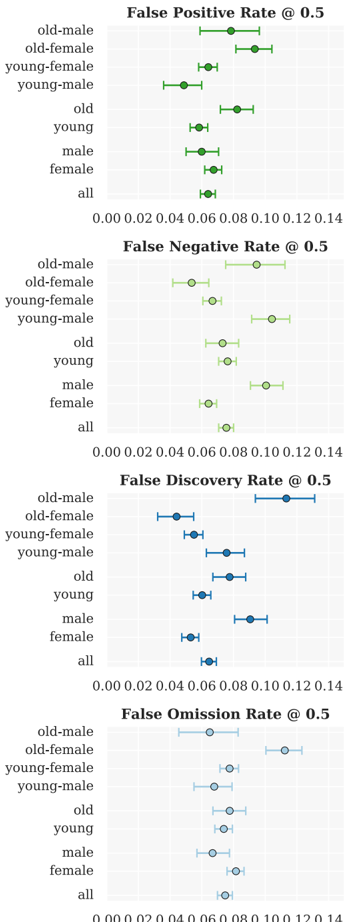
- In the smiling classifier example, all reported metrics at the .5 decision threshold have error types within the range 0.04–0.14, with 95% confidence intervals calculated by bootstrap resampling; the card notes older men have much higher false discovery rate, while men in aggregate have higher false negative rate.
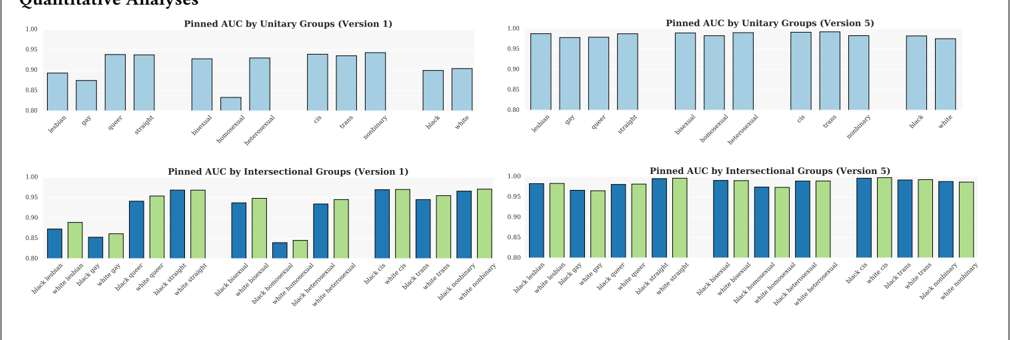
- In the toxicity example, TOXICITY v. 1 has low performance for several terms, especially “lesbian,” “gay,” and “homosexual,” while TOXICITY v. 5 shows more equitable performance after bias mitigation techniques.
Methods
- The paper is a framework/proposal paper, not an empirical study of a new model; it recommends model cards and details suggested sections and prompts.
- It provides two worked examples: a smiling classifier trained and evaluated on the CelebA dataset, using a convolutional neural net pretrained for face recognition and fine-tuned with cross-entropy loss for binary smiling classification.
- It also provides a model card for Perspective API’s TOXICITY classifier, a convolutional neural network developed by Jigsaw in 2017, evaluated on a synthetic Identity Phrase Templates test set; metrics include FPR, FNR, FDR, FOR for the smiling classifier and Pinned AUC for toxicity.
Limitations
- The paper states that model cards rely on the integrity of their creators and that it seems unlikely, at least in the near term, that they could be standardized or formalized enough to prevent misleading representations of model results.
- The paper states that evaluation datasets suitable for disaggregated evaluation are not yet common, and that the synthetic toxicity test data covers only a small set of very specific comments and is not comprehensive.
- The smiling classifier card states it does not capture race or skin type, uses binary gender classes (male/female), and that an ideal evaluation dataset would additionally include Fitzpatrick skin type, camera details, and environment details; the paper also states future work is needed to study how model information is interpreted and used by different stakeholders.
Model-written summary. Check it against the paper before relying on it.
Integrity signals
Registry
Cites
Statistics
Figures
Verification
Claims the paper makes
5 Valid · 1 Not valid · 18 Not checked · 30 Own results and interpretations
The cited sources support only part of this claim — read each source’s verdict below.
In the paper
“Synthetic data is valuable here because [11] shows that real data often has disproportionate amounts of toxicity directed at specific groups.”
What the sources say
- Partly supportedcites [11] [11] Lucas Dixon, John Li, Jeffrey Sorensen, Nithum Thain, and Lucy Vasserman. 2018. Measuring and Mitigating Unintended Bias in Text Classification. Proceedings of the AAAI/ACM Conference on AI, Ethics, and Society (2018). - sourceExperimental — accuracy not yet measured
The 'Quantifying bias in dataset' section (page unavailable) reports that certain identity terms appear disproportionately in toxic comments in the authors’ training data; for example, 'gay' appears in 3% of toxic comments but 0.5% of comments overall. It measures comments containing those terms, not whether toxicity is directed at the groups, and does not establish how often this pattern occurs across real datasets generally. (LLM, conf=0.85)
plainstates an association- Asserted: passes — The authors put it forward as true.
- Checkable: passes — It can be checked against evidence.
- Load-bearing: passes — The paper’s conclusions depend on it.
- Based: passes — The paper gives a reason why it holds.
- Partly supported
A result the paper reports from its own data — it cites no other source for it, so there is none to check. The quote shows it is in the paper.
In the paper
“For example, the false discovery rate on older men is much higher than that for other groups.”
plainstates an association- Asserted: passes — The authors put it forward as true.
- Checkable: passes — It can be checked against evidence.
- Load-bearing: passes — The paper’s conclusions depend on it.
- Based: passes — The paper gives a reason why it holds.
A result the paper reports from its own data — it cites no other source for it, so there is none to check. The quote shows it is in the paper.
In the paper
“TOXICITY v. 1 has low performance for several terms, especially 'lesbian', 'gay', and 'homosexual'.”
plain- Asserted: passes — The authors put it forward as true.
- Checkable: passes — It can be checked against evidence.
- Load-bearing: passes — The paper’s conclusions depend on it.
- Based: passes — The paper gives a reason why it holds.
None of the sources cited for this claim have been checked yet.
In the paper
“she collaborated with other researchers to demonstrate the disproportionate errors of computer vision systems on historically marginalized groups in the United States, such as darker-skinned women [5, 41].”
What the sources say
- Not checked yetcites [5] [5] Joy Buolamwini and Timnit Gebru. 2018. Gender Shades: Intersectional Accuracy Disparities in Commercial Gender Classification. In Proceedings of the 1st Conference on Fairness, Accountability and Transparency (Proceedings of Machine Learning Research) , Sorelle A. Friedler and Christo Wilson (Eds.), Vol. 81. PMLR, New York, NY, USA, 77-91. http://proceedings.mlr.press/v81/buolamwini18a.html -
- Not checked yetcites [41] [41] Inioluwa Raji. 2018. Black Panther Face Scorecard: Wakandans Under the Coded Gaze of AI. (2018). -
boostedstates an association- Asserted: passes — The authors put it forward as true.
- Checkable: passes — It can be checked against evidence.
- Load-bearing: passes — The paper’s conclusions depend on it.
- Based: passes — The paper gives a reason why it holds.
In the paper
“after MIT Media Lab graduate student Joy Buolamwini found that commercial face recognition systems failed to detect her face [4]”
What the sources say
- Not checked yetcites [4] [4] Joy Buolamwini. 2016. How I'm fighting Bias in Algorithms. (2016). https://www.ted.com/talks/joy\_buolamwini\_how\_i\_m\_fighting\_bias\_in\_ algorithms#t-63664 -
plainSingle case- Asserted: passes — The authors put it forward as true.
- Checkable: passes — It can be checked against evidence.
- Load-bearing: unclear — It is unclear whether the paper’s conclusions depend on it.
- Based: passes — The paper gives a reason why it holds.
13 more claims
Create a free account to see all 54 claims and to verify the 13 references still open.
- Probably not a substantial claim. 34
- It may state two separate claims as one. 8
Claims other papers make about this one
Each is checked against this paper’s own text: does it say what the citing paper says it does?
The source backs part of the claim, not all of it — or backs it for a different population, condition or comparison.
In the citing paper
“Model cards represent the field's standard for disclosing and documenting key facts about the architecture, training and evaluation of the model [14, 40].”
From Rethinking open source generative AI: open washing and the EU AI Act (2024) · cites this paper as [40]
Experimental — accuracy not yet measuredThe source backs part of the claim, not all of it — or backs it for a different population, condition or comparison.
In the citing paper
“Model cards (SMCs) [44] have been foundational in standardizing documentation for AI/ML model performance and characteristics, along with risks and unintended uses.”
From Interactive Model Cards: A Human-Centered Approach to Model Documentation (2022) · cites this paper as [44]
Experimental — accuracy not yet measuredThe source backs part of the claim, not all of it — or backs it for a different population, condition or comparison.
In the citing paper
“A second phase saw a more technical approach from the computer science community focusing on fairness, accountability and transparency as an engineering 'ethicalby-design' problem-solving exercise [20][21][22].”
From Putting AI ethics to work: are the tools fit for purpose? (2022) · cites this paper as [21]
Experimental — accuracy not yet measuredThe source backs part of the claim, not all of it — or backs it for a different population, condition or comparison.
In the citing paper
“These are either materials for use in design teams in workshop style events [76,77], tools for producing documentation of the design, build and test process [21,68], or technical tools for testing models, protecting privacy and security, testing for bias [69,93,94], or tracking provenance of data [95].”
From Putting AI ethics to work: are the tools fit for purpose? (2022) · cites this paper as [21]
Experimental — accuracy not yet measuredThe source backs part of the claim, not all of it — or backs it for a different population, condition or comparison.
In the citing paper
“There is some work on fairness relating to AI services, though this tends to focus on either exposing or 'auditing' certain AI services [22,38,126,133], or devising tools, methods and interventions relevant for those building (rather than using) such services [12,96,106,128].”
From Out of Context: Investigating the Bias and Fairness Concerns of “Artificial Intelligence as a Service” (2023) · cites this paper as [106]
Experimental — accuracy not yet measured
17 more claims about this paper
Create a free account to see every claim other papers make about this one.
Citations
Cites
BLEU: a method for automatic evaluation of machine translation
Papineni, K., Roukos, S., Ward, T., & Zhu, W.-J. (2001) · Proceedings of the 40th Annual Meeting on Association for Computational Linguistics - ACL '02 · doi:10.3115/1073083.1073135 · Cited by 21,344 · cited 1×
“translation system could compare BLEU scores [40] across demographic groups, and a model card for a speech recognition system could compare word-error rates.”
BackgroundCrenshaw, K. (2018) · Feminist Legal Theory · doi:10.4324/9780429500480-5 · Cited by 9,510
Deep Learning Face Attributes in the Wild
Liu, Z., Luo, P., Wang, X., & Tang, X. (2015) · 2015 IEEE International Conference on Computer Vision (ICCV) · doi:10.1109/iccv.2015.425 · Cited by 7,747 · cited 4×
“ms [5, 26] that report details of the datasets used to train and test machine learning models. We provide two example model cards in Section 5: A smiling detection model trained on the CelebA dataset [33] (Figure 2), and a public toxicity detection model, Perspective API [29] (Figure 3). Where Datasheets highlight cha…”
BackgroundMethodInfluentialThe validity and practicality of sun-reactive skin types I through VI
Fitzpatrick, T. B. (1988) · Archives of Dermatology · doi:10.1001/archderm.1988.01670060015008 · Cited by 4,339
Differential Privacy: A Survey of Results
Dwork, C. (2008) · Lecture Notes in Computer Science · doi:10.1007/978-3-540-79228-4_1 · Cited by 3,542 · cited 2×
“As such, collaboration with policy, privacy, and legal experts is necessary in order to ascertain which groups may be responsibly inferred, and how that information should be stored and accessed (for example, using differential privacy [12]).”
BackgroundCollins, G. S., Reitsma, J. B., Altman, D. G., & Moons, K. G. M. (2015) · Annals of Internal Medicine · doi:10.7326/m14-0697 · Cited by 3,267
Equality of Opportunity in Supervised Learning
Hardt, M., Price, E., & Srebro, N. (2016) · arXiv · doi:10.48550/arxiv.1610.02413 · Cited by 2,536 · cited 2×
“of Opportunity, and equal false negative and false positive rates across groups is equivalent to fulfilling Equality of Odds [26].”
BackgroundGebru, T., Morgenstern, J., Vecchione, B., Vaughan, J. W., Wallach, H., Daumé, H., & Crawford, K. (2018) · arXiv · doi:10.48550/arxiv.1803.09010 · Cited by 2,474
Self-citationA Probabilistic Interpretation of Precision, Recall and F-Score, with Implication for Evaluation
Goutte, C., & Gaussier, E. (2005) · Lecture Notes in Computer Science · doi:10.1007/978-3-540-31865-1_25 · Cited by 2,285 · cited 1×
“Confidence intervals for metrics derived from confusion matrices can be calculated by treating the matrices as probabilistic models of system performance [24].”
MethodFair prediction with disparate impact: a study of bias in recidivism prediction instruments
Chouldechova, A. (2017) · Big Data · doi:10.1089/big.2016.0047 · Cited by 2,159 · cited 1×
“or different errors that can be calculated from the confusion matrix for binary classification systems. • These also correspond to metrics in recent definitions of “fairness” in machine learning (cf. [8, 25]), where parity across subgroups for different metrics correspond to different fairness criteria. • 95% confiden…”
Background
Research works printed but not linked: 9
- [1] Avrio AI. 2018. Avrio AI: AI Talent Platform. (2018). https://www.goavrio.com/ -
- [5] Joy Buolamwini and Timnit Gebru. 2018. Gender Shades: Intersectional Accuracy Disparities in Commercial Gender Classification. In Proceedings of the 1st Conference on Fairness, Accountability and Transparency (Proceedings of Machine Learning Research) , Sorelle A. Friedler and Christo Wilson (Eds.), Vol. 81. PMLR, New York, NY, USA, 77-91. http://proceedings.mlr.press/v81/buolamwini18a.html -
- [13] Entelo. 2018. Recruitment Software | Entelo. (2018). https://www.entelo.com/ -
- [17] U.S. Food and Drug Administration. 2013. FDA Drug Safety Communication: Risk of next-morning impairment after use of insomnia drugs; FDA requires lower recommended doses for certain drugs containing zolpidem (Ambien, Ambien CR, Edluar, and Zolpimist). (2013). https://web.archive.org/web/20170428150213/ https://www.fda.gov/drugs/drugsafety/ucm352085.htm -
- [18] IIHS (Insurance Institute for Highway Safety: Highway Loss Data Institute). 2003. Special Issue: Side Impact Crashworthiness. Status Report 38, 7 (2003). -
- [19] Institute for the Future, Omidyar Network's Tech, and Society Solutions Lab. 2018. Ethical OS. (2018). https://ethicalos.org/ -
- [32] Jigsaw. 2017. Perspective API. (2017). https://www.perspectiveapi.com/ -
- [39] AI Now. 2018. Litigating Algorithms: Challenging Government Use Of Algorithmic Decision Systems. AI Now Institute. -
- [43] Mukund Sundararajan, Ankur Taly, and Qiqi Yan. 2017. In Proceedings of the 34th International Conference on Machine Learning , Vol. 70. PMLR, Sydney, Australia. -
Cited by
Items 1,101–1,200 of 2,235
Braun, M., & Müller, R. (2024) · AI & Society · doi:10.1007/s00146-024-01986-0 · Cited by 5
“…barrier to change, and recent attempts to include the practices known from prior ELS programs, such as the integration of ELS researchers into AI research and development practice, have yet to be successful, as some prominent examples show (Mitchell et al. 2019; Crawford 2021; Whittaker 2021).”
ÉTICA Y GÉNERO EN LA IA: IDENTIFICAR SESGOS DE GÉNERO EN IA MEDIANTE PENSAMIENTO COMPLEJO
Pérez, M. N. V. (2024) · Revista Iberoamericana de Complejidad y Ciencias Económicas · doi:10.48168/ricce.v2n2p49 · Cited by 6
Why the Gaming Industry Needs Responsible AI
Canca, C., Ihle, L. H., & Schoene, A. M. (2024) · Games Research and Practice · doi:10.1145/3675803 · Cited by 3
“In this, we again return to the ideas developed within the responsible AI field such as model cards and AI and data labels [ 2 ].”
Couler: Unified Machine Learning Workflow Optimization in Cloud
Wang, X., Tang, Y., Guo, T., Sang, B., Wu, J., Sha, J., Zhang, K., Qian, J., & Tang, M. (2024) · IEEE International Conference on Data Engineering (ICDE) · doi:10.1109/icde60146.2024.00393 · Cited by 4
“We explore the use of LLMs for automatic hyperparameters tuning of machine learning models by analyzing dataset characteristics from Dataset Card [16] and model information from Model Card [26].”
A Root Cause Analysis of a Self-Driving Car Dragging a Pedestrian
Cummings, M. L., Wheeler, B., & Kliem, J. (2024) · Computer · doi:10.1109/mc.2024.3429276 · Cited by 6
Towards Transparent AI: How will the AI Act Shape the Future?
Moreira, N. A., Freitas, P. M., & Nováis, P. (2024) · Lecture notes in computer science · doi:10.1007/978-3-031-73497-7_24 · Cited by 5
A Minimalist Account of the Right To Explanation
Grote, T., & Paulo, N. (2025) · Philosophy & Technology · doi:10.1007/s13347-025-00888-3 · Cited by 6
“We outline the basic features of our proposal by discussing literature on model auditing and reliability in machine learning (Raji et al., 2020; Grote et al., 2024 ) and on the standardized documentation of model properties via model cards (Mitchell et al., 2019).”
Enhancing Transparency in Large Language Models to Meet EU AI Act Requirements
Kalodanis, K., Rizomiliotis, P., Feretzakis, G., Kalles, D., Verykios, V. S., & Anagnostopoulos, D. (2024) · Pan-Hellenic Conference on Progress in Computing and Informatics (PCI) · doi:10.1145/3716554.3716597 · Cited by 7
“[28].”
AI Data Development: A Scorecard for the System Card Framework
Bahiru, T. K., Tibebu, H., & Kakadiaris, I. A. (2025) · Lecture notes in networks and systems · doi:10.1007/978-981-96-8687-2_42 · Cited by 3
Integrating human and machine coding to measure political issues in ethnic newspaper articles
Kim, J. Y. (2021) · Journal of Computational Social Science · doi:10.1007/s42001-020-00097-2 · Cited by 3
“Data annotation’s role in machine learning has been debated among scholars concerning bias and fairness in machine learning [5, 7, 36, 80].”
BackgroundLunga, D., Ullo, S. L., Verma, U., et al. (2023) · IEEE Geoscience and Remote Sensing Magazine · doi:10.1109/mgrs.2023.3267904 · Cited by 3
Next waves in veridical network embedding*
Ward, O. G., Huang, Z., Davison, A., & Zheng, T. (2020) · Statistical Analysis and Data Mining The ASA Data Science Journal · doi:10.1002/sam.11486 · Cited by 6
“We summarize this and other methods we will discuss further using ideas from model cards [32] in Appendix A.”
MethodA Software Engineering Perspective on Building Production-Ready Machine Learning Systems
Heck, P., Schouten, G., & Cruz, L. (2021) · Advances in business information systems and analytics book series · doi:10.4018/978-1-7998-6985-6.ch002 · Cited by 4
The Incompatible Incentives of Private Sector AIPreprint
Slee, T. (2019) · SSRN Electronic Journal · doi:10.2139/ssrn.3363342 · Cited by 5
The Use of LLMs to Annotate Data in Management Research: Foundational Guidelines and WarningsPreprint
Carlson, N. A., & Burbano, V. (2024) · SSRN Electronic Journal · doi:10.2139/ssrn.4836620 · Cited by 4
Khadka, R., Lind, P. G., Yazidi, A., & Belhadi, A. (2025) · SoftwareX · doi:10.1016/j.softx.2025.102140 · Cited by 6
“Mitchell et al. [8] presented a framework for transparent model reporting, primarily targeting human-centered models in computer vision and natural language processing, though it can be applied to any machine learning model.”
Stalnaker, T., Wintersgill, N., Chaparro, O., Heymann, L. A., Tufo, M., Germán, D. M., & Poshyvanyk, D. (2025) · SSRN Electronic Journal · doi:10.2139/ssrn.5353252 · Cited by 4
Verifiable AI Governance: The Four Tests Standard (4TS) and Proof-Carrying DecisionsPreprint
Meyman, E. (2025) · SSRN Electronic Journal · doi:10.2139/ssrn.5688982 · Cited by 3
Emerging roles and trends of equity, diversity, and inclusion in artificial intelligence
Zowghi, D., & Bano, M. (2026) · AI & Society · doi:10.1007/s00146-026-02969-z · Cited by 4
Hunter Destiny, J. (2024) · IgMin Research · doi:10.61927/igmin250 · Cited by 3
Legal and administrative frameworks as foundations for AI alignment with human volition
Josifović, S. (2024) · AI and Ethics · doi:10.1007/s43681-024-00640-1 · Cited by 4
“AI systems are often trained on massive data-sets, and any biases or errors present in the data can lead to unintended consequences in the system's output [27].”
Human-Centered AI for Migrant Integration Through LLM and RAG Optimization
Castellanos–Nieves, D., & García-Forte, L. (2024) · Applied Sciences · doi:10.3390/app15010325 · Cited by 7
A Responsible and Inclusive Technology Framework for Attending to Business-to-Business Contexts
Sandoval, . C. B., de Santana, V. F., Berger, S., Quigley, L. T., & Hobson, S. F. (2025) · ACM Journal on Responsible Computing · doi:10.1145/3712310 · Cited by 14
“…have noted an abundance of contributions that attend to concerns related to data, models, and to a certain extent human–computer interactions, including efforts to develop tools or methods for conducting bias bounties [37], generating explanations [67, 87], and improving documentation [5, 24, 73].”
Understanding Industry Practitioners' Experiences in Generative AI Governance
Do, H. J., Babbar, S., Li, W., Walks, L., & Misko, S. (2025) · CHI Conference Extended Abstracts on Human Factors in Computing Systems (CHI EA) · doi:10.1145/3706599.3720275 · Cited by 3
Practitioners and Bias in Machine Learning: A Study
Cinca, R., Costanza, E., & Musolesi, M. (2025) · ACM Transactions on Interactive Intelligent Systems · doi:10.1145/3733838 · Cited by 5
“Suggestions for creating and documenting datasets include Factsheets [2], Datasheets for Datasets [31], and Model Cards for Model Reporting [52].”
Machine learning methodologies: history and challenges
Loeza-Mejía, C.-I., Sánchez-DelaCruz, E., & Guzmán, I. O. J. (2025) · Evolutionary Intelligence · doi:10.1007/s12065-025-01047-5 · Cited by 6
“• Model cards : Provide a standardized documentation method for ML models, outlining details like input from users, data processing, intended use, algorithms, performance metrics, human involvement, and potential biases [184].”
Flexico: Sustainable Machine Translation via Self-Adaptation
Casimiro, M., Romano, P., de Souza, J. G. C., Khan, A. M., & Garlan, D. (2025) · International Symposium on Software Engineering for Adaptive and Self-Managing Systems (SEAMS) · doi:10.1109/seams66627.2025.00024 · Cited by 2
“An interesting alternative approach to creating the FID, which we plan to explore in future work, is that of Adaptation Cards : extending the concept of Model Cards [69] to contain information regarding model adaptations (e.g. retrain, fine-tune).”
Poirier, L., Huang, J., & MacGibbon, C. (2025) · ACM Conference on Fairness, Accountability, and Transparency (FAccT) · doi:10.1145/3715275.3732114 · Cited by 3
“…of more transparent systems, individuals within the FACCT community and beyond have pushed for improvements to data and system documentation [30, 43], less opaque algorithmic and platform interfaces [15, 21, 29, 34, 35, 46, 55], and the consideration of transparency and accountability in…”
Flores, J. I. L., & García, C. C. (2025) · Revista Venezolana de Investigación en Educación Matemática · doi:10.54541/reviem.v5i2.154 · Cited by 5
Chakraborty, C., & Howard, A. (2025) · IEEE International Symposium on Ethics in Engineering, Science, and Technology (ETHICS) · doi:10.1109/ethics65148.2025.11098392 · Cited by 3
“Addressing these biases is essential for fostering diverse and inclusive professional environments, encouraging equal opportunities for all genders, and aligning AI technologies with principles of fairness and equity [8].”
Kwong, J. C. C., Nguyen, D., Khondker, A., Li, T., & Kulkarni, G. S. (2025) · BMJ Oncology · doi:10.1136/bmjonc-2025-000891 · Cited by 3
ML-Asset Management: Curation, Discovery, and Utilization
Wang, M., Duan, M., Huang, Y., Li, C., He, B., & Wu, Y. (2025) · Proceedings of the VLDB Endowment · doi:10.14778/3750601.3750701 · Cited by 4
Governance of AI-Based Algorithms
Okolo, C. T. (2025) · Springer eBooks · doi:10.1007/978-981-95-3658-0_84 · Cited by 4
Ethical AI Design in Blockchain-Powered Surveillance Systems
Kumar, D. M. (2024) · Scientific Journal of Artificial Intelligence and Blockchain Technologies · doi:10.63345/sjaibt.v1.i3.103 · Cited by 2
Trustworthy requirements for foundation models—A comprehensive survey and roadmap
Song, P., Ojo, A., & Curry, E. (2025) · Engineering Applications of Artificial Intelligence · doi:10.1016/j.engappai.2025.113111 · Cited by 9
Ethical Integration of AI in Healthcare Project Management: Islamic and Cultural Perspectives
Alotaibi, H. M. S., Balachandran, W., & Hunaiti, Z. (2025) · AI · doi:10.3390/ai6120307 · Cited by 7
“Cross‑site replication across hospitals will assess generalisability and threshold calibration [11,13,20].”
InfluentialGenerative AI and Scientific Authorship: A New Paradigm for Biomedical Imaging Research
Hsieh, S.-C., Lee, K.-H., Karmakar, R., Kandalkar, A., Mukundan, A., & Wang, H. (2025) · International Journal of Software Science and Computational Intelligence · doi:10.4018/ijssci.394323 · Cited by 2
Ribeiro, J. L., Plangger, K. A., & Montecchi, M. (2025) · British Journal of Management · doi:10.1111/1467-8551.70027 · Cited by 6
Andrae, S. (2025) · IGI Global eBooks · doi:10.4018/979-8-3373-3114-0.ch002 · Cited by 2
Ethical and equitable approaches in AI for vector-borne disease management
Williams, J. J., Angelidou, I. A., Cholvi-Simó, M., Kadriaj, P., Martinou, A. F., Nadejda, M., Ong, S., Sadak, F., Skuhrovec, J., Velo, E., et al. (2025) · AI and Ethics · doi:10.1007/s43681-025-00933-z · Cited by 5
“Initiatives such as “Datasheets for Datasets” [26] and “Model Cards for Model Reporting” [64] contribute to reproducibility and accountability by promoting rigorous documentation of dataset properties, model design, training procedures, evaluation metrics, and known limitations.”
From Policy to Pipeline: A Governance Framework for AI Development and Operations Pipelines
Butt, T. A., Iqbal, M., & Arshad, N. (2025) · IEEE Access · doi:10.1109/access.2025.3647479 · Cited by 14
“Model Cards [22], Datasheets [23], and Factsheets [24] standardize reporting for intended use, data provenance, performance, and lifecycle context.”
Toward substantive intersectional algorithmic fairness: desiderata for a feminist approach
Mirsch, M., Wegner, L., Strube, J., & Leicht-Scholten, C. (2026) · AI and Ethics · doi:10.1007/s43681-025-00926-y · Cited by 5
“Practice s such as “datasheets for datasets” [107] , “data statements” [108] , or “model cards” [109] can support this reflexive documentation, but their use should be embedded within participatory design processes that give affected communities the authority to steer, contest, or veto data and…”
From hype to impact: A roadmap for trustworthy battery AI
Zhao, J., Che, Y., Li, Y., & Harris, S. J. (2026) · eTransportation · doi:10.1016/j.etran.2026.100546 · Cited by 5
Coordination transparency: governing distributed agency in AI systems
Bohr, J. (2026) · AI & Society · doi:10.1007/s00146-026-02853-w · Cited by 9
“This upstream discipline reduces drift between stated aims and operational behavior during deployment (Gebru et al. 2021; Mitchell et al. 2019).”
Gendi, M., & Andritsos, P. (2025) · doi:10.1109/cascon66301.2025.00115 · Cited by 2
Interdisciplinary expertise to advance human-centered explainable AI
Bennett, C. R., Cole-Lewis, H. J., Farquhar, S. A., Hammel, N., Babenko, B., Lang, O., Fleck, M. S., Traynis, I., Lau, C. T., Liu, Y., et al. (2026) · Social Science & Medicine · doi:10.1016/j.socscimed.2026.119036 · Cited by 13
Building the ethical AI framework of the future: from philosophy to practice
Catapang, J. K. (2026) · AI and Ethics · doi:10.1007/s43681-026-01003-8 · Cited by 5
“Models interact with evolving environments, and both technical performance and social impact can drift over time [7].”
InfluentialKhaldi, N. A. (2026) · Engineering Technology & Applied Science Research · doi:10.48084/etasr.16275 · Cited by 3
Farrag, A. N., Soliman, A., Hatef, E., Goodin, A. J., & Rouhizadeh, M. (2026) · Journal of the American Medical Informatics Association · doi:10.1093/jamia/ocaf201 · Cited by 4
Borkowska, K., & Jackson, D. (2026) · AI & Society · doi:10.1007/s00146-026-02921-1 · Cited by 6
“…infrastructures (open benchmarks, incident databases), industry governs capability exposure and post-deployment monitoring, and universities build the methods and shared test resources that make claims comparable across vendors and sectors (Cai 2022; DeNardis 2014; Mitchell et al. 2019).”
InfluentialMetto, S. C., Magnani, F., & Castellani, G. (2026) · Communications in computer and information science · doi:10.1007/978-3-032-17216-7_7 · Cited by 2
Cheema, M. N., Nazir, A., Harmanci, A. O., Harmancı, A. S., Cheema, Y., Masood, S., & Khokhar, F. A. (2026) · The Visual Computer · doi:10.1007/s00371-026-04385-2 · Cited by 2
“Transparent documentation tools such as Model Cards, Datasheets for Datasets, and FactSheets further promote accountability by specifying data provenance, known limitations, and fairness testing history [196, 197].”
Measuring agentic AI adoption and control frameworks in finance
Mustafa, A. U., & Aysan, A. F. (2026) · Modern Finance · doi:10.61351/mf.v4i1.557 · Cited by 3
“…but the ability to produce accountability artifacts such as documentation, monitoring, evidence logging, and auditable controls that allow autonomy to be scaled without violating safety, compliance, or reputational constraints (Mitchell et al., 2019; Raji et al., 2020; Gebru et al., 2021).”
InfluentialSurmanidze, N. (2026) · IGI Global eBooks · doi:10.4018/979-8-3373-4307-5.ch014 · Cited by 2
Algorithmic HRM: Opportunities and Ethical Challenges in AI-Driven Talent Acquisition
Rismawati, R., & Salju, S. (2026) · IGI Global eBooks · doi:10.4018/979-8-3373-4307-5.ch001 · Cited by 2
Protecting clinical value judgment in the age of AI
Patil, S. V., Myers, C. G., & Dai, T. (2026) · npj Digital Medicine · doi:10.1038/s41746-026-02561-1 · Cited by 6
Udechukwu, L. M. (2026) · AI and Ethics · doi:10.1007/s43681-026-01069-4 · Cited by 2
Exploring developmental pathways in LLM-empowered affective design
Lu, J., Shi, L., Liu, Y., Lyu, R., & Yang, G. (2026) · Displays · doi:10.1016/j.displa.2026.103435 · Cited by 1
Verrelst, J., Clerck, E. D., Verma, B., Mishra, K., & Caballero, G. R. (2026) · Remote Sensing · doi:10.3390/rs18081154 · Cited by 4
Social stereotypes in AI text-to-image generation
Barve, S., Mao, A., Shi, J. M., Juneja, P., & Saha, K. (2026) · AI and Ethics · doi:10.1007/s43681-026-01146-8 · Cited by 19
“Notable efforts include datasheets for datasets [ 68 ], model cards [ 69 ], and explainability fact sheets [ 70 ].”
Security Risks and Mitigation Strategies for Large Language Models in Power Systems: A Review
Chen, X., Shi, J., & Lu, H. (2026) · Electricity · doi:10.3390/electricity7020054 · Cited by 4
Fujii, Y. (2026) · AI · doi:10.3390/ai7060218 · Cited by 3
“Model cards, datasheets, and AI FactSheets are important frameworks for describing the attributes of models and datasets [36,37,44], but they differ from a framework that structurally declares the legitimacy judgment of individual output https://doi.org/10.3390/ai7060218 candidates before they are…”
InfluentialDiscrimination DRIFT: A Practical Framework for Responsible AI
Wyer, S. (2026) · AI and Ethics · doi:10.1007/s43681-026-01211-2 · Cited by 3
“Model cards extend these principles to model development and have been shown to be an effective way to document a model’s intended application and performance evaluation procedures almost akin to nutrition labels on food [102].”
Societal Frameworks Can Improve LLM Alignment
Stańczak, K., Meade, N., Bhatia, M., Zhou, H., Böttinger, K., Barnes, J., Stanley, J., Papernot, N., Chapados, N., Thérien, D., et al. (2026) · ACM Conference on Fairness, Accountability, and Transparency (FAccT) · doi:10.1145/3805689.3806486 · Cited by 10
Artificial intelligence for triple-negative breast cancer from imaging to multi-omics
Peng, X., Zhou, X., Feng, X., Fang, N., Xiaoya, D., Hong, W., Li, T., Li, R., & Nasrudin, M. F. (2026) · Frontiers in Oncology · doi:10.3389/fonc.2026.1834128 · Cited by 7
Model Cards for Responsible AI: Stop Carding, Start Modelling
Khuu, K. T.-P., Lacroix, N., Lacroix, B., Paige, R. F., Blay–Fornarino, M., & Mosser, S. (2026) · ACM/IEEE International Conference on Software Engineering: Companion Proceedings (ICSE-Companion) · doi:10.1145/3786582.3786804 · Cited by 4
The Continuity Trap in Data Science Health Research
Adebamowo, C., Adebamowo, S. N., Akintola, A., Ikhane, P. A., Akintola, S., Ogundiran, T. O., Jegede, A. S., Adeyemo, O., Callier, S., Imam-Tamim, M. K., et al. (2026) · Journal of Medical Internet Research · doi:10.2196/98699 · Cited by 3
“The Continuity Trap lies in treating input documentation as if it were a sufficient account of authorization, relational standing, and accountability, which is why calls for regulatory oversight of these models emphasize postdeployment obligations rather than documentation alone [5,6,47,76,77].”
Towards an Interface Description Template for Reusing AI-enabled Systems
Shadab, N., & Salado, A. (2020) · Conference proceedings/Conference proceedings - IEEE International Conference on Systems, Man, and Cybernetics · doi:10.1109/smc42975.2020.9282823 · Cited by 7
“Card concept [15], which was developed with the same goal but focused on the reusability of AI algorithms.”
BackgroundMethodInfluentialWiese, L., & Höltje, D. (2021) · Workshop on Data Management for End-to-End Machine Learning (DEEM) · doi:10.1145/3462462.3468884 · Cited by 5
[Data] Quality Lies In The Eyes Of The Beholder
Pleimling, X., Shah, V., & Lourentzou, I. (2022) · International Conference on PErvasive Technologies Related to Assistive Environments (PETRA) · doi:10.1145/3529190.3529222 · Cited by 3
“…is another well-established area of research in the data management community [Bhardwaj et al. 2014; Buneman et al. 2001], that has recently attracted interest in machine learning as a means to produce data and model standards [Gebru et al. 2021; Hutchinson et al. 2021; Mitchell et al. 2019].”
BackgroundInformation Extraction from Social Media: A Hands-on Tutorial on Tasks, Data, and Open Source Tools
Mishra, S., Rezapour, R., & Diesner, J. (2022) · ACM International Conference on Information and Knowledge Management (CIKM) · doi:10.1145/3511808.3557503 · Cited by 2
Molamohammadi, M., Taïk, A., Roux, N. L., & Farnadi, G. (2023) · ACM Conference on Equity and Access in Algorithms, Mechanisms, and Optimization (EAAMO) · doi:10.1145/3617694.3623256 · Cited by 4
“The influenced areas include but are not limited to research interests, methodology, problem formulation and abstraction [48, 75, 91], data collection and treatment [62], and ML model design choices [43, 63].”
BackgroundCompleteness of Datasets Documentation on ML/AI Repositories: An Empirical Investigation
Rondina, M., Vetrò, A., & Martin, J. C. D. (2023) · Lecture notes in computer science · doi:10.1007/978-3-031-49008-8_7 · Cited by 9
“Documentation production should be seen as an essential part of dataset production, as a place to disclose fundamental choices, in parallel with what is proposed to be documented in terms of models [15,18] or rankings [24,25].”
Charting the Ethical Course: Navigating AI Advancements in Communication Education
Le-Nguyen, H.-T., & Tran, T. T. (2024) · Advances in educational technologies and instructional design book series · doi:10.4018/979-8-3693-0831-8.ch011 · Cited by 5
Klieme, E., & Meinel, C. (2023) · IEEE International Joint Conference on Biometrics (IJCB) · doi:10.1109/ijcb57857.2023.10448589 · Cited by 2
“…sheet is composed of nine sections including, for example, basic information , intended use , metrics (e.g., performance measures, decision thresholds, or variation approaches), evaluation data (e.g., datasets, motivation, or preprocessing), training data if possible, or quantitative analysis [26].”
BackgroundMethodPolíticas públicas ante la revolución de la inteligencia artificial en Colombia
Vanegas, W. J., Santamaria, M. G. P., & Molina, M. K. R. (2024) · Revista Venezolana de Gerencia · doi:10.52080/rvgluz.29.106.26 · Cited by 2
“…(IA), este ciclo puede ser visto a través de los enfoques teóricos proporcionados por los autores Álvarez, (1992); Aguilar, (1994); Floridi et al, (2020); Taddeo & Floridi, (2018) (Álvarez, 1992; Aguilar, 1994; Grau, 2002; Muller, 2006; Floridi, 2018; Mitchell et al, 2019; Floridi et al, 2020).”
BackgroundKou, T. (2024) · ACM Conference on Fairness, Accountability, and Transparency (FAccT) · doi:10.1145/3630106.3658951 · Cited by 7
“…data development/documentation/curation [23, 55, 58, 98, 101, 104, 127], trans-parency of model statistics, assumptions, failure modes [60, 90, 91]; transparency of research limitation and impact [6, 65, 70, 89, 110, 112, 125]; transparency of research artefacts such as code and data [3, 12,…”
Robustness Attributes to Safeguard Machine Learning Models in Production
Abdelkader, H., Abdelrazek, M., Schneider, J.-G., Rani, P., & Vasa, R. (2023) · IEEE Engineering Informatics · doi:10.1109/ieeeconf58110.2023.10520555 · Cited by 5
“Current research efforts have primarily focused on transparency to enhance model robustness and, consequently, trust [16], [22], [23].”
BackgroundMethodInfluentialTracing the Impact of Bias in Link Prediction
Russo, M., Sawischa, S. F., & Vidal, M.-E. (2024) · ACM Symposium on Applied Computing · doi:10.1145/3605098.3635912 · Cited by 2
Model ChangeLists: Characterizing Updates to ML Models
Eyuboglu, S., Goel, K., Desai, A., Chen, L., Monfort, M., Ré, C., & Zou, J. (2024) · ACM Conference on Fairness, Accountability, and Transparency (FAccT) · doi:10.1145/3630106.3659047 · Cited by 16
Raatikainen, M., Souris, C. H., Remes, J., & Stirbu, V. (2024) · IEEE Software · doi:10.1109/ms.2024.3414317 · Cited by 3
“At best, tools like MLFlow paired with techniques like model cards and sheets 9,10,11 capture static pieces of information pertaining to specific phases but lack a dynamic holistic view and integration with each other.”
Machine Learning and the Analysis of Culture
Mützel, S., & Ollion, É. (2024) · Oxford University Press eBooks · doi:10.1093/oxfordhb/9780197653609.013.39 · Cited by 6
How to use generative AI more responsibly
Dancy, C. L. (2024) · Nature Reviews Psychology · doi:10.1038/s44159-024-00339-4 · Cited by 2
“One such artefact is the ‘model card’ 13 , which documents details such as contexts in which a generative AI model was trained, intended uses and important factors to consider in the model.”
Designing Human-Robot Interactions: A StEER Tutorial
Pelikan, H. R. M., Winkle, K., & Porfirio, D. J. (2024) · Nordic Conference on Human-Computer Interaction · doi:10.1145/3677045.3685467 · Cited by 2
Is Explainability in the Radar of Software Architects? A Rapid Multivocal Review
Muraca, F., Cattaneo, M. F. P., & Hernán Astudillo, R. (2024) · Latin American Computer Conference (CLEI) · doi:10.1109/clei64178.2024.10700368 · Cited by 2
“As architectures embed assumptions, explainability also intersects with ethics and fairness considerations [6].”
BackgroundA Formal Model for Artificial Intelligence Applications in Automation Systems
Schieseck, M., Topalis, P., Reinpold, L. M., Gehlhoff, F., & Fay, A. (2024) · IEEE International Conference on Emerging Technologies and Factory Automation (ETFA) · doi:10.1109/etfa61755.2024.10710890 · Cited by 4
“Inspired by Datasheets for Datasets, the authors Mitchell et al. [14] propose a framework called Model Cards to encourage transparent model reporting.”
BackgroundMethodNo Query Left Behind: Query Refinement via Backtranslation
Rajaei, D., Taheri, Z., & Fani, H. (2024) · ACM International Conference on Information and Knowledge Management (CIKM) · doi:10.1145/3627673.3679729 · Cited by 4
“Meta’s nllb is available with model card [58] and is developed based on a conditional mixture of several transformers [77] that is trained on data tailored for low-resource languages.”
Artfully Integrating AI: Proceeding Responsibly With Worker-Centered Best Practices
Fox, S., & Shorey, S. (2024) · Springer eBooks · doi:10.1007/978-3-031-66528-8_4 · Cited by 4
Ethical AI Assessment: A Framework with Composite Scores
Dwivedi, D. N., Mahanty, G., & Dwivedi, V. N. (2024) · Lecture notes in networks and systems · doi:10.1007/978-981-97-6588-1_37 · Cited by 3
GASTeNv2: Generative Adversarial Stress Testing Networks with Gaussian Loss
Teixeira, C., GOMES, I. L. V., Cunha, L., Soares, C., & van Rijn, J. N. (2024) · Lecture notes in computer science · doi:10.1007/978-3-031-73500-4_22 · Cited by 2
Essential work, invisible workers: The role of digital curation in COVID ‐19 Open Science
Pasquetto, I. V., Abdu, A. A., & Chtena, N. (2024) · Journal of the Association for Information Science and Technology · doi:10.1002/asi.24965 · Cited by 5
“Instead of digital curation professionals being systematically recognized (and hired) as such, the general trend seems to be that other disciplines — such as the fairness in machine learning community — develop and adopt digital curation practices without referring to these practices as “ digital curation, ” nor linki…”
Data Guards: Challenges and Solutions for Fostering Trust in Data
Sultanum, N., Bromley, D., & Correll, M. (2024) · Visualization · doi:10.1109/vis55277.2024.00019 · Cited by 8
“Drawing from existing efforts to better describe and contextualize data in machine learning, such as Model Cards [28], Data Cards [32] and Data Sheets [13], these strategies employ written, potentially visual, reports describing underlying data and calculations in lay terms.”
AI product cards: a framework for code-bound formal documentation cards in the public administration
Celepija, A., Aprosio, A. P., Lepri, B., & Kazhamiakin, R. (2025) · Data & Policy · doi:10.1017/dap.2024.55 · Cited by 8
“Some related work has already been done to provide a formalised and machine-readable format for the representation of the Model Card 11 .”
InfluentialTesting Correctness, Fairness, and Robustness of Speech Emotion Recognition Models
Derington, A., Wierstorf, H., Özkil, A. G., Eyben, F., Burkhardt, F., & Schuller, B. W. (2025) · IEEE Transactions on Affective Computing · doi:10.1109/taffc.2025.3547218 · Cited by 10
“For applications of models, therefore, it is important to understand their behaviour, robustness, and potential biases [3, §4.4], and communicate those to stakeholders [4].”
InfluentialPersona Adaptable Strategies Make Large Language Models Tractable
Hattab, G., Anžel, A., Dubey, A., Ezekannagha, C., Yang, Z., & İlgen, B. (2024) · International Conference on Natural Language Processing and Information Retrieval (NLPIR) · doi:10.1145/3711542.3711581 · Cited by 5
“Inspired by the model cards [17], the ten persona-adaptable strategies cover a subset of sections presented in the original work, such as Model Details, Training and Evaluation Data, and Ethical Considerations , with the clear aim of making the properties in these sections comprehensible for…”
Mandava, S., Padmanabhan, D., & Bhadra, S. (2025) · Emerging Media · doi:10.1177/27523543251336396 · Cited by 2
“Second, proposals such as model cards (Mitchell et al., 2019) that seek to make sure several details of the model including its training details and intended use are made public could be expanded to heed to geo-political issues.”
Technical Responses To Critique: The Case Of Skin Tone
Bhattacharjee, S., & Ribes, D. (2025) · CHI Conference on Human Factors in Computing Systems · doi:10.1145/3706598.3714150 · Cited by 4
“We track this double movement below.”
Detection and Analysis of AI-Generated Malicious Content
Arafah, M. E., Al-Banna, A.-K., & Aladawi, A. (2025) · Advances in computational intelligence and robotics book series · doi:10.4018/979-8-3373-0832-6.ch011 · Cited by 4
The Role of Protocol Papers, Scoping Reviews, and Systematic Reviews in Responsible AI Research
Hillis, C., Ebrahim Bagheri, A., & Marshall, Z. (2025) · IEEE Technology and Society Magazine · doi:10.1109/mts.2025.3558666 · Cited by 2
“Releasing model cards alongside machine learning models has been encouraged to document model performance characteristics, providing benchmarked evaluations across different conditions, such as demographics or cultural contexts [8].”
AI in the city: impact assessment of artificial intelligence uses in earth observation
Šćepanović, S., Bogucka, E. P., & Quercia, D. (2025) · Urban Informatics · doi:10.1007/s44212-025-00074-y · Cited by 4
“For example, a study of 32 K model cards (Mitchell et al., 2019) on HuggingFace reveals that while most cards detail Training Information , the Intended Uses and Bias, Risks, and Limitations sections have much lower completion rates (17–23”
Metadata
- Authors
- Mitchell, M., Wu, S., Zaldivar, A., Barnes, P., Vasserman, L., Hutchinson, B., Spitzer, E., Raji, I. D., & Gebru, T.
- Venue
- Proceedings of the Conference on Fairness, Accountability, and Transparency
- Publisher
- ACM
- Published
- 2019-01-29
- Pages
- 220-229
- OpenAlex
- W2897042519
- Semantic Scholar
- 7365f887c938ca21a6adbef08b5a520ebbd4638f
- Cited by
- 2,681
- References
- 12
- Citations by year
- 2026: 831 · 2025: 446 · 2024: 376 · 2023: 366 · 2022: 243 · 2021: 260 · 2020: 102 · 2019: 54
- FWCI
- 170.95
- Type
- conference paper
- Language
- en
- Open access
- green
- arxiv.org
- Locations
- ACM Conference on Fairness, Accountability, and Transparency (FAccT) (publishedVersion)
- arXiv (Cornell University) (submittedVersion)
- arXiv (Cornell University)
- Topics
- Physical Sciences › Computer Science › Artificial Intelligence › Ethics and Social Impacts of AI
- Physical Sciences › Computer Science › Artificial Intelligence › Explainable Artificial Intelligence (XAI)
- Physical Sciences › Computer Science › Computer Vision and Pattern Recognition › Face recognition and analysis
- Keywords
- model cards, model transparency, algorithmic fairness, demographic bias, responsible AI, democratization of AI, toxic comment detection, model documentation
About these checks
Registry, retraction, Cites and statistics results are computed, not judged, with one exception: a printed reference that no index lists is read once by a model before it counts as a citation error. Claims are extracted by a model and kept only when their quote appears verbatim in the text; each cited source is then checked, with a model’s help, for whether it says what the claim relies on. Those verdicts can be wrong — read the claim’s quote and the cited source before relying on one.
The claim verdicts this report counts are experimental: their accuracy is not yet measured.
A language model drew the claims from the paper on 2026-10-07, under version 3 of the claim definition (model deepseek-v4.1-flash, prompt extract-v3).
A second model labelled each claim on 2026-10-07 (model jev-1.13-20260917, definition revision gold-guideline-v0.2).
Cited sources are checked with a language model’s help (gpt-6-sol).
Statistics and arithmetic are recomputed, not judged.
Confidence bands are shown only for fields calibrated on our annotated test set. None is calibrated yet, so no band is shown.
What counts as a claim ›How we measure confidence ›How we check this ›
Are you an author, or do you see a problem with this page? Request a review
Data sources
Bibliographic data: Semantic Scholar, OpenAlex, Crossref.
Contains information from the Semantic Scholar Academic Graph Datasets, made available under the ODC Attribution License (ODC-BY 1.0).
Semantic Scholar’s data is described in: Kinney, R., et al. (2023). The Semantic Scholar Open Data Platform. arXiv:2301.10140.
