

Model Cards for Model Reporting
Open accessThe DOI matches its Crossref record; 22 of the 22 references it cites were found in a registry or an index; 8 of the 34 sources its claims cite were checked for support.
Abstract
Trained machine learning models are increasingly used to perform high-impact tasks in areas such as law enforcement, medicine, education, and employment. In order to clarify the intended use cases of machine learning models and minimize their usage in contexts for which they are not well suited, we recommend that released models be accompanied by documentation detailing their performance characteristics. In this paper, we propose a framework that we call model cards, to encourage such transparent model reporting. Model cards are short documents accompanying trained machine learning models that provide benchmarked evaluation in a variety of conditions, such as across different cultural, demographic, or phenotypic groups (e.g., race, geographic location, sex, Fitzpatrick skin type [15]) and intersectional groups (e.g., age and race, or sex and Fitzpatrick skin type) that are relevant to the intended application domains. Model cards also disclose the context in which models are intended to be used, details of the performance evaluation procedures, and other relevant information. While we focus primarily on human-centered machine learning models in the application fields of computer vision and natural language processing, this framework can be used to document any trained machine learning model. To solidify the concept, we provide cards for two supervised models: One trained to detect smiling faces in images, and one trained to detect toxic comments in text. We propose model cards as a step towards the responsible democratization of machine learning and related artificial intelligence technology, increasing transparency into how well artificial intelligence technology works. We hope this work encourages those releasing trained machine learning models to accompany model releases with similar detailed evaluation numbers and other relevant documentation.
Overview
CoChat Summary
TL;DR
The paper proposes “model cards,” short documentation records accompanying trained machine learning models to report intended use, performance characteristics, and disaggregated evaluation across demographic, phenotypic, and intersectional groups. It illustrates the framework with worked examples for a smiling classifier and a toxicity classifier.
Key findings
- The authors argue there are no standardized documentation procedures for communicating trained ML model performance, especially for high-impact domains such as health care, employment, education, and law enforcement.
- They propose model card sections covering model details, intended use, factors, metrics, evaluation data, training data, quantitative analyses, ethical considerations, and caveats/recommendations.
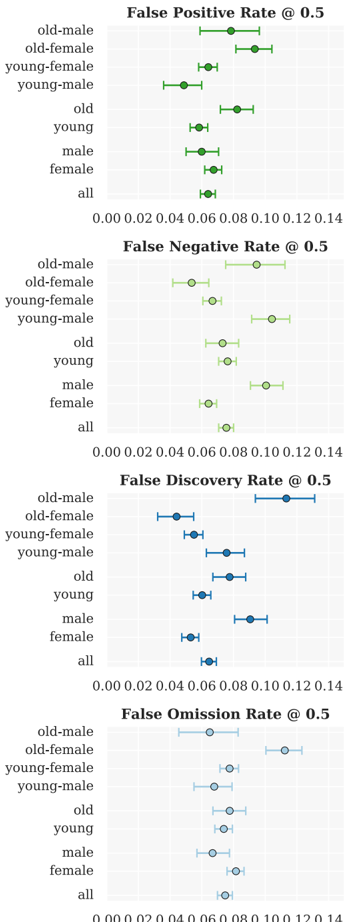
- In the smiling classifier example, all reported metrics at the .5 decision threshold have error types within the range 0.04–0.14, with 95% confidence intervals calculated by bootstrap resampling; the card notes older men have much higher false discovery rate, while men in aggregate have higher false negative rate.
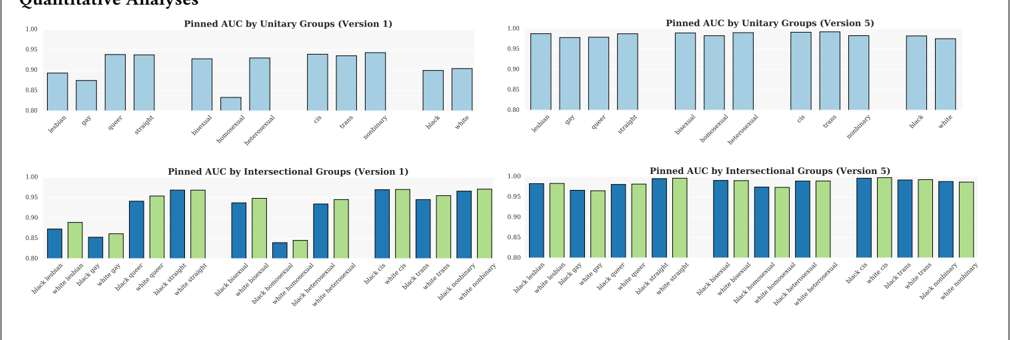
- In the toxicity example, TOXICITY v. 1 has low performance for several terms, especially “lesbian,” “gay,” and “homosexual,” while TOXICITY v. 5 shows more equitable performance after bias mitigation techniques.
Methods
- The paper is a framework/proposal paper, not an empirical study of a new model; it recommends model cards and details suggested sections and prompts.
- It provides two worked examples: a smiling classifier trained and evaluated on the CelebA dataset, using a convolutional neural net pretrained for face recognition and fine-tuned with cross-entropy loss for binary smiling classification.
- It also provides a model card for Perspective API’s TOXICITY classifier, a convolutional neural network developed by Jigsaw in 2017, evaluated on a synthetic Identity Phrase Templates test set; metrics include FPR, FNR, FDR, FOR for the smiling classifier and Pinned AUC for toxicity.
Limitations
- The paper states that model cards rely on the integrity of their creators and that it seems unlikely, at least in the near term, that they could be standardized or formalized enough to prevent misleading representations of model results.
- The paper states that evaluation datasets suitable for disaggregated evaluation are not yet common, and that the synthetic toxicity test data covers only a small set of very specific comments and is not comprehensive.
- The smiling classifier card states it does not capture race or skin type, uses binary gender classes (male/female), and that an ideal evaluation dataset would additionally include Fitzpatrick skin type, camera details, and environment details; the paper also states future work is needed to study how model information is interpreted and used by different stakeholders.
Model-written summary. Check it against the paper before relying on it.
Integrity signals
Registry
Cites
Statistics
Figures
Verification
Claims the paper makes
5 Valid · 1 Not valid · 18 Not checked · 30 Own results and interpretations
The cited sources support only part of this claim — read each source’s verdict below.
In the paper
“Synthetic data is valuable here because [11] shows that real data often has disproportionate amounts of toxicity directed at specific groups.”
What the sources say
- Partly supportedcites [11] [11] Lucas Dixon, John Li, Jeffrey Sorensen, Nithum Thain, and Lucy Vasserman. 2018. Measuring and Mitigating Unintended Bias in Text Classification. Proceedings of the AAAI/ACM Conference on AI, Ethics, and Society (2018). - sourceExperimental — accuracy not yet measured
The 'Quantifying bias in dataset' section (page unavailable) reports that certain identity terms appear disproportionately in toxic comments in the authors’ training data; for example, 'gay' appears in 3% of toxic comments but 0.5% of comments overall. It measures comments containing those terms, not whether toxicity is directed at the groups, and does not establish how often this pattern occurs across real datasets generally. (LLM, conf=0.85)
plainstates an association- Asserted: passes — The authors put it forward as true.
- Checkable: passes — It can be checked against evidence.
- Load-bearing: passes — The paper’s conclusions depend on it.
- Based: passes — The paper gives a reason why it holds.
- Partly supported
A result the paper reports from its own data — it cites no other source for it, so there is none to check. The quote shows it is in the paper.
In the paper
“For example, the false discovery rate on older men is much higher than that for other groups.”
plainstates an association- Asserted: passes — The authors put it forward as true.
- Checkable: passes — It can be checked against evidence.
- Load-bearing: passes — The paper’s conclusions depend on it.
- Based: passes — The paper gives a reason why it holds.
A result the paper reports from its own data — it cites no other source for it, so there is none to check. The quote shows it is in the paper.
In the paper
“TOXICITY v. 1 has low performance for several terms, especially 'lesbian', 'gay', and 'homosexual'.”
plain- Asserted: passes — The authors put it forward as true.
- Checkable: passes — It can be checked against evidence.
- Load-bearing: passes — The paper’s conclusions depend on it.
- Based: passes — The paper gives a reason why it holds.
None of the sources cited for this claim have been checked yet.
In the paper
“she collaborated with other researchers to demonstrate the disproportionate errors of computer vision systems on historically marginalized groups in the United States, such as darker-skinned women [5, 41].”
What the sources say
- Not checked yetcites [5] [5] Joy Buolamwini and Timnit Gebru. 2018. Gender Shades: Intersectional Accuracy Disparities in Commercial Gender Classification. In Proceedings of the 1st Conference on Fairness, Accountability and Transparency (Proceedings of Machine Learning Research) , Sorelle A. Friedler and Christo Wilson (Eds.), Vol. 81. PMLR, New York, NY, USA, 77-91. http://proceedings.mlr.press/v81/buolamwini18a.html -
- Not checked yetcites [41] [41] Inioluwa Raji. 2018. Black Panther Face Scorecard: Wakandans Under the Coded Gaze of AI. (2018). -
boostedstates an association- Asserted: passes — The authors put it forward as true.
- Checkable: passes — It can be checked against evidence.
- Load-bearing: passes — The paper’s conclusions depend on it.
- Based: passes — The paper gives a reason why it holds.
In the paper
“after MIT Media Lab graduate student Joy Buolamwini found that commercial face recognition systems failed to detect her face [4]”
What the sources say
- Not checked yetcites [4] [4] Joy Buolamwini. 2016. How I'm fighting Bias in Algorithms. (2016). https://www.ted.com/talks/joy\_buolamwini\_how\_i\_m\_fighting\_bias\_in\_ algorithms#t-63664 -
plainSingle case- Asserted: passes — The authors put it forward as true.
- Checkable: passes — It can be checked against evidence.
- Load-bearing: unclear — It is unclear whether the paper’s conclusions depend on it.
- Based: passes — The paper gives a reason why it holds.
13 more claims
Create a free account to see all 54 claims and to verify the 13 references still open.
- Probably not a substantial claim. 34
- It may state two separate claims as one. 8
Claims other papers make about this one
Each is checked against this paper’s own text: does it say what the citing paper says it does?
The source backs part of the claim, not all of it — or backs it for a different population, condition or comparison.
In the citing paper
“Model cards represent the field's standard for disclosing and documenting key facts about the architecture, training and evaluation of the model [14, 40].”
From Rethinking open source generative AI: open washing and the EU AI Act (2024) · cites this paper as [40]
Experimental — accuracy not yet measuredThe source backs part of the claim, not all of it — or backs it for a different population, condition or comparison.
In the citing paper
“Model cards (SMCs) [44] have been foundational in standardizing documentation for AI/ML model performance and characteristics, along with risks and unintended uses.”
From Interactive Model Cards: A Human-Centered Approach to Model Documentation (2022) · cites this paper as [44]
Experimental — accuracy not yet measuredThe source backs part of the claim, not all of it — or backs it for a different population, condition or comparison.
In the citing paper
“A second phase saw a more technical approach from the computer science community focusing on fairness, accountability and transparency as an engineering 'ethicalby-design' problem-solving exercise [20][21][22].”
From Putting AI ethics to work: are the tools fit for purpose? (2022) · cites this paper as [21]
Experimental — accuracy not yet measuredThe source backs part of the claim, not all of it — or backs it for a different population, condition or comparison.
In the citing paper
“These are either materials for use in design teams in workshop style events [76,77], tools for producing documentation of the design, build and test process [21,68], or technical tools for testing models, protecting privacy and security, testing for bias [69,93,94], or tracking provenance of data [95].”
From Putting AI ethics to work: are the tools fit for purpose? (2022) · cites this paper as [21]
Experimental — accuracy not yet measuredThe source backs part of the claim, not all of it — or backs it for a different population, condition or comparison.
In the citing paper
“There is some work on fairness relating to AI services, though this tends to focus on either exposing or 'auditing' certain AI services [22,38,126,133], or devising tools, methods and interventions relevant for those building (rather than using) such services [12,96,106,128].”
From Out of Context: Investigating the Bias and Fairness Concerns of “Artificial Intelligence as a Service” (2023) · cites this paper as [106]
Experimental — accuracy not yet measured
17 more claims about this paper
Create a free account to see every claim other papers make about this one.
Citations
Cites
BLEU: a method for automatic evaluation of machine translation
Papineni, K., Roukos, S., Ward, T., & Zhu, W.-J. (2001) · Proceedings of the 40th Annual Meeting on Association for Computational Linguistics - ACL '02 · doi:10.3115/1073083.1073135 · Cited by 21,344 · cited 1×
“translation system could compare BLEU scores [40] across demographic groups, and a model card for a speech recognition system could compare word-error rates.”
BackgroundCrenshaw, K. (2018) · Feminist Legal Theory · doi:10.4324/9780429500480-5 · Cited by 9,510
Deep Learning Face Attributes in the Wild
Liu, Z., Luo, P., Wang, X., & Tang, X. (2015) · 2015 IEEE International Conference on Computer Vision (ICCV) · doi:10.1109/iccv.2015.425 · Cited by 7,747 · cited 4×
“ms [5, 26] that report details of the datasets used to train and test machine learning models. We provide two example model cards in Section 5: A smiling detection model trained on the CelebA dataset [33] (Figure 2), and a public toxicity detection model, Perspective API [29] (Figure 3). Where Datasheets highlight cha…”
BackgroundMethodInfluentialThe validity and practicality of sun-reactive skin types I through VI
Fitzpatrick, T. B. (1988) · Archives of Dermatology · doi:10.1001/archderm.1988.01670060015008 · Cited by 4,339
Differential Privacy: A Survey of Results
Dwork, C. (2008) · Lecture Notes in Computer Science · doi:10.1007/978-3-540-79228-4_1 · Cited by 3,542 · cited 2×
“As such, collaboration with policy, privacy, and legal experts is necessary in order to ascertain which groups may be responsibly inferred, and how that information should be stored and accessed (for example, using differential privacy [12]).”
BackgroundCollins, G. S., Reitsma, J. B., Altman, D. G., & Moons, K. G. M. (2015) · Annals of Internal Medicine · doi:10.7326/m14-0697 · Cited by 3,267
Equality of Opportunity in Supervised Learning
Hardt, M., Price, E., & Srebro, N. (2016) · arXiv · doi:10.48550/arxiv.1610.02413 · Cited by 2,536 · cited 2×
“of Opportunity, and equal false negative and false positive rates across groups is equivalent to fulfilling Equality of Odds [26].”
BackgroundGebru, T., Morgenstern, J., Vecchione, B., Vaughan, J. W., Wallach, H., Daumé, H., & Crawford, K. (2018) · arXiv · doi:10.48550/arxiv.1803.09010 · Cited by 2,474
Self-citationA Probabilistic Interpretation of Precision, Recall and F-Score, with Implication for Evaluation
Goutte, C., & Gaussier, E. (2005) · Lecture Notes in Computer Science · doi:10.1007/978-3-540-31865-1_25 · Cited by 2,285 · cited 1×
“Confidence intervals for metrics derived from confusion matrices can be calculated by treating the matrices as probabilistic models of system performance [24].”
MethodFair prediction with disparate impact: a study of bias in recidivism prediction instruments
Chouldechova, A. (2017) · Big Data · doi:10.1089/big.2016.0047 · Cited by 2,159 · cited 1×
“or different errors that can be calculated from the confusion matrix for binary classification systems. • These also correspond to metrics in recent definitions of “fairness” in machine learning (cf. [8, 25]), where parity across subgroups for different metrics correspond to different fairness criteria. • 95% confiden…”
Background
Research works printed but not linked: 9
- [1] Avrio AI. 2018. Avrio AI: AI Talent Platform. (2018). https://www.goavrio.com/ -
- [5] Joy Buolamwini and Timnit Gebru. 2018. Gender Shades: Intersectional Accuracy Disparities in Commercial Gender Classification. In Proceedings of the 1st Conference on Fairness, Accountability and Transparency (Proceedings of Machine Learning Research) , Sorelle A. Friedler and Christo Wilson (Eds.), Vol. 81. PMLR, New York, NY, USA, 77-91. http://proceedings.mlr.press/v81/buolamwini18a.html -
- [13] Entelo. 2018. Recruitment Software | Entelo. (2018). https://www.entelo.com/ -
- [17] U.S. Food and Drug Administration. 2013. FDA Drug Safety Communication: Risk of next-morning impairment after use of insomnia drugs; FDA requires lower recommended doses for certain drugs containing zolpidem (Ambien, Ambien CR, Edluar, and Zolpimist). (2013). https://web.archive.org/web/20170428150213/ https://www.fda.gov/drugs/drugsafety/ucm352085.htm -
- [18] IIHS (Insurance Institute for Highway Safety: Highway Loss Data Institute). 2003. Special Issue: Side Impact Crashworthiness. Status Report 38, 7 (2003). -
- [19] Institute for the Future, Omidyar Network's Tech, and Society Solutions Lab. 2018. Ethical OS. (2018). https://ethicalos.org/ -
- [32] Jigsaw. 2017. Perspective API. (2017). https://www.perspectiveapi.com/ -
- [39] AI Now. 2018. Litigating Algorithms: Challenging Government Use Of Algorithmic Decision Systems. AI Now Institute. -
- [43] Mukund Sundararajan, Ankur Taly, and Qiqi Yan. 2017. In Proceedings of the 34th International Conference on Machine Learning , Vol. 70. PMLR, Sydney, Australia. -
Cited by
Items 1,001–1,100 of 2,236
Cross-model Fairness: Empirical Study of Fairness and Ethics Under Model Multiplicity
Sokol, K., Kull, M., Chan, J., & Salim, F. D. (2024) · ACM Journal on Responsible Computing · doi:10.1145/3677173 · Cited by 17
MLXP: A framework for conducting replicable experiments in Python
Arbel, M., & Zouaoui, A. (2024) · ACM Conference on Reproducibility and Replicability (ACM REP) · doi:10.1145/3641525.3663648 · Cited by 9
Kelley, M. C., Perry, S. J., & Tucker, B. V. (2024) · Phonetica · doi:10.1515/phon-2024-0015 · Cited by 13
Schenk, P. O., & Kern, C. A. (2024) · AStA Wirtschafts- und Sozialstatistisches Archiv · doi:10.1007/s11943-024-00344-2 · Cited by 16
“In addition, providing explanations, limitations, and suitable applications when shipping a model is encouraged (Mitchell et al., 2019; Richards et al., 2020).”
BackgroundTransfer Learning in Building Neural Network Model Case Study
Zorić, M., Štula, M., Markić, I., & Braović, M. (2024) · International Conference on Software, Telecommunications and Computer Networks (SoftCOM) · doi:10.23919/softcom62040.2024.10721924 · Cited by 5
“A formalization of model properties that can help select a compatible model for transfer learning applications is currently underway [6].”
BackgroundAnglin, K. (2024) · AERA Open · doi:10.1177/23328584241303495 · Cited by 11
“The validity of supervised learning applications also may be increased post hoc (i.e., after model training) through comprehensive reporting and transparency (Gebru et al., 2021; Mitchell et al., 2019).”
InfluentialLoureiro, R. B., Pagano, T. P., Lisboa, F. V. N., Nascimento, L. F. S., Oliveira, E. L. S., Winkler, I., & Nascimento, E. G. S. (2025) · Expert Systems with Applications · doi:10.1016/j.eswa.2024.126344 · Cited by 9
On the reliability of Large Language Models to misinformed and demographically informed prompts
Aremu, T., Akinwehinmi, O., Nwagu, C., Ahmed, S. I., Orji, R., Amo, P. A. D., & Saddik, A. E. (2025) · AI Magazine · doi:10.1002/aaai.12208 · Cited by 10
Kennedy-Mayo, D., & Gord, J. (2025) · Lecture notes in networks and systems · doi:10.1007/978-3-031-84457-7_11 · Cited by 10
Knowledge Engineering in the Age of Neurosymbolic Systems
Sabou, M., Llugiqi, M., Ekaputra, F. J., Waltersdorfer, L., & Tsaneva, S. (2025) · Neurosymbolic Artificial Intelligence · doi:10.1177/29498732251320078 · Cited by 9
“Second, in the area of purely machine learning based systems, due to their deployment in high-risk use cases and various incidents (McGregor, 2021), suggestions for documentation templates of different components have emerged: Datasheets (Gebru et al., 2018), ModelCards (Mitchell et al., 2019), FactSheets (Arnold et a…”
Metamorphic Testing for Pose Estimation Systems
Duran, M., Laurent, T., Rushe, E., & Ventresque, A. (2025) · IEEE International Conference on Software Testing, Verification and Validation (ICST) · doi:10.1109/icst62969.2025.10988919 · Cited by 8
“When looking at the particular model tested in this work, it has previously been explicitly evaluated on individuals from different regions of the world which has been reported in the model’s corresponding Model Card [30], [47].”
Toward Patient-Centered AI Fact Labels: Leveraging Extrinsic Trust Cues
Yoo, D. W., Stroud, A. M., Zhu, X., Miller, J. E., & Barry, B. A. (2025) · Designing Interactive Systems Conference · doi:10.1145/3715336.3735758 · Cited by 9
Towards Realistic Error Models for Tabular Data
Jung, P., Jäger, S., Chandler, N., & Bießmann, F. (2025) · Journal of Data and Information Quality · doi:10.1145/3774914 · Cited by 10
“Following well-established practices in the ML literature for dataset preparation [25] and model training [52], we argue that the reusability of experiments using data perturbations should be improved by defining explicit error scenarios as metadata.”
InfluentialCOUNTATA: dataset labeling using pattern counts
Moskovitch, Y., & Jagadish, H. V. (2020) · Proceedings of the VLDB Endowment · doi:10.14778/3415478.3415486 · Cited by 8
“To help both the data analyst and the data user, the notion of a “nutrition label” has been suggested [11, 9, 7, 12, 10, 13].”
BackgroundNetwork Report: A Structured Description for Network Datasets
Zheng, X., Rossi, R. A., Ahmed, N. K., & Moritz, D. (2022) · ACM International Conference on Information and Knowledge Management (CIKM) · doi:10.1145/3511808.3557115 · Cited by 6
Fatigue Prediction in Outdoor Running Conditions using Audio Data
Triantafyllopoulos, A., Ottl, S., Gebhard, A., Rituerto-González, E., Jaumann, M., Hüttner, S., Dieter, V., Schneeweiß, P., Krauß, I., Gerczuk, M., et al. (2022) · Annual International Conference of the IEEE Engineering in Medicine and Biology Society (EMBC) · doi:10.1109/embc48229.2022.9871225 · Cited by 10
“Furthermore, we investigated the performance of our models from the perspective of fairness [17].”
MethodAdvancing Data Fusion in Earth Sciences
Lunga, D., & Dias, P. A. (2022) · IEEE International Geoscience and Remote Sensing Symposium (IGARSS) · doi:10.1109/igarss46834.2022.9883176 · Cited by 5
“The ideas of developing datasheets [7] for data and model-cards [8] for models have been introduced as mechanisms to organize the essential facts about datasets and machine learning models in a structured way.”
BackgroundTransparency, Compliance, And Contestability When Code Is(n’t) Law
Hicks, A. (2022) · New Security Paradigms Workshop · doi:10.1145/3584318.3584854 · Cited by 13
The Societal Impacts of Algorithmic Decision-Making
Raghavan, M. (2023) · ACM eBooks · doi:10.1145/3603195 · Cited by 12
Wu, Y.-H. (2024) · AI and Ethics · doi:10.1007/s43681-024-00535-1 · Cited by 8
“Reading between the lines of AI companies and researchers’ documentation on the often metric-based performance tests, they mainly concentrate on explaining the capacity of their models instead of detailing how the latter acquired such capabilities [32–34].”
Kasirzadeh, A., & Klein, C. (2021) · Proceedings of the AAAI/ACM Conference on AI Ethics and Society · doi:10.1145/3461702.3462606 · Cited by 11
Certification of Model Robustness in Active Class Selection
Bunse, M., & Morik, K. J. (2021) · Lecture notes in computer science · doi:10.1007/978-3-030-86520-7_17 · Cited by 5
“Model certification , in the broad sense of performance reports [17, 2, 22] and formal proofs of robustness [11, 26, 25, 30], has motivated us to study model robustness in ACS.”
BackgroundVisual Intelligence through Human Interaction
Krishna, R., Gordon, M., Fei-Fei, L., & Bernstein, M. S. (2021) · Human-computer interaction series · doi:10.1007/978-3-030-82681-9_9 · Cited by 6
Yokota, T., & Nakao, Y. (2022) · ACM Conference on User Modeling, Adaptation and Personalization (UMAP) · doi:10.1145/3511047.3538033 · Cited by 8
A conceptual architecture for contractual data sharing in a decentralised environment
Barclay, I., Preece, A. D., Taylor, I., & Verma, D. C. (2019) · Artificial Intelligence and Machine Learning for Multi-Domain Operations Applications · doi:10.1117/12.2518644 · Cited by 5
“An assembly can also contain artifacts, which is the term applied to any pertinent software components, ML models, and documentation such as licenses, policy documentation, Declarations of Conformity,(19) datasheets for data(20) or model specifications.(21) By attaching artifacts to assemblies in the BoM definition we…”
Towards Certifying Trustworthy Machine Learning Systems
Yap, R. H. C. (2021) · Lecture notes in computer science · doi:10.1007/978-3-030-73959-1_7 · Cited by 8
Critical, but constructive: defining, detecting, and addressing bias in Computational Social Science
Hase, V., Bachl, M., & TeBlunthuis, N. (2025) · Communication Methods and Measures · doi:10.1080/19312458.2025.2575468 · Cited by 4
“Technical fields have pioneered, for example, model cards for machine learning classifiers (Mitchell et al., 2019) and data statements in NLP (Bender & Friedman, 2018), though these also gain traction in the social sciences (Kostygina et al., 2023).”
(2025) · doi:10.1145/3715275.3732087 · Cited by 4
“While inspection can be facilitated by making model cards [95], datasheets [50], and data cards [115] available to the public – which are sometimes included as requirements in the definitions of open models [64, 155] – this documentation does not always translate to auditability and…”
NLPositionality: Characterizing Design Biases of Datasets and Models
Santy, S., Liang, J. T., Bras, R. L., Reinecke, K., & Sap, M. (2023) · arXiv · doi:10.48550/arxiv.2306.01943 · Cited by 31
“The challenge is that design biases arise from the myriad of design choices made; in the context of creating datasets and models, only some of these choices may be documented (e.g., through model cards and data sheets; Bender and Friedman, 2018; Mitchell et al., 2019; Gebru et al., 2021).”
BackgroundEstablishing and implementing a responsible artificial intelligence framework: a 1-year review
Tsoi, A. H., Gartner, G., Cotten, S. W., Kim, J., Nazarian, J., Thomas, J., McSwain, S. D., Ahmadi-Moosavi, R., & Rimal, R. (2025) · Journal of the American Medical Informatics Association · doi:10.1093/jamia/ocaf147 · Cited by 4
Brereton, T. A., Malik, M. M., Rost, L. M., Ohde, J. W., Zheng, L., Jose, K. A., Peterson, K. J., Vidal, D. E., Lifson, M. A., Melnick, J., et al. (2024) · Mayo Clinic Proceedings Digital Health · doi:10.1016/j.mcpdig.2024.03.008 · Cited by 5
Stalnaker, T., Wintersgill, N., Chaparro, O., Heymann, L. A., Penta, M. D., Germán, D. M., & Poshyvanyk, D. (2026) · ACM Transactions on Software Engineering and Methodology · doi:10.1145/3743133 · Cited by 23
“These relationships emerging from the AI supply chain could be tracked using standardized model cards [89] or AIBOMs (AI Bills of Materials) [116, 126], although these methods add their own compliance challenges.”
Crisan, A., Butters, N., & Zoe (2024) · IEEE Evaluation and Beyond - Methodological Approaches for Visualization (BELIV) · doi:10.1109/beliv64461.2024.00007 · Cited by 6
“…them [22, 70, 19], researchers prioritized identifying harms and risks [21, 17, 51, 75] as well as proposing frame-* works [49, 66], documentation [45, 13, 25], eXplainable Artificial Intelligence (XAI) techniques [54, 41, 64, 1], interactive visualization techniques [46, 76, 67, 62], and…”
Requirements Elicitation for Machine Learning Applications: A Research Preview
Elvira, T., Procko, T., & Ochoa, O. (2024) · 2024 Conference on AI, Science, Engineering, and Technology (AIxSET) · doi:10.1109/aixset62544.2024.00042 · Cited by 2
“Alternatively, if the model is developed first, the focus shifts to analyzing ML Model Cards or other forms of ML documentation to elicit requirements for the system around the model [22].”
Simson, J., Draxler, F., Mehr, S. A., & Kern, C. A. (2025) · CHI Conference on Human Factors in Computing Systems · doi:10.1145/3706598.3713482 · Cited by 6
“Co-designed Co-designed fairness checklists [84] and documentation aids like model cards [92] can also be a starting point for identifying decisions.”
A Semantic Approach for Linked Model, Data, and Dataspace Cards
Donald, A., Galanopoulos, A., Curry, E., Muñoz, E., Ullah, I., Waskow, M. A., Kalra, M., Saxena, S., & Iqbal, T. (2025) · IEEE Access · doi:10.1109/access.2025.3572211 · Cited by 3
“Mitchell et al. [11] propose Model Cards to enhance trans-parency regarding the motivation and development of various models and algorithms.”
InfluentialMonolingual LLMs in the Age of Multilingual Chatbots
Cao, X. (2025) · boundary 2 · doi:10.1215/01903659-11636583 · Cited by 4
Towards Ensuring Responsible AI for Medical Device Certification
Mallardi, G., Quaranta, L., Calefato, F., & Lanubile, F. (2025) · doi:10.1109/raie66699.2025.00009 · Cited by 4
“Drawing from established responsible AI guidelines, the framework should implement iterative evaluations— such as assessing model fairness and analyzing demographic distributions—to systematically mitigate bias among underrep-resented groups, fostering inclusivity [17, 18].”
InfluentialThe Brief and Wondrous Life of Open Models
Choksi, M. Z., Mandel, I., & Benthall, S. (2025) · ACM Conference on Fairness, Accountability, and Transparency (FAccT) · doi:10.1145/3715275.3732206 · Cited by 17
Justified Evidence Collection for Argument-based AI Fairness Assurance
Sabuncuoğlu, A., Burr, C., & Maple, C. R. (2025) · ACM Conference on Fairness, Accountability, and Transparency (FAccT) · doi:10.1145/3715275.3732003 · Cited by 9
Beyond Transparency: Evaluating Explainability in AI-Supported Fact-Checking
Schmitt, V., Bezzaoui, I., Jakob, C., Sahitaj, P., Wang, Q., Hilbert, A., Upravitelev, M., Fegert, J., Möller, S., & Solopova, V. (2025) · ACM International Workshop on Multimedia AI against Disinformation (MAD) · doi:10.1145/3733567.3735566 · Cited by 9
Building Trust in Artificial Intelligence
Dordunoo, L. (2025) · IGI Global eBooks · doi:10.4018/979-8-3373-5686-0.ch010 · Cited by 3
Salunkhe, R. V. (2025) · Advances in computational intelligence and robotics book series · doi:10.4018/979-8-3373-4017-3.ch004 · Cited by 3
Li, D. (2025) · Chinese Public Administration Review · doi:10.1177/15396754251359961 · Cited by 6
“The establishment of dedicated research groups examining algorithmic fairness, AI safety, and responsible AI development demonstrates the company’s commitment to producing governance-relevant knowledge (Mitchell et al., 2019).”
Eynon, R., & Gillani, N. (2025) · Learning Media and Technology · doi:10.1080/17439884.2025.2552273 · Cited by 6
“Yet there is a growing literature on which researchers can draw (e.g., Gebru et al. 2021; Mitchell et al. 2019).”
The crisis of biomedical foundation models
Wang, F. (2025) · Journal of Biomedical Informatics · doi:10.1016/j.jbi.2025.104917 · Cited by 5
Guerdan, L., Saxena, D., Chancellor, S., Wu, Z. S., & Holstein, K. (2025) · Proceedings of the ACM on Human-Computer Interaction · doi:10.1145/3757628 · Cited by 7
“While many guidelines support dataset and model documentation (e.g., [28, 42, 92]), none support assessments of problem formulation transferability.”
Scheuerman, M. K., Woodruff, A., & Brubaker, J. R. (2025) · Proceedings of the ACM on Human-Computer Interaction · doi:10.1145/3757481 · Cited by 11
Touitou, M. (2025) · Acta Oeconomica · doi:10.1556/032.2025.00134 · Cited by 5
Fine-Tuning and Explaining FinBERT for Sector-Specific Financial News: A Reproducible Workflow
Cristescu, M. P., Brândaș, C., Mara, D. A., & Petrea, I. (2025) · Electronics · doi:10.3390/electronics14234680 · Cited by 9
What is a Data Document? Analyzing Four Emerging Data Documentation Frameworks in AI / ML
Maemura, E. (2025) · Proceedings of the Association for Information Science and Technology · doi:10.1002/pra2.1270 · Cited by 3
“This trend began with the proposal of “Model Cards for Model Reporting” which were envisioned as a complement to “Datasheets for Datasets” but addressing models training and evaluation through a brief descriptive document (Mitchell et al., 2019).”
From Machine Learning Documentation to Requirements: Bridging Processes with Requirements Languages
Peng, Y., Heyn, H.-M., & Horkoff, J. (2025) · Lecture notes in computer science · doi:10.1007/978-3-032-12089-2_8 · Cited by 3
“ML documentation artifacts, including ModelCards [26] and DataSheets [10], exemplified in Fig.”
InfluentialTamer, O. Ü., McDonald, B. D., Hémici, F., & Κοντόγεωργα, Γ. (2025) · Sayıştay Dergisi · doi:10.52836/sayistay.1819606 · Cited by 3
Moving beyond the empty cell: The threat of decontextualized healthcare data
Mir, A. E., de Sousa, E. B., Mesina-Estarrón, I., Celi, L. A., Hani, M., Benjelloun, M., Nageswaran, N., Mahmoudi, S., Siddiqui, S., Sadasivam, S., et al. (2026) · PLOS Digital Health · doi:10.1371/journal.pdig.0001194 · Cited by 6
Fair Foundation Models for Medical Image Analysis: Challenges and Perspectives
Queiroz, D., Carlos, A., Anjos, A., & Berton, L. (2026) · ACM Transactions on Computing for Healthcare · doi:10.1145/3793542 · Cited by 15
“The documentation must encompass detailed specifications of training data sources, testing benchmark methodologies, and explicit deployment guidelines that minimize risk and bias [166].”
Nazar, M., Unar, S., Ahmed, A., Su’ud, M. M., Alam, M., & Rahmat, A. (2026) · IEEE Access · doi:10.1109/access.2026.3664500 · Cited by 7
“Transparency-oriented frameworks such as RE4AI and Model Cards emphasize human-centered explanations and traceability but lack formal mechanisms for threat assessment or security enforcement [36].”
Truth without belief: can LLM-generated content satisfy classical theories of truth?
Zhang, X., & Li, H. (2026) · AI and Ethics · doi:10.1007/s43681-026-01065-8 · Cited by 6
“Documentation (e.g. model/system cards) can specify intended use, known failure modes, and validation require - ments [35].”
Montero, A. M. B., Huet‐Dastarac, M., Herranz-Hernández, S. M., Tengler, B., Buhl, E. S., Galapon, A., Cárdenas, C. E. S., Fusella, M., Herbin, G., de Hond, Y. J. M., et al. (2026) · Physics and Imaging in Radiation Oncology · doi:10.1016/j.phro.2026.100940 · Cited by 7
“…highly specialised domains such as RT. Recently, De Biase et al. [22] performed a study applying three such frameworks, ML Canvas [23], Model Cards [9], and Datasheets [10], to a specific AI model for a typical RT problem (i.e. automatic segmentation of tumor volume from multimodal PET/CT images…”
InfluentialA Pragmatic Framework for Federated Learning Risk and Governance in Academic Medical Centers
Bottomly, D., Barnes, B., Mavuwa, K., Lee, N., Roth, H. R., Chen, C., & McWeeney, S. K. (2026) · JMIR AI · doi:10.2196/80022 · Cited by 6
“For suitability, comprehensive model documentation (such as Model Cards [17]) is required or, at minimum, evidence that the model architecture and training pipeline have been validated on publicly available or simulated data.”
Metrics for Artificial Intelligence in Medicine: A Reference Resource
Gonzales, R. A., Takahashi, M. S., Retson, T., Banerjee, I., Park, S. H., & Kahn, C. E. (2026) · Radiology Artificial Intelligence · doi:10.1148/ryai.260070 · Cited by 3
Kubota, K., Nishimura, A., Seto, R., & Liu, L. (2026) · JMIR Formative Research · doi:10.2196/87830 · Cited by 5
“When using third-party models, they require disclosures consistent with model cards and data sheets and insist on contractual guarantees for security and incident response [22-24].”
InfluentialPrompt Choreographies: Dialogues Between Humans and Generative AI in Architecture
Uhrík, M., Cervantes, J. C. L., Morales, C. E. S., Hajtmanek, R., Demčák, J., & Kupko, A. D. (2026) · Architecture · doi:10.3390/architecture6010046 · Cited by 5
A Study on Machine Learning-Based Cost Estimation Models for AI Training Data Construction
Ko, Y.-S., & Lee, B. G. (2026) · Applied Sciences · doi:10.3390/app16062891 · Cited by 5
Huynh, L., & McNamara, D. S. (2026) · Electronics · doi:10.3390/electronics15061262 · Cited by 7
Mohamed, R. A. A. (2026) · Interactive Learning Environments · doi:10.1080/10494820.2026.2649549 · Cited by 4
“…requires learner-authored rewriting, and normalizes verification when system output is ambiguous – design imperatives consistent with human–AI interaction guidance and accountable AI documentation principles (Amershi et al., 2019; Ji et al., 2023; Mitchell et al., 2019; Raji et al., 2020).”
InfluentialOperational responsibility in AI governance: a user-centric liability framework
Chen, Z. (2026) · AI and Ethics · doi:10.1007/s43681-026-01163-7 · Cited by 8
“Mitchell et al. [58] argue that standardized 'model cards'—structured documentation reporting model performance across different conditions and populations—provide the informational foundation organizations need to detect performance degradation before harms materialize.”
Human-AI Interaction Design Standards
Zhao, C., & Xu, W. (2026) · Springer eBooks · doi:10.1007/978-981-95-5585-7_16 · Cited by 21
Human-centered generative AI in education: ethical challenges and equity-driven solutions
Abu, S., Uddın, M. M., Moon, J., Awoyemi, I. D., Baah-Mintah, R., & Ghooreian, A. (2026) · Ethics & Behavior · doi:10.1080/10508422.2026.2685014 · Cited by 5
Elkhatat, A. M., & Al‐Muhtaseb, S. A. (2026) · Applied Intelligence · doi:10.1007/s10489-026-07326-7 · Cited by 6
“Moreover, regulatory and safety constraints significantly redefine the scope of “deployment,” especially in sectors like pharmaceuticals and environmental science [15 , 77 ].”
InfluentialXie, W., Liu, J., & Liu, S. (2026) · Journal of Medical Internet Research · doi:10.2196/91727 · Cited by 6
“…as wearable data, self-reported symptoms, user-connected personal health records, or user-entered information; (3) temporal anchoring, including timestamps and data windows for key variables; and (4) uncertainty signals distinguishing measured data from inferred or extrapolated conclusions [59].”
Algorithmic Status Inequality: An Integrative Perspective on AI‐Driven Social Stratification
Wu, J. (2026) · Journal of Management Studies · doi:10.1111/joms.70134 · Cited by 6
Semi-Automated Nonresponse Detection for Open-Text Survey Data
Hibben, K. C., Smith, Z. R., Rogers, B., Ryan, V. M., Scanlon, P., & Hoppe, T. A. (2024) · Social Science Computer Review · doi:10.1177/08944393241249720 · Cited by 4
“Therefore, it is imperative to test model performance with a focus on potential biases prior to releasing the model for public use (Mitchell et al., 2019).”
Okolo, C. T., & Lin, H. (2024) · ACM Conference on Equity and Access in Algorithms, Mechanisms, and Optimization (EAAMO) · doi:10.1145/3689904.3694707 · Cited by 5
EARLS: a runoff reconstruction dataset for Europe
Klotz, D., Miersch, P., do Nascimento, T. V. M., Fenicia, F., Frank, C., Gauch, M., & Zscheischler, J. (2026) · Earth system science data · doi:10.5194/essd-18-5485-2026 · Cited by 10
“We train our model by minimizing the negative log-likelihood of observed data: Appendix C: Further data quality checks”
Challenges for Responsible Implementation of Generative AI in Fintech
Vaish, S., Singh, M., & Jha, A. K. (2025) · Information systems engineering and management · doi:10.1007/978-3-031-76957-3_17 · Cited by 5
A Design Space of Behavior Change Interventions for Responsible Data Science
Zhang, D., Barrett, T., Patil, A., Shoda, Y., Battle, L., & Wall, E. (2025) · ACM International Conference on Intelligent User Interfaces (IUI) · doi:10.1145/3708359.3712140 · Cited by 6
“Existing frameworks in responsible data science focus on practitioners by providing checklists or guidelines to follow [23, 50, 59, 60], primarily serving as static resources to guide practitioners on best practices.”
Aglinskas, A., Bergeron, A., & Anzellotti, S. (2025) · Psychiatry and Clinical Neurosciences · doi:10.1111/pcn.13829 · Cited by 3
“Lastly, during analysis, subgroup analyses 49 and targeted analyses evaluating model fairness 50 can help identify and address inequities learned by the models.”
RogueGPT: transforming ChatGPT-4 into a rogue AI with dis-ethical tuning
Buscemi, A., & Proverbio, D. (2025) · AI and Ethics · doi:10.1007/s43681-025-00750-4 · Cited by 6
“One prominent approach involves the development of model cards and documentation practices that provide detailed information about the model’s capabilities, limitations, and potential biases [12, 23].”
The Product Beyond the Model - An Empirical Study of Repositories of Open-Source ML Products
Nahar, N., Zhang, H., Lewis, G. A., Zhou, S., & Kästner, C. (2025) · ACM/IEEE International Conference on Software Engineering: Companion Proceedings (ICSE-Companion) · doi:10.1109/icse55347.2025.00006 · Cited by 24
“…and poor documentation mirror practices repeatedly criticized in industry projects [42], [69], [102], and while the more experienced and well-resourced companies work toward better practices [68], [86], [98], [106] those challenges are still common in many newer and smaller organizations.”
Mitigating Biased, Brittle and Baroque Generative AI
Maybury, M. T. (2025) · IEEE International Conference on AI and Data Analytics (ICAD) · doi:10.1109/icad65464.2025.11114038 · Cited by 4
“Methods for increased transparency of LLMs such as models cards [35, 36] that report model training data, learning methods, and performance across various conditions can improve user awareness and foster appropriate application.”
An Update on AI Hallucinations: Not as Bad as You Remember or as You’ve Been Told
King, M. R. (2025) · Cellular and Molecular Bioengineering · doi:10.1007/s12195-025-00874-x · Cited by 9
Erlei, A., Cau, F. M., Georgiev, R., Kumar, S. C., Bizer, K., & Gadiraju, U. (2026) · CHI Conference on Human Factors in Computing Systems · doi:10.1145/3772318.3791420 · Cited by 7
“…data quality are powerful and simple signals for lay users when considering AI models (e.g., similar to model cards or AI nutrition labels [13, 55, 80, 103, 128, 136]), future work may expand on our results by deploying “real” AI systems and introducing higher-dimensional quality attributes.”
Chen, C., Liao, M., Phadnis, A. A., Li, Y., High, A. C., Abdullah, S., & Sundar, S. S. (2026) · CHI Conference on Human Factors in Computing Systems · doi:10.1145/3772318.3791542 · Cited by 2
“It complements existing documentation-based approaches in raising users’ awareness of algorithmic bias [41, 58].”
Vito, P. D. C. S., Fringi, E., Johnston, P., Bezerra, L. C. T., Aristodemou, M., Shahandashti, S. F., O’Hara, E., Whyte, L. F., Luo, L. K., Wong, M., et al. (2026) · CHI Conference on Human Factors in Computing Systems · doi:10.1145/3772318.3791757 · Cited by 5
“Some of this information could be sourced from model cards [44], but it would need to be made usable by, and accessible to, participatory auditors without a technical background.”
Algorithmic Technologies and Underrepresented Populations
Díaz, M. (2019) · ACM Conference on Computer Supported Cooperative Work (CSCW) · doi:10.1145/3311957.3361857 · Cited by 5
“This line of research has highlighted the importance of determining in-and out-of-scope applications of algorithmic tools [7, 9], such as automated facial recognition, and my work contributes to these conversations by exploring out-of-context uses of specific tools and how to re-design algorithms…”
BackgroundAI Orthopraxy: Towards a Framework for That Promotes Fairness
Rivas, P. (2020) · IEEE International Symposium on Technology and Society (ISTAS) · doi:10.1109/istas50296.2020.9462167 · Cited by 4
Who Watches the Birdwatchers? Sociotechnical Vulnerabilities in Twitter’s Content Contextualisation
Benjamin, G. (2022) · Lecture notes in computer science · doi:10.1007/978-3-031-10183-0_1 · Cited by 5
Ethics of Face Recognition in Smart Cities Toward Trustworthy AI
Tao, M., Jiang, R., & Downs, C. (2022) · Advanced sciences and technologies for security applications · doi:10.1007/978-3-031-04424-3_2 · Cited by 4
Amith, M. “., Cui, L., Roberts, K. E., & Tao, C. (2023) · International World Wide Web Conference (WWW) · doi:10.1145/3543873.3587601 · Cited by 3
Making Smart Cities Explainable: What XAI Can Learn from the “Ghost Map”
Gupta, S., & Loukissas, Y. A. (2023) · CHI Conference Extended Abstracts on Human Factors in Computing Systems (CHI EA) · doi:10.1145/3544549.3585847 · Cited by 4
Knowledge Acquired by Foundation Models
Paaß, G., & Giesselbach, S. (2023) · Artificial intelligence: foundations, theory, and algorithms/Artificial intelligence: Foundations, theory, and algorithms · doi:10.1007/978-3-031-23190-2_4 · Cited by 3
Towards Actionable Data Science: Domain Experts as End-Users of Data Science Systems
Jung, J. Y., Steinberger, T., & So, C. (2023) · Computer Supported Cooperative Work (CSCW) · doi:10.1007/s10606-023-09475-6 · Cited by 6
“Documentation and guidelines for managing data and facilitating collaboration are typically lacking (Gebru et al., 2021; Mitchell et al., 2019; Sambasivan et al., 2021; Boyd, 2021).”
Ganesh, B. (2023) · Proceedings of the AAAI/ACM Conference on AI Ethics and Society · doi:10.1145/3600211.3604751 · Cited by 4
MLGuard: Defend Your Machine Learning Model!
Wong, S., Barnett, S., Rivera‐Villicana, J., Simmons, A., Abdelkader, H., Schneider, J.-G., & Vasa, R. (2023) · doi:10.1145/3617574.3617859 · Cited by 7
Quantum Algorithm Cards: Streamlining the Development of Hybrid Classical-Quantum Applications
Stirbu, V., & Haghparast, M. (2023) · Lecture notes in computer science · doi:10.1007/978-3-031-49269-3_13 · Cited by 3
“The concept was found to be useful, especially for the developers that have artificial intelligence and machine learning background, as they were already familiar with similar concepts like Model Cards [10], and Data Cards [11].”
BackgroundIs Imitation All You Need? Generalized Decision-Making with Dual-Phase Training
Wei, Y., Sun, Y., Zheng, R., Vemprala, S. H., Bonatti, R., Chen, S., Madaan, R., Ba, Z., Kapoor, A., & Ma, S. (2023) · IEEE/CVF International Conference on Computer Vision (ICCV) · doi:10.1109/iccv51070.2023.01486 · Cited by 21
Social and Environmental Responsibility in AI-Driven Entrepreneurship
Salam, M. A., Nawrin, R., Tushar, H., & Sooraksha, N. (2024) · Advances in business information systems and analytics book series · doi:10.4018/979-8-3693-1842-3.ch012 · Cited by 7
Leveraging Large Language Models to Enhance Domain Expert Inclusion in Data Science Workflows
Shih, J. Y., Mohanty, V., Katsis, Y., & Subramonyam, H. (2024) · CHI Conference Extended Abstracts on Human Factors in Computing Systems (CHI EA) · doi:10.1145/3613905.3651115 · Cited by 4
“Artifacts such as Datasheets [14], Factsheets [3], and Model Cards [28] are only created towards the end of the development process [16], making it difficult for domain experts to actively participate in upstream modeling tasks.”
A Blockchain-Based Approach for Model Card Accountability and Regulatory Compliance
Lohachab, A., & Urovi, V. (2024) · Lecture notes in business information processing · doi:10.1007/978-3-031-61003-5_4 · Cited by 4
On Extending the Automatic Test Markup Language (ATML) for Machine Learning
Cody, T., Li, B., & Beling, P. A. (2024) · 2020 IEEE International Systems Conference (SysCon) · doi:10.1109/syscon61195.2024.10553464 · Cited by 3
“While it is apparently possible to do so with ATML, designers of ATS would likely be better served by incorporating PMML [15], ONNX [16], or model cards [23] as the basis for describing the UUT in detail.”
Background
Metadata
- Authors
- Mitchell, M., Wu, S., Zaldivar, A., Barnes, P., Vasserman, L., Hutchinson, B., Spitzer, E., Raji, I. D., & Gebru, T.
- Venue
- Proceedings of the Conference on Fairness, Accountability, and Transparency
- Publisher
- ACM
- Published
- 2019-01-29
- Pages
- 220-229
- OpenAlex
- W2897042519
- Semantic Scholar
- 7365f887c938ca21a6adbef08b5a520ebbd4638f
- Cited by
- 2,681
- References
- 12
- Citations by year
- 2026: 831 · 2025: 446 · 2024: 376 · 2023: 366 · 2022: 243 · 2021: 260 · 2020: 102 · 2019: 54
- FWCI
- 170.95
- Type
- conference paper
- Language
- en
- Open access
- green
- arxiv.org
- Locations
- ACM Conference on Fairness, Accountability, and Transparency (FAccT) (publishedVersion)
- arXiv (Cornell University) (submittedVersion)
- arXiv (Cornell University)
- Topics
- Physical Sciences › Computer Science › Artificial Intelligence › Ethics and Social Impacts of AI
- Physical Sciences › Computer Science › Artificial Intelligence › Explainable Artificial Intelligence (XAI)
- Physical Sciences › Computer Science › Computer Vision and Pattern Recognition › Face recognition and analysis
- Keywords
- model cards, model transparency, algorithmic fairness, demographic bias, responsible AI, democratization of AI, toxic comment detection, model documentation
About these checks
Registry, retraction, Cites and statistics results are computed, not judged, with one exception: a printed reference that no index lists is read once by a model before it counts as a citation error. Claims are extracted by a model and kept only when their quote appears verbatim in the text; each cited source is then checked, with a model’s help, for whether it says what the claim relies on. Those verdicts can be wrong — read the claim’s quote and the cited source before relying on one.
The claim verdicts this report counts are experimental: their accuracy is not yet measured.
A language model drew the claims from the paper on 2026-10-07, under version 3 of the claim definition (model deepseek-v4.1-flash, prompt extract-v3).
A second model labelled each claim on 2026-10-07 (model jev-1.13-20260917, definition revision gold-guideline-v0.2).
Cited sources are checked with a language model’s help (gpt-6-sol).
Statistics and arithmetic are recomputed, not judged.
Confidence bands are shown only for fields calibrated on our annotated test set. None is calibrated yet, so no band is shown.
What counts as a claim ›How we measure confidence ›How we check this ›
Are you an author, or do you see a problem with this page? Request a review
Data sources
Bibliographic data: Semantic Scholar, OpenAlex, Crossref.
Contains information from the Semantic Scholar Academic Graph Datasets, made available under the ODC Attribution License (ODC-BY 1.0).
Semantic Scholar’s data is described in: Kinney, R., et al. (2023). The Semantic Scholar Open Data Platform. arXiv:2301.10140.
