

Model Cards for Model Reporting
Open accessThe DOI matches its Crossref record; 22 of the 22 references it cites were found in a registry or an index; 8 of the 34 sources its claims cite were checked for support.
Abstract
Trained machine learning models are increasingly used to perform high-impact tasks in areas such as law enforcement, medicine, education, and employment. In order to clarify the intended use cases of machine learning models and minimize their usage in contexts for which they are not well suited, we recommend that released models be accompanied by documentation detailing their performance characteristics. In this paper, we propose a framework that we call model cards, to encourage such transparent model reporting. Model cards are short documents accompanying trained machine learning models that provide benchmarked evaluation in a variety of conditions, such as across different cultural, demographic, or phenotypic groups (e.g., race, geographic location, sex, Fitzpatrick skin type [15]) and intersectional groups (e.g., age and race, or sex and Fitzpatrick skin type) that are relevant to the intended application domains. Model cards also disclose the context in which models are intended to be used, details of the performance evaluation procedures, and other relevant information. While we focus primarily on human-centered machine learning models in the application fields of computer vision and natural language processing, this framework can be used to document any trained machine learning model. To solidify the concept, we provide cards for two supervised models: One trained to detect smiling faces in images, and one trained to detect toxic comments in text. We propose model cards as a step towards the responsible democratization of machine learning and related artificial intelligence technology, increasing transparency into how well artificial intelligence technology works. We hope this work encourages those releasing trained machine learning models to accompany model releases with similar detailed evaluation numbers and other relevant documentation.
Overview
CoChat Summary
TL;DR
The paper proposes “model cards,” short documentation records accompanying trained machine learning models to report intended use, performance characteristics, and disaggregated evaluation across demographic, phenotypic, and intersectional groups. It illustrates the framework with worked examples for a smiling classifier and a toxicity classifier.
Key findings
- The authors argue there are no standardized documentation procedures for communicating trained ML model performance, especially for high-impact domains such as health care, employment, education, and law enforcement.
- They propose model card sections covering model details, intended use, factors, metrics, evaluation data, training data, quantitative analyses, ethical considerations, and caveats/recommendations.
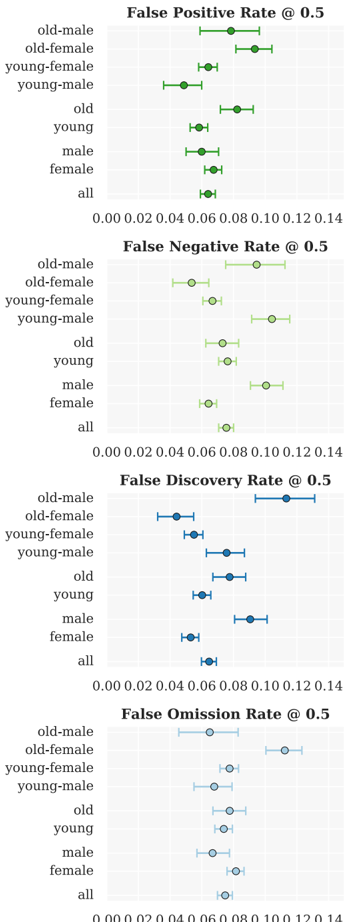
- In the smiling classifier example, all reported metrics at the .5 decision threshold have error types within the range 0.04–0.14, with 95% confidence intervals calculated by bootstrap resampling; the card notes older men have much higher false discovery rate, while men in aggregate have higher false negative rate.
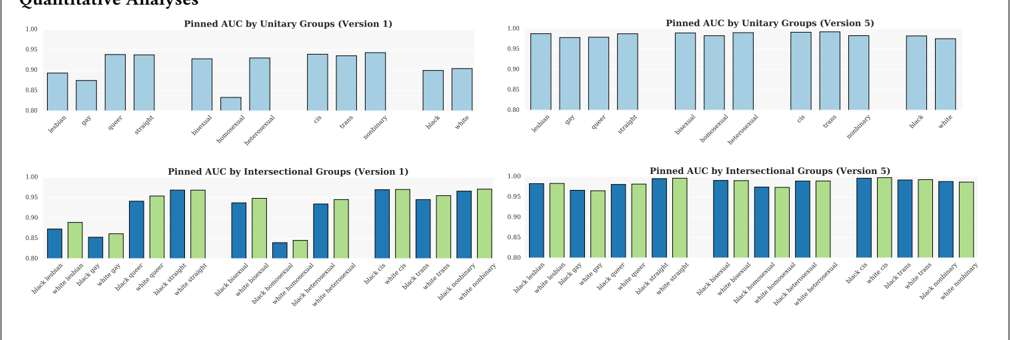
- In the toxicity example, TOXICITY v. 1 has low performance for several terms, especially “lesbian,” “gay,” and “homosexual,” while TOXICITY v. 5 shows more equitable performance after bias mitigation techniques.
Methods
- The paper is a framework/proposal paper, not an empirical study of a new model; it recommends model cards and details suggested sections and prompts.
- It provides two worked examples: a smiling classifier trained and evaluated on the CelebA dataset, using a convolutional neural net pretrained for face recognition and fine-tuned with cross-entropy loss for binary smiling classification.
- It also provides a model card for Perspective API’s TOXICITY classifier, a convolutional neural network developed by Jigsaw in 2017, evaluated on a synthetic Identity Phrase Templates test set; metrics include FPR, FNR, FDR, FOR for the smiling classifier and Pinned AUC for toxicity.
Limitations
- The paper states that model cards rely on the integrity of their creators and that it seems unlikely, at least in the near term, that they could be standardized or formalized enough to prevent misleading representations of model results.
- The paper states that evaluation datasets suitable for disaggregated evaluation are not yet common, and that the synthetic toxicity test data covers only a small set of very specific comments and is not comprehensive.
- The smiling classifier card states it does not capture race or skin type, uses binary gender classes (male/female), and that an ideal evaluation dataset would additionally include Fitzpatrick skin type, camera details, and environment details; the paper also states future work is needed to study how model information is interpreted and used by different stakeholders.
Model-written summary. Check it against the paper before relying on it.
Integrity signals
Registry
Cites
Statistics
Figures
Verification
Claims the paper makes
5 Valid · 1 Not valid · 18 Not checked · 30 Own results and interpretations
The cited sources support only part of this claim — read each source’s verdict below.
In the paper
“Synthetic data is valuable here because [11] shows that real data often has disproportionate amounts of toxicity directed at specific groups.”
What the sources say
- Partly supportedcites [11] [11] Lucas Dixon, John Li, Jeffrey Sorensen, Nithum Thain, and Lucy Vasserman. 2018. Measuring and Mitigating Unintended Bias in Text Classification. Proceedings of the AAAI/ACM Conference on AI, Ethics, and Society (2018). - sourceExperimental — accuracy not yet measured
The 'Quantifying bias in dataset' section (page unavailable) reports that certain identity terms appear disproportionately in toxic comments in the authors’ training data; for example, 'gay' appears in 3% of toxic comments but 0.5% of comments overall. It measures comments containing those terms, not whether toxicity is directed at the groups, and does not establish how often this pattern occurs across real datasets generally. (LLM, conf=0.85)
plainstates an association- Asserted: passes — The authors put it forward as true.
- Checkable: passes — It can be checked against evidence.
- Load-bearing: passes — The paper’s conclusions depend on it.
- Based: passes — The paper gives a reason why it holds.
- Partly supported
A result the paper reports from its own data — it cites no other source for it, so there is none to check. The quote shows it is in the paper.
In the paper
“For example, the false discovery rate on older men is much higher than that for other groups.”
plainstates an association- Asserted: passes — The authors put it forward as true.
- Checkable: passes — It can be checked against evidence.
- Load-bearing: passes — The paper’s conclusions depend on it.
- Based: passes — The paper gives a reason why it holds.
A result the paper reports from its own data — it cites no other source for it, so there is none to check. The quote shows it is in the paper.
In the paper
“TOXICITY v. 1 has low performance for several terms, especially 'lesbian', 'gay', and 'homosexual'.”
plain- Asserted: passes — The authors put it forward as true.
- Checkable: passes — It can be checked against evidence.
- Load-bearing: passes — The paper’s conclusions depend on it.
- Based: passes — The paper gives a reason why it holds.
None of the sources cited for this claim have been checked yet.
In the paper
“she collaborated with other researchers to demonstrate the disproportionate errors of computer vision systems on historically marginalized groups in the United States, such as darker-skinned women [5, 41].”
What the sources say
- Not checked yetcites [5] [5] Joy Buolamwini and Timnit Gebru. 2018. Gender Shades: Intersectional Accuracy Disparities in Commercial Gender Classification. In Proceedings of the 1st Conference on Fairness, Accountability and Transparency (Proceedings of Machine Learning Research) , Sorelle A. Friedler and Christo Wilson (Eds.), Vol. 81. PMLR, New York, NY, USA, 77-91. http://proceedings.mlr.press/v81/buolamwini18a.html -
- Not checked yetcites [41] [41] Inioluwa Raji. 2018. Black Panther Face Scorecard: Wakandans Under the Coded Gaze of AI. (2018). -
boostedstates an association- Asserted: passes — The authors put it forward as true.
- Checkable: passes — It can be checked against evidence.
- Load-bearing: passes — The paper’s conclusions depend on it.
- Based: passes — The paper gives a reason why it holds.
In the paper
“after MIT Media Lab graduate student Joy Buolamwini found that commercial face recognition systems failed to detect her face [4]”
What the sources say
- Not checked yetcites [4] [4] Joy Buolamwini. 2016. How I'm fighting Bias in Algorithms. (2016). https://www.ted.com/talks/joy\_buolamwini\_how\_i\_m\_fighting\_bias\_in\_ algorithms#t-63664 -
plainSingle case- Asserted: passes — The authors put it forward as true.
- Checkable: passes — It can be checked against evidence.
- Load-bearing: unclear — It is unclear whether the paper’s conclusions depend on it.
- Based: passes — The paper gives a reason why it holds.
13 more claims
Create a free account to see all 54 claims and to verify the 13 references still open.
- Probably not a substantial claim. 34
- It may state two separate claims as one. 8
Claims other papers make about this one
Each is checked against this paper’s own text: does it say what the citing paper says it does?
The source backs part of the claim, not all of it — or backs it for a different population, condition or comparison.
In the citing paper
“Model cards represent the field's standard for disclosing and documenting key facts about the architecture, training and evaluation of the model [14, 40].”
From Rethinking open source generative AI: open washing and the EU AI Act (2024) · cites this paper as [40]
Experimental — accuracy not yet measuredThe source backs part of the claim, not all of it — or backs it for a different population, condition or comparison.
In the citing paper
“Model cards (SMCs) [44] have been foundational in standardizing documentation for AI/ML model performance and characteristics, along with risks and unintended uses.”
From Interactive Model Cards: A Human-Centered Approach to Model Documentation (2022) · cites this paper as [44]
Experimental — accuracy not yet measuredThe source backs part of the claim, not all of it — or backs it for a different population, condition or comparison.
In the citing paper
“A second phase saw a more technical approach from the computer science community focusing on fairness, accountability and transparency as an engineering 'ethicalby-design' problem-solving exercise [20][21][22].”
From Putting AI ethics to work: are the tools fit for purpose? (2022) · cites this paper as [21]
Experimental — accuracy not yet measuredThe source backs part of the claim, not all of it — or backs it for a different population, condition or comparison.
In the citing paper
“These are either materials for use in design teams in workshop style events [76,77], tools for producing documentation of the design, build and test process [21,68], or technical tools for testing models, protecting privacy and security, testing for bias [69,93,94], or tracking provenance of data [95].”
From Putting AI ethics to work: are the tools fit for purpose? (2022) · cites this paper as [21]
Experimental — accuracy not yet measuredThe source backs part of the claim, not all of it — or backs it for a different population, condition or comparison.
In the citing paper
“There is some work on fairness relating to AI services, though this tends to focus on either exposing or 'auditing' certain AI services [22,38,126,133], or devising tools, methods and interventions relevant for those building (rather than using) such services [12,96,106,128].”
From Out of Context: Investigating the Bias and Fairness Concerns of “Artificial Intelligence as a Service” (2023) · cites this paper as [106]
Experimental — accuracy not yet measured
17 more claims about this paper
Create a free account to see every claim other papers make about this one.
Citations
Cites
BLEU: a method for automatic evaluation of machine translation
Papineni, K., Roukos, S., Ward, T., & Zhu, W.-J. (2001) · Proceedings of the 40th Annual Meeting on Association for Computational Linguistics - ACL '02 · doi:10.3115/1073083.1073135 · Cited by 21,344 · cited 1×
“translation system could compare BLEU scores [40] across demographic groups, and a model card for a speech recognition system could compare word-error rates.”
BackgroundCrenshaw, K. (2018) · Feminist Legal Theory · doi:10.4324/9780429500480-5 · Cited by 9,510
Deep Learning Face Attributes in the Wild
Liu, Z., Luo, P., Wang, X., & Tang, X. (2015) · 2015 IEEE International Conference on Computer Vision (ICCV) · doi:10.1109/iccv.2015.425 · Cited by 7,747 · cited 4×
“ms [5, 26] that report details of the datasets used to train and test machine learning models. We provide two example model cards in Section 5: A smiling detection model trained on the CelebA dataset [33] (Figure 2), and a public toxicity detection model, Perspective API [29] (Figure 3). Where Datasheets highlight cha…”
BackgroundMethodInfluentialThe validity and practicality of sun-reactive skin types I through VI
Fitzpatrick, T. B. (1988) · Archives of Dermatology · doi:10.1001/archderm.1988.01670060015008 · Cited by 4,339
Differential Privacy: A Survey of Results
Dwork, C. (2008) · Lecture Notes in Computer Science · doi:10.1007/978-3-540-79228-4_1 · Cited by 3,542 · cited 2×
“As such, collaboration with policy, privacy, and legal experts is necessary in order to ascertain which groups may be responsibly inferred, and how that information should be stored and accessed (for example, using differential privacy [12]).”
BackgroundCollins, G. S., Reitsma, J. B., Altman, D. G., & Moons, K. G. M. (2015) · Annals of Internal Medicine · doi:10.7326/m14-0697 · Cited by 3,267
Equality of Opportunity in Supervised Learning
Hardt, M., Price, E., & Srebro, N. (2016) · arXiv · doi:10.48550/arxiv.1610.02413 · Cited by 2,536 · cited 2×
“of Opportunity, and equal false negative and false positive rates across groups is equivalent to fulfilling Equality of Odds [26].”
BackgroundGebru, T., Morgenstern, J., Vecchione, B., Vaughan, J. W., Wallach, H., Daumé, H., & Crawford, K. (2018) · arXiv · doi:10.48550/arxiv.1803.09010 · Cited by 2,474
Self-citationA Probabilistic Interpretation of Precision, Recall and F-Score, with Implication for Evaluation
Goutte, C., & Gaussier, E. (2005) · Lecture Notes in Computer Science · doi:10.1007/978-3-540-31865-1_25 · Cited by 2,285 · cited 1×
“Confidence intervals for metrics derived from confusion matrices can be calculated by treating the matrices as probabilistic models of system performance [24].”
MethodFair prediction with disparate impact: a study of bias in recidivism prediction instruments
Chouldechova, A. (2017) · Big Data · doi:10.1089/big.2016.0047 · Cited by 2,159 · cited 1×
“or different errors that can be calculated from the confusion matrix for binary classification systems. • These also correspond to metrics in recent definitions of “fairness” in machine learning (cf. [8, 25]), where parity across subgroups for different metrics correspond to different fairness criteria. • 95% confiden…”
Background
Research works printed but not linked: 9
- [1] Avrio AI. 2018. Avrio AI: AI Talent Platform. (2018). https://www.goavrio.com/ -
- [5] Joy Buolamwini and Timnit Gebru. 2018. Gender Shades: Intersectional Accuracy Disparities in Commercial Gender Classification. In Proceedings of the 1st Conference on Fairness, Accountability and Transparency (Proceedings of Machine Learning Research) , Sorelle A. Friedler and Christo Wilson (Eds.), Vol. 81. PMLR, New York, NY, USA, 77-91. http://proceedings.mlr.press/v81/buolamwini18a.html -
- [13] Entelo. 2018. Recruitment Software | Entelo. (2018). https://www.entelo.com/ -
- [17] U.S. Food and Drug Administration. 2013. FDA Drug Safety Communication: Risk of next-morning impairment after use of insomnia drugs; FDA requires lower recommended doses for certain drugs containing zolpidem (Ambien, Ambien CR, Edluar, and Zolpimist). (2013). https://web.archive.org/web/20170428150213/ https://www.fda.gov/drugs/drugsafety/ucm352085.htm -
- [18] IIHS (Insurance Institute for Highway Safety: Highway Loss Data Institute). 2003. Special Issue: Side Impact Crashworthiness. Status Report 38, 7 (2003). -
- [19] Institute for the Future, Omidyar Network's Tech, and Society Solutions Lab. 2018. Ethical OS. (2018). https://ethicalos.org/ -
- [32] Jigsaw. 2017. Perspective API. (2017). https://www.perspectiveapi.com/ -
- [39] AI Now. 2018. Litigating Algorithms: Challenging Government Use Of Algorithmic Decision Systems. AI Now Institute. -
- [43] Mukund Sundararajan, Ankur Taly, and Qiqi Yan. 2017. In Proceedings of the 34th International Conference on Machine Learning , Vol. 70. PMLR, Sydney, Australia. -
Cited by
Items 601–700 of 2,235
Machine Learning Techniques for Accountability
Kim, B., & Doshi‐Velez, F. (2021) · AI Magazine · doi:10.1002/j.2371-9621.2021.tb00010.x · Cited by 18
“Mitchell et al. (2019) describes an analogous approach for describing the models and algorithms that a system uses to make predictions, including relevant parameter and training choices.”
MethodThe Ethics of Online Controlled Experiments (A/B Testing)
Polonioli, A., Ghioni, R., Greco, C., Juneja, P., Tagliabue, J., Watson, D., & Floridi, L. (2023) · Minds and Machines · doi:10.1007/s11023-023-09644-y · Cited by 31
“A recent paper by Mitchell et al. (2019) introduced the idea of Model Cards, a “one-pager” summing up what we know about a given model: input and output of course, but also the accuracy on a test set, biases and limitations, best practices for its use, as well as further relevant information.”
Artificial Intelligence as a Dynamic Copilot in Entrepreneurship Education
Fox, J. D., Pittaway, L., & Uzuegbunam, I. S.-P. (2024) · Entrepreneurship Education and Pedagogy · doi:10.1177/25151274241256307 · Cited by 30
“This highlights the importance of using a model card (Mitchell et al., 2019) when documenting the features of AI that may be used in the classroom.”
Beyond Individual Accountability: (Re-)Asserting Democratic Control of AI
Bogiatzis-Gibbons, D. J. (2024) · ACM Conference on Fairness, Accountability, and Transparency (FAccT) · doi:10.1145/3630106.3658541 · Cited by 35
What is research data “misuse”? And how can it be prevented or mitigated?
Pasquetto, I. V., Cullen, Z., Thomer, A. K., & Wofford, M. F. (2024) · Journal of the Association for Information Science and Technology · doi:10.1002/asi.24944 · Cited by 24
“In a similar vein, Mitchell et al. (2019) developed “ model cards, ” short documents accompanying trained machine learning models that provide benchmarked evaluation in a variety of conditions, such as across different cultural, demographic, or phenotypic groups that are relevant to the intended…”
InfluentialThe rise of checkbox AI ethics: a review
Kijewski, S., Ronchi, E., & Vayena, E. (2024) · AI and Ethics · doi:10.1007/s43681-024-00563-x · Cited by 32
“However, measuring the impact and success of AI ethics in practice remains challenging [9, 51].”
Documenting Ethical Considerations in Open Source AI Models
Gao, H., Zahedi, M., Treude, C., Rosenstock, S., & Cheong, M. (2024) · Proceedings of the ... ACM-IEEE International Symposium on Empirical Software Engineering and Measurement/International Symposium on Empirical Software Engineering and Measurement · doi:10.1145/3674805.3686679 · Cited by 33
Fiske, A., Blacker, S., Geneviève, L. D., Willem, T., Fritzsche, M.-C., Buyx, A., Celi, L. A., & McLennan, S. (2025) · The Lancet Digital Health · doi:10.1016/j.landig.2025.01.003 · Cited by 26
Rideshare Transparency: Translating Gig Worker Insights on AI Platform Design to Policy
Rao, V. N., Dalal, S., Agarwal, E., Calacci, D., & Monroy‐Hernández, A. (2025) · Proceedings of the ACM on Human-Computer Interaction · doi:10.1145/3711059 · Cited by 39
“Meanwhile, for AI models, datasheets[41], model cards[70], and transparency indices[11] have been proposed, though no legal mandates exist yet aside from draft provisions in regulations like the EU AI Act and US AI Foundation Model Transparency Act.”
The Artificial Intelligence Ontology: LLM-Assisted Construction of AI Concept Hierarchies
Joachimiak, M. P., Miller, M. A., Caufield, J. H., Ly, R., Harris, N. L., Tritt, A., Mungall, C., & Bouchard, K. E. (2024) · Applied Ontology · doi:10.1177/15705838241304103 · Cited by 41
“Enhancing the Model Cards concept (Mitchell et al., 2019) is an example of how the AIO can be leveraged to improve transparency and understanding of AI models.”
Aligning generalization between humans and machines
Ilievski, F., Hammer, B., van Harmelen, F., Paaßen, B., Saralajew, S., Schmid, U., Biehl, M. L., Bolognesi, M., Dong, X., Gashteovski, K., et al. (2025) · Nature Machine Intelligence · doi:10.1038/s42256-025-01109-4 · Cited by 60
“To address reproducibility, researchers proposed the model 138 and data cards 139 to report the details of the experiment, and reproducibility checklists based on a broad consensus 140 , albeit with limited coverage of generalizability.”
Designing meaningful human oversight in AI
Zhu, L., Lu, Q., Ding, M., Lee, S. U., & Wang, C. (2026) · AI and Ethics · doi:10.1007/s43681-026-01147-7 · Cited by 68
Solaiman, B., & Bloom, M. G. (2022) · Cambridge University Press eBooks · doi:10.1017/9781108975452.008 · Cited by 25
AI Usage Cards: Responsibly Reporting AI-Generated Content
Wahle, J. P., Ruas, T., Mohammad, S. M., Meuschke, N., & Gipp, B. (2023) · ACM/IEEE Joint Conference on Digital Libraries · doi:10.1109/jcdl57899.2023.00060 · Cited by 53
Adaptive Testing of Computer Vision Models
Gao, I., Ilharco, G., Lundberg, S., & Ribeiro, M. T. (2023) · IEEE/CVF International Conference on Computer Vision (ICCV) · doi:10.1109/iccv51070.2023.00370 · Cited by 57
“collection) and decide if models are safe and fair to deploy [12, 26].”
BackgroundEpistemic Power in AI Ethics Labor: Legitimizing Located Complaints
Widder, D. G. (2024) · ACM Conference on Fairness, Accountability, and Transparency (FAccT) · doi:10.1145/3630106.3658973 · Cited by 45
“Both Model Cards [69] and Datasheets for 1 Thedefinitionsofobjectivityandsubjectivityhavetakennearlypolaroppositemean-ingsacrosshistory[23,p.31].”
BackgroundTell me a story: a framework for critically investigating AI language models
Munn, L., & Henrickson, L. (2024) · Learning Media and Technology · doi:10.1080/17439884.2024.2327024 · Cited by 27
“As AI models have recently proliferated, researchers have responded by offering insights into models’ values and decision-making through tools like model cards (Mitchell et al. 2019) and growing fields like explainable artificial intelligence (Holzinger et al. 2022; Minh et al. 2022).”
Mind The Gap: Designers and Standards on Algorithmic System Transparency for Users
Schor, B. G. S., Norval, C., Charlesworth, E., & Singh, J. (2024) · Proceedings of the CHI Conference on Human Factors in Computing Systems · doi:10.1145/3613904.3642531 · Cited by 17
Addressing Challenges for the Effective Adoption of Artificial Intelligence in the Energy Sector
Park, C. (2025) · Sustainability · doi:10.3390/su17135764 · Cited by 17
Chen, C., Liao, M., & Sundar, S. S. (2024) · International Symposium on Trustworthy Autonomous Systems (TAS) · doi:10.1145/3686038.3686066 · Cited by 29
“To improve the study, one approach could be to display the racial profile of the voice samples used for note transcription, perhaps through Model Cards [46] or Datasheet for Dataset [21], to make users aware of potential racial bias baked into the AI system.”
Gender Bias in Natural Language Processing and Computer Vision: A Comparative Survey
Bartl, M., Mandal, A., Leavy, S., & Little, S. (2025) · ACM Computing Surveys · doi:10.1145/3700438 · Cited by 48
“Model cards were introduced by Mitchell et al. [89] to increase documentation and inform intended users about the risks of using a model.”
Balayn, A., Yurrita, M., Rancourt, F., Casati, F., & Gadiraju, U. (2025) · CHI Conference on Human Factors in Computing Systems · doi:10.1145/3706598.3713787 · Cited by 50
“To share trustworthiness cues, prior research on AI transparency and documentation [46, 89] could be revisited to incorporate the breadth of trustworthiness factors relevant to the different trust relations that impact trust towards the technical artifact, instead of solely focusing on the ability…”
Between fact and fairy: tracing the hallucination metaphor in AI discourse
Förster, S., & Skop, Y. (2025) · AI & Society · doi:10.1007/s00146-025-02392-w · Cited by 33
Applications of Artificial Intelligence in Fisheries: From Data to Decisions
Haque, S. A., & Jufaili, S. M. A. (2026) · Big Data and Cognitive Computing · doi:10.3390/bdcc10010019 · Cited by 27
Naja, I., Marković, M., Edwards, P. J., Pang, W., Cottrill, C., & Williams, R. A. (2022) · IEEE Access · doi:10.1109/access.2022.3188967 · Cited by 34
“2) Dataset information (D&I): characteristics of the dataset (e.g., size, composition of instances, number of features) [19], [31], [38], [39], [48], [50]; collection method [38], [40], [49]; any associated pre-processing (e.g., sampling, aggregation) [19], [38]–[40], [48]; tasks for which it…”
BackgroundMethodInfluentialGong, L., Zhang, J., Wei, M., Zhang, H., & Huang, Z. (2023) · ACM Transactions on Software Engineering and Methodology · doi:10.1145/3569934 · Cited by 27
Transcending the “Male Code”: Implicit Masculine Biases in NLP Contexts
Seaborn, K., Chandra, S., & Fabre, É. (2023) · CHI Conference on Human Factors in Computing Systems · doi:10.1145/3544548.3581017 · Cited by 29
Rethinking Transparency as a Communicative Constellation
Eyert, F., & Lopez, P. (2023) · ACM Conference on Fairness, Accountability, and Transparency (FAccT) · doi:10.1145/3593013.3594010 · Cited by 36
Smith, L., & Lamprecht, C. (2024) · Journal of financial reporting & accounting · doi:10.1108/jfra-05-2023-0280 · Cited by 26
Tang, N., Zhi, J., Kuo, T.-S., Kainaroi, C., Northup, J. J., Holstein, K., Zhu, H., Heidari, H., & Shen, H. (2024) · ACM Conference on Fairness, Accountability, and Transparency (FAccT) · doi:10.1145/3630106.3658935 · Cited by 35
Ziosi, M., & Pruss, D. (2024) · ACM Conference on Fairness, Accountability, and Transparency (FAccT) · doi:10.1145/3630106.3658991 · Cited by 39
Constantinides, M., Bogucka, E. P., Šćepanović, S., & Quercia, D. (2024) · Proceedings of the ACM on Human-Computer Interaction · doi:10.1145/3676507 · Cited by 23
“This can be achieved not only by understanding the direct impact of these technologies (e.g., producing impact assessment cards similar to model cards [78]) but also by considering their broader societal implications.”
Chen, C., & Sundar, S. S. (2024) · Human-Computer Interaction · doi:10.1080/07370024.2024.2392494 · Cited by 25
After-Action Review for AI (AAR/AI)
Dodge, J. E., Khanna, R., Irvine, J., Lam, K.-H., Mai, T., Lin, Z., Kiddle, N. G., Newman, E., Anderson, A. W., Raja, S., et al. (2021) · ACM Transactions on Interactive Intelligent Systems · doi:10.1145/3453173 · Cited by 26
“Further, artifacts like these can assist in comparing the assessment results from multiple individuals or be released with the system as a means to document the kind of validation conducted and the results from it, akin to Model Cards [45].”
BackgroundAn Algorithmic Framework for Bias Bounties
Globus-Harris, I., Kearns, M. J., & Roth, A. (2022) · ACM Conference on Fairness, Accountability, and Transparency (FAccT) · doi:10.1145/3531146.3533172 · Cited by 43
“As organizations become more aware of these negative consequences, many are instituting partial remedies such as responsible AI teams, auditing practices, and model cards [Mitchell et al., 2019] and data sheets [Gebru et al.”
BackgroundMethod cards for prescriptive machine-learning transparency
Adkins, D., Alsallakh, B., Cheema, A., Kokhlikyan, N., McReynolds, E., Mishra, P., Procope, C., Sawruk, J., Wang, E., & Zvyagina, P. (2022) · IEEE/ACM International Conference on AI Engineering – Software Engineering for AI (CAIN) · doi:10.1145/3522664.3528600 · Cited by 29
Mix & Match Machine Learning: An Ideation Toolkit to Design Machine Learning-Enabled Solutions
Jansen, A., & Colombo, S. (2023) · International Conference on Tangible, Embedded, and Embodied Interaction (TEI) · doi:10.1145/3569009.3572739 · Cited by 26
“Given the increasing attention to this matter, in the near future we expect dataset/model repositories to feature a label [9], datasheet [19] or model card [36] to help users evaluate them for fairness criteria.”
BackgroundPredictive Journalism: On the Role of Computational Prospection in News MediaPreprint
Diakopoulos, N. A. (2022) · SSRN Electronic Journal · doi:10.2139/ssrn.4092033 · Cited by 14
Ferrara, E. (2023) · SSRN Electronic Journal · doi:10.2139/ssrn.4615421 · Cited by 16
A Unified Framework for Assessing Energy Efficiency of Machine Learning
Fischer, R., Jakobs, M., Mücke, S., & Morik, K. (2023) · Communications in Computer and Information Science · doi:10.1007/978-3-031-23618-1_3 · Cited by 16
International AI Safety Report
Bengio, Y., Mindermann, S., Privitera, D., Besiroglu, T., Bommasani, R., Casper, S., Choi, Y., Fox, P., Garfinkel, B., Goldfarb, D., et al. (2025) · arXiv · doi:10.48550/arxiv.2501.17805 · Cited by 16
Establishing Appropriate Trust in AI through Transparency and Explainability
Kim, S. S. Y. (2024) · CHI Conference Extended Abstracts on Human Factors in Computing Systems (CHI EA) · doi:10.1145/3613905.3638184 · Cited by 28
“Transparency approaches include providing model cards [37], model internals [40], performance measures [23, 27, 43, 51, 52], and (un)certainty information [39, 53].”
Generative AI Agents in Autonomous Machines: A Safety Perspective
Jabbour, J., & Reddi, V. J. (2024) · International Conference on Computer Aided Design · doi:10.1145/3676536.3698390 · Cited by 35
“Drawing inspiration from model cards [116], which document the intended use cases of machine learning models, our proposed framework goes further.”
Technology for measuring freezing of gait: Current state of the art and recommendations
Mancini, M., McKay, J. L., Cockx, H., D’Cruz, N., Esper, C. D., Filtjens, B., Heimler, B., MacKinnon, C. D., Palmerini, L., Roerdink, M., et al. (2025) · Journal of Parkinson s Disease · doi:10.1177/1877718x241301065 · Cited by 29
“91 In developing large movement databases for conditions such as FOG, it is crucial to document the sampling biases present in clinical data collection to prevent the per-petuation of systematic inequalities prevalent in most healthcare data.”
Show Me the Work: Fact-Checkers' Requirements for Explainable Automated Fact-Checking
Warren, G., Shklovski, I., & Augenstein, I. (2025) · CHI Conference on Human Factors in Computing Systems · doi:10.1145/3706598.3713277 · Cited by 67
“— P1 , Investigative Journalist, Ukraine The demand for disclosure of training data is an ongoing debate in the AI community, with proposals such as data sheets for datasets [46] and model cards [83], creating structured ways such information could be disclosed.”
Kuehnert, B., Kim, R., Forlizzi, J., & Heidari, H. (2025) · ACM Conference on Fairness, Accountability, and Transparency (FAccT) · doi:10.1145/3715275.3732191 · Cited by 48
Hartmann, D., Oueslati, A., Staufer, D., Pohlmann, L., Munzert, S., & Heuer, H. (2025) · CHI Conference on Human Factors in Computing Systems · doi:10.1145/3706598.3713998 · Cited by 55
“As outlined in Table 6 , categorized by model card categories [64], most content moderation API services provide minimal information about their underlying models, training algorithms, or fairness evaluations, leaving deployers without sufficient insights to properly assess the suitability and…”
Fair human-centric image dataset for ethical AI benchmarking
Xiang, A., Andrews, J. T. A., Bourke, R. L., Thong, W. E., LaChance, J., Georgievski, T., Modas, A., Rahmattalabbi, A., Ba, Y., Nagpal, S., et al. (2025) · Nature · doi:10.1038/s41586-025-09716-2 · Cited by 34
“Moreover, FHIBE includes camera-level metadata and environmental annotations, capturing factors such as illumination, camera position and scene, which are important for understanding model performance across diverse conditions 16,56 .”
Yang, H. S., Çubukçu, H. C., Ben, F. D., Duan, X., Feng, J., Frans, G., Gruson, D., King, M. C., Nieto, J., Wang, B., et al. (2026) · Clinical Chemistry and Laboratory Medicine (CCLM) · doi:10.1515/cclm-2025-1322 · Cited by 19
“Examples of such model facts labels have been published in literature or online [27, 28].”
Bickmore, T., Ólafsson, S., & O’Leary, T. K. (2021) · Journal of Medical Internet Research · doi:10.2196/30704 · Cited by 21
“However, recently proposed approaches that focus on describing appropriate contexts of use or the use of validation test suites [19] cannot possibly cover all cases that could lead to user harm, given the very large number of contextualized discourses that are possible.”
BackgroundMethodChen, D. K., Modi, Y., & Al‐Aswad, L. A. (2022) · Asia-Pacific Journal of Ophthalmology · doi:10.1097/apo.0000000000000469 · Cited by 17
Steele, L., Tan, X. L., Olabi, B., Gao, J., Tanaka, R. J., & Williams, H. C. (2023) · Journal of the European Academy of Dermatology and Venereology · doi:10.1111/jdv.18814 · Cited by 17
“18 We highlight that ML model performance should be reported separately across subgroups of interest, 17,18 including skin phototype and skin cancer type, and the importance of this reporting to dermatologists and other physicians.”
BackgroundSaliency Cards: A Framework to Characterize and Compare Saliency Methods
Boggust, A., Suresh, H., Strobelt, H., Guttag, J. V., & Satyanarayan, A. (2023) · ACM Conference on Fairness, Accountability, and Transparency (FAccT) · doi:10.1145/3593013.3593997 · Cited by 31
“Without resources equivalent to model cards [51] or datasheets [29], users are left to reference a potential sequence of research papers, including the original saliency method and all subsequent evaluations.”
BackgroundA Systematic Review of Ethics Disclosures in Predictive Mental Health Research
Ajmani, L., Chancellor, S., Mehta, B., Fiesler, C. L., Zimmer, M. T., & Choudhury, M. D. (2023) · ACM Conference on Fairness, Accountability, and Transparency (FAccT) · doi:10.1145/3593013.3594082 · Cited by 24
“In FAccT, there have been numerous artifacts to increase transparency for methods and datasets [39, 64, 111], yet very little work examining the practice of research ethics through the lens of transparency.”
BackgroundRole of Regulatory Sandboxes and MLOps for AI-Enabled Public Sector Services
Torres, A. P. G., & Sawhney, N. (2023) · The Review of Socionetwork Strategies · doi:10.1007/s12626-023-00146-y · Cited by 33
“…requests as the basis for reviews and using model cards meta-data as a tool for documenting not only the model but also the regulatory-specific activities performed during the model’s development, such as dataset justification or performance evaluation or pre-market risk management activities [58].”
MethodTaleStream: Supporting Story Ideation with Trope Knowledge
Chou, J.-P., Siu, A. F., Lipka, N., Rossi, R. A., Dernoncourt, F., & Agrawala, M. (2023) · ACM Symposium on User Interface Software and Technology (UIST) · doi:10.1145/3586183.3606807 · Cited by 25
“One important challenge for future work is to address the limitations and biases of the dataset that will almost inexorably lead to biased results [57].”
BackgroundAI research ethics is in its infancy: the EU’s AI Act can make it a grown-up
Rességuier, A., & Ufert, F. (2023) · Research Ethics · doi:10.1177/17470161231220946 · Cited by 29
“Furthermore, this is in line with the growing recognition of the importance of documentation related to the data used to train the system and to the design choices made in building the model (Gebru et al., 2021; Mitchell et al., 2019).”
BackgroundReconfiguring Participatory Design to Resist AI Realism
Gautam, A. (2024) · Participatory Design Conference · doi:10.1145/3661455.3669867 · Cited by 21
“Efforts have been made to promote transparency and create possibilities for broader group engagement (e.g., [23, 34, 39, 40]).”
Yasmin, J., Wang, J., Tian, Y., & Adams, B. (2024) · Journal of Systems and Software · doi:10.1016/j.jss.2024.112248 · Cited by 26
“Motivated by the “model card” concept (Mitchell et al., 2019), researchers have developed a prototype tool on top of Metaflow that generates documentation of ML pipelines termed as “DAG card” (Tagliabue et al., 2021).”
MethodFifty Shades of Grey: In Praise of a Nuanced Approach Towards Trustworthy Design
Thornton, L., Knowles, B., & Blair, G. S. (2021) · ACM Conference on Fairness, Accountability, and Transparency (FAccT) · doi:10.1145/3442188.3445871 · Cited by 26
“Transparency in particular is leaned on heavily in the trusted AI community, increasingly instantiated through forms of documentation [1, 11, 52, 70, 109].”
BackgroundHow Data Scientists Review the Scholarly Literature
Mysore, S., Jasim, M., Song, H., Akbar, S., Randall, A. K. C., & Mahyar, N. (2023) · Conference on Human Information Interaction and Retrieval · doi:10.1145/3576840.3578309 · Cited by 24
“More broadly, the challenges arising from unclear documentation for models and data have led the data science community to pursue initiatives intended to document these artifacts [34, 84], sometimes incentivizing them at publication.”
BackgroundAltenburger, K. M., & Ho, D. E. (2019) · International World Wide Web Conference (WWW) · doi:10.1145/3308558.3313683 · Cited by 24
Forks over knives: Predictive inconsistency in criminal justice algorithmic risk assessment tools
Greene, T., Shmueli, G., Fell, J., Lin, C.-F., & Liu, H.-W. (2022) · Journal of the Royal Statistical Society Series A: Statistics in Society · doi:10.1111/rssa.12966 · Cited by 15
“Model-level ‘predictive multiplicity’ metrics (Marx et al., 2020) can be combined with auditing tools such as data sheets (Gebru et al., 2021) and model cards (Mitchell et al., 2019) to help document data and modelling choices relevant to a specific prediction.”
BackgroundImproving Governance Outcomes Through AI Documentation: Bridging Theory and Practice
Winecoff, A., & Bogen, M. (2025) · CHI Conference on Human Factors in Computing Systems · doi:10.1145/3706598.3713814 · Cited by 47
“Model documentation also enhances AI development and governance, providing a window into a model’s creation, performance, and risks [23, 47, 50, 72, 80].”
InfluentialBolocan, V.-O., Mitoi, A., Nicu-Canareica, O., Băean, M.-L., Medar, C., & Popa, G.-A. (2025) · Journal of Imaging · doi:10.3390/jimaging11100335 · Cited by 22
“The ongoing PROMAI trial (NCT05441978) exemplifies needed research: randomizing patients rather than readers, measuring cancer detection rates alongside unnecessary biopsies avoided, and including comprehensive economic evaluation [118].”
Bias in AI systems: integrating formal and socio-technical approaches
Ahmad, A., Vallès, Y., & Idaghdour, Y. (2026) · Frontiers in Big Data · doi:10.3389/fdata.2025.1686452 · Cited by 33
Toward a taxonomy of trust for probabilistic machine learning
Broderick, T., Gelman, A., Meager, R., Smith, A. L., & Zheng, T. (2023) · Science Advances · doi:10.1126/sciadv.abn3999 · Cited by 25
From Explainability to Ineffability? ML Tarot and the Possibility of Inspiriting Design
Lustig, C., & Rosner, D. K. (2022) · Designing Interactive Systems Conference · doi:10.1145/3532106.3533552 · Cited by 16
The Challenge of Ethical Interoperability
Danks, D. J., & Trusilo, D. (2022) · Digital Society · doi:10.1007/s44206-022-00014-2 · Cited by 20
“This approach is highly appealing as it would enable the establishment of ethical interoperability using observable or behavioral measures that can be documented in standard formats such as datasheets (Gebru et al., 2021) or model cards (Mitchell et al., 2019).”
BackgroundBalagopalan, A., Madras, D., Yang, D., Hadfield-Menell, D., Hadfield, G. K., & Ghassemi, M. (2023) · Science Advances · doi:10.1126/sciadv.abq0701 · Cited by 33
Bound by the Bounty: Collaboratively Shaping Evaluation Processes for Queer AI Harms
Dennler, N. S., Ovalle, A., Singh, A., Soldaini, L., Subramonian, A., Tu, H., Agnew, W. S., Ghosh, A., Yee, K., Peradejordi, I. F., et al. (2023) · Proceedings of the AAAI/ACM Conference on AI Ethics and Society · doi:10.1145/3600211.3604682 · Cited by 36
From Black Boxes to Conversations: Incorporating XAI in a Conversational Agent
Nguyen, V. B., Schlötterer, J., & Seifert, C. (2023) · Communications in computer and information science · doi:10.1007/978-3-031-44070-0_4 · Cited by 39
“30 Output How can I best utilize the output of the system? 4 Model Generation ModelCards [32], DataSheets [14] 31 Output How is the output used for other system component(s)? 4 System Context”
BackgroundMethodInfluentialGenerative Information Systems Are Great If You Can Read
Roegiest, A., & Pinkosova, Z. (2024) · Conference on Human Information Interaction and Retrieval · doi:10.1145/3627508.3638345 · Cited by 22
“The reluctance to provide comprehensive information about dataset creation is concerning, particularly given the rising demands for transparency in AI research [7, 13, 50, 76, 87, 93].”
Lay User Involvement in Developing Human-centric Responsible AI Systems: When and How?
Vincenzi, B., Stumpf, S., Taylor, A. S., & Nakao, Y. (2024) · ACM Journal on Responsible Computing · doi:10.1145/3652592 · Cited by 17
“The most well-known of these have been Microsoft’s Guidelines for Human-AI Interactions [ 3 ], Google’s Responsible AI practices [ 79 , 89 ], IBM’s Everyday Ethics for Artificial Intelligence [ 53 ], Fujitsu’s AI Ethics Impact Assessment Practice Guide [ 71 , 87 ] and the European Commission…”
BackgroundMethodInfluentialLeuthe, D., Meyer-Hollatz, T., Plank, T., & Senkmüller, A. (2024) · Information Systems Frontiers · doi:10.1007/s10796-024-10526-6 · Cited by 27
“Besides development documentation, it is important to aggregate model characteristics using toolkits such as datasheets, model cards, and model registries (Mitchell et al., 2019).”
Alsaedi, S. B., Gao, X., & Gojobori, T. (2025) · FEBS Open Bio · doi:10.1002/2211-5463.70003 · Cited by 22
AI Development for the Public Interest: From Abstraction Traps to Sociotechnical Risks
Andrus, M., Dean, S., Gilbert, T. K., Lambert, N., & Zick, T. (2020) · IEEE International Symposium on Technology and Society (ISTAS) · doi:10.1109/istas50296.2020.9462193 · Cited by 19
“This encompasses both technical resistance [38] and procedural approaches to delineating the valid uses of data [39] and models [40].”
BackgroundCo-Design Perspectives on Algorithm Transparency Reporting: Guidelines and Prototypes
Luria, M. (2023) · ACM Conference on Fairness, Accountability, and Transparency (FAccT) · doi:10.1145/3593013.3594064 · Cited by 23
Circular and unified analysis in network neuroscience
Rubinov, M. (2023) · eLife · doi:10.7554/elife.79559 · Cited by 22
“Separately, the adoption of benchmarking best practices from predictive modeling fields, including machine learning ( Weber et al., 2019 ; Mangul et al., 2019 ; Mitchell et al., 2019 ; Kapoor and Narayanan, 2023 ), can help facilitate progress in explanatory modeling.”
MethodFrom Transparency to Accountability and Back: A Discussion of Access and Evidence in AI Auditing
Cen, S. H., & Alur, R. (2024) · ACM Conference on Equity and Access in Algorithms, Mechanisms, and Optimization (EAAMO) · doi:10.1145/3689904.3694711 · Cited by 56
“…a strict set of property requirements does not generally have the intended effect (most bright-line rules are easily circumvented due to the underspecification phenomenon mentioned above), data disclosure audits can encourage responsible developer practices and prevent downstream harms [54, 95, 105].”
BackgroundDrira, M., Hassine, S. B., Zhang, M., & Smith, S. M. (2024) · Applied Sciences · doi:10.3390/app142411738 · Cited by 27
On the State of NLP Approaches to Modeling Depression in Social Media: A Post-COVID-19 Outlook
Bucur, A.-M., Moldovan, A.-C., Parvatikar, K., Zampieri, M., KhudaBukhsh, A. R., & Dinu, L. P. (2025) · IEEE Journal of Biomedical and Health Informatics · doi:10.1109/jbhi.2025.3540507 · Cited by 29
“These include interdisciplinary discussions on ethical practices in dedicated panels, dedicated space for ethical considerations in research papers, and employing context documents for models [125] and datasets [126].”
Examining the Expanding Role of Synthetic Data Throughout the AI Development Pipeline
Kapania, S., Ballard, S. A., Kessler, A., & Vaughan, J. W. (2025) · ACM Conference on Fairness, Accountability, and Transparency (FAccT) · doi:10.1145/3715275.3732005 · Cited by 31
“While there are plenty of resources for data and model documentation [9, 14, 25, 66], there is almost no existing guidance on what to document for synthetic data that is created and used in such myriad ways.”
An HCAI Methodological Framework: Putting it Into Action to Enable Human-Centered AI
Xu, W., Gao, Z., & Dainoff, M. J. (2026) · IEEE Transactions on Human-Machine Systems · doi:10.1109/thms.2025.3631590 · Cited by 97
Muralikumar, M. D., Yang, Y. S., & McDonald, D. W. (2023) · ACM Transactions on Social Computing · doi:10.1145/3582568 · Cited by 30
“Documentation for this tool cautions that Perspective is not meant to replace human moderation [54].”
BackgroundA Maturity Model for Trustworthy AI Software Development
Cho, S., Kim, I., Kim, J.-H., Woo, H., & Shin, W.-S. (2023) · Applied Sciences · doi:10.3390/app13084771 · Cited by 24
“For example, Mitchell et al. [20] propose an “AI model card” for describing detailed characteristics (e.g., purpose, model architecture, training and evaluation dataset, evaluation metric) of AI models, and Mora-Cantallops et al. [21] review existing tools, practices, and data models for…”
Gonzalez-Barahona, J. M., & Robles, G. (2023) · Information and Software Technology · doi:10.1016/j.infsof.2023.107318 · Cited by 26
Outlier bias: AI classification of curb ramps, outliers, and context
Deitz, S. L. (2023) · Big Data & Society · doi:10.1177/20539517231203669 · Cited by 14
“Their framework, “ model cards for model reporting ” suggests conducting “ benchmarked evaluation in a variety of conditions, such as across different cultural, demographic, or phenotypic groups ” (Mitchell et al., 2019).”
BackgroundA unified and practical user-centric framework for explainable artificial intelligence
Kaplan, S., Uusitalo, H. M. T., & Lensu, L. T. (2023) · Knowledge-Based Systems · doi:10.1016/j.knosys.2023.111107 · Cited by 31
AI competitions as infrastructures of power in medical imaging
Luitse, D. M. R., Blanke, T., & Poell, T. (2024) · Information Communication & Society · doi:10.1080/1369118x.2024.2334393 · Cited by 24
“This is a design task that otherwise requires careful and human-centred decision-making by multiple actors, including expert researchers (e.g., AI researchers specialised in healthcare and medical specialists), based on the intended model structure and use (Mitchell et al., 2019).”
Ethical Implications of Using ChatGPT in Educational Environments: A Comprehensive Review
Marzouqi, A. M. A., Aburayya, A., Alfaisal, R., Elbadawi, M. A., & Salloum, S. A. (2024) · Studies in big data · doi:10.1007/978-3-031-52280-2_13 · Cited by 28
Achieving Reproducibility in EEG-Based Machine Learning
Kinahan, S. P., Saidi, P., Daliri, A., Liss, J., & Berisha, V. (2024) · ACM Conference on Fairness, Accountability, and Transparency (FAccT) · doi:10.1145/3630106.3658983 · Cited by 26
Do LLMs Meet the Needs of Software Tutorial Writers? Opportunities and Design Implications
Bhat, A., Shrivastava, D., & Guo, J. (2024) · Designing Interactive Systems Conference · doi:10.1145/3643834.3660692 · Cited by 19
“Ensuring better transparency of the underlying models using model cards [44] or explainable AI techniques [57] can be useful to address this issue.”
BackgroundA framework to contest and justify algorithmic decisions
Henin, C., & Le Métayer, D. (2021) · AI and Ethics · doi:10.1007/s43681-021-00054-3 · Cited by 14
“) and datasheets for datasets [26] (which can be used to describe the characteristics of a dataset) in order to provide an interactive and easily accessible form of accountability.”
BackgroundAn Ontology for Standardising Trustworthy AI
Lewis, D., Filip, D., & J. Pandit, H. (2021) · Factoring Ethics in Technology, Policy Making, Regulation and AI · doi:10.5772/intechopen.97478 · Cited by 13
Designing a Risk Assessment Tool for Artificial Intelligence Systems
Nagbøl, P. R., Müller, O., & Krancher, O. (2021) · Lecture notes in computer science · doi:10.1007/978-3-030-82405-1_32 · Cited by 22
“While most AI research does not explicitly draw on risk management theory [13, 14], the risk management literature does not focus on AI, examining instead risks associated with information system (IS) projects [8, 9] or with traditional software and hardware [22].”
BackgroundMethodInfluentialDass, R. K., Petersen, N., Omori, M. K., Lave, T. R., & Visser, U. (2022) · AI & Society · doi:10.1007/s00146-022-01440-z · Cited by 17
“Using disaggregated evaluation method (Mitchell et al. 2019), we create 12 inference datasets that contain unseen mugshots from the same dataset , each representing a single racial subgroup augmented based on six experimental parameter combinations (three face preprocessing methods and two sources…”
MethodA Requirements Engineering Perspective to AI-Based Systems Development: A Vision Paper
Franch, X., Jedlitschka, A., & Martínez‐Fernández, S. (2023) · Lecture notes in computer science · doi:10.1007/978-3-031-29786-1_15 · Cited by 20
Wang, Z. J., Munechika, D., Lee, S., & Chau, D. H. (2024) · CHI Conference Extended Abstracts on Human Factors in Computing Systems (CHI EA) · doi:10.1145/3613905.3650848 · Cited by 18
“Similarly, some notebooks automatically switch between light and dark modes, leading to accessibility issues when VA tools have a transparent background.”
Burr, C., & Leslie, D. (2021) · SSRN Electronic Journal · doi:10.2139/ssrn.3937983 · Cited by 13
Metadata
- Authors
- Mitchell, M., Wu, S., Zaldivar, A., Barnes, P., Vasserman, L., Hutchinson, B., Spitzer, E., Raji, I. D., & Gebru, T.
- Venue
- Proceedings of the Conference on Fairness, Accountability, and Transparency
- Publisher
- ACM
- Published
- 2019-01-29
- Pages
- 220-229
- OpenAlex
- W2897042519
- Semantic Scholar
- 7365f887c938ca21a6adbef08b5a520ebbd4638f
- Cited by
- 2,681
- References
- 12
- Citations by year
- 2026: 831 · 2025: 446 · 2024: 376 · 2023: 366 · 2022: 243 · 2021: 260 · 2020: 102 · 2019: 54
- FWCI
- 170.95
- Type
- conference paper
- Language
- en
- Open access
- green
- arxiv.org
- Locations
- ACM Conference on Fairness, Accountability, and Transparency (FAccT) (publishedVersion)
- arXiv (Cornell University) (submittedVersion)
- arXiv (Cornell University)
- Topics
- Physical Sciences › Computer Science › Artificial Intelligence › Ethics and Social Impacts of AI
- Physical Sciences › Computer Science › Artificial Intelligence › Explainable Artificial Intelligence (XAI)
- Physical Sciences › Computer Science › Computer Vision and Pattern Recognition › Face recognition and analysis
- Keywords
- model cards, model transparency, algorithmic fairness, demographic bias, responsible AI, democratization of AI, toxic comment detection, model documentation
About these checks
Registry, retraction, Cites and statistics results are computed, not judged, with one exception: a printed reference that no index lists is read once by a model before it counts as a citation error. Claims are extracted by a model and kept only when their quote appears verbatim in the text; each cited source is then checked, with a model’s help, for whether it says what the claim relies on. Those verdicts can be wrong — read the claim’s quote and the cited source before relying on one.
The claim verdicts this report counts are experimental: their accuracy is not yet measured.
A language model drew the claims from the paper on 2026-10-07, under version 3 of the claim definition (model deepseek-v4.1-flash, prompt extract-v3).
A second model labelled each claim on 2026-10-07 (model jev-1.13-20260917, definition revision gold-guideline-v0.2).
Cited sources are checked with a language model’s help (gpt-6-sol).
Statistics and arithmetic are recomputed, not judged.
Confidence bands are shown only for fields calibrated on our annotated test set. None is calibrated yet, so no band is shown.
What counts as a claim ›How we measure confidence ›How we check this ›
Are you an author, or do you see a problem with this page? Request a review
Data sources
Bibliographic data: Semantic Scholar, OpenAlex, Crossref.
Contains information from the Semantic Scholar Academic Graph Datasets, made available under the ODC Attribution License (ODC-BY 1.0).
Semantic Scholar’s data is described in: Kinney, R., et al. (2023). The Semantic Scholar Open Data Platform. arXiv:2301.10140.
