

Model Cards for Model Reporting
Open accessThe DOI matches its Crossref record; 22 of the 22 references it cites were found in a registry or an index; 8 of the 34 sources its claims cite were checked for support.
Abstract
Trained machine learning models are increasingly used to perform high-impact tasks in areas such as law enforcement, medicine, education, and employment. In order to clarify the intended use cases of machine learning models and minimize their usage in contexts for which they are not well suited, we recommend that released models be accompanied by documentation detailing their performance characteristics. In this paper, we propose a framework that we call model cards, to encourage such transparent model reporting. Model cards are short documents accompanying trained machine learning models that provide benchmarked evaluation in a variety of conditions, such as across different cultural, demographic, or phenotypic groups (e.g., race, geographic location, sex, Fitzpatrick skin type [15]) and intersectional groups (e.g., age and race, or sex and Fitzpatrick skin type) that are relevant to the intended application domains. Model cards also disclose the context in which models are intended to be used, details of the performance evaluation procedures, and other relevant information. While we focus primarily on human-centered machine learning models in the application fields of computer vision and natural language processing, this framework can be used to document any trained machine learning model. To solidify the concept, we provide cards for two supervised models: One trained to detect smiling faces in images, and one trained to detect toxic comments in text. We propose model cards as a step towards the responsible democratization of machine learning and related artificial intelligence technology, increasing transparency into how well artificial intelligence technology works. We hope this work encourages those releasing trained machine learning models to accompany model releases with similar detailed evaluation numbers and other relevant documentation.
Overview
CoChat Summary
TL;DR
The paper proposes “model cards,” short documentation records accompanying trained machine learning models to report intended use, performance characteristics, and disaggregated evaluation across demographic, phenotypic, and intersectional groups. It illustrates the framework with worked examples for a smiling classifier and a toxicity classifier.
Key findings
- The authors argue there are no standardized documentation procedures for communicating trained ML model performance, especially for high-impact domains such as health care, employment, education, and law enforcement.
- They propose model card sections covering model details, intended use, factors, metrics, evaluation data, training data, quantitative analyses, ethical considerations, and caveats/recommendations.
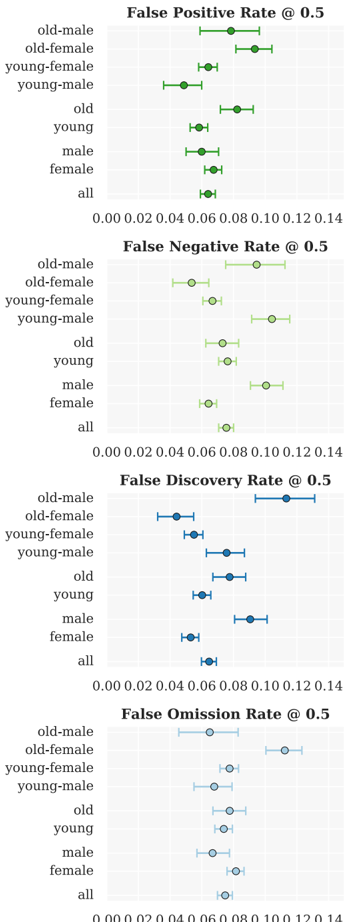
- In the smiling classifier example, all reported metrics at the .5 decision threshold have error types within the range 0.04–0.14, with 95% confidence intervals calculated by bootstrap resampling; the card notes older men have much higher false discovery rate, while men in aggregate have higher false negative rate.
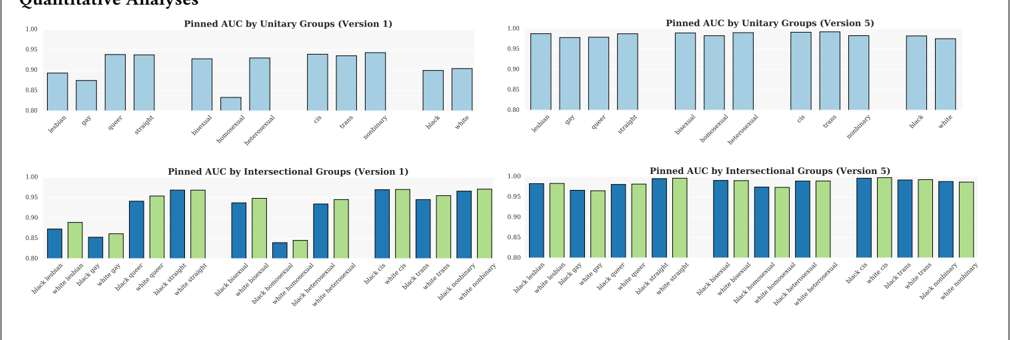
- In the toxicity example, TOXICITY v. 1 has low performance for several terms, especially “lesbian,” “gay,” and “homosexual,” while TOXICITY v. 5 shows more equitable performance after bias mitigation techniques.
Methods
- The paper is a framework/proposal paper, not an empirical study of a new model; it recommends model cards and details suggested sections and prompts.
- It provides two worked examples: a smiling classifier trained and evaluated on the CelebA dataset, using a convolutional neural net pretrained for face recognition and fine-tuned with cross-entropy loss for binary smiling classification.
- It also provides a model card for Perspective API’s TOXICITY classifier, a convolutional neural network developed by Jigsaw in 2017, evaluated on a synthetic Identity Phrase Templates test set; metrics include FPR, FNR, FDR, FOR for the smiling classifier and Pinned AUC for toxicity.
Limitations
- The paper states that model cards rely on the integrity of their creators and that it seems unlikely, at least in the near term, that they could be standardized or formalized enough to prevent misleading representations of model results.
- The paper states that evaluation datasets suitable for disaggregated evaluation are not yet common, and that the synthetic toxicity test data covers only a small set of very specific comments and is not comprehensive.
- The smiling classifier card states it does not capture race or skin type, uses binary gender classes (male/female), and that an ideal evaluation dataset would additionally include Fitzpatrick skin type, camera details, and environment details; the paper also states future work is needed to study how model information is interpreted and used by different stakeholders.
Model-written summary. Check it against the paper before relying on it.
Integrity signals
Registry
Cites
Statistics
Figures
Verification
Claims the paper makes
5 Valid · 1 Not valid · 18 Not checked · 30 Own results and interpretations
The cited sources support only part of this claim — read each source’s verdict below.
In the paper
“Synthetic data is valuable here because [11] shows that real data often has disproportionate amounts of toxicity directed at specific groups.”
What the sources say
- Partly supportedcites [11] [11] Lucas Dixon, John Li, Jeffrey Sorensen, Nithum Thain, and Lucy Vasserman. 2018. Measuring and Mitigating Unintended Bias in Text Classification. Proceedings of the AAAI/ACM Conference on AI, Ethics, and Society (2018). - sourceExperimental — accuracy not yet measured
The 'Quantifying bias in dataset' section (page unavailable) reports that certain identity terms appear disproportionately in toxic comments in the authors’ training data; for example, 'gay' appears in 3% of toxic comments but 0.5% of comments overall. It measures comments containing those terms, not whether toxicity is directed at the groups, and does not establish how often this pattern occurs across real datasets generally. (LLM, conf=0.85)
plainstates an association- Asserted: passes — The authors put it forward as true.
- Checkable: passes — It can be checked against evidence.
- Load-bearing: passes — The paper’s conclusions depend on it.
- Based: passes — The paper gives a reason why it holds.
- Partly supported
A result the paper reports from its own data — it cites no other source for it, so there is none to check. The quote shows it is in the paper.
In the paper
“For example, the false discovery rate on older men is much higher than that for other groups.”
plainstates an association- Asserted: passes — The authors put it forward as true.
- Checkable: passes — It can be checked against evidence.
- Load-bearing: passes — The paper’s conclusions depend on it.
- Based: passes — The paper gives a reason why it holds.
A result the paper reports from its own data — it cites no other source for it, so there is none to check. The quote shows it is in the paper.
In the paper
“TOXICITY v. 1 has low performance for several terms, especially 'lesbian', 'gay', and 'homosexual'.”
plain- Asserted: passes — The authors put it forward as true.
- Checkable: passes — It can be checked against evidence.
- Load-bearing: passes — The paper’s conclusions depend on it.
- Based: passes — The paper gives a reason why it holds.
None of the sources cited for this claim have been checked yet.
In the paper
“she collaborated with other researchers to demonstrate the disproportionate errors of computer vision systems on historically marginalized groups in the United States, such as darker-skinned women [5, 41].”
What the sources say
- Not checked yetcites [5] [5] Joy Buolamwini and Timnit Gebru. 2018. Gender Shades: Intersectional Accuracy Disparities in Commercial Gender Classification. In Proceedings of the 1st Conference on Fairness, Accountability and Transparency (Proceedings of Machine Learning Research) , Sorelle A. Friedler and Christo Wilson (Eds.), Vol. 81. PMLR, New York, NY, USA, 77-91. http://proceedings.mlr.press/v81/buolamwini18a.html -
- Not checked yetcites [41] [41] Inioluwa Raji. 2018. Black Panther Face Scorecard: Wakandans Under the Coded Gaze of AI. (2018). -
boostedstates an association- Asserted: passes — The authors put it forward as true.
- Checkable: passes — It can be checked against evidence.
- Load-bearing: passes — The paper’s conclusions depend on it.
- Based: passes — The paper gives a reason why it holds.
In the paper
“after MIT Media Lab graduate student Joy Buolamwini found that commercial face recognition systems failed to detect her face [4]”
What the sources say
- Not checked yetcites [4] [4] Joy Buolamwini. 2016. How I'm fighting Bias in Algorithms. (2016). https://www.ted.com/talks/joy\_buolamwini\_how\_i\_m\_fighting\_bias\_in\_ algorithms#t-63664 -
plainSingle case- Asserted: passes — The authors put it forward as true.
- Checkable: passes — It can be checked against evidence.
- Load-bearing: unclear — It is unclear whether the paper’s conclusions depend on it.
- Based: passes — The paper gives a reason why it holds.
13 more claims
Create a free account to see all 54 claims and to verify the 13 references still open.
- Probably not a substantial claim. 34
- It may state two separate claims as one. 8
Claims other papers make about this one
Each is checked against this paper’s own text: does it say what the citing paper says it does?
The source backs part of the claim, not all of it — or backs it for a different population, condition or comparison.
In the citing paper
“Model cards represent the field's standard for disclosing and documenting key facts about the architecture, training and evaluation of the model [14, 40].”
From Rethinking open source generative AI: open washing and the EU AI Act (2024) · cites this paper as [40]
Experimental — accuracy not yet measuredThe source backs part of the claim, not all of it — or backs it for a different population, condition or comparison.
In the citing paper
“Model cards (SMCs) [44] have been foundational in standardizing documentation for AI/ML model performance and characteristics, along with risks and unintended uses.”
From Interactive Model Cards: A Human-Centered Approach to Model Documentation (2022) · cites this paper as [44]
Experimental — accuracy not yet measuredThe source backs part of the claim, not all of it — or backs it for a different population, condition or comparison.
In the citing paper
“A second phase saw a more technical approach from the computer science community focusing on fairness, accountability and transparency as an engineering 'ethicalby-design' problem-solving exercise [20][21][22].”
From Putting AI ethics to work: are the tools fit for purpose? (2022) · cites this paper as [21]
Experimental — accuracy not yet measuredThe source backs part of the claim, not all of it — or backs it for a different population, condition or comparison.
In the citing paper
“These are either materials for use in design teams in workshop style events [76,77], tools for producing documentation of the design, build and test process [21,68], or technical tools for testing models, protecting privacy and security, testing for bias [69,93,94], or tracking provenance of data [95].”
From Putting AI ethics to work: are the tools fit for purpose? (2022) · cites this paper as [21]
Experimental — accuracy not yet measuredThe source backs part of the claim, not all of it — or backs it for a different population, condition or comparison.
In the citing paper
“There is some work on fairness relating to AI services, though this tends to focus on either exposing or 'auditing' certain AI services [22,38,126,133], or devising tools, methods and interventions relevant for those building (rather than using) such services [12,96,106,128].”
From Out of Context: Investigating the Bias and Fairness Concerns of “Artificial Intelligence as a Service” (2023) · cites this paper as [106]
Experimental — accuracy not yet measured
17 more claims about this paper
Create a free account to see every claim other papers make about this one.
Citations
Cites
BLEU: a method for automatic evaluation of machine translation
Papineni, K., Roukos, S., Ward, T., & Zhu, W.-J. (2001) · Proceedings of the 40th Annual Meeting on Association for Computational Linguistics - ACL '02 · doi:10.3115/1073083.1073135 · Cited by 21,344 · cited 1×
“translation system could compare BLEU scores [40] across demographic groups, and a model card for a speech recognition system could compare word-error rates.”
BackgroundCrenshaw, K. (2018) · Feminist Legal Theory · doi:10.4324/9780429500480-5 · Cited by 9,510
Deep Learning Face Attributes in the Wild
Liu, Z., Luo, P., Wang, X., & Tang, X. (2015) · 2015 IEEE International Conference on Computer Vision (ICCV) · doi:10.1109/iccv.2015.425 · Cited by 7,747 · cited 4×
“ms [5, 26] that report details of the datasets used to train and test machine learning models. We provide two example model cards in Section 5: A smiling detection model trained on the CelebA dataset [33] (Figure 2), and a public toxicity detection model, Perspective API [29] (Figure 3). Where Datasheets highlight cha…”
BackgroundMethodInfluentialThe validity and practicality of sun-reactive skin types I through VI
Fitzpatrick, T. B. (1988) · Archives of Dermatology · doi:10.1001/archderm.1988.01670060015008 · Cited by 4,339
Differential Privacy: A Survey of Results
Dwork, C. (2008) · Lecture Notes in Computer Science · doi:10.1007/978-3-540-79228-4_1 · Cited by 3,542 · cited 2×
“As such, collaboration with policy, privacy, and legal experts is necessary in order to ascertain which groups may be responsibly inferred, and how that information should be stored and accessed (for example, using differential privacy [12]).”
BackgroundCollins, G. S., Reitsma, J. B., Altman, D. G., & Moons, K. G. M. (2015) · Annals of Internal Medicine · doi:10.7326/m14-0697 · Cited by 3,267
Equality of Opportunity in Supervised Learning
Hardt, M., Price, E., & Srebro, N. (2016) · arXiv · doi:10.48550/arxiv.1610.02413 · Cited by 2,536 · cited 2×
“of Opportunity, and equal false negative and false positive rates across groups is equivalent to fulfilling Equality of Odds [26].”
BackgroundGebru, T., Morgenstern, J., Vecchione, B., Vaughan, J. W., Wallach, H., Daumé, H., & Crawford, K. (2018) · arXiv · doi:10.48550/arxiv.1803.09010 · Cited by 2,474
Self-citationA Probabilistic Interpretation of Precision, Recall and F-Score, with Implication for Evaluation
Goutte, C., & Gaussier, E. (2005) · Lecture Notes in Computer Science · doi:10.1007/978-3-540-31865-1_25 · Cited by 2,285 · cited 1×
“Confidence intervals for metrics derived from confusion matrices can be calculated by treating the matrices as probabilistic models of system performance [24].”
MethodFair prediction with disparate impact: a study of bias in recidivism prediction instruments
Chouldechova, A. (2017) · Big Data · doi:10.1089/big.2016.0047 · Cited by 2,159 · cited 1×
“or different errors that can be calculated from the confusion matrix for binary classification systems. • These also correspond to metrics in recent definitions of “fairness” in machine learning (cf. [8, 25]), where parity across subgroups for different metrics correspond to different fairness criteria. • 95% confiden…”
Background
Research works printed but not linked: 9
- [1] Avrio AI. 2018. Avrio AI: AI Talent Platform. (2018). https://www.goavrio.com/ -
- [5] Joy Buolamwini and Timnit Gebru. 2018. Gender Shades: Intersectional Accuracy Disparities in Commercial Gender Classification. In Proceedings of the 1st Conference on Fairness, Accountability and Transparency (Proceedings of Machine Learning Research) , Sorelle A. Friedler and Christo Wilson (Eds.), Vol. 81. PMLR, New York, NY, USA, 77-91. http://proceedings.mlr.press/v81/buolamwini18a.html -
- [13] Entelo. 2018. Recruitment Software | Entelo. (2018). https://www.entelo.com/ -
- [17] U.S. Food and Drug Administration. 2013. FDA Drug Safety Communication: Risk of next-morning impairment after use of insomnia drugs; FDA requires lower recommended doses for certain drugs containing zolpidem (Ambien, Ambien CR, Edluar, and Zolpimist). (2013). https://web.archive.org/web/20170428150213/ https://www.fda.gov/drugs/drugsafety/ucm352085.htm -
- [18] IIHS (Insurance Institute for Highway Safety: Highway Loss Data Institute). 2003. Special Issue: Side Impact Crashworthiness. Status Report 38, 7 (2003). -
- [19] Institute for the Future, Omidyar Network's Tech, and Society Solutions Lab. 2018. Ethical OS. (2018). https://ethicalos.org/ -
- [32] Jigsaw. 2017. Perspective API. (2017). https://www.perspectiveapi.com/ -
- [39] AI Now. 2018. Litigating Algorithms: Challenging Government Use Of Algorithmic Decision Systems. AI Now Institute. -
- [43] Mukund Sundararajan, Ankur Taly, and Qiqi Yan. 2017. In Proceedings of the 34th International Conference on Machine Learning , Vol. 70. PMLR, Sydney, Australia. -
Cited by
Kirillov, A., Mintun, E., Ravi, N., Mao, H., Rolland, C., Gustafson, L., Xiao, T., Whitehead, S., Berg, A. C., Lo, W.-Y., et al. (2023) · 2023 IEEE/CVF International Conference on Computer Vision (ICCV) · doi:10.1109/iccv51070.2023.00371 · Cited by 11,953
“We provide a Model Card following [75] 4) The data is more geographically diverse than its predecessors, and we hope it will bring the community one step closer to creating fairer and more equitable models.”
BackgroundArrieta, A. B., Díaz-Rodríguez, N., Del Ser, J., Bennetot, A., Tabik, S., Barbado, A., García, S., Gil-López, S., Molina, D., Benjamins, R., et al. (2019) · arXiv · doi:10.48550/arxiv.1910.10045 · Cited by 11,321
“XAI tools and fairness tools fall in this category, as well as other recent proposals such as model cards [426] .”
Barredo Arrieta, A., Díaz-Rodríguez, N., Del Ser, J., Bennetot, A., Tabik, S., Barbado, A., Garcia, S., Gil-Lopez, S., Molina, D., Benjamins, R., et al. (2020) · Information Fusion · doi:10.1016/j.inffus.2019.12.012 · Cited by 10,423
Transformers: State-of-the-Art Natural Language Processing
Wolf, T., Debut, L., Sanh, V., Chaumond, J., Delangue, C., Moi, A., Cistac, P., Rault, T., Louf, R., Funtowicz, M., et al. (2020) · Proceedings of the 2020 Conference on Empirical Methods in Natural Language Processing: System Demonstrations · doi:10.18653/v1/2020.emnlp-demos.6 · Cited by 8,741
“Additional model-specific metadata can be provided via a model card (Mitchell et al., 2018) that describes properties of its training, a citation to the work, datasets used during pretraining, and any caveats about known biases in the model and its predictions.”
On the Dangers of Stochastic Parrots: Can Language Models Be Too Big? 🦜
Bender, E. M., Gebru, T., McMillan-Major, A., & Shmitchell, S. (2021) · Proceedings of the 2021 ACM Conference on Fairness, Accountability, and Transparency · doi:10.1145/3442188.3445922 · Cited by 6,988
“While documentation allows for potential accountability [13, 52, 86], undocumented training data perpetuates harm without recourse.”
Self-citationA Survey on Bias and Fairness in Machine Learning
Mehrabi, N., Morstatter, F., Saxena, N., Lerman, K., & Galstyan, A. (2022) · ACM Computing Surveys · doi:10.1145/3457607 · Cited by 5,812
A Survey on Bias and Fairness in Machine Learning
Mehrabi, N., Morstatter, F., Saxena, N., Lerman, K., & Galstyan, A. (2019) · arXiv · doi:10.48550/arxiv.1908.09635 · Cited by 5,812
Large language models encode clinical knowledge
Singhal, K., Azizi, S., Tu, T., Mahdavi, S. S., Wei, J., Chung, H. W., Scales, N., Tanwani, A., Cole-Lewis, H., Pfohl, S., et al. (2023) · Nature · doi:10.1038/s41586-023-06291-2 · Cited by 4,083
“Key principles include the use of participatory methods to design contextualized evaluations that reflect the values of patients that may benefit or be harmed, grounding the evaluation in one or more specific downstream clinical use cases [54, 71], and the use of dataset and model documentation frameworks for transpar…”
BackgroundLarge Language Models Encode Clinical Knowledge
Singhal, K., Azizi, S., Tu, T., Mahdavi, S. S., Wei, J., Chung, H. W., Scales, N., Tanwani, A., Cole-Lewis, H., Pfohl, S., et al. (2022) · arXiv · doi:10.48550/arxiv.2212.13138 · Cited by 4,083
HuggingFace's Transformers: State-of-the-art Natural Language Processing
Wolf, T., Debut, L., Sanh, V., Chaumond, J., Delangue, C., Moi, A., Cistac, P., Rault, T., Louf, R., Funtowicz, M., et al. (2019) · arXiv · doi:10.48550/arxiv.1910.03771 · Cited by 3,347
On the Opportunities and Risks of Foundation Models
Bommasani, R., Hudson, D. A., Adeli, E., Altman, R., Arora, S., von Arx, S., Bernstein, M. S., Bohg, J., Bosselut, A., Brunskill, E., et al. (2021) · arXiv · doi:10.48550/arxiv.2108.07258 · Cited by 2,676
PaLM: Scaling Language Modeling with Pathways
Chowdhery, A., Narang, S., Devlin, J., Bosma, M., Mishra, G., Roberts, A., Barham, P., Chung, H. W., Sutton, C., Gehrmann, S., et al. (2022) · arXiv · doi:10.48550/arxiv.2204.02311 · Cited by 2,590
“Since entirely eliminating all such societal biases from data and models may not be feasible, it is essential to analyze and document such potential undesirable associations and risks through transparency artifacts such as model cards (Mitchell et al., 2019) and datasheets (Gebru et al., 2021).”
BackgroundMethodInfluentialSelf-citationGebru, T., Morgenstern, J., Vecchione, B., Vaughan, J. W., Wallach, H., Daumé, H., & Crawford, K. (2018) · arXiv · doi:10.48550/arxiv.1803.09010 · Cited by 2,474
Self-citationGebru, T., Morgenstern, J., Vecchione, B., Vaughan, J. W., Wallach, H., III, H. D., & Crawford, K. (2021) · Communications of the ACM · doi:10.1145/3458723 · Cited by 2,469
“Researchers at Google published follow-up work on model cards that document machine learning models [20] and released a data card (a lightweight version of a datasheet) along with the Open Images dataset [17].”
BackgroundSelf-citationScientific discovery in the age of artificial intelligence.
Wang, H., Fu, T., Du, Y., Gao, W., Huang, K., Liu, Z., Chandak, P., Liu, S., Van Katwyk, P., Deac, A., et al. (2023) · Nature · doi:10.1038/s41586-023-06221-2 · Cited by 1,823
D'Ignazio, C., & Klein, L. F. (2020) · doi:10.7551/mitpress/11805.001.0001 · Cited by 1,738
Fairness and Abstraction in Sociotechnical Systems
Selbst, A. D., Boyd, D., Friedler, S. A., Venkatasubramanian, S., & Vertesi, J. (2019) · Proceedings of the Conference on Fairness, Accountability, and Transparency · doi:10.1145/3287560.3287598 · Cited by 1,631
Raji, I. D., Smart, A., White, R. N., Mitchell, M., Gebru, T., Hutchinson, B., Smith-Loud, J., Theron, D., & Barnes, P. (2020) · Proceedings of the 2020 Conference on Fairness, Accountability, and Transparency · doi:10.1145/3351095.3372873 · Cited by 2,245
Self-citationRahwan, I., Cebrian, M., Obradovich, N., Bongard, J., Bonnefon, J.-F., Breazeal, C., Crandall, J. W., Christakis, N. A., Couzin, I. D., Jackson, M. O., et al. (2019) · Nature · doi:10.1038/s41586-019-1138-y · Cited by 1,364
“Further, when systems learn from data, their failures are linked to imperfections in data or how data was collected, leading some to argue for adapted reporting mechanisms for datasets 47 and models 48 .”
BackgroundCLIPScore: A Reference-free Evaluation Metric for Image Captioning
Hessel, J., Holtzman, A., Forbes, M., Le Bras, R., & Choi, Y. (2021) · Proceedings of the 2021 Conference on Empirical Methods in Natural Language Processing · doi:10.18653/v1/2021.emnlp-main.595 · Cited by 1,232
“While we believe that using CLIP-S as an offline evaluation metric for literal caption quality accords with the recommendations of CLIP’s model card18 (Mitchell et al., 2019), Agarwal et al.”
MethodDecolonial AI: Decolonial Theory as Sociotechnical Foresight in Artificial Intelligence
Mohamed, S., Png, M.-T., & Isaac, W. (2020) · Philosophy & Technology · doi:10.1007/s13347-020-00405-8 · Cited by 912
“The example in Mitchell et al. (2019) on toxicity scoring provides a simple and powerful example of reverse pedagogy, wherein affected users exposed the system’s limitations that led to documented improvements in its subsequent releases.”
BackgroundMethodMorley, J., Floridi, L., Kinsey, L., & Elhalal, A. (2020) · Science and Engineering Ethics · doi:10.1007/s11948-019-00165-5 · Cited by 882
“This makes it almost impossible to measure the impact, ‘define success’, and document the performance (Mitchell et al. 2019) of a new design methodology or tool.”
BackgroundFerrara, E. (2023) · Sci · doi:10.3390/sci6010003 · Cited by 875
Flamingo: a visual language model for few-shot learning
Alayrac, J.-B., Donahue, J., Luc, P., Miech, A., Barr, I., Hasson, Y., Lenc, K., Mensch, A., Millican, K., Reynolds, M., et al. (2022) · Advances in Neural Information Processing Systems 35 · doi:10.52202/068431-1723 · Cited by 966
“Note that as explained in our Model Card [77] in Appendix E, this model was developed for research purposes only and should not be used in specific applications before proper risk analyses are conducted and mitigation strategies are explored.”
BackgroundMethodInfluentialSocial Data: Biases, Methodological Pitfalls, and Ethical Boundaries
Olteanu, A., Castillo, C., Diaz, F., & Kiciman, E. (2016) · doi:10.2139/ssrn.2886526 · Cited by 763
Social Data: Biases, Methodological Pitfalls, and Ethical Boundaries
Olteanu, A., Castillo, C., Diaz, F., & Kıcıman, E. (2019) · Frontiers in Big Data · doi:10.3389/fdata.2019.00013 · Cited by 763
“Similarly, others also suggest the use of such registries in the form of model cards that focus on documenting the creation of pre-trained models (Mitchell et al., 2019) or supplier’s declarations of conformity to describe the lineage of AI services that can be “an amalgam of many models trained on…”
BackgroundDoes the Whole Exceed its Parts? The Effect of AI Explanations on Complementary Team Performance
Bansal, G., Wu, T., Zhou, J., Fok, R., Nushi, B., Kamar, E., Ribeiro, M. T., & Weld, D. S. (2020) · arXiv · doi:10.48550/arxiv.2006.14779 · Cited by 754
CTRL: A Conditional Transformer Language Model for Controllable Generation
Keskar, N. S., McCann, B., Varshney, L. R., Xiong, C., & Socher, R. (2019) · arXiv · doi:10.48550/arxiv.1909.05858 · Cited by 751
“• Finally, the README asks users to develop appropriate documentation (PAI, 2019; Arnold et al., 2018; Mitchell et al., 2019) when building on CTRL and to tell the research team how they are using CTRL by emailing ctrl-monitoring@salesforce.com .”
BackgroundDoes the Whole Exceed its Parts? The Effect of AI Explanations on Complementary Team Performance
Bansal, G., Wu, T., Zhou, J., Fok, R., Nushi, B., Kamar, E., Ribeiro, M. T., & Weld, D. (2021) · Proceedings of the 2021 CHI Conference on Human Factors in Computing Systems · doi:10.1145/3411764.3445717 · Cited by 757
RealToxicityPrompts: Evaluating Neural Toxic Degeneration in Language Models
Gehman, S., Gururangan, S., Sap, M., Choi, Y., & Smith, N. A. (2020) · Findings of the Association for Computational Linguistics: EMNLP 2020 · doi:10.18653/v1/2020.findings-emnlp.301 · Cited by 693
Algorithmic Fairness: Choices, Assumptions, and Definitions
Mitchell, S., Potash, E., Barocas, S., D'Amour, A., & Lum, K. (2021) · Annual Review of Statistics and Its Application · doi:10.1146/annurev-statistics-042720-125902 · Cited by 687
“Similarly, documenting model performance, both overall and within subgroups, is crucial to effective evaluation and can also help check decision systems against some of the fairness definitions from Section 4 (Mitchell et al. 2018, Stoyanovich 2018, Yang et al. 2018).”
BackgroundMethodPrediction-Based Decisions and Fairness: A Catalogue of Choices, Assumptions, and Definitions
Mitchell, S., Potash, E., Barocas, S., D'Amour, A., & Lum, K. (2018) · arXiv · doi:10.48550/arxiv.1811.07867 · Cited by 687
Bias and Fairness in Large Language Models: A Survey
Gallegos, I. O., Rossi, R. A., Barrow, J., Tanjim, M. M., Kim, S., Dernoncourt, F., Yu, T., Zhang, R., & Ahmed, N. K. (2024) · Computational Linguistics · doi:10.1162/coli_a_00524 · Cited by 1,245
Machine learning for medical imaging: methodological failures and recommendations for the future
Varoquaux, G., & Cheplygina, V. (2022) · npj Digital Medicine · doi:10.1038/s41746-022-00592-y · Cited by 656
Langer, M., Oster, D., Speith, T., Hermanns, H., Kästner, L., Schmidt, E., Sesing, A., & Baum, K. (2021) · Artificial Intelligence · doi:10.1016/j.artint.2021.103473 · Cited by 652
“With a higher degree of understanding (and, consequently, a more detailed and accurate mental model of a system), a stakeholder might understand what kind of training data underlie a given system, what kind of algorithm is used for a given system, or what kind of output data a system produces [17, 63, 159].”
BackgroundEthical Machine Learning in Healthcare
Chen, I. Y., Pierson, E., Rose, S., Joshi, S., Ferryman, K., & Ghassemi, M. (2021) · Annual Review of Biomedical Data Science · doi:10.1146/annurev-biodatasci-092820-114757 · Cited by 645
“cal practitioners formalizes ad-hoc procedures and empowers individual advocates (139). Standardized reporting of model performance|such as the one-page summary \model cards" for model reporting (140)|can empower clinical practitioners to understand model limitations and future model developers to identify areas…”
MethodChallenges in deploying machine learning: A survey of case studies
Paleyes, A., Urma, R.-G., & Lawrence, N. D. (2023) · ACM Computing Surveys · doi:10.1145/3533378 · Cited by 638
“[91] proposed model cards, short documents that accompany trained models detailing their performance, intended use context, and other information that might be relevant for model’s application.”
BackgroundLekadir, K., Frangi, A. F., Porras, A. R., Glocker, B., Cintas, C., Langlotz, C. P., Weicken, E., Asselbergs, F. W., Prior, F., Collins, G. S., et al. (2025) · BMJ · doi:10.1136/bmj-2024-081554 · Cited by 957
“This will increase transparency and accountability by providing detailed and continuous information on the AI tools during their lifetime to clinicians, healthcare organisations, citizens and patients, AI developers, and relevant authorities.”
Explainable machine learning in deployment
Bhatt, U., Xiang, A., Sharma, S., Weller, A., Taly, A., Jia, Y., Ghosh, J., Puri, R., Moura, J. M. F., & Eckersley, P. (2020) · Proceedings of the 2020 Conference on Fairness, Accountability, and Transparency · doi:10.1145/3351095.3375624 · Cited by 633
Re-examining Whether, Why, and How Human-AI Interaction Is Uniquely Difficult to Design
Yang, Q., Steinfeld, A., Rosé, C., & Zimmerman, J. (2020) · Proceedings of the 2020 CHI Conference on Human Factors in Computing Systems · doi:10.1145/3313831.3376301 · Cited by 622
“Prior research has been addressing these challenges by promoting interaction design guidelines [4, 35].”
MethodCai, C. J., Winter, S., Steiner, D., Wilcox, L., & Terry, M. (2019) · Proceedings of the ACM on Human-Computer Interaction · doi:10.1145/3359206 · Cited by 594
“Recent work on fairness and accountability has proposed the use of short documents accompanying trained ML models to disclose the intended use of models, details of their performance evaluation procedures, and the potential biases that they may embody [25, 51].”
BackgroundSurvey of Explainable AI Techniques in Healthcare
Chaddad, A., Peng, J., Xu, J., & Bouridane, A. (2023) · Sensors · doi:10.3390/s23020634 · Cited by 591
“Testing with the concept activation vectors (TCAV) is an interpretable method proposed by the Google AI team [40].”
MethodTrustworthy AI: From Principles to Practices
Li, B., Qi, P., Liu, B., Di, S., Liu, J., Pei, J., Yi, J., & Zhou, B. (2023) · ACM Computing Surveys · doi:10.1145/3555803 · Cited by 612
Advances, challenges and opportunities in creating data for trustworthy AI
Liang, W., Tadesse, G. A., Ho, D., Fei-Fei, L., Zaharia, M., Zhang, C., & Zou, J. (2022) · Nature Machine Intelligence · doi:10.1038/s42256-022-00516-1 · Cited by 559
“As an initial step, VDE (a standards development organization in Europe) has recently released guidance 101,102 aiming to aid compliance with the European Union AI Act through the usage of datasheets and model cards 103 .”
BackgroundFormalizing Trust in Artificial Intelligence: Prerequisites, Causes and Goals of Human Trust in AI
Jacovi, A., Marasović, A., Miller, T., & Goldberg, Y. (2021) · Proceedings of the 2021 ACM Conference on Fairness, Accountability, and Transparency · doi:10.1145/3442188.3445923 · Cited by 545
Towards a standard for identifying and managing bias in artificial intelligence
Schwartz, R., Vassilev, A., Greene, K., Perine, L., Burt, A., & Hall, P. (2022) · doi:10.6028/nist.sp.1270 · Cited by 548
“The proliferation of tools such as datasheets and model cards are intended to fill that gap [245, 246].”
BackgroundCode Llama: Open Foundation Models for Code
Rozière, B., Gehring, J., Gloeckle, F., Sootla, S., Gat, I., Tan, X. E., Adi, Y., Liu, J., Sauvestre, R., Remez, T., et al. (2023) · arXiv · doi:10.48550/arxiv.2308.12950 · Cited by 531
Understanding the Effect of Accuracy on Trust in Machine Learning Models
Yin, M., Wortman Vaughan, J., & Wallach, H. (2019) · Proceedings of the 2019 CHI Conference on Human Factors in Computing Systems · doi:10.1145/3290605.3300509 · Cited by 527
“…for future research, but could mean, for example, accompanying a model with a summary of characteristics of the data on which it was trained and evaluated in order to help end users reason about scenarios in which the model is most likely to achieve its stated performance on held-out data [10, 19].”
BackgroundSix Human-Centered Artificial Intelligence Grand Challenges
Ozmen Garibay, O., Winslow, B., Andolina, S., Antona, M., Bodenschatz, A., Coursaris, C., Falco, G., Fiore, S. M., Garibay, I., Grieman, K., et al. (2023) · International Journal of Human–Computer Interaction · doi:10.1080/10447318.2022.2153320 · Cited by 501
“The development of systems that satisfy the needs of both user groups is a major challenge and most interfaces are tailored either to model developers (Gunning & Aha, 2019) or end users (Mitchell et al., 2019).”
Mitigating Gender Bias in Natural Language Processing: Literature Review
Sun, T., Gaut, A., Tang, S., Huang, Y., ElSherief, M., Zhao, J., Mirza, D., Belding, E., Chang, K.-W., & Wang, W. Y. (2019) · Proceedings of the 57th Annual Meeting of the Association for Computational Linguistics · doi:10.18653/v1/p19-1159 · Cited by 492
“Other important aspects such as model/data trans-parency (Mitchell et al., 2019; Bender and Fried-man, 2018) and privacy preservation (Reddy and Knight, 2016; Elazar and Goldberg, 2018; Li et al., 2018) are also not covered in this literature survey.”
BackgroundSchiff, D. (2022) · International Journal of Artificial Intelligence in Education · doi:10.1007/s40593-021-00270-2 · Cited by 489
“For example, proposed strategies of creating datasheets for datasets (Gebru et al. 2020) and model cards for model reporting (Mitchell et al. 2019) can help to promote transparency and address explicability concerns, while suites of tools such as IBM’s AI Fairness 360 (Bellamy et al. 2018) or the…”
MethodAlgorithmic bias in data-driven innovation in the age of AI
Akter, S., McCarthy, G., Sajib, S., Michael, K., Dwivedi, Y. K., D’Ambra, J., & Shen, K. N. (2021) · International Journal of Information Management · doi:10.1016/j.ijinfomgt.2021.102387 · Cited by 440
Madaio, M. A., Stark, L., Wortman Vaughan, J., & Wallach, H. (2020) · Proceedings of the 2020 CHI Conference on Human Factors in Computing Systems · doi:10.1145/3313831.3376445 · Cited by 436
Ethics and discrimination in artificial intelligence-enabled recruitment practices
Chen, Z. (2023) · Humanities and Social Sciences Communications · doi:10.1057/s41599-023-02079-x · Cited by 450
FactSheets: Increasing trust in AI services through supplier's declarations of conformity
Arnold, M., Bellamy, R. K. E., Hind, M., Houde, S., Mehta, S., Mojsilović, A., Nair, R., Ramamurthy, K. N., Olteanu, A., Piorkowski, D., et al. (2019) · IBM Journal of Research and Development · doi:10.1147/jrd.2019.2942288 · Cited by 434
“…et al. proposed model cards to convey information that characterizes the evaluation of a machine learning model in a variety of conditions and disclose the context in which models are intended to be used, details of the performance evaluation procedures, and other relevant information [11].”
BackgroundMethodInfluentialSustainable AI: Environmental Implications, Challenges and Opportunities
Wu, C.-J., Raghavendra, R., Gupta, U., Acun, B., Ardalani, N., Maeng, K., Chang, G., Behram, F. A., Huang, J., Bai, C., et al. (2021) · arXiv · doi:10.48550/arxiv.2111.00364 · Cited by 405
“In addition, new models must be associated with a model card that, among other aspects of data sets and models [107], describes the model’s overall carbon footprint to train and conduct inference.”
BackgroundTowards conversational diagnostic artificial intelligence
Tu, T., Schaekermann, M., Palepu, A., Saab, K., Freyberg, J., Tanno, R., Wang, A., Li, B., Amin, M., Cheng, Y., et al. (2025) · Nature · doi:10.1038/s41586-025-08866-7 · Cited by 366
“Model development should follow the established data and model reporting practices and provide transparency into the training data and the associated decision processes 38–40 .”
Causality matters in medical imaging
Castro, D. C., Walker, I., & Glocker, B. (2020) · Nature Communications · doi:10.1038/s41467-020-17478-w · Cited by 364
“Scholars in FAT have proposed checklist-style guidelines for reporting datasets 59 and models 60 , for example, and have been investigating sources of failure for machine-learning models, among which is poor reporting 61 .”
MethodMunn, L. (2023) · AI and Ethics · doi:10.1007/s43681-022-00209-w · Cited by 355
“In a similar vein, Mitchell et al. [44] propose model cards for model reporting.”
Rezwana, J., & Maher, M. L. (2023) · ACM Transactions on Computer-Human Interaction · doi:10.1145/3519026 · Cited by 342
“Prior research has addressed these challenges by promoting interaction design guidelines [6, 111].”
BackgroundComputer-Aided Drug Design and Drug Discovery: A Prospective Analysis
Niazi, S. K., & Mariam, Z. (2023) · Pharmaceuticals · doi:10.3390/ph17010022 · Cited by 336
Power to the People? Opportunities and Challenges for Participatory AI
Birhane, A., Isaac, W., Prabhakaran, V., Diaz, M., Elish, M. C., Gabriel, I., & Mohamed, S. (2022) · Equity and Access in Algorithms Mechanisms and Optimization · doi:10.1145/3551624.3555290 · Cited by 330
Rakova, B., Yang, J., Cramer, H., & Chowdhury, R. (2021) · Proceedings of the ACM on Human-Computer Interaction · doi:10.1145/3449081 · Cited by 329
The ethnographer and the algorithm: beyond the black box
Christin, A. (2020) · Theory and Society · doi:10.1007/s11186-020-09411-3 · Cited by 327
Health data poverty: an assailable barrier to equitable digital health care
Ibrahim, H., Liu, X., Zariffa, N., Morris, A. D., & Denniston, A. K. (2021) · The Lancet Digital Health · doi:10.1016/s2589-7500(20)30317-4 · Cited by 326
Predictability and Surprise in Large Generative Models
Ganguli, D., Hernandez, D., Lovitt, L., DasSarma, N., Henighan, T., Jones, A., Joseph, N., Kernion, J., Mann, B., Askell, A., et al. (2022) · arXiv · doi:10.48550/arxiv.2202.07785 · Cited by 324
Inherent Tradeoffs in the Fair Determination of Risk Scores
(2023) · The Societal Impacts of Algorithmic Decision-Making · doi:10.1145/3603195.3603197 · Cited by 310
What Clinicians Want: Contextualizing Explainable Machine Learning for Clinical End Use
Tonekaboni, S., Joshi, S., McCradden, M. D., & Goldenberg, A. (2019) · arXiv · doi:10.48550/arxiv.1905.05134 · Cited by 318
“This type of transparency is also identified in Mitchell et al. (2018) as being critical and needs to be disclosed to ML model users.”
BackgroundNuanced Metrics for Measuring Unintended Bias with Real Data for Text Classification
Borkan, D., Dixon, L., Sorensen, J., Thain, N., & Vasserman, L. (2019) · Companion Proceedings of The 2019 World Wide Web Conference · doi:10.1145/3308560.3317593 · Cited by 309
Self-citationPagano, T. P., Loureiro, R. B., Lisboa, F. V. N., Peixoto, R. M., Guimarães, G. A. S., Cruz, G. O. R., Araujo, M. M., Santos, L. L., Cruz, M. A. S., Oliveira, E. L. S., et al. (2023) · Big Data and Cognitive Computing · doi:10.3390/bdcc7010015 · Cited by 311
“As a consequence, the unfairness criteria are influenced by user experience, cultural, social, historical, political, legal, and ethical factors [5].”
BackgroundGemini 1.5: Unlocking multimodal understanding across millions of tokens of context
Gemini Team, Georgiev, P., Lei, V. I., Burnell, R., Bai, L., Gulati, A., Tanzer, G., Vincent, D., Pan, Z., Wang, S., et al. (2024) · arXiv · doi:10.48550/arxiv.2403.05530 · Cited by 306
Toward Trustworthy AI Development: Mechanisms for Supporting Verifiable Claims
Brundage, M., Avin, S., Wang, J., Belfield, H., Krueger, G., Hadfield, G., Khlaaf, H., Yang, J., Toner, H., Fong, R., et al. (2020) · arXiv · doi:10.48550/arxiv.2004.07213 · Cited by 306
“(18)Model cards for model reporting [28] and data sheets for datasets [29] reveal information about AI systems publicly, and future work in third party auditing could build on such tools, as advocated by Raji and Smart et al.”
BackgroundMethodThe value of standards for health datasets in artificial intelligence-based applications
Arora, A., Alderman, J. E., Palmer, J., Ganapathi, S., Laws, E., McCradden, M. D., Oakden-Rayner, L., Pfohl, S. R., Ghassemi, M., McKay, F., et al. (2023) · Nature Medicine · doi:10.1038/s41591-023-02608-w · Cited by 294
Auditing Large Language Models: A Three-Layered Approach
Mökander, J., Schuett, J., Kirk, H. R., & Floridi, L. (2023) · doi:10.2139/ssrn.4361607 · Cited by 292
Auditing large language models: a three-layered approach
Mökander, J., Schuett, J., Kirk, H. R., & Floridi, L. (2023) · arXiv · doi:10.48550/arxiv.2302.08500 · Cited by 292
Towards a critical race methodology in algorithmic fairness
Hanna, A., Denton, R., Smart, A., & Smith-Loud, J. (2020) · Proceedings of the 2020 Conference on Fairness, Accountability, and Transparency · doi:10.1145/3351095.3372826 · Cited by 295
“Frameworks for algorithmic audit studies [22, 92] and standardized model reporting guidelines [81] have highlighted the importance of reporting modelstatistics disaggregated by groupsdefined along cultural, demographic, or phenotypic lines.”
Auditing large language models: a three-layered approach
Mökander, J., Schuett, J., Kirk, H. R., & Floridi, L. (2024) · AI and Ethics · doi:10.1007/s43681-023-00289-2 · Cited by 289
“Creating an audit trail of the LLM development process to provide chronological documentary evidence of the development of an LLM’s capabilities, including information about its intended purpose, design specifications and choices, as well as training data and testing procedures through the generation of model cards [8…”
MethodThe limits of fair medical imaging AI in real-world generalization
Yang, Y., Zhang, H., Gichoya, J. W., Katabi, D., & Ghassemi, M. (2024) · Nature Medicine · doi:10.1038/s41591-024-03113-4 · Cited by 285
“Our findings underscore the necessity for regular evaluation of model performance under distribution shift 58,59 , challenging the popular opinion of a single fair model across different settings 60 .”
Presenting machine learning model information to clinical end users with model facts labels
Sendak, M. P., Gao, M., Brajer, N., & Balu, S. (2020) · npj Digital Medicine · doi:10.1038/s41746-020-0253-3 · Cited by 279
“Outside of health care, preliminary efforts have begun to standardize documentation to accompany a trained machine learning model 21 .”
BackgroundIlluminating the dark spaces of healthcare with ambient intelligence
Haque, A., Milstein, A., & Fei-Fei, L. (2020) · Nature · doi:10.1038/s41586-020-2669-y · Cited by 274
“Another tool is the use of model cards 162 , which are short analyses that benchmark the algorithm across different populations and outline evaluation procedures.”
MethodSocial Biases in NLP Models as Barriers for Persons with Disabilities
Hutchinson, B., Prabhakaran, V., Denton, E., Webster, K., Zhong, Y., & Denuyl, S. (2020) · Proceedings of the 58th Annual Meeting of the Association for Computational Linguistics · doi:10.18653/v1/2020.acl-main.487 · Cited by 274
Self-citationLevels of AGI for Operationalizing Progress on the Path to AGI
Morris, M. R., Sohl-Dickstein, J., Fiedel, N., Warkentin, T., Dafoe, A., Faust, A., Farabet, C., & Legg, S. (2023) · arXiv · doi:10.48550/arxiv.2311.02462 · Cited by 274
Social Biases in NLP Models as Barriers for Persons with Disabilities
Hutchinson, B., Prabhakaran, V., Denton, E., Webster, K., Zhong, Y., & Denuyl, S. (2020) · arXiv · doi:10.48550/arxiv.2005.00813 · Cited by 274
“Due to the complex situational nature of these issues, release of NLP models should be accompanied by information about intended and non-intended uses, about training data, and about known model biases (Mitchell et al., 2019).”
BackgroundSelf-citationAI Art and its Impact on Artists
Jiang, H. H., Brown, L., Cheng, J., Khan, M., Gupta, A., Workman, D., Hanna, A., Flowers, J., & Gebru, T. (2023) · Proceedings of the 2023 AAAI/ACM Conference on AI, Ethics, and Society · doi:10.1145/3600211.3604681 · Cited by 265
“While auditing, reporting, and transparency are well-known possible proposals for regulating AI in general [17, 22, 54, 83, 100], formulating sector and industry specific proposals is essential when it comes to effective governance [100], and is what will be needed for image generators and art.”
BackgroundSelf-citationExplainability fact sheets: a framework for systematic assessment of explainable approaches
Sokol, K., & Flach, P. (2020) · Proceedings of the 2020 Conference on Fairness, Accountability, and Transparency · doi:10.1145/3351095.3372870 · Cited by 264
Four principles of explainable artificial intelligence
Phillips, P. J., Hahn, C. A., Fontana, P. C., Yates, A. N., Greene, K., Broniatowski, D. A., & Przybocki, M. A. (2021) · doi:10.6028/nist.ir.8312 · Cited by 262
Socially Responsible AI Algorithms: Issues, Purposes, and Challenges
Cheng, L., Varshney, K. R., & Liu, H. (2021) · Journal of Artificial Intelligence Research · doi:10.1613/jair.1.12814 · Cited by 261
StarCoder: may the source be with you!
Li, R., Allal, L. B., Zi, Y., Muennighoff, N., Kocetkov, D., Mou, C., Marone, M., Akiki, C., Li, J., Chim, J., et al. (2023) · arXiv · doi:10.48550/arxiv.2305.06161 · Cited by 261
How do Data Science Workers Collaborate? Roles, Workflows, and Tools
Zhang, A. X., Muller, M., & Wang, D. (2020) · Proceedings of the ACM on Human-Computer Interaction · doi:10.1145/3392826 · Cited by 268
“Recent work in this space similarly argues for more documentation to improve transparency, as well as greater standardization around documentation [27, 65], particularly important when it comes to publicly-released datasets and models.”
BackgroundLarge image datasets: A pyrrhic win for computer vision?
Birhane, A., & Prabhu, V. U. (2021) · 2021 IEEE Winter Conference on Applications of Computer Vision (WACV) · doi:10.1109/wacv48630.2021.00158 · Cited by 257
“Much along the lines of model cards [55] and datasheet for datasets [35], we propose dissemination of dataset audit cards .”
MethodPutting AI ethics to work: are the tools fit for purpose?
Ayling, J., & Chapman, A. (2022) · AI and Ethics · doi:10.1007/s43681-021-00084-x · Cited by 253
“) These are either materials for use in design teams in workshop style events [76, 77], tools for producing documentation of the design, build and test process [21, 68], or technical tools for testing models, protecting privacy and security, testing for bias [69, 93, 94], or tracking provenance of data [95].”
BackgroundHutchinson, B., Smart, A., Hanna, A., Denton, R., Greer, C., Kjartansson, O., Barnes, P., & Mitchell, M. (2021) · Proceedings of the 2021 ACM Conference on Fairness, Accountability, and Transparency · doi:10.1145/3442188.3445918 · Cited by 279
Self-citationGoverning AI safety through independent audits
Falco, G., Shneiderman, B., Badger, J., Carrier, R., Dahbura, A., Danks, D., Eling, M., Goodloe, A., Gupta, J., Hart, C., et al. (2021) · Nature Machine Intelligence · doi:10.1038/s42256-021-00370-7 · Cited by 250
From ethical AI frameworks to tools: a review of approaches
Prem, E. (2023) · AI and Ethics · doi:10.1007/s43681-023-00258-9 · Cited by 242
“Similarly, [63] proposes model cards to describe trained model characteristics mostly relevant to users of the system after deployment.”
BackgroundMethodPredictive biases in natural language processing models: A conceptual framework and overview
Shah, D. S., Schwartz, H. A., & Hovy, D. (2020) · Proceedings of the 58th Annual Meeting of the Association for Computational Linguistics · doi:10.18653/v1/2020.acl-main.468 · Cited by 241
“Mitchell et al. (2019) extended this idea to also include the model specifications and performance details on different user groups.”
BackgroundLessons from archives: strategies for collecting sociocultural data in machine learning
Jo, E. S., & Gebru, T. (2020) · Proceedings of the 2020 Conference on Fairness, Accountability, and Transparency · doi:10.1145/3351095.3372829 · Cited by 240
Self-citationLiu, X., Glocker, B., McCradden, M. M., Ghassemi, M., Denniston, A. K., & Oakden-Rayner, L. (2022) · The Lancet Digital Health · doi:10.1016/s2589-7500(22)00003-6 · Cited by 266
DNA methylation-based predictors of health: applications and statistical considerations
Yousefi, P. D., Suderman, M., Langdon, R., Whitehurst, O., Davey Smith, G., & Relton, C. L. (2022) · Nature Reviews Genetics · doi:10.1038/s41576-022-00465-w · Cited by 235
Show Your Work: Improved Reporting of Experimental Results
Dodge, J., Gururangan, S., Card, D., Schwartz, R., & Smith, N. A. (2019) · Proceedings of the 2019 Conference on Empirical Methods in Natural Language Processing and the 9th International Joint Conference on Natural Language Processing (EMNLP-IJCNLP) · doi:10.18653/v1/d19-1224 · Cited by 233
What is Human-Centered about Human-Centered AI? A Map of the Research Landscape
Capel, T., & Brereton, M. (2023) · Proceedings of the 2023 CHI Conference on Human Factors in Computing Systems · doi:10.1145/3544548.3580959 · Cited by 228
“…data or model cards, documentation of the data and who is represented within it, as well as how the model was made, assumptions that were made, how the model behaves in relation to diverse groups of people, and how well the model performs in relation to those groups [45, 55, 68, 105, 191, 222].”
Background
Metadata
- Authors
- Mitchell, M., Wu, S., Zaldivar, A., Barnes, P., Vasserman, L., Hutchinson, B., Spitzer, E., Raji, I. D., & Gebru, T.
- Venue
- Proceedings of the Conference on Fairness, Accountability, and Transparency
- Publisher
- ACM
- Published
- 2019-01-29
- Pages
- 220-229
- OpenAlex
- W2897042519
- Semantic Scholar
- 7365f887c938ca21a6adbef08b5a520ebbd4638f
- Cited by
- 2,681
- References
- 12
- Citations by year
- 2026: 831 · 2025: 446 · 2024: 376 · 2023: 366 · 2022: 243 · 2021: 260 · 2020: 102 · 2019: 54
- FWCI
- 170.95
- Type
- conference paper
- Language
- en
- Open access
- green
- arxiv.org
- Locations
- ACM Conference on Fairness, Accountability, and Transparency (FAccT) (publishedVersion)
- arXiv (Cornell University) (submittedVersion)
- arXiv (Cornell University)
- Topics
- Physical Sciences › Computer Science › Artificial Intelligence › Ethics and Social Impacts of AI
- Physical Sciences › Computer Science › Artificial Intelligence › Explainable Artificial Intelligence (XAI)
- Physical Sciences › Computer Science › Computer Vision and Pattern Recognition › Face recognition and analysis
- Keywords
- model cards, model transparency, algorithmic fairness, demographic bias, responsible AI, democratization of AI, toxic comment detection, model documentation
About these checks
Registry, retraction, Cites and statistics results are computed, not judged, with one exception: a printed reference that no index lists is read once by a model before it counts as a citation error. Claims are extracted by a model and kept only when their quote appears verbatim in the text; each cited source is then checked, with a model’s help, for whether it says what the claim relies on. Those verdicts can be wrong — read the claim’s quote and the cited source before relying on one.
The claim verdicts this report counts are experimental: their accuracy is not yet measured.
A language model drew the claims from the paper on 2026-10-07, under version 3 of the claim definition (model deepseek-v4.1-flash, prompt extract-v3).
A second model labelled each claim on 2026-10-07 (model jev-1.13-20260917, definition revision gold-guideline-v0.2).
Cited sources are checked with a language model’s help (gpt-6-sol).
Statistics and arithmetic are recomputed, not judged.
Confidence bands are shown only for fields calibrated on our annotated test set. None is calibrated yet, so no band is shown.
What counts as a claim ›How we measure confidence ›How we check this ›
Are you an author, or do you see a problem with this page? Request a review
Data sources
Bibliographic data: Semantic Scholar, OpenAlex, Crossref.
Contains information from the Semantic Scholar Academic Graph Datasets, made available under the ODC Attribution License (ODC-BY 1.0).
Semantic Scholar’s data is described in: Kinney, R., et al. (2023). The Semantic Scholar Open Data Platform. arXiv:2301.10140.
