

Model Cards for Model Reporting
Open accessThe DOI matches its Crossref record; 22 of the 22 references it cites were found in a registry or an index; 8 of the 34 sources its claims cite were checked for support.
Abstract
Trained machine learning models are increasingly used to perform high-impact tasks in areas such as law enforcement, medicine, education, and employment. In order to clarify the intended use cases of machine learning models and minimize their usage in contexts for which they are not well suited, we recommend that released models be accompanied by documentation detailing their performance characteristics. In this paper, we propose a framework that we call model cards, to encourage such transparent model reporting. Model cards are short documents accompanying trained machine learning models that provide benchmarked evaluation in a variety of conditions, such as across different cultural, demographic, or phenotypic groups (e.g., race, geographic location, sex, Fitzpatrick skin type [15]) and intersectional groups (e.g., age and race, or sex and Fitzpatrick skin type) that are relevant to the intended application domains. Model cards also disclose the context in which models are intended to be used, details of the performance evaluation procedures, and other relevant information. While we focus primarily on human-centered machine learning models in the application fields of computer vision and natural language processing, this framework can be used to document any trained machine learning model. To solidify the concept, we provide cards for two supervised models: One trained to detect smiling faces in images, and one trained to detect toxic comments in text. We propose model cards as a step towards the responsible democratization of machine learning and related artificial intelligence technology, increasing transparency into how well artificial intelligence technology works. We hope this work encourages those releasing trained machine learning models to accompany model releases with similar detailed evaluation numbers and other relevant documentation.
Overview
CoChat Summary
TL;DR
The paper proposes “model cards,” short documentation records accompanying trained machine learning models to report intended use, performance characteristics, and disaggregated evaluation across demographic, phenotypic, and intersectional groups. It illustrates the framework with worked examples for a smiling classifier and a toxicity classifier.
Key findings
- The authors argue there are no standardized documentation procedures for communicating trained ML model performance, especially for high-impact domains such as health care, employment, education, and law enforcement.
- They propose model card sections covering model details, intended use, factors, metrics, evaluation data, training data, quantitative analyses, ethical considerations, and caveats/recommendations.
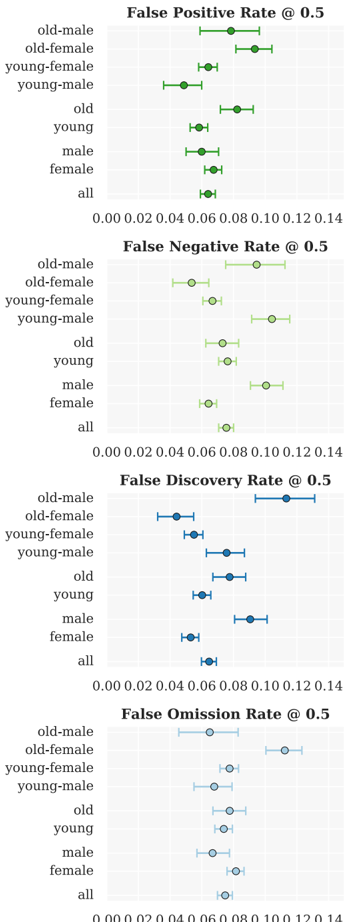
- In the smiling classifier example, all reported metrics at the .5 decision threshold have error types within the range 0.04–0.14, with 95% confidence intervals calculated by bootstrap resampling; the card notes older men have much higher false discovery rate, while men in aggregate have higher false negative rate.
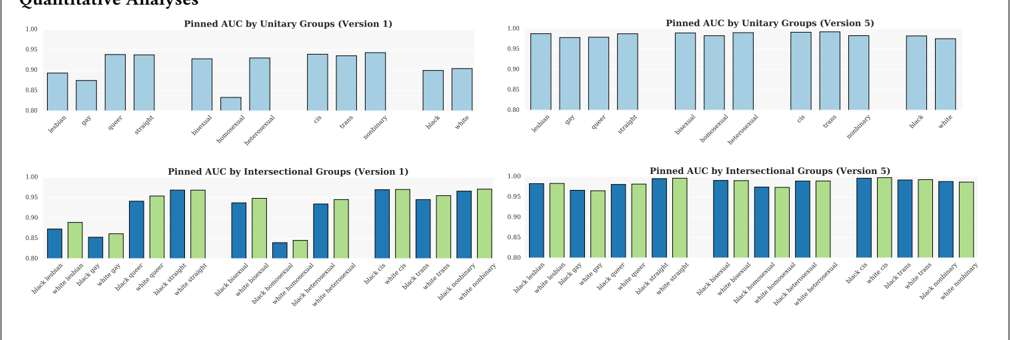
- In the toxicity example, TOXICITY v. 1 has low performance for several terms, especially “lesbian,” “gay,” and “homosexual,” while TOXICITY v. 5 shows more equitable performance after bias mitigation techniques.
Methods
- The paper is a framework/proposal paper, not an empirical study of a new model; it recommends model cards and details suggested sections and prompts.
- It provides two worked examples: a smiling classifier trained and evaluated on the CelebA dataset, using a convolutional neural net pretrained for face recognition and fine-tuned with cross-entropy loss for binary smiling classification.
- It also provides a model card for Perspective API’s TOXICITY classifier, a convolutional neural network developed by Jigsaw in 2017, evaluated on a synthetic Identity Phrase Templates test set; metrics include FPR, FNR, FDR, FOR for the smiling classifier and Pinned AUC for toxicity.
Limitations
- The paper states that model cards rely on the integrity of their creators and that it seems unlikely, at least in the near term, that they could be standardized or formalized enough to prevent misleading representations of model results.
- The paper states that evaluation datasets suitable for disaggregated evaluation are not yet common, and that the synthetic toxicity test data covers only a small set of very specific comments and is not comprehensive.
- The smiling classifier card states it does not capture race or skin type, uses binary gender classes (male/female), and that an ideal evaluation dataset would additionally include Fitzpatrick skin type, camera details, and environment details; the paper also states future work is needed to study how model information is interpreted and used by different stakeholders.
Model-written summary. Check it against the paper before relying on it.
Integrity signals
Registry
Cites
Statistics
Figures
Verification
Claims the paper makes
5 Valid · 1 Not valid · 18 Not checked · 30 Own results and interpretations
The cited sources support only part of this claim — read each source’s verdict below.
In the paper
“Synthetic data is valuable here because [11] shows that real data often has disproportionate amounts of toxicity directed at specific groups.”
What the sources say
- Partly supportedcites [11] [11] Lucas Dixon, John Li, Jeffrey Sorensen, Nithum Thain, and Lucy Vasserman. 2018. Measuring and Mitigating Unintended Bias in Text Classification. Proceedings of the AAAI/ACM Conference on AI, Ethics, and Society (2018). - sourceExperimental — accuracy not yet measured
The 'Quantifying bias in dataset' section (page unavailable) reports that certain identity terms appear disproportionately in toxic comments in the authors’ training data; for example, 'gay' appears in 3% of toxic comments but 0.5% of comments overall. It measures comments containing those terms, not whether toxicity is directed at the groups, and does not establish how often this pattern occurs across real datasets generally. (LLM, conf=0.85)
plainstates an association- Asserted: passes — The authors put it forward as true.
- Checkable: passes — It can be checked against evidence.
- Load-bearing: passes — The paper’s conclusions depend on it.
- Based: passes — The paper gives a reason why it holds.
- Partly supported
A result the paper reports from its own data — it cites no other source for it, so there is none to check. The quote shows it is in the paper.
In the paper
“For example, the false discovery rate on older men is much higher than that for other groups.”
plainstates an association- Asserted: passes — The authors put it forward as true.
- Checkable: passes — It can be checked against evidence.
- Load-bearing: passes — The paper’s conclusions depend on it.
- Based: passes — The paper gives a reason why it holds.
A result the paper reports from its own data — it cites no other source for it, so there is none to check. The quote shows it is in the paper.
In the paper
“TOXICITY v. 1 has low performance for several terms, especially 'lesbian', 'gay', and 'homosexual'.”
plain- Asserted: passes — The authors put it forward as true.
- Checkable: passes — It can be checked against evidence.
- Load-bearing: passes — The paper’s conclusions depend on it.
- Based: passes — The paper gives a reason why it holds.
None of the sources cited for this claim have been checked yet.
In the paper
“she collaborated with other researchers to demonstrate the disproportionate errors of computer vision systems on historically marginalized groups in the United States, such as darker-skinned women [5, 41].”
What the sources say
- Not checked yetcites [5] [5] Joy Buolamwini and Timnit Gebru. 2018. Gender Shades: Intersectional Accuracy Disparities in Commercial Gender Classification. In Proceedings of the 1st Conference on Fairness, Accountability and Transparency (Proceedings of Machine Learning Research) , Sorelle A. Friedler and Christo Wilson (Eds.), Vol. 81. PMLR, New York, NY, USA, 77-91. http://proceedings.mlr.press/v81/buolamwini18a.html -
- Not checked yetcites [41] [41] Inioluwa Raji. 2018. Black Panther Face Scorecard: Wakandans Under the Coded Gaze of AI. (2018). -
boostedstates an association- Asserted: passes — The authors put it forward as true.
- Checkable: passes — It can be checked against evidence.
- Load-bearing: passes — The paper’s conclusions depend on it.
- Based: passes — The paper gives a reason why it holds.
In the paper
“after MIT Media Lab graduate student Joy Buolamwini found that commercial face recognition systems failed to detect her face [4]”
What the sources say
- Not checked yetcites [4] [4] Joy Buolamwini. 2016. How I'm fighting Bias in Algorithms. (2016). https://www.ted.com/talks/joy\_buolamwini\_how\_i\_m\_fighting\_bias\_in\_ algorithms#t-63664 -
plainSingle case- Asserted: passes — The authors put it forward as true.
- Checkable: passes — It can be checked against evidence.
- Load-bearing: unclear — It is unclear whether the paper’s conclusions depend on it.
- Based: passes — The paper gives a reason why it holds.
13 more claims
Create a free account to see all 54 claims and to verify the 13 references still open.
- Probably not a substantial claim. 34
- It may state two separate claims as one. 8
Claims other papers make about this one
Each is checked against this paper’s own text: does it say what the citing paper says it does?
The source backs part of the claim, not all of it — or backs it for a different population, condition or comparison.
In the citing paper
“Model cards represent the field's standard for disclosing and documenting key facts about the architecture, training and evaluation of the model [14, 40].”
From Rethinking open source generative AI: open washing and the EU AI Act (2024) · cites this paper as [40]
Experimental — accuracy not yet measuredThe source backs part of the claim, not all of it — or backs it for a different population, condition or comparison.
In the citing paper
“Model cards (SMCs) [44] have been foundational in standardizing documentation for AI/ML model performance and characteristics, along with risks and unintended uses.”
From Interactive Model Cards: A Human-Centered Approach to Model Documentation (2022) · cites this paper as [44]
Experimental — accuracy not yet measuredThe source backs part of the claim, not all of it — or backs it for a different population, condition or comparison.
In the citing paper
“A second phase saw a more technical approach from the computer science community focusing on fairness, accountability and transparency as an engineering 'ethicalby-design' problem-solving exercise [20][21][22].”
From Putting AI ethics to work: are the tools fit for purpose? (2022) · cites this paper as [21]
Experimental — accuracy not yet measuredThe source backs part of the claim, not all of it — or backs it for a different population, condition or comparison.
In the citing paper
“These are either materials for use in design teams in workshop style events [76,77], tools for producing documentation of the design, build and test process [21,68], or technical tools for testing models, protecting privacy and security, testing for bias [69,93,94], or tracking provenance of data [95].”
From Putting AI ethics to work: are the tools fit for purpose? (2022) · cites this paper as [21]
Experimental — accuracy not yet measuredThe source backs part of the claim, not all of it — or backs it for a different population, condition or comparison.
In the citing paper
“There is some work on fairness relating to AI services, though this tends to focus on either exposing or 'auditing' certain AI services [22,38,126,133], or devising tools, methods and interventions relevant for those building (rather than using) such services [12,96,106,128].”
From Out of Context: Investigating the Bias and Fairness Concerns of “Artificial Intelligence as a Service” (2023) · cites this paper as [106]
Experimental — accuracy not yet measured
17 more claims about this paper
Create a free account to see every claim other papers make about this one.
Citations
Cites
BLEU: a method for automatic evaluation of machine translation
Papineni, K., Roukos, S., Ward, T., & Zhu, W.-J. (2001) · Proceedings of the 40th Annual Meeting on Association for Computational Linguistics - ACL '02 · doi:10.3115/1073083.1073135 · Cited by 21,344 · cited 1×
“translation system could compare BLEU scores [40] across demographic groups, and a model card for a speech recognition system could compare word-error rates.”
BackgroundCrenshaw, K. (2018) · Feminist Legal Theory · doi:10.4324/9780429500480-5 · Cited by 9,510
Deep Learning Face Attributes in the Wild
Liu, Z., Luo, P., Wang, X., & Tang, X. (2015) · 2015 IEEE International Conference on Computer Vision (ICCV) · doi:10.1109/iccv.2015.425 · Cited by 7,747 · cited 4×
“ms [5, 26] that report details of the datasets used to train and test machine learning models. We provide two example model cards in Section 5: A smiling detection model trained on the CelebA dataset [33] (Figure 2), and a public toxicity detection model, Perspective API [29] (Figure 3). Where Datasheets highlight cha…”
BackgroundMethodInfluentialThe validity and practicality of sun-reactive skin types I through VI
Fitzpatrick, T. B. (1988) · Archives of Dermatology · doi:10.1001/archderm.1988.01670060015008 · Cited by 4,339
Differential Privacy: A Survey of Results
Dwork, C. (2008) · Lecture Notes in Computer Science · doi:10.1007/978-3-540-79228-4_1 · Cited by 3,542 · cited 2×
“As such, collaboration with policy, privacy, and legal experts is necessary in order to ascertain which groups may be responsibly inferred, and how that information should be stored and accessed (for example, using differential privacy [12]).”
BackgroundCollins, G. S., Reitsma, J. B., Altman, D. G., & Moons, K. G. M. (2015) · Annals of Internal Medicine · doi:10.7326/m14-0697 · Cited by 3,267
Equality of Opportunity in Supervised Learning
Hardt, M., Price, E., & Srebro, N. (2016) · arXiv · doi:10.48550/arxiv.1610.02413 · Cited by 2,536 · cited 2×
“of Opportunity, and equal false negative and false positive rates across groups is equivalent to fulfilling Equality of Odds [26].”
BackgroundGebru, T., Morgenstern, J., Vecchione, B., Vaughan, J. W., Wallach, H., Daumé, H., & Crawford, K. (2018) · arXiv · doi:10.48550/arxiv.1803.09010 · Cited by 2,474
Self-citationA Probabilistic Interpretation of Precision, Recall and F-Score, with Implication for Evaluation
Goutte, C., & Gaussier, E. (2005) · Lecture Notes in Computer Science · doi:10.1007/978-3-540-31865-1_25 · Cited by 2,285 · cited 1×
“Confidence intervals for metrics derived from confusion matrices can be calculated by treating the matrices as probabilistic models of system performance [24].”
MethodFair prediction with disparate impact: a study of bias in recidivism prediction instruments
Chouldechova, A. (2017) · Big Data · doi:10.1089/big.2016.0047 · Cited by 2,159 · cited 1×
“or different errors that can be calculated from the confusion matrix for binary classification systems. • These also correspond to metrics in recent definitions of “fairness” in machine learning (cf. [8, 25]), where parity across subgroups for different metrics correspond to different fairness criteria. • 95% confiden…”
Background
Research works printed but not linked: 9
- [1] Avrio AI. 2018. Avrio AI: AI Talent Platform. (2018). https://www.goavrio.com/ -
- [5] Joy Buolamwini and Timnit Gebru. 2018. Gender Shades: Intersectional Accuracy Disparities in Commercial Gender Classification. In Proceedings of the 1st Conference on Fairness, Accountability and Transparency (Proceedings of Machine Learning Research) , Sorelle A. Friedler and Christo Wilson (Eds.), Vol. 81. PMLR, New York, NY, USA, 77-91. http://proceedings.mlr.press/v81/buolamwini18a.html -
- [13] Entelo. 2018. Recruitment Software | Entelo. (2018). https://www.entelo.com/ -
- [17] U.S. Food and Drug Administration. 2013. FDA Drug Safety Communication: Risk of next-morning impairment after use of insomnia drugs; FDA requires lower recommended doses for certain drugs containing zolpidem (Ambien, Ambien CR, Edluar, and Zolpimist). (2013). https://web.archive.org/web/20170428150213/ https://www.fda.gov/drugs/drugsafety/ucm352085.htm -
- [18] IIHS (Insurance Institute for Highway Safety: Highway Loss Data Institute). 2003. Special Issue: Side Impact Crashworthiness. Status Report 38, 7 (2003). -
- [19] Institute for the Future, Omidyar Network's Tech, and Society Solutions Lab. 2018. Ethical OS. (2018). https://ethicalos.org/ -
- [32] Jigsaw. 2017. Perspective API. (2017). https://www.perspectiveapi.com/ -
- [39] AI Now. 2018. Litigating Algorithms: Challenging Government Use Of Algorithmic Decision Systems. AI Now Institute. -
- [43] Mukund Sundararajan, Ankur Taly, and Qiqi Yan. 2017. In Proceedings of the 34th International Conference on Machine Learning , Vol. 70. PMLR, Sydney, Australia. -
Cited by
Items 701–800 of 2,235
Clark, T., Mohan, J., Schaffer, L. V., Obernier, K., Manir, S. A., Churas, C., Dailamy, A., Doctor, Y., Forget, A., Hansen, J. N., et al. (2024) · bioRxiv (Cold Spring Harbor Laboratory) · doi:10.1101/2024.05.21.589311 · Cited by 23
“Characterized – Complete schemas, validation procedures, and data sheets 21 for all datasets in the provenance graph; and model cards 22 for all models used to prepare the dataset, are resolvable from the dataset’s metadata.”
MethodEcosystem Graphs: The Social Footprint of Foundation Models
Bommasani, R., Soylu, D., Liao, T., Creel, K., & Liang, P. (2023) · doi:10.21203/rs.3.rs-2961271/v1 · Cited by 14
Time to audit your AI algorithms
Sandu, I., Wiersma, M., & Manichand, D. (2022) · Maandblad voor Accountancy en Bedrijfseconomie · doi:10.5117/mab.96.90108 · Cited by 12
In the Frame: the Language of AI
Bones, H., Ford, S., Hendery, R., Richards, K., & Swist, T. (2020) · Philosophy & Technology · doi:10.1007/s13347-020-00422-7 · Cited by 22
Disentangling the Components of Ethical Research in Machine Learning
Ashurst, C., Barocas, S., Campbell, R., & Raji, I. D. (2022) · ACM Conference on Fairness, Accountability, and Transparency (FAccT) · doi:10.1145/3531146.3533781 · Cited by 29
Self-citationUsing model cards for ethical reflection: a qualitative exploration
Nunes, J. L., Barbosa, G. D. J., de Souza, C. S., Lopes, H., & Barbosa, S. D. J. (2022) · Brazilian Symposium on Human Factors in Computing Systems (IHC) · doi:10.1145/3554364.3559117 · Cited by 27
Stakeholder-accountability model for artificial intelligence projects
Maxmetrics, H., & Miller, G. J. (2022) · Journal of Economics and Management · doi:10.22367/jem.2022.44.18 · Cited by 24
Computing and evaluating saliency maps for image classification: a tutorial
Gomez, T., & Mouchère, H. (2023) · Journal of Electronic Imaging · doi:10.1117/1.jei.32.2.020801 · Cited by 20
“To facilitate human–model collaboration in routine use, local explanations are preferable because they gain the user’s confidence in specific inputs to be processed.(1) Visual local explanations can take the form of examples, concepts,(6) or saliency maps.”
BackgroundMethodGreen AI Quotient: Assessing Greenness of AI-based software and the way forward
Sikand, S., Sharma, V. S., Kaulgud, V., & Podder, S. (2023) · IEEE/ACM International Conference on Automated Software Engineering (ASE) · doi:10.1109/ase56229.2023.00115 · Cited by 21
Towards more sustainable and trustworthy reporting in machine learning
Fischer, R., Liebig, T., & Morik, K. J. (2024) · Data Mining and Knowledge Discovery · doi:10.1007/s10618-024-01020-3 · Cited by 19
“They summarize the key properties of individual models (Arnold et al. 2019; Mitchell et al. 2019; Morik et al. 2022), provide overviews for specific benchmarks (Croce et al. 2020; Godahewa et al. 2021), or offer open databases for reported properties across various ML domains (Vanschoren et al.…”
Machine learning data practices through a data curation lens: An evaluation framework
Bhardwaj, E., Gujral, H., Wu, S., Zogheib, C., Maharaj, T., & Becker, C. (2024) · ACM Conference on Fairness, Accountability, and Transparency (FAccT) · doi:10.1145/3630106.3658955 · Cited by 44
“Model cards include details about the models, their intended use, impacts of the model on the real-world, evaluation data, details on the training data, and ethical considerations [101].”
BackgroundSelf-citationAuditing and Generating Synthetic Data with Controllable Trust Trade-offs
Belgodere, B. M., Dognin, P., Ivankay, A., Melnyk, I., Mroueh, Y., Mojsilović, A., Navrátil, J., Nitsure, A., Padhi, I., Rigotti, M., et al. (2024) · IEEE Journal on Emerging and Selected Topics in Circuits and Systems · doi:10.1109/jetcas.2024.3477976 · Cited by 41
“Finally, several governance mechanisms have been proposed to ensure transparency in communicating the risks of data and models via fact sheets [9], model cards [76], data sheets [43], and system and method cards [3].”
BackgroundAuditing Flood Vulnerability Geo-Intelligence Workflow for Biases
Masinde, B. K., Gevaert, C. M., Nagenborg, M., den Homberg, M. J. C. V., Margutti, J., Gortzak, I., & Zevenbergen, J. A. (2024) · ISPRS International Journal of Geo-Information · doi:10.3390/ijgi13120419 · Cited by 21
“Drawing inspiration from the auditing framework Scoping, Mapping, Artifact Collection, Testing and Reflection (SMACTR), we use model cards proposed by Mitchell et al. [19] for transparent AI model reporting and datasheets by Gebru et al. [20] for detailed data documentation.”
Nullius in Explanans: an ethical risk assessment for explainable AI
Nannini, L., Huyskes, D., Panai, E., Pistilli, G., & Tartaro, A. (2024) · Ethics and Information Technology · doi:10.1007/s10676-024-09800-7 · Cited by 18
An MLOps Approach for Deploying Machine Learning Models in Healthcare Systems
Mallardi, G., Calefato, F., Quaranta, L., & Lanubile, F. (2024) · IEEE International Conference on Bioinformatics and Biomedicine (BIBM) · doi:10.1109/bibm62325.2024.10822603 · Cited by 20
Navigating AI conformity: A design framework to assess fairness, explainability, and performance
von Zahn, M., Zacharias, J., Lowin, M., Chen, J., & Hinz, O. F. (2025) · Electronic Markets · doi:10.1007/s12525-025-00770-2 · Cited by 22
“Therefore, inspired by existing works aiming to measure the explainability of AI systems (see, e.g., Gebru et al., 2021; Mitchell et al., 2019), we develop a questionnaire that the AI owner fills out as part of the conformity assessment.”
AI Mismatches: Identifying Potential Algorithmic Harms Before AI Development
Saxena, D., Jung, J.-Y., Forlizzi, J., Holstein, K., & Zimmerman, J. (2025) · CHI Conference on Human Factors in Computing Systems · doi:10.1145/3706598.3714098 · Cited by 34
“These approaches include fairness toolkits, auditing meth-ods, algorithmic “de-biasing” techniques, and documentation protocols [29, 32, 41, 51, 58, 79, 80, 120].”
School Choice Algorithms: Data Infrastructures, Automation, and Inequality
Swist, T., & Gulson, K. Ν. (2022) · Postdigital Science and Education · doi:10.1007/s42438-022-00334-z · Cited by 24
“For example, the education counter-archiving approach could augment existing methods for archiving and documenting ADM systems, such as ‘datasheets for datasets’ (Gebru et al. 2021) and ‘model cards for model reporting’ (Mitchell et al. 2019).”
MethodNeural Text Classification for Digital Transformation in the Financial Regulatory Domain
Correa, N., & Correa, A. (2022) · IEEE ANDESCON · doi:10.1109/andescon56260.2022.9989638 · Cited by 13
“…with information about the training algorithms and parameters; training data sources, motivation, and preprocessing; evaluation data sources, motivation, and preprocessing; intended use and users; and model performance across different demographic or other groups and environmental situations [24].”
BackgroundHan, Y., Modaresnezhad, M., & Nemati, H. (2021) · Knowledge-Based Systems · doi:10.1016/j.knosys.2021.107164 · Cited by 19
Emerging trends: Unfair, biased, addictive, dangerous, deadly, and insanely profitable
Church, K., Schoene, A. M., Ortega, J. E., Chandrasekar, R., & Kordoni, V. (2022) · Natural Language Engineering · doi:10.1017/s1351324922000481 · Cited by 23
“There is a considerable body of work in the ACL community on bias (Mitchell et al .”
Deanthropomorphising NLP: Can a language model be conscious?
Shardlow, M., & Przybyła, P. (2024) · PLoS ONE · doi:10.1371/journal.pone.0307521 · Cited by 16
“Importantly, work has focussed on the reproducibility of results in the LLM world, with a push towards the use of model cards to properly describe the underlying technology (Mitchell et al, 2019).”
Standards-Aligned AI Validation and Certification Platform for Trustworthy Modeling
Doniyorjon, M., Baltayev, J., Muksimova, S., Umirzakova, S., & Cho, Y. I. (2025) · IEEE Access · doi:10.1109/access.2025.3641996 · Cited by 14
“…and certification platform, experiments were conducted using two fundamentally different datasets: the ship performance dataset from Kaggle [37], which contains real-world vessel design parameters and operational performance metrics, and the MNIST handwritten digit dataset, which is a…”
Manifestations of xenophobia in AI systems
Tomašev, N., Maynard, J. L., & Gabriel, I. (2024) · AI & Society · doi:10.1007/s00146-024-01893-4 · Cited by 25
“Despite recent integration efforts (Müller-Crepon et al. 2021), better data (Pushkarna et al. 2022) and model (Mitchell et al. 2019; Crisan et al. 2022) documentation are required to promote the understanding of ethnic representation and data provenance.”
Fairness and Bias in Robot Learning
Londoño, L., Hurtado, J. V., Hertz, N., Kellmeyer, P., Vöeneky, S., & Valada, A. (2024) · Proceedings of the IEEE · doi:10.1109/jproc.2024.3403898 · Cited by 60
Understanding Disparities in Post Hoc Machine Learning Explanation
Mhasawade, V., Rahman, S., Haskell-Craig, Z., & Chunara, R. (2024) · ACM Conference on Fairness, Accountability, and Transparency (FAccT) · doi:10.1145/3630106.3659043 · Cited by 19
“Again, we consider both cases when 𝐴 is and is not included in the covariates to which the black-box model has access.”
Atoum, I., & Otoom, A. A. (2024) · Electronics · doi:10.3390/electronics13234843 · Cited by 21
Leveraging Knowledge Graphs for AI System Auditing and Transparency
Waltersdorfer, L., & Sabou, M. (2024) · Journal of Web Semantics · doi:10.1016/j.websem.2024.100849 · Cited by 27
Towards Fairness in AI for Melanoma Detection: Systemic Review and Recommendations
Montoya, L. N., Roberts, J. S., & Hidalgo, B. S. (2025) · Lecture notes in networks and systems · doi:10.1007/978-3-031-84460-7_21 · Cited by 22
Addressing Ethical Considerations and Responsible AI Practices
Luthra, A., Dixit, S., Garg, S., Singh, A., & Anchal, M. (2025) · Emerald Group Publishing Limited eBooks · doi:10.1108/978-1-83549-852-120251007 · Cited by 13
Almahmoud, J., DeLine, R. A., & Drucker, S. M. (2021) · Proceedings of the ACM on Human-Computer Interaction · doi:10.1145/3463934 · Cited by 18
Potential of edge machine learning for instrumentation
Therrien, A. C., Gouin-Ferland, B., & Rahimifar, M. M. (2022) · Applied Optics · doi:10.1364/ao.445798 · Cited by 12
Unconventional Concerns for Human-Centered Artificial Intelligence
Cheruvu, R. (2022) · Computer · doi:10.1109/mc.2022.3170423 · Cited by 13
Kalanadhabhatta, M., Santana, A. M., Zhang, Z., Ganesan, D., Grabell, A. S., & Rahman, T. (2022) · Proceedings of the ACM on Interactive Mobile Wearable and Ubiquitous Technologies · doi:10.1145/3534583 · Cited by 14
“We ground this discussion in the model reporting criteria proposed by Mitchell et al. [93], providing a comprehensive review of the intended use, relevant factors, and metrics related to our models.”
MethodExplainable AI via learning to optimize
Heaton, H., & Fung, S. W. (2023) · Scientific Reports · doi:10.1038/s41598-023-36249-3 · Cited by 32
“Model Cards [47] document intended and appropriate uses of models.”
BackgroundMLTEing Models: Negotiating, Evaluating, and Documenting Model and System Qualities
Maffey, K. R., Dotterrer, K., Niemann, J., Cruickshank, I. J., Lewis, G. A., & Kästner, C. (2023) · IEEE/ACM International Conference on Software Engineering: New Ideas and Emerging Results (ICSE-NIER) · doi:10.1109/icse-nier58687.2023.00012 · Cited by 18
Ethical Guidelines for Artificial Intelligence: A Systematic Literature Review
Farooq, M. S., Tahseen, R., & Omer, U. (2021) · VFAST Transactions on Software Engineering · doi:10.21015/vtse.v9i3.701 · Cited by 15
Turri, V., Morrison, K., Robinson, K.-M., Abidi, C., Perer, A., Forlizzi, J., & Dzombak, R. (2024) · The 2024 ACM Conference on Fairness, Accountability, and Transparency · doi:10.1145/3630106.3658985 · Cited by 10
Current and Future Use of Large Language Models for Knowledge Work
Brachman, M., El-Ashry, A., Dugan, C., & Geyer, W. (2025) · Proceedings of the ACM on Human-Computer Interaction · doi:10.1145/3757403 · Cited by 39
“Reporting frameworks have been developed for AI systems, like FactSheets [9] or model cards [61], but users likely need more than static documentation [19, 54].”
Artificial Intelligence in Analytical Chemistry: Towards Yet Undiscovered Opportunities
Nowak, P. M. (2026) · Analytical Chemistry · doi:10.1021/acs.analchem.5c06840 · Cited by 19
Tracing and Visualizing Human-ML/AI Collaborative Processes through Artifacts of Data Work
Rogers, J., & Crisan, A. (2023) · CHI Conference on Human Factors in Computing Systems · doi:10.1145/3544548.3580819 · Cited by 25
Socially meaningful transparency in data-based systems: reflections and proposals from practice
Bates, J., Kennedy, H., Medina-Perea, I., Oman, S., & Pinney, L. (2023) · Journal of Documentation · doi:10.1108/jd-01-2023-0006 · Cited by 19
Heyn, H.-M., Habibullah, K. M., Knauss, E., Horkoff, J., Borg, M., Knauss, A., & Li, P. J. (2023) · IEEE/ACM International Conference on AI Engineering – Software Engineering for AI (CAIN) · doi:10.1109/cain58948.2023.00011 · Cited by 23
“Similar to model cards for ML [19], datasheets for data have been proposed as a first step towards data specifications [20].”
Towards Defining a Trustworthy Artificial Intelligence System Development Maturity Model
Das, S. D., Bala, P. K., & Mishra, A. N. (2023) · Journal of Computer Information Systems · doi:10.1080/08874417.2023.2251443 · Cited by 17
“This can be accomplished through the creation of artefacts such as Model Cards, 57 which contain essential information regarding the use case, stakeholders, intended usage, and other relevant information.”
The State of Documentation Practices of Third-Party Machine Learning Models and Datasets
Oreamuno, E. L., Khan, R. M., Bangash, A. A., Stinson, C., & Adams, B. (2024) · IEEE Software · doi:10.1109/ms.2024.3366111 · Cited by 26
“To date, the availability and quality of the documentation of ML models and their datasets have not been studied extensively.”
Background(Beyond) Reasonable Doubt: Challenges that Public Defenders Face in Scrutinizing AI in Court
Jin, A., & Salehi, N. (2024) · CHI Conference on Human Factors in Computing Systems · doi:10.1145/3613904.3641902 · Cited by 23
“Another depicted steps inspired by Model Cards [64].”
Soni, V. (2024) · International Journal of Innovative Science and Research Technology (IJISRT) · doi:10.38124/ijisrt/ijisrt24may2203 · Cited by 16
Soni, V. (2024) · International Conference on Knowledge Engineering and Communication Systems (ICKECS) · doi:10.1109/ickecs61492.2024.10617325 · Cited by 20
“The research advocates for a nuanced understanding of fairness, encompassing both individual and group-level considerations, to ensure that AI-driven recruitment systems do not inadvertently disadvantage certain segments of the workforce [12][13].”
BackgroundHatherley, J. J. (2024) · Journal of Medical Ethics · doi:10.1136/jme-2024-109905 · Cited by 12
“22”
Machine learning with requirements: A manifesto
Giunchiglia, E., Imrie, F., van der Schaar, M., & Lukasiewicz, T. (2025) · Neurosymbolic Artificial Intelligence · doi:10.3233/nai-240767 · Cited by 21
“in [16] advocate for standardized reporting of models, including training data, performance measures, and limitations, while Seedat et al.”
AI Design: A Responsible Artificial Intelligence Framework for Prefilling Impact Assessment Reports
Bogucka, E. P., Constantinides, M., Šćepanović, S., & Quercia, D. (2024) · IEEE Internet Computing · doi:10.1109/mic.2024.3451351 · Cited by 29
Towards practical artificial intelligence in Earth sciences
Sun, Z., ten Brink, T., Carande, W. H., Koren, G., Cristea, N. C., Jorgenson, C., Janga, B., Asamani, G. P., Achan, S., Mahoney, M., et al. (2024) · Computational Geosciences · doi:10.1007/s10596-024-10317-7 · Cited by 20
“AI models should only be used for locations/ regions at a certain time range with comprehensively-tested trustworthy reliability [92].”
Metaethical perspectives on ‘benchmarking’ AI ethics
LaCroix, T., & Luccioni, A. S. (2025) · AI and Ethics · doi:10.1007/s43681-025-00703-x · Cited by 38
“…monolingual, often focusing solely on the English language [54, 129, 219, 220]; (3) biases are typically tested post hoc —i.e., after the model has been deployed [162]; and (4) when research explicitly tests for bias (which is infrequent), the evaluation metrics are often incoherent [204].”
Materiality and risk in the age of pervasive AI sensors
Sloane, M., Moss, E., Kennedy, S., Stewart, M. P., Warden, P., Plancher, B., & Reddi, V. J. (2025) · Nature Machine Intelligence · doi:10.1038/s42256-025-01017-7 · Cited by 19
“The latter has brought important developments such as proposals for Model Cards for Model Reporting and Datasheets for Datasets [47, 74].”
Heidenreich, H. S., & Williams, J. R. (2021) · Proceedings of the AAAI/ACM Conference on AI Ethics and Society · doi:10.1145/3461702.3462578 · Cited by 13
Dunnmon, J. (2021) · Radiologic Clinics of North America · doi:10.1016/j.rcl.2021.07.006 · Cited by 10
Prescriptive and Descriptive Approaches to Machine-Learning Transparency
Adkins, D., Alsallakh, B., Cheema, A., Kokhlikyan, N., McReynolds, E., Mishra, P., Procope, C., Sawruk, J., Wang, E., & Zvyagina, P. (2022) · CHI Conference Extended Abstracts on Human Factors in Computing Systems (CHI EA) · doi:10.1145/3491101.3519724 · Cited by 18
DataPrism: Exposing Disconnect between Data and Systems
Galhotra, S., Fariha, A., Lourenço, R., Freire, J., Meliou, A., & Srivastava, D. (2022) · ACM SIGMOD International Conference on Management of Data (SIGMOD) · doi:10.1145/3514221.3517864 · Cited by 20
Pagano, T. P., Loureiro, R. B., Lisboa, F. V. N., Cruz, G. O. R., Peixoto, R. M., Guimarães, G. A. D. S., Oliveira, E. L. S., Winkler, I., & Nascimento, E. G. S. (2023) · Big Data and Cognitive Computing · doi:10.3390/bdcc7010027 · Cited by 14
Kaleidoscope: Semantically-grounded, context-specific ML model evaluation
Suresh, H., Shanmugam, D., Chen, T., Bryan, A. G., D’Amour, A., Guttag, J. V., & Satyanarayan, A. (2023) · CHI Conference on Human Factors in Computing Systems · doi:10.1145/3544548.3581482 · Cited by 19
A multidomain relational framework to guide institutional AI research and adoption
Straub, V. J., Morgan, D., Hashem, Y., Francis, J., Esnaashari, S., & Bright, J. (2023) · Proceedings of the AAAI/ACM Conference on AI Ethics and Society · doi:10.1145/3600211.3604718 · Cited by 18
Nguyen, A., Weller, T., Färber, M., & Sure-Vetter, Y. (2020) · Communications in computer and information science · doi:10.1007/978-3-030-65384-2_3 · Cited by 16
“In particular, model cards [11] were taken into account to validate relevant concepts.”
Imputation Strategies Under Clinical Presence: Impact on Algorithmic FairnessPreprint
Jeanselme, V., De‐Arteaga, M., Zhang, Z., Tom, B. D. M., & Barrett, J. (2023) · SSRN Electronic Journal · doi:10.2139/ssrn.4496874 · Cited by 17
DiTEC-WDN: A Large-Scale Dataset of Hydraulic Scenarios across Multiple Water Distribution Networks
Truong, H., Tello, A., Lazovik, A., & Degeler, V. (2025) · Scientific Data · doi:10.1038/s41597-025-06026-0 · Cited by 11
Auditing the Audits: Lessons for Algorithmic Accountability from Local Law 144's Bias Audits
Gerchick, M. K., Encarnación, R., Tanigawa-Lau, C., Armstrong, L., Gutiérrez, A., & Metaxa, D. (2025) · Proceedings of the 2025 ACM Conference on Fairness, Accountability, and Transparency · doi:10.1145/3715275.3732004 · Cited by 10
“For instance, auditors could be required to include datasheets [41] or model cards [90] about audit data and employer-set thresholds.”
Ethics label for digital systems to promote transparency and user awareness
Autili, M., Corsi, R., Sanctis, M. D., Inverardi, P., & Pelliccione, P. (2025) · Journal of Systems and Software · doi:10.1016/j.jss.2025.112752 · Cited by 15
Beyond overconfidence: Embedding curiosity and humility for ethical medical AI
Cajas, S. A., Castro, R., Celi, L. A., Reyes, R. D., Engelmann, J., Ercole, A., Hilel, A., Kalla, M., Kinyera, L., Lange, M., et al. (2026) · PLOS Digital Health · doi:10.1371/journal.pdig.0001013 · Cited by 17
“Model Cards [58] and Dataset Nutrition Labels [59] represent important first steps toward standardizing model documentation, but comprehensive humility requires more dynamic approaches to transparency.”
Performance of adult-trained artificial intelligence models in paediatric imaging—a scoping review
Laborie, L. B., Lee, J., Antram, E., Lein, T. E., & Shelmerdine, S. C. (2026) · European Radiology · doi:10.1007/s00330-026-12354-5 · Cited by 14
“Given that many AI tools marketed for paediatric use lack supporting performance evidence in children [5], urgent needs for clearer labelling and validation standards — such as the model card (a type of ‘ nutrition label ’ for AI tools) can help improve trans-parency [53].”
Vo, T. H., & Le, N. Q. K. (2026) · Briefings in Bioinformatics · doi:10.1093/bib/bbag227 · Cited by 15
“Established reporting frameworks such as model cards and datasheet-style dataset documentation provide structured mechanisms for disclosing such information and enhancing auditability [76, 77].”
Kim, H., Hwang, Y., Lee, J., Kwon, Y., Park, Y., & Lee, J. (2022) · CHI Conference on Human Factors in Computing Systems · doi:10.1145/3491102.3517484 · Cited by 17
Hauer, M. P., Krafft, T. D., & Zweig, K. A. (2023) · Data & Policy · doi:10.1017/dap.2023.30 · Cited by 16
“Mitchell et al. introduce a concept called “ model cards ” to disclose such information (Mitchell et al., 2019). this access.”
BackgroundPrem, E. (2023) · Springer eBooks · doi:10.1007/978-3-031-45304-5_15 · Cited by 14
Algorithmic Issues, Challenges, and Theoretical Concerns of ChatGPT
Patil, P., Kulkarni, K., & Sharma, P. (2024) · Advances in computational intelligence and robotics book series · doi:10.4018/979-8-3693-6824-4.ch003 · Cited by 13
Ong, J., Jang, K. J., Baek, S. J., Hu, D., Lin, V., Jang, S., Thaler, A., Sabbagh, N., Saeed, A., Kwon, M., et al. (2024) · Asia-Pacific Journal of Ophthalmology · doi:10.1016/j.apjo.2024.100095 · Cited by 12
“41 While there is undoubtedly a balance between full transparency and management of proprietary model design, clinicians must be able to evaluate new models based on their medical education and post-graduate ophthalmology training.”
Safety principles for medical summarization using generative AI
Obika, B. D., Kelly, C. J., Ding, N., Farrance, C., Krause, J., Mittal, P., Cheung, D., Cole-Lewis, H. J., Elish, M. C., Karthikesalingam, A., et al. (2024) · Nature Medicine · doi:10.1038/s41591-024-03313-y · Cited by 14
On the suitability of hugging face hub for empirical studies
Ait, A., Izquierdo, J. L., & Cabot, J. (2025) · Empirical Software Engineering · doi:10.1007/s10664-024-10608-8 · Cited by 27
“For dataset repositories, it shows the repository dependencies, the README file and its downloads, along with a preview of the data.”
Access Denied: Meaningful Data Access for Quantitative Algorithm Audits
Zaccour, J., Binns, R., & Rocher, L. (2025) · CHI Conference on Human Factors in Computing Systems · doi:10.1145/3706598.3713963 · Cited by 14
“This may include datasheets [60] and model cards [98] as a starting point.”
Kang, E. J., Kim, H., Kim, H., Fussell, S. R., & Kim, J. (2025) · Proceedings of the ACM on Human-Computer Interaction · doi:10.1145/3711111 · Cited by 9
“Existing approaches from AI-infused systems, such as model cards [59], could guide what information should be disclosed.”
Leashes, not guardrails: A management‐based approach to artificial intelligence risk regulation
Coglianese, C., & Crum, C. R. (2025) · Risk Analysis · doi:10.1111/risa.70020 · Cited by 21
“Early firm-level attempts to systematize information collection and reporting have taken the form of “model cards” (Mitchell et al., 2019)—also called Datasheets (Gebru et al., 2021) or FactSheets (Richards et al., 2020)— which contain basic information about an AI tool, such as the model type and…”
Roser, D., Meinikheim, M., Muzalyova, A., Mendel, R., Palm, C., Probst, A., Nagl, S., Scheppach, M. W., Römmele, C., Schnoy, E., et al. (2025) · DEN Open · doi:10.1002/deo2.70150 · Cited by 11
Safe for kids? AI medical devices in radiology overlook paediatric suitability
Kelly, B. S., Lee, J., Antram, E., Arthurs, O. J., & Shelmerdine, S. C. (2025) · European Radiology · doi:10.1007/s00330-025-11975-6 · Cited by 13
The MeVer DeepFake Detection Service: Lessons Learnt from Developing and Deploying in the Wild
Baxevanakis, S., Kordopatis-Zilos, G., Galopoulos, P., Apostolidis, L., Levacher, K., Schlicht, I. B., Teyssou, D., Kompatsiaris, I. Y., & Papadopoulos, S. (2022) · doi:10.1145/3512732.3533587 · Cited by 13
Balayn, A., Rikalo, N., Yang, J., & Bozzon, A. (2023) · CHI Conference on Human Factors in Computing Systems · doi:10.1145/3544548.3581555 · Cited by 18
“…a tool suggesting a workfow and artifacts, etc. Previous works around software debugging and machine teaching provide hints for its design, highlighting the importance of structured steps [84, 89]; structured documentation [6, 18, 33, 43, 81]; or warnings against graphical user-interfaces [128].”
BackgroundMethodA Siren Song of Open Source Reproducibility, Examples from Machine Learning
Raff, E., & Farris, A. (2023) · ACM Conference on Reproducibility and Replicability (ACM REP) · doi:10.1145/3589806.3600042 · Cited by 29
Online Fairness Auditing through Iterative Refinement
Maneriker, P., Burley, C., & Parthasarathy, S. (2023) · ACM SIGKDD Conference on Knowledge Discovery and Data Mining (KDD) · doi:10.1145/3580305.3599454 · Cited by 28
Fairness Hacking: The Malicious Practice of Shrouding Unfairness in Algorithms
Meding, K., & Hagendorff, T. (2024) · Philosophy & Technology · doi:10.1007/s13347-023-00679-8 · Cited by 20
“In the context of machine learning, among others, datasheets for datasets (Gebru et al., 2021) and model cards for model reporting (Mitchell et al., 2019) have been introduced.”
Sipio, C. D., Rubei, R., Rocco, J. D., Ruscio, D. D., & Nguyen, P. T. (2024) · International Conference on Evaluation and Assessment in Software Engineering (EASE) · doi:10.1145/3661167.3661215 · Cited by 18
HCI education of choice: on becoming critical and growing inclusivity
Lazem, S. (2021) · XRDS Crossroads The ACM Magazine for Students · doi:10.1145/3456296 · Cited by 11
“For instance, there is a growing awareness of the importance of making transparent the training data and the associated accuracy measures with respect to different user groups [7].”
BackgroundWikipedia ORES Explorer: Visualizing Trade-offs For Designing Applications With Machine Learning API
Ye, Z., Yuan, X., Gaur, S., Halfaker, A., Forlizzi, J., & Zhu, H. (2021) · Designing Interactive Systems Conference · doi:10.1145/3461778.3462099 · Cited by 15
Making the Unaccountable Internet: The Changing Meaning of Accounting in the Early ARPANET
Cooper, A. F., & Vidan, G. (2022) · ACM Conference on Fairness, Accountability, and Transparency (FAccT) · doi:10.1145/3531146.3533137 · Cited by 14
“…of “public accountability” from Bovens [13] into research concerning algorithmic accountability [64, 127], while others have attempted to institute cultures of accountability through ex ante engineering standards of care [45, 89] or post hoc audits and impact assessments [3, 87, 90, 108, 120].”
BackgroundEthical Awareness in Paralinguistics: A Taxonomy of Applications
Batliner, A. M., Neumann, M., Burkhardt, F., Baird, A., Meyer, S., Vu, N. T., & Schuller, B. W. (2022) · International Journal of Human-Computer Interaction · doi:10.1080/10447318.2022.2140385 · Cited by 14
“)” (Mitchell et al., 2018); see as well Holstein, Vaughan, Daumé III, Dud́ık, and Wallach (2018) who propose means how to take into account the requirements of practitioners in ML systems.”
Serverless Prediction of Peptide Properties with Recurrent Neural NetworksPreprint
Ansari, M., & White, A. D. (2022) · bioRxiv (Cold Spring Harbor Laboratory) · doi:10.1101/2022.05.18.492545 · Cited by 9
Rajesh, A. E., Olvera-Barrios, A., Warwick, A., Wu, Y., Stuart, K., Biradar, M. I., Ung, C. Y., Khawaja, A., Luben, R., Foster, P., et al. (2023) · medRxiv · doi:10.1101/2023.06.28.23291873 · Cited by 9
“[30] There is some evidence that retinal colour affects model performance.”
Li, Y., & Goel, S. (2024) · SSRN Electronic Journal · doi:10.2139/ssrn.4787236 · Cited by 9
Wahle, J., Ruas, T., Abdalla, M., Gipp, B., & Mohammad, S. (2023) · Proceedings of the 2023 Conference on Empirical Methods in Natural Language Processing · doi:10.18653/v1/2023.emnlp-main.797 · Cited by 9
Effectiveness and Information Quality Perception of an AI Model Card: A Study Among Non-Experts
Bracamonte, V., Pape, S., Löbner, S., & Tronnier, F. (2023) · Conference on Privacy, Security and Trust · doi:10.1109/pst58708.2023.10320197 · Cited by 17
“Model Cards [9] are one proposal for AI model documentation which has been adopted to some extent by developers.”
BackgroundMethodInfluentialOpening a conversation on responsible environmental data science in the age of large language models
Oliver, R. Y., Chapman, M., Emery, N. C., Gillespie, L., Gownaris, N. J., Leiker, S., Nisi, A. C., Ayers, D., Breckheimer, I., Blondin, H. E., et al. (2024) · Environmental Data Science · doi:10.1017/eds.2024.12 · Cited by 13
“…are usually opaque (ZDNET, 2023), since many models are trained by large corpor-ations that are not bound to open science data practices or peer-review processes and as such rarely follow best practices laid out by the AI ethics research community (Mitchell et al., 2019; Pushkarna et al., 2022).”
BackgroundBiases in machine-learning models of human single-cell data
Willem, T., Shitov, V. A., Luecken, M. D., Kilbertus, N., Bauer, S., Piraud, M., Buyx, A., & Theis, F. J. (2025) · Nature Cell Biology · doi:10.1038/s41556-025-01619-8 · Cited by 15
“Established frameworks to consider model biases in a context-dependent manner from a ready-trained model include the domain-agnostic ‘model cards for model reporting’ 81 framework and the healthcare-specific TRIPOD Statement 82 framework.”
Multiagent Actor-Critic Generative AI for Query Resolution and Analysis
Ur Rahman, M. W., Nevarez, R., Mim, L. T., & Hariri, S. (2025) · IEEE Transactions on Artificial Intelligence · doi:10.1109/tai.2025.3544173 · Cited by 8
“The pursuit of more resilient and moral AI systems has led to continuous endeavors to enhance the accountability and transparency of data-driven natural language processing models [21], [22].”
Towards semantic versioning of open pre-trained language model releases on hugging face
Ajibode, A., Bangash, A. A., Cogo, F. R., Adams, B., & Hassan, A. E. (2025) · Empirical Software Engineering · doi:10.1007/s10664-025-10631-3 · Cited by 24
“More recently, research has explored ML model and dataset documentation practices (Oreamuno et al., 2024, Mitchell et al., 2019, Wadhwani and Jain, 2020, Crisan et al., 2022, Casta˜no et al., 2024).”
Metadata
- Authors
- Mitchell, M., Wu, S., Zaldivar, A., Barnes, P., Vasserman, L., Hutchinson, B., Spitzer, E., Raji, I. D., & Gebru, T.
- Venue
- Proceedings of the Conference on Fairness, Accountability, and Transparency
- Publisher
- ACM
- Published
- 2019-01-29
- Pages
- 220-229
- OpenAlex
- W2897042519
- Semantic Scholar
- 7365f887c938ca21a6adbef08b5a520ebbd4638f
- Cited by
- 2,681
- References
- 12
- Citations by year
- 2026: 831 · 2025: 446 · 2024: 376 · 2023: 366 · 2022: 243 · 2021: 260 · 2020: 102 · 2019: 54
- FWCI
- 170.95
- Type
- conference paper
- Language
- en
- Open access
- green
- arxiv.org
- Locations
- ACM Conference on Fairness, Accountability, and Transparency (FAccT) (publishedVersion)
- arXiv (Cornell University) (submittedVersion)
- arXiv (Cornell University)
- Topics
- Physical Sciences › Computer Science › Artificial Intelligence › Ethics and Social Impacts of AI
- Physical Sciences › Computer Science › Artificial Intelligence › Explainable Artificial Intelligence (XAI)
- Physical Sciences › Computer Science › Computer Vision and Pattern Recognition › Face recognition and analysis
- Keywords
- model cards, model transparency, algorithmic fairness, demographic bias, responsible AI, democratization of AI, toxic comment detection, model documentation
About these checks
Registry, retraction, Cites and statistics results are computed, not judged, with one exception: a printed reference that no index lists is read once by a model before it counts as a citation error. Claims are extracted by a model and kept only when their quote appears verbatim in the text; each cited source is then checked, with a model’s help, for whether it says what the claim relies on. Those verdicts can be wrong — read the claim’s quote and the cited source before relying on one.
The claim verdicts this report counts are experimental: their accuracy is not yet measured.
A language model drew the claims from the paper on 2026-10-07, under version 3 of the claim definition (model deepseek-v4.1-flash, prompt extract-v3).
A second model labelled each claim on 2026-10-07 (model jev-1.13-20260917, definition revision gold-guideline-v0.2).
Cited sources are checked with a language model’s help (gpt-6-sol).
Statistics and arithmetic are recomputed, not judged.
Confidence bands are shown only for fields calibrated on our annotated test set. None is calibrated yet, so no band is shown.
What counts as a claim ›How we measure confidence ›How we check this ›
Are you an author, or do you see a problem with this page? Request a review
Data sources
Bibliographic data: Semantic Scholar, OpenAlex, Crossref.
Contains information from the Semantic Scholar Academic Graph Datasets, made available under the ODC Attribution License (ODC-BY 1.0).
Semantic Scholar’s data is described in: Kinney, R., et al. (2023). The Semantic Scholar Open Data Platform. arXiv:2301.10140.
