

Model Cards for Model Reporting
Open accessThe DOI matches its Crossref record; 22 of the 22 references it cites were found in a registry or an index; 8 of the 34 sources its claims cite were checked for support.
Abstract
Trained machine learning models are increasingly used to perform high-impact tasks in areas such as law enforcement, medicine, education, and employment. In order to clarify the intended use cases of machine learning models and minimize their usage in contexts for which they are not well suited, we recommend that released models be accompanied by documentation detailing their performance characteristics. In this paper, we propose a framework that we call model cards, to encourage such transparent model reporting. Model cards are short documents accompanying trained machine learning models that provide benchmarked evaluation in a variety of conditions, such as across different cultural, demographic, or phenotypic groups (e.g., race, geographic location, sex, Fitzpatrick skin type [15]) and intersectional groups (e.g., age and race, or sex and Fitzpatrick skin type) that are relevant to the intended application domains. Model cards also disclose the context in which models are intended to be used, details of the performance evaluation procedures, and other relevant information. While we focus primarily on human-centered machine learning models in the application fields of computer vision and natural language processing, this framework can be used to document any trained machine learning model. To solidify the concept, we provide cards for two supervised models: One trained to detect smiling faces in images, and one trained to detect toxic comments in text. We propose model cards as a step towards the responsible democratization of machine learning and related artificial intelligence technology, increasing transparency into how well artificial intelligence technology works. We hope this work encourages those releasing trained machine learning models to accompany model releases with similar detailed evaluation numbers and other relevant documentation.
Overview
CoChat Summary
TL;DR
The paper proposes “model cards,” short documentation records accompanying trained machine learning models to report intended use, performance characteristics, and disaggregated evaluation across demographic, phenotypic, and intersectional groups. It illustrates the framework with worked examples for a smiling classifier and a toxicity classifier.
Key findings
- The authors argue there are no standardized documentation procedures for communicating trained ML model performance, especially for high-impact domains such as health care, employment, education, and law enforcement.
- They propose model card sections covering model details, intended use, factors, metrics, evaluation data, training data, quantitative analyses, ethical considerations, and caveats/recommendations.
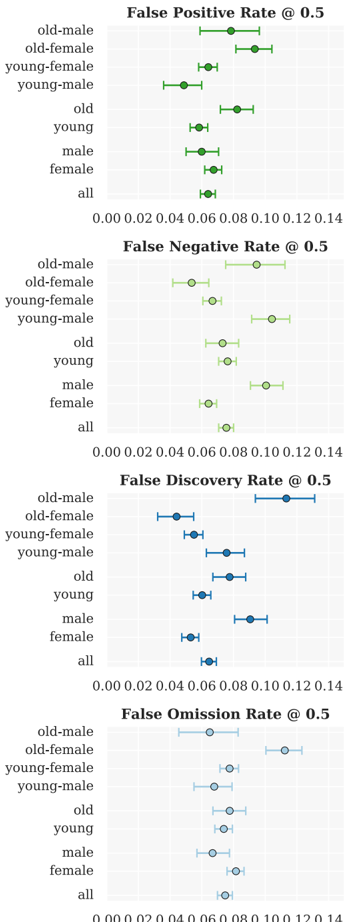
- In the smiling classifier example, all reported metrics at the .5 decision threshold have error types within the range 0.04–0.14, with 95% confidence intervals calculated by bootstrap resampling; the card notes older men have much higher false discovery rate, while men in aggregate have higher false negative rate.
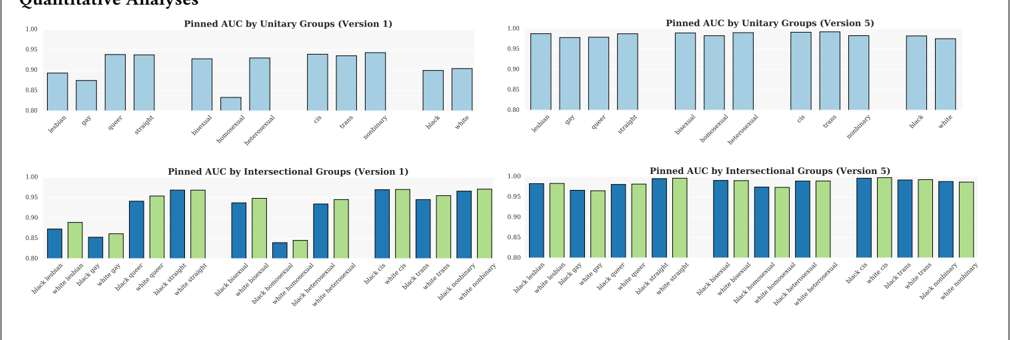
- In the toxicity example, TOXICITY v. 1 has low performance for several terms, especially “lesbian,” “gay,” and “homosexual,” while TOXICITY v. 5 shows more equitable performance after bias mitigation techniques.
Methods
- The paper is a framework/proposal paper, not an empirical study of a new model; it recommends model cards and details suggested sections and prompts.
- It provides two worked examples: a smiling classifier trained and evaluated on the CelebA dataset, using a convolutional neural net pretrained for face recognition and fine-tuned with cross-entropy loss for binary smiling classification.
- It also provides a model card for Perspective API’s TOXICITY classifier, a convolutional neural network developed by Jigsaw in 2017, evaluated on a synthetic Identity Phrase Templates test set; metrics include FPR, FNR, FDR, FOR for the smiling classifier and Pinned AUC for toxicity.
Limitations
- The paper states that model cards rely on the integrity of their creators and that it seems unlikely, at least in the near term, that they could be standardized or formalized enough to prevent misleading representations of model results.
- The paper states that evaluation datasets suitable for disaggregated evaluation are not yet common, and that the synthetic toxicity test data covers only a small set of very specific comments and is not comprehensive.
- The smiling classifier card states it does not capture race or skin type, uses binary gender classes (male/female), and that an ideal evaluation dataset would additionally include Fitzpatrick skin type, camera details, and environment details; the paper also states future work is needed to study how model information is interpreted and used by different stakeholders.
Model-written summary. Check it against the paper before relying on it.
Integrity signals
Registry
Cites
Statistics
Figures
Verification
Claims the paper makes
5 Valid · 1 Not valid · 18 Not checked · 30 Own results and interpretations
The cited sources support only part of this claim — read each source’s verdict below.
In the paper
“Synthetic data is valuable here because [11] shows that real data often has disproportionate amounts of toxicity directed at specific groups.”
What the sources say
- Partly supportedcites [11] [11] Lucas Dixon, John Li, Jeffrey Sorensen, Nithum Thain, and Lucy Vasserman. 2018. Measuring and Mitigating Unintended Bias in Text Classification. Proceedings of the AAAI/ACM Conference on AI, Ethics, and Society (2018). - sourceExperimental — accuracy not yet measured
The 'Quantifying bias in dataset' section (page unavailable) reports that certain identity terms appear disproportionately in toxic comments in the authors’ training data; for example, 'gay' appears in 3% of toxic comments but 0.5% of comments overall. It measures comments containing those terms, not whether toxicity is directed at the groups, and does not establish how often this pattern occurs across real datasets generally. (LLM, conf=0.85)
plainstates an association- Asserted: passes — The authors put it forward as true.
- Checkable: passes — It can be checked against evidence.
- Load-bearing: passes — The paper’s conclusions depend on it.
- Based: passes — The paper gives a reason why it holds.
- Partly supported
A result the paper reports from its own data — it cites no other source for it, so there is none to check. The quote shows it is in the paper.
In the paper
“For example, the false discovery rate on older men is much higher than that for other groups.”
plainstates an association- Asserted: passes — The authors put it forward as true.
- Checkable: passes — It can be checked against evidence.
- Load-bearing: passes — The paper’s conclusions depend on it.
- Based: passes — The paper gives a reason why it holds.
A result the paper reports from its own data — it cites no other source for it, so there is none to check. The quote shows it is in the paper.
In the paper
“TOXICITY v. 1 has low performance for several terms, especially 'lesbian', 'gay', and 'homosexual'.”
plain- Asserted: passes — The authors put it forward as true.
- Checkable: passes — It can be checked against evidence.
- Load-bearing: passes — The paper’s conclusions depend on it.
- Based: passes — The paper gives a reason why it holds.
None of the sources cited for this claim have been checked yet.
In the paper
“she collaborated with other researchers to demonstrate the disproportionate errors of computer vision systems on historically marginalized groups in the United States, such as darker-skinned women [5, 41].”
What the sources say
- Not checked yetcites [5] [5] Joy Buolamwini and Timnit Gebru. 2018. Gender Shades: Intersectional Accuracy Disparities in Commercial Gender Classification. In Proceedings of the 1st Conference on Fairness, Accountability and Transparency (Proceedings of Machine Learning Research) , Sorelle A. Friedler and Christo Wilson (Eds.), Vol. 81. PMLR, New York, NY, USA, 77-91. http://proceedings.mlr.press/v81/buolamwini18a.html -
- Not checked yetcites [41] [41] Inioluwa Raji. 2018. Black Panther Face Scorecard: Wakandans Under the Coded Gaze of AI. (2018). -
boostedstates an association- Asserted: passes — The authors put it forward as true.
- Checkable: passes — It can be checked against evidence.
- Load-bearing: passes — The paper’s conclusions depend on it.
- Based: passes — The paper gives a reason why it holds.
In the paper
“after MIT Media Lab graduate student Joy Buolamwini found that commercial face recognition systems failed to detect her face [4]”
What the sources say
- Not checked yetcites [4] [4] Joy Buolamwini. 2016. How I'm fighting Bias in Algorithms. (2016). https://www.ted.com/talks/joy\_buolamwini\_how\_i\_m\_fighting\_bias\_in\_ algorithms#t-63664 -
plainSingle case- Asserted: passes — The authors put it forward as true.
- Checkable: passes — It can be checked against evidence.
- Load-bearing: unclear — It is unclear whether the paper’s conclusions depend on it.
- Based: passes — The paper gives a reason why it holds.
13 more claims
Create a free account to see all 54 claims and to verify the 13 references still open.
- Probably not a substantial claim. 34
- It may state two separate claims as one. 8
Claims other papers make about this one
Each is checked against this paper’s own text: does it say what the citing paper says it does?
The source backs part of the claim, not all of it — or backs it for a different population, condition or comparison.
In the citing paper
“Model cards represent the field's standard for disclosing and documenting key facts about the architecture, training and evaluation of the model [14, 40].”
From Rethinking open source generative AI: open washing and the EU AI Act (2024) · cites this paper as [40]
Experimental — accuracy not yet measuredThe source backs part of the claim, not all of it — or backs it for a different population, condition or comparison.
In the citing paper
“Model cards (SMCs) [44] have been foundational in standardizing documentation for AI/ML model performance and characteristics, along with risks and unintended uses.”
From Interactive Model Cards: A Human-Centered Approach to Model Documentation (2022) · cites this paper as [44]
Experimental — accuracy not yet measuredThe source backs part of the claim, not all of it — or backs it for a different population, condition or comparison.
In the citing paper
“A second phase saw a more technical approach from the computer science community focusing on fairness, accountability and transparency as an engineering 'ethicalby-design' problem-solving exercise [20][21][22].”
From Putting AI ethics to work: are the tools fit for purpose? (2022) · cites this paper as [21]
Experimental — accuracy not yet measuredThe source backs part of the claim, not all of it — or backs it for a different population, condition or comparison.
In the citing paper
“These are either materials for use in design teams in workshop style events [76,77], tools for producing documentation of the design, build and test process [21,68], or technical tools for testing models, protecting privacy and security, testing for bias [69,93,94], or tracking provenance of data [95].”
From Putting AI ethics to work: are the tools fit for purpose? (2022) · cites this paper as [21]
Experimental — accuracy not yet measuredThe source backs part of the claim, not all of it — or backs it for a different population, condition or comparison.
In the citing paper
“There is some work on fairness relating to AI services, though this tends to focus on either exposing or 'auditing' certain AI services [22,38,126,133], or devising tools, methods and interventions relevant for those building (rather than using) such services [12,96,106,128].”
From Out of Context: Investigating the Bias and Fairness Concerns of “Artificial Intelligence as a Service” (2023) · cites this paper as [106]
Experimental — accuracy not yet measured
17 more claims about this paper
Create a free account to see every claim other papers make about this one.
Citations
Cites
BLEU: a method for automatic evaluation of machine translation
Papineni, K., Roukos, S., Ward, T., & Zhu, W.-J. (2001) · Proceedings of the 40th Annual Meeting on Association for Computational Linguistics - ACL '02 · doi:10.3115/1073083.1073135 · Cited by 21,344 · cited 1×
“translation system could compare BLEU scores [40] across demographic groups, and a model card for a speech recognition system could compare word-error rates.”
BackgroundCrenshaw, K. (2018) · Feminist Legal Theory · doi:10.4324/9780429500480-5 · Cited by 9,510
Deep Learning Face Attributes in the Wild
Liu, Z., Luo, P., Wang, X., & Tang, X. (2015) · 2015 IEEE International Conference on Computer Vision (ICCV) · doi:10.1109/iccv.2015.425 · Cited by 7,747 · cited 4×
“ms [5, 26] that report details of the datasets used to train and test machine learning models. We provide two example model cards in Section 5: A smiling detection model trained on the CelebA dataset [33] (Figure 2), and a public toxicity detection model, Perspective API [29] (Figure 3). Where Datasheets highlight cha…”
BackgroundMethodInfluentialThe validity and practicality of sun-reactive skin types I through VI
Fitzpatrick, T. B. (1988) · Archives of Dermatology · doi:10.1001/archderm.1988.01670060015008 · Cited by 4,339
Differential Privacy: A Survey of Results
Dwork, C. (2008) · Lecture Notes in Computer Science · doi:10.1007/978-3-540-79228-4_1 · Cited by 3,542 · cited 2×
“As such, collaboration with policy, privacy, and legal experts is necessary in order to ascertain which groups may be responsibly inferred, and how that information should be stored and accessed (for example, using differential privacy [12]).”
BackgroundCollins, G. S., Reitsma, J. B., Altman, D. G., & Moons, K. G. M. (2015) · Annals of Internal Medicine · doi:10.7326/m14-0697 · Cited by 3,267
Equality of Opportunity in Supervised Learning
Hardt, M., Price, E., & Srebro, N. (2016) · arXiv · doi:10.48550/arxiv.1610.02413 · Cited by 2,536 · cited 2×
“of Opportunity, and equal false negative and false positive rates across groups is equivalent to fulfilling Equality of Odds [26].”
BackgroundGebru, T., Morgenstern, J., Vecchione, B., Vaughan, J. W., Wallach, H., Daumé, H., & Crawford, K. (2018) · arXiv · doi:10.48550/arxiv.1803.09010 · Cited by 2,474
Self-citationA Probabilistic Interpretation of Precision, Recall and F-Score, with Implication for Evaluation
Goutte, C., & Gaussier, E. (2005) · Lecture Notes in Computer Science · doi:10.1007/978-3-540-31865-1_25 · Cited by 2,285 · cited 1×
“Confidence intervals for metrics derived from confusion matrices can be calculated by treating the matrices as probabilistic models of system performance [24].”
MethodFair prediction with disparate impact: a study of bias in recidivism prediction instruments
Chouldechova, A. (2017) · Big Data · doi:10.1089/big.2016.0047 · Cited by 2,159 · cited 1×
“or different errors that can be calculated from the confusion matrix for binary classification systems. • These also correspond to metrics in recent definitions of “fairness” in machine learning (cf. [8, 25]), where parity across subgroups for different metrics correspond to different fairness criteria. • 95% confiden…”
Background
Research works printed but not linked: 9
- [1] Avrio AI. 2018. Avrio AI: AI Talent Platform. (2018). https://www.goavrio.com/ -
- [5] Joy Buolamwini and Timnit Gebru. 2018. Gender Shades: Intersectional Accuracy Disparities in Commercial Gender Classification. In Proceedings of the 1st Conference on Fairness, Accountability and Transparency (Proceedings of Machine Learning Research) , Sorelle A. Friedler and Christo Wilson (Eds.), Vol. 81. PMLR, New York, NY, USA, 77-91. http://proceedings.mlr.press/v81/buolamwini18a.html -
- [13] Entelo. 2018. Recruitment Software | Entelo. (2018). https://www.entelo.com/ -
- [17] U.S. Food and Drug Administration. 2013. FDA Drug Safety Communication: Risk of next-morning impairment after use of insomnia drugs; FDA requires lower recommended doses for certain drugs containing zolpidem (Ambien, Ambien CR, Edluar, and Zolpimist). (2013). https://web.archive.org/web/20170428150213/ https://www.fda.gov/drugs/drugsafety/ucm352085.htm -
- [18] IIHS (Insurance Institute for Highway Safety: Highway Loss Data Institute). 2003. Special Issue: Side Impact Crashworthiness. Status Report 38, 7 (2003). -
- [19] Institute for the Future, Omidyar Network's Tech, and Society Solutions Lab. 2018. Ethical OS. (2018). https://ethicalos.org/ -
- [32] Jigsaw. 2017. Perspective API. (2017). https://www.perspectiveapi.com/ -
- [39] AI Now. 2018. Litigating Algorithms: Challenging Government Use Of Algorithmic Decision Systems. AI Now Institute. -
- [43] Mukund Sundararajan, Ankur Taly, and Qiqi Yan. 2017. In Proceedings of the 34th International Conference on Machine Learning , Vol. 70. PMLR, Sydney, Australia. -
Cited by
Items 801–900 of 2,235
Deng, W. H., Barocas, S., & Vaughan, J. W. (2025) · Proceedings of the ACM on Human-Computer Interaction · doi:10.1145/3711076 · Cited by 23
“Future research should also explore how the SIA template can be integrated with other existing responsible computing tools that have been adopted in industry [20, 55, 66, 67, 91, 114].”
Making the Right Thing: Bridging HCI and Responsible AI in Early-Stage AI Concept Selection
Jung, J.-Y., Saxena, D., Park, M., Kim, J., Forlizzi, J., Holstein, K., & Zimmerman, J. (2025) · Designing Interactive Systems Conference · doi:10.1145/3715336.3735745 · Cited by 14
“RAI tools have supported innovation practice in various ways (e.g., data and model documentation [25, 34, 66], detecting and mitigation bias [9, 41], etc.) but there is a misalignment.”
Sakurada, L., la Prieta, F. D., & Leitão, P. (2025) · IEEE Access · doi:10.1109/access.2025.3586716 · Cited by 22
“For instance, ‘‘model cards’’ [118], [119] proposed by Google is one initiative aiming to standardize AI to encourage such transparent model reporting.”
TIREx Tracker: The Information Retrieval Experiment Tracker
Hagen, T., Fröbe, M., Reimer, J. H., Scells, H., Hagen, M., & Potthast, M. (2025) · International ACM SIGIR Conference on Research and Development in Information Retrieval (SIGIR) · doi:10.1145/3726302.3730297 · Cited by 11
Marzouk, E., & Alajaji, A. I. (2025) · Veterinary Sciences · doi:10.3390/vetsci12101014 · Cited by 26
“Over the next 0–18 months, focus on releasing multi-site benchmark datasets with transparent model cards [337], reporting blinded external validation with prespecified metrics such as AUROC and calibration in line with TRIPOD-AI [338], and—when trials are conducted—adhering to CONSORT-AI for…”
DREC: towards a Datasheet for Reporting Experiments in Crowdsourcing
Ramírez, J., Báez, M., Casati, F., Cernuzzi, L., & Benatallah, B. (2020) · ACM Conference on Computer Supported Cooperative Work (CSCW) · doi:10.1145/3406865.3418318 · Cited by 10
Feature Interactions on Steroids: On the Composition of ML Models
Apel, S., Kästner, C., & Kang, E. (2022) · IEEE Software · doi:10.1109/ms.2021.3134386 · Cited by 8
“For example, both plugins of the WordPress example could come with a test case checking that the plugin correctly transforms a relevant blog post independent of any other plugins installed (e.g., the Weather test would fail if the Smiley plugin is active at the same time, thus detecting the…”
BackgroundHCI Research Experiences During the Pandemic: Lessons Learned for the Road Ahead
Corrêa, C. M., Barbosa, G. D. J., Barbosa, S. D. J., & Silveira, M. S. (2022) · Interacting with Computers · doi:10.1093/iwc/iwac036 · Cited by 8
Towards a Semantic Approach for Linked Dataspace, Model and Data Cards
Donald, A., Galanopoulos, A., Curry, E., Muñoz, E., Ullah, I., Waskow, M. A., Dabrowski, M., & Kalra, M. (2023) · International World Wide Web Conference (WWW) · doi:10.1145/3543873.3587659 · Cited by 18
“Later, [16] proposes Model Cards for transparency surrounding the motivation and development of diferent models and algorithms, while [3] distinguishes FactSheets from Model/Data Sheets by focusing on the AI service provided, incorporating documentation of any model, algorithm, and dataset used…”
BackgroundMethodInfluentialAI-Assisted Diplomatic Decision-Making During Crises: Challenges and Opportunities
Pokhriyal, N., & Koebe, T. (2023) · Springer eBooks · doi:10.1007/978-3-032-12201-8_36 · Cited by 17
Optimization’s Neglected Normative Commitments
Laufer, B., Gilbert, T. K., & Nissenbaum, H. F. (2023) · ACM Conference on Fairness, Accountability, and Transparency (FAccT) · doi:10.1145/3593013.3593976 · Cited by 18
“The work on documenting models [82], datasets [43], and reinforcement learning models [45] might hold lessons for optimization.”
BackgroundAIMEE: An Exploratory Study of How Rules Support AI Developers to Explain and Edit Models
Piorkowski, D., Vejsbjerg, I., Cornec, O., Daly, E., & Alkan, Ö. (2023) · Proceedings of the ACM on Human-Computer Interaction · doi:10.1145/3610046 · Cited by 17
“A number of approaches have been proposed to increase AI transparency and document various aspects of data and models [10, 33, 43, 58, 64].”
BackgroundMetadata Representations for Queryable Repositories of Machine Learning Models
Li, Z., Kant, H., Hai, R., Katsifodimos, A., Brambilla, M., & Bozzon, A. (2023) · IEEE Access · doi:10.1109/access.2023.3330647 · Cited by 21
“Existing model zoos offer users model cards [8] that describe the models in different levels of detail.”
BackgroundInfluentialGenerative AI in Terms of Its Ethical Problems for Both Teachers and Learners: Striking a Balance
Le-Nguyen, H.-T., & Tran, T. T. (2023) · Advances in educational technologies and instructional design book series · doi:10.4018/979-8-3693-0074-9.ch006 · Cited by 24
DREAMER: a computational framework to evaluate readiness of datasets for machine learning
Ahangaran, M., Zhu, H., Li, R., Yin, L., Jang, J., Chaudhry, A. P., Farrer, L. A., Au, R., & Kolachalama, V. B. (2024) · BMC Medical Informatics and Decision Making · doi:10.1186/s12911-024-02544-w · Cited by 10
“…literature to assess data readiness, including but not limited to AutoML [8], Datasheets [9], Data Statements [10], FactSheets [11], Dataset Nutrition Label [12], Model Cards [13], Data-maid [14], Codebook [15], IBM Data Quality Toolkit [16], and Data Readiness Report [17] (Supplementary Notes 2).”
BackgroundHow to Design a Governable Digital Health Ecosystem
Morley, J., & Floridi, L. (2019) · Digital ethics lab yearbook · doi:10.1007/978-3-030-80083-3_8 · Cited by 15
Parole Rules in the United States: Conditions of Parole in Historical Perspective, 1956–2020
Wiggins, B., Rhine, E. E., Crye, B., Tu, R., & Mitchell, K. L. (2021) · Criminal Justice Review · doi:10.1177/07340168211020811 · Cited by 11
“…and fairness as guiding principles, then the promise of statistically based risk mitigation holds promise to improve parole outcomes rather than further reinforce the systemic biases so entrenched upstream in the criminal-justice system of the United States (FAT/ML, 2014; Mitchell et al., 2019).”
BackgroundHow do AI systems fail socially?: an engineering risk analysis approach
Rismani, S., & Moon, A. (2021) · IEEE International Symposium on Ethics in Engineering, Science, and Technology (ETHICS) · doi:10.1109/ethics53270.2021.9632769 · Cited by 8
Navigating the Audit Landscape: A Framework for Developing Transparent and Auditable XR
Norval, C., Cloete, R., & Singh, J. (2023) · ACM Conference on Fairness, Accountability, and Transparency (FAccT) · doi:10.1145/3593013.3594090 · Cited by 13
“However, while such topics are increasingly on the agenda—particularly regarding algorithmic and data-driven systems (e.g. [36, 75, 89, 92, 102])—transparency and accountability within the contexts of XR has thus far been little-considered.”
BackgroundInfluentialWhose Walkability? Challenges in Algorithmically Measuring Subjective Experience
Díaz, M., & Diakopoulos, N. A. (2019) · Proceedings of the ACM on Human-Computer Interaction · doi:10.1145/3359228 · Cited by 14
Lessons learned from developing a COVID‐19 algorithm governance framework in Aotearoa New Zealand
Wilson, D., Tweedie, F., Rumball‐Smith, J., Ross, K., Kazemi, A., Galvin, V., Dobbie, G., Dare, T., Brown, P., & Blakey, J. (2022) · Journal of the Royal Society of New Zealand · doi:10.1080/03036758.2022.2121290 · Cited by 12
Gemini Robotics: Bringing AI into the Physical World
Gemini Robotics Team, Abeyruwan, S., Ainslie, J., Alayrac, J.-B., Arenas, M. G., Armstrong, T., Balakrishna, A., Baruch, R., Bauza, M., Blokzijl, M., et al. (2025) · arXiv · doi:10.48550/arxiv.2503.20020 · Cited by 8
Component Mismatches Are a Critical Bottleneck to Fielding AI-Enabled Systems in the Public Sector
Lewis, G. A., Bellomo, S., & Galyardt, A. (2019) · arXiv · doi:10.48550/arxiv.1910.06136 · Cited by 8
“While there is existing, recent work in creating descriptors for data sets (Gebru et al. 2018), models (Mitchell et al. 2019), and online AI services (Hind et al. 2018), there are two main limitations in this work: (1) they do not address the software engineer and operations perspectives, and (2)…”
BackgroundMethodThe AI Act's Research exemption: a mechanism for regulatory arbitrage?
Colonna, L., & Submitter, S. L. (2023) · doi:10.2139/ssrn.4575971 · Cited by 8
Forks Over Knives: Predictive Inconsistency in Criminal Justice Algorithmic Risk Assessment Tools
Greene, T., Shmueli, G., Fell, J., Lin, C.-F., & Liu, H.-W. (2020) · arXiv · doi:10.48550/arxiv.2012.00289 · Cited by 8
Benway, N. R., & Preston, J. L. (2025) · Language, Speech, and Hearing Services in Schools · doi:10.1044/2025_lshss-24-00085 · Cited by 12
Automatic transparency evaluation for open knowledge extraction systems
Basereh, M., Caputo, A., & Brennan, R. (2023) · Journal of Biomedical Semantics · doi:10.1186/s13326-023-00293-9 · Cited by 15
“Citation details [42] 14.”
BackgroundJust public algorithms: Mapping public engagement with the use of algorithms in UK public services
Pallett, H., Price, C., Chilvers, J., & Burall, S. (2024) · Big Data & Society · doi:10.1177/20539517241235867 · Cited by 9
“…, including ensuring the completeness and accuracy of datasets used (Leslie, 2019), guaranteeing the safety and security of systems (Burton et al., 2020), producing accompanying documentation to improve transparency and ensure responsible use (Mitchell et al., 2019), and avoiding mistakes.”
BackgroundBertrand, A., Eagan, J., Maxwell, W., & Brand, J. L. M. (2024) · CHI Conference on Human Factors in Computing Systems · doi:10.1145/3613904.3642326 · Cited by 10
“Discussions between certifcation providers and supervisors might be benefcial to talk about best practices, such as standard models for documentation [41, 83], or mathematical proofs that a code is correct, when applicable [49].”
BackgroundNo Simple Fix: How AI Harms Reflect Power and Jurisdiction in the Workplace
Nedzhvetskaya, N., & Tan, J. (2024) · ACM Conference on Fairness, Accountability, and Transparency (FAccT) · doi:10.1145/3630106.3658915 · Cited by 14
Attribute annotation and bias evaluation in visual datasets for autonomous driving
Llorca, D. F., Frau, P., Parra, I., Izquierdo, R., & Gómez, E. (2024) · Journal Of Big Data · doi:10.1186/s40537-024-00976-9 · Cited by 12
“In the general field of machine learning, proposed standards for model [13] and data [14] transparency reporting advocate the disclosure of performance metrics, disaggregated by relevant population groups.”
BackgroundGebru, T., & Denton, E. (2024) · Foundations and Trends® in Computer Graphics and Vision · doi:10.1561/0600000102 · Cited by 16
Self-citationSkin Phototype Classification with Machine Learning Based on Broadband Optical Measurements
Yu, X., Ong, K. G., & McGeehan, M. A. (2024) · Sensors · doi:10.3390/s24227397 · Cited by 11
“From clinical uses such as screening for skin cancer and skin grafting immunosuppression to cultural research in colorism and cosmetic product development [1–5], skin phototype classification continuously demonstrates usefulness across academic, clinical, and industrial applications [6].”
An Emerging Design Space of How Tools Support Collaborations in AI Design and Development
Muralikumar, M. D., & McDonald, D. W. (2025) · Proceedings of the ACM on Human-Computer Interaction · doi:10.1145/3701181 · Cited by 11
“Model cards are a model documentation framework, provided alongside a model, to transparently report on how the model was trained, evaluation results, key metrics, intended use cases, and ethical considerations [63].”
RiskRAG: A Data-Driven Solution for Improved AI Model Risk Reporting
Rao, P. S. B., Šćepanović, S., Zhou, K., Bogucka, E. P., & Quercia, D. (2025) · CHI Conference on Human Factors in Computing Systems · doi:10.1145/3706598.3713979 · Cited by 24
“Recent efforts have sought to enhance the ethical considerations and risk sections in model cards [17, 34].”
InfluentialNotice of Removal October 9, 2026: Social Life Simulation for Non-Cognitive Skills Learning
Yan, Z., & Xiang, Y. (2025) · Proceedings of the ACM on Human-Computer Interaction · doi:10.1145/3711068 · Cited by 20
“This approach will contribute to a safer, more responsible interactive storytelling experience.”
Building trust: Foundations of security, safety, and transparency in AI
Sidhpurwala, H., Mollett, G., Fox, E., Bestavros, M., & Chen, H. (2025) · AI Magazine · doi:10.1002/aaai.70005 · Cited by 12
The Root Shapes the Fruit: On the Persistence of Gender-Exclusive Harms in Aligned Language Models
Ovalle, A., Pavasovic, K. L., Martin, L., Zettlemoyer, L., Smith, E. M., Chang, K.-W., Williams, A., & Sagun, L. (2025) · ACM Conference on Fairness, Accountability, and Transparency (FAccT) · doi:10.1145/3715275.3732196 · Cited by 19
“We detail our text extraction procedure and full examples from the preference datasets in the Appendix (§A.4).”
Bridging finance and AI: a comprehensive survey of large language models in financial system
Khan, A. T., Li, S., & Cao, X. (2025) · Digital Finance · doi:10.1007/s42521-025-00146-3 · Cited by 23
“Ensuring auditability and interoperability requires standardized protocols such as model cards Mitchell et al. (2019) and APIs that facilitate integration with existing compliance and risk management systems.”
Artificial intelligence and economic psychology: toward a theory of algorithmic cognitive influence
Fernández, F. R. (2025) · AI & Society · doi:10.1007/s00146-025-02592-4 · Cited by 18
“Proactively, companies and regulators are exploring ways to mitigate bias: incorporating diversity in training data, using algorithmic fairness constraints, and including stakeholders from affected groups in AI design and testing (Mitchell et al. 2019).”
The politics of artificial intelligence supply chains
Muldoon, J., Valdivia, A., & Badger, A. (2025) · AI & Society · doi:10.1007/s00146-025-02625-y · Cited by 24
Impact Assessment Card: Communicating Risks and Benefits of AI Uses
Bogucka, E. P., Constantinides, M., Šćepanović, S., & Quercia, D. (2025) · Proceedings of the ACM on Human-Computer Interaction · doi:10.1145/3757482 · Cited by 18
“To show model information as per R2 , we created a section documenting the performance of system models in accordance with the guidelines outlined for the model cards [65] and card from P12.”
Culturally responsive AI chatbots: From framework to field evidence
Naidoo, V., & CHADHA, K. K. (2025) · Computers in Human Behavior Artificial Humans · doi:10.1016/j.chbah.2025.100224 · Cited by 19
The AI-powered soft skills renaissance: cultivating human abilities in the digital era
Muthukumar, M., Sitharaj, A., Sundaram, M. M., & Dhananjeiyan, B. (2025) · AI and Ethics · doi:10.1007/s43681-025-00912-4 · Cited by 10
“A significant difficulty is that bias frequently remains obscured within intricate machine learning frameworks, complicating its identification and rectification [ 76].”
Unveiling the Algorithm: The Role of Explainable Artificial Intelligence in Modern Surgery
Lopes, S., Mascarenhas, M., Fonseca, J., Fernandes, G., & Leite-Moreira, A. F. (2025) · Healthcare · doi:10.3390/healthcare13243208 · Cited by 15
“When unfair patterns are identified, developers and clinical leaders must act, either by rebalancing training data, removing confounding features, or adjusting thresholds for underrepresented groups [62,63].”
Evaluating the quality of GenAI applications in software engineering: a multi-case study
Yu, L., Alégroth, E., Chatzipetrou, P., & Gorschek, T. (2025) · Empirical Software Engineering · doi:10.1007/s10664-025-10759-2 · Cited by 12
“This shift in quality assurance calls for new or adapted evaluation approaches that better reflect the unique characteristics of GenAI outputs (Mitchell et al. 2019).”
Digital platform sovereignty through Ubuntu: Re-imagining AI-enabled work future in Africa
Anning‐Dorson, T. (2025) · Electronic Markets · doi:10.1007/s12525-025-00864-x · Cited by 13
“…using dual-channel adju-dication combining AI screening with human review for quality control will yield lower quality assessment error rates compared to platforms using AI-only or human-only review, controlling for task types and evaluation complexity (Lam et al., 2024 ; Mitchell et al., 2019) .”
InfluentialNnadi, L. C., Isiwu, C. P., Ding, D., Muepu, D. M., & Watanobe, Y. (2026) · IEEE Access · doi:10.1109/access.2026.3652631 · Cited by 14
“Model Cards and Datasheets recommend stratified performance reporting and documentation of intended use and limitations [44], [45].”
Gangwal, A., & Lavecchia, A. (2026) · Wiley Interdisciplinary Reviews Computational Molecular Science · doi:10.1002/wcms.70072 · Cited by 13
“…in computational science requires not only reproducibility mandates but Beyond technical safeguards, accountability requires a cultural shift: incentive systems must reward calibrated claims, transparent limitation reporting [50], preregistration [49], and publication of negative/null results [17].”
Sardar, S., Dash, S., Roychowdhury, P., Solanki, J., Sikdar, P., Thangappan, J., & Dutta, S. (2026) · Briefings in Bioinformatics · doi:10.1093/bib/bbag269 · Cited by 13
“Model cards provide a standardised framework for reporting ML systems, detailing intended use cases, training data characteristics, evaluation metrics, and ethical considerations [ 68].”
Khairil, L., Benny, K. H. S., Jerry, J., Khatib, F. M., Ramli, M. D. C., & Kumar, S. (2026) · Pharmaceuticals · doi:10.3390/ph19060916 · Cited by 11
“More informed adoption and critical evaluation, built upon frameworks covering training data characteristics, intended use, limitations, and known failure modes are increasingly viewed as foundational to responsible AI deployment [169].”
The 2025 AI Agent Index: Documenting Technical and Safety Features of Deployed Agentic AI Systems
Staufer, L., Feng, K. J. K., Wei, K., Bailey, L., Duan, Y., Yang, M., Ozisik, A. P., Casper, S., & Kolt, N. (2026) · ACM Conference on Fairness, Accountability, and Transparency (FAccT) · doi:10.1145/3805689.3806728 · Cited by 75
“These include datasheets [49], model cards [90], system cards [57], factsheets [9], AI nutrition facts [121], reward reports [52], ecosystem graphs [21], data provenance cards [77], eval cards [38], audit cards [116], usage cards [127], and safety cases [29].”
Translating the Public Service Media Remit into Metrics and Algorithms
Grün, A., & Neufeld, X. (2022) · ACM Conference on Recommender Systems (RecSys) · doi:10.1145/3523227.3547380 · Cited by 13
Ahmad, M. A., & Eckert, C. (2023) · Surgical Clinics of North America · doi:10.1016/j.suc.2023.03.002 · Cited by 8
Beyond the ML Model: Applying Safety Engineering Frameworks to Text-to-Image Development
Rismani, S., Shelby, R. M., Smart, A., Santos, R. D., Moon, A., & Rostamzadeh, N. (2023) · Proceedings of the AAAI/ACM Conference on AI Ethics and Society · doi:10.1145/3600211.3604685 · Cited by 27
Toward Detecting and Addressing Corner Cases in Deep Learning Based Medical Image Segmentation
Rajamani, S. T., Rajamani, K. T., Venkateshvaran, A., Triantafyllopoulos, A., Kathan, A., & Schuller, B. W. (2023) · IEEE Access · doi:10.1109/access.2023.3311134 · Cited by 7
“identify potential shortcomings of production models [8].”
Human-Centered AI Goals for Speech Therapy Tools
Deka, C., Shrivastava, A., Nautiyal, S., & Chauhan, P. (2023) · Communications in computer and information science · doi:10.1007/978-3-031-49368-3_8 · Cited by 7
Barbosa, G. D. J., Nunes, J. L., de Souza, C. S., & Barbosa, S. D. J. (2023) · Brazilian Symposium on Human Factors in Computing Systems (IHC) · doi:10.1145/3638067.3638070 · Cited by 10
“Notable cases include the Datasheets for Datasets [21] and the Model Cards for Model Reporting [29].”
MethodInfluentialAINeedsPlanner: A Workbook to Support Effective Collaboration Between AI Experts and Clients
Kim, D. H., Shin, H., Yadgarova, S., Son, J., Subramonyam, H., & Kim, J. (2024) · Designing Interactive Systems Conference · doi:10.1145/3643834.3661577 · Cited by 11
“Existing specification templates such as Datasheets for Dataset [22] and Model cards [44] can be used in the planning stage for clearly setting the design goals of AI applications, but the nature of “reporting” as the goal misses important dimensions that need to be considered in the planning stage…”
BackgroundMethodInfluentialDesigning with Data, Data-Enabled and Data-Driven Design
Funk, M., Lövei, P., & Noortman, R. (2024) · Springer eBooks · doi:10.1007/978-3-319-27648-9_40-1 · Cited by 9
The Power of Absence: Thinking with Archival Theory in Algorithmic Design
Sherman, J., Morrison, R. R., Klein, L. F., & Rosner, D. K. (2024) · Designing Interactive Systems Conference · doi:10.1145/3643834.3660690 · Cited by 34
“…documenting the composition of datasets (e.g. “Datasheets for Datasets” [30]) and the performance of models (e.g. “Model Cards for Model Reporting” [54]), heightened standards for data sharing and research replica-bility [43, 66], and mechanisms for enhanced interpretability and explainability of…”
BackgroundData Ethics Emergency Drill: A Toolbox for Discussing Responsible AI for Industry Teams
Hanschke, V. A., Rees, D., Alanyali, M., Hopkinson, D., & Marshall, P. (2024) · CHI Conference on Human Factors in Computing Systems · doi:10.1145/3613904.3642402 · Cited by 13
“…example, the DEED could respond to the question Is there anything about the composition of the dataset or the way it was collected and preprocessed/cleaned/labeled that might impact future uses? in datasheets for data sets [22] or to the section on Caveats and recommendations in model cards [39].”
Towards a Non-Ideal Methodological Framework for Responsible ML
Mothilal, R. K., Guha, S., & Ahmed, S. I. (2024) · CHI Conference on Human Factors in Computing Systems · doi:10.1145/3613904.3642501 · Cited by 16
“For instance, Bhat et al. [13] design a tool, not to replace model cards [88], but to nudge the practitioners to better comply with the model cards proposals and assess the documentation quality.”
MethodEvaluation of Image Filtering Parameters for Plant Biometrics Improvement Using Machine Learning
Olaleye, T. O., Arogundade, O. '., Adenusi, C. A., Misra, S., & Bello, A. O. (2021) · Communications in computer and information science · doi:10.1007/978-981-16-0708-0_25 · Cited by 10
Claver, A., & van de Meeberg, H. M. (2021) · Intelligence & National Security · doi:10.1080/02684527.2021.1946951 · Cited by 11
MoReXAI - A Model to Reason About the eXplanation Design in AI Systems
Carvalho, N. D. O., Sampaio, A. L., & de Vasconcelos, D. R. (2022) · Lecture notes in computer science · doi:10.1007/978-3-031-05643-7_9 · Cited by 10
Documenting use cases in the affective computing domain using Unified Modeling Language
Hupont, I., & Gómez, E. (2022) · International Conference on Affective Computing and Intelligent Interaction and workshops · doi:10.1109/acii55700.2022.9953809 · Cited by 15
““What is the intended use of the service output?” [12] and “Intended Use” section in [4]), it is just in very broad terms and provided examples lack sufficient details to address complex legal concerns.”
BackgroundMethodInfluentialKwon, B. C., Kartoun, U., Khurshid, S. S., Yurochkin, M., Maity, S., Brockman, D., Khera, A. V., Ellinor, P. T., Lubitz, S. A., & Ng, K. (2022) · Visualization · doi:10.1109/vis54862.2022.00019 · Cited by 15
“Recently, researchers investigated the concept of a model report card which summarizes how a model was trained and how it performs on a fixed set of subgroups in a static report [3,23].”
BackgroundPrabhudesai, S., Hauth, J. M., Guo, D., Rao, A. U. K., Banović, N., & Huan, X. (2023) · Frontiers in Computer Science · doi:10.3389/fcomp.2023.1071174 · Cited by 15
“, 2022), report (Arnold et al., 2018; Mitchell et al., 2019; Pushkarna et al., 2022) and design for uncertainty (Bowler et al.”
BackgroundIf Our Aim Is to Build Morality Into an Artificial Agent, How Might We Begin to Go About Doing So?
Seeamber, R., & Badea, C. (2023) · IEEE Intelligent Systems · doi:10.1109/mis.2023.3320875 · Cited by 9
“As suggested by Mitchell et al. (2019), documentation detailing the performance of models in different contexts (e.g. age, race, sex) should be provided [18] .”
BackgroundFeedbackLogs: Recording and Incorporating Stakeholder Feedback into Machine Learning Pipelines
Barker, M., Kallina, E., Ashok, D., Collins, K. M., Casovan, A., Weller, A., Talwalkar, A., Chen, V., & Bhatt, U. (2023) · ACM Conference on Equity and Access in Algorithms, Mechanisms, and Optimization (EAAMO) · doi:10.1145/3617694.3623239 · Cited by 15
Neural Methods for Data-to-text Generation
Sharma, M., Gogineni, A. K., & Ramakrishnan, N. (2024) · ACM Transactions on Intelligent Systems and Technology · doi:10.1145/3660639 · Cited by 31
“Adding to that the data sparsity prevalent in D2T, extensions of prefix-tuning [182] and in-context sample search [189] may be especially favorable for building strong subset of samples for few-shot learning in LLMs. • Deviation from Task-specific Architectures: The paradigm for data-to-text…”
Casacuberta, D., Guersenzvaig, A., & Moyano-Fernández, C. (2022) · AI & Society · doi:10.1007/s00146-022-01389-z · Cited by 10
“(Mitchell et al. 2019: p. 6).”
BackgroundResponsible AI for Trusted AI-powered Enterprise Platforms
Hoi, S. C. H. (2023) · ACM International Conference on Web Search and Data Mining (WSDM) · doi:10.1145/3539597.3575784 · Cited by 10
Risk Identification Questionnaire for Unintended Bias in Machine Learning Development LifecyclePreprint
Lee, M. S. A., & Singh, J. P. (2021) · SSRN Electronic Journal · doi:10.2139/ssrn.3777093 · Cited by 6
Advanced AI Governance: A Literature Review of Problems, Options, and ProposalsPreprint
Maas, M. M. (2023) · SSRN Electronic Journal · doi:10.2139/ssrn.4629460 · Cited by 21
Olthof, S. B. H., & Davis, J. J. (2025) · Science and Medicine in Football · doi:10.1080/24733938.2025.2533784 · Cited by 17
“What constitutes transparency in AI is an open question, but current research focuses on issues such as providing (meta) information about data collection (Gebru et al. 2021) and model building (Mitchell et al. 2019).”
Gautam, S., Chandra, M., De, A., Chakravorti, T., Malik, G., & De Choudhury, M. (2025) · arXiv · doi:10.48550/arxiv.2508.06849 · Cited by 7
Pandiani, D. S. M. (2024) · Future Humanities · doi:10.1002/fhu2.11 · Cited by 10
Abdu, A. A., Chambers, L. M., Mulligan, D. K., & Jacobs, A. Z. (2024) · ACM Conference on Fairness, Accountability, and Transparency (FAccT) · doi:10.1145/3630106.3658962 · Cited by 17
“While the FAccT community has advocated for a range of artifacts as interventions toward transparency and participation [e.g., 51, 57, 88], these artifacts have largely been divorced from the contextual changes they introduce [89, 113].”
BackgroundTaveekitworachai, P., Chanmas, G., Paliyawan, P., Thawonmas, R., Nukoolkit, C., Dajpratham, P., & Thawonmas, R. (2024) · Heliyon · doi:10.1016/j.heliyon.2024.e32930 · Cited by 8
“Consult the model card [62] for what information should be included.”
Ethical Dilemmas and Collaborative Resolutions in Machine Learning Research for Health Care
Zilberstein, S. (2024) · Socius Sociological Research for a Dynamic World · doi:10.1177/23780231241259671 · Cited by 8
“Within both academic and corporate communities, scholars seek to encourage the evaluation of the broader impacts of new tools (Gebru et al. 2021; Mitchell et al. 2019; Wang et al. 2022).”
Analyzing Collaborative Challenges and Needs of UX Practitioners when Designing with AI/ML
Muralikumar, M. D., & McDonald, D. W. (2024) · Proceedings of the ACM on Human-Computer Interaction · doi:10.1145/3686986 · Cited by 12
“Examples include model cards, datasheets, and data cards [25, 45, 55].”
Johnson, T., & Obradovich, N. (2024) · Nature Communications · doi:10.1038/s41467-024-54758-1 · Cited by 11
Trustworthiness Optimisation Process: A Methodology for Assessing and Enhancing Trust in AI Systems
Fikardos, M., Lepenioti, K., Apostolou, D., & Mentzas, G. N. (2025) · Electronics · doi:10.3390/electronics14071454 · Cited by 8
“Model cards, pioneered by Mitchell et al. [37], provide a standardised format for documenting machine learning models.”
Hatherley, J. J. (2025) · Ethics and Information Technology · doi:10.1007/s10676-025-09829-2 · Cited by 15
“For example, some model cards may contain comparative quantitative analyses of different versions of a model (see the model card for ”toxic-ity in text” in Mitchell et al. 2019).”
The ethics of AI at the intersection of transgender identity and neurodivergence
Parks, M. (2025) · Discover Artificial Intelligence · doi:10.1007/s44163-025-00257-1 · Cited by 7
“Documenting these design choices through “model cards” [41] further enhances trans-parency, helping external auditors and stakeholders spot potential blind spots and contextualize the model’s intended uses, limitations, and performance across different demographic groups [14].”
Harmful Algae Forecasting through an Ocean Data Justice Lens
Record, N. R., Tupper, B., Douyon, K., Drakopulos, L., Vera, L. A., & Evanilla, J. (2025) · Environmental Science & Technology · doi:10.1021/acs.est.4c10838 · Cited by 7
Computer Audition: From Task-Specific Machine Learning to Foundation Models
Triantafyllopoulos, A., Tsangko, I., Gebhard, A., Mesaros, A., Virtanen, T. I., & Schuller, B. W. (2025) · Proceedings of the IEEE · doi:10.1109/jproc.2025.3593952 · Cited by 20
“As a first step, we believe that it would be important to thoroughly document those in the model cards that accompany the release of FMs [130].”
Sivakaminathan, S. S., & Musi, E. (2025) · AI & Society · doi:10.1007/s00146-025-02564-8 · Cited by 24
Subías-Beltrán, P., Unceta, I., de Lecuona, I., & Pujol, O. (2025) · AI & Society · doi:10.1007/s00146-025-02611-4 · Cited by 11
“…explores whether the population the system is intended for has been clearly identified to align its goals, assumptions, and functionalities with the actual needs of its users (Naghiaei et al. 2022), as demonstrated by Data Cards (Pushkarna et al. 2022) and Model Cards (Mitchell et al. 2019).”
Model Cards Revisited: Bridging the Gap Between Theory and Practice for Ethical AI Requirements
Puhlfürß, T., Butzke, J., & Maalej, W. (2025) · IEEE International Requirements Engineering Conference (RE) · doi:10.1109/re63999.2025.00034 · Cited by 12
“Guidelines and frameworks request evaluation data to enable replication of claimed performance [9].”
InfluentialSchäfer, U., Sipos, L., & Müller-Birn, C. (2025) · Proceedings of the ACM on Human-Computer Interaction · doi:10.1145/3757451 · Cited by 13
“…beyond technical approaches (see Section 2.1), such as providing users information about the AI systems’ model and training data, for example, by using AI model cards [116] or showing AI’s capabilities [142], may equip users with needed knowledge to improve their collaboration with the AI [142].”
InfluentialAI and Diversity: Ensuring Fairness in Automated Decision-Making
Subrahmanyam, S., & Baz, B. E. (2025) · Advances in computational intelligence and robotics book series · doi:10.4018/979-8-3373-3104-1.ch002 · Cited by 6
Open and sustainable AI: challenges, opportunities and the road ahead in the life sciences
Farrell, G., Adamidi, E. S., Buono, R. A., Anton, M., Attafi, O. A., Capella-Gutiérrez, S., Capriotti, E., Castro, L. J., Cirillo, D., Crossman, L. C., et al. (2026) · Nature Methods · doi:10.1038/s41592-026-03037-6 · Cited by 16
“Other AI metadata standards also exist, such as Model Cards 69 and Dataset Cards 70 .”
Evolving from Rules to Learning in Urban Modeling and Planning Support Systems
Cai, Z. (2025) · Urban Science · doi:10.3390/urbansci9120508 · Cited by 9
ALOHA: A(IBoM) tooL generatOr for Hugging fAce
D'Avino, R., Nocera, S., Bifolco, D., Pepe, F., Penta, M. D., & Scanniello, G. (2025) · International Conference on Evaluation and Assessment in Software Engineering (EASE) · doi:10.1145/3756681.3756998 · Cited by 11
Schömbs, S., Zhang, Y., Gonçalves, J., & Johal, W. (2025) · International Conference on Human-Agent Interaction (HAI) · doi:10.1145/3765766.3765795 · Cited by 19
The Missing Dimension in Clinical AI: Making Hidden Values Visible
Goldberg, C. B., Balicer, R. D., Bhat, M., Blumenthal, D., Brendel, R. W., Brondolo, E. M., Brownstein, J. S., Buckley, T. A., Cain, C. H., Chandak, P., et al. (2026) · NEJM AI · doi:10.1056/aip2501266 · Cited by 8
Zhang, X., Zhao, P., Jaskolka, J., Li, H., & Lu, R. (2026) · Empirical Software Engineering · doi:10.1007/s10664-025-10795-y · Cited by 11
“Practices such as datasheets for datasets and model cards have been proposed to standardize documentation and transparency of data and models, facilitating audit-able lineage and reducing technical debt in ML pipelines (Gebru et al. 2018 ; Mitchell et al. 2019 ).”
Metadata
- Authors
- Mitchell, M., Wu, S., Zaldivar, A., Barnes, P., Vasserman, L., Hutchinson, B., Spitzer, E., Raji, I. D., & Gebru, T.
- Venue
- Proceedings of the Conference on Fairness, Accountability, and Transparency
- Publisher
- ACM
- Published
- 2019-01-29
- Pages
- 220-229
- OpenAlex
- W2897042519
- Semantic Scholar
- 7365f887c938ca21a6adbef08b5a520ebbd4638f
- Cited by
- 2,681
- References
- 12
- Citations by year
- 2026: 831 · 2025: 446 · 2024: 376 · 2023: 366 · 2022: 243 · 2021: 260 · 2020: 102 · 2019: 54
- FWCI
- 170.95
- Type
- conference paper
- Language
- en
- Open access
- green
- arxiv.org
- Locations
- ACM Conference on Fairness, Accountability, and Transparency (FAccT) (publishedVersion)
- arXiv (Cornell University) (submittedVersion)
- arXiv (Cornell University)
- Topics
- Physical Sciences › Computer Science › Artificial Intelligence › Ethics and Social Impacts of AI
- Physical Sciences › Computer Science › Artificial Intelligence › Explainable Artificial Intelligence (XAI)
- Physical Sciences › Computer Science › Computer Vision and Pattern Recognition › Face recognition and analysis
- Keywords
- model cards, model transparency, algorithmic fairness, demographic bias, responsible AI, democratization of AI, toxic comment detection, model documentation
About these checks
Registry, retraction, Cites and statistics results are computed, not judged, with one exception: a printed reference that no index lists is read once by a model before it counts as a citation error. Claims are extracted by a model and kept only when their quote appears verbatim in the text; each cited source is then checked, with a model’s help, for whether it says what the claim relies on. Those verdicts can be wrong — read the claim’s quote and the cited source before relying on one.
The claim verdicts this report counts are experimental: their accuracy is not yet measured.
A language model drew the claims from the paper on 2026-10-07, under version 3 of the claim definition (model deepseek-v4.1-flash, prompt extract-v3).
A second model labelled each claim on 2026-10-07 (model jev-1.13-20260917, definition revision gold-guideline-v0.2).
Cited sources are checked with a language model’s help (gpt-6-sol).
Statistics and arithmetic are recomputed, not judged.
Confidence bands are shown only for fields calibrated on our annotated test set. None is calibrated yet, so no band is shown.
What counts as a claim ›How we measure confidence ›How we check this ›
Are you an author, or do you see a problem with this page? Request a review
Data sources
Bibliographic data: Semantic Scholar, OpenAlex, Crossref.
Contains information from the Semantic Scholar Academic Graph Datasets, made available under the ODC Attribution License (ODC-BY 1.0).
Semantic Scholar’s data is described in: Kinney, R., et al. (2023). The Semantic Scholar Open Data Platform. arXiv:2301.10140.
