

Model Cards for Model Reporting
Open accessThe DOI matches its Crossref record; 22 of the 22 references it cites were found in a registry or an index; 8 of the 34 sources its claims cite were checked for support.
Abstract
Trained machine learning models are increasingly used to perform high-impact tasks in areas such as law enforcement, medicine, education, and employment. In order to clarify the intended use cases of machine learning models and minimize their usage in contexts for which they are not well suited, we recommend that released models be accompanied by documentation detailing their performance characteristics. In this paper, we propose a framework that we call model cards, to encourage such transparent model reporting. Model cards are short documents accompanying trained machine learning models that provide benchmarked evaluation in a variety of conditions, such as across different cultural, demographic, or phenotypic groups (e.g., race, geographic location, sex, Fitzpatrick skin type [15]) and intersectional groups (e.g., age and race, or sex and Fitzpatrick skin type) that are relevant to the intended application domains. Model cards also disclose the context in which models are intended to be used, details of the performance evaluation procedures, and other relevant information. While we focus primarily on human-centered machine learning models in the application fields of computer vision and natural language processing, this framework can be used to document any trained machine learning model. To solidify the concept, we provide cards for two supervised models: One trained to detect smiling faces in images, and one trained to detect toxic comments in text. We propose model cards as a step towards the responsible democratization of machine learning and related artificial intelligence technology, increasing transparency into how well artificial intelligence technology works. We hope this work encourages those releasing trained machine learning models to accompany model releases with similar detailed evaluation numbers and other relevant documentation.
Overview
CoChat Summary
TL;DR
The paper proposes “model cards,” short documentation records accompanying trained machine learning models to report intended use, performance characteristics, and disaggregated evaluation across demographic, phenotypic, and intersectional groups. It illustrates the framework with worked examples for a smiling classifier and a toxicity classifier.
Key findings
- The authors argue there are no standardized documentation procedures for communicating trained ML model performance, especially for high-impact domains such as health care, employment, education, and law enforcement.
- They propose model card sections covering model details, intended use, factors, metrics, evaluation data, training data, quantitative analyses, ethical considerations, and caveats/recommendations.
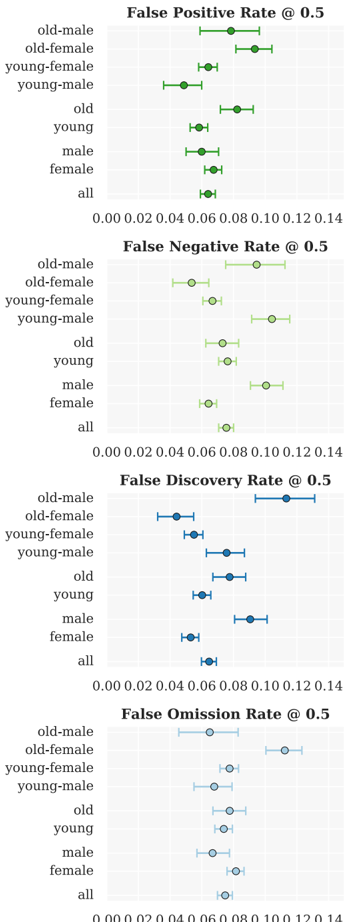
- In the smiling classifier example, all reported metrics at the .5 decision threshold have error types within the range 0.04–0.14, with 95% confidence intervals calculated by bootstrap resampling; the card notes older men have much higher false discovery rate, while men in aggregate have higher false negative rate.
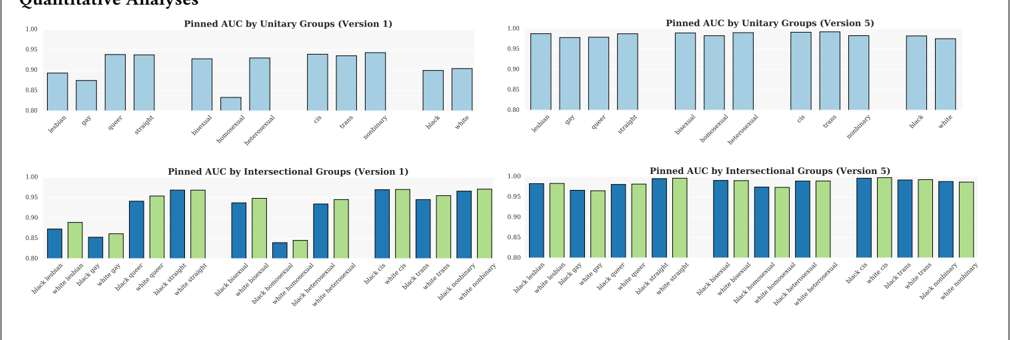
- In the toxicity example, TOXICITY v. 1 has low performance for several terms, especially “lesbian,” “gay,” and “homosexual,” while TOXICITY v. 5 shows more equitable performance after bias mitigation techniques.
Methods
- The paper is a framework/proposal paper, not an empirical study of a new model; it recommends model cards and details suggested sections and prompts.
- It provides two worked examples: a smiling classifier trained and evaluated on the CelebA dataset, using a convolutional neural net pretrained for face recognition and fine-tuned with cross-entropy loss for binary smiling classification.
- It also provides a model card for Perspective API’s TOXICITY classifier, a convolutional neural network developed by Jigsaw in 2017, evaluated on a synthetic Identity Phrase Templates test set; metrics include FPR, FNR, FDR, FOR for the smiling classifier and Pinned AUC for toxicity.
Limitations
- The paper states that model cards rely on the integrity of their creators and that it seems unlikely, at least in the near term, that they could be standardized or formalized enough to prevent misleading representations of model results.
- The paper states that evaluation datasets suitable for disaggregated evaluation are not yet common, and that the synthetic toxicity test data covers only a small set of very specific comments and is not comprehensive.
- The smiling classifier card states it does not capture race or skin type, uses binary gender classes (male/female), and that an ideal evaluation dataset would additionally include Fitzpatrick skin type, camera details, and environment details; the paper also states future work is needed to study how model information is interpreted and used by different stakeholders.
Model-written summary. Check it against the paper before relying on it.
Integrity signals
Registry
Cites
Statistics
Figures
Verification
Claims the paper makes
5 Valid · 1 Not valid · 18 Not checked · 30 Own results and interpretations
The cited sources support only part of this claim — read each source’s verdict below.
In the paper
“Synthetic data is valuable here because [11] shows that real data often has disproportionate amounts of toxicity directed at specific groups.”
What the sources say
- Partly supportedcites [11] [11] Lucas Dixon, John Li, Jeffrey Sorensen, Nithum Thain, and Lucy Vasserman. 2018. Measuring and Mitigating Unintended Bias in Text Classification. Proceedings of the AAAI/ACM Conference on AI, Ethics, and Society (2018). - sourceExperimental — accuracy not yet measured
The 'Quantifying bias in dataset' section (page unavailable) reports that certain identity terms appear disproportionately in toxic comments in the authors’ training data; for example, 'gay' appears in 3% of toxic comments but 0.5% of comments overall. It measures comments containing those terms, not whether toxicity is directed at the groups, and does not establish how often this pattern occurs across real datasets generally. (LLM, conf=0.85)
plainstates an association- Asserted: passes — The authors put it forward as true.
- Checkable: passes — It can be checked against evidence.
- Load-bearing: passes — The paper’s conclusions depend on it.
- Based: passes — The paper gives a reason why it holds.
- Partly supported
A result the paper reports from its own data — it cites no other source for it, so there is none to check. The quote shows it is in the paper.
In the paper
“For example, the false discovery rate on older men is much higher than that for other groups.”
plainstates an association- Asserted: passes — The authors put it forward as true.
- Checkable: passes — It can be checked against evidence.
- Load-bearing: passes — The paper’s conclusions depend on it.
- Based: passes — The paper gives a reason why it holds.
A result the paper reports from its own data — it cites no other source for it, so there is none to check. The quote shows it is in the paper.
In the paper
“TOXICITY v. 1 has low performance for several terms, especially 'lesbian', 'gay', and 'homosexual'.”
plain- Asserted: passes — The authors put it forward as true.
- Checkable: passes — It can be checked against evidence.
- Load-bearing: passes — The paper’s conclusions depend on it.
- Based: passes — The paper gives a reason why it holds.
None of the sources cited for this claim have been checked yet.
In the paper
“she collaborated with other researchers to demonstrate the disproportionate errors of computer vision systems on historically marginalized groups in the United States, such as darker-skinned women [5, 41].”
What the sources say
- Not checked yetcites [5] [5] Joy Buolamwini and Timnit Gebru. 2018. Gender Shades: Intersectional Accuracy Disparities in Commercial Gender Classification. In Proceedings of the 1st Conference on Fairness, Accountability and Transparency (Proceedings of Machine Learning Research) , Sorelle A. Friedler and Christo Wilson (Eds.), Vol. 81. PMLR, New York, NY, USA, 77-91. http://proceedings.mlr.press/v81/buolamwini18a.html -
- Not checked yetcites [41] [41] Inioluwa Raji. 2018. Black Panther Face Scorecard: Wakandans Under the Coded Gaze of AI. (2018). -
boostedstates an association- Asserted: passes — The authors put it forward as true.
- Checkable: passes — It can be checked against evidence.
- Load-bearing: passes — The paper’s conclusions depend on it.
- Based: passes — The paper gives a reason why it holds.
In the paper
“after MIT Media Lab graduate student Joy Buolamwini found that commercial face recognition systems failed to detect her face [4]”
What the sources say
- Not checked yetcites [4] [4] Joy Buolamwini. 2016. How I'm fighting Bias in Algorithms. (2016). https://www.ted.com/talks/joy\_buolamwini\_how\_i\_m\_fighting\_bias\_in\_ algorithms#t-63664 -
plainSingle case- Asserted: passes — The authors put it forward as true.
- Checkable: passes — It can be checked against evidence.
- Load-bearing: unclear — It is unclear whether the paper’s conclusions depend on it.
- Based: passes — The paper gives a reason why it holds.
13 more claims
Create a free account to see all 54 claims and to verify the 13 references still open.
- Probably not a substantial claim. 34
- It may state two separate claims as one. 8
Claims other papers make about this one
Each is checked against this paper’s own text: does it say what the citing paper says it does?
The source backs part of the claim, not all of it — or backs it for a different population, condition or comparison.
In the citing paper
“Model cards represent the field's standard for disclosing and documenting key facts about the architecture, training and evaluation of the model [14, 40].”
From Rethinking open source generative AI: open washing and the EU AI Act (2024) · cites this paper as [40]
Experimental — accuracy not yet measuredThe source backs part of the claim, not all of it — or backs it for a different population, condition or comparison.
In the citing paper
“Model cards (SMCs) [44] have been foundational in standardizing documentation for AI/ML model performance and characteristics, along with risks and unintended uses.”
From Interactive Model Cards: A Human-Centered Approach to Model Documentation (2022) · cites this paper as [44]
Experimental — accuracy not yet measuredThe source backs part of the claim, not all of it — or backs it for a different population, condition or comparison.
In the citing paper
“A second phase saw a more technical approach from the computer science community focusing on fairness, accountability and transparency as an engineering 'ethicalby-design' problem-solving exercise [20][21][22].”
From Putting AI ethics to work: are the tools fit for purpose? (2022) · cites this paper as [21]
Experimental — accuracy not yet measuredThe source backs part of the claim, not all of it — or backs it for a different population, condition or comparison.
In the citing paper
“These are either materials for use in design teams in workshop style events [76,77], tools for producing documentation of the design, build and test process [21,68], or technical tools for testing models, protecting privacy and security, testing for bias [69,93,94], or tracking provenance of data [95].”
From Putting AI ethics to work: are the tools fit for purpose? (2022) · cites this paper as [21]
Experimental — accuracy not yet measuredThe source backs part of the claim, not all of it — or backs it for a different population, condition or comparison.
In the citing paper
“There is some work on fairness relating to AI services, though this tends to focus on either exposing or 'auditing' certain AI services [22,38,126,133], or devising tools, methods and interventions relevant for those building (rather than using) such services [12,96,106,128].”
From Out of Context: Investigating the Bias and Fairness Concerns of “Artificial Intelligence as a Service” (2023) · cites this paper as [106]
Experimental — accuracy not yet measured
17 more claims about this paper
Create a free account to see every claim other papers make about this one.
Citations
Cites
BLEU: a method for automatic evaluation of machine translation
Papineni, K., Roukos, S., Ward, T., & Zhu, W.-J. (2001) · Proceedings of the 40th Annual Meeting on Association for Computational Linguistics - ACL '02 · doi:10.3115/1073083.1073135 · Cited by 21,344 · cited 1×
“translation system could compare BLEU scores [40] across demographic groups, and a model card for a speech recognition system could compare word-error rates.”
BackgroundCrenshaw, K. (2018) · Feminist Legal Theory · doi:10.4324/9780429500480-5 · Cited by 9,510
Deep Learning Face Attributes in the Wild
Liu, Z., Luo, P., Wang, X., & Tang, X. (2015) · 2015 IEEE International Conference on Computer Vision (ICCV) · doi:10.1109/iccv.2015.425 · Cited by 7,747 · cited 4×
“ms [5, 26] that report details of the datasets used to train and test machine learning models. We provide two example model cards in Section 5: A smiling detection model trained on the CelebA dataset [33] (Figure 2), and a public toxicity detection model, Perspective API [29] (Figure 3). Where Datasheets highlight cha…”
BackgroundMethodInfluentialThe validity and practicality of sun-reactive skin types I through VI
Fitzpatrick, T. B. (1988) · Archives of Dermatology · doi:10.1001/archderm.1988.01670060015008 · Cited by 4,339
Differential Privacy: A Survey of Results
Dwork, C. (2008) · Lecture Notes in Computer Science · doi:10.1007/978-3-540-79228-4_1 · Cited by 3,542 · cited 2×
“As such, collaboration with policy, privacy, and legal experts is necessary in order to ascertain which groups may be responsibly inferred, and how that information should be stored and accessed (for example, using differential privacy [12]).”
BackgroundCollins, G. S., Reitsma, J. B., Altman, D. G., & Moons, K. G. M. (2015) · Annals of Internal Medicine · doi:10.7326/m14-0697 · Cited by 3,267
Equality of Opportunity in Supervised Learning
Hardt, M., Price, E., & Srebro, N. (2016) · arXiv · doi:10.48550/arxiv.1610.02413 · Cited by 2,536 · cited 2×
“of Opportunity, and equal false negative and false positive rates across groups is equivalent to fulfilling Equality of Odds [26].”
BackgroundGebru, T., Morgenstern, J., Vecchione, B., Vaughan, J. W., Wallach, H., Daumé, H., & Crawford, K. (2018) · arXiv · doi:10.48550/arxiv.1803.09010 · Cited by 2,474
Self-citationA Probabilistic Interpretation of Precision, Recall and F-Score, with Implication for Evaluation
Goutte, C., & Gaussier, E. (2005) · Lecture Notes in Computer Science · doi:10.1007/978-3-540-31865-1_25 · Cited by 2,285 · cited 1×
“Confidence intervals for metrics derived from confusion matrices can be calculated by treating the matrices as probabilistic models of system performance [24].”
MethodFair prediction with disparate impact: a study of bias in recidivism prediction instruments
Chouldechova, A. (2017) · Big Data · doi:10.1089/big.2016.0047 · Cited by 2,159 · cited 1×
“or different errors that can be calculated from the confusion matrix for binary classification systems. • These also correspond to metrics in recent definitions of “fairness” in machine learning (cf. [8, 25]), where parity across subgroups for different metrics correspond to different fairness criteria. • 95% confiden…”
Background
Research works printed but not linked: 9
- [1] Avrio AI. 2018. Avrio AI: AI Talent Platform. (2018). https://www.goavrio.com/ -
- [5] Joy Buolamwini and Timnit Gebru. 2018. Gender Shades: Intersectional Accuracy Disparities in Commercial Gender Classification. In Proceedings of the 1st Conference on Fairness, Accountability and Transparency (Proceedings of Machine Learning Research) , Sorelle A. Friedler and Christo Wilson (Eds.), Vol. 81. PMLR, New York, NY, USA, 77-91. http://proceedings.mlr.press/v81/buolamwini18a.html -
- [13] Entelo. 2018. Recruitment Software | Entelo. (2018). https://www.entelo.com/ -
- [17] U.S. Food and Drug Administration. 2013. FDA Drug Safety Communication: Risk of next-morning impairment after use of insomnia drugs; FDA requires lower recommended doses for certain drugs containing zolpidem (Ambien, Ambien CR, Edluar, and Zolpimist). (2013). https://web.archive.org/web/20170428150213/ https://www.fda.gov/drugs/drugsafety/ucm352085.htm -
- [18] IIHS (Insurance Institute for Highway Safety: Highway Loss Data Institute). 2003. Special Issue: Side Impact Crashworthiness. Status Report 38, 7 (2003). -
- [19] Institute for the Future, Omidyar Network's Tech, and Society Solutions Lab. 2018. Ethical OS. (2018). https://ethicalos.org/ -
- [32] Jigsaw. 2017. Perspective API. (2017). https://www.perspectiveapi.com/ -
- [39] AI Now. 2018. Litigating Algorithms: Challenging Government Use Of Algorithmic Decision Systems. AI Now Institute. -
- [43] Mukund Sundararajan, Ankur Taly, and Qiqi Yan. 2017. In Proceedings of the 34th International Conference on Machine Learning , Vol. 70. PMLR, Sydney, Australia. -
Cited by
Items 401–500 of 2,235
Raji, I. D., & Yang, J. (2019) · arXiv · doi:10.48550/arxiv.1912.06166 · Cited by 36
“A common focus across templates, even outside of data-specific work, is on clarifying the details of data provenance, for both the training and testing data used in ML development [4, 2, 11].”
BackgroundInfluentialSelf-citationThe Devil is in the Details: Interrogating Values Embedded in the Allegheny Family Screening Tool
Gerchick, M., Jegede, T., Shah, T., Gutierrez, A., Beiers, S., Shemtov, N., Xu, K., Samant, A., & Horowitz, A. (2023) · 2023 ACM Conference on Fairness Accountability and Transparency · doi:10.1145/3593013.3594081 · Cited by 34
“Since2016,severaladditionaliterationsofthe toolhavebeendeveloped[20,75,98];furtherdetailsaboutthe designofthetoolandchangestothetoolbetweeniterationsare describedinamodelcard[64]wedevelopedfortheAFST,included asAppendixC.”
MethodHow do Hugging Face Models Document Datasets, Bias, and Licenses? An Empirical Study
Pepe, F., Nardone, V., Mastropaolo, A., Bavota, G., Canfora, G., & Penta, M. D. D. (2024) · IEEE International Conference on Program Comprehension · doi:10.1145/3643916.3644412 · Cited by 67
Ong, A. Y., Taribagil, P., Sevgi, M., Kale, A. U., Dow, E. R., Macdonald, T., Kras, A., Maniatopoulos, G., Liu, X., Keane, P. A., et al. (2025) · npj Digital Medicine · doi:10.1038/s41746-025-01726-8 · Cited by 46
“…in developing and testing AI health technologies 28 , as well as model cards or similar initiatives that encourage transparency of model reporting, including details on training datasets where feasible, to enhance accountability and mitigate biases while respecting proprietary constraints 29 .”
Gill, N., Hall, P., Montgomery, K., & Schmidt, N. (2020) · Information · doi:10.3390/info11030137 · Cited by 36
“• Model documentation: models cards [56], e.”
Hullman, J. R., Kapoor, S., Nanayakkara, P., Gelman, A., & Narayanan, A. (2022) · Proceedings of the AAAI/ACM Conference on AI Ethics and Society · doi:10.1145/3514094.3534196 · Cited by 59
Sloane, M., & Zakrzewski, J. (2022) · ACM Conference on Fairness, Accountability, and Transparency (FAccT) · doi:10.1145/3531146.3533156 · Cited by 61
Can We Trust AI Benchmarks? An Interdisciplinary Review of Current Issues in AI Evaluation
Eriksson, M., Purificato, E., Noroozian, A., Vinagre, J., Chaslot, G., Gomez, E., & Fernandez-Llorca, D. (2025) · arXiv · doi:10.48550/arxiv.2502.06559 · Cited by 35
“…ties into a broader critique regarding insufficient documentation in AI research which is central to calls for more transparent and trustworthy algorithmic systems (Gebru et al. 2021; Mitchell et al. 2019; Orr and Crawford 2024a; Simson, Fabris, and Kern 2024; Scheuerman, Hanna, and Denton 2021).”
Watkins, E. A., McKenna, M., & Chen, J. (2022) · arXiv · doi:10.48550/arxiv.2202.09519 · Cited by 35
Systematic Review of Machine Learning Approaches for Detecting Developmental Stuttering
Barrett, L., Hu, J., & Howell, P. (2022) · IEEE/ACM Transactions on Audio Speech and Language Processing · doi:10.1109/taslp.2022.3155295 · Cited by 49
“Furthermore, it is highly recommended that researchers consider the generic reporting standards set out in [66].”
BackgroundSurvey on Privacy-Preserving Techniques for Microdata Publication
Carvalho, T., Moniz, N., Faria, P., & Antunes, L. F. (2023) · ACM Computing Surveys · doi:10.1145/3588765 · Cited by 70
“Notwithstanding, in data mining, a recent Survey on Privacy-Preserving Techniques for Microdata Publication 309:7 suggestion was proposed for documentation to transparent model reporting [156].”
BackgroundThe Role of Artificial Intelligence Model Documentation in Translational Science: Scoping Review
Brereton, T. A., Malik, M. M., Lifson, M. A., Greenwood, J. D., Peterson, K. J., & Overgaard, S. M. (2023) · Interactive Journal of Medical Research · doi:10.2196/45903 · Cited by 50
“Notably, additional resources found in our previous studies were not explicitly mentioned in the literature, for example, Google’s Model Card for model reporting [45], Model Facts Labels [46], DECIDE-AI (Developmental and Exploratory Clinical Investigations of Decision support systems driven by Artificial Intelligence…”
BackgroundNavigating the Ethical Terrain of AI-Generated Text Tools: A Review
Mohamed, Y. A., Mohamed, A. H. H. M., Khanan, A., Bashir, M., Adiel, M. A. E., & Elsadig, M. A. (2024) · IEEE Access · doi:10.1109/access.2024.3521945 · Cited by 54
Teaching Responsible Data Science: Charting New Pedagogical Territory
Lewis, A., & Stoyanovich, J. (2021) · International Journal of Artificial Intelligence in Education · doi:10.1007/s40593-021-00241-7 · Cited by 62
Balayn, A., Yang, J., Szlávik, Z., & Bozzon, A. (2021) · ACM Transactions on Social Computing · doi:10.1145/3479158 · Cited by 50
AI ethical biases: normative and information systems development conceptual framework
Chowdhury, T., & Oredo, J. O. (2022) · Journal of Decision System · doi:10.1080/12460125.2022.2062849 · Cited by 49
“Method biases (Fahse et al., 2021; Mitchell et al., 2019; Suresh & Guttag, 2021; Walsh et al., 2020) Techniques and procedures used to design, develop, and deploy AI-based applications may have significant impact on algorithmic bias.”
MethodDocumenting High-Risk AI: A European Regulatory Perspective
Hupont, I., Micheli, M., Delipetrev, B., Gómez, E., & Garrido, J. S. (2023) · Computer · doi:10.1109/mc.2023.3235712 · Cited by 62
“Among the most successful initiatives we find some that focus on the datasets used for AI, such as Datasheets for Datasets 4 and The Dataset Nutrition Label, 5,6 as well as some that address the documentation of AI models and algorithms, such as Model Cards 7 and AI Factsheets.”
BackgroundRamaswamy, V., Kim, S. S. Y., Fong, R., & Russakovsky, O. (2023) · IEEE Computer Society Conference on Computer Vision and Pattern Recognition/Proceedings - IEEE Computer Society Conference on Computer Vision and Pattern Recognition/Proceedings · doi:10.1109/cvpr52729.2023.01052 · Cited by 101
“…of works that propose checks and evaluation protocols to better understand the capabilities and limitations of interpretability methods [1–3, 21, 23, 26, 28 , 32, We also echo the call for releasing more information when releasing datasets [17], models [12, 33] and inter-pretability methods [47].”
BackgroundCounterFAccTual: How FAccT Undermines Its Organizing Principles
Gansky, B., & McDonald, S. (2022) · 2022 ACM Conference on Fairness Accountability and Transparency · doi:10.1145/3531146.3533241 · Cited by 34
Tech Worker Organizing for Power and Accountability
Boag, W., Suresh, H., Lepe, B., & D'Ignazio, C. (2022) · 2022 ACM Conference on Fairness Accountability and Transparency · doi:10.1145/3531146.3533111 · Cited by 34
Algorithmovigilance, lessons from pharmacovigilance
Balendran, A., Benchoufi, M., Evgeniou, T., & Ravaud, P. (2024) · npj Digital Medicine · doi:10.1038/s41746-024-01237-y · Cited by 34
“Othereffortsfocusonpresentingand summarizingkeyinformationaboutAIsystemsfordecision-making 44,45 .”
Disembodied Machine Learning: On the Illusion of Objectivity in NLP
Waseem, Z., Lulz, S., Bingel, J., & Augenstein, I. (2021) · arXiv · doi:10.48550/arxiv.2101.11974 · Cited by 34
A Practical Guide to Conversation Research: How to Study What People Say to Each Other
Yeomans, M., Boland, F. K., Collins, H. K., Abi-Esber, N., & Brooks, A. W. (2023) · Advances in Methods and Practices in Psychological Science · doi:10.1177/25152459231183919 · Cited by 63
“Their exact content, code, and training procedure should be shared and benchmarked against related models across diverse contexts (Mitchell et al., 2019).”
BackgroundExplainable AI in Healthcare Application
Sindiramutty, S. R., Tee, W. J., Balakrishnan, S., Kaur, S., Thangaveloo, R., Jazri, H., Khan, N. A., Gharib, A. H., & Manchuri, A. R. (2024) · Advances in computational intelligence and robotics book series · doi:10.4018/978-1-6684-6361-1.ch005 · Cited by 46
Start Generating: Harnessing Generative Artificial Intelligence for Sociological Research
Davidson, T. (2024) · Socius Sociological Research for a Dynamic World · doi:10.1177/23780231241259651 · Cited by 76
“Computer scientists have proposed including documentation with models and training datasets (Gebru et al. 2021; Mitchell et al. 2019) that indicates any known or latent biases.”
Analyzing the Evolution and Maintenance of ML Models on Hugging Face
Castaño, J., Martínez‐Fernández, S., Franch, X., & Bogner, J. (2024) · International Conference on Mining Software Repositories (MSR) · doi:10.1145/3643991.3644898 · Cited by 85
Fairness in Recommender Systems
Ekstrand, M. D., Das, A., Burke, R., & Díaz, F. (2012) · Springer eBooks · doi:10.1007/978-1-0716-2197-4_18 · Cited by 60
Rismani, S., Shelby, R., Smart, A., Jatho, E., Kroll, J., Moon, A., & Rostamzadeh, N. (2023) · Proceedings of the 2023 CHI Conference on Human Factors in Computing Systems · doi:10.1145/3544548.3581407 · Cited by 33
A Validity Perspective on Evaluating the Justified Use of Data-driven Decision-making Algorithms
Coston, A., Kawakami, A., Zhu, H., Holstein, K., & Heidari, H. (2023) · IEEE Conference on Secure and Trustworthy Machine Learning (SaTML) · doi:10.1109/satml54575.2023.00050 · Cited by 81
“This work has frequently considered questions of value-alignment, such as how to promote fairness and establish transparency and accountability [18, 19, 20, 21, 22].”
BackgroundFACET: Fairness in Computer Vision Evaluation Benchmark
Gustafson, L., Rolland, C., Ravi, N., Duval, Q., Adcock, A., Fu, C.-Y., Hall, M. A., & Ross, C. (2023) · IEEE/CVF International Conference on Computer Vision (ICCV) · doi:10.1109/iccv51070.2023.01863 · Cited by 97
“A large body of work also explored how researchers should document the intended use and considerations made when developing models [69], datasets [32, 76, 47, 67] and crowdsourced annotation tasks [21].”
BackgroundMarmolejo-Ramos (2025) · doi:10.3389/frai.2024.1465605
Synthetic Data in Healthcare and Drug Development: Definitions, Regulatory Frameworks, Issues
Pasculli, G., Virgolin, M., Myles, P. R., Vidovszky, A. A., Fisher, C. K., Biasin, E., Mourby, M. J., Pappalardo, F., D’Amico, S., Torchia, M., et al. (2025) · CPT Pharmacometrics & Systems Pharmacology · doi:10.1002/psp4.70021 · Cited by 39
“…of an AI model, benchmark evaluation results, and the context in which the model is designed to be used/methods employed to assess its performance [131] in such validation steps would enhance confidence in synthetic data as a viable tool for research and possibly regulatory decision-making.”
Reliability and Validity of Image-Based and Self-Reported Skin Phenotype Metrics
Howard, J. J., Sirotin, Y. B., Tipton, J. L., & Vemury, A. R. (2021) · IEEE Transactions on Biometrics Behavior and Identity Science · doi:10.1109/tbiom.2021.3123550 · Cited by 44
“It has also been suggested as a standardized method for documenting the performance of a generic machine learning algorithm [12].”
MethodThe Contestation of Tech Ethics: A Sociotechnical Approach to Ethics and Technology in ActionPreprint
Green, B. (2021) · Social Science Research Network · doi:10.2139/ssrn.3859358 · Cited by 20
“These limits to corporate tech ethics are exemplified by Google’s firing of Timnit Gebru (and later Meg Mitchell) following the company’s concerns about a paper examining the limitations and harms of large language models, which are central to Google’s business (Hao, 2020).”
BackgroundInfluentialLaux, J. M., Wachter, S., & Mittelstadt, B. (2023) · SSRN Electronic Journal · doi:10.2139/ssrn.4365079 · Cited by 32
NUBIA: NeUral Based Interchangeability Assessor for Text Generation
Kane, H., Kocyigit, M. Y., Abdalla, A., Ajanoh, P., & Coulibali, M. (2020) · arXiv · doi:10.48550/arxiv.2004.14667 · Cited by 32
“Model cards (Mitchell et al., 2019) and better metric assessments going beyond correlation with human judgement (Kan´e et al., 2019) (Boag et al., 2016) will be key components of improved model reporting.”
BackgroundPfohl, S., Xu, Y., Foryciarz, A., Ignatiadis, N., Genkins, J., & Shah, N. (2022) · 2022 ACM Conference on Fairness Accountability and Transparency · doi:10.1145/3531146.3533166 · Cited by 30
“Furthermore, the narrow scope of statistical algorithmic fairness assessments does not, by default, consider the context, values, and norms under-pinning problem formulation, data collection, and measurement, nor the benefits and harms of the downstream model-guided intervention [60, 68].”
BackgroundInfluentialLewicki, K., Lee, M. S. A., Cobbe, J., & Singh, J. (2023) · Proceedings of the 2023 CHI Conference on Human Factors in Computing Systems · doi:10.1145/3544548.3581463 · Cited by 30
Continuous design control for machine learning in certified medical systems
Stirbu, V., Granlund, T., & Mikkonen, T. (2022) · Software Quality Journal · doi:10.1007/s11219-022-09601-5 · Cited by 37
“ML model cards is a framework for transparent communication of information that facilitates the correct utilisation of machine learning models [22].”
BackgroundAspirations and Practice of ML Model Documentation: Moving the Needle with Nudging and Traceability
Bhat, A., Coursey, A., Hu, G., Li, S., Nahar, N., Zhou, S., Kästner, C., & Guo, J. (2023) · CHI Conference on Human Factors in Computing Systems · doi:10.1145/3544548.3581518 · Cited by 69
Haraldsen, I., Hatlestad‐Hall, C., Marra, C., Renvall, H., Maestú, F., Acosta-Hernández, J., Alfonsín, S., Andersson, V., Anand, A., Ayllón, V., et al. (2024) · Frontiers in Neurorobotics · doi:10.3389/fnbot.2023.1289406 · Cited by 37
Transparency for AI systems: a value-based approach
Buijsman, S. (2024) · Ethics and Information Technology · doi:10.1007/s10676-024-09770-w · Cited by 52
“There are the more practically oriented datasheets and model cards (Gebru et al., 2021; Mitchell et al., 2019) as well as the more philosophical account called design publicity (Loi et al., 2021).”
InfluentialLearning about Responsible AI On-The-Job: Learning Pathways, Orientations, and Aspirations
Madaio, M., Kapania, S., Qadri, R., Wang, D., Zaldivar, A., Denton, E., & Wilcox, L. G. (2024) · ACM Conference on Fairness, Accountability, and Transparency (FAccT) · doi:10.1145/3630106.3658988 · Cited by 57
“…civil society organizations, and many others have developed principles [70], toolkits [29, 42, 91, 141], play-books [100, 133], documentation tools [32, 50, 90, 100, 105, 106, 122], and other interventions to lead to more responsible AI (RAI) development practices [23, 37, 54, 93, 130].”
BackgroundMethodSelf-citationThe MI-CLAIM-GEN checklist for generative artificial intelligence in health
Miao, B. Y., Chen, I. Y., Williams, C. Y. K., Davidson, J., García-Agúndez, A., Sun, S., Zack, T. I., Saria, S., Arnaout, R., Quer, G., et al. (2025) · Nature Medicine · doi:10.1038/s41591-024-03470-0 · Cited by 54
“Drawing from best practices set out for all model development, the checklist also includes a section to report clinical model cards 14 or labels 15 that summarize the model capabilities, intended use, training data and limitations, potential biases, and model risks (Fig.”
Stroud, A. M., Minteer, S. A., Zhu, X., Ridgeway, J. L., Miller, J. E., & Barry, B. A. (2025) · PLOS Digital Health · doi:10.1371/journal.pdig.0000826 · Cited by 49
“Many, both internal and external to the healthcare sector, have proposed AI model documentation in the form of AI labeling and sharing of associated data sets [11,13,16,50,51].”
The ethics of data mining in healthcare: challenges, frameworks, and future directions
Ahmed, M. M., Okesanya, O. J., Oweidat, M. H., Othman, Z. K., Musa, S. S., & Lucero‐Prisno, D. E. (2025) · BioData Mining · doi:10.1186/s13040-025-00461-w · Cited by 55
Discover the Unknown Biased Attribute of an Image Classifier
Li, Z., & Xu, C. (2021) · IEEE/CVF International Conference on Computer Vision (ICCV) · doi:10.1109/iccv48922.2021.01470 · Cited by 65
“Thus it is imperative to identify AI algorithms’ biases, whereas the previous bias identification pipeline [5, 39] has some shortcomings.”
BackgroundLive streaming recommendations based on dynamic representation learning
Gao, G., Liu, H., & Zhao, K. (2023) · Decision Support Systems · doi:10.1016/j.dss.2023.113957 · Cited by 41
“To ensure reproducibility, we follow guidelines in [42 – 44] and provide details of our model and experiments in Appendix B and C.”
Mitigating Dataset Harms Requires Stewardship: Lessons from 1000 Papers
Peng, K., Mathur, A., & Narayanan, A. (2021) · arXiv · doi:10.48550/arxiv.2108.02922 · Cited by 31
“[65] Margaret Mitchell, Simone Wu, Andrew Zaldivar, P.”
BackgroundBalancing Performance and Explainability in Academic Dropout Prediction
Zanellati, A., Zingaro, S. P., & Gabbrielli, M. (2024) · IEEE Transactions on Learning Technologies · doi:10.1109/tlt.2024.3425959 · Cited by 59
“In addition to evaluating predictive performance, our study places a strong emphasis on the ethical integrity of the predictive models, particularly in terms of fairness [37].”
Miedema, E., Waschull, S., & Emmanouilidis, C. (2025) · Computers in Industry · doi:10.1016/j.compind.2025.104409 · Cited by 51
Open Long-Tailed Recognition in a Dynamic World
Liu, Z., Miao, Z., Zhan, X., Wang, J., Gong, B., & Yu, S. X. (2022) · IEEE Transactions on Pattern Analysis and Machine Intelligence · doi:10.1109/tpami.2022.3200091 · Cited by 56
“The open long-tailed recognition proposed in our work also has an intrinsic relationship to fairness analysis [78], [79], [80], [81], [82].”
BackgroundContextualizing User Perceptions about Biases for Human-Centered Explainable Artificial Intelligence
Yuan, C. W., Bi, N., Lin, Y.-F., & Tseng, Y. (2023) · CHI Conference on Human Factors in Computing Systems · doi:10.1145/3544548.3580945 · Cited by 47
“Bias in AI can take place in the initial stage of data collection and get passed along in the training processes, such as model evaluation, model processing, and model deployment [29].”
BackgroundAI Maintenance: A Robustness Perspective
Chen, P.-Y., & Das, P. (2023) · Computer · doi:10.1109/mc.2022.3218005 · Cited by 29
Chejara, P., Prieto, L. P., Ruiz‐Calleja, A., Rodríguez‐Triana, M. J., Shankar, S. K., & Kasepalu, R. (2021) · Sensors · doi:10.3390/s21082863 · Cited by 33
“Recent works in ML [46,47] emphasize the importance of how the ML model’s performance is reported.”
BackgroundTowards a Consistent Interpretation of AIOps Models
Lyu, Y., Rajbahadur, G. K., Lin, D., Chen, B., & Jiang, Z. M. (2021) · ACM Transactions on Software Engineering and Methodology · doi:10.1145/3488269 · Cited by 50
Data distribution debugging in machine learning pipelines
Grafberger, S., Groth, P., Stoyanovich, J., & Schelter, S. (2022) · The VLDB Journal · doi:10.1007/s00778-021-00726-w · Cited by 56
“[16,32] propose manually curated information in the form of datasheets and model cards to accompany them.”
BackgroundSocial Inclusion in Curated Contexts: Insights from Museum Practices
Huang, H.-Y., & Liem, C. C. S. (2022) · ACM Conference on Fairness, Accountability, and Transparency (FAccT) · doi:10.1145/3531146.3533095 · Cited by 56
A domain-specific language for describing machine learning datasets
Giner-Miguelez, J., Gómez, A., & Cabot, J. (2023) · Journal of Computer Languages · doi:10.1016/j.cola.2023.101209 · Cited by 46
Arakawa, R., Yakura, H., & Goto, M. (2023) · Proceedings of the 2023 CHI Conference on Human Factors in Computing Systems · doi:10.1145/3544548.3581133 · Cited by 29
On the challenges of using black-box APIs for toxicity evaluation in research
Pozzobon, L., Ermis, B., Lewis, P., & Hooker, S. (2023) · Proceedings of the 2023 Conference on Empirical Methods in Natural Language Processing · doi:10.18653/v1/2023.emnlp-main.472 · Cited by 29
Smallset Timelines: A Visual Representation of Data Preprocessing Decisions
Lucchesi, L. R., Kuhnert, P., Davis, J. L., & Xie, L. (2022) · ACM Conference on Fairness, Accountability, and Transparency (FAccT) · doi:10.1145/3531146.3533175 · Cited by 37
Grasping AI: experiential exercises for designers
Murray-Rust, D., Lupetti, M. L., Nicenboim, I. P., & van der Hoog, W. (2023) · AI & Society · doi:10.1007/s00146-023-01794-y · Cited by 42
Nielbo, K. L., Karsdorp, F., Wevers, M., Lassche, A., Baglini, R., Kestemont, M., & Tahmasebi, N. (2024) · Nature Reviews Methods Primers · doi:10.1038/s43586-024-00302-w · Cited by 51
“Models are often documented with model cards that provide a detailed overview of the development, capabilities and biases of the model to promote transparency and accountability 86 .”
Machine learning for healthcare that matters: Reorienting from technical novelty to equitable impact
Balagopalan, A., Baldini, I., Celi, L. A., Gichoya, J. W., McCoy, L. G., Naumann, T., Shalit, U., van der Schaar, M., & Wagstaff, K. L. (2024) · PLOS Digital Health · doi:10.1371/journal.pdig.0000474 · Cited by 43
“• Require sharing of data cleaning and preprocessing code, in addition to final model development code, with detailed performance breakdowns for data subgroups using reporting tools like model cards [82].”
MethodThe Ethics of Artificial Intelligence in Defence
Taddeo, M. (2024) · doi:10.1093/oso/9780197745441.001.0001 · Cited by 20
Constantinides, M., Bogucka, E. P., Quercia, D., Kallio, S., & Tahaei, M. (2024) · Proceedings of the ACM on Human-Computer Interaction · doi:10.1145/3686927 · Cited by 59
“While AI holds the potential to benefit humanity, concerns regarding biases [7, 15, 20] and the lack of transparency and accountability [66, 78] hinder its ability to unlock human capabilities on a large scale.”
InfluentialCompeting narratives in AI ethics: a defense of sociotechnical pragmatism
Watson, D., Mökander, J., & Floridi, L. (2024) · AI & Society · doi:10.1007/s00146-024-02128-2 · Cited by 58
“Consider the functions of data-sheets (Gebru et al. 2021) and model cards (Mitchell 2019).”
Differential privacy for medical deep learning: methods, tradeoffs, and deployment implications
Mohammadi, M., Vejdanihemmat, M., Lotfinia, M., Rusu, M., Truhn, D., Maier, A., & Arasteh, S. T. (2026) · npj Digital Medicine · doi:10.1038/s41746-025-02280-z · Cited by 74
“Second, benchmark datasets with demographic annotations and support for intersectional subgrouping are needed to enable comparable fairness audits under DP constraints [140, 141].”
REAL ML: Recognizing, Exploring, and Articulating Limitations of Machine Learning Research
Smith, J. J., Amershi, S., Barocas, S., Wallach, H., & Vaughan, J. W. (2022) · Conference on Fairness, Accountability and Transparency · doi:10.1145/3531146.3533122 · Cited by 42
Documenting Data Production Processes: A Participatory Approach for Data Work
Miceli, M., Yang, T., Alvarado Garcia, A., Posada, J., Wang, S. M., Pohl, M., & Hanna, A. (2022) · Proceedings of the ACM on Human-Computer Interaction · doi:10.1145/3555623 · Cited by 28
“For instance, while the field of open science envisions the documentation of data provenance and protocols toward reproducibility [39, 40], the Fairness, Accountability, and Transparency in the machine learning community is concerned with documenting ML models to prevent bias and improve transparency [70].”
BackgroundRequirements Engineering in Machine Learning Projects
Gjorgjevikj, A., Mishev, K., Antovski, L., & Trajanov, D. (2023) · IEEE Access · doi:10.1109/access.2023.3294840 · Cited by 38
“They suggest identifying factors related to variable performance, like categories of data instances with similar characteristics, instrumentation, environmental conditions etc., and measuring the performance across these factors when possible [9].”
BackgroundInfluentialShould Users Trust Advanced AI Assistants? Justified Trust As a Function of Competence and Alignment
Manzini, A., Keeling, G., Marchal, N., McKee, K. R., Rieser, V., & Gabriel, I. (2024) · The 2024 ACM Conference on Fairness, Accountability, and Transparency · doi:10.1145/3630106.3658964 · Cited by 28
“Claims about the safety, security, fairness and privacy protection of AI assistants can be verified in this manner, including via the release of detailed documentation about the models underpinning AI assistants and about the range of appropriate and inappropriate use [18, 76].”
BackgroundA Methodology for Creating AI FactSheets
Richards, J., Piorkowski, D., Hind, M., Houde, S., & Mojsilović, A. (2020) · arXiv · doi:10.48550/arxiv.2006.13796 · Cited by 28
Integrating Ethics into Computer Science Education: Multi-, Inter-, and Transdisciplinary Approaches
Goetze, T. S. (2023) · ACM Technical Symposium on Computer Science Education (SIGCSE) · doi:10.1145/3545945.3569792 · Cited by 40
Shankar, S., Garcia, R., Hellerstein, J. M., & Parameswaran, A. (2024) · Proceedings of the ACM on Human-Computer Interaction · doi:10.1145/3653697 · Cited by 155
“Documentation solutions for deployed models and datasets have been proposed [23, 60], but we see an opportunity for tools to help document experiments —particularly, failed ones.”
BackgroundBelcher, B. T., Bower, E. H., Burford, B. P., Celis, M. R., Fahimipour, A. K., Guevara, I., Katija, K., Khokhar, Z., Manjunath, A., Nelson, S., et al. (2023) · Frontiers in Marine Science · doi:10.3389/fmars.2023.1157370 · Cited by 36
Long, R., Sebo, J., Butlin, P., Finlinson, K., Fish, K., Harding, J., Pfau, J., Sims, T., Birch, J., & Chalmers, D. (2024) · arXiv · doi:10.48550/arxiv.2411.00986 · Cited by 27
Archivist in the machine: paradata for AI-based automation in the archives
Davet, J., Hamidzadeh, B., & Franks, P. (2023) · Archival Science · doi:10.1007/s10502-023-09408-8 · Cited by 26
“Originally described in a 2018 journal article by Google researchers, (Mitchell et al. 2019) model cards represent a compelling opportunity for the articulation of collected paradata and conclusions which they have informed.”
BackgroundDesign Patterns of Investing Apps and Their Effects on Investing Behaviors
Chaudhry, S., & Kulkarni, C. E. (2021) · Designing Interactive Systems Conference · doi:10.1145/3461778.3462008 · Cited by 43
D’Arcy, A., & Bender, E. M. (2022) · Annual Review of Linguistics · doi:10.1146/annurev-linguistics-031120-015324 · Cited by 43
The Abduction of Sherlock Holmes: A Dataset for Visual Abductive Reasoning
Hessel, J., Hwang, J. D., Park, J. S., Zellers, R., Bhagavatula, C., Rohrbach, A., Saenko, K., & Choi, Y. (2022) · Lecture notes in computer science · doi:10.1007/978-3-031-20059-5_32 · Cited by 76
“The API (which itself is imperfect and has biases [18,38,55]) assigns toxicity value 0-1 for a given input text.”
BackgroundThe “Collections as ML Data” checklist for machine learning and cultural heritage
Lee, B. C. G. (2023) · Journal of the Association for Information Science and Technology · doi:10.1002/asi.24765 · Cited by 75
“…and best practices that machine learning researchers and practitioners (those who utilize machine learning in research, experiments, and operational contexts) can consult while creating datasets, training models, and operationalizing these systems (Bender & Friedman, 2018; Mitchell et al., 2019).”
InfluentialRequirements for Explainability and Acceptance of Artificial Intelligence in Collaborative Work
Theis, S., Jentzsch, S. F., Deligiannaki, F., Berro, C., Raulf, A., & Bruder, C. (2023) · Lecture notes in computer science · doi:10.1007/978-3-031-35891-3_22 · Cited by 47
Corbett, E., & Denton, E. (2023) · ACM Conference on Fairness, Accountability, and Transparency (FAccT) · doi:10.1145/3593013.3594104 · Cited by 42
“The majority of what FAccT has made transparent are technical aspects of ML systems [7, 10, 12, 20, 31, 47, 50, 56, 63, 71, 76, 77, 81, 91].”
InfluentialOlsen, H. P., Hildebrandt, T., Wiesener, C., Larsen, M. S., & Flügge, A. W. A. (2024) · Digital Government Research and Practice · doi:10.1145/3632753 · Cited by 53
“First steps have been taken towards providing standards for documenting machine-learning datasets [ 31 ] and AI algorithms [ 32 ].”
MethodUse case cards: a use case reporting framework inspired by the European AI Act
Hupont, I., Llorca, D. F., Baldassarri, S., & Gómez, E. (2024) · Ethics and Information Technology · doi:10.1007/s10676-024-09757-7 · Cited by 48
“…about the intended use of AI the system (e.g. “What is the intended use of the service output?" in Arnold et al. (2019), “Intended Use" section in Mitchell et al. (2019) and “Task(s) of the system” in OECD (2022)), they do so in very broad terms and provided examples lack sufficient details to…”
InfluentialPower and reproducibility in the external validation of brain-phenotype predictions
Rosenblatt, M., Tejavibulya, L., Sun, H., Camp, C., Khaitova, M., Adkinson, B. D., Jiang, R., Westwater, M. L., Noble, S., & Scheinost, D. (2024) · Nature Human Behaviour · doi:10.1038/s41562-024-01931-7 · Cited by 31
“Also, external validation may ameliorate certain ethical issues in machine learning 38,39 , including bias 40–42 and (lack of) trustworthiness 43 .”
Survey on the Analysis and Modeling of Visual Kinship: A Decade in the Making
Robinson, J. P., Shao, M., & Fu, Y. (2021) · IEEE Transactions on Pattern Analysis and Machine Intelligence · doi:10.1109/tpami.2021.3063078 · Cited by 35
“There are other methods for transparency that have been recently proposed with a similar motivation as “datasheets for datasets”, such as fact sheets [125] and model cards [126].”
MethodA Semantic Framework to Support AI System Accountability and Audit
Naja, I., Marković, M., Edwards, P. J., & Cottrill, C. (2021) · Lecture notes in computer science · doi:10.1007/978-3-030-77385-4_10 · Cited by 48
“sampling, aggregation) [5,11,20,24]; and tasks for which it should be used [5,11] and those for which it should not [11].”
BackgroundMethodInfluentialEdge-Computing and Machine-Learning-Based Framework for Software Sensor Development
Hanzelik, P. P., Kummer, A., & Abonyi, J. (2022) · Sensors · doi:10.3390/s22114268 · Cited by 32
“One way to do this is to create different model cards to help with the structured documentation of the models [36].”
MethodDesigning Up with Value-Sensitive Design: Building a Field Guide for Ethical ML Development
Boyd, K. (2022) · ACM Conference on Fairness, Accountability, and Transparency (FAccT) · doi:10.1145/3531146.3534626 · Cited by 45
A Reproducible and Reusable Pipeline for Segmentation of Geoscientific Imagery
Buscombe, D., & Goldstein, E. B. (2022) · Earth and Space Science · doi:10.1029/2022ea002332 · Cited by 33
“For example, devel-393 oping a place to share models trained using Segmentation Gym, as well as relevant meta-394 data i.e., the configuration file, an example dataset, and a ‘model card’ for basic model inventory, reporting, and dissemination (Mitchell et al., 2019).”
MethodPiloting a Survey-Based Assessment of Transparency and Trustworthiness with Three Medical AI Tools
Fehr, J., Jaramillo-Gutierrez, G., Oala, L., Gröschel, M. I., Bierwirth, M., Balachandran, P., Leite, A. W., & Lippert, C. (2022) · Healthcare · doi:10.3390/healthcare10101923 · Cited by 38
“These include guidance to report on the intended use; used datasets; development and validation steps [13–18]; clinical validations of AI models [19]; and clinical trials using AI interventions [20,21], templates, and checklists to provide transparency on AI tools to clinicians [22–24].”
MethodGround Truth Or Dare: Factors Affecting The Creation Of Medical Datasets For Training AI
Zając, H. D., Avlona, N.-R., Kensing, F., Andersen, T. O., & Shklovski, I. (2023) · Proceedings of the AAAI/ACM Conference on AI Ethics and Society · doi:10.1145/3600211.3604766 · Cited by 51
Open and reusable deep learning for pathology with WSInfer and QuPath
Kaczmarzyk, J., O’Callaghan, A., Inglis, F., Gat, S., Kurç, T., Gupta, R., Bremer, E., Bankhead, P., & Saltz, J. H. (2024) · npj Precision Oncology · doi:10.1038/s41698-024-00499-9 · Cited by 32
“Each model repository contains a model card (10),”
BackgroundExplainable AI for Cybersecurity
Sindiramutty, S. R., Tan, C. E., Lau, S. P., Thangaveloo, R., Gharib, A. H., Manchuri, A. R., Khan, N. A., Tee, W. J., & Muniandy, L. (2024) · Advances in computational intelligence and robotics book series · doi:10.4018/978-1-6684-6361-1.ch002 · Cited by 35
Towards AI ethics-led sustainability frameworks and toolkits: Review and research agenda
Cumming, D. J., Saurabh, K., Rani, N., & Upadhyay, P. (2024) · Journal of Sustainable Finance and Accounting · doi:10.1016/j.josfa.2024.100003 · Cited by 49
Barbosa, S. D. J., Barbosa, G. D. J., de Souza, C. S., & Leitão, C. F. (2021) · ACM Conference on Fairness, Accountability, and Transparency (FAccT) · doi:10.1145/3442188.3445900 · Cited by 32
Watkins, E. A., & Chen, J. (2024) · The 2024 ACM Conference on Fairness Accountability and Transparency · doi:10.1145/3630106.3658938 · Cited by 25
Metadata
- Authors
- Mitchell, M., Wu, S., Zaldivar, A., Barnes, P., Vasserman, L., Hutchinson, B., Spitzer, E., Raji, I. D., & Gebru, T.
- Venue
- Proceedings of the Conference on Fairness, Accountability, and Transparency
- Publisher
- ACM
- Published
- 2019-01-29
- Pages
- 220-229
- OpenAlex
- W2897042519
- Semantic Scholar
- 7365f887c938ca21a6adbef08b5a520ebbd4638f
- Cited by
- 2,681
- References
- 12
- Citations by year
- 2026: 831 · 2025: 446 · 2024: 376 · 2023: 366 · 2022: 243 · 2021: 260 · 2020: 102 · 2019: 54
- FWCI
- 170.95
- Type
- conference paper
- Language
- en
- Open access
- green
- arxiv.org
- Locations
- ACM Conference on Fairness, Accountability, and Transparency (FAccT) (publishedVersion)
- arXiv (Cornell University) (submittedVersion)
- arXiv (Cornell University)
- Topics
- Physical Sciences › Computer Science › Artificial Intelligence › Ethics and Social Impacts of AI
- Physical Sciences › Computer Science › Artificial Intelligence › Explainable Artificial Intelligence (XAI)
- Physical Sciences › Computer Science › Computer Vision and Pattern Recognition › Face recognition and analysis
- Keywords
- model cards, model transparency, algorithmic fairness, demographic bias, responsible AI, democratization of AI, toxic comment detection, model documentation
About these checks
Registry, retraction, Cites and statistics results are computed, not judged, with one exception: a printed reference that no index lists is read once by a model before it counts as a citation error. Claims are extracted by a model and kept only when their quote appears verbatim in the text; each cited source is then checked, with a model’s help, for whether it says what the claim relies on. Those verdicts can be wrong — read the claim’s quote and the cited source before relying on one.
The claim verdicts this report counts are experimental: their accuracy is not yet measured.
A language model drew the claims from the paper on 2026-10-07, under version 3 of the claim definition (model deepseek-v4.1-flash, prompt extract-v3).
A second model labelled each claim on 2026-10-07 (model jev-1.13-20260917, definition revision gold-guideline-v0.2).
Cited sources are checked with a language model’s help (gpt-6-sol).
Statistics and arithmetic are recomputed, not judged.
Confidence bands are shown only for fields calibrated on our annotated test set. None is calibrated yet, so no band is shown.
What counts as a claim ›How we measure confidence ›How we check this ›
Are you an author, or do you see a problem with this page? Request a review
Data sources
Bibliographic data: Semantic Scholar, OpenAlex, Crossref.
Contains information from the Semantic Scholar Academic Graph Datasets, made available under the ODC Attribution License (ODC-BY 1.0).
Semantic Scholar’s data is described in: Kinney, R., et al. (2023). The Semantic Scholar Open Data Platform. arXiv:2301.10140.
