

Model Cards for Model Reporting
Open accessThe DOI matches its Crossref record; 22 of the 22 references it cites were found in a registry or an index; 8 of the 34 sources its claims cite were checked for support.
Abstract
Trained machine learning models are increasingly used to perform high-impact tasks in areas such as law enforcement, medicine, education, and employment. In order to clarify the intended use cases of machine learning models and minimize their usage in contexts for which they are not well suited, we recommend that released models be accompanied by documentation detailing their performance characteristics. In this paper, we propose a framework that we call model cards, to encourage such transparent model reporting. Model cards are short documents accompanying trained machine learning models that provide benchmarked evaluation in a variety of conditions, such as across different cultural, demographic, or phenotypic groups (e.g., race, geographic location, sex, Fitzpatrick skin type [15]) and intersectional groups (e.g., age and race, or sex and Fitzpatrick skin type) that are relevant to the intended application domains. Model cards also disclose the context in which models are intended to be used, details of the performance evaluation procedures, and other relevant information. While we focus primarily on human-centered machine learning models in the application fields of computer vision and natural language processing, this framework can be used to document any trained machine learning model. To solidify the concept, we provide cards for two supervised models: One trained to detect smiling faces in images, and one trained to detect toxic comments in text. We propose model cards as a step towards the responsible democratization of machine learning and related artificial intelligence technology, increasing transparency into how well artificial intelligence technology works. We hope this work encourages those releasing trained machine learning models to accompany model releases with similar detailed evaluation numbers and other relevant documentation.
Overview
CoChat Summary
TL;DR
The paper proposes “model cards,” short documentation records accompanying trained machine learning models to report intended use, performance characteristics, and disaggregated evaluation across demographic, phenotypic, and intersectional groups. It illustrates the framework with worked examples for a smiling classifier and a toxicity classifier.
Key findings
- The authors argue there are no standardized documentation procedures for communicating trained ML model performance, especially for high-impact domains such as health care, employment, education, and law enforcement.
- They propose model card sections covering model details, intended use, factors, metrics, evaluation data, training data, quantitative analyses, ethical considerations, and caveats/recommendations.
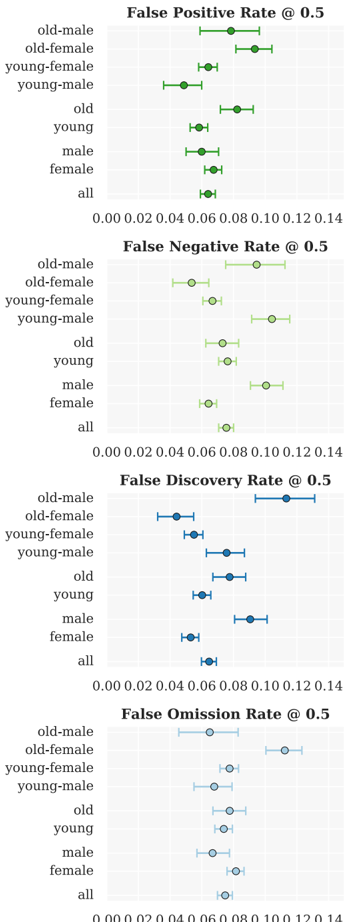
- In the smiling classifier example, all reported metrics at the .5 decision threshold have error types within the range 0.04–0.14, with 95% confidence intervals calculated by bootstrap resampling; the card notes older men have much higher false discovery rate, while men in aggregate have higher false negative rate.
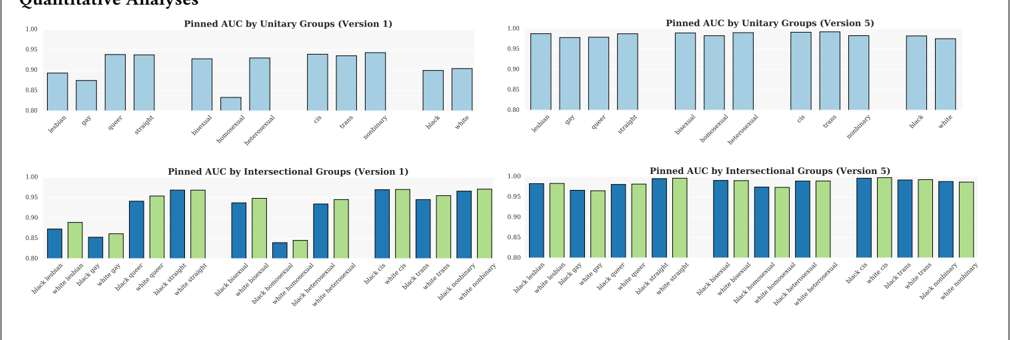
- In the toxicity example, TOXICITY v. 1 has low performance for several terms, especially “lesbian,” “gay,” and “homosexual,” while TOXICITY v. 5 shows more equitable performance after bias mitigation techniques.
Methods
- The paper is a framework/proposal paper, not an empirical study of a new model; it recommends model cards and details suggested sections and prompts.
- It provides two worked examples: a smiling classifier trained and evaluated on the CelebA dataset, using a convolutional neural net pretrained for face recognition and fine-tuned with cross-entropy loss for binary smiling classification.
- It also provides a model card for Perspective API’s TOXICITY classifier, a convolutional neural network developed by Jigsaw in 2017, evaluated on a synthetic Identity Phrase Templates test set; metrics include FPR, FNR, FDR, FOR for the smiling classifier and Pinned AUC for toxicity.
Limitations
- The paper states that model cards rely on the integrity of their creators and that it seems unlikely, at least in the near term, that they could be standardized or formalized enough to prevent misleading representations of model results.
- The paper states that evaluation datasets suitable for disaggregated evaluation are not yet common, and that the synthetic toxicity test data covers only a small set of very specific comments and is not comprehensive.
- The smiling classifier card states it does not capture race or skin type, uses binary gender classes (male/female), and that an ideal evaluation dataset would additionally include Fitzpatrick skin type, camera details, and environment details; the paper also states future work is needed to study how model information is interpreted and used by different stakeholders.
Model-written summary. Check it against the paper before relying on it.
Integrity signals
Registry
Cites
Statistics
Figures
Verification
Claims the paper makes
5 Valid · 1 Not valid · 18 Not checked · 30 Own results and interpretations
The cited sources support only part of this claim — read each source’s verdict below.
In the paper
“Synthetic data is valuable here because [11] shows that real data often has disproportionate amounts of toxicity directed at specific groups.”
What the sources say
- Partly supportedcites [11] [11] Lucas Dixon, John Li, Jeffrey Sorensen, Nithum Thain, and Lucy Vasserman. 2018. Measuring and Mitigating Unintended Bias in Text Classification. Proceedings of the AAAI/ACM Conference on AI, Ethics, and Society (2018). - sourceExperimental — accuracy not yet measured
The 'Quantifying bias in dataset' section (page unavailable) reports that certain identity terms appear disproportionately in toxic comments in the authors’ training data; for example, 'gay' appears in 3% of toxic comments but 0.5% of comments overall. It measures comments containing those terms, not whether toxicity is directed at the groups, and does not establish how often this pattern occurs across real datasets generally. (LLM, conf=0.85)
plainstates an association- Asserted: passes — The authors put it forward as true.
- Checkable: passes — It can be checked against evidence.
- Load-bearing: passes — The paper’s conclusions depend on it.
- Based: passes — The paper gives a reason why it holds.
- Partly supported
A result the paper reports from its own data — it cites no other source for it, so there is none to check. The quote shows it is in the paper.
In the paper
“For example, the false discovery rate on older men is much higher than that for other groups.”
plainstates an association- Asserted: passes — The authors put it forward as true.
- Checkable: passes — It can be checked against evidence.
- Load-bearing: passes — The paper’s conclusions depend on it.
- Based: passes — The paper gives a reason why it holds.
A result the paper reports from its own data — it cites no other source for it, so there is none to check. The quote shows it is in the paper.
In the paper
“TOXICITY v. 1 has low performance for several terms, especially 'lesbian', 'gay', and 'homosexual'.”
plain- Asserted: passes — The authors put it forward as true.
- Checkable: passes — It can be checked against evidence.
- Load-bearing: passes — The paper’s conclusions depend on it.
- Based: passes — The paper gives a reason why it holds.
None of the sources cited for this claim have been checked yet.
In the paper
“she collaborated with other researchers to demonstrate the disproportionate errors of computer vision systems on historically marginalized groups in the United States, such as darker-skinned women [5, 41].”
What the sources say
- Not checked yetcites [5] [5] Joy Buolamwini and Timnit Gebru. 2018. Gender Shades: Intersectional Accuracy Disparities in Commercial Gender Classification. In Proceedings of the 1st Conference on Fairness, Accountability and Transparency (Proceedings of Machine Learning Research) , Sorelle A. Friedler and Christo Wilson (Eds.), Vol. 81. PMLR, New York, NY, USA, 77-91. http://proceedings.mlr.press/v81/buolamwini18a.html -
- Not checked yetcites [41] [41] Inioluwa Raji. 2018. Black Panther Face Scorecard: Wakandans Under the Coded Gaze of AI. (2018). -
boostedstates an association- Asserted: passes — The authors put it forward as true.
- Checkable: passes — It can be checked against evidence.
- Load-bearing: passes — The paper’s conclusions depend on it.
- Based: passes — The paper gives a reason why it holds.
In the paper
“after MIT Media Lab graduate student Joy Buolamwini found that commercial face recognition systems failed to detect her face [4]”
What the sources say
- Not checked yetcites [4] [4] Joy Buolamwini. 2016. How I'm fighting Bias in Algorithms. (2016). https://www.ted.com/talks/joy\_buolamwini\_how\_i\_m\_fighting\_bias\_in\_ algorithms#t-63664 -
plainSingle case- Asserted: passes — The authors put it forward as true.
- Checkable: passes — It can be checked against evidence.
- Load-bearing: unclear — It is unclear whether the paper’s conclusions depend on it.
- Based: passes — The paper gives a reason why it holds.
13 more claims
Create a free account to see all 54 claims and to verify the 13 references still open.
- Probably not a substantial claim. 34
- It may state two separate claims as one. 8
Claims other papers make about this one
Each is checked against this paper’s own text: does it say what the citing paper says it does?
The source backs part of the claim, not all of it — or backs it for a different population, condition or comparison.
In the citing paper
“Model cards represent the field's standard for disclosing and documenting key facts about the architecture, training and evaluation of the model [14, 40].”
From Rethinking open source generative AI: open washing and the EU AI Act (2024) · cites this paper as [40]
Experimental — accuracy not yet measuredThe source backs part of the claim, not all of it — or backs it for a different population, condition or comparison.
In the citing paper
“Model cards (SMCs) [44] have been foundational in standardizing documentation for AI/ML model performance and characteristics, along with risks and unintended uses.”
From Interactive Model Cards: A Human-Centered Approach to Model Documentation (2022) · cites this paper as [44]
Experimental — accuracy not yet measuredThe source backs part of the claim, not all of it — or backs it for a different population, condition or comparison.
In the citing paper
“A second phase saw a more technical approach from the computer science community focusing on fairness, accountability and transparency as an engineering 'ethicalby-design' problem-solving exercise [20][21][22].”
From Putting AI ethics to work: are the tools fit for purpose? (2022) · cites this paper as [21]
Experimental — accuracy not yet measuredThe source backs part of the claim, not all of it — or backs it for a different population, condition or comparison.
In the citing paper
“These are either materials for use in design teams in workshop style events [76,77], tools for producing documentation of the design, build and test process [21,68], or technical tools for testing models, protecting privacy and security, testing for bias [69,93,94], or tracking provenance of data [95].”
From Putting AI ethics to work: are the tools fit for purpose? (2022) · cites this paper as [21]
Experimental — accuracy not yet measuredThe source backs part of the claim, not all of it — or backs it for a different population, condition or comparison.
In the citing paper
“There is some work on fairness relating to AI services, though this tends to focus on either exposing or 'auditing' certain AI services [22,38,126,133], or devising tools, methods and interventions relevant for those building (rather than using) such services [12,96,106,128].”
From Out of Context: Investigating the Bias and Fairness Concerns of “Artificial Intelligence as a Service” (2023) · cites this paper as [106]
Experimental — accuracy not yet measured
17 more claims about this paper
Create a free account to see every claim other papers make about this one.
Citations
Cites
BLEU: a method for automatic evaluation of machine translation
Papineni, K., Roukos, S., Ward, T., & Zhu, W.-J. (2001) · Proceedings of the 40th Annual Meeting on Association for Computational Linguistics - ACL '02 · doi:10.3115/1073083.1073135 · Cited by 21,344 · cited 1×
“translation system could compare BLEU scores [40] across demographic groups, and a model card for a speech recognition system could compare word-error rates.”
BackgroundCrenshaw, K. (2018) · Feminist Legal Theory · doi:10.4324/9780429500480-5 · Cited by 9,510
Deep Learning Face Attributes in the Wild
Liu, Z., Luo, P., Wang, X., & Tang, X. (2015) · 2015 IEEE International Conference on Computer Vision (ICCV) · doi:10.1109/iccv.2015.425 · Cited by 7,747 · cited 4×
“ms [5, 26] that report details of the datasets used to train and test machine learning models. We provide two example model cards in Section 5: A smiling detection model trained on the CelebA dataset [33] (Figure 2), and a public toxicity detection model, Perspective API [29] (Figure 3). Where Datasheets highlight cha…”
BackgroundMethodInfluentialThe validity and practicality of sun-reactive skin types I through VI
Fitzpatrick, T. B. (1988) · Archives of Dermatology · doi:10.1001/archderm.1988.01670060015008 · Cited by 4,339
Differential Privacy: A Survey of Results
Dwork, C. (2008) · Lecture Notes in Computer Science · doi:10.1007/978-3-540-79228-4_1 · Cited by 3,542 · cited 2×
“As such, collaboration with policy, privacy, and legal experts is necessary in order to ascertain which groups may be responsibly inferred, and how that information should be stored and accessed (for example, using differential privacy [12]).”
BackgroundCollins, G. S., Reitsma, J. B., Altman, D. G., & Moons, K. G. M. (2015) · Annals of Internal Medicine · doi:10.7326/m14-0697 · Cited by 3,267
Equality of Opportunity in Supervised Learning
Hardt, M., Price, E., & Srebro, N. (2016) · arXiv · doi:10.48550/arxiv.1610.02413 · Cited by 2,536 · cited 2×
“of Opportunity, and equal false negative and false positive rates across groups is equivalent to fulfilling Equality of Odds [26].”
BackgroundGebru, T., Morgenstern, J., Vecchione, B., Vaughan, J. W., Wallach, H., Daumé, H., & Crawford, K. (2018) · arXiv · doi:10.48550/arxiv.1803.09010 · Cited by 2,474
Self-citationA Probabilistic Interpretation of Precision, Recall and F-Score, with Implication for Evaluation
Goutte, C., & Gaussier, E. (2005) · Lecture Notes in Computer Science · doi:10.1007/978-3-540-31865-1_25 · Cited by 2,285 · cited 1×
“Confidence intervals for metrics derived from confusion matrices can be calculated by treating the matrices as probabilistic models of system performance [24].”
MethodFair prediction with disparate impact: a study of bias in recidivism prediction instruments
Chouldechova, A. (2017) · Big Data · doi:10.1089/big.2016.0047 · Cited by 2,159 · cited 1×
“or different errors that can be calculated from the confusion matrix for binary classification systems. • These also correspond to metrics in recent definitions of “fairness” in machine learning (cf. [8, 25]), where parity across subgroups for different metrics correspond to different fairness criteria. • 95% confiden…”
Background
Research works printed but not linked: 9
- [1] Avrio AI. 2018. Avrio AI: AI Talent Platform. (2018). https://www.goavrio.com/ -
- [5] Joy Buolamwini and Timnit Gebru. 2018. Gender Shades: Intersectional Accuracy Disparities in Commercial Gender Classification. In Proceedings of the 1st Conference on Fairness, Accountability and Transparency (Proceedings of Machine Learning Research) , Sorelle A. Friedler and Christo Wilson (Eds.), Vol. 81. PMLR, New York, NY, USA, 77-91. http://proceedings.mlr.press/v81/buolamwini18a.html -
- [13] Entelo. 2018. Recruitment Software | Entelo. (2018). https://www.entelo.com/ -
- [17] U.S. Food and Drug Administration. 2013. FDA Drug Safety Communication: Risk of next-morning impairment after use of insomnia drugs; FDA requires lower recommended doses for certain drugs containing zolpidem (Ambien, Ambien CR, Edluar, and Zolpimist). (2013). https://web.archive.org/web/20170428150213/ https://www.fda.gov/drugs/drugsafety/ucm352085.htm -
- [18] IIHS (Insurance Institute for Highway Safety: Highway Loss Data Institute). 2003. Special Issue: Side Impact Crashworthiness. Status Report 38, 7 (2003). -
- [19] Institute for the Future, Omidyar Network's Tech, and Society Solutions Lab. 2018. Ethical OS. (2018). https://ethicalos.org/ -
- [32] Jigsaw. 2017. Perspective API. (2017). https://www.perspectiveapi.com/ -
- [39] AI Now. 2018. Litigating Algorithms: Challenging Government Use Of Algorithmic Decision Systems. AI Now Institute. -
- [43] Mukund Sundararajan, Ankur Taly, and Qiqi Yan. 2017. In Proceedings of the 34th International Conference on Machine Learning , Vol. 70. PMLR, Sydney, Australia. -
Cited by
Items 501–600 of 2,235
How Might We Create Better Benchmarks for Speech Recognition?
Aksënova, A., van Esch, D., Flynn, J., & Golik, P. (2021) · Proceedings of the 1st Workshop on Benchmarking: Past, Present and Future · doi:10.18653/v1/2021.bppf-1.4 · Cited by 25
“Model report cards, as outlined by Mitchell et al. (2019), may be a natural way to capture this information for an ASR system—although we would suggest calling them system report cards instead, given that most ASR systems do not consist solely of a single monolithic model.”
BackgroundClimate Change and Health: The next Challenge of Ethical AI
Fiske, A., Radhuber, I. M., Willem, T., Buyx, A., Celi, L. A., & McLennan, S. (2025) · The Lancet Global Health · doi:10.1016/s2214-109x(25)00124-x · Cited by 25
Data Quality in the Age of AI: A Review of Governance, Ethics, and the FAIR Principles
Guillen-Aguinaga, M., Aguinaga-Ontoso, E., Guillen-Aguinaga, L., Guillen-Grima, F., & Aguinaga-Ontoso, I. (2025) · Data · doi:10.3390/data10120201 · Cited by 37
Navigating fairness measures and trade-offs
Buijsman, S. (2023) · AI and Ethics · doi:10.1007/s43681-023-00318-0 · Cited by 40
“One option is to highlight a range of fairness measures along with accuracy (overall and for different sub-groups) as is suggested by the model cards framework (Mitchell et al., 2019).”
BackgroundMeasuring responsible artificial intelligence (RAI) in banking: a valid and reliable instrument
Ratzan, J., & Rahman, N. (2023) · AI and Ethics · doi:10.1007/s43681-023-00321-5 · Cited by 44
Systematic analysis of 32,111 AI model cards characterizes documentation practice in AI
Liang, W., Rajani, N. F., Yang, X., Ozoani, E., Wu, E., Chen, Y. T., Smith, D. S., & Zou, J. (2024) · Nature Machine Intelligence · doi:10.1038/s42256-024-00857-z · Cited by 101
“Model cards, inspired by the concept of food nutrition labels 17 and datasheets 18 in the electronics industry, have emerged as the standard approach to document AI models 7,19 .”
InfluentialChoudhary, T. (2024) · IEEE Access · doi:10.1109/access.2024.3523764 · Cited by 62
“Mitchell et al. [13] suggested the use of ‘‘model cards’’ for documenting the training data for AI models, while Wagner et al. [34] introduced the usage of diversified political representation in datasets with the purpose of balancing ideas across multiple political entities.”
Krook, J., Winter, P., Downer, J., & Blockx, J. (2025) · AI and Ethics · doi:10.1007/s43681-025-00674-z · Cited by 51
“A third sub-theme concerned the use of Model Cards in AI Governance [154–156].”
InfluentialThe necessity of AI audit standards boards
Manheim, D., Martin, S., Bailey, M., Samin, M., & Greutzmacher, R. (2025) · AI & Society · doi:10.1007/s00146-025-02320-y · Cited by 68
“These ethical issues have been highlighted by Mitchell et al. Mitchell et al. (2019).”
InfluentialMajor, V. J., & Aphinyanaphongs, Y. (2020) · BMC Medical Informatics and Decision Making · doi:10.1186/s12911-020-01235-6 · Cited by 25
“In the interest of transparency [21] (one pillar of responsible machine learning), model performance in different strata of sensitive demographics is investigated (eMethods, eResults, eFigures 5 and 6).”
BackgroundMethodJinhua, T., Xie, H., Hu, S., & Liu, J. (2021) · Frontiers in Computational Neuroscience · doi:10.3389/fncom.2021.620281 · Cited by 25
Gevaert, C. M., & Belgiu, M. (2022) · International Journal of Applied Earth Observation and Geoinformation · doi:10.1016/j.jag.2022.103054 · Cited by 25
Towards Implementing Responsible AI
Sanderson, C., Lu, Q., Douglas, D., Xu, X., Zhu, L., & Whittle, J. (2022) · IEEE International Conference on Big Data (BigData) · doi:10.1109/bigdata55660.2022.10021121 · Cited by 28
“Two main approaches were often identified related to traceability, provenance and reproducibility: (i) tracking the use of AI systems, and (ii) keeping track of information related to model provenance (eg. code and training data) [10], [16].”
BackgroundApplications of carbon-based diamond detectors: A critical review
Ahmad, U. F., Wudil, Y. S., Imam, A., Isa, N. F., Gondal, M. A., & Al-Osta, M. A. (2023) · Materials Today Communications · doi:10.1016/j.mtcomm.2023.106409 · Cited by 23
Reward Reports for Reinforcement Learning
Gilbert, T. K., Lambert, N., Dean, S., Zick, T., Snoswell, A., & Mehta, S. (2023) · Proceedings of the AAAI/ACM Conference on AI Ethics and Society · doi:10.1145/3600211.3604698 · Cited by 66
“For static evaluation, consider referring to associated documentation (e.g. Model Cards [Mitchell et al.(2019)]).”
BackgroundBeyond Skin Tone: A Multidimensional Measure of Apparent Skin Color
Thong, W. E., Joniak, P., & Xiang, A. (2023) · IEEE/CVF International Conference on Computer Vision (ICCV) · doi:10.1109/iccv51070.2023.00452 · Cited by 51
“It is thus critical to develop fairness tools that can help assess potential biases and document them in datasheets [25] and model cards [50].”
BackgroundImplementing Ai Principles: Frameworks, Processes, and ToolsPreprint
Boza, P., & Evgeniou, T. (2021) · SSRN Electronic Journal · doi:10.2139/ssrn.3783124 · Cited by 36
Do I Look Like a Criminal? Examining how Race Presentation Impacts Human Judgement of Recidivism
Mallari, K., Inkpen, K., Johns, P., Tan, S., Ramesh, D., & Kamar, E. (2020) · Proceedings of the 2020 CHI Conference on Human Factors in Computing Systems · doi:10.1145/3313831.3376257 · Cited by 24
Kirat, T., Tambou, O., Do, V., & Tsoukiàs, A. (2023) · EURO Journal on Decision Processes · doi:10.1016/j.ejdp.2023.100036 · Cited by 43
Human-centered NLP Fact-checking: Co-Designing with Fact-checkers using Matchmaking for AI
Liu, H., Das, A., Boltz, A., Zhou, D., Pinaroc, D., Lease, M., & Lee, M. K. (2024) · Proceedings of the ACM on Human-Computer Interaction · doi:10.1145/3686962 · Cited by 48
“We discuss some aspects of potential biases in Appendix A.”
BackgroundWillem, T., Fritzsche, M.-C., Zimmermann, B. M., Sierawska, A. K., Breuer, S., Braun, M., Ruess, A. K., Bak, M., Schönweitz, F. B., Meier, L. J., et al. (2024) · Science and Engineering Ethics · doi:10.1007/s11948-024-00523-y · Cited by 48
“For example, in the DR-AI project, we developed workshops based on the ideas of model cards (Mitchell et al., 2019) and data sheets (Gebru et al., 2021) to facilitate structured, transdisciplinary dialogues to assess information on different aspects of trained models and databases, such as their…”
Beyond Algorithmic Bias: A Socio-Computational Interrogation of the Google Search by Image Algorithm
Papakyriakopoulos, O., & Mboya, A. M. (2022) · Social Science Computer Review · doi:10.1177/08944393211073169 · Cited by 38
“This knowledge can be useful when performing further studies or auditing procedures that quantify the exact impact of biases that algorithmic systems have on user groups (see, e.g., (Metaxa et al., 2021; Mitchell et al., 2019)).”
BackgroundArtificial Intelligence Project Success Factors—Beyond the Ethical Principles
Miller, G. J. (2022) · Lecture notes in business information processing · doi:10.1007/978-3-030-98997-2_4 · Cited by 41
Pistilli, G., Ferrandis, C. M., Jernite, Y., & Mitchell, M. (2023) · ACM Conference on Fairness, Accountability, and Transparency (FAccT) · doi:10.1145/3593013.3594002 · Cited by 51
Self-citationBrady, A. P., Allen, B., Chong, J., Kotter, E., Kottler, N. E., Mongan, J., Oakden‐Rayner, L., dos Santos, D. P., Tang, A., Wald, C., et al. (2024) · Journal of the American College of Radiology · doi:10.1016/j.jacr.2023.12.005 · Cited by 41
Deep Learning Model Reuse in the HuggingFace Community: Challenges, Benefit and Trends
Taraghi, M., Dorcelus, G., Foundjem, A. T., Tambon, F., & Khomh, F. (2024) · IEEE International Conference on Software Analysis, Evolution and Reengineering (SANER) · doi:10.1109/saner60148.2024.00059 · Cited by 46
“The model card, first introduced by Mitchel et al. in [60] is a concise accompanying document for a trained ML model that outlines models’ performance on benchmarks across diverse conditions and intended usage context, aiming to enhance transparent model reporting.”
MethodKaptchuk, G., Goldstein, D. G., Hargittai, E., Hofman, J. M., & Redmiles, E. M. (2022) · Digital Threats Research and Practice · doi:10.1145/3488307 · Cited by 23
“More recent work has continued to highlight and explore the way automated decision making can harm both individuals and communities, e.g., [11, 12, 57].”
BackgroundInternational Governance of Civilian AI: A Jurisdictional Certification Approach
Trager, R., Harack, B., Reuel, A., Carnegie, A., Heim, L., Ho, L., Kreps, S., Lall, R., Larter, O., hÉigeartaigh, S. Ó., et al. (2023) · arXiv · doi:10.48550/arxiv.2308.15514 · Cited by 23
Torkamaan, H., Tahaei, M., Buijsman, S., Xiao, Z., Wilkinson, D., & Knijnenburg, B. P. (2024) · Human-computer interaction series · doi:10.1007/978-3-031-55109-3_2 · Cited by 42
Algorithmic Decision-Making, Agency Costs, and Institution-Based Trust
Dowding, K. M., & Taylor, B. R. (2024) · Philosophy & Technology · doi:10.1007/s13347-024-00757-5 · Cited by 34
“…and in the context of ADM guarantees of access for third-party auditors (Raji et al., 2022) or the mandated release of basic information and performance metrics (Mitchell et al., 2019) are likely to create more favourable conditions for a robust ecosystem of information intermediaries to emerge.”
Rajesh, A. E., Olvera‐Barrios, A., Warwick, A., Wu, Y., Stuart, K. V., Biradar, M. I., Ung, C. Y., Khawaja, A. P., Luben, R., Foster, P. J., et al. (2025) · Nature Communications · doi:10.1038/s41467-024-55198-7 · Cited by 44
“This led to the Google Ethical AI team recommending that all computer vision models report their performance across a range of FST scales 33 .”
Ko, J. S., Heo, H., Suh, C. H., Yi, J., & Shim, W. H. (2025) · Korean Journal of Radiology · doi:10.3348/kjr.2024.1161 · Cited by 34
Towards a Better Understanding of Evaluating Trustworthiness in AI Systems
Kemmerzell, N., Schreiner, A., Khalid, H., Schalk, M., & Bordoli, L. (2025) · ACM Computing Surveys · doi:10.1145/3721976 · Cited by 45
“Various approaches have been proposed for documentation, such as model cards that provide essential information about the model’s performance and limitations [174] and datasheets for datasets that describe the dataset’s content, collection process, and intended use [82].”
Alatefi, S., Agwu, O. E., Amar, M. N., & Djema, H. (2025) · Fuel · doi:10.1016/j.fuel.2025.135073 · Cited by 23
Attard-Frost, B., & Widder, D. G. (2025) · Big Data & Society · doi:10.1177/20539517251340603 · Cited by 63
“Documentation, disclosure, and explanation of the data and computational resources, processes, and outcomes involved in ML development activities and automated decision-making activities is another transparency concern (Miceli et al., 2022b; Mitchell et al., 2019; Raji et al., 2020).”
Opportunities and Challenges of Foundation Models in Industrial Manufacturing
Ayyat, M., Osman, M., & Nadeem, T. (2025) · IEEE Access · doi:10.1109/access.2025.3589777 · Cited by 32
“Techniques such as explainable AI (XAI) [203], structured model documentation (e.g., model cards) [204], and hybrid human-AI review systems can improve traceability.”
Afzal, S., Rajmohan, C., Kesarwani, M., Mehta, S., & Patel, H. (2021) · IEEE International Conference on Smart Data Services (SMDS) · doi:10.1109/smds53860.2021.00016 · Cited by 50
Pfohl, S. R., Zhang, H., Xu, Y., Foryciarz, A., Ghassemi, M., & Shah, N. H. (2022) · Scientific Reports · doi:10.1038/s41598-022-07167-7 · Cited by 43
“MIMIC-III [39] eICU [40] Group Count In-hospital mortality Count In-hospital mortality [18-30) 873 0.”
BackgroundWhat People Think AI Should Infer From Faces
Engelmann, S., Ullstein, C., Papakyriakopoulos, O., & Großklags, J. (2022) · ACM Conference on Fairness, Accountability, and Transparency (FAccT) · doi:10.1145/3531146.3533080 · Cited by 35
“…science (broadly speaking) highlights challenges re-lated to accountability and transparency gaps resulting from the near-unbounded power of computer vision AI companies and AI research institutes (i.e, requesters) to determine the interpretative potential of visual content [33, 68–70, 85, 87].”
BackgroundMimetic Models: Ethical Implications of AI that Acts Like You
McIlroy-Young, R., Kleinberg, J. M., Sen, S., Barocas, S., & Anderson, A. (2022) · Proceedings of the AAAI/ACM Conference on AI Ethics and Society · doi:10.1145/3514094.3534177 · Cited by 44
“Mimeticmodelsalsointroducequestions relatedtodataaccess [114] and informed consent [22], and may benefit from strategies such as Model Cards [67] to address these issues.”
The landscape of data and AI documentation approaches in the European policy context
Micheli, M., Hupont, I., Delipetrev, B., & Soler-Garrido, J. (2023) · Ethics and Information Technology · doi:10.1007/s10676-023-09725-7 · Cited by 43
“The more general and horizontal nature of a first wave of proposals (e.g., DrivenData (2022), Gebru et al. (2021), Mitchell et al. (2019)) paved the way for the emergence of more specialised ones (e.g., Chaudhry et al. (2022), Rostamzadeh et al. (2022), Zheng etal.”
BackgroundYoo, D. W., Woo, H., Pendse, S. R., Lu, N. Y., Birnbaum, M. L., Abowd, G. D., & Choudhury, M. D. (2024) · Proceedings of the ACM on Human-Computer Interaction · doi:10.1145/3637372 · Cited by 38
“Recent efforts to document the ethical aspects of AI models (e.g., consumer labels [75] and model cards [50]) may consider these “ethical statements from the research team” to be included in this documentation.”
BackgroundRemote explainability faces the bouncer problem
Merrer, E. L., & Trédan, G. (2020) · Nature Machine Intelligence · doi:10.1038/s42256-020-0216-z · Cited by 39
“While there are numerous comments and proposals for good practices when releasing models that may include forms of bias [27], the automatic detection of bias on the user side is also of interest for the community.”
BackgroundA Framework for Deprecating Datasets: Standardizing Documentation, Identification, and Communication
Luccioni, A. S., Corry, F., Sridharan, H., Ananny, M., Schultz, J., & Crawford, K. (2022) · 2022 ACM Conference on Fairness Accountability and Transparency · doi:10.1145/3531146.3533086 · Cited by 22
MultiBench: Multiscale Benchmarks for Multimodal Representation Learning
Liang, P. P., Lyu, Y., Fan, X., Wu, Z., Cheng, Y., Wu, J., Chen, L., Wu, P., Lee, M. A., Zhu, Y., et al. (2021) · arXiv · doi:10.48550/arxiv.2107.07502 · Cited by 85
Show Your Work: Improved Reporting of Experimental Results
Dodge, J., Gururangan, S., Card, D., Schwartz, R., & Smith, N. A. (2019) · arXiv · doi:10.48550/arxiv.1909.03004 · Cited by 22
A Framework for Deprecating Datasets: Standardizing Documentation, Identification, and Communication
Luccioni, A. S., Corry, F., Sridharan, H., Ananny, M., Schultz, J., & Crawford, K. (2021) · arXiv · doi:10.48550/arxiv.2111.04424 · Cited by 22
Data Statements: From Technical Concept to Community Practice
McMillan-Major, A., Bender, E. M., & Friedman, B. (2024) · ACM Journal on Responsible Computing · doi:10.1145/3594737 · Cited by 21
Toward a science of human–AI teaming for decision making: a complementarity framework
Gonzalez, C., Donahue, K., Goldstein, D. G., Heidari, H., Jalali, M. S., Schelble, B., Singh, A., & Woolley, A. W. (2026) · PNAS Nexus · doi:10.1093/pnasnexus/pgag030 · Cited by 33
“AI systems can identify disparities, counterfactual inconsist-encies, or subtle patterns of discrimination across large datasets (30, 31).”
Corti, L., Oltmans, R., Jung, J., Balayn, A., Wijsenbeek, M. S., & Yang, J. (2024) · CHI Conference on Human Factors in Computing Systems · doi:10.1145/3613904.3642551 · Cited by 43
“Das et al. [39] highlighted the potential benefts for pulmonologists of using an XAI system to assist in the diagnostic interpretation of pulmonary function tests.”
A Clinical Decision Support System for the Prediction of Quality of Life in ALS
Antoniadi, A. M., Galvin, M., Heverin, M., Wei, L., Hardiman, O. M., & Mooney, C. (2022) · Journal of Personalized Medicine · doi:10.3390/jpm12030435 · Cited by 24
“[40], the variables that derived the decision of the model constitute critical information that should be provided to clinicians.”
BackgroundAn explanation space to align user studies with the technical development of Explainable AI
Cabour, G., Morales‐Forero, A., Ledoux, É., & Bassetto, S. (2022) · AI & Society · doi:10.1007/s00146-022-01536-6 · Cited by 42
“Our work has similarities with the Model Cards proposed by Mitchell et al. (2019) .”
ResultUnderstanding Implementation Challenges in Machine Learning Documentation
Chang, J., & Custis, C. (2022) · ACM Conference on Equity and Access in Algorithms, Mechanisms, and Optimization (EAAMO) · doi:10.1145/3551624.3555301 · Cited by 43
AI model transferability in healthcare: a sociotechnical perspective
Wiesenfeld, B. M., Aphinyanaphongs, Y., & Nov, O. (2022) · Nature Machine Intelligence · doi:10.1038/s42256-022-00544-x · Cited by 29
Teaching MLOps in Higher Education through Project-Based Learning
Lanubile, F., Martínez-Fernández, S., & Quaranta, L. (2023) · 2023 IEEE/ACM 45th International Conference on Software Engineering: Software Engineering Education and Training (ICSE-SEET) · doi:10.1109/icse-seet58685.2023.00015 · Cited by 21
“Model cards were introduced in [12] to provide a structured description of ML models including their intended use cases, ethical considerations, and limitations; they provide a template for the reporting of basic model requirements and characteristics.”
BackgroundResponsible Credit Risk Assessment with Machine Learning and Knowledge Acquisition
Guan, C., Suryanto, H., Mahidadia, A., Bain, M., & Compton, P. (2023) · Human-Centric Intelligent Systems · doi:10.1007/s44230-023-00035-1 · Cited by 35
“Quantitative and qualitative standardized documentation from evaluation of ML models in the form of “model cards” [20] that can highlight potential impacts on various groups due to characteristics of the data captured in black box models.”
MethodTowards a Responsible AI Metrics Catalogue: A Collection of Metrics for AI Accountability
Xia, B., Lu, Q., Zhu, L., Lee, S. U., Liu, Y., & Xing, Z. (2024) · IEEE/ACM International Conference on AI Engineering – Software Engineering for AI (CAIN) · doi:10.1145/3644815.3644959 · Cited by 74
“This aspect of design is indispensable for continuous operation, effective problem detection, and the rectification of errors or system failures, safeguarding against potential disruptions and upholding the integrity of AI systems.”
BackgroundImproving Human-Algorithm Collaboration: Causes and Mitigation of Over- and Under-AdherencePreprint
Balakrishnan, M., Ferreira, K., & Tong, J. D. (2022) · Social Science Research Network · doi:10.2139/ssrn.4298669 · Cited by 14
Fairness Without Demographic Data: A Survey of Approaches
Ashurst, C., & Weller, A. (2023) · Equity and Access in Algorithms, Mechanisms, and Optimization · doi:10.1145/3617694.3623234 · Cited by 21
“Mechanisms to improve documentation and transparency (e.g. datasheets [47] and model cards [90]) can be a starting point for uncovering issues.”
BackgroundTaking Algorithms to Courts: A Relational Approach to Algorithmic Accountability
Metcalf, J., Singh, R., Moss, E., Tafesse, E., & Watkins, E. A. (2023) · 2023 ACM Conference on Fairness, Accountability, and Transparency · doi:10.1145/3593013.3594092 · Cited by 21
“Furthermore, although internal documentation practices have grown recently [53, 76, 94], developers’ concerns around potential harms may not align with the harms that concern the public interest [75, 78].”
BackgroundLyons, J. B., Hobbs, K. L., Rogers, S. C., & Clouse, H. S. (2023) · Frontiers in Neuroergonomics · doi:10.3389/fnrgo.2023.1201777 · Cited by 29
Golpayegani, D., Hupont, I., Panigutti, C., Pandit, H. J., Schade, S., O’Sullivan, D., & Lewis, D. (2024) · Lecture notes in computer science · doi:10.1007/978-3-031-68024-3_3 · Cited by 58
The Externalities of Exploration and How Data Diversity Helps Exploitation
Raghavan, M. (2023) · ACM eBooks · doi:10.1145/3603195.3603208 · Cited by 20
Barclay, I., Taylor, H., Preece, A. D., Taylor, I., Verma, D. C., & de Mel, G. R. (2020) · Concurrency and Computation Practice and Experience · doi:10.1002/cpe.6129 · Cited by 26
“Other proposals for documentation of ML systems, such as the Model Card proposal from Mitchell et al. 27 or a Supplier’s Declaration of Conformity as suggested by Hind, et al 30 , could also be used as the basis for a framework which delivers information from which the visibility judgements could be made.”
BackgroundInfluentialLee, M. S. A., & Singh, J. (2021) · Proceedings of the AAAI/ACM Conference on AI Ethics and Society · doi:10.1145/3461702.3462572 · Cited by 47
Rahman, S., & Kandogan, E. (2022) · CHI Conference on Human Factors in Computing Systems · doi:10.1145/3491102.3502068 · Cited by 29
“Several approaches for model documentation ( e.g., Factsheets [20] and Model Cards [45]) and data documentation ( e.g., Datasheets [22] and Nutrition Labels [28]) have been proposed to be used as checklists to ensure the quality of models and data.”
BackgroundMethodA survey of energy concerns for software engineering
Lee, S. U., Fernando, N., Lee, K., & Schneider, J.-G. (2024) · Journal of Systems and Software · doi:10.1016/j.jss.2023.111944 · Cited by 37
TeBlunthuis, N., Hase, V., & Chan, C. (2024) · Communication Methods and Measures · doi:10.1080/19312458.2023.2293713 · Cited by 50
“…account of methodological decisions Finally, we add our voices to those recommending that researchers report methodological decisions so others can understand and replicate their design (Pipal et al., 2022; Reiss et al., 2022), especially in the context of machine learning (Mitchell et al., 2019).”
Challenges and practices of deep learning model reengineering: A case study on computer vision
Jiang, W., Banna, V., Vivek, N., Goel, A., Synovic, N. M., Thiruvathukal, G. K., & Davis, J. C. (2024) · Empirical Software Engineering · doi:10.1007/s10664-024-10521-0 · Cited by 38
“Many engineering companies, including Amazon (Schelter et al. 2018), Google (Kim and Li 2020), and Meta (Pineau 2022) are engaged in forms of and DL reengineering .”
MethodInfluentialPretrained AI Models: Performativity, Mobility, and Change
Varshney, L. R., Keskar, N. S., & Socher, R. (2019) · arXiv · doi:10.48550/arxiv.1909.03290 · Cited by 20
“In addition to models, datasets, and code spreading, there have been several suggestions to create model cards for pre-trained models [66] or fact sheets for larger compositions of models as AI services [3] that move along with them.”
BackgroundRemote Proctoring in Language Testing: Implications for Fairness and Justice
Isbell, D. R., Kremmel, B., & Kim, J. (2023) · Language Assessment Quarterly · doi:10.1080/15434303.2023.2288251 · Cited by 33
“…machine learning models that provide benchmarked evaluation in a variety of conditions, such as across different cultural, demographic, or phenotypic groups [. . . ] and intersectional groups”) (Mitchell et al., 2019, p. 220) are suitable approaches to address fairness concerns in this area.”
BackgroundArtificial Intelligence–Assisted Speech Therapy for /ɹ/: A Single-Case Experimental Study
Benway, N. R., & Preston, J. L. (2024) · American Journal of Speech-Language Pathology · doi:10.1044/2024_ajslp-23-00448 · Cited by 34
“These model cards , which document the training of machine learning models (Kapoor & Narayanan, 2022; Mitchell et al., 2019), and datasheets , which document the data that the model were trained upon (Gebru et al., 2018), were published by Benway, Preston, Hitchcock, et al. (2023) and Benway et al.…”
Scorecard for synthetic medical data evaluation
Zamzmi, G., Subbaswamy, A., Sizikova, E., Margerrison, E., Delfino, J. G., & Badano, A. G. (2025) · Communications Engineering · doi:10.1038/s44172-025-00450-1 · Cited by 44
“Inspired by the Model Scorecard 11 and Healthsheet 12 , we propose the Syn-theticDataScorecard.”
The epistemic revolution of AI: reconfiguring the foundations of scientific knowledge
Cruz‐Aguilar, M. A. (2025) · AI & Society · doi:10.1007/s00146-025-02658-3 · Cited by 34
Jones, D. T., & Kerber, K. A. (2022) · Neurology · doi:10.1212/wnl.0000000000013200 · Cited by 29
“Testing for bias and documenting the relevant particulars for model development in model cards that include information about data sets, algorithms, validation studies, and bias testing should become standard practice.(15)”
MethodFrom Demo to Design in Teaching Machine Learning
Bilstrup, K.-E. K., Kaspersen, M. H., Assent, I., Enni, S. A., & Petersen, M. G. (2022) · ACM Conference on Fairness, Accountability, and Transparency (FAccT) · doi:10.1145/3531146.3534634 · Cited by 30
Black, E., Naidu, R. C. A., Ghani, R., Rodolfa, K. T., Ho, D. E., & Heidari, H. (2023) · ACM Conference on Equity and Access in Algorithms, Mechanisms, and Optimization (EAAMO) · doi:10.1145/3617694.3623259 · Cited by 44
“In the spirit of Model Cards and Data Sheets [43, 81] we introduce Pipeline Cards : a documentation framework for design choices along the ML pipeline to promote practitioner introspection and transpar-entreporting[17]ofhowAIsystemsaremade.”
MethodSeedat, N., Imrie, F., & van der Schaar, M. (2023) · IEEE Transactions on Artificial Intelligence · doi:10.1109/tai.2023.3345805 · Cited by 65
“In particular, Datasheets for Datasets [32] propose documentation guidelines for new datasets, while Model Cards for Model Reporting [33] advocates for standardized reporting of models, including training data, performance measures, and limitations.”
BackgroundMethodParticipant flow diagrams for health equity in AI
Ellen, J., de Matos, J. C. R. G., Viola, M., Gallifant, J., Quion, J., Celi, L. A., & Hussein, N. S. A. (2024) · Journal of Biomedical Informatics · doi:10.1016/j.jbi.2024.104631 · Cited by 23
aiWATERS: an artificial intelligence framework for the water sector
Vekaria, D., & Sinha, S. (2024) · AI in Civil Engineering · doi:10.1007/s43503-024-00025-7 · Cited by 31
“Table 3 provides a summary of what various stake-holders in a utility may require from a visualization for decision-making use cases (Mitchell et. al., 2019).”
BLIP: Facilitating the Exploration of Undesirable Consequences of Digital Technologies
Pang, R. Y., Santy, S., Just, R., & Reinecke, K. (2024) · CHI Conference on Human Factors in Computing Systems · doi:10.1145/3613904.3642054 · Cited by 30
“Additionally, there are calls for researchers within different computing communities to accurately report the design considerations of their datasets [9, 38], models [67, 89], and tasks [56, 68] as well as evaluate and de-bias their products [4, 8, 104, 111].”
BackgroundTowards Generating Consumer Labels for Machine Learning Models
Seifert, C., Scherzinger, S., & Wiese, L. (2019) · IEEE International Conference on Cognitive Machine Intelligence (CogMI) · doi:10.1109/cogmi48466.2019.00033 · Cited by 31
“Complementary to TRIPOD and Model Cards, our consumer labels target machine learning lay persons, who are directly or indirectly affected by model decisions.”
BackgroundInfluentialInternational governance of civilian AI: a jurisdictional certification approachPreprint
Trager, R., Harack, B., Reuel, A., Carnegie, A. S., Heim, L., Ho, L., Kreps, S. E., Lall, R., Larter, O., hÉigeartaigh, S. Ó., et al. (2023) · SSRN Electronic Journal · doi:10.2139/ssrn.4579899 · Cited by 67
On-device Online Learning and Semantic Management of TinyML Systems
Ren, H., Anicic, D., Li, X., & Runkler, T. A. (2024) · ACM Transactions on Embedded Computing Systems · doi:10.1145/3665278 · Cited by 38
“TensorFlow Lite Metadata 5 and Model Card [31] have been introduced to describe and organize the information of trained models, increasing the transparency in distributing ML models.”
MethodThe AI-policy-governance nexus: How regulation and AI shift corporate governance toward stakeholders
Cordeiro, C. M., Adomaitis, L., & Huang, L. (2025) · Technology in Society · doi:10.1016/j.techsoc.2025.103117 · Cited by 40
Shelmerdine, S. C., Naidoo, J., Kelly, B. S., Laborie, L. B., Toso, S., D’Antonoli, T. A., Arthurs, O. J., Blumer, S. L., Ciet, P., Damasio, M. B., et al. (2025) · Pediatric Radiology · doi:10.1007/s00247-025-06386-0 · Cited by 21
“These approaches would help healthcare providers to identify those tools requiring more oversight, and be complementary to the “model card” system that has been championed for all AI tools [8].”
Barclay, I., Preece, A. D., Taylor, I., Radha, S. K., & Nabrzyski, J. (2022) · Concurrency and Computation Practice and Experience · doi:10.1002/cpe.6997 · Cited by 29
Explaining in Time: Meeting Interactive Standards of Explanation for Robotic Systems
Arnold, T. M., Kasenberg, D., & Scheutz, M. J. (2021) · ACM Transactions on Human-Robot Interaction · doi:10.1145/3457183 · Cited by 24
FairEd: A Systematic Fairness Analysis Approach Applied in a Higher Educational Context
Vásquez, J., Gitiaux, X., Ortega, C., & Rangwala, H. (2022) · International Conference on Learning Analytics and Knowledge (LAK) · doi:10.1145/3506860.3506902 · Cited by 29
“On the other hand, [51] propose to accompany a model’s deployment with information related to its intended use, data description, metrics, and ethical considerations through a model card comprised of key components.”
BackgroundThe Switch, the Ladder, and the Matrix: Models for Classifying AI Systems
Mökander, J., Sheth, M., Watson, D., & Floridi, L. (2023) · Minds and Machines · doi:10.1007/s11023-022-09620-y · Cited by 28
“…Models for Classifying… HLEG, 2020; Floridi et al., 2022; Reisman et al., 2018); researchers have developed translational tools like model cards (Mitchell et al., 2019) and datasheets (Gebru et al., 2018; Holland et al., 2018); industry-specific initiatives have drafted standardised protocols…”
BackgroundMethodIntroducing contextual transparency for automated decision systems
Sloane, M., Solano-Kamaiko, I. R., Yuan, J., Dasgupta, A., & Stoyanovich, J. (2023) · Nature Machine Intelligence · doi:10.1038/s42256-023-00623-7 · Cited by 28
“In the context of ADS nutritional labels, they can provide insights into the training data, demographic overviews, model performance measures, feature relevance and impact, fairness measures, model stability highlights and ranking comparisons, amongst many others 63,64 .”
BackgroundShowkat, D., Smith, A. D. R., Wang, L., & To, A. (2023) · CHI Conference on Human Factors in Computing Systems · doi:10.1145/3544548.3581010 · Cited by 30
Overwriting Pretrained Bias with Finetuning Data
Wang, A., & Russakovsky, O. (2023) · IEEE/CVF International Conference on Computer Vision (ICCV) · doi:10.1109/iccv51070.2023.00366 · Cited by 77
“For those creating pretrained models, responsibility needs to be taken to clearly document the data the model was trained on, as well as known biases it may have [13, 33].”
BackgroundNatural Language Processing for Radiation Oncology: Personalizing Treatment Pathways
Lin, H., Ni, L., Phuong, C., & Hong, J. C. (2024) · Pharmacogenomics and Personalized Medicine · doi:10.2147/pgpm.s396971 · Cited by 26
“85 Moving forward, it will also be important to establish best practices for identifying and debiasing language models, in order to improve the fairness of language models and reducing harm to traditionally marginalized groups of patients.”
BackgroundEnd-to-end reproducible AI pipelines in radiology using the cloud
Bontempi, D., Nürnberg, L., Pai, S., Krishnaswamy, D., Thiriveedhi, V., Hosny, A., Mak, R. H., Farahani, K., Kikinis, R., Fedorov, A., et al. (2024) · Nature Communications · doi:10.1038/s41467-024-51202-2 · Cited by 30
Neuro-Symbolic AI for Military Applications
Hagos, D. H., & Rawat, D. B. (2024) · IEEE Transactions on Artificial Intelligence · doi:10.1109/tai.2024.3444746 · Cited by 38
“Furthermore, implementing robust monitoring and evaluation mechanisms is crucial to identify and address potential biases or unintended outcomes during AI system deployment [119].”
BackgroundA Capability Approach to AI Ethics
Ratti, E., & Graves, M. (2025) · American Philosophical Quarterly · doi:10.5406/21521123.62.1.01 · Cited by 24
Selection Problems in the Presence of Implicit Bias
Raghavan, M. (2023) · ACM eBooks · doi:10.1145/3603195.3603209 · Cited by 22
Towards Perspicuity Requirements
Sterz, S., Baum, K. L., Lauber-Rönsberg, A., & Hermanns, H. (2021) · IEEE International Requirements Engineering Conference Workshops (REW) · doi:10.1109/rew53955.2021.00029 · Cited by 22
Adaptive Sampling Strategies to Construct Equitable Training Datasets
Cai, W., Encarnación, R., Chern, B., Corbett‐Davies, S., Bogen, M., Bergman, S., & Goel, S. (2022) · ACM Conference on Fairness, Accountability, and Transparency (FAccT) · doi:10.1145/3531146.3533203 · Cited by 43
Metadata
- Authors
- Mitchell, M., Wu, S., Zaldivar, A., Barnes, P., Vasserman, L., Hutchinson, B., Spitzer, E., Raji, I. D., & Gebru, T.
- Venue
- Proceedings of the Conference on Fairness, Accountability, and Transparency
- Publisher
- ACM
- Published
- 2019-01-29
- Pages
- 220-229
- OpenAlex
- W2897042519
- Semantic Scholar
- 7365f887c938ca21a6adbef08b5a520ebbd4638f
- Cited by
- 2,681
- References
- 12
- Citations by year
- 2026: 831 · 2025: 446 · 2024: 376 · 2023: 366 · 2022: 243 · 2021: 260 · 2020: 102 · 2019: 54
- FWCI
- 170.95
- Type
- conference paper
- Language
- en
- Open access
- green
- arxiv.org
- Locations
- ACM Conference on Fairness, Accountability, and Transparency (FAccT) (publishedVersion)
- arXiv (Cornell University) (submittedVersion)
- arXiv (Cornell University)
- Topics
- Physical Sciences › Computer Science › Artificial Intelligence › Ethics and Social Impacts of AI
- Physical Sciences › Computer Science › Artificial Intelligence › Explainable Artificial Intelligence (XAI)
- Physical Sciences › Computer Science › Computer Vision and Pattern Recognition › Face recognition and analysis
- Keywords
- model cards, model transparency, algorithmic fairness, demographic bias, responsible AI, democratization of AI, toxic comment detection, model documentation
About these checks
Registry, retraction, Cites and statistics results are computed, not judged, with one exception: a printed reference that no index lists is read once by a model before it counts as a citation error. Claims are extracted by a model and kept only when their quote appears verbatim in the text; each cited source is then checked, with a model’s help, for whether it says what the claim relies on. Those verdicts can be wrong — read the claim’s quote and the cited source before relying on one.
The claim verdicts this report counts are experimental: their accuracy is not yet measured.
A language model drew the claims from the paper on 2026-10-07, under version 3 of the claim definition (model deepseek-v4.1-flash, prompt extract-v3).
A second model labelled each claim on 2026-10-07 (model jev-1.13-20260917, definition revision gold-guideline-v0.2).
Cited sources are checked with a language model’s help (gpt-6-sol).
Statistics and arithmetic are recomputed, not judged.
Confidence bands are shown only for fields calibrated on our annotated test set. None is calibrated yet, so no band is shown.
What counts as a claim ›How we measure confidence ›How we check this ›
Are you an author, or do you see a problem with this page? Request a review
Data sources
Bibliographic data: Semantic Scholar, OpenAlex, Crossref.
Contains information from the Semantic Scholar Academic Graph Datasets, made available under the ODC Attribution License (ODC-BY 1.0).
Semantic Scholar’s data is described in: Kinney, R., et al. (2023). The Semantic Scholar Open Data Platform. arXiv:2301.10140.
