

Model Cards for Model Reporting
Open accessThe DOI matches its Crossref record; 22 of the 22 references it cites were found in a registry or an index; 8 of the 34 sources its claims cite were checked for support.
Abstract
Trained machine learning models are increasingly used to perform high-impact tasks in areas such as law enforcement, medicine, education, and employment. In order to clarify the intended use cases of machine learning models and minimize their usage in contexts for which they are not well suited, we recommend that released models be accompanied by documentation detailing their performance characteristics. In this paper, we propose a framework that we call model cards, to encourage such transparent model reporting. Model cards are short documents accompanying trained machine learning models that provide benchmarked evaluation in a variety of conditions, such as across different cultural, demographic, or phenotypic groups (e.g., race, geographic location, sex, Fitzpatrick skin type [15]) and intersectional groups (e.g., age and race, or sex and Fitzpatrick skin type) that are relevant to the intended application domains. Model cards also disclose the context in which models are intended to be used, details of the performance evaluation procedures, and other relevant information. While we focus primarily on human-centered machine learning models in the application fields of computer vision and natural language processing, this framework can be used to document any trained machine learning model. To solidify the concept, we provide cards for two supervised models: One trained to detect smiling faces in images, and one trained to detect toxic comments in text. We propose model cards as a step towards the responsible democratization of machine learning and related artificial intelligence technology, increasing transparency into how well artificial intelligence technology works. We hope this work encourages those releasing trained machine learning models to accompany model releases with similar detailed evaluation numbers and other relevant documentation.
Overview
CoChat Summary
TL;DR
The paper proposes “model cards,” short documentation records accompanying trained machine learning models to report intended use, performance characteristics, and disaggregated evaluation across demographic, phenotypic, and intersectional groups. It illustrates the framework with worked examples for a smiling classifier and a toxicity classifier.
Key findings
- The authors argue there are no standardized documentation procedures for communicating trained ML model performance, especially for high-impact domains such as health care, employment, education, and law enforcement.
- They propose model card sections covering model details, intended use, factors, metrics, evaluation data, training data, quantitative analyses, ethical considerations, and caveats/recommendations.
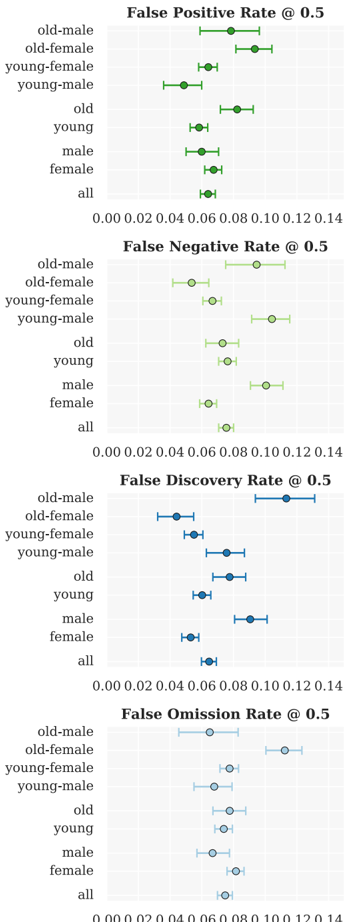
- In the smiling classifier example, all reported metrics at the .5 decision threshold have error types within the range 0.04–0.14, with 95% confidence intervals calculated by bootstrap resampling; the card notes older men have much higher false discovery rate, while men in aggregate have higher false negative rate.
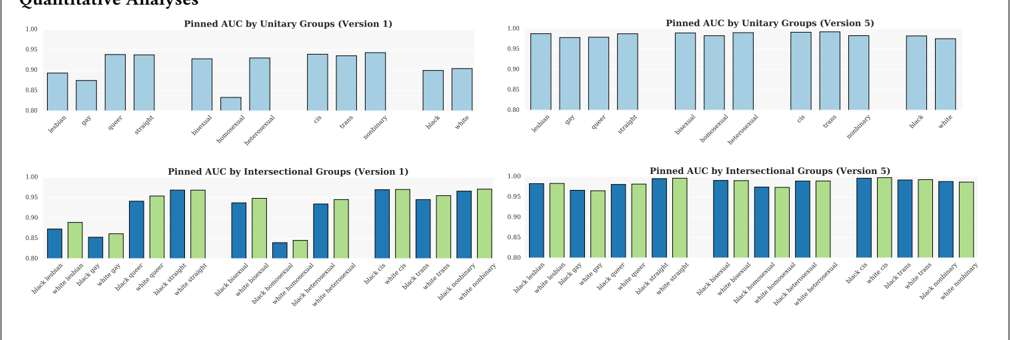
- In the toxicity example, TOXICITY v. 1 has low performance for several terms, especially “lesbian,” “gay,” and “homosexual,” while TOXICITY v. 5 shows more equitable performance after bias mitigation techniques.
Methods
- The paper is a framework/proposal paper, not an empirical study of a new model; it recommends model cards and details suggested sections and prompts.
- It provides two worked examples: a smiling classifier trained and evaluated on the CelebA dataset, using a convolutional neural net pretrained for face recognition and fine-tuned with cross-entropy loss for binary smiling classification.
- It also provides a model card for Perspective API’s TOXICITY classifier, a convolutional neural network developed by Jigsaw in 2017, evaluated on a synthetic Identity Phrase Templates test set; metrics include FPR, FNR, FDR, FOR for the smiling classifier and Pinned AUC for toxicity.
Limitations
- The paper states that model cards rely on the integrity of their creators and that it seems unlikely, at least in the near term, that they could be standardized or formalized enough to prevent misleading representations of model results.
- The paper states that evaluation datasets suitable for disaggregated evaluation are not yet common, and that the synthetic toxicity test data covers only a small set of very specific comments and is not comprehensive.
- The smiling classifier card states it does not capture race or skin type, uses binary gender classes (male/female), and that an ideal evaluation dataset would additionally include Fitzpatrick skin type, camera details, and environment details; the paper also states future work is needed to study how model information is interpreted and used by different stakeholders.
Model-written summary. Check it against the paper before relying on it.
Integrity signals
Registry
Cites
Statistics
Figures
Verification
Claims the paper makes
5 Valid · 1 Not valid · 18 Not checked · 30 Own results and interpretations
The cited sources support only part of this claim — read each source’s verdict below.
In the paper
“Synthetic data is valuable here because [11] shows that real data often has disproportionate amounts of toxicity directed at specific groups.”
What the sources say
- Partly supportedcites [11] [11] Lucas Dixon, John Li, Jeffrey Sorensen, Nithum Thain, and Lucy Vasserman. 2018. Measuring and Mitigating Unintended Bias in Text Classification. Proceedings of the AAAI/ACM Conference on AI, Ethics, and Society (2018). - sourceExperimental — accuracy not yet measured
The 'Quantifying bias in dataset' section (page unavailable) reports that certain identity terms appear disproportionately in toxic comments in the authors’ training data; for example, 'gay' appears in 3% of toxic comments but 0.5% of comments overall. It measures comments containing those terms, not whether toxicity is directed at the groups, and does not establish how often this pattern occurs across real datasets generally. (LLM, conf=0.85)
plainstates an association- Asserted: passes — The authors put it forward as true.
- Checkable: passes — It can be checked against evidence.
- Load-bearing: passes — The paper’s conclusions depend on it.
- Based: passes — The paper gives a reason why it holds.
- Partly supported
A result the paper reports from its own data — it cites no other source for it, so there is none to check. The quote shows it is in the paper.
In the paper
“For example, the false discovery rate on older men is much higher than that for other groups.”
plainstates an association- Asserted: passes — The authors put it forward as true.
- Checkable: passes — It can be checked against evidence.
- Load-bearing: passes — The paper’s conclusions depend on it.
- Based: passes — The paper gives a reason why it holds.
A result the paper reports from its own data — it cites no other source for it, so there is none to check. The quote shows it is in the paper.
In the paper
“TOXICITY v. 1 has low performance for several terms, especially 'lesbian', 'gay', and 'homosexual'.”
plain- Asserted: passes — The authors put it forward as true.
- Checkable: passes — It can be checked against evidence.
- Load-bearing: passes — The paper’s conclusions depend on it.
- Based: passes — The paper gives a reason why it holds.
None of the sources cited for this claim have been checked yet.
In the paper
“she collaborated with other researchers to demonstrate the disproportionate errors of computer vision systems on historically marginalized groups in the United States, such as darker-skinned women [5, 41].”
What the sources say
- Not checked yetcites [5] [5] Joy Buolamwini and Timnit Gebru. 2018. Gender Shades: Intersectional Accuracy Disparities in Commercial Gender Classification. In Proceedings of the 1st Conference on Fairness, Accountability and Transparency (Proceedings of Machine Learning Research) , Sorelle A. Friedler and Christo Wilson (Eds.), Vol. 81. PMLR, New York, NY, USA, 77-91. http://proceedings.mlr.press/v81/buolamwini18a.html -
- Not checked yetcites [41] [41] Inioluwa Raji. 2018. Black Panther Face Scorecard: Wakandans Under the Coded Gaze of AI. (2018). -
boostedstates an association- Asserted: passes — The authors put it forward as true.
- Checkable: passes — It can be checked against evidence.
- Load-bearing: passes — The paper’s conclusions depend on it.
- Based: passes — The paper gives a reason why it holds.
In the paper
“after MIT Media Lab graduate student Joy Buolamwini found that commercial face recognition systems failed to detect her face [4]”
What the sources say
- Not checked yetcites [4] [4] Joy Buolamwini. 2016. How I'm fighting Bias in Algorithms. (2016). https://www.ted.com/talks/joy\_buolamwini\_how\_i\_m\_fighting\_bias\_in\_ algorithms#t-63664 -
plainSingle case- Asserted: passes — The authors put it forward as true.
- Checkable: passes — It can be checked against evidence.
- Load-bearing: unclear — It is unclear whether the paper’s conclusions depend on it.
- Based: passes — The paper gives a reason why it holds.
13 more claims
Create a free account to see all 54 claims and to verify the 13 references still open.
- Probably not a substantial claim. 34
- It may state two separate claims as one. 8
Claims other papers make about this one
Each is checked against this paper’s own text: does it say what the citing paper says it does?
The source backs part of the claim, not all of it — or backs it for a different population, condition or comparison.
In the citing paper
“Model cards represent the field's standard for disclosing and documenting key facts about the architecture, training and evaluation of the model [14, 40].”
From Rethinking open source generative AI: open washing and the EU AI Act (2024) · cites this paper as [40]
Experimental — accuracy not yet measuredThe source backs part of the claim, not all of it — or backs it for a different population, condition or comparison.
In the citing paper
“Model cards (SMCs) [44] have been foundational in standardizing documentation for AI/ML model performance and characteristics, along with risks and unintended uses.”
From Interactive Model Cards: A Human-Centered Approach to Model Documentation (2022) · cites this paper as [44]
Experimental — accuracy not yet measuredThe source backs part of the claim, not all of it — or backs it for a different population, condition or comparison.
In the citing paper
“A second phase saw a more technical approach from the computer science community focusing on fairness, accountability and transparency as an engineering 'ethicalby-design' problem-solving exercise [20][21][22].”
From Putting AI ethics to work: are the tools fit for purpose? (2022) · cites this paper as [21]
Experimental — accuracy not yet measuredThe source backs part of the claim, not all of it — or backs it for a different population, condition or comparison.
In the citing paper
“These are either materials for use in design teams in workshop style events [76,77], tools for producing documentation of the design, build and test process [21,68], or technical tools for testing models, protecting privacy and security, testing for bias [69,93,94], or tracking provenance of data [95].”
From Putting AI ethics to work: are the tools fit for purpose? (2022) · cites this paper as [21]
Experimental — accuracy not yet measuredThe source backs part of the claim, not all of it — or backs it for a different population, condition or comparison.
In the citing paper
“There is some work on fairness relating to AI services, though this tends to focus on either exposing or 'auditing' certain AI services [22,38,126,133], or devising tools, methods and interventions relevant for those building (rather than using) such services [12,96,106,128].”
From Out of Context: Investigating the Bias and Fairness Concerns of “Artificial Intelligence as a Service” (2023) · cites this paper as [106]
Experimental — accuracy not yet measured
17 more claims about this paper
Create a free account to see every claim other papers make about this one.
Citations
Cites
BLEU: a method for automatic evaluation of machine translation
Papineni, K., Roukos, S., Ward, T., & Zhu, W.-J. (2001) · Proceedings of the 40th Annual Meeting on Association for Computational Linguistics - ACL '02 · doi:10.3115/1073083.1073135 · Cited by 21,344 · cited 1×
“translation system could compare BLEU scores [40] across demographic groups, and a model card for a speech recognition system could compare word-error rates.”
BackgroundCrenshaw, K. (2018) · Feminist Legal Theory · doi:10.4324/9780429500480-5 · Cited by 9,510
Deep Learning Face Attributes in the Wild
Liu, Z., Luo, P., Wang, X., & Tang, X. (2015) · 2015 IEEE International Conference on Computer Vision (ICCV) · doi:10.1109/iccv.2015.425 · Cited by 7,747 · cited 4×
“ms [5, 26] that report details of the datasets used to train and test machine learning models. We provide two example model cards in Section 5: A smiling detection model trained on the CelebA dataset [33] (Figure 2), and a public toxicity detection model, Perspective API [29] (Figure 3). Where Datasheets highlight cha…”
BackgroundMethodInfluentialThe validity and practicality of sun-reactive skin types I through VI
Fitzpatrick, T. B. (1988) · Archives of Dermatology · doi:10.1001/archderm.1988.01670060015008 · Cited by 4,339
Differential Privacy: A Survey of Results
Dwork, C. (2008) · Lecture Notes in Computer Science · doi:10.1007/978-3-540-79228-4_1 · Cited by 3,542 · cited 2×
“As such, collaboration with policy, privacy, and legal experts is necessary in order to ascertain which groups may be responsibly inferred, and how that information should be stored and accessed (for example, using differential privacy [12]).”
BackgroundCollins, G. S., Reitsma, J. B., Altman, D. G., & Moons, K. G. M. (2015) · Annals of Internal Medicine · doi:10.7326/m14-0697 · Cited by 3,267
Equality of Opportunity in Supervised Learning
Hardt, M., Price, E., & Srebro, N. (2016) · arXiv · doi:10.48550/arxiv.1610.02413 · Cited by 2,536 · cited 2×
“of Opportunity, and equal false negative and false positive rates across groups is equivalent to fulfilling Equality of Odds [26].”
BackgroundGebru, T., Morgenstern, J., Vecchione, B., Vaughan, J. W., Wallach, H., Daumé, H., & Crawford, K. (2018) · arXiv · doi:10.48550/arxiv.1803.09010 · Cited by 2,474
Self-citationA Probabilistic Interpretation of Precision, Recall and F-Score, with Implication for Evaluation
Goutte, C., & Gaussier, E. (2005) · Lecture Notes in Computer Science · doi:10.1007/978-3-540-31865-1_25 · Cited by 2,285 · cited 1×
“Confidence intervals for metrics derived from confusion matrices can be calculated by treating the matrices as probabilistic models of system performance [24].”
MethodFair prediction with disparate impact: a study of bias in recidivism prediction instruments
Chouldechova, A. (2017) · Big Data · doi:10.1089/big.2016.0047 · Cited by 2,159 · cited 1×
“or different errors that can be calculated from the confusion matrix for binary classification systems. • These also correspond to metrics in recent definitions of “fairness” in machine learning (cf. [8, 25]), where parity across subgroups for different metrics correspond to different fairness criteria. • 95% confiden…”
Background
Research works printed but not linked: 9
- [1] Avrio AI. 2018. Avrio AI: AI Talent Platform. (2018). https://www.goavrio.com/ -
- [5] Joy Buolamwini and Timnit Gebru. 2018. Gender Shades: Intersectional Accuracy Disparities in Commercial Gender Classification. In Proceedings of the 1st Conference on Fairness, Accountability and Transparency (Proceedings of Machine Learning Research) , Sorelle A. Friedler and Christo Wilson (Eds.), Vol. 81. PMLR, New York, NY, USA, 77-91. http://proceedings.mlr.press/v81/buolamwini18a.html -
- [13] Entelo. 2018. Recruitment Software | Entelo. (2018). https://www.entelo.com/ -
- [17] U.S. Food and Drug Administration. 2013. FDA Drug Safety Communication: Risk of next-morning impairment after use of insomnia drugs; FDA requires lower recommended doses for certain drugs containing zolpidem (Ambien, Ambien CR, Edluar, and Zolpimist). (2013). https://web.archive.org/web/20170428150213/ https://www.fda.gov/drugs/drugsafety/ucm352085.htm -
- [18] IIHS (Insurance Institute for Highway Safety: Highway Loss Data Institute). 2003. Special Issue: Side Impact Crashworthiness. Status Report 38, 7 (2003). -
- [19] Institute for the Future, Omidyar Network's Tech, and Society Solutions Lab. 2018. Ethical OS. (2018). https://ethicalos.org/ -
- [32] Jigsaw. 2017. Perspective API. (2017). https://www.perspectiveapi.com/ -
- [39] AI Now. 2018. Litigating Algorithms: Challenging Government Use Of Algorithmic Decision Systems. AI Now Institute. -
- [43] Mukund Sundararajan, Ankur Taly, and Qiqi Yan. 2017. In Proceedings of the 34th International Conference on Machine Learning , Vol. 70. PMLR, Sydney, Australia. -
Cited by
Items 201–300 of 2,235
A survey on ethical principles of AI and implementations
Zhou, J., Chen, F., Berry, A., Reed, M., Zhang, S., & Savage, S. (2020) · 2020 IEEE Symposium Series on Computational Intelligence (SSCI) · doi:10.1109/ssci47803.2020.9308437 · Cited by 99
“Model cards are short documents accompanying trained machine learning models that provide benchmarked evaluation in a variety of conditions, such as across different cultural, demographic, or phenotypic groups and intersectional groups that are relevant to the intended application domains [37].”
BackgroundBalayn, A., Lofi, C., & Houben, G.-J. (2021) · The VLDB Journal · doi:10.1007/s00778-021-00671-8 · Cited by 98
“Besides, biasmeta-data for the data views could be generated to help the communication [74] about potential dataset biases [57,119,175,204].”
BackgroundUnderstanding accountability in algorithmic supply chains
Cobbe, J., Veale, M., & Singh, J. (2023) · 2023 ACM Conference on Fairness Accountability and Transparency · doi:10.1145/3593013.3594073 · Cited by 115
“Addressing the ‘many hands’ problem is increasingly a concern in the algorithmic accountability literature (implicitly or explicitly), with proposals in recent years for accountability for algorithmic systems to operate at an organisational level [25, 40, 60, 62, 67, 75, 89, 98, 110].”
BackgroundInfluentialGuiding AI in radiology: ESR’s recommendations for effective implementation of the European AI Act
Kotter, E., D’Antonoli, T. A., Cuocolo, R., Hierath, M., Huisman, M., Klontzas, M. E., Martí-Bonmatí, L., May, M. S., Neri, E., Nikolaou, K., et al. (2025) · Insights into Imaging · doi:10.1186/s13244-025-01905-x · Cited by 98
Razi, A., Kim, S., Alsoubai, A., Stringhini, G., Solorio, T., De Choudhury, M., & Wisniewski, P. J. (2021) · Proceedings of the ACM on Human-Computer Interaction · doi:10.1145/3479609 · Cited by 95
“To support human involvement in such cases, researchers can consider approaches like “model cards” [102] to communicate to users about the limitations of the models and what the model outputs may mean.”
BackgroundBrady, A. P., Allen, B., Chong, J., Kotter, E., Kottler, N. E., Mongan, J., Oakden‐Rayner, L., dos Santos, D. P., Tang, A., Wald, C., et al. (2024) · Insights into Imaging · doi:10.1186/s13244-023-01541-3 · Cited by 119
“44,45 This level of public transparency should be strongly encouraged by regulators to foster a greater culture of AI safety, and should be a primary consideration when evaluating the quality of submissions.”
BackgroundA Total Error Framework for Digital Traces of Human Behavior on Online Platforms
Sen, I., Flöck, F., Weller, K., Weiß, B., & Wagner, C. (2021) · Public Opinion Quarterly · doi:10.1093/poq/nfab018 · Cited by 187
“(2018) where datasets are accompanied with a datasheet that contains its motivation, composition, collection process, recommended uses as well as ‘Model cards’ which document the use cases for machine learning models (Mitchell et al., 2019).”
BackgroundArtificial intelligence in government: Concepts, standards, and a unified framework
Straub, V. J., Morgan, D., Bright, J., & Margetts, H. Z. (2023) · Government Information Quarterly · doi:10.1016/j.giq.2023.101881 · Cited by 178
Large image datasets: A pyrrhic win for computer vision?
Prabhu, V. U., & Birhane, A. (2020) · arXiv · doi:10.48550/arxiv.2006.16923 · Cited by 91
Garcia Santa Cruz, B., Bossa, M. N., Sölter, J., & Husch, A. D. (2021) · Medical Image Analysis · doi:10.1016/j.media.2021.102225 · Cited by 89
Burr, C., & Leslie, D. (2021) · AI and Ethics · doi:10.1007/s43681-022-00178-0 · Cited by 147
“7 There is some notable overlap between this stage of the project lifecycle and the ethical assurance methodology, as some approaches to model reporting often contain similar information that is used in building an ethical assurance case [4, 51], specifically in the process of establishing evidential claims and warran…”
BackgroundMethodInfluentialStenzinger, A., Alber, M., Allgäuer, M., Jurmeister, P. S., Bockmayr, M. L., Budczies, J., Lennerz, J. K., Eschrich, J., Kazdal, D. N., Schirmacher, P., et al. (2021) · Seminars in Cancer Biology · doi:10.1016/j.semcancer.2021.02.011 · Cited by 102
Reproducibility in Machine Learning-based Research: Overview, Barriers and Drivers
Semmelrock, H., Ross-Hellauer, T., Kopeinik, S., Theiler, D., Haberl, A., Thalmann, S., & Kowald, D. (2024) · arXiv · doi:10.48550/arxiv.2406.14325 · Cited by 88
“For this, similarly to data cards, model cards [80] are aimed to standardize the evaluation and reporting of the performance of ML models for a variety of use cases.”
Klein, L. F., & D’Ignazio, C. (2024) · ACM Conference on Fairness, Accountability, and Transparency (FAccT) · doi:10.1145/3630106.3658543 · Cited by 189
“Here we summarize our present thoughts on each.”
BackgroundStraw, I. (2020) · Artificial Intelligence in Medicine · doi:10.1016/j.artmed.2020.101965 · Cited by 86
The Sanction of Authority: Promoting Public Trust in AI
Knowles, B., & Richards, J. T. (2021) · Proceedings of the 2021 ACM Conference on Fairness, Accountability, and Transparency · doi:10.1145/3442188.3445890 · Cited by 86
Charting the Sociotechnical Gap in Explainable AI: A Framework to Address the Gap in XAI
Ehsan, U., Saha, K., De Choudhury, M., & Riedl, M. O. (2023) · Proceedings of the ACM on Human-Computer Interaction · doi:10.1145/3579467 · Cited by 85
A large-scale audit of dataset licensing and attribution in AI
Longpre, S., Mahari, R., Chen, A., Obeng-Marnu, N., Sileo, D., Brannon, W., Muennighoff, N., Khazam, N., Kabbara, J., Perisetla, K., et al. (2024) · Nature Machine Intelligence · doi:10.1038/s42256-024-00878-8 · Cited by 86
“Altogether, we hope this tooling enables and promotes the thorough documentation proposed in previous work 24,40,67,68”
A Survey of Data Quality Requirements That Matter in ML Development Pipelines
Priestley, M., O’donnell, F., & Simperl, E. (2023) · Journal of Data and Information Quality · doi:10.1145/3592616 · Cited by 86
“This includes defining the metrics and statistics used to evaluate the model, as well as reporting the measures of central tendency (e.g., mode, median and mean) and uncertainty around observed effects (e.g., range, quartiles, absolute deviation, variance and standard deviation) [48].”
BackgroundMethodInfluentialChan, A., Ezell, C., Kaufmann, M., Wei, K., Hammond, L., Bradley, H., Bluemke, E., Rajkumar, N., Krueger, D., Kolt, N., et al. (2024) · The 2024 ACM Conference on Fairness, Accountability, and Transparency · doi:10.1145/3630106.3658948 · Cited by 84
“We refer to the set of such additional information as an agent card , drawing inspiration from previous work on documenting AI systems [24, 68, 69, 112].”
BackgroundMethodAn Action-Oriented AI Policy Toolkit for Technology Audits by Community Advocates and Activists
Krafft, P. M., Young, M., Katell, M., Lee, J. E., Narayan, S., Epstein, M., Dailey, D., Herman, B., Tam, A., Guetler, V., et al. (2021) · Proceedings of the 2021 ACM Conference on Fairness, Accountability, and Transparency · doi:10.1145/3442188.3445938 · Cited by 83
Wang, A. Y., Wang, D., Drozdal, J., Muller, M., Park, S., Weisz, J. D., Liu, X., Wu, L., & Dugan, C. (2022) · ACM Transactions on Computer-Human Interaction · doi:10.1145/3489465 · Cited by 81
Liao, Q. V., Subramonyam, H., Wang, J., & Wortman Vaughan, J. (2023) · Proceedings of the 2023 CHI Conference on Human Factors in Computing Systems · doi:10.1145/3544548.3580652 · Cited by 86
“” These frameworks include standardized categories of information—such as “performance metrics, intended use cases, and potential pitfalls” [78]—and guidelines to help AI creators transparently communicate the capabilities and limitations of their models or data.”
BackgroundMethodInfluentialORES: Lowering Barriers with Participatory Machine Learning in Wikipedia
Halfaker, A., & Geiger, R. S. (2020) · Proceedings of the ACM on Human-Computer Interaction · doi:10.1145/3415219 · Cited by 82
“Given such issues, many have called for public policy solutions, such as requiring public sector ML systems to have source code and training data released, or at least a structured transparency report (e.g. [31, 75]).”
A Framework for Understanding Sources of Harm throughout the Machine Learning Life Cycle
Suresh, H., & Guttag, J. (2021) · Equity and Access in Algorithms, Mechanisms, and Optimization · doi:10.1145/3465416.3483305 · Cited by 82
Documenting Computer Vision Datasets: An Invitation to Reflexive Data Practices
Miceli, M., Yang, T., Naudts, L., Schuessler, M., Serbanescu, D., & Hanna, A. (2021) · Proceedings of the 2021 ACM Conference on Fairness, Accountability, and Transparency · doi:10.1145/3442188.3445880 · Cited by 82
“Previous work has pointed at the need for opening black-box algorithms by explicating their outcomes [37, 44] and documenting their modeling [26, 34].”
BackgroundOverview of leakage scenarios in supervised machine learning
Sasse, L., Nicolaisen‐Sobesky, E., Dukart, J., Eickhoff, S. B., GOETZ, M. A., Hamdan, S., Komeyer, V., Kulkarni, A. J., Lahnakoski, J. M., Love, B. C., et al. (2025) · Journal Of Big Data · doi:10.1186/s40537-025-01193-8 · Cited by 151
“First we should mention that excellent recommendations exist for reporting ML models such as Model Cards [48] and DOME [77].”
MethodPrabhudesai, S., Yang, L., Asthana, S., Huan, X., Liao, Q. V., & Banovic, N. (2023) · Proceedings of the 28th International Conference on Intelligent User Interfaces · doi:10.1145/3581641.3584033 · Cited by 82
“…of not only uncertainty quantification (UQ) algorithms [40, 75, 101], but also uncertainty communication mechanisms [37, 41, 58, 66], transparent model reporting practices [3, 79, 85], and calls for embracing uncertainty in the design of interactive computer technology [11, 15, 50, 88, 94].”
BackgroundA Framework for Understanding Sources of Harm throughout the Machine Learning Life Cycle
Suresh, H., & Guttag, J. V. (2019) · arXiv · doi:10.48550/arxiv.1901.10002 · Cited by 82
Towards AI Accountability Infrastructure: Gaps and Opportunities in AI Audit Tooling
Ojewale, V., Steed, R., Vecchione, B., Birhane, A., & Raji, I. D. (2025) · Proceedings of the 2025 CHI Conference on Human Factors in Computing Systems · doi:10.1145/3706598.3713301 · Cited by 81
Self-citationThe Deskilling of Domain Expertise in AI Development
Sambasivan, N., & Veeraraghavan, R. (2022) · CHI Conference on Human Factors in Computing Systems · doi:10.1145/3491102.3517578 · Cited by 78
How Do We Assess the Trustworthiness of AI? Introducing the Trustworthiness Assessment Model (TrAM)
Schlicker, N., Baum, K., Uhde, A., Sterz, S., Hirsch, M. C., & Langer, M. (2022) · doi:10.31234/osf.io/qhwvx · Cited by 79
Geiger, R. S., Cope, D., Ip, J., Lotosh, M., Shah, A., Weng, J., & Tang, R. (2021) · Quantitative Science Studies · doi:10.1162/qss_a_00144 · Cited by 143
“Various approaches and metaphors have been taken in this area, including “datasheets for datasets” ( Gebru et al., 2018 ), ”model cards” ( Mitchell et al., 2019 ), “data statements” ( Bender and Friedman, 2018 ), “nutrition labels” ( Holland et al., 2018 ), a “bill of materi-als” ( Barclay et al.,…”
InfluentialA Human-Centered Systematic Literature Review of Cyberbullying Detection Algorithms
Kim, S., Razi, A., Stringhini, G., Wisniewski, P. J., & De Choudhury, M. (2021) · Proceedings of the ACM on Human-Computer Interaction · doi:10.1145/3476066 · Cited by 79
“For instance, researchers can consider approaches like “data statements” [14] and “model cards” [98] that have been advocated recently to being transparency to ML systems.”
BackgroundRieder, B., & Skop, Y. (2021) · Big Data & Society · doi:10.1177/20539517211046181 · Cited by 104
“The use of Google ’ s own “ model card ” framework for “ transparent model reporting ” (Mitchell et al., 2019: 220) is certainly good practice, but the only card made publicly available is for the English version of TOXICITY.”
MethodStoyanovich, J., Howe, B., & Jagadish, H. V. (2020) · Proceedings of the VLDB Endowment · doi:10.14778/3415478.3415570 · Cited by 76
“Several recent projects, including the Dataset Nutrition Label project [24], Datasheets for Datasets [19], and Model Cards [39], are proposing to use metadata to support interpretability.”
MethodREVISE: A Tool for Measuring and Mitigating Bias in Visual Datasets
Wang, A., Liu, A., Zhang, R., Kleiman, A., Kim, L., Zhao, D., Shirai, I., Narayanan, A., & Russakovsky, O. (2022) · International Journal of Computer Vision · doi:10.1007/s11263-022-01625-5 · Cited by 77
A causal perspective on dataset bias in machine learning for medical imaging
Jones, C., Castro, D. C., Ribeiro, F. D. S., Oktay, O., McCradden, M. D., & Glocker, B. (2024) · Nature Machine Intelligence · doi:10.1038/s42256-024-00797-8 · Cited by 151
Machine Learning and Bias in Medical Imaging: Opportunities and Challenges
Vrudhula, A., Kwan, A. C., Ouyang, D., & Cheng, S. C. (2024) · Circulation Cardiovascular Imaging · doi:10.1161/circimaging.123.015495 · Cited by 106
“…relevant to the outcome, for example, fusion models including clinical, biomarker, genomic, social determinants of health, and other variables Consider re-training, based on analysis and interpretation of performance metrics Generate model cards for algorithms 78 and data sheets for data sets 79”
BackgroundFrontier AI Regulation: Managing Emerging Risks to Public Safety
Anderljung, M., Barnhart, J., Korinek, A., Leung, J., O'Keefe, C., Whittlestone, J., Avin, S., Brundage, M., Bullock, J., Cass-Beggs, D., et al. (2023) · arXiv · doi:10.48550/arxiv.2307.03718 · Cited by 77
“themselves [175, 176, 177, 178, 179], as well as the processes involved in developing them [180].”
BackgroundA Survey of Human‐Centered Evaluations in Human‐Centered Machine Learning
Sperrle, F., El‐Assady, M., Guo, G., Borgo, R., Chau, D. H., Endert, A., & Keim, D. (2021) · Computer Graphics Forum · doi:10.1111/cgf.14329 · Cited by 75
Metta, C., Beretta, A., Pellungrini, R., Rinzivillo, S., & Giannotti, F. (2024) · Bioengineering · doi:10.3390/bioengineering11040369 · Cited by 91
Petersen, E., Potdevin, Y., Mohammadi, E., Zidowitz, S., Breyer, S., Nowotka, D., Henn, S., Pechmann, L., Leucker, M., Rostalski, P., et al. (2022) · IEEE Access · doi:10.1109/access.2022.3178382 · Cited by 113
“It is well recognized in the ML community that the availability of a large, representative and diverse dataset is an essential ingredient to train a robust and reliable ML model [112], [113].”
BackgroundMethodInfluentialBlack-Box Access is Insufficient for Rigorous AI Audits
Casper, S., Ezell, C., Siegmann, C., Kolt, N., Curtis, T. L., Bucknall, B., Haupt, A., Wei, K., Scheurer, J., Hobbhahn, M., et al. (2024) · The 2024 ACM Conference on Fairness, Accountability, and Transparency · doi:10.1145/3630106.3659037 · Cited by 86
“For example, possessing high-level details (such as a “model card,” [195]) is less informative compared to having comprehensive documentation from training and testing.”
BackgroundChallenges of implementing ChatGPT on education: Systematic literature review
García-López, I. M., González González, C. S., Ramírez-Montoya, M.-S., & Molina-Espinosa, J.-M. (2025) · International Journal of Educational Research Open · doi:10.1016/j.ijedro.2024.100401 · Cited by 75
How will generative AI disrupt data science in drug discovery?
Vert, J.-P. (2023) · Nature Biotechnology · doi:10.1038/s41587-023-01789-6 · Cited by 73
Designing Disaggregated Evaluations of AI Systems: Choices, Considerations, and Tradeoffs
Barocas, S., Guo, A., Kamar, E., Krones, J., Morris, M. R., Vaughan, J. W., Wadsworth, W. D., & Wallach, H. (2021) · Proceedings of the 2021 AAAI/ACM Conference on AI, Ethics, and Society · doi:10.1145/3461702.3462610 · Cited by 72
“2018) and model cards (Mitchell et al. 2019), may be of value here.”
BackgroundInfluentialCan AI be racist? Color‐evasiveness in the application of machine learning to science assessments
Cheuk, T. (2021) · Science Education · doi:10.1002/sce.21671 · Cited by 72
How We Do Things With Words: Analyzing Text as Social and Cultural Data
Nguyen, D., Liakata, M., DeDeo, S., Eisenstein, J., Mimno, D., Tromble, R., & Winters, J. (2020) · Frontiers in Artificial Intelligence · doi:10.3389/frai.2020.00062 · Cited by 166
“, 2018) and models (Mitchell et al., 2019) more specifically.”
Shen, H., Deng, W. H., Chattopadhyay, A., Wu, Z. S., Wang, X., & Zhu, H. (2021) · Proceedings of the 2021 ACM Conference on Fairness, Accountability, and Transparency · doi:10.1145/3442188.3445971 · Cited by 71
Standards, frameworks, and legislation for artificial intelligence (AI) transparency
Lund, B. D., Orhan, Z., Mannuru, N. R., Bevara, R. V. K., Porter, B., Vinaih, M. K., & Bhaskara, P. (2025) · AI and Ethics · doi:10.1007/s43681-025-00661-4 · Cited by 139
“The impor - tance of these concepts lies in their ability to provide trust in the development of AI, to make informed decisions, and to encourage responsible behavior [ 24, 44].”
Beyond explainability: justifiability and contestability of algorithmic decision systems
Henin, C., & Le Métayer, D. (2022) · AI & SOCIETY · doi:10.1007/s00146-021-01251-8 · Cited by 71
Impact of Tokenization on Language Models: An Analysis for Turkish
Toraman, Ç., Yılmaz, E. H., Şahinuç, F., & Ozcelik, O. (2023) · ACM Transactions on Asian and Low-Resource Language Information Processing · doi:10.1145/3578707 · Cited by 207
“Since we pretrain large language models and fine-tune them on several downstream tasks for experimental evaluations, we would like to emphasize the broader impact and ethical concerns [Baeza-Yates 2022; Bender et al. 2021; Mitchell et al. 2019].”
BackgroundMethodInfluentialHarnessing Biomedical Literature to Calibrate Clinicians’ Trust in AI Decision Support Systems
Yang, Q., Hao, Y., Quan, K., Yang, S., Zhao, Y., Kuleshov, V., & Wang, F. (2023) · Proceedings of the 2023 CHI Conference on Human Factors in Computing Systems · doi:10.1145/3544548.3581393 · Cited by 72
“Practitioner-facing tools (e.g., Microsoft’s HAX “ responsible AI ” toolkit, data sheets [24], model cards [46]) further boosted this approach’s real-world impact.”
BackgroundSaving Face: Investigating the Ethical Concerns of Facial Recognition Auditing
Raji, I. D., Gebru, T., Mitchell, M., Buolamwini, J., Lee, J., & Denton, E. (2020) · arXiv · doi:10.48550/arxiv.2001.00964 · Cited by 69
Self-citationExplaining Deep Learning Models for Tabular Data Using Layer-Wise Relevance Propagation
Ullah, I., Rios, A., Gala, V., & McKeever, S. (2021) · Applied Sciences · doi:10.3390/app12010136 · Cited by 100
“We note that there are several comprehensive survey articles on XAI, such as: Tjoa, E., & Guan, C [15] discuss explainability in health data, Selvaraju et al. [16] & Margret et al. [17] cover image data for object detection and recognition, and [18] discuss financial data/text data.”
Eke, C. I., & Shuib, L. M. (2024) · Neural Computing and Applications · doi:10.1007/s00521-024-10868-x · Cited by 127
“To improve transparency and trust, Google’s AI explainability tools, for instance, leverage SHAP to show customers how data they provide affect predictions made by AI in applications like Google Cloud [43].”
Trustworthy AI in the Age of Pervasive Computing and Big Data
Kumar, A., Braud, T., Tarkoma, S., & Hui, P. (2020) · 2020 IEEE International Conference on Pervasive Computing and Communications Workshops (PerCom Workshops) · doi:10.1109/percomworkshops48775.2020.9156127 · Cited by 68
“…the current state-of-the-art methods try to proactively identify likely sources of error resulting from 1) bad or inadequate data [17], 2) differences or shifts in environment [18], 3) model associated errors [11], or 4) poor reporting [19] and develop methods that correct for these in advance.”
BackgroundQuantifying and alleviating political bias in language models
Liu, R., Jia, C., Wei, J., Xu, G., & Vosoughi, S. (2022) · Artificial Intelligence · doi:10.1016/j.artint.2021.103654 · Cited by 68
“To mitigate gender bias in Word2Vec [41], Bolukbasi et al. [42] altered the embedding space by forcing the gender-neutral word embeddings orthogonal to the gender direction defined by a set of classifier picked gender-biased words Zhao et al. [43] proposed an improved method called GN-GloVe, which…”
Rethinking open source generative AI: open washing and the EU AI Act
Liesenfeld, A., & Dingemanse, M. (2024) · The 2024 ACM Conference on Fairness, Accountability, and Transparency · doi:10.1145/3630106.3659005 · Cited by 123
AI Certification: Advancing Ethical Practice by Reducing Information Asymmetries
Cihon, P., Kleinaltenkamp, M. J., Schuett, J., & Baum, S. D. (2021) · IEEE Transactions on Technology and Society · doi:10.1109/tts.2021.3077595 · Cited by 66
“The most mature area may be documentation for AI system training data and model characteristics [33, 34, 35], which can help verify certification criteria associated with both credence and Potemkin attributes.”
Datasheets for Datasets help ML Engineers Notice and Understand Ethical Issues in Training Data
Boyd, K. L. (2021) · Proceedings of the ACM on Human-Computer Interaction · doi:10.1145/3479582 · Cited by 67
“[44] discuss several targets of particularization as goals for their document, including how the cards can help stakeholders identify what questions to ask of a model and evaluate its suitability for a given context.”
BackgroundHerington, J., McCradden, M. D., Creel, K., Boellaard, R., Jones, E. C., Jha, A. K., Rahmim, A., Scott, P. J. H., Sunderland, J. J., Wahl, R. L., et al. (2023) · Journal of Nuclear Medicine · doi:10.2967/jnumed.123.266080 · Cited by 87
“…of model cards that de fi ne the provenance of the data used to train the model, key performance characteristics (e.g., area under the receiver-operating characteristic curve and ratios of false-positive rate to false-negative rate) within various populations, and known limits or biases ( 49 ).”
BackgroundMitigating Bias in Algorithmic Hiring: Evaluating Claims and Practices
(2023) · The Societal Impacts of Algorithmic Decision-Making · doi:10.1145/3603195.3603203 · Cited by 65
A Silicon Valley love triangle: Hiring algorithms, pseudo-science, and the quest for auditability
Sloane, M., Moss, E., & Chowdhury, R. (2022) · Patterns · doi:10.1016/j.patter.2021.100425 · Cited by 65
Building Trustworthy AI Solutions: A Case for Practical Solutions for Small Businesses
Crockett, K. A., Colyer, E., Gerber, L., & Latham, A. (2021) · IEEE Transactions on Artificial Intelligence · doi:10.1109/tai.2021.3137091 · Cited by 99
Singh, H., Mhasawade, V., & Chunara, R. (2022) · PLOS Digital Health · doi:10.1371/journal.pdig.0000023 · Cited by 103
“Following guidelines developed for documenting datasets [74] and models [75] in the machine learning community, similar guidelines should be established for models in healthcare as well [10].”
MethodMetrics for Dataset Demographic Bias: A Case Study on Facial Expression Recognition
Dominguez-Catena, I., Paternain, D., & Galar, M. (2024) · IEEE Transactions on Pattern Analysis and Machine Intelligence · doi:10.1109/tpami.2024.3361979 · Cited by 107
“…has not received the same attention, although it enables the validation of new bias mitigation methods [7], the explanation of bias transference throughout the training process [8], and the demographic description of the application environment where a dataset or model can be safely used [9].”
BackgroundHard choices in artificial intelligence
Dobbe, R., Krendl Gilbert, T., & Mintz, Y. (2021) · Artificial Intelligence · doi:10.1016/j.artint.2021.103555 · Cited by 65
The Role of Explainable AI in the Research Field of AI Ethics
Vainio-Pekka, H., Agbese, M., Jantunen, M., Vakkuri, V., Mikkonen, T., Rousi, R. A., & Abrahamsson, P. (2023) · ACM Transactions on Interactive Intelligent Systems · doi:10.1145/3599974 · Cited by 101
What We Teach About Race and Gender: Representation in Images and Text of Children’s Books
Adukia, A., Eble, A., Harrison, E., Runesha, H. B., & Szasz, T. (2023) · The Quarterly Journal of Economics · doi:10.1093/qje/qjad028 · Cited by 129
Stalnaker, T., Wintersgill, N., Chaparro, O., Penta, M. D., Germán, D. M., & Poshyvanyk, D. (2024) · ACM/IEEE International Conference on Software Engineering: Companion Proceedings (ICSE-Companion) · doi:10.1145/3597503.3623347 · Cited by 131
“There are different proposals to track datasets and AI model information [43, 66, 72, 96].”
BackgroundIt is Not “Accuracy vs. Explainability”—We Need Both for Trustworthy AI Systems
Petkovic, D. (2023) · IEEE Transactions on Technology and Society · doi:10.1109/tts.2023.3239921 · Cited by 63
“More concrete best practices based on these regulations are being developed as well (10, 11, 12, 13).”
BackgroundMökander, J., & Axente, M. (2023) · AI & SOCIETY · doi:10.1007/s00146-021-01286-x · Cited by 62
“documents that provide basic information about the properties and limitations of ADMS (Mitchell et al., 2019; Saleiro et al., 2019), are useful.”
BackgroundGroh, M., Harris, C., Daneshjou, R., Badri, O., & Koochek, A. (2022) · Proceedings of the ACM on Human-Computer Interaction · doi:10.1145/3555634 · Cited by 102
Bostrom, A., Demuth, J. L., Wirz, C. D., Cains, M. G., Schumacher, A., Madlambayan, D., Bansal, A. S., Bearth, A., Chase, R. J., Crosman, K. M., et al. (2023) · Risk Analysis · doi:10.1111/risa.14245 · Cited by 92
“…“contracts” (Jacovi et al., 2021), “off-label” use (i.e., outside the boundaries of the situations the model was designed for, Schwartz et al., 2022 p. 17), and model cards (e.g., Mitchell et al., 2019) to signal the contextual determinants of model performance and what constitutes appropriate use.”
BackgroundWidening Access to Applied Machine Learning with TinyML
Janapa Reddi, V., Plancher, B., Kennedy, S., Moroney, L., Warden, P., Suzuki, L., Agarwal, A., Banbury, C., Banzi, M., Bennett, M., et al. (2022) · Harvard Data Science Review · doi:10.1162/99608f92.762d171a · Cited by 62
Explainable machine learning practices: opening another black box for reliable medical AI
Ratti, E., & Graves, M. (2022) · AI and Ethics · doi:10.1007/s43681-022-00141-z · Cited by 61
Evaluation Gaps in Machine Learning Practice
Hutchinson, B., Rostamzadeh, N., Greer, C., Heller, K., & Prabhakaran, V. (2022) · 2022 ACM Conference on Fairness Accountability and Transparency · doi:10.1145/3531146.3533233 · Cited by 62
“In foregrounding the information needs of application developers, we are also aligned with calls for transparent reporting of ML model evaluations [117], prioritizing needs of ML fairness practitioners [77], model auditing practices [136], and robust practices for evaluating ML systems for…”
BackgroundInfluentialSelf-citationData and its (dis)contents: A survey of dataset development and use in machine learning research
Paullada, A., Raji, I. D., Bender, E. M., Denton, E., & Hanna, A. (2021) · Patterns · doi:10.1016/j.patter.2021.100336 · Cited by 548
“From a fairness perspective, researchers have called for the inclusion of disaggregated evaluationmetrics, in addition to standard top-line metrics, when reporting and documenting model performance.(96) The excitement surrounding leaderboards and challenges can also give rise to a misconstrual of what high performance…”
BackgroundSelf-citationWeidele, D. K. I., Weisz, J. D., Oduor, E., Muller, M., Andres, J., Gray, A., & Wang, D. (2020) · Proceedings of the 25th International Conference on Intelligent User Interfaces · doi:10.1145/3377325.3377538 · Cited by 57
Heger, A. K., Marquis, L. B., Vorvoreanu, M., Wallach, H., & Wortman Vaughan, J. (2022) · Proceedings of the ACM on Human-Computer Interaction · doi:10.1145/3555760 · Cited by 58
Kawakami, A., Chowdhary, S., Iqbal, S. T., Liao, Q. V., Olteanu, A., Suh, J., & Saha, K. (2023) · Proceedings of the ACM on Human-Computer Interaction · doi:10.1145/3610207 · Cited by 103
On reading and interpreting black box deep neural networks
Dobson, J. E. (2023) · International Journal of Digital Humanities · doi:10.1007/s42803-023-00075-w · Cited by 92
“…Cards for Model Reporting,” a reference form to be used by researchers and model constructors to share contact information, state intended use, provide detail about the construction and training of the model, and declare ethical considerations and limitations of the model (Mitchell et al., 2019).”
Investigating Gender and Racial Biases in DALL-E Mini Images
Cheong, M., Abedin, E., Ferreira, M., Reimann, R., Chalson, S., Robinson, P., Byrne, J., Ruppanner, L., Alfano, M., & Klein, C. (2024) · ACM Journal on Responsible Computing · doi:10.1145/3649883 · Cited by 57
“In contrast, nurses, secretaries or assistants are typically women, often white as well. ž They further highlight in their Model Card [56]Ða report on the limitations and dangers of the DALL-E Mini modelsÐthat łinitial testing demonstrates that they may generate images that contain negative…”
BackgroundTemporal pointwise convolutional networks for length of stay prediction in the intensive care unit
Rocheteau, E., Liò, P., & Hyland, S. (2021) · Proceedings of the Conference on Health, Inference, and Learning · doi:10.1145/3450439.3451860 · Cited by 56
Fairness in Deep Learning: A Survey on Vision and Language Research
Parraga, O., Móre, M. D., Mattjie, C., Gavenski, N. S., Kupssinskü, L. S., Medronha, A., de Moura, L. V., Simões, G. S., & Barros, R. C. (2025) · ACM Computing Surveys · doi:10.1145/3637549 · Cited by 125
“Regarding model documentation, Model Cards [134] are an excellent protocol to increase trans-parency concerning training and evaluation protocols across different bias and fairness metrics (especially among different values of protected attributes, both individually and combined), and clarifying…”
DynaSent: A Dynamic Benchmark for Sentiment Analysis
Potts, C., Wu, Z., Geiger, A., & Kiela, D. (2021) · Proceedings of the 59th Annual Meeting of the Association for Computational Linguistics and the 11th International Joint Conference on Natural Language Processing (Volume 1: Long Papers) · doi:10.18653/v1/2021.acl-long.186 · Cited by 56
“The data distribution also includes a Model card (Mitchell et al., 2019) that seeks to provide similar disclosures concerning Model 0 and Model 1.”
AI Documentation: A path to accountability
Königstorfer, F., & Thalmann, S. (2022) · Journal of Responsible Technology · doi:10.1016/j.jrt.2022.100043 · Cited by 55
Farsight: Fostering Responsible AI Awareness During AI Application Prototyping
Wang, Z. J., Kulkarni, C., Wilcox, L., Terry, M., & Madaio, M. (2024) · Proceedings of the CHI Conference on Human Factors in Computing Systems · doi:10.1145/3613904.3642335 · Cited by 55
“More recently, researchers have also adapted in-context security warnings to nudge social media users to recognize and avoid online disinformation [85, 163] and refect before posting potentially harmful content [88, 169, 200].”
BackgroundThe Spotlight: A General Method for Discovering Systematic Errors in Deep Learning Models
d'Eon, G., d’Eon, J., Wright, J. R., & Leyton‐Brown, K. (2022) · ACM Conference on Fairness, Accountability, and Transparency (FAccT) · doi:10.1145/3531146.3533240 · Cited by 110
“With one or two particularly sensitive group variables, it is straightforward to check the model’s performance on each group; e.g., the NLP community advo-cates for including such disaggregated evaluations in model cards (Mitchell et al. 2019).”
BackgroundDell, M. (2025) · Journal of Economic Literature · doi:10.1257/jel.20241733 · Cited by 107
How fair can we go in machine learning ? Assessing the boundaries of accuracy and fairness
Valdivia, A., Sánchez‐Monedero, J., & Casillas, J. (2021) · International Journal of Intelligent Systems · doi:10.1002/int.22354 · Cited by 85
“tions to the disparate impact and treatment by biased algorithms [8, 9, 10, 11, 5] that also moves to a broader and multi-disciplinary understanding of the issues of socio-technological interventions [12, 13, 14, 15]. This work contribute to this eld by studying how far bias mitigation can go whilst satisfying the acc…”
MethodLiFT: A Scalable Framework for Measuring Fairness in ML Applications
Vasudevan, S., & Kenthapadi, K. (2020) · Proceedings of the 29th ACM International Conference on Information & Knowledge Management · doi:10.1145/3340531.3412705 · Cited by 55
“multaneously achieved. We thus need to consider ML fairness in the context of specific definitions and requirements, and make note of any caveats or assumptions upfront, using model cards for example [23]. Statistical notions of fairness are necessary to enable bias measurement over large noisy datasets, providing mea…”
BackgroundBehavioral Use Licensing for Responsible AI
Contractor, D., McDuff, D., Haines, J. K., Lee, J., Hines, C., Hecht, B., Vincent, N., & Li, H. (2022) · 2022 ACM Conference on Fairness Accountability and Transparency · doi:10.1145/3531146.3533143 · Cited by 54
“Similar suggestions are included in AI Model cards [45], which advocate for quantitative evaluation to be broken down by individual, demographic, and other domain-relevant conditions.”
Facilitating Knowledge Sharing from Domain Experts to Data Scientists for Building NLP Models
Park, S., Wang, A. Y., Kawas, B., Liao, Q. V., Piorkowski, D., & Danilevsky, M. (2021) · 26th International Conference on Intelligent User Interfaces · doi:10.1145/3397481.3450637 · Cited by 53
“One possible direction is to leverage proposed documentation for data [28] or for models [12, 53].”
BackgroundPlanning for Natural Language Failures with the AI Playbook
Hong, M. K., Fourney, A., DeBellis, D., & Amershi, S. (2021) · Proceedings of the 2021 CHI Conference on Human Factors in Computing Systems · doi:10.1145/3411764.3445735 · Cited by 54
“Despite the importance of such errors, a full understanding of this space is an active area of research [14, 19, 21], and we welcome expanding the AI Playbook to better predict in which circumstances such errors may arise, and to provide better guidance on how they can be simulated and ultimately…”
BackgroundExploring the Carbon Footprint of Hugging Face's ML Models: A Repository Mining Study
Castaño, J., Martínez‐Fernández, S., Franch, X., & Bogner, J. (2023) · Proceedings of the ... ACM-IEEE International Symposium on Empirical Software Engineering and Measurement/International Symposium on Empirical Software Engineering and Measurement · doi:10.1109/esem56168.2023.10304801 · Cited by 102
“For documentation and reproducibility, the Hub adopted Mitchell et al.’s Model Cards idea [21].”
MethodBrady, A. P., Allen, B., Chong, J., Kotter, E., Kottler, N. E., Mongan, J., Oakden‐Rayner, L., dos Santos, D. P., Tang, A., Wald, C., et al. (2024) · Canadian Association of Radiologists Journal · doi:10.1177/08465371231222229 · Cited by 70
“44,45 This level of public transpar‑ ency should be strongly encouraged by regulators to foster a greater culture of AI safety, and should be a primary consider‑ ation when evaluating the quality of submissions.”
BackgroundKawakami, A., Coston, A., Zhu, H., Heidari, H., & Holstein, K. (2024) · Proceedings of the CHI Conference on Human Factors in Computing Systems · doi:10.1145/3613904.3642849 · Cited by 54
“For example, Model Cards provide a structure for communicating information regarding the intended uses, potential pitfalls, and evaluation measures of a given ML model, to support assessments of suitability for a given application and context of use [39].”
Background
Metadata
- Authors
- Mitchell, M., Wu, S., Zaldivar, A., Barnes, P., Vasserman, L., Hutchinson, B., Spitzer, E., Raji, I. D., & Gebru, T.
- Venue
- Proceedings of the Conference on Fairness, Accountability, and Transparency
- Publisher
- ACM
- Published
- 2019-01-29
- Pages
- 220-229
- OpenAlex
- W2897042519
- Semantic Scholar
- 7365f887c938ca21a6adbef08b5a520ebbd4638f
- Cited by
- 2,681
- References
- 12
- Citations by year
- 2026: 831 · 2025: 446 · 2024: 376 · 2023: 366 · 2022: 243 · 2021: 260 · 2020: 102 · 2019: 54
- FWCI
- 170.95
- Type
- conference paper
- Language
- en
- Open access
- green
- arxiv.org
- Locations
- ACM Conference on Fairness, Accountability, and Transparency (FAccT) (publishedVersion)
- arXiv (Cornell University) (submittedVersion)
- arXiv (Cornell University)
- Topics
- Physical Sciences › Computer Science › Artificial Intelligence › Ethics and Social Impacts of AI
- Physical Sciences › Computer Science › Artificial Intelligence › Explainable Artificial Intelligence (XAI)
- Physical Sciences › Computer Science › Computer Vision and Pattern Recognition › Face recognition and analysis
- Keywords
- model cards, model transparency, algorithmic fairness, demographic bias, responsible AI, democratization of AI, toxic comment detection, model documentation
About these checks
Registry, retraction, Cites and statistics results are computed, not judged, with one exception: a printed reference that no index lists is read once by a model before it counts as a citation error. Claims are extracted by a model and kept only when their quote appears verbatim in the text; each cited source is then checked, with a model’s help, for whether it says what the claim relies on. Those verdicts can be wrong — read the claim’s quote and the cited source before relying on one.
The claim verdicts this report counts are experimental: their accuracy is not yet measured.
A language model drew the claims from the paper on 2026-10-07, under version 3 of the claim definition (model deepseek-v4.1-flash, prompt extract-v3).
A second model labelled each claim on 2026-10-07 (model jev-1.13-20260917, definition revision gold-guideline-v0.2).
Cited sources are checked with a language model’s help (gpt-6-sol).
Statistics and arithmetic are recomputed, not judged.
Confidence bands are shown only for fields calibrated on our annotated test set. None is calibrated yet, so no band is shown.
What counts as a claim ›How we measure confidence ›How we check this ›
Are you an author, or do you see a problem with this page? Request a review
Data sources
Bibliographic data: Semantic Scholar, OpenAlex, Crossref.
Contains information from the Semantic Scholar Academic Graph Datasets, made available under the ODC Attribution License (ODC-BY 1.0).
Semantic Scholar’s data is described in: Kinney, R., et al. (2023). The Semantic Scholar Open Data Platform. arXiv:2301.10140.
