

Model Cards for Model Reporting
Open accessThe DOI matches its Crossref record; 22 of the 22 references it cites were found in a registry or an index; 8 of the 34 sources its claims cite were checked for support.
Abstract
Trained machine learning models are increasingly used to perform high-impact tasks in areas such as law enforcement, medicine, education, and employment. In order to clarify the intended use cases of machine learning models and minimize their usage in contexts for which they are not well suited, we recommend that released models be accompanied by documentation detailing their performance characteristics. In this paper, we propose a framework that we call model cards, to encourage such transparent model reporting. Model cards are short documents accompanying trained machine learning models that provide benchmarked evaluation in a variety of conditions, such as across different cultural, demographic, or phenotypic groups (e.g., race, geographic location, sex, Fitzpatrick skin type [15]) and intersectional groups (e.g., age and race, or sex and Fitzpatrick skin type) that are relevant to the intended application domains. Model cards also disclose the context in which models are intended to be used, details of the performance evaluation procedures, and other relevant information. While we focus primarily on human-centered machine learning models in the application fields of computer vision and natural language processing, this framework can be used to document any trained machine learning model. To solidify the concept, we provide cards for two supervised models: One trained to detect smiling faces in images, and one trained to detect toxic comments in text. We propose model cards as a step towards the responsible democratization of machine learning and related artificial intelligence technology, increasing transparency into how well artificial intelligence technology works. We hope this work encourages those releasing trained machine learning models to accompany model releases with similar detailed evaluation numbers and other relevant documentation.
Overview
CoChat Summary
TL;DR
The paper proposes “model cards,” short documentation records accompanying trained machine learning models to report intended use, performance characteristics, and disaggregated evaluation across demographic, phenotypic, and intersectional groups. It illustrates the framework with worked examples for a smiling classifier and a toxicity classifier.
Key findings
- The authors argue there are no standardized documentation procedures for communicating trained ML model performance, especially for high-impact domains such as health care, employment, education, and law enforcement.
- They propose model card sections covering model details, intended use, factors, metrics, evaluation data, training data, quantitative analyses, ethical considerations, and caveats/recommendations.
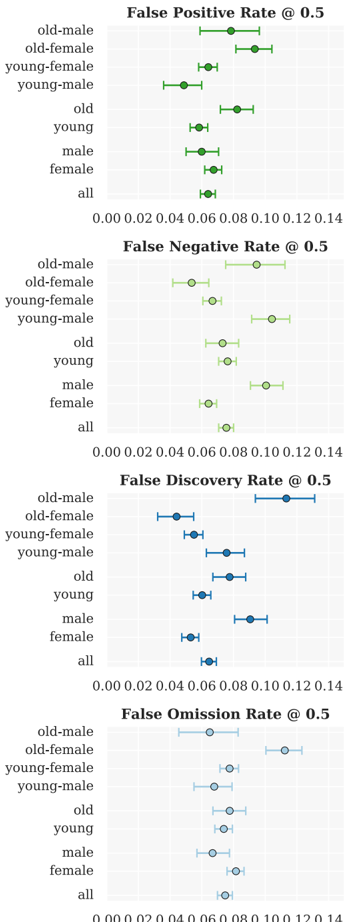
- In the smiling classifier example, all reported metrics at the .5 decision threshold have error types within the range 0.04–0.14, with 95% confidence intervals calculated by bootstrap resampling; the card notes older men have much higher false discovery rate, while men in aggregate have higher false negative rate.
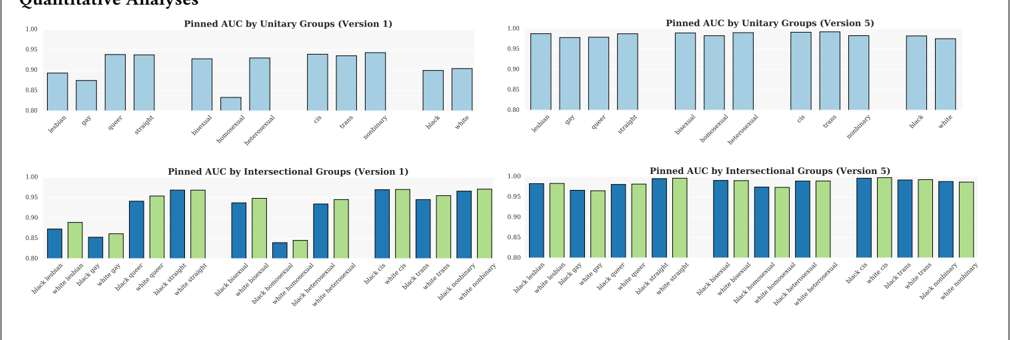
- In the toxicity example, TOXICITY v. 1 has low performance for several terms, especially “lesbian,” “gay,” and “homosexual,” while TOXICITY v. 5 shows more equitable performance after bias mitigation techniques.
Methods
- The paper is a framework/proposal paper, not an empirical study of a new model; it recommends model cards and details suggested sections and prompts.
- It provides two worked examples: a smiling classifier trained and evaluated on the CelebA dataset, using a convolutional neural net pretrained for face recognition and fine-tuned with cross-entropy loss for binary smiling classification.
- It also provides a model card for Perspective API’s TOXICITY classifier, a convolutional neural network developed by Jigsaw in 2017, evaluated on a synthetic Identity Phrase Templates test set; metrics include FPR, FNR, FDR, FOR for the smiling classifier and Pinned AUC for toxicity.
Limitations
- The paper states that model cards rely on the integrity of their creators and that it seems unlikely, at least in the near term, that they could be standardized or formalized enough to prevent misleading representations of model results.
- The paper states that evaluation datasets suitable for disaggregated evaluation are not yet common, and that the synthetic toxicity test data covers only a small set of very specific comments and is not comprehensive.
- The smiling classifier card states it does not capture race or skin type, uses binary gender classes (male/female), and that an ideal evaluation dataset would additionally include Fitzpatrick skin type, camera details, and environment details; the paper also states future work is needed to study how model information is interpreted and used by different stakeholders.
Model-written summary. Check it against the paper before relying on it.
Integrity signals
Registry
Cites
Statistics
Figures
Verification
Claims the paper makes
5 Valid · 1 Not valid · 18 Not checked · 30 Own results and interpretations
The cited sources support only part of this claim — read each source’s verdict below.
In the paper
“Synthetic data is valuable here because [11] shows that real data often has disproportionate amounts of toxicity directed at specific groups.”
What the sources say
- Partly supportedcites [11] [11] Lucas Dixon, John Li, Jeffrey Sorensen, Nithum Thain, and Lucy Vasserman. 2018. Measuring and Mitigating Unintended Bias in Text Classification. Proceedings of the AAAI/ACM Conference on AI, Ethics, and Society (2018). - sourceExperimental — accuracy not yet measured
The 'Quantifying bias in dataset' section (page unavailable) reports that certain identity terms appear disproportionately in toxic comments in the authors’ training data; for example, 'gay' appears in 3% of toxic comments but 0.5% of comments overall. It measures comments containing those terms, not whether toxicity is directed at the groups, and does not establish how often this pattern occurs across real datasets generally. (LLM, conf=0.85)
plainstates an association- Asserted: passes — The authors put it forward as true.
- Checkable: passes — It can be checked against evidence.
- Load-bearing: passes — The paper’s conclusions depend on it.
- Based: passes — The paper gives a reason why it holds.
- Partly supported
A result the paper reports from its own data — it cites no other source for it, so there is none to check. The quote shows it is in the paper.
In the paper
“For example, the false discovery rate on older men is much higher than that for other groups.”
plainstates an association- Asserted: passes — The authors put it forward as true.
- Checkable: passes — It can be checked against evidence.
- Load-bearing: passes — The paper’s conclusions depend on it.
- Based: passes — The paper gives a reason why it holds.
A result the paper reports from its own data — it cites no other source for it, so there is none to check. The quote shows it is in the paper.
In the paper
“TOXICITY v. 1 has low performance for several terms, especially 'lesbian', 'gay', and 'homosexual'.”
plain- Asserted: passes — The authors put it forward as true.
- Checkable: passes — It can be checked against evidence.
- Load-bearing: passes — The paper’s conclusions depend on it.
- Based: passes — The paper gives a reason why it holds.
None of the sources cited for this claim have been checked yet.
In the paper
“she collaborated with other researchers to demonstrate the disproportionate errors of computer vision systems on historically marginalized groups in the United States, such as darker-skinned women [5, 41].”
What the sources say
- Not checked yetcites [5] [5] Joy Buolamwini and Timnit Gebru. 2018. Gender Shades: Intersectional Accuracy Disparities in Commercial Gender Classification. In Proceedings of the 1st Conference on Fairness, Accountability and Transparency (Proceedings of Machine Learning Research) , Sorelle A. Friedler and Christo Wilson (Eds.), Vol. 81. PMLR, New York, NY, USA, 77-91. http://proceedings.mlr.press/v81/buolamwini18a.html -
- Not checked yetcites [41] [41] Inioluwa Raji. 2018. Black Panther Face Scorecard: Wakandans Under the Coded Gaze of AI. (2018). -
boostedstates an association- Asserted: passes — The authors put it forward as true.
- Checkable: passes — It can be checked against evidence.
- Load-bearing: passes — The paper’s conclusions depend on it.
- Based: passes — The paper gives a reason why it holds.
In the paper
“after MIT Media Lab graduate student Joy Buolamwini found that commercial face recognition systems failed to detect her face [4]”
What the sources say
- Not checked yetcites [4] [4] Joy Buolamwini. 2016. How I'm fighting Bias in Algorithms. (2016). https://www.ted.com/talks/joy\_buolamwini\_how\_i\_m\_fighting\_bias\_in\_ algorithms#t-63664 -
plainSingle case- Asserted: passes — The authors put it forward as true.
- Checkable: passes — It can be checked against evidence.
- Load-bearing: unclear — It is unclear whether the paper’s conclusions depend on it.
- Based: passes — The paper gives a reason why it holds.
13 more claims
Create a free account to see all 54 claims and to verify the 13 references still open.
- Probably not a substantial claim. 34
- It may state two separate claims as one. 8
Claims other papers make about this one
Each is checked against this paper’s own text: does it say what the citing paper says it does?
The source backs part of the claim, not all of it — or backs it for a different population, condition or comparison.
In the citing paper
“Model cards represent the field's standard for disclosing and documenting key facts about the architecture, training and evaluation of the model [14, 40].”
From Rethinking open source generative AI: open washing and the EU AI Act (2024) · cites this paper as [40]
Experimental — accuracy not yet measuredThe source backs part of the claim, not all of it — or backs it for a different population, condition or comparison.
In the citing paper
“Model cards (SMCs) [44] have been foundational in standardizing documentation for AI/ML model performance and characteristics, along with risks and unintended uses.”
From Interactive Model Cards: A Human-Centered Approach to Model Documentation (2022) · cites this paper as [44]
Experimental — accuracy not yet measuredThe source backs part of the claim, not all of it — or backs it for a different population, condition or comparison.
In the citing paper
“A second phase saw a more technical approach from the computer science community focusing on fairness, accountability and transparency as an engineering 'ethicalby-design' problem-solving exercise [20][21][22].”
From Putting AI ethics to work: are the tools fit for purpose? (2022) · cites this paper as [21]
Experimental — accuracy not yet measuredThe source backs part of the claim, not all of it — or backs it for a different population, condition or comparison.
In the citing paper
“These are either materials for use in design teams in workshop style events [76,77], tools for producing documentation of the design, build and test process [21,68], or technical tools for testing models, protecting privacy and security, testing for bias [69,93,94], or tracking provenance of data [95].”
From Putting AI ethics to work: are the tools fit for purpose? (2022) · cites this paper as [21]
Experimental — accuracy not yet measuredThe source backs part of the claim, not all of it — or backs it for a different population, condition or comparison.
In the citing paper
“There is some work on fairness relating to AI services, though this tends to focus on either exposing or 'auditing' certain AI services [22,38,126,133], or devising tools, methods and interventions relevant for those building (rather than using) such services [12,96,106,128].”
From Out of Context: Investigating the Bias and Fairness Concerns of “Artificial Intelligence as a Service” (2023) · cites this paper as [106]
Experimental — accuracy not yet measured
17 more claims about this paper
Create a free account to see every claim other papers make about this one.
Citations
Cites
BLEU: a method for automatic evaluation of machine translation
Papineni, K., Roukos, S., Ward, T., & Zhu, W.-J. (2001) · Proceedings of the 40th Annual Meeting on Association for Computational Linguistics - ACL '02 · doi:10.3115/1073083.1073135 · Cited by 21,344 · cited 1×
“translation system could compare BLEU scores [40] across demographic groups, and a model card for a speech recognition system could compare word-error rates.”
BackgroundCrenshaw, K. (2018) · Feminist Legal Theory · doi:10.4324/9780429500480-5 · Cited by 9,510
Deep Learning Face Attributes in the Wild
Liu, Z., Luo, P., Wang, X., & Tang, X. (2015) · 2015 IEEE International Conference on Computer Vision (ICCV) · doi:10.1109/iccv.2015.425 · Cited by 7,747 · cited 4×
“ms [5, 26] that report details of the datasets used to train and test machine learning models. We provide two example model cards in Section 5: A smiling detection model trained on the CelebA dataset [33] (Figure 2), and a public toxicity detection model, Perspective API [29] (Figure 3). Where Datasheets highlight cha…”
BackgroundMethodInfluentialThe validity and practicality of sun-reactive skin types I through VI
Fitzpatrick, T. B. (1988) · Archives of Dermatology · doi:10.1001/archderm.1988.01670060015008 · Cited by 4,339
Differential Privacy: A Survey of Results
Dwork, C. (2008) · Lecture Notes in Computer Science · doi:10.1007/978-3-540-79228-4_1 · Cited by 3,542 · cited 2×
“As such, collaboration with policy, privacy, and legal experts is necessary in order to ascertain which groups may be responsibly inferred, and how that information should be stored and accessed (for example, using differential privacy [12]).”
BackgroundCollins, G. S., Reitsma, J. B., Altman, D. G., & Moons, K. G. M. (2015) · Annals of Internal Medicine · doi:10.7326/m14-0697 · Cited by 3,267
Equality of Opportunity in Supervised Learning
Hardt, M., Price, E., & Srebro, N. (2016) · arXiv · doi:10.48550/arxiv.1610.02413 · Cited by 2,536 · cited 2×
“of Opportunity, and equal false negative and false positive rates across groups is equivalent to fulfilling Equality of Odds [26].”
BackgroundGebru, T., Morgenstern, J., Vecchione, B., Vaughan, J. W., Wallach, H., Daumé, H., & Crawford, K. (2018) · arXiv · doi:10.48550/arxiv.1803.09010 · Cited by 2,474
Self-citationA Probabilistic Interpretation of Precision, Recall and F-Score, with Implication for Evaluation
Goutte, C., & Gaussier, E. (2005) · Lecture Notes in Computer Science · doi:10.1007/978-3-540-31865-1_25 · Cited by 2,285 · cited 1×
“Confidence intervals for metrics derived from confusion matrices can be calculated by treating the matrices as probabilistic models of system performance [24].”
MethodFair prediction with disparate impact: a study of bias in recidivism prediction instruments
Chouldechova, A. (2017) · Big Data · doi:10.1089/big.2016.0047 · Cited by 2,159 · cited 1×
“or different errors that can be calculated from the confusion matrix for binary classification systems. • These also correspond to metrics in recent definitions of “fairness” in machine learning (cf. [8, 25]), where parity across subgroups for different metrics correspond to different fairness criteria. • 95% confiden…”
Background
Research works printed but not linked: 9
- [1] Avrio AI. 2018. Avrio AI: AI Talent Platform. (2018). https://www.goavrio.com/ -
- [5] Joy Buolamwini and Timnit Gebru. 2018. Gender Shades: Intersectional Accuracy Disparities in Commercial Gender Classification. In Proceedings of the 1st Conference on Fairness, Accountability and Transparency (Proceedings of Machine Learning Research) , Sorelle A. Friedler and Christo Wilson (Eds.), Vol. 81. PMLR, New York, NY, USA, 77-91. http://proceedings.mlr.press/v81/buolamwini18a.html -
- [13] Entelo. 2018. Recruitment Software | Entelo. (2018). https://www.entelo.com/ -
- [17] U.S. Food and Drug Administration. 2013. FDA Drug Safety Communication: Risk of next-morning impairment after use of insomnia drugs; FDA requires lower recommended doses for certain drugs containing zolpidem (Ambien, Ambien CR, Edluar, and Zolpimist). (2013). https://web.archive.org/web/20170428150213/ https://www.fda.gov/drugs/drugsafety/ucm352085.htm -
- [18] IIHS (Insurance Institute for Highway Safety: Highway Loss Data Institute). 2003. Special Issue: Side Impact Crashworthiness. Status Report 38, 7 (2003). -
- [19] Institute for the Future, Omidyar Network's Tech, and Society Solutions Lab. 2018. Ethical OS. (2018). https://ethicalos.org/ -
- [32] Jigsaw. 2017. Perspective API. (2017). https://www.perspectiveapi.com/ -
- [39] AI Now. 2018. Litigating Algorithms: Challenging Government Use Of Algorithmic Decision Systems. AI Now Institute. -
- [43] Mukund Sundararajan, Ankur Taly, and Qiqi Yan. 2017. In Proceedings of the 34th International Conference on Machine Learning , Vol. 70. PMLR, Sydney, Australia. -
Cited by
Items 101–200 of 2,235
Uncertainty as a Form of Transparency: Measuring, Communicating, and Using Uncertainty
Bhatt, U., Antorán, J., Zhang, Y., Liao, Q. V., Sattigeri, P., Fogliato, R., Melançon, G., Krishnan, R., Stanley, J., Tickoo, O., et al. (2021) · Proceedings of the 2021 AAAI/ACM Conference on AI, Ethics, and Society · doi:10.1145/3461702.3462571 · Cited by 300
On the genealogy of machine learning datasets: A critical history of ImageNet
Denton, E., Hanna, A., Amironesei, R., Smart, A., & Nicole, H. (2021) · Big Data & Society · doi:10.1177/20539517211035955 · Cited by 221
“In this sense, we echo the call of others who have done significant work around model and data transparency (Gebru et al., 2018; Mitchell et al., 2019) and accountability in dataset development (Hutchinson et al.”
MethodRoles for computing in social change
Abebe, R., Barocas, S., Kleinberg, J., Levy, K., Raghavan, M., & Robinson, D. G. (2020) · Proceedings of the 2020 Conference on Fairness, Accountability, and Transparency · doi:10.1145/3351095.3372871 · Cited by 219
“ntificallysoundmedical advice [3]. Other recent work has sought to advance the diagnostic role that computing can play by providing a principled approach to interrogating the machine learning pipeline [46, 72]. These diagnostic efforts do not present themselves as solutions, but rather as tools to rigorously document pr…”
BackgroundRe-imagining Algorithmic Fairness in India and Beyond
Sambasivan, N., Arnesen, E., Hutchinson, B., Doshi, T., & Prabhakaran, V. (2021) · Proceedings of the 2021 ACM Conference on Fairness, Accountability, and Transparency · doi:10.1145/3442188.3445896 · Cited by 228
Self-citationInvestigating Explainability of Generative AI for Code through Scenario-based Design
Sun, J., Liao, Q. V., Muller, M., Agarwal, M., Houde, S., Talamadupula, K., & Weisz, J. D. (2022) · 27th International Conference on Intelligent User Interfaces · doi:10.1145/3490099.3511119 · Cited by 219
“AI documentation is advocated to increase the transparency and facilitate understanding of AI [35, 36, 40, 75, 76, 82], and is embodied in recently proposed features of AI Factsheets [8, 81] and Model Cards [64].”
BackgroundData Cards: Purposeful and Transparent Dataset Documentation for Responsible AI
Pushkarna, M., Zaldivar, A., & Kjartansson, O. (2022) · 2022 ACM Conference on Fairness Accountability and Transparency · doi:10.1145/3531146.3533231 · Cited by 222
Self-citationEducational Strategies for Clinical Supervision of Artificial Intelligence Use
Abdulnour, R.-E. E., Gin, B., & Boscardin, C. K. (2025) · New England Journal of Medicine · doi:10.1056/nejmra2503232 · Cited by 209
Technology readiness levels for machine learning systems
Lavin, A., Gilligan-Lee, C. M., Visnjic, A., Ganju, S., Newman, D., Ganguly, S., Lange, D., Baydin, A. G., Sharma, A., Gibson, A., et al. (2022) · Nature Communications · doi:10.1038/s41467-022-33128-9 · Cited by 209
“The model cards proposed by Google [51] are a useful development for external user-readiness with ML.”
InfluentialEthics-Based Auditing of Automated Decision-Making Systems: Nature, Scope, and Limitations
Mökander, J., Morley, J., Taddeo, M., & Floridi, L. (2021) · Science and Engineering Ethics · doi:10.1007/s11948-021-00319-4 · Cited by 207
“This pragmatic insight implies that audits need to monitor and evaluate system outputs continuously , i.e. through ‘oversight programs’ (Etzioni and Etzioni 2016), and document performance characteristics in a comprehensible way (Mitchell et al. 2019).”
BackgroundMeasuring Robustness to Natural Distribution Shifts in Image Classification
Taori, R., Dave, A., Shankar, V., Carlini, N., Recht, B., & Schmidt, L. (2020) · arXiv · doi:10.48550/arxiv.2007.00644 · Cited by 206
Predictability and Surprise in Large Generative Models
Ganguli, D., Hernandez, D., Lovitt, L., Askell, A., Bai, Y., Chen, A., Conerly, T., Dassarma, N., Drain, D., Elhage, N., et al. (2022) · 2022 ACM Conference on Fairness Accountability and Transparency · doi:10.1145/3531146.3533229 · Cited by 207
“…is not yet embodied in the form of repeatable standards that developers can adopt, though there are some critical and important steps in this direction (e.g., through the use of model cards [53] and data sheets [28] to document the capabilities, drawbacks, and other salient details of models).”
BackgroundLai, V., Chen, C., Smith-Renner, A., Liao, Q. V., & Tan, C. (2023) · 2023 ACM Conference on Fairness Accountability and Transparency · doi:10.1145/3593013.3594087 · Cited by 204
“Recently, there are growing interest in providing documentation or an “About Me” page to present such global information e.g., Model cards [78], Fact-Sheets [7].”
BackgroundThe algorithm audit: Scoring the algorithms that score us
Brown, S., Davidovic, J., & Hasan, A. (2021) · Big Data & Society · doi:10.1177/2053951720983865 · Cited by 204
“The key questions to ask when describing the context of the algorithm include (Gebru et al., 2018; Mitchell et al., 2019): What is the stated purpose of the algorithm?”
Background"The human body is a black box": supporting clinical decision-making with deep learning
Sendak, M., Elish, M. C., Gao, M., Futoma, J., Ratliff, W., Nichols, M., Bedoya, A., Balu, S., & O'Brien, C. (2020) · Proceedings of the 2020 Conference on Fairness, Accountability, and Transparency · doi:10.1145/3351095.3372827 · Cited by 196
“The design builds upon “Model Cards for Model Reporting” [52] and incorporates concepts from pharmaceutical drug labels.”
MethodAlgorithmic Impact Assessments and Accountability: The Co-construction of Impacts
Metcalf, J., Moss, E., Watkins, E. A., Singh, R., & Elish, M. C. (2021) · Proceedings of the 2021 ACM Conference on Fairness, Accountability, and Transparency · doi:10.1145/3442188.3445935 · Cited by 195
“…processes of machine learning product development: (1) Model cards: Records of how models have been developed which are portable with the model, resolving the challenge of inadvertently repurposing a model in a risky manner when it is put to use by another development team or made open source [78].”
Training Compute-Optimal Large Language Models
Hoffmann, J., Borgeaud, S., Mensch, A., Buchatskaya, E., Cai, T., Rutherford, E., Casas, D. D. L., Hendricks, L. A., Welbl, J., Clark, A., et al. (2022) · Advances in Neural Information Processing Systems 35 · doi:10.52202/068431-2176 · Cited by 932
“We include a Chinchilla model card (Mitchell et al., 2019) in Table A8.”
InfluentialSinghal, A., Neveditsin, N., Tanveer, H., & Mago, V. (2024) · JMIR Medical Informatics · doi:10.2196/50048 · Cited by 172
“…is the implementation of model cards, which are intended to outline an ML model’s limitations and disclose any biases that it may be susceptible to [59]); (3) adjudication—this refers to the creation of procedures for addressing disputes and grievances associated with the use of ML and AI systems…”
MethodChancellor, S., Baumer, E. P. S., & De Choudhury, M. (2019) · Proceedings of the ACM on Human-Computer Interaction · doi:10.1145/3359249 · Cited by 172
“In addition to questions about fairness and bias, the community is also interested in making algorithmic output more explainable [62, 106, 127, 144] and interpretable [89, 108, 126] by human actors involved in decision-making.”
BackgroundThe METRIC-framework for assessing data quality for trustworthy AI in medicine: A systematic review
Schwabe, D., Becker, K., Seyferth, M., Klaß, A., & Schaeffter, T. (2024) · npj Digital Medicine · doi:10.1038/s41746-024-01196-4 · Cited by 169
“While some initiatives cover the entire ML system and development pipeline (e.g., MINIMAR 39 , FactSheets 40 ), others are concerned with documentation surrounding the model (e.g., Model Cards 41 ), and still others concentrate on the documentation of datasets (e.g., Datasheets 42 , STANDING Together 43,44 , Dataset N…”
BackgroundEthics by design for artificial intelligence
Brey, P., & Dainow, B. (2024) · AI and Ethics · doi:10.1007/s43681-023-00330-4 · Cited by 169
(2019) · doi:10.1145/3351095.3372862 · Cited by 167
Designing for Responsible Trust in AI Systems: A Communication Perspective
Liao, Q. V., & Sundar, S. S. (2022) · 2022 ACM Conference on Fairness Accountability and Transparency · doi:10.1145/3531146.3533182 · Cited by 165
“…industry emphasis on providing transparency, exemplified by the prevalence of normative metrics (including performance, fairness, and robustness metrics), XAI features, and model documentation [2, 22, 43] (commonly including provenance information [30, 61] about how and for what it was developed).”
BackgroundKoçak, B., Ponsiglione, A., Stanzione, A., Bluethgen, C., Santinha, J., Ugga, L., Huisman, M., Klontzas, M. E., Cannella, R., & Cuocolo, R. (2024) · Diagnostic and Interventional Radiology · doi:10.4274/dir.2024.242854 · Cited by 168
“Transparent and comprehensive documentation of the AI system’s design choices, data sources, and any assumptions made during development (e.g., through model cards) 75 is crucial and can help spot sources of bias before, during, and after training.”
An empirical characterization of fair machine learning for clinical risk prediction
Pfohl, S. R., Foryciarz, A., & Shah, N. H. (2021) · Journal of Biomedical Informatics · doi:10.1016/j.jbi.2020.103621 · Cited by 164
“[40] M.”
BackgroundOperationalising ethics in artificial intelligence for healthcare: a framework for AI developers
Solanki, P., Grundy, J., & Hussain, W. (2023) · AI and Ethics · doi:10.1007/s43681-022-00195-z · Cited by 157
“Clear documentation with ‘model cards’ is recommended for summarising a model’s attributes and performance; this is further detailed in [144].”
BackgroundInfluentialAlgorithmic realism: expanding the boundaries of algorithmic thought
Green, B., & Viljoen, S. (2020) · Proceedings of the 2020 Conference on Fairness, Accountability, and Transparency · doi:10.1145/3351095.3372840 · Cited by 161
Hamon, R., Junklewitz, H., Sanchez, I., Malgieri, G., & De Hert, P. (2022) · IEEE Computational Intelligence Magazine · doi:10.1109/mci.2021.3129960 · Cited by 160
The GEM Benchmark: Natural Language Generation, its Evaluation and Metrics
Gehrmann, S., Adewumi, T., Aggarwal, K., Ammanamanchi, P. S., Aremu, A., Bosselut, A., Chandu, K. R., Clinciu, M.-A., Das, D., Dhole, K., et al. (2021) · Proceedings of the 1st Workshop on Natural Language Generation, Evaluation, and Metrics (GEM 2021) · doi:10.18653/v1/2021.gem-1.10 · Cited by 159
Use of artificial intelligence in critical care: opportunities and obstacles
Pinsky, M. R., Bedoya, A., Bihorac, A., Celi, L., Churpek, M., Economou-Zavlanos, N. J., Elbers, P., Saria, S., Liu, V., Lyons, P. G., et al. (2024) · Critical Care · doi:10.1186/s13054-024-04860-z · Cited by 160
“Clinicians must understand the indications and contraindications of relevant clinical AI models, including the ability to interpret and appraise published models and training datasheets associated with a given AI tool across various demographic populations [69, 70].”
BackgroundImage Representations Learned With Unsupervised Pre-Training Contain Human-like Biases
Steed, R., & Caliskan, A. (2021) · Proceedings of the 2021 ACM Conference on Fairness, Accountability, and Transparency · doi:10.1145/3442188.3445932 · Cited by 157
“Our method can be used to assess task-agnostic biases contained in a dataset to enhance transparency [28, 51], but bias mitigation for unsupervised transfer learning is a challenging open problem.”
MethodQA Dataset Explosion: A Taxonomy of NLP Resources for Question Answering and Reading Comprehension
Rogers, A., Gardner, M., & Augenstein, I. (2023) · ACM Computing Surveys · doi:10.1145/3560260 · Cited by 156
Floridi, L., Holweg, M., Taddeo, M., Amaya, J., Mökander, J., & Wen, Y. (2022) · doi:10.2139/ssrn.4064091 · Cited by 157
How to explain AI systems to end users: a systematic literature review and research agenda
Laato, S., Tiainen, M., Najmul Islam, A. K. M., & Mäntymäki, M. (2022) · Internet Research · doi:10.1108/intr-08-2021-0600 · Cited by 155
Vision-Language Pre-Training: Basics, Recent Advances, and Future Trends
Gan, Z., Li, L., Li, C., Wang, L., Liu, Z., & Gao, J. (2022) · Foundations and Trends® in Computer Graphics and Vision · doi:10.1561/0600000105 · Cited by 155
Toward situated interventions for algorithmic equity: lessons from the field
Katell, M., Young, M., Dailey, D., Herman, B., Guetler, V., Tam, A., Bintz, C., Raz, D., & Krafft, P. M. (2020) · Proceedings of the 2020 Conference on Fairness, Accountability, and Transparency · doi:10.1145/3351095.3372874 · Cited by 153
Medical Artificial Intelligence and Human Values
Yu, K.-H., Healey, E., Leong, T.-Y., Kohane, I. S., & Manrai, A. K. (2024) · New England Journal of Medicine · doi:10.1056/nejmra2214183 · Cited by 149
Harms from Increasingly Agentic Algorithmic Systems
Chan, A., Salganik, R., Markelius, A., Pang, C., Rajkumar, N., Krasheninnikov, D., Langosco, L., He, Z., Duan, Y., Carroll, M., et al. (2023) · 2023 ACM Conference on Fairness Accountability and Transparency · doi:10.1145/3593013.3594033 · Cited by 149
Utility is in the Eye of the User: A Critique of NLP Leaderboards
Ethayarajh, K., & Jurafsky, D. (2020) · Proceedings of the 2020 Conference on Empirical Methods in Natural Language Processing (EMNLP) · doi:10.18653/v1/2020.emnlp-main.393 · Cited by 147
Auditing of AI: Legal, Ethical and Technical Approaches
Mökander, J. (2023) · Digital Society · doi:10.1007/s44206-023-00074-y · Cited by 152
“…by auditors for specific tasks, including detecting bias in AI systems (Saleiro et al., 2018; Sokol et al., 2022), documenting how AI systems are designed (Gebru et al., 2021; Mitchell et al., 2019), and simulating or monitoring their behaviour in real-world settings (Akpinar et al., 2022).”
BackgroundA Review of Explainable Deep Learning Cancer Detection Models in Medical Imaging
Gulum, M. A., Trombley, C. M., & Kantardzic, M. (2021) · Applied Sciences · doi:10.3390/app11104573 · Cited by 145
“Explanation is also needed for trust and transparency [22–28].”
Measuring algorithmically infused societies
Wagner, C., Strohmaier, M., Olteanu, A., Kıcıman, E., Contractor, N., & Eliassi-Rad, T. (2021) · Nature · doi:10.1038/s41586-021-03666-1 · Cited by 144
“To understand and document the range of possible harms, in the AI community there are many calls for processes that require researchers and practitioners to reflect on, anticipate and communicate possible adverse impacts from the development and deployment of AI technologies 123,131 .”
BackgroundWortsman, M., Ramanujan, V., Liu, R., Kembhavi, A., Rastegari, M., Yosinski, J., & Farhadi, A. (2020) · arXiv · doi:10.48550/arxiv.2006.14769 · Cited by 144
“For instance, when a high-impact model is released by an institution it will hopefully be accompanied by a Model Card [34] analyzing the bias and intended use of the model.”
BackgroundHow AI Developers Overcome Communication Challenges in a Multidisciplinary Team: A Case Study
Piorkowski, D., Park, S., Wang, A. Y., Wang, D., Muller, M., & Portnoy, F. (2021) · Proceedings of the ACM on Human-Computer Interaction · doi:10.1145/3449205 · Cited by 151
“Existing efforts around documenting aspects of the AI lifecycle in dataset documentation [15] and model service documentation [4, 34] are fairly static and do not consider questions of how to dynamically vary the content that is displayed for the role in question.”
BackgroundBrajer, N., Cozzi, B., Gao, M., Nichols, M., Revoir, M., Balu, S., Futoma, J., Bae, J., Setji, N., Hernandez, A., et al. (2020) · JAMA Network Open · doi:10.1001/jamanetworkopen.2019.20733 · Cited by 138
Reviewable Automated Decision-Making: A Framework for Accountable Algorithmic Systems
Cobbe, J., Lee, M. S. A., & Singh, J. (2021) · Proceedings of the 2021 ACM Conference on Fairness, Accountability, and Transparency · doi:10.1145/3442188.3445921 · Cited by 150
Kim, S. S. Y., Liao, Q. V., Vorvoreanu, M., Ballard, S., & Vaughan, J. W. (2024) · The 2024 ACM Conference on Fairness Accountability and Transparency · doi:10.1145/3630106.3658941 · Cited by 147
“Third, this allows uncertainty to be expressed seamlessly within the natural language interactions of LLM-infused applications, rather than on the side or in onboarding materials [21, 68, 73] that users might overlook.”
BackgroundSeeing Like a Toolkit: How Toolkits Envision the Work of AI Ethics
Wong, R. Y., Madaio, M. A., & Merrill, N. (2023) · Proceedings of the ACM on Human-Computer Interaction · doi:10.1145/3579621 · Cited by 135
Z-Inspection ® : A Process to Assess Trustworthy AI
Zicari, R. V., Brodersen, J., Brusseau, J., Dudder, B., Eichhorn, T., Ivanov, T., Kararigas, G., Kringen, P., McCullough, M., Moslein, F., et al. (2021) · IEEE Transactions on Technology and Society · doi:10.1109/tts.2021.3066209 · Cited by 134
“data sets [48], [64], [68]–[73], models [74], and services [68].”
BackgroundUnderstanding artificial intelligence ethics and safety
Leslie, D. (2019) · arXiv (Cornell University) · doi:10.48550/arxiv.1906.05684 · Cited by 134
Human Reliance on Machine Learning Models When Performance Feedback is Limited: Heuristics and Risks
Lu, Z., & Yin, M. (2021) · Proceedings of the 2021 CHI Conference on Human Factors in Computing Systems · doi:10.1145/3411764.3445562 · Cited by 131
Buhmann, A., & Fieseler, C. (2023) · Business Ethics Quarterly · doi:10.1017/beq.2021.42 · Cited by 131
XAIR: A Systematic Metareview of Explainable AI (XAI) Aligned to the Software Development Process
Clement, T., Kemmerzell, N., Abdelaal, M., & Amberg, M. (2023) · Machine Learning and Knowledge Extraction · doi:10.3390/make5010006 · Cited by 131
Cooper, A. F., Moss, E., Laufer, B., & Nissenbaum, H. (2022) · 2022 ACM Conference on Fairness Accountability and Transparency · doi:10.1145/3531146.3533150 · Cited by 129
The Butterfly Effect in Artificial Intelligence Systems: Implications for AI Bias and Fairness
Ferrara, E. (2023) · doi:10.2139/ssrn.4614234 · Cited by 129
Companies Committed to Responsible AI: From Principles towards Implementation and Regulation?
de Laat, P. B. (2021) · Philosophy & Technology · doi:10.1007/s13347-021-00474-3 · Cited by 127
REFORMS: Consensus-based Recommendations for Machine-learning-based Science
Kapoor, S., Cantrell, E. M., Peng, K., Pham, T. H., Bail, C. A., Gundersen, O. E., Hofman, J. M., Hullman, J., Lones, M. A., Malik, M. M., et al. (2024) · Science Advances · doi:10.1126/sciadv.adk3452 · Cited by 129
“Similarly, Mitchell et al. ( 138 ) introduced model cards to document details about the modeling and evaluation process, with a primary focus on natural language processing and computer vision.”
Self-citationMaking Open Science Work for Science and Society
Elliott, K. C., & Resnik, D. B. (2019) · Environmental Health Perspectives · doi:10.1289/ehp4808 · Cited by 141
“An exciting innovation is the possibility of creating “model cards” to accompany complex models that are ordinarily not very transparent, like those used in machine learning (Mitchell et al. 2019).”
BackgroundMorley, J., Floridi, L., Kinsey, L., & Elhalal, A. (2021) · Philosophical studies series · doi:10.1007/978-3-030-81907-1_10 · Cited by 235
AI and the Everything in the Whole Wide World Benchmark
Raji, I. D., Bender, E. M., Paullada, A., Denton, E., & Hanna, A. (2021) · arXiv · doi:10.48550/arxiv.2111.15366 · Cited by 127
“Raji and Buolamwini, 2019] and integrated into frameworks of standardized model reporting [Mitchell et al., 2019].”
MethodSelf-citationLeslie, D. (2019) · Zenodo · doi:10.5281/zenodo.3240529 · Cited by 126
Studying Up Machine Learning Data: Why Talk About Bias When We Mean Power?
Miceli, M., Posada, J., & Yang, T. (2022) · Proceedings of the ACM on Human-Computer Interaction · doi:10.1145/3492853 · Cited by 125
“with Model Cards for Model Reporting [64], and Gebru et al.”
MethodRepairing the Cracked Foundation: A Survey of Obstacles in Evaluation Practices for Generated Text
Gehrmann, S., Clark, E., & Sellam, T. (2023) · Journal of Artificial Intelligence Research · doi:10.1613/jair.1.13715 · Cited by 123
Hurtful words: quantifying biases in clinical contextual word embeddings
Zhang, H., Lu, A. X., Abdalla, M., McDermott, M., & Ghassemi, M. (2020) · Proceedings of the ACM Conference on Health, Inference, and Learning · doi:10.1145/3368555.3384448 · Cited by 122
Dhanorkar, S., Wolf, C. T., Qian, K., Xu, A., Popa, L., & Li, Y. (2021) · Designing Interactive Systems Conference 2021 · doi:10.1145/3461778.3462131 · Cited by 119
Widder, D. G., & Nafus, D. (2023) · Big Data & Society · doi:10.1177/20539517231177620 · Cited by 119
“Many efforts at supporting responsible AI, like AI fairness checklists (Madaio et al., 2020; Holstein et al., 2019), model cards (Mitchell et al., 2019), and datasheets (Gebru et al., 2021), assume panoptical visibility into the technology that our work demonstrates does not hold.”
BackgroundReproducibility in machine‐learning‐based research: Overview, barriers, and drivers
Semmelrock, H., Ross‐Hellauer, T., Kopeinik, S., Theiler, D., Haberl, A., Thalmann, S., & Kowald, D. (2025) · AI Magazine · doi:10.1002/aaai.70002 · Cited by 118
Responsible AI Pattern Catalogue: A Collection of Best Practices for AI Governance and Engineering
Lu, Q., Zhu, L., Xu, X., Whittle, J., Zowghi, D., & Jacquet, A. (2024) · ACM Computing Surveys · doi:10.1145/3626234 · Cited by 121
“In addition to supply chain details of the components, context documents (like model cards [81] for reporting AI models, and datasheets for the datasets [41] used to train AI models) can be integrated to the bill of materials registry.”
MethodSuresh, H., Gomez, S. R., Nam, K. K., & Satyanarayan, A. (2021) · Proceedings of the 2021 CHI Conference on Human Factors in Computing Systems · doi:10.1145/3411764.3445088 · Cited by 117
“In this case, instead of starting with a tabula rasa, perhaps an interpretability interface would be initialized with summaries of the model’s strengths and weaknesses (akin to a model card [84]).”
MethodComputational pathology: A survey review and the way forward
Hosseini, M. S., Bejnordi, B. E., Trinh, V. Q., Chan, L., Hasan, D., Li, X., Yang, S. C., Kim, T., Zhang, H., Wu, T., et al. (2024) · Journal of Pathology Informatics · doi:10.1016/j.jpi.2023.100357 · Cited by 176
The Butterfly Effect in artificial intelligence systems: Implications for AI bias and fairness
Ferrara, E. (2024) · Machine Learning with Applications · doi:10.1016/j.mlwa.2024.100525 · Cited by 125
Garrido-Muñoz, I., Montejo-Ráez, A., Martínez-Santiago, F., & Ureña-López, L. A. (2021) · Applied Sciences · doi:10.3390/app11073184 · Cited by 123
Shah, C., & Bender, E. M. (2022) · ACM SIGIR Conference on Human Information Interaction and Retrieval · doi:10.1145/3498366.3505816 · Cited by 115
Best Practices in Supervised Machine Learning: A Tutorial for Psychologists
Pargent, F., Schoedel, R., & Stachl, C. (2023) · Advances in Methods and Practices in Psychological Science · doi:10.1177/25152459231162559 · Cited by 166
“It has been argued that all ML models applied in practice should be accompanied by transparent documentation on their performance characteristics and their intended use cases (Mitchell et al., 2019).”
Toward a Perspectivist Turn in Ground Truthing for Predictive Computing
Cabitza, F., Campagner, A., & Basile, V. (2023) · Proceedings of the AAAI Conference on Artificial Intelligence · doi:10.1609/aaai.v37i6.25840 · Cited by 114
“2018); the Model Cards (Mitchell et al. 2019); the Data Statements (Bender and Friedman 2018); or the Datasheets for Datasets (Gebru et al.”
BackgroundA toolbox for surfacing health equity harms and biases in large language models
Pfohl, S. R., Cole-Lewis, H., Sayres, R., Neal, D., Asiedu, M., Dieng, A., Tomasev, N., Rashid, Q. M., Azizi, S., Rostamzadeh, N., et al. (2024) · Nature Medicine · doi:10.1038/s41591-024-03258-2 · Cited by 113
Xie, J., Sun, L., & Zhao, Y. F. (2025) · Engineering · doi:10.1016/j.eng.2024.04.024 · Cited by 112
Liesenfeld, A., Lopez, A., & Dingemanse, M. (2023) · Proceedings of the 5th International Conference on Conversational User Interfaces · doi:10.1145/3571884.3604316 · Cited by 111
Tomašev, N., Harris, N., Baur, S., Mottram, A., Glorot, X., Rae, J. W., Zielinski, M., Askham, H., Saraiva, A., Magliulo, V., et al. (2021) · Nature Protocols · doi:10.1038/s41596-021-00513-5 · Cited by 131
“We refer the reader to more detailed discussions of fairness considerations 18 and guidelines on transparent reporting 19 .”
BackgroundUche-Anya, E., Anyane-Yeboa, A., Berzin, T. M., Ghassemi, M., & May, F. P. (2022) · Gut · doi:10.1136/gutjnl-2021-326271 · Cited by 112
“83 Some tools like Datasheets for Datasets 84 or Model Cards for Model Reporting 85 do exist, but identifying the precise cause of bias can be challenging and requires careful audits by multidisciplinary teams.”
Winkle, K., McMillan, D., Arnelid, M., Harrison, K., Balaam, M., Johnson, E., & Leite, I. (2023) · Proceedings of the 2023 ACM/IEEE International Conference on Human-Robot Interaction · doi:10.1145/3568162.3576973 · Cited by 111
The Contestation of Tech Ethics: A Sociotechnical Approach to Technology Ethics in Practice
Green, B. (2021) · Journal of Social Computing · doi:10.23919/jsc.2021.0018 · Cited by 140
Buschek, D., Zürn, M., & Eiband, M. (2021) · Proceedings of the 2021 CHI Conference on Human Factors in Computing Systems · doi:10.1145/3411764.3445372 · Cited by 108
A vision–language foundation model for the generation of realistic chest X-ray images
Bluethgen, C., Chambon, P., Delbrouck, J.-B., van der Sluijs, R., Połacin, M., Zambrano Chaves, J. M., Abraham, T. M., Purohit, S., Langlotz, C. P., & Chaudhari, A. S. (2024) · Nature Biomedical Engineering · doi:10.1038/s41551-024-01246-y · Cited by 108
Ethics Sheet for Automatic Emotion Recognition and Sentiment Analysis
Mohammad, S. M. (2022) · Computational Linguistics · doi:10.1162/coli_a_00433 · Cited by 107
Principles and Guidelines for Evaluating Social Robot Navigation Algorithms
Francis, A., Pérez-D’Arpino, C., Li, C., Xia, F., Alahi, A., Alami, R., Bera, A., Biswas, A., Biswas, J., Chandra, R., et al. (2025) · ACM Transactions on Human-Robot Interaction · doi:10.1145/3700599 · Cited by 107
“Following work on “model cards” in the machine learning community [110], we propose a “Scenario Card” approach to defining scenarios which which labels the scenario with a set of features that unambiguously define it.”
AI lifecycle models need to be revised: An exploratory study in Fintech
Haakman, M., Cruz, L., Huijgens, H., & van Deursen, A. (2021) · Empirical Software Engineering · doi:10.1007/s10664-021-09993-1 · Cited by 105
Policy advice and best practices on bias and fairness in AI
Álvarez, J. M., Colmenarejo, A. B., Elobaid, A., Fabbrizzi, S., Fahimi, M., Ferrara, A., Ghodsi, S., Mougan, C., Papageorgiou, I. T., Lobo, P. R., et al. (2024) · Ethics and Information Technology · doi:10.1007/s10676-024-09746-w · Cited by 163
“Existing frameworks for the elaboration of documentation include: Datasheets for Datasets (Gebru et al., 2021), Dataset Nutrition Labels (Chmielinski et al., 2022), Data Statements (Bender & Friedman, 2018), Data Readiness Report (Afzal et al., 2021), and Model Cards for Models (Mitchell et al., 2019).”
Mylrea, M., & Robinson, N. (2023) · Entropy · doi:10.3390/e25101429 · Cited by 169
“…measures to identify and mitigate biases in responses, such as by improving the training data quality and implementing fairness-aware algorithms [57,70] Inclusivity and Diversity: Ensuring that AI systems understand and respect diverse perspectives, cultures, and identities, and actively avoid…”
BackgroundContestable AI by Design: Towards a Framework
Alfrink, K., Keller, I., Kortuem, G., & Doorn, N. (2022) · Minds and Machines · doi:10.1007/s11023-022-09611-z · Cited by 169
“Mitchell et al. (2019) and Gebru et al. (2020) offer examples of possible documentation approaches.”
Rethink reporting of evaluation results in AI
Burnell, R., Schellaert, W., Burden, J., Ullman, T. D., Martinez-Plumed, F., Tenenbaum, J. B., Rutar, D., Cheke, L. G., Sohl-Dickstein, J., Mitchell, M., et al. (2023) · Science · doi:10.1126/science.adf6369 · Cited by 104
Self-citationSrinivasan, R., & Chander, A. (2021) · Communications of the ACM · doi:10.1145/3464903 · Cited by 104
Hilbert, A., Madai, V. I., Akay, E. M. Z., Aydin, O. U., Behland, J., Sobesky, J., Galinović, I., Khalil, A. A., Taha, A. A., Wuerfel, J. T., et al. (2020) · Frontiers in Artificial Intelligence · doi:10.3389/frai.2020.552258 · Cited by 119
Deng, W. H., Guo, B., Devrio, A., Shen, H., Eslami, M., & Holstein, K. (2023) · Proceedings of the 2023 CHI Conference on Human Factors in Computing Systems · doi:10.1145/3544548.3581026 · Cited by 103
Interactive Model Cards: A Human-Centered Approach to Model Documentation
Crisan, A., Drouhard, M., Vig, J., & Rajani, N. (2022) · 2022 ACM Conference on Fairness Accountability and Transparency · doi:10.1145/3531146.3533108 · Cited by 101
“They were then shown examples of a standard model card, a Robustness Gym report, and our concept for an interactive model card (Section 3.1).”
BackgroundInfluentialRohde, F., Wagner, J., Meyer, A., Reinhard, P., Voß, M., Petschow, U., & Mollen, A. (2024) · Current Opinion in Environmental Sustainability · doi:10.1016/j.cosust.2023.101411 · Cited by 171
Bringing the People Back In: Contesting Benchmark Machine Learning Datasets
Denton, R., Hanna, A., Amironesei, R., Smart, A., Nicole, H., & Scheuerman, M. K. (2020) · arXiv · doi:10.48550/arxiv.2007.07399 · Cited by 100
“In this sense, we echo the call of our colleagues who have done significant work around model and data transparency (Gebru et al., 2018; Mitchell et al., 2019).”
Exploring How Machine Learning Practitioners (Try To) Use Fairness Toolkits
Deng, W. H., Nagireddy, M., Lee, M. S. A., Singh, J., Wu, Z. S., Holstein, K., & Zhu, H. (2022) · 2022 ACM Conference on Fairness Accountability and Transparency · doi:10.1145/3531146.3533113 · Cited by 99
“Future fairness toolkits could include instructions and educational materials on creating and reviewing Datasheets [41], and similar documentations like "Dataset Nutrition Labels" [50] and Model Cards [72] to better inform practitioners’ data explorations.”
BackgroundAnik, A. I., & Bunt, A. (2021) · Proceedings of the 2021 CHI Conference on Human Factors in Computing Systems · doi:10.1145/3411764.3445736 · Cited by 103
The AI economist: taxation policy design via two-level deep multiagent reinforcement learning
Zheng, S., Trott, A., Srinivasa, S., Parkes, D. C., & Socher, R. (2022) · Science Advances · doi:10.1126/sciadv.abk2607 · Cited by 105
“We encourage anyone using the AI Economist to describe the ethical considerations of trained AI-driven tax models to increase transparency and trust in the system, e.g., through model cards and/or data sheets ( 43 , 44 ).”
AI Ethics Principles in Practice: Perspectives of Designers and Developers
Sanderson, C., Douglas, D., Lu, Q., Schleiger, E., Whittle, J., Lacey, J., Newnham, G., Hajkowicz, S., Robinson, C., & Hansen, D. (2023) · IEEE Transactions on Technology and Society · doi:10.1109/tts.2023.3257303 · Cited by 99
“This includes data used for training the model, as well as data used during deployment of the model [44].”
Method
Metadata
- Authors
- Mitchell, M., Wu, S., Zaldivar, A., Barnes, P., Vasserman, L., Hutchinson, B., Spitzer, E., Raji, I. D., & Gebru, T.
- Venue
- Proceedings of the Conference on Fairness, Accountability, and Transparency
- Publisher
- ACM
- Published
- 2019-01-29
- Pages
- 220-229
- OpenAlex
- W2897042519
- Semantic Scholar
- 7365f887c938ca21a6adbef08b5a520ebbd4638f
- Cited by
- 2,681
- References
- 12
- Citations by year
- 2026: 831 · 2025: 446 · 2024: 376 · 2023: 366 · 2022: 243 · 2021: 260 · 2020: 102 · 2019: 54
- FWCI
- 170.95
- Type
- conference paper
- Language
- en
- Open access
- green
- arxiv.org
- Locations
- ACM Conference on Fairness, Accountability, and Transparency (FAccT) (publishedVersion)
- arXiv (Cornell University) (submittedVersion)
- arXiv (Cornell University)
- Topics
- Physical Sciences › Computer Science › Artificial Intelligence › Ethics and Social Impacts of AI
- Physical Sciences › Computer Science › Artificial Intelligence › Explainable Artificial Intelligence (XAI)
- Physical Sciences › Computer Science › Computer Vision and Pattern Recognition › Face recognition and analysis
- Keywords
- model cards, model transparency, algorithmic fairness, demographic bias, responsible AI, democratization of AI, toxic comment detection, model documentation
About these checks
Registry, retraction, Cites and statistics results are computed, not judged, with one exception: a printed reference that no index lists is read once by a model before it counts as a citation error. Claims are extracted by a model and kept only when their quote appears verbatim in the text; each cited source is then checked, with a model’s help, for whether it says what the claim relies on. Those verdicts can be wrong — read the claim’s quote and the cited source before relying on one.
The claim verdicts this report counts are experimental: their accuracy is not yet measured.
A language model drew the claims from the paper on 2026-10-07, under version 3 of the claim definition (model deepseek-v4.1-flash, prompt extract-v3).
A second model labelled each claim on 2026-10-07 (model jev-1.13-20260917, definition revision gold-guideline-v0.2).
Cited sources are checked with a language model’s help (gpt-6-sol).
Statistics and arithmetic are recomputed, not judged.
Confidence bands are shown only for fields calibrated on our annotated test set. None is calibrated yet, so no band is shown.
What counts as a claim ›How we measure confidence ›How we check this ›
Are you an author, or do you see a problem with this page? Request a review
Data sources
Bibliographic data: Semantic Scholar, OpenAlex, Crossref.
Contains information from the Semantic Scholar Academic Graph Datasets, made available under the ODC Attribution License (ODC-BY 1.0).
Semantic Scholar’s data is described in: Kinney, R., et al. (2023). The Semantic Scholar Open Data Platform. arXiv:2301.10140.
