

Model Cards for Model Reporting
Open accessThe DOI matches its Crossref record; 22 of the 22 references it cites were found in a registry or an index; 8 of the 34 sources its claims cite were checked for support.
Abstract
Trained machine learning models are increasingly used to perform high-impact tasks in areas such as law enforcement, medicine, education, and employment. In order to clarify the intended use cases of machine learning models and minimize their usage in contexts for which they are not well suited, we recommend that released models be accompanied by documentation detailing their performance characteristics. In this paper, we propose a framework that we call model cards, to encourage such transparent model reporting. Model cards are short documents accompanying trained machine learning models that provide benchmarked evaluation in a variety of conditions, such as across different cultural, demographic, or phenotypic groups (e.g., race, geographic location, sex, Fitzpatrick skin type [15]) and intersectional groups (e.g., age and race, or sex and Fitzpatrick skin type) that are relevant to the intended application domains. Model cards also disclose the context in which models are intended to be used, details of the performance evaluation procedures, and other relevant information. While we focus primarily on human-centered machine learning models in the application fields of computer vision and natural language processing, this framework can be used to document any trained machine learning model. To solidify the concept, we provide cards for two supervised models: One trained to detect smiling faces in images, and one trained to detect toxic comments in text. We propose model cards as a step towards the responsible democratization of machine learning and related artificial intelligence technology, increasing transparency into how well artificial intelligence technology works. We hope this work encourages those releasing trained machine learning models to accompany model releases with similar detailed evaluation numbers and other relevant documentation.
Overview
CoChat Summary
TL;DR
The paper proposes “model cards,” short documentation records accompanying trained machine learning models to report intended use, performance characteristics, and disaggregated evaluation across demographic, phenotypic, and intersectional groups. It illustrates the framework with worked examples for a smiling classifier and a toxicity classifier.
Key findings
- The authors argue there are no standardized documentation procedures for communicating trained ML model performance, especially for high-impact domains such as health care, employment, education, and law enforcement.
- They propose model card sections covering model details, intended use, factors, metrics, evaluation data, training data, quantitative analyses, ethical considerations, and caveats/recommendations.
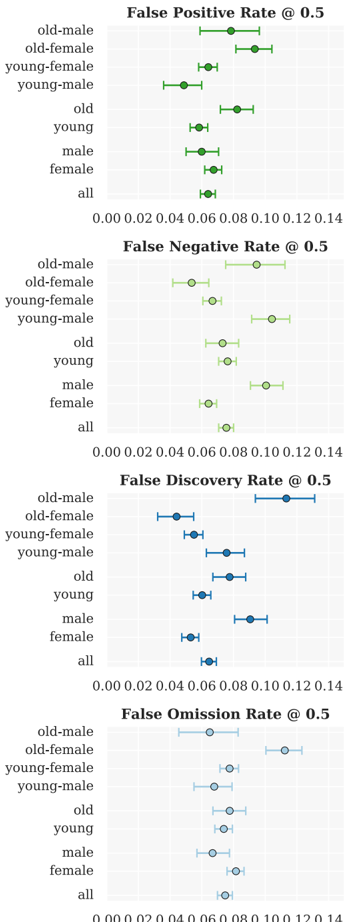
- In the smiling classifier example, all reported metrics at the .5 decision threshold have error types within the range 0.04–0.14, with 95% confidence intervals calculated by bootstrap resampling; the card notes older men have much higher false discovery rate, while men in aggregate have higher false negative rate.
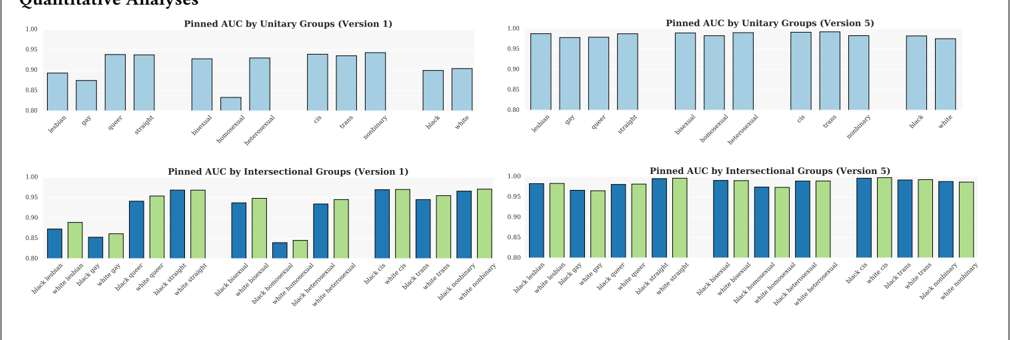
- In the toxicity example, TOXICITY v. 1 has low performance for several terms, especially “lesbian,” “gay,” and “homosexual,” while TOXICITY v. 5 shows more equitable performance after bias mitigation techniques.
Methods
- The paper is a framework/proposal paper, not an empirical study of a new model; it recommends model cards and details suggested sections and prompts.
- It provides two worked examples: a smiling classifier trained and evaluated on the CelebA dataset, using a convolutional neural net pretrained for face recognition and fine-tuned with cross-entropy loss for binary smiling classification.
- It also provides a model card for Perspective API’s TOXICITY classifier, a convolutional neural network developed by Jigsaw in 2017, evaluated on a synthetic Identity Phrase Templates test set; metrics include FPR, FNR, FDR, FOR for the smiling classifier and Pinned AUC for toxicity.
Limitations
- The paper states that model cards rely on the integrity of their creators and that it seems unlikely, at least in the near term, that they could be standardized or formalized enough to prevent misleading representations of model results.
- The paper states that evaluation datasets suitable for disaggregated evaluation are not yet common, and that the synthetic toxicity test data covers only a small set of very specific comments and is not comprehensive.
- The smiling classifier card states it does not capture race or skin type, uses binary gender classes (male/female), and that an ideal evaluation dataset would additionally include Fitzpatrick skin type, camera details, and environment details; the paper also states future work is needed to study how model information is interpreted and used by different stakeholders.
Model-written summary. Check it against the paper before relying on it.
Integrity signals
Registry
Cites
Statistics
Figures
Verification
Claims the paper makes
5 Valid · 1 Not valid · 18 Not checked · 30 Own results and interpretations
The cited sources support only part of this claim — read each source’s verdict below.
In the paper
“Synthetic data is valuable here because [11] shows that real data often has disproportionate amounts of toxicity directed at specific groups.”
What the sources say
- Partly supportedcites [11] [11] Lucas Dixon, John Li, Jeffrey Sorensen, Nithum Thain, and Lucy Vasserman. 2018. Measuring and Mitigating Unintended Bias in Text Classification. Proceedings of the AAAI/ACM Conference on AI, Ethics, and Society (2018). - sourceExperimental — accuracy not yet measured
The 'Quantifying bias in dataset' section (page unavailable) reports that certain identity terms appear disproportionately in toxic comments in the authors’ training data; for example, 'gay' appears in 3% of toxic comments but 0.5% of comments overall. It measures comments containing those terms, not whether toxicity is directed at the groups, and does not establish how often this pattern occurs across real datasets generally. (LLM, conf=0.85)
plainstates an association- Asserted: passes — The authors put it forward as true.
- Checkable: passes — It can be checked against evidence.
- Load-bearing: passes — The paper’s conclusions depend on it.
- Based: passes — The paper gives a reason why it holds.
- Partly supported
A result the paper reports from its own data — it cites no other source for it, so there is none to check. The quote shows it is in the paper.
In the paper
“For example, the false discovery rate on older men is much higher than that for other groups.”
plainstates an association- Asserted: passes — The authors put it forward as true.
- Checkable: passes — It can be checked against evidence.
- Load-bearing: passes — The paper’s conclusions depend on it.
- Based: passes — The paper gives a reason why it holds.
A result the paper reports from its own data — it cites no other source for it, so there is none to check. The quote shows it is in the paper.
In the paper
“TOXICITY v. 1 has low performance for several terms, especially 'lesbian', 'gay', and 'homosexual'.”
plain- Asserted: passes — The authors put it forward as true.
- Checkable: passes — It can be checked against evidence.
- Load-bearing: passes — The paper’s conclusions depend on it.
- Based: passes — The paper gives a reason why it holds.
None of the sources cited for this claim have been checked yet.
In the paper
“she collaborated with other researchers to demonstrate the disproportionate errors of computer vision systems on historically marginalized groups in the United States, such as darker-skinned women [5, 41].”
What the sources say
- Not checked yetcites [5] [5] Joy Buolamwini and Timnit Gebru. 2018. Gender Shades: Intersectional Accuracy Disparities in Commercial Gender Classification. In Proceedings of the 1st Conference on Fairness, Accountability and Transparency (Proceedings of Machine Learning Research) , Sorelle A. Friedler and Christo Wilson (Eds.), Vol. 81. PMLR, New York, NY, USA, 77-91. http://proceedings.mlr.press/v81/buolamwini18a.html -
- Not checked yetcites [41] [41] Inioluwa Raji. 2018. Black Panther Face Scorecard: Wakandans Under the Coded Gaze of AI. (2018). -
boostedstates an association- Asserted: passes — The authors put it forward as true.
- Checkable: passes — It can be checked against evidence.
- Load-bearing: passes — The paper’s conclusions depend on it.
- Based: passes — The paper gives a reason why it holds.
In the paper
“after MIT Media Lab graduate student Joy Buolamwini found that commercial face recognition systems failed to detect her face [4]”
What the sources say
- Not checked yetcites [4] [4] Joy Buolamwini. 2016. How I'm fighting Bias in Algorithms. (2016). https://www.ted.com/talks/joy\_buolamwini\_how\_i\_m\_fighting\_bias\_in\_ algorithms#t-63664 -
plainSingle case- Asserted: passes — The authors put it forward as true.
- Checkable: passes — It can be checked against evidence.
- Load-bearing: unclear — It is unclear whether the paper’s conclusions depend on it.
- Based: passes — The paper gives a reason why it holds.
13 more claims
Create a free account to see all 54 claims and to verify the 13 references still open.
- Probably not a substantial claim. 34
- It may state two separate claims as one. 8
Claims other papers make about this one
Each is checked against this paper’s own text: does it say what the citing paper says it does?
The source backs part of the claim, not all of it — or backs it for a different population, condition or comparison.
In the citing paper
“Model cards represent the field's standard for disclosing and documenting key facts about the architecture, training and evaluation of the model [14, 40].”
From Rethinking open source generative AI: open washing and the EU AI Act (2024) · cites this paper as [40]
Experimental — accuracy not yet measuredThe source backs part of the claim, not all of it — or backs it for a different population, condition or comparison.
In the citing paper
“Model cards (SMCs) [44] have been foundational in standardizing documentation for AI/ML model performance and characteristics, along with risks and unintended uses.”
From Interactive Model Cards: A Human-Centered Approach to Model Documentation (2022) · cites this paper as [44]
Experimental — accuracy not yet measuredThe source backs part of the claim, not all of it — or backs it for a different population, condition or comparison.
In the citing paper
“A second phase saw a more technical approach from the computer science community focusing on fairness, accountability and transparency as an engineering 'ethicalby-design' problem-solving exercise [20][21][22].”
From Putting AI ethics to work: are the tools fit for purpose? (2022) · cites this paper as [21]
Experimental — accuracy not yet measuredThe source backs part of the claim, not all of it — or backs it for a different population, condition or comparison.
In the citing paper
“These are either materials for use in design teams in workshop style events [76,77], tools for producing documentation of the design, build and test process [21,68], or technical tools for testing models, protecting privacy and security, testing for bias [69,93,94], or tracking provenance of data [95].”
From Putting AI ethics to work: are the tools fit for purpose? (2022) · cites this paper as [21]
Experimental — accuracy not yet measuredThe source backs part of the claim, not all of it — or backs it for a different population, condition or comparison.
In the citing paper
“There is some work on fairness relating to AI services, though this tends to focus on either exposing or 'auditing' certain AI services [22,38,126,133], or devising tools, methods and interventions relevant for those building (rather than using) such services [12,96,106,128].”
From Out of Context: Investigating the Bias and Fairness Concerns of “Artificial Intelligence as a Service” (2023) · cites this paper as [106]
Experimental — accuracy not yet measured
17 more claims about this paper
Create a free account to see every claim other papers make about this one.
Citations
Cites
BLEU: a method for automatic evaluation of machine translation
Papineni, K., Roukos, S., Ward, T., & Zhu, W.-J. (2001) · Proceedings of the 40th Annual Meeting on Association for Computational Linguistics - ACL '02 · doi:10.3115/1073083.1073135 · Cited by 21,344 · cited 1×
“translation system could compare BLEU scores [40] across demographic groups, and a model card for a speech recognition system could compare word-error rates.”
BackgroundCrenshaw, K. (2018) · Feminist Legal Theory · doi:10.4324/9780429500480-5 · Cited by 9,510
Deep Learning Face Attributes in the Wild
Liu, Z., Luo, P., Wang, X., & Tang, X. (2015) · 2015 IEEE International Conference on Computer Vision (ICCV) · doi:10.1109/iccv.2015.425 · Cited by 7,747 · cited 4×
“ms [5, 26] that report details of the datasets used to train and test machine learning models. We provide two example model cards in Section 5: A smiling detection model trained on the CelebA dataset [33] (Figure 2), and a public toxicity detection model, Perspective API [29] (Figure 3). Where Datasheets highlight cha…”
BackgroundMethodInfluentialThe validity and practicality of sun-reactive skin types I through VI
Fitzpatrick, T. B. (1988) · Archives of Dermatology · doi:10.1001/archderm.1988.01670060015008 · Cited by 4,339
Differential Privacy: A Survey of Results
Dwork, C. (2008) · Lecture Notes in Computer Science · doi:10.1007/978-3-540-79228-4_1 · Cited by 3,542 · cited 2×
“As such, collaboration with policy, privacy, and legal experts is necessary in order to ascertain which groups may be responsibly inferred, and how that information should be stored and accessed (for example, using differential privacy [12]).”
BackgroundCollins, G. S., Reitsma, J. B., Altman, D. G., & Moons, K. G. M. (2015) · Annals of Internal Medicine · doi:10.7326/m14-0697 · Cited by 3,267
Equality of Opportunity in Supervised Learning
Hardt, M., Price, E., & Srebro, N. (2016) · arXiv · doi:10.48550/arxiv.1610.02413 · Cited by 2,536 · cited 2×
“of Opportunity, and equal false negative and false positive rates across groups is equivalent to fulfilling Equality of Odds [26].”
BackgroundGebru, T., Morgenstern, J., Vecchione, B., Vaughan, J. W., Wallach, H., Daumé, H., & Crawford, K. (2018) · arXiv · doi:10.48550/arxiv.1803.09010 · Cited by 2,474
Self-citationA Probabilistic Interpretation of Precision, Recall and F-Score, with Implication for Evaluation
Goutte, C., & Gaussier, E. (2005) · Lecture Notes in Computer Science · doi:10.1007/978-3-540-31865-1_25 · Cited by 2,285 · cited 1×
“Confidence intervals for metrics derived from confusion matrices can be calculated by treating the matrices as probabilistic models of system performance [24].”
MethodFair prediction with disparate impact: a study of bias in recidivism prediction instruments
Chouldechova, A. (2017) · Big Data · doi:10.1089/big.2016.0047 · Cited by 2,159 · cited 1×
“or different errors that can be calculated from the confusion matrix for binary classification systems. • These also correspond to metrics in recent definitions of “fairness” in machine learning (cf. [8, 25]), where parity across subgroups for different metrics correspond to different fairness criteria. • 95% confiden…”
Background
Research works printed but not linked: 9
- [1] Avrio AI. 2018. Avrio AI: AI Talent Platform. (2018). https://www.goavrio.com/ -
- [5] Joy Buolamwini and Timnit Gebru. 2018. Gender Shades: Intersectional Accuracy Disparities in Commercial Gender Classification. In Proceedings of the 1st Conference on Fairness, Accountability and Transparency (Proceedings of Machine Learning Research) , Sorelle A. Friedler and Christo Wilson (Eds.), Vol. 81. PMLR, New York, NY, USA, 77-91. http://proceedings.mlr.press/v81/buolamwini18a.html -
- [13] Entelo. 2018. Recruitment Software | Entelo. (2018). https://www.entelo.com/ -
- [17] U.S. Food and Drug Administration. 2013. FDA Drug Safety Communication: Risk of next-morning impairment after use of insomnia drugs; FDA requires lower recommended doses for certain drugs containing zolpidem (Ambien, Ambien CR, Edluar, and Zolpimist). (2013). https://web.archive.org/web/20170428150213/ https://www.fda.gov/drugs/drugsafety/ucm352085.htm -
- [18] IIHS (Insurance Institute for Highway Safety: Highway Loss Data Institute). 2003. Special Issue: Side Impact Crashworthiness. Status Report 38, 7 (2003). -
- [19] Institute for the Future, Omidyar Network's Tech, and Society Solutions Lab. 2018. Ethical OS. (2018). https://ethicalos.org/ -
- [32] Jigsaw. 2017. Perspective API. (2017). https://www.perspectiveapi.com/ -
- [39] AI Now. 2018. Litigating Algorithms: Challenging Government Use Of Algorithmic Decision Systems. AI Now Institute. -
- [43] Mukund Sundararajan, Ankur Taly, and Qiqi Yan. 2017. In Proceedings of the 34th International Conference on Machine Learning , Vol. 70. PMLR, Sydney, Australia. -
Cited by
Items 301–400 of 2,235
Where is the Human?: Bridging the Gap Between AI and HCI
Inkpen, K., Chancellor, S., De Choudhury, M., Veale, M., & Baumer, E. P. S. (2019) · Extended Abstracts of the 2019 CHI Conference on Human Factors in Computing Systems · doi:10.1145/3290607.3299002 · Cited by 54
“(2) Documentation and Review: Some work is beginning to understand how models and datasets might be documented in context [20, 32].”
BackgroundYou’d Better Stop! Understanding Human Reliance on Machine Learning Models under Covariate Shift
Chiang, C.-W., & Yin, M. (2021) · 13th ACM Web Science Conference 2021 · doi:10.1145/3447535.3462487 · Cited by 53
Software Architecture Challenges for ML Systems
Lewis, G. A., Özkaya, İ., & Xu, X. (2021) · IEEE International Conference on Software Maintenance (ICSM) · doi:10.1109/icsme52107.2021.00071 · Cited by 77
Zheng, C., Wang, D., Wang, A. Y., & Ma, X. (2022) · CHI Conference on Human Factors in Computing Systems · doi:10.1145/3491102.3517615 · Cited by 52
Making It Possible for the Auditing of AI: A Systematic Review of AI Audits and AI Auditability
Li, Y., & Goel, S. (2024) · Information Systems Frontiers · doi:10.1007/s10796-024-10508-8 · Cited by 107
“Model development An iterative process of deriving, testing, and building multiple models until a model fitting the desired criteria is developed (Arnold et al., 2019; Crisan et al., 2022; Mitchell et al., 2019)”
InfluentialA Transparency Index Framework for AI in Education
Chaudhry, M. A., Cukurova, M., & Luckin, R. (2022) · Lecture Notes in Computer Science · doi:10.1007/978-3-031-11647-6_33 · Cited by 53
Agent, Gatekeeper, Drug Dealer: How Content Creators Craft Algorithmic Personas
Wu, E. Y., Pedersen, E., & Salehi, N. (2019) · Proceedings of the ACM on Human-Computer Interaction · doi:10.1145/3359321 · Cited by 52
“In recent years, researchers have called for increased algorithmic fairness, accountability, and transparency 1 [64, 82, 85].”
BackgroundLu, J. H., Callahan, A., Patel, B. S., Morse, K. E., Dash, D., Pfeffer, M. A., & Shah, N. H. (2022) · JAMA Network Open · doi:10.1001/jamanetworkopen.2022.27779 · Cited by 52
Afrose, S., Song, W., Nemeroff, C. B., Lu, C., & Yao, D. D. (2022) · Communications Medicine · doi:10.1038/s43856-022-00165-w · Cited by 64
“Similar to other studies 34,36 Reweighting is an alternative bias correction approach to sampling 37,38 .”
ResultHuang, L., Huhulea, E. N., Abraham, E., Bienenstock, R., Aifuwa, E., Hirani, R., Schulhof, A., Tiwari, R. K., & Etienne, M. (2025) · Medicina · doi:10.3390/medicina61020358 · Cited by 68
“Ways to do so include undergoing regular “bias audits”, debiasing word embeddings, integrating model cards into AI frameworks, and include ethicists, social scientists, and marginalized communities in AI design and deployment [106–109].”
An Ecosystem for Digital Reticular Chemistry
Jablonka, K. M., Rosen, A., Krishnapriyan, A. S., & Smit, B. (2023) · ACS Central Science · doi:10.1021/acscentsci.2c01177 · Cited by 65
Large-scale methods for distributionally robust optimization
Levy, D., Carmon, Y., Duchi, J. C., & Sidford, A. (2020) · arXiv · doi:10.48550/arxiv.2010.05893 · Cited by 52
“Therefore, the development of robust training procedures must go hand-in-hand with the development of rigorous and independent evaluation methodologies for auditing of algorithms [36, 54, 41, 14, 45].”
MethodZeno: An Interactive Framework for Behavioral Evaluation of Machine Learning
Cabrera, Á. A., Fu, E., Bertucci, D., Holstein, K., Talwalkar, A., Hong, J. I., & Perer, A. (2023) · Proceedings of the 2023 CHI Conference on Human Factors in Computing Systems · doi:10.1145/3544548.3581268 · Cited by 51
Requirement Engineering Challenges for AI-intense Systems Development
Heyn, H.-M., Knauss, E., Muhammad, A. P., Eriksson, O., Linder, J., Subbiah, P., Pradhan, S. K., & Tungal, S. (2021) · IEEE/ACM International Conference on AI Engineering – Software Engineering for AI (CAIN) · doi:10.1109/wain52551.2021.00020 · Cited by 55
“A starting point towards more transparency for machine learning models are model cards [10].”
Algorithmic Bias and Access to Opportunities
Herzog, L. M. (2021) · Oxford University Press eBooks · doi:10.1093/oxfordhb/9780198857815.013.21 · Cited by 64
Robots Enact Malignant Stereotypes
Hundt, A., Agnew, W., Zeng, V., Kacianka, S., & Gombolay, M. (2022) · 2022 ACM Conference on Fairness Accountability and Transparency · doi:10.1145/3531146.3533138 · Cited by 45
“Model Cards [68] are a process for creating guidance, scoping, and documenting models.”
BackgroundMethodFramework for bias evaluation in large language models in healthcare settings
Templin, T., Fort, S., Padmanabham, P. S., Seshadri, P., Rimal, R., Oliva, J. B., Lich, K. H., Sylvia, S., & Sinnott-Armstrong, N. (2025) · npj Digital Medicine · doi:10.1038/s41746-025-01786-w · Cited by 80
“Thisframeworkwasdevelopedthrougharigorouscombinationofmethods: (1)astructuredliteraturereview(describedexplicitlyinMethods),(2) carefulsynthesisofestablishedguidelines — particularly “ Model Cards for Model Reporting ” 16 and “ A Governance Model for the Application of AI in Health Care ” 17 , adapted and expanded to…”
Changing the World by Changing the Data
Rogers, A. (2021) · Proceedings of the 59th Annual Meeting of the Association for Computational Linguistics and the 11th International Joint Conference on Natural Language Processing (Volume 1: Long Papers) · doi:10.18653/v1/2021.acl-long.170 · Cited by 51
“Documenting the choices made in the dataset design is prerequisite to model cards (Mitchell et al., 2019), which could facilitate a healthy interaction between the communities served by the system and”
BackgroundInfluentialModel Positionality and Computational Reflexivity: Promoting Reflexivity in Data Science
Cambo, S. A., & Gergle, D. (2022) · CHI Conference on Human Factors in Computing Systems · doi:10.1145/3491102.3501998 · Cited by 49
Certification Labels for Trustworthy AI: Insights From an Empirical Mixed-Method Study
Scharowski, N., Benk, M., Kühne, S. J., Wettstein, L., & Brühlmann, F. (2023) · ACM Conference on Fairness, Accountability, and Transparency (FAccT) · doi:10.1145/3593013.3593994 · Cited by 76
“” However, current research mainly focuses on auditable documentation like model cards and datasheets [6, 7].”
BackgroundRisk of Training Diagnostic Algorithms on Data with Demographic Bias
Abbasi-Sureshjani, S., Raumanns, R., Michels, B. E. J., Schouten, G., & Cheplygina, V. (2020) · Lecture notes in computer science · doi:10.1007/978-3-030-61166-8_20 · Cited by 71
“This could be inspired by model cards [17], which describe what situations a model is trained to deal with (or not).”
BackgroundOnboarding Materials as Cross-functional Boundary Objects for Developing AI Assistants
Cai, C. J., Winter, S., Steiner, D., Wilcox, L., & Terry, M. (2021) · Extended Abstracts of the 2021 CHI Conference on Human Factors in Computing Systems · doi:10.1145/3411763.3443435 · Cited by 48
“Thus, model transparency toolkits (e.g. Model Cards [8]) may also benefit from transforming detailed model metrics into explicit, human-actionable strategies .”
BackgroundMisplaced Trust: Measuring the Interference of Machine Learning in Human Decision-Making
Suresh, H., Lao, N., & Liccardi, I. (2020) · 12th ACM Conference on Web Science · doi:10.1145/3394231.3397922 · Cited by 49
The GEM Benchmark: Natural Language Generation, its Evaluation and Metrics
Gehrmann, S., Adewumi, T., Aggarwal, K., Ammanamanchi, P. S., Anuoluwapo, A., Bosselut, A., Chandu, K. R., Clinciu, M., Das, D., Dhole, K. D., et al. (2021) · arXiv · doi:10.48550/arxiv.2102.01672 · Cited by 49
“In addition, we require every submitter to answer a series of questions that we will use to construct a model card (Mitchell et al., 2019) and externalize”
BackgroundMethodInfluentialPile of Law: Learning Responsible Data Filtering from the Law and a 256GB Open-Source Legal Dataset
Henderson, P., Krass, M. S., Zheng, L., Guha, N., Manning, C. D., Jurafsky, D., & Ho, D. E. (2022) · arXiv · doi:10.48550/arxiv.2207.00220 · Cited by 49
“[86] Margaret Mitchell, Simone Wu, Andrew Zaldivar, Parker Barnes, Lucy Vasserman, Ben Hutchinson, Elena Spitzer, Inioluwa Deborah Raji, and Timnit Gebru.”
BackgroundA participatory data-centric approach to AI Ethics by Design
Gerdes, A. (2021) · Applied Artificial Intelligence · doi:10.1080/08839514.2021.2009222 · Cited by 78
“Likewise, while data sheets focus on data for model training, model cards outline the “performance characteristics” of ML-models within given domains (Mitchell et al. 2019).”
BackgroundTowards training reproducible deep learning models
Chen, B., Wen, M., Shi, Y., Lin, D., Rajbahadur, G. K., & Jiang, Z. M. (2022) · ACM/IEEE International Conference on Software Engineering: Companion Proceedings (ICSE-Companion) · doi:10.1145/3510003.3510163 · Cited by 92
Nahar, N., Zhang, H., Lewis, G. A., Zhou, S., & Kästner, C. (2023) · IEEE/ACM International Conference on AI Engineering – Software Engineering for AI (CAIN) · doi:10.1109/cain58948.2023.00034 · Cited by 87
Observe, inspect, modify: Three conditions for generative AI governance
Ferrari, F., van Dijck, J., & van den Bosch, A. (2025) · New Media & Society · doi:10.1177/14614448231214811 · Cited by 43
“Model cards, for example, have evolved as bottom-up standardization devices for AI developers to state all essential components of a foundation model, including a specification of (domain-specific) training data sets, but also biases and ethical considerations (Mitchell et al., 2019).”
Guidelines for Integrating Value Sensitive Design in Responsible AI Toolkits
Sadek, M., Constantinides, M., Quercia, D., & Mougenot, C. (2024) · CHI Conference on Human Factors in Computing Systems · doi:10.1145/3613904.3642810 · Cited by 85
“This finding has parallels in previous work on AI where interpretations could differ depending on the stage a practitioner was involved in [58].”
Large Language Models for Text Classification: From Zero-Shot Learning to Instruction-Tuning
Chae, Y., & Davidson, T. (2025) · Sociological Methods & Research · doi:10.1177/00491241251325243 · Cited by 106
Bhat, A., Agashe, S., Oberoi, P., Mohile, N., Jangir, R., & Joshi, A. (2023) · Proceedings of the 28th International Conference on Intelligent User Interfaces · doi:10.1145/3581641.3584060 · Cited by 47
An Ethical Framework for Guiding the Development of Affectively-Aware Artificial Intelligence
Ong, D. C. (2021) · International Conference on Affective Computing and Intelligent Interaction and workshops · doi:10.1109/acii52823.2021.9597441 · Cited by 66
“Recent proposals include releasing Model Cards [48] to detail model performance characteristics, including the intended use-cases and contexts, as well as Datasheets for Datasets [49] to provide details on the data that the models were trained on (e.g., how were the data collected; what are the…”
BackgroundMethodSymphony: Composing Interactive Interfaces for Machine Learning
Bäuerle, A., Cabrera, Á. A., Hohman, F., Maher, M., Koski, D., Suau, X., Barik, T., & Moritz, D. (2022) · CHI Conference on Human Factors in Computing Systems · doi:10.1145/3491102.3502102 · Cited by 69
Ramesh, D., Kameswaran, V., Wang, D., & Sambasivan, N. (2022) · 2022 ACM Conference on Fairness Accountability and Transparency · doi:10.1145/3531146.3533237 · Cited by 47
“Prior work has sought to ease the burden on technology providers towards ful � lling transparency obligations [89, 102], and studied their impacts on users a � ected by ADS [42, 113, 122].”
BackgroundInfluentialBhat, A., Agashe, S., Mohile, N., Oberoi, P., Jangir, R., & Joshi, A. (2022) · arXiv · doi:10.48550/arxiv.2208.00636 · Cited by 47
Charting Competence: A Holistic Scale for Measuring Proficiency in Artificial Intelligence Literacy
Yuan, C. W., Tsai, H.-Y. S., & Chen, Y.-T. (2024) · Journal of Educational Computing Research · doi:10.1177/07356331241261206 · Cited by 73
“This capability is crucial for fostering a heightened awareness of the broader societal impact of AI (Mitchell et al., 2019; Yuan et al., 2023).”
The Foundation Model Transparency Index
Bommasani, R., Klyman, K., Longpre, S., Kapoor, S., Maslej, N., Xiong, B., Zhang, D., & Liang, P. (2023) · arXiv · doi:10.48550/arxiv.2310.12941 · Cited by 46
Data Governance in the Age of Large-Scale Data-Driven Language Technology
Jernite, Y., Nguyen, H., Biderman, S., Rogers, A., Masoud, M., Danchev, V., Tan, S., Luccioni, A. S., Subramani, N., Johnson, I., et al. (2022) · 2022 ACM Conference on Fairness Accountability and Transparency · doi:10.1145/3531146.3534637 · Cited by 75
“One approach put forward in recent years to foster more accountability of these data practices has been documentation standards for data and models in natural language processing [11, 59] and ML in general [93].”
BackgroundSelf-citationGenerative AI and Its Educational Implications
Łodzikowski, K., Foltz, P. W., & Behrens, J. T. (2024) · Postdigital Science and Education · doi:10.1007/978-3-031-64487-0_2 · Cited by 45
Serverless Prediction of Peptide Properties with Recurrent Neural Networks
Ansari, M., & White, A. D. (2023) · Journal of Chemical Information and Modeling · doi:10.1021/acs.jcim.2c01317 · Cited by 56
“To allow for transparency between users and developers, details of the models’ performance, training procedures, intended use and ethical considerations have been incorporated as model cards [65] on https://peptide.”
MethodA.I. Robustness: a Human-Centered Perspective on Technological Challenges and Opportunities
Tocchetti, A., Corti, L., Balayn, A., Yurrita, M., Lippmann, P., Brambilla, M., & Yang, J. (2025) · ACM Computing Surveys · doi:10.1145/3665926 · Cited by 98
“, documentation or checklists, [7, 29, 74, 144] and workflows [205] to support making and documenting relevant choices when building or evaluating a model.”
Dan, J., Pale, U., Amirshahi, A., Cappelletti, W., Ingolfsson, T., Wang, X., Cossettini, A., Bernini, A., Benini, L., Beniczky, S., et al. (2024) · Epilepsia · doi:10.1111/epi.18113 · Cited by 78
“In addition, algorithms should provide enough details to allow result reproducibility, e.g. in a model card including model description, software and environment documentation, data used, evaluation metrics, and results [38].”
Artificial intelligence transformations in geotechnics: progress, challenges and future enablers
Sheil, B. B., Anagnostopoulos, C. B., Buckley, R. M., Ciantia, M. O., Febrianto, E., Fu, J., Gao, Z., Geng, X., Gong, B., Hanley, K. J., et al. (2025) · Computers and Geotechnics · doi:10.1016/j.compgeo.2025.107604 · Cited by 64
“…such as SHAP (SHapley Additive exPlanations) can highlight which features most significantly impact model outputs, and (d) model cards reporting (Mitchell et al., 2019), where documentation detailing the model development, performance, and intended use cases are created including full model…”
(2023) · The Societal Impacts of Algorithmic Decision-Making · doi:10.1145/3603195.3603207 · Cited by 45
Scarecrows in Oz: The Use of Large Language Models in HRI
Williams, T., Matuszek, C., Mead, R., & DePalma, N. (2024) · ACM Transactions on Human-Robot Interaction · doi:10.1145/3606261 · Cited by 67
“At the design level, it is also worth reporting on why these specific decisions were made and whether there is a model card (e.g., Reference [39]) or similar reporting mechanism that can be used.”
BackgroundSeamless: Multilingual Expressive and Streaming Speech Translation
Communication, S., Barrault, L., Chung, Y.-A., Meglioli, M. C., Dale, D., Dong, N., Duppenthaler, M., Duquenne, P.-A., Ellis, B., Elsahar, H., et al. (2023) · arXiv · doi:10.48550/arxiv.2312.05187 · Cited by 45
ProtoAI: Model-Informed Prototyping for AI-Powered Interfaces
Subramonyam, H., Seifert, C. M., & Adar, E. (2021) · ACM International Conference on Intelligent User Interfaces (IUI) · doi:10.1145/3397481.3450640 · Cited by 67
The Different Faces of AI Ethics Across the World: A Principle-to-Practice Gap Analysis
Tidjon, L. N., & Khomh, F. (2022) · IEEE Transactions on Artificial Intelligence · doi:10.1109/tai.2022.3225132 · Cited by 89
“…[127], [141], [142], [143], [144], [145], [146], explain-ability [147], [148], [149], interpretability [147], [148], [149], transparency and accountability [147], [148], [149], [150], traceability and auditability [129], [151], [152], and trustworthy (especially formal verification [130]).”
Brady, A. P., Allen, B., Chong, J., Kotter, E., Kottler, N., Mongan, J., Oakden‐Rayner, L., Pinto dos Santos, D., Tang, A., Wald, C., et al. (2024) · Journal of Medical Imaging and Radiation Oncology · doi:10.1111/1754-9485.13612 · Cited by 44
Artificial Intelligence in Industry 4.0: A Review of Integration Challenges for Industrial Systems
Windmann, A., Wittenberg, P., Schieseck, M., & Niggemann, O. (2024) · IEEE International Conference on Industrial Informatics (INDIN) · doi:10.1109/indin58382.2024.10774364 · Cited by 83
“Approaches such as advanced testing frameworks [71], [72], explainable AI (XAI) [73], [74], and the development of new process models [19], [57] aim to improve AI system robustness, clarify decision-making processes, and meet regulatory demands, thereby enhancing overall system quality and…”
Fenn, A., Davis, C., Buckland, D. M., Kapadia, N. N., Nichols, M., Gao, M. C., Knechtle, W. S., Balu, S., Sendak, M., & Theiling, J. (2021) · Annals of Emergency Medicine · doi:10.1016/j.annemergmed.2021.02.029 · Cited by 49
Experiences with Improving the Transparency of AI Models and Services
Hind, M., Houde, S., Martino, J., Mojsilovic, A., Piorkowski, D., Richards, J., & Varshney, K. R. (2020) · Extended Abstracts of the 2020 CHI Conference on Human Factors in Computing Systems · doi:10.1145/3334480.3383051 · Cited by 44
An Examination of Fairness of AI Models for Deepfake Detection
Trinh, L., & Liu, Y. (2021) · Proceedings of the Thirtieth International Joint Conference on Artificial Intelligence · doi:10.24963/ijcai.2021/79 · Cited by 44
Towards A Process Model for Co-Creating AI Experiences
Subramonyam, H., Seifert, C., & Adar, E. (2021) · Designing Interactive Systems Conference 2021 · doi:10.1145/3461778.3462012 · Cited by 43
Resistance and refusal to algorithmic harms: Varieties of ‘knowledge projects’
Ganesh, M. I., & Moss, E. (2022) · Media International Australia · doi:10.1177/1329878x221076288 · Cited by 70
“…(contextual) harms of algorithmic bias is predominantly local, this resistance eventually has to be transformed into design speci fi cations that, while addressing harms, do not interfere with computational systems ’ ability to scale (See for instance, Gebru et al., 2018, and Mitchell et al., 2019).”
BackgroundSourlos, N., Vliegenthart, R., Santinha, J., Klontzas, M. E., Cuocolo, R., Huisman, M., & van Ooijen, P. M. A. (2024) · Insights into Imaging · doi:10.1186/s13244-024-01833-2 · Cited by 56
“Furthermore, information about speci fi c subgroups and the data used to develop an algorithm can be provided through Model Cards [76], helping to enhance transparency and accountability in model deployment.”
MethodTransparency of medical artificial intelligence systems
Kim, C., Gadgil, S. U., & Lee, S. (2025) · Nature Reviews Bioengineering · doi:10.1038/s44222-025-00363-w · Cited by 83
“These include the MI-CLAIM Checklist 59 , the MINIMAR Reporting Standards 60 , the STANDING Together initiative 61 and the TRIPOD + AI statement 62 , paralleling initiatives in general AI domains 63–65 that suggest labels essential to understanding potential biases during model training.”
The grammar of interactive explanatory model analysis
Baniecki, H., Parzych, D., & Biecek, P. (2023) · Data Mining and Knowledge Discovery · doi:10.1007/s10618-023-00924-w · Cited by 74
“An interesting proposition concerning model transparency, fairness and security is the Model Cards framework introduced by Mitchell et al. (2019).”
Asset Management in Machine Learning: State-of-research and State-of-practice
Idowu, S., Strüber, D., & Berger, T. (2022) · ACM Computing Surveys · doi:10.1145/3543847 · Cited by 67
“For example, Mitchell et al. propose a generic framework intended to increase the transparency of models across di ff erent application contexts and stakeholders[58].”
BackgroundThe Model Card Authoring Toolkit: Toward Community-centered, Deliberation-driven AI Design
Shen, H., Wang, L., Deng, W. H., Brusse, C., Velgersdijk, R., & Zhu, H. (2022) · 2022 ACM Conference on Fairness Accountability and Transparency · doi:10.1145/3531146.3533110 · Cited by 43
What Did My AI Learn? How Data Scientists Make Sense of Model Behavior
Cabrera, Á. A., Ribeiro, M. T., Lee, B., DeLine, R. A., Perer, A., & Drucker, S. M. (2023) · ACM Transactions on Computer-Human Interaction · doi:10.1145/3542921 · Cited by 62
“Topic Interview # Survey # Kim et al. [47] Data Scientists in Software Teams 0 793 Wan et al. [82] ML & Software Development 14 342 Serban et al. [73] ML & Software Engineering 0 313 Holstein et al. [38] ML Fairness in Industry 35 267 Zhang et al. [93] Software Engineering & ML 8 195 Yang et al. [90] Interactive ML 24…”
BackgroundSwain, V. D., Gao, L., Wood, W. A., Matli, S. C., Abowd, G. D., & Choudhury, M. D. (2023) · CHI Conference on Human Factors in Computing Systems · doi:10.1145/3544548.3581376 · Cited by 67
A principles-based ethics assurance argument pattern for AI and autonomous systems
Porter, Z., Habli, I., McDermid, J. A., & Kaas, M. H. L. (2023) · AI and Ethics · doi:10.1007/s43681-023-00297-2 · Cited by 72
“…tools and techniques for trustworthy AI supplement these proposals, including: technical standards; algorithmic auditing; model cards; privacy-preserving techniques; fairness metrics; red-teaming; ethical black boxes; impact assessments; performance testing; and conformity assessment [35–42].”
Chiang, C.-W., & Yin, M. (2022) · 27th International Conference on Intelligent User Interfaces · doi:10.1145/3490099.3511121 · Cited by 42
Three lines of defense against risks from AI
Schuett, J. (2025) · AI & SOCIETY · doi:10.1007/s00146-023-01811-0 · Cited by 41
“Reports will typically include risk registers and risk matrices (IEC 2019), but they could also involve information about specific models, in the form of (preliminary) model cards (Mitchell et al. 2019), data sheets (Gebru et al. 2021), and system cards (Green et al. 2022).”
Heldreth, C. M., Monk, E. P., Clark, A. T., Schumann, C., Eyee, X., & Ricco, S. (2023) · ACM Journal on Responsible Computing · doi:10.1145/3632120 · Cited by 72
“Multiple studies across applications have adopted this practice, demonstrating observed disparities in the datasets used to develop models [27], and actual model performance for people with darker skin tones [14, 15].”
BackgroundSeamful XAI: Operationalizing Seamful Design in Explainable AI
Ehsan, U., Liao, Q. V., Passi, S., Riedl, M. O., & Daumé, H. (2024) · Proceedings of the ACM on Human-Computer Interaction · doi:10.1145/3637396 · Cited by 106
“Research also aims to provide structured yet flexible “scaffolding”, such as guiding frameworks [21, 28, 59], checklists [57], processes [50, 70] and tools to lower the barriers and empower individuals to engage in RAI practices [35, 50, 57].”
BackgroundMachine Learning Explainability for External Stakeholders
Bhatt, U., Andrus, M., Weller, A., & Xiang, A. (2020) · arXiv · doi:10.48550/arxiv.2007.05408 · Cited by 41
AI Regulation Is (not) All You Need
Lucaj, L., van der Smagt, P., & Benbouzid, D. (2023) · 2023 ACM Conference on Fairness Accountability and Transparency · doi:10.1145/3593013.3594079 · Cited by 40
“Emerging guidelines have addressed documentation practices for certain features and particular steps along the pipeline of an ML model such as model cards and datasheets [30, 51].”
InfluentialTan, M., & Subramonyam, H. (2024) · Proceedings of the CHI Conference on Human Factors in Computing Systems · doi:10.1145/3613904.3642592 · Cited by 40
“However, established frameworks for AI trans-parency [76] cater predominantly to technical experts, emphasizing the technology’s capabilities and overlooking the practical challenges and contexts faced by practitioners [17, 60].”
BackgroundMethodInfluentialEhsan, U., Singh, R., Metcalf, J., & Riedl, M. (2022) · 2022 ACM Conference on Fairness Accountability and Transparency · doi:10.1145/3531146.3533186 · Cited by 40
Considerations in the reliability and fairness audits of predictive models for advance care planning
Lu, J., Sattler, A., Wang, S., Khaki, A. R., Callahan, A., Fleming, S., Fong, R., Ehlert, B., Li, R. C., Shieh, L., et al. (2022) · Frontiers in Digital Health · doi:10.3389/fdgth.2022.943768 · Cited by 40
“Note: we use recorded race/ethnicity in the EHR as a way to measure how models may perform across such groupings, as recommended (15,21).”
InfluentialLarge language models and political science
Linegar, M., Kocielnik, R., & Alvarez, R. M. (2023) · Frontiers in Political Science · doi:10.3389/fpos.2023.1257092 · Cited by 42
Berman, G., Goyal, N., & Madaio, M. (2024) · Proceedings of the CHI Conference on Human Factors in Computing Systems · doi:10.1145/3613904.3642398 · Cited by 40
“…for conducting fairness assessments of trained models [e.g., 9, 12, 19, 21, 25, 131, 193, 209]; protocols and templates for documentation of trained models and their evaluations [103, 136]; and, processes for auditing AI systems by third parties [e.g., 59, 119, 122, 135, 166, 170, 177, 180, 183].”
BackgroundAdler, D. A., Stamatis, C. A., Meyerhoff, J., Mohr, D. C., Wang, F., Aranovich, G. J., Sen, S., & Choudhury, T. (2024) · npj Mental Health Research · doi:10.1038/s44184-024-00057-y · Cited by 54
“Instead, it may be more practical to improve reliability by developing models for speci fi c, targeted populations 43,44 .”
BackgroundImplementing equitable and intersectionality‐aware ML in education: A practical guide
Mangal, M., & Pardos, Z. A. (2024) · British Journal of Educational Technology · doi:10.1111/bjet.13484 · Cited by 58
Towards a multi-stakeholder value-based assessment framework for algorithmic systems
Yurrita, M., Murray-Rust, D., Balayn, A., & Bozzon, A. (2022) · 2022 ACM Conference on Fairness Accountability and Transparency · doi:10.1145/3531146.3533118 · Cited by 39
Hopkins, A., & Booth, S. (2021) · Proceedings of the 2021 AAAI/ACM Conference on AI, Ethics, and Society · doi:10.1145/3461702.3462527 · Cited by 40
Mackeprang, M., Müller-Birn, C., & Stauss, M. T. (2019) · Proceedings of the ACM on Human-Computer Interaction · doi:10.1145/3359297 · Cited by 39
Amazon SageMaker Clarify: Machine Learning Bias Detection and Explainability in the Cloud
Hardt, M., Chen, X., Cheng, X., Donini, M., Gelman, J., Gollaprolu, S., He, J., Larroy, P., Liu, X., McCarthy, N., et al. (2021) · ACM SIGKDD Conference on Knowledge Discovery and Data Mining (KDD) · doi:10.1145/3447548.3467177 · Cited by 80
“Similar challenges have also been pointed out in prior studies [8, 20, 33].”
ResultStoyanovich, J., Abiteboul, S., Howe, B., Jagadish, H. V., & Schelter, S. (2022) · Communications of the ACM · doi:10.1145/3488717 · Cited by 61
“These projects include the Dataset Nutrition Label, 18 Data-sheets for Datasets, 13 Model Cards, 25 and Ranking Facts, 39 which all use specific kinds of metadata to support interpretability.”
MethodBest Practices for Large Language Models in Radiology
Blüthgen, C., Veen, D. V., Zakka, C., Link, K. E., Fanous, A. H., Daneshjou, R., Frauenfelder, T., Langlotz, C. P., Gatidis, S., & Chaudhari, A. S. (2025) · Radiology · doi:10.1148/radiol.240528 · Cited by 56
Cina, E., Α, E. E., Elmazi, G., & Al-Arnaout, Z. (2025) · Sustainability · doi:10.3390/su17115148 · Cited by 78
The use of LLMs to annotate data in management research: Foundational guidelines and warnings
Carlson, N. A., & Burbano, V. (2025) · Strategic Management Journal · doi:10.1002/smj.70023 · Cited by 87
Srinivasan, R., & Chander, A. (2021) · Queue · doi:10.1145/3466132.3466134 · Cited by 49
van Berkel, N., Bellio, M., Skov, M. B., & BLANDFORD, A. E. (2023) · ACM Transactions on Computer-Human Interaction · doi:10.1145/3571815 · Cited by 47
“When designing and employing AI technology in decision support situations, researchers and practitioners should be aware of different diagnosis methods and how these differences affect transforming real-world information into digital data. intended use and performance evaluation [74].”
BackgroundWilliams, M. C., Weir-McCall, J. R., Baldassarre, L. A., Cecco, C. N. D., Choi, A. D., Dey, D., Dweck, M. R., Išgum, I., Kolossváry, M., Leipsic, J. A., et al. (2024) · Journal of cardiovascular computed tomography · doi:10.1016/j.jcct.2024.08.003 · Cited by 50
Investigating machine moral judgement through the Delphi experiment
Jiang, L., Hwang, J. D., Bhagavatula, C., Bras, R. J. L., Liang, J. T., Levine, S., Dodge, J., Sakaguchi, K., Forbes, M., Hessel, J., et al. (2025) · Nature Machine Intelligence · doi:10.1038/s42256-024-00969-6 · Cited by 97
A Primer for Evaluating Large Language Models in Social-Science Research
Abdurahman, S., Ziabari, A. S., Moore, A. K., Bartels, D. M., & Dehghani, M. (2025) · Advances in Methods and Practices in Psychological Science · doi:10.1177/25152459251325174 · Cited by 101
“Researchers developing or fine-tuning LLMs should consider fully documenting their models using established frameworks such as model cards (Mitchell et al., 2019) and data sheets for data sets used in training and fine-tuning (Gebru et al., 2021).”
Clinical insights: A comprehensive review of language models in medicine
Neveditsin, N., Lingras, P., & Mago, V. (2025) · PLOS Digital Health · doi:10.1371/journal.pdig.0000800 · Cited by 37
“We also advocate for the development of Medical Model Cards , inspired by the generic Model Cards proposed by Mitchell et al. [251].”
Characterizing and Detecting Mismatch in Machine-Learning-Enabled Systems
Lewis, G. A., Bellomo, S., & Özkaya, İ. (2021) · IEEE/ACM International Conference on AI Engineering – Software Engineering for AI (CAIN) · doi:10.1109/wain52551.2021.00028 · Cited by 58
“From the descriptor perspective, while there is existing, recent work in creating descriptors for data sets [3] [7] [8], models [12], and online AI services [2] [14], there are three main limitations: (1) they do not address the software engineering and operations perspectives, (2) they are not machine-readable, and (…”
MethodMarcelle: Composing Interactive Machine Learning Workflows and Interfaces
Françoise, J., Caramiaux, B., & Sanchez, T. (2021) · ACM Symposium on User Interface Software and Technology (UIST) · doi:10.1145/3472749.3474734 · Cited by 64
Mirowski, P., Love, J., Mathewson, K., & Mohamed, S. (2024) · The 2024 ACM Conference on Fairness Accountability and Transparency · doi:10.1145/3630106.3658993 · Cited by 37
“Third, to allow the comedians to reclaim ownership of the tools and the processes for gathering and curating training data for these models, taking as inspiration data governance used for training some open-source LLMs [111] and providing artists with transparency about data provenance [72, 96].”
MethodMcMillan-Major, A., Osei, S., Rodriguez, J. D., Ammanamanchi, P. S., Gehrmann, S., & Jernite, Y. (2021) · Proceedings of the 1st Workshop on Natural Language Generation, Evaluation, and Metrics (GEM 2021) · doi:10.18653/v1/2021.gem-1.11 · Cited by 37
“Mitchell et al. (2019) put forward Model Cards focusing on documenting the evaluation and use of a specific model, while Gebru et al. (2018), Holland et al. (2018), and Pushkarna et al. (2021) propose Datasheets for Datasets, Dataset Nutrition Labels, and the Data Cards Playbook, respectively, as…”
BackgroundMethodInfluentialChen, C., & Sundar, S. S. (2023) · Proceedings of the 2023 CHI Conference on Human Factors in Computing Systems · doi:10.1145/3544548.3580805 · Cited by 36
Moore, S., Liao, Q. V., & Subramonyam, H. (2023) · CHI Conference on Human Factors in Computing Systems · doi:10.1145/3544548.3581242 · Cited by 51
AI Consent Futures: A Case Study on Voice Data Collection with Clinicians
Wilcox, L. G., Brewer, R. N., & Díaz, F. (2023) · Proceedings of the ACM on Human-Computer Interaction · doi:10.1145/3610107 · Cited by 47
“In response, mitigation strategies for differential performance focus on documenting data collection, or adjusting data in a dataset [e.g., 3, 67, 111, 130, 131].”
BackgroundMithraLabel: Flexible Dataset Nutritional Labels for Responsible Data Science
Sun, C., Asudeh, A., Jagadish, H. V., Howe, B., & Stoyanovich, J. (2019) · Proceedings of the 28th ACM International Conference on Information and Knowledge Management · doi:10.1145/3357384.3357853 · Cited by 35
“Other follow-on works propose similar, manually constructed, data sheets [15] or model cards [16].”
BackgroundNorval, C., Cornelius, K., Cobbe, J., & Singh, J. (2022) · 2022 ACM Conference on Fairness Accountability and Transparency · doi:10.1145/3531146.3533133 · Cited by 35
Metadata
- Authors
- Mitchell, M., Wu, S., Zaldivar, A., Barnes, P., Vasserman, L., Hutchinson, B., Spitzer, E., Raji, I. D., & Gebru, T.
- Venue
- Proceedings of the Conference on Fairness, Accountability, and Transparency
- Publisher
- ACM
- Published
- 2019-01-29
- Pages
- 220-229
- OpenAlex
- W2897042519
- Semantic Scholar
- 7365f887c938ca21a6adbef08b5a520ebbd4638f
- Cited by
- 2,681
- References
- 12
- Citations by year
- 2026: 831 · 2025: 446 · 2024: 376 · 2023: 366 · 2022: 243 · 2021: 260 · 2020: 102 · 2019: 54
- FWCI
- 170.95
- Type
- conference paper
- Language
- en
- Open access
- green
- arxiv.org
- Locations
- ACM Conference on Fairness, Accountability, and Transparency (FAccT) (publishedVersion)
- arXiv (Cornell University) (submittedVersion)
- arXiv (Cornell University)
- Topics
- Physical Sciences › Computer Science › Artificial Intelligence › Ethics and Social Impacts of AI
- Physical Sciences › Computer Science › Artificial Intelligence › Explainable Artificial Intelligence (XAI)
- Physical Sciences › Computer Science › Computer Vision and Pattern Recognition › Face recognition and analysis
- Keywords
- model cards, model transparency, algorithmic fairness, demographic bias, responsible AI, democratization of AI, toxic comment detection, model documentation
About these checks
Registry, retraction, Cites and statistics results are computed, not judged, with one exception: a printed reference that no index lists is read once by a model before it counts as a citation error. Claims are extracted by a model and kept only when their quote appears verbatim in the text; each cited source is then checked, with a model’s help, for whether it says what the claim relies on. Those verdicts can be wrong — read the claim’s quote and the cited source before relying on one.
The claim verdicts this report counts are experimental: their accuracy is not yet measured.
A language model drew the claims from the paper on 2026-10-07, under version 3 of the claim definition (model deepseek-v4.1-flash, prompt extract-v3).
A second model labelled each claim on 2026-10-07 (model jev-1.13-20260917, definition revision gold-guideline-v0.2).
Cited sources are checked with a language model’s help (gpt-6-sol).
Statistics and arithmetic are recomputed, not judged.
Confidence bands are shown only for fields calibrated on our annotated test set. None is calibrated yet, so no band is shown.
What counts as a claim ›How we measure confidence ›How we check this ›
Are you an author, or do you see a problem with this page? Request a review
Data sources
Bibliographic data: Semantic Scholar, OpenAlex, Crossref.
Contains information from the Semantic Scholar Academic Graph Datasets, made available under the ODC Attribution License (ODC-BY 1.0).
Semantic Scholar’s data is described in: Kinney, R., et al. (2023). The Semantic Scholar Open Data Platform. arXiv:2301.10140.
