

The DOI matches its Crossref record; 113 of the 113 references it cites were found in a registry or an index; none of the 80 sources its claims cite is checked for support yet.
A Comprehensive Survey on Federated Learning Techniques for Healthcare Informatics
Open accessAbstract
Healthcare is predominantly regarded as a crucial consideration in promoting the general physical and mental health and well‐being of people around the world. The amount of data generated by healthcare systems is enormous, making it challenging to manage. Many machine learning (ML) approaches were implemented to develop dependable and robust solutions to handle the data. ML cannot fully utilize data due to privacy concerns. This primarily happens in the case of medical data. Due to a lack of precise clinical data, the application of ML for the same is challenging and may not yield desired results. Federated learning (FL), which is a recent development in ML where the computation is offloaded to the source of data, appears to be a promising solution to this problem. In this study, we present a detailed survey of applications of FL for healthcare informatics. We initiate a discussion on the need for FL in the healthcare domain, followed by a review of recent review papers. We focus on the fundamentals of FL and the major motivations behind FL for healthcare applications. We then present the applications of FL along with recent state of the art in several verticals of healthcare. Then, lessons learned, open issues, and challenges that are yet to be solved are also highlighted. This is followed by future directions that give directions to the prospective researchers willing to do their research in this domain.
Overview
AI snapshot
Written from the paper’s full text.
TL;DR
This survey reviews federated learning (FL) for healthcare informatics, arguing that FL enables multi-institution collaboration without centralizing sensitive patient data. It covers applications in medical imaging, IoT-based smart healthcare, EHR management, health cooperation, and COVID-19 outbreak prediction, then outlines challenges and future directions.
Key findings
- FL is presented as a privacy-preserving alternative to centralized ML for healthcare, allowing data to remain local while models are shared; the survey notes FL was first proposed by Google in 2016 for Gboard, which supports more than 600 languages.
- In COVID-19, the survey cites Xu et al.’s multi-institution chest CT study in Wuhan, China, as achieving improved detection sensitivity, and Vaid et al.’s finding that FL-based models outperformed locally trained predictive models for 7-day mortality in hospitalized patients.
- Major challenges identified include privacy versus performance tradeoffs, trusted versus nontrusted collaboration, data breaches via model updates/gradients, non-IID data causing FedAvg failures, traceability and accountability, system architecture, client management, and health dataset issues.
- Future directions highlighted include Healthcare 5.0, digital twins, blockchain, collaborative robots, explainable AI, and 6G integration.
Methods
- Design: a comprehensive narrative survey/state-of-the-art review of FL for healthcare informatics, covering fundamentals, motivations, applications, lessons learned, open issues, challenges, and future directions.
- Data or sample: literature and prior studies; no primary dataset or experiments were conducted. Examples span medical imaging (MRI, brain tumor segmentation, skin disease, thyroid ultrasound, hypertrophic cardiomyopathy), IoT/EHR systems, health cooperation, and COVID-19.
- Main analysis: qualitative synthesis organized by healthcare verticals and challenge categories, with summary tables of key findings from reviewed works.
Limitations
- The paper does not explicitly state limitations of its own survey; it states that open challenges remain, including privacy-preserving hyperparameter optimization, entity resolution for vertically split data, efficient encryption, and many unanswered technical questions.
- Evident from the text: no formal systematic review protocol, search strategy, inclusion/exclusion criteria, or quantitative meta-analysis is described; it is a narrative survey without primary experiments.
Model-written summary. Check it against the paper before relying on it.
Integrity signals
Registry
Cites
Statistics
Figures
Verification
Claims the paper makes
65 Not checked yet · 36 No basis given · 25 Own interpretation · 1 Check pending
In the paper
“FL enables healthcare records that are located across different institutions to be connected without revealing personal information [11].”
§ A Comprehensive Survey on Federated Learning Techniques for Healthcare Informatics > 1. Introduction
What the sources say
- Not checked yetcites [11] Xu J. Glicksberg B. S. Su C. Walker P. Bian J. Wang F. Federated learning for healthcare informatics Journal of Healthcare Informatics Research 2021 5 1 1 19 10.1007/s41666-020-00082-4 33204939 PMC7659898 source
plaindirect- Asserted: passes — The authors put it forward as true.
- Checkable: passes — It can be checked against evidence.
- Load-bearing: passes — The paper’s conclusions depend on it.
- Based: passes — The paper gives a reason why it holds.
The paper states this without a source or data behind it here, so there is nothing to check it against. The quote shows it is in the paper.
In the paper
“The strength of FL substitutes to prevent sensitive training data movement beyond its firewalls.”
§ A Comprehensive Survey on Federated Learning Techniques for Healthcare Informatics > 3. Background and Motivations > 3.1. Overview and Status of Disease Diagnosis Using FL
plaindirect- Asserted: passes — The authors put it forward as true.
- Checkable: passes — It can be checked against evidence.
- Load-bearing: passes — The paper’s conclusions depend on it.
- Based: passes — The paper gives a reason why it holds.
None of the sources cited for this claim have been checked yet.
In the paper
“FL has distinct privacy advantages over ML models [14, 15].”
§ A Comprehensive Survey on Federated Learning Techniques for Healthcare Informatics > 1. Introduction
What the sources say
- Not checked yetcites [14] Hill P. The Rationale for Learning Communities and Learning Community Models 1985
- Not checked yetcites [15] Kellogg K. Learning communities Eric Digest 1999 45
plaincorrelational- Asserted: passes — The authors put it forward as true.
- Checkable: passes — It can be checked against evidence.
- Load-bearing: passes — The paper’s conclusions depend on it.
- Based: passes — The paper gives a reason why it holds.
In the paper
“A complete brain part of an MRI [55] is helpful, and for brain tumor segmentation [56], the usage and advantages of FL were further demonstrated.”
§ A Comprehensive Survey on Federated Learning Techniques for Healthcare Informatics > 4. Applications of FL in Verticals of Healthcare > 4.1. FL Applications for Medical Image Processing
What the sources say
- Not checked yetcites [56] Li W. Milletarì F. Xu D. Privacy-preserving feder- ated brain tumour segmentation Proceedings of the International Workshop on Machine Learning in Medical Imag- Ing 2019 China Springer 133 141 10.1007/978-3-030-32692-0_16 PMC7616593 39453415 source
boosted- Asserted: passes — The authors put it forward as true.
- Checkable: passes — It can be checked against evidence.
- Load-bearing: unclear — It is unclear whether the paper’s conclusions depend on it.
- Based: passes — The paper gives a reason why it holds.
In the paper
“FL has developed a system that makes it possible for doctors to use data from multiple medical institutions without sharing patient data across them [62].”
§ A Comprehensive Survey on Federated Learning Techniques for Healthcare Informatics > 4. Applications of FL in Verticals of Healthcare > 4.2. FL in IoT-Based Smart Healthcare Applications
What the sources say
- Not checked yetcites [62] Linardos A. Kushibar K. Walsh S. Gkontra P. Lekadir K. Federated learning for multi- center imaging diagnostics: A study in cardiovas- cular disease 2021 arXiv preprint arXiv:2107.03901 PMC8894335 35241683 source
plaindirect- Asserted: passes — The authors put it forward as true.
- Checkable: passes — It can be checked against evidence.
- Load-bearing: unclear — It is unclear whether the paper’s conclusions depend on it.
- Based: passes — The paper gives a reason why it holds.
None of the sources cited for this claim have been checked yet.
In the paper
“FL is a privacy-preserving AI model to identify brain tumors.”
§ A Comprehensive Survey on Federated Learning Techniques for Healthcare Informatics > 4. Applications of FL in Verticals of Healthcare > 4.1. FL Applications for Medical Image Processing
plain- Asserted: passes — The authors put it forward as true.
- Checkable: passes — It can be checked against evidence.
- Load-bearing: unclear — It is unclear whether the paper’s conclusions depend on it.
- Based: passes — The paper gives a reason why it holds.
In the paper
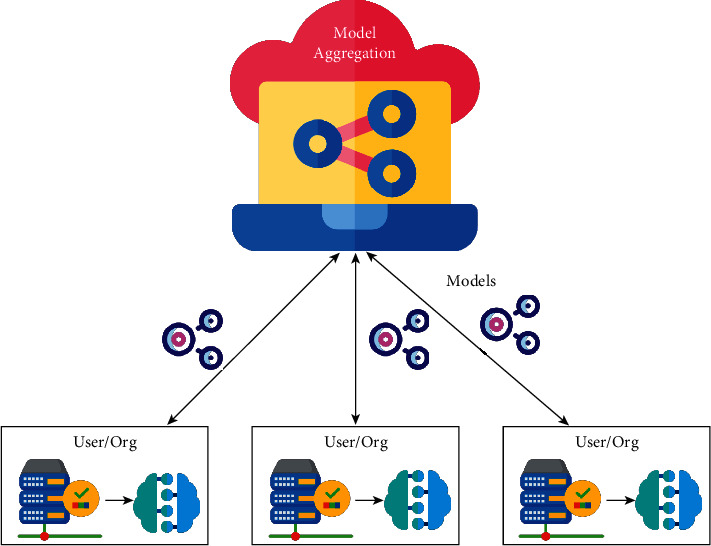
“The experts in healthcare and life sciences can use FL to solve the unique problem of data governance by training algorithms behind the hospital's firewall and only sharing models so that data remain secure [31].”
§ A Comprehensive Survey on Federated Learning Techniques for Healthcare Informatics > 3. Background and Motivations > 3.3. Motivations of Using FL for Healthcare
What the sources say
- Not checked yetcites [31] Rieke N. Hancox J. Li W. The future of digital health with federated learning NPJ digital medicine 2020 3 1 1 7 10.1038/s41746-020-00323-1 33015372 PMC7490367 source
plaindirect- Asserted: passes — The authors put it forward as true.
- Checkable: passes — It can be checked against evidence.
- Load-bearing: passes — The paper’s conclusions depend on it.
- Based: passes — The paper gives a reason why it holds.
A conclusion the paper draws from its own results — it cites no other source for it, so there is none to check. The quote shows it is in the paper.
In the paper
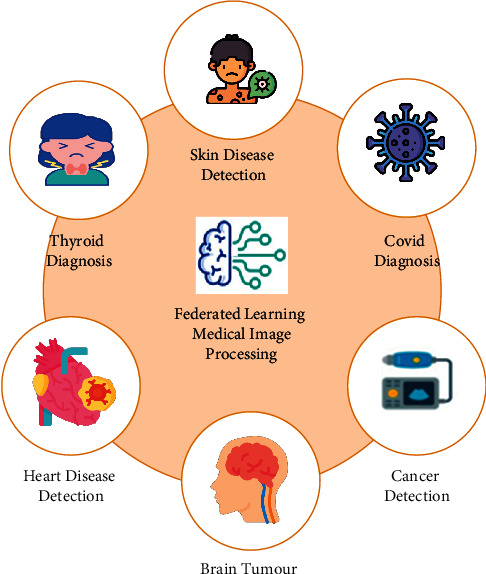
“FL will help in detecting various diseases as shown in Figure 6.”
§ A Comprehensive Survey on Federated Learning Techniques for Healthcare Informatics > 4. Applications of FL in Verticals of Healthcare > 4.1. FL Applications for Medical Image Processing
plaindirect- Asserted: passes — The authors put it forward as true.
- Checkable: passes — It can be checked against evidence.
- Load-bearing: unclear — It is unclear whether the paper’s conclusions depend on it.
- Based: passes — The paper gives a reason why it holds.
In the paper
“To address this issue, we offer an FL-based system that makes use of MRI data from several institutions while protecting patients' privacy [53].”
§ A Comprehensive Survey on Federated Learning Techniques for Healthcare Informatics > 4. Applications of FL in Verticals of Healthcare > 4.1. FL Applications for Medical Image Processing
What the sources say
- Not checked yetcites [53] Guo P. Wang P. Zhou J. Jiang S. Patel V. M. Multi-institutional collaborations for im- proving deep learning-based magnetic resonance image reconstruction using federated learning Proceedings of the IEEE/CVF Conference on Computer Vision and Pattern Recognition 2021 USA 2423 2432 10.1109/cvpr46437.2021.00245 PMC9017654 35444379 source
plaindirect- Asserted: passes — The authors put it forward as true.
- Checkable: passes — It can be checked against evidence.
- Load-bearing: passes — The paper’s conclusions depend on it.
- Based: passes — The paper gives a reason why it holds.
None of the sources cited for this claim have been checked yet.
In the paper
“FL allowed medical professionals to assess the intensity of skin disease.”
§ A Comprehensive Survey on Federated Learning Techniques for Healthcare Informatics > 4. Applications of FL in Verticals of Healthcare > 4.1. FL Applications for Medical Image Processing
plaindirect- Asserted: passes — The authors put it forward as true.
- Checkable: passes — It can be checked against evidence.
- Load-bearing: unclear — It is unclear whether the paper’s conclusions depend on it.
- Based: passes — The paper gives a reason why it holds.
- Probably not a substantial claim. 82
- It may state two separate claims as one. 51
The paper states this without a source or data behind it here, so there is nothing to check it against. The quote shows it is in the paper.
In the paper
“FL makes it possible for several parties to work together without exchanging or centralizing datasets.”
- Also stated in: § 3.4. Main Contributions of the Survey · plain
“FL facilitates communication between various parties without the need to communicate or centralize data, thereby resolving issues with critical health information.”
§ A Comprehensive Survey on Federated Learning Techniques for Healthcare Informatics > 3. Background and Motivations > 3.3. Motivations of Using FL for Healthcare
plaindirect- Asserted: passes — The authors put it forward as true.
- Checkable: passes — It can be checked against evidence.
- Load-bearing: passes — The paper’s conclusions depend on it.
- Based: passes — The paper gives a reason why it holds.
Probably not a substantial claim.
- Also stated in: § 3.4. Main Contributions of the Survey · plain
None of the sources cited for this claim have been checked yet.
In the paper
“In contrast to traditional centralized ML methods, which require datasets to reside on a single server, FL minimizes security and privacy concerns by keeping local data stores [12, 13].”
- Also stated in: § 3.3. Motivations of Using FL for Healthcare · plain
“FL reduces data security and privacy concerns by maintaining local data stores, as opposed to centralized ML techniques, which require datasets to reside on one server [51].”
§ A Comprehensive Survey on Federated Learning Techniques for Healthcare Informatics > 1. Introduction
What the sources say
- Not checked yetcites [12] Khan R. U. Zhang X. Alazab M. Ku- mar R. An improved convolutional neural network model for intrusion detection in networks Proceedings of the 2019 Cybersecurity and cyberforensics confer- ence (CCC) May 2019 Melbourne, VIC, Australia IEEE 74 77 10.1109/ccc.2019.000-6 2-s2.0-85073870196 source
- Not checked yetcites [13] Alazab M. Broadhurst R. Spam and crimi- nal activity Trends and issues in crime and crim- inal justice 2016 526 1 20
- Not checked yetcites [51] Song J. Wang W. Gadekallu T. R. Cao J. Liu Y. Eppda: An efficient privacy-preserving data aggregation federated learning scheme IEEE Transactions on Network Science and En- gineering 2022
plaindirect- Asserted: passes — The authors put it forward as true.
- Checkable: passes — It can be checked against evidence.
- Load-bearing: passes — The paper’s conclusions depend on it.
- Based: passes — The paper gives a reason why it holds.
It may state two separate claims as one.
- Also stated in: § 3.3. Motivations of Using FL for Healthcare · plain
The paper states this without a source or data behind it here, so there is nothing to check it against. The quote shows it is in the paper.
In the paper
“FL offers great assurances on analytics of health data.”
§ A Comprehensive Survey on Federated Learning Techniques for Healthcare Informatics > 2. State of the Arts and Contributions > 2.2. FL for Healthcare
boosted- Asserted: passes — The authors put it forward as true.
- Checkable: fails — It may be too vague to check against evidence.
- Load-bearing: fails — The paper’s conclusions may not depend on it.
- Based: fails — The paper may give no reason why it holds.
Probably not a substantial claim. It may be too vague to check against evidence. The paper’s conclusions may not depend on it. The paper may give no reason why it holds.
The paper states this without a source or data behind it here, so there is nothing to check it against. The quote shows it is in the paper.
In the paper
“FedHealth software creates capable ML models based on FL and homomorphic encryption to protect users' privacy.”
§ A Comprehensive Survey on Federated Learning Techniques for Healthcare Informatics > 3. Background and Motivations > 3.1. Overview and Status of Disease Diagnosis Using FL
plaindirect- Asserted: passes — The authors put it forward as true.
- Checkable: passes — It can be checked against evidence.
- Load-bearing: fails — The paper’s conclusions may not depend on it.
- Based: passes — The paper gives a reason why it holds.
Probably not a substantial claim. The paper’s conclusions may not depend on it.
None of the sources cited for this claim have been checked yet.
In the paper
“FL is a paradigm that aims to collaborate on data management and privacy issues by using evaluation metrics without transferring samples [47–49].”
§ A Comprehensive Survey on Federated Learning Techniques for Healthcare Informatics > 3. Background and Motivations > 3.1. Overview and Status of Disease Diagnosis Using FL
What the sources say
- Not checked yetcites [47] McMahan B. Moore E. Ramage D. Hamp- son S. y Arcas B. A. Communication-efficient learning of deep networks from decentralized data Artificial Intelligence and Statistics 2017 PMLR 1273 1282
- Not checked yetcites [48] Li T. Sahu A. K. Talwalkar A. Smith V. Federated learning: challenges, methods, and future directions IEEE Signal Processing Magazine 2020 37 3 50 60 10.1109/msp.2020.2975749 source
- Not checked yetcites [49] Arikumar K. Prathiba S. B. Alazab M. Fl-pmi: federated learning-based per- son movement identification through wearable devices in smart healthcare systems Sensors 2022 22 4 p. 1377 10.3390/s22041377 PMC8962969 35214282 source
plain- Asserted: passes — The authors put it forward as true.
- Checkable: passes — It can be checked against evidence.
- Load-bearing: fails — The paper’s conclusions may not depend on it.
- Based: passes — The paper gives a reason why it holds.
Probably not a substantial claim. The paper’s conclusions may not depend on it.
None of the sources cited for this claim have been checked yet.
In the paper
“Health records in the public sector are often scattered and confidential, making it difficult to attain reliable outcomes.”
§ A Comprehensive Survey on Federated Learning Techniques for Healthcare Informatics > 1. Introduction
What the sources say
- Not checked yetcites [6] Chen M. Mathews R. Ouyang T. Bea- ufays F. Federated learning of out-of-vocabulary words 2019 arXiv preprint arXiv:1903.10635
- Not checked yetcites [7] Hard A. Rao K. Mathews R. Federated learning for mobile keyboard prediction 2018 arXiv preprint arXiv:1811.03604
- Not checked yetcites [8] McMahan H. B. Ramage D. Talwar K. Zhang L. Learning differentially pri- vate recurrent language models 2017 arXiv preprint arXiv:1710.06963
- Not checked yetcites [9] Ramaswamy S. Mathews R. Rao K. Beaufays F. Federated learning for emoji Pre- diction in a mobile keyboard 2019 arXiv preprint arXiv:1906.04329
- Not checked yetcites [10] Yang T. Andrew G. Eichner H. Applied federated learning: improv- ing google keyboard query suggestions 2018 arXiv preprint arXiv:1812.02903
plaindirect- Asserted: passes — The authors put it forward as true.
- Checkable: passes — It can be checked against evidence.
- Load-bearing: passes — The paper’s conclusions depend on it.
- Based: passes — The paper gives a reason why it holds.
It may state two separate claims as one.
The paper states this without a source or data behind it here, so there is nothing to check it against. The quote shows it is in the paper.
In the paper
“In the context of electronic medicine, it suggests FL allows findings to be obtained collectively between entities without sharing patient data, such as in the form of a universal model.”
§ A Comprehensive Survey on Federated Learning Techniques for Healthcare Informatics > 3. Background and Motivations > 3.1. Overview and Status of Disease Diagnosis Using FL
hedgeddirect- Asserted: passes — The authors put it forward as true.
- Checkable: passes — It can be checked against evidence.
- Load-bearing: passes — The paper’s conclusions depend on it.
- Based: passes — The paper gives a reason why it holds.
Probably not a substantial claim.
The paper states this without a source or data behind it here, so there is nothing to check it against. The quote shows it is in the paper.
In the paper
“In healthcare, FL is often used to study a range of tasks, like client identity, client knowledge, diagnostics, identifying possible hospitalizations, detecting death rates, intensive care unit admission periods, etc.”
§ A Comprehensive Survey on Federated Learning Techniques for Healthcare Informatics > 2. State of the Arts and Contributions > 2.2. FL for Healthcare
plaincorrelational- Asserted: passes — The authors put it forward as true.
- Checkable: passes — It can be checked against evidence.
- Load-bearing: fails — The paper’s conclusions may not depend on it.
- Based: passes — The paper gives a reason why it holds.
Probably not a substantial claim. The paper’s conclusions may not depend on it. It may state two separate claims as one.
The paper states this without a source or data behind it here, so there is nothing to check it against. The quote shows it is in the paper.
In the paper
“ML algorithms require vast, comprehensive datasets, and FL provides controlled, indirect access while protecting patient privacy.”
§ A Comprehensive Survey on Federated Learning Techniques for Healthcare Informatics > 2. State of the Arts and Contributions > 2.2. FL for Healthcare
plaindirect- Asserted: passes — The authors put it forward as true.
- Checkable: passes — It can be checked against evidence.
- Load-bearing: passes — The paper’s conclusions depend on it.
- Based: fails — The paper may give no reason why it holds.
Probably not a substantial claim. The paper may give no reason why it holds. It may state two separate claims as one.
The paper states this without a source or data behind it here, so there is nothing to check it against. The quote shows it is in the paper.
In the paper
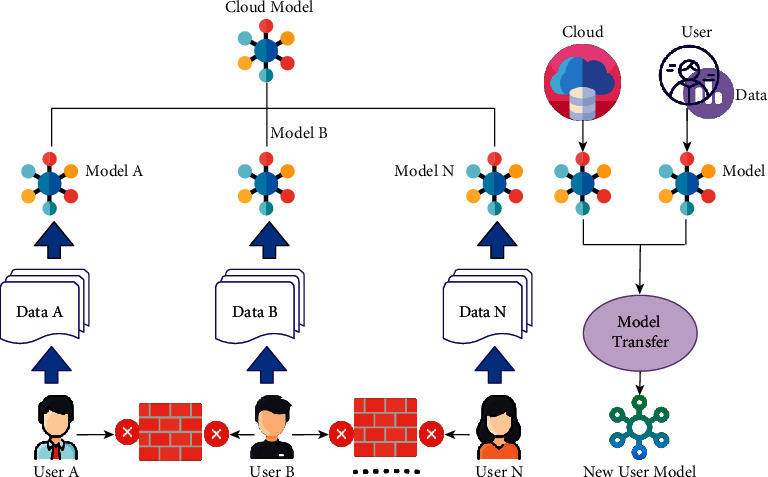
“FedHealth uses transfer learning techniques to ensure that each organization has a uniquely tailored model after improving its cloud model.”
§ A Comprehensive Survey on Federated Learning Techniques for Healthcare Informatics > 3. Background and Motivations > 3.1. Overview and Status of Disease Diagnosis Using FL
plaindirect- Asserted: passes — The authors put it forward as true.
- Checkable: passes — It can be checked against evidence.
- Load-bearing: fails — The paper’s conclusions may not depend on it.
- Based: passes — The paper gives a reason why it holds.
Probably not a substantial claim. The paper’s conclusions may not depend on it.
The paper states this without a source or data behind it here, so there is nothing to check it against. The quote shows it is in the paper.
In the paper
“FedHealth can update the cloud model and user model simultaneously as soon as new data is available.”
§ A Comprehensive Survey on Federated Learning Techniques for Healthcare Informatics > 3. Background and Motivations > 3.1. Overview and Status of Disease Diagnosis Using FL
plaindirect- Asserted: passes — The authors put it forward as true.
- Checkable: passes — It can be checked against evidence.
- Load-bearing: fails — The paper’s conclusions may not depend on it.
- Based: fails — The paper may give no reason why it holds.
Probably not a substantial claim. The paper’s conclusions may not depend on it. The paper may give no reason why it holds.
The paper states this without a source or data behind it here, so there is nothing to check it against. The quote shows it is in the paper.
In the paper
“An FL framework called FedHealth is being developed by Chinese researchers in order to minimize the risk of security breaches.”
§ A Comprehensive Survey on Federated Learning Techniques for Healthcare Informatics > 3. Background and Motivations > 3.1. Overview and Status of Disease Diagnosis Using FL
plaindirect- Asserted: passes — The authors put it forward as true.
- Checkable: passes — It can be checked against evidence.
- Load-bearing: fails — The paper’s conclusions may not depend on it.
- Based: passes — The paper gives a reason why it holds.
Probably not a substantial claim. The paper’s conclusions may not depend on it.
The paper states this without a source or data behind it here, so there is nothing to check it against. The quote shows it is in the paper.
In the paper
“FL brings together all the healthcare institutions, allowing them to share experiences and ensuring their privacy.”
§ A Comprehensive Survey on Federated Learning Techniques for Healthcare Informatics > 2. State of the Arts and Contributions > 2.2. FL for Healthcare
plaindirect- Asserted: passes — The authors put it forward as true.
- Checkable: passes — It can be checked against evidence.
- Load-bearing: fails — The paper’s conclusions may not depend on it.
- Based: fails — The paper may give no reason why it holds.
Probably not a substantial claim. The paper’s conclusions may not depend on it. The paper may give no reason why it holds. It may state two separate claims as one.
The paper states this without a source or data behind it here, so there is nothing to check it against. The quote shows it is in the paper.
In the paper
“FTL employs cryptography and estimation to verify that confidentiality is successfully preserved to prevent potentially exposed client data.”
§ A Comprehensive Survey on Federated Learning Techniques for Healthcare Informatics > 2. State of the Arts and Contributions > 2.2. FL for Healthcare
plaindirect- Asserted: passes — The authors put it forward as true.
- Checkable: passes — It can be checked against evidence.
- Load-bearing: fails — The paper’s conclusions may not depend on it.
- Based: fails — The paper may give no reason why it holds.
Probably not a substantial claim. The paper’s conclusions may not depend on it. The paper may give no reason why it holds.
The paper states this without a source or data behind it here, so there is nothing to check it against. The quote shows it is in the paper.
In the paper
“FL allows data isolation to be solved by combining user data to build ML models.”
§ A Comprehensive Survey on Federated Learning Techniques for Healthcare Informatics > 3. Background and Motivations > 3.1. Overview and Status of Disease Diagnosis Using FL
plaindirect- Asserted: passes — The authors put it forward as true.
- Checkable: passes — It can be checked against evidence.
- Load-bearing: passes — The paper’s conclusions depend on it.
- Based: fails — The paper may give no reason why it holds.
Probably not a substantial claim. The paper may give no reason why it holds.
The paper states this without a source or data behind it here, so there is nothing to check it against. The quote shows it is in the paper.
In the paper
“Large, diverse datasets are essential for the success of data-driven applications.”
§ A Comprehensive Survey on Federated Learning Techniques for Healthcare Informatics > 2. State of the Arts and Contributions > 2.1. ML for Healthcare
plaindirect- Asserted: passes — The authors put it forward as true.
- Checkable: fails — It may be too vague to check against evidence.
- Load-bearing: passes — The paper’s conclusions depend on it.
- Based: fails — The paper may give no reason why it holds.
Probably not a substantial claim. It may be too vague to check against evidence. The paper may give no reason why it holds.
In the paper
“FL solves these problems by allowing group work by centralizing information, and it is already being utilized in digital applications across the health field [31].”
§ A Comprehensive Survey on Federated Learning Techniques for Healthcare Informatics > 2. State of the Arts and Contributions > 2.1. ML for Healthcare
What the sources say
- Not checked yetcites [31] Rieke N. Hancox J. Li W. The future of digital health with federated learning NPJ digital medicine 2020 3 1 1 7 10.1038/s41746-020-00323-1 33015372 PMC7490367 source
plaindirect- Asserted: passes — The authors put it forward as true.
- Checkable: passes — It can be checked against evidence.
- Load-bearing: unclear — It is unclear whether the paper’s conclusions depend on it.
- Based: passes — The paper gives a reason why it holds.
It may state two separate claims as one.
The paper states this without a source or data behind it here, so there is nothing to check it against. The quote shows it is in the paper.
In the paper
“However, it is difficult to get medical datasets.”
§ A Comprehensive Survey on Federated Learning Techniques for Healthcare Informatics > 2. State of the Arts and Contributions > 2.1. ML for Healthcare
plain- Asserted: passes — The authors put it forward as true.
- Checkable: passes — It can be checked against evidence.
- Load-bearing: passes — The paper’s conclusions depend on it.
- Based: fails — The paper may give no reason why it holds.
Probably not a substantial claim. The paper may give no reason why it holds.
None of the sources cited for this claim have been checked yet.
In the paper
“FL is proposed as a promising approach to COVID-19 detection.”
§ A Comprehensive Survey on Federated Learning Techniques for Healthcare Informatics > 4. Applications of FL in Verticals of Healthcare > 4.1. FL Applications for Medical Image Processing
plain- Asserted: passes — The authors put it forward as true.
- Checkable: passes — It can be checked against evidence.
- Load-bearing: fails — The paper’s conclusions may not depend on it.
- Based: passes — The paper gives a reason why it holds.
Probably not a substantial claim. The paper’s conclusions may not depend on it.
A conclusion the paper draws from its own results — it cites no other source for it, so there is none to check. The quote shows it is in the paper.
In the paper
“In addition, this could lead to new business opportunities and improved healthcare worldwide.”
§ A Comprehensive Survey on Federated Learning Techniques for Healthcare Informatics > 3. Background and Motivations > 3.4. Main Contributions of the Survey
hedgeddirect- Asserted: passes — The authors put it forward as true.
- Checkable: fails — It may be too vague to check against evidence.
- Load-bearing: fails — The paper’s conclusions may not depend on it.
- Based: fails — The paper may give no reason why it holds.
Probably not a substantial claim. It may be too vague to check against evidence. The paper’s conclusions may not depend on it. The paper may give no reason why it holds. It may state two separate claims as one.
The paper states this without a source or data behind it here, so there is nothing to check it against. The quote shows it is in the paper.
In the paper
“FL is next developing and enabling applications in healthcare such as medical image processing, IoT-based smart healthcare applications, and outbreak prediction.”
§ A Comprehensive Survey on Federated Learning Techniques for Healthcare Informatics > 3. Background and Motivations > 3.4. Main Contributions of the Survey
plaindirect- Asserted: passes — The authors put it forward as true.
- Checkable: passes — It can be checked against evidence.
- Load-bearing: passes — The paper’s conclusions depend on it.
- Based: fails — The paper may give no reason why it holds.
Probably not a substantial claim. The paper may give no reason why it holds. It may state two separate claims as one.
The paper states this without a source or data behind it here, so there is nothing to check it against. The quote shows it is in the paper.
In the paper
“However, these methods necessarily involve massive amounts of data, which are difficult to generate and distribute due to high acquisition costs and medical data privacy regulations.”
§ A Comprehensive Survey on Federated Learning Techniques for Healthcare Informatics > 4. Applications of FL in Verticals of Healthcare > 4.1. FL Applications for Medical Image Processing
plaindirect- Asserted: passes — The authors put it forward as true.
- Checkable: passes — It can be checked against evidence.
- Load-bearing: passes — The paper’s conclusions depend on it.
- Based: fails — The paper may give no reason why it holds.
Probably not a substantial claim. The paper may give no reason why it holds. It may state two separate claims as one.
The paper states this without a source or data behind it here, so there is nothing to check it against. The quote shows it is in the paper.
In the paper
“Despite several research and development activities, many challenges and issues are imposed in FL for healthcare. We present these difficulties in terms of confidentiality and safety, data heterogeneity, traceability and accountability, and system architecture.”
§ A Comprehensive Survey on Federated Learning Techniques for Healthcare Informatics > 3. Background and Motivations > 3.4. Main Contributions of the Survey
plain- Asserted: passes — The authors put it forward as true.
- Checkable: passes — It can be checked against evidence.
- Load-bearing: passes — The paper’s conclusions depend on it.
- Based: passes — The paper gives a reason why it holds.
Probably not a substantial claim.
The paper states this without a source or data behind it here, so there is nothing to check it against. The quote shows it is in the paper.
In the paper
“The construction of good models without biases using small datasets is very difficult as it takes a lot of time, effort, and cost to collect, curate, and maintain high-quality data from a diverse population.”
§ A Comprehensive Survey on Federated Learning Techniques for Healthcare Informatics > 3. Background and Motivations > 3.3. Motivations of Using FL for Healthcare
plaindirect- Asserted: passes — The authors put it forward as true.
- Checkable: passes — It can be checked against evidence.
- Load-bearing: passes — The paper’s conclusions depend on it.
- Based: fails — The paper may give no reason why it holds.
Probably not a substantial claim. The paper may give no reason why it holds.
The paper states this without a source or data behind it here, so there is nothing to check it against. The quote shows it is in the paper.
In the paper
“FL brings together multiple hospitals to develop collaborative healthcare settings that speed up diagnostic testing of victims while maintaining their personal rights.”
§ A Comprehensive Survey on Federated Learning Techniques for Healthcare Informatics > 4. Applications of FL in Verticals of Healthcare > 4.2. FL in IoT-Based Smart Healthcare Applications
plaindirect- Asserted: passes — The authors put it forward as true.
- Checkable: passes — It can be checked against evidence.
- Load-bearing: fails — The paper’s conclusions may not depend on it.
- Based: passes — The paper gives a reason why it holds.
Probably not a substantial claim. The paper’s conclusions may not depend on it. It may state two separate claims as one.
The paper states this without a source or data behind it here, so there is nothing to check it against. The quote shows it is in the paper.
In the paper
“FL provides AI developers with access to bigger and diversified data packages, which better portray current patients.”
§ A Comprehensive Survey on Federated Learning Techniques for Healthcare Informatics > 3. Background and Motivations > 3.3. Motivations of Using FL for Healthcare
plaindirect- Asserted: passes — The authors put it forward as true.
- Checkable: passes — It can be checked against evidence.
- Load-bearing: passes — The paper’s conclusions depend on it.
- Based: fails — The paper may give no reason why it holds.
Probably not a substantial claim. The paper may give no reason why it holds. It may state two separate claims as one.
In the paper
“For example, with access to electronic health records, FL can help to find clinically similar patients and predict hospitalizations due to cardiac events, mortality and ICU stay time [52].”
§ A Comprehensive Survey on Federated Learning Techniques for Healthcare Informatics > 3. Background and Motivations > 3.3. Motivations of Using FL for Healthcare
What the sources say
- Not checked yetcites [52] Huang L. Shea A. L. Qian H. Masurkar A. Deng H. Liu D. Patient clustering improves efficiency of federated machine learning to pre- dict mortality and hospital stay time using dis- tributed electronic medical records Journal of Biomedical Informatics 2019 99 10.1016/j.jbi.2019.103291 2-s2.0-85073123575 31560949 source
plainconditional- Asserted: passes — The authors put it forward as true.
- Checkable: passes — It can be checked against evidence.
- Load-bearing: unclear — It is unclear whether the paper’s conclusions depend on it.
- Based: passes — The paper gives a reason why it holds.
It may state two separate claims as one.
A conclusion the paper draws from its own results — it cites no other source for it, so there is none to check. The quote shows it is in the paper.
In the paper
“FL can have an enormous influence on a variety of stakeholders like clinicians, patients, hospitals, medical researchers, and healthcare providers.”
§ A Comprehensive Survey on Federated Learning Techniques for Healthcare Informatics > 3. Background and Motivations > 3.3. Motivations of Using FL for Healthcare
plaindirect- Asserted: passes — The authors put it forward as true.
- Checkable: fails — It may be too vague to check against evidence.
- Load-bearing: fails — The paper’s conclusions may not depend on it.
- Based: fails — The paper may give no reason why it holds.
Probably not a substantial claim. It may be too vague to check against evidence. The paper’s conclusions may not depend on it. The paper may give no reason why it holds.
The paper states this without a source or data behind it here, so there is nothing to check it against. The quote shows it is in the paper.
In the paper
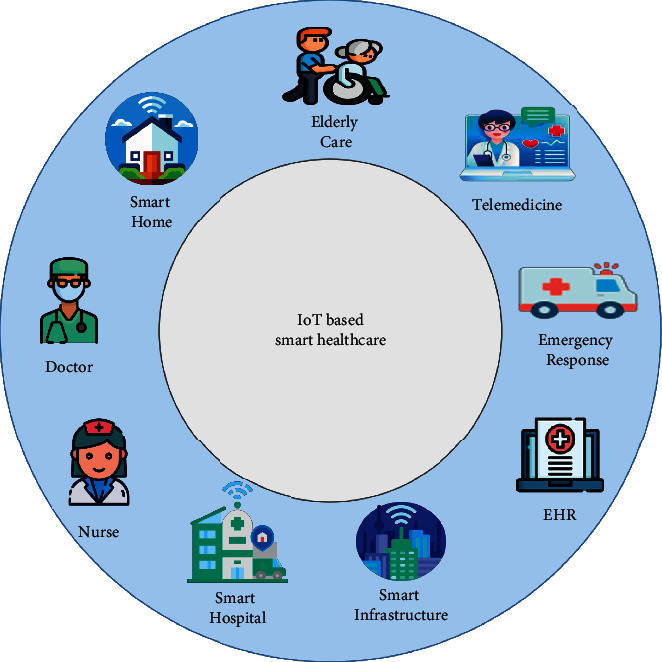
“The healthcare sector is one of the most attractive applications of IoT, as depicted in Figure 7.”
§ A Comprehensive Survey on Federated Learning Techniques for Healthcare Informatics > 4. Applications of FL in Verticals of Healthcare > 4.2. FL in IoT-Based Smart Healthcare Applications
plain- Asserted: passes — The authors put it forward as true.
- Checkable: fails — It may be too vague to check against evidence.
- Load-bearing: fails — The paper’s conclusions may not depend on it.
- Based: fails — The paper may give no reason why it holds.
Probably not a substantial claim. It may be too vague to check against evidence. The paper’s conclusions may not depend on it. The paper may give no reason why it holds.
In the paper
“Medical information requires a degree of insensitivity and is regulated by medical rules like the Health Insurance Portability and Accountability Act (HIPAA) [64].”
§ A Comprehensive Survey on Federated Learning Techniques for Healthcare Informatics > 4. Applications of FL in Verticals of Healthcare > 4.2. FL in IoT-Based Smart Healthcare Applications
What the sources say
- Not checked yetcites [64] Drolet B. C. Marwaha J. S. Hyatt B. Blazar P. E. Lifchez S. D. Electronic communi- cation of protected health information: privacy, security, and hipaa compliance The Journal of Hand Surgery 2017 42 6 411 416 10.1016/j.jhsa.2017.03.023 2-s2.0-85044110572 28578767 source
plain- Asserted: passes — The authors put it forward as true.
- Checkable: passes — It can be checked against evidence.
- Load-bearing: fails — The paper’s conclusions may not depend on it.
- Based: passes — The paper gives a reason why it holds.
Probably not a substantial claim. The paper’s conclusions may not depend on it. It may state two separate claims as one.
A conclusion the paper draws from its own results — it cites no other source for it, so there is none to check. The quote shows it is in the paper.
In the paper
“As a result, AI-based healthcare solutions will be able to scale globally at an unprecedented level.”
§ A Comprehensive Survey on Federated Learning Techniques for Healthcare Informatics > 3. Background and Motivations > 3.3. Motivations of Using FL for Healthcare
plaindirect- Asserted: passes — The authors put it forward as true.
- Checkable: fails — It may be too vague to check against evidence.
- Load-bearing: fails — The paper’s conclusions may not depend on it.
- Based: fails — The paper may give no reason why it holds.
Probably not a substantial claim. It may be too vague to check against evidence. The paper’s conclusions may not depend on it. The paper may give no reason why it holds.
The paper states this without a source or data behind it here, so there is nothing to check it against. The quote shows it is in the paper.
In the paper
“In recent years, DL-based techniques have been discovered to perform better in MRI reconstruction.”
§ A Comprehensive Survey on Federated Learning Techniques for Healthcare Informatics > 4. Applications of FL in Verticals of Healthcare > 4.1. FL Applications for Medical Image Processing
plaincorrelational- Asserted: passes — The authors put it forward as true.
- Checkable: passes — It can be checked against evidence.
- Load-bearing: fails — The paper’s conclusions may not depend on it.
- Based: fails — The paper may give no reason why it holds.
Probably not a substantial claim. The paper’s conclusions may not depend on it. The paper may give no reason why it holds.
The paper states this without a source or data behind it here, so there is nothing to check it against. The quote shows it is in the paper.
In the paper
“FL is more potential in analyzing the medical images and also in protecting the patient's privacy.”
§ A Comprehensive Survey on Federated Learning Techniques for Healthcare Informatics > 4. Applications of FL in Verticals of Healthcare > 4.1. FL Applications for Medical Image Processing
plaincorrelational- Asserted: passes — The authors put it forward as true.
- Checkable: fails — It may be too vague to check against evidence.
- Load-bearing: fails — The paper’s conclusions may not depend on it.
- Based: passes — The paper gives a reason why it holds.
Probably not a substantial claim. It may be too vague to check against evidence. The paper’s conclusions may not depend on it. It may state two separate claims as one.
The paper states this without a source or data behind it here, so there is nothing to check it against. The quote shows it is in the paper.
In the paper
“Through FL, large datasets from multiple hospitals can be readily accessed by an individual hospital without centralizing the data into one place. As a result of this practice, critical issues such as data access rights and access to heterogeneous data are addressed.”
§ A Comprehensive Survey on Federated Learning Techniques for Healthcare Informatics > 3. Background and Motivations > 3.3. Motivations of Using FL for Healthcare
plaindirect- Asserted: passes — The authors put it forward as true.
- Checkable: passes — It can be checked against evidence.
- Load-bearing: passes — The paper’s conclusions depend on it.
- Based: passes — The paper gives a reason why it holds.
It may state two separate claims as one.
In the paper
“The use of AI-based approaches to learn health data has been adopted widely in smart healthcare, such as the use of intelligent imaging to detect disease [63].”
§ A Comprehensive Survey on Federated Learning Techniques for Healthcare Informatics > 4. Applications of FL in Verticals of Healthcare > 4.2. FL in IoT-Based Smart Healthcare Applications
What the sources say
- Not checked yetcites [63] Shickel B. Tighe P. J. Bihorac A. Rashidi P. Deep ehr: a survey of recent advances in deep learning techniques for electronic health record (ehr) analysis IEEE journal of biomedical and health informatics 2017 22 5 1589 1604 29989977 PMC6043423 source
plain- Asserted: passes — The authors put it forward as true.
- Checkable: passes — It can be checked against evidence.
- Load-bearing: fails — The paper’s conclusions may not depend on it.
- Based: passes — The paper gives a reason why it holds.
Probably not a substantial claim. The paper’s conclusions may not depend on it.
The paper states this without a source or data behind it here, so there is nothing to check it against. The quote shows it is in the paper.
In the paper
“FL makes it possible for several workers to learn a strong and generic ML model by providing information so that key issues like user privacy, information security, authentication rights, and exposure to large datasets are addressed.”
§ A Comprehensive Survey on Federated Learning Techniques for Healthcare Informatics > 3. Background and Motivations > 3.2. Fundamentals of FL
plaindirect- Asserted: passes — The authors put it forward as true.
- Checkable: passes — It can be checked against evidence.
- Load-bearing: fails — The paper’s conclusions may not depend on it.
- Based: passes — The paper gives a reason why it holds.
Probably not a substantial claim. The paper’s conclusions may not depend on it. It may state two separate claims as one.
In the paper
“Google first suggested federated machine learning [Kone Diecn'y et al., 2016], in which it trained ML models on distributed mobile phones.”
§ A Comprehensive Survey on Federated Learning Techniques for Healthcare Informatics > 3. Background and Motivations > 3.2. Fundamentals of FL
What the sources say
- Not checked yetcites [Kone Diecn'y et al., 2016]
plain- Asserted: passes — The authors put it forward as true.
- Checkable: passes — It can be checked against evidence.
- Load-bearing: fails — The paper’s conclusions may not depend on it.
- Based: passes — The paper gives a reason why it holds.
Probably not a substantial claim. The paper’s conclusions may not depend on it. It may state two separate claims as one.
The paper states this without a source or data behind it here, so there is nothing to check it against. The quote shows it is in the paper.
In the paper
“FL captures a wide range of data variables and analyzes patients based on any of their demographic characteristics.”
§ A Comprehensive Survey on Federated Learning Techniques for Healthcare Informatics > 3. Background and Motivations > 3.3. Motivations of Using FL for Healthcare
plaindirect- Asserted: passes — The authors put it forward as true.
- Checkable: passes — It can be checked against evidence.
- Load-bearing: fails — The paper’s conclusions may not depend on it.
- Based: fails — The paper may give no reason why it holds.
Probably not a substantial claim. The paper’s conclusions may not depend on it. The paper may give no reason why it holds. It may state two separate claims as one.
In the paper
“The FL algorithm is used to describe and identify physician-related persons and to estimate their hospitalization, deaths, and survival rates based on electronic health records (EHR) [54].”
§ A Comprehensive Survey on Federated Learning Techniques for Healthcare Informatics > 4. Applications of FL in Verticals of Healthcare > 4.1. FL Applications for Medical Image Processing
What the sources say
- Not checked yetcites [54] Brisimi T. S. Chen R. Mela T. Olshevsky A. Paschalidis I. C. Shi W. Federated learn- ing of predictive models from federated electronic health records International Journal of Medical Informatics 2018 112 59 67 10.1016/j.ijmedinf.2018.01.007 2-s2.0-85041413697 29500022 PMC5836813 source
plaindirect- Asserted: passes — The authors put it forward as true.
- Checkable: passes — It can be checked against evidence.
- Load-bearing: fails — The paper’s conclusions may not depend on it.
- Based: passes — The paper gives a reason why it holds.
Probably not a substantial claim. The paper’s conclusions may not depend on it. It may state two separate claims as one.
None of the sources cited for this claim have been checked yet.
In the paper
“FL enables efficient and accurate heart disease diagnosis.”
§ A Comprehensive Survey on Federated Learning Techniques for Healthcare Informatics > 4. Applications of FL in Verticals of Healthcare > 4.1. FL Applications for Medical Image Processing
plaindirect- Asserted: passes — The authors put it forward as true.
- Checkable: passes — It can be checked against evidence.
- Load-bearing: unclear — It is unclear whether the paper’s conclusions depend on it.
- Based: passes — The paper gives a reason why it holds.
It may state two separate claims as one.
The paper states this without a source or data behind it here, so there is nothing to check it against. The quote shows it is in the paper.
In the paper
“Hospitals can train their own AI models by uploading the data to a global aggregator.”
§ A Comprehensive Survey on Federated Learning Techniques for Healthcare Informatics > 4. Applications of FL in Verticals of Healthcare > 4.2. FL in IoT-Based Smart Healthcare Applications
plaindirect- Asserted: passes — The authors put it forward as true.
- Checkable: passes — It can be checked against evidence.
- Load-bearing: fails — The paper’s conclusions may not depend on it.
- Based: fails — The paper may give no reason why it holds.
Probably not a substantial claim. The paper’s conclusions may not depend on it. The paper may give no reason why it holds.
The paper states this without a source or data behind it here, so there is nothing to check it against. The quote shows it is in the paper.
In the paper
“FL is a concept developed to construct smart and confidential IoT devices.”
§ A Comprehensive Survey on Federated Learning Techniques for Healthcare Informatics > 4. Applications of FL in Verticals of Healthcare > 4.2. FL in IoT-Based Smart Healthcare Applications
plaindirect- Asserted: passes — The authors put it forward as true.
- Checkable: passes — It can be checked against evidence.
- Load-bearing: fails — The paper’s conclusions may not depend on it.
- Based: fails — The paper may give no reason why it holds.
Probably not a substantial claim. The paper’s conclusions may not depend on it. The paper may give no reason why it holds.
A conclusion the paper draws from its own results — it cites no other source for it, so there is none to check. The quote shows it is in the paper.
In the paper
“FL is a potential concept for safe, reliable, and impartial models of data.”
§ A Comprehensive Survey on Federated Learning Techniques for Healthcare Informatics > 3. Background and Motivations > 3.3. Motivations of Using FL for Healthcare
hedged- Asserted: passes — The authors put it forward as true.
- Checkable: fails — It may be too vague to check against evidence.
- Load-bearing: passes — The paper’s conclusions depend on it.
- Based: passes — The paper gives a reason why it holds.
Probably not a substantial claim. It may be too vague to check against evidence.
The paper states this without a source or data behind it here, so there is nothing to check it against. The quote shows it is in the paper.
In the paper
“FL is capable of resolving data isolation issues through network model training in the context of privacy preservation.”
§ A Comprehensive Survey on Federated Learning Techniques for Healthcare Informatics > 3. Background and Motivations > 3.2. Fundamentals of FL
plaindirect- Asserted: passes — The authors put it forward as true.
- Checkable: passes — It can be checked against evidence.
- Load-bearing: passes — The paper’s conclusions depend on it.
- Based: passes — The paper gives a reason why it holds.
Probably not a substantial claim.
None of the sources cited for this claim have been checked yet.
In the paper
“According to studies, the incidence of AKI ranges between 46 percent and 71 percent; however, most deaths occur within the AKI sample [87, 88].”
§ A Comprehensive Survey on Federated Learning Techniques for Healthcare Informatics > 4. Applications of FL in Verticals of Healthcare > 4.2. FL in IoT-Based Smart Healthcare Applications
What the sources say
- Not checked yetcites [87] Zahid U. Ramachandran P. Spitale- witz S. Acute kidney injury in COVID-19 patients: an inner city hospital experience and policy implications American Journal of Nephrology 2020 51 10 786 796 10.1159/000511160 33011717 PMC7573899 source
- Not checked yetcites [88] Hirsch J. S. Ng J. H. Ross D. W. Acute kid- ney injury in patients hospitalized with COVID-19 Kidney International 2020 98 1 209 218 10.1016/j.kint.2020.05.006 32416116 PMC7229463 source
plaincorrelational- Asserted: passes — The authors put it forward as true.
- Checkable: passes — It can be checked against evidence.
- Load-bearing: fails — The paper’s conclusions may not depend on it.
- Based: passes — The paper gives a reason why it holds.
Probably not a substantial claim. The paper’s conclusions may not depend on it. It may state two separate claims as one.
In the paper
“FL delivers similar accuracy in predicting ADR without sacrificing data confidentiality in comparison with centralized AI approaches.”
§ A Comprehensive Survey on Federated Learning Techniques for Healthcare Informatics > 4. Applications of FL in Verticals of Healthcare > 4.2. FL in IoT-Based Smart Healthcare Applications
What the sources say
- Not checked yetcites [70] Choudhury O. Park Y. Salonidis T. Gkoulalas-Divanis A. Sylla I. Pre- dicting adverse drug reactions on distributed health data using federated learning AMIA Annual symposium proceedings 2019 2019 313 32308824 PMC7153050
plain- Asserted: passes — The authors put it forward as true.
- Checkable: passes — It can be checked against evidence.
- Load-bearing: unclear — It is unclear whether the paper’s conclusions depend on it.
- Based: passes — The paper gives a reason why it holds.
It may state two separate claims as one.
In the paper
“Diagnostic methods that judiciously help individuals at greater risk of contracting COVID-19 can be beneficial during an outbreak where facilities can be restricted [89].”
§ A Comprehensive Survey on Federated Learning Techniques for Healthcare Informatics > 4. Applications of FL in Verticals of Healthcare > 4.2. FL in IoT-Based Smart Healthcare Applications
What the sources say
- Not checked yetcites [89] Goldfarb D. S. Benstein J. A. Zhdanova O. Impending shortages of kidney replacement therapy for COVID-19 pa- tients Clinical Journal of the American Society of Nephrology 2020 15 6 880 882 10.2215/cjn.05180420 32345750 PMC7274293 source
plainconditional- Asserted: passes — The authors put it forward as true.
- Checkable: passes — It can be checked against evidence.
- Load-bearing: fails — The paper’s conclusions may not depend on it.
- Based: passes — The paper gives a reason why it holds.
Probably not a substantial claim. The paper’s conclusions may not depend on it.
A conclusion the paper draws from its own results — it cites no other source for it, so there is none to check. The quote shows it is in the paper.
In the paper
“In order to contribute, FL can ensure proper healthcare coordination for better provision of medical facilities through its centralized and secure nature.”
§ A Comprehensive Survey on Federated Learning Techniques for Healthcare Informatics > 4. Applications of FL in Verticals of Healthcare > 4.2. FL in IoT-Based Smart Healthcare Applications
plaindirect- Asserted: passes — The authors put it forward as true.
- Checkable: passes — It can be checked against evidence.
- Load-bearing: fails — The paper’s conclusions may not depend on it.
- Based: fails — The paper may give no reason why it holds.
Probably not a substantial claim. The paper’s conclusions may not depend on it. The paper may give no reason why it holds.
A conclusion the paper draws from its own results — it cites no other source for it, so there is none to check. The quote shows it is in the paper.
In the paper
“FL allows the sharing of EHRs without their sharing due to its dynamic approach to education.”
§ A Comprehensive Survey on Federated Learning Techniques for Healthcare Informatics > 4. Applications of FL in Verticals of Healthcare > 4.2. FL in IoT-Based Smart Healthcare Applications
plaindirect- Asserted: passes — The authors put it forward as true.
- Checkable: passes — It can be checked against evidence.
- Load-bearing: fails — The paper’s conclusions may not depend on it.
- Based: fails — The paper may give no reason why it holds.
Probably not a substantial claim. The paper’s conclusions may not depend on it. The paper may give no reason why it holds.
In the paper
“It can be used to detect rare ADRs at a single site for rare ADRs and to predict more severe ADRs in the long term [70].”
§ A Comprehensive Survey on Federated Learning Techniques for Healthcare Informatics > 4. Applications of FL in Verticals of Healthcare > 4.2. FL in IoT-Based Smart Healthcare Applications
What the sources say
- Not checked yetcites [70] Choudhury O. Park Y. Salonidis T. Gkoulalas-Divanis A. Sylla I. Pre- dicting adverse drug reactions on distributed health data using federated learning AMIA Annual symposium proceedings 2019 2019 313 32308824 PMC7153050
plaindirect- Asserted: passes — The authors put it forward as true.
- Checkable: passes — It can be checked against evidence.
- Load-bearing: unclear — It is unclear whether the paper’s conclusions depend on it.
- Based: passes — The paper gives a reason why it holds.
It may state two separate claims as one.
The paper states this without a source or data behind it here, so there is nothing to check it against. The quote shows it is in the paper.
In the paper
“Traditional AI systems relying on some kind of master database software are not really suitable for contemporary health.”
§ A Comprehensive Survey on Federated Learning Techniques for Healthcare Informatics > 4. Applications of FL in Verticals of Healthcare > 4.2. FL in IoT-Based Smart Healthcare Applications
plain- Asserted: passes — The authors put it forward as true.
- Checkable: fails — It may be too vague to check against evidence.
- Load-bearing: fails — The paper’s conclusions may not depend on it.
- Based: fails — The paper may give no reason why it holds.
Probably not a substantial claim. It may be too vague to check against evidence. The paper’s conclusions may not depend on it. The paper may give no reason why it holds.
In the paper
“Yuan et al. [73] present a cooperative framework for healthcare that leverages FL to enable medical IoT devices.”
§ A Comprehensive Survey on Federated Learning Techniques for Healthcare Informatics > 4. Applications of FL in Verticals of Healthcare > 4.2. FL in IoT-Based Smart Healthcare Applications
What the sources say
- Not checked yetcites [73] Yuan B. Ge S. Xing W. A federated learn- ing framework for healthcare iot devices 2020 arXiv preprint arXiv:2005.05083
plaindirect- Asserted: passes — The authors put it forward as true.
- Checkable: passes — It can be checked against evidence.
- Load-bearing: fails — The paper’s conclusions may not depend on it.
- Based: passes — The paper gives a reason why it holds.
Probably not a substantial claim. The paper’s conclusions may not depend on it.
The paper states this without a source or data behind it here, so there is nothing to check it against. The quote shows it is in the paper.
In the paper
“Personalization training on edge computers was decided to be carried out, in this case, to reduce heterogeneity and achieve high-quality individual models.”
§ A Comprehensive Survey on Federated Learning Techniques for Healthcare Informatics > 4. Applications of FL in Verticals of Healthcare > 4.2. FL in IoT-Based Smart Healthcare Applications
plaindirect- Asserted: passes — The authors put it forward as true.
- Checkable: passes — It can be checked against evidence.
- Load-bearing: fails — The paper’s conclusions may not depend on it.
- Based: passes — The paper gives a reason why it holds.
Probably not a substantial claim. The paper’s conclusions may not depend on it. It may state two separate claims as one.
None of the sources cited for this claim have been checked yet.
In the paper
“A number of clinical symptoms are observed in COVID- 19 patients hospitalized with Acute Kidney Injury (AKI) [83–86].”
§ A Comprehensive Survey on Federated Learning Techniques for Healthcare Informatics > 4. Applications of FL in Verticals of Healthcare > 4.2. FL in IoT-Based Smart Healthcare Applications
What the sources say
- Not checked yetcites [83] Wu Z. McGoogan J. M. Characteristics of and important lessons from the coronavirus dis- ease 2019 (COVID-19) outbreak in China: summary of a report of 72 314 cases from the Chinese cen- ter for disease control and prevention JAMA 2020 323 13 1239 1242 10.1001/jama.2020.2648 32091533 source
- Not checked yetcites [84] Chung M. Bernheim A. Mei X. Ct imaging features of 2019 novel coronavirus (2019-ncov) Radiology 2020 295 1 202 207 10.1148/radiol.2020200230 32017661 PMC7194022 source
- Not checked yetcites [85] Lala A. Johnson K. W. Januzzi J. L. Prevalence and im- pact of myocardial injury in patients hospitalized with COVID-19 infection Journal of the American College of Cardiology 2020 76 5 533 546 10.1016/j.jacc.2020.06.007 32517963 PMC7279721 source
- Not checked yetcites [86] Chan L. Chaudhary K. Saha A. Aki in hospitalized patients with COVID-19 Journal of the American Society of Nephrology 2021 32 1 151 160 10.1681/asn.2020050615 32883700 PMC7894657 source
plain- Asserted: passes — The authors put it forward as true.
- Checkable: passes — It can be checked against evidence.
- Load-bearing: fails — The paper’s conclusions may not depend on it.
- Based: passes — The paper gives a reason why it holds.
Probably not a substantial claim. The paper’s conclusions may not depend on it.
In the paper
“COVID-19 infection has been confirmed in China since December 2019. After that, the outbreak began spreading to China and several other countries across the globe [79].”
§ A Comprehensive Survey on Federated Learning Techniques for Healthcare Informatics > 4. Applications of FL in Verticals of Healthcare > 4.2. FL in IoT-Based Smart Healthcare Applications
What the sources say
- Not checked yetcites [79] Hui D. S. Azhar E. I. Madani T. A. The continuing 2019- ncov epidemic threat of novel coronaviruses to global health—the latest 2019 novel coronavirus outbreak in wuhan, China International Journal of Infectious Diseases 2020 91 264 266 10.1016/j.ijid.2020.01.009 31953166 PMC7128332 source
plain- Asserted: passes — The authors put it forward as true.
- Checkable: passes — It can be checked against evidence.
- Load-bearing: fails — The paper’s conclusions may not depend on it.
- Based: passes — The paper gives a reason why it holds.
Probably not a substantial claim. The paper’s conclusions may not depend on it. It may state two separate claims as one.
None of the sources cited for this claim have been checked yet.
In the paper
“There are currently a number of different ways to detect COVID-19, whereas computed tomography and X-rays remain the major surgical techniques [80–82].”
§ A Comprehensive Survey on Federated Learning Techniques for Healthcare Informatics > 4. Applications of FL in Verticals of Healthcare > 4.2. FL in IoT-Based Smart Healthcare Applications
What the sources say
- Not checked yetcites [80] Kanne J. P. Little B. P. Chung J. H. Elicker B. M. Ketai L. H. Essentials for Radiol- Ogists on COVID-19: An Update—Radiology Scien- Tific Expert Panel 2020 PMC7233379 32105562
- Not checked yetcites [81] Xie X. Zhong Z. Zhao W. Zheng C. Wang F. Liu J. Chest ct for typical coronavirus dis- ease 2019 (COVID-19) pneumonia: relationship to negative rt-pcr testing Radiology 2020 296 2 E41 E45 10.1148/radiol.2020200343 32049601 PMC7233363 source
- Not checked yetcites [82] Zu Z. Y. Jiang M. D. Xu P. P. Chen W. Lu G. M. Zhang L. J. Coronavirus dis- ease 2019 (COVID-19): a perspective from China Radiology 2020 296 2 E15 E25 10.1148/radiol.2020200490 32083985 PMC7233368 source
plain- Asserted: passes — The authors put it forward as true.
- Checkable: passes — It can be checked against evidence.
- Load-bearing: fails — The paper’s conclusions may not depend on it.
- Based: passes — The paper gives a reason why it holds.
Probably not a substantial claim. The paper’s conclusions may not depend on it. It may state two separate claims as one.
In the paper
“An innovative method [77] is the use of chain-directed synchronous stochastic gradient descent to minimize human latency between FL clients and servers in personal mobile sensing applications.”
§ A Comprehensive Survey on Federated Learning Techniques for Healthcare Informatics > 4. Applications of FL in Verticals of Healthcare > 4.2. FL in IoT-Based Smart Healthcare Applications
What the sources say
- Not checked yetcites [77] Zhang Y. Gu T. Zhang X. Mdldroid: a chainsgd-reduce approach to mobile deep learn- ing for personal mobile sensing Proceedings of the 2020 19th ACM/IEEE International Conference on Infor- mation Processing in Sensor Networks (IPSN) 2020 IEEE 73 84 10.1109/ipsn48710.2020.00-45 source
plaindirect- Asserted: passes — The authors put it forward as true.
- Checkable: passes — It can be checked against evidence.
- Load-bearing: fails — The paper’s conclusions may not depend on it.
- Based: passes — The paper gives a reason why it holds.
Probably not a substantial claim. The paper’s conclusions may not depend on it.
In the paper
“An FL-based student-centered architecture is responsible for an EHR system with different clinics as well as a database server [66].”
§ A Comprehensive Survey on Federated Learning Techniques for Healthcare Informatics > 4. Applications of FL in Verticals of Healthcare > 4.2. FL in IoT-Based Smart Healthcare Applications
What the sources say
- Not checked yetcites [66] Hao M. Li H. Xu G. Liu Z. Chen Z. Privacy-aware and resource-saving collaborative learning for healthcare in cloud computing Proceedings of the ICC 2020-2020 IEEE International Conference on Communications (ICC) 2020 Dublin, Ireland IEEE 1 6 10.1109/icc40277.2020.9148979 source
plaindirect- Asserted: passes — The authors put it forward as true.
- Checkable: passes — It can be checked against evidence.
- Load-bearing: fails — The paper’s conclusions may not depend on it.
- Based: passes — The paper gives a reason why it holds.
Probably not a substantial claim. The paper’s conclusions may not depend on it.
In the paper
“For the purpose of stimulating the federation of portable devices using FL technology, the FedHealth framework [75] was developed.”
§ A Comprehensive Survey on Federated Learning Techniques for Healthcare Informatics > 4. Applications of FL in Verticals of Healthcare > 4.2. FL in IoT-Based Smart Healthcare Applications
What the sources say
- Not checked yetcites [75] Chen Y. Qin X. Wang J. Yu C. Gao W. Fedhealth: A federated transfer learning frame- work for wearable healthcare IEEE Intelligent Systems 2020 35 4 83 93 10.1109/mis.2020.2988604 source
plaindirect- Asserted: passes — The authors put it forward as true.
- Checkable: passes — It can be checked against evidence.
- Load-bearing: fails — The paper’s conclusions may not depend on it.
- Based: passes — The paper gives a reason why it holds.
Probably not a substantial claim. The paper’s conclusions may not depend on it.
In the paper
“Information collected by a number of healthcare institutions using different IoT devices may be collected using Fed- Health's surgical instruments to enable the development of a powerful AI method that can be used to identify people's behavior and to protect ciphertext data [76].”
§ A Comprehensive Survey on Federated Learning Techniques for Healthcare Informatics > 4. Applications of FL in Verticals of Healthcare > 4.2. FL in IoT-Based Smart Healthcare Applications
What the sources say
- Not checked yetcites [76] Gong T. Huang H. Li P. Zhang K. Jiang H. A medical healthcare system for privacy protec- tion based on iot Proceedings of the 2015 Seventh International Symposium on Parallel Architectures, Algorithms and Programming (PAAP) December 2015 Nanjing, China IEEE 217 222 10.1109/paap.2015.48 2-s2.0-84962254232 source
hedgedconditional- Asserted: passes — The authors put it forward as true.
- Checkable: passes — It can be checked against evidence.
- Load-bearing: fails — The paper’s conclusions may not depend on it.
- Based: passes — The paper gives a reason why it holds.
Probably not a substantial claim. The paper’s conclusions may not depend on it. It may state two separate claims as one.
In the paper
“The authors of [71] propose that unnecessary changes be deleted by examining the importance of small variations in the FL structure for every EHR user, to increase the quality and precision of integration.”
§ A Comprehensive Survey on Federated Learning Techniques for Healthcare Informatics > 4. Applications of FL in Verticals of Healthcare > 4.2. FL in IoT-Based Smart Healthcare Applications
What the sources say
- Not checked yetcites [71] Chen H. Li H. Xu G. Zhang Y. Luo X. Achieving privacy-preserving federated learn- ing with irrelevant updates over e-health appli- cations Proceedings of the ICC 2020-2020 IEEE International Conference on Communications (ICC) 2020 Dublin, Ireland IEEE 1 6 10.1109/icc40277.2020.9149385 source
plaindirect- Asserted: passes — The authors put it forward as true.
- Checkable: passes — It can be checked against evidence.
- Load-bearing: fails — The paper’s conclusions may not depend on it.
- Based: passes — The paper gives a reason why it holds.
Probably not a substantial claim. The paper’s conclusions may not depend on it.
In the paper
“Liu et al. [67] built a distributed NN activity plan which enables any clinic to know and understand a part of the model from its EHR source.”
§ A Comprehensive Survey on Federated Learning Techniques for Healthcare Informatics > 4. Applications of FL in Verticals of Healthcare > 4.2. FL in IoT-Based Smart Healthcare Applications
What the sources say
- Not checked yetcites [67] Liu D. Miller T. Sayeed R. Mandl K. D. Fadl: Federated-autonomous deep learn- ing for distributed electronic health record 2018 arXiv preprint arXiv:1811.11400
plaindirect- Asserted: passes — The authors put it forward as true.
- Checkable: passes — It can be checked against evidence.
- Load-bearing: fails — The paper’s conclusions may not depend on it.
- Based: passes — The paper gives a reason why it holds.
Probably not a substantial claim. The paper’s conclusions may not depend on it.
The paper states this without a source or data behind it here, so there is nothing to check it against. The quote shows it is in the paper.
In the paper
“The role of electronic health records in the healthcare industry is growing rapidly.”
§ A Comprehensive Survey on Federated Learning Techniques for Healthcare Informatics > 4. Applications of FL in Verticals of Healthcare > 4.2. FL in IoT-Based Smart Healthcare Applications
plain- Asserted: passes — The authors put it forward as true.
- Checkable: passes — It can be checked against evidence.
- Load-bearing: fails — The paper’s conclusions may not depend on it.
- Based: fails — The paper may give no reason why it holds.
Probably not a substantial claim. The paper’s conclusions may not depend on it. The paper may give no reason why it holds.
In the paper
“The integration of autonomous position monitoring and conventional nonconvex enhancement principles [68] builds a different innovative method for FL. The aim is to save network resources by interacting with the remote EHR server.”
§ A Comprehensive Survey on Federated Learning Techniques for Healthcare Informatics > 4. Applications of FL in Verticals of Healthcare > 4.2. FL in IoT-Based Smart Healthcare Applications
What the sources say
- Not checked yetcites [68] Lu S. Zhang Y. Wang Y. Mack C. Learn electronic health Records by Fully De- centralized federated learning 2019 arXiv preprint arXiv:1912.01792
plaindirect- Asserted: passes — The authors put it forward as true.
- Checkable: passes — It can be checked against evidence.
- Load-bearing: fails — The paper’s conclusions may not depend on it.
- Based: passes — The paper gives a reason why it holds.
Probably not a substantial claim. The paper’s conclusions may not depend on it. It may state two separate claims as one.
In the paper
“The next generation of FL solution is presented in [74] cloud edge-based healthcare. This solution could be used to address issues that directly affect the FL process, such as device, data, and model.”
§ A Comprehensive Survey on Federated Learning Techniques for Healthcare Informatics > 4. Applications of FL in Verticals of Healthcare > 4.2. FL in IoT-Based Smart Healthcare Applications
What the sources say
- Not checked yetcites [74] Wu Q. He K. Chen X. Personalized fed- erated learning for intelligent iot applications: a cloud-edge based framework IEEE Open Jour- nal of the Computer Society 2020 1 35 44 10.1109/ojcs.2020.2993259 32396074 source
hedgedconditional- Asserted: passes — The authors put it forward as true.
- Checkable: passes — It can be checked against evidence.
- Load-bearing: fails — The paper’s conclusions may not depend on it.
- Based: passes — The paper gives a reason why it holds.
Probably not a substantial claim. The paper’s conclusions may not depend on it. It may state two separate claims as one.
In the paper
“Recent studies reveal that FL is helpful in preventing infections like COVID-19 [78].”
§ A Comprehensive Survey on Federated Learning Techniques for Healthcare Informatics > 4. Applications of FL in Verticals of Healthcare > 4.2. FL in IoT-Based Smart Healthcare Applications
What the sources say
- Not checked yetcites [78] Nguyen D. C. Ding M. Pathirana P. N. Seneviratne A. Blockchain and ai-based solu- tions to combat coronavirus (COVID-19)-like epi- demics: a survey IEEE Access 2021 9 95 730 795 753 10.1109/access.2021.3093633 PMC8545197 34812398 source
plaindirect- Asserted: passes — The authors put it forward as true.
- Checkable: passes — It can be checked against evidence.
- Load-bearing: fails — The paper’s conclusions may not depend on it.
- Based: passes — The paper gives a reason why it holds.
Probably not a substantial claim. The paper’s conclusions may not depend on it.
The paper states this without a source or data behind it here, so there is nothing to check it against. The quote shows it is in the paper.
In the paper
“FL's utility in the smart healthcare sector with sophisticated features has been proved in recent research.”
§ A Comprehensive Survey on Federated Learning Techniques for Healthcare Informatics > 4. Applications of FL in Verticals of Healthcare > 4.2. FL in IoT-Based Smart Healthcare Applications
boosteddirect- Asserted: passes — The authors put it forward as true.
- Checkable: fails — It may be too vague to check against evidence.
- Load-bearing: fails — The paper’s conclusions may not depend on it.
- Based: fails — The paper may give no reason why it holds.
Probably not a substantial claim. It may be too vague to check against evidence. The paper’s conclusions may not depend on it. The paper may give no reason why it holds.
In the paper
“Pang et al. [91] created a federated model based on a digital city twin concept to predict outcomes of different COVID-19 prevention plans over time and assess the survival rates of multiple cities over the study period.”
§ A Comprehensive Survey on Federated Learning Techniques for Healthcare Informatics > 4. Applications of FL in Verticals of Healthcare > 4.2. FL in IoT-Based Smart Healthcare Applications
What the sources say
- Not checked yetcites [91] Pang J. Huang Y. Xie Z. Li J. Cai Z. Col- laborative city digital twin for the COVID-19 pan- demic: a federated learning solution Tsinghua Science and Technology 2021 26 5 759 771 10.26599/tst.2021.9010026 source
plain- Asserted: passes — The authors put it forward as true.
- Checkable: passes — It can be checked against evidence.
- Load-bearing: unclear — It is unclear whether the paper’s conclusions depend on it.
- Based: passes — The paper gives a reason why it holds.
It may state two separate claims as one.
In the paper
“Goldfarb et al. [89] consolidate existing case studies and identify the future challenges in defining FL's benefits and impact on healthcare applications, as well as the obstructions and concerns surrounding its adoption in healthcare.”
§ A Comprehensive Survey on Federated Learning Techniques for Healthcare Informatics > 5. Lessons Learned > 5.3. FL for COVID Outbreak Prediction
What the sources say
- Not checked yetcites [89] Goldfarb D. S. Benstein J. A. Zhdanova O. Impending shortages of kidney replacement therapy for COVID-19 pa- tients Clinical Journal of the American Society of Nephrology 2020 15 6 880 882 10.2215/cjn.05180420 32345750 PMC7274293 source
plain- Asserted: passes — The authors put it forward as true.
- Checkable: passes — It can be checked against evidence.
- Load-bearing: fails — The paper’s conclusions may not depend on it.
- Based: passes — The paper gives a reason why it holds.
Probably not a substantial claim. The paper’s conclusions may not depend on it. It may state two separate claims as one.
A conclusion the paper draws from its own results — it cites no other source for it, so there is none to check. The quote shows it is in the paper.
In the paper
“In COVID-19, FL demonstrates its value in diagnosis, treatment, and prognosis prediction.”
§ A Comprehensive Survey on Federated Learning Techniques for Healthcare Informatics > 4. Applications of FL in Verticals of Healthcare > 4.2. FL in IoT-Based Smart Healthcare Applications
boosteddirect- Asserted: passes — The authors put it forward as true.
- Checkable: passes — It can be checked against evidence.
- Load-bearing: passes — The paper’s conclusions depend on it.
- Based: passes — The paper gives a reason why it holds.
It may state two separate claims as one.
In the paper
“Xu et al. [19] demonstrated that with the help of chest computed tomography (CT) scan data from several institutions in Wuhan, China, they were able to overcome data scarcity, isolation, and heterogeneity and achieve improved detection sensitivity.”
§ A Comprehensive Survey on Federated Learning Techniques for Healthcare Informatics > 4. Applications of FL in Verticals of Healthcare > 4.2. FL in IoT-Based Smart Healthcare Applications
What the sources say
- Not checked yetcites [19] Xu Y. Ma L. Yang F. A col- laborative online ai engine for Ct-based COVID-19 diagnosis medRxiv 2020
boosteddirect- Asserted: passes — The authors put it forward as true.
- Checkable: passes — It can be checked against evidence.
- Load-bearing: unclear — It is unclear whether the paper’s conclusions depend on it.
- Based: passes — The paper gives a reason why it holds.
It may state two separate claims as one.
In the paper
“The software and hardware manufacturers would get a lot of benefits from the FL because collaborative learning is possible between hardware devices and software applications without information leakage and the other benefit will come in terms of validation of the AI-based model since it is combined with the hardware devices that helps in continuous improvement of AI-based models [110].”
§ A Comprehensive Survey on Federated Learning Techniques for Healthcare Informatics > 6. Challenges and Future Directions > 6.6. Health Dataset Issues
What the sources say
- Not checked yetcites [110] Gadekallu T. R. Pham Q.-V. Nguyen D. C. Blockchain for edge of things: applications, opportunities, and challenges IEEE Internet of Things Journal 2021 9 2 964 988 source
hedgeddirect- Asserted: passes — The authors put it forward as true.
- Checkable: passes — It can be checked against evidence.
- Load-bearing: fails — The paper’s conclusions may not depend on it.
- Based: passes — The paper gives a reason why it holds.
Probably not a substantial claim. The paper’s conclusions may not depend on it. It may state two separate claims as one.
A conclusion the paper draws from its own results — it cites no other source for it, so there is none to check. The quote shows it is in the paper.
In the paper
“Based on the observations from several states of the art, the FL algorithm analyzes electronic health records to describe and estimate hospitalization, survival, and death rates for people associated with physicians.”
§ A Comprehensive Survey on Federated Learning Techniques for Healthcare Informatics > 5. Lessons Learned > 5.1. FL Applications for Medical Image Processing
plaincorrelational- Asserted: passes — The authors put it forward as true.
- Checkable: passes — It can be checked against evidence.
- Load-bearing: fails — The paper’s conclusions may not depend on it.
- Based: fails — The paper may give no reason why it holds.
Probably not a substantial claim. The paper’s conclusions may not depend on it. The paper may give no reason why it holds.
A conclusion the paper draws from its own results — it cites no other source for it, so there is none to check. The quote shows it is in the paper.
In the paper
“FL can integrate information acquired and maintained by different institutions in order to capture broader data variability and analyze patients from diverse demographics.”
§ A Comprehensive Survey on Federated Learning Techniques for Healthcare Informatics > 6. Challenges and Future Directions > 6.6. Health Dataset Issues
plaindirect- Asserted: passes — The authors put it forward as true.
- Checkable: passes — It can be checked against evidence.
- Load-bearing: passes — The paper’s conclusions depend on it.
- Based: passes — The paper gives a reason why it holds.
Probably not a substantial claim. It may state two separate claims as one.
In the paper
“Furthermore, using the digital city twin platform, they were able to track the effectiveness of each prevention plan and create local models which were sent to the federated sites for safety.”
§ A Comprehensive Survey on Federated Learning Techniques for Healthcare Informatics > 4. Applications of FL in Verticals of Healthcare > 4.2. FL in IoT-Based Smart Healthcare Applications
What the sources say
- Not checked yetcites [91] Pang J. Huang Y. Xie Z. Li J. Cai Z. Col- laborative city digital twin for the COVID-19 pan- demic: a federated learning solution Tsinghua Science and Technology 2021 26 5 759 771 10.26599/tst.2021.9010026 source
plaindirect- Asserted: passes — The authors put it forward as true.
- Checkable: passes — It can be checked against evidence.
- Load-bearing: fails — The paper’s conclusions may not depend on it.
- Based: passes — The paper gives a reason why it holds.
Probably not a substantial claim. The paper’s conclusions may not depend on it. It may state two separate claims as one.
None of the sources cited for this claim have been checked yet.
In the paper
“Medical digital twins can make life-saving decisions on the basis of real-time and historical data with the help of AI [106, 107].”
§ A Comprehensive Survey on Federated Learning Techniques for Healthcare Informatics > 6. Challenges and Future Directions > 6.6. Health Dataset Issues
What the sources say
- Not checked yetcites [106] El Saddik A. Digital twins: the convergence of multimedia technologies IEEE multimedia 2018 25 2 87 92 10.1109/mmul.2018.023121167 2-s2.0-85051272175 source
- Not checked yetcites [107] Ross D. Digital twinning [virtual reality avatars] Engineering & Technology 2016 11 4 44 45 10.1049/et.2016.0403 source
plaindirect- Asserted: passes — The authors put it forward as true.
- Checkable: passes — It can be checked against evidence.
- Load-bearing: fails — The paper’s conclusions may not depend on it.
- Based: passes — The paper gives a reason why it holds.
Probably not a substantial claim. The paper’s conclusions may not depend on it.
A conclusion the paper draws from its own results — it cites no other source for it, so there is none to check. The quote shows it is in the paper.
In the paper
“This kind of decentralized research could benefit greatly from integrating FL into the study design and data analysis to evaluate the quality of care and outcomes, for example, predicting mortality, complications, hospitalizations, and adverse drug reactions.”
§ A Comprehensive Survey on Federated Learning Techniques for Healthcare Informatics > 4. Applications of FL in Verticals of Healthcare > 4.2. FL in IoT-Based Smart Healthcare Applications
hedgedconditional- Asserted: passes — The authors put it forward as true.
- Checkable: fails — It may be too vague to check against evidence.
- Load-bearing: fails — The paper’s conclusions may not depend on it.
- Based: fails — The paper may give no reason why it holds.
Probably not a substantial claim. It may be too vague to check against evidence. The paper’s conclusions may not depend on it. The paper may give no reason why it holds.
In the paper
“The FL-based technique would be able to help the healthcare providers because it can improve the accuracy and robustness of the AI model and that helps to make the model more generalizable so that it could be used in the real-time environment [109].”
§ A Comprehensive Survey on Federated Learning Techniques for Healthcare Informatics > 6. Challenges and Future Directions > 6.6. Health Dataset Issues
What the sources say
- Not checked yetcites [109] Aich S. Sinai N. K. Kumar S. Protecting personal healthcare record using blockchain & federated learning technologies Proceedings of the 2022 24th International Conference on Advanced Communication Technology (ICACT) 07-10 February 2021 PyeongChang, Korea (South) IEEE 109 112 source
hedgeddirect- Asserted: passes — The authors put it forward as true.
- Checkable: passes — It can be checked against evidence.
- Load-bearing: fails — The paper’s conclusions may not depend on it.
- Based: passes — The paper gives a reason why it holds.
Probably not a substantial claim. The paper’s conclusions may not depend on it. It may state two separate claims as one.
A conclusion the paper draws from its own results — it cites no other source for it, so there is none to check. The quote shows it is in the paper.
In the paper
“Based on their findings, an FL-based architecture would allow global participants to benefit from a globally distributed and real-time CT-COVID-19 diagnostic tool.”
§ A Comprehensive Survey on Federated Learning Techniques for Healthcare Informatics > 4. Applications of FL in Verticals of Healthcare > 4.2. FL in IoT-Based Smart Healthcare Applications
hedgeddirect- Asserted: passes — The authors put it forward as true.
- Checkable: passes — It can be checked against evidence.
- Load-bearing: passes — The paper’s conclusions depend on it.
- Based: passes — The paper gives a reason why it holds.
Probably not a substantial claim.
A conclusion the paper draws from its own results — it cites no other source for it, so there is none to check. The quote shows it is in the paper.
In the paper
“The suitable use of FL produces generalizable models that will help the achievement of equitable, effective, and patient-centered care.”
§ A Comprehensive Survey on Federated Learning Techniques for Healthcare Informatics > 4. Applications of FL in Verticals of Healthcare > 4.2. FL in IoT-Based Smart Healthcare Applications
plaindirect- Asserted: passes — The authors put it forward as true.
- Checkable: fails — It may be too vague to check against evidence.
- Load-bearing: fails — The paper’s conclusions may not depend on it.
- Based: fails — The paper may give no reason why it holds.
Probably not a substantial claim. It may be too vague to check against evidence. The paper’s conclusions may not depend on it. The paper may give no reason why it holds.
The paper states this without a source or data behind it here, so there is nothing to check it against. The quote shows it is in the paper.
In the paper
“FL is primarily designed to safeguard confidentiality by discussing method updates instead of information, although it does not solve many security issues but, like any ML algorithm, always carries some risk.”
§ A Comprehensive Survey on Federated Learning Techniques for Healthcare Informatics > 6. Challenges and Future Directions > 6.1. Confidentiality and Safety
plaindirect- Asserted: passes — The authors put it forward as true.
- Checkable: passes — It can be checked against evidence.
- Load-bearing: unclear — It is unclear whether the paper’s conclusions depend on it.
- Based: passes — The paper gives a reason why it holds.
It may state two separate claims as one.
None of the sources cited for this claim have been checked yet.
In the paper
“Given the fact that there can be no comprehensive information distribution among institutions [56, 62], FL can be trained using non-IID data.”
§ A Comprehensive Survey on Federated Learning Techniques for Healthcare Informatics > 6. Challenges and Future Directions > 6.2. Data Heterogeneity
What the sources say
- Not checked yetcites [56] Li W. Milletarì F. Xu D. Privacy-preserving feder- ated brain tumour segmentation Proceedings of the International Workshop on Machine Learning in Medical Imag- Ing 2019 China Springer 133 141 10.1007/978-3-030-32692-0_16 PMC7616593 39453415 source
- Not checked yetcites [62] Linardos A. Kushibar K. Walsh S. Gkontra P. Lekadir K. Federated learning for multi- center imaging diagnostics: A study in cardiovas- cular disease 2021 arXiv preprint arXiv:2107.03901 PMC8894335 35241683 source
plaindirect- Asserted: passes — The authors put it forward as true.
- Checkable: passes — It can be checked against evidence.
- Load-bearing: passes — The paper’s conclusions depend on it.
- Based: passes — The paper gives a reason why it holds.
It may state two separate claims as one.
A conclusion the paper draws from its own results — it cites no other source for it, so there is none to check. The quote shows it is in the paper.
In the paper
“Based on the observations from several states of the art, in an outbreak when facilities may be restricted, it is important to develop diagnostic methods that will help individuals at greater risk of contracting COVID-19 judiciously.”
§ A Comprehensive Survey on Federated Learning Techniques for Healthcare Informatics > 5. Lessons Learned > 5.3. FL for COVID Outbreak Prediction
plain- Asserted: passes — The authors put it forward as true.
- Checkable: fails — It may be too vague to check against evidence.
- Load-bearing: fails — The paper’s conclusions may not depend on it.
- Based: fails — The paper may give no reason why it holds.
Probably not a substantial claim. It may be too vague to check against evidence. The paper’s conclusions may not depend on it. The paper may give no reason why it holds.
In the paper
“The privacy and security issues associated with data analysis within a digital twin are addressed by keeping users' data localized within an FL model, which provides the desired outcomes in terms of implementing data analytics [108].”
§ A Comprehensive Survey on Federated Learning Techniques for Healthcare Informatics > 6. Challenges and Future Directions > 6.6. Health Dataset Issues
What the sources say
- Not checked yetcites [108] Ramu S. P. Boopalan P. Pham Q.-V. Federated learning enabled digital twins for smart cities: concepts, recent Ad- vances, and future directions Sustainable Cities and Society 2022 79 103663 source
plaindirect- Asserted: passes — The authors put it forward as true.
- Checkable: passes — It can be checked against evidence.
- Load-bearing: unclear — It is unclear whether the paper’s conclusions depend on it.
- Based: passes — The paper gives a reason why it holds.
It may state two separate claims as one.
A conclusion the paper draws from its own results — it cites no other source for it, so there is none to check. The quote shows it is in the paper.
In the paper
“Furthermore, FL allows the addition of multiexpert annotation and data from multiple sites acquired with different instruments and techniques.”
§ A Comprehensive Survey on Federated Learning Techniques for Healthcare Informatics > 6. Challenges and Future Directions > 6.6. Health Dataset Issues
plaindirect- Asserted: passes — The authors put it forward as true.
- Checkable: passes — It can be checked against evidence.
- Load-bearing: fails — The paper’s conclusions may not depend on it.
- Based: fails — The paper may give no reason why it holds.
Probably not a substantial claim. The paper’s conclusions may not depend on it. The paper may give no reason why it holds. It may state two separate claims as one.
A conclusion the paper draws from its own results — it cites no other source for it, so there is none to check. The quote shows it is in the paper.
In the paper
“FL has been able to harness all of the full learning power of existing data to offer data-driven insights and personalized recommendations due to the uncertainty of long-term complications of COVID-19, the effectiveness of medical treatments, the safety of vaccines, and immunity protection.”
§ A Comprehensive Survey on Federated Learning Techniques for Healthcare Informatics > 4. Applications of FL in Verticals of Healthcare > 4.2. FL in IoT-Based Smart Healthcare Applications
plaindirect- Asserted: passes — The authors put it forward as true.
- Checkable: fails — It may be too vague to check against evidence.
- Load-bearing: fails — The paper’s conclusions may not depend on it.
- Based: fails — The paper may give no reason why it holds.
Probably not a substantial claim. It may be too vague to check against evidence. The paper’s conclusions may not depend on it. The paper may give no reason why it holds. It may state two separate claims as one.
A conclusion the paper draws from its own results — it cites no other source for it, so there is none to check. The quote shows it is in the paper.
In the paper
“FL can effectively address the issue of data unavailability and get a shared model without obtaining local data.”
§ A Comprehensive Survey on Federated Learning Techniques for Healthcare Informatics > 4. Applications of FL in Verticals of Healthcare > 4.2. FL in IoT-Based Smart Healthcare Applications
plaindirect- Asserted: passes — The authors put it forward as true.
- Checkable: passes — It can be checked against evidence.
- Load-bearing: passes — The paper’s conclusions depend on it.
- Based: unclear — It is unclear why the paper says it holds.
It may state two separate claims as one.
A conclusion the paper draws from its own results — it cites no other source for it, so there is none to check. The quote shows it is in the paper.
In the paper
“We also find that using FL in decentralized research would benefit researchers by improving study design and analyzing data on outcomes and quality of care, including predicting mortality, complications, and adverse drug reactions.”
§ A Comprehensive Survey on Federated Learning Techniques for Healthcare Informatics > 5. Lessons Learned > 5.3. FL for COVID Outbreak Prediction
hedgeddirect- Asserted: passes — The authors put it forward as true.
- Checkable: fails — It may be too vague to check against evidence.
- Load-bearing: passes — The paper’s conclusions depend on it.
- Based: passes — The paper gives a reason why it holds.
Probably not a substantial claim. It may be too vague to check against evidence. It may state two separate claims as one.
A conclusion the paper draws from its own results — it cites no other source for it, so there is none to check. The quote shows it is in the paper.
In the paper
“FL poses many privacy-preserving challenges in terms of alternatives, techniques, and consequences.”
§ A Comprehensive Survey on Federated Learning Techniques for Healthcare Informatics > 6. Challenges and Future Directions > 6.1. Confidentiality and Safety
plaindirect- Asserted: passes — The authors put it forward as true.
- Checkable: passes — It can be checked against evidence.
- Load-bearing: fails — The paper’s conclusions may not depend on it.
- Based: fails — The paper may give no reason why it holds.
Probably not a substantial claim. The paper’s conclusions may not depend on it. The paper may give no reason why it holds.
A conclusion the paper draws from its own results — it cites no other source for it, so there is none to check. The quote shows it is in the paper.
In the paper
“FL provides smart healthcare solutions and reshapes current healthcare systems by improving privacy for users and reducing latency among healthcare providers and users alike.”
§ A Comprehensive Survey on Federated Learning Techniques for Healthcare Informatics > 5. Lessons Learned > 5.2. FL in IoT-Based Smart Healthcare Applications
plaindirect- Asserted: passes — The authors put it forward as true.
- Checkable: passes — It can be checked against evidence.
- Load-bearing: fails — The paper’s conclusions may not depend on it.
- Based: passes — The paper gives a reason why it holds.
Probably not a substantial claim. The paper’s conclusions may not depend on it. It may state two separate claims as one.
A conclusion the paper draws from its own results — it cites no other source for it, so there is none to check. The quote shows it is in the paper.
In the paper
“FL does have some advantages, but it also poses challenges that must be considered when setting up federated training efforts.”
§ A Comprehensive Survey on Federated Learning Techniques for Healthcare Informatics > 6. Challenges and Future Directions
plain- Asserted: passes — The authors put it forward as true.
- Checkable: fails — It may be too vague to check against evidence.
- Load-bearing: fails — The paper’s conclusions may not depend on it.
- Based: fails — The paper may give no reason why it holds.
Probably not a substantial claim. It may be too vague to check against evidence. The paper’s conclusions may not depend on it. The paper may give no reason why it holds. It may state two separate claims as one.
In the paper
“In this context, FL has been found to enhance scalability, improve accuracy, reduce training time, improve performance, increase privacy and enhance safety, among others [105].”
§ A Comprehensive Survey on Federated Learning Techniques for Healthcare Informatics > 6. Challenges and Future Directions > 6.6. Health Dataset Issues
What the sources say
- Not checked yetcites [105] Nguyen D. C. Ding M. Pathirana P. N. Federated Learning for Industrial Internet of Things in Future Industries IEEE Wireless Communications 2021 28 source
plaindirect- Asserted: passes — The authors put it forward as true.
- Checkable: passes — It can be checked against evidence.
- Load-bearing: unclear — It is unclear whether the paper’s conclusions depend on it.
- Based: passes — The paper gives a reason why it holds.
It may state two separate claims as one.
In the paper
“Boyi Liu et al. [90] proposed an experiment in which four popular federated ML models (Mobile Net, ResNet18, MobileNet-v2, and COVID-Net) were applied to CXR images of patient's chests to compare their performance. The authors developed these models to detect COVID-19 pneumonia, using the same parameters for all models.”
§ A Comprehensive Survey on Federated Learning Techniques for Healthcare Informatics > 4. Applications of FL in Verticals of Healthcare > 4.2. FL in IoT-Based Smart Healthcare Applications
What the sources say
- Not checked yetcites [90] Liu B. Yan B. Zhou Y. Yang Y. Zhang Y. Experiments of federated learning for COVID-19 chest X-ray images 2020 arXiv preprint arXiv:2007.05592
plain- Asserted: passes — The authors put it forward as true.
- Checkable: passes — It can be checked against evidence.
- Load-bearing: fails — The paper’s conclusions may not depend on it.
- Based: passes — The paper gives a reason why it holds.
Probably not a substantial claim. The paper’s conclusions may not depend on it. It may state two separate claims as one.
In the paper
“In such conditions, techniques such as FedAvg [47] frequently fail, which violates the fundamental aim of active learning.”
§ A Comprehensive Survey on Federated Learning Techniques for Healthcare Informatics > 6. Challenges and Future Directions > 6.2. Data Heterogeneity
What the sources say
- Not checked yetcites [47] McMahan B. Moore E. Ramage D. Hamp- son S. y Arcas B. A. Communication-efficient learning of deep networks from decentralized data Artificial Intelligence and Statistics 2017 PMLR 1273 1282
plaindirect- Asserted: passes — The authors put it forward as true.
- Checkable: passes — It can be checked against evidence.
- Load-bearing: unclear — It is unclear whether the paper’s conclusions depend on it.
- Based: passes — The paper gives a reason why it holds.
It may state two separate claims as one.
In the paper
“Researchers and developers get a lot of benefits from the FL-based services because a huge amount of real data would be available to them [111].”
§ A Comprehensive Survey on Federated Learning Techniques for Healthcare Informatics > 6. Challenges and Future Directions > 6.6. Health Dataset Issues
What the sources say
- Not checked yetcites [111] Gadekallu T. R. Pham Q.-V. Huynh-The T. Bhattacharya S. Maddikunta P. K. R. Liyanage M. Federated learning for big data: A survey on opportunities, applications, and future directions 2021 arXiv preprint arXiv:2110.04160
hedgeddirect- Asserted: passes — The authors put it forward as true.
- Checkable: passes — It can be checked against evidence.
- Load-bearing: fails — The paper’s conclusions may not depend on it.
- Based: passes — The paper gives a reason why it holds.
Probably not a substantial claim. The paper’s conclusions may not depend on it.
In the paper
“Collaborative robotic (Cobot) technology has been widely adopted both by healthcare professionals and by those involved in the medical device industry as a tool to improve workforce efficiency, facilitate workflow improvements, and streamline safety procedures [112].”
§ A Comprehensive Survey on Federated Learning Techniques for Healthcare Informatics > 6. Challenges and Future Directions > 6.6. Health Dataset Issues
What the sources say
- Not checked yetcites [112] Maddikunta P. K. R. Pham Q.-V. Prabadevi B. Liyanage M. Industry 5.0: a survey on enabling technologies and potential applications Journal of Industrial Information Integration 2021 26
plaindirect- Asserted: passes — The authors put it forward as true.
- Checkable: passes — It can be checked against evidence.
- Load-bearing: fails — The paper’s conclusions may not depend on it.
- Based: passes — The paper gives a reason why it holds.
Probably not a substantial claim. The paper’s conclusions may not depend on it. It may state two separate claims as one.
In the paper
“However, implementing FL-based Edge intelligence in 6G will bring in improved performance, ultralow latency service, and enhanced privacy of the system [114].”
§ A Comprehensive Survey on Federated Learning Techniques for Healthcare Informatics > 6. Challenges and Future Directions > 6.6. Health Dataset Issues
What the sources say
- Not checked yetcites [114] Nayak S. Patgiri R. 6g communication tech- nology: a vision on intelligent healthcare Health Informatics: A Computational Perspective in Healthcare 2021 Germany Springer 1 18 10.1007/978-981-15-9735-0_1 source
plaindirect- Asserted: passes — The authors put it forward as true.
- Checkable: passes — It can be checked against evidence.
- Load-bearing: fails — The paper’s conclusions may not depend on it.
- Based: passes — The paper gives a reason why it holds.
Probably not a substantial claim. The paper’s conclusions may not depend on it.
- Rests on an assumption: A large number of IoMT devices with massive data in the 6G era will force individuals to deploy efficient machine learning and AI-based algorithms to provide high-quality services.
A conclusion the paper draws from its own results — it cites no other source for it, so there is none to check. The quote shows it is in the paper.
In the paper
“FL approach is a promising method for achieving strong, precise, safe, robust, and unbiased modeling results.”
§ A Comprehensive Survey on Federated Learning Techniques for Healthcare Informatics > 7. Conclusion
plainconditional- Asserted: passes — The authors put it forward as true.
- Checkable: fails — It may be too vague to check against evidence.
- Load-bearing: passes — The paper’s conclusions depend on it.
- Based: fails — The paper may give no reason why it holds.
Probably not a substantial claim. It may be too vague to check against evidence. The paper may give no reason why it holds.
- Rests on an assumption: Federated learning facilitates communication between various parties without the need to communicate or centralize data, thereby solving difficulties associated with critical health information.
In the paper
“Also, the FL-based Wearable, explainable AI frameworks will enable the user to have better communication using knowledge-based methods and also improve user acceptance and task performance [113].”
§ A Comprehensive Survey on Federated Learning Techniques for Healthcare Informatics > 6. Challenges and Future Directions > 6.6. Health Dataset Issues
What the sources say
- Not checked yetcites [113] Wang S. Qureshi M. A. Miralles-Pechuaán L. Huynh-The T. Gadekallu T. R. Liyan- age M. Explainable ai for b5g/6g: technical as- pects, use cases, and research challenges 2021 arXiv preprint arXiv:2112.04698 source
plaindirect- Asserted: passes — The authors put it forward as true.
- Checkable: passes — It can be checked against evidence.
- Load-bearing: fails — The paper’s conclusions may not depend on it.
- Based: passes — The paper gives a reason why it holds.
Probably not a substantial claim. The paper’s conclusions may not depend on it. It may state two separate claims as one.
The paper relies on this without support.
A comprehensive discussion of the impact of FL on disease diagnosis and applications in medical imaging, IoT, and the COVID outbreak is still missing.
“Moreover, a comprehensive discussion of the impact of FL on disease diagnosis and applications in medical imaging, the Internet of things (IoT), and the COVID outbreak is still missing.”
The paper relies on this without support.
FL effectively overcomes the limitations of classic ML methods by emphasizing data.
“FL effectively overcomes the limitations of classic ML methods by emphasizing data.”
The paper relies on this without support.
The enormous usage of IoMT devices in daily activities results in an explosive growth of data traffic, machine learning, and data-driven approaches.
“The enormous usage of IoMT devices in our daily activities results in an explosive growth of data traffic, ML, and data-driven approaches.”
The paper relies on this without support.
A large number of IoMT devices with massive data in the 6G era will force individuals to deploy efficient machine learning and AI-based algorithms to provide high-quality services.
“A large number of IoMT devices with massive data in the 6G era will force individuals to deploy efficient ML and AI-based algorithms to provide high-quality services.”
The paper relies on this without support.
Federated learning facilitates communication between various parties without the need to communicate or centralize data, thereby solving difficulties associated with critical health information.
“FL facilitates communication between various parties without the need to communicate or centralize data, thereby solving difficulties associated with critical health information.”
Claims other papers make about this one
Each is checked against this paper’s own text: does it say what the citing paper says it does?
The source backs part of the claim, not all of it — or backs it for a different population, condition or comparison.
In the citing paper
“A case study including melanoma detection over institutions resulted in a robust model with higher predictive accuracy than individual models [33].”
From Federated Learning in Smart Healthcare: A Comprehensive Review on Privacy, Security, and Predictive Analytics with IoT Integration (2024) · cites this paper as [33]
Experimental — accuracy not yet measuredThe cited source says what the claim attributes to it.
In the citing paper
“In oncology, FL allows cancer research centers to coordinate without organizing sensitive patient data.”
From Federated Learning in Smart Healthcare: A Comprehensive Review on Privacy, Security, and Predictive Analytics with IoT Integration (2024) · cites this paper as [33]
Self-check
Percentages, sums and reported differences re-computed from the paper’s own numbers.
Each contradiction between two passages listed here was confirmed by an independent check.
Rated minor: it would not touch a result — a value no result rests on, a p-value that stays on the same side of the significance level, or a conflict that is clerical, resolved elsewhere in the paper, or outside its own findings.
In the paper
§ A Comprehensive Survey on Federated Learning Techniques for Healthcare Informatics > 2. State of the Arts and Contributions > 2.4. Paper Organization
“Section 3 describes applications of FL in verticals of healthcare.”
§ A Comprehensive Survey on Federated Learning Techniques for Healthcare Informatics > 3. Background and Motivations
“## 3. Background and Motivations”
Rated minor: it would not touch a result — a value no result rests on, a p-value that stays on the same side of the significance level, or a conflict that is clerical, resolved elsewhere in the paper, or outside its own findings.
In the paper
§ A Comprehensive Survey on Federated Learning Techniques for Healthcare Informatics > 4. Applications of FL in Verticals of Healthcare > 4.1. FL Applications for Medical Image Processing
“Linardos et al. [61] present the first FL study for the diagnosis of hypertrophic cardiomyopathy (HCM) using the subsets derived from M and M and ACDC datasets.”
§ A Comprehensive Survey on Federated Learning Techniques for Healthcare Informatics > References
“61. Sheller M. J. Reina G. A. Edwards B. Mar- tin J. Bakas S. Multi-institutional deep learn- ing modeling without sharing patient data: a feasibility study on brain tumor segmentation”
Rated minor: it would not touch a result — a value no result rests on, a p-value that stays on the same side of the significance level, or a conflict that is clerical, resolved elsewhere in the paper, or outside its own findings.
In the paper
§ A Comprehensive Survey on Federated Learning Techniques for Healthcare Informatics > 2. State of the Arts and Contributions > 2.4. Paper Organization
“Section 2 describes FL's background and motivations.”
§ A Comprehensive Survey on Federated Learning Techniques for Healthcare Informatics > 2. State of the Arts and Contributions
“## 2. State of the Arts and Contributions”
Rated minor: it would not touch a result — a value no result rests on, a p-value that stays on the same side of the significance level, or a conflict that is clerical, resolved elsewhere in the paper, or outside its own findings.
In the paper
§ A Comprehensive Survey on Federated Learning Techniques for Healthcare Informatics > 3. Background and Motivations > 3.2. Fundamentals of FL
“FL is designed to build a teaching practice with many individual variables containing network elements by actively transferring raw data, for future reference, into deeper neural networks.”
§ A Comprehensive Survey on Federated Learning Techniques for Healthcare Informatics > 3. Background and Motivations > 3.1. Overview and Status of Disease Diagnosis Using FL
“FL is a paradigm that aims to collaborate on data management and privacy issues by using evaluation metrics without transferring samples [47–49].”
Rated minor: it would not touch a result — a value no result rests on, a p-value that stays on the same side of the significance level, or a conflict that is clerical, resolved elsewhere in the paper, or outside its own findings.
In the paper
§ A Comprehensive Survey on Federated Learning Techniques for Healthcare Informatics > 5. Lessons Learned > 5.3. FL for COVID Outbreak Prediction
“Goldfarb et al. [89] consolidate existing case studies and identify the future challenges in defining FL's benefits and impact on healthcare applications, as well as the obstructions and concerns surrounding its adoption in healthcare.”
§ A Comprehensive Survey on Federated Learning Techniques for Healthcare Informatics > References
“89. Goldfarb D. S. Benstein J. A. Zhdanova O. Impending shortages of kidney replacement therapy for COVID-19 pa- tients”
Rated minor: it would not touch a result — a value no result rests on, a p-value that stays on the same side of the significance level, or a conflict that is clerical, resolved elsewhere in the paper, or outside its own findings.
In the paper
§ A Comprehensive Survey on Federated Learning Techniques for Healthcare Informatics > 4. Applications of FL in Verticals of Healthcare > 4.2. FL in IoT-Based Smart Healthcare Applications
“Hospitals can train their own AI models by uploading the data to a global aggregator.”
§ A Comprehensive Survey on Federated Learning Techniques for Healthcare Informatics > 4. Applications of FL in Verticals of Healthcare > 4.2. FL in IoT-Based Smart Healthcare Applications
“FL has developed a system that makes it possible for doctors to use data from multiple medical institutions without sharing patient data across them [62].”
Rated minor: it would not touch a result — a value no result rests on, a p-value that stays on the same side of the significance level, or a conflict that is clerical, resolved elsewhere in the paper, or outside its own findings.
In the paper
§ A Comprehensive Survey on Federated Learning Techniques for Healthcare Informatics > 2. State of the Arts and Contributions > 2.4. Paper Organization
“Section 6 discusses the paper's conclusion.”
§ A Comprehensive Survey on Federated Learning Techniques for Healthcare Informatics > 7. Conclusion
“## 7. Conclusion”
Citations
Cites
1 retracted
Arikumar, K., Prathiba, S., Alazab, M., Gadekallu, T., Pandya, S., Khan, J., & Moorthy, R. (2022) · Sensors · doi:10.3390/s22041377 · Cited by 168
Self-citationRetractedWu, Z., & McGoogan, J. M. (2020) · JAMA · doi:10.1001/jama.2020.2648 · Cited by 17,016
Federated Machine Learning: Concept and Applications
Yang, Q., Liu, Y., Chen, T., & Tong, Y. (2019) · ACM Transactions on Intelligent Systems and Technology · doi:10.1145/3298981 · Cited by 6,322
Federated learning: Challenges, methods, and future directions
Li, T., Sahu, A. K., Talwalkar, A., & Smith, V. (2020) · IEEE Signal Processing Magazine · doi:10.1109/msp.2020.2975749 · Cited by 6,210
Federated Optimization in Heterogeneous Networks
Li, T., Sahu, A. K., Zaheer, M., Sanjabi, M., Talwalkar, A., & Smith, V. (2018) · arXiv · doi:10.48550/arxiv.1812.06127 · Cited by 4,023
The future of digital health with federated learning
Rieke, N., Hancox, J., Li, W., Milletarì, F., Roth, H. R., Albarqouni, S., Bakas, S., Galtier, M. N., Landman, B. A., Maier-Hein, K., et al. (2020) · npj Digital Medicine · doi:10.1038/s41746-020-00323-1 · Cited by 4,015
Hui, D. S., I Azhar, E., Madani, T. A., Ntoumi, F., Kock, R., Dar, O., Ippolito, G., Mchugh, T. D., Memish, Z. A., Drosten, C., et al. (2020) · International Journal of Infectious Diseases · doi:10.1016/j.ijid.2020.01.009 · Cited by 3,809
Pattern recognition and machine learning
(2007) · Choice Reviews Online · doi:10.5860/choice.44-5091 · Cited by 2,783
CT Imaging Features of 2019 Novel Coronavirus (2019-nCoV)
Chung, M., Bernheim, A., Mei, X., Zhang, N., Huang, M., Zeng, X., Cui, J., Xu, W., Yang, Y., Fayad, Z. A., et al. (2020) · Radiology · doi:10.1148/radiol.2020200230 · Cited by 2,751
Artificial intelligence and statistics
Yu, B., & Kumbier, K. (2018) · Frontiers of Information Technology & Electronic Engineering · doi:10.1631/fitee.1700813 · Cited by 2,367
Federated Learning with Non-IID Data
Zhao, Y., Li, M., Lai, L., Suda, N., Civin, D., & Chandra, V. (2018) · arXiv · doi:10.48550/arxiv.1806.00582 · Cited by 2,077
Coronavirus Disease 2019 (COVID-19): A Perspective from China
Zu, Z. Y., Jiang, M. D., Xu, P. P., Chen, W., Ni, Q. Q., Lu, G. M., & Zhang, L. J. (2020) · Radiology · doi:10.1148/radiol.2020200490 · Cited by 2,070
Xie, X., Zhong, Z., Zhao, W., Zheng, C., Wang, F., & Liu, J. (2020) · Radiology · doi:10.1148/radiol.2020200343 · Cited by 1,960
Large-Scale Assessment of a Smartwatch to Identify Atrial Fibrillation
Perez, M. V., Mahaffey, K. W., Hedlin, H., Rumsfeld, J. S., Garcia, A., Ferris, T., Balasubramanian, V., Russo, A. M., Rajmane, A., Cheung, L., et al. (2019) · New England Journal of Medicine · doi:10.1056/nejmoa1901183 · Cited by 1,917
Zhu, L., & Han, S. (2020) · Lecture Notes in Computer Science · doi:10.1007/978-3-030-63076-8_2 · Cited by 1,906
Industry 5.0: A survey on enabling technologies and potential applications
Maddikunta, P. K. R., Pham, Q.-V., B, P., Deepa, N., Dev, K., Gadekallu, T. R., Ruby, R., & Liyanage, M. (2022) · Journal of Industrial Information Integration · doi:10.1016/j.jii.2021.100257 · Cited by 1,890
Self-citationBig data in healthcare: management, analysis and future prospects
Dash, S., Shakyawar, S. K., Sharma, M., & Kaushik, S. (2019) · Journal of Big Data · doi:10.1186/s40537-019-0217-0 · Cited by 1,747
Shickel, B., Tighe, P. J., Bihorac, A., & Rashidi, P. (2018) · IEEE Journal of Biomedical and Health Informatics · doi:10.1109/jbhi.2017.2767063 · Cited by 1,688
Secure, privacy-preserving and federated machine learning in medical imaging
Kaissis, G. A., Makowski, M. R., Rückert, D., & Braren, R. F. (2020) · Nature Machine Intelligence · doi:10.1038/s42256-020-0186-1 · Cited by 1,676
Federated Learning for Healthcare Informatics
Xu, J., Glicksberg, B. S., Su, C., Walker, P., Bian, J., & Wang, F. (2021) · Journal of Healthcare Informatics Research · doi:10.1007/s41666-020-00082-4 · Cited by 1,542
Acute kidney injury in patients hospitalized with COVID-19
Hirsch, J. S., Ng, J. H., Ross, D. W., Sharma, P., Shah, H. H., Barnett, R. L., Hazzan, A. D., Fishbane, S., Jhaveri, K. D., Abate, M., et al. (2020) · Kidney International · doi:10.1016/j.kint.2020.05.006 · Cited by 1,523
Artificial Intelligence (AI) applications for COVID-19 pandemic
Vaishya, R., Javaid, M., Khan, I. H., & Haleem, A. (2020) · Diabetes & Metabolic Syndrome Clinical Research & Reviews · doi:10.1016/j.dsx.2020.04.012 · Cited by 1,502
A survey on security and privacy of federated learning
Mothukuri, V., Parizi, R. M., Pouriyeh, S., Huang, Y., Dehghantanha, A., & Srivastava, G. (2021) · Future Generation Computer Systems · doi:10.1016/j.future.2020.10.007 · Cited by 1,480
A Survey on Federated Learning Systems: Vision, Hype and Reality for Data Privacy and Protection
Li, Q., Wen, Z., Wu, Z., Hu, S., Wang, N., Li, Y., Liu, X., & He, B. (2023) · IEEE Transactions on Knowledge and Data Engineering · doi:10.1109/tkde.2021.3124599 · Cited by 1,407
Federated Learning for Mobile Keyboard Prediction
Hard, A., Rao, K., Mathews, R., Ramaswamy, S., Beaufays, F., Augenstein, S., Eichner, H., Kiddon, C., & Ramage, D. (2018) · arXiv · doi:10.48550/arxiv.1811.03604 · Cited by 1,148
FedHealth: A Federated Transfer Learning Framework for Wearable Healthcare
Chen, Y., Qin, X., Wang, J., Yu, C., & Gao, W. (2020) · IEEE Intelligent Systems · doi:10.1109/mis.2020.2988604 · Cited by 1,005
Federated learning of predictive models from federated Electronic Health Records
Brisimi, T. S., Chen, R., Mela, T., Olshevsky, A., Paschalidis, I. C., & Shi, W. (2018) · International Journal of Medical Informatics · doi:10.1016/j.ijmedinf.2018.01.007 · Cited by 997
Learning Differentially Private Recurrent Language Models
McMahan, H. B., Ramage, D., Talwar, K., & Zhang, L. (2017) · arXiv · doi:10.48550/arxiv.1710.06963 · Cited by 849
Digital Twins: The Convergence of Multimedia Technologies
El Saddik, A. (2018) · IEEE MultiMedia · doi:10.1109/mmul.2018.023121167 · Cited by 817
AKI in Hospitalized Patients with COVID-19
Chan, L., Chaudhary, K., Saha, A., Chauhan, K., Vaid, A., Zhao, S., Paranjpe, I., Somani, S., Richter, F., Miotto, R., et al. (2021) · Journal of the American Society of Nephrology · doi:10.1681/asn.2020050615 · Cited by 805
Prevalence and Impact of Myocardial Injury in Patients Hospitalized With COVID-19 Infection
Lala, A., Johnson, K. W., Januzzi, J. L., Russak, A. J., Paranjpe, I., Richter, F., Zhao, S., Somani, S., Van Vleck, T., Vaid, A., et al. (2020) · Journal of the American College of Cardiology · doi:10.1016/j.jacc.2020.06.007 · Cited by 791
Essentials for Radiologists on COVID-19: An Update—Radiology Scientific Expert Panel
Kanne, J. P., Little, B. P., Chung, J. H., Elicker, B. M., & Ketai, L. H. (2020) · Radiology · doi:10.1148/radiol.2020200527 · Cited by 740
Distributed learning of deep neural network over multiple agents
Gupta, O., & Raskar, R. (2018) · Journal of Network and Computer Applications · doi:10.1016/j.jnca.2018.05.003 · Cited by 726
Applied Federated Learning: Improving Google Keyboard Query Suggestions
Yang, T., Andrew, G., Eichner, H., Sun, H., Li, W., Kong, N., Ramage, D., & Beaufays, F. (2018) · arXiv · doi:10.48550/arxiv.1812.02903 · Cited by 684
A secure federated transfer learning framework
Liu, Y., Kang, Y., Xing, C., Chen, T., & Yang, Q. (2020) · IEEE Intelligent Systems · doi:10.1109/mis.2020.2988525 · Cited by 645
Sheller, M. J., Reina, G. A., Edwards, B., Martin, J., & Bakas, S. (2019) · Lecture Notes in Computer Science · doi:10.1007/978-3-030-11723-8_9 · Cited by 609
Federated learning for healthcare: Systematic review and architecture proposal
Antunes, R. S., André da Costa, C., Küderle, A., Yari, I. A., & Eskofier, B. (2022) · ACM Transactions on Intelligent Systems and Technology · doi:10.1145/3501813 · Cited by 595
Privacy-Preserving Federated Brain Tumour Segmentation
Li, W., Milletarì, F., Xu, D., Rieke, N., Hancox, J., Zhu, W., Baust, M., Cheng, Y., Ourselin, S., Cardoso, M. J., et al. (2019) · Lecture Notes in Computer Science · doi:10.1007/978-3-030-32692-0_16 · Cited by 578
Mapping the landscape of Artificial Intelligence applications against COVID-19
Aylett-Bullock, J., Luccioni, A. S., Pham, K. H., Lam, C. S. N., & Luengo-Oroz, M. A. (2020) · Journal of Artificial Intelligence Research · doi:10.1613/jair.1.12162 · Cited by 533
Split learning for health: Distributed deep learning without sharing raw patient data
Vepakomma, P., Gupta, O., Swedish, T., & Raskar, R. (2018) · arXiv · doi:10.48550/arxiv.1812.00564 · Cited by 513
Li, X., Gu, Y., Dvornek, N., Staib, L. H., Ventola, P., & Duncan, J. S. (2020) · Medical Image Analysis · doi:10.1016/j.media.2020.101765 · Cited by 480
Huang, L., Shea, A. L., Qian, H., Masurkar, A., Deng, H., & Liu, D. (2019) · Journal of Biomedical Informatics · doi:10.1016/j.jbi.2019.103291 · Cited by 437
Personalized Federated Learning for Intelligent IoT Applications: A Cloud-Edge Based Framework
Wu, Q., He, K., & Chen, X. (2020) · IEEE Open Journal of the Computer Society · doi:10.1109/ojcs.2020.2993259 · Cited by 424
Pham, Q.-V., Nguyen, D. C., Huynh-The, T., Hwang, W.-J., & Pathirana, P. N. (2020) · IEEE Access · doi:10.1109/access.2020.3009328 · Cited by 413
Yassin, N. I. R., Omran, S., Houby, E. M. F. E., & Allam, H. (2017) · Computer Methods and Programs in Biomedicine · doi:10.1016/j.cmpb.2017.12.012 · Cited by 399
COVID-19 and artificial intelligence: protecting health-care workers and curbing the spread
McCall, B. (2020) · The Lancet Digital Health · doi:10.1016/s2589-7500(20)30054-6 · Cited by 396
Collaborative Federated Learning for Healthcare: Multi-Modal COVID-19 Diagnosis at the Edge
Qayyum, A., Ahmad, K., Ahsan, M. A., Al-Fuqaha, A., & Qadir, J. (2022) · IEEE Open Journal of the Computer Society · doi:10.1109/ojcs.2022.3206407 · Cited by 345
Federated Learning for Cybersecurity: Concepts, Challenges, and Future Directions
Alazab, M., Ramu, S. P., Parimala, M., Maddikunta, P. K. R., Gadekallu, T. R., & Pham, Q. (2021) · IEEE Transactions on Industrial Informatics · doi:10.1109/tii.2021.3119038 · Cited by 326
Self-citationFedVision: An Online Visual Object Detection Platform Powered by Federated Learning
Liu, Y., Huang, A., Luo, Y., Huang, H., Liu, Y., Chen, Y., Feng, L., Chen, T., Yu, H., & Yang, Q. (2020) · Proceedings of the AAAI Conference on Artificial Intelligence · doi:10.1609/aaai.v34i08.7021 · Cited by 310
Ramu, S. P., Boopalan, P., Pham, Q.-V., Maddikunta, P. K. R., Huynh-The, T., Alazab, M., Nguyen, T. T., & Gadekallu, T. R. (2022) · Sustainable Cities and Society · doi:10.1016/j.scs.2021.103663 · Cited by 301
Self-citationFederated Learning for Keyword Spotting
Leroy, D., Coucke, A., Lavril, T., Gisselbrecht, T., & Dureau, J. (2019) · ICASSP 2019 - 2019 IEEE International Conference on Acoustics, Speech and Signal Processing (ICASSP) · doi:10.1109/icassp.2019.8683546 · Cited by 291
Federated learning in a medical context: A systematic literature review
Pfitzner, B., Steckhan, N., & Arnrich, B. (2021) · ACM Transactions on Internet Technology · doi:10.1145/3412357 · Cited by 288
Blockchain and AI-Based Solutions to Combat Coronavirus (COVID-19)-Like Epidemics: A Survey
Nguyen, D. C., Ding, M., Pathirana, P. N., & Seneviratne, A. (2021) · IEEE Access · doi:10.1109/access.2021.3093633 · Cited by 286
Vaid, A., Jaladanki, S. K., Xu, J., Teng, S., Kumar, A., Lee, S., Somani, S., Paranjpe, I., Freitas, J. K. D., Wanyan, T., et al. (2020) · doi:10.1101/2020.08.11.20172809 · Cited by 253
FLChain: A Blockchain for Auditable Federated Learning with Trust and Incentive
Bao, X., Su, C., Xiong, Y. M., Huang, W., & Hu, Y. (2019) · International Conference on Big Data Computing and Communications (BigCom) · doi:10.1109/bigcom.2019.00030 · Cited by 238
Federated Learning for Emoji Prediction in a Mobile Keyboard
Ramaswamy, S., Mathews, R., Rao, K., & Beaufays, F. (2019) · arXiv · doi:10.48550/arxiv.1906.04329 · Cited by 231
Silva, S., Gutman, B. A., Romero, E., Thompson, P. M., Altmann, A., & Lorenzi, M. (2019) · IEEE International Symposium on Biomedical Imaging (ISBI) · doi:10.1109/isbi.2019.8759317 · Cited by 225
Blockchain for Edge of Things: Applications, Opportunities, and Challenges
Gadekallu, T. R., Pham, Q.-V., Nguyen, D. C., Maddikunta, P. K. R., Deepa, N., Prabadevi, B., Pathirana, P. N., Zhao, J., & Hwang, W.-J. (2022) · IEEE Internet of Things Journal · doi:10.1109/jiot.2021.3119639 · Cited by 217
Self-citationBrainTorrent: A Peer-to-Peer Environment for Decentralized Federated Learning
Roy, A. G., Siddiqui, S., Pölsterl, S., Navab, N., & Wachinger, C. (2019) · arXiv · doi:10.48550/arxiv.1905.06731 · Cited by 212
Ethics of using and sharing clinical imaging data for artificial intelligence: a proposed framework
Larson, D. B., Magnus, D. C., Lungren, M. P., Shah, N. H., & Langlotz, C. P. (2020) · Radiology · doi:10.1148/radiol.2020192536 · Cited by 199
Privacy-Preserving Patient Similarity Learning in a Federated Environment: Development and Analysis
Lee, J., Sun, J., Wang, F., Wang, S., Jun, C.-H., & Jiang, X. (2018) · JMIR Medical Informatics · doi:10.2196/medinform.7744 · Cited by 196
Guo, P., Wang, P., Zhou, J., Jiang, S., & Patel, V. M. (2021) · 2021 IEEE/CVF Conference on Computer Vision and Pattern Recognition (CVPR) · doi:10.1109/cvpr46437.2021.00245 · Cited by 193
Collaborative city digital twin for the COVID-19 pandemic: A federated learning solution
Pang, J., Huang, Y., Xie, Z., Li, J., & Cai, Z. (2021) · Tsinghua Science and Technology · doi:10.26599/tst.2021.9010026 · Cited by 186
Differential privacy-enabled federated learning for sensitive health data
Choudhury, O., Gkoulalas-Divanis, A., Salonidis, T., Sylla, I., Park, Y., Hsu, G., & Das, A. (2019) · arXiv · doi:10.48550/arxiv.1910.02578 · Cited by 184
Artificial Intelligence against COVID-19: An Early ReviewPreprint
Naudé, W. A. (2020) · SSRN Electronic Journal · doi:10.2139/ssrn.3568314 · Cited by 178
Min, X., Yu, B., & Wang, F. (2019) · Scientific Reports · doi:10.1038/s41598-019-39071-y · Cited by 170
Explainable AI for 6G Use Cases: Technical Aspects and Research Challenges
Wang, S., Qureshi, M. A., Miralles-Pechuán, L., Huynh-The, T., Gadekallu, T. R., & Liyanage, M. (2024) · IEEE Open Journal of the Communications Society · doi:10.1109/ojcoms.2024.3386872 · Cited by 170
Self-citationHuman Activity Recognition Using Federated Learning
Sozinov, K., Vlassov, V., & Girdzijauskas, S. (2018) · 2018 IEEE Intl Conf on Parallel & Distributed Processing with Applications, Ubiquitous Computing & Communications, Big Data & Cloud Computing, Social Computing & Networking, Sustainable Computing & Communications (ISPA/IUCC/BDCloud/SocialCom/SustainCom) · doi:10.1109/bdcloud.2018.00164 · Cited by 167
Federated Learning for Industrial Internet of Things in Future Industries
Nguyen, D. C., Ding, M., Pathirana, P. N., Seneviratne, A., Li, J., Niyato, D., & Poor, H. V. (2021) · IEEE Wireless Communications · doi:10.1109/mwc.001.2100102 · Cited by 166
EPPDA: An Efficient Privacy-Preserving Data Aggregation Federated Learning Scheme
Song, J., Wang, W., Gadekallu, T. R., Cao, J., & Liu, Y. (2023) · IEEE Transactions on Network Science and Engineering · doi:10.1109/tnse.2022.3153519 · Cited by 150
Self-citation6G Communication Technology: A Vision on Intelligent Healthcare
Nayak, S., & Patgiri, R. (2021) · Studies in Computational Intelligence · doi:10.1007/978-981-15-9735-0_1 · Cited by 143
An Improved Convolutional Neural Network Model for Intrusion Detection in Networks
Khan, R. U., Zhang, X., Alazab, M., & Kumar, R. (2019) · 2019 Cybersecurity and Cyberforensics Conference (CCC) · doi:10.1109/ccc.2019.000-6 · Cited by 141
Linardos, A., Kushibar, K., Walsh, S., Gkontra, P., & Lekadir, K. (2022) · Scientific Reports · doi:10.1038/s41598-022-07186-4 · Cited by 130
Federated Tensor Factorization for Computational Phenotyping
Kim, Y., Sun, J., Yu, H., & Jiang, X. (2017) · Proceedings of the 23rd ACM SIGKDD International Conference on Knowledge Discovery and Data Mining · doi:10.1145/3097983.3098118 · Cited by 128
Health Big Data Analytics: A Technology Survey
Harerimana, G., Jang, B., Kim, J. W., & Park, H. K. (2018) · IEEE Access · doi:10.1109/access.2018.2878254 · Cited by 119
Impending Shortages of Kidney Replacement Therapy for COVID-19 Patients
Goldfarb, D. S., Benstein, J. A., Zhdanova, O., Hammer, E., Block, C. A., Caplin, N. J., Thompson, N., & Charytan, D. M. (2020) · Clinical Journal of the American Society of Nephrology · doi:10.2215/cjn.05180420 · Cited by 116
Acute Kidney Injury in COVID-19 Patients: An Inner City Hospital Experience and Policy Implications
Zahid, U., Ramachandran, P., Spitalewitz, S., Alasadi, L., Chakraborti, A., Azhar, M., Mikhalina, G., Sherazi, A., Narh, J. T., Khattar, P., et al. (2020) · American Journal of Nephrology · doi:10.1159/000511160 · Cited by 112
Two-stage Federated Phenotyping and Patient Representation Learning
Liu, D., Dligach, D., & Miller, T. A. (2019) · BioNLP Workshop and Shared Task (BioNLP) · doi:10.18653/v1/w19-5030 · Cited by 110
A Medical Healthcare System for Privacy Protection Based on IoT
Gong, T., Huang, H., Li, P., Zhang, K., & Jiang, H. (2015) · 2015 Seventh International Symposium on Parallel Architectures, Algorithms and Programming (PAAP) · doi:10.1109/paap.2015.48 · Cited by 103
Hudon, C., Chouinard, M., Pluye, P., Sherif, R. E., Bush, P. L., Rihoux, B., Poitras, M.-È., Lambert, M., Zomahoun, H. T. V., & Légaré, F. (2019) · The Annals of Family Medicine · doi:10.1370/afm.2419 · Cited by 99
Federated Learning Of Out-Of-Vocabulary Words
Chen, M., Mathews, R., Ouyang, T., & Beaufays, F. (2019) · arXiv · doi:10.48550/arxiv.1903.10635 · Cited by 97
Predicting Adverse Drug Reactions on Distributed Health Data using Federated Learning.
Choudhury, O., Park, Y., Salonidis, T., Gkoulalas-Divanis, A., Sylla, I., & Das, A. K. (2019) · PubMed Central · Cited by 89
Lee, H., Chai, Y. J., Joo, H., Lee, K., Hwang, J. Y., Kim, S., Kim, K., Nam, I., Choi, J. Y., Yu, H. W., et al. (2021) · JMIR Medical Informatics · doi:10.2196/25869 · Cited by 78
Alazab, M., & Broadhurst, R. G. (2016) · Australian Institute of Criminology eBooks · doi:10.52922/ti141072 · Cited by 68
Dopamine: Differentially Private Federated Learning on Medical DataPreprint
Malekzadeh, M., Hasırcıoglu, B., Mital, N., Katarya, K., Özfatura, E., & Gündüz, D. (2021) · arXiv (Cornell University) · doi:10.48550/arxiv.2101.11693 · Cited by 66
Fadl Federated-autonomous deep learning for distributed electronic health record
Liu, D., Miller, T., Sayeed, R., & Mandl, K. D. (2018) · arXiv · doi:10.48550/arxiv.1811.11400 · Cited by 65
A federated learning framework for healthcare IoT devices
Yuan, B., Ge, S., & Xing, W. (2020) · arXiv · doi:10.48550/arxiv.2005.05083 · Cited by 59
Blockchain-Federated-Learning and Deep Learning Models for COVID-19 Detection Using CT Imaging
Kumar, R., Khan, A. A., Kumar, J., Zakria, Golilarz, N. A., Zhang, S., Ting, Y., Zheng, C., & Wang, W. (2021) · IEEE Sensors Journal · doi:10.1109/jsen.2021.3076767 · Cited by 57
Hashmani, M. A., Jameel, S. M., Rizvi, S. S. H., & Shukla, S. (2021) · Applied Sciences · doi:10.3390/app11052145 · Cited by 53
Privacy-aware and Resource-saving Collaborative Learning for Healthcare in Cloud Computing
Hao, M., Li, H., Xu, G., Liu, Z., & Chen, Z. (2020) · ICC 2020 - 2020 IEEE International Conference on Communications (ICC) · doi:10.1109/icc40277.2020.9148979 · Cited by 52
Protecting Personal Healthcare Record Using Blockchain & Federated Learning Technologies
Aich, S., Sinai, N. K., Kumar, S., Ali, M., Choi, Y. R., Joo, M.-I., & Kim, H.-C. (2022) · 2022 24th International Conference on Advanced Communication Technology (ICACT) · doi:10.23919/icact53585.2022.9728772 · Cited by 49
CaPC Learning: Confidential and Private Collaborative LearningPreprint
Choquette-Choo, C. A., Dullerud, N., Dziedzic, A., Zhang, Y., Jha, S., Papernot, N., & Wang, X. (2021) · arXiv (Cornell University) · doi:10.48550/arxiv.2102.05188 · Cited by 49
Electronic Communication of Protected Health Information: Privacy, Security, and HIPAA Compliance
Drolet, B. C., Marwaha, J. S., Hyatt, B., Blazar, P. E., & Lifchez, S. D. (2017) · The Journal of Hand Surgery · doi:10.1016/j.jhsa.2017.03.023 · Cited by 46
Experiments of Federated Learning for COVID-19 Chest X-ray ImagesPreprint
Liu, B., Yan, B., Zhou, Y., Yang, Y., & Zhang, Y. (2020) · arXiv (Cornell University) · doi:10.48550/arxiv.2007.05592 · Cited by 45
Wu, B., Zhao, S., Sun, G., Zhang, X., Su, Z., Zeng, C., & Liu, Z. (2019) · 2019 IEEE/CVF Conference on Computer Vision and Pattern Recognition (CVPR) · doi:10.1109/cvpr.2019.00220 · Cited by 44
Achieving Privacy-preserving Federated Learning with Irrelevant Updates over E-Health Applications
Chen, H., Li, H., Xu, G., Zhang, Y., & Luo, X. (2020) · ICC 2020 - 2020 IEEE International Conference on Communications (ICC) · doi:10.1109/icc40277.2020.9149385 · Cited by 43
Federated Learning for Big Data: A Survey on Opportunities, Applications, and Future DirectionsPreprint
Gadekallu, T. R., Pham, Q., Huynh‐The, T., et al. (2021) · arXiv (Cornell University) · doi:10.48550/arxiv.2110.04160 · Cited by 43
Self-citationA collaborative online AI engine for CT-based COVID-19 diagnosisPreprint
Xu, Y., Ma, L., Yang, F., Chen, Y., Ma, K., Yang, J., Yang, X. Z., Chen, Y., Shu, C., Fan, Z., et al. (2020) · medRxiv · doi:10.1101/2020.05.10.20096073 · Cited by 40
Federated Learning for Ranking Browser History SuggestionsPreprint
Hartmann, F., Suh, S., Komarzewski, A., Smith, T. D., & Segall, I. (2019) · arXiv (Cornell University) · doi:10.48550/arxiv.1911.11807 · Cited by 39
Temporal Weighted Averaging for Asynchronous Federated Intrusion Detection Systems
Agrawal, S., Chowdhuri, A., Sarkar, S., Selvanambi, R., & Gadekallu, T. R. (2021) · Computational Intelligence and Neuroscience · doi:10.1155/2021/5844728 · Cited by 34
Self-citationQuantifying the Performance of Federated Transfer LearningPreprint
Jing, Q., Wang, W., Zhang, J., Han, T., & Chen, K. (2019) · arXiv (Cornell University) · doi:10.48550/arxiv.1912.12795 · Cited by 34
Digital twinning [virtual reality avatars]
Ross, D. (2016) · Engineering & Technology · doi:10.1049/et.2016.0403 · Cited by 32 · cited 1×
“Medical digital twins can make life-saving decisions on the basis of real-time and historical data with the help of AI [106, 107].”
BackgroundAdversaries or allies? Privacy and deep learning in big data era
Liu, B., Ding, M., Zhu, T., Xiang, Y., & Zhou, W. (2018) · Concurrency and Computation Practice and Experience · doi:10.1002/cpe.5102 · Cited by 28
Privacy Preserving Federated Big Data Analysis
Dai, W., Wang, S., Xiong, H., & Jiang, X. (2017) · Studies in big data · doi:10.1007/978-3-319-53817-4_3 · Cited by 25
MDLdroid: a ChainSGD-reduce Approach to Mobile Deep Learning for Personal Mobile Sensing
Zhang, Y., Gu, T., & Zhang, X. (2020) · 2020 19th ACM/IEEE International Conference on Information Processing in Sensor Networks (IPSN) · doi:10.1109/ipsn48710.2020.00-45 · Cited by 23
Learn electronic health records by fully decentralized federated learning
Lu, S., Zhang, Y., Wang, Y., & Mack, C. (2019) · arXiv · doi:10.48550/arxiv.1912.01792 · Cited by 23
Applications of Explainable AI for 6G: Technical Aspects, Use Cases, and Research ChallengesPreprint
Wang, S., Qureshi, M. A., Miralles-Pechuán, L., et al. (2021) · arXiv (Cornell University) · doi:10.48550/arxiv.2112.04698 · Cited by 22
Hudon, C., Chouinard, M., Aubrey‐Bassler, K., Muhajarine, N., Burge, F., Pluye, P., Bush, P. L., Ramsden, V. R., Légaré, F., Guénette, L., et al. (2017) · BMJ Open · doi:10.1136/bmjopen-2017-017701 · Cited by 21
Early Detection of Type-2 Diabetes Using Federated Learning
Lincy, M., & Kowshalya, A. M. (2020) · International Journal of Scientific Research in Science Engineering and Technology · doi:10.32628/ijsrset207644 · Cited by 18
Federated Learning for Smart Healthcare: A SurveyPreprint
Nguyen, D. C., Pham, Q., Pathirana, P. N., et al. (2021) · arXiv (Cornell University) · doi:10.48550/arxiv.2111.08834 · Cited by 17
The Rationale for Learning Communities and Learning Community Models.
Hill, P. (1985) · Cited by 16
Federated Learning for Multi-Center Imaging Diagnostics: A Study in Cardiovascular Disease
Linardos, A., Kushibar, K., Walsh, S., Gkontra, P., & Lekadir, K. (2021) · doi:10.21203/rs.3.rs-688924/v1 · Cited by 9
Collaborative Federated Learning For Healthcare: Multi-Modal COVID-19 Diagnosis at the EdgePreprint
Qayyum, A., Ahmad, K., Ahsan, M. A., et al. (2021) · arXiv (Cornell University) · doi:10.48550/arxiv.2101.07511 · Cited by 3
Research works printed but not linked: 5
- Alazab M., 2016, Spam and crimi- nal activity, Trends and issues in crime and crim- inal justice, 526, 1
- Kellogg K., 1999, Learning communities, Eric Digest, 45
- Goodfellow I., 2016, Deep Learning
- NguyenD. C. DingM. PathiranaP. N. SeneviratneA. LiJ. andPoorH. V. Federated learning for internet of things: A comprehensive survey 2021 arXiv preprint arXiv:2104.07914. · arXiv
- KairouzP. McMahanH. B. AventB. Bel- letA. BennisM. BhagojiA. N. BonawitzK. CharlesZ. CormodeG. andCummingsR. Advances and open problems in federated learn- ing 2019 arXiv preprint arXiv:1912.04977. · arXiv
Cited by
Sorted by citations
Using artificial intelligence to improve public health: a narrative review
Olawade, D. B., Wada, O. Z., David-Olawade, A. C., Kunonga, E., Abaire, O. J., & Ling, J. (2023) · Frontiers in Public Health · doi:10.3389/fpubh.2023.1196397 · Cited by 344
Abbas, S. R., Abbas, Z., Zahir, A., & Lee, S. W. (2024) · Healthcare · doi:10.3390/healthcare12242587 · Cited by 228
Review on Federated Learning for digital transformation in healthcare through big data analytics
Babar, M., Qureshi, B., & Koubaa, A. (2024) · Future Generation Computer Systems · doi:10.1016/j.future.2024.05.046 · Cited by 55
Federated learning: a comprehensive review of recent advances and applications
Kaur, H., Rani, V., Kumar, M., Sachdeva, M., Mittal, A. K., & Kumar, K. (2023) · Multimedia Tools and Applications · doi:10.1007/s11042-023-17737-0 · Cited by 54
Alsharif, M. H., Kannadasan, R., Wei, W., Nisar, K. S., & Abdel‐Aty, A. (2024) · Internet of Things · doi:10.1016/j.iot.2024.101251 · Cited by 54
Metadata
- Authors
- Dasaradharami Reddy, K., & Gadekallu, T. R.
- Affiliations
- Vellore Institute of Technology University (IN)
- Corresponding author
- Gadekallu, Thippa Reddy
- Venue
- Computational Intelligence and Neuroscience
- Publisher
- Wiley
- Published
- 2023-01
- Volume
- 2023
- Issue
- 1
- Pages
- 8393990-8393990
- ISSN
- 1687-5265 (ISSN-L)
- 1687-5273
- PMC
- PMC9995203
- OpenAlex
- W4322754240
- Semantic Scholar
- ce7b5cafe754dd6f6a93dbc602b43eb048d0f49a
- Cited by
- 126
- References
- 91
- Citations by year
- 2026: 27 · 2025: 41 · 2024: 35 · 2023: 23
- FWCI
- 2.63
- Type
- journal article
- Language
- en
- Open access
- hybrid
- doi.org
- Licence
- Locations
- Computational Intelligence and Neuroscience (publishedVersion, cc-by)
- PubMed Central (publishedVersion, cc-by)
- PubMed (publishedVersion)
- Topics
- Physical Sciences › Computer Science › Artificial Intelligence › Privacy-Preserving Technologies in Data
- Health Sciences › Medicine › Health Informatics › Artificial Intelligence in Healthcare and Education
- Physical Sciences › Computer Science › Artificial Intelligence › Machine Learning in Healthcare
- Keywords
- federated learning, health informatics, medical data privacy, clinical data, data privacy
- MeSH terms
- Machine Learning, Humans, Mental Health, Motivation, Prospective Studies, Informatics
About these checks
Registry, retraction, Cites and statistics results are computed, not judged, with one exception: a printed reference that no index lists is read once by a model before it counts as a citation error. Claims are extracted by a model and kept only when their quote appears verbatim in the text; each cited source is then checked, with a model’s help, for whether it says what the claim relies on. Those verdicts can be wrong — read the claim’s quote and the cited source before relying on one.
A language model drew the claims from the paper on 2026-10-09, under version 3 of the claim definition (model deepseek-v4.1-flash, prompt extract-v3).
A second model labelled each claim on 2026-10-09 (model jev-1.13-20260917, definition revision gold-guideline-v0.2).
Statistics and arithmetic are recomputed, not judged.
Confidence bands are shown only for fields calibrated on our annotated test set. None is calibrated yet, so no band is shown.
What counts as a claim ›How we measure confidence ›How we check this ›
Are you an author, or do you see a problem with this page? Request a review
