

A Step-by-Step Process of Thematic Analysis to Develop a Conceptual Model in Qualitative Research
Open accessThe DOI matches its Crossref record; 77 of the 78 references it cites were found in a registry or an index, and 1 are not checked yet; 2 of the 57 sources its claims cite were checked for support.
Abstract
Thematic analysis is a highly popular technique among qualitative researchers for analyzing qualitative data, which usually comprises thick descriptive data. However, the application and use of thematic analysis has also involved complications due to confusion regarding the final outcome’s presentation as a conceptual model. This paper develops a systematic thematic analysis process for creating a conceptual model from qualitative research findings. It explores the adaptability of the proposed process across various research methodologies, including constructivist methodologies, positivist methodologies, grounded theory, and interpretive phenomenology, and justifies their application. The paper distinguishes between inductive and deductive coding approaches and emphasizes the merits of each. It suggests that the derived systematic thematic analysis model is valuable across multiple disciplines, particularly in grounded theory, ethnographic approaches, and narrative approaches, while also being adaptable to more descriptive, positivist-based methodologies. By providing a methodological roadmap, this study enhances the rigor and replicability of thematic analysis and offers a comprehensive strategy for theoretical conceptualization in qualitative research. The contribution of this paper is a systematic six-step thematic analysis process that leads to the development of a conceptual model; each step is described in detail and examples are given.
Verified 2026-11-22 · 1 reference not checked yet
Overview
CoChat Summary
TL;DR
This methodological paper presents a six-step systematic thematic analysis process for developing a conceptual model from qualitative data, illustrated with Naeem and Ozuem’s (2022a) panic-buying study. It introduces 6Rs for keyword selection, 6Rs for coding, and 4Rs for theming to enhance rigor and trustworthiness.
Key findings
- The paper proposes six steps: transcription/familiarization and quotation selection; keyword selection; coding; theme development; conceptualization through interpretation of keywords, codes, and themes; and development of a conceptual model.
- It introduces 6Rs for keyword selection (realness, richness, repetition, rationale, repartee, regal), 6Rs for coding (robust, reflective, resplendent, relevant, radical, righteous), and 4Rs for theming (reciprocal, recognizable, responsive, resourceful).
- In the exemplar study, three main themes emerged: “Perceived consequences” from codes “Provoke perception” and “Cost”; “Misinformation and rumors” from codes “Obscurity” and “Eminence”; and “Content Characteristics” from codes “Prevailing content” and “Anxiety.”
- The exemplar’s final model, “Panic buying as social practice,” was based on Protection Motivation Theory (PMT) and the Theory of Rumor Transmission (TORT).
Methods
- Design: a methodological/conceptual paper that presents a comprehensive systematic model for thematic analysis culminating in a conceptual model, using Naeem and Ozuem (2022a) as an exemplar.
- Exemplar data: qualitative data gathered from Twitter, YouTube, and interviews; the exemplar used a six-stage thematic analysis and a social constructionist perspective with PMT and TORT as theoretical foundations.
- Main analysis: the paper describes each of the six steps in detail, provides practical examples from the exemplar, and compares the proposed process with Braun and Clarke’s (2006) six steps of thematic analysis.
Limitations
- The paper states that the potential of the process to address other research contexts or quantitative methods may require further exploration, and that the efficiency of the method compared with other model-building approaches has not been empirically tested.
- Evident from the text: the proposed six-step process and the 6Rs/4Rs are illustrated through a single exemplar study and are not independently validated or empirically compared with alternative thematic analysis approaches.
Model-written summary. Check it against the paper before relying on it.
Integrity signals
Registry
Cites
Statistics
Figures

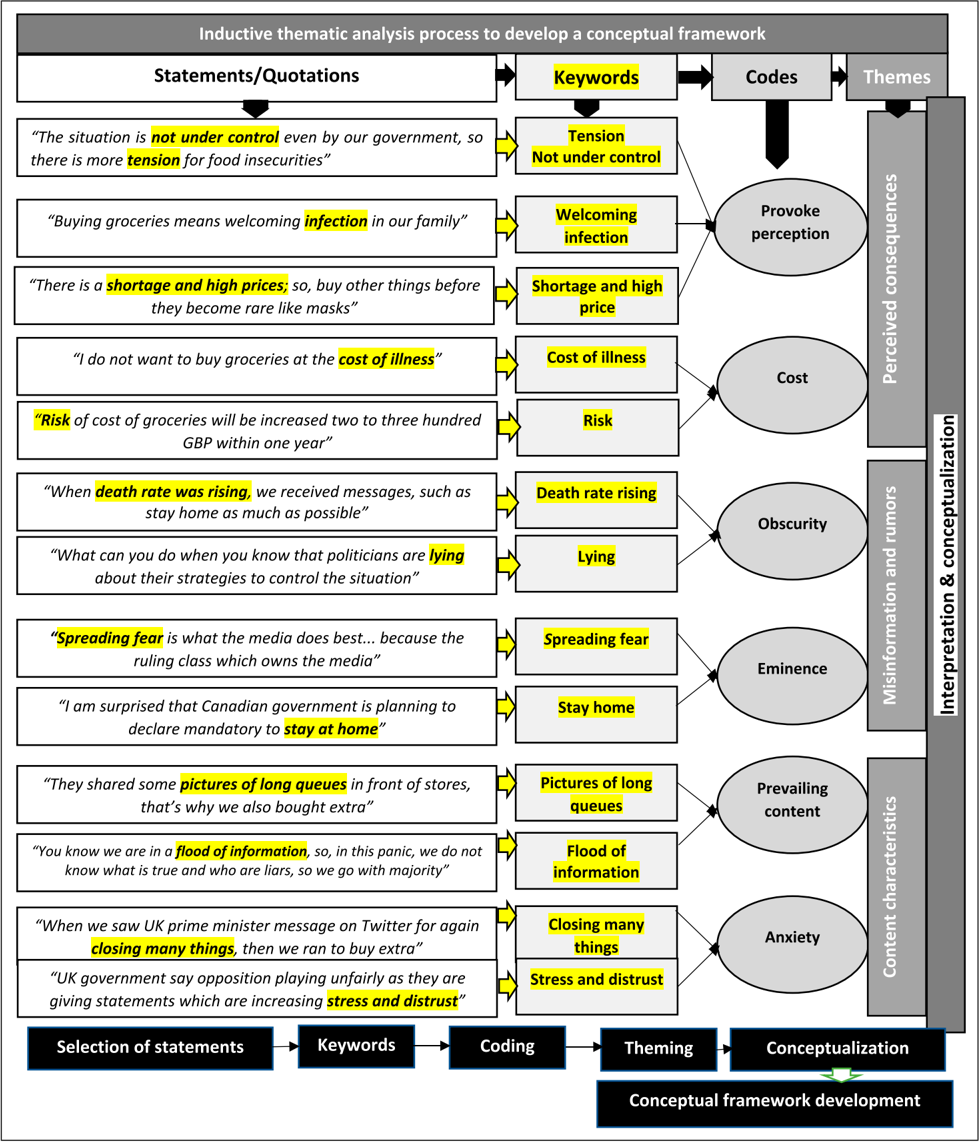
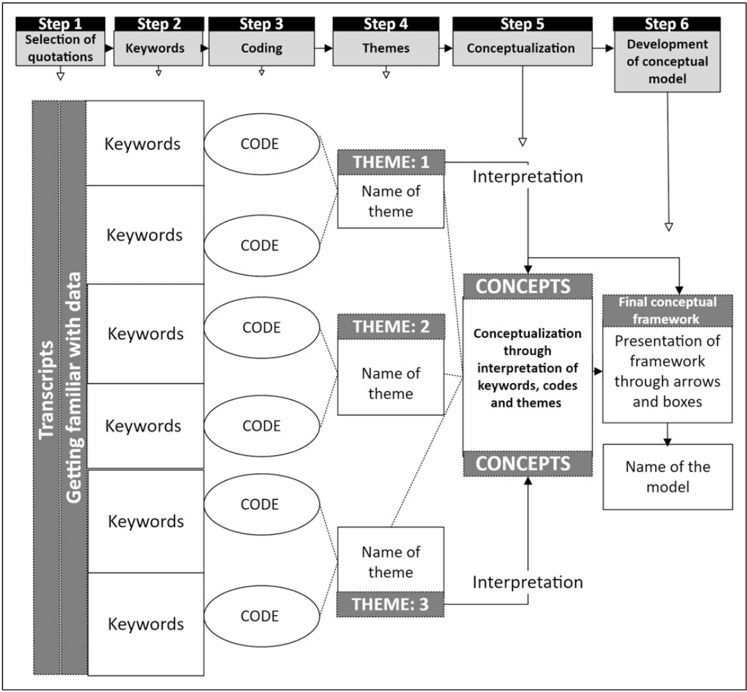
Verification
Claims the paper makes
0 Valid · 4 Not valid · 56 Not checked · 89 Own results and interpretations
The cited sources that could be checked couldn’t confirm or dispute this claim.
In the paper
“For narrative approaches, conceptual model development focuses on personal experiences, emotions, and life histories (Eldh et al., 2020).”
§ A Step-by-Step Process of Thematic Analysis to Develop a Conceptual Model in Qualitative Research > Step 6: Development of Conceptual Model.
What the sources say
- Could not verifycites Eldh et al., 2020 matched to “Quotations in Qualitative Studies: Reflections on Constituents, Custom, and Purpose” (2020) sourceExperimental — accuracy not yet measured
The Discussion and Conclusions (page numbers unavailable) address how quotations can illustrate qualitative analysis and findings. A search for narrative approaches, conceptual model development, emotions, and life histories found no passage addressing the attributed claim. (LLM, conf=0.72)
plainstates an association- Asserted: passes — The authors put it forward as true.
- Checkable: passes — It can be checked against evidence.
- Load-bearing: unclear — It is unclear whether the paper’s conclusions depend on it.
- Based: passes — The paper gives a reason why it holds.
- Could not verify
In the paper
“The analytical process balances between descriptive analysis, which outlines patterns or trends, and interpretive analysis, which offers subjective perspectives (Miles & Huberman, 1994, p. 56).”
§ A Step-by-Step Process of Thematic Analysis to Develop a Conceptual Model in Qualitative Research > Step 2: Selection of Keywords.
What the sources say
- Not matchedcites Miles & Huberman, 1994, p. 56
An author–year citation the paper’s reference list doesn’t settle. We don’t search these by name.
plain- Asserted: passes — The authors put it forward as true.
- Checkable: passes — It can be checked against evidence.
- Load-bearing: passes — The paper’s conclusions depend on it.
- Based: passes — The paper gives a reason why it holds.
- Not matched
In the paper
“However, the thematic analysis approach could also fit a post-positivist paradigm (Howell, 2012, p. 30).”
§ A Step-by-Step Process of Thematic Analysis to Develop a Conceptual Model in Qualitative Research > Step 2: Selection of Keywords.
What the sources say
- Not matchedcites Howell, 2012, p. 30
An author–year citation the paper’s reference list doesn’t settle. We don’t search these by name.
hedgedstates an association- Asserted: passes — The authors put it forward as true.
- Checkable: passes — It can be checked against evidence.
- Load-bearing: unclear — It is unclear whether the paper’s conclusions depend on it.
- Based: passes — The paper gives a reason why it holds.
- Not matched
In the paper
“Hence, quotation selection is not simply a mechanical task but is influenced by the researcher's philosophical and theoretical approach (Jackson & Mazzei, 2012).”
§ A Step-by-Step Process of Thematic Analysis to Develop a Conceptual Model in Qualitative Research > Step 1: Transcription, Familiarization With the Data, and Selection of Quotations.
What the sources say
- Not matchedcites Jackson & Mazzei, 2012
An author–year citation the paper’s reference list doesn’t settle. We don’t search these by name.
plainstates a cause- Asserted: passes — The authors put it forward as true.
- Checkable: passes — It can be checked against evidence.
- Load-bearing: passes — The paper’s conclusions depend on it.
- Based: passes — The paper gives a reason why it holds.
- Not matched
A conclusion the paper draws from its own results — it cites no other source for it, so there is none to check. The quote shows it is in the paper.
In the paper
“Thus, keywords serve as a critical bridge between data and themes in different methodologies.”
§ A Step-by-Step Process of Thematic Analysis to Develop a Conceptual Model in Qualitative Research > Step 4: Theme Development.
boostedstates an association- Asserted: passes — The authors put it forward as true.
- Checkable: passes — It can be checked against evidence.
- Load-bearing: unclear — It is unclear whether the paper’s conclusions depend on it.
- Based: passes — The paper gives a reason why it holds.
10 more claims
Create a free account to see all 149 claims and every source verdict.
- It may state two separate claims as one. 54
- Probably not a substantial claim. 128
Claims other papers make about this one
Each is checked against this paper’s own text: does it say what the citing paper says it does?
The source backs part of the claim, not all of it — or backs it for a different population, condition or comparison.
In the citing paper
“With the identified keywords, initial coding was further informed by and cross-referenced to the literature on AI ethics and governance, particularly addressing public concerns in government AI, alongside the author team's collective expertise in AI-driven digital transformation in public administration.”
From Accountability in Government Use of AI : Citizen Concerns and Preferences (2025) · cites this paper as Naeem et al. 2023
Experimental — accuracy not yet measuredThe source backs part of the claim, not all of it — or backs it for a different population, condition or comparison.
In the citing paper
“Thematic analysis is a highly popular technique among qualitative researchers for analyzing qualitative data, which usually comprises thick descriptive data (Naeem et al., 2023).”
From The Psycho-Emotive Effects of AI-Generated Fake News on Social Media Users (2026) · cites this paper as Naeem et al., 2023
Experimental — accuracy not yet measuredThe cited source says what the claim attributes to it.
In the citing paper
“The selection of keywords was guided by the 6Rs framework-Realness, Richness, Repetition, Rationale, Repartee, and Regal-to ensure they accurately represented the essence of the data (Naeem et al. 2023).”
From Accountability in Government Use of AI : Citizen Concerns and Preferences (2025) · cites this paper as Naeem et al. 2023
The cited source says what the claim attributes to it.
In the citing paper
“The data were analyzed through Naeem et al.'s (2023) six-step thematic analysis process to develop a conceptual framework (Naeem & Ozuem, 2022).”
From “It’s Not Just About Competition – It’s Ceremony”: Introducing the Embedded Indigeneity Framework for Understanding Identity, Mission, and Practice in TCU and NASNTI Athletics (2026) · cites this paper as Naeem et al. (2023)
The cited source says what the claim attributes to it.
In the citing paper
“The selected methodology was implemented due to the end results that 1) presented a novel conceptual framework and 2) serves as a contextually specific extension of existing theory/theories (Naeem et al., 2023).”
From “It’s Not Just About Competition – It’s Ceremony”: Introducing the Embedded Indigeneity Framework for Understanding Identity, Mission, and Practice in TCU and NASNTI Athletics (2026) · cites this paper as Naeem et al., 2023
Self-check
Percentages, sums and reported differences re-computed from the paper’s own numbers.
Each contradiction between two passages listed here was confirmed by an independent check.
Rated minor: it would not touch a result — a value no result rests on, a p-value that stays on the same side of the significance level, or a conflict that is clerical, resolved elsewhere in the paper, or outside its own findings.
In the paper
§ A Step-by-Step Process of Thematic Analysis to Develop a Conceptual Model in Qualitative Research > Step 6: Development of Conceptual Model.
“Positivism, which favours inductive methods, builds its model on top of previously established theories and conducts its experiments in an unbiased manner.”
§ A Step-by-Step Process of Thematic Analysis to Develop a Conceptual Model in Qualitative Research > Step 6: Development of Conceptual Model.
“An inductive approach is primarily data-driven, whereby themes are derived from the data itself without the influence of pre-existing theories (Braun & Clarke, 2006).”
Citations
Cites
Using thematic analysis in psychology
Braun, V., & Clarke, V. (2006) · Qualitative Research in Psychology · doi:10.1191/1478088706qp063oa · Cited by 194,414
Qualitative Data Analysis: An Expanded Sourcebook
(1994) · Journal of Environmental Psychology · doi:10.1016/s0272-4944(05)80231-2 · Cited by 48,420 · cited 2×
“In the coding process, consideration of keywords helps in multiple ways: The analytical process balances between descriptive analysis, which outlines patterns or trends, and interpretive analysis, which offers subjective perspectives (Miles & Huberman, 1994, p. 56).”
Lincoln, Y. S., Guba, E. G., & Pilotta, J. J. (1985) · International Journal of Intercultural Relations · doi:10.1016/0147-1767(85)90062-8 · Cited by 45,787 · cited 1×
“…degrees of subjectivity and objectivity has underscored the fl exibility intrinsic to research methodologies and highlighted that these tools of analysis are intimately intertwined with, and, indeed, emerge from the distinctive nature of speci fi c disciplines and perspectives (Lincoln & Guba, 1985).”
BackgroundThe Discovery of Grounded Theory: Strategies for Qualitative Research
Glaser, B. G., & Strauss, A. L. (2017) · Aldine (Routledge reprint) · doi:10.4324/9780203793206 · Cited by 25,789
The qualitative content analysis process
Elo, S., & Kyngäs, H. (2008) · Journal of Advanced Nursing · doi:10.1111/j.1365-2648.2007.04569.x · Cited by 22,617 · cited 1×
“Deductive coding, linked with descriptive analysis, is a top-down approach where pre-existing theories, models, or codes guide the data analysis (Elo & Kyng¨as, 2008).”
Method(2009) · Cited by 21,330
Reflecting on reflexive thematic analysis
Braun, V., & Clarke, V. (2019) · Qualitative Research in Sport, Exercise and Health · doi:10.1080/2159676x.2019.1628806 · Cited by 19,677
(1998) · Medical Entomology and Zoology · Cited by 18,397
(2014) · Cited by 15,747
S., N. L. (2017) · doi:10.1177/1609406917733847 · Cited by 14,051 · cited 3×
“· Robust: Coding should convey the true essence of data in a theoretical manner (Nowell et al., 2017).”
Background
Research works printed but not linked: 9
- 1. Arar, K. (2017). The what's and why's of the how to of qualitative research. Qualitative Report, 22(11), 2956-2958.
- 16. Creswell, J. W. (2012). Educational research. Pearson.
- 19. Denzin, N. K., & Salvo, J. (2020). New directions in theorizing qualitative research: Theory as resistance. Myers Education Press.
- 62. Oliver, P. (2021). Using qualitative methods to answer your research question (First). Open University Press.
- 63. Patton, M. Q. (2015). Qualitative research & evaluation methods: Integrating theory and practice (fourth). Sage Publications, Inc. Qualitative research (pp. 273-290). Sage.
- 67. Saldana, J. (2021). The coding manual for qualitative researchers (Fourth). Sage.
- 68. Saldana, J. M. (2016). The coding manual for qualitative researchers (4rd ed.). Sage Publications.
- 74. Seale, C. (2013). Qualitative research practice. In C. Seale, G. Gobo, J. Gubrium, & D. Silverman (Eds.), Concise paperback. Sage.
- 80. Tracy, S. J. (2019). Qualitative research methods: Collecting evi- dence, crafting analysis, communicating impact (2nd ed.). Wiley Blackwell.
Cited by
Items 1,101–1,200 of 2,204
Alotaibi, A. (2025) · BMC Nursing · doi:10.1186/s12912-025-04218-y · Cited by 1
“Analytic work included iterative memoing, thematic mapping, and targeted challenge by disconfirm-ing cases [59].”
Buckland, A. J., Delaney, C., Holzberg, J. R., Luna-Cordova, J. A., King, S. E., Surkan, P. J., Caulfield, L. E., & Hurley, K. M. (2025) · Journal of Nutrition · doi:10.1016/j.tjnut.2025.10.012
Development of Entrustable Professional Activities for Adult Intensive Care
Gomes, T. O., Girão, F. B., Mássimo, É. D. A. L., et al. (2026) · Nursing in Critical Care · doi:10.1111/nicc.70565
Majcík, M., & Babyrádová, V. (2025) · Journal of Vocational Education and Training · doi:10.1080/13636820.2025.2552798 · Cited by 1
“Afterwards, keywords in transcripts were identified in accordance with Naeem et al. (2023).”
Carrasco, F. G., Álvarez‐Aguado, I., & Córdova, V. V. (2026) · British Journal of Learning Disabilities · doi:10.1111/bld.70069
Caris-Hamer, E.-F. (2025) · Social Sciences · doi:10.3390/socsci14100583
“Transcripts were analysed using systematic thematic analysis (Braun and Clarke 2022) and followed the six-step process outlined by Naeem et al. (2023).”
Salık, H., Uslu, Ö., Şahin, M., et al. (2026) · Journal of Religion and Health · doi:10.1007/s10943-026-02726-y
“Participant anonymity and data security are among the fundamental elements of ethical responsibility in qualitative research (Naeem et al., 2023).”
Lau, X. M. N., Zhu, X., Sidhu, D., Bay, J. W., Mo, Y., & Tambyah, P. A. (2025) · JAC-Antimicrobial Resistance · doi:10.1093/jacamr/dlaf035
Female role models shaping educational aspirations among adolescent girls in rural northern Ghana
Adamba, C., Addai, J., Boafo‐Arthur, A., & Adiikanbasi, P. (2026) · SN Social Sciences · doi:10.1007/s43545-026-01678-0
“Data were analysed thematically using the six-phase iterative approach of Naeem et al. (2023): familiarisation, initial coding, candidate theme development, review and refinement, definition and interpretation, and reporting.”
Sofi, M. B., & Ojha, A. (2026) · Journal of South Asian Development · doi:10.1177/09731741261483342
Umeh, K. F., Adaji, S., Sacks, M., Eleje, G. U., Umeh, E. O., Ushie, S. N., Okafor, C. G., Oguejiofor, C. B., Bawa, U., Bature, S., et al. (2025) · PLOS Global Public Health · doi:10.1371/journal.pgph.0004794
“Using step-by-step guidelines from the literature, this thematic analytic process was further adapted with two additional steps, to create a conceptual model [62].”
InfluentialKularbphettong, K., Raksuntorn, N., Roonrakwit, P., & Boonseng, C. (2025) · Communications in computer and information science · doi:10.1007/978-3-031-94943-2_17 · Cited by 1
Annamalai, N., Nasor, M., Eak, A. D., & Alkubaisy, A. A. A. (2026) · Frontiers in Psychology · doi:10.3389/fpsyg.2026.1875727 · Cited by 3
“Such problems lead to low motivation in English language learning, which eventually hinders students’ English language acquisition (Ag-Ahmad et al., 2025; Naeem et al., 2023).”
Evaluating teaching quality in higher education: stakeholder perspectives
González-Catalán, F., Bozu, Z., & Olmo, F. M. (2026) · Educational Research · doi:10.1080/00131881.2026.2682829
“Following Naeem et al. (2023), the analysis involved a) familiarisation with the data; b) generation of initial codes; c) identification of themes; d) review of the recognised themes; e) conceptualisation and naming of the themes; and f) development of a comprehensive model.”
Almatar, K. M. (2026) · Frontiers in Sustainable Cities · doi:10.3389/frsc.2026.1895053
Protocol for the development of Pituitary Surgery Core Outcomes and Priorities (PitCOP)Preprint
Newall, N., Valetopoulou, A., Khan, D. Z., Borg, A., Bremner, F., Dorward, N., Fleseriu, M., Ginn, J., Gurnell, M., Korbonits, M., et al. (2024) · medRxiv · doi:10.1101/2024.06.16.24308989
“The themes will then be created into distinct candidate research uncertainties 16,17 .”
BackgroundLearning Alignment Principles Grounded in Human Reasons and Values
Bell, H., Schertel, L. N. D. C., Ding, B., & Fain, B. (2026) · ACM Conference on Fairness, Accountability, and Transparency (FAccT) · doi:10.1145/3805689.3806453 · Cited by 2
“For both analyses we used thematic analysis as described by [32].”
Culley, H., Nathani, P., Kalliecharan, R. V., Aruparayil, N., & Mishra, A. (2026) · Transfusion Medicine · doi:10.1111/tme.70084
Immersive virtual tourist behavior: a systematic literature review and S-O-R-based typology
Mishra, M., Jain, K., & Sahny, S. (2026) · Information Technology & Tourism · doi:10.1007/s40558-026-00409-8
“We employed the steps outlined by Braun and Clarke (2006) and Naeem et al. (2023) to identify themes and sub-themes by thor - oughly reviewing the full text of the 61 research articles.”
Utilizing artificial intelligence in the non-timber forest product sector micro-enterprises
Nokkala, O., & Vilko, J. P. P. (2025) · International Conference on Electrical, Computer, Communications and Mechatronics Engineering (ICECCME) · doi:10.1109/iceccme64568.2025.11277941
“After and partly during the review, the data was coded using NVivo in accordance with the principles of thematic analysis [74].”
Bessler, A. L., Garabed, R. B., & Jones, K. (2026) · Journal of Veterinary Medical Education · doi:10.3138/jvme-2025-0096
Ebekozien, A., Ebekozien, E. O., Hafez, M. A., et al. (2026) · Engineering Construction & Architectural Management · doi:10.1108/ecam-03-2025-0346
Mas'ud, S. H., Jalal, F., & Yetti, E. (2026) · South African Journal of Childhood Education · doi:10.4102/sajce.v16i1.1886
Mastering risk reduction: innovative martial arts training program based on risk analysis
Muslihin, H. Y., & Jaelani, R. (2025) · doi:10.56984/8zg007dnt5q
Exploration of the concept of respect in children and adolescents
Karimi, P., Karami, J., & Momeni, K. (2025) · Quarterly Journal of Child Mental Health · doi:10.61882/jcmh.12.3.3
“I Need More Practices”: Exploring Difficulties Faced by EFL Students in Practicing Interpreting
Pratama, I. D., & Rohmatika, A. (2025) · Language Circle Journal of Language and Literature · doi:10.15294/lc.v19i2.20159
“The researcher applied six steps in thematic analysis as proposed by Naeem et al. (2023), including transcript creation and data familiarization, keyword identification, code selection, theme development, conceptualization, and the development of a conceptual model.”
Wang, Y., Parasuraman, B., & Yajid, A. A. (2026) · International Journal of Entrepreneurship and Management Practices · doi:10.35631/ijemp.934017
Asmaningrum, N., Ferguson, C., Ridla, A. Z., Sulistyono, R. E., A’la, M. Z., & Wijaya, D. (2026) · Contemporary Nurse · doi:10.1080/10376178.2026.2615975 · Cited by 3
“The subsequent identification of keywords, codes, and themes aids in the formulation of initial claims that can be further analysed to create the ultimate conceptual model (Naeem et al., 2023) as displayed in Figure 1.”
Timbao, G. A., & ESPINOSA, F. (2026) · Psychology and Education A Multidisciplinary Journal · doi:10.70838/pemj.600802
Kilbride, D., Cotier, T., & Malthouse, R. (2024) · British Journal of Special Education · doi:10.1111/1467-8578.12556
Boiko, O. V., Barnard-Kelly, K. D., Vercauteren, J., Greenfield, S. M., Dias, R. P., Quinn, L. M., Litchfield, I. J., Papanikolaou, T., Dunne, J. L., Perego, G., et al. (2026) · Diabetic Medicine · doi:10.1111/dme.70297 · Cited by 1
“Thematic content analysis 25 will be deployed.”
The Centralized Pain Score: A Method to Identify Nociplastic Pain in Electronic Health Records
Schirle, L. M., Cordoza, M. L., Bruehl, S. P., & Samuels, D. C. (2026) · Pain Management Nursing · doi:10.1016/j.pmn.2025.12.007
Sharma, A., Mohapatra, S., Narasimhan, H., & Ji, S. (2025) · Research Square · doi:10.21203/rs.3.rs-7255433/v1
Cultural festivals and urban transformation: a case of Durga Puja in Kolkata
Kureel, P., Sen, J., & Goswami, A. K. (2026) · Journal of Heritage Tourism · doi:10.1080/1743873x.2026.2670501
Research Avenues for Maintenance Operations in Battery Production
Larsson, O., Skoogh, A., & Bokrantz, J. (2025) · IFIP advances in information and communication technology · doi:10.1007/978-3-032-03534-9_28
Singh, P., Katre, R., Sadasivan, A., et al. (2026) · Research Square · doi:10.21203/rs.3.rs-9509305/v1
A Qualitative Study: Patients' Expectation of Private Hospitals
Jada, S., Jacob, J., & Nasrallah, A. (2025) · Patient Experience Journal · doi:10.35680/2372-0247.1928 · Cited by 1
Pramono, J. (2026) · KnE Social Sciences · doi:10.18502/kss.v11i5.21488
Kıyıcı, G., & Özener, O. Ö. (2026) · International Journal of Architectural Research Archnet-IJAR · doi:10.1108/arch-12-2025-0584
Laingen, B. E., Iobst, W., Dobbins, J., Johnson, J. W., Cambronero, G. E., Neff, L. P., & Bosley, M. E. (2026) · Research Square · doi:10.21203/rs.3.rs-10028364/v1
Oliver, L., & Harvey, O. (2026) · Humanities · doi:10.3390/h15100141
The influence of perceived neighborhood disorder on HIV care-related decisions: A qualitative study
Kimaru, L. J., Magrath, P. A., Hu, C., Nagalingam, S., Connick, E., Ernst, K. C., & Ehiri, J. E. (2025) · PLoS ONE · doi:10.1371/journal.pone.0322994
“Data analysis involved an interpretive qualitative analysis approach [14], with thematic analysis conducted in a six-phase process: data familiarization, code generation, identifying themes, reviewing themes, defining theme significance and reporting [15].”
Vasileiou, M., Wakefield, V., Dadswell, C., & Edwards, S. J. (2026) · Health Technology Assessment · doi:10.3310/gjse4912 · Cited by 1
Badu, J. K., & Dubihlela, J. (2024) · International Journal of Applied Research in Business and Management · doi:10.51137/ijarbm.2024.5.2.5
Becoming Well: A Grounded Theory of Wellness Continuity and Discontinuity Through Fitness Practices
Salvacion, A. J., & Baradillo, D. G. (2026) · Psychology and Education A Multidisciplinary Journal · doi:10.70838/pemj.541004
Empowering Older Patients in Advance Care Planning: Evaluating MyCare™ as a Decision Support Tool
Ménard, A., Singh, Y., Yin, C. Y., Ruller, S., Konikoff, L., Kierulf, J., Bennett, C. L., Manuel, D. G., Kirkham, S., & Kobewka, D. M. (2026) · Health Expectations · doi:10.1111/hex.70545
“To enable a thorough analysis, we employed NVivo software to facilitate our inductive thematic analysis [29].”
Using activity theory to inform the design of academic resources for first-year engineering students
김가영, & Lescott, C. J. (2026) · Frontiers in Education · doi:10.3389/feduc.2026.1884961
Jiang, D.-F., & Jung, J.-H. (2026) · Journal of Digital Contents Society · doi:10.9728/dcs.2026.27.2.419
Motloutsi, A. M. (2026) · IGI Global eBooks · doi:10.4018/979-8-2600-2885-8.ch009
Emaliyawati, E., Ibrahim, K., Trisyani, Y., et al. (2026) · Nursing Open · doi:10.1002/nop2.70647
“Thematic analysis is used for descriptive qualitative research that is appropriate when researchers want to understand the perspectives, experiences or meanings expressed by participants (Naeem et al. 2023).”
Mensah, P., Essel, H. B., Tachie-Menson, A., et al. (2026) · Fashion and Textiles Review. · doi:10.35738/ftr.v7.2025.51
6 Şubat Depremleri Sonrası “Değer” Yönelimli Bir Toplumsal Hareket: “Hatay Gönül Mutfağı”
Tekeli, E. S., & Işık, G. (2025) · Kastamonu İletişim Araştırmaları Dergisi · doi:10.56676/kiad.1641934 · Cited by 1
Akonye, J. E., Ayanwale, M. A., Ukeje, I. O., Robinson, D. F., Obi, V. Y.-M., Igwe, C. M., Ngene, I. A., & Nwaigwe, H. C. (2026) · Cogent Social Sciences · doi:10.1080/23311886.2026.2694119 · Cited by 2
Baghdadi, F. (2024) · SSRN Electronic Journal · doi:10.2139/ssrn.4855630
Alghasi, M. A., Althafzufar, M. A., & Islamy, R. I. (2026) · IGI Global eBooks · doi:10.4018/979-8-3373-9320-9.ch014
Ko, I., Park, H. J., Kim, H., et al. (2026) · Journal of the Korean Society of Food Science and Nutrition · doi:10.3746/jkfn.2026.55.2.115
Aulawi, H., Latifah, A., Aisyah, R., & Ramelan, A. (2026) · International journal of organizational analysis · doi:10.1108/ijoa-12-2025-6259
Santorry, S. (2025) · Jurnal Konseling dan Pendidikan · doi:10.29210/1147600
Lee, K., & Kalali, N. (2026) · The British Accounting Review · doi:10.1016/j.bar.2026.101942
Chitamba, K., Chitamba, N., & Chitamba, A. (2026) · International Journal of Research in Business and Social Science (2147-4478) · doi:10.20525/ijrbs.v14i9.4627
Mphahlele, N. S., Kekwaletswe, R. M., & Seaba, T. R. (2025) · The Electronic Journal of Information Systems in Developing Countries · doi:10.1002/isd2.70024
“A six-phase thematic analysis procedure was followed, involving initial coding, theme development, and refinement (Naeem et al. 2023).”
InfluentialSkill bricolage among millennial entrepreneurs in post-Soviet Eurasia
Lichy, J., Szabó-Szentgróti, G., Doargajudhur, M. S., & Vershinina, N. A. (2026) · International Journal of Entrepreneurial Behaviour & Research · doi:10.1108/ijebr-11-2025-1701 · Cited by 1
Mukwakungu, S. C., Khoza, N., & Mbohwa, C. (2024) · International Conference on Industrial Engineering and Operations Management (IEOM) · doi:10.46254/an14.20240414
“During these interviews, stringent measures were implemented to ensure that respondents remained anonymous (Naeem et al., 2023).”
BackgroundHoang, D. V., Trinh, A. T., & Duong, T. T.-T. (2026) · Australasian Marketing Journal (AMJ) · doi:10.1177/14413582261447950
Strategies for Enhanced Digital Resilience: Insights from the Sri Lankan Banking Sector
Jayasundara, H., & Wickramarachchi, R. (2025) · International Research Conference on Smart Computing and Systems Engineering (SCSE) · doi:10.1109/scse65633.2025.11030985
“The analysis followed the six-step framework by [20], summarized in Fig.”
Accounting in the Age of AI: A Meta-Review of Emerging Trends and Opportunities
Mohammadali-Haji, A., & Strydom, N. (2026) · Springer proceedings in business and economics · doi:10.1007/978-3-032-13380-9_24
Tell Me a Story: Playful Storytelling Approach for Supporting Grandparent-Grandchild Relationships
KargarTazargh, E., & Kriglstein, S. (2025) · Conference on Animation and Interactive Art (CAIA) · doi:10.1145/3749893.3749960
Qarqodah, W. H., Saifan, A. R., Al‐Yateem, N., AbuRuz, M. E., Amer, D. B., Younis, N. M. B., Alkolane, O. Q., Abujaber, D. A., Alharbi, H. F., & Khalaf, A. (2026) · Heart & Lung · doi:10.1016/j.hrtlng.2026.102738
Rharib, O., Saadi, R., Marjani, B. E., Benammi, D., Jaouhar, S., & Ababou, M. (2026) · Journal of Education and Health Promotion · doi:10.4103/jehp.jehp_876_25
“[12] Coding was both deductive (informed by theoretical concepts such as social capital) and inductive (grounded in participants’ narratives).”
From Survival to Self-Expression: Colouring Experiences of Kayayei in Kumasi - Ghana
Amenuke, D. A., & Poku, K. A. (2026) · E-Journal of Humanities Arts and Social Sciences · doi:10.38159/ehass.20267310
Supporting Police Well-Being Through an Adaptive Shift Management System: Co-Design Study
Ayorinde, O. T., Doğan, H., Adedoyin, F. F., Jiang, N., Bitters, F., & Dempsey, S. (2025) · JMIR Formative Research · doi:10.2196/69986 · Cited by 6
“To ensure a thorough understanding of the qualitative data, the transcribed documents were read multiple times, allowing the research team to gain familiarity with the content and context of the discussions [74].”
Rampjapedi, M. T., Adom, R. K., & Simatele, M. D. (2026) · Journal of the Air & Waste Management Association · doi:10.1080/10962247.2026.2624799
“The researchers identify key words from the collected responses, code the data, develop themes, and interpret the data from which to formulate a conceptual model (Naeem et al. 2023).”
Kunštátová, E., & Hrůzová, A. P. (2026) · Springer eBooks · doi:10.1007/978-3-032-03223-2_5
Gearing-Up SMEs for Value Chain Digitalization Through Blockchain-Based Distributed Trust
Isacker, K. V., Milis, G., Orphanidou, Y., et al. (2026) · Palgrave studies in cross-disciplinary business research, in association with EuroMed Academy of Business · doi:10.1007/978-3-032-26500-5_7
Survival Strategies of Diaspora Businesses: The Case of Indonesians in Malaysia
Roslan, S. N. M., Sulaiman, S., & Jasni, M. A. (2025) · Advances in human resources management and organizational development book series · doi:10.4018/979-8-3693-8613-2.ch007 · Cited by 2
An integrative framework for Supply Chain Net-Zero : A critical analysis of literature reviews
Lahmar, A., & Siddiqui, A. A. (2026) · Computers & Industrial Engineering · doi:10.1016/j.cie.2026.112199
Sharma, R., & Kaur, A. (2024) · International Conference on Technological Innovations and Advance Computing (TIACOMP) · doi:10.1109/tiacomp64125.2024.00063
Saing, M. M., Darma, R., & Dirpan, A. (2026) · Sustainability · doi:10.3390/su18136710
Cultivating Character Values in Online Islamic Education: A Qualitative Case Study in Indonesia
Nurdiana, Y., Mustamin, A., & Hidayat, W. K. (2025) · Journal of Literacy Education · doi:10.64780/jole.v1i3.96
“…using thematic analysis to identify recurring patterns and themes related to character cultivation in online IRE. Braun and (Batt et al., 2021; Naeem et al., 2023) six-step framework guided the process, including familiarization with the data, generating initial codes, searching for themes,…”
Min, S. H., Woo, K., Song, J., Alexander, G. L., O’Malley, T. A., Moen, M. D., & Topaz, M. (2024) · Western Journal of Nursing Research · doi:10.1177/01939459241306946 · Cited by 2
“31 NLP algorithm creation and testing.”
InfluentialLifelong Learning in an Age of Uncertainty
Yatsyshyna, V. (2025) · Journal of Contemporary Philosophical and Anthropological Studies · doi:10.59652/xsrsc281 · Cited by 1
“Instead, it focuses on the systematic examination of meanings, assumptions, and implications embedded in contemporary uses of the concept of lifelong learning under conditions of uncertainty (Naeem et al., 2023; St Quinton & Trafimow, 2026).”
Üniversite Öğrencilerinin Tek Başınalık Deneyimi Üzerine Nitel Bir Çalışma
Özçelik, E., & Bilge, F. (2024) · Türk Eğitim Bilimleri Dergisi · doi:10.37217/tebd.1540566
Unveiling the aspirations of the Ati people in Panay Island: A transformative needs assessment
Cutillas, A. L., Petrola, J. P. J., & Ocay, J. (2026) · Multidisciplinary Science Journal · doi:10.31893/multiscience.2026665
“The thematic analysis model of Naeem et al. (2023) was followed closely, with slight modifications to account for the nuances in rapid ethnography.”
Liu, M. Y., Flavelle, S. C., & D’Alessandro, P. R. (2026) · Arts & Health · doi:10.1080/17533015.2026.2663518
Deitcher, D. B., & Neumann, M. M. (2026) · Education Sciences · doi:10.3390/educsci16091482
Callinan, C., Clohessy, T., Vega, A., & Heaslip, G. (2026) · Supply Chain Management An International Journal · doi:10.1108/scm-10-2025-0961
Joosub, H. M., de Jongh, M., & Mothapo, R. (2026) · South African Journal of Communication Disorders · doi:10.4102/sajcd.v73i1.1169 · Cited by 1
“An inductive coding approach was used to allow themes and patterns to emerge from the data (Naeem et al., 2023).”
Sangong, S., Adewunmi, O. A., Njei, B. M., & Bain, L. E. (2026) · doi:10.2196/preprints.111596
Capistrano, R. C. G., & Youn, H. (2026) · Journal of Travel Research · doi:10.1177/00472875261491183
Miskelly, P., Hayman, K., Hikaka, J., Wiles, J. L., Kerse, N. M., & Teh, R. (2026) · Kōtuitui New Zealand Journal of Social Sciences Online · doi:10.1002/kot2.70014
Adejumo, A. O., Adeosun, J. O., Makinde, O., & Ayodele, T. O. (2025) · International Journal of Building Pathology and Adaptation · doi:10.1108/ijbpa-05-2025-0132
Noordam, D., Noordman, J., Hartman, T. O., & van Dulmen, S. (2026) · Patient Education and Counseling · doi:10.1016/j.pec.2026.109588 · Cited by 1
Phebeni, N. M., & Mamba, Z. N. (2025) · E-Journal of Humanities Arts and Social Sciences · doi:10.38159/ehass.20256124
“40 A discussion was held with experts to address data inconsistencies and reach common ground.”
Living in the shadows of schizophrenia: a qualitative inquiry into caregivers’ psychosocial burden
Uslu, Ö., Durmuş, M., Salık, H., & Şahin, M. (2025) · Psychology Health & Medicine · doi:10.1080/13548506.2025.2569106
Okul Öncesi Öğretmenlerinin Çalışma Motivasyonunu Etkileyen Faktörler
Demirci, V., & Sarıçam, H. (2026) · Temel Eğitim · doi:10.52105/temelegitim.1859131
Kostopoulos, M., Agzarian, M., Hickson, K. J., et al. (2025) · Journal of Medical Imaging and Radiation Oncology · doi:10.1111/1754-9485.70047
“Responses were coded to obtain recurring themes [26] and an inductive approach allowed the themes to emerge from the data rather than from a prior theory [26].”
Exploring Primary Healthcare Needs Among Migrants in Australia: A Scoping Review
East, L., Jedwab, R. M., Elliott, J. P., Mbuzi, V., Ryan, L., Ward, A., Saito, A., Fagan, A., & Wang, T. (2026) · Healthcare · doi:10.3390/healthcare14193168
Nguyen, T. D. K., Le, X. M., & Diem, T. B. L. (2026) · Proceedings of International Academia · doi:10.65956/procia.2026.83
“The thematic analysis method, developed from thematic analysis, showed a six-step process with outcomes focusing on conceptual model development (Naeem et al., 2023), while the models of Braun and Clarke merely focus on naming the themes.”
Play in the care practices of licensed practical nurses with hospitalized children
Petruccelli, G., Wernet, M., Silveira, A. O., & Maia, E. B. S. (2025) · Revista gaúcha de enfermagem · doi:10.1590/1983-1447.2025.20240348.en
Metadata
- Authors
- Naeem, M., Ozuem, W., Howell, K., & Ranfagni, S.
- Affiliations
- University of Gloucestershire (GB)
- University of Cumbria (GB)
- Northumbria University (GB)
- University of Florence (IT)
- Corresponding author
- Naeem, Muhammad
- Venue
- International Journal of Qualitative Methods
- Publisher
- SAGE Publications
- Published
- 2023-10
- Volume
- 22
- ISSN
- 1609-4069 (ISSN-L)
- OpenAlex
- W4388503650
- Cited by
- 2,243
- References
- 71
- Citations by year
- 2026: 1000 · 2025: 981 · 2024: 258 · 2023: 4
- FWCI
- 1654.78
- Type
- journal article
- Language
- en
- Open access
- gold
- doi.org
- Licence
- Locations
- International Journal of Qualitative Methods (publishedVersion, cc-by-nc)
- Insight (University of Cumbria) (acceptedVersion)
- DOAJ (DOAJ: Directory of Open Access Journals) (submittedVersion, cc-by-sa)
- Florence Research (University of Florence) (submittedVersion)
- Topics
- Social Sciences › Education › Qualitative Research Methods and Applications
- Social Sciences › Sociology and Political Science › Qualitative Research Methods and Ethics
- Social Sciences › General Social Sciences › Computational and Text Analysis Methods
- Keywords
- thematic analysis, conceptual modeling, qualitative data analysis, inductive coding, deductive coding, grounded theory, interpretive phenomenology, constructivist research, positivist research, theoretical conceptualization, replicability
About these checks
Registry, retraction, Cites and statistics results are computed, not judged, with one exception: a printed reference that no index lists is read once by a model before it counts as a citation error. Claims are extracted by a model and kept only when their quote appears verbatim in the text; each cited source is then checked, with a model’s help, for whether it says what the claim relies on. Those verdicts can be wrong — read the claim’s quote and the cited source before relying on one.
The claim verdicts this report counts are experimental: their accuracy is not yet measured.
A language model drew the claims from the paper on 2026-10-10, under version 3 of the claim definition (model deepseek-v4.1-flash, prompt extract-v3).
A second model labelled each claim on 2026-10-10 (model jev-1.13-20260917, definition revision gold-guideline-v0.2).
Cited sources are checked with a language model’s help (gpt-6-sol).
Statistics and arithmetic are recomputed, not judged.
Confidence bands are shown only for fields calibrated on our annotated test set. None is calibrated yet, so no band is shown.
What counts as a claim ›How we measure confidence ›How we check this ›
Are you an author, or do you see a problem with this page? Request a review
Data sources
Bibliographic data: Semantic Scholar, OpenAlex, Crossref.
Contains information from the Semantic Scholar Academic Graph Datasets, made available under the ODC Attribution License (ODC-BY 1.0).
Semantic Scholar’s data is described in: Kinney, R., et al. (2023). The Semantic Scholar Open Data Platform. arXiv:2301.10140.
