

Neurotrophins regulate ApoER2 proteolysis through activation of the Trk signaling pathway
Open accessThe DOI matches its Crossref record; 103 of the 103 references it cites were found in a registry or an index.
Abstract
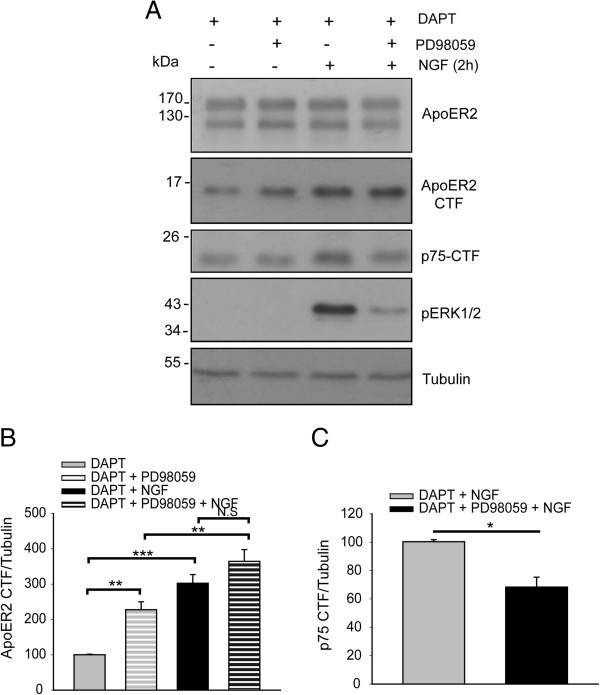
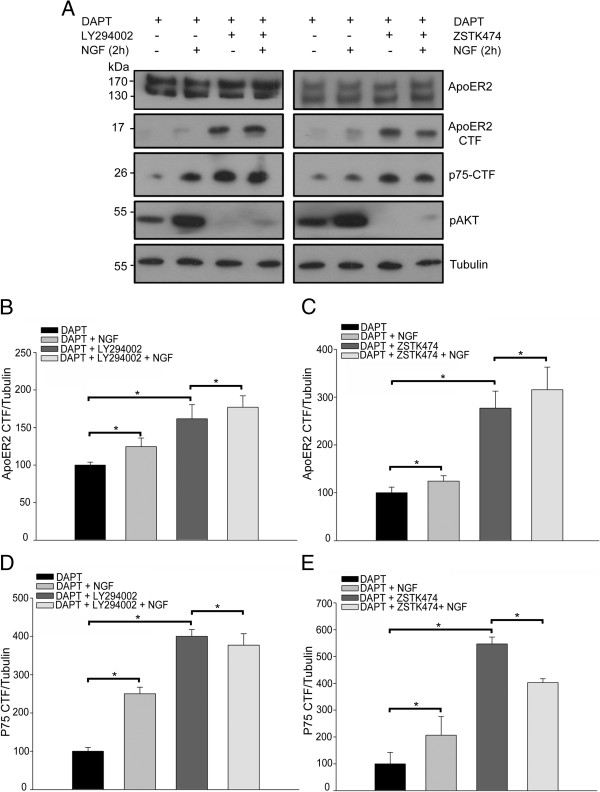
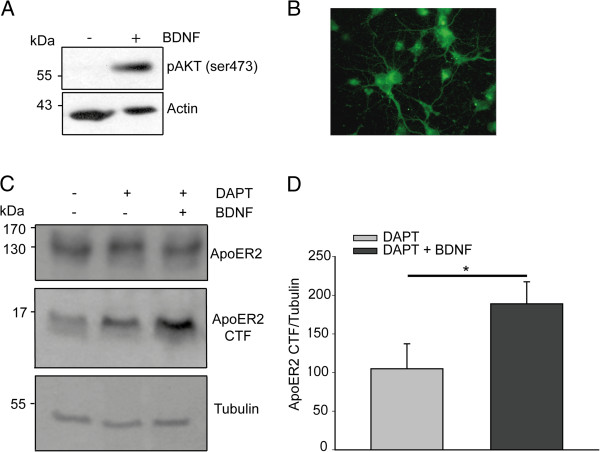
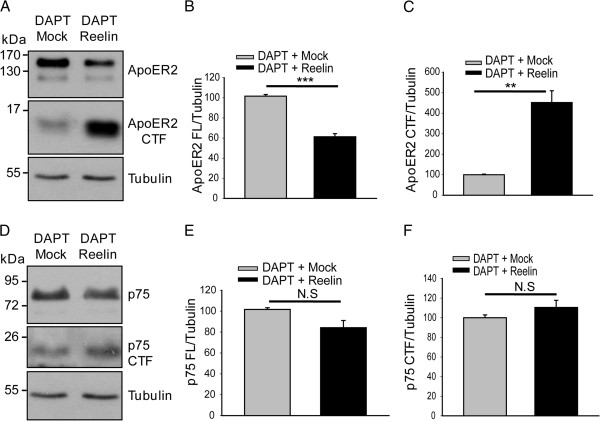
BACKGROUND: ApoER2 and the neurotrophin receptors Trk and p75(NTR) are expressed in the CNS and regulate key functional aspects of neurons, including development, survival, and neuronal function. It is known that both ApoER2 and p75(NTR) are processed by metalloproteinases, followed by regulated intramembrane proteolysis. TrkA activation by nerve growth factor (NGF) increases the proteolytic processing of p75(NTR) mediated by ADAM17. Reelin induces the sheeding of ApoER2 ectodomain depending on metalloproteinase activity. However, it is not known if there is a common regulation mechanism for processing these receptors. RESULTS: We found that TrkA activation by NGF in PC12 cells induced ApoER2 processing, which was dependent on TrkA activation and metalloproteinases. NGF-induced ApoER2 proteolysis was independent of mitogen activated protein kinase activity and of phosphatidylinositol-3 kinase activity. In contrast, the basal proteolysis of ApoER2 increased when both kinases were pharmacologically inhibited. The ApoER2 ligand reelin regulated the proteolytic processing of its own receptor but not of p75(NTR). Finally, in primary cortical neurons, which express both ApoER2 and TrkB, we found that the proteolysis of ApoER2 was also regulated by brain-derived growth factor (BDNF). CONCLUSIONS: Our results highlight a novel relationship between neurotrophins and the reelin-ApoER2 system, suggesting that these two pathways might be linked to regulate brain development, neuronal survival, and some pathological conditions.
Overview
The claims and statistics of this paper haven’t been checked yet.
Free: it reads the open-access text and checks the first 5 claims that cite a source we can check. Create a free account to check every claim.
Integrity signals
Registry
Cites
Statistics
Figures
Verification
Claims the paper makes
The claims and statistics of this paper haven’t been checked yet.
Free: it reads the open-access text and checks the first 5 claims that cite a source we can check. Create a free account to check every claim.
Claims other papers make about this one
Each is checked against this paper’s own text: does it say what the citing paper says it does?
The cited source says what the claim attributes to it.
In the citing paper
“This neurotrophin can increase the expression of extracellular metalloproteinases (46) and induces ApoER2 cleavage through binding TrkB receptors (47) (Fig. 2B, 5).”
From Reelin: Neurodevelopmental Architect and Homeostatic Regulator of Excitatory Synapses (2017) · cites this paper as [47]
In the citing paper
“Both Reelin binding and TrkB/BDNF signaling can inhibit Reelin-mediated NMDAR phosphorylation by inducing the proteolytic processing of ApoER2 (5) (36, 47), whereby the ECD acts as a dominant negative receptor (6) (37) and the ICD can inhibit the transcription of Reelin (7) (38).”
From Reelin: Neurodevelopmental Architect and Homeostatic Regulator of Excitatory Synapses (2017) · cites this paper as [47]
Self-check
Percentages, sums and reported differences re-computed from the paper’s own numbers.
The self-check needs the paper’s full text.
Citations
Cites
1 retracted
Survival of Cholinergic Forebrain Neurons in Developing p75 NGFR -Deficient Mice
Van der Zee, C. E. E. M., Ross, G. M., Riopelle, R. J., & Hagg, T. (1996) · Science · doi:10.1126/science.274.5293.1729 · Cited by 222
RetractedGreene, L. A., & Tischler, A. S. (1976) · Proceedings of the National Academy of Sciences · doi:10.1073/pnas.73.7.2424 · Cited by 5,553 · cited 3×
“PC12 cells endogenously express TrkA and p75NTR and, in response to the exogenous NGF, differentiate into a “neuronal cell phenotype” similar to sympathetic neurons found in the PNS [68,69].”
BackgroundPhosphoinositides in cell regulation and membrane dynamics
Di Paolo, G., & De Camilli, P. (2006) · Nature · doi:10.1038/nature05185 · Cited by 2,790
Neurotrophin-regulated signalling pathways
Reichardt, L. F. (2006) · Philosophical Transactions of the Royal Society B: Biological Sciences · doi:10.1098/rstb.2006.1894 · Cited by 2,195 · cited 1×
“Both the reelin-ApoER2 and the neurotrophin signaling systems are expressed in neurons of the hippocampus, cerebellum, and cerebral cortex [13,44-47] and share functions associated with brain development and adult neuronal functions, including participation in some pathological conditions such as schizophrenia [66].”
BackgroundThe trk proto-oncogene encodes a receptor for nerve growth factor
Klein, R., Jing, S., Nanduri, V., O'Rourke, E., & Barbacid, M. (1991) · Cell · doi:10.1016/0092-8674(91)90419-y · Cited by 1,401 · cited 20×
“As it was reported previously, p75NTR proteolysis is regulated by the activation of TrkA receptor.”
BackgroundInfluentialThe yin and yang of neurotrophin action
Lu, B., Pang, P. T., & Woo, N. H. (2005) · Nature Reviews Neuroscience · doi:10.1038/nrn1726 · Cited by 1,356 · cited 1×
“and regulate development and adult neuronal processes, such as neuronal survival or apoptosis [7], the outgrowth”
BackgroundTrommsdorff, M., Gotthardt, M., Hiesberger, T., Shelton, J., Stockinger, W., Nimpf, J., Hammer, R. E., Richardson, J. A., & Herz, J. (1999) · Cell · doi:10.1016/s0092-8674(00)80782-5 · Cited by 1,261
Patterson, S. L., Abel, T., Deuel, T. A. S., Martin, K. C., Rose, J. C., & Kandel, E. R. (1996) · Neuron · doi:10.1016/s0896-6273(00)80140-3 · Cited by 1,233 · cited 4×
“Abbreviations ADAM17: A Disintegrin and metalloproteinase 17; ApoER2: Apolipoprotein E receptor 2; APP: Amyloid precursor protein; BDNF: Brain-derived neurotrophic factor; CTF: C-terminal fragment; ICD: Intracellular domain; JNK: c-Jun N- terminal kinase; LTD: Long term depression; LTP: Long-term potentiation; LDLR: L…”
BackgroundInfluentialtrkC, a new member of the trk family of tyrosine protein kinases, is a receptor for neurotrophin-3
Lamballe, F., Klein, R., & Barbacid, M. (1991) · Cell · doi:10.1016/0092-8674(91)90442-2 · Cited by 1,080 · cited 1×
“Nerve growth factor (NGF) binds to TrkA [14], brain-derived neurotrophic factor (BDNF) binds to TrkB [15], and neurotrophin 3 (NT3) binds to TrkC [16].”
BackgroundKlein, R., Nanduri, V., Jing, S., Lamballe, F., Tapley, P., Bryant, S., Cordon-Cardo, C., Jones, K. R., Reichardt, L. F., & Barbacid, M. (1991) · Cell · doi:10.1016/0092-8674(91)90628-c · Cited by 958
Hiesberger, T., Trommsdorff, M., Howell, B. W., Goffinet, A., Mumby, M. C., Cooper, J. A., & Herz, J. (1999) · Neuron · doi:10.1016/s0896-6273(00)80861-2 · Cited by 916 · cited 3×
“However, ligand binding to LRP1, a member of LDLR family, transactivates the Trk receptors through an SFK-dependent pathway in PC12 cells and neurons [67], demonstrating that apolipoprotein E-receptors have neurotrophic activity that is dependent on Trk receptor transactivation.”
BackgroundOgawa, M., Miyata, T., Nakajimat, K., Yagyu, K., Seike, M., Ikenaka, K., Yamamoto, H., & Mikoshibat, K. (1995) · Neuron · doi:10.1016/0896-6273(95)90329-1 · Cited by 889 · cited 1×
“In this stage, reelin expressed by Cajal-Retzius cells [42,43]”
Backgroundp75 interacts with the Nogo receptor as a co-receptor for Nogo, MAG and OMgp
Wang, K. C., Kim, J. A., Sivasankaran, R., Segal, R., & He, Z. (2002) · Nature · doi:10.1038/nature01176 · Cited by 819
Reelin Is a Ligand for Lipoprotein Receptors
D'Arcangelo, G., Homayouni, R., Keshvara, L., Rice, D. S., Sheldon, M., & Curran, T. (1999) · Neuron · doi:10.1016/s0896-6273(00)80860-0 · Cited by 808
Death of oligodendrocytes mediated by the interaction of nerve growth factor with its receptor p75
Casaccia-Bonnefil, P., Carter, B. D., Dobrowsky, R. T., & Chao, M. V. (1996) · Nature · doi:10.1038/383716a0 · Cited by 764
Notch Signaling: The Core Pathway and Its Posttranslational Regulation
Fortini, M. E. (2009) · Developmental Cell · doi:10.1016/j.devcel.2009.03.010 · Cited by 751 · cited 5×
“receptor 2 (ApoER2), Megalin, and LRP1 [1-4].”
InfluentialLocal control of neurite development by nerve growth factor
Campenot, R. B. (1977) · Proceedings of the National Academy of Sciences · doi:10.1073/pnas.74.10.4516 · Cited by 746 · cited 1×
“or withdrawal of neurites [8,9], maturation and differenti-”
BackgroundNeurotrophin Binding to the p75 Receptor Modulates Rho Activity and Axonal Outgrowth
Yamashita, T., Tucker, K. L., & Barde, Y.-A. (1999) · Neuron · doi:10.1016/s0896-6273(00)81114-9 · Cited by 519
Beffert, U., Weeber, E. J., Durudas, A., Qiu, S., Masiulis, I., Sweatt, J. D., Li, W.-P., Adelmann, G., Frotscher, M., Hammer, R. E., et al. (2005) · Neuron · doi:10.1016/j.neuron.2005.07.007 · Cited by 497 · cited 2×
“Similarly, reelin and its receptor ApoER2 participate in neuronal processes during development and in adulthood [41,48,70,77,78].”
BackgroundA role for Cajal–Retzius cells and reelin in the development of hippocampal connections
Del Río, J. A., Heimrich, B., Borrell, V., Förster, E., Drakew, A., Alcántara, S., Nakajima, K., Miyata, T., Ogawa, M., Mikoshiba, K., et al. (1997) · Nature · doi:10.1038/385070a0 · Cited by 472 · cited 1×
“In this stage, reelin expressed by Cajal-Retzius cells [42,43]”
BackgroundA p75NTR and Nogo receptor complex mediates repulsive signaling by myelin-associated glycoprotein
Wong, S. T., Henley, J. R., Kanning, K. C., Huang, K.-H., Bothwell, M., & Poo, M.-M. (2002) · Nature Neuroscience · doi:10.1038/nn975 · Cited by 460 · cited 3×
“In the nervous system, p75 has a role in neuronal apoptosis during nervous system development [23] and axon growth inhibition mediated by myelin and its interaction with the Nogo receptor, NgR1, and LINGO-1, which results in the activation of RhoA [24,25].”
BackgroundInfluentialThe p75 receptor acts as a displacement factor that releases Rho from Rho-GDI
Yamashita, T., & Tohyama, M. (2003) · Nature Neuroscience · doi:10.1038/nn1045 · Cited by 460 · cited 1×
“p75, along with its ligands, induces the regulation of intracellular pathways, including the activation of the c-Jun N-terminal kinase (JNK) pathway [18], the regulation of the NF-κB transcription factor [19,20], and the modulation of RhoA GTPase activity [21,22].”
BackgroundGreene, L. (1978) · The Journal of Cell Biology · doi:10.1083/jcb.78.3.747 · Cited by 430 · cited 3×
“PC12 cells endogenously express TrkA and p75NTR and, in response to the exogenous NGF, differentiate into a “neuronal cell phenotype” similar to sympathetic neurons found in the PNS [68,69].”
BackgroundReelin-induced tryosine phosphorylation of Disabled 1 during neuronal positioning
Howell, B. W., Herrick, T. M., & Cooper, J. A. (1999) · Genes & Development · doi:10.1101/gad.13.6.643 · Cited by 411
Reelin promotes hippocampal dendrite development through the VLDLR/ApoER2-Dab1 pathway
Niu, S., Renfro, A., Quattrocchi, C. C., Sheldon, M., & D'Arcangelo, G. (2004) · Neuron · doi:10.1016/s0896-6273(03)00819-5 · Cited by 375 · cited 2×
“Similarly, reelin and its receptor ApoER2 participate in neuronal processes during development and in adulthood [41,48,70,77,78].”
BackgroundReelin Activates Src Family Tyrosine Kinases in Neurons
Bock, H. H., & Herz, J. (2003) · Current Biology · doi:10.1016/s0960-9822(02)01403-3 · Cited by 355 · cited 3×
“However, ligand binding to LRP1, a member of LDLR family, transactivates the Trk receptors through an SFK-dependent pathway in PC12 cells and neurons [67], demonstrating that apolipoprotein E-receptors have neurotrophic activity that is dependent on Trk receptor transactivation.”
Backgroundp75LNGFR regulates Trk signal transduction and NGF-induced neuronal differentiation in MAH cells
Verdi, J. M., Birren, S. J., Ibáñez, C. F., Persson, H., Kaplan, D. R., Benedetti, M., Chao, M. V., & Anderson, D. J. (1994) · Neuron · doi:10.1016/0896-6273(94)90327-1 · Cited by 350
Reelin-mediated Signaling Locally Regulates Protein Kinase B/Akt and Glycogen Synthase Kinase 3β
Beffert, U., Morfini, G., Bock, H. H., Reyna, H., Brady, S. T., & Herz, J. (2002) · Journal of Biological Chemistry · doi:10.1074/jbc.m209205200 · Cited by 306 · cited 1×
“PI3K regulates downstream effectors that are associated with cytoskeleton dynamics, such as cofilin [50,61] and tau [62].”
BackgroundHantzopoulos, P. A., Suri, C., Glass, D. J., Goldfarb, M. P., & Yancopoulos, G. D. (1994) · Neuron · doi:10.1016/0896-6273(94)90469-3 · Cited by 288 · cited 1×
“Furthermore, when p75 is co-expressed in neurons along with the Trk receptors, the apoptosis induced by p75 signaling is abolished, and Trk receptor signaling is potentiated [26-29].”
BackgroundMolecular Mechanisms of Schizophrenia
Lang, U. E., Puls, I., Müller, D. J., Strutz-Seebohm, N., & Gallinat, J. (2007) · Cellular Physiology and Biochemistry · doi:10.1159/000110430 · Cited by 281 · cited 1×
“Both the reelin-ApoER2 and the neurotrophin signaling systems are expressed in neurons of the hippocampus, cerebellum, and cerebral cortex [13,44-47] and share functions associated with brain development and adult neuronal functions, including participation in some pathological conditions such as schizophrenia [66].”
BackgroundSoond, S. M., Everson, B., Riches, D. W. H., & Murphy, G. (2005) · Journal of Cell Science · doi:10.1242/jcs.02357 · Cited by 234 · cited 2×
“and facilitate its maturation [79].”
BackgroundBock, H. H., Jossin, Y., Liu, P., Förster, E., May, P., Goffinet, A. M., & Herz, J. (2003) · Journal of Biological Chemistry · doi:10.1074/jbc.m306416200 · Cited by 213 · cited 1×
“Additionally, Dab1 is phosphorylated by the SRC family of kinases (SFK) [57-59], facilitating the activation of PI3K/AKT pathway [60].”
BackgroundMajdan, M., Lachance, C., Gloster, A., Aloyz, R., Zeindler, C., Bamji, S., Bhakar, A., Belliveau, D., Fawcett, J., Miller, F. D., et al. (1997) · The Journal of Neuroscience · doi:10.1523/jneurosci.17-18-06988.1997 · Cited by 210 · cited 1×
“Many of the functions of p75 in neurons are dependent on receptor proteolysis [30-39].”
BackgroundBDNF and Schizophrenia: From Neurodevelopment to Neuronal Plasticity, Learning, and Memory
Nieto, R., Kukuljan, M., & Silva, H. (2013) · Frontiers in Psychiatry · doi:10.3389/fpsyt.2013.00045 · Cited by 210 · cited 1×
“logical conditions such as schizophrenia [91-95] and autism [96-98].”
BackgroundChai, X., Förster, E., Zhao, S., Bock, H. H., & Frotscher, M. (2009) · The Journal of Neuroscience · doi:10.1523/jneurosci.2934-08.2009 · Cited by 202 · cited 2×
“PI3K regulates downstream effectors that are associated with cytoskeleton dynamics, such as cofilin [50,61] and tau [62].”
BackgroundWright, E. M., Vogel, K. S., & Davies, A. M. (1992) · Neuron · doi:10.1016/0896-6273(92)90229-7 · Cited by 198 · cited 1×
“ation of sensory neurons [10], long-term depression (LTD) [11], and long-term potentiation (LTP) [12], among others”
BackgroundHamanoue, M., Middleton, G., Wyatt, S., Jaffray, E., Hay, R. T., & Davies, A. M. (1999) · Molecular and Cellular Neuroscience · doi:10.1006/mcne.1999.0770 · Cited by 197 · cited 1×
“p75, along with its ligands, induces the regulation of intracellular pathways, including the activation of the c-Jun N-terminal kinase (JNK) pathway [18], the regulation of the NF-κB transcription factor [19,20], and the modulation of RhoA GTPase activity [21,22].”
BackgroundReceptor Clustering Is Involved in Reelin Signaling
Strasser, V., Fasching, D., Hauser, C., Mayer, H., Bock, H. H., Hiesberger, T., Herz, J., Weeber, E. J., Sweatt, J. D., Pramatarova, A., et al. (2004) · Molecular and Cellular Biology · doi:10.1128/mcb.24.3.1378-1386.2004 · Cited by 193 · cited 1×
“intracellular signaling pathways [54] including the interaction between the Dab1 adaptor with the cytoplasmic region of the receptors [55,56].”
BackgroundKenchappa, R. S., Zampieri, N., Chao, M. V., Barker, P. A., Teng, H. K., Hempstead, B. L., & Carter, B. D. (2006) · Neuron · doi:10.1016/j.neuron.2006.03.011 · Cited by 189
Rösch, H., Schweigreiter, R., Bonhoeffer, T., Barde, Y.-A., & Korte, M. (2005) · Proceedings of the National Academy of Sciences · doi:10.1073/pnas.0502460102 · Cited by 184 · cited 3×
“Abbreviations ADAM17: A Disintegrin and metalloproteinase 17; ApoER2: Apolipoprotein E receptor 2; APP: Amyloid precursor protein; BDNF: Brain-derived neurotrophic factor; CTF: C-terminal fragment; ICD: Intracellular domain; JNK: c-Jun N- terminal kinase; LTD: Long term depression; LTP: Long-term potentiation; LDLR: L…”
BackgroundDomeniconi, M., Zampieri, N., Spencer, T., Hilaire, M., Mellado, W., Chao, M. V., & Filbin, M. T. (2005) · Neuron · doi:10.1016/j.neuron.2005.05.029 · Cited by 180
Fatemi, S. H. (2001) · Molecular Psychiatry · doi:10.1038/sj.mp.4000129 · Cited by 163 · cited 1×
“logical conditions such as schizophrenia [91-95] and autism [96-98].”
BackgroundBDNF Regulates Reelin Expression and Cajal-Retzius Cell Development in the Cerebral Cortex
Ringstedt, T., Linnarsson, S., Wagner, J., Lendahl, U., Kokaia, Z., Arenas, E., Ernfors, P., & Ibáñez, C. F. (1998) · Neuron · doi:10.1016/s0896-6273(00)80540-1 · Cited by 161
Weskamp, G., Schlöndorff, J., Lum, L., Becherer, J. D., Kim, T.-W., Saftig, P., Hartmann, D., Murphy, G., & Blobel, C. P. (2004) · Journal of Biological Chemistry · doi:10.1074/jbc.m307974200 · Cited by 157 · cited 2×
“Surprisingly, under basal conditions, our results show that MEK activity decreases the levels of the ApoER2 CTF, contrary to what is known about the regulation of ADAM17 activity on different substrates [72,81].”
BackgroundResultWortmannin alters the transferrin receptor endocytic pathway in vivo and in vitro.
Spiro, D. J., Boll, W., Kirchhausen, T., & Wessling-Resnick, M. (1996) · Molecular Biology of the Cell · doi:10.1091/mbc.7.3.355 · Cited by 153 · cited 1×
“trafficking via the endocytic compartments after treatment with wortmannin [84,85] a covalent pan-class I/II/III PI3K inhibitor.”
BackgroundBerg, M. M., Sternberg, D. W., Hempstead, B. L., & Chao, M. V. (1991) · Proceedings of the National Academy of Sciences · doi:10.1073/pnas.88.16.7106 · Cited by 153 · cited 1×
“Furthermore, when p75 is co-expressed in neurons along with the Trk receptors, the apoptosis induced by p75 signaling is abolished, and Trk receptor signaling is potentiated [26-29].”
BackgroundTACE Activation by MAPK-Mediated Regulation of Cell Surface Dimerization and TIMP3 Association
Xu, P., Liu, J., Sakaki-Yumoto, M., & Derynck, R. (2012) · Science Signaling · doi:10.1126/scisignal.2002689 · Cited by 150
Lipids in endocytic membrane transport and sorting
Grüenberg, J. (2003) · Current Opinion in Cell Biology · doi:10.1016/s0955-0674(03)00078-4 · Cited by 143 · cited 1×
“Many of the products of PI3K (PtdIns3P, PtdIns(3,4)P2, PtdIns(3,5)P2, and PtdIns(3,4,5)P3) function in specific regions of the cell to recruit various proteins involved in protein trafficking and signaling [82,83].”
BackgroundDifferential glycosylation regulates processing of lipoprotein receptors by γ-secretase
May, P., Bock, H. H., Nimpf, J., & Herz, J. (2003) · Journal of Biological Chemistry · doi:10.1074/jbc.m305858200 · Cited by 142 · cited 1×
“Additionally, the ApoER2-ICD can translocate to the nucleus [100] where, as mentioned before, it may be able to inhibit reelin transcription [90].”
BackgroundPCSK9 regulates neuronal apoptosis by adjusting ApoER2 levels and signaling
Kysenius, K., Muggalla, P., Mätlik, K., Arumäe, U., & Huttunen, H. J. (2012) · Cellular and Molecular Life Sciences · doi:10.1007/s00018-012-0977-6 · Cited by 137 · cited 1×
“[51], and neuronal survival [52,53].”
Iafrati, J., Orejarena, M. J., Lassalle, O., Bouamrane, L., & Chavis, P. (2014) · Molecular Psychiatry · doi:10.1038/mp.2013.66 · Cited by 132
Emerging topics in Reelin function
Förster, E., Bock, H. H., Herz, J., Chai, X., Frotscher, M., & Zhao, S. (2010) · European Journal of Neuroscience · doi:10.1111/j.1460-9568.2010.07222.x · Cited by 130 · cited 2×
“Similarly, reelin and its receptor ApoER2 participate in neuronal processes during development and in adulthood [41,48,70,77,78].”
BackgroundLigand binding to LRP1 transactivates Trk receptors by a Src family kinase-dependent pathway.
Shi, Y., Mantuano, E., Inoue, G., Campana, W. M., & Gonias, S. L. (2009) · Science Signaling · doi:10.1126/scisignal.2000188 · Cited by 130 · cited 1×
“However, ligand binding to LRP1, a member of LDLR family, transactivates the Trk receptors through an SFK-dependent pathway in PC12 cells and neurons [67], demonstrating that apolipoprotein E-receptors have neurotrophic activity that is dependent on Trk receptor transactivation.”
BackgroundGriesbeck, O., Canossa, M., Campana, G., G�rtner, A., Hoener, M. C., Nawa, H., Kolbeck, R., & Thoenen, H. (1999) · Microscopy Research and Technique · doi:10.1002/(sici)1097-0029(19990515/01)45:4/5<262::aid-jemt10>3.0.co;2-k · Cited by 127
Kenchappa, R. S., Tep, C., Korade, Z., Urra, S., Bronfman, F. C., Yoon, S. O., & Carter, B. D. (2010) · Journal of Biological Chemistry · doi:10.1074/jbc.m109.082834 · Cited by 126
Self-citationPresenilins: Members of the γ-Secretase Quartets, But Part-Time Soloists Too
Wakabayashi, T., & De Strooper, B. (2008) · Physiology · doi:10.1152/physiol.00009.2008 · Cited by 123
BDNF‐Akt‐Bcl2 antiapoptotic signaling pathway is compromised in the brain of autistic subjects
Sheikh, A. M., Malik, M., Wen, G., Chauhan, A., Chauhan, V., Gong, C., Liu, F., Brown, W. T., & Li, X. (2010) · Journal of Neuroscience Research · doi:10.1002/jnr.22416 · Cited by 122 · cited 1×
“logical conditions such as schizophrenia [91-95] and autism [96-98].”
BackgroundMarzolo, M.-P., & Bu, G. (2009) · Seminars in Cell & Developmental Biology · doi:10.1016/j.semcdb.2008.10.005 · Cited by 122 · cited 5×
“receptor 2 (ApoER2), Megalin, and LRP1 [1-4].”
Self-citationHoe, H.-S., Wessner, D., Beffert, U., Becker, A. G., Matsuoka, Y., & Rebeck, G. W. (2005) · Molecular and Cellular Biology · doi:10.1128/mcb.25.21.9259-9268.2005 · Cited by 122 · cited 1×
“Other ligands of ApoER2, such as Apolipoprotein E, alpha-2 macroglobulin (α2M) and F-spondin, also induce the proteolysis of the receptor [64,65].”
BackgroundBeffert, U., Durudas, A., Weeber, E. J., Stolt, P. C., Giehl, K. M., Sweatt, J. D., Hammer, R. E., & Herz, J. (2006) · The Journal of Neuroscience · doi:10.1523/jneurosci.4566-05.2006 · Cited by 121 · cited 3×
“the CNS, including the hippocampus, cerebellum, and cerebral cortex [44-47].”
Backgroundp75 neurotrophin receptor as a modulator of survival and death decisions
Casaccia-Bonnefil, P., Gu, C., Khursigara, G., & Chao, M. V. (1999) · Microscopy Research and Technique · doi:10.1002/(sici)1097-0029(19990515/01)45:4/5<217::aid-jemt5>3.0.co;2-5 · Cited by 109
Dentate Granule Cells in Reeler Mutants and VLDLR and ApoER2 Knockout Mice
Drakew, A., Deller, T., Heimrich, B., Gebhardt, C., Turco, D. D., Tielsch, A., Förster, E., Herz, J., & Frotscher, M. (2002) · Experimental Neurology · doi:10.1006/exnr.2002.7918 · Cited by 106 · cited 2×
“the CNS, including the hippocampus, cerebellum, and cerebral cortex [44-47].”
BackgroundKong, D., & Yamori, T. (2010) · Acta Pharmacologica Sinica · doi:10.1038/aps.2010.150 · Cited by 106 · cited 6×
“Our results demonstrate that inhibiting the basal activity of PI3K via the pan-class I/II/III PI3K inhibitor LY 294002 as well as the class I/II PI3K inhibitor ZSTK474 [75,76] under a condition in which the activity of the γ-secretase complex is inhibited with DAPT, results in a significant accumulation of the proteol…”
BackgroundMethodInfluentialSkeldal, S., Matusica, D., Nykjaer, A., & Coulson, E. J. (2011) · BioEssays · doi:10.1002/bies.201100036 · Cited by 100
Neurotrophins: Neurotrophic modulation of neurite growth
Davies, A. M. (2000) · Current Biology · doi:10.1016/s0960-9822(00)00351-1 · Cited by 97 · cited 3×
“PC12 cells endogenously express TrkA and p75NTR and, in response to the exogenous NGF, differentiate into a “neuronal cell phenotype” similar to sympathetic neurons found in the PNS [68,69].”
BackgroundUrra, S., Escudero, C. A., Ramos, P., Lisbona, F., Allende, E., Covarrubias, P., Parraguez, J. I., Zampieri, N., Chao, M. V., Annaert, W., et al. (2007) · Journal of Biological Chemistry · doi:10.1074/jbc.m610458200 · Cited by 96
Self-citationHoe, H.-S., Cooper, M. J., Burns, M. P., Lewis, P. A., van der Brug, M., Chakraborty, G., Cartagena, C. M., Pak, D. T. S., Cookson, M. R., & Rebeck, G. W. (2007) · The Journal of Neuroscience · doi:10.1523/jneurosci.3135-07.2007 · Cited by 90 · cited 2×
“Previous studies have shown that TIMP3 decreases the level of ApoER2-soluble extracellular fragments and CTFs, suggesting an active role for α-secretase in the first step of ApoER2 processing at the plasma membrane [73].”
BackgroundUnderwood, C. K., Reid, K., May, L. M., Bartlett, P. F., & Coulson, E. J. (2007) · Molecular and Cellular Neuroscience · doi:10.1016/j.mcn.2007.10.005 · Cited by 86 · cited 1×
“Many of the functions of p75 in neurons are dependent on receptor proteolysis [30-39].”
BackgroundRegulation of ApoE receptor proteolysis by ligand binding
Hoe, H.-S., & Rebeck, G. W. (2005) · Molecular Brain Research · doi:10.1016/j.molbrainres.2005.02.013 · Cited by 85 · cited 6×
“Other ligands of ApoER2, such as Apolipoprotein E, alpha-2 macroglobulin (α2M) and F-spondin, also induce the proteolysis of the receptor [64,65].”
BackgroundInfluentialDas, U. N. (2013) · Nutrition · doi:10.1016/j.nut.2013.01.012 · Cited by 84 · cited 1×
“logical conditions such as schizophrenia [91-95] and autism [96-98].”
BackgroundApoE receptor 2 controls neuronal survival in the adult brain
Beffert, U., Nematollah Farsian, F., Masiulis, I., Hammer, R. E., Yoon, S. O., Giehl, K. M., & Herz, J. (2006) · Current Biology · doi:10.1016/j.cub.2006.10.029 · Cited by 84 · cited 1×
“[51], and neuronal survival [52,53].”
Disabled1 Regulates the Intracellular Trafficking of Reelin Receptors
Morimura, T., Hattori, M., Ogawa, M., & Mikoshiba, K. (2005) · Journal of Biological Chemistry · doi:10.1074/jbc.m409048200 · Cited by 82 · cited 1×
“intracellular signaling pathways [54] including the interaction between the Dab1 adaptor with the cytoplasmic region of the receptors [55,56].”
BackgroundKoch, S., Strasser, V., Hauser, C., Fasching, D., Brandes, C., Bajari, T. M., Schneider, W. J., & Nimpf, J. (2002) · The EMBO Journal · doi:10.1093/emboj/cdf599 · Cited by 80 · cited 1×
“There are studies showing that the extracellular fragment of ApoER2 produced after shedding have the ability to interact with ligands found in the extracellular medium [99].”
BackgroundLeemhuis, J., Bouché, E., Frotscher, M., Henle, F., Hein, L., Herz, J., Meyer, D. K., Pichler, M., Roth, G., Schwan, C., et al. (2010) · The Journal of Neuroscience · doi:10.1523/jneurosci.4036-10.2010 · Cited by 80 · cited 1×
“[51], and neuronal survival [52,53].”
Ceni, C., Kommaddi, R. P., Thomas, R., Vereker, E., Liu, X., McPherson, P. S., Ritter, B., & Barker, P. A. (2010) · Journal of Cell Science · doi:10.1242/jcs.062612 · Cited by 79 · cited 3×
“Many of the functions of p75 in neurons are dependent on receptor proteolysis [30-39].”
BackgroundWang, L., Rahn, J. J., Lun, X., Sun, B., Kelly, J. J. P., Weiss, S., Robbins, S. M., Forsyth, P. A., & Senger, D. L. (2008) · PLoS Biology · doi:10.1371/journal.pbio.0060289 · Cited by 76 · cited 1×
“Many of the functions of p75 in neurons are dependent on receptor proteolysis [30-39].”
BackgroundCuitino, L., Matute, R., Retamal, C., Bu, G., Inestrosa, N. C., & Marzolo, M. (2005) · Traffic · doi:10.1111/j.1600-0854.2005.00320.x · Cited by 72
Self-citationNeonatal levels of neurotrophic factors and risk of autism spectrum disorders
Abdallah, M. W., Mortensen, E. L., Greaves‐Lord, K., Larsen, N., Bonefeld‐Jørgensen, E. C., Nørgaard‐Pedersen, B., Hougaard, D. M., & Grove, J. (2013) · Acta Psychiatrica Scandinavica · doi:10.1111/acps.12020 · Cited by 72 · cited 1×
“logical conditions such as schizophrenia [91-95] and autism [96-98].”
BackgroundDuit, S., Mayer, H., Blake, S. M., Schneider, W. J., & Nimpf, J. (2010) · Journal of Biological Chemistry · doi:10.1074/jbc.m109.025973 · Cited by 71 · cited 3×
“gradative pathway to the lysosomes in response to reelin binding [63].”
BackgroundFuentealba, R. A., Barría, M. I., Lee, J., Cam, J., Araya, C., Escudero, C. A., Inestrosa, N. C., Bronfman, F. C., Bu, G., & Marzolo, M.-P. (2007) · Molecular Neurodegeneration · doi:10.1186/1750-1326-2-14 · Cited by 70
Self-citationReelin Glycoprotein in Autism and Schizophrenia
Fatemi, S. H. (2005) · International review of neurobiology · doi:10.1016/s0074-7742(05)71008-4 · Cited by 66 · cited 1×
“logical conditions such as schizophrenia [91-95] and autism [96-98].”
BackgroundCoulson, E. J., May, L. M., Osborne, S. L., Reid, K., Underwood, C. K., Meunier, F. A., Bartlett, P. F., & Sah, P. (2008) · The Journal of Neuroscience · doi:10.1523/jneurosci.2699-07.2008 · Cited by 64 · cited 1×
“Many of the functions of p75 in neurons are dependent on receptor proteolysis [30-39].”
BackgroundApoer2: a reelin receptor to remember
D’Arcangelo, G. (2005) · Neuron · doi:10.1016/j.neuron.2005.08.001 · Cited by 62
Neurotrophins: structural relatedness and receptor interactions
Rodríguez-Tébar, A., Dechant, G., & Barde, Y.-A. (1991) · Philosophical Transactions of the Royal Society of London. Series B: Biological Sciences · doi:10.1098/rstb.1991.0013 · Cited by 56 · cited 1×
“The neurotrophin receptor p75, a member of the tumor necrosis factor (TNF) receptor superfamily, binds to all the neurotrophins with the same affinity, unlike the Trk receptors [17].”
BackgroundOncogenic Kras Promotes Chemotherapy-Induced Growth Factor Shedding via ADAM17
Van Schaeybroeck, S., Kyula, J. N., Fenton, A., Fenning, C. S., Sasazuki, T., Shirasawa, S., Longley, D. B., & Johnston, P. G. (2011) · Cancer Research · doi:10.1158/0008-5472.can-10-0714 · Cited by 51
Kahle, P., Barker, P. A., Shooter, E. M., & Hertel, C. (1994) · Journal of Neuroscience Research · doi:10.1002/jnr.490380512 · Cited by 49
Sorting nexin 17 regulates ApoER2 recycling and reelin signaling
Sotelo, P., Farfán, P., Benitez, M. L., Bu, G., & Marzolo, M.-P. (2014) · PLoS ONE · doi:10.1371/journal.pone.0093672 · Cited by 47
Self-citationApoE receptor 2 regulates synapse and dendritic spine formation
Dumanis, S. B., Cha, H.-J., Song, J. M., Trotter, J. H., Spitzer, M., Lee, J.-Y., Weeber, E. J., Turner, R. S., Pak, D. T. S., Rebeck, G. W., et al. (2011) · PLoS ONE · doi:10.1371/journal.pone.0017203 · Cited by 45 · cited 1×
“aptic plasticity [47,48], dendritic branching [49], actin remodeling [50], growth cone motility, filopodia formation”
Wortmannin delays transfer of human rhinovirus serotype 2 to late endocytic compartments
Brabec, M., Blaas, D., & Fuchs, R. (2006) · Biochemical and Biophysical Research Communications · doi:10.1016/j.bbrc.2006.07.125 · Cited by 41 · cited 1×
“trafficking via the endocytic compartments after treatment with wortmannin [84,85] a covalent pan-class I/II/III PI3K inhibitor.”
BackgroundPillai, A., & Mahadik, S. P. (2008) · Schizophrenia Research · doi:10.1016/j.schres.2007.11.030 · Cited by 41 · cited 1×
“Furthermore the Reeler mouse, which lacks reelin, has significantly decreased BDNF levels along with lower TrkB activity [89].”
BackgroundApoER2 processing by presenilin-1 modulates reelin expression
Balmaceda, V., Cuchillo‐Ibáñez, I., Pujadas, L., García‐Ayllón, M., Saura, C. A., Nimpf, J., Soriano, E., & Sáez‐Valero, J. (2014) · The FASEB Journal · doi:10.1096/fj.13-239350 · Cited by 40
Trk‐dependent ADAM17 activation facilitates neurotrophin survival signaling
Kommaddi, R. P., Thomas, R., Ceni, C., Daigneault, K., & Barker, P. A. (2011) · The FASEB Journal · doi:10.1096/fj.10-173740 · Cited by 38 · cited 7×
“Furthermore, shedding of p75 induced by NGF is mediated by the metalloprotease ADAM17 (a member of the disintegrin and metalloproteinase family), a process that facilitates NGF-TrkA signaling by stimulating the PI3K/AKT and MAPK/ERK pathways [37,39].”
BackgroundResultInfluentialBronfman, F. C. (2007) · Journal of Neurochemistry · doi:10.1111/j.1471-4159.2007.04781.x · Cited by 36 · cited 1×
“and Notch signaling pathways, the generation of proteolytic fragments is crucial for the correct signaling processes [6].”
BackgroundSelf-citationClass III Phosphoinositide 3‐Kinase/VPS34 and Dynamin are Critical for Apical Endocytic Recycling
Carpentier, S., N’Kuli, F., Grieco, G. E., Smissen, P. V. D., Janssens, V., Emonard, H., Bilanges, B., Vanhaesebroeck, B., Chevronnay, H. P. G., Pierreux, C. E., et al. (2013) · Traffic · doi:10.1111/tra.12079 · Cited by 35 · cited 6×
“Our results demonstrate that inhibiting the basal activity of PI3K via the pan-class I/II/III PI3K inhibitor LY 294002 as well as the class I/II PI3K inhibitor ZSTK474 [75,76] under a condition in which the activity of the γ-secretase complex is inhibited with DAPT, results in a significant accumulation of the proteol…”
BackgroundMethodInfluentialReelin signals survival through Src‐family kinases that inactivate BAD activity
Ohkubo, N., Vitek, M. P., Morishima, A., Suzuki, Y., Miki, T., Maeda, N., & Mitsuda, N. (2007) · Journal of Neurochemistry · doi:10.1111/j.1471-4159.2007.04804.x · Cited by 35 · cited 1×
“Furthermore, this signaling pathway is known to mediate, among several effects, neuronal survival through the regulation of the apoptotic machinery [74].”
BackgroundChai, X., Förster, E., Zhao, S., Bock, H. H., & Frotscher, M. (2009) · Communicative & Integrative Biology · doi:10.4161/cib.2.4.8614 · Cited by 34 · cited 1×
“PI3K regulates downstream effectors that are associated with cytoskeleton dynamics, such as cofilin [50,61] and tau [62].”
BackgroundHill, R., Wu, Y. C., Gogos, A., & van den Buuse, M. (2013) · Journal of Neurochemistry · doi:10.1111/jnc.12205 · Cited by 31 · cited 1×
“A recent report indicated a genetic interaction between reelin and BDNF that is dependent on the sex hormones [86].”
BackgroundGebhardt, C., Del Turco, D., Drakew, A., Tielsch, A., Herz, J., Frotscher, M., & Deller, T. (2002) · Journal of Comparative Neurology · doi:10.1002/cne.10172 · Cited by 30 · cited 2×
“the CNS, including the hippocampus, cerebellum, and cerebral cortex [44-47].”
BackgroundThe reelin receptors VLDLR and ApoER2 regulate sensorimotor gating in mice
Barr, A. M., Fish, K. N., & Markou, A. (2007) · Neuropharmacology · doi:10.1016/j.neuropharm.2006.11.011 · Cited by 29 · cited 1×
“Similarly, reelin and its receptor ApoER2 participate in neuronal processes during development and in adulthood [41,48,70,77,78].”
BackgroundSrinivasan, B., Wang, Z., Brun-Zinkernagel, A. M., Collier, R. J., Black, R. A., Frank, S. J., Barker, P. A., & Roque, R. S. (2007) · Molecular and Cellular Neuroscience · doi:10.1016/j.mcn.2007.08.005 · Cited by 26 · cited 1×
“Many of the functions of p75 in neurons are dependent on receptor proteolysis [30-39].”
BackgroundDo, H. T., Bruelle, C., Tselykh, T., Jalonen, P., Korhonen, L., & Lindholm, D. (2013) · Journal of Biological Chemistry · doi:10.1074/jbc.m113.500967 · Cited by 20 · cited 10×
“Furthermore the Reeler mouse, which lacks reelin, has significantly decreased BDNF levels along with lower TrkB activity [89].”
BackgroundInfluentialLarios, J. A., & Marzolo, M.-P. (2012) · Frontiers in Biology · doi:10.1007/s11515-011-1186-7 · Cited by 9 · cited 7×
“receptor 2 (ApoER2), Megalin, and LRP1 [1-4].”
BackgroundSelf-citationEisenberg, D. P., Ianni, A. M., Wei, S.-M., Kohn, P. D., Kolachana, B. S., Apud, J. A., Weinberger, D. R., & Berman, K. F. (2013) · Molecular Psychiatry · doi:10.1038/mp.2013.53 · Cited by 3 · cited 1×
“logical conditions such as schizophrenia [91-95] and autism [96-98].”
Cited by
Reelin: Neurodevelopmental Architect and Homeostatic Regulator of Excitatory Synapses
Wasser, C. R., & Herz, J. (2017) · Journal of Biological Chemistry · doi:10.1074/jbc.r116.766782 · Cited by 111
“This neurotrophin can increase the expression of extracellular metalloproteinases (46) and induces ApoER2 cleavage through binding TrkB receptors (47) (Fig.”
BackgroundCanonical and non-canonical Reelin signaling
Bock, H. H., & May, P. (2016) · Frontiers in Cellular Neuroscience · doi:10.3389/fncel.2016.00166 · Cited by 107
“Still another scenario was described for hypothalamic gonadotropin releasing hormone (GnRH)-positive neurons, with a reduction in number and aberrant position of GnRH neurons in the hypothalamus of reeler, but not Dab1 or Apoer2/Vldlrdeficient neurons (Cariboni et al., 2005).”
BackgroundSantana, J., & Marzolo, M. (2017) · Biochemical Journal · doi:10.1042/bcj20160628 · Cited by 80
Self-citationNeurotrophins as Key Regulators of Cell Metabolism: Implications for Cholesterol Homeostasis
Colardo, M., Martella, N., Pensabene, D., Siteni, S., Bartolomeo, S. D., Pallottini, V., & Segatto, M. (2021) · International Journal of Molecular Sciences · doi:10.3390/ijms22115692 · Cited by 44
Reelin in Alzheimer’s Disease, Increased Levels but Impaired Signaling: When More is Less
Cuchillo‐Ibáñez, I., Balmaceda, V., Mata‐Balaguer, T., López‐Font, I., & Sáez‐Valero, J. (2016) · Journal of Alzheimer s Disease · doi:10.3233/jad-151193 · Cited by 37
“2-macroglobulin [55], and neurotrophins like BDNF can modulate this process [134].”
Metadata
- Authors
- Larios, J. A., Jausoro, I., Benitez, M.-L., Bronfman, F. C., & Marzolo, M.-P.
- Affiliations
- University of Geneva (CH)
- Pontificia Universidad Católica de Chile (CL)
- Venue
- BMC Neuroscience
- Published
- 2014-09-19
- Volume
- 15
- Issue
- 1
- Pages
- 108-108
- ISSN
- 1471-2202 (ISSN-L)
- PMC
- PMC4177048
- OpenAlex
- W2061916545
- Cited by
- 12
- References
- 102
- Citations by year
- 2025: 1 · 2021: 2 · 2020: 1 · 2017: 3 · 2016: 3 · 2015: 2
- FWCI
- 1.22
- Type
- journal article
- Language
- en
- Open access
- gold
- doi.org
- Licence
- cc-by
- Locations
- BMC Neuroscience (publishedVersion, cc-by)
- Europe PMC (PubMed Central) (publishedVersion, cc-by)
- PubMed Central (publishedVersion, cc-by)
- PubMed (publishedVersion)
- Americanae (AECID Library) (submittedVersion, other-oa)
- LA Referencia (Red Federada de Repositorios Institucionales de Publicaciones Científicas) (submittedVersion, other-oa)
- Funders
- University of Pennsylvania
- Fondo Nacional de Ciencia y Tecnología
- Topics
- Life Sciences › Neuroscience › Cellular and Molecular Neuroscience › Nerve injury and regeneration
- Life Sciences › Neuroscience › Developmental Neuroscience › Neurogenesis and neuroplasticity mechanisms
- Life Sciences › Neuroscience › Cellular and Molecular Neuroscience › Alzheimer's disease research and treatments
- Keywords
- ApoER2, neurotrophins, TrkA, TrkB, p75 neurotrophin receptor, regulated intramembrane proteolysis, metalloproteinases, ADAM17, nerve growth factor, reelin, brain-derived neurotrophic factor, receptor proteolysis, PC12 cells, cortical neurons, neuronal survival
- MeSH terms
- Phosphoinositide-3 Kinase Inhibitors, Reelin Protein, Animals, Cells, Cultured, Cerebral Cortex, Nerve Growth Factors, Nerve Tissue Proteins, Neurons, Serine Endopeptidases, Signal Transduction, Cell Adhesion Molecules, Neuronal, Extracellular Matrix Proteins, PC12 Cells, Rats, Sprague-Dawley, Receptors, Nerve Growth Factor, Receptors, Growth Factor, Brain-Derived Neurotrophic Factor, Phosphatidylinositol 3-Kinases, Receptor, trkB, Receptor, trkA, Nerve Growth Factor, LDL-Receptor Related Proteins, Metalloproteases, Extracellular Signal-Regulated MAP Kinases, Rats, Proteolysis
About these checks
Registry, retraction, Cites and statistics results are computed, not judged, with one exception: a printed reference that no index lists is read once by a model before it counts as a citation error. Claims are extracted by a model and kept only when their quote appears verbatim in the text; each cited source is then checked, with a model’s help, for whether it says what the claim relies on. Those verdicts can be wrong — read the claim’s quote and the cited source before relying on one.
Statistics and arithmetic are recomputed, not judged.
Confidence bands are shown only for fields calibrated on our annotated test set. None is calibrated yet, so no band is shown.
What counts as a claim ›How we measure confidence ›How we check this ›
Are you an author, or do you see a problem with this page? Request a review
Data sources
Bibliographic data: Semantic Scholar, OpenAlex, Crossref.
Contains information from the Semantic Scholar Academic Graph Datasets, made available under the ODC Attribution License (ODC-BY 1.0).
Semantic Scholar’s data is described in: Kinney, R., et al. (2023). The Semantic Scholar Open Data Platform. arXiv:2301.10140.
