

An information integration theory of consciousness
Open accessThe DOI matches its Crossref record; 73 of the 74 references it cites were found in a registry or an index, and 1 are not checked yet; 7 of the 60 sources its claims cite were checked for support.
Abstract
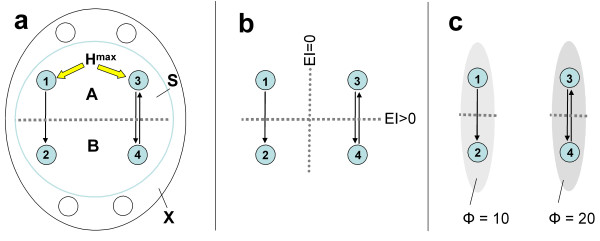
BACKGROUND: Consciousness poses two main problems. The first is understanding the conditions that determine to what extent a system has conscious experience. For instance, why is our consciousness generated by certain parts of our brain, such as the thalamocortical system, and not by other parts, such as the cerebellum? And why are we conscious during wakefulness and much less so during dreamless sleep? The second problem is understanding the conditions that determine what kind of consciousness a system has. For example, why do specific parts of the brain contribute specific qualities to our conscious experience, such as vision and audition? PRESENTATION OF THE HYPOTHESIS: This paper presents a theory about what consciousness is and how it can be measured. According to the theory, consciousness corresponds to the capacity of a system to integrate information. This claim is motivated by two key phenomenological properties of consciousness: differentiation - the availability of a very large number of conscious experiences; and integration - the unity of each such experience. The theory states that the quantity of consciousness available to a system can be measured as the Phi value of a complex of elements. Phi is the amount of causally effective information that can be integrated across the informational weakest link of a subset of elements. A complex is a subset of elements with Phi>0 that is not part of a subset of higher Phi. The theory also claims that the quality of consciousness is determined by the informational relationships among the elements of a complex, which are specified by the values of effective information among them. Finally, each particular conscious experience is specified by the value, at any given time, of the variables mediating informational interactions among the elements of a complex. TESTING THE HYPOTHESIS: The information integration theory accounts, in a principled manner, for several neurobiological observations concerning consciousness. As shown here, these include the association of consciousness with certain neural systems rather than with others; the fact that neural processes underlying consciousness can influence or be influenced by neural processes that remain unconscious; the reduction of consciousness during dreamless sleep and generalized seizures; and the time requirements on neural interactions that support consciousness. IMPLICATIONS OF THE HYPOTHESIS: The theory entails that consciousness is a fundamental quantity, that it is graded, that it is present in infants and animals, and that it should be possible to build conscious artifacts.
Verified 2026-11-22 · 1 reference not checked yet
Overview
CoChat Summary
TL;DR
Tononi proposes that consciousness corresponds to a system’s capacity to integrate information, measured as the Φ value of a complex. The theory links the quantity of consciousness to integrated information and its quality to the effective information matrix among a complex’s elements.
Key findings
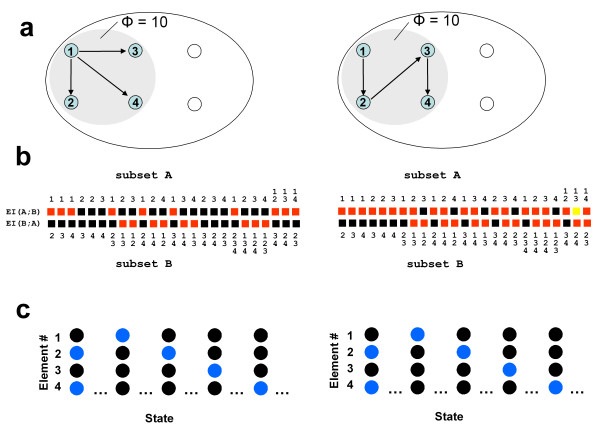
- Consciousness is identified with information integration: quantity is given by Φ, the effective information across a complex’s minimum information bipartition; a complex is a subset with Φ>0 not included in a larger subset of higher Φ.
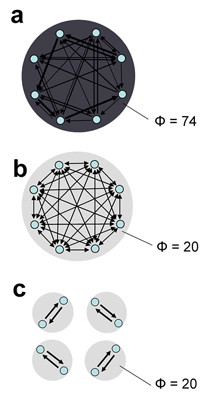
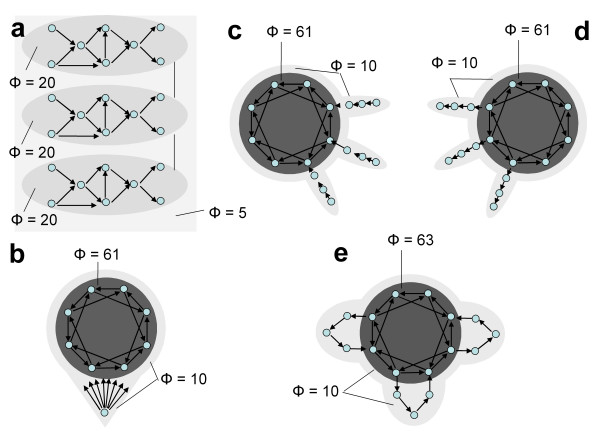
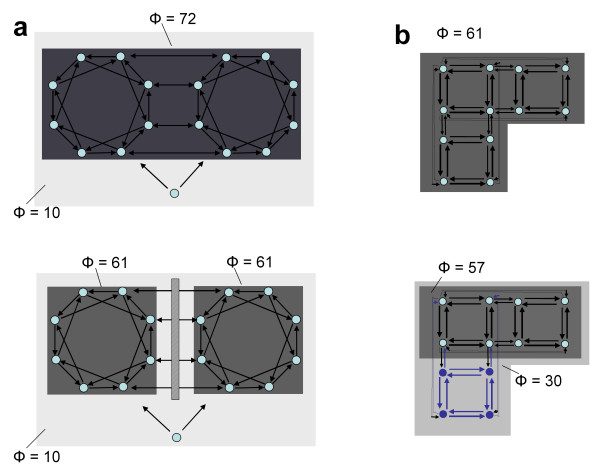
- Simulations illustrate the theory: optimized connection matrices with functional specialization and integration yield Φ = 74 bits; a strongly modular network yields Φ = 20 bits for each of three modules; joining supramodal, visual, and auditory subsets yields a main complex with Φ = 61 bits, which changes to 57 bits when the auditory subset is functionally disconnected.
- The theory accounts for why thalamocortical systems contribute to consciousness while cerebellum, reticular formation, sensory afferents, motor efferents, and cortico-subcortical loops may influence it without directly contributing; split-brain sectioning replaces one main complex with two smaller complexes.
- Time requirements: fully formed sensory experience takes up to 100–200 ms, a single conscious moment does not extend beyond 2–3 seconds, direct cortical stimulation may need up to 500 ms for conscious sensation, and modeled visual areas require at least 80 ms for constructive interactions.
Methods
- Theoretical hypothesis paper using phenomenological thought experiments (photodiode, camera, split-brain) and formal information-theoretic definitions: entropy, mutual information, effective information, Φ, complexes, and qualia space.
- No new human or animal empirical sample is reported; the paper draws on existing neurobiological observations and simplified computer models/simulations to illustrate predictions.
- Main analysis is conceptual derivation plus illustrative simulation results; no statistical inference or direct experimental measurement of Φ in brains is presented.
Limitations
- Stated: the framework’s validity rests on its ability to account coherently for phenomenological and brain facts; stringent tests require concurrent broad-region stimulation/recording and realistic large-scale anatomical models; better cortical neuroanatomy is needed; it is hard to say which cortical circuits are informationally insulated; measuring Φ accurately in infants, animals, coma/vegetative states, etc. will not be easy.
- Evident: no direct empirical measurement of Φ in human brains is presented; the simulations are simplified and illustrative; several predictions remain untested.
Model-written summary. Check it against the paper before relying on it.
Integrity signals
Registry
Cites
Statistics
Figures
Verification
Claims the paper makes
7 Valid · 4 Not valid · 35 Not checked · 140 Own results and interpretations
The sources with a verdict support this claim; the rest weren’t checked yet, have no full text we could read, or their verdicts aren’t rated yet.
In the paper
“Electrophysiological and imaging studies also indicate that neural activity that correlates with conscious experience is widely distributed over the cortex (e.g [20,26-29]).”
§ An information integration theory of consciousness > Testing the hypothesis > Consciousness, information integration, and the brain
What the sources say
- Not checked — no full text of the sourcecites [20] Rees G Kreiman G Koch C Neural correlates of consciousness in humans Nat Rev Neurosci 2002 3 261 270 11967556 10.1038/nrn783 source
- Supportedcites [26] Srinivasan R Russell DP Edelman GM Tononi G Increased synchronization of neuromagnetic responses during conscious perception J Neurosci 1999 19 5435 5448 10377353 PMC6782339 source
The Conclusion reports that changes associated with conscious perception are distributed across the brain, extending beyond visual areas to anterior regions, including frontal areas. The Discussion likewise describes changes involving distant occipital, parietal, temporal, and frontal sensor sites. This supports the citing sentence’s broad claim. (LLM, conf=0.90)
- Not checked — no full text of the sourcecites [27] McIntosh AR Rajah MN Lobaugh NJ Interactions of prefrontal cortex in relation to awareness in sensory learning Science 1999 284 1531 1533 10348741 10.1126/science.284.5419.1531 source
- Not checked — no full text of the sourcecites [28] Vuilleumier P Sagiv N Hazeltine E Poldrack RA Swick D Rafal RD Gabrieli JD Neural fate of seen and unseen faces in visuospatial neglect: a combined event-related functional MRI and event-related potential study Proc Natl Acad Sci U S A 2001 98 3495 3500 11248106 10.1073/pnas.051436898 PMC30681 source
- Not checked — no full text of the sourcecites [29] Cosmelli D David O Lachaux JP Martinerie J Garnero L Renault B Varela F Waves of consciousness: ongoing cortical patterns during binocular rivalry Neuroimage 2004 23 128 140 15325359 10.1016/j.neuroimage.2004.05.008 source
hedgedstates an association- Asserted: passes — The authors put it forward as true.
- Checkable: passes — It can be checked against evidence.
- Load-bearing: passes — The paper’s conclusions depend on it.
- Based: passes — The paper gives a reason why it holds.
The cited sources support only part of this claim — read each source’s verdict below.
In the paper
“the organization of the connections is such that individual patches of cerebellar cortex tend to be activated independently of one another, with little interaction possible between distant patches [41,42].”
§ An information integration theory of consciousness > Testing the hypothesis > Consciousness, information integration, and the brain
What the sources say
- Partly supportedcites [41] Cohen D Yarom Y Patches of synchronized activity in the cerebellar cortex evoked by mossy-fiber stimulation: questioning the role of parallel fibers Proc Natl Acad Sci U S A 1998 95 15032 15036 9844010 10.1073/pnas.95.25.15032 PMC24570 sourceExperimental — accuracy not yet measured
The Results report a localized patch of synchronized activity after white-matter stimulation, and the Discussion says this activity occurs simultaneously across the patch rather than propagating along parallel fibers. That supports localized activation, but the paper does not establish that separate patches activate independently or that little interaction is possible between distant patches. The indexed passages provide no page number. (LLM, conf=0.84)
- Not checked — no full text of the sourcecites [42] Bower JM The organization of cerebellar cortical circuitry revisited: implications for function Ann N Y Acad Sci 2002 978 135 155 12582048 source
plain- Asserted: passes — The authors put it forward as true.
- Checkable: passes — It can be checked against evidence.
- Load-bearing: passes — The paper’s conclusions depend on it.
- Based: passes — The paper gives a reason why it holds.
- Partly supported
Every source the paper cites for this claim was checked and supports it.
In the paper
“Further simulations show that it is possible to construct a large complex of high Φ by joining smaller complexes through reciprocal connections [8].”
§ An information integration theory of consciousness > Testing the hypothesis > Consciousness, information integration, and the brain
What the sources say
- Supportedcites [8] Tononi G Sporns O Measuring information integration BMC Neurosci 2003 4 31 14641936 10.1186/1471-2202-4-31 PMC331407 source
The Results section (‘Scaling and joining complexes’) reports that two smaller optimized networks joined by reciprocal connections formed a larger complex with substantially increased Φ. The Discussion (‘Information integration and basic neuroanatomy’) explicitly says high Φ can be achieved by joining smaller complexes through reciprocal connections. The demonstrated construction used two eight-element components; the paper does not establish that the method works at arbitrary scale. (LLM, conf=0.95)
hedgedstates a cause- Asserted: passes — The authors put it forward as true.
- Checkable: passes — It can be checked against evidence.
- Load-bearing: passes — The paper’s conclusions depend on it.
- Based: passes — The paper gives a reason why it holds.
- Rests on an assumption not shown here.
- Supported
The cited sources support only part of this claim — read each source’s verdict below.
In the paper
“For example, the ability of a system to integrate information grows as that system incorporates statistical regularities from its environment and learns [14].”
§ An information integration theory of consciousness > Implications of the hypothesis
What the sources say
- Partly supportedcites [14] Tononi G Sporns O Edelman GM A complexity measure for selective matching of signals by the brain Proceedings of the National Academy of Sciences of the United States of America 1996 93 3422 3427 8622951 10.1073/pnas.93.8.3422 PMC39624 sourceExperimental — accuracy not yet measured
The introduction (p. 1) says that neural connectivity tends to match environmental signals more closely through development and experience, and the Discussion (p. 5) links increased mutual information to greater functional integration. But the Results (p. 3) note that matching complexity and neural complexity can sometimes change independently, so the paper does not establish that integration necessarily grows whenever a system learns environmental regularities. (LLM, conf=0.82)
plainstates a cause- Asserted: passes — The authors put it forward as true.
- Checkable: passes — It can be checked against evidence.
- Load-bearing: unclear — It is unclear whether the paper’s conclusions depend on it.
- Based: passes — The paper gives a reason why it holds.
- Partly supported
Every source the paper cites for this claim was checked and supports it.
In the paper
“Phenomena such as the attentional blink, where a fixed sensory input may at times make it to consciousness and at times not, may also be due to changes in functional connectivity: access to the main thalamocortical complex may be enabled or not based on dynamics intrinsic to the complex [52].”
§ An information integration theory of consciousness > Testing the hypothesis > Consciousness, information integration, and the brain
What the sources say
- Supportedcites [52] Dehaene S Sergent C Changeux JP A neuronal network model linking subjective reports and objective physiological data during conscious perception Proc Natl Acad Sci U S A 2003 100 8520 8525 12829797 10.1073/pnas.1332574100 PMC166261 source
The Results report that, under the same simulated attentional-blink conditions, spontaneous fluctuations can determine whether activity reaches self-amplifying global access or remains transient and bottom-up. They also report reduced long-distance crosscorrelations when T2 is blinked. This supports the citing sentence’s hedged account of dynamically enabled access, with ‘functional connectivity’ referring to changing coordination rather than a change in the model’s fixed connections. (LLM, conf=0.88)
hedgedstates a possible cause- Asserted: passes — The authors put it forward as true.
- Checkable: passes — It can be checked against evidence.
- Load-bearing: unclear — It is unclear whether the paper’s conclusions depend on it.
- Based: passes — The paper gives a reason why it holds.
- Supported
121 more claims
Create a free account to see all 186 claims and every source verdict.
- It may state two separate claims as one. 41
- Probably not a substantial claim. 27
- The quote only partly states this claim. 1
Claims other papers make about this one
Each is checked against this paper’s own text: does it say what the citing paper says it does?
The source backs part of the claim, not all of it — or backs it for a different population, condition or comparison.
In the citing paper
“IIT takes an axiomatic approach, grounding itself in five essential properties of consciousness: existence, composition, information, integration, and exclusion (Tononi, 2004; Oizumi et al., 2014).”
From Can "consciousness" be observed from large language model (LLM) internal states? Dissecting LLM representations obtained from Theory of Mind test with Integrated Information Theory and Span Representation analysis (2025) · cites this paper as Tononi, 2004
Experimental — accuracy not yet measuredThe source backs part of the claim, not all of it — or backs it for a different population, condition or comparison.
In the citing paper
“Thus, the results confirm the prediction of IIT regarding the causal decomposability of LLMs [12] and ground it empirically via behaviorally interpretable metrics (e.g., perplexity [15]).”
From Why large language models cannot possess consciousness: an integrated information theory perspective (2025) · cites this paper as [12]
Experimental — accuracy not yet measuredThe source backs part of the claim, not all of it — or backs it for a different population, condition or comparison.
In the citing paper
“The principal theoretical justification for IIT is the conjecture that, in perception, what is absent may be more significant to consciousness than what is present [2,3].”
From The Problem with Phi: A Critique of Integrated Information Theory (2015) · cites this paper as [2]
Experimental — accuracy not yet measuredThe source backs part of the claim, not all of it — or backs it for a different population, condition or comparison.
In the citing paper
“It was the first (and arguably may still be the lone) theory that makes precise quantitative predictions about both the contents and level of consciousness (Tononi 2004).”
From Falsification and consciousness (2021) · cites this paper as Tononi 2004
Experimental — accuracy not yet measuredThe cited source says what the claim attributes to it.
In the citing paper
“from which it is derived that consciousness corresponds to integrated information.”
From Hard criteria for empirical theories of consciousness (2021) · cites this paper as Tononi, 2004
13 more claims about this paper
Create a free account to see every claim other papers make about this one.
Self-check
Percentages, sums and reported differences re-computed from the paper’s own numbers.
Each contradiction between two passages listed here was confirmed by an independent check.
Rated minor: it would not touch a result — a value no result rests on, a p-value that stays on the same side of the significance level, or a conflict that is clerical, resolved elsewhere in the paper, or outside its own findings.
In the paper
§ An information integration theory of consciousness > Presentation of the hypothesis > The first problem: What determines to what extent a system has conscious experience?
“In summary, to measure EI(B→A), one needs to apply maximum entropy to the outputs from B, and determine the entropy of the responses of B that are induced by inputs from A.”
§ An information integration theory of consciousness > Presentation of the hypothesis > The first problem: What determines to what extent a system has conscious experience?
“One way is to divide S into two complementary parts A and B, and evaluate the responses of B that can be caused by all possible inputs originating from A.”
Citations
Cites
A Mathematical Theory of Communication
Shannon, C. E. (1948) · Bell System Technical Journal · doi:10.1002/j.1538-7305.1948.tb01338.x · Cited by 88,486
The Mathematical Theory of Communication
Shannon, C. E., Weaver, W., & Wiener, N. (1950) · Physics Today · doi:10.1063/1.3067010 · Cited by 9,801
The feeling of what happens: body and emotion in the making of consciousness
(2000) · Choice Reviews Online · doi:10.5860/choice.37-6553 · Cited by 5,998
Brain stem reticular formation and activation of the EEG
Moruzzi, G., & Magoun, H. W. (1949) · Electroencephalography and Clinical Neurophysiology · doi:10.1016/0013-4694(49)90219-9 · Cited by 4,307 · cited 1×
“Conversely, stimulating the reticular formation can arouse a comatose animal and activate the thalamocortical system, making it ready to respond to stimuli [43].”
Background(1988) · Cited by 3,656
Dynamic predictions: Oscillations and synchrony in top–down processing
Engel, A. K., Fries, P., & Singer, W. (2001) · Nature Reviews Neuroscience · doi:10.1038/35094565 · Cited by 3,454 · cited 1×
“On the integration side, the specialized elements of the thalamocortical system are linked by an extended network of intra- and inter-areal connections that permit rapid and effective interactions within and between areas [31-35].”
BackgroundAlexander, G. E., Crutcher, M. D., & DeLong, M. R. (1990) · PubMed · Cited by 2,731
Towards a cognitive neuroscience of consciousness: basic evidence and a workspace framework
Dehaene, S. (2001) · Cognition · doi:10.1016/s0010-0277(00)00123-2 · Cited by 2,498 · cited 1×
“Opinions differ, however, about the contribution of certain cortical areas [1,16-21].”
BackgroundMathematical Theory of Communication
(2009) · Encyclopedia of Communication Theory · doi:10.4135/9781412959384.n229 · Cited by 2,492
The distinct modes of vision offered by feedforward and recurrent processing
Lamme, V. A. F., & Roelfsema, P. R. (2000) · Trends in Neurosciences · doi:10.1016/s0166-2236(00)01657-x · Cited by 2,338 · cited 1×
“Thus, the firing of the same cortical neurons may correlate with consciousness at certain times, but not at other times [57].”
Background
Research works printed but not linked: 2
- Zeki S A vision of the brain 1993 Oxford; Boston: Blackwell Scientific Publications
- Tononi G Galileo e il fotodiodo 2003 Bari: Laterza
Cited by
Items 101–200 of 1,727
Safron, A. (2020) · Frontiers in Artificial Intelligence · doi:10.3389/frai.2020.00030 · Cited by 133
“IWMT focuses on Integrated Information Theory (IIT) (Tononi, 2004; Tononi et al., 2016) and Global Neuronal Workspace Theory (GNWT) (Baars, 1993; Dehaene, 2014) as two of the most well-known theories of consciousness.”
BackgroundSanders, R. (2011) · Medical Hypotheses · doi:10.1016/j.mehy.2011.03.048 · Cited by 164
“Recent evidence supports the proposition that consciousness relates to a state of integrated information [4] and that a breakdown of the integration of information is associated with reduced consciousness [5,6].”
BackgroundExplanatory correlates of consciousness: theoretical and computational challenges.
Seth, A. (2009) · Cognitive Computation · doi:10.1007/s12559-009-9007-x · Cited by 146
“These include ‘neural complexity’ [97], ‘information integration’ [93] and ‘causal density’ [76, 77].”
BackgroundInfluentialSchröter, M. S., Spoormaker, V. I., Schorer, A., Wohlschläger, A., Czisch, M., Kochs, E. F., Zimmer, C., Hemmer, B., Schneider, G., Jordan, D., et al. (2012) · The Journal of Neuroscience · doi:10.1523/jneurosci.6046-11.2012 · Cited by 143
“How these findings relate to recent models of spontaneous brain activity and conscious processing (Dehaene and Changeux, 2005) or information integration (Tononi, 2004) has yet to be tested systematically.”
BackgroundQuantifying Cortical EEG Responses to TMS in (Un)consciousness
Sarasso, S., Rosanova, M., Casali, A. G., Casarotto, S., Fecchio, M., Boly, M., Gosseries, O., Tononi, G., Laureys, S., & Massimini, M. (2014) · Clinical EEG and Neuroscience · doi:10.1177/1550059413513723 · Cited by 142
“Unlike other measures based on the entropy of spontaneous signals,(27) these theoretical measures share the insight that the kind of complexity that is relevant for consciousness should be based on the interactivity among different parts of the brain.(10,28) Unfortunately, the application of C N , Φ and C d to actual…”
BackgroundSelf-citationSpontaneous brain activity as a source of ideal 1/f noise
Allegrini, P., Menicucci, D., Bedini, R., Fronzoni, L., Gemignani, A., Grigolini, P., West, B. J., & Paradisi, P. (2009) · Physical Review E · doi:10.1103/physreve.80.061914 · Cited by 168
Evolution of consciousness: Phylogeny, ontogeny, and emergence from general anesthesia
Mashour, G. A., & Alkire, M. T. (2013) · Proceedings of the National Academy of Sciences · doi:10.1073/pnas.1301188110 · Cited by 144
Lee, U., Mashour, G. A., Kim, S., Noh, G.-J., & Choi, B.-M. (2009) · Consciousness and Cognition · doi:10.1016/j.concog.2008.10.005 · Cited by 141
“There has been a particular focus on functional and effective connectivity of the thalamocortical and corticocortical systems due to their ability to integrate the activities of functionally diverse cognitive modules (Tononi, & Sporns, 2003; Tononi, 2004).”
BackgroundMethodResultInfluentialDynamic Repertoire of Intrinsic Brain States Is Reduced in Propofol-Induced Unconsciousness
Hudetz, A. G., Liu, X., & Pillay, S. (2015) · Brain Connectivity · doi:10.1089/brain.2014.0230 · Cited by 141
“According to this hypothesis, either a reduction in the number of available states or a reduction in the frequency of their dynamic transitions could lead to a suppression of consciousness.”
Hutchison, R. M., Hutchison, M., Manning, K. Y., Menon, R. S., & Everling, S. (2014) · Human Brain Mapping · doi:10.1002/hbm.22583 · Cited by 139
“The information integration theory of consciousness suggests that the capacity of a system to integrate information across local and remote brain areas is the quintessential element of consciousness [Tononi, 2004].”
BackgroundInfluentialCan the macro beat the micro? Integrated information across spatiotemporal scales
Hoel, E. P., Albantakis, L., Marshall, W., & Tononi, G. (2016) · Neuroscience of Consciousness · doi:10.1093/nc/niw012 · Cited by 140
“Hence, IIT predicts that the PSC must have maximum intrinsic cause–effect power at the level of macro elements and macro intervals, rather than at the level of micro elements and micro intervals (Tononi, 2004; Marom, 2010; Chalmers, 2013).”
BackgroundInfluentialSelf-citationMonti, M. M., Lutkenhoff, E. S., Rubinov, M., Boveroux, P., Vanhaudenhuyse, A., Gosseries, O., Bruno, M.-A., Noirhomme, Q., Boly, M., & Laureys, S. (2013) · PLoS Computational Biology · doi:10.1371/journal.pcbi.1003271 · Cited by 138
“information is treated and integrated within the brain [1,9].”
InfluentialConsciousness in the Universe: Neuroscience, Quantum Space-Time Geometry and Orch OR Theory
Penrose, R., & Hameroff, S. R. (2011) · Cited by 222
Dynamic functional connectivity and brain metastability during altered states of consciousness
Cavanna, F., Vilas, M. G., Palmucci, M., & Tagliazucchi, E. (2018) · NeuroImage · doi:10.1016/j.neuroimage.2017.09.065 · Cited by 137
“While a number of mechanistic models have been formulated, our focus is on those based on the phenomenology of consciousness that were pioneered by Tononi & Edelman (Tononi and Edelman, 1998; Edelman and Tononi, 2000; Tononi, 2004).”
BackgroundInfluentialIf materialism is true, the United States is probably conscious
Schwitzgebel, E. (2014) · Philosophical Studies · doi:10.1007/s11098-014-0387-8 · Cited by 163
Chella, A., & Manzotti, R. (2010) · Springer eBooks · doi:10.1007/978-1-4419-1452-1_20 · Cited by 159
Uehara, T., Yamasaki, T., Okamoto, T., Koike, T., Kan, S., Miyauchi, S., Kira, J.-I., & Tobimatsu, S. (2014) · Cerebral Cortex · doi:10.1093/cercor/bht004 · Cited by 136
“The latter is essential for integrative cognitive processing and considerably deteriorates during sleep (Tononi 2004; Dehaene and Changeux 2011).”
BackgroundFrancken, J. C., Beerendonk, L., Molenaar, D., Fahrenfort, J. J., Kiverstein, J. D., Seth, A. K., & van Gaal, S. (2022) · Neuroscience of Consciousness · doi:10.1093/nc/niac011 · Cited by 136
“…mean: 2.76, SD: 0.91, ‘promising’ responses: 39.2%; (Lamme 2006, 2010)], ‘integrated information theory’ [IIT; mean: 2.80, SD: 1.15, ‘promising’ responses: 44.9%; (Tononi 2004, 2008)], and ‘sensorimotor theory (SMT)’ [mean: 2.95, SD: 0.98, ‘promising’ responses: 33.6%; (O’Regan and Noë 2001)].”
InfluentialNeural Signatures of Conscious Face Perception in an Inattentional Blindness Paradigm
Shafto, J. P., & Pitts, M. A. (2015) · Journal of Neuroscience · doi:10.1523/jneurosci.0145-15.2015 · Cited by 128
“This specific type of interaction may be critical for the integration of sensory information thought to underlie our moment-to-moment conscious experience (Tononi, 2004; Fahrenfort et al., 2012; Tononi, 2012; Mudrik et al., 2014).”
BackgroundThe Transition to Minimal Consciousness through the Evolution of Associative Learning
Bronfman, Z. Z., Ginsburg, S., & Jablonka, E. (2016) · Frontiers in Psychology · doi:10.3389/fpsyg.2016.01954 · Cited by 133
“(4) Unity through integration and exclusion, and global accessibility are the features of consciousness highlighted by Tononi’s information-integration theory (IIT; Tononi, 2004; Tononi et al., 2016).”
BackgroundThe vigilant sleeper: neural mechanisms of sensory (de)coupling during sleep
Andrillon, T., & Kouider, S. (2020) · Current Opinion in Physiology · doi:10.1016/j.cophys.2019.12.002 · Cited by 133
Massimini, M., Tononi, G., & Huber, R. (2009) · European Journal of Neuroscience · doi:10.1111/j.1460-9568.2009.06720.x · Cited by 132
“does consciousness fade? A recently formulated theory, the integrated information theory of consciousness (IITC; Tononi, 2004), may help in addressing this”
BackgroundInfluentialSelf-citationProgress in machine consciousness
Gamez, D. (2007) · Consciousness and Cognition · doi:10.1016/j.concog.2007.04.005 · Cited by 179
“Many people are working on the simulation of architectures that have been linked to human consciousness, such as Baars' (1988) global workspace, neural synchronization (Crick, 1994) or systems with high information integration (Tononi, 2004).”
BackgroundIntegrating the Science of Consciousness and Anesthesia
Mashour, G. A. (2006) · Anesthesia & Analgesia · doi:10.1213/01.ane.0000232442.69757.4a · Cited by 130
Why Does Consciousness Fade in Early Sleep?
Tononi, G., & Massimini, M. (2008) · Annals of the New York Academy of Sciences · doi:10.1196/annals.1417.024 · Cited by 130
Self-citationProcessed electroencephalogram in depth of anesthesia monitoring
Palanca, B. J. A., Mashour, G. A., & Avidan, M. S. (2009) · Current Opinion in Anaesthesiology · doi:10.1097/aco.0b013e3283304032 · Cited by 124
Marshall, N. J., Timme, N. M., Bennett, N., Ripp, M., Lautzenhiser, E., & Beggs, J. M. (2016) · Frontiers in Physiology · doi:10.3389/fphys.2016.00250 · Cited by 184
Exploring Brain Function from Anatomical Connectivity
Zamora-López, G., Zhou, C., & Kurths, J. (2011) · Frontiers in Neuroscience · doi:10.3389/fnins.2011.00083 · Cited by 119
Propagated infra-slow intrinsic brain activity reorganizes across wake and slow wave sleep
Mitra, A., Snyder, A. Z., Tagliazucchi, E., Laufs, H., & Raichle, M. E. (2015) · eLife · doi:10.7554/elife.10781 · Cited by 122
“These observations support theories postulating that reduced subjective awareness (‘unconsciousness’) during SWS results from loss of integration across networks (Mashour, 2005; Tononi, 2004).”
BackgroundIndicators and criteria of consciousness in animals and intelligent machines: an inside-out approach
Pennartz, C. M. A., Farisco, M., & Evers, K. (2019) · Frontiers in Systems Neuroscience · doi:10.3389/fnsys.2019.00025 · Cited by 121
“(iv) Integration : the elements of a scene or situation we perceive are experienced as a unified whole, and this ‘‘in-one-piece’’ property is not compatible with subjects sustaining different aware experiences at the same time (see Tononi, 2004).”
Disconnecting Consciousness: Is There a Common Anesthetic End Point?
Hudetz, A. G., & Mashour, G. A. (2016) · Anesthesia & Analgesia · doi:10.1213/ane.0000000000001353 · Cited by 121
Measures of entropy and complexity in altered states of consciousness
Mateos, D. M., Erra, R. G., Wennberg, R. A., & Velázquez, J. L. P. (2017) · Cognitive Neurodynamics · doi:10.1007/s11571-017-9459-8 · Cited by 133
“sensory-motor inputs (Tononi 2004); it is then conceivable”
BackgroundGrossberg, S. (2017) · Neural Networks · doi:10.1016/j.neunet.2016.11.003 · Cited by 120
The Problem with Phi: A Critique of Integrated Information Theory
Cerullo, M. A. (2015) · PLOS Computational Biology · doi:10.1371/journal.pcbi.1004286 · Cited by 114
“The principal theoretical justification for IIT is the conjecture that, in perception, what is absent may be more significant to consciousness than what is present [2,3].”
BackgroundLiu, X., Lauer, K. K., Ward, B. D., Rao, S. M., Li, S., & Hudetz, A. G. (2012) · Human Brain Mapping · doi:10.1002/hbm.21385 · Cited by 118
“From a theoretical perspective, neural processes giving rise to conscious perception and memory require sufficient complexity of neuronal information processing and adequate integration among distributed neural systems in the global workspace [Baars and Franklin, 2003; Tononi, 2004, 2008].”
BackgroundWhat the brain's intrinsic activity can tell us about consciousness? A tri-dimensional view
Northoff, G. (2012) · Neuroscience & Biobehavioral Reviews · doi:10.1016/j.neubiorev.2012.12.004 · Cited by 131
Borghini, G., Aricò, P., Flumeri, G. D., Cartocci, G., Colosimo, A., Bonelli, S., Golfetti, A., Imbert, J.-P., Granger, G., Benhacène, R., et al. (2017) · Scientific Reports · doi:10.1038/s41598-017-00633-7 · Cited by 139
A mathematical model of embodied consciousness.
Rudrauf, D., Bennequin, D., Granic, I., Landini, G., Friston, K., & Williford, K. (2017) · Journal of Theoretical Biology · doi:10.1016/j.jtbi.2017.05.032 · Cited by 118
“Our framework is also compatible with the general hypothesis that consciousness has evolved as a mechanism that optimizes information integration [17,35], even though we do not formally relate our model to this framework here.”
ResultPyPhi: A toolbox for integrated information theory
Mayner, W. G. P., Marshall, W., Albantakis, L., Findlay, G., Marchman, R., & Tononi, G. (2018) · PLOS Computational Biology · doi:10.1371/journal.pcbi.1006343 · Cited by 118
“…to itself); (2) composition (it must be composed of parts that have causal power within the whole); (3) information (its causal power must be specific); (4) integration (its causal power must not be reducible to that of its parts); and (5) exclusion (it must be maximally irreducible) [1–5].”
Self-citationThe biological function of consciousness
Earl, B. (2014) · Frontiers in Psychology · doi:10.3389/fpsyg.2014.00697 · Cited by 117
“Some examples are: higher-order thought (Rosenthal, 1986, 2000), integrated information (Tononi et al., 1998; Tononi, 2004), neural correlates of consciousness (Crick and Koch, 1990; Koch, 2004), re-entrant interaction (Edelman, 1992, 2003), quantum coherence (Hameroff, 1994; Hameroff and Penrose,…”
BackgroundJobst, B. M., Hindriks, R., Laufs, H., Tagliazucchi, E., Hahn, G., Ponce-Alvarez, A., Stevner, A. B. A., Kringelbach, M. L., & Deco, G. (2017) · Scientific Reports · doi:10.1038/s41598-017-04522-x · Cited by 114
The timing of the cognitive cycle
Madl, T., Baars, B. J., & Franklin, S. (2011) · PLoS ONE · doi:10.1371/journal.pone.0014803 · Cited by 116
“In the neuroscientific study of consciousness, this idea of consciousness having an integrative function has proven very useful, and is supported by much recent evidence [34–36] (see also the Results section).”
An integrative, multiscale view on neural theories of consciousness
Storm, J. F., Klink, P. C., Aru, J., Senn, W., Goebel, R., Pigorini, A., Avanzini, P., Vanduffel, W., Roelfsema, P. R., Massimini, M., et al. (2024) · Neuron · doi:10.1016/j.neuron.2024.02.004 · Cited by 114
“For example, GNWT focuses on AC, whereas RPT, IIT, and PP/NREP aim to explain primarily PC.”
InfluentialTanabe, S., Mohanty, R., Lindroth, H. L., Casey, C., Ballweg, T., Farahbakhsh, Z. Z., Krause, B. M., Prabhakaran, V., Banks, M. I., & Sanders, R. (2020) · British Journal of Anaesthesia · doi:10.1016/j.bja.2020.02.027 · Cited by 122
The Attitudinal Entropy (AE) Framework as a General Theory of Individual Attitudes
Dalege, J., Borsboom, D., van Harreveld, F., & van der Maas, H. L. J. (2018) · Psychological Inquiry · doi:10.1080/1047840x.2018.1537246 · Cited by 117
General Anesthesia: A Probe to Explore Consciousness
Bonhomme, V. L., Staquet, C., Montupil, J., Defresne, A., Kirsch, M., Martial, C., Vanhaudenhuyse, A., Chatelle, C., Larroque, S. K., Raimondo, F., et al. (2019) · Frontiers in Systems Neuroscience · doi:10.3389/fnsys.2019.00036 · Cited by 147
“Aside from the prerequisite of cortical arousal, which is controlled by sub-cortical sleep-wake cycle regulating systems, the complex phenomena of consciousness and subjective experience/selfhood mainly entail within and between neural networks interactions to generate and integrate information (Tononi, 2004).”
BackgroundThe use of information theory in evolutionary biology
Adami, C. (2012) · Annals of the New York Academy of Sciences · doi:10.1111/j.1749-6632.2011.06422.x · Cited by 109
The strength of weak integrated information theory
Mediano, P. A. M., Rosas, F. E., Bor, D., Seth, A. K., & Barrett, A. B. (2022) · Trends in Cognitive Sciences · doi:10.1016/j.tics.2022.04.008 · Cited by 108
“0, which was based on the number of possible states of the system and the statistical interdependencies between system components [73,74].”
BackgroundAndersen, L. M., Pedersen, M. N., Sandberg, K., & Overgaard, M. (2016) · Cerebral Cortex · doi:10.1093/cercor/bhv108 · Cited by 105
“In HOT (Lau and Rosenthal 2011) and Information Integration Theory (Tononi 2004), it is proposed that consciousness is associated with prefrontal activations.”
Tagliazucchi, E., von Wegner, F., Morzelewski, A., Brodbeck, V., Borisov, S. V., Jahnke, K., & Laufs, H. (2013) · NeuroImage · doi:10.1016/j.neuroimage.2012.12.073 · Cited by 121
“This property is shared by the minimum information partition (Tononi, 2004), which is used to define the amount of integrated information generated by the system, and hence is an obvious starting point to analytical hypothesis testing about the relationship between information-theoretical measures…”
Intraoperative Awareness: From Neurobiology to Clinical Practice
Mashour, G. A., Orser, B. A., Avidan, M. S., & Warner, D. S. (2011) · Anesthesiology · doi:10.1097/aln.0b013e31820fc9b6 · Cited by 106
Brain Connectivity in Disorders of Consciousness
Boly, M., Massimini, M., Garrido, M. I., Gosseries, O., Noirhomme, Q., Laureys, S., & Soddu, A. (2012) · Brain Connectivity · doi:10.1089/brain.2011.0049 · Cited by 104
“…provide an overall, broad estimation of the effective connectivity that may constitute an advantage when studying DOC; indeed, theoretical works (Tononi, 2004; Tononi and Koch, 2008), experimental data (Alkire et al., 2008), and clinical evidence (Markowitsch and Kessler, 2000; Mataro et al.,…”
Consciousness and cognition in plants
Segundo‐Ortin, M., & Calvo, P. (2021) · Wiley Interdisciplinary Reviews Cognitive Science · doi:10.1002/wcs.1578 · Cited by 146
“Even though there are substantial disagreements on how to compute Φ (see Mediano et al., 2018), proponents of IIT defend that the theory provides the means needed to investigate the physical substrate of consciousness.”
BackgroundInfluentialAlbantakis, L., Hintze, A., Koch, C., Adami, C., & Tononi, G. (2014) · PLoS Computational Biology · doi:10.1371/journal.pcbi.1003966 · Cited by 101
“correct in claiming that the capacity for information integration underlies consciousness [14,15,18,23], finding an increase in animats’ W values in complex environments would provide a plausible account of why and how consciousness evolved.”
BackgroundHoffman, D. D., & Prakash, C. (2014) · Frontiers in Psychology · doi:10.3389/fpsyg.2014.00577 · Cited by 103
“To the contrary, the accepted view is that aspects of neural dynamics—from quantum-gravity induced collapses of wavefunctions at microtubules [14] to informational properties of re-entrant thalamo-cortical loops [15]— cause, or give rise to, or are identical to, consciousness.”
Information Geometry on Complexity and Stochastic Interaction
Ay, N. (2015) · Entropy · doi:10.3390/e17042432 · Cited by 100
“In [10,11], Tononi and Sporns avoid such inconsistencies by injecting noise (maximum entropy distribution) into A and then measuring the effect in V \A.”
BackgroundPossible existence of optical communication channels in the brain
Kumar, S., Boone, K., Tuszyński, J., Barclay, P., & Simon, C. (2016) · Scientific Reports · doi:10.1038/srep36508 · Cited by 101
“, The Quest for Consciousness: A Neurobiological Approach (Roberts & Company, 2004) [5] Tononi, G.”
Cortical mechanisms of loss of consciousness: insight from TMS/EEG studies.
Massimini, M., Ferrarelli, F., Sarasso, S., & Tononi, G. (2013) · PubMed · doi:10.4449/aib.v150i2.1361 · Cited by 99
“The IITC also proposes a measure of Information Integration, Φ. Calculating Φ of a physical system requires measuring effective information (a measure of causality) and involves perturbing directly the system in all possible ways in order to count the number of different states (information) that can be discriminated…”
BackgroundSelf-citationConsciousness depends on integration between parietal cortex, striatum, and thalamus
Afrasiabi, M., Redinbaugh, M. J., Phillips, J. M., Kambi, N. A., Mohanta, S., Raz, A., Haun, A. M., & Saalmann, Y. B. (2021) · Cell Systems · doi:10.1016/j.cels.2021.02.003 · Cited by 95
“Some have used the striatum as an example brain area that does not directly contribute to consciousness (Boly et al., 2017; Tononi, 2004).”
BackgroundMethodThe feasibility of artificial consciousness through the lens of neuroscience
Aru, J., Larkum, M. E., & Shine, J. M. (2023) · Trends in Neurosciences · doi:10.1016/j.tins.2023.09.009 · Cited by 98
Two theories of consciousness: Semantic pointer competition vs. information integration
Thagard, P. R., & Stewart, T. C. (2014) · Consciousness and Cognition · doi:10.1016/j.concog.2014.07.001 · Cited by 102
“Tononi (2004) thinks that unity results from information integration, but we maintain that it results from mechanisms of binding and competition which can also explain the frequent disunity or disjointedness of competition.”
Preferential effect of isoflurane on top-down vs. bottom-up pathways in sensory cortex
Raz, A., Grady, S. M., Krause, B. M., Uhlrich, D. J., Manning, K. A., & Banks, M. I. (2014) · Frontiers in Systems Neuroscience · doi:10.3389/fnsys.2014.00191 · Cited by 97
“The first, the information integration theory of consciousness, proposes that consciousness relies on the dense interconnectivity within the TC network and the vast number of possible network states (Tononi, 2004).”
BackgroundInfluentialTagliazucchi, E., & Someren, E. J. W. V. (2017) · NeuroImage · doi:10.1016/j.neuroimage.2017.06.026 · Cited by 106
“The detection of modules and their associated Q in whole-brain FC networks during deep NREM sleep can be used to evaluate the predictions of the theory put forward by Tononi (2004).”
BackgroundMethodInfluentialEsser, S. K., Hill, S., & Tononi, G. (2009) · Journal of Neurophysiology · doi:10.1152/jn.00059.2009 · Cited by 97
“A recent theory has proposed that the capacity to integrate information is crucial to consciousness and that such integration requires a high degree of effective connectivity among disparate thalamocortical areas (Tononi 2004).”
BackgroundSelf-citationAnesthesia and neuroimaging: investigating the neural correlates of unconsciousness
MacDonald, A. A., Naçi, L., MacDonald, P. A., & Owen, A. M. (2015) · Trends in Cognitive Sciences · doi:10.1016/j.tics.2014.12.005 · Cited by 101
Fingelkurts, A. A., Fingelkurts, A. A., Bagnato, S., Boccagni, C., & Galardi, G. (2011) · Consciousness and Cognition · doi:10.1016/j.concog.2011.10.004 · Cited by 103
“This view is in line with conceptualizations of Hans Flohr (1991) and Giulio Tononi (2004, 2008) according to whom the brain should be able to generate consciousness to the extent that it has a large repertoire of available states 2 .”
How quantum brain biology can rescue conscious free will
Hameroff, S. (2012) · Frontiers in Integrative Neuroscience · doi:10.3389/fnint.2012.00093 · Cited by 95
“…axonal firings are preceded and caused by synchronized dendritic/somatic integrations, suggesting consciousness involves neuronal dendrites and cell bodies/soma, i.e., in integration phases of “integrateand-fire” sequences (Pribram, 1991; Eccles, 1992; Woolf and Hameroff, 2001; Tononi, 2004).”
BackgroundLlewellyn, S. (2013) · Behavioral and Brain Sciences · doi:10.1017/s0140525x12003135 · Cited by 95
“REM dreaming, like waking, is self-organizing (Kahn et al. 1997; 2000; Tononi 2004; 2008; Tononi & Edelman 1998).”
Split brain: divided perception but undivided consciousness
Pinto, Y., Neville, D. A., Otten, M., Corballis, P. M., Lamme, V. A. F., de Haan, E. H. F., Foschi, N., & Fabri, M. (2017) · Brain · doi:10.1093/brain/aww358 · Cited by 94
“This preserved unity of consciousness may be especially challenging for the two currently most dominant theories of consciousness, the Global Workspace theory (Baars, 1988, 2005; Dehaene and Naccache, 2001) and the Integration Information theory (Tononi, 2004, 2005; Tononi and Koch, 2015).”
BackgroundMashour, G. A. (2013) · Neuroscience & Biobehavioral Reviews · doi:10.1016/j.neubiorev.2013.09.009 · Cited by 92
The Neural Basis of the Dynamic Unconscious
Berlin, H. A. (2011) · Neuropsychoanalysis · doi:10.1080/15294145.2011.10773654 · Cited by 90
“When we become conscious of an event, there is evidence of synchronized activity between widely separated brain regions, particularly within the thalamocortical system (Rodriguez et al., 1999; Srinivasan et al., 1999; Tononi, 2004, 2005).”
BackgroundAllegrini, P., Paradisi, P., Menicucci, D., & Gemignani, A. (2010) · Frontiers in Physiology · doi:10.3389/fphys.2010.00128 · Cited by 92
“In the neurophysiological context, Tononi (2004) defined a complexity measure Φ that in fact describes this degree of diversity, relating it to the amount of consciousness, defined as the quantity of information that can be effectively integrated, i.e., processed by a collection of elements of the…”
BackgroundMograbi, D. C., & Morris, R. G. (2013) · Cognitive Neuroscience · doi:10.1080/17588928.2013.833899 · Cited by 97
“According to this view, awareness could be seen as the result of widespread connections between brain areas (Edelman, 1992; Tononi, 2004, 2007).”
BackgroundInvestigating Driver Fatigue versus Alertness Using the Granger Causality Network
Kong, W., Lin, W., Babiloni, F., Hu, S., & Borghini, G. (2015) · Sensors · doi:10.3390/s150819181 · Cited by 98
“It has been reported that consciousness depends on the brain’s ability to integrate information [22,23] and integration is usually better understood with effective connectivity [21].”
BackgroundOn the role of synchrony for neuron–astrocyte interactions and perceptual conscious processing
Pereira, A., & Furlan, F. A. (2009) · Journal of Biological Physics · doi:10.1007/s10867-009-9147-y · Cited by 94
“The process of information integration necessary to support conscious binding has already been studied [73, 74] using methods of statistical physics and mathematical information theory as the measure of informational content and its integration in quasiclosed systems.”
MethodSplit-brain: what we know now and why this is important for understanding consciousness
de Haan, E. H. F., Corballis, P. M., Hillyard, S. A., Marzi, C. A., Seth, A., Lamme, V. A. F., Volz, L., Fabri, M., Schechter, E., Bayne, T., et al. (2020) · Neuropsychology Review · doi:10.1007/s11065-020-09439-3 · Cited by 86
“Integrated Information Theory (Tononi, 2005; Tononi, 2004) has specifically addressed the issue of split brain (for instance in Tononi, 2004).”
BackgroundConsciousness & Brain Functional Complexity in Propofol Anaesthesia
Varley, T. F., Luppi, A. I., Pappas, I., Naçi, L., Ram, A., Owen, A. M., Menon, D. K., & Stamatakis, E. A. (2020) · Scientific Reports · doi:10.1038/s41598-020-57695-3 · Cited by 93
Dexmedetomidine Disrupts the Local and Global Efficiencies of Large-scale Brain Networks
Hashmi, J. A., Loggia, M. L., Khan, S., Gao, L., Kim, J., Napadow, V., Brown, E. N., & Akeju, O. (2017) · Anesthesiology · doi:10.1097/aln.0000000000001509 · Cited by 86
Brain Connectivity in Pathological and Pharmacological Coma
Noirhomme, Q., Soddu, A., Lehembre, R., Vanhaudenhuyse, A., Boveroux, P., Boly, M., & Laureys, S. (2010) · Frontiers in Systems Neuroscience · doi:10.3389/fnsys.2010.00160 · Cited by 83
Post-decision wagering measures metacognitive content, not sensory consciousness
Seth, A. K. (2008) · Consciousness and Cognition · doi:10.1016/j.concog.2007.05.008 · Cited by 82
“, 2005a) and explicit theoretical frameworks (Crick & Koch, 2003; Seth, Izhikevich, Reeke, & Edelman, 2006; Tononi, 2004), that together point to necessary and sufficient conditions for consciousness in humans and non-humans alike.”
BackgroundLarge-Scale Information Flow in Conscious and Unconscious States: an ECoG Study in Monkeys
Yanagawa, T., Chao, Z. C., Hasegawa, N., & Fujii, N. (2013) · PLoS ONE · doi:10.1371/journal.pone.0080845 · Cited by 82
“One intriguing hypothesis aimed to explain the neural mechanism underlying consciousness and unconsciousness, is that neural integration within the brain generates the conscious state, while the loss of the integration is responsible for producing the unconscious state [1-4].”
BackgroundMethodInformation integration: its relevance to brain function and consciousness.
Tononi, G. (2010) · PubMed · Cited by 115
Self-citationFingelkurts, A. A., Fingelkurts, A. A., Bagnato, S., Boccagni, C., & Galardi, G. (2012) · The Open Neuroimaging Journal · doi:10.2174/1874440001206010055 · Cited by 84
“This prediction was confirmed in computer simulations [103].”
ResultThe transition to experiencing: I. Limited learning and limited experiencing.
Ginsburg, S., & Jablonka, E. (2007) · Biological Theory · doi:10.1162/biot.2007.2.3.218 · Cited by 83
Decreased integration of EEG source-space networks in disorders of consciousness
Rizkallah, J., Annen, J., Modolo, J., Gosseries, O., Benquet, P., Mortaheb, S., Amoud, H., Cassol, H., Mheich, A., Thibaut, A., et al. (2019) · NeuroImage Clinical · doi:10.1016/j.nicl.2019.101841 · Cited by 104
Cognition in the Vegetative State
Monti, M. M. (2012) · Annual Review of Clinical Psychology · doi:10.1146/annurev-clinpsy-032511-143050 · Cited by 83
“This condition of decreased information integration might be the crucial factor underlying the absence of consciousness (Tononi 2004, 2008).”
BackgroundRole of Network Science in the Study of Anesthetic State Transitions
Lee, U., & Mashour, G. A. (2018) · Anesthesiology · doi:10.1097/aln.0000000000002228 · Cited by 81
Kim, H., Hudetz, A. G., Lee, J., Mashour, G. A., Lee, U., & the ReCCognition Study Group (2018) · Frontiers in Human Neuroscience · doi:10.3389/fnhum.2018.00042 · Cited by 82
“…human INTRODUCTION Integrated information theory (IIT) postulates that consciousness is identical to integrated information and that a system’s capacity for consciousness can be expressed by a quantitative measure referred to as 8 (Tononi, 2004; Oizumi et al., 2014, 2016a,b; Tononi et al., 2016).”
BackgroundCausal networks in simulated neural systems
Seth, A. K. (2007) · Cognitive Neurodynamics · doi:10.1007/s11571-007-9031-z · Cited by 91
“Several measures of relevant complexity have now been proposed, including ‘neural complexity’ (CN) (Tononi et al. 1994), ‘information integration’ (U) ( Tononi 2004 ), and, most recently, causal density (cd) (Seth 2005; Seth et al.”
BackgroundInfluentialManganotti, P., Formaggio, E., Storti, S. F., Fiaschi, A., Battistin, L., Tonin, P., Piccione, F., & Cavinato, M. (2013) · Brain stimulation · doi:10.1016/j.brs.2013.06.006 · Cited by 87
“If so, this could further confirm the hypothesis that unambiguous vegetative state patients can activate primary cortices but not higher-ordermultimodal areas that appear disconnected [21,49].”
ResultNeuronal integration in visual cortex elevates face category tuning to conscious face perception
Fahrenfort, J. J., Snijders, T. M., Heinen, K., van Gaal, S., Scholte, H. S., & Lamme, V. A. F. (2012) · Proceedings of the National Academy of Sciences · doi:10.1073/pnas.1207414110 · Cited by 75
“Crucially, we wanted to know whether consciously segregated objects uniquely display markers of neuronal integration (14).”
BackgroundInfluentialBiological evolution as defense of 'self'
Miller, W. B., Torday, J. S., & Baluška, F. (2018) · Progress in Biophysics and Molecular Biology · doi:10.1016/j.pbiomolbio.2018.10.002 · Cited by 83
The Measurement Problem of Consciousness
Browning, H., Veit, W., & University of Arkansas Press (2020) · Philosophical Topics · doi:10.5840/philtopics20204815 · Cited by 78
“One possible marker of consciousness that does not rely on biological assumptions or tests using the conscious/unconscious distinction, comes from Integrated Information Theory (IIT) (Tononi 2004).”
InfluentialThe Projective Consciousness Model and Phenomenal Selfhood
Williford, K., Bennequin, D., Friston, K., & Rudrauf, D. (2018) · Frontiers in Psychology · doi:10.3389/fpsyg.2018.02571 · Cited by 78
“Frontiers in Psychology | www.frontiersin.org 14 December 2018 | Volume 9 | Article 2571 and Information Theoretic (Edelman and Tononi, 2000; Edelman, 2004; Tononi, 2004, 2005, 2008, 2011, 2012; Oizumi et al., 2014).”
Tsuchiya, N., Taguchi, S., & Saigo, H. (2016) · Neuroscience Research · doi:10.1016/j.neures.2015.12.007 · Cited by 71
Untangling Brain-Wide Dynamics in Consciousness by Cross-Embedding
Tajima, S., Yanagawa, T., Fujii, N., & Toyoizumi, T. (2015) · PLOS Computational Biology · doi:10.1371/journal.pcbi.1004537 · Cited by 76
Working Memory and Consciousness: The Current State of Play
Persuh, M., LaRock, E., & Berger, J. (2018) · Frontiers in Human Neuroscience · doi:10.3389/fnhum.2018.00078 · Cited by 88
Suppressing consciousness: Mechanisms of general anesthesia
Hudetz, A. G. (2006) · Seminars in Anesthesia Perioperative Medicine and Pain · doi:10.1053/j.sane.2006.09.003 · Cited by 83
Rudrauf, D. (2014) · Advances in Neuroscience · doi:10.1155/2014/462765 · Cited by 74
“It is expressed in at least two complementary ways (Figure 5(d)) [2, 14, 127].”
BackgroundConsciousness and the Collapse of the Wave Function
Chalmers, D. J., & McQueen, K. J. (2022) · Oxford University Press eBooks · doi:10.1093/oso/9780197501665.003.0002 · Cited by 159
Metadata
- Authors
- Tononi, G.
- Affiliations
- University of Wisconsin–Madison (US)
- Corresponding author
- Tononi, Giulio
- ORCID
- Tononi, Giulio
- Venue
- BMC Neuroscience
- Published
- 2004-11-02
- Volume
- 5
- Issue
- 1
- Pages
- 42-42
- ISSN
- 1471-2202 (ISSN-L)
- PMC
- PMC543470
- OpenAlex
- W2114900706
- Cited by
- 1,958
- References
- 74
- Citations by year
- 2026: 242 · 2025: 230 · 2024: 131 · 2023: 114 · 2022: 95 · 2021: 99 · 2020: 110 · 2019: 97 · 2018: 94 · 2017: 119 · 2016: 83 · 2015: 80 · 2014: 87 · 2013: 85 · 2012: 64
- FWCI
- 91.12
- Type
- journal article
- Language
- en
- Open access
- gold
- doi.org
- Licence
- cc-by
- creativecommons.org/licenses/by/2.0/ (tdm)
- creativecommons.org/licenses/by/2.0/ (vor)
- Locations
- BMC Neuroscience (publishedVersion, cc-by)
- PubMed Central (publishedVersion)
- PubMed (publishedVersion)
- DOAJ (DOAJ: Directory of Open Access Journals) (submittedVersion, cc-by-sa)
- Topics
- Social Sciences › Arts and Humanities › Philosophy › Philosophy and Theoretical Science
- Life Sciences › Neuroscience › Cognitive Neuroscience › Neural dynamics and brain function
- Life Sciences › Neuroscience › Cognitive Neuroscience › Functional Brain Connectivity Studies
- Keywords
- information integration theory, consciousness, integrated information, phi, subjective experience, unity of consciousness, effective information, thalamocortical system, dreamless sleep, generalized seizures, neural correlates of consciousness
- MeSH terms
- Afferent Pathways, Brain, Consciousness, Humans, Information Theory, Motor Activity, Neurons, Thalamus, Systems Integration
About these checks
Registry, retraction, Cites and statistics results are computed, not judged, with one exception: a printed reference that no index lists is read once by a model before it counts as a citation error. Claims are extracted by a model and kept only when their quote appears verbatim in the text; each cited source is then checked, with a model’s help, for whether it says what the claim relies on. Those verdicts can be wrong — read the claim’s quote and the cited source before relying on one.
The claim verdicts this report counts are experimental: their accuracy is not yet measured.
A language model drew the claims from the paper on 2026-10-10, under version 3 of the claim definition (model deepseek-v4.1-flash, prompt extract-v3).
A second model labelled each claim on 2026-10-10 (model jev-1.13-20260917, definition revision gold-guideline-v0.2).
Cited sources are checked with a language model’s help (gpt-6-sol).
Statistics and arithmetic are recomputed, not judged.
Confidence bands are shown only for fields calibrated on our annotated test set. None is calibrated yet, so no band is shown.
What counts as a claim ›How we measure confidence ›How we check this ›
Are you an author, or do you see a problem with this page? Request a review
Data sources
Bibliographic data: Semantic Scholar, OpenAlex, Crossref.
Contains information from the Semantic Scholar Academic Graph Datasets, made available under the ODC Attribution License (ODC-BY 1.0).
Semantic Scholar’s data is described in: Kinney, R., et al. (2023). The Semantic Scholar Open Data Platform. arXiv:2301.10140.
