

White matter connectivity in children with autism spectrum disorders: a tract-based spatial statistics study
Open accessThe DOI matches its Crossref record; 64 of the 65 references it cites were found in a registry or an index.
Abstract
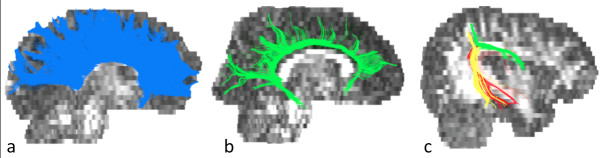
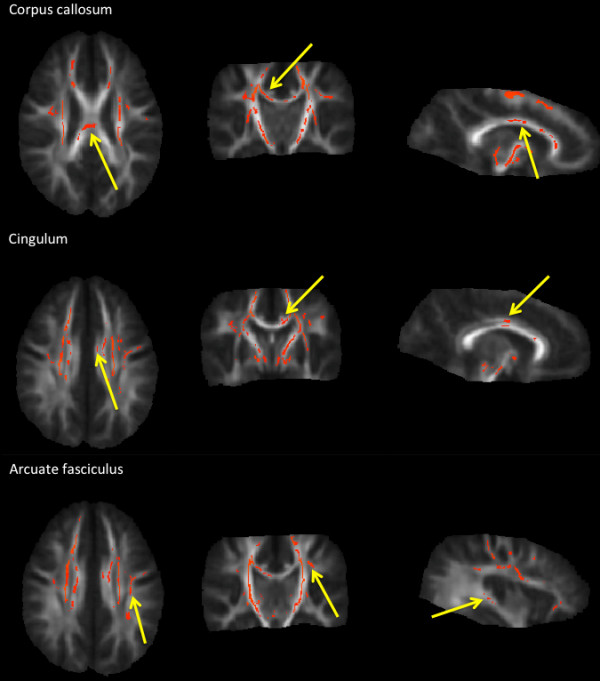
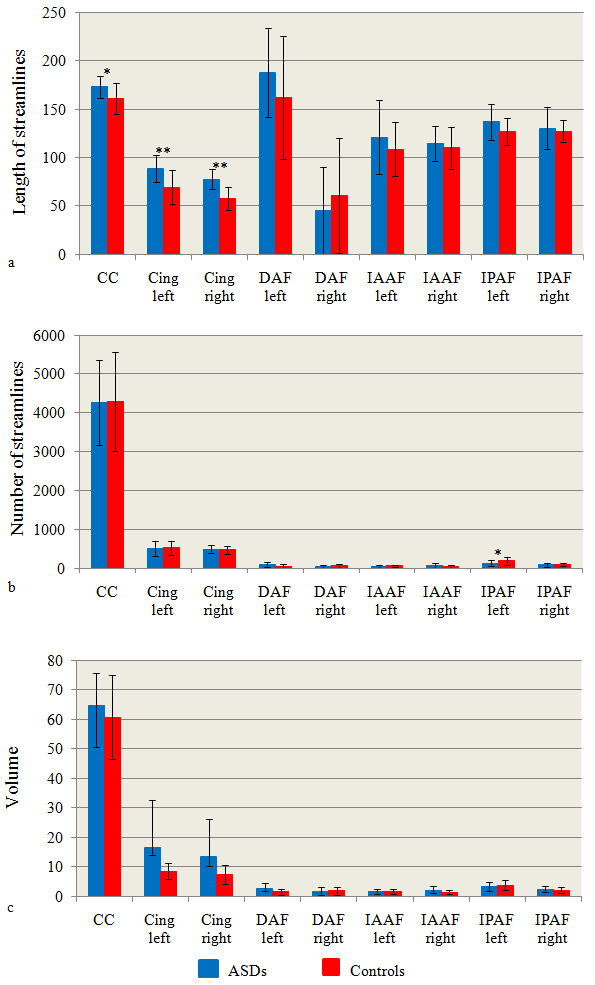
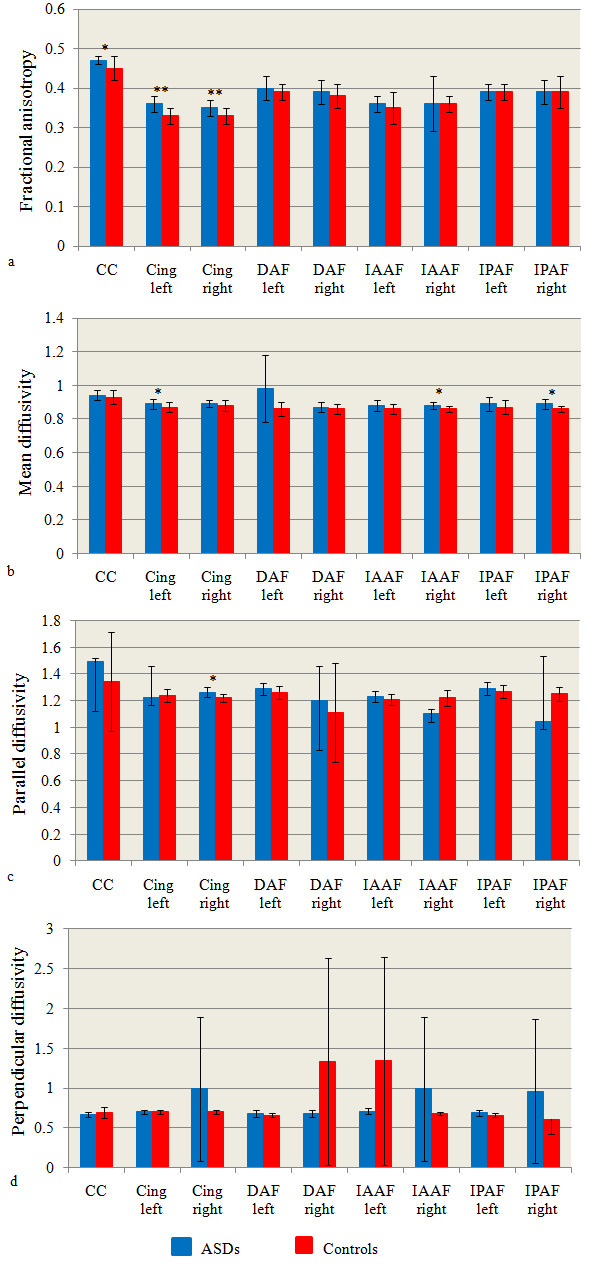
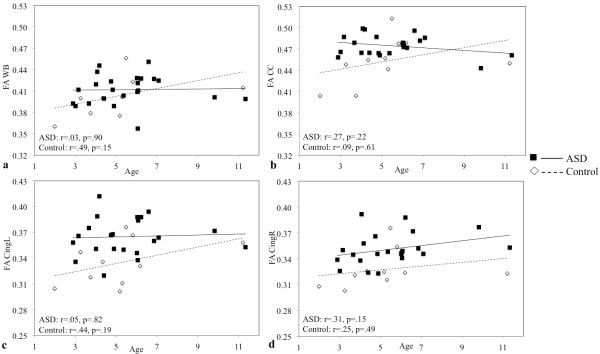
Background: Autism spectrum disorders (ASD) are associated with widespread alterations in white matter (WM) integrity. However, while a growing body of studies is shedding light on microstructural WM alterations in high-functioning adolescents and adults with ASD, literature is still lacking in information about whole brain structural connectivity in children and low-functioning patients with ASD. This research aims to investigate WM connectivity in ASD children with and without mental retardation compared to typically developing controls (TD). Methods: Diffusion tensor imaging (DTI) was performed in 22 young children with ASD (mean age: 5.54 years) and 10 controls (mean age: 5.25 years). Data were analysed both using the tract-based spatial statistics (TBSS) and the tractography. Correlations were investigated between the WM microstructure in the identified altered regions and the productive language level. Results: The TBSS analysis revealed widespread increase of fractional anisotropy (FA) in major WM pathways. The tractographic approach showed an increased fiber length and FA in the cingulum and in the corpus callosum and an increased mean diffusivity in the indirect segments of the right arcuate and the left cingulum. Mean diffusivity was also correlated with expressive language functioning in the left indirect segments of the arcuate fasciculus. Conclusions: Our study confirmed the presence of several structural connectivity abnormalities in young ASD children. In particular, the TBSS profile of increased FA that characterized the ASD patients extends to children a finding previously detected in ASD toddlers only. The WM integrity abnormalities detected may be relevant to the pathophysiology of ASD, since the structures involved participate in some core atypical characteristics of the disorder.
Overview
The claims and statistics of this paper haven’t been checked yet.
Free: it reads the open-access text and checks the first 5 claims that cite a source we can check. Create a free account to check every claim.
Integrity signals
Registry
Cites
Statistics
Figures
Verification
Claims the paper makes
The claims and statistics of this paper haven’t been checked yet.
Free: it reads the open-access text and checks the first 5 claims that cite a source we can check. Create a free account to check every claim.
Claims other papers make about this one
Each is checked against this paper’s own text: does it say what the citing paper says it does?
In the citing paper
“these offspring have larger brains especially in the frontal lobes, which may be consistent with the aberrant white matter tracts found in a subset of young children with ASD78–81.”
From Immune mediators in the brain and peripheral tissues in autism spectrum disorder (2015) · cites this paper as [81]
Self-check
Percentages, sums and reported differences re-computed from the paper’s own numbers.
The self-check needs the paper’s full text.
Citations
Cites
Advances in functional and structural MR image analysis and implementation as FSL
Smith, S. M., Jenkinson, M., Woolrich, M. W., Beckmann, C. F., Behrens, T. E. J., Johansen-Berg, H., Bannister, P. R., De Luca, M., Drobnjak, I., Flitney, D. E., et al. (2004) · NeuroImage · doi:10.1016/j.neuroimage.2004.07.051 · Cited by 13,630 · cited 2×
“Images were processed using the FSL (FMRIB Software Library, FMRIB, Oxford, UK) [27] software package.”
MethodFast robust automated brain extraction
Smith, S. M. (2002) · Human Brain Mapping · doi:10.1002/hbm.10062 · Cited by 10,496
Lord, C., Risi, S., Lambrecht, L., Cook, E. H., Leventhal, B. L., DiLavore, P. C., Pickles, A., & Rutter, M. (2000) · Journal of Autism and Developmental Disorders · doi:10.1023/a:1005592401947 · Cited by 7,520 · cited 1×
“The ASD diagnosis was confirmed by the Autism Diagnostic Observation Schedule-Generic (ADOS-G; [20]) in 17 of 22 patients and supported by an high Childhood Autism Rating Scale (CARS; [21]) score (≥37, range 37–52) in the remaining 5 ASD.”
MethodTract-based spatial statistics: Voxelwise analysis of multi-subject diffusion data
Smith, S. M., Jenkinson, M., Johansen-Berg, H., Rueckert, D., Nichols, T. E., Mackay, C. E., Watkins, K. E., Ciccarelli, O., Cader, M. Z., Matthews, P. M., et al. (2006) · NeuroImage · doi:10.1016/j.neuroimage.2006.02.024 · Cited by 6,478
Nonparametric permutation tests for functional neuroimaging: A primer with examples
Nichols, T. E., & Holmes, A. P. (2002) · Human Brain Mapping · doi:10.1002/hbm.1058 · Cited by 6,256
No adjustments are needed for multiple comparisons.
Rothman, K. J. (1990) · Epidemiology · doi:10.1097/00001648-199001000-00010 · Cited by 5,965
Nonrigid registration using free-form deformations: application to breast mr images
Rueckert, D., Sonoda, L. I., Hayes, C., Hill, D. L. G., Leach, M. O., & Hawkes, D. J. (1999) · IEEE Transactions on Medical Imaging · doi:10.1109/42.796284 · Cited by 5,265 · cited 1×
“First the most representative FA image was identified and all subjects’ FA data were aligned to this target image using the nonlinear registration tool FNIRT [30,31], which uses a b-spline representation of the registration warp field [32].”
MethodThe basis of anisotropic water diffusion in the nervous system—A technical review.
Beaulieu, C. (2002) · NMR in Biomedicine · doi:10.1002/nbm.782 · Cited by 4,628
Diffusion tensor imaging: Concepts and applications
Le Bihan, D., Mangin, J., Poupon, C., Clark, C. A., Pappata, S., Molko, N., & Chabriat, H. (2001) · Journal of Magnetic Resonance Imaging · doi:10.1002/jmri.1076 · Cited by 3,547 · cited 1×
“diameter, myelination, interaxonal spacing and coherence of directional alignment of fibers within WM tracts [6-8], while MD represents a directionally independent measure of the average diffusivity that reflects the degree of myelination, interstitial space and axonal density [9].”
BackgroundPsychological Assessment Resources
Abidin, R. R. (1995) · Medical Entomology and Zoology · Cited by 3,147
Characterization and propagation of uncertainty in diffusion-weighted MR imaging
Behrens, T. E. J., Woolrich, M. W., Jenkinson, M., Johansen‐Berg, H., Nunes, R. G., Clare, S., Matthews, P. M., Brady, J. M., & Smith, S. M. (2003) · Magnetic Resonance in Medicine · doi:10.1002/mrm.10609 · Cited by 3,038
Toward a quantitative assessment of diffusion anisotropy
Pierpaoli, C., & Basser, P. J. (1996) · Magnetic Resonance in Medicine · doi:10.1002/mrm.1910360612 · Cited by 2,405
Perisylvian language networks of the human brain
Catani, M., Jones, D. K., & ffytche, D. H. (2005) · Annals of Neurology · doi:10.1002/ana.20319 · Cited by 1,832 · cited 1×
“[65], the indirect pathway of the AF appears to relate to semanticallybased language functions (e.”
BackgroundSelf-citationA diffusion tensor imaging tractography atlas for virtual in vivo dissections.
CATANI, M., & THIEBAUTDESCHOTTEN, M. (2008) · Cortex · doi:10.1016/j.cortex.2008.05.004 · Cited by 1,642
Self-citationLooking into the functional architecture of the brain with diffusion MRI.
Le Bihan, D. (2003) · Nature Reviews Neuroscience · doi:10.1038/nrn1119 · Cited by 1,571 · cited 1×
“DTI is based on measurement of water diffusion through cellular compartments in vivo [4].”
BackgroundBasser, P. J. (1995) · NMR in Biomedicine · doi:10.1002/nbm.1940080707 · Cited by 1,519
Amaral, D. G., Schumann, C. M., & Nordahl, C. W. (2008) · Trends in Neurosciences · doi:10.1016/j.tins.2007.12.005 · Cited by 1,492 · cited 1×
“Notably, an agerelated pattern of structural changes in the ASD brain is a well-known finding [11].”
BackgroundAutism spectrum disorders: developmental disconnection syndromes
Geschwind, D. H., & Levitt, P. (2007) · Current Opinion in Neurobiology · doi:10.1016/j.conb.2007.01.009 · Cited by 1,411 · cited 1×
“There is increasing evidence that the heterogeneity and complexity of core and associated ASD symptoms can be explained as a fundamental impairment in brain connectivity [1-3].”
BackgroundWhy We (Usually) Don't Have to Worry About Multiple Comparisons
Gelman, A., Hill, J., & Yajima, M. (2012) · Journal of Research on Educational Effectiveness · doi:10.1080/19345747.2011.618213 · Cited by 1,274 · cited 1×
“No multiple comparison correction was performed [35-37].”
Autism and Abnormal Development of Brain Connectivity: Figure 1.
Belmonte, M. K., Allen, G., Beckel-Mitchener, A., Boulanger, L. M., Carper, R. A., & Webb, S. J. (2004) · The Journal of Neuroscience · doi:10.1523/jneurosci.3340-04.2004 · Cited by 1,217 · cited 1×
“There is increasing evidence that the heterogeneity and complexity of core and associated ASD symptoms can be explained as a fundamental impairment in brain connectivity [1-3].”
BackgroundEvidence of Brain Overgrowth in the First Year of Life in Autism
Courchesne, E. (2003) · JAMA · doi:10.1001/jama.290.3.337 · Cited by 1,120
Schopler, E., Reichler, R. J., DeVellis, R. F., & Daly, K. (2016) · PsycTESTS Dataset · doi:10.1037/t49458-000 · Cited by 859
White matter structure in autism: preliminary evidence from diffusion tensor imaging
Barnea-Goraly, N., Kwon, H., Menon, V., Eliez, S., Lotspeich, L., & Reiss, A. L. (2004) · Biological Psychiatry · doi:10.1016/j.biopsych.2003.10.022 · Cited by 782
Multiple Comparison Procedures: The Practical Solution
Saville, D. J. (1990) · The American Statistician · doi:10.1080/00031305.1990.10475712 · Cited by 696
Wolff, J. J., Gu, H., Gerig, G., Elison, J. T., Styner, M., Gouttard, S., Botteron, K. N., Dager, S. R., Dawson, G., Estes, A. M., et al. (2012) · American Journal of Psychiatry · doi:10.1176/appi.ajp.2011.11091447 · Cited by 671
Localization of white matter volume increase in autism and developmental language disorder
Herbert, M. R., Ziegler, D. A., Makris, N., Filipek, P. A., Kemper, T. L., Normandin, J. J., Sanders, H. A., Kennedy, D. N., & Caviness, V. S. (2004) · Annals of Neurology · doi:10.1002/ana.20032 · Cited by 663
Diffusion tensor imaging of the corpus callosum in Autism
Alexander, A. L., Lee, J. E., Lazar, M., Boudos, R., DuBray, M. B., Oakes, T. R., Miller, J. N., Lu, J., Jeong, E.-K., McMahon, W. M., et al. (2007) · NeuroImage · doi:10.1016/j.neuroimage.2006.08.032 · Cited by 595
The New Neurobiology of Autism: Cortex, Connectivity, and Neuronal Organization
Minshew, N. J., & Williams, D. L. (2007) · Archives of Neurology · doi:10.1001/archneur.64.7.945 · Cited by 592 · cited 1×
“There is increasing evidence that the heterogeneity and complexity of core and associated ASD symptoms can be explained as a fundamental impairment in brain connectivity [1-3].”
BackgroundDi Martino, A., Ross, K., Uddin, L. Q., Sklar, A. B., Castellanos, F. X., & Milham, M. P. (2009) · Biological Psychiatry · doi:10.1016/j.biopsych.2008.09.022 · Cited by 578
Antidepressant Use During Pregnancy and Childhood Autism Spectrum Disorders
Croen, L. A. (2011) · Archives of General Psychiatry · doi:10.1001/archgenpsychiatry.2011.73 · Cited by 510 · cited 1×
“In addition, recent findings point to high serotonin levels in the crucial stages of fetal brain development as a risk-factor for ASD [63].”
BackgroundDissociations of cerebral cortex, subcortical and cerebral white matter volumes in autistic boys
Herbert, M. R., Ziegler, D. A., Deutsch, C. K., O'Brien, L. M., Lange, N., Bakardjiev, A., Hodgson, J., Adrien, K. T., Steele, S., Makris, N., et al. (2003) · Brain · doi:10.1093/brain/awg110 · Cited by 495
Hermoye, L., Saint-Martin, C., Cosnard, G., Lee, S.-K., Kim, J., Nassogne, M.-C., Menten, R., Clapuyt, P., Donohue, P. K., Hua, K., et al. (2006) · NeuroImage · doi:10.1016/j.neuroimage.2005.08.017 · Cited by 425
Schmithorst, V. J., Wilke, M., Dardzinski, B. J., & Holland, S. K. (2002) · Radiology · doi:10.1148/radiol.2221010626 · Cited by 417
Ontogeny of the Serotonergic System in the Rat: Serotonin as a Developmental Signala
LAUDER, J. M. (1990) · Annals of the New York Academy of Sciences · doi:10.1111/j.1749-6632.1990.tb16891.x · Cited by 405
Tager-Flusberg, H., Rogers, S., Cooper, J., Landa, R., Lord, C., Paul, R., Rice, M., Stoel-Gammon, C., Wetherby, A., & Yoder, P. (2009) · Journal of Speech, Language, and Hearing Research · doi:10.1044/1092-4388(2009/08-0136 · Cited by 390
Thakkar, K. N., Polli, F. E., Joseph, R. M., Tuch, D. S., Hadjikhani, N., Barton, J. J. S., & Manoach, D. S. (2008) · Brain · doi:10.1093/brain/awn099 · Cited by 367
A developmental study of the structural integrity of white matter in autism
Keller, T. A., Kana, R. K., & Just, M. A. (2007) · NeuroReport · doi:10.1097/01.wnr.0000239965.21685.99 · Cited by 301
Accelerated maturation of white matter in young children with autism: A high b value DWI study
Ben Bashat, D., Kronfeld-Duenias, V., Zachor, D. A., Ekstein, P. M., Hendler, T., Tarrasch, R., Even, A., Levy, Y., & Ben Sira, L. (2007) · NeuroImage · doi:10.1016/j.neuroimage.2007.04.060 · Cited by 300
Diffusion Tensor Imaging of Frontal Lobe in Autism Spectrum Disorder
Sundaram, S. K., Kumar, A., Makki, M. I., Behen, M. E., Chugani, H. T., & Chugani, D. C. (2008) · Cerebral Cortex · doi:10.1093/cercor/bhn031 · Cited by 290
Griffiths, R. (1970) · Medical Entomology and Zoology · Cited by 285
Diffusion tensor imaging of white matter in the superior temporal gyrus and temporal stem in autism
Lee, J. E., Bigler, E. D., Alexander, A. L., Lazar, M., DuBray, M. B., Chung, M. K., Johnson, M., Morgan, J., Miller, J. N., McMahon, W. M., et al. (2007) · Neuroscience Letters · doi:10.1016/j.neulet.2007.07.042 · Cited by 264
Abnormal white matter integrity in young children with autism
Weinstein, M., Ben‐Sira, L., Levy, Y., Zachor, D. A., Itzhak, E. B., Artzi, M., Tarrasch, R., Eksteine, P. M., Hendler, T., & Bashat, D. B. (2011) · Human Brain Mapping · doi:10.1002/hbm.21042 · Cited by 241
Atypical development of white matter microstructure in adolescents with autism spectrum disorders
Cheng, Y., Chou, K.-H., Chen, I.-Y., Fan, Y.-T., Decety, J., & Lin, C.-P. (2010) · NeuroImage · doi:10.1016/j.neuroimage.2010.01.011 · Cited by 241
Norris, D. G. (2001) · NMR in Biomedicine · doi:10.1002/nbm.682 · Cited by 213
Kumar, A., Sundaram, S. K., Sivaswamy, L., Behen, M. E., Makki, M. I., Ager, J., Janisse, J., Chugani, H. T., & Chugani, D. C. (2010) · Cerebral Cortex · doi:10.1093/cercor/bhp278 · Cited by 212
Western psychological services
Madden, S. (1996) · Journal of Adolescent Health · doi:10.1016/s1054-139x(96)00178-4 · Cited by 207
Microstructural connectivity of the arcuate fasciculus in adolescents with high-functioning autism
Fletcher, P. T., Whitaker, R. T., Tao, R., DuBray, M. B., Froehlich, A., Ravichandran, C., Alexander, A. L., Bigler, E. D., Lange, N., & Lainhart, J. E. (2010) · NeuroImage · doi:10.1016/j.neuroimage.2010.01.083 · Cited by 204
Accelerated head growth in early development of individuals with autism
Dementieva, Y. A., Vance, D. D., Donnelly, S. L., Elston, L. A., Wolpert, C. M., Ravan, S. A., DeLong, G. R., Abramson, R. K., Wright, H. H., & Cuccaro, M. L. (2005) · Pediatric Neurology · doi:10.1016/j.pediatrneurol.2004.08.005 · Cited by 198
Clinical and Macroscopic Correlates of Minicolumnar Pathology in Autism
Casanova, M. F., Buxhoeveden, D. P., & Brown, C. (2002) · Journal of Child Neurology · doi:10.1177/088307380201700908 · Cited by 194
Noriuchi, M., Kikuchi, Y., Yoshiura, T., Kira, R., Shigeto, H., Hara, T., Tobimatsu, S., & Kamio, Y. (2010) · Brain Research · doi:10.1016/j.brainres.2010.09.051 · Cited by 181
White matter fractional anisotrophy differences and correlates of diagnostic symptoms in autism
Cheung, C., Chua, S. E., Cheung, V., Khong, P. L., Tai, K. S., Wong, T. K. W., Ho, T. P., & McAlonan, G. M. (2009) · Journal of Child Psychology and Psychiatry · doi:10.1111/j.1469-7610.2009.02086.x · Cited by 178
Understanding the language and communicative impairments in autism
Tager-Flusberg, H. (2000) · International Review of Research in Mental Retardation · doi:10.1016/s0074-7750(00)80011-7 · Cited by 176
Pugliese, L., Catani, M., Ameis, S., Dell'Acqua, F., de Schotten, M. T., Murphy, C., Robertson, D., Deeley, Q., Daly, E., & Murphy, D. G. M. (2009) · NeuroImage · doi:10.1016/j.neuroimage.2009.05.014 · Cited by 168
Self-citationSocial and behavioral problems of children with agenesis of the corpus callosum
Badaruddin, D. H., Andrews, G. L., Bölte, S., Schilmoeller, K. J., Schilmoeller, G., Paul, L. K., & Brown, W. S. (2007) · Child Psychiatry and Human Development · doi:10.1007/s10578-007-0065-6 · Cited by 150 · cited 1×
“The corpus callosum is the largest inter-hemispheric tract in the brain and it is thought to be involved in emotional and social functioning, as well as in higher cognitive processes, such as decoding non-literal meaning, affective prosody, and understanding humour [49-51].”
BackgroundMicrostructural abnormalities of short-distance white matter tracts in autism spectrum disorder
Shukla, D. K., Keehn, B., Smylie, D. M., & Müller, R.-A. (2011) · Neuropsychologia · doi:10.1016/j.neuropsychologia.2011.02.022 · Cited by 144 · cited 1×
“More recently, Shukla and colleagues [42], using the TBSS analysis, found a reduced FA in numerous WM tracts.”
Ke, X., Tang, T., Hong, S., Hang, Y.-Y., Zou, B., Hui-guo, L., Zhou, Z., Ruan, Z., Lu, Z., Tao, G., et al. (2009) · Brain Research · doi:10.1016/j.brainres.2009.02.013 · Cited by 140
Jou, R. J., Jackowski, A. P., Papademetris, X., Rajeevan, N., Staib, L. H., & Volkmar, F. R. (2011) · Australian & New Zealand Journal of Psychiatry · doi:10.3109/00048674.2010.534069 · Cited by 137
Diffusion based abnormality markers of pathology: Toward learned diagnostic prediction of ASD
Ingalhalikar, M., Parker, D., Bloy, L., Roberts, T. P. L., & Verma, R. (2011) · NeuroImage · doi:10.1016/j.neuroimage.2011.05.023 · Cited by 120
Comprehension of humor in primary agenesis of the corpus callosum
Brown, W. S., Paul, L. K., Symington, M., & Dietrich, R. (2005) · Neuropsychologia · doi:10.1016/j.neuropsychologia.2004.09.008 · Cited by 98 · cited 1×
“The corpus callosum is the largest inter-hemispheric tract in the brain and it is thought to be involved in emotional and social functioning, as well as in higher cognitive processes, such as decoding non-literal meaning, affective prosody, and understanding humour [49-51].”
BackgroundDiffusion Tensor Imaging in Young Children with Autism: Biological Effects and Potential Confounds
Walker, L., Gozzi, M., Lenroot, R., Thurm, A., Behseta, B., Swedo, S., & Pierpaoli, C. (2012) · Biological Psychiatry · doi:10.1016/j.biopsych.2012.08.001 · Cited by 94
Nagae, L. M., Zarnow, D. M., Blaskey, L., Dell, J., Khan, S. Y., Qasmieh, S., Levy, S. E., & Roberts, T. P. L. (2012) · American Journal of Neuroradiology · doi:10.3174/ajnr.a3037 · Cited by 88
The Role of Neurotransmitters in Neurite Outgrowth and Synapse Formation
van Kesteren, R. E., & Spencer, G. E. (2003) · Reviews in the Neurosciences · doi:10.1515/revneuro.2003.14.3.217 · Cited by 77
Paralinguistic processing in children with callosal agenesis: Emergence of neurolinguistic deficits
Brown, W. S., Symingtion, M., VanLancker-Sidtis, D., Dietrich, R., & Paul, L. K. (2005) · Brain and Language · doi:10.1016/j.bandl.2004.09.003 · Cited by 61 · cited 1×
“The corpus callosum is the largest inter-hemispheric tract in the brain and it is thought to be involved in emotional and social functioning, as well as in higher cognitive processes, such as decoding non-literal meaning, affective prosody, and understanding humour [49-51].”
BackgroundMuratori, F., Calderoni, S., Apicella, F., Filippi, T., Santocchi, E., Calugi, S., Cosenza, A., Tancredi, R., & Narzisi, A. (2011) · Research in Autism · doi:10.1016/j.rasd.2011.07.004 · Cited by 31
Self-citation
Research works printed but not linked: 2
- Wechsler D Wechsler Preschool and Primary Scale of Intelligence (WWPSI) Organizzazioni Speciali 1973 Firenze (Italy)
- Wechsler D Wechsler Intelligence Scale for Children-Revised (WISC-R) Organizzazioni Speciali 1986 Firenze (Italy)
Cited by
Immune mediators in the brain and peripheral tissues in autism spectrum disorder
Estes, M. L., & McAllister, A. K. (2015) · Nature Reviews Neuroscience · doi:10.1038/nrn3978 · Cited by 514
Is functional brain connectivity atypical in autism? A systematic review of EEG and MEG studies
O’Reilly, C., Lewis, J. D., & Elsabbagh, M. (2017) · PLOS ONE · doi:10.1371/journal.pone.0175870 · Cited by 381
The Default Mode Network in Autism
Padmanabhan, A., Lynch, C. J., Schaer, M., & Menon, V. (2017) · Biological Psychiatry: Cognitive Neuroscience and Neuroimaging · doi:10.1016/j.bpsc.2017.04.004 · Cited by 375
Ameis, S. H., & Catani, M. (2015) · Cortex · doi:10.1016/j.cortex.2014.10.014 · Cited by 301
Self-citationSensory Symptoms in Autism Spectrum Disorders
Hazen, E. P., Stornelli, J. L., O’Rourke, J. A., Koesterer, K., & McDougle, C. J. (2014) · Harvard Review of Psychiatry · doi:10.1097/01.hrp.0000445143.08773.58 · Cited by 274
Metadata
- Authors
- Billeci, L., Calderoni, S., Tosetti, M., Catani, M., & Muratori, F.
- Affiliations
- Istituto di Fisiologia Clinica (IT)
- Fondazione Stella Maris (IT)
- King's College London (GB)
- University of Pisa (IT)
- Corresponding author
- Muratori, Filippo
- Venue
- BMC Neurology
- Published
- 2012-11-29
- Volume
- 12
- Issue
- 1
- Pages
- 148-148
- ISSN
- 1471-2377 (ISSN-L)
- PMC
- PMC3607981
- OpenAlex
- W2033216229
- Cited by
- 116
- References
- 65
- Citations by year
- 2026: 1 · 2025: 6 · 2024: 5 · 2023: 4 · 2022: 5 · 2021: 2 · 2020: 7 · 2019: 10 · 2018: 9 · 2017: 12 · 2016: 12 · 2015: 21 · 2014: 16 · 2013: 6
- FWCI
- 7.04
- Type
- journal article
- Language
- en
- Open access
- gold
- doi.org
- Licence
- Locations
- BMC Neurology (publishedVersion, cc-by)
- Europe PMC (PubMed Central) (publishedVersion, cc-by)
- PubMed Central (publishedVersion, cc-by)
- PubMed (publishedVersion)
- Research Portal (King's College London) (publishedVersion, other-oa)
- CINECA IRIS Institutial research information system (University of Pisa) (submittedVersion, cc-by)
- Funders
- European Commission
- Ministero della Salute
- Topics
- Life Sciences › Neuroscience › Cognitive Neuroscience › Autism Spectrum Disorder Research
- Health Sciences › Medicine › Radiology, Nuclear Medicine and Imaging › Advanced Neuroimaging Techniques and Applications
- Life Sciences › Biochemistry, Genetics and Molecular Biology › Genetics › Genetics and Neurodevelopmental Disorders
- Keywords
- autism spectrum disorder, white matter connectivity, children, intellectual disability, fractional anisotropy, mean diffusivity, corpus callosum, cingulum, arcuate fasciculus, tractography, expressive language
- MeSH terms
- Brain, Child, Child Development Disorders, Pervasive, Child, Preschool, Female, Humans, Male, Nerve Fibers, Myelinated, Nerve Net, Neural Pathways, Anisotropy, Diffusion Tensor Imaging
About these checks
Registry, retraction, Cites and statistics results are computed, not judged, with one exception: a printed reference that no index lists is read once by a model before it counts as a citation error. Claims are extracted by a model and kept only when their quote appears verbatim in the text; each cited source is then checked, with a model’s help, for whether it says what the claim relies on. Those verdicts can be wrong — read the claim’s quote and the cited source before relying on one.
Statistics and arithmetic are recomputed, not judged.
Confidence bands are shown only for fields calibrated on our annotated test set. None is calibrated yet, so no band is shown.
What counts as a claim ›How we measure confidence ›How we check this ›
Are you an author, or do you see a problem with this page? Request a review
Data sources
Bibliographic data: Semantic Scholar, OpenAlex, Crossref.
Contains information from the Semantic Scholar Academic Graph Datasets, made available under the ODC Attribution License (ODC-BY 1.0).
Semantic Scholar’s data is described in: Kinney, R., et al. (2023). The Semantic Scholar Open Data Platform. arXiv:2301.10140.
