

Control strategies for active lower extremity prosthetics and orthotics: a review
Open accessThe DOI matches its Crossref record; 235 of the 235 references it cites were found in a registry or an index.
Abstract
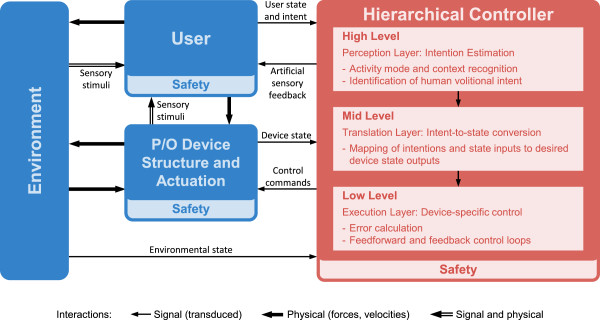
: Technological advancements have led to the development of numerous wearable robotic devices for the physical assistance and restoration of human locomotion. While many challenges remain with respect to the mechanical design of such devices, it is at least equally challenging and important to develop strategies to control them in concert with the intentions of the user.This work reviews the state-of-the-art techniques for controlling portable active lower limb prosthetic and orthotic (P/O) devices in the context of locomotive activities of daily living (ADL), and considers how these can be interfaced with the user's sensory-motor control system. This review underscores the practical challenges and opportunities associated with P/O control, which can be used to accelerate future developments in this field. Furthermore, this work provides a classification scheme for the comparison of the various control strategies.As a novel contribution, a general framework for the control of portable gait-assistance devices is proposed. This framework accounts for the physical and informatic interactions between the controller, the user, the environment, and the mechanical device itself. Such a treatment of P/Os--not as independent devices, but as actors within an ecosystem--is suggested to be necessary to structure the next generation of intelligent and multifunctional controllers.Each element of the proposed framework is discussed with respect to the role that it plays in the assistance of locomotion, along with how its states can be sensed as inputs to the controller. The reviewed controllers are shown to fit within different levels of a hierarchical scheme, which loosely resembles the structure and functionality of the nominal human central nervous system (CNS). Active and passive safety mechanisms are considered to be central aspects underlying all of P/O design and control, and are shown to be critical for regulatory approval of such devices for real-world use.The works discussed herein provide evidence that, while we are getting ever closer, significant challenges still exist for the development of controllers for portable powered P/O devices that can seamlessly integrate with the user's neuromusculoskeletal system and are practical for use in locomotive ADL.
Overview
The claims and statistics of this paper haven’t been checked yet.
Free: it reads the open-access text and checks the first 5 claims that cite a source we can check. Create a free account to check every claim.
Integrity signals
Registry
Cites
Statistics
Figures
Verification
Claims the paper makes
The claims and statistics of this paper haven’t been checked yet.
Free: it reads the open-access text and checks the first 5 claims that cite a source we can check. Create a free account to check every claim.
Claims other papers make about this one
Each is checked against this paper’s own text: does it say what the citing paper says it does?
The cited source says what the claim attributes to it.
In the citing paper
“Additional shortcomings include their limited environmental feedback, power supply, and failure to autonomously respond appropriately to external (possibly dangerous) stimuli.[24]”
From Flexible Electronics and Devices as Human–Machine Interfaces for Medical Robotics (2022) · cites this paper as [24]
The cited source says what the claim attributes to it.
In the citing paper
“Thus, the vast number of studies on different interface locations and various probing devices to record electrophysiological signals have established the foundation of user-communication with prosthetics.[24,286,287]”
From Flexible Electronics and Devices as Human–Machine Interfaces for Medical Robotics (2022) · cites this paper as [24]
Self-check
Percentages, sums and reported differences re-computed from the paper’s own numbers.
The self-check needs the paper’s full text.
Citations
Cites
Impedance Control: An Approach to Manipulation: Part I—Theory
Hogan, N. (1985) · Journal of Dynamic Systems, Measurement, and Control · doi:10.1115/1.3140702 · Cited by 3,673 · cited 1×
“Impedance is defined as the transfer function between an input flow and a n output effort [202].”
BackgroundFalls in older people: epidemiology, risk factors and strategies for prevention
Rubenstein, L. Z. (2006) · Age and Ageing · doi:10.1093/ageing/afl084 · Cited by 3,287 · cited 2×
“The risks are also not limited to physical harm, but may a lso include social, emotional, and psychological effects [38,39].”
BackgroundEstimating the Prevalence of Limb Loss in the United States: 2005 to 2050
Ziegler-Graham, K., MacKenzie, E. J., Ephraim, P. L., Travison, T. G., & Brookmeyer, R. (2008) · Archives of Physical Medicine and Rehabilitation · doi:10.1016/j.apmr.2007.11.005 · Cited by 2,816 · cited 1×
“stroke [6], spinal cord injury [7], Parkinson’s disease [8], and lower limb amputations [9]) can likewise be expected.”
Reach and grasp by people with tetraplegia using a neurally controlled robotic arm
Hochberg, L. R., Bacher, D., Jarosiewicz, B., Masse, N. Y., Simeral, J. D., Vogel, J., Haddadin, S., Liu, J., Cash, S. S., van der Smagt, P., et al. (2012) · Nature · doi:10.1038/nature11076 · Cited by 2,719 · cited 1×
“Intracortical electrode arrays have been successfully demonstrated to allow control of multi-degree-of-freedom reach and grasp movements with robotic arms in tetraplegic subjects [55,56],”
High-performance neuroprosthetic control by an individual with tetraplegia
Collinger, J. L., Wodlinger, B., Downey, J. E., Wang, W., Tyler-Kabara, E. C., Weber, D. J., McMorland, A. J., Velliste, M., Boninger, M. L., & Schwartz, A. B. (2013) · The Lancet · doi:10.1016/s0140-6736(12)61816-9 · Cited by 1,848 · cited 1×
“Intracortical electrode arrays have been successfully demonstrated to allow control of multi-degree-of-freedom reach and grasp movements with robotic arms in tetraplegic subjects [55,56],”
Incidence of Parkinson's Disease: Variation by Age, Gender, and Race/Ethnicity
Van Den Eeden, S. K. (2003) · American Journal of Epidemiology · doi:10.1093/aje/kwg068 · Cited by 1,747 · cited 1×
“stroke [6], spinal cord injury [7], Parkinson’s disease [8], and lower limb amputations [9]) can lik ew se be expected.”
BackgroundAugmented visual, auditory, haptic, and multimodal feedback in motor learning: A review
Sigrist, R., Rauter, G., Riener, R., & Wolf, P. (2013) · Psychonomic Bulletin & Review · doi:10.3758/s13423-012-0333-8 · Cited by 1,416 · cited 1×
“Auditory cues can vary in stereo balance, pitch, timbre and volume [89], and therefore may transmit rich information via speakers or headphones.”
Self-citationLower Extremity Exoskeletons and Active Orthoses: Challenges and State-of-the-Art
Dollar, A. M., & Herr, H. (2008) · IEEE Transactions on Robotics · doi:10.1109/tro.2008.915453 · Cited by 1,327 · cited 1×
“Several related review papers have been published in recent years that comprehensively establish the state-ofthe-art in portable and active lower limb prosthetics, orthotics and exoskeletons, mostly in terms of the design and hardware realization [10-15].”
Design and Evaluation of the LOPES Exoskeleton Robot for Interactive Gait Rehabilitation
Veneman, J. F., Kruidhof, R., Hekman, E. E. G., Ekkelenkamp, R., Van Asseldonk, E. H. F., & van der Kooij, H. (2007) · IEEE Transactions on Neural Systems and Rehabilitation Engineering · doi:10.1109/tnsre.2007.903919 · Cited by 1,280 · cited 2×
“This would exclude treadmill-based gait training orthoses such as the LOPES [19] and the Lokomat (Hocoma AG, Volketswil, Switzerland), which were among the classes of devices discussed in the review of Marchal-Crespo and Reinkensmeyer [20].”
Review of control strategies for robotic movement training after neurologic injury
Marchal-Crespo, L., & Reinkensmeyer, D. J. (2009) · Journal of NeuroEngineering and Rehabilitation · doi:10.1186/1743-0003-6-20 · Cited by 1,182
Research works printed but not linked: 9
- Donath M. Proportional EMG control for above-knee prosthesis, MIT. Department of Mechanical Engineering, Masters Thesis; 1974. http://hdl. handle.net/1721.1/13775.
- Zambarbieri D, Schmid M, Magnaghi M, Vermi G, Macellari V, Fadda A. Biofeedback techniques for rehabilitation of the lower-limb prosthetic subject. In: Proc. VII Medicon. Lemesos, Cyprus: MEDICON; 1998. p. 1-5.
- Kawamura J, Sueda O, Harada K, Nishihara K, Isobe S. Sensory feedback systems for the lower-limb prosthesis. J Osaka Rosai Hospital 1981;5: 104-12.
- Webb G. Providing real-time biofeedback for amputee gait retraining using labview. In: NI days worldwide graphical system design conference. London, UK: National Instruments; 2011.
- Grimes DL. An active multimode above knee prosthesis controller, PhD thesis, Massachusetts Institute of Technology. Dept. of Mechanical Engineering; 1979. http://hdl.handle.net/1721.1/15998.
- Gancet J, Ilzkovitz M, Cheron G, Ivanenko Y, van der Kooij H, van der Helm F, et al. MINDWALKER: A brain controlled lower limbs exoskeleton for rehabilitation. Potential applications to space In: Workshop EA, editor. 11th Symposium on advanced space technologies in robotics and automation. Noordwijk, NL: European Space Agency; 2011. p. 12-14.
- Goffer A. Enhanced safety of gait in powered exoskeletons. Dynamic walking conference abstract -available online. Argo Medical Technologies, ReWalk 2014. http://dynamicwalking.org/ocs/index.php/ dw2014/dw2014/paper/viewFile/17/10.
- Huang GT. Wearable robots. Technol Rev. 2004;1:70-3.
- Li YD, Hsiao-Wecksler ET. Gait mode recognition and control for a portable-powered ankle-foot orthosis. In: Rehabilitation robotics (ICORR), 2013 IEEE international conference on; 2013. p. 1-8. doi:10.1109/ICORR.2013.6650373. · DOI · Paper page
Cited by
Items 701–800 of 1,000
The SoftFoot Pro: an anthropomorphic and adaptive soft articulated prosthetic foot
Pace, A., Dimitrov, H. A., Jakubowitz, E., Piazza, C., Grioli, G., Proksch, L., Aszmann, O. C., Farina, D., Bicchi, A., & Catalano, M. G. (2026) · Nature Communications · doi:10.1038/s41467-025-68194-2 · Cited by 5
“…torque and power pro fi les across various tasks 16 – 25 , advanced control algorithms for seamless locomotion mode transitions in powered leg prostheses 16,26,27 , and bidirectional human-prosthesis interfaces enabling active device control 26,28 – 30 and sensory feedback restoration 29 – 31 .”
Influence of Controller on Cable Driven Lower Limb Rehabilitation Exoskeleton (C-LREX): PD vs MPC
Prasad, R., Khalaf, K. A., Awad, M. I., & Rich, M. E. (2023) · International Conference on Control, Decision and Information Technologies (CoDIT) · doi:10.1109/codit58514.2023.10284066 · Cited by 5
“The study employed a PD-based impedance controller to estimate the desired torque by considering joint errors, as in previous studies [1] – [3].”
MethodCenter of mass kinematic reconstruction during steady-state walking using optimized template models
Kelly, D. J., & Wensing, P. M. (2024) · PLoS ONE · doi:10.1371/journal.pone.0313156 · Cited by 8
Bio-inspired control strategies in wearable robotics: A comprehensive review of CPGs and DMPs
Almeida, J. F., & Santos, C. P. (2025) · Annual Reviews in Control · doi:10.1016/j.arcontrol.2025.100991 · Cited by 4
Prosthetic Control by Learning: A Multi-Agent Cooperative Game Framework
Hou, H., Zhu, W., Ruan, L., & Wang, Q. (2025) · International Conference on Rehabilitation Robotics · doi:10.1109/icorr66766.2025.11063018 · Cited by 4
“Traditional prosthetic control approaches primarily rely on phase-based methods, where the prosthetic follows pre-determined trajectories or execution patterns based on walking gait thresholds [5], [6], which can be directly measured [7], [8] or indirectly estimated [9].”
Almeida, J. F., André, J., & Santos, C. P. (2025) · IRBM · doi:10.1016/j.irbm.2025.100911 · Cited by 4
BCI-Based Neuroprostheses and Physiotherapies for Stroke Motor Rehabilitation
McCrimmon, C. M., Wang, P. T., Nenadić, Z., & Do, A. H. (2016) · Springer eBooks · doi:10.1007/978-3-319-28603-7_30 · Cited by 4
Radder, B., Prange-Lasonder, G. B., Kottink, A. I. R., Gaasbeek, L., Holmberg, J., Melendez-Calderon, A., Buurke, J. H., & Rietman, J. S. (2016) · Biosystems & biorobotics · doi:10.1007/978-3-319-46669-9_204 · Cited by 4
Online Learning of the Dynamical Internal Model of Transfemoral Prosthesis for Enhancing Compliance
Heins, S., Tolu, S., & Ronsse, R. (2021) · IEEE Robotics and Automation Letters · doi:10.1109/lra.2021.3091953 · Cited by 4
“Given the dynamic nature of human locomotion and the periodic and intermittent interactions with the environment, a general design rule is to rely on low-impedance control laws contributing to the user’s safety by increasing the controller’s robustness and helping to cope with environment uncertainties [11].”
BackgroundKey Technologies of Lower Limb Power-Assisted Exoskeleton Robots: A Review
Li, Y., Sun, H., Wang, C., Yang, Y. F., Fan, C., Zhang, Z., & Rui, Y. (2021) · International Conference on Control, Robotics and Cybernetics (CRC) · doi:10.1109/crc52766.2021.9620147 · Cited by 4
Continuous and Unified Modeling of Joint Kinematics for Multiple Activities
Rai, V., Sharma, A., Boe, D. A., Preechayasomboon, P., & Rombokas, E. (2022) · IEEE Access · doi:10.1109/access.2022.3171246 · Cited by 7
“This phase-based control strategy transitions between gait phases, within a mode using a finite state machine approach [12].”
BackgroundMethodInfluentialChen, Y., Li, X., Su, H., Zhang, D., & Yu, H. (2022) · Frontiers in Neurorobotics · doi:10.3389/fnbot.2022.791169 · Cited by 4
Naseri, A., Lee, I., Huang, H., & Liu, M. (2023) · IEEE Transactions on Neural Systems and Rehabilitation Engineering · doi:10.1109/tnsre.2023.3328877 · Cited by 4
“However, they encounter challenges like the risk of falls and injuries due to internal faults [9], [10], arising from control and sensor failures in unpredictable environments, which can disrupt walking gaits [11], [12].”
BackgroundLower Extremity Exoskeleton for Human Spinal Cord Injury: A Comprehensive Review
Wang, T., Song, Z., Wen, H., & Liu, C. (2024) · IEEE Open Journal of the Industrial Electronics Society · doi:10.1109/ojies.2024.3412809 · Cited by 6
“This framework was inspired by and extended from that of Tucker et al.’s article [22] to be applied to a wider range of devices (i.e., lower extremity prostheses and exoskeletons) and joint (i.e., hip, knee, and ankle) or-thosis.”
BackgroundMethodInfluentialContinuous-Context, User-Independent, Real-Time Intent Recognition for Powered Lower-Limb Prostheses
Bhakta, K., Maldonado-Contreras, J. Y., Camargo, J., Zhou, S., Compton, W., Herrin, K. R., & Young, A. J. (2024) · Journal of Biomechanical Engineering · doi:10.1115/1.4067401 · Cited by 4
A Review: Developments in Hardware Systems of Active Ankle Orthoses
Gunaratne, P. N., & Tamura, H. (2024) · Sensors · doi:10.3390/s24248153 · Cited by 5
Walking assistance using artificial primitives
Garate, V. R., Parri, A., Yan, T., Munih, M., Lova, R. M., Vitiello, N., & Ronsse, R. (2016) · IEEE Robotics & Automation Magazine · Cited by 4
Legal and regulatory challenges for physical assistant robots
Fosch‐Villaronga, E. (2015) · eChallenges Conference · doi:10.1109/echallenges.2015.7441057 · Cited by 4
Foot placement analysis of human walking based on capture point of linear inverted pendulum model
Guo, W., Qiu, S., Wang, P., Sheng, W.-T., & Deng, J. (2017) · International Conference on Informatics and Analytics · doi:10.1109/icinfa.2017.8078991 · Cited by 4
Novel instrumented frame for standing exercising of users with complete spinal cord injuries
Zoulias, I. D., Armengol, M., Poulton, A., Andrews, B., Gibbons, R., Harwin, W., & Holderbaum, W. (2019) · Scientific Reports · doi:10.1038/s41598-019-49237-3 · Cited by 5
Amputation Surgeries for the Lower Limb
Grimm, P. D., & Potter, B. K. (2020) · Elsevier eBooks · doi:10.1016/b978-0-323-60913-5.00019-2 · Cited by 5
$$L_1$$ Adaptive Control of a Lower Limb Exoskeleton Dedicated to Kids’ Rehabilitation
Maalej, B., Chemori, A., & Derbel, N. (2020) · Studies in systems, decision and control · doi:10.1007/978-981-15-1819-5_6 · Cited by 4
Dong, J. C., Jensen, W., Geng, B., Kamavuako, E. N., & Dosen, S. S. (2021) · Frontiers in Neuroscience · doi:10.3389/fnins.2021.580385 · Cited by 7
Clinical utility and reliability of instruments for measuring oral motor function: A scoping review
Mohamadi, O., Torabinezhad, F., & Soleimani, B. (2021) · Evidence-Based Communication Assessment and Intervention · doi:10.1080/17489539.2021.1932958 · Cited by 4
Designing Personalised Rehabilitation Controllers using Offline Model-Based Optimisation
Christou, A., Gordon, D., Stouraitis, T., & Vijayakumar, S. (2022) · IEEE International Conference on Robotics and Biomimetics (ROBIO) · doi:10.1109/robio55434.2022.10011916 · Cited by 5
“be a very cumbersome and time-consuming process [3].”
BackgroundLiu, Y., An, H., Ma, H., & Wei, Q. (2023) · Machines · doi:10.3390/machines11020186 · Cited by 4
Motor Characteristics of Human Adaptations to External Assistive Forces
Yeoh, W. L., Choi, J., Loh, P. Y., Fukuda, O., & Muraki, S. (2023) · Journal of Robotics and Mechatronics · doi:10.20965/jrm.2023.p0547 · Cited by 5
Shared Autonomy Locomotion Synthesis With a Virtual Powered Prosthetic Ankle
Hodossy, B. K., & Farina, D. (2023) · IEEE Transactions on Neural Systems and Rehabilitation Engineering · doi:10.1109/tnsre.2023.3336713 · Cited by 8
“C OMMERCIALLY available powered lower limb Pros-thetics and Orthotics (P&O) have yet to realise their potential impact [1], [2].”
BackgroundMethodInfluentialTablets and Smart Glasses in Modern Production Environments – A Lab Study on Distracted Walking
Tegtmeier, P., & Wischniewski, S. (2017) · Advances in intelligent systems and computing · doi:10.1007/978-3-319-73888-8_95 · Cited by 4
An Automatic Labeling Strategy for Locomotion Mode Recognition with Robotic Transtibial Prosthesis
Zheng, E., Wang, Q., & Qiao, H. (2019) · IEEE International Conference on Cyber Technology in Automation, Control, and Intelligent Systems · doi:10.1109/cyber46603.2019.9066503 · Cited by 4
Sensorless control system for assistive robotic ankle-foot
Kouzbary, M. A., Osman, N. A. A., & Wahab, A. K. A. (2018) · International Journal of Advanced Robotic Systems · doi:10.1177/1729881418775854 · Cited by 4
Stance Control with the Active Knee Orthosis ALLOR for Post-Stroke Patients During Walking
Villa-Parra, A. C., Lima, J. P. S., Delisle-Rodríguez, D., Frizera, A., & Bastos-Filho, T. (2018) · Biosystems & biorobotics · doi:10.1007/978-3-030-01887-0_38 · Cited by 4
Yan, J., Yang, Z., Lin, Y., & Zhou, W. (2025) · International Conference on Electronic Engineering and Information Systems (EEISS) · doi:10.1109/eeiss65394.2025.11085534 · Cited by 3
Artificial nerve systems for use in bio-interactive prostheses
Kim, C. H., Seo, D., Lee, Y., & Lee, T. (2025) · Nature Reviews Electrical Engineering · doi:10.1038/s44287-025-00197-z · Cited by 6
“These sophisticated prostheses incorporate high-level, mid-level and low-level controls, which are each important in ensuring efficient interaction between the user and the prosthesis 30 .”
Design and Testing of an Emg-Controlled Semi-Active Knee Prosthesis
Ozhikenov, К., Nurgizat, Y., Ayazbay, A.-A. E., Uzbekbayev, A., Sultan, A., Nussibaliyeva, A., Zhetenbayev, N., Kalykpaeva, R., & Сергазин, Г. (2025) · Sensors · doi:10.3390/s25247505 · Cited by 3
Design of a Rehabilitation Exoskeleton with Impedance Control: First Experiments
Courtois, G., Chevrie, J., Dequidt, A., Bonnet, X., & Pudlo, P. (2021) · International Conference on Informatics in Control, Automation and Robotics (ICINCO) · doi:10.5220/0010580000002994 · Cited by 6
Mohanty, R. K., Mohanty, R. C., & Sabut, S. (2022) · Advances in Computational Intelligence · doi:10.1007/s43674-021-00031-7 · Cited by 3
“1 Generalized control framework for lower limb prosthesis (Tucker et al. 2015) possible for the individual with an amputation to generate positive power at the knee and ankle joints of a passive prosthesis due to the fact that there is no direct control over these prosthetic parts.”
BackgroundMethodInfluentialAlateyah, A. I., Nejlaoui, M., Albadrani, M. A., Alrumayh, A., El-Hafez, H. A., Alrumayh, H. A., Alomari, S. A., Alomayrini, A. H., Albazie, H. H., & El-Garaihy, W. H. (2023) · Open Engineering · doi:10.1515/eng-2022-0405 · Cited by 3
“The historical exoskeletons’ research and development revealed various limits in the fields of robotic control, stability, actuation, and energy supply [16].”
BackgroundDing, F., Dong, L., & Yu, Y. (2024) · WRC Symposium on Advanced Robotics and Automation (WRC SARA) · doi:10.1109/wrcsara64167.2024.10685749 · Cited by 3
“Lower limb exoskeletons are powered wearable robots designed to enhance user strength, endurance, and mobility by providing torque assistance at the knee and hip joints [1].”
BackgroundWang, S., Yao, Y., Lu, X., Qin, P., Wang, X., Sun, J., Chen, C., & Wu, X. (2024) · Frontiers in Neuroscience · doi:10.3389/fnins.2024.1472184 · Cited by 3
“The control framework of exoskeleton robots is divided into high-level, middle-level, and low-level (Tucker, 2015; Narayan et al., 2023).”
BackgroundYodpijit, N., Jongprasithporn, M., Khawnuan, U., Sittiwanchai, T., & Siriwatsopon, J. (2018) · Advances in intelligent systems and computing · doi:10.1007/978-3-319-94947-5_98 · Cited by 4
Kazemimoghadam, M., Li, W., & Fey, N. P. (2018) · IEEE/RAS-EMBS International Conference on Biomedical Robotics and Biomechatronics (BioRob) · doi:10.1109/biorob.2018.8487746 · Cited by 3
Knop, L. N., Ribeiro, G. A., Ficanha, E. M., & Rastgaar, M. (2018) · IEEE/RAS-EMBS International Conference on Biomedical Robotics and Biomechatronics (BioRob) · doi:10.1109/biorob.2018.8488121 · Cited by 3
“This not only provides an amputee with a more natural gait, but also has been shown to reduce metabolic cost, increase gait symmetry, and give more comfort to the user [2-4].”
BackgroundPrediction of Smooth Gait Transitioning for Active Lower Limb Prosthetics
Boudali, A. M., Sinclair, P. J., & Manchester, I. R. (2019) · Annual International Conference of the IEEE Engineering in Medicine and Biology Society (EMBC) · doi:10.1109/embc.2019.8856870 · Cited by 3
“From the planning to the execution of the motion, the control of active prosthetics has seen significant advancement over the last decade [7].”
BackgroundCastillo, F., López-Gutiérrez, R., Santos‐Sánchez, O., Osorio, A., Salazar, S., & Lozano, R. (2019) · IEEE Transactions on Control Systems Technology · doi:10.1109/tcst.2019.2945021 · Cited by 3
“One requirement mentioned in [20] is to reduce power consumption in the exoskeleton robot, which can be obtained by the development of optimal controllers for portable devices [21].”
BackgroundLeo, F., Nataletti, S., & Brayda, L. G. (2020) · Experimental Brain Research · doi:10.1007/s00221-020-05944-2 · Cited by 3
Smart, R. R., O'Connor, B., & Jakobi, J. M. (2021) · Frontiers in Physiology · doi:10.3389/fphys.2021.654231 · Cited by 5
Sensorimotor EEG Rhythms During Action Observation and Passive Mirror-Box Illusion
Syrov, N., Vasilyev, A. N., & Kaplan, A. (2021) · Communications in computer and information science · doi:10.1007/978-3-030-90179-0_14 · Cited by 3
Incrementally Classifying Different Walking Activities Based on Wearable Sensors
Liu, X., & Wang, Q. (2021) · International Conference on Mechatronics and Machine Vision in Practice (M2VIP) · doi:10.1109/m2vip49856.2021.9665024 · Cited by 3
VMD-WSST: A Combined BCI Algorithm to Predict Self-paced Gait Intention
Hasan, S. M. S., & Bai, O. (2021) · Conference proceedings/Conference proceedings - IEEE International Conference on Systems, Man, and Cybernetics · doi:10.1109/smc52423.2021.9658856 · Cited by 3
Moon, H., Boubezoul, A., Oukhellou, L., Amirat, Y., & Mohammed, S. (2022) · IEEE-RAS International Conference on Humanoid Robots (Humanoids) · doi:10.1109/humanoids53995.2022.10000150 · Cited by 3
“Wearable actuated exoskeletons for walking deficiencies compensation, such as the actuated-ankle–foot orthosis (AAFO), have been widely developed in the literature in the past decade [1].”
BackgroundCNN-Based Intention Recognition Using Body-Worn Inertial Measurement Units
Bajraktari, F., Roβkopf, N., & Pott, P. P. (2023) · Proceedings - IEEE Symposium on Computer-Based Medical Systems · doi:10.1109/cbms58004.2023.00315 · Cited by 5
Zhou, X. G., & Duan, Z. (2023) · Scientific Reports · doi:10.1038/s41598-023-43115-9 · Cited by 4
An Individual Prosthesis Control Method with Human Subjective Choices
Sun, L., Ma, H., An, H., & Wei, Q. (2024) · Biomimetics · doi:10.3390/biomimetics9020077 · Cited by 3
“In [1], the authors raised a three-layer control structure in which the joint trajectory planning belongs to the perceptual layer and provides control instructions for the lower layer control, where the model is normally used.”
BackgroundZhang, M., & Sun, R. (2024) · Biomedical Signal Processing and Control · doi:10.1016/j.bspc.2024.106192 · Cited by 3
Task-space Control of a Powered Ankle Prosthesis
Kelly, D. J., Posh, R. R., & Wensing, P. M. (2024) · Proceedings - IEEE International Conference on Robotics and Automation/Proceedings · doi:10.1109/icra57147.2024.10611270 · Cited by 3
“While passive prostheses remain the standard of care, recent research has shown major strides in the performance and reliability of powered devices [2].”
BackgroundEvrard, J., Heremans, F., & Ronsse, R. (2024) · IEEE/RAS-EMBS International Conference on Biomedical Robotics and Biomechatronics (BioRob) · doi:10.1109/biorob60516.2024.10719811 · Cited by 4
Assist-As-Needed Electromyography-Based Control for a Wearable Ankle Robotic Orthosis
Moreira, L., Figueiredo, J., Cerqueira, J., & Santos, C. P. (2024) · IEEE/RAS-EMBS International Conference on Biomedical Robotics and Biomechatronics (BioRob) · doi:10.1109/biorob60516.2024.10719878 · Cited by 3
“1, employs a non-centralized architecture, structured as a modular and hierarchical framework, being organized into high, mid-, and low-levels, as proposed in [22].”
BackgroundHow individual vigor shapes human–human physical interaction
Verdel, D., Berret, B., & Burdet, E. (2026) · eLife · doi:10.7554/elife.109781.3 · Cited by 5
Wearable Robotic Approaches to Lower Extremity Gait Systems
Rovekamp, R., Francisco, G. E., Chang, S., & Beck, C. E. (2017) · Springer eBooks · doi:10.1007/978-1-4939-7247-0_5 · Cited by 3
Human Factors Approach for Powered Transfemoral Prostheses Conceptual Design
Jongprasithporn, M., Yodpijit, N., Pinitlertsakun, J., Siriwatsopon, J., Guerra, G., & Sittiwanchai, T. (2018) · doi:10.1109/ieem.2018.8607392 · Cited by 3
“Since the ultimate goal of developing a prosthesis is to mimic the biomechanics of the able-body, many powered prostheses designs have focused on the development of unique technical approaches to meet this goal, such as control strategies [8] [9] [10] [11] [12], user’s intent recognition [13] [14] [15] [16], actuator…”
BackgroundContinuous Classification of Locomotion in Response to Task Complexity and Anticipatory State
Kazemimoghadam, M., & Fey, N. P. (2021) · Frontiers in Bioengineering and Biotechnology · doi:10.3389/fbioe.2021.628050 · Cited by 3
Xiao, F., Gao, Y., Shengxin, W., & Zhao, J. (2015) · IEEE International Conference on Robotics and Biomimetics (ROBIO) · doi:10.1109/robio.2015.7418925 · Cited by 4
Automatic hand phantom map generation and detection using decomposition support vector machines
Huang, H., Bruschini, C. E., Antfolk, C., Enz, C., Li, T., Justiz, J., & Koch, V. M. (2018) · BioMedical Engineering OnLine · doi:10.1186/s12938-018-0502-8 · Cited by 4
Papapicco, V., Parri, A., Martini, E., Bevilacqua, V., Crea, S., & Vitiello, N. (2018) · Springer proceedings in advanced robotics · doi:10.1007/978-3-319-89327-3_15 · Cited by 3
Kaveny, K. J., Simon, A. M., Lenzi, T., Finucane, S. B., Seyforth, E. A., Finco, G., Culler, K. L., & Hargrove, L. J. (2018) · IEEE/RAS-EMBS International Conference on Biomedical Robotics and Biomechatronics (BioRob) · doi:10.1109/biorob.2018.8487193 · Cited by 3
Jahanandish, M. H., Rabe, K. G., Srinivas, A., Fey, N. P., & Hoyt, K. (2021) · Proceedings - IEEE International Conference on Robotics and Automation/Proceedings · doi:10.1109/icra48506.2021.9561260 · Cited by 3
“Lower-limb assistive devices are often controlled using finite-state machines or pattern-recognition algorithms [4], where there are several controllers responsible for different segments of a gait cycle and tasks , and pattern-recognition is used to switch between the underlying controllers [4], [5].”
BackgroundSutawika, E. B., Indrawanto, I., Ferryanto, F., Mihradi, S., & Mahyuddin, A. I. (2021) · Journal of Engineering and Technological Sciences · doi:10.5614/j.eng.technol.sci.2021.53.4.6 · Cited by 3
“Ideally, a prosthesis/exoskeleton should have a control system with three layers, for high-, mid-, and low-level control, respectively [31].”
BackgroundChallenging the Boundaries of the Physical Self: Distal Cues Impact Body Ownership
Grechuta, K., Costa, J. D. L. T., Ballester, B. R., & Verschure, P. F. M. J. (2021) · Frontiers in Human Neuroscience · doi:10.3389/fnhum.2021.704414 · Cited by 4
Design of Hybrid Phase Sliding Mode Control Scheme for Lower Extremity Exoskeleton
Chen, L., Wang, C., Wang, J., & Song, X. (2019) · Applied Sciences · doi:10.3390/app9183754 · Cited by 3
“In recent decades, different research institutions have adopted different control mechanisms for the exoskeleton [11,12], the Hybrid Control Strategy [13] among them is applied in exoskeleton systems for Human-Performance and obtains improved performance successfully.”
BackgroundDescription of motor control using inverse models
Sobinov, A. R. (2019) · The Research Repository @ WVU (West Virginia University) · doi:10.33915/etd.4073 · Cited by 4
Matrix-Based Bone Regenerative Engineering
Ogueri, K. S., & Laurencin, C. T. (2020) · Elsevier eBooks · doi:10.1016/b978-0-12-801238-3.62201-8 · Cited by 3
Up to one's knees in data : data-driven intent recognition using electromyography for the lower limb
Schulte, R. V. (2022) · doi:10.3990/1.9789036554862 · Cited by 2
Fusing Electrical Stimulation and Wearable Robots with Humans to Restore and Enhance Mobility
Schauer, T., Fosch‐Villaronga, E., & Moreno, J. C. (2023) · Wiley eBooks · doi:10.1002/9781119857433.ch13 · Cited by 6
Yang, F., Chen, C., Wang, Z., Xu, Y., Liu, Y., & Wu, X. (2023) · IEEE International Conference on Real-time Computing and Robotics (RCAR) · doi:10.1109/rcar58764.2023.10249769 · Cited by 2
“The deep generalization of environment awareness and terrain recognition algorithms enables exosuit to better adapt to complex and changing environments [5]–[7].”
BackgroundBonyani, M., Soleymani, M., & Wang, C. (2024) · Knowledge-Based Systems · doi:10.1016/j.knosys.2024.112016 · Cited by 4
Nazon, Y. F., Thomas, G. C., & Rouse, E. J. (2025) · IEEE Robotics and Automation Letters · doi:10.1109/lra.2025.3539551 · Cited by 2
The improved extrapolated center of mass enhances the safety of exoskeleton system
Wang, C., Cao, J. G., Zhang, J., Wang, J., Yang, Q., & Men, S. (2025) · Scientific Reports · doi:10.1038/s41598-025-93299-5 · Cited by 2
Kouzbary, M. A., Yeoh, J. K. X., Kouzbary, H. A., Liu, J., Shasmin, H. N., Tham, L. K., Arifin, N., & Osman, N. A. A. (2025) · Computer Methods in Biomechanics & Biomedical Engineering · doi:10.1080/10255842.2025.2506791 · Cited by 2
“Controllers that depend on the gait phase variables are known as phase-based whereas controllers that do not rely on the gait phase information are referred to as non-phase-based (Tucker et al. 2015).”
Li, W., Fei, Y., Su, H., Li, Q., & Li, Y. (2025) · IEEE Transactions on Systems Man and Cybernetics Systems · doi:10.1109/tsmc.2025.3580690 · Cited by 2
“Moreover, most classifiers or gait training approaches necessitate prior offline training [3].”
InfluentialKumar, R., Gupta, A. K., Muthukrishnan, S. P., Kumar, L., & Roy, S. (2025) · Neurocomputing · doi:10.1016/j.neucom.2025.130884 · Cited by 2
Kouzbary, H. A., Kouzbary, M. A., Liu, J., Khamis, T., Arifin, N., Mokayed, H., & Osman, N. A. A. (2025) · Computer Methods in Biomechanics & Biomedical Engineering · doi:10.1080/10255842.2025.2558026 · Cited by 2
BHIS: A Bayesian–Heuristic Inference System for Recognition of Walking Gait Phases
Mohamed, S. A., & Martínez-Hernández, U. (2025) · IEEE Transactions on Systems Man and Cybernetics Systems · doi:10.1109/tsmc.2025.3601893 · Cited by 2
“This responsiveness is made possible by integrating real-time phase recognition algorithms that adjust the device’s mechanics based on the current phase of the user’s stride [10], [11], [12].”
Kao, Y.-C., Huang, H.-B., & Lee, C. (2025) · Scientific Reports · doi:10.1038/s41598-025-29835-0 · Cited by 3
Novel prescribed performance control for a kind of back-support exoskeleton with time delays
Li, X., & Ke, Y. (2026) · Robotics and Autonomous Systems · doi:10.1016/j.robot.2026.105350 · Cited by 2
Design of an IoT-Enabled Smart Prosthetic Foot with Near Real-Time VR Feedback and Mobile Monitoring
Alani, D., & Younis, S. B. (2026) · International Conference on Computing and Emerging Sciences · doi:10.1145/3797491.3797541 · Cited by 2
“This reliance adds a degree of variability to the evaluation, delays corrective measures, and restricts the user from modifying motor strategies in real time [7].”
Lower limb active exoskeletons, exosuits, assistive devices and specifications: a scoping review
Trott, R. E., Kleinig, T. J., Hillier, S. L., Reynolds, K. J., & Hobbs, D. (2026) · Journal of NeuroEngineering and Rehabilitation · doi:10.1186/s12984-026-01955-2 · Cited by 4
“AAN approaches provide increasing levels of assistance in stages of the gait cycle where the user lacks ability or has difficulty completing, where increased deviation from the desired trajectory receives a proportional level of assistance [32].”
Using EEG Signals to Detect Different Surfaces While Walking
Chapero, R., Iáñez, E., Rodríguez-Ugarte, M., Ortíz, M., & Azorín, J. M. (2017) · Lecture notes in computer science · doi:10.1007/978-3-319-59773-7_12 · Cited by 2
Kraaijenbrink, C., Vegter, R. J. K., Ostertag, N., Janssens, L., Vanlandewijck, Y., van der Woude, L. H. V., & Wagner, H. (2021) · Frontiers in Sports and Active Living · doi:10.3389/fspor.2021.741258 · Cited by 2
Toward Real-Time Detection of Object Lifting Using Wearable Inertial Measurement Units
Miller, B. A., & Novak, D. (2021) · Annual International Conference of the IEEE Engineering in Medicine and Biology Society (EMBC) · doi:10.1109/embc46164.2021.9629585 · Cited by 2
“As a result, an EMG-based recognition system would need to be extensively calibrated and trained for each user [14], [15], which is impractical if the system should be used by different people on different days.”
BackgroundA Bibliometric Analysis of Lower Limb Exoskeletons for Rehabilitation Applications
Marafa, N. A., Llanos, C. H., & Taco, P. W. G. (2022) · World Congress on Medical Physics and Biomedical Engineering, September 7 - 12, 2009, Munich, Germany · doi:10.1007/978-3-030-70601-2_98 · Cited by 2
An Angle-Bias Based Gait Phase Estimation using Thigh Angle Information
Huang, Y., Ma, H., Wei, Q., & An, H. (2021) · China Automation Congress (CAC) · doi:10.1109/cac53003.2021.9728426 · Cited by 2
“Human gait phase analysis has widely been used in rehabilitation therapy, the design of a powered prosthesis or a orthosis controllers [1], [2].”
MethodObject-of-Interest Perception in a Reconfigurable Rolling-Crawling Robot
Semwal, A., Lee, M. M. J., Sanchez, D., Teo, S. L., Wang, B., & Elara, M. R. (2022) · Sensors · doi:10.3390/s22145214 · Cited by 3
“In the past decade, environment sensing techniques like surface electromyography (EMG), radar detectors, laser rangefinders, and inertial measurement units (IMUs) have been used to develop automated locomotion mode recognition system [11,12].”
MethodA Control Strategy for Squat Assistance of Lower Limb Exoskeleton with Back Sensing
Wang, J., Wu, D., Dong, W., & Gao, Y. (2022) · IEEE International Conference on Mechatronics and Automation (ICMA) · doi:10.1109/icma54519.2022.9856343 · Cited by 2
“The availability of a control system capable of automatically following the physical activity performed by a human subject is extremely attractive in the field of exoskeleton [11].”
BackgroundMileti, I., Taborri, J., Torricelli, D., Rossi, S., & Patanè, F. (2022) · IEEE International Conference on Metrology for eXtended Reality, Artificial Intelligence and Neural Engineering (MetroXRAINE) · doi:10.1109/metroxraine54828.2022.9967525 · Cited by 2
“In recent years, several powered lower limb exoskeletons have been designed to assist human ambulation or as rehabilitation tools [1,2].”
BackgroundSensory-Motor Interactions and the Manipulation of Movement Error
Parmar, P. N., Huang, F. C., & Patton, J. L. (2022) · Springer eBooks · doi:10.1007/978-3-031-08995-4_11 · Cited by 2
International Symposium on Technikpsychologie (TecPsy) 2023
Gerber, N., & Zimmermann, V. (2023) · Sciendo eBooks · doi:10.2478/9788366675896 · Cited by 4
Tang, J., Xi, X., Wang, T., Wang, J., Li, L., & Lü, Z. (2023) · Journal of Neural Engineering · doi:10.1088/1741-2552/acf7f7 · Cited by 3
“Movement generation is the coordinated outcome of the entire sensorimotor system, coupled in a complex feedback loop [3].”
Wearable Surface Deformation Myography (sDMG) System for Recognition of Locomotion Modes
Sun, H., Peng, X., Wang, J., Liu, J., Fu, T., & He, C. (2024) · IEEE Journal of Biomedical and Health Informatics · doi:10.1109/jbhi.2024.3404019 · Cited by 2
Angelidou, C., & Artemiadis, P. (2024) · IEEE/RAS-EMBS International Conference on Biomedical Robotics and Biomechatronics (BioRob) · doi:10.1109/biorob60516.2024.10719914 · Cited by 2
“For individuals with lower limb amputation specifically, the added weight, complexity, and maintenance requirements of multiple sensors suggested for most conventional approaches can hinder the adoption and long-term use of prosthetic and assistive devices [2].”
Background
Metadata
- Authors
- Tucker, M. R., Olivier, J., Pagel, A., Bleuler, H., Bouri, M., Lambercy, O., Millán, J. D. R., Riener, R., Vallery, H., & Gassert, R.
- Affiliations
- ETH Zurich (CH)
- École Polytechnique Fédérale de Lausanne (CH)
- University of Zurich (CH)
- Corresponding author
- Tucker, Michael R
- ORCID
- Venue
- Journal of NeuroEngineering and Rehabilitation
- Published
- 2015
- Volume
- 12
- Issue
- 1
- Pages
- 1
- ISSN
- 1743-0003 (ISSN-L)
- PMC
- PMC4326520
- OpenAlex
- W2142114107
- Semantic Scholar
- 7fe25a0498cd3ccd98db0d8da50730c68d174d68
- Cited by
- 1,047
- References
- 232
- Citations by year
- 2026: 42 · 2025: 69 · 2024: 72 · 2023: 119 · 2022: 102 · 2021: 161 · 2020: 116 · 2019: 108 · 2018: 92 · 2017: 85 · 2016: 61 · 2015: 20
- FWCI
- 6.63
- Type
- journal article
- Language
- en
- Open access
- gold
- doi.org
- Licence
- cc-by
- Locations
- Journal of NeuroEngineering and Rehabilitation (publishedVersion, cc-by)
- Europe PMC (PubMed Central) (publishedVersion, cc-by)
- PubMed Central (publishedVersion, cc-by)
- PubMed (publishedVersion)
- Zurich Open Repository and Archive (University of Zurich) (acceptedVersion, cc-by)
- Repository for Publications and Research Data (ETH Zurich) (submittedVersion, cc-by)
- Infoscience (Ecole Polytechnique Fédérale de Lausanne) (submittedVersion)
- Infoscience (Ecole Polytechnique Fédérale de Lausanne) (submittedVersion, cc-by-nc-nd)
- Research Repository (Delft University of Technology) (submittedVersion, cc-by)
- Zurich Open Repository and Archive (University of Zurich) (submittedVersion, cc-by)
- Data Archiving and Networked Services (DANS) (submittedVersion, other-oa)
- ETH Zürich Research Collection (cc-by)
- Zurich Open Repository and Archive (University of Zurich)
- Funders
- National Science Foundation
- Schweizerischer Nationalfonds zur Förderung der Wissenschaftlichen Forschung
- Topics
- Physical Sciences › Engineering › Biomedical Engineering › Prosthetics and Rehabilitation Robotics
- Physical Sciences › Engineering › Biomedical Engineering › Muscle activation and electromyography studies
- Physical Sciences › Engineering › Control and Systems Engineering › Robotic Locomotion and Control
- Keywords
- orthoses, wearable robotic devices, gait assistance, control strategy, activities of daily living, sensorimotor control, hierarchical control architecture, safety mechanisms, regulatory approval
- MeSH terms
- Activities of Daily Living, Electromyography, Gait, Humans, Locomotion, Orthotic Devices, Prosthesis Design, Prostheses and Implants, Lower Extremity
About these checks
Registry, retraction, Cites and statistics results are computed, not judged, with one exception: a printed reference that no index lists is read once by a model before it counts as a citation error. Claims are extracted by a model and kept only when their quote appears verbatim in the text; each cited source is then checked, with a model’s help, for whether it says what the claim relies on. Those verdicts can be wrong — read the claim’s quote and the cited source before relying on one.
Statistics and arithmetic are recomputed, not judged.
Confidence bands are shown only for fields calibrated on our annotated test set. None is calibrated yet, so no band is shown.
What counts as a claim ›How we measure confidence ›How we check this ›
Are you an author, or do you see a problem with this page? Request a review
Data sources
Bibliographic data: Semantic Scholar, OpenAlex, Crossref.
Contains information from the Semantic Scholar Academic Graph Datasets, made available under the ODC Attribution License (ODC-BY 1.0).
Semantic Scholar’s data is described in: Kinney, R., et al. (2023). The Semantic Scholar Open Data Platform. arXiv:2301.10140.
