

Control strategies for active lower extremity prosthetics and orthotics: a review
Open accessThe DOI matches its Crossref record; 235 of the 235 references it cites were found in a registry or an index.
Abstract
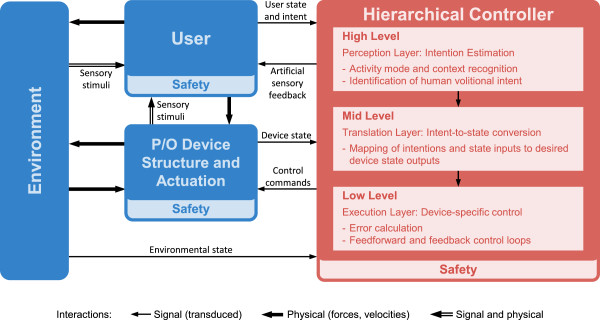
: Technological advancements have led to the development of numerous wearable robotic devices for the physical assistance and restoration of human locomotion. While many challenges remain with respect to the mechanical design of such devices, it is at least equally challenging and important to develop strategies to control them in concert with the intentions of the user.This work reviews the state-of-the-art techniques for controlling portable active lower limb prosthetic and orthotic (P/O) devices in the context of locomotive activities of daily living (ADL), and considers how these can be interfaced with the user's sensory-motor control system. This review underscores the practical challenges and opportunities associated with P/O control, which can be used to accelerate future developments in this field. Furthermore, this work provides a classification scheme for the comparison of the various control strategies.As a novel contribution, a general framework for the control of portable gait-assistance devices is proposed. This framework accounts for the physical and informatic interactions between the controller, the user, the environment, and the mechanical device itself. Such a treatment of P/Os--not as independent devices, but as actors within an ecosystem--is suggested to be necessary to structure the next generation of intelligent and multifunctional controllers.Each element of the proposed framework is discussed with respect to the role that it plays in the assistance of locomotion, along with how its states can be sensed as inputs to the controller. The reviewed controllers are shown to fit within different levels of a hierarchical scheme, which loosely resembles the structure and functionality of the nominal human central nervous system (CNS). Active and passive safety mechanisms are considered to be central aspects underlying all of P/O design and control, and are shown to be critical for regulatory approval of such devices for real-world use.The works discussed herein provide evidence that, while we are getting ever closer, significant challenges still exist for the development of controllers for portable powered P/O devices that can seamlessly integrate with the user's neuromusculoskeletal system and are practical for use in locomotive ADL.
Overview
The claims and statistics of this paper haven’t been checked yet.
Free: it reads the open-access text and checks the first 5 claims that cite a source we can check. Create a free account to check every claim.
Integrity signals
Registry
Cites
Statistics
Figures
Verification
Claims the paper makes
The claims and statistics of this paper haven’t been checked yet.
Free: it reads the open-access text and checks the first 5 claims that cite a source we can check. Create a free account to check every claim.
Claims other papers make about this one
Each is checked against this paper’s own text: does it say what the citing paper says it does?
The cited source says what the claim attributes to it.
In the citing paper
“Additional shortcomings include their limited environmental feedback, power supply, and failure to autonomously respond appropriately to external (possibly dangerous) stimuli.[24]”
From Flexible Electronics and Devices as Human–Machine Interfaces for Medical Robotics (2022) · cites this paper as [24]
The cited source says what the claim attributes to it.
In the citing paper
“Thus, the vast number of studies on different interface locations and various probing devices to record electrophysiological signals have established the foundation of user-communication with prosthetics.[24,286,287]”
From Flexible Electronics and Devices as Human–Machine Interfaces for Medical Robotics (2022) · cites this paper as [24]
Self-check
Percentages, sums and reported differences re-computed from the paper’s own numbers.
The self-check needs the paper’s full text.
Citations
Cites
Impedance Control: An Approach to Manipulation: Part I—Theory
Hogan, N. (1985) · Journal of Dynamic Systems, Measurement, and Control · doi:10.1115/1.3140702 · Cited by 3,673 · cited 1×
“Impedance is defined as the transfer function between an input flow and a n output effort [202].”
BackgroundFalls in older people: epidemiology, risk factors and strategies for prevention
Rubenstein, L. Z. (2006) · Age and Ageing · doi:10.1093/ageing/afl084 · Cited by 3,287 · cited 2×
“The risks are also not limited to physical harm, but may a lso include social, emotional, and psychological effects [38,39].”
BackgroundEstimating the Prevalence of Limb Loss in the United States: 2005 to 2050
Ziegler-Graham, K., MacKenzie, E. J., Ephraim, P. L., Travison, T. G., & Brookmeyer, R. (2008) · Archives of Physical Medicine and Rehabilitation · doi:10.1016/j.apmr.2007.11.005 · Cited by 2,816 · cited 1×
“stroke [6], spinal cord injury [7], Parkinson’s disease [8], and lower limb amputations [9]) can likewise be expected.”
Reach and grasp by people with tetraplegia using a neurally controlled robotic arm
Hochberg, L. R., Bacher, D., Jarosiewicz, B., Masse, N. Y., Simeral, J. D., Vogel, J., Haddadin, S., Liu, J., Cash, S. S., van der Smagt, P., et al. (2012) · Nature · doi:10.1038/nature11076 · Cited by 2,719 · cited 1×
“Intracortical electrode arrays have been successfully demonstrated to allow control of multi-degree-of-freedom reach and grasp movements with robotic arms in tetraplegic subjects [55,56],”
High-performance neuroprosthetic control by an individual with tetraplegia
Collinger, J. L., Wodlinger, B., Downey, J. E., Wang, W., Tyler-Kabara, E. C., Weber, D. J., McMorland, A. J., Velliste, M., Boninger, M. L., & Schwartz, A. B. (2013) · The Lancet · doi:10.1016/s0140-6736(12)61816-9 · Cited by 1,848 · cited 1×
“Intracortical electrode arrays have been successfully demonstrated to allow control of multi-degree-of-freedom reach and grasp movements with robotic arms in tetraplegic subjects [55,56],”
Incidence of Parkinson's Disease: Variation by Age, Gender, and Race/Ethnicity
Van Den Eeden, S. K. (2003) · American Journal of Epidemiology · doi:10.1093/aje/kwg068 · Cited by 1,747 · cited 1×
“stroke [6], spinal cord injury [7], Parkinson’s disease [8], and lower limb amputations [9]) can lik ew se be expected.”
BackgroundAugmented visual, auditory, haptic, and multimodal feedback in motor learning: A review
Sigrist, R., Rauter, G., Riener, R., & Wolf, P. (2013) · Psychonomic Bulletin & Review · doi:10.3758/s13423-012-0333-8 · Cited by 1,416 · cited 1×
“Auditory cues can vary in stereo balance, pitch, timbre and volume [89], and therefore may transmit rich information via speakers or headphones.”
Self-citationLower Extremity Exoskeletons and Active Orthoses: Challenges and State-of-the-Art
Dollar, A. M., & Herr, H. (2008) · IEEE Transactions on Robotics · doi:10.1109/tro.2008.915453 · Cited by 1,327 · cited 1×
“Several related review papers have been published in recent years that comprehensively establish the state-ofthe-art in portable and active lower limb prosthetics, orthotics and exoskeletons, mostly in terms of the design and hardware realization [10-15].”
Design and Evaluation of the LOPES Exoskeleton Robot for Interactive Gait Rehabilitation
Veneman, J. F., Kruidhof, R., Hekman, E. E. G., Ekkelenkamp, R., Van Asseldonk, E. H. F., & van der Kooij, H. (2007) · IEEE Transactions on Neural Systems and Rehabilitation Engineering · doi:10.1109/tnsre.2007.903919 · Cited by 1,280 · cited 2×
“This would exclude treadmill-based gait training orthoses such as the LOPES [19] and the Lokomat (Hocoma AG, Volketswil, Switzerland), which were among the classes of devices discussed in the review of Marchal-Crespo and Reinkensmeyer [20].”
Review of control strategies for robotic movement training after neurologic injury
Marchal-Crespo, L., & Reinkensmeyer, D. J. (2009) · Journal of NeuroEngineering and Rehabilitation · doi:10.1186/1743-0003-6-20 · Cited by 1,182
Research works printed but not linked: 9
- Donath M. Proportional EMG control for above-knee prosthesis, MIT. Department of Mechanical Engineering, Masters Thesis; 1974. http://hdl. handle.net/1721.1/13775.
- Zambarbieri D, Schmid M, Magnaghi M, Vermi G, Macellari V, Fadda A. Biofeedback techniques for rehabilitation of the lower-limb prosthetic subject. In: Proc. VII Medicon. Lemesos, Cyprus: MEDICON; 1998. p. 1-5.
- Kawamura J, Sueda O, Harada K, Nishihara K, Isobe S. Sensory feedback systems for the lower-limb prosthesis. J Osaka Rosai Hospital 1981;5: 104-12.
- Webb G. Providing real-time biofeedback for amputee gait retraining using labview. In: NI days worldwide graphical system design conference. London, UK: National Instruments; 2011.
- Grimes DL. An active multimode above knee prosthesis controller, PhD thesis, Massachusetts Institute of Technology. Dept. of Mechanical Engineering; 1979. http://hdl.handle.net/1721.1/15998.
- Gancet J, Ilzkovitz M, Cheron G, Ivanenko Y, van der Kooij H, van der Helm F, et al. MINDWALKER: A brain controlled lower limbs exoskeleton for rehabilitation. Potential applications to space In: Workshop EA, editor. 11th Symposium on advanced space technologies in robotics and automation. Noordwijk, NL: European Space Agency; 2011. p. 12-14.
- Goffer A. Enhanced safety of gait in powered exoskeletons. Dynamic walking conference abstract -available online. Argo Medical Technologies, ReWalk 2014. http://dynamicwalking.org/ocs/index.php/ dw2014/dw2014/paper/viewFile/17/10.
- Huang GT. Wearable robots. Technol Rev. 2004;1:70-3.
- Li YD, Hsiao-Wecksler ET. Gait mode recognition and control for a portable-powered ankle-foot orthosis. In: Rehabilitation robotics (ICORR), 2013 IEEE international conference on; 2013. p. 1-8. doi:10.1109/ICORR.2013.6650373. · DOI · Paper page
Cited by
Items 801–900 of 1,000
Force-Triggered Control Design for User Intent-Driven Assistive Upper-Limb Robots
Manzano, M., Guégan, S., Breton, R. L., Devigne, L., & Marie Babel, A. (2024) · IEEE/RSJ International Conference on Intelligent Robots and Systems (IROS) · doi:10.1109/iros58592.2024.10801685 · Cited by 2
“In the context of UL assistive devices, user intent must be translated into commands for the low-level controller that handles the actuators [11], which is called ”mapping” [12].”
Nweke, M., van Vuuren, M., Bester, K., Maritz, A., van Vuuren, L., Vilakazi, Y., Dlamini, A., Ncedani, A., & Mostert, K. (2025) · BMC Sports Science Medicine and Rehabilitation · doi:10.1186/s13102-024-01021-1 · Cited by 2
Posh, R. R., Li, S., & Wensing, P. M. (2025) · IEEE/RSJ International Conference on Intelligent Robots and Systems (IROS) · doi:10.1109/iros60139.2025.11247386 · Cited by 5
“The highest level determines the user’s activity, the middle level determines gait phase and translates that into device commands, and the lowest level implements those commands [9].”
Fagioli, I., Mazzarini, A., Gennari, F., & Crea, S. (2025) · Data science, machine intelligence, and law · doi:10.1007/978-3-031-99709-9_12 · Cited by 4
Impedance Adaptive Controller for a Prototype of a Whiplash Syndrome Rehabilitation Device
Guzman-Victoria, I., Salgado, I., Mera, M., Chaírez, I., & Ahmed, H. (2019) · Mathematical Problems in Engineering · doi:10.1155/2019/9604179 · Cited by 2
“The current control designs to solve the human-robot interaction may not provide sufficient flexibility for collaboration tasks (implying a smooth transition between the tracking and the resistance operation conditions), requiring that only two cases are admissible: the robot leads or follows the human by assessing th…”
Background[Human action and road condition recognition based on the inertial information].
Wang, Y., Chen, H., Yin, Z., Yu, H., & Meng, Q. (2018) · PubMed · doi:10.7507/1001-5515.201712081 · Cited by 4
3D human arm reaching movement planning with principal patterns in successive phases
Dehghani, S., & Bahrami, F. (2020) · Journal of Computational Neuroscience · doi:10.1007/s10827-020-00749-2 · Cited by 2
Towards Intelligent Lower Limb Prostheses with Activity Recognition
Maqbool, H. F., Mehryar, P., Husman, M. A., Awad, M. I., Abouhossein, A., & Dehghani-Sanij, A. A. (2015) · Lecture notes in computer science · doi:10.1007/978-3-319-22416-9_21 · Cited by 2
“The generalized control scheme for the lower limb prostheses consists of t hree level hierarchy as shown in Figure 1 adapted from [14].”
BackgroundMethodUsing Robotic Exoskeletons for Over-Ground Locomotor Training
Jayaraman, A., Burt, S., & Rymer, W. Z. (2016) · Springer eBooks · doi:10.1007/978-3-319-28603-7_24 · Cited by 2
An EMG-informed Model to Evaluate Assistance of the Biomot Compliant Ankle Actuator
Ceseracciu, E., Tagliapietra, L., Moreno, J. C., Asín-Prieto, G., del‐Ama, A. J., Pérez, S., Piñuela-Martín, E., Gil, Á., & Reggiani, M. (2016) · Biosystems & biorobotics · doi:10.1007/978-3-319-46532-6_43 · Cited by 2
An adaptive and robust online method to predict gait events
Schrade, S. O., Bader, Y., Tucker, M. R., Shirota, C., & Gassert, R. (2016) · Annual International Conference of the IEEE Engineering in Medicine and Biology Society (EMBC) · doi:10.1109/embc.2016.7592163 · Cited by 2
“This is based on the rather constant stride duration of human walking at fixed speeds [6], and works well when strides are in fact consistent [7].”
BackgroundSelf-citationEmbedded System for Prosthetic Interface Mapping of Lower Limbs Amputees
Rossi, M., Lorenzelli, L., & Brunelli, D. (2017) · Lecture notes in electrical engineering · doi:10.1007/978-3-319-55071-8_16 · Cited by 2
Joint stiffness modulation of compliant actuators for lower limb exoskeletons
Gonzalez-Vargas, J. E., Shimoda, S., Asín-Prieto, G., Pons, J. L., & Moreno, J. C. (2017) · International Conference on Rehabilitation Robotics · doi:10.1109/icorr.2017.8009426 · Cited by 2
Technik-gestützte Bewegungstherapie oberer Extremitäten nach Schlaganfall
Neuendorf, T., Zschäbitz, D., Nitzsche, N., & Schulz, H. (2017) · NeuroTransmitter · doi:10.1007/s15016-017-6123-9 · Cited by 3
Arch, E. S., & Stanhope, S. J. (2017) · Springer eBooks · doi:10.1007/978-1-4939-7247-0_6 · Cited by 3
Exoskeletons as Mechatronic Design Example
Bleuler, H., Vouga, T., Ortlieb, A., Baud, R., Fasola, J., Olivier, J., Shokur, S., & Bouri, M. (2018) · Mechanisms and machine science · doi:10.1007/978-3-030-00329-6_13 · Cited by 2
Self-citationMillán, J. S. L., Hidalgo, A. F., & de Lima, E. R. (2020) · Jornadas de Automática · doi:10.17979/spudc.9788497497565.0057 · Cited by 2
Self-citationFeedback-Error Learning for Gait Rehabilitation Using a Powered Knee Orthosis: First Advances
Fernandes, P. N., Carvalho, S. P., Figueiredo, J., Moreno, J. C., & Santos, C. P. (2019) · IEEE Portuguese Meeting on Bioengineering · doi:10.1109/enbeng.2019.8692502 · Cited by 2
“Furthermore, the human motor control system starts to influence the design of bioinspired architectures for lowerlimb robotic devices, with emphasis to the human-machine interface [5].”
BackgroundDesign, Control, and Optimization of Robots with Advanced Energy Regenerative Drive Systems
Khalaf, P. (2019) · EngagedScholarship @ Cleveland State University (Cleveland State University) · Cited by 2
Control Strategy for the Development of Bio-Orthotic Limbs Using EMG Signals
Kashyap, A., Rajesh, H., & Krupa, B. (2018) · International Conference on Electrical, Electronics, Communication, Computer and Optimization Techniques (ICEECCOT) · doi:10.1109/iceeccot43722.2018.9001327 · Cited by 2
A New Terrain Recognition Approach for Predictive Control of Assistive Devices Using Depth Vision
Aldabbagh, A. H. A., & Ronsse, R. (2021) · Biosystems & biorobotics · doi:10.1007/978-3-030-69547-7_71 · Cited by 2
Generation of Artificial Movement Sensation in Ankle Joints with Vibration Stimulation
Kiguchi, K., & Yamasaki, T. (2021) · World Automation Congress (WAC) · doi:10.23919/wac50355.2021.9559489 · Cited by 2
Using Arm Swing Movements to Maintain the Walking State in a Self-Balanced Lower-Limb Exoskeleton
Alaoui, O. M., Fabien Expert, B., Morel, G., & Jarrassé, N. (2022) · Proceedings - IEEE International Conference on Robotics and Automation/Proceedings · doi:10.1109/icra46639.2022.9811824 · Cited by 2
“…of ex-oskeletons is to properly convey motion intentions through natural and intuitive control strategies, in an effort to achieve seamless integration with the patients’ sensory-motor control system, and to make wearable devices be perceived as integrated parts of their bodies [3], [4].”
Phase-based Dynamic Movement Primitives for Powered Knee-Ankle Prosthesis Control
Zhang, G., An, H., Liu, Y., Huang, Y., Ma, H., & Wei, Q. (2022) · International Conference on Robotics and Automation Sciences (ICRAS) · doi:10.1109/icras55217.2022.9842244 · Cited by 2
Data-driven Gait-predictive Model for Anticipatory Prosthesis Control
Dey, S., & Schilling, A. F. (2022) · International Conference on Rehabilitation Robotics · doi:10.1109/icorr55369.2022.9896505 · Cited by 4
“Different methods have been proposed for devising control strategies for powered lower limb prosthesis [4].”
BackgroundMethodDelgado-Oleas, G., Sorozábal, P., Lora-Millán, J. S., Gutiérrez, Á., & Rocón, E. (2023) · Revista Iberoamericana de Automática e Informática Industrial RIAI · doi:10.4995/riai.2023.18748 · Cited by 3
“…exoesqueletos encontrados en una búsqueda bibliográfica e inspirándonos en modelos similares de la literatura científica,(Baud et al., 2021; Tucker et al., 2015; Varol et al., 2010), hemos dividido en tres niveles jerárquicos: Alto, Medio y Bajo, lo que nos ha permitido identificar las…”
BackgroundDamonte, F., Durandau, G., Gonzalez-Vargas, J. E., van der Kooij, H., & Sartori, M. (2023) · International Conference on Rehabilitation Robotics · doi:10.1109/icorr58425.2023.10304814 · Cited by 3
“They are designed based on a priori chosen sets of rules to replicate a pre-defined torque profile based on overground walking, thereby limiting generalisability to different movements [4].”
BackgroundInfluentialA Method of Detecting Human Movement Intentions in Real Environments
Liu, Y., Wan, Z.-Y., Wang, R., & Gutierrez-Farewik, E. M. (2023) · International Conference on Rehabilitation Robotics · doi:10.1109/icorr58425.2023.10304774 · Cited by 2
“A general three-level control strategy has been used in exoskeleton control [3] – high-level control in which the user’s movement intentions are detected, mid-level control in which the desired joint torques and positions are estimated, and low-level control in which motors are directly controlled…”
MethodAdaptive Prosthetic Trajectory Estimation Based on Key Points Constraints
Sun, L., An, H., Ma, H., Wei, Q., & Gao, J. (2024) · Applied Sciences · doi:10.3390/app14073063 · Cited by 2
EMG as a control parameter in lower limb prosthetics : surface vs. implanted electrodes
Sigurðardóttir, J. S. (2015) · Cited by 3
Feedback-Error Learning Control for Powered Assistive Devices
Fernandes, P. N., Figueiredo, J., Moreno, J. C., & Santos, C. P. (2019) · World Congress on Medical Physics and Biomedical Engineering, September 7 - 12, 2009, Munich, Germany · doi:10.1007/978-3-030-31635-8_238 · Cited by 2
FAST USER ACTIVITY PHASE RECOGNITION FOR THE SAFETY OF TRANSFEMORAL PROSTHESIS CONTROL
Poliakov, A., & Pakhaliuk, V. (2020) · Facta Universitatis Series Mechanical Engineering · doi:10.22190/fume190210004p · Cited by 2
“There are many methods and algorithms for recognizing intentions, modes and activity phases that are used in control systems of various auxiliary devices and are described in detail in the review [4].”
BackgroundMethodInfluentialAnalysis of Fall Accident Motion during Walking Using a Lower-Limb Exoskeleton Robot
Kiguchi, K., & Kazuma, N. O. D. A. (2020) · International Journal of Mechanical Engineering and Robotics Research · doi:10.18178/ijmerr.9.8.1128-1133 · Cited by 2
Yuan, J., Cline, E., Liu, M., Huang, H., & Feng, J. (2021) · BMJ Open · doi:10.1136/bmjopen-2020-039975 · Cited by 2
Foerster, Á. (2018) · eDiss (Georg-August-Universität Göttingen) · doi:10.53846/goediss-7032 · Cited by 2
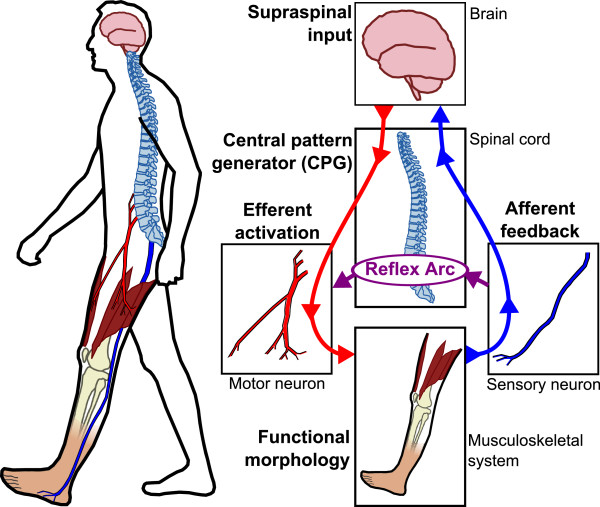
“sensory neurons, transmit information from the musculoskeletal system to the central nervous system, thus closing the feedback loop for the nominal control of human locomotion (19).”
Ahkami, B., Ahmed, K., Kristoffersen, M., & Ortiz-Catalan, M. (2023) · SSRN Electronic Journal · doi:10.2139/ssrn.4575926 · Cited by 2
A Two-Degree of Freedom Mobile Ankle Rehabilitation Unit (MARU) to Improve and Track Joint Mobility
Detzel, S., Mercader, A., Dietz, C., Nakamura, G., & Lueth, T. C. (2019) · Advances in intelligent systems and computing · doi:10.1007/978-3-030-19648-6_46 · Cited by 1
Convolutional neural network for wearable fall detection systems
Khawnuan, U., Sittiwanchai, T., & Yodpijit, N. (2023) · Science, Engineering and Health Studies · doi:10.69598/sehs.17.23040002 · Cited by 3
Control Architecture of a Variable Stiffness Prosthetic Knee for Energy Absorption and Restoration
Liu, C., Tagliabue, G., Raveendranathan, V., Houdijk, H., & Carloni, R. (2024) · IEEE/RAS-EMBS International Conference on Biomedical Robotics and Biomechatronics (BioRob) · doi:10.1109/biorob60516.2024.10719962 · Cited by 2
“This heightened burden arises from the lack of an active knee and ankle joints [3].”
BackgroundDamonte, F., Khanapuri, V. V., Durandau, G., & Sartori, M. (2024) · IEEE/RAS-EMBS International Conference on Biomedical Robotics and Biomechatronics (BioRob) · doi:10.1109/biorob60516.2024.10719730 · Cited by 2
“The field of lower-limb prosthetics has made significant improvements; powered prostheses have the capacity to support energy-intensive tasks such as walking at fast speed, stair climbing, or even jumping[1].”
BackgroundEffects of Altered Haptic Feedback Gain Upon Balance Are Explained by Sensory Conflict Estimation
Reynolds, R. F., Smith, C. P., & Assländer, L. (2025) · European Journal of Neuroscience · doi:10.1111/ejn.16670 · Cited by 1
Yang, Y., Han, J., & Huo, W. (2024) · Conference proceedings/Conference proceedings - IEEE International Conference on Systems, Man, and Cybernetics · doi:10.1109/smc54092.2024.10831672 · Cited by 1
“…most existing LLPE controllers are developed for a specific motion mode, a finite state machine (FSM) is commonly used to integrate different control algorithms for assisting wearers to walk on various terrains, timely switching control strategies, and ensuring seamless state transfers [2], [6].”
Ge, Y., Purevdorj, C., Kasai, S., & Wagatsuma, H. (2025) · Proceedings of International Conference on Artificial Life and Robotics · doi:10.5954/icarob.2025.gs4-2 · Cited by 1
HUMAN LOWER LIMB MOTION PATTERN RECOGNITION BASED ON MULTISENSOR FUSION
Liu, C., Han, Y., Xiangwen, S. O. N. G., ZHANG, S., Na, H. A. N., Zou, M., & Wu, L. (2025) · INMATEH Agricultural Engineering · doi:10.35633/inmateh-75-78 · Cited by 1
“Intelligent prostheses, as a medical device that can simulate the human-machine relationship between amputee and prosthesis to the maximum extent, are attracting more and more attention (Tucker et al., 2015; Silva Júnior et al., 2015; Yang et al., 2016; Hernandez and Yu, 2022; Yue et al., 2023).”
Real-Time Prediction of Leg Joint Kinematics during Steady-State Walking and Task Transitions
Devillez, L., & Ronsse, R. (2025) · International Conference on Rehabilitation Robotics · doi:10.1109/icorr66766.2025.11063019 · Cited by 1
“A large proportion of controllers for assistive locomotion devices rely on phase-based methods, i.e., real-time estimation of a continuously evolving gait phase between 0 % and 100 % [13] to generate reference kinematics.”
Соловей, С. Р., & Barabanov, O. V. (2025) · Experimental and Clinical Medicine · doi:10.35339/ekm.2025.94.2.sob · Cited by 1
Golshan, F., Lemaire, E. D., Gholizadeh, H., Nielen, D., & Baddour, N. (2025) · IEEE Transactions on Neural Systems and Rehabilitation Engineering · doi:10.1109/tnsre.2025.3602715 · Cited by 1
“Building upon our previous research on single-axis motorized hip joint design [14], we integrated the mechanical design using a similar hierarchical control strategy as used in motorized prosthetic knees [12].”
Wilson, T. J., Wisdish, S. J., Osofa, J. I., & Farris, D. J. (2025) · Sensors · doi:10.3390/s25175365 · Cited by 2
“IMUs are practical and low-cost motion sensors with potential for EXO control [10].”
Powell, J. C., Schonhaut, E. B., Molinaro, D. D., & Young, A. J. (2026) · IEEE Transactions on Medical Robotics and Bionics · doi:10.1109/tmrb.2026.3712823 · Cited by 2
“Mid-level lower limb exoskeleton controllers are diverse in their formulation and are characterized by the modality of their input [5], [6].”
InfluentialGonzález-Mendoza, A., Quiñones-Urióstegui, I., Alessi-Montero, A., Jove, I. G. E., Rodríguez‐Reyes, G., & Carrera, L. N. (2025) · Prosthesis · doi:10.3390/prosthesis7060168 · Cited by 1
“% [42.95, 43.13], showing that aggressive feature reduction altered the feature space and reduced peak accuracy.”
InfluentialFuture Hip Angle Guided Control: A Concise and Explicit Assistance Framework for Hip Exoskeleton
Xiong, J., Zhang, Y., Leng, Y., Xian, H., Chen, C., Wu, Y. C., Zhuang, W., Chen, X., & Fu, C. (2026) · IEEE/ASME Transactions on Mechatronics · doi:10.1109/tmech.2026.3651380 · Cited by 3
“Existing daily locomotion assistance algorithms [4], [5], [6], [7] for lowerlimb exoskeleton can be divided into two groups according to the method of assistive torque generation: predefined assistive torque profile (PATP)-based methods [8], [9], [10], [11] and real-time assistive torque calculation…”
Zhang, H., Qin, P., Bai, Y., Tian, D., Zhang, L., & Wu, X. (2026) · IEEE Sensors Journal · doi:10.1109/jsen.2026.3655676 · Cited by 1
“A core enabling technology for these devices is the accurate prediction of user movement intention [3], such as joint angle prediction, which is essential for facilitating natural human–robot interaction and optimizing the performance of exoskeletal systems.”
Kouzbary, H. A., Kouzbary, M. A., Liu, J., Khamis, T., Arifin, N., Mokayed, H., & Osman, N. A. A. (2026) · Proceedings of the Institution of Mechanical Engineers Part H Journal of Engineering in Medicine · doi:10.1177/09544119261427508 · Cited by 1
“14 29–32 Intent recognizers based on capacitive feedback signals are introduced as an alternative to electromyography to overcome some of the major drawbacks associated with these feedback signals.”
A Single-Source Dual-Drive Flexible Knee Assistive Exoskeleton for Elderly Daily Locomotion
Zhang, S., Zhang, Y., Xu, Y., Li, J., Leng, Y., & Wu, X. (2026) · Cyborg and Bionic Systems · doi:10.34133/cbsystems.0576 · Cited by 1
“However, these methods require extensive sets of training data for various motion patterns, which can impede their practical application [ 22 ].”
Xu, Y., Li, Y., Zhang, S., Tan, K., Zhang, Y., Wang, C., Leng, Y., & Wu, X. (2026) · Biomimetic Intelligence and Robotics · doi:10.1016/j.birob.2026.100340 · Cited by 1
Shaffique, M. R., Fosch‐Villaronga, E., Mut-Piña, A., & van der Hof, S. (2026) · Robotics and Autonomous Systems · doi:10.1016/j.robot.2026.105599 · Cited by 1
Michael, P. A., Androwis, G. J., & Foulds, R. A. (2016) · Biosystems & biorobotics · doi:10.1007/978-3-319-46532-6_58 · Cited by 1
Walking Assistance Through Impedance Control of a Lower-Limb Exoskeleton
Huo, W., Mohammed, S., & Amirat, Y. (2016) · Biosystems & biorobotics · doi:10.1007/978-3-319-46669-9_117 · Cited by 2
McLoughlin, J. (2018) · Springer eBooks · doi:10.1007/978-3-319-14418-4_65 · Cited by 1
The History and Future of LEGS
Tepe, V., Salas-Snyder, S., & Peterson, C. M. (2017) · Springer eBooks · doi:10.1007/978-1-4939-7247-0_1 · Cited by 1
Baur, K., Rohrbach, N., Hermsdörfer, J., Riener, R., & Klamroth-Marganska, V. (2018) · International Journal of Physical Medicine & Rehabilitation · doi:10.4172/2329-9096.1000464 · Cited by 1
Self-citationNumerical Simulation of a Leg Exoskeleton for Human Motion Assistance
Copilusi, C. P., Dumitru, S., Geonea, I. D., Rosu, E., & Ceccarelli, M. (2018) · Mechanisms and machine science · doi:10.1007/978-3-030-00329-6_12 · Cited by 1
Control Algorithm for an Active Ankle-Foot Orthosis (AAFOs)
Vughuma, J. T., & Verlinden, O. (2019) · International Conference on Biomedical and Bioinformatics Engineering (ICBBE) · doi:10.1145/3375923.3375931 · Cited by 1
“Further, a large variety of control strategies have been developed for SEA orthoses/protheses [7] [9] [15] [18-22].”
BackgroundBiomedical Devices: Materials, Fabrication and Control
Lascano, S. K., & Estay, D. (2022) · International series on intelligent systems, control and automation: science and engineering · doi:10.1007/978-3-319-40003-7_9 · Cited by 3
Modelos computacionales en la posturografía
Luengas-Contreras, L. A., & Silva, L. F. W. (2022) · Tecnura · doi:10.14483/22487638.18060 · Cited by 3
“Este algoritmo es el de mayor desempeño entre los estudiados, resultado comparable con las precisiones de clasificación publicadas previamente (Abdul Razak et al., 2012, Tucker et al., 2015, Xu y Wunsch, 2010).”
BackgroundParikesit, E., Maneetham, D., & Sutyasadi, P. (2022) · International Journal of Power Electronics and Drive Systems/International Journal of Electrical and Computer Engineering · doi:10.11591/ijece.v12i6.pp5967-5978 · Cited by 1
“Being able to work together or separately, these levels are independent of each other [16].”
Optimizing Template Models to Quantifiably Assess Center of Mass Kinematic Reconstruction
Kelly, D. J., & Wensing, P. M. (2022) · International Conference on Rehabilitation Robotics · doi:10.1109/icorr55369.2022.9896496 · Cited by 1
“tunable stiffness, damping, and equilibrium parameters for each state [2].”
BackgroundPower of Robotics: Applications From Healthcare to Spatial Research – An Exploration
Uma, S., & Saranya, V. (2023) · Advances in computational intelligence and robotics book series · doi:10.4018/978-1-6684-8171-4.ch004 · Cited by 1
Does joint impedance improve dynamic leg simulations with explicit and implicit solvers?
Bahdasariants, S., Barela, A. M. F., Gritsenko, V., Bacca, O., Barela, J. Â., & Yakovenko, S. (2023) · PLoS ONE · doi:10.1371/journal.pone.0282130 · Cited by 1
Simplified Motor Primitives for Gait Symmetrization: Pilot Study with an Active Hip Orthosis
Laloyaux, H., Livolsi, C., Pergolini, A., Crea, S., Vitiello, N., & Ronsse, R. (2023) · Proceedings - IEEE International Conference on Robotics and Automation/Proceedings · doi:10.1109/icra48891.2023.10160837 · Cited by 2
“Several control strategies have been developed to govern the behavior of these devices when interacting with human users [8], [9], [10].”
BackgroundYU, F., Zheng, J., Yu, L., XIAO, H., Chen, Q., & ZHANG, D. (2023) · Journal of Mechanics in Medicine and Biology · doi:10.1142/s0219519423500859 · Cited by 1
Prediction Accuracy and Model Robustness of Neural Network-Based Ground Reaction Force Estimators
Abdelhady, M., Bulea, T. C., Abouelwafa, W., & Simon, D. (2023) · IEEE/ASME International Conference on Advanced Intelligent Mechatronics · doi:10.1109/aim46323.2023.10196223 · Cited by 2
Advances in Orthotic Prosthetic Design: Challenges and Applications
Chanda, A., Mukherjee, B., & Chatterjee, S. (2023) · Materials horizons · doi:10.1007/978-981-99-5064-5_2 · Cited by 1
Tian, Y., Manzoori, A. R., Ijspeert, A. J., & Bouri, M. (2023) · International Conference on Rehabilitation Robotics · doi:10.1109/icorr58425.2023.10304786 · Cited by 1
“An independent variable is often used to synchronize actuation events in controllers designed specifically for walking [5].”
BackgroundSelf-citationEnhancing Robotic Autonomy and Deep Reinforcement Learning Applications
Goel, R., & Singla, J. (2024) · Advances in logistics, operations, and management science book series · doi:10.4018/979-8-3693-2849-1.ch020 · Cited by 2
Millán, J. S. L. (2024) · Springer theses · doi:10.1007/978-3-031-57616-4_3 · Cited by 1
Self-citationControl strategies for trunk exoskeletons based on motion intent recognition: A review
Yuan, R., Wang, Q., Xu, H., Yu, H., & Shi, P. A. (2024) · Neurorehabilitation · doi:10.3233/nre-240066 · Cited by 1
“Due to some intervention solutions being expensive, requiring long-term commitment, or necessitating corresponding infrastructure, new intervention methods have been widely explored in the past decade, such as wearable assistive devices (Tucker et al., 2015).”
Lower Limb Exoskeletons for Gait Rehabilitation
Rodriguez-Cianca, D., Moreno, J. C., & Torricelli, D. (2024) · Springer eBooks · doi:10.1007/978-3-031-63604-2_10 · Cited by 1
Nemah, M. N., & Abada, H. H. (2024) · Journal of Advanced Research in Applied Sciences and Engineering Technology · doi:10.37934/araset.63.1.2736 · Cited by 3
“Also, a key challenge lies in rapidly and accurately classifying the myriad variations in consumer activity, as misclassifications would lead to unintended prosthesis actions, increasing the risk of falls and injuries [7,8].”
BackgroundNoghani, M. A., & Bolívar-Nieto, E. (2024) · IEEE/RAS-EMBS International Conference on Biomedical Robotics and Biomechatronics (BioRob) · doi:10.1109/biorob60516.2024.10719954 · Cited by 1
“The control structure of such devices is often viewed as a hierarchy [1] with a high-level controller at the top, which is responsible for estimating the user’s current intent or the context in which they are walking.”
BackgroundArtificial Intelligence in Prosthetic Gait Assessment and Prosthesis Control: Present and Future
Tham, L. K., Kouzbary, H. A., Kwong, J. E., Shasmin, H. N., & Osman, N. A. A. (2024) · Series in bioengineering · doi:10.1007/978-981-97-9294-8_6 · Cited by 2
fNIRS-Based Action Detection for Lower Limb Amputees in Sit-to-Stand Tasks
Huang, R., Shang, W., Li, Y., Li, G., Wu, X., & Gao, F. (2025) · IEEE Transactions on Medical Robotics and Bionics · doi:10.1109/tmrb.2025.3573411 · Cited by 1
“…for human locomotion consists of interactions among neural patterns at the spinal level, volitional and reflex-dependent fine control originating at the supraspinal or cortical level in the brain, transmitted to functional morphology through efferent activations, and tuned by afferent feedback [1].”
A Task-Space Control Framework for Powered Ankle Prostheses: Design, Implementation, and Evaluation
Kelly, D. J., & Wensing, P. M. (2025) · IEEE Transactions on Medical Robotics and Bionics · doi:10.1109/tmrb.2025.3604085 · Cited by 4
“Likewise, improving upon device control has become a key goal for broader adoption, motivating an increased focus in research [10], [11].”
Ettema, S., Buurke, T. J. W., David, S., van Bennekom, C. A. M., & Houdijk, H. (2025) · PLoS ONE · doi:10.1371/journal.pone.0326344 · Cited by 1
Giordano, L., Penna, M. F., Campanelli, A., Gruppioni, E., Vitiello, N., Crea, S., & Trigili, E. (2025) · IEEE-RAS International Conference on Humanoid Robots (Humanoids) · doi:10.1109/humanoids65713.2025.11203072 · Cited by 1
“The high-and middle-level control layers [23] operate at 100 Hz on the ARM processor to implement the real-time ID algorithm and the computation of the desired torque.”
A backstepping control design for an active ankle-foot orthosis
Savas, Y., Kırtaş, O., Baştürk, H. İ., & Samur, E. (2017) · IEEE Conference on Decision and Control (CDC) · doi:10.1109/cdc.2017.8263676 · Cited by 1
A Novel Stable Robust Adaptive Impedance Control Scheme for Ankle Prostheses
Heidarzadeh, S., Sharifi, M., Salarieh, H., & Alasty, A. (2017) · RSI International Conference on Robotics and Mechatronics (ICRoM) · doi:10.1109/icrom.2017.8466160 · Cited by 1
“The control algorithms for active prostheses are mainly categorized into three interconnected levels known as high-, mid-, and low-level controllers, as discussed in [5].”
BackgroundOverview and Challenges for Controlling Back-Support Exoskeletons
Lazzaroni, M., Toxiri, S., Caldwell, D. G., Momi, E. D., & Ortiz, J. (2018) · Biosystems & biorobotics · doi:10.1007/978-3-030-01887-0_84 · Cited by 1
McCall, J. V. (2019) · NCSU Libraries Repository (North Carolina State University Libraries) · Cited by 1
Discrete Fourier Transform based Virtual Constraint Control of Powered Ankle-Foot Prosthesis
Naeem, A., Rizwan, M., Maqbool, H. F., Ahsan, M., Raza, A., & Naqvi, S. A. Z. (2019) · International Conference on Robotics and Automation in Industry (ICRAI) · doi:10.1109/icrai47710.2019.8967401 · Cited by 1
Torque Estimation Using Neural Drive for a Concentric Contraction
Leahy, L., Bohannon, A., Rangavajhala, S., Tweedell, A. J., Hogan, N., & Bradford, J. C. (2020) · Annual International Conference of the IEEE Engineering in Medicine and Biology Society (EMBC) · doi:10.1109/embc44109.2020.9175710 · Cited by 1
“or joint torque in order to interpret the user’s action and then augment their movement [2].”
BackgroundGait Control of Robotic Leg Prosthesis Based on Motion Predictive System
Pi, M. (2020) · International Conference on Advanced Robotics and Mechatronics (ICARM) · doi:10.1109/icarm49381.2020.9195310 · Cited by 2
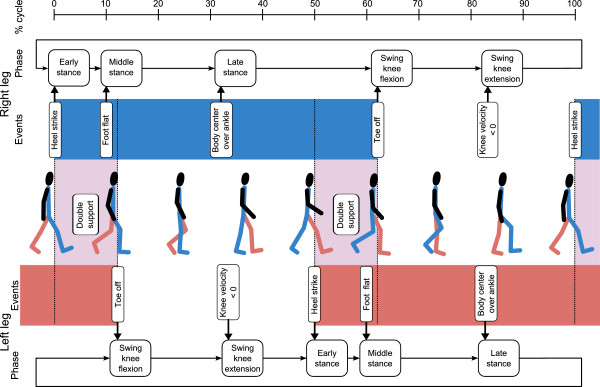
“In [1], the single step of human has been decomposed into some walking states.”
BackgroundDESIGN AND MYOELECTRIC CONTROL OF AN ACTIVE ORTHOSIS DEVICE USING FINITE STATE MACHINE ALGORITHM
Ülkir, O., Akgün, G., Toptaş, E., & Kaplanoğlu, E. (2020) · Technium Romanian Journal of Applied Sciences and Technology · doi:10.47577/technium.v2i7.2122 · Cited by 1
“These days, many wearable active orthosis devices have been successfully developed (Giovacchini et al., 2015; Tucker et al., 2015; Yan et al., 2015; Shorter et al., 2013; Ulkir et al., 2018;).”
BackgroundA Multi-Class SVM for Decoding the Human Activity Mode from sEMG Signals
کلانی, ه., Tahamipour-Z., S. M., Kardan, I., Akbarzadeh, A., Ebrahimi, A., & Sede, R. (2019) · International Conference on Robotics and Mechatronics · Cited by 1
Heins, S., & Ronsse, R. (2021) · Biosystems & biorobotics · doi:10.1007/978-3-030-69547-7_15 · Cited by 1
User Intent Recognition for Transfemoral Amputees With Prosthetic Legs Using Evolutionary Algorithms
Mohammadi, H., Khademi, G., Hardin, E. C., & Simon, D. (2019) · doi:10.1115/dscc2019-9150 · Cited by 1
Ground Reaction Force Estimation in Robotic Prosthesis using Super-twisting Extended State Observer
Huang, Y., Ma, H., Zhang, J., & An, H. (2021) · International Conference on Advanced Robotics and Mechatronics (ICARM) · doi:10.1109/icarm52023.2021.9536209 · Cited by 1
“Compared to the passive prosthesis, the gait symmetry, work productions of hip, and metabolic expenditures have been greatly improved for that amputee’s lost function of lower limb has been meaningfully restored.[2].”
BackgroundA Terrain-based Gait Self-adjusting Planning for Powered Prostheses
Yao, Z. G., Li, J., & Su, H. (2021) · International Conference on Advanced Robotics and Mechatronics (ICARM) · doi:10.1109/icarm52023.2021.9536186 · Cited by 1
“Currently, a general prosthesis control scheme is to divide a complete gait cycle into several phases, and use different control strategies at different phases achieved the performance of controlling the entire gait cycle [4]–[7].”
BackgroundStudy on 3D Image Reconstruction Model of Sparring Action Based on Graph Neural Network (GNN)
Chang, Y., & Su, M. (2021) · Computational Intelligence and Neuroscience · doi:10.1155/2021/6882467 · Cited by 1
Medrano, R. L., Thomas, G. C., Rouse, E. J., & Gregg, R. D. (2022) · IEEE/RAS-EMBS International Conference on Biomedical Robotics and Biomechatronics (BioRob) · doi:10.1109/biorob52689.2022.9925504 · Cited by 1
Metadata
- Authors
- Tucker, M. R., Olivier, J., Pagel, A., Bleuler, H., Bouri, M., Lambercy, O., Millán, J. D. R., Riener, R., Vallery, H., & Gassert, R.
- Affiliations
- ETH Zurich (CH)
- École Polytechnique Fédérale de Lausanne (CH)
- University of Zurich (CH)
- Corresponding author
- Tucker, Michael R
- ORCID
- Venue
- Journal of NeuroEngineering and Rehabilitation
- Published
- 2015
- Volume
- 12
- Issue
- 1
- Pages
- 1
- ISSN
- 1743-0003 (ISSN-L)
- PMC
- PMC4326520
- OpenAlex
- W2142114107
- Semantic Scholar
- 7fe25a0498cd3ccd98db0d8da50730c68d174d68
- Cited by
- 1,047
- References
- 232
- Citations by year
- 2026: 42 · 2025: 69 · 2024: 72 · 2023: 119 · 2022: 102 · 2021: 161 · 2020: 116 · 2019: 108 · 2018: 92 · 2017: 85 · 2016: 61 · 2015: 20
- FWCI
- 6.63
- Type
- journal article
- Language
- en
- Open access
- gold
- doi.org
- Licence
- cc-by
- Locations
- Journal of NeuroEngineering and Rehabilitation (publishedVersion, cc-by)
- Europe PMC (PubMed Central) (publishedVersion, cc-by)
- PubMed Central (publishedVersion, cc-by)
- PubMed (publishedVersion)
- Zurich Open Repository and Archive (University of Zurich) (acceptedVersion, cc-by)
- Repository for Publications and Research Data (ETH Zurich) (submittedVersion, cc-by)
- Infoscience (Ecole Polytechnique Fédérale de Lausanne) (submittedVersion)
- Infoscience (Ecole Polytechnique Fédérale de Lausanne) (submittedVersion, cc-by-nc-nd)
- Research Repository (Delft University of Technology) (submittedVersion, cc-by)
- Zurich Open Repository and Archive (University of Zurich) (submittedVersion, cc-by)
- Data Archiving and Networked Services (DANS) (submittedVersion, other-oa)
- ETH Zürich Research Collection (cc-by)
- Zurich Open Repository and Archive (University of Zurich)
- Funders
- National Science Foundation
- Schweizerischer Nationalfonds zur Förderung der Wissenschaftlichen Forschung
- Topics
- Physical Sciences › Engineering › Biomedical Engineering › Prosthetics and Rehabilitation Robotics
- Physical Sciences › Engineering › Biomedical Engineering › Muscle activation and electromyography studies
- Physical Sciences › Engineering › Control and Systems Engineering › Robotic Locomotion and Control
- Keywords
- orthoses, wearable robotic devices, gait assistance, control strategy, activities of daily living, sensorimotor control, hierarchical control architecture, safety mechanisms, regulatory approval
- MeSH terms
- Activities of Daily Living, Electromyography, Gait, Humans, Locomotion, Orthotic Devices, Prosthesis Design, Prostheses and Implants, Lower Extremity
About these checks
Registry, retraction, Cites and statistics results are computed, not judged, with one exception: a printed reference that no index lists is read once by a model before it counts as a citation error. Claims are extracted by a model and kept only when their quote appears verbatim in the text; each cited source is then checked, with a model’s help, for whether it says what the claim relies on. Those verdicts can be wrong — read the claim’s quote and the cited source before relying on one.
Statistics and arithmetic are recomputed, not judged.
Confidence bands are shown only for fields calibrated on our annotated test set. None is calibrated yet, so no band is shown.
What counts as a claim ›How we measure confidence ›How we check this ›
Are you an author, or do you see a problem with this page? Request a review
Data sources
Bibliographic data: Semantic Scholar, OpenAlex, Crossref.
Contains information from the Semantic Scholar Academic Graph Datasets, made available under the ODC Attribution License (ODC-BY 1.0).
Semantic Scholar’s data is described in: Kinney, R., et al. (2023). The Semantic Scholar Open Data Platform. arXiv:2301.10140.
