

Control strategies for active lower extremity prosthetics and orthotics: a review
Open accessThe DOI matches its Crossref record; 235 of the 235 references it cites were found in a registry or an index.
Abstract
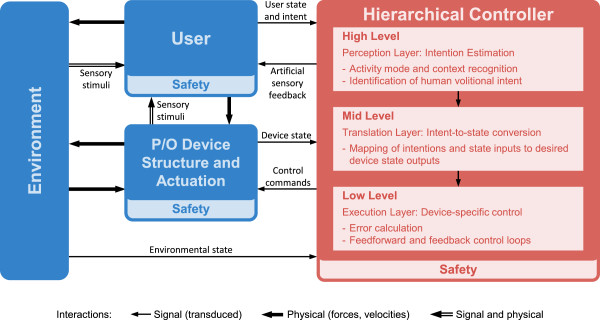
: Technological advancements have led to the development of numerous wearable robotic devices for the physical assistance and restoration of human locomotion. While many challenges remain with respect to the mechanical design of such devices, it is at least equally challenging and important to develop strategies to control them in concert with the intentions of the user.This work reviews the state-of-the-art techniques for controlling portable active lower limb prosthetic and orthotic (P/O) devices in the context of locomotive activities of daily living (ADL), and considers how these can be interfaced with the user's sensory-motor control system. This review underscores the practical challenges and opportunities associated with P/O control, which can be used to accelerate future developments in this field. Furthermore, this work provides a classification scheme for the comparison of the various control strategies.As a novel contribution, a general framework for the control of portable gait-assistance devices is proposed. This framework accounts for the physical and informatic interactions between the controller, the user, the environment, and the mechanical device itself. Such a treatment of P/Os--not as independent devices, but as actors within an ecosystem--is suggested to be necessary to structure the next generation of intelligent and multifunctional controllers.Each element of the proposed framework is discussed with respect to the role that it plays in the assistance of locomotion, along with how its states can be sensed as inputs to the controller. The reviewed controllers are shown to fit within different levels of a hierarchical scheme, which loosely resembles the structure and functionality of the nominal human central nervous system (CNS). Active and passive safety mechanisms are considered to be central aspects underlying all of P/O design and control, and are shown to be critical for regulatory approval of such devices for real-world use.The works discussed herein provide evidence that, while we are getting ever closer, significant challenges still exist for the development of controllers for portable powered P/O devices that can seamlessly integrate with the user's neuromusculoskeletal system and are practical for use in locomotive ADL.
Overview
The claims and statistics of this paper haven’t been checked yet.
Free: it reads the open-access text and checks the first 5 claims that cite a source we can check. Create a free account to check every claim.
Integrity signals
Registry
Cites
Statistics
Figures
Verification
Claims the paper makes
The claims and statistics of this paper haven’t been checked yet.
Free: it reads the open-access text and checks the first 5 claims that cite a source we can check. Create a free account to check every claim.
Claims other papers make about this one
Each is checked against this paper’s own text: does it say what the citing paper says it does?
The cited source says what the claim attributes to it.
In the citing paper
“Additional shortcomings include their limited environmental feedback, power supply, and failure to autonomously respond appropriately to external (possibly dangerous) stimuli.[24]”
From Flexible Electronics and Devices as Human–Machine Interfaces for Medical Robotics (2022) · cites this paper as [24]
The cited source says what the claim attributes to it.
In the citing paper
“Thus, the vast number of studies on different interface locations and various probing devices to record electrophysiological signals have established the foundation of user-communication with prosthetics.[24,286,287]”
From Flexible Electronics and Devices as Human–Machine Interfaces for Medical Robotics (2022) · cites this paper as [24]
Self-check
Percentages, sums and reported differences re-computed from the paper’s own numbers.
The self-check needs the paper’s full text.
Citations
Cites
Impedance Control: An Approach to Manipulation: Part I—Theory
Hogan, N. (1985) · Journal of Dynamic Systems, Measurement, and Control · doi:10.1115/1.3140702 · Cited by 3,673 · cited 1×
“Impedance is defined as the transfer function between an input flow and a n output effort [202].”
BackgroundFalls in older people: epidemiology, risk factors and strategies for prevention
Rubenstein, L. Z. (2006) · Age and Ageing · doi:10.1093/ageing/afl084 · Cited by 3,287 · cited 2×
“The risks are also not limited to physical harm, but may a lso include social, emotional, and psychological effects [38,39].”
BackgroundEstimating the Prevalence of Limb Loss in the United States: 2005 to 2050
Ziegler-Graham, K., MacKenzie, E. J., Ephraim, P. L., Travison, T. G., & Brookmeyer, R. (2008) · Archives of Physical Medicine and Rehabilitation · doi:10.1016/j.apmr.2007.11.005 · Cited by 2,816 · cited 1×
“stroke [6], spinal cord injury [7], Parkinson’s disease [8], and lower limb amputations [9]) can likewise be expected.”
Reach and grasp by people with tetraplegia using a neurally controlled robotic arm
Hochberg, L. R., Bacher, D., Jarosiewicz, B., Masse, N. Y., Simeral, J. D., Vogel, J., Haddadin, S., Liu, J., Cash, S. S., van der Smagt, P., et al. (2012) · Nature · doi:10.1038/nature11076 · Cited by 2,719 · cited 1×
“Intracortical electrode arrays have been successfully demonstrated to allow control of multi-degree-of-freedom reach and grasp movements with robotic arms in tetraplegic subjects [55,56],”
High-performance neuroprosthetic control by an individual with tetraplegia
Collinger, J. L., Wodlinger, B., Downey, J. E., Wang, W., Tyler-Kabara, E. C., Weber, D. J., McMorland, A. J., Velliste, M., Boninger, M. L., & Schwartz, A. B. (2013) · The Lancet · doi:10.1016/s0140-6736(12)61816-9 · Cited by 1,848 · cited 1×
“Intracortical electrode arrays have been successfully demonstrated to allow control of multi-degree-of-freedom reach and grasp movements with robotic arms in tetraplegic subjects [55,56],”
Incidence of Parkinson's Disease: Variation by Age, Gender, and Race/Ethnicity
Van Den Eeden, S. K. (2003) · American Journal of Epidemiology · doi:10.1093/aje/kwg068 · Cited by 1,747 · cited 1×
“stroke [6], spinal cord injury [7], Parkinson’s disease [8], and lower limb amputations [9]) can lik ew se be expected.”
BackgroundAugmented visual, auditory, haptic, and multimodal feedback in motor learning: A review
Sigrist, R., Rauter, G., Riener, R., & Wolf, P. (2013) · Psychonomic Bulletin & Review · doi:10.3758/s13423-012-0333-8 · Cited by 1,416 · cited 1×
“Auditory cues can vary in stereo balance, pitch, timbre and volume [89], and therefore may transmit rich information via speakers or headphones.”
Self-citationLower Extremity Exoskeletons and Active Orthoses: Challenges and State-of-the-Art
Dollar, A. M., & Herr, H. (2008) · IEEE Transactions on Robotics · doi:10.1109/tro.2008.915453 · Cited by 1,327 · cited 1×
“Several related review papers have been published in recent years that comprehensively establish the state-ofthe-art in portable and active lower limb prosthetics, orthotics and exoskeletons, mostly in terms of the design and hardware realization [10-15].”
Design and Evaluation of the LOPES Exoskeleton Robot for Interactive Gait Rehabilitation
Veneman, J. F., Kruidhof, R., Hekman, E. E. G., Ekkelenkamp, R., Van Asseldonk, E. H. F., & van der Kooij, H. (2007) · IEEE Transactions on Neural Systems and Rehabilitation Engineering · doi:10.1109/tnsre.2007.903919 · Cited by 1,280 · cited 2×
“This would exclude treadmill-based gait training orthoses such as the LOPES [19] and the Lokomat (Hocoma AG, Volketswil, Switzerland), which were among the classes of devices discussed in the review of Marchal-Crespo and Reinkensmeyer [20].”
Review of control strategies for robotic movement training after neurologic injury
Marchal-Crespo, L., & Reinkensmeyer, D. J. (2009) · Journal of NeuroEngineering and Rehabilitation · doi:10.1186/1743-0003-6-20 · Cited by 1,182
The energy expenditure of normal and pathologic gait
Waters, R. L., & Mulroy, S. (1999) · Gait & Posture · doi:10.1016/s0966-6362(99)00009-0 · Cited by 1,111 · cited 1×
“Pathological gait has also been linked to numerous secondary conditions, ncluding increased energy expenditure [37], increased risk and fear of falling [38,39], and deg en rative bone and joint disorders (e.”
BackgroundTargeted Muscle Reinnervation for Real-time Myoelectric Control of Multifunction Artificial Arms
Kuiken, T. A. (2009) · JAMA · doi:10.1001/jama.2009.116 · Cited by 1,089 · cited 3×
“Training of the classifier can be greatly facilitated through the use of standardized tools and procedures, such as the “Control Algorithms for Prosthetic Systems (CAPS)” software used by the University of New Brunswick and the Rehabilitation Institute of Chicago [119,128].”
MethodVariable impedance actuators: A review
Vanderborght, B., Albu-Schaeffer, A., Bicchi, A., Burdet, E., Caldwell, D. G., Carloni, R., Catalano, M., Eiberger, O., Friedl, W., Ganesh, G., et al. (2013) · Robotics and Autonomous Systems · doi:10.1016/j.robot.2013.06.009 · Cited by 1,008 · cited 1×
“[3,205,222],mechanically-variable impedance actuation [223,224] and the reciprocal transfer of power between joints [213,225-228] or between portions of the gait cycle [229-231].”
Restoring natural sensory feedback in real-time bidirectional hand prostheses
Raspopovic, S., Capogrosso, M., Petrini, F. M., Bonizzato, M., Rigosa, J., Di Pino, G., Carpaneto, J., Controzzi, M., Boretius, T., Fernandez, E., et al. (2014) · Science Translational Medicine · doi:10.1126/scitranslmed.3006820 · Cited by 1,001 · cited 2×
“Besides non-invasive feedback systems, it is also possible to directly deliver electrotactile stimuli to peripheral nerves via implanted electrodes [83,84].”
Impedance Control: An Approach to Manipulation: Part II—Implementation
Hogan, N. (1985) · Journal of Dynamic Systems, Measurement, and Control · doi:10.1115/1.3140713 · Cited by 973 · cited 1×
“A leading theory regarding physiological movement is that the CNS controls th e limbs through impedance control [204,205].”
Background(1976) · Advances in Behavioral Biology · doi:10.1007/978-1-4757-0964-3 · Cited by 916
Human Population: The Next Half Century
Cohen, J. E. (2003) · Science · doi:10.1126/science.1088665 · Cited by 870 · cited 1×
“Given the projected demographic shift toward an older population [5], an increase in age-correlated conditions associated with pathological gait (e.”
Combining brain-computer interfaces and assistive technologies: state-of-the-art and challenges
Millán, J. D. R. (2010) · Frontiers in Neuroscience · doi:10.3389/fnins.2010.00161 · Cited by 866 · cited 9×
“Even so, a recent pilot study investigated the use of an fNIRS-BCI to detect the preparation for movement of the hip in seated stroke subjects, which may indicate its suitability in shared control with severely impaired subjects [50].”
InfluentialSelf-citationSensory substitution and the human-machine interface
Bach-y-Rita, P., & W. Kercel, S. (2003) · Trends in Cognitive Sciences · doi:10.1016/j.tics.2003.10.013 · Cited by 858 · cited 1×
“While it is possible to restore locomotive functionality without this information, artificial sensory feedback is necessary for the seamless integration of the P/O with the impaired sensory-motor system [81].”
Electrotactile and vibrotactile displays for sensory substitution systems
Kaczmarek, K. A., Webster, J. G., Bach-y-Rita, P., & Tompkins, W. J. (1991) · IEEE Transactions on Biomedical Engineering · doi:10.1109/10.68204 · Cited by 827 · cited 1×
“Tactile cues can vary in frequency, strength, duration, pattern, and location [93].”
Foot Plantar Pressure Measurement System: A Review
Abdul Razak, A. H., Zayegh, A., Begg, R. K., & Wahab, Y. (2012) · Sensors · doi:10.3390/s120709884 · Cited by 817 · cited 1×
“Ground reaction forces can be sensed using instrumented insoles worn under the foot (reviewed in [75]) or e.”
Gailey, R. (2008) · The Journal of Rehabilitation Research and Development · doi:10.1682/jrrd.2006.11.0147 · Cited by 809 · cited 1×
“These w ill not only involve the affected limb, but also the unaffected limb and others involved in compensatory movements [15,40].”
BackgroundElectromechanical delay in human skeletal muscle under concentric and eccentric contractions
Cavanagh, P. R., & Komi, P. V. (1979) · European Journal of Applied Physiology and Occupational Physiology · doi:10.1007/bf00431022 · Cited by 802 · cited 1×
“Also interesting is the electromechanical delay between the motor commands and the generation of force in the muscle on the order of 10s of milliseconds [58], which would provide a significant head-start to a controller based on muscle activity over one based on mechanical feedback alone [59].”
Giggins, O. M., Persson, U., & Caulfield, B. (2013) · Journal of NeuroEngineering and Rehabilitation · doi:10.1186/1743-0003-10-60 · Cited by 760
Stair ascent and descent at different inclinations
Riener, R., Rabuffetti, M., & Frigo, C. (2002) · Gait & Posture · doi:10.1016/s0966-6362(01)00162-x · Cited by 744 · cited 2×
“It is duly noted that the power output characteristics vary substantially between the hip, knee, and ankle during a given activity [18].”
Self-citationNoninvasive Brain-Actuated Control of a Mobile Robot by Human EEG
del R. Millan, J., Renkens, F., Mourino, J., & Gerstner, W. (2004) · IEEE Transactions on Biomedical Engineering · doi:10.1109/tbme.2004.827086 · Cited by 740 · cited 2×
“This shared control approach limits the cognitive burden imposed on the user [45,46].”
Self-citationPatient- cooperative strategies for robot-aided treadmill training: first experimental results
Riener, R., Lunenburger, L., Jezernik, S., Anderschitz, M., Colombo, G., & Dietz, V. (2005) · IEEE Transactions on Neural Systems and Rehabilitation Engineering · doi:10.1109/tnsre.2005.848628 · Cited by 729 · cited 1×
“This type of control has been used with treadmillbased gait orthoses [211], but no examples of admittance control implementations with a portable device were found.”
Self-citationThe prevalence and risk factors of falling and fear of falling among lower extremity amputees
Miller, W. C., Speechley, M., & Deathe, B. (2001) · Archives of Physical Medicine and Rehabilitation · doi:10.1053/apmr.2001.24295 · Cited by 642 · cited 2×
“Pathological gait has also been linked to numerous secondary conditions, including increased energy expenditure [37], increased risk and fear of falling [38,39], and degenerative bone and joint disorders (e.”
Pfurtscheller, G. (2010) · Frontiers in Neuroscience · doi:10.3389/fnpro.2010.00003 · Cited by 625 · cited 1×
“However, EEG signals could be combined with other sensory inputs in the framework of the so-called hybrid BCIs [51,52] in order to decode user’s high-level commands more reliably.”
On the Control of the Berkeley Lower Extremity Exoskeleton (BLEEX)
Kazerooni, H., Racine, J.-L., Huang, L., & Steger, R. (2006) · Proceedings of the 2005 IEEE International Conference on Robotics and Automation · doi:10.1109/robot.2005.1570790 · Cited by 594 · cited 1×
“Many classical control strategies employ negative feedback, though the Berkeley Lower Extremity Exoskeleton (BLEEX) employs a positive feedback loop [220,221].”
Robust control of dynamically interacting systems
COLGATE, J. E., & HOGAN, N. (1988) · International Journal of Control · doi:10.1080/00207178808906161 · Cited by 589 · cited 3×
“that the device is controlled to store or dissipate energy, but not add) provides a means to guarantee the stability of the device as it interacts with the user and his environment [182,200,202].”
Design and Control of a Powered Transfemoral Prosthesis
Sup, F., Bohara, A., & Goldfarb, M. (2008) · The International Journal of Robotics Research · doi:10.1177/0278364907084588 · Cited by 586 · cited 2×
“that the device is controlled to store or dissipate energy, but not add) provides a means to guarantee the stability of the device as it interacts with the user and his environment [182,200,202].”
Rehabilitation of gait after stroke: a review towards a top-down approach
Belda-Lois, J.-M., Mena-del Horno, S., Bermejo-Bosch, I., Moreno, J. C., Pons, J. L., Farina, D., Iosa, M., Molinari, M., Tamburella, F., Ramos, A., et al. (2011) · Journal of NeuroEngineering and Rehabilitation · doi:10.1186/1743-0003-8-66 · Cited by 581 · cited 1×
“While there remains some debate regarding which of these strategies would provide the most lasting rehabilitative benefit to the user when employed during a dedicated therapy session [42], intuition indicates that an assistive controller would provide the most utility in the performance of ADL in a real-world setting.”
Huang, H., Zhang, F., Hargrove, L. J., Dou, Z., Rogers, D. R., & Englehart, K. B. (2011) · IEEE Transactions on Biomedical Engineering · doi:10.1109/tbme.2011.2161671 · Cited by 542 · cited 5×
“Also interesting is the electromechanical delay between the motor commands and the generation of force in the muscle on the order of 10s of milliseconds [58], which would provide a significant head-start to a controller based on muscle activity over one based on mechanical feedback alone [59].”
InfluentialZeilig, G., Weingarden, H., Zwecker, M., Dudkiewicz, I., Bloch, A., & Esquenazi, A. (2012) · The Journal of Spinal Cord Medicine · doi:10.1179/2045772312y.0000000003 · Cited by 537 · cited 1×
“…P/O devices in ADL, developers must establish trust with regulatory bodies, funding agencies, insurance companies, clinicians and end users that such devices are not only effective at their intended application, but are safe to use within reasonably expectable circumstances (see e.g. [241,242]).”
Neural control of locomotion; Part 1: The central pattern generator from cats to humans
Duysens, J., & Van de Crommert, H. W. A. A. (1998) · Gait & Posture · doi:10.1016/s0966-6362(97)00042-8 · Cited by 529 · cited 1×
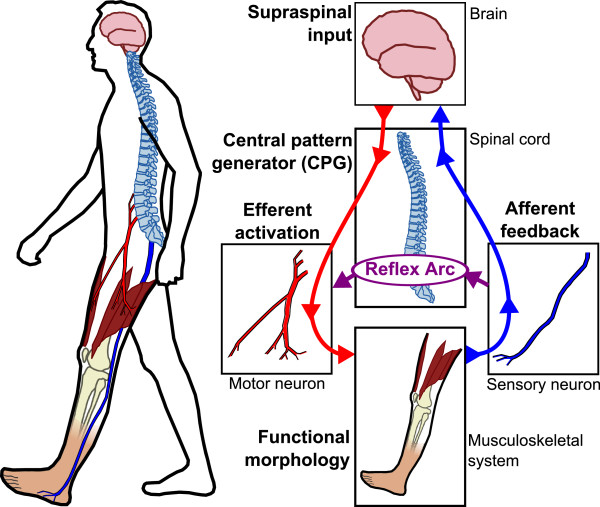
“Basic motor patterns are thought to be genera t d by a network of spinal interneurons, often referred to as the central pattern generator (CPG ) [28-31].”
BackgroundMuscle sound: bases for the introduction of a mechanomyographic signal in muscle studies.
Orizio, C. (1993) · PubMed · Cited by 523
Wearable Robots: Biomechatronic Exoskeletons
Pons, J. L. (2008) · Cited by 520
Wearable Robots: Biomechatronic Exoskeletons
(2008) · Wiley eBooks · doi:10.1002/9780470987667 · Cited by 517
A Strategy for Identifying Locomotion Modes Using Surface Electromyography
Huang, H., Kuiken, T. A., & Lipschutz, R. D. (2009) · IEEE Transactions on Biomedical Engineering · doi:10.1109/tbme.2008.2003293 · Cited by 512
Powered ankle-foot prosthesis to assist level-ground and stair-descent gaits
Au, S., Berniker, M., & Herr, H. (2008) · Neural Networks · doi:10.1016/j.neunet.2008.03.006 · Cited by 487
Proprioception and locomotor disorders
Dietz, V. (2002) · Nature Reviews Neuroscience · doi:10.1038/nrn939 · Cited by 487 · cited 4×
“Also at the supraspinal level, information from vestibular and visual systems are incorporated, which are crucial for the maintenance of balance, orientation, and control of precise movement [32].”
InfluentialPowered Ankle--Foot Prosthesis Improves Walking Metabolic Economy
Au, S. K., Weber, J., & Herr, H. (2009) · IEEE Transactions on Robotics · doi:10.1109/tro.2008.2008747 · Cited by 487 · cited 2×
“Relative to their passive counterparts, active P/Os also have the potential to increase self-selected gait speed while reducing metabolic expenditure [2-4].”
Neurons, Networks, and Motor Behavior
Katz, P. S. (1996) · Neuron · doi:10.1016/s0896-6273(00)80043-4 · Cited by 484
HAL: Hybrid Assistive Limb Based on Cybernics
Sankai, Y. (2010) · Springer Tracts in Advanced Robotics · doi:10.1007/978-3-642-14743-2_3 · Cited by 479 · cited 1×
“This approach has been demonstrated in hip and knee orthoses for assistance following s pinal cord injury for level walking [4,118,140-143] and for ambulation of stairs [144], and have thu s far been implemented using heuristic rules-based classifiers.”
MethodExoskeletons and orthoses: classification, design challenges and future directions
Herr, H. (2009) · Journal of NeuroEngineering and Rehabilitation · doi:10.1186/1743-0003-6-21 · Cited by 477
Equilibrium-Point Control Hypothesis Examined by Measured Arm Stiffness During Multijoint Movement
Gomi, H., & Kawato, M. (1996) · Science · doi:10.1126/science.272.5258.117 · Cited by 463 · cited 1×
“A leading theory regarding physiological movement is that the CNS controls the limbs through impedance control [203,204].”
Compliant actuation of rehabilitation robots
Vallery, H., Veneman, J., van Asseldonk, E., Ekkelenkamp, R., Buss, M., & van Der Kooij, H. (2008) · IEEE Robotics & Automation Magazine · doi:10.1109/mra.2008.927689 · Cited by 448 · cited 4×
“…user intent or invalid sensor inputs [24,67,116,118,121, 136,176,214,239], unstable interactions with the user and environment [60,107,138,181,184,202], actuation failures due to overloading/saturating the actuator [136,170,214], failure of an underactuated system to achieve its desired state,…”
InfluentialSelf-citationKinematic determinants of human locomotion.
Borghese, N. A., Bianchi, L., & Lacquaniti, F. (1996) · The Journal of Physiology · doi:10.1113/jphysiol.1996.sp021539 · Cited by 446 · cited 1×
“Invariant trajectories represent user states which vary with respect to the gait phase, and do not change substantially with respect to gait speed, between different users, or with minor intra-gait-mode variations [164,165].”
Brain-Controlled Wheelchairs: A Robotic Architecture
Carlson, T., & del R. Millan, J. (2013) · IEEE Robotics & Automation Magazine · doi:10.1109/mra.2012.2229936 · Cited by 432 · cited 5×
“An array of sonar sensors and digital video cameras was used to detect obtacles, which was used in the shared control context allow/disallow user commands with a brain-controlled wheelchair [47].”
InfluentialSelf-citationMulticlass Real-Time Intent Recognition of a Powered Lower Limb Prosthesis
Varol, H. A., Sup, F., & Goldfarb, M. (2010) · IEEE Transactions on Biomedical Engineering · doi:10.1109/tbme.2009.2034734 · Cited by 425 · cited 11×
“[24] employed a GMM to switch between sitting, walking, and standing modes using the embedded sensors in an actuated transfemoral prosthesis.”
InfluentialControl of a Powered Ankle–Foot Prosthesis Based on a Neuromuscular Model
Eilenberg, M. F., Geyer, H., & Herr, H. (2010) · IEEE Transactions on Neural Systems and Rehabilitation Engineering · doi:10.1109/tnsre.2009.2039620 · Cited by 419 · cited 2×
“in both terrain [172] and gait speed [190] in a transtibial prosthesis.”
Do human bipeds use quadrupedal coordination?
Dietz, V. (2002) · Trends in Neurosciences · doi:10.1016/s0166-2236(02)02229-4 · Cited by 417 · cited 1×
“It should also be noted that the joints in the human body are subject to biarticular coupling on both a mechanical and neural level [215].”
A Human--Exoskeleton Interface Utilizing Electromyography
Fleischer, C., & Hommel, G. (2008) · IEEE Transactions on Robotics · doi:10.1109/tro.2008.926860 · Cited by 412 · cited 10×
“Additional considerations are the performance limitations and saturation effects of the actuator and power source [14,60,170].”
InfluentialDesign and control of an exoskeleton for the elderly and patients
Kong, K., & Jeon, D. (2006) · IEEE/ASME Transactions on Mechatronics · doi:10.1109/tmech.2006.878550 · Cited by 403 · cited 2×
“rolled on a cart [72] or carried by a second person) or is carried by the user himself in a way that may be impractical as a product, yet informative for research purposes.”
Power assist method for HAL-3 using EMG-based feedback controller
Kawamoto, H., Lee, S., Kanbe, S., & Sankai, Y. (2004) · SMC'03 Conference Proceedings. 2003 IEEE International Conference on Systems, Man and Cybernetics. Conference Theme - System Security and Assurance (Cat. No.03CH37483) · doi:10.1109/icsmc.2003.1244649 · Cited by 392 · cited 2×
“Surface EMG has been demonstrated for this purpose in transfemoral prostheses [61,120,130,132,149,150], virtual above- and below-knee prostheses [151], a hip and knee orthosis [152], knee orthoses [60,153,154], a transtibial prosthesis [66] and an ankle-foot orthosis [155].”
Shull, P. B., Jirattigalachote, W., Hunt, M. A., Cutkosky, M. R., & Delp, S. L. (2014) · Gait & Posture · doi:10.1016/j.gaitpost.2014.03.189 · Cited by 388 · cited 2×
“A recent review has summarized the clinical impacts of wearable sensing and feedbac k technologies for normal and pathological gait [74], though the scope does not include their applic tion to P/O devices.”
BackgroundHybrid Control of the Berkeley Lower Extremity Exoskeleton (BLEEX)
Kazerooni, H., Steger, R., & Huang, L. (2006) · The International Journal of Robotics Research · doi:10.1177/0278364906065505 · Cited by 382 · cited 3×
“overloading/saturating the actuator [137,171,215], failure of an undera ctuated system to achieve its desired state, power failures due to a loss of power to the actuator or to the c ntroller [137,232], and controller failures due to software bugs or overloaded computational res ources [60].”
BackgroundMethodRestoring sensorimotor function through intracortical interfaces: progress and looming challenges
Bensmaia, S. J., & Miller, L. E. (2014) · Nature Reviews Neuroscience · doi:10.1038/nrn3724 · Cited by 368 · cited 2×
“Such an interface may also be used to p rovide sensory feedback to the user, thus closing the sensory-motor control loop [54].”
BackgroundMethodExoskeletons and robotic prosthetics: a review of recent developments
Bogue, R. (2009) · Industrial Robot: An International Journal · doi:10.1108/01439910910980141 · Cited by 348 · cited 2×
“Several related review papers have been published in recent years that comprehensively establish the state-ofthe-art in portable and active lower limb prosthetics, orthotics and exoskeletons, mostly in terms of the design and hardware realization [10-15].”
A Compliant Hybrid Zero Dynamics Controller for Stable, Efficient and Fast Bipedal Walking on MABEL
Sreenath, K., Park, H.-W., Poulakakis, I., & Grizzle, J. W. (2011) · The International Journal of Robotics Research · doi:10.1177/0278364910379882 · Cited by 344 · cited 1×
“Virtual constraint control is a strategy that has been used to control locomotion in bipedal robots [168], which has since been implemented and demonstrated with a powered knee and ankle prosthesis [159,169,170].”
Preliminary Evaluation of a Powered Lower Limb Orthosis to Aid Walking in Paraplegic Individuals
Farris, R. J., Quintero, H. A., & Goldfarb, M. (2011) · IEEE Transactions on Neural Systems and Rehabilitation Engineering · doi:10.1109/tnsre.2011.2163083 · Cited by 342 · cited 1×
“Voice commands or eye movements sequences have also been demonstrated as possible ways to interact with P/O devices [78-80].”
An improved powered ankle–foot orthosis using proportional myoelectric control
Ferris, D. P., Gordon, K. E., Sawicki, G. S., & Peethambaran, A. (2006) · Gait & Posture · doi:10.1016/j.gaitpost.2005.05.004 · Cited by 342 · cited 2×
“The simplest approac h is to directly modulate the actuator’s torque based on EMG activity [63,153,156].”
BackgroundJiménez-Fabián, R., & Verlinden, O. (2012) · Medical Engineering & Physics · doi:10.1016/j.medengphy.2011.11.018 · Cited by 313 · cited 2×
“Controllers for robotic prosthetic, orthotic and exoskeletal systems for the ankle were recently reviewed by Jimenez-Fabian and Verlinden [17].”
Preliminary Evaluations of a Self-Contained Anthropomorphic Transfemoral Prosthesis
Sup, F., Varol, H. A., Mitchell, J., Withrow, T. J., & Goldfarb, M. (2009) · IEEE/ASME Transactions on Mechatronics · doi:10.1109/tmech.2009.2032688 · Cited by 298 · cited 2×
“Examples of failures discussed in the literature include inappropriate contro ller outputs due to misinterpretation of user intent or invalid sensor inputs [24,67,117,119,122,1 37,177,215,240], unstable interactions with the user and environment [60,108,139,182,185,203], actu ation failures due to”
BackgroundEuropean Robotics Symposium 2008
(2008) · Springer Tracts in Advanced Robotics · doi:10.1007/978-3-540-78317-6 · Cited by 294
The Berkeley Lower Extremity Exoskeleton
Kazerooni, H., & Steger, R. (2006) · Journal of Dynamic Systems, Measurement, and Control · doi:10.1115/1.2168164 · Cited by 293
User‐adaptive control of a magnetorheological prosthetic knee
Herr, H., & Wilkenfeld, A. (2003) · Industrial Robot: An International Journal · doi:10.1108/01439910310457706 · Cited by 293 · cited 2×
“Many groups have successfully implemented FSCs using different numbers of activities and states with a wide variety of devices [2,3,14,24,41,44,107-109,114,117, 118,121,123,124,134,137-139,143,150,163,171-186].”
Upslope Walking With a Powered Knee and Ankle Prosthesis: Initial Results With an Amputee Subject
Sup, F., Varol, H. A., & Goldfarb, M. (2011) · IEEE Transactions on Neural Systems and Rehabilitation Engineering · doi:10.1109/tnsre.2010.2087360 · Cited by 283 · cited 6×
“This information has also been used to trigger an activity mode transition [107-110,112,113].”
InfluentialSystem Safety Engineering and Management
Roland, H. E., & Moriarty, B. (1990) · Wiley eBooks · doi:10.1002/9780470172438 · Cited by 264
Robotic Leg Control with EMG Decoding in an Amputee with Nerve Transfers
Hargrove, L. J., Simon, A. M., Young, A. J., Lipschutz, R. D., Finucane, S. B., Smith, D. G., & Kuiken, T. A. (2013) · New England Journal of Medicine · doi:10.1056/nejmoa1300126 · Cited by 253 · cited 9×
“Themotivation for doing so is that a DBN (which is similar in concept to a hiddenMarkovmodel) uses prior sensor information that can be mixed with current information in order to estimate the likelihood of a transition between locomotive modes.”
BackgroundMethodInfluentialA survey of sensor fusion methods in wearable robotics
Novak, D., & Riener, R. (2015) · Robotics and Autonomous Systems · doi:10.1016/j.robot.2014.08.012 · Cited by 252 · cited 1×
“For additional information related to these topics, see the review of Novak and Riener [122] on sensor fusion methods in wearable robotics.”
Self-citationIncidence of Stroke in Europe at the Beginning of the 21st Century
The European Registers of Stroke (EROS) Investigators (2009) · Stroke · doi:10.1161/strokeaha.108.535088 · Cited by 249
Biologically-inspired soft exosuit
Asbeck, A. T., Dyer, R. J., Larusson, A. F., & Walsh, C. J. (2013) · 2013 IEEE 13th International Conference on Rehabilitation Robotics (ICORR) · doi:10.1109/icorr.2013.6650455 · Cited by 240 · cited 1×
“Phase-based controllers In time-based control, a set of actions is performed based on a programmed time delay following a clearly identifiable gait event, for example heel strike [160,161] or toe-off [162].”
The rise of the body bots [robotic exoskeletons
Guizzo, E., & Goldstein, H. (2005) · IEEE Spectrum · doi:10.1109/mspec.2005.1515961 · Cited by 238
Van de Crommert, H. W. A. A., Mulder, T., & Duysens, J. (1998) · Gait & Posture · doi:10.1016/s0966-6362(98)00010-1 · Cited by 229 · cited 1×
“It is widely accepted that human locomotion depends both on basic patterns ge nerated at the spinal level, and the volitional and reflex-dependent fine control of these patte rns at different levels [25-27] (Figure 2).”
BackgroundReference Trajectory Generation for Rehabilitation Robots: Complementary Limb Motion Estimation
Vallery, H., van Asseldonk, E. H. F., Buss, M., & van der Kooij, H. (2009) · IEEE Transactions on Neural Systems and Rehabilitation Engineering · doi:10.1109/tnsre.2008.2008278 · Cited by 228 · cited 2×
“Non-phase-based controllers Complementary Limb Motion Estimation (CLME) infers the intended motion of affected limbs from the motion of the residual limbs, and maps this to a reference trajectory for robotic P/O joints to track [191].”
Self-citationRecycling Energy to Restore Impaired Ankle Function during Human Walking
Collins, S. H., & Kuo, A. D. (2010) · PLoS ONE · doi:10.1371/journal.pone.0009307 · Cited by 219 · cited 1×
“[3,205,222],mechanically-variable impedance actuation [223,224] and the reciprocal transfer of power between joints [213,225-228] or between portions of the gait cycle [229-231].”
Farris, R. J., Quintero, H. A., Murray, S. A., Ha, K. H., Hartigan, C., & Goldfarb, M. (2014) · IEEE Transactions on Neural Systems and Rehabilitation Engineering · doi:10.1109/tnsre.2013.2268320 · Cited by 208 · cited 3×
“[4] that there appe ars to be little standardization in the methodologies and outcome measures that are used to evaluate the efficac y o active P/O devices, and very few papers provide balanced criticism of the limitations own methodolog ies.”
BackgroundMethodEstimation of Human Ankle Impedance During the Stance Phase of Walking
Rouse, E. J., Hargrove, L. J., Perreault, E. J., & Kuiken, T. A. (2014) · IEEE Transactions on Neural Systems and Rehabilitation Engineering · doi:10.1109/tnsre.2014.2307256 · Cited by 207 · cited 1×
“An improved understanding of how humans control the impedance of the lower limbs is necessary to optimize the mechanical design and control of P/O devices and is the topic of ongoing biomechanics and neuroscience research [156,194,205-209].”
Simon, A. M., Ingraham, K. A., Fey, N. P., Finucane, S. B., Lipschutz, R. D., Young, A. J., & Hargrove, L. J. (2014) · PLoS ONE · doi:10.1371/journal.pone.0099387 · Cited by 207
Control of Stair Ascent and Descent With a Powered Transfemoral Prosthesis
Lawson, B. E., Varol, H. A., Huff, A., Erdemir, E., & Goldfarb, M. (2013) · IEEE Transactions on Neural Systems and Rehabilitation Engineering · doi:10.1109/tnsre.2012.2225640 · Cited by 206 · cited 3×
“include standing on inclined surfaces [108], running [137], and stair ascent [138].”
Volitional Control of a Prosthetic Knee Using Surface Electromyography
Ha, K. H., Varol, H. A., & Goldfarb, M. (2011) · IEEE Transactions on Biomedical Engineering · doi:10.1109/tbme.2010.2070840 · Cited by 205 · cited 3×
“Surface EMG has been demonstrated for this purpose in transfemoral prostheses [61,120,130,132,149,150], virtual above- and below-knee prostheses [151], a hip and knee orthosis [152], knee orthoses [60,153,154], a transtibial prosthesis [66] and an ankle-foot orthosis [155].”
Neural control of rhythmic human movement: the common core hypothesis.
Zehr, E. P. (2005) · PubMed · Cited by 204
High accuracy decoding of user intentions using EEG to control a lower-body exoskeleton
Kilicarslan, A., Prasad, S., Grossman, R. G., & Contreras-Vidal, J. L. (2013) · 2013 35th Annual International Conference of the IEEE Engineering in Medicine and Biology Society (EMBC) · doi:10.1109/embc.2013.6610821 · Cited by 196 · cited 3×
“EEG-based activity mode recognition has only recently been deployed with portable lower limb orthotic devices [48,49,144,145].”
The special nature of human walking and its neural control
Capaday, C. (2002) · Trends in Neurosciences · doi:10.1016/s0166-2236(02)02173-2 · Cited by 195 · cited 1×
“Sensory information is also transmitted to the brain, where it is combined with higher level inputs from the visual, auditory, and vestibular systems to provide information required for the maintenance of balance, orientation and control of precise movements. posture [34,35].”
Afferent feedback in the control of human gait
Nielsen, J. B., & Sinkjær, T. (2002) · Journal of Electromyography and Kinesiology · doi:10.1016/s1050-6411(02)00023-8 · Cited by 185 · cited 1×
“Sensory information is also transmitted to the brain, where it is combined with higher level inputs from the visual, auditory, and vestibular systems to provide information required for the maintenance of balance, orientation and control of precise movements. posture [34,35].”
Borton, D., Micera, S., Millán, J. D. R., & Courtine, G. (2013) · Science Translational Medicine · doi:10.1126/scitranslmed.3005968 · Cited by 171 · cited 2×
“Short of physiological recovery or bridging the communication gap with neuroprostheses [21], functional electrical stimulation (FES) can be used to actuate the user’s muscles in cooperation with an orthotic device [218,219].”
Self-citationDevelopment of power assisting suit for assisting nurse labor
YAMAMOTO, K., HYODO, K., ISHII, M., & MATSUO, T. (2002) · JSME International Journal Series C · doi:10.1299/jsmec.45.703 · Cited by 169 · cited 2×
“The load carried by the physio logical joint can be estimated from muscle activity [60,70,155,217] or through direct force meas ur ment [218].”
BackgroundBellman, R. D., Holgate, M. A., & Sugar, T. G. (2008) · 2008 2nd IEEE RAS & EMBS International Conference on Biomedical Robotics and Biomechatronics · doi:10.1109/biorob.2008.4762887 · Cited by 163 · cited 1×
“[3,206,223], mechanically-variable impedance actuation [224,225] and the reciprocal tr ansfer of power between joints [214,226-229] or between portions of the gait cycle [230-232].”
BackgroundIntent Recognition in a Powered Lower Limb Prosthesis Using Time History Information
Young, A. J., Simon, A. M., Fey, N. P., & Hargrove, L. J. (2014) · Annals of Biomedical Engineering · doi:10.1007/s10439-013-0909-0 · Cited by 160 · cited 3×
“In later work at RIC [62,67], a DBN classifier was used with the transfemoral prosthesis in place of the SVM or LDA of [59,127].”
Stair Ascent With a Powered Transfemoral Prosthesis Under Direct Myoelectric Control
Hoover, C. D., Fulk, G. D., & Fite, K. B. (2012) · IEEE/ASME Transactions on Mechatronics · doi:10.1109/tmech.2012.2200498 · Cited by 159 · cited 2×
“Surface EMG has been demonstrated for this purpose in transfemoral pr stheses [61,121,131,133,150, 151], virtual above- and below-knee prostheses [152], a hip and kn ee orthosis [153], knee orthoses [60,154,155], a transtibial prosthesis [66] and an ankle-foot orthosis [156].”
BackgroundDevelopment of hybrid orthosis for standing, walking, and stair climbing after spinal cord injury.
Kobetic, R., To, C. S., Schnellenberger, J. R., Audu, M., Bulea, T., Gaudio, R., Pinault, G., Tashman, S., & Triolo, R. (2009) · Journal of rehabilitation research and development · doi:10.1682/jrrd.2008.07.0087 · Cited by 158 · cited 2×
“Societal acceptance and cosmesis are also critical practicality issues [44].”
Design and Evaluation of a Low-Cost Force Feedback System for Myoelectric Prosthetic Hands
Pylatiuk, C., Kargov, A., & Schulz, S. (2006) · JPO Journal of Prosthetics and Orthotics · doi:10.1097/00008526-200604000-00007 · Cited by 156 · cited 1×
“Experimentally assessing [104,105] or simulating [106] the user’s interaction with the orthotic or prosthetic”
A Training Method for Locomotion Mode Prediction Using Powered Lower Limb Prostheses
Young, A. J., Simon, A. M., & Hargrove, L. J. (2014) · IEEE Transactions on Neural Systems and Rehabilitation Engineering · doi:10.1109/tnsre.2013.2285101 · Cited by 150 · cited 4×
“It is noteworthy that there are relatively few studies that document the implementation of a complete hierarchical, multifunctional control structure similar to the one suggested here and have demonstrated its use in a practical setting [24,67,114-119].”
InfluentialPower assist method for HAL-3 estimating operator's intention based on motion information
Kawamoto, H., Kanbe, S., & Sankai, Y. (2004) · The 12th IEEE International Workshop on Robot and Human Interactive Communication, 2003. Proceedings. ROMAN 2003. · doi:10.1109/roman.2003.1251800 · Cited by 148 · cited 4×
“Note that while the rules themselves in this case have been selected heuristically, the criteria used may either be manually selected [124] or determined through analytical means [109,126].”
InfluentialAn EMG-Position Controlled System for an Active Ankle-Foot Prosthesis: An Initial Experimental Study
Au, S. K., Bonato, P., & Herr, H. (2005) · 9th International Conference on Rehabilitation Robotics, 2005. ICORR 2005. · doi:10.1109/icorr.2005.1501123 · Cited by 142 · cited 2×
“using muscles in the low r leg to control the ankle [66]).”
MethodTools for brain-computer interaction: a general concept for a hybrid BCI
Müller-Putz, G. R. (2011) · Frontiers in Neuroinformatics · doi:10.3389/fninf.2011.00030 · Cited by 142 · cited 1×
“However, EEG signals could be combined with other sensory inputs in the framework of the so-called hybrid BCIs [51,52] in order to decode user’s high-level commands more reliably.”
BackgroundTele-impedance based assistive control for a compliant knee exoskeleton
Karavas, N. C., Ajoudani, A., Tsagarakis, N. G., Saglia, J. A., Bicchi, A., & Caldwell, D. G. (2014) · Robotics and Autonomous Systems · doi:10.1016/j.robot.2014.09.027 · Cited by 139 · cited 3×
“The load carried by the physio logical joint can be estimated from muscle activity [60,70,155,217] or through direct force meas ur ment [218].”
BackgroundMethodDesign and control of an active electrical knee and ankle prosthesis
Sup, F. C., Varol, H. A., Mitchell, J. E., Withrow, T. J., & Goldfarb, M. T. (2008) · IEEE/RAS-EMBS International Conference on Biomedical Robotics and Biomechatronics (BioRob) · doi:10.1109/biorob.2008.4762811 · Cited by 139
A Haptic Feedback System for Lower-Limb Prostheses
Fan, R. E., Culjat, M. O., King, C.-H., Franco, M. L., Boryk, R., Bisley, J. W., Dutson, E., & Grundfest, W. S. (2008) · IEEE Transactions on Neural Systems and Rehabilitation Engineering · doi:10.1109/tnsre.2008.920075 · Cited by 138 · cited 2×
“Other tactile feedback schemes have been tested to display, for example, information about discrete force levels underneath the foot [103].”
Extended physiologic taction: design and evaluation of a proportional force feedback system.
Meek, S. G., Jacobsen, S. C., & Goulding, P. P. (1989) · PubMed · Cited by 135
Predicting the intended motion with EMG signals for an exoskeleton orthosis controller
Fleischer, C., Reinicke, C., & Hommel, G. (2005) · IEEE/RSJ International Conference on Intelligent Robots and Systems (IROS) · doi:10.1109/iros.2005.1545504 · Cited by 134 · cited 2×
“Surface EMG has been demonstrated for this purpose in transfemoral prostheses [61,120,130,132,149,150], virtual above- and below-knee prostheses [151], a hip and knee orthosis [152], knee orthoses [60,153,154], a transtibial prosthesis [66] and an ankle-foot orthosis [155].”
Future developments in brain-machine interface research
Lebedev, M. A., Tate, A. J., Hanson, T. L., Li, Z., O'Doherty, J. E., Winans, J. A., Ifft, P. J., Zhuang, K. Z., Fitzsimmons, N. A., Schwarz, D. A., et al. (2011) · Clinics · doi:10.1590/s1807-59322011001300004 · Cited by 130 · cited 1×
“been done, however, in rhesus macaques to demonstrate the prediction of leg movements to control of bipedal gait in a humanoid robot [57].”
BackgroundAguirre-Ollinger, G., Colgate, J. E., Peshkin, M. A., & Goswami, A. (2012) · IEEE Transactions on Neural Systems and Rehabilitation Engineering · doi:10.1109/tnsre.2011.2176960 · Cited by 126 · cited 1×
“added friction and inertia) imposed by an exoskeletal device [210].”
Hybrid assistive system-the motor neuroprosthesis
Popovic, D., Tomovic, R., & Schwirtlich, L. (1989) · IEEE Transactions on Biomedical Engineering · doi:10.1109/10.32105 · Cited by 125 · cited 1×
“Short of physiological recovery or bridging the communication gap with neuroprostheses [21], functional electrical stimulation (FES) can be used to actuate the user’s muscles in cooperation with an orthotic device [218,219].”
Model-Based Estimation of Knee Stiffness
Pfeifer, S., Vallery, H., Hardegger, M., Riener, R., & Perreault, E. J. (2012) · IEEE Transactions on Biomedical Engineering · doi:10.1109/tbme.2012.2207895 · Cited by 121 · cited 2×
“An improved understanding of how humans control the impedance of the lower limbs is necessary to optimize the mechanical design and control of P/O devices and is the topic of ongoing biomechanics and neuroscience research [156,194,205-209].”
Self-citationOnline Phase Detection Using Wearable Sensors for Walking with a Robotic Prosthesis
Goršič, M., Kamnik, R., Ambrožič, L., Vitiello, N., Lefeber, D., Pasquini, G., & Munih, M. (2014) · Sensors · doi:10.3390/s140202776 · Cited by 121
Technologies for Powered Ankle-Foot Orthotic Systems: Possibilities and Challenges
Shorter, K. A., Xia, J., Hsiao‐Wecksler, E. T., Durfee, W. K., & Kogler, G. F. (2011) · IEEE/ASME Transactions on Mechatronics · doi:10.1109/tmech.2011.2174799 · Cited by 120 · cited 3×
“Several related review papers have been published in recent years that comprehensively establish the state-ofthe-art in portable and active lower limb prosthetics, orthotics and exoskeletons, mostly in terms of the design and hardware realization [10-15].”
Shamaei, K., Cenciarini, M., Adams, A. A., Gregorczyk, K. N., Schiffman, J. M., & Dollar, A. M. (2014) · IEEE Transactions on Biomedical Engineering · doi:10.1109/tbme.2014.2307698 · Cited by 117 · cited 1×
“A improved understanding of how humans control the impedance of the lower limbs is nece sary to optimize the mechanical design and control of P/O devices and is the topic of ongoing bio mechanics and neuroscience research [157,195,206-210].”
BackgroundAutomated detection of gait initiation and termination using wearable sensors
Novak, D., Reberšek, P., De Rossi, S. M. M., Donati, M., Podobnik, J., Beravs, T., Lenzi, T., Vitiello, N., Carrozza, M. C., & Munih, M. (2013) · Medical Engineering & Physics · doi:10.1016/j.medengphy.2013.07.003 · Cited by 116 · cited 3×
“document a method for predicting the initiation and termination of level gait in real-time using 9 IMUs distributed about the body and pressure-sensing insoles via classification trees, with promising results [126].”
Liu, M., Zhang, F., Datseris, P., & Huang, H. (2013) · Journal of Intelligent & Robotic Systems · doi:10.1007/s10846-013-9979-3 · Cited by 112
Multi-joint actuation platform for lower extremity soft exosuits
Ding, Y., Galiana, I., Asbeck, A., Quinlivan, B., De Rossi, S. M. M., & Walsh, C. (2014) · 2014 IEEE International Conference on Robotics and Automation (ICRA) · doi:10.1109/icra.2014.6907024 · Cited by 112 · cited 1×
“Toward this end, Steven Collins [232] has called for the development of “universal wearable robot emulators” – devices for use in a laboratory that are tethered for power, control, and actuation (see e.g. [155,162,166,206,212,233]).”
Realizing the Promise of Robotic Leg Prostheses
Goldfarb, M., Lawson, B. E., & Shultz, A. H. (2013) · Science Translational Medicine · doi:10.1126/scitranslmed.3007312 · Cited by 112 · cited 6×
“surgically implanting electrode arrays in the motor cortex) [15].”
InfluentialMMG and EMG responses during fatiguing isokinetic muscle contractions at different velocities
Perry‐Rana, S. R., Housh, T. J., Johnson, G. O., Bull, A. J., Berning, J. M., & Cramer, J. T. (2002) · Muscle & Nerve · doi:10.1002/mus.10214 · Cited by 107 · cited 1×
“A potential advantage of MMG over EMG is that the muscle force estimated through MMG is less sensitive to fatigue [69].”
Rea, M., Rana, M., Lugato, N., Terekhin, P., Gizzi, L., Brötz, D., Fallgatter, A. J., Birbaumer, N., Sitaram, R., & Carìa, A. (2014) · Neurorehabilitation and neural repair · doi:10.1177/1545968313520410 · Cited by 102 · cited 1×
“Even so, a recent pilot study investigated the use of an fNIRS-BCI to detect the preparation for movement of the hip in seated stroke subjects, which may indicate its suitability in shared control with severely impaired subjects [50].”
Strickland, E. (2012) · IEEE Spectrum · doi:10.1109/mspec.2012.6117830 · Cited by 101 · cited 1×
“This approach has been demonstrated in hip and knee orthoses for assistance following spinal cord injury for level walking [4,118,140-143] and for ambulation of stairs [144], and have thus far been implemented using heuristic rules-based classifiers.”
MethodContreras-Vidal, J. L., & Grossman, R. G. (2013) · 2013 35th Annual International Conference of the IEEE Engineering in Medicine and Biology Society (EMBC) · doi:10.1109/embc.2013.6609816 · Cited by 97 · cited 1×
“However, there may still be utility in using brain a ct vity to provide high-level commands to the device, which it will then execute (as in the s ared controlcontext promoted in [45-47] and demonstrated in [48,49]).”
BackgroundDesign of a semi-active knee prosthesis
Lambrecht, B. G. A., & Kazerooni, H. (2009) · 2009 IEEE International Conference on Robotics and Automation · doi:10.1109/robot.2009.5152828 · Cited by 95 · cited 1×
“Many groups have successfully implemented FSCs using different numbers of activities and states with a wide variety of devices [2,3,14,24,41,44,107-109,114,117, 118,121,123,124,134,137-139,143,150,163,171-186].”
Speed adaptation in a powered transtibial prosthesis controlled with a neuromuscular model
Markowitz, J., Krishnaswamy, P., Eilenberg, M. F., Endo, K., Barnhart, C., & Herr, H. (2011) · Philosophical Transactions of the Royal Society B Biological Sciences · doi:10.1098/rstb.2010.0347 · Cited by 95 · cited 1×
“in both terrain [172] and gait speed [190] in a transtibial prosthesis.”
A Powered Lower Limb Orthosis for Providing Legged Mobility in Paraplegic Individuals
Quintero, H., Farris, R. J., Hartigan, C., Clesson, I., & Goldfarb, M. T. (2011) · Topics in Spinal Cord Injury Rehabilitation · doi:10.1310/sci1701-25 · Cited by 93 · cited 5×
“Examples include finite state machines (FSM) [107, 114,115,117,123], and decision trees [109,113,124-126].”
InfluentialFeasibility of an Active Control Scheme for Above Knee Prostheses
Grimes, D. L., Flowers, W. C., & Donath, M. (1977) · Journal of Biomechanical Engineering · doi:10.1115/1.3426293 · Cited by 92
An Electrohydraulic Knee-Torque Controller for a Prosthesis Simulator
Flowers, W. C., & Mann, R. W. (1977) · Journal of Biomechanical Engineering · doi:10.1115/1.3426266 · Cited by 91 · cited 2×
“The renderable trans pa e cy of a device can also be used as a performance metric that is indicative of how well the physical dyn mics of the device can be controlled [198-200].”
BackgroundHazop and Hazan. Notes on the Identification and Assessment of Hazards.
Kletz, T. (1986) · Cited by 91
Peeraer, L., Aeyels, B., & Van der Perre, G. (1990) · Journal of Biomedical Engineering · doi:10.1016/0141-5425(90)90037-n · Cited by 87 · cited 2×
“It is noteworthy that there are relatively few studies that document the implementation of a complete hierarchical, multifunctional control structure similar to the one suggested here and have demonstrated its use in a practical setting [24,67,114-119].”
Can vibratory feedback be used to improve postural stability in persons with transtibial limb loss?
Rusaw, D., Hagberg, K., Nolan, L., & Ramstrand, N. (2012) · The Journal of Rehabilitation Research and Development · doi:10.1682/jrrd.2011.05.0088 · Cited by 87 · cited 1×
“Electrotactile [94,95,99,100] and vibrotactile [87,101,102] stimulation have been used to convey information about characteristics of gait and postural control and possible deviations.”
Gait mode recognition and control for a portable-powered ankle-foot orthosis
Li, Y. D., & Hsiao-Wecksler, E. T. (2013) · 2013 IEEE 13th International Conference on Rehabilitation Robotics (ICORR) · doi:10.1109/icorr.2013.6650373 · Cited by 86 · cited 1×
“Examples of failures discussed in the literature include inappropriate controller outputs due to misinterpretation of user intent or invalid sensor inputs [24,67,116,118,121, 136,176,214,239], unstable interactions with the user and environment [60,107,138,181,184,202], actuation failures due to overloading/saturating…”
Running With a Powered Knee and Ankle Prosthesis
Shultz, A. H., Lawson, B. E., & Goldfarb, M. T. (2014) · IEEE Transactions on Neural Systems and Rehabilitation Engineering · doi:10.1109/tnsre.2014.2336597 · Cited by 84 · cited 2×
“include standing on inclined surfaces [108], running [137], and stair ascent [138].”
Towards Biomimetic Virtual Constraint Control of a Powered Prosthetic Leg
Gregg, R. D., & Sensinger, J. W. (2013) · IEEE Transactions on Control Systems Technology · doi:10.1109/tcst.2012.2236840 · Cited by 84 · cited 2×
“As such, walking backwards is also pos sible with this technique without altering the controller [159,160].”
MethodFinite-state control of a trans-femoral (TF) prosthesis
Zlatnik, D., Steiner, B., & Schweitzer, G. (2002) · IEEE Transactions on Control Systems Technology · doi:10.1109/87.998030 · Cited by 84 · cited 1×
“Many groups have successfully implemented FSCs using different numbers of activities and states with a wide variety of devices [2,3,14,24,41,44,107-109,114,117, 118,121,123,124,134,137-139,143,150,163,171-186].”
Effects of Locomotion Mode Recognition Errors on Volitional Control of Powered Above-Knee Prostheses
Zhang, F., Liu, M., & Huang, H. (2015) · IEEE Transactions on Neural Systems and Rehabilitation Engineering · doi:10.1109/tnsre.2014.2327230 · Cited by 82 · cited 3×
“It is noteworthy that there are relatively few studies that document the impleme ntation of a complete hierarchical, multifunctional control structure similar to the one suggested he re and have demonstrated its use in a practical setting [24,67,115-120].”
BackgroundYang, L., Dyer, P. S., Carson, R. J., Webster, J. B., Foreman, K. B., & Bamberg, S. J. M. (2012) · Gait & Posture · doi:10.1016/j.gaitpost.2012.04.004 · Cited by 79 · cited 2×
“In [89,91,92], for example, acoustic signals sounded when the gait symmetry ratio (i.”
BackgroundDesign and Control of an Electrically Powered Knee Prosthesis
Fite, K. B., Mitchell, J. E., Sup, F. C., & Goldfarb, M. T. (2007) · International Conference on Rehabilitation Robotics · doi:10.1109/icorr.2007.4428531 · Cited by 79 · cited 1×
“Many groups have successfully implemented FSCs using different numbers of activities and states with a wide variety of devices [2,3,14,24,41,44,107-109,114,117, 118,121,123,124,134,137-139,143,150,163,171-186].”
Prosthetics and Orthotics: Lower Limb and Spine
Seymour, R. (2002) · Medical Entomology and Zoology · Cited by 78
Interjoint coordination in lower limbs during different movements in humans
St-Onge, N., & Feldman, A. G. (2003) · Experimental Brain Research · doi:10.1007/s00221-002-1212-8 · Cited by 77 · cited 2×
“This is possible due to the strong inter-joint coordination exhibite d during physiological human motion [36].”
BackgroundReal-Time Myoelectric Control of Knee and Ankle Motions for Transfemoral Amputees
Hargrove, L. J., Simon, A. M., Lipschutz, R. D., Finucane, S. B., & Kuiken, T. (2011) · JAMA · doi:10.1001/jama.2011.465 · Cited by 75 · cited 2×
“Surface EMG has been demonstrated for this purpose in transfemoral prostheses [61,120,130,132,149,150], virtual above- and below-knee prostheses [151], a hip and knee orthosis [152], knee orthoses [60,153,154], a transtibial prosthesis [66] and an ankle-foot orthosis [155].”
Performance evaluation of a lower limb exoskeleton for stair ascent and descent with Paraplegia
Farris, R. J., Quintero, H., & Goldfarb, M. (2012) · Annual International Conference of the IEEE Engineering in Medicine and Biology Society (EMBC) · doi:10.1109/embc.2012.6346326 · Cited by 74 · cited 1×
“This approach has been demonstrated in hip and knee orthoses for assistance following spinal cord injury for level walking [4,117,139-142] and for ambulation of stairs [143], and have thus far been implemented using heuristic rules-based classifiers.”
Non-weight-bearing neural control of a powered transfemoral prosthesis
Hargrove, L. J., Simon, A. M., Lipschutz, R., Finucane, S. B., & Kuiken, T. A. (2013) · Journal of NeuroEngineering and Rehabilitation · doi:10.1186/1743-0003-10-62 · Cited by 73 · cited 7×
“Surface EMG has been demonstrated for this purpose in transfemoral prostheses [61,120,130,132,149,150], virtual above- and below-knee prostheses [151], a hip and knee orthosis [152], knee orthoses [60,153,154], a transtibial prosthesis [66] and an ankle-foot orthosis [155].”
InfluentialSensorimotor Control of Movement and Posture
(2002) · Advances in experimental medicine and biology · doi:10.1007/978-1-4615-0713-0 · Cited by 72
Triolo, R. J., Bailey, S. N., Miller, M. E., Rohde, L. M., Anderson, J. S., Davis, J. A., Abbas, J. J., DiPonio, L., Forrest, G. P., Gater, D. R., et al. (2012) · Archives of Physical Medicine and Rehabilitation · doi:10.1016/j.apmr.2012.01.001 · Cited by 72 · cited 1×
“functional electrical stimulation (FES)), which were reviewed in [21-23].”
Actuator With Angle-Dependent Elasticity for Biomimetic Transfemoral Prostheses
Pfeifer, S., Pagel, A., Riener, R., & Vallery, H. (2014) · IEEE/ASME Transactions on Mechatronics · doi:10.1109/tmech.2014.2337514 · Cited by 70 · cited 2×
“An improved understanding of how humans control the impedance of the lower limbs is necessary to optimize the mechanical design and control of P/O devices and is the topic of ongoing biomechanics and neuroscience research [156,194,205-209].”
Self-citationBoehler, A., Hollander, K. W., Sugar, T. G., & Shin, D. (2008) · Proceedings - IEEE International Conference on Robotics and Automation/Proceedings · doi:10.1109/robot.2008.4543504 · Cited by 70
Detecting and Interpreting Muscle Activity with Wearable Force Sensors
Lukowicz, P., Hanser, F., Szubski, C., & Schobersberger, W. (2006) · Lecture notes in computer science · doi:10.1007/11748625_7 · Cited by 69
MINDWALKER: Going one step further with assistive lower limbs exoskeleton for SCI condition subjects
Gancet, J., Ilzkovitz, M., Motard, E., Nevatia, Y., Letier, P., Weerdt, D. D., Cheron, G. A., Hoellinger, T., Seetharaman, K., Petieau, M., et al. (2012) · IEEE/RAS-EMBS International Conference on Biomedical Robotics and Biomechatronics (BioRob) · doi:10.1109/biorob.2012.6290688 · Cited by 69 · cited 1×
“EEG-based activity mode recognition has only recently been deployed with portable lower limb orthotic devices [48,49,144,145].”
Sensory Control of Locomotion: Reflexes Versus Higher-Level Control
Procházka, A., Gritsenko, V., & Yakovenko, S. (2002) · Advances in experimental medicine and biology · doi:10.1007/978-1-4615-0713-0_41 · Cited by 68 · cited 1×
“Locomotor patterns are also modulated by afferent feedback arising fro m muscle spindles, Golgi tendon organs, mechanoreceptors lining the joint capsules, tactile mechano recept rs and free nerve endings of the skin that sense stretch, pressure, heat, or pain [32,33] .”
BackgroundControl aspects of active above-knee prosthesis
Popović, D. B., Tomović, R., Tepavac, D., & Schwirtlich, L. B. (1991) · International Journal of Man-Machine Studies · doi:10.1016/s0020-7373(05)80159-2 · Cited by 67 · cited 3×
“making the joints stiff or compliant), where the appropriate behavior must be decided upon by the controls designer [60,114,116].”
The Design and Initial Experimental Validation of an Active Myoelectric Transfemoral Prosthesis
Hoover, C. D., Fulk, G. D., & Fite, K. B. (2012) · Journal of Medical Devices · doi:10.1115/1.4005784 · Cited by 67 · cited 5×
“Surface EMG has been demonstrated for this purpose in transfemoral prostheses [61,120,130,132,149,150], virtual above- and below-knee prostheses [151], a hip and knee orthosis [152], knee orthoses [60,153,154], a transtibial prosthesis [66] and an ankle-foot orthosis [155].”
InfluentialIdentifying the role of proprioception in upper-limb prosthesis control: Studies on targeted motion
Blank, A., Okamura, A. M., & Kuchenbecker, K. J. (2010) · ACM Transactions on Applied Perception · doi:10.1145/1773965.1773966 · Cited by 67 · cited 1×
“Experimentally assessing [105,106] or simulating [107] the user’s interactio n w th the orthotic or prosthetic device in conjunction with a feedback system may increase our un derstanding of which types of information are meaningful, superfluous or even incriminatory.”
BackgroundChallenges and Opportunities in Restoring Function After Paralysis
Peckham, P. H., & Kilgore, K. L. (2013) · IEEE Transactions on Biomedical Engineering · doi:10.1109/tbme.2013.2245128 · Cited by 66 · cited 1×
“functional electrical stimulation (FES)), which were reviewed in [21-23].”
Complementary limb motion estimation for the control of active knee prostheses
Vallery, H., Burgkart, R., Hartmann, C., Mitternacht, J., Riener, R., & Buss, M. (2011) · Biomedizinische Technik/Biomedical Engineering · doi:10.1515/bmt.2010.057 · Cited by 66 · cited 2×
“This is likely true for mid-level controllers based on correlated postures [157] and invariant trajectories [158,159] as discussed in the following section, though long-term studies would be required to show that users can learn to control the device in this manner.”
Self-citationRepeated Training with Augmentative Vibrotactile Feedback Increases Object Manipulation Performance
Stepp, C. E., An, Q., & Matsuoka, Y. (2012) · PLoS ONE · doi:10.1371/journal.pone.0032743 · Cited by 61 · cited 1×
“Electrotactile [95,96,100,101] and vibrotactile [88,102 ,103] stimulation have been used to convey information about characteristics of gait and postural co ntrol and possible deviations.”
MethodMC Sensor—A Novel Method for Measurement of Muscle Tension
Đorđević, S., Stančin, S., Meglič, A., Milutinović, V. M., & Tomažič, S. (2011) · Sensors · doi:10.3390/s111009411 · Cited by 61 · cited 1×
“Force production can also be estimated via changes in muscle hardness [70,71] and the volume of the muscle [72,73].”
BackgroundMartinez-Villalpando, E. C., Mooney, L. M., Elliott, G., & Herr, H. (2011) · Annual International Conference of the IEEE Engineering in Medicine and Biology Society (EMBC) · doi:10.1109/iembs.2011.6092102 · Cited by 59 · cited 3×
“Relative to their passive counterparts, active P/Os also have the potential to increase self-selected gait speed while reducing metabolic expenditure [2-4].”
Standing Stability Enhancement With an Intelligent Powered Transfemoral Prosthesis
Lawson, B. E., Varol, H. A., & Goldfarb, M. T. (2011) · IEEE Transactions on Biomedical Engineering · doi:10.1109/tbme.2011.2160173 · Cited by 58 · cited 3×
“Subsequent work has proposed the extension of this classifier to include standing on inclined surf aces [109], running [138], and stair ascent [139].”
Dawley, J. A., Fite, K. B., & Fulk, G. D. (2013) · International Conference on Rehabilitation Robotics · doi:10.1109/icorr.2013.6650389 · Cited by 57 · cited 1×
“In practical use, a calibratio n routine is typically necessary each time the device is put on [60,65].”
BackgroundLearning impedance controller parameters for lower-limb prostheses
Aghasadeghi, N., Zhao, H., Hargrove, L. J., Ames, A. D., Perreault, E. J., & Bretl, T. W. (2013) · IEEE/RSJ International Conference on Intelligent Robots and Systems (IROS) · doi:10.1109/iros.2013.6696968 · Cited by 56 · cited 1×
“demonstrated a model-based method to predict initial parameter values for a particular user based on invariant trajectories and his particular anthropomorphic characteristics [188].”
Holgate, M. A., Bohler, A. W., & Sugar, T. G. (2008) · 2022 9th IEEE RAS/EMBS International Conference for Biomedical Robotics and Biomechatronics (BioRob) · doi:10.1109/biorob.2008.4762859 · Cited by 56 · cited 3×
“This is likely true for mid-level controllers based on correlated postures [157] and invariant trajectories [158,159] as discussed in the following section, though long-term studies would be required to show that users can learn to control the device in this manner.”
Classifying the intent of novel users during human locomotion using powered lower limb prostheses
Young, A. J., Simon, A. M., Fey, N. P., & Hargrove, L. J. (2013) · 2013 6th International IEEE/EMBS Conference on Neural Engineering (NER) · doi:10.1109/ner.2013.6695934 · Cited by 55 · cited 8×
“The technique has been replicated by collaborators at the Rehabilitation Institute of Chicago (RIC) with a powered transfemoral prosthesis [127] and a powered transtibial prosthesis [131].”
InfluentialStumble detection and classification for an intelligent transfemoral prosthesis
Lawson, B. E., Varol, H. A., Sup, F. C., & Goldfarb, M. T. (2010) · Annual International Conference of the IEEE Engineering in Medicine and Biology Society (EMBC) · doi:10.1109/iembs.2010.5626021 · Cited by 55
Afferent Sensory Feedback for Lower Extremity Prosthesis
CLIPPINGER, F. W., SEABER, A. V., MCELHANEY, J. H., HARRELSON, J. M., & MAXWELL, G. M. (1982) · Clinical Orthopaedics and Related Research · doi:10.1097/00003086-198209000-00031 · Cited by 54 · cited 3×
“conveyed information about heel strike and bending moments in lower-limb prostheses [85].”
BackgroundInfluentialHansen, A. H., & Childress, D. S. (2010) · Disability and Rehabilitation · doi:10.3109/09638288.2010.502586 · Cited by 54 · cited 2×
“The so-called “effective shape” of the ankle-foot and kneeankle-foot complex resembles a circular rocker when plotted against the CoP phase variable that is invariant with respect to speed, heel height, and body weight [165].”
Preliminary design of a terrain recognition system
Zhang, F., Fang, Z., Liu, M., & Huang, H. (2011) · 2011 Annual International Conference of the IEEE Engineering in Medicine and Biology Society · doi:10.1109/iembs.2011.6091391 · Cited by 54 · cited 2×
“Zhang et al. presented a “Terrain Recognition System” comprised of a body-worn laser distance sensor and IMUs fixed to the limbs [113].”
Ankle-Knee prosthesis with powered ankle and energy transfer for CYBERLEGs α-prototype
Geeroms, J., Flynn, L., Jiménez-Fabián, R., Vanderborght, B., & Lefeber, D. (2013) · International Conference on Rehabilitation Robotics · doi:10.1109/icorr.2013.6650352 · Cited by 53 · cited 2×
“A coordinated mid-level control scheme is n cessary whenever there are multiple actuated degrees of freedom, whether contained within one devic e [118,171,182,214,215] or distributed across multiple devices [177].”
BackgroundDesign of a wearable perturbator for human knee impedance estimation during gait
Tucker, M. R., Moser, A., Lambercy, O., Sulzer, J. S., & Gassert, R. (2013) · International Conference on Rehabilitation Robotics · doi:10.1109/icorr.2013.6650372 · Cited by 53 · cited 2×
“An improved understanding of how humans control the impedance of the lower limbs is necessary to optimize the mechanical design and control of P/O devices and is the topic of ongoing biomechanics and neuroscience research [156,194,205-209].”
Self-citationTrip recovery strategies following perturbations of variable duration
Shirota, C., Simon, A. M., & Kuiken, T. (2014) · Journal of Biomechanics · doi:10.1016/j.jbiomech.2014.05.009 · Cited by 53 · cited 1×
“This includes the rational avoidance of potentially unsafe situations, but also the response to unexpected locomotive events, such as tripping, stumbling and slipping [114116,118,175,199,240].”
Walking speed and slope estimation using shank-mounted inertial measurement units
Li, Q., Young, M., Naing, V., & Donelan, J. M. (2009) · International Conference on Rehabilitation Robotics · doi:10.1109/icorr.2009.5209598 · Cited by 52 · cited 2×
“An IMU comprised of accelerometers and gyroscopes can be used to dete ct an levation change of the ground between successive steps [110-112].”
MethodSense of Feel for Lower-Limb Amputees: A Phase-One Study
Sabolich, J. A., & Ortega, G. M. (1994) · JPO Journal of Prosthetics and Orthotics · doi:10.1097/00008526-199400620-00003 · Cited by 51 · cited 3×
“Electrotactile [95,96,100,101] and vibrotactile [88,102 ,103] stimulation have been used to convey information about characteristics of gait and postural co ntrol and possible deviations.”
BackgroundMethodHa, K. H., Quintero, H., Farris, R. J., & Goldfarb, M. (2012) · Annual International Conference of the IEEE Engineering in Medicine and Biology Society (EMBC) · doi:10.1109/embc.2012.6345939 · Cited by 51 · cited 1×
“Short of physiological recovery or br idging the communication gap with neuroprostheses [21], functional electrical stimulation (FES) ca n be used to actuate the user’s muscles in cooperation with an orthotic device [219,220].”
BackgroundPreliminary evaluation of a walking controller for a powered ankle prosthesis
Shultz, A. H., Mitchell, J. E., Truex, D., Lawson, B. E., & Goldfarb, M. T. (2013) · Proceedings - IEEE International Conference on Robotics and Automation/Proceedings · doi:10.1109/icra.2013.6631267 · Cited by 47 · cited 1×
“Many groups have successfully implemented FSCs using different numbers of activities and states with a wide variety of devices [2,3,14,24,41,44,107-109,114,117, 118,121,123,124,134,137-139,143,150,163,171-186].”
Control of a Regenerative Braking Powered Ankle Foot Orthosis
Oymagil, A. M., Hitt, J. K., Sugar, T. G., & Fleeger, J. (2007) · International Conference on Rehabilitation Robotics · doi:10.1109/icorr.2007.4428402 · Cited by 47 · cited 1×
“[3,205,222],mechanically-variable impedance actuation [223,224] and the reciprocal transfer of power between joints [213,225-228] or between portions of the gait cycle [229-231].”
An intent recognition strategy for transfemoral amputee ambulation across different locomotion modes
Young, A. J., Simon, A., & Hargrove, L. J. (2013) · 2013 35th Annual International Conference of the IEEE Engineering in Medicine and Biology Society (EMBC) · doi:10.1109/embc.2013.6609818 · Cited by 46 · cited 3×
“In later work at RIC [62,67], a DBN classifier was used with the transfemoral prosthesis in place of the SVM or LDA of [59,127].”
Terrain identification for prosthetic knees based on electromyographic signal features
Jin, D., Yang, J., Zhang, R., Wang, R., & Zhang, J. (2006) · Tsinghua Science and Technology · doi:10.1016/s1007-0214(06)70157-2 · Cited by 46
Tkach, D. C., & Hargrove, L. J. (2013) · 2013 35th Annual International Conference of the IEEE Engineering in Medicine and Biology Society (EMBC) · doi:10.1109/embc.2013.6610190 · Cited by 46 · cited 7×
“The technique has been replicated by colla borators at the Rehabilitation Institute of Chicago (RIC) with a powered transfemoral prosthesis [128] and a powered transtibial prosthesis [132].”
BackgroundMethodInfluentialPagel, A., Arieta, A. H., Riener, R., & Vallery, H. (2015) · Medical & Biological Engineering & Computing · doi:10.1007/s11517-015-1432-2 · Cited by 45
Self-citationAn experimental robotic testbed for accelerated development of ankle prostheses
Caputo, J. M., & Collins, S. H. (2013) · Proceedings - IEEE International Conference on Robotics and Automation/Proceedings · doi:10.1109/icra.2013.6630940 · Cited by 44 · cited 3×
“There are distinct advantages and disadvantages to each type of control, and there may be different conditions and gait phases that lend themselves to switching between control modes [134,185,212].”
Murray, S., & Goldfarb, M. T. (2012) · Annual International Conference of the IEEE Engineering in Medicine and Biology Society (EMBC) · doi:10.1109/embc.2012.6346327 · Cited by 44
Cooperative walk control of paraplegia patient and assistive system
Hasegawa, Y., Jang, J., & Sankai, Y. (2009) · 2009 IEEE/RSJ International Conference on Intelligent Robots and Systems · doi:10.1109/iros.2009.5354192 · Cited by 43 · cited 1×
“This can be implemented through selections made on a remote control [76,142], pushing a button or squeezing a lever [140,147], and the execution of a particular sequence of finger [148], eye [79] or limb movements made with the device [136].”
Mobile ankle and knee perturbator
Andersen, J. B., & Sinkjær, T. (2003) · IEEE Transactions on Biomedical Engineering · doi:10.1109/tbme.2003.816073 · Cited by 42 · cited 1×
“Phase-based controllers In time-based control, a set of actions is performed based on a programmed time delay following a clearly identifiable gait event, for example heel strike [160,161] or toe-off [162].”
Estimating System State During Human Walking With a Powered Ankle-Foot Orthosis
Li, D., Becker, A. T., Shorter, K. A., Bretl, T. W., & Hsiao‐Wecksler, E. T. (2011) · IEEE/ASME Transactions on Mechatronics · doi:10.1109/tmech.2011.2161769 · Cited by 39 · cited 2×
“walking in a crowd or over rocky ground), unexpected events such as tripping, or within-cycle switching of activity modes [163].”
Martelli, D., Vannetti, F., Cortese, M., Tropea, P., Giovacchini, F., Micera, S., Monaco, V., & Vitiello, N. (2014) · Robotica · doi:10.1017/s0263574714001568 · Cited by 37 · cited 2×
“The renderable trans pa e cy of a device can also be used as a performance metric that is indicative of how well the physical dyn mics of the device can be controlled [198-200].”
BackgroundExperimental effective shape control of a powered transfemoral prosthesis
Gregg, R. D., Lenzi, T., Fey, N. P., Hargrove, L. J., & Sensinger, J. W. (2013) · International Conference on Rehabilitation Robotics · doi:10.1109/icorr.2013.6650413 · Cited by 36 · cited 4×
“A coordinated mid-level control scheme is necessary whenever there are multiple actuated degrees of freedom, whether contained within one device [117,170,181,213,214] or distributed across multiple devices [176].”
InfluentialMechanical damping with electrical regeneration for a powered transfemoral prosthesis
Tucker, M. R., & Fite, K. B. (2010) · IEEE/ASME International Conference on Advanced Intelligent Mechatronics · doi:10.1109/aim.2010.5695828 · Cited by 35 · cited 2×
“overloading/saturating the actuator [137,171,215], failure of an undera ctuated system to achieve its desired state, power failures due to a loss of power to the actuator or to the c ntroller [137,232], and controller failures due to software bugs or overloaded computational res ources [60].”
BackgroundSelf-citationBaiden, D., & Ivlev, O. (2013) · International Conference on Rehabilitation Robotics · doi:10.1109/icorr.2013.6650353 · Cited by 32 · cited 1×
“This can be implemented through selections made on a remote control [77,143], pushing a b utton or squeezing a lever [141,148], and the execution of a particular sequence of finger [ 149], eye [80] or limb movements”
MethodPrototype design and realization of an innovative energy efficient transfemoral prosthesis
Ünal, R., Behrens, S. M., Carloni, R., Hekman, E. E. G., Stramigioli, S., & Koopman, H. F. J. M. (2010) · IEEE/RAS-EMBS International Conference on Biomedical Robotics and Biomechatronics (BioRob) · doi:10.1109/biorob.2010.5626778 · Cited by 32 · cited 1×
“[3,205,222],mechanically-variable impedance actuation [223,224] and the reciprocal transfer of power between joints [213,225-228] or between portions of the gait cycle [229-231].”
Principles of human locomotion: A review
Pons, J. L., Moreno, J. C., Torricelli, D., & Taylor, J. (2013) · Annual International Conference of the IEEE Engineering in Medicine and Biology Society (EMBC) · doi:10.1109/embc.2013.6611154 · Cited by 30 · cited 5×
“Coordination of these forces through synergistic muscle activation and inter-joint coupling is exhibited during locomotor execution [31,36].”
InfluentialComplementary Limb Motion Estimation based on Interjoint Coordination: Experimental Evaluation
Vallery, H., Ekkelenkamp, R., Buss, M., & van der Kooij, H. (2007) · International Conference on Rehabilitation Robotics · doi:10.1109/icorr.2007.4428516 · Cited by 30 · cited 1×
“CLME was first evaluated with the LOPES gait rehabilitation robot, showing that it can both replace (unilateral) leg function when needed [193], and be transparent when no assistance is needed [191].”
Self-citationDecomposition-Based Control for a Powered Knee and Ankle Transfemoral Prosthesis
Varol, H. A., & Goldfarb, M. (2007) · International Conference on Rehabilitation Robotics · doi:10.1109/icorr.2007.4428514 · Cited by 28 · cited 2×
“Many groups have successfully implemented FSCs using different numbers of activities and states with a wide variety of devices [2,3,14,24,41,44,107-109,114,117, 118,121,123,124,134,137-139,143,150,163,171-186].”
Simon, A. M., Fey, N. P., Ingraham, K. A., Young, A. J., & Hargrove, L. J. (2013) · International IEEE/EMBS Conference on Neural Engineering · doi:10.1109/ner.2013.6696148 · Cited by 28 · cited 2×
“Surface EMG has been demonstrated for this purpose in transfemoral prostheses [61,120,130,132,149,150], virtual above- and below-knee prostheses [151], a hip and knee orthosis [152], knee orthoses [60,153,154], a transtibial prosthesis [66] and an ankle-foot orthosis [155].”
Control of a lower limb active prosthesis with eye movement sequences
Duvinage, M., Castermans, T., & Dutoit, T. (2011) · IEEE Symposium on Computational Intelligence, Cognitive Algorithms, Mind, and Brain (CCMB) · doi:10.1109/ccmb.2011.5952116 · Cited by 27 · cited 1×
“This can be implemented through selections made on a remote control [76,142], pushing a button or squeezing a lever [140,147], and the execution of a particular sequence of finger [148], eye [79] or limb movements made with the device [136].”
Quadratic programming and impedance control for transfemoral prosthesis
Zhao, H., Kolathaya, S., & Ames, A. D. (2014) · Proceedings - IEEE International Conference on Robotics and Automation/Proceedings · doi:10.1109/icra.2014.6907026 · Cited by 27 · cited 1×
“Controllers can also be developed via numerical simulations [234] or robotic analogs [235].”
A five-state P300-based foot lifter orthosis: Proof of concept
Duvinage, M., Castermans, T., Jiménez-Fabián, R., Hoellinger, T., Saedeleer, C. D., Petieau, M., Seetharaman, K., Cheron, G. A., Verlinden, O., & Dutoit, T. (2012) · ISSNIP Biosignals and Biorobotics Conference: Biosignals and Robotics for Better and Safer Living · doi:10.1109/brc.2012.6222193 · Cited by 26 · cited 1×
“EEG-based activity mode recognition has only recently been deployed with portable lower limb orthotic devices [48,49,145,146].”
A design framework for surgical robots: Example of the Araknes robot controller
Sánchez, A., Poignet, P., Dombre, E., Menciassi, A., & Dario, P. (2014) · Robotics and Autonomous Systems · doi:10.1016/j.robot.2014.03.020 · Cited by 26 · cited 1×
“, where an in-depth discussion of design methodologies, passive and active saf ety guidelines, and relevant certification standards is provided [244].”
BackgroundTkach, D. C., Lipschutz, R. D., Finucane, S. B., & Hargrove, L. J. (2013) · International Conference on Rehabilitation Robotics · doi:10.1109/icorr.2013.6650499 · Cited by 25 · cited 1×
“used LDA to c ontrol a virtual 3-DoF ankle prosthesis using signals from multiple muscle groups in the upper and low er legs [147].”
MethodInvestigation of human ankle mechanical impedance during locomotion using a wearable ankle robot
Lee, H., & Hogan, N. (2013) · Proceedings - IEEE International Conference on Robotics and Automation/Proceedings · doi:10.1109/icra.2013.6630941 · Cited by 25 · cited 1×
“A improved understanding of how humans control the impedance of the lower limbs is nece sary to optimize the mechanical design and control of P/O devices and is the topic of ongoing bio mechanics and neuroscience research [157,195,206-210].”
BackgroundAdvances in Transfemoral Amputee Rehabilitation: Early Experience with Targeted Muscle Reinnervation
Souza, J. M., Fey, N. P., Cheesborough, J. E., Agnew, S. P., Hargrove, L. J., & Dumanian, G. A. (2014) · Current Surgery Reports · doi:10.1007/s40137-014-0051-4 · Cited by 24 · cited 2×
“However, given that the nerves that would normally control these muscles are still present, a t chnique called “targeted muscle reinnervation” (TMR) can be used [64,67].”
BackgroundLoeb, G. E. (1989) · BioScience · doi:10.2307/1311186 · Cited by 23 · cited 1×
“It is widely accepted that human locomotion depends both on basic patterns generated at the spinal level, and the volitional and reflex-dependent fine control of these patterns at different levels [25-27] (Figure 2).”
Bamberg, S. J. M., Carson, R. J., Stoddard, G. J., Dyer, P. S., & Webster, J. B. (2009) · JPO Journal of Prosthetics and Orthotics · doi:10.1097/jpo.0b013e3181ccc065 · Cited by 23 · cited 1×
“In [88,90,91], for example, acoustic signals sounded when the gait symmetry ratio (i.”
A wireless sensory feedback system for real-time gait modification
Redd, C. B., & Bamberg, S. J. M. (2011) · Annual International Conference of the IEEE Engineering in Medicine and Biology Society (EMBC) · doi:10.1109/iembs.2011.6090344 · Cited by 22 · cited 2×
“In [89,91,92], for example, acoustic signals sounded when the gait symmetry ratio (i.”
BackgroundMethodBiomimetic virtual constraint control of a transfemoral powered prosthetic leg
Gregg, R. D., & Sensinger, J. W. (2013) · Proceedings of the ... American Control Conference/Proceedings of the American Control Conference · doi:10.1109/acc.2013.6580731 · Cited by 22 · cited 1×
“Virtual constraint control is a strategy that has been used to control locomotion in bipedal robots [168], which has since been implemented and demonstrated with a powered knee and ankle prosthesis [159,169,170].”
Nicolelis, M. A. L. (2012) · Scientific American · doi:10.1038/scientificamerican0912-58 · Cited by 22
Research works printed but not linked: 9
- Donath M. Proportional EMG control for above-knee prosthesis, MIT. Department of Mechanical Engineering, Masters Thesis; 1974. http://hdl. handle.net/1721.1/13775.
- Zambarbieri D, Schmid M, Magnaghi M, Vermi G, Macellari V, Fadda A. Biofeedback techniques for rehabilitation of the lower-limb prosthetic subject. In: Proc. VII Medicon. Lemesos, Cyprus: MEDICON; 1998. p. 1-5.
- Kawamura J, Sueda O, Harada K, Nishihara K, Isobe S. Sensory feedback systems for the lower-limb prosthesis. J Osaka Rosai Hospital 1981;5: 104-12.
- Webb G. Providing real-time biofeedback for amputee gait retraining using labview. In: NI days worldwide graphical system design conference. London, UK: National Instruments; 2011.
- Grimes DL. An active multimode above knee prosthesis controller, PhD thesis, Massachusetts Institute of Technology. Dept. of Mechanical Engineering; 1979. http://hdl.handle.net/1721.1/15998.
- Gancet J, Ilzkovitz M, Cheron G, Ivanenko Y, van der Kooij H, van der Helm F, et al. MINDWALKER: A brain controlled lower limbs exoskeleton for rehabilitation. Potential applications to space In: Workshop EA, editor. 11th Symposium on advanced space technologies in robotics and automation. Noordwijk, NL: European Space Agency; 2011. p. 12-14.
- Goffer A. Enhanced safety of gait in powered exoskeletons. Dynamic walking conference abstract -available online. Argo Medical Technologies, ReWalk 2014. http://dynamicwalking.org/ocs/index.php/ dw2014/dw2014/paper/viewFile/17/10.
- Huang GT. Wearable robots. Technol Rev. 2004;1:70-3.
- Li YD, Hsiao-Wecksler ET. Gait mode recognition and control for a portable-powered ankle-foot orthosis. In: Rehabilitation robotics (ICORR), 2013 IEEE international conference on; 2013. p. 1-8. doi:10.1109/ICORR.2013.6650373. · DOI · Paper page
Cited by
State of the Art and Future Directions for Lower Limb Robotic Exoskeletons
Young, A. J., & Ferris, D. P. (2017) · IEEE Transactions on Neural Systems and Rehabilitation Engineering · doi:10.1109/tnsre.2016.2521160 · Cited by 901
Qiu, S., Zhao, H., Jiang, N., Wang, Z., Liu, L., An, Y., Zhao, H., Miao, X., Liu, R., & Fortino, G. (2022) · Information Fusion · doi:10.1016/j.inffus.2021.11.006 · Cited by 671
Brain-Machine Interfaces: From Basic Science to Neuroprostheses and Neurorehabilitation
Lebedev, M. A., & Nicolelis, M. A. L. (2017) · Physiological Reviews · doi:10.1152/physrev.00027.2016 · Cited by 653
“169, 281, 411, 511, 663, 833), operation of a hand orthosis under BMI control (434, 436, 534, 610, 628), and BMIcontrolled leg exoskeletons (156, 205, 282, 425, 456, 768, 812).”
Flexible Electronics and Devices as Human–Machine Interfaces for Medical Robotics
Heng, W., Solomon, S., & Gao, W. (2022) · Advanced Materials · doi:10.1002/adma.202107902 · Cited by 609
A Review on Lower Limb Rehabilitation Exoskeleton Robots
Shi, D., Zhang, W., Zhang, W., & Ding, X. (2019) · Chinese Journal of Mechanical Engineering · doi:10.1186/s10033-019-0389-8 · Cited by 508
Metadata
- Authors
- Tucker, M. R., Olivier, J., Pagel, A., Bleuler, H., Bouri, M., Lambercy, O., Millán, J. D. R., Riener, R., Vallery, H., & Gassert, R.
- Affiliations
- ETH Zurich (CH)
- École Polytechnique Fédérale de Lausanne (CH)
- University of Zurich (CH)
- Corresponding author
- Tucker, Michael R
- ORCID
- Venue
- Journal of NeuroEngineering and Rehabilitation
- Published
- 2015
- Volume
- 12
- Issue
- 1
- Pages
- 1
- ISSN
- 1743-0003 (ISSN-L)
- PMC
- PMC4326520
- OpenAlex
- W2142114107
- Semantic Scholar
- 7fe25a0498cd3ccd98db0d8da50730c68d174d68
- Cited by
- 1,047
- References
- 232
- Citations by year
- 2026: 42 · 2025: 69 · 2024: 72 · 2023: 119 · 2022: 102 · 2021: 161 · 2020: 116 · 2019: 108 · 2018: 92 · 2017: 85 · 2016: 61 · 2015: 20
- FWCI
- 6.63
- Type
- journal article
- Language
- en
- Open access
- gold
- doi.org
- Licence
- cc-by
- Locations
- Journal of NeuroEngineering and Rehabilitation (publishedVersion, cc-by)
- Europe PMC (PubMed Central) (publishedVersion, cc-by)
- PubMed Central (publishedVersion, cc-by)
- PubMed (publishedVersion)
- Zurich Open Repository and Archive (University of Zurich) (acceptedVersion, cc-by)
- Repository for Publications and Research Data (ETH Zurich) (submittedVersion, cc-by)
- Infoscience (Ecole Polytechnique Fédérale de Lausanne) (submittedVersion)
- Infoscience (Ecole Polytechnique Fédérale de Lausanne) (submittedVersion, cc-by-nc-nd)
- Research Repository (Delft University of Technology) (submittedVersion, cc-by)
- Zurich Open Repository and Archive (University of Zurich) (submittedVersion, cc-by)
- Data Archiving and Networked Services (DANS) (submittedVersion, other-oa)
- ETH Zürich Research Collection (cc-by)
- Zurich Open Repository and Archive (University of Zurich)
- Funders
- National Science Foundation
- Schweizerischer Nationalfonds zur Förderung der Wissenschaftlichen Forschung
- Topics
- Physical Sciences › Engineering › Biomedical Engineering › Prosthetics and Rehabilitation Robotics
- Physical Sciences › Engineering › Biomedical Engineering › Muscle activation and electromyography studies
- Physical Sciences › Engineering › Control and Systems Engineering › Robotic Locomotion and Control
- Keywords
- orthoses, wearable robotic devices, gait assistance, control strategy, activities of daily living, sensorimotor control, hierarchical control architecture, safety mechanisms, regulatory approval
- MeSH terms
- Activities of Daily Living, Electromyography, Gait, Humans, Locomotion, Orthotic Devices, Prosthesis Design, Prostheses and Implants, Lower Extremity
About these checks
Registry, retraction, Cites and statistics results are computed, not judged, with one exception: a printed reference that no index lists is read once by a model before it counts as a citation error. Claims are extracted by a model and kept only when their quote appears verbatim in the text; each cited source is then checked, with a model’s help, for whether it says what the claim relies on. Those verdicts can be wrong — read the claim’s quote and the cited source before relying on one.
Statistics and arithmetic are recomputed, not judged.
Confidence bands are shown only for fields calibrated on our annotated test set. None is calibrated yet, so no band is shown.
What counts as a claim ›How we measure confidence ›How we check this ›
Are you an author, or do you see a problem with this page? Request a review
Data sources
Bibliographic data: Semantic Scholar, OpenAlex, Crossref.
Contains information from the Semantic Scholar Academic Graph Datasets, made available under the ODC Attribution License (ODC-BY 1.0).
Semantic Scholar’s data is described in: Kinney, R., et al. (2023). The Semantic Scholar Open Data Platform. arXiv:2301.10140.
