

Control strategies for active lower extremity prosthetics and orthotics: a review
Open accessThe DOI matches its Crossref record; 235 of the 235 references it cites were found in a registry or an index.
Abstract
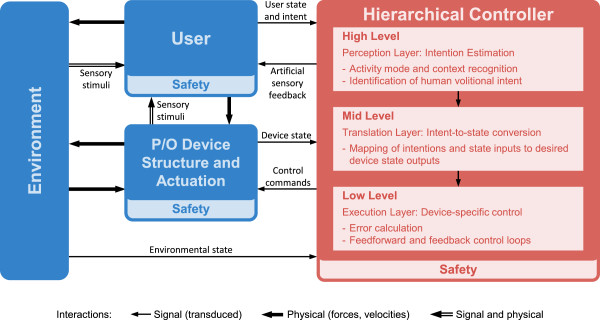
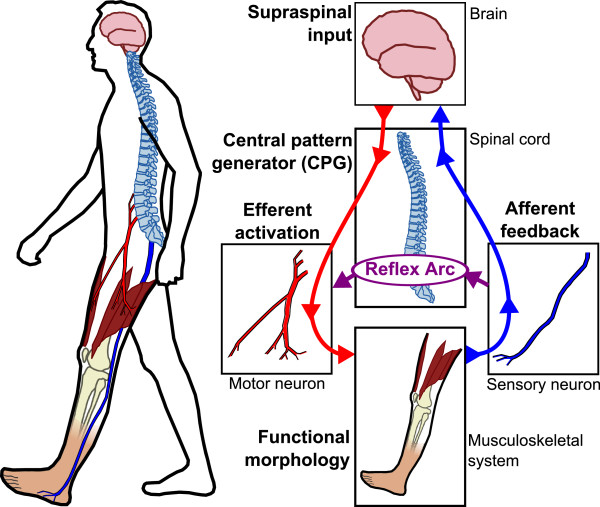
: Technological advancements have led to the development of numerous wearable robotic devices for the physical assistance and restoration of human locomotion. While many challenges remain with respect to the mechanical design of such devices, it is at least equally challenging and important to develop strategies to control them in concert with the intentions of the user.This work reviews the state-of-the-art techniques for controlling portable active lower limb prosthetic and orthotic (P/O) devices in the context of locomotive activities of daily living (ADL), and considers how these can be interfaced with the user's sensory-motor control system. This review underscores the practical challenges and opportunities associated with P/O control, which can be used to accelerate future developments in this field. Furthermore, this work provides a classification scheme for the comparison of the various control strategies.As a novel contribution, a general framework for the control of portable gait-assistance devices is proposed. This framework accounts for the physical and informatic interactions between the controller, the user, the environment, and the mechanical device itself. Such a treatment of P/Os--not as independent devices, but as actors within an ecosystem--is suggested to be necessary to structure the next generation of intelligent and multifunctional controllers.Each element of the proposed framework is discussed with respect to the role that it plays in the assistance of locomotion, along with how its states can be sensed as inputs to the controller. The reviewed controllers are shown to fit within different levels of a hierarchical scheme, which loosely resembles the structure and functionality of the nominal human central nervous system (CNS). Active and passive safety mechanisms are considered to be central aspects underlying all of P/O design and control, and are shown to be critical for regulatory approval of such devices for real-world use.The works discussed herein provide evidence that, while we are getting ever closer, significant challenges still exist for the development of controllers for portable powered P/O devices that can seamlessly integrate with the user's neuromusculoskeletal system and are practical for use in locomotive ADL.
Overview
The claims and statistics of this paper haven’t been checked yet.
Free: it reads the open-access text and checks the first 5 claims that cite a source we can check. Create a free account to check every claim.
Integrity signals
Registry
Cites
Statistics
Figures
Verification
Claims the paper makes
The claims and statistics of this paper haven’t been checked yet.
Free: it reads the open-access text and checks the first 5 claims that cite a source we can check. Create a free account to check every claim.
Claims other papers make about this one
Each is checked against this paper’s own text: does it say what the citing paper says it does?
The cited source says what the claim attributes to it.
In the citing paper
“Additional shortcomings include their limited environmental feedback, power supply, and failure to autonomously respond appropriately to external (possibly dangerous) stimuli.[24]”
From Flexible Electronics and Devices as Human–Machine Interfaces for Medical Robotics (2022) · cites this paper as [24]
The cited source says what the claim attributes to it.
In the citing paper
“Thus, the vast number of studies on different interface locations and various probing devices to record electrophysiological signals have established the foundation of user-communication with prosthetics.[24,286,287]”
From Flexible Electronics and Devices as Human–Machine Interfaces for Medical Robotics (2022) · cites this paper as [24]
Self-check
Percentages, sums and reported differences re-computed from the paper’s own numbers.
The self-check needs the paper’s full text.
Citations
Cites
Impedance Control: An Approach to Manipulation: Part I—Theory
Hogan, N. (1985) · Journal of Dynamic Systems, Measurement, and Control · doi:10.1115/1.3140702 · Cited by 3,673 · cited 1×
“Impedance is defined as the transfer function between an input flow and a n output effort [202].”
BackgroundFalls in older people: epidemiology, risk factors and strategies for prevention
Rubenstein, L. Z. (2006) · Age and Ageing · doi:10.1093/ageing/afl084 · Cited by 3,287 · cited 2×
“The risks are also not limited to physical harm, but may a lso include social, emotional, and psychological effects [38,39].”
BackgroundEstimating the Prevalence of Limb Loss in the United States: 2005 to 2050
Ziegler-Graham, K., MacKenzie, E. J., Ephraim, P. L., Travison, T. G., & Brookmeyer, R. (2008) · Archives of Physical Medicine and Rehabilitation · doi:10.1016/j.apmr.2007.11.005 · Cited by 2,816 · cited 1×
“stroke [6], spinal cord injury [7], Parkinson’s disease [8], and lower limb amputations [9]) can likewise be expected.”
Reach and grasp by people with tetraplegia using a neurally controlled robotic arm
Hochberg, L. R., Bacher, D., Jarosiewicz, B., Masse, N. Y., Simeral, J. D., Vogel, J., Haddadin, S., Liu, J., Cash, S. S., van der Smagt, P., et al. (2012) · Nature · doi:10.1038/nature11076 · Cited by 2,719 · cited 1×
“Intracortical electrode arrays have been successfully demonstrated to allow control of multi-degree-of-freedom reach and grasp movements with robotic arms in tetraplegic subjects [55,56],”
High-performance neuroprosthetic control by an individual with tetraplegia
Collinger, J. L., Wodlinger, B., Downey, J. E., Wang, W., Tyler-Kabara, E. C., Weber, D. J., McMorland, A. J., Velliste, M., Boninger, M. L., & Schwartz, A. B. (2013) · The Lancet · doi:10.1016/s0140-6736(12)61816-9 · Cited by 1,848 · cited 1×
“Intracortical electrode arrays have been successfully demonstrated to allow control of multi-degree-of-freedom reach and grasp movements with robotic arms in tetraplegic subjects [55,56],”
Incidence of Parkinson's Disease: Variation by Age, Gender, and Race/Ethnicity
Van Den Eeden, S. K. (2003) · American Journal of Epidemiology · doi:10.1093/aje/kwg068 · Cited by 1,747 · cited 1×
“stroke [6], spinal cord injury [7], Parkinson’s disease [8], and lower limb amputations [9]) can lik ew se be expected.”
BackgroundAugmented visual, auditory, haptic, and multimodal feedback in motor learning: A review
Sigrist, R., Rauter, G., Riener, R., & Wolf, P. (2013) · Psychonomic Bulletin & Review · doi:10.3758/s13423-012-0333-8 · Cited by 1,416 · cited 1×
“Auditory cues can vary in stereo balance, pitch, timbre and volume [89], and therefore may transmit rich information via speakers or headphones.”
Self-citationLower Extremity Exoskeletons and Active Orthoses: Challenges and State-of-the-Art
Dollar, A. M., & Herr, H. (2008) · IEEE Transactions on Robotics · doi:10.1109/tro.2008.915453 · Cited by 1,327 · cited 1×
“Several related review papers have been published in recent years that comprehensively establish the state-ofthe-art in portable and active lower limb prosthetics, orthotics and exoskeletons, mostly in terms of the design and hardware realization [10-15].”
Design and Evaluation of the LOPES Exoskeleton Robot for Interactive Gait Rehabilitation
Veneman, J. F., Kruidhof, R., Hekman, E. E. G., Ekkelenkamp, R., Van Asseldonk, E. H. F., & van der Kooij, H. (2007) · IEEE Transactions on Neural Systems and Rehabilitation Engineering · doi:10.1109/tnsre.2007.903919 · Cited by 1,280 · cited 2×
“This would exclude treadmill-based gait training orthoses such as the LOPES [19] and the Lokomat (Hocoma AG, Volketswil, Switzerland), which were among the classes of devices discussed in the review of Marchal-Crespo and Reinkensmeyer [20].”
Review of control strategies for robotic movement training after neurologic injury
Marchal-Crespo, L., & Reinkensmeyer, D. J. (2009) · Journal of NeuroEngineering and Rehabilitation · doi:10.1186/1743-0003-6-20 · Cited by 1,182
Research works printed but not linked: 9
- Donath M. Proportional EMG control for above-knee prosthesis, MIT. Department of Mechanical Engineering, Masters Thesis; 1974. http://hdl. handle.net/1721.1/13775.
- Zambarbieri D, Schmid M, Magnaghi M, Vermi G, Macellari V, Fadda A. Biofeedback techniques for rehabilitation of the lower-limb prosthetic subject. In: Proc. VII Medicon. Lemesos, Cyprus: MEDICON; 1998. p. 1-5.
- Kawamura J, Sueda O, Harada K, Nishihara K, Isobe S. Sensory feedback systems for the lower-limb prosthesis. J Osaka Rosai Hospital 1981;5: 104-12.
- Webb G. Providing real-time biofeedback for amputee gait retraining using labview. In: NI days worldwide graphical system design conference. London, UK: National Instruments; 2011.
- Grimes DL. An active multimode above knee prosthesis controller, PhD thesis, Massachusetts Institute of Technology. Dept. of Mechanical Engineering; 1979. http://hdl.handle.net/1721.1/15998.
- Gancet J, Ilzkovitz M, Cheron G, Ivanenko Y, van der Kooij H, van der Helm F, et al. MINDWALKER: A brain controlled lower limbs exoskeleton for rehabilitation. Potential applications to space In: Workshop EA, editor. 11th Symposium on advanced space technologies in robotics and automation. Noordwijk, NL: European Space Agency; 2011. p. 12-14.
- Goffer A. Enhanced safety of gait in powered exoskeletons. Dynamic walking conference abstract -available online. Argo Medical Technologies, ReWalk 2014. http://dynamicwalking.org/ocs/index.php/ dw2014/dw2014/paper/viewFile/17/10.
- Huang GT. Wearable robots. Technol Rev. 2004;1:70-3.
- Li YD, Hsiao-Wecksler ET. Gait mode recognition and control for a portable-powered ankle-foot orthosis. In: Rehabilitation robotics (ICORR), 2013 IEEE international conference on; 2013. p. 1-8. doi:10.1109/ICORR.2013.6650373. · DOI · Paper page
Cited by
Items 201–300 of 1,000
Laschowski, B., McNally, W., Wong, A. K. C., & McPhee, J. (2021) · Annual International Conference of the IEEE Engineering in Medicine and Biology Society (EMBC) · doi:10.1109/embc46164.2021.9630064 · Cited by 39
Current developments of robotic hip exoskeleton toward sensing, decision, and actuation: A review
Yang, C., Yu, L., Xu, L., Yan, Z., Hu, D., Zhang, S., & Yang, W. (2022) · Wearable Technologies · doi:10.1017/wtc.2022.11 · Cited by 51
Ouendi, N., Hubaut, R., Pelayo, S., Anceaux, F., & Wallard, L. (2022) · Disability and Rehabilitation Assistive Technology · doi:10.1080/17483107.2022.2107095 · Cited by 46
“Some researchers have focussed on control strategies for robotic therapy devices (assistance, haptic simulation, coaching etc.) [5,27,28], new control methods and device designs have led to major improvements in patient performance.”
BackgroundEizicovits, D., Edan, Y., Tabak, I., & Levy‐Tzedek, S. (2018) · Restorative Neurology and Neuroscience · doi:10.3233/rnn-170802 · Cited by 43
Flynn, L., Geeroms, J., Jiménez-Fabián, R., Heins, S., Vanderborght, B., Munih, M., Lova, R. M., Vitiello, N., & Lefeber, D. (2018) · Frontiers in Neurorobotics · doi:10.3389/fnbot.2018.00080 · Cited by 40
Poliero, T., Sposito, M., Toxiri, S., Natali, C. D., Iurato, M., Sanguineti, V., Caldwell, D. G., & Ortiz, J. (2021) · Wearable Technologies · doi:10.1017/wtc.2021.9 · Cited by 42
“In particular, the NIOSH lifting index associated with the simulated activity was 0 : 81 for males, and 0 : 99 for females (Waters et al., 1993).”
BackgroundIdentification of Lower-Limb Motor Tasks via Brain–Computer Interfaces: A Topical Overview
Asanza, V., Peláez, E., Loayza, F. R., Lorente-Leyva, L. L., & Peluffo-Ordóñez, D. H. (2022) · Sensors · doi:10.3390/s22052028 · Cited by 50
“EEG signal detection has shown excellent results in medical applications, including the early detection of neurological disorders [1], such as Alzheimer’s disease [2].”
BackgroundCuellar, M. E., Harkrider, A. W., Jenson, D. E., Thornton, D. M., Bowers, A. L., & Saltuklaroglu, T. (2016) · Clinical Neurophysiology · doi:10.1016/j.clinph.2016.04.027 · Cited by 42
Ayachi, F. S., Nguyen, H., Lavigne–Pelletier, C., Goubault, É., Boissy, P., & Duval, C. (2016) · Physiological Measurement · doi:10.1088/0967-3334/37/3/442 · Cited by 43
Flexible insole ground reaction force measurement shoes for jumping and running
Park, J., Na, Y., Gu, G., & Kim, J. (2016) · IEEE/RAS-EMBS International Conference on Biomedical Robotics and Biomechatronics (BioRob) · doi:10.1109/biorob.2016.7523772 · Cited by 38
EXiO—A Brain-Controlled Lower Limb Exoskeleton for Rhesus Macaques
Vouga, T., Zhuang, K., Olivier, J., Lebedev, M., Nicolelis, M. A. L., Bouri, M., & Bleuler, H. (2017) · IEEE Transactions on Neural Systems and Rehabilitation Engineering · doi:10.1109/tnsre.2017.2659654 · Cited by 45
Self-citationGalea, M. P., Lizama, L. E. C., Butzkueven, H., & Kilpatrick, T. J. (2017) · Neurorehabilitation · doi:10.3233/nre-161413 · Cited by 38
Atashzar, S. F., Shahbazi, M., & Patel, R. V. (2018) · Mechatronics · doi:10.1016/j.mechatronics.2018.03.002 · Cited by 42
Controlling a Robotic Hip Exoskeleton With Noncontact Capacitive Sensors
Crea, S., Manca, S., Parri, A., Zheng, E., Mai, J., Lova, R. M., Vitiello, N., & Wang, Q. (2019) · IEEE/ASME Transactions on Mechatronics · doi:10.1109/tmech.2019.2929826 · Cited by 39
Subject- and Environment-Based Sensor Variability for Wearable Lower-Limb Assistive Devices
Krausz, N. E., Hu, B. H., & Hargrove, L. J. (2019) · Sensors · doi:10.3390/s19224887 · Cited by 38
“State-of-the-art control systems for powered lower-limb prostheses use hierarchical control systems and are often grouped into high-, mid- and low-level control categories [1].”
BackgroundTowards Variable Assistance for Lower Body Exoskeletons
Gurriet, T., Tucker, M., Duburcq, A., Boeris, G., & Ames, A. D. (2019) · IEEE Robotics and Automation Letters · doi:10.1109/lra.2019.2955946 · Cited by 42
“control strategies for lower-limb assistive devices is given in [8]–[10].”
BackgroundSelf-citationDaily Locomotion Recognition and Prediction: A Kinematic Data-Based Machine Learning Approach
Figueiredo, J., Carvalho, S. P., Goncalve, D., Moreno, J. C., & Santos, C. P. (2020) · IEEE Access · doi:10.1109/access.2020.2971552 · Cited by 37
Exoskeletons: State-of-the-Art, Design Challenges, and Future Directions
Agarwal, P., & Deshpande, A. D. (2019) · Oxford University Press eBooks · doi:10.1093/oso/9780190455132.003.0011 · Cited by 42
Eicher, C., Haesner, M., Spranger, M., Kuzmicheva, O., Gräser, A., & Steinhagen-Thiessen, E. (2019) · Assistive Technology · doi:10.1080/10400435.2017.1352051 · Cited by 37
“, 2015), which reduces the perceived safety feeling of the patients and may lower efficiency (Low, Liu, & Yu, 2007; Tucker et al., 2015).”
BackgroundMethodVargas, L., Shin, H., Huang, H., Zhu, Y., & Hu, X. (2019) · Journal of Neural Engineering · doi:10.1088/1741-2552/ab4d99 · Cited by 43
Real-Time Activity Recognition With Instantaneous Characteristic Features of Thigh Kinematics
Cheng, S., Bolívar-Nieto, E., & Gregg, R. D. (2021) · IEEE Transactions on Neural Systems and Rehabilitation Engineering · doi:10.1109/tnsre.2021.3107780 · Cited by 42
“In contrast, heuristic rule-based classifiers are simple in terms of model complexity and feature dimension [3].”
BackgroundInfluentialWu, R., Li, M., Yao, Z., Liu, W., Si, J., & Huang, H. (2022) · IEEE Robotics and Automation Letters · doi:10.1109/lra.2022.3179420 · Cited by 41
Lee, U. H., Shetty, V. S., Franks, P. W., Tan, J., Evangelopoulos, G., Ha, S., & Rouse, E. J. (2023) · Science Robotics · doi:10.1126/scirobotics.adg3705 · Cited by 59
Zhao, H., Ambrose, E., & Ames, A. D. (2017) · Proceedings - IEEE International Conference on Robotics and Automation/Proceedings · doi:10.1109/icra.2017.7989136 · Cited by 36
“Additionally, with intelligent high-level motion planning controllers, active prostheses also have the potential to increase self-selected gait speed and gait symmetry while reducing metabolic cost and wear-and-tear on the amputees’ unaffected joints [29].”
BackgroundKalkman, B. M., Bar‐On, L., Cenni, F., Maganaris, C. N., Bass, A., Holmes, G., Desloovere, K., Barton, G., & O’Brien, T. D. (2018) · Experimental Physiology · doi:10.1113/ep087053 · Cited by 36
A Review of the Potential of Virtual Walking Techniques for Gait Rehabilitation
Janeh, O., & Steinicke, F. (2021) · Frontiers in Human Neuroscience · doi:10.3389/fnhum.2021.717291 · Cited by 43
Assisting walking balance using a bio-inspired exoskeleton controller
Afschrift, M., van Asseldonk, E. H. F., van Mierlo, M., Bayón, C., Keemink, A. Q. L., D’Hondt, L., van der Kooij, H., & Groote, F. D. (2023) · Journal of NeuroEngineering and Rehabilitation · doi:10.1186/s12984-023-01205-9 · Cited by 36
“Traditionally, exoskeletons are controlled using pre-defined joint angle [9] or torque trajectories [1].”
Active Compliance Control Reduces Upper Body Effort in Exoskeleton-Supported Walking
Uğurlu, B., Oshima, H., Sarıyıldız, E., Narikiyo, T., & Babič, J. (2020) · IEEE Transactions on Human-Machine Systems · doi:10.1109/thms.2019.2961969 · Cited by 35
“However, its potential benefits in reducing the upper body effort for the walking support task have not been demonstrated [18]–[20].”
BackgroundPaskett, M. D., Brinton, M. R., Hansen, T. C., George, J. A., Davis, T. S., Duncan, C. C., & Clark, G. A. (2021) · Journal of NeuroEngineering and Rehabilitation · doi:10.1186/s12984-021-00839-x · Cited by 43
Environment-Based Assistance Modulation for a Hip Exosuit via Computer Vision
Tricomi, E., Mossini, M., Missiroli, F., Lotti, N., Xiao-hui, Z., Xiloyannis, M., Roveda, L., & Masia, L. (2023) · IEEE Robotics and Automation Letters · doi:10.1109/lra.2023.3256135 · Cited by 47
“In the current state of the art, researchers addressed this issue implementing manual hand switching strategies or automatic techniques based on the user’s biomechanics [8], [9].”
MethodYang, T., & Gao, X. (2019) · IEEE Transactions on Neural Systems and Rehabilitation Engineering · doi:10.1109/tnsre.2019.2946407 · Cited by 35
“ground but also assist with a specific speed correspondence to control strategies according to the patient’s motor capability and intention [20].”
BackgroundA Multi-Modal Gait Database of Natural Everyday-Walk in an Urban Environment
Losing, V., & Hasenjäger, M. (2022) · Scientific Data · doi:10.1038/s41597-022-01580-3 · Cited by 43
Narayan, J., Auepanwiriyakul, C., Jhunjhunwala, S., Abbas, M., & Dwivedy, S. K. (2023) · Machines · doi:10.3390/machines11070764 · Cited by 38
Petrov, P. I., Mandija, S., Sommer, I. E., van den Berg, C. A. T., & Neggers, S. F. W. (2017) · PLoS ONE · doi:10.1371/journal.pone.0178952 · Cited by 40
ExoNet Database: Wearable Camera Images of Human Locomotion Environments
Laschowski, B., McNally, W., Wong, A. K. C., & McPhee, J. (2020) · Frontiers in Robotics and AI · doi:10.3389/frobt.2020.562061 · Cited by 37
Analysis of Continuously Varying Kinematics for Prosthetic Leg Control Applications
Embry, K., & Gregg, R. D. (2020) · IEEE Transactions on Neural Systems and Rehabilitation Engineering · doi:10.1109/tnsre.2020.3045003 · Cited by 38
“Then, classification algorithms are used to determine what available state is closest to the task the user is currently performing, and that set of parameters is selected [15]–[17].”
MethodNegi, S., Sharma, S., & Sharma, N. (2021) · Sensor Review · doi:10.1108/sr-10-2020-0249 · Cited by 34
Playing the piano with a robotic third thumb: assessing constraints of human augmentation
Shafti, A., Haar, S., Mio, R., Guilleminot, P. H., & Faisal, A. A. (2021) · Scientific Reports · doi:10.1038/s41598-021-00376-6 · Cited by 43
Stiffness Modulation in an Elastic Articulated-Cable Leg-Orthosis Emulator: Theory and Experiment
Alamdari, A., Haghighi, R., & Krovi, V. (2018) · IEEE Transactions on Robotics · doi:10.1109/tro.2018.2830356 · Cited by 33
“Numerous lower-extremity robotic-rehabilitation systems have emerged to fill the gaps of classical gait rehabilitation methods in restoration of normal walking patterns [8]–[13].”
BackgroundEEG differentiates left and right imagined Lower Limb movement
Kline, A. S., Ghiroaga, C. G., Pittman, D. J., Goodyear, B. G., & Ronsky, J. L. (2020) · Gait & Posture · doi:10.1016/j.gaitpost.2020.11.014 · Cited by 35
A modular strategy for next-generation upper-limb sensory-motor neuroprostheses
Shokur, S., Mazzoni, A., Schiavone, G., Weber, D. J., & Micera, S. (2021) · Med · doi:10.1016/j.medj.2021.05.002 · Cited by 37
Sharma, A., & Rombokas, E. (2022) · IEEE Transactions on Neural Systems and Rehabilitation Engineering · doi:10.1109/tnsre.2022.3156884 · Cited by 37
Lower Limb Exoskeleton Sensors: State-of-the-Art
Neťuková, S., Bejtic, M., Malá, C., Horáková, L., Kutílek, P., Kauler, J., & Krupička, R. (2022) · Sensors · doi:10.3390/s22239091 · Cited by 45
The Influence of Gait Phase on Predicting Lower-Limb Joint Angles
Hollinger, D. S., Schall, M. C., Chen, H., Bass, S., & Zabala, M. E. (2023) · IEEE Transactions on Medical Robotics and Bionics · doi:10.1109/tmrb.2023.3260261 · Cited by 37
“ton may not realize a user’s intent if the inherent sensor delays and model complexity within the system exceeds 30-100 ms [6], [52].”
BackgroundInfluentialPerruchoud, D., Pisotta, I., Carda, S., Murray, M. M., & Ionta, S. (2016) · Journal of Neural Engineering · doi:10.1088/1741-2560/13/4/041001 · Cited by 35
Design and Control of a New Biomimetic Transfemoral Knee Prosthesis Using an Echo-Control Scheme
Bernal-Torres, M. G., Medellín-Castillo, H. I., & Arellano-González, J. C. (2018) · Journal of Healthcare Engineering · doi:10.1155/2018/8783642 · Cited by 32
Empowering lower limbs exoskeletons: state-of-the-art
Vítečková, S., Kutílek, P., de Boisboissel, G., Krupička, R., Galajdová, A., Kauler, J., Lhotská, L., & Szabo, Z. (2018) · Robotica · doi:10.1017/s0263574718000693 · Cited by 36
Malcolm, P., Galle, S., den Berghe, P. V., & Clercq, D. D. (2018) · Journal of NeuroEngineering and Rehabilitation · doi:10.1186/s12984-018-0381-z · Cited by 36
Extremum Seeking Control for Model-Free Auto-Tuning of Powered Prosthetic Legs
Kumar, S., Mohammadi, A., Quintero, D., Rezazadeh, S., Gans, N., & Gregg, R. D. (2019) · IEEE Transactions on Control Systems Technology · doi:10.1109/tcst.2019.2928514 · Cited by 32
“Operation in each phase is governed with a unique controller [2], [3], [5].”
Decoding of the relationship between human brain activity and walking paths
Kamal, S. M., Sim, S., Tee, R., Nathan, V., Aghasian, E., & Namazi, H. (2019) · Technology and Health Care · doi:10.3233/thc-191965 · Cited by 32
Promoting inclusiveness in exoskeleton robotics: Addressing challenges for pediatric access
Fosch‐Villaronga, E., Čartolovni, A., & Pierce, R. L. (2020) · Paladyn Journal of Behavioral Robotics · doi:10.1515/pjbr-2020-0021 · Cited by 38
Relying on more sense for enhancing lower limb prostheses control: a review
Tschiedel, M., Russold, M., & Kaniušas, E. (2020) · Journal of NeuroEngineering and Rehabilitation · doi:10.1186/s12984-020-00726-x · Cited by 40
“in 2015 [6] was used as starting point for the snowballing approach [8], going backward from Tuckers paper by reviewing the reference list as well as going forward by identifying articles citing this publication.”
BackgroundMethodPerez-Ibarra, J. C., Siqueira, A. A. G., & Krebs, H. I. (2020) · IEEE Transactions on Neural Systems and Rehabilitation Engineering · doi:10.1109/tnsre.2020.3039999 · Cited by 32
“Proper identification of gait phases has important applications in gait rehabilitation – for example: classification of abnormalities for pathological gait [2], triggering of electrical stimulation [3], [4], or control of robotic devices for lower limbs [5], [6].”
End-to-End Deep Reinforcement Learning for Exoskeleton Control
Rose, L., Bazzocchi, M. C. F., & Nejat, G. (2020) · Conference proceedings/Conference proceedings - IEEE International Conference on Systems, Man, and Cybernetics · doi:10.1109/smc42975.2020.9283306 · Cited by 33
“To-date adaptive controllers allow exoskeletons to adjust and synchronize to users online [9], [14], [15], and try to account for some of the dynamic uncertainties and perturbations resulting from the human-robot interaction and variations in the behavior of different users [16]–[20].”
BackgroundMethodSarajchi, M., & Sirlantzis, K. (2023) · Sensors · doi:10.3390/s23136103 · Cited by 32
Reinforcement Learning Methods for Assistive and Rehabilitation Robotic Systems: A Survey
Sharifi, M., Tripathi, S., Chen, Y., Zhang, Q., & Tavakoli, M. (2025) · IEEE Transactions on Systems Man and Cybernetics Systems · doi:10.1109/tsmc.2025.3555598 · Cited by 47
“Personalizing these parameters is crucial to account for variations in an individual’s motion patterns or day-to-day fluctuations, as emphasized in the latest research [58], [80].”
Rosquist, P. G., Collins, G. Q., Merrell, A. J., Tuttle, N. J., Tracy, J., Bird, E. T., Seeley, M. K., Fullwood, D. T., Christensen, W. F., & Bowden, A. E. (2017) · Annals of Biomedical Engineering · doi:10.1007/s10439-017-1852-2 · Cited by 38
Grazi, L., Crea, S., Parri, A., Lova, R. M., Micera, S., & Vitiello, N. (2018) · Frontiers in Neuroscience · doi:10.3389/fnins.2018.00071 · Cited by 31
“In addition, the control strategy of a gait assistive device should be intuitive, in order to avoid burdening the user with an additional cognitive effort (Tucker et al., 2015).”
BackgroundZhong, R., Rau, P. P., & Yan, X. (2018) · Geriatrics and gerontology international/Geriatrics & gerontology international · doi:10.1111/ggi.13492 · Cited by 33
Toward the Development of Knee Prostheses: Review of Current Active Devices
Torrealba, R. R., & Fonseca-Rojas, E. D. (2019) · Applied Mechanics Reviews · doi:10.1115/1.4043323 · Cited by 31
Systematic framework for performance evaluation of exoskeleton actuators
Natali, C. D., Toxiri, S., Ioakeimidis, S., Caldwell, D. G., & Ortiz, J. (2020) · Wearable Technologies · doi:10.1017/wtc.2020.5 · Cited by 31
Kinematic effects of a passive lift assistive exoskeleton
Simon, A. A., Alemi, M. M., & Asbeck, A. T. (2021) · Journal of Biomechanics · doi:10.1016/j.jbiomech.2021.110317 · Cited by 31
Moreira, L., Figueiredo, J., Vilas‐Boas, J. P., & Santos, C. P. (2021) · Machines · doi:10.3390/machines9080154 · Cited by 36
“Physical rehabilitation has been pointed out as the most appropriate strategy to face the long-term motor disabilities of neurologically injured patients [7].”
BackgroundHuman Modeling in Physical Human-Robot Interaction: A Brief Survey
Fang, C., Peternel, L., Seth, A., Sartori, M., Mombaur, K., & Yoshida, E. (2023) · IEEE Robotics and Automation Letters · doi:10.1109/lra.2023.3296349 · Cited by 51
“extremity joint torques [91] for the simultaneous control of lower limb exoskeletons [92].”
BackgroundA REVIEW ON HUMAN–EXOSKELETON COORDINATION TOWARDS LOWER LIMB ROBOTIC EXOSKELETON SYSTEMS
Ma, Y., Wu, X., Yi, J., Wang, C., & Chen, C. (2019) · International Journal of Robotics and Automation · doi:10.2316/j.2019.206-0193 · Cited by 38
“[11] reviewed the key technologies used for controlling lower-limb prosthetic and exoskeleton devices.”
Rajasekaran, V., López‐Larraz, E., Trincado-Alonso, F., Aranda, J., Montesano, L., del‐Ama, A. J., & Pons, J. L. (2018) · Journal of NeuroEngineering and Rehabilitation · doi:10.1186/s12984-017-0345-8 · Cited by 36
“An efficient control strategy must consider the physical interaction of the user and signal-level feedbacks during the practical use [3, 4].”
BackgroundHinton, E. H., Malcolm, P., Wilken, J. M., & Takahashi, K. Z. (2019) · Journal of NeuroEngineering and Rehabilitation · doi:10.1186/s12984-019-0621-x · Cited by 33
Lee, U. H., Bi, J., Patel, R., Fouhey, D. F., & Rouse, E. J. (2020) · IEEE Robotics and Automation Letters · doi:10.1109/lra.2020.3007455 · Cited by 35
Fleming, A., Huang, S., Buxton, E. D., Hodges, F., & Huang, H. (2021) · Wearable Technologies · doi:10.1017/wtc.2021.2 · Cited by 30
“Completely different from the “standard” control framework for active lower limb prostheses and exoskeletons as suggested in Tucker et al. (2015) that relies on preprogrammed, discrete finite state machines and prescribed control laws, dEMG control used in this case study, continuously drives a…”
BackgroundA compact system for simultaneous stimulation and recording for closed-loop myoelectric control
Garenfeld, M. A., Jorgovanović, N., Ilić, V., Strbac, M. D., Isaković, M. S., Dideriksen, J. L., & Dosen, S. S. (2021) · Journal of NeuroEngineering and Rehabilitation · doi:10.1186/s12984-021-00877-5 · Cited by 33
Electromyography-controlled lower extremity exoskeleton to provide wearers flexibility in walking
Chen, W., Lyu, M., Ding, X., Wang, J., & Zhang, J. (2022) · Biomedical Signal Processing and Control · doi:10.1016/j.bspc.2022.104096 · Cited by 33
Whole body awareness for controlling a robotic transfemoral prosthesis
Parri, A., Martini, E., Geeroms, J., Flynn, L., Pasquini, G., Crea, S., Molino Lova, R., Lefeber, D., Kamnik, R., Munih, M., et al. (2017) · Frontiers in Neurorobotics · doi:10.3389/fnbot.2017.00025 · Cited by 29
“…StS, Sit-to-Stand/Stand-to-Sit; WBAC, Whole Body Awareness Controller; WSA, Wearable Sensory Apparatus. generators reproducing the natural periodicity of gait and its minor intra-cycle variations for continuous joint actuation (Jimenez-Fabian and Verlinden, 2012; Tucker et al., 2015).”
BackgroundMethodInfluentialEnergetic analysis and optimization of a MACCEPA actuator in an ankle prosthesis
Geeroms, J., Flynn, L., Jiménez-Fabián, R., Vanderborght, B., & Lefeber, D. (2017) · Autonomous Robots · doi:10.1007/s10514-017-9641-1 · Cited by 29
A Novel Method for Bilateral Gait Segmentation Using a Single Thigh-Mounted Depth Sensor and IMU
Hu, B. H., Krausz, N. E., & Hargrove, L. J. (2018) · IEEE/RAS-EMBS International Conference on Biomedical Robotics and Biomechatronics (BioRob) · doi:10.1109/biorob.2018.8487806 · Cited by 28
Joint Kinematics, Kinetics and Muscle Synergy Patterns During Transitions Between Locomotion Modes
Liu, Y., & Gutierrez-Farewik, E. M. (2022) · IEEE Transactions on Biomedical Engineering · doi:10.1109/tbme.2022.3208381 · Cited by 29
“There is a generalized control framework for assistive devices consisting of three control levels [2].”
BackgroundCimolato, A., Ciotti, F., Kljajić, J., Valle, G. D., & Raspopović, S. (2023) · iScience · doi:10.1016/j.isci.2023.106248 · Cited by 29
Moltedo, M., Baček, T., Serrien, B., Langlois, K. P., Vanderborght, B., Lefeber, D., & Rodriguez‐Guerrero, C. (2020) · Journal of NeuroEngineering and Rehabilitation · doi:10.1186/s12984-020-00723-0 · Cited by 30
Exoskeleton Recognition of Human Movement Intent Based on Surface Electromyographic Signals: Review
Lu, C., Qi, Q., Liu, Y., Li, D., Xian, W., Wang, Y., Chen, C., & Xu, X. F. (2024) · IEEE Access · doi:10.1109/access.2024.3388044 · Cited by 35
“Tucker et al. [121] classified the exoskeleton control system into three distinct layers from the perspective of a lower limb exoskeleton control system.”
BackgroundRose-Dulcina, K., Genevay, S., Dominguez, D. E., Armand, S., & Vuillerme, N. (2019) · Spine · doi:10.1097/brs.0000000000003196 · Cited by 32
Eslamy, M., Oswald, F., & Schilling, A. F. (2020) · IEEE Control Systems · doi:10.1109/mcs.2020.2976384 · Cited by 29
“As previously mentioned, in the context of active prosthetics, the estimator is also called the high-level controller [6].”
BackgroundMethodYeon, S. H., Shu, T., Song, H., Hsieh, T., Qiao, J., Rogers-Bradley, E., Gutierrez-Arango, S., Israel, E. A., Freed, L. E., & Herr, H. (2021) · IEEE Transactions on Medical Robotics and Bionics · doi:10.1109/tmrb.2021.3098952 · Cited by 30
Real-Time Hierarchical Classification of Time Series Data for Locomotion Mode Detection
Narayan, A., Reyes, F. A., Ren, M., & Yu, H. (2021) · IEEE Journal of Biomedical and Health Informatics · doi:10.1109/jbhi.2021.3106110 · Cited by 30
Boubaker, O. (2020) · Elsevier eBooks · doi:10.1016/b978-0-12-821350-6.00007-x · Cited by 35
A feasibility study of depth image based intent recognition for lower limb prostheses
Varol, H. A., & Massalin, Y. (2016) · Annual International Conference of the IEEE Engineering in Medicine and Biology Society (EMBC) · doi:10.1109/embc.2016.7591863 · Cited by 28
“The generalized control framework for the state-of-the-art powered lower limb prostheses can be represented as a three level hierarchy [7].”
BackgroundA comparison study of visually stimulated brain–computer and eye-tracking interfaces
Suefusa, K., & Tanaka, T. (2017) · Journal of Neural Engineering · doi:10.1088/1741-2552/aa6086 · Cited by 29
Nan, W., Dias, A. P. B., & Rosa, A. C. (2019) · Frontiers in Neurology · doi:10.3389/fneur.2019.00800 · Cited by 28
Technobiology’s Enabler: The Magnetoelectric Nanoparticle
Khizroev, S. (2018) · Cold Spring Harbor Perspectives in Medicine · doi:10.1101/cshperspect.a034207 · Cited by 27
Dey, S., & Schilling, A. F. (2023) · IEEE Transactions on Industrial Informatics · doi:10.1109/tii.2022.3158935 · Cited by 27
“First, the prediction delays combined with latency introduced by actuator control and mechanics can lead to delays in actuation [2], [12] and can cause phase differences in the motion of the user and the prosthesis [7].”
BackgroundMethodFuzzy Sliding Mode Control for Dynamic Walking Assistance in Lower Limb Exoskeletons
Gebrecherkos, T. H., Berhe, A. G., Gurusamy, S., & Abdissa, C. M. (2025) · IEEE Access · doi:10.1109/access.2025.3607679 · Cited by 29
A Powered Low-Back Exoskeleton for Industrial Handling: Considerations on Controls
Toxiri, S., Ortiz, J., Masood, J., Fernández, J., Mateos, L. A., & Caldwell, D. G. (2016) · Biosystems & biorobotics · doi:10.1007/978-3-319-46532-6_47 · Cited by 27
Intuitive Clinician Control Interface for a Powered Knee-Ankle Prosthesis: A Case Study
Quintero, D., Reznick, E., Lambert, D. J., Rezazadeh, S., Gray, L., & Gregg, R. D. (2018) · IEEE Journal of Translational Engineering in Health and Medicine · doi:10.1109/jtehm.2018.2880199 · Cited by 27
“There are several control strategies currently being developed for powered prostheses [12].”
BackgroundKnee exoskeleton enhanced with artificial intelligence to provide assistance-as-needed
Lyu, M., Chen, W.-H., Ding, X., & Wang, J. (2019) · Review of Scientific Instruments · doi:10.1063/1.5091660 · Cited by 31
Figueiredo, J., Carvalho, S. P., Vilas‐Boas, J. P., Gonçalves, L. M., Moreno, J. C., & Santos, C. P. (2020) · Sensors · doi:10.3390/s20082185 · Cited by 31
“Fourth, software routines should follow a modular, open-architecture to provide real-time information to third-party systems and allow a relatively high sampling frequency (≤200 Hz) to meet the computational requirements of high-performance tools, such as the motion intention recognition and control architectures [20].”
MethodZhang, Q., Clark, W. H., Franz, J. R., & Sharma, N. (2021) · Biomedical Signal Processing and Control · doi:10.1016/j.bspc.2021.103100 · Cited by 27
Stair Recognition for Robotic Exoskeleton Control using Computer Vision and Deep Learning
Kurbis, A. G., Laschowski, B., & Mihailidis, A. (2022) · International Conference on Rehabilitation Robotics · doi:10.1109/icorr55369.2022.9896501 · Cited by 29
“Human locomotion follows a biological system feedback loop [1], [2], which can be described by four main processes: 1) recognition of the physical environment using the human visual system; 2) cognitive processing of the environmental states and locomotor intent via neural control; 3) translation…”
Simultaneous EEG-fMRI for working memory of the human brain
Ahmad, R. F., Malik, A. S., Kamel, N., Reza, F., & Abdullah, J. M. (2016) · Australasian Physical & Engineering Sciences in Medicine · doi:10.1007/s13246-016-0438-x · Cited by 35
A fast algorithm for vertex-frequency representations of signals on graphs
Jestrović, I., Coyle, J. L., & Sejdić, E. (2016) · Signal Processing · doi:10.1016/j.sigpro.2016.09.008 · Cited by 27
Gradient-Based Multi-Objective Feature Selection for Gait Mode Recognition of Transfemoral Amputees
Khademi, G., Mohammadi, H., & Simon, D. (2019) · Sensors · doi:10.3390/s19020253 · Cited by 28
“Activity mode recognition is referred to as high-level control, while control system design for each walking activity is referred to as low-level control [4].”
BackgroundLazzaroni, M., Tabasi, A., Toxiri, S., Caldwell, D. G., Momi, E. D., van Dijk, W., de Looze, M. P., Kingma, I., van Dieën, J. H., & Ortiz, J. (2020) · Wearable Technologies · doi:10.1017/wtc.2020.8 · Cited by 27
“The control scheme is structured on three levels (Figure 2), as proposed in Tucker et al. (2015).”
MethodEffects of arm weight support on neuromuscular activation during reaching in chronic stroke patients
Runnalls, K. D., Ortega-Auriol, P., McMorland, A. J. C., Anson, J. G., & Byblow, W. D. (2019) · Experimental Brain Research · doi:10.1007/s00221-019-05687-9 · Cited by 31
Metadata
- Authors
- Tucker, M. R., Olivier, J., Pagel, A., Bleuler, H., Bouri, M., Lambercy, O., Millán, J. D. R., Riener, R., Vallery, H., & Gassert, R.
- Affiliations
- ETH Zurich (CH)
- École Polytechnique Fédérale de Lausanne (CH)
- University of Zurich (CH)
- Corresponding author
- Tucker, Michael R
- ORCID
- Venue
- Journal of NeuroEngineering and Rehabilitation
- Published
- 2015
- Volume
- 12
- Issue
- 1
- Pages
- 1
- ISSN
- 1743-0003 (ISSN-L)
- PMC
- PMC4326520
- OpenAlex
- W2142114107
- Semantic Scholar
- 7fe25a0498cd3ccd98db0d8da50730c68d174d68
- Cited by
- 1,047
- References
- 232
- Citations by year
- 2026: 42 · 2025: 69 · 2024: 72 · 2023: 119 · 2022: 102 · 2021: 161 · 2020: 116 · 2019: 108 · 2018: 92 · 2017: 85 · 2016: 61 · 2015: 20
- FWCI
- 6.63
- Type
- journal article
- Language
- en
- Open access
- gold
- doi.org
- Licence
- cc-by
- Locations
- Journal of NeuroEngineering and Rehabilitation (publishedVersion, cc-by)
- Europe PMC (PubMed Central) (publishedVersion, cc-by)
- PubMed Central (publishedVersion, cc-by)
- PubMed (publishedVersion)
- Zurich Open Repository and Archive (University of Zurich) (acceptedVersion, cc-by)
- Repository for Publications and Research Data (ETH Zurich) (submittedVersion, cc-by)
- Infoscience (Ecole Polytechnique Fédérale de Lausanne) (submittedVersion)
- Infoscience (Ecole Polytechnique Fédérale de Lausanne) (submittedVersion, cc-by-nc-nd)
- Research Repository (Delft University of Technology) (submittedVersion, cc-by)
- Zurich Open Repository and Archive (University of Zurich) (submittedVersion, cc-by)
- Data Archiving and Networked Services (DANS) (submittedVersion, other-oa)
- ETH Zürich Research Collection (cc-by)
- Zurich Open Repository and Archive (University of Zurich)
- Funders
- National Science Foundation
- Schweizerischer Nationalfonds zur Förderung der Wissenschaftlichen Forschung
- Topics
- Physical Sciences › Engineering › Biomedical Engineering › Prosthetics and Rehabilitation Robotics
- Physical Sciences › Engineering › Biomedical Engineering › Muscle activation and electromyography studies
- Physical Sciences › Engineering › Control and Systems Engineering › Robotic Locomotion and Control
- Keywords
- orthoses, wearable robotic devices, gait assistance, control strategy, activities of daily living, sensorimotor control, hierarchical control architecture, safety mechanisms, regulatory approval
- MeSH terms
- Activities of Daily Living, Electromyography, Gait, Humans, Locomotion, Orthotic Devices, Prosthesis Design, Prostheses and Implants, Lower Extremity
About these checks
Registry, retraction, Cites and statistics results are computed, not judged, with one exception: a printed reference that no index lists is read once by a model before it counts as a citation error. Claims are extracted by a model and kept only when their quote appears verbatim in the text; each cited source is then checked, with a model’s help, for whether it says what the claim relies on. Those verdicts can be wrong — read the claim’s quote and the cited source before relying on one.
Statistics and arithmetic are recomputed, not judged.
Confidence bands are shown only for fields calibrated on our annotated test set. None is calibrated yet, so no band is shown.
What counts as a claim ›How we measure confidence ›How we check this ›
Are you an author, or do you see a problem with this page? Request a review
Data sources
Bibliographic data: Semantic Scholar, OpenAlex, Crossref.
Contains information from the Semantic Scholar Academic Graph Datasets, made available under the ODC Attribution License (ODC-BY 1.0).
Semantic Scholar’s data is described in: Kinney, R., et al. (2023). The Semantic Scholar Open Data Platform. arXiv:2301.10140.
