

Control strategies for active lower extremity prosthetics and orthotics: a review
Open accessThe DOI matches its Crossref record; 235 of the 235 references it cites were found in a registry or an index.
Abstract
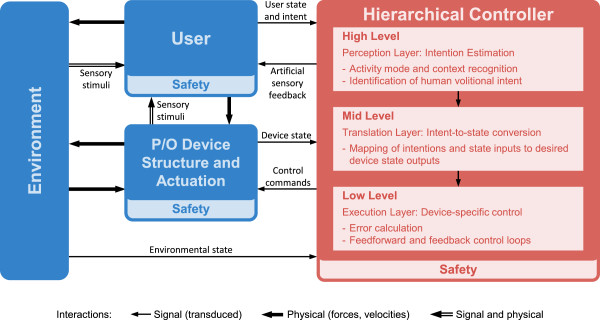
: Technological advancements have led to the development of numerous wearable robotic devices for the physical assistance and restoration of human locomotion. While many challenges remain with respect to the mechanical design of such devices, it is at least equally challenging and important to develop strategies to control them in concert with the intentions of the user.This work reviews the state-of-the-art techniques for controlling portable active lower limb prosthetic and orthotic (P/O) devices in the context of locomotive activities of daily living (ADL), and considers how these can be interfaced with the user's sensory-motor control system. This review underscores the practical challenges and opportunities associated with P/O control, which can be used to accelerate future developments in this field. Furthermore, this work provides a classification scheme for the comparison of the various control strategies.As a novel contribution, a general framework for the control of portable gait-assistance devices is proposed. This framework accounts for the physical and informatic interactions between the controller, the user, the environment, and the mechanical device itself. Such a treatment of P/Os--not as independent devices, but as actors within an ecosystem--is suggested to be necessary to structure the next generation of intelligent and multifunctional controllers.Each element of the proposed framework is discussed with respect to the role that it plays in the assistance of locomotion, along with how its states can be sensed as inputs to the controller. The reviewed controllers are shown to fit within different levels of a hierarchical scheme, which loosely resembles the structure and functionality of the nominal human central nervous system (CNS). Active and passive safety mechanisms are considered to be central aspects underlying all of P/O design and control, and are shown to be critical for regulatory approval of such devices for real-world use.The works discussed herein provide evidence that, while we are getting ever closer, significant challenges still exist for the development of controllers for portable powered P/O devices that can seamlessly integrate with the user's neuromusculoskeletal system and are practical for use in locomotive ADL.
Overview
The claims and statistics of this paper haven’t been checked yet.
Free: it reads the open-access text and checks the first 5 claims that cite a source we can check. Create a free account to check every claim.
Integrity signals
Registry
Cites
Statistics
Figures
Verification
Claims the paper makes
The claims and statistics of this paper haven’t been checked yet.
Free: it reads the open-access text and checks the first 5 claims that cite a source we can check. Create a free account to check every claim.
Claims other papers make about this one
Each is checked against this paper’s own text: does it say what the citing paper says it does?
The cited source says what the claim attributes to it.
In the citing paper
“Additional shortcomings include their limited environmental feedback, power supply, and failure to autonomously respond appropriately to external (possibly dangerous) stimuli.[24]”
From Flexible Electronics and Devices as Human–Machine Interfaces for Medical Robotics (2022) · cites this paper as [24]
The cited source says what the claim attributes to it.
In the citing paper
“Thus, the vast number of studies on different interface locations and various probing devices to record electrophysiological signals have established the foundation of user-communication with prosthetics.[24,286,287]”
From Flexible Electronics and Devices as Human–Machine Interfaces for Medical Robotics (2022) · cites this paper as [24]
Self-check
Percentages, sums and reported differences re-computed from the paper’s own numbers.
The self-check needs the paper’s full text.
Citations
Cites
Impedance Control: An Approach to Manipulation: Part I—Theory
Hogan, N. (1985) · Journal of Dynamic Systems, Measurement, and Control · doi:10.1115/1.3140702 · Cited by 3,673 · cited 1×
“Impedance is defined as the transfer function between an input flow and a n output effort [202].”
BackgroundFalls in older people: epidemiology, risk factors and strategies for prevention
Rubenstein, L. Z. (2006) · Age and Ageing · doi:10.1093/ageing/afl084 · Cited by 3,287 · cited 2×
“The risks are also not limited to physical harm, but may a lso include social, emotional, and psychological effects [38,39].”
BackgroundEstimating the Prevalence of Limb Loss in the United States: 2005 to 2050
Ziegler-Graham, K., MacKenzie, E. J., Ephraim, P. L., Travison, T. G., & Brookmeyer, R. (2008) · Archives of Physical Medicine and Rehabilitation · doi:10.1016/j.apmr.2007.11.005 · Cited by 2,816 · cited 1×
“stroke [6], spinal cord injury [7], Parkinson’s disease [8], and lower limb amputations [9]) can likewise be expected.”
Reach and grasp by people with tetraplegia using a neurally controlled robotic arm
Hochberg, L. R., Bacher, D., Jarosiewicz, B., Masse, N. Y., Simeral, J. D., Vogel, J., Haddadin, S., Liu, J., Cash, S. S., van der Smagt, P., et al. (2012) · Nature · doi:10.1038/nature11076 · Cited by 2,719 · cited 1×
“Intracortical electrode arrays have been successfully demonstrated to allow control of multi-degree-of-freedom reach and grasp movements with robotic arms in tetraplegic subjects [55,56],”
High-performance neuroprosthetic control by an individual with tetraplegia
Collinger, J. L., Wodlinger, B., Downey, J. E., Wang, W., Tyler-Kabara, E. C., Weber, D. J., McMorland, A. J., Velliste, M., Boninger, M. L., & Schwartz, A. B. (2013) · The Lancet · doi:10.1016/s0140-6736(12)61816-9 · Cited by 1,848 · cited 1×
“Intracortical electrode arrays have been successfully demonstrated to allow control of multi-degree-of-freedom reach and grasp movements with robotic arms in tetraplegic subjects [55,56],”
Incidence of Parkinson's Disease: Variation by Age, Gender, and Race/Ethnicity
Van Den Eeden, S. K. (2003) · American Journal of Epidemiology · doi:10.1093/aje/kwg068 · Cited by 1,747 · cited 1×
“stroke [6], spinal cord injury [7], Parkinson’s disease [8], and lower limb amputations [9]) can lik ew se be expected.”
BackgroundAugmented visual, auditory, haptic, and multimodal feedback in motor learning: A review
Sigrist, R., Rauter, G., Riener, R., & Wolf, P. (2013) · Psychonomic Bulletin & Review · doi:10.3758/s13423-012-0333-8 · Cited by 1,416 · cited 1×
“Auditory cues can vary in stereo balance, pitch, timbre and volume [89], and therefore may transmit rich information via speakers or headphones.”
Self-citationLower Extremity Exoskeletons and Active Orthoses: Challenges and State-of-the-Art
Dollar, A. M., & Herr, H. (2008) · IEEE Transactions on Robotics · doi:10.1109/tro.2008.915453 · Cited by 1,327 · cited 1×
“Several related review papers have been published in recent years that comprehensively establish the state-ofthe-art in portable and active lower limb prosthetics, orthotics and exoskeletons, mostly in terms of the design and hardware realization [10-15].”
Design and Evaluation of the LOPES Exoskeleton Robot for Interactive Gait Rehabilitation
Veneman, J. F., Kruidhof, R., Hekman, E. E. G., Ekkelenkamp, R., Van Asseldonk, E. H. F., & van der Kooij, H. (2007) · IEEE Transactions on Neural Systems and Rehabilitation Engineering · doi:10.1109/tnsre.2007.903919 · Cited by 1,280 · cited 2×
“This would exclude treadmill-based gait training orthoses such as the LOPES [19] and the Lokomat (Hocoma AG, Volketswil, Switzerland), which were among the classes of devices discussed in the review of Marchal-Crespo and Reinkensmeyer [20].”
Review of control strategies for robotic movement training after neurologic injury
Marchal-Crespo, L., & Reinkensmeyer, D. J. (2009) · Journal of NeuroEngineering and Rehabilitation · doi:10.1186/1743-0003-6-20 · Cited by 1,182
Research works printed but not linked: 9
- Donath M. Proportional EMG control for above-knee prosthesis, MIT. Department of Mechanical Engineering, Masters Thesis; 1974. http://hdl. handle.net/1721.1/13775.
- Zambarbieri D, Schmid M, Magnaghi M, Vermi G, Macellari V, Fadda A. Biofeedback techniques for rehabilitation of the lower-limb prosthetic subject. In: Proc. VII Medicon. Lemesos, Cyprus: MEDICON; 1998. p. 1-5.
- Kawamura J, Sueda O, Harada K, Nishihara K, Isobe S. Sensory feedback systems for the lower-limb prosthesis. J Osaka Rosai Hospital 1981;5: 104-12.
- Webb G. Providing real-time biofeedback for amputee gait retraining using labview. In: NI days worldwide graphical system design conference. London, UK: National Instruments; 2011.
- Grimes DL. An active multimode above knee prosthesis controller, PhD thesis, Massachusetts Institute of Technology. Dept. of Mechanical Engineering; 1979. http://hdl.handle.net/1721.1/15998.
- Gancet J, Ilzkovitz M, Cheron G, Ivanenko Y, van der Kooij H, van der Helm F, et al. MINDWALKER: A brain controlled lower limbs exoskeleton for rehabilitation. Potential applications to space In: Workshop EA, editor. 11th Symposium on advanced space technologies in robotics and automation. Noordwijk, NL: European Space Agency; 2011. p. 12-14.
- Goffer A. Enhanced safety of gait in powered exoskeletons. Dynamic walking conference abstract -available online. Argo Medical Technologies, ReWalk 2014. http://dynamicwalking.org/ocs/index.php/ dw2014/dw2014/paper/viewFile/17/10.
- Huang GT. Wearable robots. Technol Rev. 2004;1:70-3.
- Li YD, Hsiao-Wecksler ET. Gait mode recognition and control for a portable-powered ankle-foot orthosis. In: Rehabilitation robotics (ICORR), 2013 IEEE international conference on; 2013. p. 1-8. doi:10.1109/ICORR.2013.6650373. · DOI · Paper page
Cited by
Items 501–600 of 1,000
Human-in-the-loop layered architecture for control of a wearable ankle–foot robot
Martínez-Hernández, U., Firouzy, S., Mehryar, P., Meng, L., Childs, C. R., Buis, A. W. P., & Dehghani-Sanij, A. A. (2023) · Robotics and Autonomous Systems · doi:10.1016/j.robot.2022.104353 · Cited by 14
Endogenous Control of Powered Lower-Limb Exoskeleton
Lee, K., Liu, D., Perroud, L., Chavarriaga, R., & Millán, J. D. R. (2016) · Biosystems & biorobotics · doi:10.1007/978-3-319-46532-6_19 · Cited by 12
Self-citationEstimation of auditory steady-state responses based on the averaging of independent EEG epochs
Prado, P., Martínez‐Montes, E., Weinstein, A., & Zañartu, M. (2019) · PLoS ONE · doi:10.1371/journal.pone.0206018 · Cited by 12
Hybrid impedance control of a knee joint orthosis
Alouane, M. A., Rifaï, H., Kim, K., Amirat, Y., & Mohammed, S. (2019) · Industrial Robot the international journal of robotics research and application · doi:10.1108/ir-08-2018-0165 · Cited by 12
Jasni, F., Hamzaid, N. A., Yahya, T., Yusof, N. H. M., Shasmin, H. N., & Ng, S. (2019) · IEEE Sensors Journal · doi:10.1109/jsen.2019.2910161 · Cited by 12
“[25] pointed out two most important criteria that need to be optimized in selecting the sensory system for controlling prosthetic device, which are; practicality and the quality of the data provided.”
BackgroundFigueiredo, J., Moreno, J. C., Matias, A. C., Pereira, F., & Santos, C. P. (2019) · Disability and Rehabilitation Assistive Technology · doi:10.1080/17483107.2019.1695966 · Cited by 12
Adans-Dester, C. P., Fasoli, S. E., Fabara, E. E., Menard, N., Fox, A. B., Severini, G., & Bonato, P. (2020) · Journal of NeuroEngineering and Rehabilitation · doi:10.1186/s12984-020-00730-1 · Cited by 16
Coordinated Movement for Prosthesis Reference Trajectory Generation: Temporal Factors and Attention
Rai, V., Sharma, A., Preechayasomboon, P., & Rombokas, E. (2020) · IEEE/RAS-EMBS International Conference on Biomedical Robotics and Biomechatronics (BioRob) · doi:10.1109/biorob49111.2020.9224435 · Cited by 12
Kim, H., & Im, C. (2021) · Frontiers in Neuroinformatics · doi:10.3389/fninf.2021.750839 · Cited by 13
Nonholonomic Virtual Constraints for Control of Powered Prostheses Across Walking Speeds
Horn, J. C., & Gregg, R. D. (2021) · IEEE Transactions on Control Systems Technology · doi:10.1109/tcst.2021.3133823 · Cited by 12
“Despite the advantages of impedancebased strategies, one shortcoming is the excessive amount of control parameters that require tuning for every user [13], [14].”
BackgroundFeng, Y., Xue, D., Ju, L., Zhang, W., & Ding, X. (2022) · IEEE Transactions on Neural Systems and Rehabilitation Engineering · doi:10.1109/tnsre.2022.3202658 · Cited by 13
Feedback‐Error Learning for time‐effective gait trajectory tracking in wearable exoskeletons
Figueiredo, J., Fernandes, P. N., Moreno, J. C., & Santos, C. P. (2022) · The Anatomical Record · doi:10.1002/ar.25031 · Cited by 11
Design, Control, and Evaluation of a Robotic Ankle-Foot Prosthesis Emulator
Anderson, A., Hudak, Y. F., Muir, B. C., & Aubin, P. M. (2023) · IEEE Transactions on Medical Robotics and Bionics · doi:10.1109/tmrb.2023.3291015 · Cited by 11
Keleş, A. D., Türksoy, R. T., & Yücesoy, C. A. (2023) · Frontiers in Neuroscience · doi:10.3389/fnins.2023.1158280 · Cited by 13
“Central to these limitations is the absence of a sensory feedback to characterize user dependent needs (Tucker et al., 2015).”
BackgroundZhao, H., Hereid, A., Ambrose, E., & Ames, A. D. (2016) · IEEE Conference on Decision and Control (CDC) · doi:10.1109/cdc.2016.7798821 · Cited by 11
“On the other end of the spectrum, as motivated by the control of bipedal walking robots, virtual constraints (which are imposed by motor actuators as opposite to physical constraints) can be utilized to design a unified reference prosthetic gait for tracking purposes [26].”
Harnessing robot experimentation to optimize the regulatory framing of emerging robot technologies
Calleja, C., Drukarch, H., & Fosch‐Villaronga, E. (2022) · Data & Policy · doi:10.1017/dap.2022.12 · Cited by 19
Dillen, A., Lathouwers, E., Miladinović, A., Marušič, U., Ghaffari, F., Romain, O., MEEUSEN, R. R., & Pauw, K. D. (2022) · Frontiers in Human Neuroscience · doi:10.3389/fnhum.2022.949224 · Cited by 15
“Designing a suitable prosthetic control system requires to balance these factors (Tucker et al., 2015; Windrich et al., 2016; Vu et al., 2020).”
BackgroundRen, B. S., Liu, J., Guan, W., & Ren, P. (2023) · International Journal of Intelligent Robotics and Applications · doi:10.1007/s41315-023-00283-1 · Cited by 10
“The following three aspects mainly determine the gait consistency of the exoskeleton: gait trajectory generation, gait execution, and gait evaluation (Dollar and Herr 2008; Yan et al. 2015; Tucker et al. 2015).”
BackgroundInfluentialZhang, Y., Wang, X., Xiu, H., Ren, L., Han, Y., Ma, Y., Chen, W., Wei, G., & Ren, L. (2023) · Journal of Bionic Engineering · doi:10.1007/s42235-023-00419-w · Cited by 11
“A three-level hierarchical architecture is an effective way to decompose the task of controlled locomotion, where a high-level controller recognizes the locomotion intention, a mid-level controller recognizes the gait phase, and a low-level controller drives the prosthesis on command [37].”
BackgroundUsing Deep Learning Models to Predict Prosthetic Ankle Torque
Prasanna, C., Realmuto, J. D., Anderson, A., Rombokas, E., & Klute, G. K. (2023) · Sensors · doi:10.3390/s23187712 · Cited by 12
“, model predictive controller) to adapt to these factors that are unaccounted for in modern prosthetic control strategies [5].”
BackgroundContribution of limb momentum to power transfer in athletic wheelchair pushing
Masson, G., Bégin, M.-A., Poncelas, M. L., Pelletier, S.-K., Lessard, J.-L., Laroche, J., Berrigan, F., Langelier, È., Smeesters, C., & Rancourt, D. (2016) · Journal of Biomechanics · doi:10.1016/j.jbiomech.2016.05.009 · Cited by 11
ANFIS and MPC controllers for a reconfigurable lower limb exoskeleton
Rodriguez, C. A., Ponce, P., & Molina, A. (2016) · Soft Computing · doi:10.1007/s00500-016-2321-9 · Cited by 11
“The reviews of Anam and Al-Jumaily (2012) and Tucker et al. (2015) have explained the importance of the controller in the use of active lower limb exoskeletons (LLE).”
BackgroundVariable Geometry Stair Ascent and Descent Controller for a Powered Lower Limb Exoskeleton
Ekelem, A., Bastas, G., Durrough, C. M., & Goldfarb, M. T. (2018) · Journal of Medical Devices · doi:10.1115/1.4040699 · Cited by 12
Novel Design of Master Manipulator for Robotic Catheter System
Moon, Y., Hu, Z., Won, J., Park, S., Lee, H., You, H., Nam, G., & Choi, J. (2018) · International Journal of Control Automation and Systems · doi:10.1007/s12555-018-0089-7 · Cited by 11
Cangussu, L. M., Porto, J. M., Júnior, R. C. F., Capato, L. L., Maciel, J. G., Herrero, C. F. P. D. S., Nogueira‐Barbosa, M. H., de Paula, F. J. A., & de Abreu, D. C. C. (2019) · Aging Clinical and Experimental Research · doi:10.1007/s40520-019-01296-2 · Cited by 11
Shim, M., Han, J. I., Choi, H. S., Ha, S. M., Kim, J., & Baek, Y. S. (2019) · Sensors · doi:10.3390/s19204418 · Cited by 11
“[8] demonstrates the considerations in controlling lower limb prosthesis and orthosis (P/O) devices.”
BackgroundMethodvan Silfhout, L., Váňa, Z., Pětioký, J., Edwards, M. J., Bartels, R., van de Meent, H., & Hosman, A. J. F. (2019) · Acta Neurochirurgica · doi:10.1007/s00701-019-04189-5 · Cited by 11
Task-Based Knee Rehabilitation With Assist-as-Needed Control Strategy and Recovery Tracking System
Yihun, Y., Adhikari, V., MajidiRad, A., & Desai, J. (2020) · Journal of Engineering and Science in Medical Diagnostics and Therapy · doi:10.1115/1.4046400 · Cited by 11
Prototype of Robotic Ankle-Foot Prosthesis with Active Damping Using Magnetorheological Fluids
Arteaga, Ó., Escorza, J., Medina, I., Navas, R. R., Amores, K., & Morales, J. J. (2019) · International Journal of Mechanical Engineering and Robotics Research · doi:10.18178/ijmerr.8.5.753-758 · Cited by 11
“The need to satisfy the growing demand for rehabilitation services and to provide an accurate and timely response to the conditions that affect motor performance implies the integration of different clinical and engineering disciplines that provide integral and lasting solutions to the complex problems that involve th…”
BackgroundDesign of Human Knee Smart Prosthesis with Active Torque Control
Arteaga, Ó., Terán, H. C., Hernán Morales, V., Maya, E. O. A., Erazo, M. I., Ortiz, M., & Morales, J. J. (2020) · International Journal of Mechanical Engineering and Robotics Research · doi:10.18178/ijmerr.9.3.347-352 · Cited by 11
Dey, S., Yoshida, T., Ernst, M., Schmalz, T., & Schilling, A. F. (2019) · IEEE International Conference on Cyborg and Bionic Systems (CBS) · doi:10.1109/cbs46900.2019.9114439 · Cited by 15
“Since each gait phase of different locomotion modes is controlled differently, the number of control variables that need to be tuned increases with supported locomotion modes and gait phases [7].”
BackgroundShon, A., Brakel, K., Hook, M. A., & Park, H. (2021) · IEEE Transactions on Biomedical Engineering · doi:10.1109/tbme.2021.3054564 · Cited by 11
Locomotor activities of individuals with lower-limb amputation
Srisuwan, B., & Klute, G. K. (2021) · Prosthetics and Orthotics International · doi:10.1097/pxr.0000000000000009 · Cited by 12
“Pattern recognition algorithms are well-suited for detecting differences in limb motions that occur when traversing different environments and have been central to many high-level controllers of powered lower-limb prostheses.(12) A variety of approaches, tested with individuals with LLAs on level ground, stairs, and r…”
BackgroundKline, A. S., Forkert, N. D., Felfeliyan, B., Pittman, D. J., Goodyear, B. G., & Ronsky, J. L. (2021) · Journal of Neuroscience Methods · doi:10.1016/j.jneumeth.2021.109339 · Cited by 15
Goo, A. C., Laubscher, C. A., Wiebrecht, J. J., Farris, R. J., & Sawicki, J. T. (2022) · Bioengineering · doi:10.3390/bioengineering9050208 · Cited by 11
“This can be formulated in a time-invariant manner [16], which gives more volitional control to the user, thereby making the exoskeleton easier to use and more comfortable as compared to time-dependent references.”
BackgroundPopović, M. R., Masani, K., & Milosevic, M. (2022) · Springer eBooks · doi:10.1007/978-3-031-08995-4_19 · Cited by 18
García-Cano, E., Cosío, F. A., Duong, L., Bellefleur, C., Roy‐Beaudry, M., Joncas, J., Parent, S., & Labelle, H. (2018) · Medical & Biological Engineering & Computing · doi:10.1007/s11517-018-1853-9 · Cited by 13
On Healthcare Robots: Concepts, definitions, and considerations for healthcare robot governancePreprint
Fosch‐Villaronga, E., & Drukarch, H. (2021) · Leiden Repository (Leiden University) · doi:10.48550/arxiv.2106.03468 · Cited by 45
“, 2017), support impaired patients (Tucker et al., 2015), provide therapy to children (Scassellati, Admoni & Matarić, 2012) or keep the elderly company (Broekens, Heerink & Rosendal, 2009).”
BackgroundA Probability Fusion Approach for Foot Placement Prediction in Complex Terrains
Xiong, J., Chen, C., Zhang, Y., Chen, X., Qian, Y., Leng, Y., & Fu, C. (2023) · IEEE Transactions on Neural Systems and Rehabilitation Engineering · doi:10.1109/tnsre.2023.3333685 · Cited by 10
“L OWER-LIMB exoskeleton robots are being studied and applied in restoring the walking ability of patients with stroke or spinal cord injury [1], [2].”
BackgroundA multimodal framework based on deep belief network for human locomotion intent prediction
Li, J., Zhang, J., Li, K., Cao, J., & Li, H. (2024) · Biomedical Engineering Letters · doi:10.1007/s13534-024-00351-w · Cited by 11
“Most researchers classified the collected multi-source signals into several motion modes and then designed a finite state controller to control the different modes completed by the lower limb exoskeleton [23].”
A muscle synergies-based controller to drive a powered upper-limb exoskeleton in reaching tasks
Penna, M. F., Giordano, L., Tortora, S., Astarita, D., Amato, L., Dell’Agnello, F., Menegatti, E., Gruppioni, E., Vitiello, N., Crea, S., et al. (2024) · Wearable Technologies · doi:10.1017/wtc.2024.16 · Cited by 11
“To do so, intention decoding algorithms (IDAs) can rely on the kinematic or biosignal information acquired and processed by the exoskeleton ’ s sensory and control systems (Tucker et al. 2015).”
Best, T. K., Thomas, G. C., Ayyappan, S. R., Gregg, R. D., & Rouse, E. J. (2024) · IEEE/ASME Transactions on Mechatronics · doi:10.1109/tmech.2024.3508469 · Cited by 17
Whole-Body Teleoperation Control of Dual-Arm Robot Using Sensor Fusion
Wang, F., Chen, F., Dong, Y., Yong, Q., Yang, X., Zheng, L., Zhang, X., & Su, H. (2023) · Biomimetics · doi:10.3390/biomimetics8080591 · Cited by 10
“In the fields of lower limb rehabilitation, sports assistance [18], and lower limb prosthetics [19], sensor fusion systems have also been widely utilized.”
MethodLeveraging High-Density EMG to Investigate Bipolar Electrode Placement for Gait Prediction Models
Hodossy, B. K., Guez, A. S., Jing, S., Huo, W., Vaidyanathan, R., & Farina, D. (2024) · IEEE Transactions on Human-Machine Systems · doi:10.1109/thms.2024.3371099 · Cited by 10
“The angle from motion capture is overlaid.”
Khasnobish, A., Pal, M., Sardar, D., Tibarewala, D. N., & Konar, A. (2016) · Cognitive Neurodynamics · doi:10.1007/s11571-016-9386-0 · Cited by 11
Human Locomotion Assistance using Two-Dimensional Features Based Adaptive Oscillator
Chinimilli, P. T., Subramanian, S. C., Redkar, S., & Sugar, T. G. (2019) · doi:10.1109/wearracon.2019.8719628 · Cited by 11
“Therefore, there is a need for assistive devices that can provide stable, efficient, and autonomous locomotion assistance [3], [4].”
BackgroundRobust Adaptive Feedback Linearization Control of Human Exoskeletons
Jribi, R., Maalej, B., & Derbel, N. (2019) · International Multi-Conference on Systems, Signals & Devices (SSD) · doi:10.1109/ssd.2019.8893163 · Cited by 10
Fuzzy CMAC-Based Adaptive Scale Force Control of Body Weight Support Exoskeletons
Wu, H., An, H., Wei, Q., & Ma, H. (2020) · IEEE Access · doi:10.1109/access.2020.3013417 · Cited by 9
“Aiming to resolve the above two problems of the BWS exoskeleton, namely, task-free control target selection and strong robustness controller design, we provide a hierarchical control method [28] for loosely coupled exoskeletons by using sufficient interaction force information.”
MethodUse of Sonomyographic Sensing to Estimate Knee Angular Velocity During Varying Modes of Ambulation
Rabe, K. G., Jahanandish, M. H., Hoyt, K., & Fey, N. P. (2020) · Annual International Conference of the IEEE Engineering in Medicine and Biology Society (EMBC) · doi:10.1109/embc44109.2020.9176674 · Cited by 10
“Prescribing joint velocity or angle trajectories is a relatively “freeform” approach for controlling powered assistive devices [20].”
BackgroundCompliant Control of a Transfemoral Prosthesis by combining Feed-Forward and Feedback
Heins, S., Flynn, L., Laloyaux, H., Geeroms, J., Lefeber, D., & Ronsse, R. (2020) · IEEE/RAS-EMBS International Conference on Biomedical Robotics and Biomechatronics (BioRob) · doi:10.1109/biorob49111.2020.9224434 · Cited by 10
“A wide range of control strategies are being investigated in different orthotic or prosthetic devices [15].”
BackgroundEEG-Based EMG Estimation of Shoulder Joint for the Power Augmentation System of Upper Limbs
Liang, H., Yu, Y., Mochida, M., Liu, C., Ueda, N., Li, P., & Zhu, C. (2020) · Symmetry · doi:10.3390/sym12111851 · Cited by 11
Hasan, S. M. S., Marquez, J. S., Siddiquee, M. R., Fei, D.-Y., & Bai, O. (2021) · IEEE Access · doi:10.1109/access.2021.3075253 · Cited by 11
“assimilates the real-life movement preparation and execution [10].”
BackgroundWang, X., Liu, G., Feng, Y., Li, W., Niu, J., & Gan, Z. (2021) · Frontiers in Neurorobotics · doi:10.3389/fnbot.2021.753924 · Cited by 12
Across-user adaptation for a powered lower limb prosthesis
Spanias, J. A., Simon, A. M., & Hargrove, L. J. (2017) · International Conference on Rehabilitation Robotics · doi:10.1109/icorr.2017.8009473 · Cited by 10
Ballesteros, M., Ortiz, D. C., Salgado, I., & Chaírez, I. (2019) · Medical & Biological Engineering & Computing · doi:10.1007/s11517-019-01987-y · Cited by 10
Gait Monitoring and Walk Distance Estimation With an Accelerometer During 6-Minute Walk Test
Rétory, Y., David, P., Niedzialkowski, P., de Picciotto, C., Bonay, M., & Petitjean, M. (2019) · Respiratory Care · doi:10.4187/respcare.06144 · Cited by 11
Generating synthetic gait patterns based on benchmark datasets for controlling prosthetic legs
Kim, M., & Hargrove, L. J. (2023) · Journal of NeuroEngineering and Rehabilitation · doi:10.1186/s12984-023-01232-6 · Cited by 9
“The control of powered prosthetic legs is often achieved using a three-level hierarchical controller [1].”
MethodYang, Z., Jin, H., Gao, W., Wang, E., Shu, Y., Wu, M., & Zhang, S. (2024) · IEEE Robotics and Automation Letters · doi:10.1109/lra.2024.3396369 · Cited by 10
Improving Task-Agnostic Energy Shaping Control of Powered Exoskeletons With Task/Gait Classification
Lin, J., Gregg, R. D., & Shull, P. B. (2024) · IEEE Robotics and Automation Letters · doi:10.1109/lra.2024.3414259 · Cited by 11
“This information encompasses various locomotion tasks conducted on level-ground, ramps, stairs walking [29], and stand-to-sit [30] (sit-to-stand as reverse duplicate).”
Reinforcement Learning for Control of Human Locomotion in Simulation
Dashkovets, A., & Laschowski, B. (2024) · IEEE/RAS-EMBS International Conference on Biomedical Robotics and Biomechatronics (BioRob) · doi:10.1109/biorob60516.2024.10719807 · Cited by 11
“Control of robotic leg prostheses and exoskeletons is an active area of research [1], [2].”
BackgroundPost-traumatic hand rehabilitation using a powered metacarpal-phalangeal exoskeleton: a pilot study
Peperoni, E., Trigili, E., Capotorti, E., Capitani, S. L., Fiumalbi, T., Pettinelli, F., Grandi, S., Rapalli, A., Lentini, G., Creatini, I., et al. (2024) · Journal of NeuroEngineering and Rehabilitation · doi:10.1186/s12984-024-01511-w · Cited by 11
Mohamed, N., Ibrahim, M. B., Elagamy, O. A., Aldhahi, M. I., & Elsebahy, S. Y. (2025) · Healthcare · doi:10.3390/healthcare13111296 · Cited by 11
“Children with CP exhibit varying degrees of functional impairment [4].”
Zhang, H., Li, Z., Zhang, Q., Zhou, T.-M., Chen, W., & Xiong, C. (2025) · IEEE Transactions on Neural Systems and Rehabilitation Engineering · doi:10.1109/tnsre.2025.3578774 · Cited by 11
“Powered exoskeletons use electric motors to generate a great assistance moment, and adjust assistive modes by recognizing users’ gaits with control algorithms [10].”
Guo, W., Katiyar, S. A., Davis, S., & Nefti‐Meziani, S. (2025) · Machines · doi:10.3390/machines13111020 · Cited by 15
Jahanandish, M. H., Rabe, K. G., Fey, N. P., & Hoyt, K. (2019) · International Conference on Rehabilitation Robotics · doi:10.1109/icorr.2019.8779534 · Cited by 9
“remains a challenge for control systems of powered assistive devices to replicate the motion of a healthy limb [2, 3].”
BackgroundMedrano, R. L., Thomas, G. C., Rouse, E. J., & Gregg, R. D. (2022) · IEEE Robotics and Automation Letters · doi:10.1109/lra.2022.3183790 · Cited by 10
Zhang, Y., Liu, X., Qiao, X., & Fan, Y. (2022) · Machines · doi:10.3390/machines10111061 · Cited by 9
Wang, J.-Q., Gao, Y., Wu, D., & Dong, W. (2023) · Frontiers of Information Technology & Electronic Engineering · doi:10.1631/fitee.2200065 · Cited by 8
“Based on Spiegelhalter et al. (2002) and Tucker et al. (2015), with ω maintaining a Gaussian distri‐ bution ω~p(ω; θ) = N (ω|μω, Σω ) with parameters θ, the trajectory distribution is introduced as p(y t; θ) = ∫ p ( y t|ω) p ( )ω;θ dω.”
BackgroundResponsive fungal insoles for pressure detection
Nikolaidou, A. E., Phillips, N., Tsompanas, M., & Adamatzky, A. (2023) · Scientific Reports · doi:10.1038/s41598-023-31594-9 · Cited by 10
Delgado-Oleas, G., Sorozábal, P., Lora-Millán, J. S., Gutiérrez, Á., & Rocón, E. (2023) · IEEE Access · doi:10.1109/access.2023.3336003 · Cited by 11
“Figure 2 shows this manuscript’s proposal for a generalized framework that is inspired by a model described in [22].”
BackgroundRobotic Leg Prosthesis: A Survey From Dynamic Model to Adaptive Control for Gait Coordination
Ma, X., Zhang, X., & Xu, J. (2024) · IEEE Transactions on Neural Systems and Rehabilitation Engineering · doi:10.1109/tnsre.2024.3356561 · Cited by 13
“These reviews encompassed a broad spectrum of topics, including the mechanical design of prototypes [44], control strategies [45] [46], and clinical evaluation [47], [48], [49].”
BackgroundLe, D., Cheng, S., Gregg, R. D., & Ghaffari, M. (2024) · IEEE Robotics and Automation Letters · doi:10.1109/lra.2024.3379800 · Cited by 17
“User intent prediction is a vital aspect of controller development for powered prosthetic legs because it allows the prosthesis to switch between different activity modes accordingly in real-time [6], [7], [8], [9].”
BackgroundA Portable Active Pelvis Orthosis for Ambulatory Movement Assistance
Parri, A., Yan, T., Giovacchini, F., Cortese, M., Muscolo, M., Fantozzi, M., Lova, R. M., & Vitiello, N. (2016) · Biosystems & biorobotics · doi:10.1007/978-3-319-46532-6_13 · Cited by 9
Application of magnetorheological fluids in the design of a leg prosthesis with active damping
Arteaga, Ó., Cevallos-Carvajal, A. S., Erazo, M. I., Morales, K. D., Tenezaca, D. B., & Maya, E. O. A. (2018) · MATEC Web of Conferences · doi:10.1051/matecconf/201819202055 · Cited by 9
“Nowadays the technological advance of the prosthesis has allowed the patient to overcome the inconveniences presented in everyday life [2,3] In order to minimize the impact caused by the absence of the lower extremity, Mechatronics as a synergistic effect of the integration of different disciplines in the design of a…”
BackgroundZariffa, J., Myers, M., Coahran, M., & Wang, R. H. (2018) · Journal of Rehabilitation and Assistive Technologies Engineering · doi:10.1177/2055668318788036 · Cited by 10
Functional passive range of motion of individuals with chronic cervical spinal cord injury
Frye, S. K., Geigle, P. R., York, H. S., & Sweatman, W. M. (2019) · Journal of Spinal Cord Medicine · doi:10.1080/10790268.2019.1622239 · Cited by 9
A convex optimization framework for robust-feasible series elastic actuators
Bolívar-Nieto, E., Summers, T. H., Gregg, R. D., & Rezazadeh, S. (2021) · Mechatronics · doi:10.1016/j.mechatronics.2021.102635 · Cited by 9
“For example, the robot kinematics are uncertain due to unexpected changes in the terrain [30]; the kinetics may change if the user changes mass, e.”
BackgroundNaeem, A., Rizwan, M., Maqbool, H. F., Ahsan, M., Raza, A., Abouhossein, A., & Dehghani-Sanij, A. A. (2021) · Biomedical Signal Processing and Control · doi:10.1016/j.bspc.2021.103366 · Cited by 9
Warner, H., Khalaf, P., Richter, H., Simon, D., Hardin, E. C., & van den Bogert, A. J. (2021) · Medical Engineering & Physics · doi:10.1016/j.medengphy.2021.103744 · Cited by 9
Technology of the Robotic Gait Orthosis Lokomat
Marchal–Crespo, L., & Riener, R. (2022) · Springer eBooks · doi:10.1007/978-3-031-08995-4_29 · Cited by 11
Self-citationHuman-machine interface for two-dimensional steering control with the auricular muscles
Pinheiro, D. J. L. L., Faber, J., Micera, S., & Shokur, S. (2023) · Frontiers in Neurorobotics · doi:10.3389/fnbot.2023.1154427 · Cited by 12
“, 2014), exoskeletons (Tucker et al., 2015; Baud et al., 2018; Benabid et al., 2019), electrical stimulation of the spinal cord (Greiner et al.”
BackgroundStudy of RE-Gait® as the Device That Promotes Walking Using a Two-Dimensional Emotion Map
TANAKA, E., Osawa, Y., Muramatsu, K., WATANUKI, K., SAEGUSA, S., & Yuge, L. (2016) · Courses and lectures · doi:10.1007/978-3-319-33714-2_41 · Cited by 9
Comparison of the COM-FCP inclination angle and other mediolateral stability indicators for turning
Xu, R., Wang, X., Yang, J., He, F., Zhao, X. W., Qi, H., Zhou, P., & Ming, D. (2017) · BioMedical Engineering OnLine · doi:10.1186/s12938-017-0325-z · Cited by 9
Stair negotiation made easier using novel interactive energy-recycling assistive stairs
Song, Y. S., Ha, S., Hsu, H., Ting, L. H., & Liu, C. K. (2017) · PLoS ONE · doi:10.1371/journal.pone.0179637 · Cited by 9
Across-Day Lower Limb Pattern Recognition Performance of a Powered Knee-Ankle Prosthesis
Simon, A. M., Seyforth, E. A., & Hargrove, L. J. (2018) · IEEE/RAS-EMBS International Conference on Biomedical Robotics and Biomechatronics (BioRob) · doi:10.1109/biorob.2018.8487836 · Cited by 9
Switching Assistance for Exoskeletons During Cyclic Motions
Tagliamonte, N. L., Valentini, S., Sudano, A., Portaccio, I., Leonardis, C. D., Formica, D., & Accoto, D. (2019) · Frontiers in Neurorobotics · doi:10.3389/fnbot.2019.00041 · Cited by 9
“Many approaches have been explored to assist human movements compliantly and adaptively, including interfaces for intention recognition based on biosignals (electroneurographic or electromyographic measurements) or on motion reconstruction/prediction (kinematic or dynamic measurements) (Tucker et al., 2015; Yan et al.…”
BackgroundEMG-based Motion Intention Recognition for Controlling a Powered Knee Orthosis
Fernandes, P. N., Figueredo, J., Moreira, L., Felix, P., Correia, A., Moreno, J. C., & Santos, C. P. (2019) · IEEE International Conference on Autonomous Robot Systems and Competitions · doi:10.1109/icarsc.2019.8733628 · Cited by 9
“Therefore, its control architecture can follow a hierarchical control architecture [15], as illustrated in Fig.”
BackgroundAdaptive Robust Force Position Control for Flexible Active Prosthetic Knee Using Gait Trajectory
Peng, F., Wen, H., Zhang, C., Xu, B., Li, J., & Su, H. (2020) · Applied Sciences · doi:10.3390/app10082755 · Cited by 9
“Thanks to advances in actuation, microembedded computing, miniaturized sensing, energy storage, and automatic pattern recognition, many rehabilitative robots have been developed to help and recover human movement [2,3].”
BackgroundHuang, Y., An, H., Wei, Q., & Ma, H. (2020) · IEEE Access · doi:10.1109/access.2020.3022656 · Cited by 9
Capacitive Sensing-Based Continuous Gait Phase Estimation in Robotic Transtibial Prostheses
Xu, D., Crea, S., Vitiello, N., & Wang, Q. (2020) · IEEE/RAS-EMBS International Conference on Biomedical Robotics and Biomechatronics (BioRob) · doi:10.1109/biorob49111.2020.9224347 · Cited by 9
“However, mechanical signal exists delay between the motor commands and the generation of force in the muscle [8], [13].”
BackgroundLora-Millán, J. S., Moreno, J. C., & Rocón, E. (2020) · IEEE/RAS-EMBS International Conference on Biomedical Robotics and Biomechatronics (BioRob) · doi:10.1109/biorob49111.2020.9224414 · Cited by 9
Leveraging Geometric Modeling-Based Computer Vision for Context Aware Control in a Hip Exosuit
Tricomi, E., Piccolo, G., Russo, F., Xiao-hui, Z., Missiroli, F., Ferrari, S., Gionfrida, L., Ficuciello, F., Xiloyannis, M., & Masia, L. (2025) · IEEE Transactions on Robotics · doi:10.1109/tro.2025.3567489 · Cited by 8
Moon, H., Bey, O., Boubezoul, A., Oukhellou, L., & Mohammed, S. (2025) · IEEE Transactions on Robotics · doi:10.1109/tro.2025.3593111 · Cited by 8
Arruda, B. S., Reis, C., Sermon, J. J., Pogosyan, A. H., Brown, P., & Cagnan, H. (2021) · Journal of NeuroEngineering and Rehabilitation · doi:10.1186/s12984-021-00973-6 · Cited by 10
Ogino, M., Hamada, N., & Mitsukura, Y. (2022) · Journal of Neural Engineering · doi:10.1088/1741-2552/ac9edd · Cited by 9
Correcting Temporal Inaccuracies in Labeled Training Data for Electromyographic Control Algorithms
Wang, A. T., Olsen, C. D., Hamrick, W. C., & George, J. A. (2023) · International Conference on Rehabilitation Robotics · doi:10.1109/icorr58425.2023.10304728 · Cited by 8
“However, the most widespread use of EMG is to control bionic prostheses and orthoses [5]–[7].”
BackgroundActivity of Erector Spinae During Trunk Forward Bending and Backward Return: The Effects of Age
Shojaei, I., & Bazrgari, B. (2017) · Annals of Biomedical Engineering · doi:10.1007/s10439-017-1811-y · Cited by 10
Eye Tracking and Interhemispheric Interaction in the Distribution of Spatial Attention
Андреевна, К. О., Kaverina, M. Y., & Danilov, G. (2018) · Human Physiology · doi:10.1134/s0362119718020123 · Cited by 8
Goršič, M., Dai, B., & Novak, D. (2020) · Sensors · doi:10.3390/s20174963 · Cited by 11
“The most common control systems for assistive devices such as orthoses and prostheses have three main components [7,14,15]: they must identify the current behavior (e.”
BackgroundLopes, J. M., Figueiredo, J., Pinheiro, C., Reis, L. P., & Santos, C. P. (2021) · Journal of Intelligent & Robotic Systems · doi:10.1007/s10846-021-01423-0 · Cited by 9
“It is hierarchically controlled, diving the control strategy into high-, mid- and low-level [23].”
Background
Metadata
- Authors
- Tucker, M. R., Olivier, J., Pagel, A., Bleuler, H., Bouri, M., Lambercy, O., Millán, J. D. R., Riener, R., Vallery, H., & Gassert, R.
- Affiliations
- ETH Zurich (CH)
- École Polytechnique Fédérale de Lausanne (CH)
- University of Zurich (CH)
- Corresponding author
- Tucker, Michael R
- ORCID
- Venue
- Journal of NeuroEngineering and Rehabilitation
- Published
- 2015
- Volume
- 12
- Issue
- 1
- Pages
- 1
- ISSN
- 1743-0003 (ISSN-L)
- PMC
- PMC4326520
- OpenAlex
- W2142114107
- Semantic Scholar
- 7fe25a0498cd3ccd98db0d8da50730c68d174d68
- Cited by
- 1,047
- References
- 232
- Citations by year
- 2026: 42 · 2025: 69 · 2024: 72 · 2023: 119 · 2022: 102 · 2021: 161 · 2020: 116 · 2019: 108 · 2018: 92 · 2017: 85 · 2016: 61 · 2015: 20
- FWCI
- 6.63
- Type
- journal article
- Language
- en
- Open access
- gold
- doi.org
- Licence
- cc-by
- Locations
- Journal of NeuroEngineering and Rehabilitation (publishedVersion, cc-by)
- Europe PMC (PubMed Central) (publishedVersion, cc-by)
- PubMed Central (publishedVersion, cc-by)
- PubMed (publishedVersion)
- Zurich Open Repository and Archive (University of Zurich) (acceptedVersion, cc-by)
- Repository for Publications and Research Data (ETH Zurich) (submittedVersion, cc-by)
- Infoscience (Ecole Polytechnique Fédérale de Lausanne) (submittedVersion)
- Infoscience (Ecole Polytechnique Fédérale de Lausanne) (submittedVersion, cc-by-nc-nd)
- Research Repository (Delft University of Technology) (submittedVersion, cc-by)
- Zurich Open Repository and Archive (University of Zurich) (submittedVersion, cc-by)
- Data Archiving and Networked Services (DANS) (submittedVersion, other-oa)
- ETH Zürich Research Collection (cc-by)
- Zurich Open Repository and Archive (University of Zurich)
- Funders
- National Science Foundation
- Schweizerischer Nationalfonds zur Förderung der Wissenschaftlichen Forschung
- Topics
- Physical Sciences › Engineering › Biomedical Engineering › Prosthetics and Rehabilitation Robotics
- Physical Sciences › Engineering › Biomedical Engineering › Muscle activation and electromyography studies
- Physical Sciences › Engineering › Control and Systems Engineering › Robotic Locomotion and Control
- Keywords
- orthoses, wearable robotic devices, gait assistance, control strategy, activities of daily living, sensorimotor control, hierarchical control architecture, safety mechanisms, regulatory approval
- MeSH terms
- Activities of Daily Living, Electromyography, Gait, Humans, Locomotion, Orthotic Devices, Prosthesis Design, Prostheses and Implants, Lower Extremity
About these checks
Registry, retraction, Cites and statistics results are computed, not judged, with one exception: a printed reference that no index lists is read once by a model before it counts as a citation error. Claims are extracted by a model and kept only when their quote appears verbatim in the text; each cited source is then checked, with a model’s help, for whether it says what the claim relies on. Those verdicts can be wrong — read the claim’s quote and the cited source before relying on one.
Statistics and arithmetic are recomputed, not judged.
Confidence bands are shown only for fields calibrated on our annotated test set. None is calibrated yet, so no band is shown.
What counts as a claim ›How we measure confidence ›How we check this ›
Are you an author, or do you see a problem with this page? Request a review
Data sources
Bibliographic data: Semantic Scholar, OpenAlex, Crossref.
Contains information from the Semantic Scholar Academic Graph Datasets, made available under the ODC Attribution License (ODC-BY 1.0).
Semantic Scholar’s data is described in: Kinney, R., et al. (2023). The Semantic Scholar Open Data Platform. arXiv:2301.10140.
