

Dietary Guidelines should reflect new understandings about adult protein needs
Open accessThe DOI matches its Crossref record; 41 of the 43 references it cites were found in a registry or an index.
Abstract
Dietary Guidelines for Americans provide nutrition advice aimed at promoting healthy dietary choices for life-long health and reducing risk of chronic diseases. With the advancing age of the population, the 2010 Dietary Guidelines confront increasing risks for age-related problems of obesity, osteoporosis, type 2 diabetes, Metabolic Syndrome, heart disease, and sarcopenia. New research demonstrates that the meal distribution and amount of protein are important in maintaining body composition, bone health and glucose homeostasis. This editorial reviews the benefits of dietary protein for adult health, addresses omissions in current nutrition guidelines, and offers concepts for improving the Dietary Guidelines.
Overview
The claims and statistics of this paper haven’t been checked yet.
Free: it reads the open-access text and checks the first 5 claims that cite a source we can check. Create a free account to check every claim.
Integrity signals
Registry
Cites
Statistics
Figures
Verification
Claims the paper makes
The claims and statistics of this paper haven’t been checked yet.
Free: it reads the open-access text and checks the first 5 claims that cite a source we can check. Create a free account to check every claim.
Claims other papers make about this one
Each is checked against this paper’s own text: does it say what the citing paper says it does?
The cited source says what the claim attributes to it.
In the citing paper
“Finally, it is likely that adding protein to one’s habitual intake is most beneficial when added to previously protein poor meals, as opposed to adding to meals already highin protein [51,52].”
From Dietary protein to maximize resistance training: a review and examination of protein spread and change theories (2012) · cites this paper as [52]
Self-check
Percentages, sums and reported differences re-computed from the paper’s own numbers.
The self-check needs the paper’s full text.
Citations
Cites
Trumbo, P., Schlicker, S., Yates, A. A., & Poos, M. (2002) · Journal of the American Dietetic Association · doi:10.1016/s0002-8223(02)90346-9 · Cited by 5,993
Cardiovascular Morbidity and Mortality Associated With the Metabolic Syndrome
Isomaa, B., Almgren, P., Tuomi, T., Forsén, B., Lahti, K., Nissén, M., Taskinen, M.-R., & Groop, L. (2001) · Diabetes Care · doi:10.2337/diacare.24.4.683 · Cited by 4,760 · cited 1×
“These conditions are 4-times more important for heart disease and all cause mortality than elevated cholesterol or LDL concentration [38].”
BackgroundModern Nutrition in Health and Disease.
(1988) · Annals of Internal Medicine · doi:10.7326/0003-4819-108-3-508_7 · Cited by 3,379
The underappreciated role of muscle in health and disease
Wolfe, R. R. (2006) · The American Journal of Clinical Nutrition · doi:10.1093/ajcn/84.3.475 · Cited by 1,537 · cited 2×
“Another error of omission in the Dietary Guidelines relates to recognition that the efficiency of protein utilization decreases throughout adult life [6].”
BackgroundHouston, D. K., Nicklas, B. J., Ding, J., Harris, T. B., Tylavsky, F. A., Newman, A. B., Lee, J. S., Sahyoun, N. R., Visser, M., & Kritchevsky, S. B. (2008) · The American Journal of Clinical Nutrition · doi:10.1093/ajcn/87.1.150 · Cited by 1,214 · cited 1×
“However cross-sectional studies support the idea that elderly in higher percentiles of protein intake have less agerelated decline in lean tissue mass [35].”
BackgroundDietary protein recommendations and the prevention of sarcopenia
Paddon-Jones, D., & Rasmussen, B. B. (2009) · Current Opinion in Clinical Nutrition & Metabolic Care · doi:10.1097/mco.0b013e32831cef8b · Cited by 823 · cited 2×
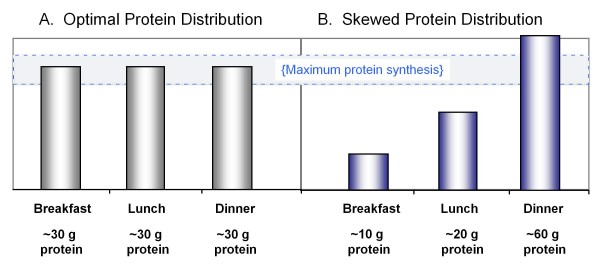
“Adults require a minimum of 15 g of EAA or at least 30 g of total protein to fully stimulate skeletal muscle protein synthesis [21,25].”
BackgroundWeigle, D. S., Breen, P. A., Matthys, C. C., Callahan, H. S., Meeuws, K. E., Burden, V. R., & Purnell, J. Q. (2005) · The American Journal of Clinical Nutrition · doi:10.1093/ajcn/82.1.41 · Cited by 774 · cited 2×
“The meal content of protein is also a key factor for satiety and appetite regulation [9,10].”
BackgroundProtein, weight management, and satiety
Paddon-Jones, D., Westman, E., Mattes, R. D., Wolfe, R. R., Astrup, A., & Westerterp-Plantenga, M. (2008) · The American Journal of Clinical Nutrition · doi:10.1093/ajcn/87.5.1558s · Cited by 549 · cited 3×
“The most unequivocal evidence for the benefit of increased dietary protein is derived from studies of weight management [1,28,29].”
BackgroundLayman, D. K., Boileau, R. A., Erickson, D. J., Painter, J. E., Shiue, H., Sather, C., & Christou, D. D. (2003) · The Journal of Nutrition · doi:10.1093/jn/133.2.411 · Cited by 541
Self-citationThe metabolic syndrome: is this diagnosis necessary?1,2
Reaven, G. M. (2006) · The American Journal of Clinical Nutrition · doi:10.1093/ajcn/83.6.1237 · Cited by 524 · cited 1×
“Early research with MetS evaluated reducing dietary carbohydrates with fats [36].”
BackgroundRasmussen, B. B., Tipton, K. D., Miller, S. L., Wolf, S. E., & Wolfe, R. R. (2000) · Journal of Applied Physiology · doi:10.1152/jappl.2000.88.2.386 · Cited by 523
Krieger, J. W., Sitren, H. S., Daniels, M. J., & Langkamp-Henken, B. (2006) · The American Journal of Clinical Nutrition · doi:10.1093/ajcn/83.2.260 · Cited by 466 · cited 2×
“The most unequivocal evidence for the benefit of increased dietary protein is derived from studies of weight management [1,28,29].”
BackgroundVolpi, E., Mittendorfer, B., Rasmussen, B. B., & Wolfe, R. R. (2000) · The Journal of Clinical Endocrinology & Metabolism · doi:10.1210/jcem.85.12.7021 · Cited by 464 · cited 2×
“tive response in muscle protein synthesis [16,17].”
ResultBasal Muscle Amino Acid Kinetics and Protein Synthesis in Healthy Young and Older Men
Volpi, E. (2001) · JAMA · doi:10.1001/jama.286.10.1206 · Cited by 416 · cited 2×
“tive response in muscle protein synthesis [16,17].”
ResultAn increase in dietary protein improves the blood glucose response in persons with type 2 diabetes
Gannon, M. C., Nuttall, F. Q., Saeed, A., Jordan, K., & Hoover, H. (2003) · The American Journal of Clinical Nutrition · doi:10.1093/ajcn/78.4.734 · Cited by 404 · cited 2×
“These outcomes include cell signaling via leucine [7,8], satiety [9,10], thermogenesis [11], and glycemic control [12,13].”
BackgroundRole of dietary protein in the sarcopenia of aging
Paddon-Jones, D., Short, K. R., Campbell, W. W., Volpi, E., & Wolfe, R. R. (2008) · The American Journal of Clinical Nutrition · doi:10.1093/ajcn/87.5.1562s · Cited by 401 · cited 3×
“During the past decade a growing body of research reveals that dietary protein intakes above the RDA are beneficial in maintaining muscle function and mobility [6] and in the treatment of diseases including obesity, osteoporosis, type 2 diabetes (T2DM), Metabolic Syndrome (MetS), heart disease, and sarcopenia [1-4].”
BackgroundThe Role of Leucine in Weight Loss Diets and Glucose Homeostasis
Layman, D. K. (2003) · The Journal of Nutrition · doi:10.1093/jn/133.1.261s · Cited by 385 · cited 2×
“These outcomes include cell signaling via leucine [7,8], satiety [9,10], thermogenesis [11], and glycemic control [12,13].”
BackgroundSelf-citationWesterterp-Plantenga, M., Rolland, V, Wilson, S., & Westerterp, K. (1999) · European Journal of Clinical Nutrition · doi:10.1038/sj.ejcn.1600782 · Cited by 361 · cited 1×
“These outcomes include cell signaling via leucine [7,8], satiety [9,10], thermogenesis [11], and glycemic control [12,13].”
BackgroundPotential Importance of Leucine in Treatment of Obesity and the Metabolic Syndrome
Layman, D. K., & Walker, D. A. (2006) · The Journal of Nutrition · doi:10.1093/jn/136.1.319s · Cited by 336
Self-citation(2013) · Caper · doi:10.1201/b16031-14 · Cited by 330
Layman, D. K., Evans, E., Baum, J. I., Seyler, J., Erickson, D. J., & Boileau, R. A. (2005) · The Journal of Nutrition · doi:10.1093/jn/135.8.1903 · Cited by 330
Self-citationThe Time of Day of Food Intake Influences Overall Intake in Humans
de Castro, J. M. (2004) · The Journal of Nutrition · doi:10.1093/jn/134.1.104 · Cited by 329
Rolls, B. J., Hetherington, M., & Burley, V. J. (1988) · Physiology & Behavior · doi:10.1016/0031-9384(88)90230-2 · Cited by 304 · cited 2×
“While the mechanism remains to be elucidated, it is clear that the improved satiety response requires >30 g of protein at a meal and that breakfast has the greatest impact on total daily energy intake [27].”
BackgroundThe Role of Leucine in the Regulation of Protein Metabolism
Garlick, P. J. (2005) · The Journal of Nutrition · doi:10.1093/jn/135.6.1553s · Cited by 299 · cited 1×
“In children and young adults, this signal pathway is regulated by insulin and dietary energy while leucine regulates the pathway in adults [26].”
BackgroundProtein pulse feeding improves protein retention in elderly women
Arnal, M.-A., Mosoni, L., Boirie, Y., Houlier, M.-L., Morin, L., Verdier, E., Ritz, P., Antoine, J.-M., Prugnaud, J., Beaufrère, B., et al. (1999) · The American Journal of Clinical Nutrition · doi:10.1093/ajcn/69.6.1202 · Cited by 284 · cited 1×
“Mechanisms for these metabolic outcomes are being unraveled and the effects appear to relate to the protein at each meal [20,21].”
BackgroundYoung, V. R. (2000) · Nutrition and Immunology · doi:10.1007/978-1-59259-709-3_5 · Cited by 266
Amount and type of protein influences bone health
Heaney, R. P., & Layman, D. K. (2008) · The American Journal of Clinical Nutrition · doi:10.1093/ajcn/87.5.1567s · Cited by 259 · cited 5×
“Diets with increased protein have now been shown to improve adult health with benefits for treatment or prevention of obesity, osteoporosis, type 2 diabetes, Metabolic Syndrome, heart disease, and sarcopenia [1-4].”
BackgroundInfluentialSelf-citationFujita, S., Rasmussen, B. B., Cadenas, J. G., Drummond, M. J., Glynn, E. L., Sattler, F. R., & Volpi, E. (2007) · Diabetes · doi:10.2337/db06-1566 · Cited by 224
Dietary Protein Impact on Glycemic Control during Weight Loss
Layman, D. K., & Baum, J. I. (2004) · The Journal of Nutrition · doi:10.1093/jn/134.4.968s · Cited by 215 · cited 1×
“These outcomes include cell signaling via leucine [7,8], satiety [9,10], thermogenesis [11], and glycemic control [12,13].”
BackgroundSelf-citationLayman, D. K., Evans, E. M., Erickson, D., Seyler, J., Weber, J., Bagshaw, D., Griel, A., Psota, T., & Kris-Etherton, P. (2009) · The Journal of Nutrition · doi:10.3945/jn.108.099440 · Cited by 210 · cited 2×
“Higher protein diets increase loss of body weight and body fat and attenuate loss of lean tissue when compared with commonly recommended high carbohydrate low fat low protein diets [28,30].”
BackgroundSelf-citationDietary protein affects intestinal calcium absorption
Kerstetter, J. E., O’Brien, K. O., & Insogna, K. L. (1998) · The American Journal of Clinical Nutrition · doi:10.1093/ajcn/68.4.859 · Cited by 193 · cited 1×
“The long-held belief that increased dietary protein could cause bone loss as reflected in increase urinary calcium is incorrect [33] and protein is now recognized to increase intestinal calcium absorption in addition to enhancing bone matrix turnover [34].”
BackgroundRegulation of protein synthesis by branched-chain amino acids in vivo
Yoshizawa, F. (2004) · Biochemical and Biophysical Research Communications · doi:10.1016/j.bbrc.2003.07.013 · Cited by 193
Studies in calcium metabolism. I. The calciuretic effect of dietary protein
Margen, S., Chu, J.-Y., Kaufmann, N. A., & Calloway, D. H. (1974) · The American Journal of Clinical Nutrition · doi:10.1093/ajcn/27.6.584 · Cited by 166
Protein in optimal health: heart disease and type 2 diabetes
Layman, D. K., Clifton, P., Gannon, M. C., Krauss, R. M., & Nuttall, F. Q. (2008) · The American Journal of Clinical Nutrition · doi:10.1093/ajcn/87.5.1571s · Cited by 142 · cited 6×
“LDL-C/ApoB) improving the dyslipidemia commonly associated with T2DM and MetS [4].”
BackgroundInfluentialSelf-citationRegulation of protein synthesis by branched-chain amino acids
Kimball, S. R., & Jefferson, L. S. (2001) · Current Opinion in Clinical Nutrition and Metabolic Care · doi:10.1097/00075197-200101000-00008 · Cited by 126 · cited 2×
“These outcomes include cell signaling via leucine [7,8], satiety [9,10], thermogenesis [11], and glycemic control [12,13].”
BackgroundPaul, J. H., & Sharpe, J. S. (1916) · The Journal of Physiology · doi:10.1113/jphysiol.1916.sp001747 · Cited by 119
Energetics of Obesity and Weight Control: Does Diet Composition Matter?
Schoeller, D. A., & Buchholz, A. C. (2005) · Journal of the American Dietetic Association · doi:10.1016/j.jada.2005.02.025 · Cited by 103 · cited 3×
“The meal content of protein is also a key factor for satiety and appetite regulation [9,10].”
BackgroundMacronutrient Intakes as Determinants of Dietary Protein and Amino Acid Adequacy
Millward, D. J. (2004) · Journal of Nutrition · doi:10.1093/jn/134.6.1588s · Cited by 81 · cited 1×
“Another major flaw in the Dietary Guidelines is the failure to recognize that dietary protein needs are inversely proportional to energy intake [15].”
BackgroundLasker, D., Evans, E. M., & Layman, D. K. (2008) · Nutrition & Metabolism · doi:10.1186/1743-7075-5-30 · Cited by 63 · cited 1×
“Replacement of carbohydrates with protein improves glycemic control measured as reduced post-prandial hyperinsulinemia [37] and in T2DM corrects hyperglycemia and HbA1c [13].”
BackgroundSelf-citationThe need for indispensable amino acids: The concept of the anabolic drive
Millward, D. J., & Rivers, J. P. W. (1989) · Diabetes/Metabolism Reviews · doi:10.1002/dmr.5610050207 · Cited by 56
Modern Nutrition in Health and Disease, 8th edition
Twiggs, A. M. (1995) · Journal of Human Lactation · doi:10.1177/089033449501100230 · Cited by 34
Research works printed but not linked: 1
- Reaven GM: The metabolic syndrome: is this diagnosis neces- sary? Am J Clin Nutr 2006, 83:1237-47.
Cited by
Branched-chain amino acids in metabolic signalling and insulin resistance
Lynch, C. J., & Adams, S. H. (2014) · Nature Reviews Endocrinology · doi:10.1038/nrendo.2014.171 · Cited by 1,461
Isabella, V. M., Ha, B. N., Castillo, M. J., Lubkowicz, D. J., Rowe, S. E., Millet, Y. A., Anderson, C. L., Li, N., Fisher, A. B., West, K. A., et al. (2018) · Nature Biotechnology · doi:10.1038/nbt.4222 · Cited by 605
Areta, J. L., Burke, L. M., Ross, M. L., Camera, D. M., West, D. W. D., Broad, E. M., Jeacocke, N. A., Moore, D. R., Stellingwerff, T., Phillips, S. M., et al. (2013) · The Journal of Physiology · doi:10.1113/jphysiol.2012.244897 · Cited by 495
“Such information could be important for enhancing skeletal muscle mass with the potential for use in a variety of populations including the elderly and athletes (Layman, 2009; Paddon-Jones & Rasmussen, 2009; Phillips & Van Loon, 2011).”
BackgroundThe role of protein in weight loss and maintenance
Leidy, H. J., Clifton, P. M., Astrup, A., Wycherley, T. P., Westerterp-Plantenga, M. S., Luscombe-Marsh, N. D., Woods, S. C., & Mattes, R. D. (2015) · The American Journal of Clinical Nutrition · doi:10.3945/ajcn.114.084038 · Cited by 475
Dietary protein distribution positively influences 24-h muscle protein synthesis in healthy adults
Mamerow, M. M., Mettler, J. A., English, K. L., Casperson, S. L., Arentson-Lantz, E., Sheffield-Moore, M., Layman, D. K., & Paddon-Jones, D. (2014) · The Journal of Nutrition · doi:10.3945/jn.113.185280 · Cited by 438
Self-citation
Metadata
- Authors
- Layman, D. K.
- Affiliations
- University of Illinois Urbana-Champaign (US)
- Corresponding author
- Layman, Donald K
- ORCID
- Layman, Donald K
- Venue
- Nutrition & Metabolism
- Published
- 2009
- Volume
- 6
- Issue
- 1
- Pages
- 12
- ISSN
- 1743-7075 (ISSN-L)
- PMC
- PMC2666737
- OpenAlex
- W2017726641
- Cited by
- 146
- References
- 43
- Citations by year
- 2026: 5 · 2025: 3 · 2024: 14 · 2023: 2 · 2022: 8 · 2021: 7 · 2020: 8 · 2019: 2 · 2018: 9 · 2017: 7 · 2016: 5 · 2015: 12 · 2014: 11 · 2013: 12 · 2012: 16
- Type
- journal article
- Language
- en
- Open access
- gold
- doi.org
- Licence
- cc-by
- Locations
- Nutrition & Metabolism (publishedVersion, cc-by)
- PubMed Central (publishedVersion, cc-by)
- PubMed (publishedVersion)
- DOAJ (DOAJ: Directory of Open Access Journals) (submittedVersion)
- Topics
- Health Sciences › Nursing › Nutrition and Dietetics › Muscle metabolism and nutrition
- Health Sciences › Medicine › Physiology (medical) › Nutrition and Health in Aging
- Life Sciences › Agricultural and Biological Sciences › Food Science › Nutrition, Health, and Society Studies
- Keywords
- dietary protein, protein requirements, Dietary Guidelines for Americans, meal distribution, body composition, bone health, glucose homeostasis, sarcopenia, metabolic syndrome, type 2 diabetes, obesity, aging, nutrition policy
About these checks
Registry, retraction, Cites and statistics results are computed, not judged, with one exception: a printed reference that no index lists is read once by a model before it counts as a citation error. Claims are extracted by a model and kept only when their quote appears verbatim in the text; each cited source is then checked, with a model’s help, for whether it says what the claim relies on. Those verdicts can be wrong — read the claim’s quote and the cited source before relying on one.
Statistics and arithmetic are recomputed, not judged.
Confidence bands are shown only for fields calibrated on our annotated test set. None is calibrated yet, so no band is shown.
What counts as a claim ›How we measure confidence ›How we check this ›
Are you an author, or do you see a problem with this page? Request a review
Data sources
Bibliographic data: Semantic Scholar, OpenAlex, Crossref.
Contains information from the Semantic Scholar Academic Graph Datasets, made available under the ODC Attribution License (ODC-BY 1.0).
Semantic Scholar’s data is described in: Kinney, R., et al. (2023). The Semantic Scholar Open Data Platform. arXiv:2301.10140.
