

Dietary Guidelines should reflect new understandings about adult protein needs
Open accessThe DOI matches its Crossref record; 41 of the 43 references it cites were found in a registry or an index.
Abstract
Dietary Guidelines for Americans provide nutrition advice aimed at promoting healthy dietary choices for life-long health and reducing risk of chronic diseases. With the advancing age of the population, the 2010 Dietary Guidelines confront increasing risks for age-related problems of obesity, osteoporosis, type 2 diabetes, Metabolic Syndrome, heart disease, and sarcopenia. New research demonstrates that the meal distribution and amount of protein are important in maintaining body composition, bone health and glucose homeostasis. This editorial reviews the benefits of dietary protein for adult health, addresses omissions in current nutrition guidelines, and offers concepts for improving the Dietary Guidelines.
Overview
The claims and statistics of this paper haven’t been checked yet.
Free: it reads the open-access text and checks the first 5 claims that cite a source we can check. Create a free account to check every claim.
Integrity signals
Registry
Cites
Statistics
Figures
Verification
Claims the paper makes
The claims and statistics of this paper haven’t been checked yet.
Free: it reads the open-access text and checks the first 5 claims that cite a source we can check. Create a free account to check every claim.
Claims other papers make about this one
Each is checked against this paper’s own text: does it say what the citing paper says it does?
The cited source says what the claim attributes to it.
In the citing paper
“Finally, it is likely that adding protein to one’s habitual intake is most beneficial when added to previously protein poor meals, as opposed to adding to meals already highin protein [51,52].”
From Dietary protein to maximize resistance training: a review and examination of protein spread and change theories (2012) · cites this paper as [52]
Self-check
Percentages, sums and reported differences re-computed from the paper’s own numbers.
The self-check needs the paper’s full text.
Citations
Cites
Trumbo, P., Schlicker, S., Yates, A. A., & Poos, M. (2002) · Journal of the American Dietetic Association · doi:10.1016/s0002-8223(02)90346-9 · Cited by 5,993
Cardiovascular Morbidity and Mortality Associated With the Metabolic Syndrome
Isomaa, B., Almgren, P., Tuomi, T., Forsén, B., Lahti, K., Nissén, M., Taskinen, M.-R., & Groop, L. (2001) · Diabetes Care · doi:10.2337/diacare.24.4.683 · Cited by 4,760 · cited 1×
“These conditions are 4-times more important for heart disease and all cause mortality than elevated cholesterol or LDL concentration [38].”
BackgroundModern Nutrition in Health and Disease.
(1988) · Annals of Internal Medicine · doi:10.7326/0003-4819-108-3-508_7 · Cited by 3,379
The underappreciated role of muscle in health and disease
Wolfe, R. R. (2006) · The American Journal of Clinical Nutrition · doi:10.1093/ajcn/84.3.475 · Cited by 1,537 · cited 2×
“Another error of omission in the Dietary Guidelines relates to recognition that the efficiency of protein utilization decreases throughout adult life [6].”
BackgroundHouston, D. K., Nicklas, B. J., Ding, J., Harris, T. B., Tylavsky, F. A., Newman, A. B., Lee, J. S., Sahyoun, N. R., Visser, M., & Kritchevsky, S. B. (2008) · The American Journal of Clinical Nutrition · doi:10.1093/ajcn/87.1.150 · Cited by 1,214 · cited 1×
“However cross-sectional studies support the idea that elderly in higher percentiles of protein intake have less agerelated decline in lean tissue mass [35].”
BackgroundDietary protein recommendations and the prevention of sarcopenia
Paddon-Jones, D., & Rasmussen, B. B. (2009) · Current Opinion in Clinical Nutrition & Metabolic Care · doi:10.1097/mco.0b013e32831cef8b · Cited by 823 · cited 2×
“Adults require a minimum of 15 g of EAA or at least 30 g of total protein to fully stimulate skeletal muscle protein synthesis [21,25].”
BackgroundWeigle, D. S., Breen, P. A., Matthys, C. C., Callahan, H. S., Meeuws, K. E., Burden, V. R., & Purnell, J. Q. (2005) · The American Journal of Clinical Nutrition · doi:10.1093/ajcn/82.1.41 · Cited by 774 · cited 2×
“The meal content of protein is also a key factor for satiety and appetite regulation [9,10].”
BackgroundProtein, weight management, and satiety
Paddon-Jones, D., Westman, E., Mattes, R. D., Wolfe, R. R., Astrup, A., & Westerterp-Plantenga, M. (2008) · The American Journal of Clinical Nutrition · doi:10.1093/ajcn/87.5.1558s · Cited by 549 · cited 3×
“The most unequivocal evidence for the benefit of increased dietary protein is derived from studies of weight management [1,28,29].”
BackgroundLayman, D. K., Boileau, R. A., Erickson, D. J., Painter, J. E., Shiue, H., Sather, C., & Christou, D. D. (2003) · The Journal of Nutrition · doi:10.1093/jn/133.2.411 · Cited by 541
Self-citationThe metabolic syndrome: is this diagnosis necessary?1,2
Reaven, G. M. (2006) · The American Journal of Clinical Nutrition · doi:10.1093/ajcn/83.6.1237 · Cited by 524 · cited 1×
“Early research with MetS evaluated reducing dietary carbohydrates with fats [36].”
Background
Research works printed but not linked: 1
- Reaven GM: The metabolic syndrome: is this diagnosis neces- sary? Am J Clin Nutr 2006, 83:1237-47.
Cited by
Branched-chain amino acids in metabolic signalling and insulin resistance
Lynch, C. J., & Adams, S. H. (2014) · Nature Reviews Endocrinology · doi:10.1038/nrendo.2014.171 · Cited by 1,461
Isabella, V. M., Ha, B. N., Castillo, M. J., Lubkowicz, D. J., Rowe, S. E., Millet, Y. A., Anderson, C. L., Li, N., Fisher, A. B., West, K. A., et al. (2018) · Nature Biotechnology · doi:10.1038/nbt.4222 · Cited by 605
Areta, J. L., Burke, L. M., Ross, M. L., Camera, D. M., West, D. W. D., Broad, E. M., Jeacocke, N. A., Moore, D. R., Stellingwerff, T., Phillips, S. M., et al. (2013) · The Journal of Physiology · doi:10.1113/jphysiol.2012.244897 · Cited by 495
“Such information could be important for enhancing skeletal muscle mass with the potential for use in a variety of populations including the elderly and athletes (Layman, 2009; Paddon-Jones & Rasmussen, 2009; Phillips & Van Loon, 2011).”
BackgroundThe role of protein in weight loss and maintenance
Leidy, H. J., Clifton, P. M., Astrup, A., Wycherley, T. P., Westerterp-Plantenga, M. S., Luscombe-Marsh, N. D., Woods, S. C., & Mattes, R. D. (2015) · The American Journal of Clinical Nutrition · doi:10.3945/ajcn.114.084038 · Cited by 475
Dietary protein distribution positively influences 24-h muscle protein synthesis in healthy adults
Mamerow, M. M., Mettler, J. A., English, K. L., Casperson, S. L., Arentson-Lantz, E., Sheffield-Moore, M., Layman, D. K., & Paddon-Jones, D. (2014) · The Journal of Nutrition · doi:10.3945/jn.113.185280 · Cited by 438
Self-citationPaddon-Jones, D., Campbell, W. W., Jacques, P. F., Kritchevsky, S. B., Moore, L. L., Rodriguez, N. R., & van Loon, L. J. (2015) · The American Journal of Clinical Nutrition · doi:10.3945/ajcn.114.084061 · Cited by 266
“Meeting a protein threshold (w25–30 g/meal) represents a promising, yet relatively unexplored dietary strategy to help maintain muscle mass and function in older adults (28, 29).”
Role of amino acid transporters in amino acid sensing
Taylor, P. M. (2014) · The American Journal of Clinical Nutrition · doi:10.3945/ajcn.113.070086 · Cited by 215
“An improved understanding of the time course of such events may help further improve dietary recommendations for the optimal utilization of protein (64, 66).”
BackgroundEffect of proteins from different sources on body composition
Gilbert, J.-A., Bendsen, N. T., Tremblay, A., & Astrup, A. (2011) · Nutrition, Metabolism and Cardiovascular Diseases · doi:10.1016/j.numecd.2010.12.008 · Cited by 207
Dietary protein and muscle in older persons
Paddon-Jones, D., & Leidy, H. (2014) · Current Opinion in Clinical Nutrition and Metabolic Care · doi:10.1097/mco.0000000000000011 · Cited by 204
“Although there are compelling arguments supporting the role of higher protein diets for muscle health, it is equally clear that a growing proportion of the population chronically exceed their daily energy requirements [10,13].”
BackgroundBrennan, I. M., Luscombe-Marsh, N. D., Seimon, R. V., Otto, B., Horowitz, M., Wishart, J. M., & Feinle-Bisset, C. (2012) · American Journal of Physiology-Gastrointestinal and Liver Physiology · doi:10.1152/ajpgi.00478.2011 · Cited by 190
“8 g·kg (1)·day 1 (defined as the minimum daily needs for protein to maintain short-term nitrogen balance in healthy people with moderate physical activity) (30).”
BackgroundFood Products as Sources of Protein and Amino Acids—The Case of Poland
Górska-Warsewicz, H., Laskowski, W., Kulykovets, O., Kudlińska-Chylak, A., Czeczotko, M., & Rejman, K. (2018) · Nutrients · doi:10.3390/nu10121977 · Cited by 171
“The requirements for dietary protein are aimed at providing the minima for nine essential amino acids (EAAs) [11,12] or indispensable amino acids (IAAs) [13].”
BackgroundDairy bioactive proteins and peptides: a narrative review
Auestad, N., & Layman, D. K. (2021) · Nutrition Reviews · doi:10.1093/nutrit/nuab097 · Cited by 153
“sarcopenia), and it becomes critically important during acute catabolic conditions such as weight loss for treatment of obesity, during bed rest for illness or surgery, and after intense exercise.(36,37) During post-absorptive periods, such as during overnight fasting, the mTOR signal in skeletal muscle is turned off,…”
Self-citationIs there a maximal anabolic response to protein intake with a meal?
Deutz, N. E., & Wolfe, R. R. (2013) · Clinical Nutrition · doi:10.1016/j.clnu.2012.11.018 · Cited by 144
Controversies Surrounding High-Protein Diet Intake: Satiating Effect and Kidney and Bone Health
Cuenca-Sánchez, M., Navas-Carrillo, D., & Orenes-Piñero, E. (2015) · Advances in Nutrition · doi:10.3945/an.114.007716 · Cited by 131
“They play an important role in satiety, cellular signaling, and thermogenic and glycemic regulation in the body, and, interestingly, it is when protein intake is above the RDI when these metabolic processes are most evident (8).”
BackgroundSantos, T. D., de Freitas, B. B., Moreira, J. B., Zanfonato, K., & Costa, J. A. V. (2016) · Innovative Food Science & Emerging Technologies · doi:10.1016/j.ifset.2016.07.016 · Cited by 134
The Astronaut-Athlete: Optimizing Human Performance in Space
Hackney, K. J., Scott, J. M., Hanson, A. M., English, K. L., Downs, M. E., & Ploutz-Snyder, L. L. (2015) · Journal of Strength and Conditioning Research · doi:10.1519/jsc.0000000000001191 · Cited by 107
“Together with other data which indicate that ;30 g of high-quality protein elicits a maximal anabolic response (145), meal-based protein prescription represents a payloadfree strategy to potentially enhance the protective effect of protein that is already in the astronaut diet (73,95,156).”
BackgroundNutritional Considerations and Strategies to Facilitate Injury Recovery and Rehabilitation
Smith-Ryan, A. E., Hirsch, K. R., Saylor, H. E., Gould, L. M., & Blue, M. N. M. (2020) · Journal of Athletic Training · doi:10.4085/1062-6050-550-19 · Cited by 101
“A single 30-g dose of protein was optimal for maximizing protein synthesis in healthy individuals.(26) However, the amount of protein per dose needed to stimulate protein synthesis likely increases during immobilization and disuse due to anabolic resistance.”
BackgroundLow‐Carbohydrate Diet Review: Shifting the Paradigm
Hite, A. H., Berkowitz, V. G., & Berkowitz, K. (2011) · Nutrition in Clinical Practice · doi:10.1177/0884533611405791 · Cited by 99
Pasiakos, S. M., Lieberman, H. R., & Fulgoni, V. L. I. (2015) · Journal of Nutrition · doi:10.3945/jn.114.205203 · Cited by 115
Churchward-Venne, T. A., Murphy, C. H., Longland, T. M., & Phillips, S. M. (2013) · Amino Acids · doi:10.1007/s00726-013-1506-0 · Cited by 90
To Give or Not to Give? Lessons from the Arginine Paradox
Dioguardi, F. S. (2011) · Lifestyle Genomics · doi:10.1159/000327777 · Cited by 89
The role of amino acid transporters in nutrition
Poncet, N., & Taylor, P. M. (2013) · Current Opinion in Clinical Nutrition and Metabolic Care · doi:10.1097/mco.0b013e32835a885c · Cited by 85
“8 g/kg/day, irrespective of overall energy intake [1], although protein requirements increase during periods of growth, rehabilitation and pregnancy.”
BackgroundInclusion of red meat in healthful dietary patterns
McNeill, S. H. (2014) · Meat Science · doi:10.1016/j.meatsci.2014.06.028 · Cited by 110
“Results from several studies indicate that subjects report greater overall satisfaction (i.e., greater palatability, pleasure, enjoyment) and/or motivation with higher vs. lower protein diets (Layman et al., 2005; Layman et al., 2009; Leidy et al., 2007; McConnon et al., 2013).”
BackgroundInfluentialRyan, A. T., Feinle‐Bisset, C., Kallas, A., Wishart, J. M., Clifton, P. M., Horowitz, M., & Luscombe‐Marsh, N. D. (2012) · American Journal of Clinical Nutrition · doi:10.3945/ajcn.112.038133 · Cited by 88
“total protein loads delivered (ie, 8, 24, and 48 g, respectively) were representative of protein loads typically consumed at a snack or within a main meal (47).”
BackgroundAnti-Inflammatory Nutrition as a Pharmacological Approach to Treat Obesity
Sears, B., & Ricordi, C. (2011) · Journal of Obesity · doi:10.1155/2011/431985 · Cited by 78
“Furthermore the absolute intake of protein should be between 20–30 grams at every meal to activate protein synthesis to increase thermogenesis [124, 127, 132].”
BackgroundNutritional aspects of the prevention and treatment of osteoporosis
Peters, B. S. E., & Martini, L. A. (2010) · Arquivos Brasileiros de Endocrinologia & Metabologia · doi:10.1590/s0004-27302010000200014 · Cited by 94
Nutritional Considerations for Injury Prevention and Recovery in Combat Sports
Turnagöl, H. H., Koşar, Ş. N., Güzel, Y., Aktitiz, S., & ATAKAN, M. M. (2021) · Nutrients · doi:10.3390/nu14010053 · Cited by 106
Protein-Amino Acid Metabolism Disarrangements: The Hidden Enemy of Chronic Age-Related Conditions
Pasini, E., Corsetti, G., Aquilani, R., Romano, C., Picca, A., Calvani, R., & Dioguardi, F. (2018) · Nutrients · doi:10.3390/nu10040391 · Cited by 71
Nutrition Therapy for Eating Disorders
Reiter, C. S., & Graves, L. (2010) · Nutrition in Clinical Practice · doi:10.1177/0884533610361606 · Cited by 92
Optimizing Adult Protein Intake During Catabolic Health Conditions
Phillips, S. M., Paddon-Jones, D., & Layman, D. K. (2020) · Advances in Nutrition · doi:10.1093/advances/nmaa047 · Cited by 65
“As noted previously, the RDA for protein is broadly recognized by health care providers and the general public yet is often misinterpreted as “the optimal quantity of protein that should be consumed, but not exceeded” (96, 97).”
BackgroundSelf-citationThe Consumption of Protein-Rich Foods in Older Adults: An Exploratory Focus Group Study
Best, R. L., & Appleton, K. M. (2013) · Journal of Nutrition Education and Behavior · doi:10.1016/j.jneb.2013.03.008 · Cited by 75
Clinical use of amino acids as dietary supplement: pros and cons
Dioguardi, F. S. (2011) · Journal of Cachexia Sarcopenia and Muscle · doi:10.1007/s13539-011-0032-8 · Cited by 70
“Adequate nutrition, on the other hand, could provide sufficient amounts of carbohydrates and lipids to spare excessive degradation of AAs for energy metabolism, and providing enough essential amino acids (EAA) to promote and maintain synthesis [7].”
BackgroundSears, B., & Ricordi, C. (2012) · PubMed · Cited by 79
Thomson, R. L., Brinkworth, G. D., Noakes, M., & Buckley, J. D. (2016) · Clinical Nutrition · doi:10.1016/j.clnu.2015.01.018 · Cited by 50
Hutchison, A. T., Feinle‐Bisset, C., Fitzgerald, P. C. E., Standfield, S., Horowitz, M., Clifton, P. M., & Luscombe‐Marsh, N. D. (2015) · American Journal of Clinical Nutrition · doi:10.3945/ajcn.115.114538 · Cited by 58
Evans, E. M., Mojtahedi, M. C., Thorpe, M. P., Valentine, R. J., Kris-Etherton, P. M., & Layman, D. K. (2012) · Nutrition & Metabolism · doi:10.1186/1743-7075-9-55 · Cited by 49
“Theoretically, individuals with more LM, including males relative to females, may be particularly susceptible to suboptimal protein intakes during energy restriction, promoting a loss of lean body mass [17].”
BackgroundSelf-citationVolek, J. S., Kackley, M. L., & Buga, A. (2024) · Current Nutrition Reports · doi:10.1007/s13668-024-00548-6 · Cited by 48
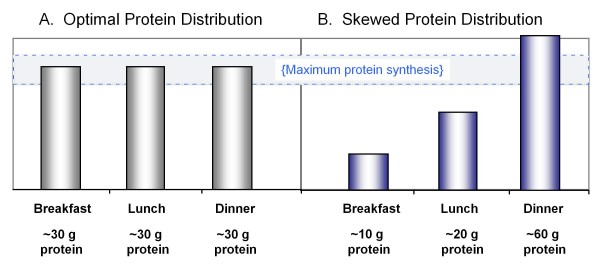
“Regarding protein timing, evidence from both pre-clinical and clinical trials suggests that distributing total daily protein evenly across breakfast, lunch, and dinner can drive greater anabolic responses and FFM preservation relative to skewed intakes [111, 118, 126, 130–132].”
BackgroundInfluentialNutritionism in a food policy context: the case of ‘animal protein’
Leroy, F., Beal, T., Gregorini, P., McAuliffe, G. A., & van Vliet, S. (2022) · Animal Production Science · doi:10.1071/an21237 · Cited by 57
Protein metabolic roles in treatment of obesity
Devkota, S., & Layman, D. K. (2010) · Current Opinion in Clinical Nutrition and Metabolic Care · doi:10.1097/mco.0b013e32833a7737 · Cited by 48
Self-citationA Review of Nutritional Requirements of Adults Aged ≥65 Years in the UK
Dorrington, N., Fallaize, R., Hobbs, D. A., Weech, M., & Lovegrove, J. A. (2020) · Journal of Nutrition · doi:10.1093/jn/nxaa153 · Cited by 62
Ande, S. R., Nguyen, K. H., Nyomba, B. L. G., & Mishra, S. (2016) · Scientific Reports · doi:10.1038/srep23608 · Cited by 55
Peak week recommendations for bodybuilders: an evidence based approach
Escalante, G., Stevenson, S. W., Barakat, C., Aragon, A. A., & Schoenfeld, B. J. (2021) · BMC Sports Science Medicine and Rehabilitation · doi:10.1186/s13102-021-00296-y · Cited by 65
Walker, S. E., & Baum, J. (2021) · Nutrition Reviews · doi:10.1093/nutrit/nuab019 · Cited by 63
Munoz, N., Litchford, M., Cox, J., Nelson, J. L., Nie, A. M., & Delmore, B. (2022) · Advances in Skin & Wound Care · doi:10.1097/01.asw.0000816332.60024.05 · Cited by 57
Tovar-Palacio, C., Tovar, A. R., Torres, N., Cruz, C., Hernández-Pando, R., Salas-Garrido, G., Pedraza-Chaverri, J., & Correa-Rotter, R. (2011) · American Journal of Physiology-Renal Physiology · doi:10.1152/ajprenal.00171.2010 · Cited by 44
Bosse, J. D., & Dixon, B. M. (2012) · Journal of the International Society of Sports Nutrition · doi:10.1186/1550-2783-9-42 · Cited by 42
“Finally, it is likely that adding protein to one’s habitual intake is most beneficial when added to previously protein poor meals, as opposed to adding to meals already highin protein [51,52].”
BackgroundThe Potential Role of Nutrition in Overtraining Syndrome: A Narrative Review
Torre, M. E. L., Monda, A., Messina, A., de Stefano, M. I., Monda, V., Moscatelli, F., Tafuri, F., Saraiello, E., Latino, F., Monda, M., et al. (2023) · Nutrients · doi:10.3390/nu15234916 · Cited by 56
Carbohydrate for weight and metabolic control: Where do we stand?
Acheson, K. J. (2010) · Nutrition · doi:10.1016/j.nut.2009.07.002 · Cited by 53
Wycherley, T. P., Mohr, P., Noakes, M., Clifton, P. M., & Brinkworth, G. D. (2012) · Diabetic Medicine · doi:10.1111/j.1464-5491.2011.03451.x · Cited by 38
Schönfeldt, H. C., Pretorius, B., & Hall, N. (2013) · South African Journal of Clinical Nutrition · doi:10.1080/16070658.2013.12519342 · Cited by 65
The Importance of Dietary Protein Quality in Mid- to High-Income Countries
Moughan, P. J., Fulgoni, V. L. I., & Wolfe, R. R. (2024) · Journal of Nutrition · doi:10.1016/j.tjnut.2024.01.020 · Cited by 47
Polypharmacy and malnutrition in older people: A narrative review
Zanetti, M., Veronese, N., Riso, S., Boccardi, V., Bolli, C. F., Cintoni, M., Francesco, V. D., Mazza, L., Onfiani, G., Zenaro, D., et al. (2023) · Nutrition · doi:10.1016/j.nut.2023.112134 · Cited by 45
Insulin Resistance of Protein Metabolism in Type 2 Diabetes and Impact on Dietary Needs: A Review
Gougeon, R. (2013) · Canadian Journal of Diabetes · doi:10.1016/j.jcjd.2013.01.007 · Cited by 39
Cruz-Jentoft, A. J., Triana, F. M. C., Gómez‐Cabrera, M. C., López‐Soto, A., Masanés, F., Matía‐Martín, P., Rexach, J. A. S., Ruiz, D., Salvà, A., Viña, J., et al. (2011) · Revista Española de Geriatría y Gerontología · doi:10.1016/j.regg.2010.11.004 · Cited by 76
“Respecto a las proteínas de la leche, se absorben mejor las proteínas procedentes del suero que las caseínas Tomada de Whigham et al 84 . especialmente en aquellas personas que no alcanzan unos requeri-mientos proteicos mínimos 86,87 .”
CCR1 antagonism attenuates T cell trafficking to omentum and liver in obesity‐associated cancer
Conroy, M. J., Galvin, K. C., Kavanagh, M. E., Mongan, A. M., Doyle, S. L., Gilmartin, N. T., O’Farrelly, C., Reynolds, J. V., & Lysaght, J. (2016) · Immunology and Cell Biology · doi:10.1038/icb.2016.26 · Cited by 33
Dietary protein content for an optimal diet: a clinical view
Santarpia, L., Contaldo, F., & Pasanisi, F. (2017) · Journal of Cachexia, Sarcopenia and Muscle · doi:10.1002/jcsm.12176 · Cited by 32
Dietary protein in weight management: a review proposing protein spread and change theories
Bosse, J. D., & Dixon, B. M. (2012) · Nutrition & Metabolism · doi:10.1186/1743-7075-9-81 · Cited by 31
“Two leading protein metabolism research groups have recently discussed the importance of spacing protein evenly throughout the day to optimize body composition endpoints [75,76].”
BackgroundThe Cooperative Lifestyle Intervention Program-II (CLIP-II): Design and methods
Marsh, A. P., Janssen, J. A., Ambrosius, W. T., Burdette, J. H., Gaukstern, J. E., Morgan, A. R., Nesbit, B. A., Paolini, J. B., Sheedy, J. L., & Rejeski, W. J. (2013) · Contemporary Clinical Trials · doi:10.1016/j.cct.2013.08.006 · Cited by 37
“In fact, as suggested by Chernoff [41] and Layman [42], the drop in rate of whole body protein turnover to 20% or less by age 70 warrants an even higher protein/kg body weight of exogenous protein of approximately 1.”
MethodFGF23 and Nutritional Metabolism
Pool, L. R., & Wolf, M. S. (2017) · Annual Review of Nutrition · doi:10.1146/annurev-nutr-071816-064620 · Cited by 31
Antonio, J., Evans, C., Ferrando, A. A., Stout, J. R., Antonio, B., Cintineo, H. P., Harty, P., Arent, S. M., Candow, D. G., Forbes, S. C., et al. (2024) · Journal of the International Society of Sports Nutrition · doi:10.1080/15502783.2024.2341903 · Cited by 27
“However, protein plays a critical role in various physiological processes in the human body, such as protein synthesis, cell signaling, satiety, thermogenesis, and glycemic regulation [166].”
BackgroundInfluentialRevista Española de Geriatría y Gerontología
Santos, R. P., Torres, C. F., Martín‐Arranz, M. D., de Parga, J. M. S., & Martínez, M. A. (2016) · Cited by 26
Diets for body weight control and health: the potential of changing the macronutrient composition
Acheson, K. J. (2012) · European Journal of Clinical Nutrition · doi:10.1038/ejcn.2012.194 · Cited by 27
Exercise Countermeasures to Neuromuscular Deconditioning in Spaceflight
English, K. L., Bloomberg, J. J., Mulavara, A. P., & Ploutz‐Snyder, L. L. (2019) · Comprehensive physiology · doi:10.1002/cphy.c190005 · Cited by 39
Corsetti, G., Pasini, E., Romano, C., Calvani, R., Picca, A., Marzetti, E., Flati, V., & Dioguardi, F. S. (2018) · Frontiers in Medicine · doi:10.3389/fmed.2018.00136 · Cited by 25
“Indeed, optimized EAA stoichiometric ratios positively affect satiety and anabolic regulations by controlling the insulin-mTOR signaling pathway as previously suggested (4, 31).”
BackgroundEating patterns, diet quality and energy balance
Layman, D. K. (2014) · Physiology & Behavior · doi:10.1016/j.physbeh.2013.12.005 · Cited by 36
Self-citationImpacts of protein quantity and distribution on body composition
Layman, D. K. (2024) · Frontiers in Nutrition · doi:10.3389/fnut.2024.1388986 · Cited by 37
Self-citationReinders, I., Wijnhoven, H. A. H., Jyväkorpi, S. K., Suominen, M. H., Niskanen, R. T., Bosmans, J. E., Brouwer, I. A., Fluitman, K. S., Klein, M. C. A., Kuijper, L. D. J., et al. (2020) · BMJ Open · doi:10.1136/bmjopen-2020-040637 · Cited by 32
Optimizing Bone Health in Older Adults: The Importance of Dietary Protein
Surdykowski, A. K., Kenny, A. M., Insogna, K. L., & Kerstetter, J. E. (2010) · Aging Health · doi:10.2217/ahe.10.16 · Cited by 22
Hornick, B. A., & Weiss, L. (2011) · Nutrition Today · doi:10.1097/nt.0b013e31821a82f3 · Cited by 28
Negro, M., Vandoni, M., Ottobrini, S., Codrons, E., Correale, L., Buonocore, D., & Marzatico, F. (2014) · Nutrients · doi:10.3390/nu6083040 · Cited by 21
“A link between daily protein intake and the loss of FM has been well established [18].”
BackgroundWilson, G., Moulton, C. J., Garlick, P. J., Anthony, T. G., & Layman, D. K. (2012) · Nutrients · doi:10.3390/nu4111723 · Cited by 22
“The rate of skeletal muscle protein synthesis (MPS) is dependent on the availability of energy and amino acids while the anabolic response is modulated by the amino acid leucine (Leu) and the hormone insulin [1] transmitting growth signals via phosphorylation of two nutrient sensors in the cell; namely, the mammalian…”
BackgroundSelf-citationCoello, S. D., Carrillo-Fernández, L., Hernández, J. G., Abad, M. M., Álamo, C. B., García-Dopico, J. A., Aguirre‐Jaime, A., & de León, A. C. (2020) · Nutrients · doi:10.3390/nu12041149 · Cited by 23
Millward, D. J. (2024) · British Journal Of Nutrition · doi:10.1017/s0007114524000734 · Cited by 21
“Although such a safe allowance is easy to achieve, being well below the median adult protein intakes of most developed societies such as the UK, for example, 1 · 24 g/kg per d, 13 · 7 % food energy in the UK elderly (5) , or 1 · 17 g/kg/d, 15 · 5 % energy in Dutch physically active elderly (6) , many have argued that…”
BackgroundQuality protein intake is inversely related with abdominal fat
Loenneke, J. P., Wilson, J. M., Manninen, A. H., Wray, M. E., Barnes, J., & Pujol, T. J. (2012) · Nutrition & Metabolism · doi:10.1186/1743-7075-9-5 · Cited by 20
“Studies have demonstrated that the consumption of dietary protein above the DRI has been associated with favorable changes in body composition [4].”
BackgroundTrends and determinants of weight gains among OECD countries: an ecological study
Nghiem, S. H., Vu, B. T., & Barnett, A. G. (2018) · Public Health · doi:10.1016/j.puhe.2018.03.004 · Cited by 15
“The average national protein intake of 100 grams/day is slightly above the optimal intake guidelines of about 90 grams/day [34].”
BackgroundSingh, R. G., Guérin‐Deremaux, L., Lefranc‐Millot, C., Perreau, C., Crowley, D. C., Lewis, E. D., Evans, M., & Moulin, M. (2024) · Nutrients · doi:10.3390/nu16132017 · Cited by 17
“Further, a sedentary behavior and poor diet quality negatively impact the efficiency of essential amino acids (EAAs) to stimulate protein metabolism, requiring the consumption of more protein or high-quality proteins [6].”
BackgroundA Nutrition Screening Form for Female Infertility Patients
Langley, S. (2014) · Canadian Journal of Dietetic Practice and Research · doi:10.3148/cjdpr-2014-024 · Cited by 18
“Quality, quantity, and timing of protein consumption are critical for daily maximal protein synthesis [33] such as the growth and development of an embryo.”
BackgroundShort Report: Relationship between Quality Protein, Lean Mass and Bone Health
Loenneke, J. P., Balapur, A., Thrower, A. D., Syler, G., Timlin, M., & Pujol, T. J. (2010) · Annals of Nutrition and Metabolism · doi:10.1159/000321736 · Cited by 10
Obesity and Insulin Resistance Are the Central Issues in Prevention of and Care for Comorbidities
Govers, E. (2015) · Healthcare · doi:10.3390/healthcare3020408 · Cited by 11
Pasini, E., Aquilani, R., & Dioguardi, F. S. (2013) · Pharmacological Research · doi:10.1016/j.phrs.2013.06.006 · Cited by 12
Kopitar, L., Štiglic, G., Bedrač, L., & Bian, J. (2024) · IEEE International Conference on Healthcare Informatics (ICHI) · doi:10.1109/ichi61247.2024.00049 · Cited by 12
“Furthermore, dietary guidelines provide relative percentages of macronutrient distribution which need to be translated into specific serving sizes based on individuals' goals and nutritional requirements [19], [20].”
BackgroundProtein: what’s on in research on clinical nutrition
Tomé, D. (2018) · European Journal of Clinical Nutrition · doi:10.1038/s41430-018-0240-9 · Cited by 12
Ingredient-guided multi-modal interaction and refinement network for RGB-D food nutrition assessment
Nian, F., Hu, Y., Gu, Y., Wu, Z., Yang, S., & Shu, J. (2024) · Digital Signal Processing · doi:10.1016/j.dsp.2024.104664 · Cited by 13
Chao, B., Zhang, H., Cui, W., Shi, S., Chen, P., Ye, S., Ikhwanuddin, M., & Ma, H. (2026) · Food Chemistry · doi:10.1016/j.foodchem.2026.149782 · Cited by 7
Strategies for Improving Firefighter Health On-Shift: A Review
Wohlgemuth, K. J., Conner, M. J., Tinsley, G. M., Palmer, T. B., & Mota, J. A. (2024) · Journal of Functional Morphology and Kinesiology · doi:10.3390/jfmk9020105 · Cited by 16
“Protein consumption may help body weight regulation as protein has been known to increase satiety compared to fat and carbohydrate, increase thermogenesis due to the energy needed to metabolize amino acids, and improve blood lipid profiles [47–50].”
BackgroundFlati, V., Corsetti, G., Pasini, E., Rufo, A., Romano, C., & Dioguardi, F. S. (2015) · Anti-Cancer Agents in Medicinal Chemistry · doi:10.2174/1871520615666150824152900 · Cited by 8
Drewnowski, A. (2024) · Current Developments in Nutrition · doi:10.1016/j.cdnut.2024.104539 · Cited by 8
Kwon, Y., Lee, H. S., Park, G. E., Kim, H.-M., Lee, J. J., Kim, W. J., & Lee, J. (2022) · Frontiers in Nutrition · doi:10.3389/fnut.2022.850109 · Cited by 8
“According to the protein leverage hypothesis (46), protein requirements (grams/day) relate to body weight and remain virtually constant across all energy intakes (47, 48).”
BackgroundA review of nutritional recommendations for scuba divers
Brenner, R. J., Balan, K. A., Andersen, M. P. L., Dugrenot, E., Vrijdag, X. C. E., van Waart, H., & Tillmans, F. (2024) · Journal of the International Society of Sports Nutrition · doi:10.1080/15502783.2024.2402386 · Cited by 9
“Total protein requirements may not necessarily increase with age, but the quality of protein becomes increasingly important [27].”
BackgroundInfluentialEggs: Establishing the nutritional benefits
Gray, J., & Griffin, B. A. (2013) · Nutrition Bulletin · doi:10.1111/nbu.12066 · Cited by 7
Regulation of muscle protein metabolism by nutrition and exercise
Ato, S., & Fujita, S. (2017) · The Journal of Physical Fitness and Sports Medicine · doi:10.7600/jpfsm.6.119 · Cited by 6
Prehabilitation Prior to Chemotherapy in Humans: A Review of Current Evidence and Future Directions
Pietrakiewicz, K., Stec, R., & Sobocki, J. (2025) · Cancers · doi:10.3390/cancers17162670 · Cited by 7
“Moreover, distributing protein evenly across meals may enhance 24-h protein anabolic response, especially in older adults [62].”
Soh, B. X. P., Vignes, M., Smith, N. W., von Hurst, P. R., & McNabb, W. C. (2025) · Nutrients · doi:10.3390/nu17111806 · Cited by 5
“Unlike carbohydrates, fats, and some micronutrients, IAAs cannot be stored in the body apart from in skeletal muscle, which serves as a short-term reservoir [1,53].”
Amino Acids Supplementation in Cancer: What Do We Feed, the Patient or the Tumor?
Corsetti, G., Pasini, E., Romano, C., & Dioguardi, F. S. (2025) · Nutrients · doi:10.3390/nu17172813 · Cited by 4
“Both quality and quantity of EAAs (EAA/NEAA ratio) introduced by nutrition would regulate an efficient balance between protein synthesis and protein turnover [105,147].”
Low Plasma Albumin Levels Should Be Interpreted, but not Ignored
Dioguardi, F. S. (2020) · Nutrition in Clinical Practice · doi:10.1002/ncp.10619 · Cited by 4
Kudumija, N., Kos, I., Lešić, T., Vahčić, N., Vulić, A., Polak, T., Krešić, G., Vnučec, I., Ljoljić, D. B., Škrivanko, M., et al. (2024) · Journal of Food Quality · doi:10.1155/2024/7897786 · Cited by 3
Yang, C., & Tucker, R. M. (2020) · Physiology & Behavior · doi:10.1016/j.physbeh.2020.113269 · Cited by 4
Saha, S., Mukherjee, U., Miller, M., Peng, L.-L., Napier, C. E., Grobbelaar, H., & Oldewage-Theron, W. H. (2021) · South African Journal of Clinical Nutrition · doi:10.1080/16070658.2021.1956232 · Cited by 9
“bodyweight each day (g/kg BW/d), regardless of age or gender.(110,112,116) This corresponds to about 56 g/day for men and 46 g/day for women and comprises 10% of total energy intake, when based on a 8 400–9 200 kJ diet.”
BackgroundInfluentialProtein Nutrition, Meal Timing, and Muscle Health
Layman, D. K. (2013) · CRC Press eBooks · doi:10.1201/b15294-61 · Cited by 3
Self-citationScience-Based Strategies for Healthy Eating
Bell, S. J. (2012) · Journal of Nutrition & Food Sciences · doi:10.4172/2155-9600.1000e109 · Cited by 2
“Donald Layman, an expert on dietary protein from the University of Illinois, recommends that adults should consume protein at the higher end of what is considered safe (approaching 35% of total energy intake), especially when following an energy-restricted diet [9].”
Background
Metadata
- Authors
- Layman, D. K.
- Affiliations
- University of Illinois Urbana-Champaign (US)
- Corresponding author
- Layman, Donald K
- ORCID
- Layman, Donald K
- Venue
- Nutrition & Metabolism
- Published
- 2009
- Volume
- 6
- Issue
- 1
- Pages
- 12
- ISSN
- 1743-7075 (ISSN-L)
- PMC
- PMC2666737
- OpenAlex
- W2017726641
- Cited by
- 146
- References
- 43
- Citations by year
- 2026: 5 · 2025: 3 · 2024: 14 · 2023: 2 · 2022: 8 · 2021: 7 · 2020: 8 · 2019: 2 · 2018: 9 · 2017: 7 · 2016: 5 · 2015: 12 · 2014: 11 · 2013: 12 · 2012: 16
- Type
- journal article
- Language
- en
- Open access
- gold
- doi.org
- Licence
- cc-by
- Locations
- Nutrition & Metabolism (publishedVersion, cc-by)
- PubMed Central (publishedVersion, cc-by)
- PubMed (publishedVersion)
- DOAJ (DOAJ: Directory of Open Access Journals) (submittedVersion)
- Topics
- Health Sciences › Nursing › Nutrition and Dietetics › Muscle metabolism and nutrition
- Health Sciences › Medicine › Physiology (medical) › Nutrition and Health in Aging
- Life Sciences › Agricultural and Biological Sciences › Food Science › Nutrition, Health, and Society Studies
- Keywords
- dietary protein, protein requirements, Dietary Guidelines for Americans, meal distribution, body composition, bone health, glucose homeostasis, sarcopenia, metabolic syndrome, type 2 diabetes, obesity, aging, nutrition policy
About these checks
Registry, retraction, Cites and statistics results are computed, not judged, with one exception: a printed reference that no index lists is read once by a model before it counts as a citation error. Claims are extracted by a model and kept only when their quote appears verbatim in the text; each cited source is then checked, with a model’s help, for whether it says what the claim relies on. Those verdicts can be wrong — read the claim’s quote and the cited source before relying on one.
Statistics and arithmetic are recomputed, not judged.
Confidence bands are shown only for fields calibrated on our annotated test set. None is calibrated yet, so no band is shown.
What counts as a claim ›How we measure confidence ›How we check this ›
Are you an author, or do you see a problem with this page? Request a review
Data sources
Bibliographic data: Semantic Scholar, OpenAlex, Crossref.
Contains information from the Semantic Scholar Academic Graph Datasets, made available under the ODC Attribution License (ODC-BY 1.0).
Semantic Scholar’s data is described in: Kinney, R., et al. (2023). The Semantic Scholar Open Data Platform. arXiv:2301.10140.
