

Aβ impairs nicotinic regulation of inhibitory synaptic transmission and interneuron excitability in prefrontal cortex
Open accessThe DOI matches its Crossref record; 60 of the 60 references it cites were found in a registry or an index.
Abstract
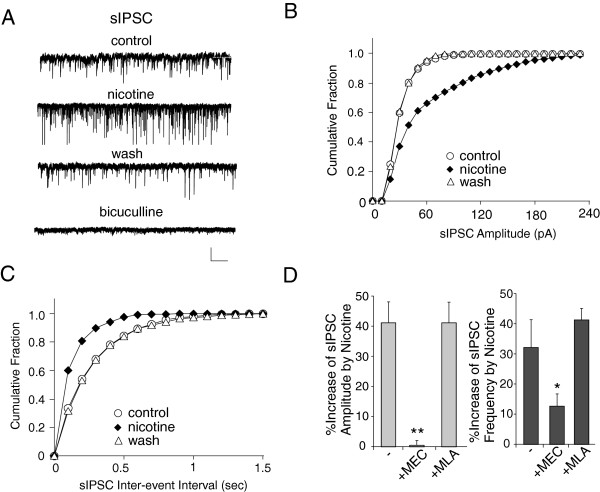
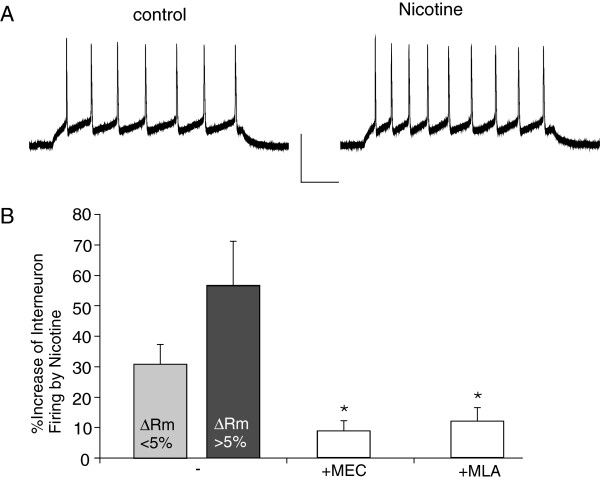
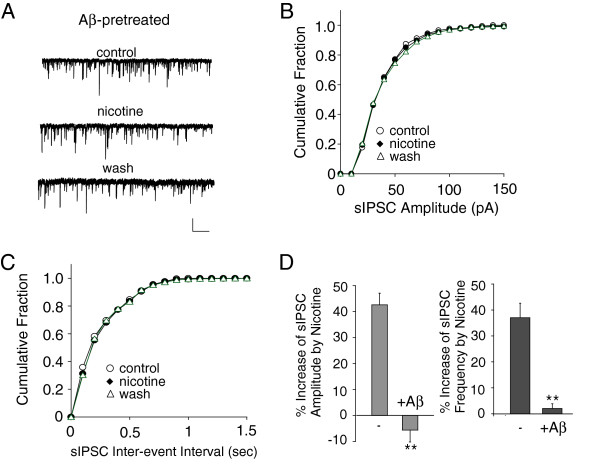
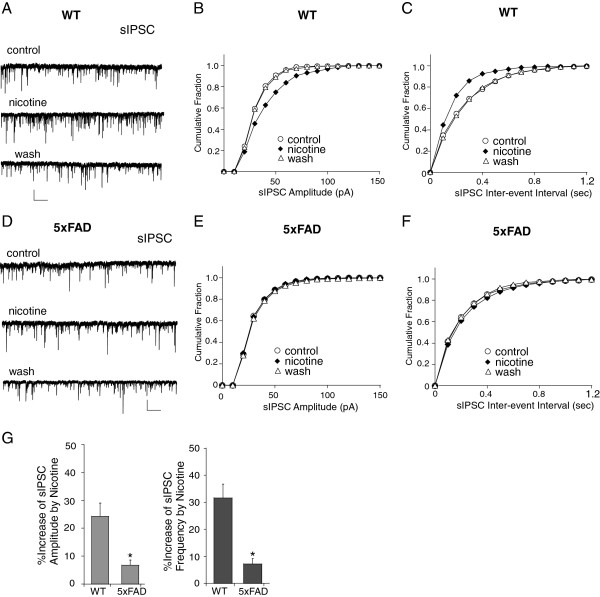
BACKGROUND: Accumulation of β-amyloid (Aβ) and cholinergic deficiency are two prominent features of Alzheimer's disease (AD). To understand how Aβ-induced dysfunction of the nicotinic system may contribute to cognitive impairment in AD, we examined the effect of Aβ on nicotinic regulation of synaptic transmission and neuronal excitability in prefrontal cortex (PFC), a brain region critical for cognitive processes. RESULTS: We found that activation of nicotinic acetylcholine receptors (nAChRs) with nicotine increased the inhibitory postsynaptic currents recorded in PFC pyramidal neurons, which was associated with the nicotine-induced increase in the excitability of PFC layer I GABAergic interneurons. Both effects of nicotine were disrupted by Aβ. However, Aβ did not impair nicotinic regulation of excitatory neurotransmission in PFC interneurons. The nicotinic effect on synaptic inhibition was also lost in transgenic mice with five familial Alzheimer's disease mutations. Inhibiting PKC attenuated nicotinic regulation of inhibitory, but not excitatory, neurotransmission. CONCLUSIONS: Our study suggests that Aβ selectively impairs nicotinic regulation of inhibitory inputs to PFC pyramidal neurons, which might be due to its interference with PKC activation. Thus, in the PFC circuits of AD, the balance between inhibition and excitation under the control of nAChRs may be disturbed by Aβ.
Overview
The claims and statistics of this paper haven’t been checked yet.
Free: it reads the open-access text and checks the first 5 claims that cite a source we can check. Create a free account to check every claim.
Integrity signals
Registry
Cites
Statistics
Figures
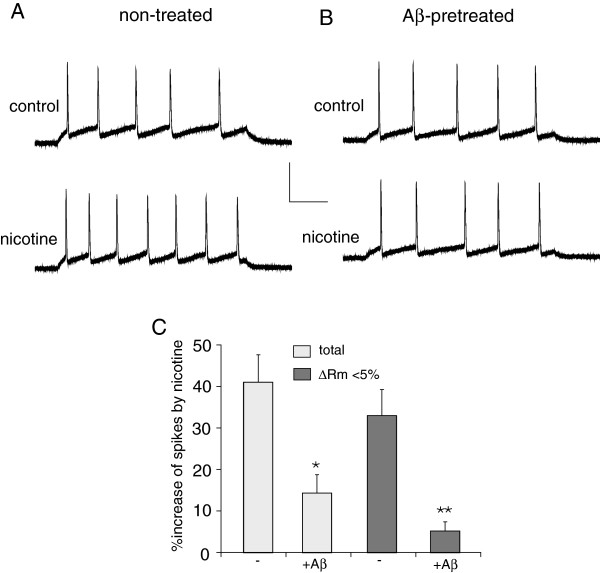
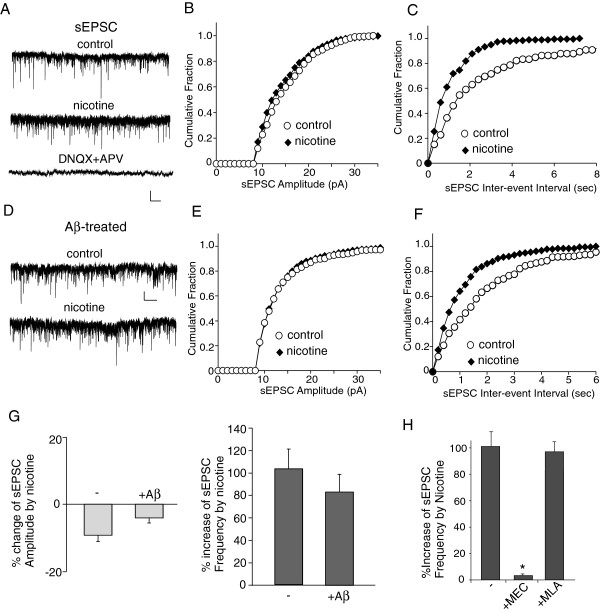
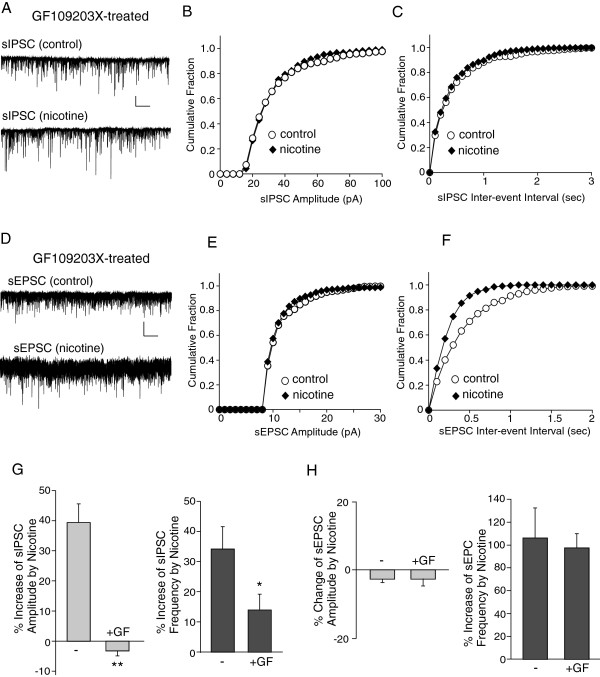
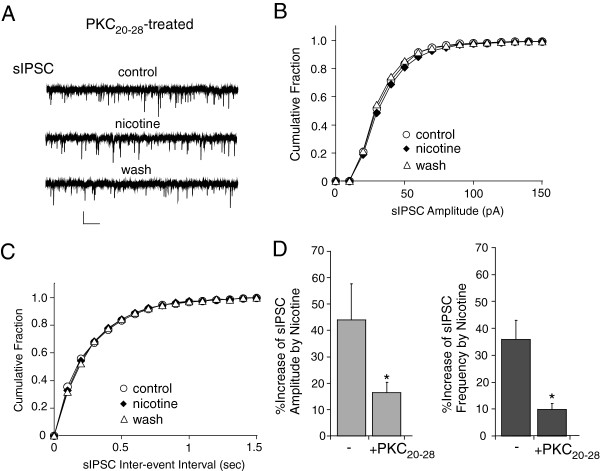
Verification
Claims the paper makes
The claims and statistics of this paper haven’t been checked yet.
Free: it reads the open-access text and checks the first 5 claims that cite a source we can check. Create a free account to check every claim.
Claims other papers make about this one
Each is checked against this paper’s own text: does it say what the citing paper says it does?
The source backs part of the claim, not all of it — or backs it for a different population, condition or comparison.
In the citing paper
“The cholinergic regulation of NMDA and GABA function is impaired in transgenic mice overexpressing mutant β-amyloid precursor protein (APP) 243,245,246.”
From Mechanisms of synaptic transmission dysregulation in the prefrontal cortex: pathophysiological implications (2022) · cites this paper as [245]
Experimental — accuracy not yet measuredIn the citing paper
“Activation of muscarinic or nicotinic ACh receptors in PFC pyramidal neurons also enhances inhibitory synaptic transmission through PKC-dependent mechanisms 244,245.”
From Mechanisms of synaptic transmission dysregulation in the prefrontal cortex: pathophysiological implications (2022) · cites this paper as [245]
Self-check
Percentages, sums and reported differences re-computed from the paper’s own numbers.
The self-check needs the paper’s full text.
Citations
Cites
Alzheimer's Disease: Genes, Proteins, and Therapy
Selkoe, D. J. (2001) · Physiological Reviews · doi:10.1152/physrev.2001.81.2.741 · Cited by 6,063 · cited 1×
“Background Aβ plays a critical role in the pathogenesis of Alzheimer’s disease (AD) [1-4].”
BackgroundThe cholinergic hypothesis of geriatric memory dysfunction
Bartus, R. T., Dean, R. L., Beer, B., & Lippa, A. S. (1982) · Science · doi:10.1126/science.7046051 · Cited by 5,545 · cited 1×
“In addition to Aβ accumulation, another hallmark of AD is a selective loss of cholinergic neurons in basal forebrain [9], and the loss of nicotinic acetylcholine”
BackgroundAlzheimer's Disease Is a Synaptic Failure
Selkoe, D. J. (2002) · Science · doi:10.1126/science.1074069 · Cited by 4,420 · cited 1×
“Recent evidence suggests that the cognitive deficit and memory loss in early stages of AD are due to synaptic failure [7] and functional changes in the activity of neuronal network [8].”
BackgroundOakley, H., Cole, S. L., Logan, S., Maus, E., Shao, P., Craft, J., Guillozet-Bongaarts, A., Ohno, M., Disterhoft, J., Van Eldik, L., et al. (2006) · The Journal of Neuroscience · doi:10.1523/jneurosci.1202-06.2006 · Cited by 3,530 · cited 3×
“Animals The transgenic mice that coexpress a total of five FAD mutations [APP K670N/M671L (Swedish) + I716V (Florida) + V717I (London) and PS1 M146L + L286V] [31] was a generous gift from Dr.”
BackgroundInfluentialNeurotrophic and Neurotoxic Effects of Amyloid β Protein: Reversal by Tachykinin Neuropeptides
Yankner, B. A., Duffy, L. K., & Kirschner, D. A. (1990) · Science · doi:10.1126/science.2218531 · Cited by 1,975 · cited 1×
“Earlier studies show that Aβ can cause cell death in cultured neurons [5] by inducing oxidative stress and disrupting intracellular calcium homeostasis [6].”
BackgroundTwenty years of the Alzheimer's disease amyloid hypothesis: a genetic perspective
Tanzi, R. E., & Bertram, L. (2005) · Cell · doi:10.1016/j.cell.2005.02.008 · Cited by 1,849
Oligomeric and fibrillar species of amyloid-β peptides differentially affect neuronal viability
Dahlgren, K. N., Manelli, A. M., Stine, W. B., Baker, L. K., Krafft, G. A., & LaDu, M. J. (2002) · Journal of Biological Chemistry · doi:10.1074/jbc.m201750200 · Cited by 1,452 · cited 1×
“Methods Drugs Aβ oligomer was prepared as described previously [28,57].”
MethodPresynaptic nicotinic ACh receptors
Wonnacott, S. (1997) · Trends in Neurosciences · doi:10.1016/s0166-2236(96)10073-4 · Cited by 1,308 · cited 1×
“Our results are consistent with the finding that presynaptic α4β2 receptors contribute to neurotransmission [38,39] and both somatodendritic α7 and presynaptic α4β2 receptors modulate neuronal excitability [12,40,41].”
ResultNicotinic Acetylcholine Receptors and Nicotinic Cholinergic Mechanisms of the Central Nervous System
Dani, J. A., & Bertrand, D. (2007) · Annual Review of Pharmacology and Toxicology · doi:10.1146/annurev.pharmtox.47.120505.105214 · Cited by 1,197 · cited 1×
“nAChRs are distributed in both presynaptic and postsynaptic sites [12,13], regulating transmitter release, synaptic response and neuronal excitability [14].”
BackgroundCellular actions of beta-amyloid precursor protein and its soluble and fibrillogenic derivatives
Mattson, M. P. (1997) · Physiological Reviews · doi:10.1152/physrev.1997.77.4.1081 · Cited by 1,006 · cited 1×
“Earlier studies show that Aβ can cause cell death in cultured neurons [5] by inducing oxidative stress and disrupting intracellular calcium homeostasis [6].”
BackgroundA network of fast-spiking cells in the neocortex connected by electrical synapses
Galarreta, M., & Hestrin, S. (1999) · Nature · doi:10.1038/47029 · Cited by 960 · cited 1×
“Electrical and chemical connections of cortical interneurons promote their synchronous firing, thus interneurons play an important role in coordinating cortical activity [54,55], which is critical for working memory [56].”
BackgroundLevin, E. D., McClernon, F. J., & Rezvani, A. H. (2006) · Psychopharmacology · doi:10.1007/s00213-005-0164-7 · Cited by 820 · cited 1×
“Animal studies have found that nAChR activation improves working memory [15,16], while nAChR antagonist, mecamylamine, impairs attention accuracy or reaction time [17,18].”
BackgroundNeuronal nicotinic receptors in the human brain
Paterson, D., & Nordberg, A. (2000) · Progress in Neurobiology · doi:10.1016/s0301-0082(99)00045-3 · Cited by 782 · cited 1×
“; licensee BioMed Central L Commons Attribution License (http://creativec reproduction in any medium, provided the or receptors (nAChRs) in the hippocampus and cortex [10,11].”
BackgroundGamma Oscillations Correlate with Working Memory Load in Humans
Howard, M. W. (2003) · Cerebral Cortex · doi:10.1093/cercor/bhg084 · Cited by 766 · cited 1×
“Electrical and chemical connections of cortical interneurons promote their synchronous firing, thus interneurons play an important role in coordinating cortical activity [54,55], which is critical for working memory [56].”
BackgroundSynaptic mechanisms underlie nicotine-induced excitability of brain reward areas
Mansvelder, H. D., Keath, J. R., & McGehee, D. S. (2002) · Neuron · doi:10.1016/s0896-6273(02)00625-6 · Cited by 701 · cited 2×
“It has been suggested that nAChRs are involved in regulating the integrated circuit activity between interneurons and projection neurons [20,21].”
BackgroundA network dysfunction perspective on neurodegenerative diseases
Palop, J. J., Chin, J., & Mucke, L. (2006) · Nature · doi:10.1038/nature05289 · Cited by 692 · cited 1×
“Recent evidence suggests that the cognitive deficit and memory loss in early stages of AD are due to synaptic failure [7] and functional changes in the activity of neuronal network [8].”
BackgroundMUTANT GENES IN FAMILIAL ALZHEIMER'S DISEASE AND TRANSGENIC MODELS
Price, D. L., & Sisodia, S. S. (1998) · Annual Review of Neuroscience · doi:10.1146/annurev.neuro.21.1.479 · Cited by 572 · cited 1×
“Background Aβ plays a critical role in the pathogenesis of Alzheimer’s disease (AD) [1-4].”
BackgroundInterneuron Diversity series: Inhibitory interneurons and network oscillations in vitro
Whittington, M. A., & Traub, R. D. (2003) · Trends in Neurosciences · doi:10.1016/j.tins.2003.09.016 · Cited by 501 · cited 1×
“Electrical and chemical connections of cortical interneurons promote their synchronous firing, thus interneurons play an important role in coordinating cortical activity [54,55], which is critical for working memory [56].”
BackgroundGalarreta, M., & Hestrin, S. (1998) · Nature Neuroscience · doi:10.1038/2822 · Cited by 431 · cited 1×
“It is known that inhibitory terminals of fast-spiking interneurons are better equipped to support prolonged transmitter release at a higher frequency in comparison with pyramidal neurons [53].”
BackgroundFrazier, C. J., Rollins, Y. D., Breese, C. R., Leonard, S., Freedman, R., & Dunwiddie, T. V. (1998) · The Journal of Neuroscience · doi:10.1523/jneurosci.18-04-01187.1998 · Cited by 374
Wilkinson, D. G., Francis, P. T., Schwam, E., & Payne-Parrish, J. (2004) · Drugs & Aging · doi:10.2165/00002512-200421070-00004 · Cited by 365 · cited 1×
“Clinical drugs targeting nAChRs improve symptoms in AD patients [19].”
BackgroundFrequency-dependent modulation of dopamine release by nicotine
Zhang, H., & Sulzer, D. (2004) · Nature Neuroscience · doi:10.1038/nn1243 · Cited by 361 · cited 1×
“Nicotine often has neuron-specific effects in different networks, which are mediated by different nAChR subtypes [21,34,35].”
Backgroundβ-Amyloid peptide blocks the response of α7-containing nicotinic receptors on hippocampal neurons
Liu, Q.-S., Kawai, H., & Berg, D. K. (2001) · Proceedings of the National Academy of Sciences · doi:10.1073/pnas.081553598 · Cited by 331 · cited 1×
“Direct binding of Aβ1–42 to α7 receptors leads to inhibition of channel open probability [44] and ionic current [43,45].”
BackgroundAlkondon, M., Pereira, E. F. R., Barbosa, C. T. F., & Albuquerque, E. X. (1997) · PubMed · Cited by 326
Hierarchical Control of Dopamine Neuron-Firing Patterns by Nicotinic Receptors
Mameli-Engvall, M., Evrard, A., Pons, S., Maskos, U., Svensson, T. H., Changeux, J.-P., & Faure, P. (2006) · Neuron · doi:10.1016/j.neuron.2006.05.007 · Cited by 296 · cited 1×
“Our results are consistent with the finding that presynaptic α4β2 receptors contribute to neurotransmission [38,39] and both somatodendritic α7 and presynaptic α4β2 receptors modulate neuronal excitability [12,40,41].”
Resultβ-Amyloid1–42Peptide Directly Modulates Nicotinic Receptors in the Rat Hippocampal Slice
Pettit, D. L., Shao, Z., & Yakel, J. L. (2001) · The Journal of Neuroscience · doi:10.1523/jneurosci.21-01-j0003.2001 · Cited by 290 · cited 1×
“Direct binding of Aβ1–42 to α7 receptors leads to inhibition of channel open probability [44] and ionic current [43,45].”
BackgroundTiming-Dependent Septal Cholinergic Induction of Dynamic Hippocampal Synaptic Plasticity
Gu, Z., & Yakel, J. L. (2011) · Neuron · doi:10.1016/j.neuron.2011.04.026 · Cited by 285 · cited 1×
“PFC slices were incubated with Aβ oligomers (1 μM, [28-30]) for at least 3 hours before recording.”
MethodNicotine Induces Glutamate Release from Thalamocortical Terminals in Prefrontal Cortex
Lambe, E. K., Picciotto, M. R., & Aghajanian, G. K. (2003) · Neuropsychopharmacology · doi:10.1038/sj.npp.1300032 · Cited by 261 · cited 1×
“Nicotine (5 μM, [22,23]) was applied to the bath solution for 10 min.”
MethodEvidence for "preterminal" nicotinic receptors on GABAergic axons in the rat interpeduncular nucleus
Lena, C., Changeux, J., & Mulle, C. (1993) · The Journal of Neuroscience · doi:10.1523/jneurosci.13-06-02680.1993 · Cited by 255 · cited 2×
“Our results are consistent with the finding that presynaptic α4β2 receptors contribute to neurotransmission [38,39] and both somatodendritic α7 and presynaptic α4β2 receptors modulate neuronal excitability [12,40,41].”
BackgroundResultCouey, J. J., Meredith, R. M., Spijker, S., Poorthuis, R. B., Smit, A. B., Brussaard, A. B., & Mansvelder, H. D. (2007) · Neuron · doi:10.1016/j.neuron.2007.03.006 · Cited by 253 · cited 1×
“In the presence of non-α7 nAChR antagonist MEC, both sIPSC and sEPSC are irresponsive to nicotine, suggesting that α4β2 may mediate these effects of nicotine [20,36].”
BackgroundAlkondon, M., Pereira, E. F. R., Eisenberg, H. M., & Albuquerque, E. X. (2000) · The Journal of Neuroscience · doi:10.1523/jneurosci.20-01-00066.2000 · Cited by 248
PKC signaling deficits: a mechanistic hypothesis for the origins of Alzheimer's disease
Alkon, D. L., Sun, M.-K., & Nelson, T. J. (2007) · Trends in Pharmacological Sciences · doi:10.1016/j.tips.2006.12.002 · Cited by 243 · cited 1×
“It supports the idea that PKC-related intervention might be promising for AD treatment [50-52].”
BackgroundGrottick, A. J., & Higgins, G. A. (2000) · Behavioural Brain Research · doi:10.1016/s0166-4328(00)00305-3 · Cited by 240 · cited 1×
“Animal studies have found that nAChR activation improves working memory [15,16], while nAChR antagonist, mecamylamine, impairs attention accuracy or reaction time [17,18].”
Backgroundβ-Amyloid Regulation of Presynaptic Nicotinic Receptors in Rat Hippocampus and Neocortex
Dougherty, J. J., Wu, J., & Nichols, R. A. (2003) · The Journal of Neuroscience · doi:10.1523/jneurosci.23-17-06740.2003 · Cited by 214
Feng, J., Cai, X., Zhao, J., & Yan, Z. (2001) · The Journal of Neuroscience · doi:10.1523/jneurosci.21-17-06502.2001 · Cited by 212 · cited 1×
“Sprague Dawley rats (3–5 weeks old) were anesthetized with 2-bromo-2-chloro-1,1,1-trifluoroethane (1 ml/100 g) inhalation before decapitation [28,58].”
MethodSelf-citationNicotinic receptor subtypes in human brain ageing, Alzheimer and Lewy body diseases
Perry, E., Martin-Ruiz, C., Lee, M., Griffiths, M., Johnson, M., Piggott, M., Haroutunian, V., Daniel Buxbaum, J., Nãsland, J., Davis, K., et al. (2000) · European Journal of Pharmacology · doi:10.1016/s0014-2999(00)00064-9 · Cited by 201 · cited 1×
“; licensee BioMed Central L Commons Attribution License (http://creativec reproduction in any medium, provided the or receptors (nAChRs) in the hippocampus and cortex [10,11].”
BackgroundNicotine enhances sustained attention in the rat under specific task conditions
Mirza, N. R., & Stolerman, I. P. (1998) · Psychopharmacology · doi:10.1007/s002130050671 · Cited by 181
Gu, Z., Liu, W., & Yan, Z. (2009) · Journal of Biological Chemistry · doi:10.1074/jbc.m806508200 · Cited by 176
Self-citationSynaptic interactions of late-spiking neocortical neurons in layer 1
Chu, Z., Galarreta, M., & Hestrin, S. (2003) · The Journal of Neuroscience · doi:10.1523/jneurosci.23-01-00096.2003 · Cited by 172 · cited 1×
“Since layer I of neocortex contains exclusively GABAergic interneurons with extensive axonal plexus innervating neurons in deep layers [24-26], we focused our studies on PFC layer I GABAergic interneurons.”
BackgroundYoudim, M. B. H., & Weinstock, M. (2001) · Cellular and Molecular Neurobiology · doi:10.1023/a:1015131516649 · Cited by 164 · cited 1×
“It supports the idea that PKC-related intervention might be promising for AD treatment [50-52].”
BackgroundThe role of nicotinic acetylcholine receptors in Alzheimer’s disease
Oddo, S., & LaFerla, F. M. (2006) · Journal of Physiology-Paris · doi:10.1016/j.jphysparis.2005.12.080 · Cited by 142 · cited 2×
“Direct binding of Aβ1–42 to α7 receptors leads to inhibition of channel open probability [44] and ionic current [43,45].”
BackgroundBryostatin-1: Pharmacology and Therapeutic Potential as a CNS Drug
Sun, M., & Alkon, D. L. (2006) · CNS Drug Reviews · doi:10.1111/j.1527-3458.2006.00001.x · Cited by 127
Alkondon, M., Pereira, E. F. R., Barbosa, C. T. F., & Albuquerque, E. X. (1997) · The Journal of Pharmacology and Experimental Therapeutics · doi:10.1016/s0022-3565(24)37139-3 · Cited by 127
Distributions of nicotinic acetylcholine receptor α7 and β2 subunits on cultured hippocampal neurons
Zarei, M. M., Radcliffe, K. A., Chen, D., Patrick, J. W., & Dani, J. A. (1999) · Neuroscience · doi:10.1016/s0306-4522(98)00246-2 · Cited by 124 · cited 1×
“nAChRs are distributed in both presynaptic and postsynaptic sites [12,13], regulating transmitter release, synaptic response and neuronal excitability [14].”
Chen, G., Kittler, J. T., Moss, S. J., & Yan, Z. (2006) · The Journal of Neuroscience · doi:10.1523/jneurosci.4712-05.2006 · Cited by 102 · cited 2×
“Patch clamp recordings Voltage clamp recording of synaptic currents in slices was performed as described previously [33,59].”
MethodSelf-citationSher, E., Chen, Y., Sharples, T. J. W., Broad, L. M., Benedetti, G., Zwart, R., McPhie, G. I., Pearson, K. H., Baldwinson, T., & Filippi, G. D. (2004) · Current Topics in Medicinal Chemistry · doi:10.2174/1568026043451393 · Cited by 100 · cited 1×
“Our results are consistent with the finding that presynaptic α4β2 receptors contribute to neurotransmission [38,39] and both somatodendritic α7 and presynaptic α4β2 receptors modulate neuronal excitability [12,40,41].”
ResultIdentification of Sequence Motifs That Target Neuronal Nicotinic Receptors to Dendrites and Axons
Xu, J., Zhu, Y., & Heinemann, S. F. (2006) · The Journal of Neuroscience · doi:10.1523/jneurosci.0840-06.2006 · Cited by 96 · cited 1×
“In hippocampal cultures, α7 and α4β2 displayed distinct patterns of expression, with α7 preferentially present on the somatodendrites whereas α4β2 distributed on both the axonal and dendritic compartments [37].”
BackgroundZhu, Y., & Zhu, J. J. (2004) · The Journal of Neuroscience · doi:10.1523/jneurosci.4805-03.2004 · Cited by 85 · cited 1×
“Since layer I of neocortex contains exclusively GABAergic interneurons with extensive axonal plexus innervating neurons in deep layers [24-26], we focused our studies on PFC layer I GABAergic interneurons.”
BackgroundDorsal hippocampal α7 and α4β2 nicotinic receptors and memory
Nott, A., & Levin, E. D. (2006) · Brain Research · doi:10.1016/j.brainres.2006.01.052 · Cited by 75
Wanaverbecq, N., Semyanov, A., Pavlov, I., Walker, M. C., & Kullmann, D. M. (2007) · The Journal of Neuroscience · doi:10.1523/jneurosci.1732-07.2007 · Cited by 72
Dineley, K. (2007) · Frontiers in Bioscience · doi:10.2741/2445 · Cited by 71 · cited 1×
“Both Aβ accumulation and nicotinic deficits occur in the progression of AD [42,43].”
BackgroundZhong, P., Gu, Z., Wang, X., Jiang, H., Feng, J., & Yan, Z. (2003) · Journal of Biological Chemistry · doi:10.1074/jbc.m302789200 · Cited by 71 · cited 3×
“Patch clamp recordings Voltage clamp recording of synaptic currents in slices was performed as described previously [33,59].”
BackgroundMethodSelf-citationLayer I neurons of rat neocortex. I. Action potential and repetitive firing properties
Zhou, F. M., & Hablitz, J. J. (1996) · Journal of Neurophysiology · doi:10.1152/jn.1996.76.2.651 · Cited by 68
Living with the enemy: a physiological role for the β-amyloid peptide
Esteban, J. A. (2003) · Trends in Neurosciences · doi:10.1016/j.tins.2003.10.008 · Cited by 66 · cited 1×
“Background Aβ plays a critical role in the pathogenesis of Alzheimer’s disease (AD) [1-4].”
BackgroundTyszkiewicz, J. P., & Yan, Z. (2005) · Journal of Neurophysiology · doi:10.1152/jn.00939.2004 · Cited by 51 · cited 1×
“Our previous studies have found that PKC activation is often impaired by Aβ treatment [30,32,33], so we examined the involvement of PKC in nicotinic regulation of sIPSC and sEPSC.”
BackgroundSelf-citationTransgenic mice over-expressing human β-amyloid have functional nicotinic alpha 7 receptors
Spencer, J. P., Weil, A., Hill, K., Hussain, I., Richardson, J. C., Cusdin, F. S., Chen, Y. H., & Randall, A. D. (2005) · Neuroscience · doi:10.1016/j.neuroscience.2005.10.007 · Cited by 40 · cited 1×
“In hippocampal interneurons of transgenic mice overexpressing Aβ, α7 nAChRs are still functioning [46].”
BackgroundCharacterization of a Nicotine-Sensitive Neuronal Population in Rat Entorhinal Cortex
Tu, B., Gu, Z., Shen, J.-X., Lamb, P. W., & Yakel, J. L. (2009) · The Journal of Neuroscience · doi:10.1523/jneurosci.2580-09.2009 · Cited by 34 · cited 1×
“The Rm change is similar to the nicotine-induced depolarization in some hippocampal neurons [27].”
BackgroundRACK1 is involved in β-amyloid impairment of muscarinic regulation of GABAergic transmission
Liu, W., Dou, F., Feng, J., & Yan, Z. (2011) · Neurobiology of Aging · doi:10.1016/j.neurobiolaging.2009.10.017 · Cited by 33
Self-citationOhnishi, M., Katsuki, H., Takagi, M., Kume, T., & Akaike, A. (2008) · European Journal of Pharmacology · doi:10.1016/j.ejphar.2008.11.041 · Cited by 29 · cited 1×
“Nicotine (5 μM, [22,23]) was applied to the bath solution for 10 min.”
MethodKlein, R. C., & Yakel, J. L. (2005) · The Journal of Physiology · doi:10.1113/jphysiol.2005.096081 · Cited by 23
Cited by
Yan, Z., & Rein, B. (2022) · Molecular Psychiatry · doi:10.1038/s41380-021-01092-3 · Cited by 300
“Activation of muscarinic or nicotinic ACh receptors in PFC pyramidal neurons also enhances inhibitory synaptic transmission through PKCdependent mechanisms [244, 245].”
BackgroundSelf-citationImpact of Sleep and Circadian Rhythms on Addiction Vulnerability in Adolescents
Logan, R. W., Hasler, B. P., Forbes, E. E., Franzen, P. L., Torregrossa, M. M., Huang, Y. H., Buysse, D. J., Clark, D. B., & McClung, C. A. (2018) · Biological Psychiatry · doi:10.1016/j.biopsych.2017.11.035 · Cited by 194
The γ-secretase complex: from structure to function
Zhang, X., Li, Y., Xu, H., & Zhang, Y.-W. (2014) · Frontiers in Cellular Neuroscience · doi:10.3389/fncel.2014.00427 · Cited by 160
“The p83 fragment is rapidly degraded and widely believed to have negligible function, whereas Aβ is neurotoxic (Selkoe, 2001; Zhang et al., 2011; Proctor et al., 2012; Slowik et al., 2012; Youmans et al., 2012; Chen et al., 2013; Rosén et al., 2013).”
BackgroundM1 muscarinic acetylcholine receptor in Alzheimer’s disease
Jiang, S., Li, Y., Zhang, C., Zhao, Y., Bu, G., Xu, H., & Zhang, Y. (2014) · Neuroscience Bulletin · doi:10.1007/s12264-013-1406-z · Cited by 175
AMPA Receptors as Therapeutic Targets for Neurological Disorders
Lee, K., Goodman, L., Fourie, C., Schenk, S., Leitch, B., & Montgomery, J. M. (2015) · Advances in protein chemistry and structural biology · doi:10.1016/bs.apcsb.2015.10.004 · Cited by 123
Metadata
- Authors
- Chen, G.-J., Xiong, Z., & Yan, Z.
- Affiliations
- University at Buffalo, State University of New York (US)
- Corresponding author
- Yan, Zhen
- ORCID
- Yan, Zhen
- Venue
- Molecular Neurodegeneration
- Published
- 2013
- Volume
- 8
- Issue
- 1
- Pages
- 3
- ISSN
- 1750-1326 (ISSN-L)
- PMC
- PMC3610117
- OpenAlex
- W2031040530
- Cited by
- 30
- References
- 59
- Citations by year
- 2025: 2 · 2024: 1 · 2023: 4 · 2022: 2 · 2021: 2 · 2020: 2 · 2019: 2 · 2018: 1 · 2017: 3 · 2016: 1 · 2015: 2 · 2014: 5 · 2013: 3
- FWCI
- 1.64
- Type
- journal article
- Language
- en
- Open access
- gold
- doi.org
- Licence
- cc-by
- Locations
- Molecular Neurodegeneration (publishedVersion, cc-by)
- Europe PMC (PubMed Central) (publishedVersion, cc-by)
- PubMed Central (publishedVersion, cc-by)
- PubMed (publishedVersion)
- Funders
- National Natural Science Foundation of China (81171197, 2011-1)
- National Institutes of Health
- National Institute on Aging (AG-21923, R01AG021923)
- Topics
- Life Sciences › Biochemistry, Genetics and Molecular Biology › Molecular Biology › Nicotinic Acetylcholine Receptors Study
- Life Sciences › Neuroscience › Cellular and Molecular Neuroscience › Alzheimer's disease research and treatments
- Life Sciences › Neuroscience › Cellular and Molecular Neuroscience › Neuroscience and Neuropharmacology Research
- Keywords
- amyloid-beta, nicotinic acetylcholine receptors, synaptic inhibition, GABAergic interneurons, prefrontal cortex, neuronal excitability, nicotine, protein kinase C, Alzheimer's disease, pyramidal neurons, excitation-inhibition balance, familial Alzheimer's disease mutations
- MeSH terms
- Animals, Mice, Transgenic, Synaptic Transmission, Nicotine, Receptors, Nicotinic, Amyloid beta-Peptides, Prefrontal Cortex, Pyramidal Cells, Patch-Clamp Techniques, Nicotinic Agonists, Mice, Inhibitory Postsynaptic Potentials
About these checks
Registry, retraction, Cites and statistics results are computed, not judged, with one exception: a printed reference that no index lists is read once by a model before it counts as a citation error. Claims are extracted by a model and kept only when their quote appears verbatim in the text; each cited source is then checked, with a model’s help, for whether it says what the claim relies on. Those verdicts can be wrong — read the claim’s quote and the cited source before relying on one.
Statistics and arithmetic are recomputed, not judged.
Confidence bands are shown only for fields calibrated on our annotated test set. None is calibrated yet, so no band is shown.
What counts as a claim ›How we measure confidence ›How we check this ›
Are you an author, or do you see a problem with this page? Request a review
Data sources
Bibliographic data: Semantic Scholar, OpenAlex, Crossref.
Contains information from the Semantic Scholar Academic Graph Datasets, made available under the ODC Attribution License (ODC-BY 1.0).
Semantic Scholar’s data is described in: Kinney, R., et al. (2023). The Semantic Scholar Open Data Platform. arXiv:2301.10140.
