

The DOI matches its Crossref record; 57 of the 58 references it cites were found in a registry or an index.
Host lifestyle affects human microbiota on daily timescales
Open accessAbstract
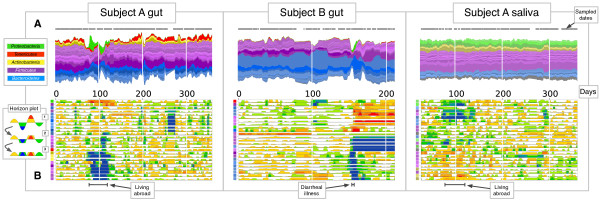
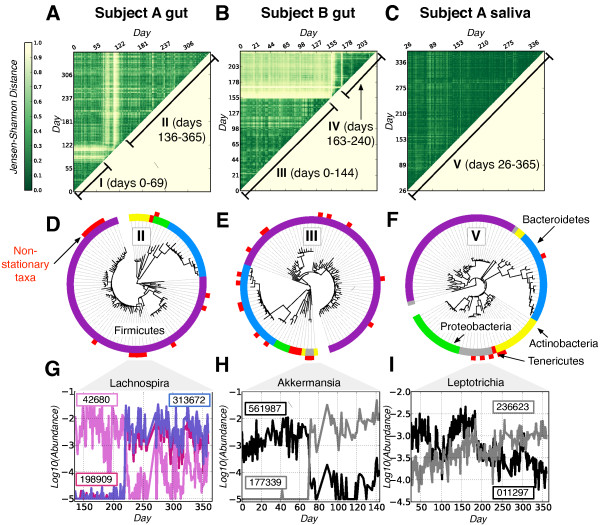
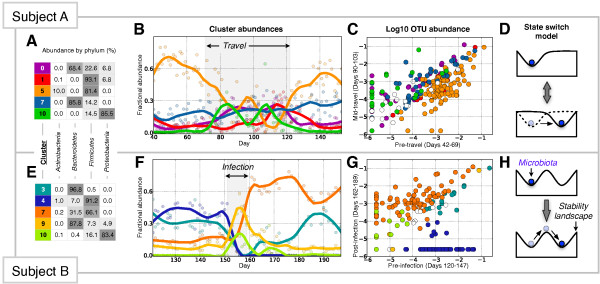
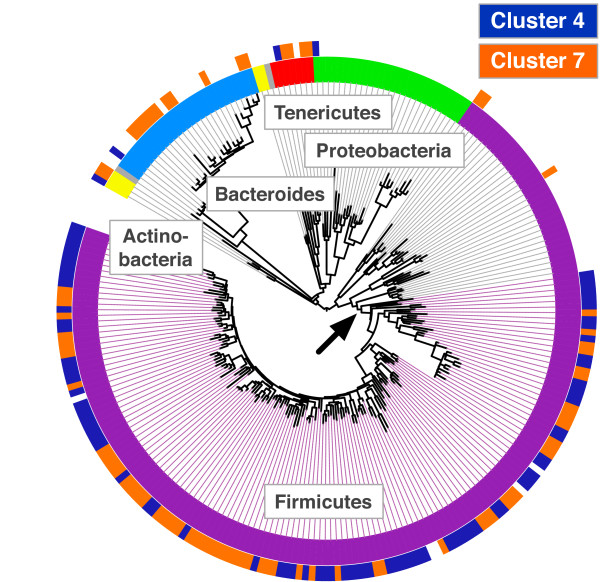
BACKGROUND: Disturbance to human microbiota may underlie several pathologies. Yet, we lack a comprehensive understanding of how lifestyle affects the dynamics of human-associated microbial communities. RESULTS: Here, we link over 10,000 longitudinal measurements of human wellness and action to the daily gut and salivary microbiota dynamics of two individuals over the course of one year. These time series show overall microbial communities to be stable for months. However, rare events in each subjects’ life rapidly and broadly impacted microbiota dynamics. Travel from the developed to the developing world in one subject led to a nearly two-fold increase in the Bacteroidetes to Firmicutes ratio, which reversed upon return. Enteric infection in the other subject resulted in the permanent decline of most gut bacterial taxa, which were replaced by genetically similar species. Still, even during periods of overall community stability, the dynamics of select microbial taxa could be associated with specific host behaviors. Most prominently, changes in host fiber intake positively correlated with next-day abundance changes among 15% of gut microbiota members. CONCLUSIONS: Our findings suggest that although human-associated microbial communities are generally stable, they can be quickly and profoundly altered by common human actions and experiences.
Overview
The claims and statistics of this paper haven’t been checked yet.
Run the check — free, no account needed. It reads the open-access text and checks the sources it cites.
Integrity signals
Registry
Cites
Statistics
Figures
Verification
Claims the paper makes
The claims and statistics of this paper haven’t been checked yet.
Run the check — free, no account needed. It reads the open-access text and checks the sources it cites.
Claims other papers make about this one
Each is checked against this paper’s own text: does it say what the citing paper says it does?
The source backs part of the claim, not all of it — or backs it for a different population, condition or comparison.
In the citing paper
“Short-term, dramatic dietary interventions have demonstrated the ability to alter microbiota diversity quickly in humans [5].”
From Effect of Diet on the Gut Microbiota: Rethinking Intervention Duration (2019) · cites this paper as [5]
Experimental — accuracy not yet measuredIn the citing paper
“Likewise, mouse models have indicated that manipulation of macronutrient intake can consistently shift the composition of the gut microbiota within the span of a day [5,6,18,19].”
From Effect of Diet on the Gut Microbiota: Rethinking Intervention Duration (2019) · cites this paper as [5]
In the citing paper
“One longitudinal study involving daily gut microbiota investigations of two individuals over the course of a year found that changes in fibre intake are positively correlated with a change in abundance of 15% of the microbial community the following day [5].”
From Effect of Diet on the Gut Microbiota: Rethinking Intervention Duration (2019) · cites this paper as [5]
Self-check
Percentages, sums and reported differences re-computed from the paper’s own numbers.
The self-check needs the paper’s full text.
Citations
Cites
QIIME allows analysis of high-throughput community sequencing data
Caporaso, J. G., Kuczynski, J., Stombaugh, J., Bittinger, K., Bushman, F. D., Costello, E. K., Fierer, N., Peña, A. G., Goodrich, J. K., Gordon, J. I., et al. (2010) · Nature Methods · doi:10.1038/nmeth.f.303 · Cited by 34,887
Search and clustering orders of magnitude faster than BLAST
Edgar, R. C. (2010) · Bioinformatics · doi:10.1093/bioinformatics/btq461 · Cited by 21,098
An obesity-associated gut microbiome with increased capacity for energy harvest
Turnbaugh, P. J., Ley, R. E., Mahowald, M. A., Magrini, V., Mardis, E. R., & Gordon, J. I. (2006) · Nature · doi:10.1038/nature05414 · Cited by 12,444
Greengenes, a Chimera-Checked 16S rRNA Gene Database and Workbench Compatible with ARB
DeSantis, T. Z., Hugenholtz, P., Larsen, N., Rojas, M., Brodie, E. L., Keller, K., Huber, T., Dalevi, D., Hu, P., & Andersen, G. L. (2006) · Applied and Environmental Microbiology · doi:10.1128/aem.03006-05 · Cited by 10,891
Diet rapidly and reproducibly alters the human gut microbiome
David, L. A., Maurice, C. F., Carmody, R. N., Gootenberg, D. B., Button, J. E., Wolfe, B. E., Ling, A. V., Devlin, A. S., Varma, Y., Fischbach, M. A., et al. (2014) · Nature · doi:10.1038/nature12820 · Cited by 10,100
Self-citationGlobal patterns of 16S rRNA diversity at a depth of millions of sequences per sample
Caporaso, J. G., Lauber, C. L., Walters, W. A., Berg-Lyons, D., Lozupone, C., Turnbaugh, P. J., Fierer, N., & Knight, R. D. (2010) · Proceedings of the National Academy of Sciences · doi:10.1073/pnas.1000080107 · Cited by 9,944
Human gut microbes associated with obesity
Ley, R. E., Turnbaugh, P. J., Klein, S., & Gordon, J. I. (2006) · Nature · doi:10.1038/4441022a · Cited by 8,785
Human gut microbiome viewed across age and geography
Yatsunenko, T., Rey, F. E., Manary, M. J., Trehan, I., Dominguez-Bello, M. G., Contreras, M., Magris, M., Hidalgo, G., Baldassano, R. N., Anokhin, A. P., et al. (2012) · Nature · doi:10.1038/nature11053 · Cited by 7,815
Statsmodels: Econometric and Statistical Modeling with Python
Seabold, S., & Perktold, J. (2010) · Proceedings of the Python in Science Conferences · doi:10.25080/majora-92bf1922-011 · Cited by 6,968
Linking long-term dietary patterns with gut microbial enterotypes
Wu, G. D., Chen, J., Hoffmann, C., Bittinger, K., Chen, Y.-Y., Keilbaugh, S. A., Bewtra, M., Knights, D., Walters, W. A., Knight, R., et al. (2011) · Science · doi:10.1126/science.1208344 · Cited by 6,513
Cited by
Sorted by citations
Items 301–400 of 951
Tracking Strains in the Microbiome: Insights from Metagenomics and Models
Brito, I., & Alm, E. J. (2016) · Frontiers in Microbiology · doi:10.3389/fmicb.2016.00712 · Cited by 47
A gut reaction: the combined influence of exercise and diet on gastrointestinal microbiota in rats
Batacan, R. B., Fenning, A. S., Dalbo, V. J., Scanlan, A. T., Duncan, M. J., Moore, R. J., & Stanley, D. (2017) · Journal of Applied Microbiology · doi:10.1111/jam.13442 · Cited by 52
“Considering that microbiota responds to a wide range of external stimuli almost immediately within days (David et al. 2014), we proceeded with the activity intervention for the duration of 12 weeks allowing enough time for the effects of both diet and exercise to be clearly differentiated.”
Daele, E. V., Knol, J., & Belzer, C. (2019) · Critical Reviews in Microbiology · doi:10.1080/1040841x.2019.1680601 · Cited by 49
“Perturbations can be caused by dietary change, infection and antimicrobial use (Koenig et al. 2011; David et al. 2014).”
BackgroundMicrobiome dysbiosis in cancer: Exploring therapeutic strategies to counter the disease
Sharma, V., Singh, M. P., Kumar, V., Yadav, M. K., Sehrawat, N., Sharma, D. K., & Sharma, A. K. (2020) · Seminars in Cancer Biology · doi:10.1016/j.semcancer.2020.07.006 · Cited by 49
Zaoli, S., & Grilli, J. (2021) · Science Advances · doi:10.1126/sciadv.abj2882 · Cited by 45
Toh, M. C. W., & Allen‐Vercoe, E. (2015) · Microbial Ecology in Health and Disease · doi:10.3402/mehd.v26.26309 · Cited by 51
Crawford, J. A., Liu, S., & Tao, F. (2022) · Neurobiology of Pain · doi:10.1016/j.ynpai.2022.100090 · Cited by 48
Perilipin-2 Modulates Lipid Absorption and Microbiome Responses in the Mouse Intestine
Frank, D. N., Bales, E. S., Monks, J., Jackman, M. J., MacLean, P. S., Ir, D., Robertson, C. E., Orlicky, D. J., & McManaman, J. L. (2015) · PLoS ONE · doi:10.1371/journal.pone.0131944 · Cited by 49
“Similarly rapid changes have been observed in human subjects randomized to plant-based or animal-based diets, which induce diet-specific alterations in fecal microbiota [65].”
BackgroundHolistic View on Health: Two Protective Layers of Biodiversity
Ruokolainen, L., Lehtimäki, J., Karkman, A., Haahtela, T., von Hertzen, L., & Fyhrquist, N. (2017) · Annales Zoologici Fennici · doi:10.5735/086.054.0106 · Cited by 47
“This means that such factors as lifestyle, behaviour, and social contacts (Tung et al. 2015) are likely to be relatively important for the dynamics of the microbiota in our immediate living environment as well as that in our bodies (David et al. 2014).”
BackgroundInfluentialMicrobiome and Antimicrobial Resistance Gene Dynamics in International Travelers
Langelier, C., Graves, M., Kalantar, K., Caldera, S., Durrant, R., Fisher, M. A., Backman, R., Tanner, W. D., DeRisi, J. L., & Leung, D. T. (2019) · Emerging infectious diseases · doi:10.3201/eid2507.181492 · Cited by 47
“The mechanisms underlying acquisition of AMR bacteria during travel are incompletely understood, although changes in the intestinal microbiota are hypothesized to play a role (6).”
Acharya, A., Chen, T., Chan, Y., Watt, R. M., Jin, L.-J., & Mattheos, N. (2019) · Frontiers in Cellular and Infection Microbiology · doi:10.3389/fcimb.2019.00347 · Cited by 47
“A stable “core” oral microbial community structure that persists over years has been demonstrated (David et al., 2014) and such ecological stability is linked closely to an individual’s salivary composition (Rosier et al.”
BackgroundiNetModels 2.0: an interactive visualization and database of multi-omics data
Arif, M., Zhang, C., Li, X., Güngör, C., Çakmak, B., Arslantürk, M., Tebani, A., Özcan, B., Subaş, O., Zhou, W., et al. (2021) · Nucleic Acids Research · doi:10.1093/nar/gkab254 · Cited by 45
“Moreover, several other studies have also demonstrated the benefit of performing longitudinal multi-omics data analysis in systematically capturing human diseases' dynamics (6-8).”
BackgroundDown for the count: Cryptosporidium infection depletes the gut microbiome in Coquerel’s sifakas
McKenney, E. A., Greene, L. K., Drea, C. M., & Yoder, A. D. (2017) · Microbial Ecology in Health and Disease · doi:10.1080/16512235.2017.1335165 · Cited by 49
“In some cases, the GMB recovers from enteric infection to a new stable state [15].”
BackgroundDiet-microbiota associations in gastrointestinal research: a systematic review
Duncanson, K., Williams, G. M., Hoedt, E. C., Collins, C. E., Keely, S., & Talley, N. J. (2024) · Gut Microbes · doi:10.1080/19490976.2024.2350785 · Cited by 48
The Hoops, Hopes, and Hypes of Human Microbiome Research.
Bik, E. M. (2016) · PubMed Central · Cited by 43
Host-Microbiome Interaction and Cancer: Potential Application in Precision Medicine
Contreras, A. V., Cocom-Chan, B., Hernández‐Montes, G., Portillo-Bobadilla, T., & Reséndis-Antonio, O. (2016) · Frontiers in Physiology · doi:10.3389/fphys.2016.00606 · Cited by 49
Toward an Intensive Longitudinal Understanding of Activated Sludge Bacterial Assembly and Dynamics
Jiang, X., Ye, L., Ju, F., Wang, Y., & Zhang, T. (2018) · Environmental Science & Technology · doi:10.1021/acs.est.7b05579 · Cited by 45
Gut microbial similarity in twins is driven by shared environment and aging
Vilchez‐Vargas, R., Skiecevičienė, J., Lehr, K., Varkalaitė, G., Thon, C., Urba, M., Morkūnas, E., Kučinskas, L., Bauraitė, K., Schanze, D., et al. (2022) · EBioMedicine · doi:10.1016/j.ebiom.2022.104011 · Cited by 47
Evolutionary relationships among bifidobacteria and their hosts and environments
Rodriguez, C. I., & Martiny, J. B. H. (2020) · BMC Genomics · doi:10.1186/s12864-019-6435-1 · Cited by 46
Fluitman, K. S., de Clercq, N. C., Keijser, B. J. F., Visser, M., Nieuwdorp, M., & IJzerman, R. G. (2017) · Expert Review of Endocrinology & Metabolism · doi:10.1080/17446651.2017.1318060 · Cited by 47
“It is influenced by host genetics [21] and age [13], in addition to a number of environmental factors such as gastro-intestinal physiology, geographical location [13,22], house-mates [23], comorbidity, medication use, and diet [19,24].”
Bost, A., Franzenburg, S., Adair, K. L., Martinson, V. G., Loeb, G. M., & Douglas, A. E. (2017) · Molecular Ecology · doi:10.1111/mec.14413 · Cited by 42
“…animals (Engel & Moran, 2013; Sender, Fuchs, & Milo, 2016), and the gut microbiota is generally diverse and variable in composition, both among individual hosts and within one host over time (David et al., 2014; Dethlefsen, McFall-Ngai, & Relman, 2007; Human Microbiome Project Consortium, 2012).”
BackgroundMixed Spices at Culinary Doses Have Prebiotic Effects in Healthy Adults: A Pilot Study
Lu, Q., Rasmussen, A. M., Yang, J., Lee, R., Huang, J., Shao, P., Carpenter, C. L., Gilbuena, I., Thames, G., Henning, S. M., et al. (2019) · Nutrients · doi:10.3390/nu11061425 · Cited by 44
“An acute change in dietary pattern from animal-based to plant-based diet alters gut microbial populations within 24 h and then reverts to baseline within 48 h of returning to the baseline dietary pattern [2].”
BackgroundAllaway, D., Haydock, R., Lonsdale, Z. N., Deusch, O., O’Flynn, C., & Hughes, K. R. (2020) · Applied and Environmental Microbiology · doi:10.1128/aem.00562-20 · Cited by 43
Kubinski, R., Djamen-Kepaou, J.-Y., Zhanabaev, T., Hernández-García, Á., Bauer, S., Hildebrand, F., Korcsmáros, T., Karam, S., Jantchou, P., Kafi, K., et al. (2022) · Frontiers in Genetics · doi:10.3389/fgene.2022.784397 · Cited by 40
Review of the Relationships Between Human Gut Microbiome, Diet, and Obesity
Patloka, O., Komprda, T., & Franke, G. (2024) · Nutrients · doi:10.3390/nu16233996 · Cited by 50
“…can influence an individual’s gut microbial composition during the duration of life: being preterm or full-term born; vaginal or caesarean delivery; nursing by human milk or a substitute [25–27]; BMI; exercise; diet [22,25,28,29]; and past illnesses including the use of drugs and antibiotics [30].”
The effect of NOD2 on the microbiota in Crohn's disease
Lauro, M. L., Burch, J. M., & Grimes, C. L. (2016) · Current Opinion in Biotechnology · doi:10.1016/j.copbio.2016.02.028 · Cited by 49
Šket, R., Treichel, N. S., Debevec, T., Eiken, O., Mekjavić, I. B., Schloter, M., Vital, M., Chandler, J., Tiedje, J. M., Murovec, B., et al. (2017) · Frontiers in Physiology · doi:10.3389/fphys.2017.00250 · Cited by 41
Relationship between Diet, Microbiota, and Healthy Aging
Sanchez-Morate, E., Gimeno-Mallench, L., Stromsnes, K., Sanz‐Ros, J., Román-Domínguez, A., Parejo-Pedrajas, S., Inglés, M., González, G. O., Gambini, J., & Mas‐Bargues, C. (2020) · Biomedicines · doi:10.3390/biomedicines8080287 · Cited by 39
“Through these effects, it also has protective effects against ischemic stroke and neuroprotective effects against Alzheimer Disease by reducing the hyperphosphorylation of Tau protein [75,76].”
BackgroundBarton, W., Cronin, O., García‐Pérez, I., Whiston, R., Holmes, E. C., Woods, T., Molloy, C. B., Molloy, M. G., Shanahan, F., Cotter, P. D., et al. (2020) · Translational Sports Medicine · doi:10.1002/tsm2.215 · Cited by 40
“Such study designs have been successfully implemented to interrogate 68 longitudinal effects on the microbiome over time [19] and in fact have recently demonstrated that 69 intense and prolonged ultra-endurance exercise leads to increased alpha-diversity in the gut 70 microbiota [16].”
The intestinal microbiome in human disease and how it relates to arthritis and spondyloarthritis
Costello, M., Robinson, P. C., Benham, H., & Brown, M. A. (2015) · Best Practice & Research Clinical Rheumatology · doi:10.1016/j.berh.2015.08.001 · Cited by 44
Population dynamics of the human gut microbiome: change is the only constant
Priya, S., & Blekhman, R. (2019) · Genome biology · doi:10.1186/s13059-019-1775-3 · Cited by 40
“Longitudinal studies have reported long-term stability of the high-level taxonomic composition of gut microbiota communities [1, 2].”
Walters, W. A., Reyes, F., Soto, G. M., Reynolds, N. D., Fraser, J., Avilés-Ruiz, R., Tribble, D. R., Irvin, A. P., Kelley‐Loughnane, N., Gutiérrez, R. L., et al. (2020) · PLoS ONE · doi:10.1371/journal.pone.0236703 · Cited by 40
“In an extensive longitudinal study of two subjects [42], changes in the microbial community were detected during episodes of diarrheal illness, and the community maintained an altered stable state in one subject even after recovery; the long-term impacts of altered gut microbiota on host health following TD are unexpl…”
BackgroundA Guide to Dietary Pattern–Microbiome Data Integration
Choi, Y., Hoops, S., Thoma, C. J., & Johnson, A. J. (2022) · Journal of Nutrition · doi:10.1093/jn/nxac033 · Cited by 42
Choy, C. T., Chan, U. K., Siu, P. L. K., Zhou, J., Wong, C. H., Lee, Y. W., Chan, H. W., Tsui, J. C. C., Loo, S. K. F., & Tsui, S. K. (2023) · International Journal of Molecular Sciences · doi:10.3390/ijms24076571 · Cited by 39
Dell’Olio, A., Scott, W. T., Taroncher-Ferrer, S., Onofre, N. S., Soriano, J. M., & Rubert, J. (2024) · Microbiome · doi:10.1186/s40168-024-01975-x · Cited by 45
Microbiota and pathogen ‘pas de deux’: setting up and breaking down barriers to intestinal infection
McKenney, E. S., & Kendall, M. M. (2016) · Pathogens and Disease · doi:10.1093/femspd/ftw051 · Cited by 41
“…healthy individuals, but changes in host environment, diet and use of antibiotics can cause reorganization of the community (Turnbaugh et al. 2009; David et al. 2014a,b), which in turn influences susceptibility to and severity of infections (Backhed et al. 2005; De Filippo et al. 2010; Lozupone…”
BackgroundZhang, Z., Li, D., Refaey, M. M., & Xu, W. (2017) · Frontiers in Microbiology · doi:10.3389/fmicb.2017.01531 · Cited by 42
“When diet is replaced, gut microbiota can change rapidly within a day (David et al., 2014b).”
BackgroundSchnizlein, M. K., Vendrov, K. C., Edwards, S. J., Martens, E. C., & Young, V. B. (2020) · mSphere · doi:10.1128/msphere.00708-19 · Cited by 41
“are better suited to utilize the altered nutrient composition (3).”
BackgroundElmeń, L., Zlamal, J. E., Scott, D. A., Lee, R. B., Chen, D. J., Colas, A. R., Rodionov, D. A., & Peterson, S. N. (2020) · Frontiers in Microbiology · doi:10.3389/fmicb.2020.00892 · Cited by 39
Dong, H., Liu, B., Li, J., Iqbal, M., Mehmood, K., Jamil, T., Chang, Y., Zhang, H., & Wu, Q. (2021) · Frontiers in Cellular and Infection Microbiology · doi:10.3389/fcimb.2020.610781 · Cited by 40
Paulson, J. N., Talukder, H., & Bravo, H. C. (2017) · bioRxiv (Cold Spring Harbor Laboratory) · doi:10.1101/099457 · Cited by 39
“Recent studies have characterized healthy microbial communities’ temporal dynamics in the gut (David et al., 2014) and skin following birth (Koenig et al., 2011).”
BackgroundMicrobial circadian clocks: host-microbe interplay in diel cycles
Wollmuth, E. M., & Angert, E. R. (2023) · BMC Microbiology · doi:10.1186/s12866-023-02839-4 · Cited by 40
“Regardless, there is evidence that human behaviors can shift the gut microbiota on a daily basis [201].”
BackgroundTaguer, M., & Maurice, C. F. (2016) · Clinical Pharmacology & Therapeutics · doi:10.1002/cpt.366 · Cited by 38
Kohl, K. D., Sadowska, E. T., Rudolf, A. M., Dearing, M. D., & Koteja, P. (2016) · Frontiers in Microbiology · doi:10.3389/fmicb.2016.00634 · Cited by 38
“…the transient effect of the high-fiber diet impacts which microbes are transmitted from mother to offspring, and that the altered composition is maintained in the offspring for the next 5 month, especially given that the gut microbiota rapidly responds to changes in diet (David et al., 2014a,b).”
BackgroundThe remedy within: will the microbiome fulfill its therapeutic promise?
Thaiss, C. A., & Elinav, E. (2017) · Journal of Molecular Medicine · doi:10.1007/s00109-017-1563-z · Cited by 39
Sitkin, S. I., Vakhitov, T., & Demyanova, E. V. (2018) · Almanac of Clinical Medicine · doi:10.18786/2072-0505-2018-46-5-396-425 · Cited by 39
animalcules: interactive microbiome analytics and visualization in R
Zhao, Y., Federico, A. N., Faits, T., Manimaran, S., Segrè, D., Monti, S., & Johnson, W. E. (2021) · Microbiome · doi:10.1186/s40168-021-01013-0 · Cited by 41
Functional heterogeneity in the fermentation capabilities of the healthy human gut microbiota
Gurry, T., Nguyen, L. T. T., Yu, X. A., & Alm, E. J. (2021) · PLoS ONE · doi:10.1371/journal.pone.0254004 · Cited by 37
“While it is known that the gut microbiota of individuals can be relatively stable for long periods of time in the absence of large perturbations [20], it is unclear whether an individual’s MMP will also be similarly stable through time.”
BackgroundLacroix, C., de Wouters, T., & Chassard, C. (2015) · Current Opinion in Biotechnology · doi:10.1016/j.copbio.2014.12.009 · Cited by 38
Environmental Sources of Bacteria Differentially Influence Host-Associated Microbial Dynamics
Cardona, C., Lax, S. M., Larsen, P. E., Stephens, B., Hampton‐Marcell, J., Edwardson, C. F., Henry, C., Bonn, B. V., & Gilbert, J. A. (2018) · mSystems · doi:10.1128/msystems.00052-18 · Cited by 37
“However, while studies have examined interactions between human microbiota and environmental microbiota, it is virtually impossible to characterize all known sources of exogenous microbes in a population (9, 10), and the impact of dietary changes on microbial dynamics is very difficult to control for (7, 11, 12).”
BackgroundBevan, E. R., McNally, A., Thomas, C. M., Piddock, L. J. V., & Hawkey, P. M. (2018) · mBio · doi:10.1128/mbio.02408-18 · Cited by 37
“returning to the home environment (28).”
Jacquier, E. F., van de Wouw, M., Nekrasov, E., Contractor, N., Kassis, A. N., & Marcu, D. E. (2024) · Foods · doi:10.3390/foods13050739 · Cited by 42
“This could be particularly useful for innovation purposes when new concepts are developed for testing with consumers.”
BackgroundMicrobiota and lifestyle interactions through the lifespan
Rampelli, S., Candela, M., Turroni, S., Biagi, E., Pflueger, M., Wolters, M., Ahrens, W., & Brigidi, P. (2016) · Trends in Food Science & Technology · doi:10.1016/j.tifs.2016.03.003 · Cited by 36
Hui, C., Li, Y., Zhang, W., Zhang, C., Niu, L., Wang, L., & Zhang, H. (2021) · Journal of Hydrology · doi:10.1016/j.jhydrol.2021.127351 · Cited by 35
Vogtmann, E., Hua, X., Zhou, L. F., Wan, Y., Suman, S., Zhu, B., Dagnall, C. L., Hutchinson, A. A., Jones, K. M., Hicks, B. D., et al. (2018) · Cancer Epidemiology Biomarkers & Prevention · doi:10.1158/1055-9965.epi-17-1004 · Cited by 36
“Similar to our findings, the majority of previous studies generally concluded that the oral microbiota is relatively stable over time, but these measures of stability varied between studies(8-20).”
BackgroundResultVet, S., de Buyl, S., Faust, K., Danckaert, J., Gonze, D., & Gelens, L. (2018) · PLoS ONE · doi:10.1371/journal.pone.0197462 · Cited by 35
“The recent advance of sequencing technology has greatly increased our knowledge of microbial community composition and in particular its change over time [4, 5].”
BackgroundRecent advances and health implications of dietary fasting regimens on the gut microbiome
Mohr, A. E., Gumpricht, E., Sears, D. D., & Sweazea, K. L. (2021) · American Journal of Physiology-Gastrointestinal and Liver Physiology · doi:10.1152/ajpgi.00475.2020 · Cited by 35
Darcy, J. L., Washburne, A., Robeson, M. S., Prest, T. L., Schmidt, S. K., & Lozupone, C. (2020) · The ISME Journal · doi:10.1038/s41396-020-0613-7 · Cited by 34
“But selection of microbial communities within the host has been shown by 327 multiple studies [10; 9; 11], so it is our opinion that selection within the host is a more likely scenario.”
BackgroundMoinard, A., Payen, C., Ouguerram, K., André, A., Hernandez, J. L., Drut, A., Biourge, V. C., Suchodolski, J. S., Flanagan, J., Nguyen, P., et al. (2020) · Frontiers in Veterinary Science · doi:10.3389/fvets.2020.566282 · Cited by 32
“Despite normal temporal variations, it has been shown that, in a given environment, the fecal microbiota can be considered stable, in dogs (1) as in other species (2, 3).”
BackgroundAmor, D. R., & Gore, J. (2022) · Proceedings of the National Academy of Sciences · doi:10.1073/pnas.2116954119 · Cited by 34
“For example, while the human gut microbiome is stable to changes in daily life, exposure to strong perturbations can induce lasting shifts in its community composition, in turn leading to persistent changes in community functions (9, 10).”
BackgroundKulecka, M., Frączek, B., Bałabas, A., Czarnowski, P., Żeber‐Lubecka, N., Zapała, B., Bagińska, K., Głowienka, M., Szot, M., Skorko, M., et al. (2023) · Frontiers in Nutrition · doi:10.3389/fnut.2022.1092846 · Cited by 32
“Themicrobiome of obese individuals is less rich than that of normal body weight individuals, the latter being characterized by changes in the relative abundance of the two dominant phyla: Bacteroidetes and Firmicutes (4, 9).”
BackgroundInfluentialZeamer, A. L., Salive, M.-C., An, X., Beaudoin, F. L., House, S. L., Stevens, J. S., Zeng, D., Neylan, T. C., Clifford, G. D., Linnstaedt, S. D., et al. (2023) · Translational Psychiatry · doi:10.1038/s41398-023-02643-8 · Cited by 34
Transient colonizing microbes promote gut dysbiosis and functional impairment
Lee, S., Meslier, V., Bidkhori, G., García-Guevara, F., Etienne‐Mesmin, L., Clasen, F., Park, J., Oñate, F. P., Cai, H., Chatelier, E. L., et al. (2024) · npj Biofilms and Microbiomes · doi:10.1038/s41522-024-00561-1 · Cited by 34
“Previous studies reported the temporal stability of gut microbiome composition in an individual 22,34,35 .”
The intestinal microbiome and surgical disease
Krezalek, M. A., Skowron, K. B., Guyton, K. L., Shakhsheer, B. A., Hyoju, S. K., & Alverdy, J. C. (2016) · Current Problems in Surgery · doi:10.1067/j.cpsurg.2016.06.001 · Cited by 35
Sasso, A., & Latella, G. (2017) · International Journal of Food Sciences and Nutrition · doi:10.1080/09637486.2017.1393503 · Cited by 34
Li, C., Chng, K. R., Kwah, J. S., Av‐Shalom, T. V., Tucker‐Kellogg, L., & Nagarajan, N. (2019) · Microbiome · doi:10.1186/s40168-019-0729-z · Cited by 32
Diarrhoeal events can trigger long-term Clostridium difficile colonization with recurrent blooms
VanInsberghe, D., Elsherbini, J., Varian, B. J., Poutahidis, T., Erdman, S. E., & Polz, M. F. (2020) · Nature Microbiology · doi:10.1038/s41564-020-0668-2 · Cited by 31
Modelling spatial patterns in host‐associated microbial communities
Ruuskanen, M. O., Sommeria‐Klein, G., Havulinna, A. S., Niiranen, T., & Lahti, L. (2021) · Environmental Microbiology · doi:10.1111/1462-2920.15462 · Cited by 33
“Longitudinal studies of the human gut microbiota have shown that the (geographical) relocation of individuals can have measurable long- and short-term impacts on their microbiota (David et al., 2014; Kaplan et al., 2019).”
BackgroundLiu, R., Wang, Q., Zhang, K., Wu, H., Wang, G., Cai, W., Yu, K., Sun, Q., Fan, S., & Wang, Z. (2021) · Microbial Ecology · doi:10.1007/s00248-021-01923-4 · Cited by 33
Brereton, N. J. B., Pitre, F. E., & González, E. (2021) · Computational and Structural Biotechnology Journal · doi:10.1016/j.csbj.2021.03.040 · Cited by 35
“[17] was distinct for each astronaut to allow observation of individual microbiome change in steady states [34] over time.”
BackgroundMethodMetabolic independence drives gut microbial colonization and resilience in health and diseasePreprint
Watson, A. R., Füssel, J., Veseli, I., DeLongchamp, J. Z., Silva, M., Trigodet, F., Lolans, K., Shaiber, A., Fogarty, E. C., Runde, J., et al. (2021) · bioRxiv (Cold Spring Harbor Laboratory) · doi:10.1101/2021.03.02.433653 · Cited by 33
Eco-evolutionary feedbacks in the human gut microbiome
Good, B. H., & Rosenfeld, L. B. (2023) · Nature Communications · doi:10.1038/s41467-023-42769-3 · Cited by 36
“Since gut microbiota also experience daily fl uctuations in the absence of evolution 6,31 – 33 , this approach requires us to search for global signals that exceed this baseline variation.”
Pihelgas, S., Ehala-Aleksejev, K., Adamberg, S., Kazantseva, J., & Adamberg, K. (2024) · Scientific Reports · doi:10.1038/s41598-024-72673-9 · Cited by 34
Hypergravity disrupts murine intestinal microbiota
Alauzet, C., Cunat, L., Wack, M., Lozniewski, A., Busby-Venner, H., Agrinier, N., Cailliez‐Grimal, C., & Frippiat, J. (2019) · Scientific Reports · doi:10.1038/s41598-019-45153-8 · Cited by 36
Sittipo, P., Pham, H. Q., Park, C. E., Kang, G.-U., Zhi, Y., Ji, H. J., Jang, A.-Y., Seo, H. S., Shin, J., & Lee, Y. K. (2020) · Frontiers in Cellular and Infection Microbiology · doi:10.3389/fcimb.2020.00415 · Cited by 32
Exploring the food-gut axis in immunotherapy response of cancer patients
Russo, E., Nannini, G., Dinu, M., Pagliai, G., Sofi, F., & Amedei, A. (2020) · World Journal of Gastroenterology · doi:10.3748/wjg.v26.i33.4919 · Cited by 31
Symbiosis and Dysbiosis of the Human Mycobiome
Mishra, K., Bukavina, L., & Ghannoum, M. A. (2021) · Frontiers in Microbiology · doi:10.3389/fmicb.2021.636131 · Cited by 34
Global compositional and functional states of the human gut microbiome in health and diseasePreprint
Lee, S., Portlock, T., Chatelier, E. L., García-Guevara, F., Clasen, F., Oñate, F. P., Pons, N., Begum, N., Harzandi, A., Proffitt, C., et al. (2024) · Genome Research · doi:10.1101/gr.278637.123 · Cited by 35
“The large-scale integration of microbiome functional changes and their associations with clinical data could provide new insights into their impact on host physiology and disease pathophysiology, as well as new microbiome-based treatments and therapies (Lozupone et al. 2012; David et al. 2014).”
BackgroundYu, J., Wu, Y., Zhu, Z., & Lu, H. (2025) · Nutrition Journal · doi:10.1186/s12937-024-01060-x · Cited by 32
“However, contrasting this observa - tion, prior evidence suggested that animal-based or typical Western diets, characterized by their high protein and fat content, were associated with elevated Bacteroides abundance [50, 51].”
Takyi, E., Nirmalkar, K., Adams, J. B., & Krajmalnik‐Brown, R. (2025) · Gut Microbes · doi:10.1080/19490976.2025.2499580 · Cited by 37
“Short-term dietary interventions can alter microbial diversity 154 ; however, these alterations are transient, and whether long, prolonged dietary changes can induce permanent changes in the microbiota is unknown due to the lack of long-term follow-ups of short-term dietary interventions or lack of…”
Häsler, R., Kautz, C., Rehman, A., Podschun, R., Gaßling, V., Brzoska, P. M., Sherlock, J. K., Gräsner, J., Hoppenstedt, G., Schubert, S., et al. (2018) · Microbiome · doi:10.1186/s40168-018-0414-7 · Cited by 34
“Together with the different lifestyles [28, 29], this may be the strongest factors shaping the microbiota including the resistome [14].”
BackgroundExploring thematic structure and predicted functionality of 16S rRNA amplicon data
Woloszynek, S., Mell, J. C., Zhao, Z., Simpson, G., O’Connor, M. P., & ROSEN, G. L. (2019) · PLoS ONE · doi:10.1371/journal.pone.0219235 · Cited by 33
Gardner, C. M., Hoffman, K., Stapleton, H. M., & Gunsch, C. K. (2020) · Environmental Science & Technology Letters · doi:10.1021/acs.estlett.0c00776 · Cited by 31
Living Therapeutics: The Next Frontier of Precision Medicine
Kelly, V. W., Liang, B. K., & Sirk, S. J. (2020) · ACS Synthetic Biology · doi:10.1021/acssynbio.0c00444 · Cited by 30
Postoperative pain and the gut microbiome
Brenner, D., Shorten, G., & O’Mahony, S. M. (2021) · Neurobiology of Pain · doi:10.1016/j.ynpai.2021.100070 · Cited by 34
High-resolution positron emission microscopy of patient-derived tumor organoids
Khan, S., Shin, J. H., Ferri, V., Cheng, N., Noel, J. E., Kuo, C. J., Sunwoo, J. B., & Pratx, G. (2021) · Nature Communications · doi:10.1038/s41467-021-26081-6 · Cited by 33
Controlling the human microbiome
Liu, Y. (2023) · Cell Systems · doi:10.1016/j.cels.2022.12.010 · Cited by 29
Černelič-Bizjak, M., Pražnikar, Z. J., Kenig, S., Hladnik, M., Bandelj, D., Gregori, A., & Kranjc, K. (2024) · Journal of Functional Foods · doi:10.1016/j.jff.2024.106120 · Cited by 35
Short-term dietary fiber interventions produce consistent gut microbiome responses across studies
Rodriguez, C. I., Isobe, K., & Martiny, J. B. H. (2024) · mSystems · doi:10.1128/msystems.00133-24 · Cited by 32
“Note that although we expect microbiome composi tion to vary over time within an individual for reasons unrelated to the fiber intervention (40), such temporal variability would not produce a significant result for fiber_timepoint as the changes are not likely to be consistent across individuals…”
BackgroundWang, G., He, Y., Jin, X., Zhou, Y., Chen, X., Zhao, J., Zhang, H., & Chen, W. (2018) · Frontiers in Microbiology · doi:10.3389/fmicb.2018.01977 · Cited by 30
Mortensen, M. S., Jensen, B. H., Williams, J. V. A., Brejnrod, A., Andersen, L. O., Röser, D., Andreassen, B. U., Petersen, A. M., Stensvold, C. R., Sørensen, S. J., et al. (2018) · BMC Microbiology · doi:10.1186/s12866-018-1367-5 · Cited by 32
Rothenberg, S. E., Wagner, C. L., Hamidi, B., Alekseyenko, A. V., & Azcárate-Peril, M. A. (2019) · Environmental Research · doi:10.1016/j.envres.2019.01.014 · Cited by 31
Sasaki, H., Miyakawa, H., Watanabe, A., Nakayama, Y., Lyu, Y., Hama, K., & Shibata, S. (2019) · Nutrients · doi:10.3390/nu11112802 · Cited by 31
“In particular, foods rich in dietary fiber have a strong effect on the microbiota and are known as prebiotics [22].”
BackgroundRastogi, Y. R., Saini, A. K., Thakur, V. K., & Saini, R. V. (2020) · International Journal of Molecular Sciences · doi:10.3390/ijms21093212 · Cited by 32
“The dynamics of microbiota during life mainly depend upon the host’s genetics [17,18], environment, lifestyle [19], and dietary habits [20].”
BackgroundOral microbiota reveals signs of acculturation in Mexican American women
Hoffman, K. L., Hutchinson, D. S., Fowler, J., Smith, D. P., Ajami, N. J., Zhao, H., Scheet, P. A., Chow, W. H., Petrosino, J. F., & Daniel, C. R. (2018) · PLoS ONE · doi:10.1371/journal.pone.0194100 · Cited by 29
Wotzka, S. Y., Kreuzer, M., Maier, L., Zünd, M., Schlumberger, M. C., Nguyen, B. D., Fox, M. R., Pohl, D., Heinrich, H. S., Rogler, G., et al. (2018) · PLoS ONE · doi:10.1371/journal.pone.0206214 · Cited by 31
The composition of faecal microbiota is related to the amount and variety of dietary fibres
Adamberg, K., Jaagura, M., Aaspõllu, A., Nurk, E., & Adamberg, S. (2020) · International Journal of Food Sciences and Nutrition · doi:10.1080/09637486.2020.1727864 · Cited by 30
Khayyira, A. S., Rosdina, A. E., Irianti, M. I., & Malik, A. (2020) · Heliyon · doi:10.1016/j.heliyon.2020.e03700 · Cited by 31
The alteration of gut microbiota by bioactive peptides: a review
Guo, Z., Yi, D., Hu, B., Shi, Y., Xin, Y., Gu, Z., Liu, H., & Zhang, L. (2021) · Systems Microbiology and Biomanufacturing · doi:10.1007/s43393-021-00035-x · Cited by 30
Detecting bacterial adaptation within individual microbiomes
Lieberman, T. D. (2022) · Philosophical Transactions of the Royal Society B Biological Sciences · doi:10.1098/rstb.2021.0243 · Cited by 31
“The species [2,42] and strain [11,43] composition of a person’s gut microbiome is remarkably stable on the timescale of a year, though the relative abundances of these organisms can fluctuate substantially on daily timescales [42,44].”
BackgroundInfluential
Metadata
- Authors
- David, L. A., Materna, A. C., Friedman, J., Campos-Baptista, M. I., Blackburn, M. C., Perrotta, A., Erdman, S. E., & Alm, E. J.
- Affiliations
- Harvard University (US)
- Qiagen (Denmark) (DK)
- Massachusetts Institute of Technology (US)
- École Polytechnique Fédérale de Lausanne (CH)
- Broad Institute (US)
- Corresponding author
- Alm, Eric J
- Venue
- Genome biology
- Published
- 2014-07-25
- Volume
- 15
- Issue
- 7
- Pages
- R89-R89
- ISSN
- 1465-6906 (ISSN-L)
- 1474-760X
- PMC
- PMC4405912
- OpenAlex
- W2103088074
- Cited by
- 950
- References
- 58
- Citations by year
- 2026: 27 · 2025: 60 · 2024: 74 · 2023: 80 · 2022: 117 · 2021: 95 · 2020: 105 · 2019: 85 · 2018: 85 · 2017: 98 · 2016: 65 · 2015: 52 · 2014: 5
- FWCI
- 30.09
- Type
- journal article
- Language
- en
- Update notices
- correction (2016-05-31)
- Open access
- gold
- doi.org
- Locations
- Genome biology (publishedVersion, cc-by)
- PubMed Central (publishedVersion, cc-by)
- PubMed (publishedVersion)
- DSpace@MIT (Massachusetts Institute of Technology) (submittedVersion, cc-by)
- DSpace@MIT (Massachusetts Institute of Technology) (submittedVersion, cc-by-nc)
- Infoscience (Ecole Polytechnique Fédérale de Lausanne) (submittedVersion)
- Infoscience (Ecole Polytechnique Fédérale de Lausanne) (submittedVersion, cc-by-nc-nd)
- Funders
- National Science Foundation (0821391)
- Topics
- Life Sciences › Biochemistry, Genetics and Molecular Biology › Molecular Biology › Gut microbiota and health
- Health Sciences › Dentistry › Periodontics › Oral microbiology and periodontitis research
- Physical Sciences › Environmental Science › Ecology › Microbial Community Ecology and Physiology
- Keywords
- human microbiota, gut microbiota, salivary microbiota, host lifestyle, microbiota dynamics, daily fluctuations, microbial community stability, Firmicutes/Bacteroidetes ratio, gastrointestinal infections, dietary fiber intake, host behavior
- MeSH terms
- Bacteria, Bacterial Infections, Developing Countries, Feces, Humans, Life Style, Longitudinal Studies, Male, Phylogeny, Saliva, Genetic Variation, Sequence Analysis, DNA, Developed Countries, High-Throughput Nucleotide Sequencing, Microbiota
About these checks
Registry, retraction, Cites and statistics results are computed, not judged, with one exception: a printed reference that no index lists is read once by a model before it counts as a citation error. Claims are extracted by a model and kept only when their quote appears verbatim in the text; each cited source is then checked, with a model’s help, for whether it says what the claim relies on. Those verdicts can be wrong — read the claim’s quote and the cited source before relying on one.
Statistics and arithmetic are recomputed, not judged.
Confidence bands are shown only for fields calibrated on our annotated test set. None is calibrated yet, so no band is shown.
What counts as a claim ›How we measure confidence ›How we check this ›
Are you an author, or do you see a problem with this page? Request a review
