

The DOI matches its Crossref record; 57 of the 58 references it cites were found in a registry or an index.
Host lifestyle affects human microbiota on daily timescales
Open accessAbstract
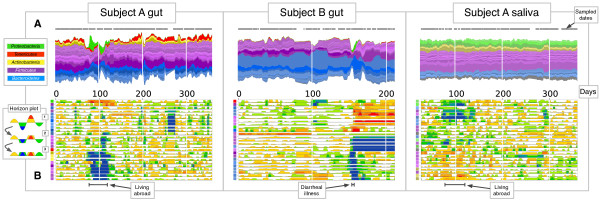
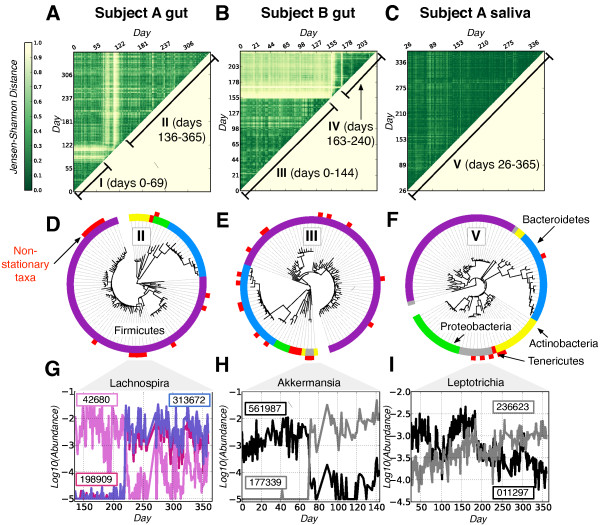
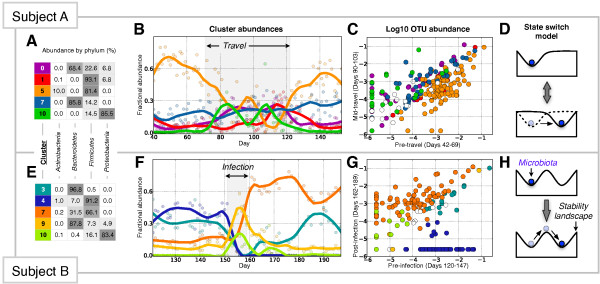
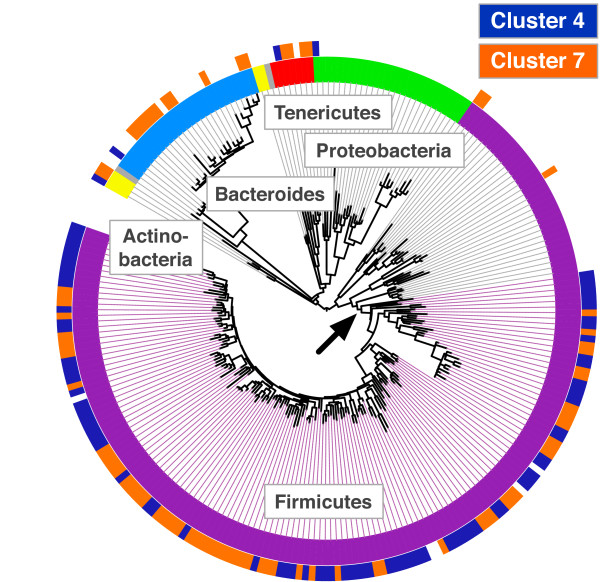
BACKGROUND: Disturbance to human microbiota may underlie several pathologies. Yet, we lack a comprehensive understanding of how lifestyle affects the dynamics of human-associated microbial communities. RESULTS: Here, we link over 10,000 longitudinal measurements of human wellness and action to the daily gut and salivary microbiota dynamics of two individuals over the course of one year. These time series show overall microbial communities to be stable for months. However, rare events in each subjects’ life rapidly and broadly impacted microbiota dynamics. Travel from the developed to the developing world in one subject led to a nearly two-fold increase in the Bacteroidetes to Firmicutes ratio, which reversed upon return. Enteric infection in the other subject resulted in the permanent decline of most gut bacterial taxa, which were replaced by genetically similar species. Still, even during periods of overall community stability, the dynamics of select microbial taxa could be associated with specific host behaviors. Most prominently, changes in host fiber intake positively correlated with next-day abundance changes among 15% of gut microbiota members. CONCLUSIONS: Our findings suggest that although human-associated microbial communities are generally stable, they can be quickly and profoundly altered by common human actions and experiences.
Overview
The claims and statistics of this paper haven’t been checked yet.
Run the check — free, no account needed. It reads the open-access text and checks the sources it cites.
Integrity signals
Registry
Cites
Statistics
Figures
Verification
Claims the paper makes
The claims and statistics of this paper haven’t been checked yet.
Run the check — free, no account needed. It reads the open-access text and checks the sources it cites.
Claims other papers make about this one
Each is checked against this paper’s own text: does it say what the citing paper says it does?
The source backs part of the claim, not all of it — or backs it for a different population, condition or comparison.
In the citing paper
“Short-term, dramatic dietary interventions have demonstrated the ability to alter microbiota diversity quickly in humans [5].”
From Effect of Diet on the Gut Microbiota: Rethinking Intervention Duration (2019) · cites this paper as [5]
Experimental — accuracy not yet measuredIn the citing paper
“Likewise, mouse models have indicated that manipulation of macronutrient intake can consistently shift the composition of the gut microbiota within the span of a day [5,6,18,19].”
From Effect of Diet on the Gut Microbiota: Rethinking Intervention Duration (2019) · cites this paper as [5]
In the citing paper
“One longitudinal study involving daily gut microbiota investigations of two individuals over the course of a year found that changes in fibre intake are positively correlated with a change in abundance of 15% of the microbial community the following day [5].”
From Effect of Diet on the Gut Microbiota: Rethinking Intervention Duration (2019) · cites this paper as [5]
Self-check
Percentages, sums and reported differences re-computed from the paper’s own numbers.
The self-check needs the paper’s full text.
Citations
Cites
QIIME allows analysis of high-throughput community sequencing data
Caporaso, J. G., Kuczynski, J., Stombaugh, J., Bittinger, K., Bushman, F. D., Costello, E. K., Fierer, N., Peña, A. G., Goodrich, J. K., Gordon, J. I., et al. (2010) · Nature Methods · doi:10.1038/nmeth.f.303 · Cited by 34,887
Search and clustering orders of magnitude faster than BLAST
Edgar, R. C. (2010) · Bioinformatics · doi:10.1093/bioinformatics/btq461 · Cited by 21,098
An obesity-associated gut microbiome with increased capacity for energy harvest
Turnbaugh, P. J., Ley, R. E., Mahowald, M. A., Magrini, V., Mardis, E. R., & Gordon, J. I. (2006) · Nature · doi:10.1038/nature05414 · Cited by 12,444
Greengenes, a Chimera-Checked 16S rRNA Gene Database and Workbench Compatible with ARB
DeSantis, T. Z., Hugenholtz, P., Larsen, N., Rojas, M., Brodie, E. L., Keller, K., Huber, T., Dalevi, D., Hu, P., & Andersen, G. L. (2006) · Applied and Environmental Microbiology · doi:10.1128/aem.03006-05 · Cited by 10,891
Diet rapidly and reproducibly alters the human gut microbiome
David, L. A., Maurice, C. F., Carmody, R. N., Gootenberg, D. B., Button, J. E., Wolfe, B. E., Ling, A. V., Devlin, A. S., Varma, Y., Fischbach, M. A., et al. (2014) · Nature · doi:10.1038/nature12820 · Cited by 10,100
Self-citationGlobal patterns of 16S rRNA diversity at a depth of millions of sequences per sample
Caporaso, J. G., Lauber, C. L., Walters, W. A., Berg-Lyons, D., Lozupone, C., Turnbaugh, P. J., Fierer, N., & Knight, R. D. (2010) · Proceedings of the National Academy of Sciences · doi:10.1073/pnas.1000080107 · Cited by 9,944
Human gut microbes associated with obesity
Ley, R. E., Turnbaugh, P. J., Klein, S., & Gordon, J. I. (2006) · Nature · doi:10.1038/4441022a · Cited by 8,785
Human gut microbiome viewed across age and geography
Yatsunenko, T., Rey, F. E., Manary, M. J., Trehan, I., Dominguez-Bello, M. G., Contreras, M., Magris, M., Hidalgo, G., Baldassano, R. N., Anokhin, A. P., et al. (2012) · Nature · doi:10.1038/nature11053 · Cited by 7,815
Statsmodels: Econometric and Statistical Modeling with Python
Seabold, S., & Perktold, J. (2010) · Proceedings of the Python in Science Conferences · doi:10.25080/majora-92bf1922-011 · Cited by 6,968
Linking long-term dietary patterns with gut microbial enterotypes
Wu, G. D., Chen, J., Hoffmann, C., Bittinger, K., Chen, Y.-Y., Keilbaugh, S. A., Bewtra, M., Knights, D., Walters, W. A., Knight, R., et al. (2011) · Science · doi:10.1126/science.1208344 · Cited by 6,513
Cited by
Sorted by citations
Items 401–500 of 951
Flavanol plasma bioavailability is affected by metabolic syndrome in rats
Margalef, M., Pons, Z., Iglesias‐Carres, L., Bravo, F. I., Muguerza, B., & Arola‐Arnal, A. (2017) · Food Chemistry · doi:10.1016/j.foodchem.2017.03.141 · Cited by 30
Quantification of Human Microbiome Stability Over 6 Months: Implications for Epidemiologic Studies
Sinha, R. R., Goedert, J. J., Vogtmann, E., Hua, X., Porras, C., Hayes, R. B., Safaeian, M., Yu, G., Sampson, J. N., Ahn, J., et al. (2018) · American Journal of Epidemiology · doi:10.1093/aje/kwy064 · Cited by 29
Reasoner, S. A., Bernard, R., Waalkes, A., Penewit, K. M., Lewis, J. D., Sokolow, A. G., Brown, R. F., Edwards, K. M., Salipante, S. J., Hadjifrangiskou, M., et al. (2024) · mBio · doi:10.1128/mbio.01935-23 · Cited by 29
Unraveling the human salivary microbiome diversity in Indian populations
Sarkar, A., Stoneking, M., & Nandineni, M. R. (2017) · PLoS ONE · doi:10.1371/journal.pone.0184515 · Cited by 29
Probabilistic adaptation in changing microbial environments
Yarden Katz, A., & Springer, M. (2016) · PeerJ · doi:10.7717/peerj.2716 · Cited by 27
Robert, C., Buisson, C., Laugerette, F., Abrous, H., Rainteau, D. P., Humbert, L., van de Weghe, J., Meugnier, E., Loizon, E., Caillet, F., et al. (2021) · Molecular Nutrition & Food Research · doi:10.1002/mnfr.202001068 · Cited by 29
The oral microbiome in relation to pancreatic cancer risk in African Americans
Petrick, J. L., Wilkinson, J. E., Michaud, D. S., Cai, Q., Gerlovin, H., Signorello, L. B., Wolpin, B. M., Ruiz-Narváez, E., Long, J., Yang, Y., et al. (2021) · British Journal of Cancer · doi:10.1038/s41416-021-01578-5 · Cited by 27
Haldar, S., Jadhav, S. R., Gulati, V., Beale, D. J., Balkrishna, A., Varshney, A., Palombo, E. A., Karpe, A. V., & Shah, R. (2023) · FEMS Microbiology Ecology · doi:10.1093/femsec/fiad103 · Cited by 32
“…lifetime, whereas the acquired microbiome is dynamic and str ongl y sha ped by factors suc h as a ge (Za pata and Qua gliar ello 2015 ), diet (David et al. 2014 ), lifestyle (Song et al. 2020 ), tr av el (Voorhies and Lorenzi 2016 ), geography (Yatsunenko et al. 2012 ), hormonal cycles…”
A glance at … dietary emulsifiers, the human intestinal mucus and microbiome, and dietary fiber
Glade, M. J., & Meguid, M. M. (2015) · Nutrition · doi:10.1016/j.nut.2015.12.036 · Cited by 28
Ananke: temporal clustering reveals ecological dynamics of microbial communities
Hall, M., Rohwer, R. R., Perrie, J., McMahon, K. D., & Beiko, R. G. (2017) · PeerJ · doi:10.7717/peerj.3812 · Cited by 28
Longitudinal Characterization of the Gut Bacterial and Fungal Communities in Yaks
Wang, Y., Fu, Y., He, Y., Kulyar, M. F., Iqbal, M., Li, K., & Liu, J. (2021) · Journal of Fungi · doi:10.3390/jof7070559 · Cited by 27
“Several studies have shown that the animal’s gut microbiota fluctuates during early development and reaches stability after maturity [20,21].”
BackgroundGut Microbiota–Informed Precision Nutrition in the Generally Healthy Individual: Are We There Yet?
Nogal, B., Blumberg, J. B., Blander, G., & Jorge, M. (2021) · Current Developments in Nutrition · doi:10.1093/cdn/nzab107 · Cited by 32
“(33) undertook such an exercise in mapping the effects of 10,000 longitudinal human wellness measurements to daily gut and salivary microbiota shifts through a period of 1 y for 2 individuals.”
BackgroundGuo, S., Wu, G., Liu, W., Fan, Y., Song, W., Wu, J., Gao, D., Gu, X. J., Jing, S., Shen, Q., et al. (2022) · Bioscience Reports · doi:10.1042/bsr20210694 · Cited by 27
Inferring microbial interaction networks from metagenomic data using SgLV-EKF algorithm
AlShawaqfeh, M. K., Serpedin, E., & Younes, A. B. (2017) · BMC Genomics · doi:10.1186/s12864-017-3605-x · Cited by 26
“Popular methodologies for constructing similarity-based networks are the correlation coefficient and local similarity analysis (LSA) [18–22].”
MethodGrieneisen, L., Blekhman, R., & Archie, E. A. (2023) · Gut Microbes · doi:10.1080/19490976.2023.2178797 · Cited by 29
Interest of bacterial pangenome analyses in clinical microbiology
Anani, H., Zgheib, R., Hasni, I., Raoult, D., & Fournier, P. (2020) · Microbial Pathogenesis · doi:10.1016/j.micpath.2020.104275 · Cited by 28
Omori, M., Kato‐Kogoe, N., Sakaguchi, S., Fukui, N., Yamamoto, K., Nakajima, Y., Inoue, K., Nakano, H., Motooka, D., Nakano, T., et al. (2020) · Clinical Oral Investigations · doi:10.1007/s00784-020-03592-y · Cited by 28
The crewed journey to Mars and its implications for the human microbiome
Kuehnast, T., Abbott, C., Pausan, M.-R., Pearce, D. A., Moissl‐Eichinger, C., & Mahnert, A. (2022) · Microbiome · doi:10.1186/s40168-021-01222-7 · Cited by 26
“We suggest that the microbiome should be monitored daily at least for 14 days, which is the duration of a perturbed microbiome then tending to reconstitute back to the initial state [10].”
BackgroundMcLeod, A., Bernabé, B. P., Xia, Y., Sanchez-Flack, J., Lamar, M., Schiffer, L. A., Castellanos, K., Fantuzzi, G., Maki, P. M., Fitzgibbon, M., et al. (2023) · PLoS ONE · doi:10.1371/journal.pone.0280211 · Cited by 27
Sasaki, H., Hayashi, K., Imamura, M., Hirota, Y., Hosoki, H., Nitta, L., Furutani, A., & Shibata, S. (2023) · The Journal of Nutritional Biochemistry · doi:10.1016/j.jnutbio.2023.109420 · Cited by 29
Lim, J. J., Diener, C., Wilson, J. G., Valenzuela, J. J., Baliga, N. S., & Gibbons, S. M. (2023) · Nature Communications · doi:10.1038/s41467-023-41424-1 · Cited by 24
“Prior work demonstrated that macronutrient intake within an individual is largely stable over time and does not show signi fi cant autocorrelation or drift 15,48 .”
The gut-heart axis: unveiling the roles of gut microbiota in cardiovascular diseases
Zhang, Y., Wu, H., Jin, M., Feng, G., & Wang, S. (2025) · Frontiers in Cardiovascular Medicine · doi:10.3389/fcvm.2025.1572948 · Cited by 30
The intricate connection between diet, microbiota, and cancer: A jigsaw puzzle
Arkan, M. C. (2017) · Seminars in Immunology · doi:10.1016/j.smim.2017.08.009 · Cited by 25
Khairudin, M. A. S., Jalil, A. M. M., & Hussin, N. (2021) · Gastroenterology Insights · doi:10.3390/gastroent12020018 · Cited by 26
“A previous study showed that body weight and dramatic dietary patterns might affect the gut microbiota composition [94,95].”
BackgroundLiu, Y., He, W., Yang, J., He, Y., Wang, Z., & Li, K. (2021) · BMC Gastroenterology · doi:10.1186/s12876-021-02035-6 · Cited by 27
“Considering that the intestinal microflora may fluctuate physiologically daily [21], normal or slightly decreased intestinal microflora were classified as grade 1 in this study.”
BackgroundSommer, A., Peters, A., Rommel, M., Cyrys, J., Grallert, H., Haller, D., Müller, C. L., & Bind, M. (2022) · PLoS Computational Biology · doi:10.1371/journal.pcbi.1010044 · Cited by 26
“Although dietary interventions [4], pathogen infections [5], and antibiotics use [6] can trigger rapid changes of gut microbial compositions and can lead to dysbiotic disruptions of host-microbiome interactions, the long-term impact of environmental exposures on the human gut microbiome remains poorly understood.”
BackgroundDacrema, M., Ali, A., Ullah, H., Khan, A., Minno, A. D., Xiao, J., Martins, A. M. C., & Daglia, M. (2022) · Cancers · doi:10.3390/cancers14225682 · Cited by 27
COVID-19 Crisis Creates Opportunity towards Global Monitoring & Surveillance
Donia, A., Hassan, S.-U., Zhang, X., Al-Madboly, L. A., & Bokhari, H. (2021) · Pathogens · doi:10.3390/pathogens10030256 · Cited by 24
“It is a well-known fact that the composition of the human gut microbiome or virome alters due to various factors [240,241] as well as with the passage of the disease [242].”
BackgroundMcDonald, D. T., Hornig, M., Lozupone, C., Debelius, J. W., Gilbert, J. A., & Knight, R. D. (2015) · Microbial Ecology in Health and Disease · doi:10.3402/mehd.v26.26555 · Cited by 26
“pling durations as long as a year (50, 51), and a recent study”
BackgroundLinking microbiome temporal dynamics to host ecology in the wild
Marsh, K. J., Bearhop, S., & Harrison, X. A. (2024) · Trends in Microbiology · doi:10.1016/j.tim.2024.05.001 · Cited by 25
Dynamic coexistence driven by physiological transitions in microbial communities
Narla, A. V., Terence Hwa, B., & Murugan, A. (2025) · Proceedings of the National Academy of Sciences · doi:10.1073/pnas.2405527122 · Cited by 24
Longitudinal saliva omics responses to immune perturbation: a case study
Mias, G. I., Singh, V. V., Rogers, L. R. K., Xue, S., Zheng, M., Domanskyi, S., Kanada, M., Piermarocchi, C., & He, J. (2021) · Scientific Reports · doi:10.1038/s41598-020-80605-6 · Cited by 24
Russo, E., Nannini, G., Sterrantino, G., Kiros, S. T., Pilato, V. D., Coppi, M., Baldi, S., Niccolai, E., Ricci, F., Ramazzotti, M., et al. (2022) · World Journal of Gastroenterology · doi:10.3748/wjg.v28.i6.635 · Cited by 26
Advanced Organotypic In Vitro Model Systems for Host–Microbial Coculture
Kim, R. (2023) · BioChip Journal · doi:10.1007/s13206-023-00103-5 · Cited by 26
“Gut microbiomes in healthy adults are relatively more stable than skin and vaginal microbiomes [24].”
BackgroundOral Microbiota: A New Insight into Cancer Progression, Diagnosis and Treatment
Wang, X., Xu, H.-W., & Liu, N. (2023) · Phenomics · doi:10.1007/s43657-023-00124-y · Cited by 28
“…manner, can help decrease the relative abundance of dental pathogens, while incorrect oral care may disrupt the oral microbiota homeostasis, thus leading to deterioration of the oral cavity micro-environment and even causing diseases (Corby et al. 2008; David et al. 2014a; Adams et al. 2017).”
BackgroundFrickmann, H., Podbielski, A., & Kreikemeyer, B. (2018) · BioMed Research International · doi:10.1155/2018/9395420 · Cited by 24
Historical DNA Metabarcoding of the Prey and Microbiome of Trematomid Fishes Using Museum Samples
Heindler, F. M., Christiansen, H., Frédérich, B., Dettaı̈, A., Lepoint, G., Maes, G. E., de Putte, A. V., & Volckaert, F. A. M. (2018) · Frontiers in Ecology and Evolution · doi:10.3389/fevo.2018.00151 · Cited by 24
Diurnal and eating-associated microbial patterns revealed via high-frequency saliva samplingPreprint
Hu, Y., Amir, A., Huang, X., Li, Y., Huang, S. W., Wolfe, E., Weiss, S. J., Knight, R. D., & Xu, Z. Z. (2022) · Genome Research · doi:10.1101/gr.276482.121 · Cited by 24
Heritability Studies: Methodological Flaws, Invalidated Dogmas, and Changing Paradigms
BURT, C. H. (2015) · Emerald Group Publishing Limited eBooks · doi:10.1108/s1057-629020150000016002 · Cited by 24
Krüger, K., Myeonghyun, Y., van der Wielen, N., Kok, D. E. G., Hooiveld, G. J. E. J., Keshtkar, S., Bruin, M. D.-D., Balvers, M. G. J., Grootte-Bromhaar, M., Mudde, K., et al. (2024) · Scientific Reports · doi:10.1038/s41598-024-75477-z · Cited by 27
Gupta, S., Ray, S., Khan, A., China, A., Das, D., & Mallick, A. I. (2021) · iScience · doi:10.1016/j.isci.2021.103507 · Cited by 23
Larsen, O. F. A., & van de Burgwal, L. (2021) · Frontiers in Microbiology · doi:10.3389/fmicb.2021.784797 · Cited by 22
Charalambous, E. G., Mériaux, S. B., Guébels, P., Muller, C. P., Leenen, F. A. D., Elwenspoek, M. M. C., Thiele, I., Hertel, J., & Turner, J. D. (2021) · International Journal of Molecular Sciences · doi:10.3390/ijms222312682 · Cited by 23
“The oral microbiome (OM) is composed of various distinct, smaller communities within the oral cavity [37–41] that are robust, stable, and particularly resilient [42,43], particularly to antibiotic therapy [43–47].”
BackgroundDuan, N., Norman, D., Schmid, C. H., Sim, I., & Kravitz, R. L. (2022) · Harvard Data Science Review · doi:10.1162/99608f92.8439a336 · Cited by 24
The Gut Microbiome, Microsatellite Status and the Response to Immunotherapy in Colorectal Cancer
Sillo, T. O., Beggs, A. D., Middleton, G., & Akingboye, A. A. (2023) · International Journal of Molecular Sciences · doi:10.3390/ijms24065767 · Cited by 25
“There is a bidirectional interaction between the gut microbiome and the host’s genetics [3], with added interactions from environmental factors, lifestyle and dietary changes [4].”
BackgroundHuang, J., Gong, C., & Zhou, A. (2023) · Therapeutic Advances in Medical Oncology · doi:10.1177/17588359231204854 · Cited by 30
Gut-Brain Axis Deregulation and Its Possible Contribution to Neurodegenerative Disorders
Villavicencio-Tejo, F., Olesen, M. A., Navarro, L., Calisto, N., Iribarren, C., GARCÍA, K. P., Corsini, G., & Quintanilla, R. A. (2023) · Neurotoxicity Research · doi:10.1007/s12640-023-00681-0 · Cited by 24
“Dysbiosis tends to persist and can manifest in various compositional profiles depending on the triggering factor (David et al. 2014).”
Can intestinal microbiota be associated with non-intestinal cancers?
Jacqueline, C. M., Brazier, L., Faugère, D., Renaud, F., Frédéric Thomas, A., & Roche, B. (2017) · Scientific Reports · doi:10.1038/s41598-017-11644-9 · Cited by 23
Finn, K., Jacquier, E. F., Kineman, B. D., Storm, H. M., & Carvalho, R. S. (2019) · BMC Pediatrics · doi:10.1186/s12887-019-1822-y · Cited by 23
Metagenomic investigation of faecal microbiota in sheep and goats of the same ages
Shabana, I., Albakri, N. N., & Bouqellah, N. A. (2020) · Journal of Taibah University for Science · doi:10.1080/16583655.2020.1864930 · Cited by 23
Self-tracking the microbiome: where do we go from here?
Gimbert, C., & Lapointe, F. (2015) · Microbiome · doi:10.1186/s40168-015-0138-x · Cited by 23
“gut (and oral) microbiome on a daily timescale [43].”
BackgroundŠket, R., Treichel, N. S., Kublik, S., Debevec, T., Eiken, O., Mekjavić, I. B., Schloter, M., Vital, M., Chandler, J., Tiedje, J. M., et al. (2017) · PLoS ONE · doi:10.1371/journal.pone.0188556 · Cited by 22
“Firstly, the sample size in this study was relatively small, but well within the limits of recent detailed studies [49,51,64].”
BackgroundResultMDPbiome: microbiome engineering through prescriptive perturbations
García-Jiménez, B., de la Rosa, T., & Wilkinson, M. D. (2018) · Bioinformatics · doi:10.1093/bioinformatics/bty562 · Cited by 23
Are the gut microbial systems of giant pandas unstable?
Yao, R., Yang, Z., Zhang, Z., Hu, T., Chen, H., Huang, F., Gu, X., Yang, X., Lu, G., & Zhu, L. (2019) · Heliyon · doi:10.1016/j.heliyon.2019.e02480 · Cited by 22
“One of the most striking aspects of these complex communities in humans is the long-term stability seen in healthy individuals, whereby the composition of the microbiome shows remarkable permanence (Lozupone et al., 2012; Faith et al., 2013; David et al., 2014; Gerber, 2014; Weingarden et al., 2015; McNally and Brown,…”
BackgroundResultThe microbial abundance dynamics of the paediatric oral cavity before and after sleep
Carlson-Jones, J. A. P., Kontos, A., Kennedy, D., Martin, J., Lushington, K., McKerral, J. C., Paterson, J. S., Smith, R. J., Dann, L. M., Speck, P. G., et al. (2020) · Journal of Oral Microbiology · doi:10.1080/20002297.2020.1741254 · Cited by 22
Modelling the effect of birth and feeding modes on the development of human gut microbiota
Xiong, X., Loo, S. L., Zhang, L., & Tanaka, M. M. (2021) · Proceedings of the Royal Society B Biological Sciences · doi:10.1098/rspb.2020.1810 · Cited by 22
Resilience of small intestinal beneficial bacteria to the toxicity of soybean oil fatty acids
Rienzi, S. C. D., Jacobson, J., Kennedy, E. A., Bell, M. E., Shi, Q., Waters, J. L., Lawrence, P., Brenna, J. T., Britton, R. A., Walter, J., et al. (2018) · eLife · doi:10.7554/elife.32581 · Cited by 21
Statistical Considerations in the Design and Analysis of Longitudinal Microbiome StudiesPreprint
Silverman, J. D., Shenhav, L., Halperin, E., Mukherjee, S., & David, L. A. (2018) · bioRxiv (Cold Spring Harbor Laboratory) · doi:10.1101/448332 · Cited by 24
Implications of taxonomic bias for microbial differential-abundance analysisPreprint
McLaren, M. R., Nearing, J. T., Willis, A. D., Lloyd, K. G., & Callahan, B. J. (2022) · bioRxiv (Cold Spring Harbor Laboratory) · doi:10.1101/2022.08.19.504330 · Cited by 21
“A related approach involves computationally identifying species that are constant between pairs of samples (David et al. (2014)) or between sample conditions (Mandal et al. (2015), Kumar et al.”
BackgroundInfluentialHow aging influences the gut-bone marrow axis and alters hematopoietic stem cell regulation
Wells, C., Robertson, T., Sheth, P. M., & Abraham, S. A. (2024) · Heliyon · doi:10.1016/j.heliyon.2024.e32831 · Cited by 22
“The adult gut can be influenced by various factors including their diet, lifestyle, environment, disease state, and treatment with antibiotics [17].”
BackgroundEffect of diet on the evolution of gut commensal bacteria
Đapa, T., & Xavier, K. B. (2024) · Gut Microbes · doi:10.1080/19490976.2024.2369337 · Cited by 23
“32,33,64 Additionally, in terms of species composition, the apparent microbiota stability might be hiding intra-species variations that can be important to maintain the diversity and functional robustness in response to constant perturbations.”
BackgroundShin, S. Y., Hussain, Z., Lee, Y. J., & Park, H. (2020) · Neurogastroenterology & Motility · doi:10.1111/nmo.13966 · Cited by 21
Zaoli, S., & Grilli, J. (2022) · PLoS Computational Biology · doi:10.1371/journal.pcbi.1010043 · Cited by 19
“Individuals A and B from [18] both undergo a period of strong disturbance to their gut flora due, respectively, to two diarrhoea episodes during a travel abroad and a Salmonella infection.”
The holobiont mind: A bridge between 4E cognition and the microbiome
Palacios-García, I., & Parada, F. J. (2021) · Adaptive Behavior · doi:10.1177/10597123211053071 · Cited by 21
“Although human microbiota relatively stabilizes during adulthood, it is still susceptible to lifestyle and environment-dependent modifications, influencing health and disease (David et al., 2014; Manor et al., 2020; McDonald et al., 2018).”
BackgroundLinking Migraine to Gut Dysbiosis and Chronic Non-Communicable Diseases
Lauro, M. D., Guerriero, C., Cornali, K., Albanese, M., Costacurta, M., Mercuri, N. B., Daniele, N. D., & Noce, A. (2023) · Nutrients · doi:10.3390/nu15204327 · Cited by 24
“The second ones are deduced from the scientific studies that suggest that nutritional approaches, use of probiotics, and stimulation of the vagus nerve can represent new therapeutic strategies for migraine, based on gut microbiota modulation [99–101].”
BackgroundLatent environment allocation of microbial community data
Higashi, K., Suzuki, S., Kurosawa, S., Mori, H., & Kurokawa, K. (2018) · PLoS Computational Biology · doi:10.1371/journal.pcbi.1006143 · Cited by 20
Dissimilarity–Overlap analysis of replicate enrichment communities
Vila, J. C. C., Liu, Y., & Sánchez, Á. (2020) · The ISME Journal · doi:10.1038/s41396-020-0702-7 · Cited by 22
Park, C., Yun, K., Chu, J. M., Lee, J. Y., Hong, C. P., Nam, Y. D., Jeong, J.-U., Han, K., & Ahn, Y. J. (2020) · The Journal of Microbiology · doi:10.1007/s12275-020-0092-6 · Cited by 21
Edelstein, C. A., Kassam, Z., Daw, J. R., Smith, M. B., & Kelly, C. R. (2015) · Clinical Research and Regulatory Affairs · doi:10.3109/10601333.2015.1046602 · Cited by 20
“However, given stool’s variability and complexity, without defining the mechanistic components of fecal microbiota for treating disease, it is conceivable to consider the entire life history of the donor relevant to the ‘‘manufacturing process’’ (28).”
BackgroundHost genetics is associated with the gut microbial community membership rather than the structure
Zhao, P., Irwin, D. M., & Dong, D. (2016) · Molecular BioSystems · doi:10.1039/c5mb00850f · Cited by 21
Stamps, B. W., Lyon, W. J., Irvin, A. P., Kelley‐Loughnane, N., & Goodson, M. S. (2020) · Frontiers in Cellular and Infection Microbiology · doi:10.3389/fcimb.2020.589297 · Cited by 18
Arbas, S. M., Busi, S. B., Queirós, P., de Nies, L., Herold, M., May, P., Wilmes, P., Muller, E. E. L., & Narayanasamy, S. (2021) · Frontiers in Genetics · doi:10.3389/fgene.2021.666244 · Cited by 25
A Modern-World View of Host–Microbiota–Pathogen Interactions
Tan, C. Y., Ramirez, Z. E., & Surana, N. K. (2021) · The Journal of Immunology · doi:10.4049/jimmunol.2100215 · Cited by 24
Hoang, T., Kim, M. J., Park, J. W., Jeong, S., Lee, J., & Shin, A. (2022) · BMC Cancer · doi:10.1186/s12885-022-09735-6 · Cited by 20
Emerging methods of human microbiome analysis and its forensic applications: Review
Singh, A. A., & Okpeku, M. (2024) · Forensic Science International Reports · doi:10.1016/j.fsir.2024.100355 · Cited by 20
Animal host–microbe interactions
Hoye, B. J., & Fenton, A. (2018) · Journal of Animal Ecology · doi:10.1111/1365-2656.12788 · Cited by 20
O’Donovan, C. M., Connor, B., Madigan, S. M., Cotter, P. D., & Sullivan, O. O. (2020) · Travel Medicine and Infectious Disease · doi:10.1016/j.tmaid.2020.101553 · Cited by 20
Pesoa, S., Portela, N. D., Fernández, E., Elbarcha, O. C., Gotteland, M., & Magne, F. (2021) · Scientific Reports · doi:10.1038/s41598-021-87365-x · Cited by 18
Usefulness of Microbiome for Forensic Geolocation: A Review
Haarkötter, C., Saiz, M., Gálvez, X., Medina‐Lozano, M. I., Álvarez, J. C., & Lorente, J. A. (2021) · Life · doi:10.3390/life11121322 · Cited by 19
“In vivo microbiome bias [63] In vivo microbiota can be a consequence not of the geographic place, but of certain sociodemographic aspects linked to culture or inequalities.”
BackgroundThe gut microbiome and obstructive sleep apnea syndrome in children
Liu, W., Du, Q., Zhang, H., & Han, D. (2022) · Sleep Medicine · doi:10.1016/j.sleep.2022.09.022 · Cited by 21
Impact of High Salt-Intake on a Natural Gut Ecosystem in Wildling Mice
Cardilli, A., Hamad, I., Dyczko, A., Thijs, S., Vangronsveld, J., Müller, D. N., Rosshart, S. P., & Kleinewietfeld, M. (2023) · Nutrients · doi:10.3390/nu15071565 · Cited by 19
Structured community transitions explain the switching capacity of microbial systems
Long, C., Deng, J., Nguyen, J., Liu, Y.-Y., Alm, E. J., Solé, R., & Saavedra, S. (2024) · Proceedings of the National Academy of Sciences · doi:10.1073/pnas.2312521121 · Cited by 19
Self-citationGeography and postgenomics: how space and place are the new DNA
Stallins, J. A., Law, D. M., Strosberg, S. A., & Rossi, J. J. (2016) · GeoJournal · doi:10.1007/s10708-016-9763-6 · Cited by 21
Qian, G., & Ho, J. W. K. (2020) · Biophysical Reviews · doi:10.1007/s12551-020-00724-2 · Cited by 20
A single serving of mixed spices alters gut microflora composition: a dose–response randomised trial
Khine, W. W. T., Haldar, S., Loi, S. D., & Lee, Y. K. (2021) · Scientific Reports · doi:10.1038/s41598-021-90453-7 · Cited by 21
Maringanti, V. S., Bucci, V., & Gerber, G. K. (2022) · mSystems · doi:10.1128/msystems.00132-22 · Cited by 19
“Although the microbiome is more stable in adulthood, it continues to undergo significant changes over time due to diet (5, 6), travel (7), antibiotic use (8), infection (7), gut inflammation (9), and a variety of other factors.”
BackgroundThe importance of host physical niches for the stability of gut microbiome composition
Ludington, W. B. (2024) · Philosophical Transactions of the Royal Society B Biological Sciences · doi:10.1098/rstb.2023.0066 · Cited by 18
Rules of the game for microbiota
Faust, K., & Raes, J. (2016) · Nature · doi:10.1038/534182a · Cited by 18
How stable is the human gut microbiota? And why this question matters
Brüssow, H. (2016) · Environmental Microbiology · doi:10.1111/1462-2920.13473 · Cited by 19
Consequences of colonialism: A microbial perspective to contemporary Indigenous health
Skelly, E., Kapellas, K., Cooper, A., & Weyrich, L. S. (2018) · American Journal of Physical Anthropology · doi:10.1002/ajpa.23637 · Cited by 17
Zheng, W., Wang, K., Sun, Y., & Kuo, S. (2018) · PLoS ONE · doi:10.1371/journal.pone.0205055 · Cited by 18
A gut feeling about the ketogenic diet in epilepsy
Pittman, Q. J. (2020) · Epilepsy Research · doi:10.1016/j.eplepsyres.2020.106409 · Cited by 20
Bioarchaeology of the Human Microbiome
Velsko, I. M., & Warinner, C. (2017) · Bioarchaeology International · doi:10.5744/bi.2017.1004 · Cited by 19
Dietary Effects on the Gut Phageome
Howard, A., Carroll‐Portillo, A., Alcock, J., & Lin, H. C. (2024) · International Journal of Molecular Sciences · doi:10.3390/ijms25168690 · Cited by 18
“Dietary changes have rapid and powerful effects on the microbial ecology of the GI system [66–68].”
BackgroundHigh altitude as a possible factor for dysbiosis of salivary microbiome in orthodontic patients
Alshahrani, I., Hosmani, J., Alshahrani, A., Togoo, R. A., Syed, S., Yassin, S. M., Chandramoorthy, H. C. K., & Devaraj, A. (2020) · Archives of Oral Biology · doi:10.1016/j.archoralbio.2020.104917 · Cited by 17
Esgunoglu, L., Jennings, A., Connole, E. S., Murphy, K. J., & Minihane, A. M. (2021) · British Journal Of Nutrition · doi:10.1017/s0007114521002567 · Cited by 17
Shahin, M., Ji, B. W., & Dixit, P. D. (2023) · npj Systems Biology and Applications · doi:10.1038/s41540-023-00285-6 · Cited by 16
“t Ns t ð Þztk xos t ð Þ qos t ð Þ ð Þ (12)”
BackgroundGravdal, K., Kirste, K. H., Grzelak, K., Kirubakaran, G. T., Leissner, P., Saliou, A., & Casèn, C. (2023) · BMC Endocrine Disorders · doi:10.1186/s12902-023-01432-0 · Cited by 18
“Possible confounding fac - tors that ought to be controlled closely include medication-use, diet, and lifestyle [59–63].”
BackgroundRobust and automatic definition of microbiome states
García-Jiménez, B., & Wilkinson, M. D. (2019) · PeerJ · doi:10.7717/peerj.6657 · Cited by 19
What Is Known about Theragnostic Strategies in Colorectal Cancer
Parisi, A., Porzio, G., Pulcini, F., Cannita, K., Ficorella, C., Mattei, V., & Monache, S. D. (2021) · Biomedicines · doi:10.3390/biomedicines9020140 · Cited by 17
“Therefore, the integrated analysis of the gut microbiome and its interactions with the host, anticancer drugs, and other exogenous factors [7,139] is essential to improve the outcomes of CRC patients.”
Background
Metadata
- Authors
- David, L. A., Materna, A. C., Friedman, J., Campos-Baptista, M. I., Blackburn, M. C., Perrotta, A., Erdman, S. E., & Alm, E. J.
- Affiliations
- Harvard University (US)
- Qiagen (Denmark) (DK)
- Massachusetts Institute of Technology (US)
- École Polytechnique Fédérale de Lausanne (CH)
- Broad Institute (US)
- Corresponding author
- Alm, Eric J
- Venue
- Genome biology
- Published
- 2014-07-25
- Volume
- 15
- Issue
- 7
- Pages
- R89-R89
- ISSN
- 1465-6906 (ISSN-L)
- 1474-760X
- PMC
- PMC4405912
- OpenAlex
- W2103088074
- Cited by
- 950
- References
- 58
- Citations by year
- 2026: 27 · 2025: 60 · 2024: 74 · 2023: 80 · 2022: 117 · 2021: 95 · 2020: 105 · 2019: 85 · 2018: 85 · 2017: 98 · 2016: 65 · 2015: 52 · 2014: 5
- FWCI
- 30.09
- Type
- journal article
- Language
- en
- Update notices
- correction (2016-05-31)
- Open access
- gold
- doi.org
- Locations
- Genome biology (publishedVersion, cc-by)
- PubMed Central (publishedVersion, cc-by)
- PubMed (publishedVersion)
- DSpace@MIT (Massachusetts Institute of Technology) (submittedVersion, cc-by)
- DSpace@MIT (Massachusetts Institute of Technology) (submittedVersion, cc-by-nc)
- Infoscience (Ecole Polytechnique Fédérale de Lausanne) (submittedVersion)
- Infoscience (Ecole Polytechnique Fédérale de Lausanne) (submittedVersion, cc-by-nc-nd)
- Funders
- National Science Foundation (0821391)
- Topics
- Life Sciences › Biochemistry, Genetics and Molecular Biology › Molecular Biology › Gut microbiota and health
- Health Sciences › Dentistry › Periodontics › Oral microbiology and periodontitis research
- Physical Sciences › Environmental Science › Ecology › Microbial Community Ecology and Physiology
- Keywords
- human microbiota, gut microbiota, salivary microbiota, host lifestyle, microbiota dynamics, daily fluctuations, microbial community stability, Firmicutes/Bacteroidetes ratio, gastrointestinal infections, dietary fiber intake, host behavior
- MeSH terms
- Bacteria, Bacterial Infections, Developing Countries, Feces, Humans, Life Style, Longitudinal Studies, Male, Phylogeny, Saliva, Genetic Variation, Sequence Analysis, DNA, Developed Countries, High-Throughput Nucleotide Sequencing, Microbiota
About these checks
Registry, retraction, Cites and statistics results are computed, not judged, with one exception: a printed reference that no index lists is read once by a model before it counts as a citation error. Claims are extracted by a model and kept only when their quote appears verbatim in the text; each cited source is then checked, with a model’s help, for whether it says what the claim relies on. Those verdicts can be wrong — read the claim’s quote and the cited source before relying on one.
Statistics and arithmetic are recomputed, not judged.
Confidence bands are shown only for fields calibrated on our annotated test set. None is calibrated yet, so no band is shown.
What counts as a claim ›How we measure confidence ›How we check this ›
Are you an author, or do you see a problem with this page? Request a review
