

The DOI matches its Crossref record; 57 of the 58 references it cites were found in a registry or an index.
Host lifestyle affects human microbiota on daily timescales
Open accessAbstract
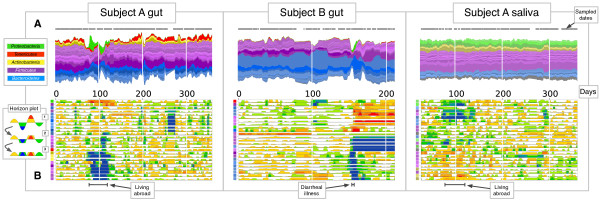
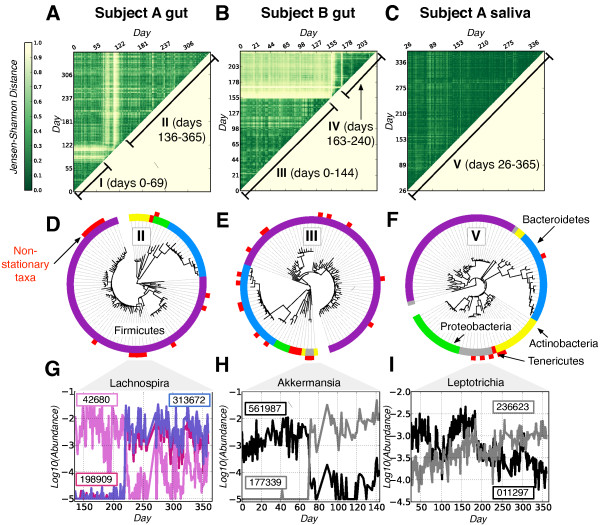
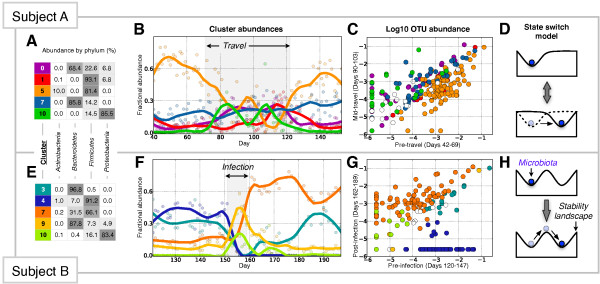
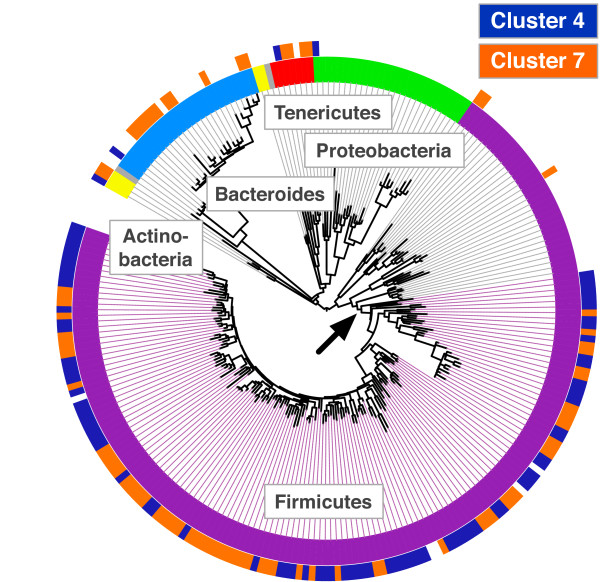
BACKGROUND: Disturbance to human microbiota may underlie several pathologies. Yet, we lack a comprehensive understanding of how lifestyle affects the dynamics of human-associated microbial communities. RESULTS: Here, we link over 10,000 longitudinal measurements of human wellness and action to the daily gut and salivary microbiota dynamics of two individuals over the course of one year. These time series show overall microbial communities to be stable for months. However, rare events in each subjects’ life rapidly and broadly impacted microbiota dynamics. Travel from the developed to the developing world in one subject led to a nearly two-fold increase in the Bacteroidetes to Firmicutes ratio, which reversed upon return. Enteric infection in the other subject resulted in the permanent decline of most gut bacterial taxa, which were replaced by genetically similar species. Still, even during periods of overall community stability, the dynamics of select microbial taxa could be associated with specific host behaviors. Most prominently, changes in host fiber intake positively correlated with next-day abundance changes among 15% of gut microbiota members. CONCLUSIONS: Our findings suggest that although human-associated microbial communities are generally stable, they can be quickly and profoundly altered by common human actions and experiences.
Overview
The claims and statistics of this paper haven’t been checked yet.
Run the check — free, no account needed. It reads the open-access text and checks the sources it cites.
Integrity signals
Registry
Cites
Statistics
Figures
Verification
Claims the paper makes
The claims and statistics of this paper haven’t been checked yet.
Run the check — free, no account needed. It reads the open-access text and checks the sources it cites.
Claims other papers make about this one
Each is checked against this paper’s own text: does it say what the citing paper says it does?
The source backs part of the claim, not all of it — or backs it for a different population, condition or comparison.
In the citing paper
“Short-term, dramatic dietary interventions have demonstrated the ability to alter microbiota diversity quickly in humans [5].”
From Effect of Diet on the Gut Microbiota: Rethinking Intervention Duration (2019) · cites this paper as [5]
Experimental — accuracy not yet measuredIn the citing paper
“Likewise, mouse models have indicated that manipulation of macronutrient intake can consistently shift the composition of the gut microbiota within the span of a day [5,6,18,19].”
From Effect of Diet on the Gut Microbiota: Rethinking Intervention Duration (2019) · cites this paper as [5]
In the citing paper
“One longitudinal study involving daily gut microbiota investigations of two individuals over the course of a year found that changes in fibre intake are positively correlated with a change in abundance of 15% of the microbial community the following day [5].”
From Effect of Diet on the Gut Microbiota: Rethinking Intervention Duration (2019) · cites this paper as [5]
Self-check
Percentages, sums and reported differences re-computed from the paper’s own numbers.
The self-check needs the paper’s full text.
Citations
Cites
QIIME allows analysis of high-throughput community sequencing data
Caporaso, J. G., Kuczynski, J., Stombaugh, J., Bittinger, K., Bushman, F. D., Costello, E. K., Fierer, N., Peña, A. G., Goodrich, J. K., Gordon, J. I., et al. (2010) · Nature Methods · doi:10.1038/nmeth.f.303 · Cited by 34,887
Search and clustering orders of magnitude faster than BLAST
Edgar, R. C. (2010) · Bioinformatics · doi:10.1093/bioinformatics/btq461 · Cited by 21,098
An obesity-associated gut microbiome with increased capacity for energy harvest
Turnbaugh, P. J., Ley, R. E., Mahowald, M. A., Magrini, V., Mardis, E. R., & Gordon, J. I. (2006) · Nature · doi:10.1038/nature05414 · Cited by 12,444
Greengenes, a Chimera-Checked 16S rRNA Gene Database and Workbench Compatible with ARB
DeSantis, T. Z., Hugenholtz, P., Larsen, N., Rojas, M., Brodie, E. L., Keller, K., Huber, T., Dalevi, D., Hu, P., & Andersen, G. L. (2006) · Applied and Environmental Microbiology · doi:10.1128/aem.03006-05 · Cited by 10,891
Diet rapidly and reproducibly alters the human gut microbiome
David, L. A., Maurice, C. F., Carmody, R. N., Gootenberg, D. B., Button, J. E., Wolfe, B. E., Ling, A. V., Devlin, A. S., Varma, Y., Fischbach, M. A., et al. (2014) · Nature · doi:10.1038/nature12820 · Cited by 10,100
Self-citationGlobal patterns of 16S rRNA diversity at a depth of millions of sequences per sample
Caporaso, J. G., Lauber, C. L., Walters, W. A., Berg-Lyons, D., Lozupone, C., Turnbaugh, P. J., Fierer, N., & Knight, R. D. (2010) · Proceedings of the National Academy of Sciences · doi:10.1073/pnas.1000080107 · Cited by 9,944
Human gut microbes associated with obesity
Ley, R. E., Turnbaugh, P. J., Klein, S., & Gordon, J. I. (2006) · Nature · doi:10.1038/4441022a · Cited by 8,785
Human gut microbiome viewed across age and geography
Yatsunenko, T., Rey, F. E., Manary, M. J., Trehan, I., Dominguez-Bello, M. G., Contreras, M., Magris, M., Hidalgo, G., Baldassano, R. N., Anokhin, A. P., et al. (2012) · Nature · doi:10.1038/nature11053 · Cited by 7,815
Statsmodels: Econometric and Statistical Modeling with Python
Seabold, S., & Perktold, J. (2010) · Proceedings of the Python in Science Conferences · doi:10.25080/majora-92bf1922-011 · Cited by 6,968
Linking long-term dietary patterns with gut microbial enterotypes
Wu, G. D., Chen, J., Hoffmann, C., Bittinger, K., Chen, Y.-Y., Keilbaugh, S. A., Bewtra, M., Knights, D., Walters, W. A., Knight, R., et al. (2011) · Science · doi:10.1126/science.1208344 · Cited by 6,513
Cited by
Sorted by citations
Current understanding of the human microbiome
Gilbert, J. A., Blaser, M. J., Caporaso, J. G., Jansson, J. K., Lynch, S. V., & Knight, R. (2018) · Nature Medicine · doi:10.1038/nm.4517 · Cited by 2,609
You are what you eat: Diet, health and the gut microbiota
Zmora, N., Suez, J., & Elinav, E. (2019) · Nature Reviews Gastroenterology & Hepatology · doi:10.1038/s41575-018-0061-2 · Cited by 1,792
Dysbiosis and the immune system
Levy, M., Kolodziejczyk, A. A., Thaiss, C. A., & Elinav, E. (2017) · Nature Reviews Immunology · doi:10.1038/nri.2017.7 · Cited by 1,769
Signals from the gut microbiota to distant organs in physiology and disease
Schroeder, B. O., & Bäckhed, F. (2016) · Nature Medicine · doi:10.1038/nm.4185 · Cited by 1,409
Yassour, M., Vatanen, T., Siljander, H., Hämäläinen, A.-M., Härkönen, T., Ryhänen, S. J., Franzosa, E. A., Vlamakis, H., Huttenhower, C., Gevers, D., et al. (2016) · Science Translational Medicine · doi:10.1126/scitranslmed.aad0917 · Cited by 1,043
The resilience of the intestinal microbiota influences health and disease
Sommer, F., Anderson, J. M., Bharti, R., Raes, J., & Rosenstiel, P. (2017) · Nature Reviews Microbiology · doi:10.1038/nrmicro.2017.58 · Cited by 1,058
Personalized medicine: motivation, challenges, and progress
Goetz, L. H., & Schork, N. J. (2018) · Fertility and Sterility · doi:10.1016/j.fertnstert.2018.05.006 · Cited by 976
Leone, V., Gibbons, S. M., Martinez, K., Hutchison, A. L., Huang, E. Y., Cham, C. M., Pierre, J. F., Heneghan, A. F., Nadimpalli, A., Hubert, N., et al. (2015) · Cell Host & Microbe · doi:10.1016/j.chom.2015.03.006 · Cited by 921
“Detecting significant oscillatory patterns in 16S rRNA amplicon sequencing data is complicated due to lack of absolute OTU abundance information and limited tools to describe nonlinear relationships in relative abundance data (Friedman and Alm, 2012; David et al., 2014).”
Microbiota: a key orchestrator of cancer therapy
Roy, S., & Trinchieri, G. (2017) · Nature Reviews Cancer · doi:10.1038/nrc.2017.13 · Cited by 883
Effect of Diet on the Gut Microbiota: Rethinking Intervention Duration
Leeming, E. R., Johnson, A. J., Spector, T. D., & Le Roy, C. I. (2019) · Nutrients · doi:10.3390/nu11122862 · Cited by 817
“Likewise, mouse models have indicated that manipulation of macronutrient intake can consistently shift the composition of the gut microbiota within the span of a day [5,6,18,19].”
BackgroundInfluentialDaily sampling reveals personalized diet-microbiome associations in humans
Johnson, A. J., Vangay, P., Al-Ghalith, G. A., Hillmann, B. M., Ward, T. L., Shields-Cutler, R. R., Kim, A. D., Shmagel, A. K., Syed, A. N., Walter, J., et al. (2019) · Cell Host & Microbe · doi:10.1016/j.chom.2019.05.005 · Cited by 742
Microbiota and Host Nutrition across Plant and Animal Kingdoms
Hacquard, S., Garrido-Oter, R., González, A., Spaepen, S., Ackermann, G., Lebeis, S., McHardy, A. C., Dangl, J. L., Knight, R., Ley, R., et al. (2015) · Cell Host & Microbe · doi:10.1016/j.chom.2015.04.009 · Cited by 779
The Human Gut Virome Is Highly Diverse, Stable, and Individual Specific
Shkoporov, A. N., Clooney, A. G., Sutton, T. D. S., Ryan, F. J., Daly, K. M., Nolan, J. A., McDonnell, S. A., Khokhlova, E. V., Draper, L. A., Forde, A., et al. (2019) · Cell Host & Microbe · doi:10.1016/j.chom.2019.09.009 · Cited by 737
Microbiome Helper: a Custom and Streamlined Workflow for Microbiome Research
Comeau, A., Douglas, G. M., & Langille, M. G. I. (2017) · mSystems · doi:10.1128/msystems.00127-16 · Cited by 707
Drought delays development of the sorghum root microbiome and enriches for monoderm bacteria
Xu, L., Naylor, D., Dong, Z., Simmons, T., Pierroz, G., Hixson, K. K., Kim, Y., Zink, E., Engbrecht, K. M., Wang, Y., et al. (2018) · Proceedings of the National Academy of Sciences · doi:10.1073/pnas.1717308115 · Cited by 655
The role of the microbiome in cancer development and therapy
Bhatt, A. P., Redinbo, M. R., & Bultman, S. J. (2017) · CA A Cancer Journal for Clinicians · doi:10.3322/caac.21398 · Cited by 653
“A plethora of other factors affects the microbiome, including international travel, infections, and pharmaceuticals.(27) Subsequent to such changes, or after an infection is resolved, most, but not all, commensal microbiota return to their baseline levels.”
BackgroundBrooks, A., Kohl, K. D., Brucker, R. M., van Opstal, E. J., & Bordenstein, S. R. (2016) · PLoS Biology · doi:10.1371/journal.pbio.2000225 · Cited by 654
Sochocka, M., Donskow-Łysoniewska, K., Diniz, B. S., Kurpas, D., Brzozowska, E., & Leszek, J. (2019) · Molecular Neurobiology · doi:10.1007/s12035-018-1188-4 · Cited by 584
“[25] suggest that although human-associated microbial communities are stable, they can be quickly and profoundly altered by common human actions and experiences.”
BackgroundSample storage conditions significantly influence faecal microbiome profiles
Choo, J. M., Leong, L. E. X., & Rogers, G. B. (2015) · Scientific Reports · doi:10.1038/srep16350 · Cited by 526
Artificial Intelligence and Personalized Medicine
Schork, N. J. (2019) · Cancer treatment and research · doi:10.1007/978-3-030-16391-4_11 · Cited by 531
The Human Microbiome and Obesity: Moving beyond Associations
Maruvada, P., Leone, V., Kaplan, L. M., & Chang, E. B. (2017) · Cell Host & Microbe · doi:10.1016/j.chom.2017.10.005 · Cited by 476
Use of Metatranscriptomics in Microbiome Research
Bashiardes, S., Zilberman-Schapira, G., & Elinav, E. (2016) · Bioinformatics and Biology Insights · doi:10.4137/bbi.s34610 · Cited by 496
The role of the microbiome for human health: From basic science to clinical applications
Mohajeri, M. H., Brummer, R. J. M., Rastall, R. A., Weersma, R. K., Harmsen, H. J. M., Faas, M., & Eggersdorfer, M. (2018) · European Journal of Nutrition · doi:10.1007/s00394-018-1703-4 · Cited by 440
“Infections, lifestyle and dietary changes cause microbiome instability, producing major perturbations of the gut microbiome as nicely shown in a high-resolution longitudinal study in two individuals [67].”
BackgroundAdaptive Evolution within Gut Microbiomes of Healthy People
Zhao, S., Lieberman, T. D., Poyet, M., Kauffman, K. M., Gibbons, S. M., Groussin, M., Xavier, R. J., & Alm, E. J. (2019) · Cell Host & Microbe · doi:10.1016/j.chom.2019.03.007 · Cited by 434
The Gut Microbiota in Immune-Mediated Inflammatory Diseases
Forbes, J. D., Domselaar, G. V., & Bernstein, C. N. (2016) · Frontiers in Microbiology · doi:10.3389/fmicb.2016.01081 · Cited by 444
A wellness study of 108 individuals using personal, dense, dynamic data clouds
Price, N. D., Magis, A. T., Earls, J. C., Glusman, G., Levy, R., Lausted, C., McDonald, D. T., Kusebauch, U., Moss, C. L., Zhou, Y., et al. (2017) · Nature Biotechnology · doi:10.1038/nbt.3870 · Cited by 427
Layer‐by‐Layer Encapsulation of Probiotics for Delivery to the Microbiome
Anselmo, A. C., McHugh, K. J., Webster, J., Langer, R., & Jaklenec, A. (2016) · Advanced Materials · doi:10.1002/adma.201603270 · Cited by 440
Resilience of the Oral Microbiota in Health: Mechanisms That Prevent Dysbiosis
Rosier, B. T., Marsh, P. D., & Mira, A. (2018) · Journal of Dental Research · doi:10.1177/0022034517742139 · Cited by 448
Marcos-Zambrano, L. J., Karađuzović-Hadžiabdić, K., Lončar-Turukalo, T., Przymus, P., Trajkovik, V., Aasmets, O., Berland, M., Gruca, A., Telalović, J. H., Hron, K., et al. (2021) · Frontiers in Microbiology · doi:10.3389/fmicb.2021.634511 · Cited by 447
Metagenomics meets time series analysis: unraveling microbial community dynamics
Faust, K., Lahti, L., Gonze, D., de Vos, W. M., & Raes, J. (2015) · Current Opinion in Microbiology · doi:10.1016/j.mib.2015.04.004 · Cited by 428
Ménage à trois in the human gut: interactions between host, bacteria and phages
Mirzaei, M. K., & Maurice, C. F. (2017) · Nature Reviews Microbiology · doi:10.1038/nrmicro.2017.30 · Cited by 420
Zhao, W., Wang, Y., Liu, S., Huang, J., Zhai, Z., He, C., Ding, J., Wang, J., Wang, H., Fan, W., et al. (2015) · PLoS ONE · doi:10.1371/journal.pone.0117441 · Cited by 430
The Microbiome and Human Biology
Knight, R., Callewaert, C., Marotz, C., Hyde, E. R., Debelius, J. W., McDonald, D., & Sogin, M. L. (2017) · Annual Review of Genomics and Human Genetics · doi:10.1146/annurev-genom-083115-022438 · Cited by 373
Gut microbiota and cardiovascular disease: opportunities and challenges
Kazemian, N., Mahmoudi, M., Halperin, F. A., Wu, J. C., & Pakpour, S. (2020) · Microbiome · doi:10.1186/s40168-020-00821-0 · Cited by 404
Microbial nutrient niches in the gut
Pereira, F. C., & Berry, D. (2016) · Environmental Microbiology · doi:10.1111/1462-2920.13659 · Cited by 390
“For example, the intake of fibre-rich foods in humans correlates positively with next-day abundances of Bifidobacteria, Roseburia spp., and Eubacterium rectale (David et al., 2014a).”
BackgroundDo Vertebrate Gut Metagenomes Confer Rapid Ecological Adaptation?
Alberdi, A., Aizpurua, O., Bohmann, K., Mendoza, M. L. Z., & Gilbert, M. T. P. (2016) · Trends in Ecology & Evolution · doi:10.1016/j.tree.2016.06.008 · Cited by 369
Network analysis methods for studying microbial communities: A mini review
Matchado, M. S., Lauber, M., Reitmeier, S., Kacprowski, T., Baumbach, J., Haller, D., & List, M. (2021) · Computational and Structural Biotechnology Journal · doi:10.1016/j.csbj.2021.05.001 · Cited by 368
“…microbiome studies including local similarity analysis (LSA) [78], Time-decay analysis [79], Augmented Dickey Fuller test [80], Cross correlation [80], Time-varying network inference [81], Hurst exponent [82], Bistability analysis [83], as well as Extended LSA (eLSA) [84], which offers support…”
MethodHugerth, L. W., & Andersson, A. F. (2017) · Frontiers in Microbiology · doi:10.3389/fmicb.2017.01561 · Cited by 385
“…of a natural microbial community is sampling a time-series with appropriate intervals and length, and using techniques such as Local Similarity Analysis (Ruan et al., 2006; Steele et al., 2011) or auto-and cross-correlation (Fuhrman et al., 2006; Gilbert et al., 2012; David et al., 2014).”
MethodWhy does the microbiome affect behaviour?
Johnson, K. V.-A., & Foster, K. R. (2018) · Nature Reviews Microbiology · doi:10.1038/s41579-018-0014-3 · Cited by 333
d’Enfert, C., Kaune, A.-K., Alaban, L. R., Chakraborty, S., Cole, N. L., Delavy, M., Kosmala, D., Marsaux, B., Fróis-Martins, R., Morelli, M., et al. (2020) · FEMS Microbiology Reviews · doi:10.1093/femsre/fuaa060 · Cited by 377
Understanding the impact of antibiotic perturbation on the human microbiome
Schwartz, D. J., Langdon, A. E., & Dantas, G. A. (2020) · Genome Medicine · doi:10.1186/s13073-020-00782-x · Cited by 348
“The overall diversity and community architecture of healthy adult microbiomes do not change dramatically in the absence of significant perturbation [26, 40, 41].”
BackgroundSewage Reflects the Microbiomes of Human Populations
Newton, R. J., McLellan, S. L., Dila, D. K., Vineis, J. H., Morrison, H. G., Eren, A. M., & Sogin, M. L. (2015) · mBio · doi:10.1128/mbio.02574-14 · Cited by 299
“Lifestyle differences can reproducibly alter the human gut microbiome (27), and microbial community composition is a known indicator of obesity (28–30), with up to 90% predictive accuracy for individuals (31).”
BackgroundRole of dietary fiber in the recovery of the human gut microbiome and its metabolome
Tanes, C., Bittinger, K. L., Gao, Y., Friedman, E. S., Nessel, L. A., Paladhi, U. R., Chau, L., Panfen, E., Fischbach, M. A., Braun, J. G., et al. (2021) · Cell Host & Microbe · doi:10.1016/j.chom.2020.12.012 · Cited by 325
“Dietary fiber from fruits and vegetables has large effects on the structure and function of the murine microbiota, with some effects being reproducible in humans (David et al., 2014; Kovatcheva-Datchary et al., 2015).”
BackgroundBalance Trees Reveal Microbial Niche Differentiation
Morton, J. T., Sanders, J., Quinn, R. A., McDonald, D., Gonzalez, A., Vázquez-Baeza, Y., Navas-Molina, J. A., Song, S. J., Metcalf, J. L., Hyde, E. R., et al. (2017) · mSystems · doi:10.1128/msystems.00162-16 · Cited by 254
“This suggests that there is substantial functional redundancy across OTUs, which has been observed previously in time series studies in the context of infection (27); in other words, in these microbial communities, many players might be sporadically distributed across similar niches.”
Mobile genes in the human microbiome are structured from global to individual scales
Brito, I. L., Yilmaz, S., Huang, K., Xu, L., Jupiter, S. D., Jenkins, A. P., Naisilisili, W., Tamminen, M., Smillie, C. S., Wortman, J. R., et al. (2016) · Nature · doi:10.1038/nature18927 · Cited by 288
“If this is true, then diet and drugs could modify the functions of the microbiome, even if the long-term species composition is stable 29,30 .”
Investigating Colonization of the Healthy Adult Gastrointestinal Tract by Fungi
Auchtung, T. A., Fofanova, T. Y., Stewart, C. J., Nash, A. K., Wong, M. C., Gesell, J. R., Auchtung, J. M., Ajami, N. J., & Petrosino, J. F. (2018) · mSphere · doi:10.1128/msphere.00092-18 · Cited by 296
“levels in the GI tract (30), there was no evidence that that was the situation for any fungi”
BackgroundMicrobiota succession throughout life from the cradle to the grave
Martino, C., Dilmore, A. H., Burcham, Z. M., Metcalf, J. L., Jeste, D., & Knight, R. (2022) · Nature Reviews Microbiology · doi:10.1038/s41579-022-00768-z · Cited by 275
Biogeography of the Oral Microbiome: The Site-Specialist Hypothesis
Mark Welch, J. L., Dewhirst, F. E., & Borisy, G. G. (2019) · Annual Review of Microbiology · doi:10.1146/annurev-micro-090817-062503 · Cited by 284
“Even highly abundant organisms vary widely in relative abundance from day to day in samples from the mouth (14, 94).”
BackgroundEnvironmental remodeling of human gut microbiota and antibiotic resistome in livestock farms
Sun, J. G., Liao, X., D’Souza, A. W., Boolchandani, M., Li, S., Cheng, K., Martínez, J. L., Li, L., Feng, Y.-J., Fang, L., et al. (2020) · Nature Communications · doi:10.1038/s41467-020-15222-y · Cited by 287
Role of microbial communities in the pathogenesis of periodontal diseases and caries
Mira, Á., Simón‐Soro, Á., & Curtis, M. A. (2017) · Journal Of Clinical Periodontology · doi:10.1111/jcpe.12671 · Cited by 296
“Lifestyle was also found to be the driver of variability in other studies (David et al. 2014).”
ResultГригорьева, И. Н. (2020) · Journal of Personalized Medicine · doi:10.3390/jpm11010013 · Cited by 293
“Yet, each person still maintained a personalized microbiome [140].”
BackgroundStability of the human faecal microbiome in a cohort of adult men
Mehta, R. S., Abu-Ali, G. S., Drew, D. A., Lloyd-Price, J., Subramanian, A., Lochhead, P., Joshi, A. D., Ivey, K. L., Khalili, H., Brown, G. T., et al. (2018) · Nature Microbiology · doi:10.1038/s41564-017-0096-0 · Cited by 273
The association of diet, gut microbiota and colorectal cancer: what we eat may imply what we get
Yang, J., & Yu, J. Q. (2018) · Protein & Cell · doi:10.1007/s13238-018-0543-6 · Cited by 287
“More than that, several studies have revealed that the human gut microbiome is relatively stable in adults over time except in the case of special events such as diet intervention, infectious diarrhea or international immigration (David et al., 2014a; Faith et al., 2013).”
BackgroundUniversality of human microbial dynamics
Bashan, A., Gibson, T. E., Friedman, J., Carey, V. J., Weiss, S. T., Hohmann, E. L., & Liu, Y.-Y. (2016) · Nature · doi:10.1038/nature18301 · Cited by 270
“11 .”
Self-citationConStrains identifies microbial strains in metagenomic datasets
Luo, C., Knight, R. D., Siljander, H., Knip, M., Xavier, R. J., & Gevers, D. (2015) · Nature Biotechnology · doi:10.1038/nbt.3319 · Cited by 263
“29.”
Interplay between diet, gut microbiota, epigenetic events, and colorectal cancer
Bultman, S. J. (2016) · Molecular Nutrition & Food Research · doi:10.1002/mnfr.201500902 · Cited by 275
Bikel, S., Valdez-Lara, A., Cornejo-Granados, F., Rico, K., Canizales-Quinteros, S., Soberón, X., Del Pozo-Yauner, L., & Ochoa-Leyva, A. (2015) · Computational and Structural Biotechnology Journal · doi:10.1016/j.csbj.2015.06.001 · Cited by 263
“R806, targeting the V4 region, was highly recommended by several human microbiome studies [20,28,36,37] and a well-established”
BackgroundYing, S., Zeng, D.-N., Chi, L., Tan, Y., Galzote, C., Cardona, C., Lax, S. M., Gilbert, J. A., & Quan, Z. (2015) · PLoS ONE · doi:10.1371/journal.pone.0141842 · Cited by 258
“Recent evidence suggests that when an individual changes their city of residence for more than a month (Boston, USA to Bangkok, Thailand), it can have a significant impact on the structure and composition of their saliva and stool microbiota [10].”
BackgroundTransmission of human-associated microbiota along family and social networks
Brito, I., Gurry, T., Zhao, S., Huang, K. H., Young, S., Shea, T. P., Naisilisili, W., Jenkins, A., Jupiter, S. D., Gevers, D., et al. (2019) · Nature Microbiology · doi:10.1038/s41564-019-0409-6 · Cited by 248
Painold, A., Mörkl, S., Kashofer, K., Halwachs, B., Dalkner, N., Bengesser, S., Birner, A., Fellendorf, F. T., Platzer, M., Queissner, R., et al. (2018) · Bipolar Disorders · doi:10.1111/bdi.12682 · Cited by 258
Bharwani, A., Mian, M. F., Surette, M. G., Bienenstock, J., & Forsythe, P. (2017) · BMC Medicine · doi:10.1186/s12916-016-0771-7 · Cited by 236
“Certain factors impart transient changes in the community, while others, for instance, antibiotic usage, leave behind a more persistent signature [67, 68].”
BackgroundSteadyCom: Predicting microbial abundances while ensuring community stability
Chan, S. H. J., Simons, M., & Maranas, C. D. (2017) · PLoS Computational Biology · doi:10.1371/journal.pcbi.1005539 · Cited by 244
The Microbiome in Psychology and Cognitive Neuroscience
Sarkar, A., Harty, S., Lehto, S. M., Moeller, A. H., Dinan, T. G., Dunbar, R., Cryan, J. F., & Burnet, P. W. J. (2018) · Trends in Cognitive Sciences · doi:10.1016/j.tics.2018.04.006 · Cited by 238
Transmission of the gut microbiota: spreading of health
Browne, H. P., Neville, B. A., Forster, S. C., & Lawley, T. D. (2017) · Nature Reviews Microbiology · doi:10.1038/nrmicro.2017.50 · Cited by 232
Seganfredo, F. B., Blume, C. A., Moehlecke, M., Giongo, A., Casagrande, D. S., Spolidoro, J. V. N., Padoin, A. V., Schaan, B. D., & Mottin, C. C. (2017) · Obesity Reviews · doi:10.1111/obr.12541 · Cited by 228
“However, lifestyle modifications, dietary changes and supplements rapidly and broadly impact microbiota dynamics, which might occur on a day-to-day timescale (68).”
BackgroundFungal-Bacterial Interactions in Health and Disease
Krüger, W., Vielreicher, S., Kapitan, M., Jacobsen, I. D., & Niemiec, M. J. (2019) · Pathogens · doi:10.3390/pathogens8020070 · Cited by 234
Hall, M. W., Singh, N., Ng, K. F., Lam, D. K., Goldberg, M. B., Tenenbaum, H. C., Neufeld, J. D., G. Beiko, R., & Senadheera, D. B. (2017) · npj Biofilms and Microbiomes · doi:10.1038/s41522-016-0011-0 · Cited by 226
The gut microbiota and gastrointestinal surgery
Guyton, K. L., & Alverdy, J. C. (2016) · Nature Reviews Gastroenterology & Hepatology · doi:10.1038/nrgastro.2016.139 · Cited by 230
Probabilistic Invasion Underlies Natural Gut Microbiome Stability
Obadia, B., Güvener, Z. T., Zhang, V., Ceja-Navarro, J. A., Brodie, E., Ja, W. W., & Ludington, W. B. (2017) · Current Biology · doi:10.1016/j.cub.2017.05.034 · Cited by 216
The Microbiome in Populations with a Low and High Prevalence of Caries
Johansson, I., Witkowska, E., Kaveh, B., Holgerson, P. L., & Tanner, A. C. R. (2015) · Journal of Dental Research · doi:10.1177/0022034515609554 · Cited by 227
“The oral microbiota is stable and in harmony with the host, unless disturbed by medication, disease, low pH (Marsh 2003), or significant changes in diet (David et al. 2014).”
BackgroundVandeputte, D., Commer, L. D., Tito, R. Y., Kathagen, G., Sabino, J., Vermeire, S., Faust, K., & Raes, J. (2021) · Nature Communications · doi:10.1038/s41467-021-27098-7 · Cited by 222
Virome Diversity Correlates with Intestinal Microbiome Diversity in Adult Monozygotic Twins
Moreno-Gallego, J. L., Chou, S., Rienzi, S. C. D., Goodrich, J. K., Spector, T. D., Bell, J. T., Youngblut, N. D., Hewson, I., Reyes, A., & Ley, R. E. (2019) · Cell Host & Microbe · doi:10.1016/j.chom.2019.01.019 · Cited by 216
“It is well established that diet is a strong driver of daily microbiome fluctuation (Claesson et al., 2012; David et al., 2014; De Filippo et al., 2010; Wu et al., 2011), so the effect of diet on the virome is likely mediated by the microbiome.”
BackgroundHost Gut Motility Promotes Competitive Exclusion within a Model Intestinal Microbiota
Wiles, T. J., Jemielita, M., Baker, R. P., Schlomann, B. H., Logan, S. L., Ganz, J., Melançon, E., Eisen, J. S., Guillemin, K. J., & Parthasarathy, R. (2016) · PLoS Biology · doi:10.1371/journal.pbio.1002517 · Cited by 213
“It is interesting to note that recent metagenomic analyses of human intestinal microbiota have uncovered signatures of sudden shifts in species composition, the origins of which remain unknown [15,46], perhaps indicating stochastic dynamics are widespread in natural intestinal systems.”
BackgroundSalmonella versus the Microbiome
Rogers, A. W. L., Tsolis, R. M., & Bäumler, A. J. (2020) · Microbiology and Molecular Biology Reviews · doi:10.1128/mmbr.00027-19 · Cited by 207
“Disruption of the microbiota with antibiotics can clear a niche (54) and pro-”
BackgroundMeasuring the biodiversity of microbial communities by flow cytometry
Props, R., Monsieurs, P., Mysara, M., Clement, L., & Boon, N. (2016) · Methods in Ecology and Evolution · doi:10.1111/2041-210x.12607 · Cited by 203
“…between microbial biodiversity and ecosystem function (Konopka, Lindemann & Fredrickson 2015), to monitor community stability (Prest et al. 2013; David et al. 2014) or to identify early warning signals that indicate critical ecosystem transitions (e.g. eutrophication) (Wang et al. 2012).”
BackgroundMicrobiomes of Site-Specific Dental Plaques from Children with Different Caries Status
Richards, V. P., Alvarez, A. J., Luce, A. R., Bedenbaugh, M., Mitchell, M. L., Burne, R. A., & Nascimento, M. M. (2017) · Infection and Immunity · doi:10.1128/iai.00106-17 · Cited by 208
“Previous studies have shown that microbiomes of different parts of the human body can remain stable for months and even years (25, 26), but they can also be highly variable over short periods of time (27, 28).”
BackgroundTools for Analysis of the Microbiome
Galloway-Peña, J., & Hanson, B. (2020) · Digestive Diseases and Sciences · doi:10.1007/s10620-020-06091-y · Cited by 234
“One of the hallmarks of the human microbiome is its dynamic nature that can be transformed and altered over time [114, 115], but this may potentially be in direct contrast to the observation of a core microbiota that resists perturbation [116–118].”
ResultLinks between the microbiome and bone
Hernandez, C. J., Guss, J. D., Luna, M., & Goldring, S. R. (2016) · Journal of Bone and Mineral Research · doi:10.1002/jbmr.2887 · Cited by 200
“Factors that have been shown to alter the steady state of the gut flora include aging,((16)) diet,((19)) environment,((21)) physiologic state, and chronic treatment with oral antibiotics.”
BackgroundThe subgingival periodontal microbiota of the aging mouth
Feres, M., Teles, F., Teles, R. P., Figueiredo, L. C., & Faveri, M. (2016) · Periodontology 2000 · doi:10.1111/prd.12136 · Cited by 213
“(18) is that the stability of the oral FERES et al.”
BackgroundMethodResultInfluentialMartínez, I., Maldonado-Gomez, M. X., Gomes-Neto, J. C., Kittana, H., Ding, H., Schmaltz, R., Joglekar, P., Cardona, R. J., Marsteller, N. L., Kembel, S. W., et al. (2018) · eLife · doi:10.7554/elife.36521 · Cited by 199
Dynamics of the normal gut microbiota: A longitudinal one-year population study in Sweden
Olsson, L. M., Boulund, F., Nilsson, S., Khan, M. T., Gummesson, A., Fagerberg, L., Engstrand, L. G., Perkins, R., Uhlén, M., Bergström, G. M. L., et al. (2022) · Cell Host & Microbe · doi:10.1016/j.chom.2022.03.002 · Cited by 200
Modelling approaches for studying the microbiome
Kumar, M., Ji, B., Zengler, K., & Nielsen, J. (2019) · Nature Microbiology · doi:10.1038/s41564-019-0491-9 · Cited by 200
Patterns of Oral Microbiota Diversity in Adults and Children: A Crowdsourced Population Study
Burcham, Z. M., Garneau, N. L., Comstock, S. S., Tucker, R. M., Knight, R., Metcalf, J. L., Scientists, G. O. T. L. C., Miranda, A., Reinhart, B., Meyers, D., et al. (2020) · Scientific Reports · doi:10.1038/s41598-020-59016-0 · Cited by 183
Linking gut microbiota, metabolic syndrome and economic status based on a population-level analysis
He, Y., Wu, W. H., Wu, S., Zheng, H., Li, P., Sheng, H.-F., Chen, M.-X., Chen, Z., Ji, G., Zheng, Z., et al. (2018) · Microbiome · doi:10.1186/s40168-018-0557-6 · Cited by 191
Gut Dysbiosis and Muscle Aging: Searching for Novel Targets against Sarcopenia
Picca, A., Fanelli, F., Calvani, R., Mulè, G., Pesce, V., Sisto, A., Pantanelli, C., Bernabei, R., Landi, F., & Marzetti, E. (2018) · Mediators of Inflammation · doi:10.1155/2018/7026198 · Cited by 181
“Even for short-term changes in consumption (4 days), animal-based and plant-based diets alter microbial community structure in a specific manner [72].”
BackgroundTemporal and technical variability of human gut metagenomes
Voigt, A. Y., Costea, P. I., Kultima, J. R., Li, S. S., Zeller, G., Sunagawa, S., & Bork, P. (2015) · Genome biology · doi:10.1186/s13059-015-0639-8 · Cited by 182
“(weeks to one year; for example, [8,12,23,24]) and only rarely over long periods (5 and 12 years [9,11]).”
BackgroundTransient invaders can induce shifts between alternative stable states of microbial communities
Amor, D. R., Ratzke, C., & Gore, J. (2020) · Science Advances · doi:10.1126/sciadv.aay8676 · Cited by 186
The oral microbiota – a mechanistic role for systemic diseases
Jia, G., Zhi, A., Lai, P. F. H., Wang, G., Xia, Y., Xiong, Z., Zhang, H., Che, N., & Ai, L. (2018) · BDJ · doi:10.1038/sj.bdj.2018.217 · Cited by 192
A psychology of the human brain-gut-microbiome axis
Allen, A. P., Dinan, T. G., Clarke, G., & Cryan, J. F. (2017) · Social and Personality Psychology Compass · doi:10.1111/spc3.12309 · Cited by 174
“Case evidence has demonstrated profound changes in the microbiota following intercontinental travel, which are reversible upon return (David et al., 2014).”
BackgroundHost genetic variation and its microbiome interactions within the Human Microbiome Project
Kolde, R., Franzosa, E. A., Rahnavard, G., Hall, A. B., Vlamakis, H., Stevens, C., Daly, M. J., Xavier, R. J., & Huttenhower, C. (2018) · Genome Medicine · doi:10.1186/s13073-018-0515-8 · Cited by 182
Microbial Contribution to the Human Metabolome: Implications for Health and Disease
Treuren, W. V., & Dodd, D. (2019) · Annual Review of Pathology Mechanisms of Disease · doi:10.1146/annurev-pathol-020117-043559 · Cited by 180
Hospitalization type and subsequent severe sepsis
Prescott, H. C., Dickson, R. P., Rogers, M. A. M., Langa, K. M., & Iwashyna, T. J. (2015) · American Journal of Respiratory and Critical Care Medicine · doi:10.1164/rccm.201503-0483oc · Cited by 181
Microbial communities as dynamical systems
Gonze, D., Coyte, K. Z., Lahti, L., & Faust, K. (2018) · Current Opinion in Microbiology · doi:10.1016/j.mib.2018.07.004 · Cited by 182
“In panel (c), the trajectory of the gut community of individual B is shown [5], with a Salmonella infection.”
BackgroundAlterations to the Gut Microbiome Impair Bone Strength and Tissue Material Properties
Guss, J. D., Horsfield, M. W., Fontenele, F. F., Sandoval, T. N., Luna, M., Apoorva, F., Lima, S. F., Bicalho, R. C., Singh, A. K., Ley, R. E., et al. (2017) · Journal of Bone and Mineral Research · doi:10.1002/jbmr.3114 · Cited by 178
“The gut microbiome is initially obtained at birth((11)) and subsequently shaped by factors such as environment((12)) and diet.((13,14)) Exposure to the gut microbiome is necessary for the proper education and development of the innate and adaptive immune systems.”
BackgroundAnhê, F. F., Varin, T. V., Barz, M. L., Desjardins, Y., Levy, E. H., Roy, D., & Marette, A. (2015) · Current Obesity Reports · doi:10.1007/s13679-015-0172-9 · Cited by 189
Precision-guided antimicrobial peptide as a targeted modulator of human microbial ecology
Guo, L., McLean, J. S., Yang, Y., Eckert, R., Kaplan, C. W., Kyme, P., Sheikh, O., Varnum, B., Lux, R., Shi, W., et al. (2015) · Proceedings of the National Academy of Sciences · doi:10.1073/pnas.1506207112 · Cited by 172
Zhou, X., Shen, X., Johnson, J. S., Spakowicz, D. J., Agnello, M., Zhou, W., Avina, M., Honkala, A. T., Chleilat, F., Chen, S. J., et al. (2024) · Cell Host & Microbe · doi:10.1016/j.chom.2024.02.012 · Cited by 181
Mapping the ecological networks of microbial communities
Xiao, Y., Angulo, M. T., Friedman, J., Waldor, M. K., Weiss, S. T., & Liu, Y. (2017) · Nature Communications · doi:10.1038/s41467-017-02090-2 · Cited by 178
“First of all, it has been shown that the composition of the human gut microbiome remains stable for months and possibly even years until a major perturbation occurs through either antibiotic administration or drastic dietary changes 52 – 55 .”
The Gut Microbiome in Hypertension
Avery, E. G., Bartolomaeus, H., Maifeld, A., Markó, L., Wiig, H., Wilck, N., Rosshart, S. P., Forslund, S. K., & Müller, D. N. (2021) · Circulation Research · doi:10.1161/circresaha.121.318065 · Cited by 181
Metadata
- Authors
- David, L. A., Materna, A. C., Friedman, J., Campos-Baptista, M. I., Blackburn, M. C., Perrotta, A., Erdman, S. E., & Alm, E. J.
- Affiliations
- Harvard University (US)
- Qiagen (Denmark) (DK)
- Massachusetts Institute of Technology (US)
- École Polytechnique Fédérale de Lausanne (CH)
- Broad Institute (US)
- Corresponding author
- Alm, Eric J
- Venue
- Genome biology
- Published
- 2014-07-25
- Volume
- 15
- Issue
- 7
- Pages
- R89-R89
- ISSN
- 1465-6906 (ISSN-L)
- 1474-760X
- PMC
- PMC4405912
- OpenAlex
- W2103088074
- Cited by
- 950
- References
- 58
- Citations by year
- 2026: 27 · 2025: 60 · 2024: 74 · 2023: 80 · 2022: 117 · 2021: 95 · 2020: 105 · 2019: 85 · 2018: 85 · 2017: 98 · 2016: 65 · 2015: 52 · 2014: 5
- FWCI
- 30.09
- Type
- journal article
- Language
- en
- Update notices
- correction (2016-05-31)
- Open access
- gold
- doi.org
- Locations
- Genome biology (publishedVersion, cc-by)
- PubMed Central (publishedVersion, cc-by)
- PubMed (publishedVersion)
- DSpace@MIT (Massachusetts Institute of Technology) (submittedVersion, cc-by)
- DSpace@MIT (Massachusetts Institute of Technology) (submittedVersion, cc-by-nc)
- Infoscience (Ecole Polytechnique Fédérale de Lausanne) (submittedVersion)
- Infoscience (Ecole Polytechnique Fédérale de Lausanne) (submittedVersion, cc-by-nc-nd)
- Funders
- National Science Foundation (0821391)
- Topics
- Life Sciences › Biochemistry, Genetics and Molecular Biology › Molecular Biology › Gut microbiota and health
- Health Sciences › Dentistry › Periodontics › Oral microbiology and periodontitis research
- Physical Sciences › Environmental Science › Ecology › Microbial Community Ecology and Physiology
- Keywords
- human microbiota, gut microbiota, salivary microbiota, host lifestyle, microbiota dynamics, daily fluctuations, microbial community stability, Firmicutes/Bacteroidetes ratio, gastrointestinal infections, dietary fiber intake, host behavior
- MeSH terms
- Bacteria, Bacterial Infections, Developing Countries, Feces, Humans, Life Style, Longitudinal Studies, Male, Phylogeny, Saliva, Genetic Variation, Sequence Analysis, DNA, Developed Countries, High-Throughput Nucleotide Sequencing, Microbiota
About these checks
Registry, retraction, Cites and statistics results are computed, not judged, with one exception: a printed reference that no index lists is read once by a model before it counts as a citation error. Claims are extracted by a model and kept only when their quote appears verbatim in the text; each cited source is then checked, with a model’s help, for whether it says what the claim relies on. Those verdicts can be wrong — read the claim’s quote and the cited source before relying on one.
Statistics and arithmetic are recomputed, not judged.
Confidence bands are shown only for fields calibrated on our annotated test set. None is calibrated yet, so no band is shown.
What counts as a claim ›How we measure confidence ›How we check this ›
Are you an author, or do you see a problem with this page? Request a review
