

The DOI matches its Crossref record; 57 of the 58 references it cites were found in a registry or an index.
Host lifestyle affects human microbiota on daily timescales
Open accessAbstract
BACKGROUND: Disturbance to human microbiota may underlie several pathologies. Yet, we lack a comprehensive understanding of how lifestyle affects the dynamics of human-associated microbial communities. RESULTS: Here, we link over 10,000 longitudinal measurements of human wellness and action to the daily gut and salivary microbiota dynamics of two individuals over the course of one year. These time series show overall microbial communities to be stable for months. However, rare events in each subjects’ life rapidly and broadly impacted microbiota dynamics. Travel from the developed to the developing world in one subject led to a nearly two-fold increase in the Bacteroidetes to Firmicutes ratio, which reversed upon return. Enteric infection in the other subject resulted in the permanent decline of most gut bacterial taxa, which were replaced by genetically similar species. Still, even during periods of overall community stability, the dynamics of select microbial taxa could be associated with specific host behaviors. Most prominently, changes in host fiber intake positively correlated with next-day abundance changes among 15% of gut microbiota members. CONCLUSIONS: Our findings suggest that although human-associated microbial communities are generally stable, they can be quickly and profoundly altered by common human actions and experiences.
Overview
The claims and statistics of this paper haven’t been checked yet.
Run the check — free, no account needed. It reads the open-access text and checks the sources it cites.
Integrity signals
Registry
Cites
Statistics
Figures
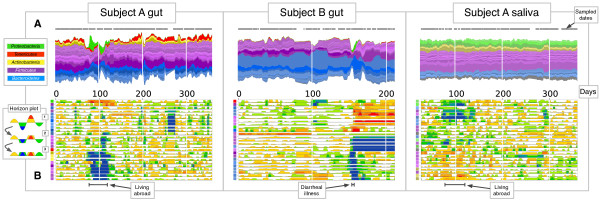
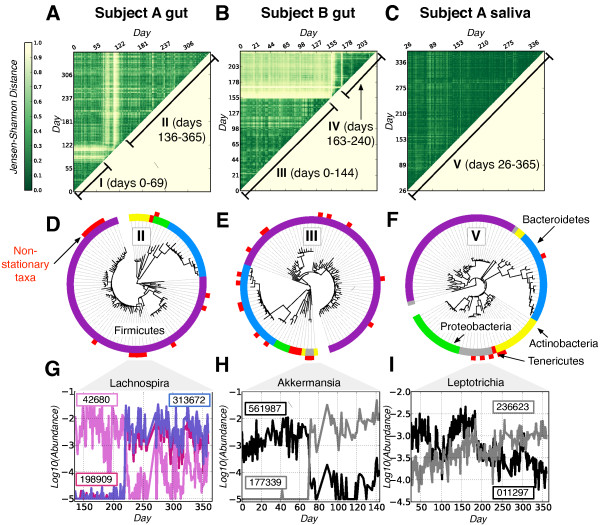
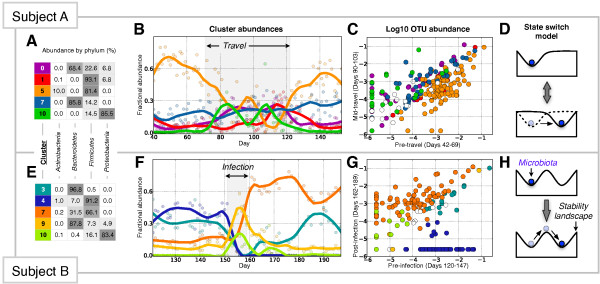
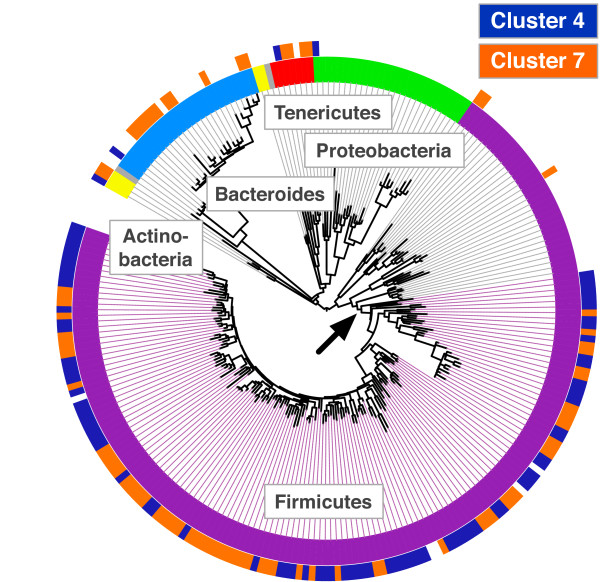
Verification
Claims the paper makes
The claims and statistics of this paper haven’t been checked yet.
Run the check — free, no account needed. It reads the open-access text and checks the sources it cites.
Claims other papers make about this one
Each is checked against this paper’s own text: does it say what the citing paper says it does?
The source backs part of the claim, not all of it — or backs it for a different population, condition or comparison.
In the citing paper
“Short-term, dramatic dietary interventions have demonstrated the ability to alter microbiota diversity quickly in humans [5].”
From Effect of Diet on the Gut Microbiota: Rethinking Intervention Duration (2019) · cites this paper as [5]
Experimental — accuracy not yet measuredIn the citing paper
“Likewise, mouse models have indicated that manipulation of macronutrient intake can consistently shift the composition of the gut microbiota within the span of a day [5,6,18,19].”
From Effect of Diet on the Gut Microbiota: Rethinking Intervention Duration (2019) · cites this paper as [5]
In the citing paper
“One longitudinal study involving daily gut microbiota investigations of two individuals over the course of a year found that changes in fibre intake are positively correlated with a change in abundance of 15% of the microbial community the following day [5].”
From Effect of Diet on the Gut Microbiota: Rethinking Intervention Duration (2019) · cites this paper as [5]
Self-check
Percentages, sums and reported differences re-computed from the paper’s own numbers.
The self-check needs the paper’s full text.
Citations
Cites
QIIME allows analysis of high-throughput community sequencing data
Caporaso, J. G., Kuczynski, J., Stombaugh, J., Bittinger, K., Bushman, F. D., Costello, E. K., Fierer, N., Peña, A. G., Goodrich, J. K., Gordon, J. I., et al. (2010) · Nature Methods · doi:10.1038/nmeth.f.303 · Cited by 34,887
Search and clustering orders of magnitude faster than BLAST
Edgar, R. C. (2010) · Bioinformatics · doi:10.1093/bioinformatics/btq461 · Cited by 21,098
An obesity-associated gut microbiome with increased capacity for energy harvest
Turnbaugh, P. J., Ley, R. E., Mahowald, M. A., Magrini, V., Mardis, E. R., & Gordon, J. I. (2006) · Nature · doi:10.1038/nature05414 · Cited by 12,444
Greengenes, a Chimera-Checked 16S rRNA Gene Database and Workbench Compatible with ARB
DeSantis, T. Z., Hugenholtz, P., Larsen, N., Rojas, M., Brodie, E. L., Keller, K., Huber, T., Dalevi, D., Hu, P., & Andersen, G. L. (2006) · Applied and Environmental Microbiology · doi:10.1128/aem.03006-05 · Cited by 10,891
Diet rapidly and reproducibly alters the human gut microbiome
David, L. A., Maurice, C. F., Carmody, R. N., Gootenberg, D. B., Button, J. E., Wolfe, B. E., Ling, A. V., Devlin, A. S., Varma, Y., Fischbach, M. A., et al. (2014) · Nature · doi:10.1038/nature12820 · Cited by 10,100
Self-citationGlobal patterns of 16S rRNA diversity at a depth of millions of sequences per sample
Caporaso, J. G., Lauber, C. L., Walters, W. A., Berg-Lyons, D., Lozupone, C., Turnbaugh, P. J., Fierer, N., & Knight, R. D. (2010) · Proceedings of the National Academy of Sciences · doi:10.1073/pnas.1000080107 · Cited by 9,944
Human gut microbes associated with obesity
Ley, R. E., Turnbaugh, P. J., Klein, S., & Gordon, J. I. (2006) · Nature · doi:10.1038/4441022a · Cited by 8,785
Human gut microbiome viewed across age and geography
Yatsunenko, T., Rey, F. E., Manary, M. J., Trehan, I., Dominguez-Bello, M. G., Contreras, M., Magris, M., Hidalgo, G., Baldassano, R. N., Anokhin, A. P., et al. (2012) · Nature · doi:10.1038/nature11053 · Cited by 7,815
Statsmodels: Econometric and Statistical Modeling with Python
Seabold, S., & Perktold, J. (2010) · Proceedings of the Python in Science Conferences · doi:10.25080/majora-92bf1922-011 · Cited by 6,968
Linking long-term dietary patterns with gut microbial enterotypes
Wu, G. D., Chen, J., Hoffmann, C., Bittinger, K., Chen, Y.-Y., Keilbaugh, S. A., Bewtra, M., Knights, D., Walters, W. A., Knight, R., et al. (2011) · Science · doi:10.1126/science.1208344 · Cited by 6,513
Cited by
Sorted by citations
Items 701–800 of 951
Temporal dynamics and metagenomics of phosphorothioate epigenomes in the human gut microbiome
Byrne, S. R., DeMott, M. S., Yuan, Y., Ghanegolmohammadi, F., Kaiser, S., Fox, J. G., Alm, E. J., & Dedon, P. C. (2025) · Microbiome · doi:10.1186/s40168-025-02071-4 · Cited by 4
“While bacterial DNA modifications are best known for restriction-modification (RM) systems, they are now also known to regulate gene expression [2–10].”
Insights into Autophagy in Microbiome Therapeutic Approaches for Drug-Resistant Tuberculosis
Rahim, M. A., Seo, H., Barman, I., Hossain, M. S., Shuvo, M. S. H., & Song, H.-Y. (2025) · Cells · doi:10.3390/cells14070540 · Cited by 5
“Moreover, the growing availability of cost-effective metagenomics profiling enables more precise applications of these therapies [176], such as tailoring personalized medicine based on an individual’s microbiome profile, thus offering more effective interventions to manage TB [177].”
Lyashenko, C., Herrman, E., Irwin, J., James, A., Strauss, S., Warner, J., Khor, B., Snow, M., Ortiz, S., Waid, E., et al. (2020) · Human Microbiome Journal · doi:10.1016/j.humic.2020.100077 · Cited by 3
Adapting to the Changing Environment: Microbial Way of Life
Nwogwu, N. A., Ajibade, F. O., Ajibade, T. F., Adelodun, B., Ajala, O. A., Kumar, P., Ugya, A. Y., Demissie, H., Lasisi, K. H., & Guadie, A. (2022) · Springer eBooks · doi:10.1007/978-3-030-87289-2_14 · Cited by 3
Prävention der Resistenzentwicklung in Krankenhaus, Arztpraxis und in der Veterinärmedizin
Meyer, E. (2019) · Springer eBooks · doi:10.1007/978-3-662-58213-8_6 · Cited by 3
Wang, L., Zhu, D., Li, Y., & Dong, M. (2016) · Lecture notes in computer science · doi:10.1007/978-3-319-38782-6_2 · Cited by 3
“We analyzed a human microbiome time course data set in which an individual’s microbiome was sequenced daily over a period of one year [2].”
BackgroundMethodInfluence of the intestinal microbiome on anastomotic healing in the colon and rectum
Shao, C. C., Gaines, S., & Alverdy, J. C. (2017) · Seminars in Colon and Rectal Surgery · doi:10.1053/j.scrs.2017.09.001 · Cited by 3
Hankel, J., Mößeler, A., Hartung, C. B., Rath, S., Schulten, L., Visscher, C., Kamphues, J., & Vital, M. (2022) · International Journal of Molecular Sciences · doi:10.3390/ijms231911700 · Cited by 3
Regulation of Host Chromatin by Bacterial Metabolites
Mani, S. (2016) · Elsevier eBooks · doi:10.1016/b978-0-12-802389-1.00023-x · Cited by 3
Bacterial adaptation to diet is a key evolutionary force shaping Drosophila-Lactobacillus symbiosisPreprint
Martino, M. E., Joncour, P., Leenay, R. T., Gervais, H., Shah, M., Hughes, S., Gillet, B., Beisel, C. L., & Leulier, F. (2017) · bioRxiv (Cold Spring Harbor Laboratory) · doi:10.1101/222364 · Cited by 3
Macroecological dynamics of gut microbiotaPreprint
Ji, B. W., Sheth, R. U., Dixit, P. D., Tchourine, K., & Vitkup, D. (2018) · bioRxiv (Cold Spring Harbor Laboratory) · doi:10.1101/370676 · Cited by 3
Reply to "Precision medicine in the clouds"
Magis, A. T., Earls, J. C., Glusman, G., Omenn, G. S., Lovejoy, J. C., Price, N. D., & Hood, L. (2018) · Nature Biotechnology · doi:10.1038/nbt.4211 · Cited by 3
Shahin, M., Ji, B. W., & Dixit, P. D. (2021) · bioRxiv (Cold Spring Harbor Laboratory) · doi:10.1101/2021.03.18.436036 · Cited by 3
Corncob structures in dental plaque reveal microhabitat taxon specificityPreprint
Morillo-López, V., Sjaarda, A., Islam, I., Borisy, G. G., & Welch, J. L. M. (2021) · Research Square · doi:10.21203/rs.3.rs-769817/v1 · Cited by 3
Su, P., Tchourine, K., & Vitkup, D. (2024) · bioRxiv (Cold Spring Harbor Laboratory) · doi:10.1101/2024.11.28.625948 · Cited by 3
Zhang, Y., Liu, F., Mo, D., Jiang, Y., Lin, T., Deng, S., Lan, J., & Qiu, R. (2024) · Heliyon · doi:10.1016/j.heliyon.2024.e35238 · Cited by 3
TimeNorm: a novel normalization method for time course microbiome data
Luo, Q., Lu, M., Butt, H., Lytal, N., Du, R., Jiang, H., & An, L. (2024) · Frontiers in Genetics · doi:10.3389/fgene.2024.1417533 · Cited by 2
Lee, J. (2025) · Physical review. E · doi:10.1103/physreve.111.024308 · Cited by 3
O’Donovan, C. M., Nori, S. R. C., Shanahan, F., Celentano, G., Murphy, T. B., Cotter, P. D., & Sullivan, O. O. (2025) · Scientific Reports · doi:10.1038/s41598-025-88723-9 · Cited by 2
UV-irradiated rotifers for the maintenance of gnotobiotic zebrafish larvae
Rosales, S. M., Bouchard, P. I., Olmstead, E. M., & Parthasarathy, R. (2025) · mSphere · doi:10.1128/msphere.00698-24 · Cited by 2
Characteristics of Subgingival Plaque Microbiome in Japanese Older Adults With Healthy Gingiva
Akatsu, T., Souno, H., Fujii, A., Minegishi, Y., Ota, N., & Yamashita, Y. (2025) · Journal Of Clinical Periodontology · doi:10.1111/jcpe.14192 · Cited by 2
“These age-related microbiome alterations possibly reflect broader physiological shifts associated with ageing (David et al. 2014; Takeshita et al. 2016).”
KADAIF: an anomaly detection method for complex microbiome data
Peleg, O., Raytan, M., & Borenstein, E. (2025) · Bioinformatics · doi:10.1093/bioinformatics/btaf520 · Cited by 2
“For this purpose, we utilized the longitudinal data from David et al. (2014), which extensively followed two individuals sampled on a nearly daily basis over a long period of time.”
Beilinson, H. A., Chervonsky, A. V., & Golovkina, T. V. (2025) · Cell Reports · doi:10.1016/j.celrep.2025.116402 · Cited by 3
“26 However, NOR mice were produced from an isolated genetic contamination of NOD mice, in which four loci (on chromosomes 2, 4, 11, and 12) were introduced from C57BL/KsJ mice (the full extent of the polymorphic differences in these regions is unknown, as the NOR genome has not been sequenced).”
Chang, J.-C., Chen, Y.-C. D., Lin, H.-T., Chen, Y., & Gau, S. S. (2025) · Translational Psychiatry · doi:10.1038/s41398-025-03768-8 · Cited by 3
“Selecting appropriate control groups is crucial, as various lifestyle factors can signi fi cantly in fl uence gut microbiota composition [21, 22].”
Jiang, X., Wu, L., Duan, S., Bian, J., Lv, T., Zheng, L., Zhao, Y., Shen, P., He, J., & Chen, Y. (2026) · Infection and Drug Resistance · doi:10.2147/idr.s562973 · Cited by 4
“14 This case presented a rare, albeit clinically complex, opportunity to apply this principle.”
Toward Personalized Control of Human Gut Bacterial Communities
David, L. A. (2018) · mSystems · doi:10.1128/msystems.00165-17 · Cited by 2
Chapter 18 Cross-feeding during human colon fermentation
Vuyst, L. D., & Leroy, F. (2019) · Wageningen Academic Publishers eBooks · doi:10.3920/978-90-8686-893-3_18 · Cited by 4
Potential challenges to doctor–patient trust posed by personalized medicine
Cohen, S. (2022) · Oxford University Press eBooks · doi:10.1093/oso/9780198863465.003.0012 · Cited by 2
What 21st century medicine should be—history, vision, implementation, and opportunities
Hood, L., Price, N. D., & Evans, S. J. (2022) · Oxford University Press eBooks · doi:10.1093/oso/9780198863465.003.0003 · Cited by 2
Reardon, J. (2022) · Oxford University Press eBooks · doi:10.1093/oso/9780198863465.003.0016 · Cited by 2
Pharmaceutical contributions to personalized medicine
Perlmutter, R. M. (2022) · Oxford University Press eBooks · doi:10.1093/oso/9780198863465.003.0019 · Cited by 2
Shigeno, Y., Liu, H., Sano, C., Inoüe, R., Niimi, K., & Nagaoka, K. (2022) · PLoS ONE · doi:10.1371/journal.pone.0273702 · Cited by 2
“The gut microbiome of humans undergoes diurnal variation; in addition, diurnal variation was observed in approximately 15% of OTUs in mice [17, 18, 22, 23].”
Network-based gut microbiome analysis in dogs
Scarsella, E., Jha, A. R., Sandri, M., & Stefanon, B. (2022) · Italian Journal of Animal Science · doi:10.1080/1828051x.2022.2124932 · Cited by 2
“…and reproduction in any medium, provided the original work is properly cited. have important consequences for the host, such as the onset of diseases like obesity, cardiovascular disease, inflammatory bowel disease, and diabetes (Muegge et al. 2011; David et al. 2014; Thorburn et al. 2014).”
BackgroundInfluentialGenetic Diversity - Recent Advances and Applications
Çalişkan, M., & Aydin, S. (2022) · IntechOpen eBooks · doi:10.5772/intechopen.100913 · Cited by 2
AbdelMassih, A. F., Eid, M. A., Gadalla, M., Aboushadi, N., Youssef, S. A., Ali, B., AbdelDayem, J., Abdelfatah, E., Mahmoud, A., ElLithey, A., et al. (2023) · Bulletin of the National Research Centre/Bulletin of the National Research Center · doi:10.1186/s42269-023-01095-w · Cited by 2
“Among humans, the response to dietary intervention can result in rapid transitory changes among the gut microbiota in as early as the first 24 h period (David et al. 2014).”
BackgroundRenaud, V., Faucher, M., Dubois, M.-J., Pilon, G., Varin, T. V., Marette, A., & Bazinet, L. (2023) · International Journal of Molecular Sciences · doi:10.3390/ijms241612968 · Cited by 2
“Several factors can contribute to the occurrence of MetS, including a sedentary lifestyle, genetic predispositions, or poor dietary habits [2].”
BackgroundAliabadi, M., Saghebjoo, M., Yakhchali, B., & Shariati, V. (2023) · Applied Physiology, Nutrition, and Metabolism · doi:10.1139/apnm-2023-0071 · Cited by 3
Alterations in microbiome of COVID-19 patients and its impact on forensic investigations
Mir, T. U. G., Manhas, S., Wani, A. K., Akhtar, N., Shukla, S., & Prakash, A. (2023) · Science & Justice · doi:10.1016/j.scijus.2023.12.002 · Cited by 2
Mathuria, A., Chaudhary, A., Sharma, H., & Mani, I. (2024) · Springer eBooks · doi:10.1007/978-981-97-1844-3_9 · Cited by 4
Emerging Insights Into Microbiome Therapeutics for Urinary Tract Infections: A Narrative Review
Seo, H., Rahim, M. A., Barman, I., Hossain, M. S., Tajdozian, H., Ghorbanian, F., Shuvo, M. S. H., Choi, J., Kim, S., Yang, H. J., et al. (2025) · Urogenital Tract Infection · doi:10.14777/uti.2448034017 · Cited by 3
Resilience of a stochastic generalized Lotka–Volterra model for microbiome studies
Phan, T. A., Ridenhour, B. J., & Remien, C. H. (2025) · Mathematical Biosciences & Engineering · doi:10.3934/mbe.2025056 · Cited by 2
“These challenges have been documented in various microbial systems, from cheese communities [40] to human microbiome studies with dense temporal sampling [41,42].”
Roos, M., Bunga, S., Tan, A., Maissy, E. S., Skola, D., Richter, A., Whittaker, D. S., Desplats, P., Zarrinpar, A., Conrad, R., et al. (2025) · mSystems · doi:10.1128/msystems.00167-25 · Cited by 2
“Much like metagenome analysis, the proportion of each species can then be used as a proxy to infer metabolic or functional activity of the population (33, 34).”
What Is the Microbiome? A Description of a Social Network
van Praagh, J. B., & Havenga, K. (2023) · Clinics in Colon and Rectal Surgery · doi:10.1055/s-0043-1760863 · Cited by 2
An improved neutral community model for temporal observations in microbial communities
Li, J., & Shen, X. (2018) · Ecological Modelling · doi:10.1016/j.ecolmodel.2018.10.001 · Cited by 2
Influence of diet on the gut microbiota
Dąbrowska, J., Wójcik, M., Boreński, G., Bator, D., & Milanowska, J. (2020) · Journal of Education Health and Sport · doi:10.12775/jehs.2020.10.05.003 · Cited by 2
The Ubiquitin Proteasome System in Periodontal Disease: A Comprehensive Review
Machado, V., Carvalho, R., Mendes, J. J., & Botelho, J. (2020) · Frontiers in Dental Medicine · doi:10.3389/fdmed.2020.613080 · Cited by 2
“Besides, a previous research also evidenced this apparent microbial community stability across lifespan, however human microbiota can rapidly and markedly be changed due to host lifestyle, for instance traveling to developing countries or enteric infections (72).”
BackgroundAn in vitro platform for study of the human gut microbiome under an oxygen gradient
Comolli, J. C., Walsh, D. I., Bobrow, J., Lennartz, C., Guido, N. J., & Thorsen, T. (2023) · Biomedical Microdevices · doi:10.1007/s10544-023-00653-3 · Cited by 2
The Role of Dietary Peptides and the Gut Bacteria in Maintaining Intestinal and Homeostatic Balance
Khan, A. I., & Xin, Y. (2023) · Microbiological & Immunological Communications · doi:10.55627/mic.002.01.0191 · Cited by 2
An introduction to microbial dysbiosis
Curtis, M. (2016) · Wiley eBooks · doi:10.1002/9781118982907.ch2 · Cited by 2
Evaluating a topic model approach for parsing microbiome data structurePreprint
Woloszynek, S., Zhao, Z., Simpson, G., O’Connor, M. P., Mell, J. C., & ROSEN, G. L. (2017) · bioRxiv (Cold Spring Harbor Laboratory) · doi:10.1101/176412 · Cited by 2
“When we applied the STM approach to the subject B gut microbiome data from David et al. (2014), we recovered three distinct configurations of taxa that agreed with the results of David et al. Unlike their approach, however, we characterized the events in terms of topics, which captured taxonomic…”
MethodResultInfluentialStronger connectivity of the resident gut microbiome lends resistance to invading bacteriaPreprint
Herren, C. M., & Baym, M. (2018) · bioRxiv (Cold Spring Harbor Laboratory) · doi:10.1101/261750 · Cited by 2
The virome in adult monozygotic twins with concordant or discordant gut microbiomesPreprint
Moreno-Gallego, J. L., Chou, S., Rienzi, S. C. D., Goodrich, J. K., Spector, T. D., Bell, J. T., Youngblut, Hewson, I., Reyes, A., & Ley, R. E. (2019) · bioRxiv (Cold Spring Harbor Laboratory) · doi:10.1101/509273 · Cited by 2
“The microbiome tends to be more similar for related individuals compared to unrelated individuals, possibly due to shared dietary habits, which drive similarity between microbiomes (Cotillard et al., 2013; David et al., 2014).”
BackgroundComparative metagenomic analysis of small ruminants' fecal microbiotaPreprint
Shabana, I., Bouqellah, N. A., & Albakri, N. N. (2020) · doi:10.21203/rs.2.21081/v1 · Cited by 2
Meir, A. Y., & Liang, L. (2022) · European Journal of Preventive Cardiology · doi:10.1093/eurjpc/zwac167 · Cited by 2
Discovery of alternative stable states in a synthetic human gut microbial communityPreprint
Garza, D. R., Liu, B., van de Velde, C., Saha, P., Zhou, X., Gonze, D., Simoens, K., Bernaerts, K., & Faust, K. (2024) · bioRxiv (Cold Spring Harbor Laboratory) · doi:10.1101/2024.11.28.625814 · Cited by 2
The historical background of personalized medicine
Guillén, D. G. (2022) · Oxford University Press eBooks · doi:10.1093/oso/9780198863465.003.0002 · Cited by 1
Manus, M. B., Lucore, J. M., Kuthyar, S., Moy, M. R., Sardaro, M. L. S., & Amato, K. R. (2024) · American Journal of Biological Anthropology · doi:10.1002/ajpa.25020 · Cited by 1
Omotayo, J. O., Ajibade, O. A., Oyovwi, M. O., & Oyawoye, O. M. (2025) · Food Chemistry Advances · doi:10.1016/j.focha.2025.101098 · Cited by 1
The Microbe Directory: a centralized database for biological interpretation of microbiome data
Sierra, M. A., Ryon, K. A., Arikatla, M. R., Elshafey, R., Bhaskar, H., Proszynski, J., Bhattacharya, C., Shaaban, H., Danko, D., Ambrose, P. M., et al. (2025) · Database · doi:10.1093/database/baaf060 · Cited by 1
“These results are consistent with previous studies describing the correlation between the human skin microbiome and the environment [ 59 ], as well as the influences of lifestyle and urban or rural settings on the microbiota of skin, saliva, and gut [ 60 , 61 ].”
Duman, H., Avcı, İ., Salih, B., Kayılı, H. M., Bechelany, M., & Karav, S. (2025) · International Journal of Molecular Sciences · doi:10.3390/ijms27010339 · Cited by 1
“The human gut microbiota (HGM) is a dynamic ecosystem [1,2].”
Xhetani, M., Parllaku, B., Bakiri, F., Lugaj, A., Hamzaraj, E., Lika, M., Metaliaj, A., Beca, V., & Bennewitz, B. (2026) · Aerobiology · doi:10.3390/aerobiology4010004 · Cited by 1
“Reports from the CDC highlight that methicillin-resistant S. aureus (MRSA) can lead to a diverse range of illnesses, from superficial skin and wound infections to potentially fatal pneumonia and sepsis [4,6,8,12,13].”
The developmental trajectory and maturation of the Hulunbuir sheep (Ovis aries) microbiome
Yan, A., Li, X., Cheng, J., Cheng, Y., Gebeyew, K., Tan, Z., Kang, J., & He, Z. (2026) · Animal Microbiome · doi:10.1186/s42523-025-00512-x · Cited by 1
“Although early-life microbiota exhibit considerable fluctuation, they gradually stabilize following maturation [10, 11].”
InfluentialTemporal dynamics of human gut microbiota revealed by the “Lunar Palace 365” experiment
Wang, W., Hao, Z., Guo, Y., Ma, X., Cui, J., & Liu, H. (2026) · Acta Astronautica · doi:10.1016/j.actaastro.2026.02.048 · Cited by 1
Jardon, K. M. C., Umanets, A., Venema, K., Trouwborst, I., Gijbels, A., Hul, G. B. J., Siebelink, E., Afman, L. A., Goossens, G. H., & Blaak, E. E. (2026) · American Journal of Clinical Nutrition · doi:10.1016/j.ajcnut.2026.101340 · Cited by 2
“Lastly, although a 12-wk whole-diet intervention may capture diet-induced change in microbiome features, these changes are transient and do not persist permanently [66].”
Microbiome mediation analysis: methods, assumptions, and practical considerations
Jiang, Z., & Li, G. (2026) · Frontiers in Cellular and Infection Microbiology · doi:10.3389/fcimb.2026.1832981 · Cited by 1
“For example, David et al. (2014) demonstrated pronounced temporal dynamics in healthy gut microbial communities.”
Remodelling of the gut virome after long-term fasting
Falshaw, N., Ducarmon, Q. R., King, A., Grundler, F., & Mesnage, R. (2026) · npj Biofilms and Microbiomes · doi:10.1038/s41522-026-01069-6 · Cited by 1
“At the same time, predatory virulent phages sustain gut microbiome homeostasis 64,65 by eliminating competing or less fi t bacteria 66,67 , with downstream consequences for host immune status and metabolic health 39,68 .”
Sugar-rich foods exacerbate antibiotic-induced microbiome disruption
Dai, A., Ballweg, A., Jogia, W., Rangesa, M., Adintori, P. A., Baichoo, M., Funnell, T., Fei, T., Waters, N. R., Swartz, A., et al. (2026) · Nature · doi:10.1038/s41586-026-11077-3 · Cited by 8
“The therapy-induced perturbations in this clinical setting, along with high-frequency serial dietary and faecal sampling, served as a natural experiment that enabled causal-inference approaches distinct from healthy-cohort or volunteer-feeding study desi gns 1,8–10, 12, 15, 18 , 32, 36 .”
Obstetricians & Pediatricians: Cornerstone to Infant Gut microbiome Development
Davis, S. C., Dosunmu-Ogunb, S. O., & Robertson, B. K. (2015) · Cited by 1
Ricke, D. O., Harper, J. D., Shcherbina, A., Chiu, N., & Boettcher, T. (2018) · F1000Research · doi:10.12688/f1000research.13601.1 · Cited by 1
From Ptolemaus to Copernicus: The Evolving System of Gluten-Related Disorder
Catassi, C., & Fasano, A. (2018) · MDPI eBooks · doi:10.3390/books978-3-03842-732-2 · Cited by 1
Genomics and precision medicine
Moazam, F. (2022) · Oxford University Press eBooks · doi:10.1093/oso/9780198863465.003.0006 · Cited by 1
Microbiome and Uveitides. A Review
Brichová, M., Svozílková, P., Klímová, A., Dušek, O., Kverka, M., & Heissigerová, J. (2022) · Czech and Slovak Ophthalmology · doi:10.31348/2021/30 · Cited by 1
Gut microbiome and its association with psychiatric disorders, specially schizophrenia
Haghighi, F. H., Riahi‐Zanjani, B., & Aryan, E. (2023) · Scientific Journal of Kurdistan University of Medical Sciences · doi:10.61186/sjku.28.2.98 · Cited by 1
Effect of dietary intake on the composition of the intestinal microbiota
Ковалева, Т. С., Kryukova, O. N., Ezhova, A. V., & Yakovleva, S. F. (2024) · Proceedings of the Voronezh State University of Engineering Technologies · doi:10.20914/2310-1202-2024-3-51-58 · Cited by 1
Elementary vectors reveal minimal interactions in microbial communities
Müller, S., Predl, M., Széliová, D., & Zanghellini, J. (2026) · Journal of The Royal Society Interface · doi:10.1098/rsif.2025.0869 · Cited by 1
The Microbiota and Its Modulation in Immune-Mediated Disorders
Pevsner‐Fischer, M., Rot, C., Tuganbaev, T., & Elinav, E. (2016) · Elsevier eBooks · doi:10.1016/b978-0-12-803302-9.00010-5 · Cited by 1
Stanisławek, A., & Kozioł-Montewka, M. (2017) · Journal of Pre-Clinical and Clinical Research · doi:10.26444/jpccr/81300 · Cited by 1
“Intestinal microbiome can be maintained for many years or even a lifetime with little changes in its composition [31, 32, 33, 34, 35, 36].”
BackgroundSpace, time and microdiversity: towards a resolution revolution in microbiomics
Paoli, L., & Sunagawa, S. (2020) · Environmental Microbiology Reports · doi:10.1111/1758-2229.12897 · Cited by 2
“In the case of the human gut, for instance, it is established that microbial communities undergo strong day-to-day compositional variations at the ‘species’ level (David et al. 2014), and that these ‘species’ harbour a relatively stable intraspecific diversity (Schloissnig et al.”
BackgroundGihyeon, K., Yoon, K. W., Changho, P., Kang, K. H., Kim, S., Youngmin, Y., Lee, S. E., Kim, Y., & Park, H. (2021) · Annals of Biomedical Science and Engineering · doi:10.29328/journal.abse.1001011 · Cited by 1
“Variation in alpha diversity among individual donors is often observed and can be explained by diet, lifestyle, and genetic factors [41-43].”
BackgroundGut Microbiome and Alzheimer’s Disease
Seol, K., Kim, H.-W., Yoo, J., Yun, J.-H., Oh, M., & Ham, J.-S. (2021) · Journal of Dairy Science and Biotechnology · doi:10.22424/jdsb.2021.39.3.94 · Cited by 1
Ramaboli, M. C., Nesengani, L., Katsidzira, L., Haller, D., Kinross, J. K., Ocvirk, S., & O’Keefe, S. J. D. (2022) · Current Opinion in Gastroenterology · doi:10.1097/mog.0000000000000817 · Cited by 1
“Zoetendal reminded us that the human intestine harbors a complex microbial community, collectively called the gut microbiota, which play a crucial role in our health and susceptibility to disease [9].”
BackgroundKoo, H., & Morrow, C. D. (2022) · Scientific Reports · doi:10.1038/s41598-022-10472-w · Cited by 1
What do we know about the connection between gut microbiota and pain?
Lewandowski, M. M., SIEKIERKO, N., ŚWIĘTOCHOWSKI, J., KOTUSIEWICZ, W., ŻOŁNIEREK, M., Lubczyńska, Z., Bienia, G., POPRAVKO, Y., Przeradzki, J., & Kucharski, J. M. (2023) · Journal of Education Health and Sport · doi:10.12775/jehs.2023.20.01.007 · Cited by 1
Li, C., Tucker‐Kellogg, L., & Nagarajan, N. (2018) · bioRxiv (Cold Spring Harbor Laboratory) · doi:10.1101/288803 · Cited by 1
“To showcase this capability, we applied BEEM to the longest (over one year) and most densely (almost daily) sampled human gut microbiome time-series datasets available to date (four individuals: DA, DB from David et al 41 and M3, F4 from Caporaso et a l 40 ).”
MethodResilience of small intestinal beneficial bacteria to the toxicity of soybean oil fatty acidsPreprint
Rienzi, S. C. D., Jacobson, J., Kennedy, E. A., Bell, M. E., Shi, Q., Waters, J. L., Lawrence, P., Brenna, J. T., Britton, R. A., Walter, J., et al. (2017) · bioRxiv (Cold Spring Harbor Laboratory) · doi:10.1101/164715 · Cited by 1
Browne, H. (2018) · LSHTM Research Online (London School of Hygiene and Tropical Medicine) · doi:10.17037/pubs.04647551 · Cited by 2
Ecological forces shaping gut microbiota in wild animal populations
Ren, T. (2016) · doi:10.18130/v3x30q · Cited by 1
The urinary microbiota composition remains stable over time and under various storage conditionsPreprint
Bundgaard‐Nielsen, C., Ammitzbøll, N., Isse, Y. A., Muqtar, A., Jensen, A.-M., Leutscher, P. D. C., Arenholt, L. T. S., Hagstrøm, S., & Sørensen, S. (2019) · bioRxiv (Cold Spring Harbor Laboratory) · doi:10.1101/2019.12.13.875187 · Cited by 1
Nasal microbiota exhibit neither reproducible nor orderly dynamics following rhinoviral infectionPreprint
Nimmagadda, S. N., Midani, F. S., Durand, H. K., Reese, A. T., Murdoch, C. C., Nicholson, B. P., Veldman, T., Burke, T. W., Zaas, A. K., Woods, C. W., et al. (2020) · medRxiv · doi:10.1101/2020.04.11.20061911 · Cited by 1
“Longitudinal studies show the composition of human-associated microbial communities (microbiota) can remain steady over long periods of time [1-3].”
BackgroundEffects of long-term closed environment on human saliva microbiota and salivary cytokinesPreprint
Zhu, Y., Hao, Z., Fu, Y., Yang, J., Dong, C., & Liu, H. (2020) · bioRxiv (Cold Spring Harbor Laboratory) · doi:10.1101/2020.10.12.336750 · Cited by 1
“For the analysis of the saliva microbiota dynamics over the whole experiment, the normalization technique developed by David et al. (David et al. 2014) was used.”
MethodZhang, L., Chen, L., Yu, X. A., Duvallet, C., Isazadeh, S., Dai, C. L., Park, S., Moniz, K., Duarte, F., Ratti, C., et al. (2020) · bioRxiv (Cold Spring Harbor Laboratory) · doi:10.1101/2020.12.15.390716 · Cited by 1
Complexity-stability relationship in empirical microbial ecosystemsPreprint
Yonatan, Y., Amit, G., Friedman, J., & Bashan, A. (2021) · bioRxiv (Cold Spring Harbor Laboratory) · doi:10.1101/2021.07.29.454345 · Cited by 1
Neuman, H., Turjeman, S., & Koren, O. (2022) · Elsevier eBooks · doi:10.1016/b978-0-12-821618-7.00040-7 · Cited by 1
Antimicrobial-resistance genes in the human gut prior the antibiotic-therapy eraPreprint
Santiago-Rodríguez, T. M. (2019) · doi:10.32545/encyclopedia201906.0001.v1 · Cited by 1
Zimmermann‐Kogadeeva, M., Bencivenga-Barry, N. A., Zimmermann, M., Bork, P., & Goodman, A. L. (2022) · bioRxiv (Cold Spring Harbor Laboratory) · doi:10.1101/2022.08.15.503927 · Cited by 1
“Although diet rapidly and reproducibly changes microbiota composition 2,3 , many microbial species are repeatedly detected in the gut for months, years and decades, indicating that microbes can adapt their metabolism to changing nutrient environments 4–8 .”
Das, U., El‐Shehawi, A. M., Albogami, S. M., & Kabir, A. H. (2022) · Microbiological Research · doi:10.1016/j.micres.2022.127203 · Cited by 1
RetractedTaillandier, P., Voland, L., Debédat, J., Archambeau, A., Dussaud, S., Amouyal, C., Patiño‐Navarrete, R., Rey, F. E., Adriouch, S., Belda, E., et al. (2025) · bioRxiv (Cold Spring Harbor Laboratory) · doi:10.1101/2025.06.08.658095 · Cited by 1
“Diet-induced shifts on the distal microbiome were expected and coherent with the literature as David and colleagues demonstrated that dietary changes could lead to rapid and profound alterations in gut microbiota composition (43).”
A foundation model for microbial growth dynamicsPreprint
Holmes, Z. A., Shyti, I., Hoffman, A. L., Duncker, K. E., Ma, H. R., Zhou, Z., Lee, D., Maddamsetti, R., Kim, K., Şimşek, E., et al. (2025) · bioRxiv (Cold Spring Harbor Laboratory) · doi:10.64898/2025.12.01.691707 · Cited by 1
“Generating longitudinal studies of microbiota is becoming easier with more access to sequencing technology, and we can collect many of these datasets [4], [27], [28].”
Tarraf, A. A. (2021) · theses.fr (ABES) · doi:10.70675/545bd347z20bcz444cza534z622ac595baf9 · Cited by 1
Gilbert, J. A. (2014) · Genome biology · doi:10.1186/s13059-014-0477-0
“Dogs can have a profound influence on microbial sharing by the occupants in a house [4], as well as reducing asthmatic attacks in mouse models [5].”
Background
Metadata
- Authors
- David, L. A., Materna, A. C., Friedman, J., Campos-Baptista, M. I., Blackburn, M. C., Perrotta, A., Erdman, S. E., & Alm, E. J.
- Affiliations
- Harvard University (US)
- Qiagen (Denmark) (DK)
- Massachusetts Institute of Technology (US)
- École Polytechnique Fédérale de Lausanne (CH)
- Broad Institute (US)
- Corresponding author
- Alm, Eric J
- Venue
- Genome biology
- Published
- 2014-07-25
- Volume
- 15
- Issue
- 7
- Pages
- R89-R89
- ISSN
- 1465-6906 (ISSN-L)
- 1474-760X
- PMC
- PMC4405912
- OpenAlex
- W2103088074
- Cited by
- 950
- References
- 58
- Citations by year
- 2026: 27 · 2025: 60 · 2024: 74 · 2023: 80 · 2022: 117 · 2021: 95 · 2020: 105 · 2019: 85 · 2018: 85 · 2017: 98 · 2016: 65 · 2015: 52 · 2014: 5
- FWCI
- 30.09
- Type
- journal article
- Language
- en
- Update notices
- correction (2016-05-31)
- Open access
- gold
- doi.org
- Locations
- Genome biology (publishedVersion, cc-by)
- PubMed Central (publishedVersion, cc-by)
- PubMed (publishedVersion)
- DSpace@MIT (Massachusetts Institute of Technology) (submittedVersion, cc-by)
- DSpace@MIT (Massachusetts Institute of Technology) (submittedVersion, cc-by-nc)
- Infoscience (Ecole Polytechnique Fédérale de Lausanne) (submittedVersion)
- Infoscience (Ecole Polytechnique Fédérale de Lausanne) (submittedVersion, cc-by-nc-nd)
- Funders
- National Science Foundation (0821391)
- Topics
- Life Sciences › Biochemistry, Genetics and Molecular Biology › Molecular Biology › Gut microbiota and health
- Health Sciences › Dentistry › Periodontics › Oral microbiology and periodontitis research
- Physical Sciences › Environmental Science › Ecology › Microbial Community Ecology and Physiology
- Keywords
- human microbiota, gut microbiota, salivary microbiota, host lifestyle, microbiota dynamics, daily fluctuations, microbial community stability, Firmicutes/Bacteroidetes ratio, gastrointestinal infections, dietary fiber intake, host behavior
- MeSH terms
- Bacteria, Bacterial Infections, Developing Countries, Feces, Humans, Life Style, Longitudinal Studies, Male, Phylogeny, Saliva, Genetic Variation, Sequence Analysis, DNA, Developed Countries, High-Throughput Nucleotide Sequencing, Microbiota
About these checks
Registry, retraction, Cites and statistics results are computed, not judged, with one exception: a printed reference that no index lists is read once by a model before it counts as a citation error. Claims are extracted by a model and kept only when their quote appears verbatim in the text; each cited source is then checked, with a model’s help, for whether it says what the claim relies on. Those verdicts can be wrong — read the claim’s quote and the cited source before relying on one.
Statistics and arithmetic are recomputed, not judged.
Confidence bands are shown only for fields calibrated on our annotated test set. None is calibrated yet, so no band is shown.
What counts as a claim ›How we measure confidence ›How we check this ›
Are you an author, or do you see a problem with this page? Request a review
