

When and how should multiple imputation be used for handling missing data in randomised clinical trials – a practical guide with flowcharts
Open accessThe DOI matches its Crossref record; 29 of the 29 references it cites were found in a registry or an index.
Abstract
BACKGROUND: Missing data may seriously compromise inferences from randomised clinical trials, especially if missing data are not handled appropriately. The potential bias due to missing data depends on the mechanism causing the data to be missing, and the analytical methods applied to amend the missingness. Therefore, the analysis of trial data with missing values requires careful planning and attention. METHODS: The authors had several meetings and discussions considering optimal ways of handling missing data to minimise the bias potential. We also searched PubMed (key words: missing data; randomi*; statistical analysis) and reference lists of known studies for papers (theoretical papers; empirical studies; simulation studies; etc.) on how to deal with missing data when analysing randomised clinical trials. RESULTS: Handling missing data is an important, yet difficult and complex task when analysing results of randomised clinical trials. We consider how to optimise the handling of missing data during the planning stage of a randomised clinical trial and recommend analytical approaches which may prevent bias caused by unavoidable missing data. We consider the strengths and limitations of using of best-worst and worst-best sensitivity analyses, multiple imputation, and full information maximum likelihood. We also present practical flowcharts on how to deal with missing data and an overview of the steps that always need to be considered during the analysis stage of a trial. CONCLUSIONS: We present a practical guide and flowcharts describing when and how multiple imputation should be used to handle missing data in randomised clinical.
Overview
The claims and statistics of this paper haven’t been checked yet.
Free: it reads the open-access text and checks the first 5 claims that cite a source we can check. Create a free account to check every claim.
Integrity signals
Registry
Cites
Statistics
Figures
Verification
Claims the paper makes
The claims and statistics of this paper haven’t been checked yet.
Free: it reads the open-access text and checks the first 5 claims that cite a source we can check. Create a free account to check every claim.
Claims other papers make about this one
Each is checked against this paper’s own text: does it say what the citing paper says it does?
The source backs part of the claim, not all of it — or backs it for a different population, condition or comparison.
In the citing paper
“Data analyses were performed using an intent-to-treat approach.”
From Impact of acceptance and commitment therapy on physical and psychological symptoms in advanced gastrointestinal cancer patients and caregivers: Secondary results of a pilot randomized trial (2023) · cites this paper as Jakobsen et al., 2017
Experimental — accuracy not yet measuredThe source backs part of the claim, not all of it — or backs it for a different population, condition or comparison.
In the citing paper
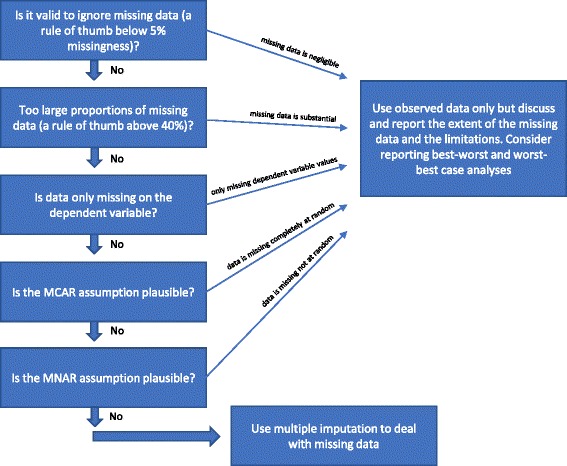
“As for the management of missing data, if the missing data represents less than 5% of the study’s total data collected, it will be ignored. If the missing data represents more than 5% but less than 40% of the total data collected and is assumed to be randomly missing, then multiple imputation (restricted maximum likelihood estimation) will be performed using Stata 15. However, if the missing data”
From Study protocol on the efficacy of exergames-acceptance and commitment therapy program for the treatment of major depressive disorder: Comparison with acceptance and commitment therapy alone and treatment-as-usual in a multicentre randomised controlled trial (2024) · cites this paper as [47]
Experimental — accuracy not yet measuredThe source backs part of the claim, not all of it — or backs it for a different population, condition or comparison.
In the citing paper
“In the handling of missing data, if only 5% to the total data collected is missing, then this missing data will be ignored. If the missing data is around 5% to 40% and if it is assumed to be randomly missing, then multiple imputation with restricted maximum likelihood estimation will be utilized (using Stata 15).”
From Research protocol of the efficacy of probiotics for the treatment of alcohol use disorder among adult males: A comparison with placebo and acceptance and commitment therapy in a randomized controlled trial (2023) · cites this paper as [54]
Experimental — accuracy not yet measuredThe source backs part of the claim, not all of it — or backs it for a different population, condition or comparison.
In the citing paper
“To handle any missing data, if the missing data represent less than 5% of the study’s total collected data, they will be ignored. If the missing data represent more than 5% but less than 40% of the total collected and are assumed to be randomly missing, then multiple imputation (restricted maximum likelihood estimation) will be performed using Stata 15. However, if the missing data represent more”
From Acceptance and commitment therapy versus mindfulness-based stress reduction for newly diagnosed head and neck cancer patients: A randomized controlled trial assessing efficacy for positive psychology, depression, anxiety, and quality of life (2022) · cites this paper as [68]
Experimental — accuracy not yet measuredThe source backs part of the claim, not all of it — or backs it for a different population, condition or comparison.
In the citing paper
“Based on published guidelines, 33 data from participants lost to all follow‐up (n = 3) were not imputed because all missing were in the supportive therapy arm which suggests the complete case is biased toward the null”
From Retraining and control therapy for pediatric psychogenic non-epileptic seizures (2020) · cites this paper as [33]
Experimental — accuracy not yet measured
7 more claims about this paper
Create a free account to see every claim other papers make about this one.
Self-check
Percentages, sums and reported differences re-computed from the paper’s own numbers.
The self-check needs the paper’s full text.
Citations
Cites
Sterne, J. A. C., White, I. R., Carlin, J. B., Spratt, M., Royston, P., Kenward, M. G., Wood, A. M., & Carpenter, J. R. (2009) · BMJ · doi:10.1136/bmj.b2393 · Cited by 7,299 · cited 17×
“Missing data may seriously compromise inferences from randomised clinical trials, especially if missingness is not at random and if missing data are not handled appropriately [3, 4].”
BackgroundMethodInfluentialIntravenous Fluids and Acute Kidney Injury
Ding, X., Cheng, Z., & Qian, Q. (2017) · Blood Purification · doi:10.1159/000452702 · Cited by 6,827
The prevention and treatment of missing data in clinical trials
Little, R. J., D'Agostino, R., Cohen, M. L., Dickersin, K., Emerson, S. S., Farrar, J. T., Frangakis, C., Hogan, J. W., Molenberghs, G., Murphy, S. A., et al. (2012) · New England Journal of Medicine · doi:10.1056/nejmsr1203730 · Cited by 1,884 · cited 4×
“Sensitivity analyses may show how assumptions, different from those made in the primary analysis influence the results obtained [3, 6].”
BackgroundInfluentialHydroxyethyl Starch 130/0.42 versus Ringer's Acetate in Severe Sepsis
Perner, A., Haase, N., Guttormsen, A. B., Tenhunen, J., Klemenzson, G., Åneman, A., Madsen, K. R., Møller, M. H., Elkjær, J. M., Poulsen, L. M., et al. (2012) · New England Journal of Medicine · doi:10.1056/nejmoa1204242 · Cited by 1,813 · cited 1×
“Best-worst and worst-best case sensitivity analyses [24, 25] may be used if in doubt: first a ‘best-worst-case’ scenario dataset is generated where it is assumed that all participants lost to follow-up in one group (referred to as group 1) have had a beneficial outcome (for example, had no serious adverse event); and…”
MethodSelf-citationIndustry sponsorship and research outcome
Lundh, A., Lexchin, J., Mintzes, B., Schroll, J. B., & Bero, L. (2017) · Cochrane Database of Systematic Reviews · doi:10.1002/14651858.mr000033.pub3 · Cited by 1,697
Jakobsen, J. C., Wetterslev, J., Winkel, P., Lange, T., & Gluud, C. (2014) · BMC Medical Research Methodology · doi:10.1186/1471-2288-14-120 · Cited by 704 · cited 5×
“Then a ‘worst-best-case’ scenario dataset is generated where it is assumed that all participants lost to follow-up in group 1 have had a harmful outcome; and that all those lost to follow-up in group 2 have had a beneficial outcome [23, 24].”
BackgroundMethodInfluentialSelf-citationHorton, N. J., & Lipsitz, S. R. (2001) · The American Statistician · doi:10.1198/000313001317098266 · Cited by 600 · cited 1×
“Five imputed datasets have traditionally been suggested to be sufficient on theoretical grounds, but 50 datasets (or more) seem preferable to reduce sampling variability from the imputation process [4, 21, 22].”
BackgroundHróbjartsson, A., Thomsen, A. S. S., Emanuelsson, F., Tendal, B., Hilden, J., Boutron, I., Ravaud, P., & Brorson, S. (2013) · Canadian Medical Association Journal · doi:10.1503/cmaj.120744 · Cited by 527
Hrobjartsson, A., Thomsen, A. S. S., Emanuelsson, F., Tendal, B., Hilden, J., Boutron, I., Ravaud, P., & Brorson, S. (2012) · BMJ · doi:10.1136/bmj.e1119 · Cited by 483
Hróbjartsson, A., Emanuelsson, F., Skou Thomsen, A. S., Hilden, J., & Brorson, S. (2014) · International Journal of Epidemiology · doi:10.1093/ije/dyu115 · Cited by 462
Research works printed but not linked: 2
- 22. StataCorp. Stata: release 14. Statistical software. College Station, TX: StataCorp LP; 2015.
- 28. Allison PD. Handling missing data by maximum likelihood, statistical horizons. In: SAS global forum 2012 statistics and data analysis; 2012.
Cited by
Items 101–200 of 814
Sanz‐Cuesta, T., Escortell‐Mayor, E., del Cura-González, I., Martín‐Fernández, J., Fuertes, R. R., Garrido-Elustondo, S., Mariño-Suárez, J. E., Álvarez-Villalba, M., Gómez‐Gascón, T., González-García, I., et al. (2020) · BMJ Open · doi:10.1136/bmjopen-2019-033687 · Cited by 70
“We will pursue patient and public involvement in the development of an appropriate method for further dissemination.”
MethodEast, K. A., Reid, J. L., Rynard, V. L., & Hammond, D. G. (2021) · Journal of Adolescent Health · doi:10.1016/j.jadohealth.2021.02.011 · Cited by 73
“Data were excluded listwise for all regression models (resulting in N 1⁄4 32,525) for three reasons: 1) to make comparisons consistent through ensuring samples were the same; 2) because data were only missing on outcomes [39]; and 3) sample size, and hence power, was large [40].”
MethodWeist, M. D., Splett, J. W., Halliday, C. A., Gage, N. A., Seaman, M. A., Perkins, K. A., Perales, K., Miller, E., Collins, D., & DiStefano, C. (2022) · Journal of School Psychology · doi:10.1016/j.jsp.2022.08.002 · Cited by 69
Pham, M. D., Wulan, N. R., Sawyer, S. M., Agius, P. A., Fisher, J., Tran, T. D., Medise, B. E., Devaera, Y., Riyanti, A., Ansariadi, A., et al. (2024) · Journal of Adolescent Health · doi:10.1016/j.jadohealth.2024.07.016 · Cited by 86
Hansen, H. G., Starzer, M., Nilsson, S. F., Hjorthøj, C., Albert, N., & Nordentoft, M. (2023) · JAMA Psychiatry · doi:10.1001/jamapsychiatry.2022.5164 · Cited by 61
Koohsari, M. J., Nakaya, T., McCormack, G. R., Shibata, A., Ishii, K., & Oka, K. (2021) · JMIR Public Health and Surveillance · doi:10.2196/26293 · Cited by 70
“A complete-case analysis was chosen because the proportion of missing data for our variables of interest was low (5%) [24].”
MethodLin, C. D., Gaiha, S. M., & Halpern‐Felsher, B. L. (2022) · International Journal of Environmental Research and Public Health · doi:10.3390/ijerph19105846 · Cited by 70
“Missing data were minimal (<3%) across all variables used in this study, and therefore expected to have a negligible effect on our results [26].”
MethodKopra, E. I., Ferris, J., WINSTOCK, A. R., Kuypers, K. P. C., Young, A. H., & Rucker, J. (2023) · Journal of Psychopharmacology · doi:10.1177/02698811231158245 · Cited by 68
“Complete case analysis was used instead of imputation in all models, due to missingness (dropouts) likely occurring at random given the design of our study (cross-sectional survey); acceptable rates of missing data observed and the exploratory nature of our study (Hughes et al., 2019; Jakobsen et al., 2017).”
MethodHounkpatin, H. O., Harris, S., Fraser, S. D., Day, J., Mindell, J. S., Taal, M. W., O'Donoghue, D. J., & Roderick, P. J. (2020) · BMJ Open · doi:10.1136/bmjopen-2020-038423 · Cited by 69
Meade, R. D., Notley, S. R., Akerman, A. P., McCormick, J. J., King, K. E., Sigal, R. J., & Kenny, G. P. (2023) · Environmental Health Perspectives · doi:10.1289/ehp11651 · Cited by 77
“…statistical power relative to the complete case approach when covariates are imputed (by allowing for participants with full data for the primary predictor and outcome but missing covariate data to be included in analysis), 51 but provide minimal bene fi t to power when the outcome is imputed.”
Young People’s Mental Health Changes, Risk, and Resilience During the COVID-19 Pandemic
Montero‐Marín, J., Hinze, V., Mansfield, K. L., Slaghekke, Y., Blakemore, S., Byford, S., Dalgleish, T., Greenberg, M. T., Viner, R., Ukoumunne, O. C., et al. (2023) · JAMA Network Open · doi:10.1001/jamanetworkopen.2023.35016 · Cited by 82
Serratus Anterior Plane Blocks for Early Rib Fracture Pain Management
Partyka, C., Asha, S. E., Berry, M. K., Ferguson, I., Burns, B., Tsacalos, K., Gaetani, D., Oliver, M., Luscombe, G. M., Delaney, A. P., et al. (2024) · JAMA Surgery · doi:10.1001/jamasurg.2024.0969 · Cited by 60
Comer, J. S., Furr, J. M., del Busto, C., Silva, K., Hong, N., Poznanski, B., Sanchez, A., Cornacchio, D., Herrera, A., Coxe, S., et al. (2021) · Behavior Therapy · doi:10.1016/j.beth.2021.01.004 · Cited by 59
van Gelderen, M. J., Nijdam, M. J., Haagen, J. F. G., & Vermetten, E. (2020) · Psychotherapy and Psychosomatics · doi:10.1159/000505977 · Cited by 59
Zhao, F.-Y., Zheng, Z., Fu, Q.-Q., Conduit, R., Xu, H. M., Wang, H., Huang, Y., Jiang, T. X., Zhang, W., & Kennedy, G. A. (2023) · Frontiers in Public Health · doi:10.3389/fpubh.2023.1120567 · Cited by 77
“However, as suggested by a previous paper regarding statistical methodology, when the proportion of missing values was more than 40%, Per-Protocol (PP) analysis should be used (58).”
MethodBuse, G. L., Mauermann, E., Ionescu, D. C., Szczeklik, W., Hert, S. G. D., Filipovic, M., Beck‐Schimmer, B., Spadaro, S., Matute, P., Bolliger, D., et al. (2023) · British Journal of Anaesthesia · doi:10.1016/j.bja.2023.02.030 · Cited by 63
Effects in language development of young children with language delay during early intervention
Vermeij, B. A. M., Wiefferink, C. H., Knoors, H. E. T., & Scholte, R. H. J. (2023) · Journal of Communication Disorders · doi:10.1016/j.jcomdis.2023.106326 · Cited by 71
Social factors of health-related quality of life in older adults: a multivariable analysis
Geigl, C., Loss, J., Leitzmann, M. F., & Janßen, C. (2023) · Quality of Life Research · doi:10.1007/s11136-023-03472-4 · Cited by 78
Shelby, T., Schenck, C. S., Weeks, B., Goodwin, J., Hennein, R., Zhou, X., Spiegelman, D. L., Grau, L. E., Niccolai, L. M., Bond, M., et al. (2021) · Frontiers in Public Health · doi:10.3389/fpubh.2021.721952 · Cited by 59
Sex Differences in Outcomes Following Ruptured Abdominal Aortic Aneurysm Repair
Li, B., Eisenberg, N., Witheford, M., Lindsay, T. F., Forbes, T. L., & Roche‐Nagle, G. (2022) · JAMA Network Open · doi:10.1001/jamanetworkopen.2022.11336 · Cited by 57
Baou, C. E., Desai, R., Cooper, C., Marchant, N. L., Pilling, S., Richards, M., Saunders, R., Buckman, J. E. J., Aguirre, E., John, A., et al. (2023) · European Heart Journal · doi:10.1093/eurheartj/ehad188 · Cited by 59
“These records were excluded since previous research has found the impact of missing data may be negligible in such cases.(55) Primary statistical analyses Reliable improvement in depression symptoms and incident cardiovascular events”
Implementing Machine Learning in Interventional Cardiology: The Benefits Are Worth the Trouble
Ali, W. B., Pesaranghader, A., Avram, R., Overtchouk, P., Perrin, N., Laffite, S., Cartier, R., Ibrahim, R., Modine, T., & Hussin, J. (2021) · Frontiers in Cardiovascular Medicine · doi:10.3389/fcvm.2021.711401 · Cited by 62
“Missing data is a common problem in routine medical records, hence, measures of data management and pre-processing should be addressed in line with the extra complexity they impose on the robustness ML (141, 142).”
BackgroundPonguta, L. A., Issa, G. M., Aoudeh, L., Maalouf, C., Hein, S. D., Zonderman, A. L., Katsovich, L., Khoshnood, K., Bick, J. R., Awar, A., et al. (2020) · Journal of the American Academy of Child & Adolescent Psychiatry · doi:10.1016/j.jaac.2019.12.010 · Cited by 65
Ryberg, R., Her, S., Temkin, D. A., Madill, R. A., Kelley, C., Thompson, J. A., & Gabriel, A. (2020) · AERA Open · doi:10.1177/2332858420948024 · Cited by 68
“The two items that were only asked to high school students were excluded from the analysis since data for these two items were not missing at random, violating the assumptions of multiple imputation (Jakobsen et al., 2017).”
Adams, E. M., Gulka, J. E., & Williams, K. A. (2021) · PLoS ONE · doi:10.1371/journal.pone.0256382 · Cited by 60
“Some studies lacked effect size uncertainty estimates (n = 12); to account for our uncertainty in the SEs from these studies, we used a multiple imputation approach [25, 26] using the mice R package [27].”
MethodWoolcott, O. O., & Castilla-Bancayán, J. P. (2021) · Scientific Reports · doi:10.1038/s41598-021-88014-z · Cited by 61
Sandmann, F., Tessier, E., Lacy, J., Kall, M. M., van Leeuwen, E., Charlett, A., Eggo, R. M., Dabrera, G., Edmunds, W. J., Ramsay, M. E., et al. (2022) · Clinical Infectious Diseases · doi:10.1093/cid/ciac151 · Cited by 56
Rethinking the Statistical Analysis of Neuromechanical Data
Wilkinson, R. D., Mazzo, M. R., & Feeney, D. F. (2022) · Exercise and Sport Sciences Reviews · doi:10.1249/jes.0000000000000308 · Cited by 62
Meyer, B., Weiss, M., Holtkamp, M., Arnold, S., Brückner, K., Schröder, J., Scheibe, F., & Nestoriuc, Y. (2019) · Epilepsia · doi:10.1111/epi.14673 · Cited by 53
“Missing data were imputed for ITT and PP analyses at the primary endpoint of 3 months with multiple imputation (100 imputations, 50 iterations) based on sociodemographic data and available outcomes, following current methodological recommendations.(27) The 100 imputation datasets were merged into one pooled dataset.”
MethodJuul, S., Lunn, S., Poulsen, S., Sørensen, P. S., Salimi, M. L., Jakobsen, J. C., BATEMAN, A. W., & Simonsen, S. (2019) · Trials · doi:10.1186/s13063-019-3306-7 · Cited by 59
Self-citationHeath, L., Jebb, S. A., Aveyard, P. N., & Piernas, C. (2022) · BMC Medicine · doi:10.1186/s12916-022-02236-0 · Cited by 57
“Multiple imputation was not considered here as data may be missing not at random (MNAR) [14].”
MethodShahbazian, R., & Greco, S. (2023) · IEEE Access · doi:10.1109/access.2023.3306721 · Cited by 70
“system [29], cardiac imaging data [30], clinical trials [31],”
An overview of methods and techniques in multimodal data fusion with application to healthcare
Chaabene, S., Boudaya, A., Bouaziz, B., & Chaâri, L. (2025) · International Journal of Data Science and Analytics · doi:10.1007/s41060-025-00715-0 · Cited by 72
Addressing Missing Data in Quantitative Counseling Research
Cook, R. M. (2020) · Counseling Outcome Research and Evaluation · doi:10.1080/21501378.2019.1711037 · Cited by 52
Jones, K., Baker, K., Speight, R. A., Thompson, N. P., & Tew, G. A. (2020) · Alimentary Pharmacology & Therapeutics · doi:10.1111/apt.16002 · Cited by 65
The Effect of Using Data Pre-Processing by Imputations in Handling Missing Values
Karrar, A. E. (2022) · Indonesian Journal of Electrical Engineering and Informatics (IJEEI) · doi:10.52549/ijeei.v10i2.3730 · Cited by 59
W Beukes, E., Andersson, G., Fagelson, M., & Manchaiah, V. (2022) · Journal of Medical Internet Research · doi:10.2196/27584 · Cited by 50
“at random, missing data were handled through multiple imputation using the Markov Chain Monte Carlo approach owing to its ability to reduce bias even when the proportion of missing data was large [52,53].”
MethodNational and international kidney failure registries: characteristics, commonalities, and contrasts
Ng, M. S. Y., Charu, V., Johnson, D. W., O'Shaughnessy, M. M., & Mallett, A. J. (2021) · Kidney International · doi:10.1016/j.kint.2021.09.024 · Cited by 57
“Sensitivity analyses are required to explore the potential effect of missing not-at-random data on estimated results.(93) However, despite these limitations, inter-registry studies have the major advantage of including large, nationally representative patient populations, which enhances the generalizability of study f…”
BackgroundStoler, J. B., Klofstad, C., Enders, A. M., & Uscinski, J. E. (2022) · Social Science & Medicine · doi:10.1016/j.socscimed.2022.115112 · Cited by 56
“2% was well below the recommended threshold of 5% for implementing multiple imputation (Jakobsen et al., 2017).”
BackgroundBamford, T., Easter, C., Montgomery, S., Smith, R., Dhillon‐Smith, R. K., Barrie, A., Campbell, A., & Coomarasamy, A. (2023) · Human Reproduction · doi:10.1093/humrep/dead034 · Cited by 55
Madssen, T. S., Giskeødegård, G. F., Smilde, A. K., & Westerhuis, J. A. (2021) · PLoS Computational Biology · doi:10.1371/journal.pcbi.1009585 · Cited by 62
“If there is substantial missing data, and it is suspected to be non-ignorable, it is recommended to perform multiple imputation to assess how different assumed distributions for the missing data affect the findings [35].”
BackgroundAnalyzing the impact of missing values and selection bias on fairness
Wang, Y., & Singh, L. (2021) · International Journal of Data Science and Analytics · doi:10.1007/s41060-021-00259-z · Cited by 74
Anderson, P., O'Donnell, A. J., Kokole, D., Jané‐Llopis, E., & Kaner, E. (2021) · International Journal of Environmental Research and Public Health · doi:10.3390/ijerph181910347 · Cited by 52
“We grouped respondents into (I) male or female; (II) four age groups (18–34; 35–44; 45–64; and 65+ years); (III) the same four occupation‐based social grade groups as for the household purchase data (AB (‘highest’), C1, C2, DE (‘lowest’)), based on the National Readership Survey [18]; (IV) four similar sized groups of…”
BackgroundMethodThe Links Between Disability, Incarceration, And Social Exclusion
Bixby, L. E., Bevan, S. L., & Boen, C. (2022) · Health Affairs · doi:10.1377/hlthaff.2022.00495 · Cited by 57
Multicenter Validation of the max‐ICH Score in Intracerebral Hemorrhage
Sembill, J. A., Castello, J. P., Sprügel, M. I., Gerner, S. T., Hoelter, P., Lücking, H., Doerfler, A., Schwab, S., Huttner, H. B., Biffi, A., et al. (2020) · Annals of Neurology · doi:10.1002/ana.25969 · Cited by 56
“5%) patients, justifying performance of complete case analysis with only a low risk for introducing selection bias, according to the Cochrane-recommended ROBINS-I tool.(23,24) For analyses of the 12-month outcome, we assessed 3,363 of 3,476 (96.”
MethodTraditional and novel walkable built environment metrics and social capital
Koohsari, M. J., Nakaya, T., McCormack, G. R., Shibata, A., Ishii, K., Yasunaga, A., Hanibuchi, T., & Oka, K. (2021) · Landscape and Urban Planning · doi:10.1016/j.landurbplan.2021.104184 · Cited by 53
Artom, M., Czuber-Dochan, W., Sturt, J., Proudfoot, H., Roberts, D., & Norton, C. (2019) · Pilot and Feasibility Studies · doi:10.1186/s40814-019-0538-y · Cited by 48
Cardiovascular disease-specific mortality in 270,618 patients with non-small cell lung cancer
Sun, J., Zhang, Z., Qu, Q., Wang, N., Zhang, Y., Miao, L.-F., Ji, W., Wu, L., Liu, Y., Zhang, C.-Y., et al. (2021) · International Journal of Cardiology · doi:10.1016/j.ijcard.2021.02.025 · Cited by 55
Zhang, D., Jin, B., & Cui, Y. (2021) · School Mental Health · doi:10.1007/s12310-021-09456-4 · Cited by 57
“Taken together, the missing value analysis suggested that we should not ignore the missing data and perform complete case analysis (Jakobsen et al., 2017).”
BackgroundMasa, R., Zimba, M., Tamta, M., Zimba, G., & Zulu, G. (2022) · Stigma and Health · doi:10.1037/sah0000404 · Cited by 59
“We conductedMI after our missing data patterns met the criteria Jakobsen et al. (2017) recommended for determining when to useMI.”
An open-source framework for end-to-end analysis of electronic health record data
Heumos, L., Ehmele, P., Treis, T., zu Belzen, J. U., Roellin, E., May, L., Namsaraeva, A., Horlava, N., Shitov, V. A., Zhang, X., et al. (2024) · Nature Medicine · doi:10.1038/s41591-024-03214-0 · Cited by 59
“For MCAR data single-imputation approaches, such as mean, median or mode, imputation can suffice, but these methods are known to reduce variability 91,92 .”
The DIFFMASK score for predicting difficult facemask ventilation: a cohort study of 46,804 patients
Lundstrøm, L. H., Rosenstock, C. V., Wetterslev, J., & Nørskov, A. K. (2019) · Anaesthesia · doi:10.1111/anae.14701 · Cited by 53
“Among some of the risk factors, the number of missing values was substantial, which may have impacted our findings despite performing multiple imputation [24].”
Self-citationDEBATE-statistical analysis plans for observational studies
Hiemstra, B., Keus, F., Wetterslev, J., Gluud, C. N., & van der Horst, I. C. C. (2019) · BMC Medical Research Methodology · doi:10.1186/s12874-019-0879-5 · Cited by 55
Self-citationSun, J.-Y., Yang, H., Zou, H., Qu, Q., Yuan, Y., Sun, G.-Z., Sun, W. Y., & Kong, X. (2021) · Frontiers in Cardiovascular Medicine · doi:10.3389/fcvm.2021.717257 · Cited by 63
“Importantly, to minimize bias caused by missing data, we applied multivariate multiple imputation strategies based on five replication and the Markov chain Monte Carlo method to fill the missing covariates (28, 29).”
MethodAftab, R., Dodhia, V. H., Jeanes, C., & Wade, R. G. (2023) · Scientific Reports · doi:10.1038/s41598-022-26658-1 · Cited by 55
Adekiya, A. A. (2023) · Current Psychology · doi:10.1007/s12144-023-04408-4 · Cited by 72
Burnout among public health workers in Canada: a cross-sectional study
Singh, J., Poon, D. E.-O., Álvarez, E., Anderson, L. N., Verschoor, C. P., Sutton, A., Zendo, Z., Piggott, T., Apatu, E., Churipuy, D., et al. (2024) · BMC Public Health · doi:10.1186/s12889-023-17572-w · Cited by 58
“Since the sample size was large and missing data were minimal ( 5%), only complete participant responses were used for the analyses [20].”
Lindroth, H. L., Bratzke, L. C., Twadell, S., Rowley, P. A., Kildow, J., Danner, M., Turner, L., Hernandez, B. A., Brown, R., & Sanders, R. (2019) · International Journal of Geriatric Psychiatry · doi:10.1002/gps.5104 · Cited by 49
O’Neill, A., O’Sullivan, K., O’Sullivan, P., Purtill, H., & O’Keeffe, M. (2020) · European Journal of Pain · doi:10.1002/ejp.1624 · Cited by 53
Zhang, Z., Leong Bin Abdullah, M. F. I., Shari, N. I., & Lu, P. (2022) · PLoS ONE · doi:10.1371/journal.pone.0267887 · Cited by 46
“However, if the missing data represent more than 40% of the total collected data or are assumed to be missing either not randomly or completely randomly, then only the collected data will be used for the study’s analysis, and the missing data will be explained as a research limitation in any publications of the study’…”
MethodJob precarity and economic prospects during the COVID‐19 public health crisis
Han, W., & Hart, J. (2021) · Social Science Quarterly · doi:10.1111/ssqu.13031 · Cited by 64
“…non-standard work schedules, in service occupation) (Kalleberg, 2013; Presser, 2003) and the work done by the group established EPRES scales (Julià et al., 2017) to examine the association between job precarity and the likelihood of parents losing employment or losing income amidst the…”
BackgroundMethodInfluentialFrancis, S. E. B., Shawyer, F., Cayoun, B., Enticott, J., & Meadows, G. N. (2022) · Frontiers in Psychiatry · doi:10.3389/fpsyt.2022.815170 · Cited by 45
Condello, G., Mazzoli, E., Masci, I., Fano, A. D., Ben‐Soussan, T. D., Marchetti, R., & Pesce, C. (2021) · International Journal of Environmental Research and Public Health · doi:10.3390/ijerph18189871 · Cited by 69
Gourisetti, S. N. G., Bhadra, S., Sebastian-Cardenas, D. J., Touhiduzzaman, M., & Ahmed, O. (2023) · Energies · doi:10.3390/en16134853 · Cited by 57
Wei, X., Hicks, J. P., Zhang, Z., Haldane, V. E., Pasang, P., Li, L., Yin, T., Zhang, B., Li, Y., Pan, Q., et al. (2024) · The Lancet · doi:10.1016/s0140-6736(23)02270-5 · Cited by 53
Cullen, L., Greenslade, J. H., Parsonage, W. A., Stephensen, L., Smith, S. W., Sandoval, Y. B., Ranasinghe, I., Gaikwad, N., Bayat, M. K., Mahmoodi, E., et al. (2024) · European Heart Journal · doi:10.1093/eurheartj/ehae343 · Cited by 54
Missing data in primary care research: importance, implications and approaches
Marino, M., Lucas, J., Latour, E. J., & Heintzman, J. D. (2020) · Family Practice · doi:10.1093/fampra/cmaa134 · Cited by 55
“Another suggests that if more than 40% of data on important variables are missing, the results should be considered hypothesis-generating rather than confirmatory (35).”
BackgroundHypothermic versus Normothermic Temperature Control after Cardiac Arrest
Holgersson, J., Meyer, M., Dankiewicz, J., Lilja, G., Ullén, S., Hassager, C., Cronberg, T., Wise, M. P., Bělohlávek, J., Hovdenes, J., et al. (2022) · NEJM Evidence · doi:10.1056/evidoa2200137 · Cited by 48
“Missing data were handled according to Jakobsen et al.(25) Because missingness was rare, complete case analyses were performed for all predefined analyses.”
MethodSelf-citationBertolini, R., Finch, S. J., & Nehm, R. H. (2021) · Journal of Science Education and Technology · doi:10.1007/s10956-020-09888-8 · Cited by 53
Venkateswaran, M., Ghanem, B., Abbas, E., Khader, K. A., Ward, I. A., Awwad, T., Baniode, M., Frost, M. J., Hijaz, T., Isbeih, M., et al. (2022) · The Lancet Digital Health · doi:10.1016/s2589-7500(21)00269-7 · Cited by 46
Siqeca, F., Yip, O., Mendieta, M. J., Schwenkglenks, M. M., Zeller, A., Geest, S. D., Zúñiga, F., Stenz, S., Briel, M., Quinto, C. B., et al. (2022) · Health and Quality of Life Outcomes · doi:10.1186/s12955-022-02080-z · Cited by 55
“[54] for when to use multiple imputation (i.”
MethodLippert, A. M., Corsi, D. J., & Venechuk, G. E. (2019) · Journal of Youth and Adolescence · doi:10.1007/s10964-019-01106-y · Cited by 50
Leis, A. M., Ward, S. A., Vatanparast, H., Humbert, M. L., Chow, A. F., Muhajarine, N., Engler‐Stringer, R., & Bélanger, M. F. (2020) · BMC Public Health · doi:10.1186/s12889-020-08621-9 · Cited by 51
“ables, especially when the proportion of missing data is large [33].”
BackgroundSaw It on Facebook: The Role of Social Media in Facilitating Science Issue Awareness
Mueller-Herbst, J. M., Xenos, M. A., Scheufele, D. A., & Brossard, D. (2020) · Social Media + Society · doi:10.1177/2056305120930412 · Cited by 56
Analysis of Fecal Sludges Reveals Common Enteric Pathogens in Urban Maputo, Mozambique
Capone, D., Berendes, D. M., Cumming, O., Knee, J., Nalá, R., Risk, B. B., Stauber, C., Zhu, K., & Brown, J. M. (2020) · Environmental Science & Technology Letters · doi:10.1021/acs.estlett.0c00610 · Cited by 47
Positive and negative perceptions of the COVID-19 pandemic: Does personality play a role?
Schmiedeberg, C., & Thönnissen, C. (2021) · Social Science & Medicine · doi:10.1016/j.socscimed.2021.113859 · Cited by 42
Elder abuse in the oldest old: prevalence, risk factors and consequences
Brijoux, T., Neise, M., & Zank, S. (2021) · Zeitschrift für Gerontologie und Geriatrie · doi:10.1007/s00391-021-01945-0 · Cited by 42
Belenko, S. R., Dembo, R., Knight, D. K., Elkington, K. S., Wasserman, G. A., Robertson, A. A., Welsh, W. N., Schmeidler, J., Joe, G. W., & Wiley, T. (2022) · Journal of Substance Abuse Treatment · doi:10.1016/j.jsat.2022.108829 · Cited by 43
Place attachment and walking behaviour: Mediation by perceived neighbourhood walkability
Koohsari, M. J., Yasunaga, A., Oka, K., Nakaya, T., Nagai, Y., & McCormack, G. R. (2023) · Landscape and Urban Planning · doi:10.1016/j.landurbplan.2023.104767 · Cited by 52
Prager, R. T., Argaiz, E. R., Pratte, M., Rola, P., Arntfield, R. T., Beaubien‐Souligny, W., Denault, A. Y., Haycock, K. H., Aguiar, F. M., Bakker, J., et al. (2023) · BMJ Open · doi:10.1136/bmjopen-2023-074843 · Cited by 46
D’Alto, M., Badagliacca, R., Giudice, F. L., Argiento, P., Casu, G., Corda, M., Correale, M., Ghio, S., Greco, A., Lattanzio, M., et al. (2020) · The Journal of Heart and Lung Transplantation · doi:10.1016/j.healun.2020.08.016 · Cited by 44
Watanabe, M., Balena, A., Masi, D., Tozzi, R., Risi, R., Caputi, A., Rossetti, R., Spoltore, M. E., Biagi, F., Anastasi, E., et al. (2022) · Vaccines · doi:10.3390/vaccines10010079 · Cited by 45
“Second, the sample size of our study population was small, and occasional values were missing completely at random, leading to some pairwise exclusions in the statistical analysis [62].”
BackgroundBergey, M. R., Chiri, G., Freeman, N. L. B., & Mackie, T. I. (2022) · Sociology of Health & Illness · doi:10.1111/1467-9566.13443 · Cited by 49
Rudroff, T., Rainio, O., & Klén, R. (2024) · Neurological Sciences · doi:10.1007/s10072-024-07649-8 · Cited by 55
“Researchers are actively developing advanced AI techniques, such as multi-view learning, transfer learning, and graph convolutional networks, to address these challenges and optimize the integration of multi-modal data [58, 59].”
Challenges and standardisation strategies for sensor-based data collection for digital phenotyping
Alam, N. B., Surani, M., Das, C. K., Giacco, D., Singh, S. P., & Jilka, S. (2025) · Communications Medicine · doi:10.1038/s43856-025-01013-3 · Cited by 51
Wan-Ting, C., Chin-Hsien, L., Cheng-Yu, L., Chien, C., Lin, C.-C., Keng-Wei, C., Chen, J.-H., Chen, W.-L., Chien-Cheng, H., Lim, C.-J., et al. (2020) · Scientific Reports · doi:10.1038/s41598-020-59044-w · Cited by 47
Korang, S. K., Juul, S., Nielsen, E. E., Feinberg, J. B., Siddiqui, F., Ong, G., Klingenberg, S. L., Veroniki, A. A., Bu, F.-L., Thabane, L., et al. (2020) · Systematic Reviews · doi:10.1186/s13643-020-01516-1 · Cited by 47
Self-citationFat, L. N., Cable, N., & Kelly, Y. J. (2021) · Addiction · doi:10.1111/add.15482 · Cited by 47
“As this was above 5%, the suggested threshold where multiple imputation is thought to add value [24] and due to the smaller sample size using two waves, we carried out multiple imputation of missing data.”
MethodRaman, L., Stewart, I. D., Barratt, S. L., Chua, F., Chaudhuri, N., Crawshaw, A., Gibbons, M., Hogben, C., Hoyles, R. K., Kouranos, V., et al. (2022) · ERJ Open Research · doi:10.1183/23120541.00423-2022 · Cited by 43
Hiemstra, B., Bergman, R., Absalom, A. R., van der Naalt, J., van der Horst, I. C. C., de Vos, R., Nieuwland, W., Nijsten, M. W., & van der Horst, I. C. C. (2018) · Therapeutic Advances in Cardiovascular Disease · doi:10.1177/1753944718792420 · Cited by 42
Hydrological projections over the Upper Indus Basin at 1.5 °C and 2.0 °C temperature increase
Kiani, R. S., Ali, S., Ashfaq, M., Khan, F., Muhammad, S., Reboita, M. S., & Farooqi, A. (2021) · The Science of The Total Environment · doi:10.1016/j.scitotenv.2021.147759 · Cited by 44
Choi, H., Park, Y. S., Na, K. J., Park, S., Park, I. K., Kang, C. H., Kim, Y. T., Goo, J. M., & Yoon, S. H. (2021) · Radiology · doi:10.1148/radiol.2021210576 · Cited by 40
Association Between Serum Calcium and the Prevalence of Hypertension Among US Adults
Yang, H., Liu, H., Sun, J.-Y., Kong, X., Sun, W. Y., & Xiong, Y. (2021) · Frontiers in Cardiovascular Medicine · doi:10.3389/fcvm.2021.719165 · Cited by 42
“Importantly, to maximize statistical power and minimize bias caused by missing data, we applied multivariate multiple imputation strategies based on five replication and Markov chain Monte Carlo method to fill missing covariates (23, 24).”
MethodImpact of a Digital Lifestyle Intervention on Diabetes Self-Management: A Pilot Study
Bretschneider, M. P., Klásek, J., Karbanová, M., Timpel, P., Herrmann, S., & Schwarz, P. E. H. (2022) · Nutrients · doi:10.3390/nu14091810 · Cited by 39
“Due to the reduction in variability in the use of mean substitution, this method was used with caution and the results were critically questioned [48].”
MethodCénat, J. M. (2024) · Public Health · doi:10.1016/j.puhe.2024.02.030 · Cited by 46
Situma, S., Nyakarahuka, L., Omondi, E. O., Mureithi, M., Mweu, M. M., Muturi, M., Mwatondo, A. J., Dawa, J., Konongoi, S. L., Khamadi, S. A., et al. (2024) · BMJ Global Health · doi:10.1136/bmjgh-2023-014737 · Cited by 40
Widnall, E., Price, A., Trompetter, H. R., & Dunn, B. D. (2019) · Cognitive Therapy and Research · doi:10.1007/s10608-019-10041-y · Cited by 43
Kamsvåg, T., Svanberg, A., Legert, K. G., Arvidson, J., von Essén, L., Mellgren, K., Toporski, J., Winiarski, J. H., & Ljungman, G. (2020) · Supportive Care in Cancer · doi:10.1007/s00520-019-05258-2 · Cited by 48
Schjørring, O. L., Jensen, A. K. G., Nielsen, C. G., Ciubotariu, A., Perner, A., Wetterslev, J., Lange, T., & Rasmussen, B. S. (2020) · British Journal of Anaesthesia · doi:10.1016/j.bja.2019.12.039 · Cited by 44
Self-citationRahman, M. M., Rahman, M., Khan, M. M. A., Hasan, M., & Choudhury, K. N. (2020) · Depression and Anxiety · doi:10.1002/da.23033 · Cited by 41
Metadata
- Authors
- Jakobsen, J. C., Gluud, C., Wetterslev, J., & Winkel, P.
- Affiliations
- Copenhagen University Hospital (DK)
- Corresponding author
- Jakobsen, Janus Christian
- Venue
- BMC Medical Research Methodology
- Published
- 2017-12
- Volume
- 17
- Issue
- 1
- Pages
- 162-162
- ISSN
- 1471-2288 (ISSN-L)
- PMC
- PMC5717805
- OpenAlex
- W2772803673
- Semantic Scholar
- 601b9d1445292bcdfd372c11b5a2eb752d7cf39e
- Cited by
- 2,747
- References
- 29
- Citations by year
- 2026: 287 · 2025: 433 · 2024: 455 · 2023: 443 · 2022: 468 · 2021: 361 · 2020: 205 · 2019: 78 · 2018: 15 · 2017: 1
- FWCI
- 56.41
- Type
- journal article
- Language
- en
- Open access
- gold
- doi.org
- Licence
- cc-by
- Locations
- BMC Medical Research Methodology (publishedVersion, cc-by)
- Europe PMC (PubMed Central) (publishedVersion, cc-by)
- PubMed Central (publishedVersion, cc-by)
- PubMed (publishedVersion)
- DOAJ (DOAJ: Directory of Open Access Journals) (submittedVersion, cc-by-sa)
- Funders
- Copenhagen Trial Unit, Centre for Clinical Intervention Research
- Topics
- Physical Sciences › Mathematics › Statistics and Probability › Statistical Methods and Bayesian Inference
- Physical Sciences › Mathematics › Statistics and Probability › Statistical Methods in Clinical Trials
- Social Sciences › Decision Sciences › Statistics, Probability and Uncertainty › Meta-analysis and systematic reviews
- Keywords
- missing data, multiple imputation, randomized controlled trials, full information maximum likelihood, missing data mechanisms
- MeSH terms
- Data Accuracy, Data Interpretation, Statistical, Humans, Models, Statistical, Randomized Controlled Trials as Topic
About these checks
Registry, retraction, Cites and statistics results are computed, not judged, with one exception: a printed reference that no index lists is read once by a model before it counts as a citation error. Claims are extracted by a model and kept only when their quote appears verbatim in the text; each cited source is then checked, with a model’s help, for whether it says what the claim relies on. Those verdicts can be wrong — read the claim’s quote and the cited source before relying on one.
Statistics and arithmetic are recomputed, not judged.
Confidence bands are shown only for fields calibrated on our annotated test set. None is calibrated yet, so no band is shown.
What counts as a claim ›How we measure confidence ›How we check this ›
Are you an author, or do you see a problem with this page? Request a review
Data sources
Bibliographic data: Semantic Scholar, OpenAlex, Crossref.
Contains information from the Semantic Scholar Academic Graph Datasets, made available under the ODC Attribution License (ODC-BY 1.0).
Semantic Scholar’s data is described in: Kinney, R., et al. (2023). The Semantic Scholar Open Data Platform. arXiv:2301.10140.
