

When and how should multiple imputation be used for handling missing data in randomised clinical trials – a practical guide with flowcharts
Open accessThe DOI matches its Crossref record; 29 of the 29 references it cites were found in a registry or an index.
Abstract
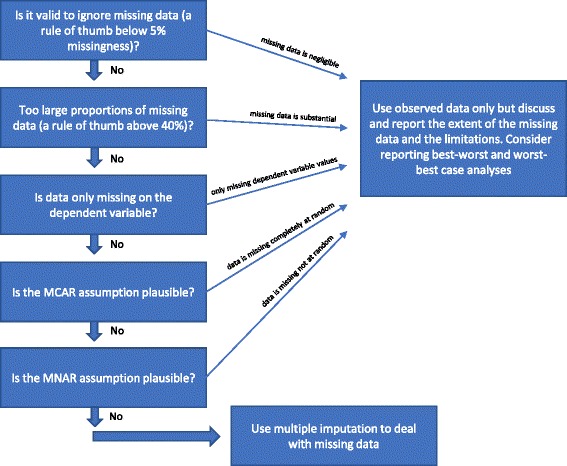
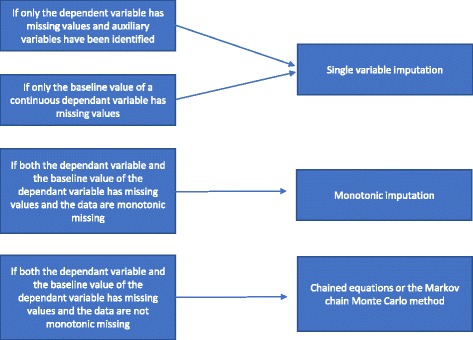
BACKGROUND: Missing data may seriously compromise inferences from randomised clinical trials, especially if missing data are not handled appropriately. The potential bias due to missing data depends on the mechanism causing the data to be missing, and the analytical methods applied to amend the missingness. Therefore, the analysis of trial data with missing values requires careful planning and attention. METHODS: The authors had several meetings and discussions considering optimal ways of handling missing data to minimise the bias potential. We also searched PubMed (key words: missing data; randomi*; statistical analysis) and reference lists of known studies for papers (theoretical papers; empirical studies; simulation studies; etc.) on how to deal with missing data when analysing randomised clinical trials. RESULTS: Handling missing data is an important, yet difficult and complex task when analysing results of randomised clinical trials. We consider how to optimise the handling of missing data during the planning stage of a randomised clinical trial and recommend analytical approaches which may prevent bias caused by unavoidable missing data. We consider the strengths and limitations of using of best-worst and worst-best sensitivity analyses, multiple imputation, and full information maximum likelihood. We also present practical flowcharts on how to deal with missing data and an overview of the steps that always need to be considered during the analysis stage of a trial. CONCLUSIONS: We present a practical guide and flowcharts describing when and how multiple imputation should be used to handle missing data in randomised clinical.
Overview
The claims and statistics of this paper haven’t been checked yet.
Free: it reads the open-access text and checks the first 5 claims that cite a source we can check. Create a free account to check every claim.
Integrity signals
Registry
Cites
Statistics
Figures
Verification
Claims the paper makes
The claims and statistics of this paper haven’t been checked yet.
Free: it reads the open-access text and checks the first 5 claims that cite a source we can check. Create a free account to check every claim.
Claims other papers make about this one
Each is checked against this paper’s own text: does it say what the citing paper says it does?
The source backs part of the claim, not all of it — or backs it for a different population, condition or comparison.
In the citing paper
“Data analyses were performed using an intent-to-treat approach.”
From Impact of acceptance and commitment therapy on physical and psychological symptoms in advanced gastrointestinal cancer patients and caregivers: Secondary results of a pilot randomized trial (2023) · cites this paper as Jakobsen et al., 2017
Experimental — accuracy not yet measuredThe source backs part of the claim, not all of it — or backs it for a different population, condition or comparison.
In the citing paper
“As for the management of missing data, if the missing data represents less than 5% of the study’s total data collected, it will be ignored. If the missing data represents more than 5% but less than 40% of the total data collected and is assumed to be randomly missing, then multiple imputation (restricted maximum likelihood estimation) will be performed using Stata 15. However, if the missing data”
From Study protocol on the efficacy of exergames-acceptance and commitment therapy program for the treatment of major depressive disorder: Comparison with acceptance and commitment therapy alone and treatment-as-usual in a multicentre randomised controlled trial (2024) · cites this paper as [47]
Experimental — accuracy not yet measuredThe source backs part of the claim, not all of it — or backs it for a different population, condition or comparison.
In the citing paper
“In the handling of missing data, if only 5% to the total data collected is missing, then this missing data will be ignored. If the missing data is around 5% to 40% and if it is assumed to be randomly missing, then multiple imputation with restricted maximum likelihood estimation will be utilized (using Stata 15).”
From Research protocol of the efficacy of probiotics for the treatment of alcohol use disorder among adult males: A comparison with placebo and acceptance and commitment therapy in a randomized controlled trial (2023) · cites this paper as [54]
Experimental — accuracy not yet measuredThe source backs part of the claim, not all of it — or backs it for a different population, condition or comparison.
In the citing paper
“To handle any missing data, if the missing data represent less than 5% of the study’s total collected data, they will be ignored. If the missing data represent more than 5% but less than 40% of the total collected and are assumed to be randomly missing, then multiple imputation (restricted maximum likelihood estimation) will be performed using Stata 15. However, if the missing data represent more”
From Acceptance and commitment therapy versus mindfulness-based stress reduction for newly diagnosed head and neck cancer patients: A randomized controlled trial assessing efficacy for positive psychology, depression, anxiety, and quality of life (2022) · cites this paper as [68]
Experimental — accuracy not yet measuredThe source backs part of the claim, not all of it — or backs it for a different population, condition or comparison.
In the citing paper
“Based on published guidelines, 33 data from participants lost to all follow‐up (n = 3) were not imputed because all missing were in the supportive therapy arm which suggests the complete case is biased toward the null”
From Retraining and control therapy for pediatric psychogenic non-epileptic seizures (2020) · cites this paper as [33]
Experimental — accuracy not yet measured
7 more claims about this paper
Create a free account to see every claim other papers make about this one.
Self-check
Percentages, sums and reported differences re-computed from the paper’s own numbers.
The self-check needs the paper’s full text.
Citations
Cites
Sterne, J. A. C., White, I. R., Carlin, J. B., Spratt, M., Royston, P., Kenward, M. G., Wood, A. M., & Carpenter, J. R. (2009) · BMJ · doi:10.1136/bmj.b2393 · Cited by 7,299 · cited 17×
“Missing data may seriously compromise inferences from randomised clinical trials, especially if missingness is not at random and if missing data are not handled appropriately [3, 4].”
BackgroundMethodInfluentialIntravenous Fluids and Acute Kidney Injury
Ding, X., Cheng, Z., & Qian, Q. (2017) · Blood Purification · doi:10.1159/000452702 · Cited by 6,827
The prevention and treatment of missing data in clinical trials
Little, R. J., D'Agostino, R., Cohen, M. L., Dickersin, K., Emerson, S. S., Farrar, J. T., Frangakis, C., Hogan, J. W., Molenberghs, G., Murphy, S. A., et al. (2012) · New England Journal of Medicine · doi:10.1056/nejmsr1203730 · Cited by 1,884 · cited 4×
“Sensitivity analyses may show how assumptions, different from those made in the primary analysis influence the results obtained [3, 6].”
BackgroundInfluentialHydroxyethyl Starch 130/0.42 versus Ringer's Acetate in Severe Sepsis
Perner, A., Haase, N., Guttormsen, A. B., Tenhunen, J., Klemenzson, G., Åneman, A., Madsen, K. R., Møller, M. H., Elkjær, J. M., Poulsen, L. M., et al. (2012) · New England Journal of Medicine · doi:10.1056/nejmoa1204242 · Cited by 1,813 · cited 1×
“Best-worst and worst-best case sensitivity analyses [24, 25] may be used if in doubt: first a ‘best-worst-case’ scenario dataset is generated where it is assumed that all participants lost to follow-up in one group (referred to as group 1) have had a beneficial outcome (for example, had no serious adverse event); and…”
MethodSelf-citationIndustry sponsorship and research outcome
Lundh, A., Lexchin, J., Mintzes, B., Schroll, J. B., & Bero, L. (2017) · Cochrane Database of Systematic Reviews · doi:10.1002/14651858.mr000033.pub3 · Cited by 1,697
Jakobsen, J. C., Wetterslev, J., Winkel, P., Lange, T., & Gluud, C. (2014) · BMC Medical Research Methodology · doi:10.1186/1471-2288-14-120 · Cited by 704 · cited 5×
“Then a ‘worst-best-case’ scenario dataset is generated where it is assumed that all participants lost to follow-up in group 1 have had a harmful outcome; and that all those lost to follow-up in group 2 have had a beneficial outcome [23, 24].”
BackgroundMethodInfluentialSelf-citationHorton, N. J., & Lipsitz, S. R. (2001) · The American Statistician · doi:10.1198/000313001317098266 · Cited by 600 · cited 1×
“Five imputed datasets have traditionally been suggested to be sufficient on theoretical grounds, but 50 datasets (or more) seem preferable to reduce sampling variability from the imputation process [4, 21, 22].”
BackgroundHróbjartsson, A., Thomsen, A. S. S., Emanuelsson, F., Tendal, B., Hilden, J., Boutron, I., Ravaud, P., & Brorson, S. (2013) · Canadian Medical Association Journal · doi:10.1503/cmaj.120744 · Cited by 527
Hrobjartsson, A., Thomsen, A. S. S., Emanuelsson, F., Tendal, B., Hilden, J., Boutron, I., Ravaud, P., & Brorson, S. (2012) · BMJ · doi:10.1136/bmj.e1119 · Cited by 483
Hróbjartsson, A., Emanuelsson, F., Skou Thomsen, A. S., Hilden, J., & Brorson, S. (2014) · International Journal of Epidemiology · doi:10.1093/ije/dyu115 · Cited by 462
Research works printed but not linked: 2
- 22. StataCorp. Stata: release 14. Statistical software. College Station, TX: StataCorp LP; 2015.
- 28. Allison PD. Handling missing data by maximum likelihood, statistical horizons. In: SAS global forum 2012 statistics and data analysis; 2012.
Cited by
Reporting animal research: Explanation and elaboration for the ARRIVE guidelines 2.0
Percie du Sert, N., Ahluwalia, A., Alam, S., Avey, M. T., Baker, M., Browne, W. J., Clark, A., Cuthill, I. C., Dirnagl, U., Emerson, M., et al. (2020) · PLOS Biology · doi:10.1371/journal.pbio.3000411 · Cited by 2,677
“It is also important to consider and justify analysis methods that account for missing data [55,56].”
BackgroundThe proportion of missing data should not be used to guide decisions on multiple imputation
Madley-Dowd, P., Hughes, R., Tilling, K., & Heron, J. (2019) · Journal of Clinical Epidemiology · doi:10.1016/j.jclinepi.2019.02.016 · Cited by 1,053
“These findings provide an example of valid estimates from properly specified MI at much larger proportions of missing data than current guidance [19] advises.”
BackgroundThe SOFA score—development, utility and challenges of accurate assessment in clinical trials
Lambden, S., Laterre, P. F., Levy, M. M., & Francois, B. (2019) · Critical Care · doi:10.1186/s13054-019-2663-7 · Cited by 979
Hypothermia versus Normothermia after Out-of-Hospital Cardiac Arrest
Dankiewicz, J., Cronberg, T., Lilja, G., Jakobsen, J. C., Levin, H., Ullén, S., Rylander, C., Wise, M. P., Oddo, M., Cariou, A., et al. (2021) · New England Journal of Medicine · doi:10.1056/nejmoa2100591 · Cited by 993
Self-citationRettie, H., & Daniels, J. (2021) · American Psychologist · doi:10.1037/amp0000710 · Cited by 526
Cramer, S. C., Dodakian, L., Le, V., See, J., Augsburger, R., McKenzie, A., Zhou, R. J., Chiu, N. L., Heckhausen, J., Cassidy, J. M., et al. (2019) · JAMA Neurology · doi:10.1001/jamaneurol.2019.1604 · Cited by 400
Lower or Higher Oxygenation Targets for Acute Hypoxemic Respiratory Failure
Schjørring, O. L., Klitgaard, T. L., Perner, A., Wetterslev, J., Lange, T., Siegemund, M., Bäcklund, M., Keus, F., Laake, J. H., Morgan, M., et al. (2021) · New England Journal of Medicine · doi:10.1056/nejmoa2032510 · Cited by 370
Self-citationTwo-Year Clinical Trial of the Low-Concentration Atropine for Myopia Progression (LAMP) Study
Yam, J. C., Li, F. F., Zhang, X., Tang, S. M., Yip, B. H. K., Kam, K. W., Ko, S. T., Young, A. L., Tham, C. C., Chen, L. J., et al. (2020) · Ophthalmology · doi:10.1016/j.ophtha.2019.12.011 · Cited by 317
Gutwinski, S., Schreiter, S., Deutscher, K., & Fazel, S. (2021) · PLOS Medicine · doi:10.1371/journal.pmed.1003750 · Cited by 281
Mahfoud, F., Kandzari, D. E., Kario, K., Townsend, R. R., Weber, M. A., Schmieder, R. E., Tsioufis, K., Pocock, S., Dimitriadis, K., Choi, J. W., et al. (2022) · The Lancet · doi:10.1016/s0140-6736(22)00455-x · Cited by 295
Nettis, M. A., Lombardo, G., Hastings, C., Zajkowska, Z., Mariani, N., Nikkheslat, N., Worrell, C., Enache, D., McLaughlin, A., Kose, M., et al. (2021) · Neuropsychopharmacology · doi:10.1038/s41386-020-00948-6 · Cited by 235
Yam, J. C., Zhang, X. J., Zhang, Y., Wang, Y. M., Tang, S. M., Li, F. F., Kam, K. W., Ko, S. T., Yip, B. H. K., Young, A. L., et al. (2022) · Ophthalmology · doi:10.1016/j.ophtha.2021.10.002 · Cited by 222
Quality 4.0: a review of big data challenges in manufacturing
Escobar, C. A., McGovern, M. E., & Morales-Menendez, R. (2021) · Journal of Intelligent Manufacturing · doi:10.1007/s10845-021-01765-4 · Cited by 191
“To deal with missing information, deleting rows or columns is a widely used approach; however, this method is not advised unless the proportion of eliminated records is very small (< 5%) [59].”
MethodBest practices for addressing missing data through multiple imputation
Woods, A. D., Gerasimova, D., Van Dusen, B., Nissen, J., Bainter, S., Uzdavines, A., Davis‐Kean, P. E., Halvorson, M., King, K. M., Logan, J. A. R., et al. (2024) · Infant and Child Development · doi:10.1002/icd.2407 · Cited by 208
Haslam, C., Cruwys, T., Chang, M. X. L., Bentley, S. V., Haslam, S. A., Dingle, G. A., & Jetten, J. (2019) · Journal of Consulting and Clinical Psychology · doi:10.1037/ccp0000427 · Cited by 207
Attal, N., Poindessous-Jazat, F., De Chauvigny, E., Quesada, C., Mhalla, A., Ayache, S. S., Fermanian, C., Nizard, J., Peyron, R., Lefaucheur, J.-P., et al. (2021) · Brain · doi:10.1093/brain/awab208 · Cited by 202
A remote healthcare monitoring framework for diabetes prediction using machine learning
Ramesh, J., Aburukba, R., & Sagahyroon, A. (2021) · Healthcare Technology Letters · doi:10.1049/htl2.12010 · Cited by 188
Machine Learning in Nutrition Research
Kirk, D., Kok, E., Tufano, M., Tekinerdogan, B., Feskens, E. J. M., & Camps, G. (2022) · Advances in Nutrition · doi:10.1093/advances/nmac103 · Cited by 178
Dexamethasone and Surgical-Site Infection
Corcoran, T. B., Myles, P. S., Forbes, A. B., Cheng, A. C., Bach, L. A., O’Loughlin, E., Leslie, K., Chan, M. T. V., Story, D., Short, T. G., et al. (2021) · New England Journal of Medicine · doi:10.1056/nejmoa2028982 · Cited by 184
Zhang, Y., & Thorburn, P. J. (2022) · Future Generation Computer Systems · doi:10.1016/j.future.2021.09.033 · Cited by 179
Montero-Marin, J., Allwood, M., Ball, S., Crane, C., De Wilde, K., Hinze, V., Jones, B., Lord, L., Nuthall, E., Raja, A., et al. (2022) · Evidence Based Mental Health · doi:10.1136/ebmental-2022-300439 · Cited by 184
Machine learning to predict end stage kidney disease in chronic kidney disease
Bai, Q., Su, C., Tang, W., & Li, Y. (2022) · Scientific Reports · doi:10.1038/s41598-022-12316-z · Cited by 169
“…handle missing data include complete case analysis, missing indicator, single value imputation, sensitivity analyses, and model-based methods (e.g. mixed models or generalized estimating equations) 43–45 value imputation are favored by researchers primarily due to the ease of implementation 45–47 .”
MethodBhatt, D. L., Vaduganathan, M., Kandzari, D. E., Leon, M. B., Rocha-Singh, K., Townsend, R. R., Katzen, B. T., Oparil, S., Brar, S., DeBruin, V., et al. (2022) · The Lancet · doi:10.1016/s0140-6736(22)01787-1 · Cited by 182
A Global Survey on the Impact of COVID-19 on Urological Services
Teoh, J. Y.-C., Ong, W. L. K., Gonzalez-Padilla, D., Castellani, D., Dubin, J. M., Esperto, F., Campi, R., Gudaru, K., Talwar, R., Okhunov, Z., et al. (2020) · European Urology · doi:10.1016/j.eururo.2020.05.025 · Cited by 173
“case analysis as the primary analysis, and imputation was not performed [11,12].”
Practical Guidelines to Develop and Evaluate a Questionnaire
Kishore, K., Jaswal, V., Kulkarni, V., & De, D. (2021) · Indian Dermatology Online Journal · doi:10.4103/idoj.idoj_674_20 · Cited by 221
“The typically recommended threshold for the missingness is 5%.[10] There are broadly three types of missingness, such as missing completely at random, missing at random, and not missing at random.”
Haloperidol for the Treatment of Delirium in ICU Patients
Andersen-Ranberg, N. C., Poulsen, L. M., Perner, A., Wetterslev, J., Estrup, S., Hästbacka, J., Morgan, M., Citerio, G., Caballero, J., Lange, T., et al. (2022) · New England Journal of Medicine · doi:10.1056/nejmoa2211868 · Cited by 171
“…primary outcome was not found to be significant, the secondary outcomes would be considered to be explorative in accordance with the principles in Jakobsen et al.17,18 No imputation for missing data was performed because the number of patients with missing data was low for all outcomes and was…”
ResultSelf-citationTaccone, F. S., Rynkowski, C. B., Møller, K., Lormans, P., Quintana-Díaz, M., Caricato, A., Cardoso Ferreira, M. A., Badenes, R., Kurtz, P., Søndergaard, C. B., et al. (2024) · JAMA · doi:10.1001/jama.2024.20424 · Cited by 164
SPIRIT 2025 explanation and elaboration: updated guideline for protocols of randomised trials
Hróbjartsson, A., Boutron, I., Hopewell, S., Moher, D., Schulz, K. F., Collins, G. S., Tunn, R., Aggarwal, R., Berkwits, M., Berlin, J. A., et al. (2025) · BMJ · doi:10.1136/bmj-2024-081660 · Cited by 171
Comparing machine learning algorithms for predicting ICU admission and mortality in COVID-19
Subudhi, S., Verma, A., Patel, A. B., Hardin, C. C., Khandekar, M. J., Lee, H., McEvoy, D., Stylianopoulos, T., Munn, L. L., Dutta, S., et al. (2021) · npj Digital Medicine · doi:10.1038/s41746-021-00456-x · Cited by 170
Liu, M., Li, S., Yuan, H., Ong, M. E. H., Ning, Y., Xie, F., Saffari, S. E., Shang, Y., Volovici, V., Chakraborty, B., et al. (2023) · Artificial Intelligence in Medicine · doi:10.1016/j.artmed.2023.102587 · Cited by 224
“Although there are several existing reviews on missing value imputation, most of them either focus on non-DL-based methods[14, 15], or treat the neural network as a single type of method[16, 17].”
BackgroundCui, X., Lee, M., Koo, C., & Hong, T. (2024) · Energy and Buildings · doi:10.1016/j.enbuild.2024.113997 · Cited by 162
Ali, S., Eum, H.-I., Cho, J., Dan, L., Khan, F., Dairaku, K., Shrestha, M. L., Hwang, S., Nasim, W., Khan, I. A., et al. (2019) · Atmospheric Research · doi:10.1016/j.atmosres.2019.02.009 · Cited by 161
Relative food insecurity, mental health and wellbeing in 160 countries
Elgar, F. J., Pickett, W., Pförtner, T., Gariépy, G., Gordon, D., Georgiades, K., Davison, C., Hammami, N., MacNeil, A. H., Silva, M. A. D., et al. (2020) · Social Science & Medicine · doi:10.1016/j.socscimed.2020.113556 · Cited by 193
Thybo, K. H., Hägi-Pedersen, D., Dahl, J. B., Wetterslev, J., Nersesjan, M., Jakobsen, J. C., Pedersen, N. A., Overgaard, S., Schrøder, H. M., Schmidt, H., et al. (2019) · JAMA · doi:10.1001/jama.2018.22039 · Cited by 142
“1, Healthy 34 (25) 44 (31) 44 (32) 43 (31)”
Self-citationSchroé, H., Van Dyck, D., De Paepe, A., Poppe, L., Loh, W. W., Verloigne, M., Loeys, T., De Bourdeaudhuij, I., & Crombez, G. (2020) · International Journal of Behavioral Nutrition and Physical Activity · doi:10.1186/s12966-020-01001-x · Cited by 142
Phenotype clustering in health care: A narrative review for clinicians
Loftus, T. J., Shickel, B., Balch, J. A., Tighe, P. J., Abbott, K. L., Fazzone, B. J., Anderson, E., Rozowsky, J. M., Ozrazgat‐Baslanti, T., Ren, Y., et al. (2022) · Frontiers in Artificial Intelligence · doi:10.3389/frai.2022.842306 · Cited by 154
“, bilirubin levels are missing because there was no clinical concern for hepatic dysfunction), there is currently no consensus regarding how to handle the missing data appropriately; it may be favorable to use binary missingness indicators (indicators of whether the variable is missing) or other techniques that preser…”
BackgroundEvaluating the state of the art in missing data imputation for clinical data
Luo, Y. (2022) · Briefings in Bioinformatics · doi:10.1093/bib/bbab489 · Cited by 127
“In fact, for clinical data, including longitudinal data, multiple imputation (MI), for example, multivariate imputation by chained equations (MICE) [2], is still a widely used standard practice for addressing the presence of missing data [7, 8].”
Walker, S., Goodfellow, H., Pookarnjanamorakot, P., Murray, E., Bindman, J., BLANDFORD, A. E., Bradbury, K. J., Cooper, B., Hamilton, F. L., Hurst, J. R., et al. (2023) · BMJ Open · doi:10.1136/bmjopen-2022-069217 · Cited by 153
Berger, N., Mackenzie, E., & Holmes, K. (2020) · The Australian Educational Researcher · doi:10.1007/s13384-020-00379-8 · Cited by 160
Ghawadra, S. F., Lim Abdullah, K., Choo, W. Y., Danaee, M., & Phang, C. K. (2020) · Journal of Nursing Management · doi:10.1111/jonm.13049 · Cited by 116
Thakur, N., Hessler, D., Koita, K., Ye, M., Benson, M., Gilgoff, R., Bucci, M., Long, D., & Harris, N. B. (2020) · Child Abuse & Neglect · doi:10.1016/j.chiabu.2020.104685 · Cited by 132
Post-stroke outcomes predicted from multivariate lesion-behaviour and lesion network mapping
Bowren, M. D., Bruss, J., Manzel, K. W., Edwards, D. J., Liu, C. Y., Corbetta, M., Tranel, D., & Boes, A. D. (2022) · Brain · doi:10.1093/brain/awac010 · Cited by 128
GLP-1RA and SGLT2i Medications for Type 2 Diabetes and Alzheimer Disease and Related Dementias
Tang, H., Donahoo, W. T., DeKosky, S. T., Lee, Y. A., Kotecha, P., Svensson, M., Bian, J., & Guo, J. S. (2025) · JAMA Neurology · doi:10.1001/jamaneurol.2025.0353 · Cited by 118
Imputation of missing data with class imbalance using conditional generative adversarial networks
Awan, S. E., Bennamoun, M., Sohel, F. A., Sanfilippo, F. M., & Dwivedi, G. (2021) · Neurocomputing · doi:10.1016/j.neucom.2021.04.010 · Cited by 120
Investigating and Remediating Selection Bias in Geriatrics Research: The Selection Bias Toolkit
Banack, H. R., Kaufman, J. S., Wactawski‐Wende, J., Troen, B. R., & Stovitz, S. D. (2019) · Journal of the American Geriatrics Society · doi:10.1111/jgs.16022 · Cited by 129
Chronic Kidney Disease Prediction Using Machine Learning Methods
Ekanayake, I. U., & Herath, D. (2020) · Moratuwa Engineering Research Conference (MERCon) · doi:10.1109/mercon50084.2020.9185249 · Cited by 102
Cerebral Oximetry Monitoring in Extremely Preterm Infants
Hansen, M. L., Pellicer, A., Hyttel-Sørensen, S., Ergenekon, E., Szczapa, T., Hagmann, C. F., Naulaers, G., Mintzer, J. P., Fumagalli, M., Dimitriou, G., et al. (2023) · New England Journal of Medicine · doi:10.1056/nejmoa2207554 · Cited by 117
Carlile, O., Briggs, A. H., Henderson, A. D., Butler-Cole, B. F. C., Tazare, J., Tomlinson, L. A., Marks, M., Jit, M., Lin, L.-Y., Bates, C., et al. (2024) · The Lancet Regional Health - Europe · doi:10.1016/j.lanepe.2024.100908 · Cited by 134
The Sin of Missing Data: Is All Forgiven by Way of Imputation?
Dettori, J. R., Norvell, D. C., & Chapman, J. R. (2018) · Global Spine Journal · doi:10.1177/2192568218811922 · Cited by 108
Pham, H. G., Chuah, S., & Feeny, S. (2021) · Ecological Economics · doi:10.1016/j.ecolecon.2021.107000 · Cited by 120
Sisk, R., Sperrin, M., Peek, N., van Smeden, M., & Martin, G. P. (2023) · Statistical Methods in Medical Research · doi:10.1177/09622802231165001 · Cited by 99
“8 However, this topic has recently received renewed interest in the context of producing CPMs, with authors arguing the basis on which MI is commonly used relies too heavily on principles relevant to causal inference and descriptive research, which are less relevant when the goal is to provide…”
BackgroundZhao, N., Jiao, Y., Ma, T., Zhao, M., Fan, Z., Yin, X., Yu, L., & Yu, G. (2019) · The Science of The Total Environment · doi:10.1016/j.scitotenv.2019.06.374 · Cited by 102
Buelens, T., Luyckx, K., Kiekens, G., Gandhi, A., Muehlenkamp, J. J., & Claes, L. (2020) · Journal of Affective Disorders · doi:10.1016/j.jad.2019.09.009 · Cited by 96
Isernia, S., Tella, S. D., Pagliari, C., Jonsdottir, J., Castiglioni, C., Gindri, P., Salza, M., Gramigna, C., Palumbo, G., Molteni, F., et al. (2020) · Frontiers in Neurology · doi:10.3389/fneur.2020.00846 · Cited by 112
“The multiple imputation procedure was applied in accordance with guidelines recommended for clinical trial data (45), which suggests that multiple imputation should not be used with a percentage of missing values more than 40%.”
MethodMuscle strength and motor function in adolescents and adults with spinal muscular atrophy
Wijngaarde, C. A., Stam, M., Otto, L. A. M., Bartels, B., Asselman, F., van Eijk, R. P. A., van den Berg, L. H., Goedee, H. S., Wadman, R. I., & van der Pol, W. L. (2020) · Neurology · doi:10.1212/wnl.0000000000010540 · Cited by 103
“We did not imputemissing data because it is likely that data were missing not at random but as a reflection of SMA disease characteristics.(35) For baseline characteristics, we used descriptive statistics.”
MethodKeel, P. K., Gomez, M. M., Harris, L., Kennedy, G. A., Ribeiro, J., & Joiner, T. E. (2020) · International Journal of Eating Disorders · doi:10.1002/eat.23375 · Cited by 94
Lee, S., de Barros, F. C., de Castro, C. S. M., & Sato, T. D. O. (2020) · Industrial Health · doi:10.2486/indhealth.2020-0188 · Cited by 93
Łukasik, J., Dierikx, T. H., der Vaart, I. B.-V., de Meij, T. G. J., Szajewska, H., Multispecies Probiotic in AAD Study Group, van der Schoor, S. R. D., Chegary, M., & Koning, C. J. M. (2022) · Archives of Pediatrics and Adolescent Medicine · doi:10.1001/jamapediatrics.2022.1973 · Cited by 97
Five-Year Clinical Trial of the Low-Concentration Atropine for Myopia Progression (LAMP) Study
Zhang, X. J., Zhang, Y., Yip, B. H. K., Kam, K. W., Tang, F., Ling, X., Ng, M. P. H., Young, A. L., Wu, P., Tham, C. C. Y., et al. (2024) · Ophthalmology · doi:10.1016/j.ophtha.2024.03.013 · Cited by 106
Retraining and control therapy for pediatric psychogenic non-epileptic seizures
Fobian, A. D., Long, D. M., & Szaflarski, J. P. (2020) · Annals of Clinical and Translational Neurology · doi:10.1002/acn3.51138 · Cited by 90
Wang, K., Tian, J., Zheng, C., Yang, H., Ren, J. L., Li, C., Han, Q., & Zhang, Y. (2021) · Risk Management and Healthcare Policy · doi:10.2147/rmhp.s310295 · Cited by 98
SuperMICE: An Ensemble Machine Learning Approach to Multiple Imputation by Chained Equations
Laqueur, H. S., Shev, A. B., & Kagawa, R. M. C. (2021) · American Journal of Epidemiology · doi:10.1093/aje/kwab271 · Cited by 97
Ingraham, N. E., Purcell, L. N., Karam, B. S., Dudley, R. A., Usher, M. G., Warlick, C. A., Allen, M., Melton, G. B., Charles, A. G., & Tignanelli, C. J. (2021) · Journal of General Internal Medicine · doi:10.1007/s11606-021-06790-w · Cited by 88
“06%) and imputation was deemed unnecessary.(42) Ingraham: Racial and Ethnic Disparities in COVID-19 Hospital Admissions JGIM”
BackgroundGao, Y., Shah, L. M., Ding, J., & Martin, S. S. (2023) · Journal of the American Heart Association · doi:10.1161/jaha.122.028205 · Cited by 80
Atit, K., Power, J., Veurink, N. L., Uttal, D. H., Sorby, S., Panther, G., Msall, C., Fiorella, L., & Carr, M. (2020) · International Journal of STEM Education · doi:10.1186/s40594-020-00234-3 · Cited by 101
Matos, A. D., Barbosa, F., Cunha, C., Voss, G., & Correia, F. (2021) · BMC Public Health · doi:10.1186/s12889-021-10956-w · Cited by 301
“procedures [46], that refers that multiple imputation should be used with proportions of missing data higher than 5%, and since SHARE provides multiple imputations of the missing values, we used imputed economic and health variables in order to maximize the number of observations.”
MethodGlasbey, J. C., Abbott, T. E. F., Ademuyiwa, A. O., Adisa, A., Alameer, E. S., Alshryda, S. J., Arnaud, A. P., Bankhead-Kendall, B., Chaar, M. K. A., Chaudhry, D., et al. (2022) · The Lancet · doi:10.1016/s0140-6736(22)01846-3 · Cited by 98
Pasricha, S., Mwangi, M. N., Moya, E., Ataíde, R., Mzembe, G., Harding, R., Zinenani, T., Larson, L. M., Demir, A. Y., Nkhono, W., et al. (2023) · The Lancet · doi:10.1016/s0140-6736(23)00278-7 · Cited by 89
Working from Home After the COVID-19 Pandemic: Do Company Employees Sit More and Move Less?
Koohsari, M. J., Nakaya, T., Shibata, A., Ishii, K., & Oka, K. (2021) · Sustainability · doi:10.3390/su13020939 · Cited by 96
“A complete-case analysis was conducted because the proportion of missing data for our variables of interest was low (5%) [31].”
MethodJepsen, D. B., Ryg, J., Hansen, S., Jørgensen, N. R., Gram, J., & Masud, T. (2019) · Osteoporosis International · doi:10.1007/s00198-019-05029-z · Cited by 82
The registration continuum in clinical science: A guide toward transparent practices
Benning, S. D., Bachrach, R. L., Smith, E. A., Freeman, A. J., & Wright, A. G. C. (2019) · Journal of Abnormal Psychology · doi:10.1037/abn0000451 · Cited by 77
Eisen, D. P., Leder, K. S., Woods, R. L., Lockery, J. E., McGuinness, S. L., Wolfe, R. S., Pilcher, D. V., Moore, E., Shastry, A. M., Nelson, M. R., et al. (2020) · The Lancet Respiratory Medicine · doi:10.1016/s2213-2600(20)30411-2 · Cited by 85
Kock, L. S., Shahab, L., Moore, G. F., Beard, E., Bauld, L., Reid, G., Brose, L. S., Horton, M., Gould, A., & Brown, J. (2021) · Wellcome Open Research · doi:10.12688/wellcomeopenres.16700.1 · Cited by 77
“If data are missing from variables in a small number of cases ( 5%), these cases will be removed from the analytical sample and a complete-case analysis will be conducted under the assumption that they are missing completely at random 41 .”
BackgroundOnakpoya, I. J., Lee, J. J., Mahtani, K. R., Aronson, J. K., & Heneghan, C. J. (2020) · British Journal of Clinical Pharmacology · doi:10.1111/bcp.14210 · Cited by 75
Effect of Screen Time on Recovery From Concussion: A Randomized Clinical Trial
Macnow, T. E., Curran, T., Tolliday, C., Martin, K., McCarthy, M. L., Ayturk, D., Babu, K. M., & Mannix, R. (2021) · Archives of Pediatrics and Adolescent Medicine · doi:10.1001/jamapediatrics.2021.2782 · Cited by 84
Rüddel, H., Thomas-Rüddel, D. O., Reinhart, K., Bach, F., Gerlach, H., Lindner, M., Marshall, J. C., Simon, P., Weiß, M., Bloos, F., et al. (2022) · Critical Care · doi:10.1186/s13054-022-03901-9 · Cited by 87
“Therefore, analysis of complete data was regarded as suitable strategy for treating missing data [25].”
MethodNiemelä, V. H., Siddiqui, F., Ameloot, K., Reinikainen, M., Grand, J., Hästbacka, J., Hassager, C., Kjærgaard, J., Åneman, A., Tiainen, M., et al. (2023) · Resuscitation · doi:10.1016/j.resuscitation.2023.109862 · Cited by 76
Self-citationSotiropoulos, J. X., Oei, J. L., Schmölzer, G. M., Libesman, S., Hunter, K. E., Williams, J. G., Webster, A. C., Vento, M., Kapadia, V., Rabi, Y., et al. (2024) · Archives of Pediatrics and Adolescent Medicine · doi:10.1001/jamapediatrics.2024.1848 · Cited by 82
Rimes, K. A., Ion, D., Wingrove, J., & Carter, B. (2019) · Journal of Consulting and Clinical Psychology · doi:10.1037/ccp0000416 · Cited by 82
Bliznashka, L., Udo, I. E., Sudfeld, C. R., Fawzi, W. W., & Yousafzai, A. K. (2021) · PLoS Medicine · doi:10.1371/journal.pmed.1003781 · Cited by 89
“2%, respectively, below the 5% threshold typically recommended for complete case analysis [54].”
Pagliari, C., Tella, S. D., Jonsdottir, J., Mendozzi, L., Rovaris, M., Icco, R. D., Milanesi, T., Federico, S., Agostini, M., Goffredo, M., et al. (2021) · Journal of Telemedicine and Telecare · doi:10.1177/1357633x211054839 · Cited by 86
Stonehouse, W., Benassi-Evans, B., Bednarz, J., Vincent, A. D., Hall, S., & Hill, C. L. (2022) · American Journal of Clinical Nutrition · doi:10.1093/ajcn/nqac125 · Cited by 82
“(25) and Bennett (26), a complete case analysis (based on participants with a complete set of outcome data) was undertaken because the percentage of missing data in outcome variables was considered small (∼10%) and baseline covariate data were mostly complete.”
Vithayathil, M. K., Koku, D., Campani, C., Nault, J., Sutter, O., Ganne‐Carrié, N., Aboagye, E. O., & Sharma, R. (2025) · Journal of Hepatology · doi:10.1016/j.jhep.2025.04.017 · Cited by 84
Zuckermann, A. M. E., Battista, K., Bélanger, R. E., Haddad, S. H. S., Butler, A. E., Costello, M. J., & Leatherdale, S. T. (2021) · Preventive Medicine Reports · doi:10.1016/j.pmedr.2021.101351 · Cited by 86
The COVID-19 pandemic and its global effects on dental practice. An International survey
Campus, G., Betancourt, M. D., Mg, C., Giacaman, R., Manton, D. J., Douglas, G., Carvalho, T. S., Jc, C., Vuković, A., Martinicorena, F. J. C., et al. (2021) · Journal of Dentistry · doi:10.1016/j.jdent.2021.103749 · Cited by 93
Bottigliengo, D., Baldi, I., Lanera, C., Lorenzoni, G., Bejko, J., Bottio, T., Tarzia, V., Carrozzini, M., Gerosa, G., Berchialla, P., et al. (2021) · BMC Medical Research Methodology · doi:10.1186/s12874-021-01454-z · Cited by 86
“However, these approaches might be problematic in several situations [53, 54].”
BackgroundSedentary behaviour and sleep quality
Koohsari, M. J., Yasunaga, A., McCormack, G. R., Shibata, A., Ishii, K., Liao, Y., Nagai, Y., & Oka, K. (2023) · Scientific Reports · doi:10.1038/s41598-023-27882-z · Cited by 82
Voß, H., Schlumbohm, S., Barwikowski, P., Wurlitzer, M., Dottermusch, M., Neumann, P., Schlüter, H., Neumann, J. E., & Krisp, C. (2022) · Nature Communications · doi:10.1038/s41467-022-31007-x · Cited by 83
Juul, S., Nielsen, N., Bentzer, P., Veroniki, A. A., Thabane, L., Linder, A., Klingenberg, S. L., Gluud, C. N., & Jakobsen, J. C. (2020) · Systematic Reviews · doi:10.1186/s13643-020-01371-0 · Cited by 73
Self-citationBray, A., Byrne, P. J., & O’Kelly, M. (2020) · Thinking Skills and Creativity · doi:10.1016/j.tsc.2020.100700 · Cited by 81
Dor‐Haim, H., Katzburg, S., Revach, P., Levine, H., & Barak, S. (2021) · BMC Public Health · doi:10.1186/s12889-021-11523-z · Cited by 79
Eleven quick tips for data cleaning and feature engineering
Chicco, D., Oneto, L., & Tavazzi, E. (2022) · PLoS Computational Biology · doi:10.1371/journal.pcbi.1010718 · Cited by 94
Cohen, E., Quartarone, S., Orkin, J., Moretti, M. E., Emdin, A. L., Guttmann, A., Willan, A. R., Major, N., Lim, A., Diaz, S., et al. (2023) · Archives of Pediatrics and Adolescent Medicine · doi:10.1001/jamapediatrics.2023.0115 · Cited by 76
Choi, Y., & FOX, A. M. (2022) · Social Science & Medicine · doi:10.1016/j.socscimed.2022.115440 · Cited by 77
Meade, R. D., Notley, S. R., Akerman, A. P., McGarr, G. W., Richards, B. J., McCourt, E. R., King, K. E., McCormick, J. J., Boulay, P., Sigal, R. J., et al. (2023) · Journal of Applied Physiology · doi:10.1152/japplphysiol.00227.2023 · Cited by 74
Malan, L., Smuts, C. M., Baumgartner, J., & Ricci, C. (2020) · Nutrition Research · doi:10.1016/j.nutres.2020.01.001 · Cited by 70
Ghione, P., Palomba, M. L., Patel, A. R., Bobillo, S., Deighton, K., Jacobson, C. A., Nahas, M. R., Hatswell, A. J., Jung, A. S., Kanters, S., et al. (2022) · Blood · doi:10.1182/blood.2021014375 · Cited by 69
Jones, L. M., Mitchell, K. J., & Beseler, C. L. (2023) · Contemporary School Psychology · doi:10.1007/s40688-023-00465-5 · Cited by 91
“We used pairwise deletion in the analyses of the data rather than imputing missing values because only our dependent variable had missing values; treatment group, gender, grade, and matched pretest responses were not missing (Jakobsen et al., 2017).”
MethodPsychological predictors of ‘living well’ with dementia: findings from the IDEAL study
Lamont, R. A., Nelis, S. M., Quinn, C., Martyr, A., Rippon, I., Kopelman, M. D., Hindle, J. V., Jones, R. W., Litherland, R., & Clare, L. (2019) · Aging & Mental Health · doi:10.1080/13607863.2019.1566811 · Cited by 78
Straudi, S., Manfredini, F., Lamberti, N., Martinuzzi, C., Maietti, E., & Basaglia, N. (2019) · Multiple Sclerosis Journal · doi:10.1177/1352458519833901 · Cited by 63
Metadata
- Authors
- Jakobsen, J. C., Gluud, C., Wetterslev, J., & Winkel, P.
- Affiliations
- Copenhagen University Hospital (DK)
- Corresponding author
- Jakobsen, Janus Christian
- Venue
- BMC Medical Research Methodology
- Published
- 2017-12
- Volume
- 17
- Issue
- 1
- Pages
- 162-162
- ISSN
- 1471-2288 (ISSN-L)
- PMC
- PMC5717805
- OpenAlex
- W2772803673
- Semantic Scholar
- 601b9d1445292bcdfd372c11b5a2eb752d7cf39e
- Cited by
- 2,747
- References
- 29
- Citations by year
- 2026: 287 · 2025: 433 · 2024: 455 · 2023: 443 · 2022: 468 · 2021: 361 · 2020: 205 · 2019: 78 · 2018: 15 · 2017: 1
- FWCI
- 56.41
- Type
- journal article
- Language
- en
- Open access
- gold
- doi.org
- Licence
- cc-by
- Locations
- BMC Medical Research Methodology (publishedVersion, cc-by)
- Europe PMC (PubMed Central) (publishedVersion, cc-by)
- PubMed Central (publishedVersion, cc-by)
- PubMed (publishedVersion)
- DOAJ (DOAJ: Directory of Open Access Journals) (submittedVersion, cc-by-sa)
- Funders
- Copenhagen Trial Unit, Centre for Clinical Intervention Research
- Topics
- Physical Sciences › Mathematics › Statistics and Probability › Statistical Methods and Bayesian Inference
- Physical Sciences › Mathematics › Statistics and Probability › Statistical Methods in Clinical Trials
- Social Sciences › Decision Sciences › Statistics, Probability and Uncertainty › Meta-analysis and systematic reviews
- Keywords
- missing data, multiple imputation, randomized controlled trials, full information maximum likelihood, missing data mechanisms
- MeSH terms
- Data Accuracy, Data Interpretation, Statistical, Humans, Models, Statistical, Randomized Controlled Trials as Topic
About these checks
Registry, retraction, Cites and statistics results are computed, not judged, with one exception: a printed reference that no index lists is read once by a model before it counts as a citation error. Claims are extracted by a model and kept only when their quote appears verbatim in the text; each cited source is then checked, with a model’s help, for whether it says what the claim relies on. Those verdicts can be wrong — read the claim’s quote and the cited source before relying on one.
Statistics and arithmetic are recomputed, not judged.
Confidence bands are shown only for fields calibrated on our annotated test set. None is calibrated yet, so no band is shown.
What counts as a claim ›How we measure confidence ›How we check this ›
Are you an author, or do you see a problem with this page? Request a review
Data sources
Bibliographic data: Semantic Scholar, OpenAlex, Crossref.
Contains information from the Semantic Scholar Academic Graph Datasets, made available under the ODC Attribution License (ODC-BY 1.0).
Semantic Scholar’s data is described in: Kinney, R., et al. (2023). The Semantic Scholar Open Data Platform. arXiv:2301.10140.
