

When and how should multiple imputation be used for handling missing data in randomised clinical trials – a practical guide with flowcharts
Open accessThe DOI matches its Crossref record; 29 of the 29 references it cites were found in a registry or an index.
Abstract
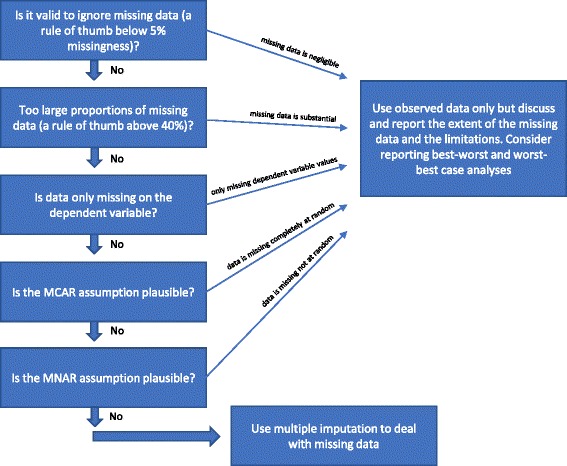
BACKGROUND: Missing data may seriously compromise inferences from randomised clinical trials, especially if missing data are not handled appropriately. The potential bias due to missing data depends on the mechanism causing the data to be missing, and the analytical methods applied to amend the missingness. Therefore, the analysis of trial data with missing values requires careful planning and attention. METHODS: The authors had several meetings and discussions considering optimal ways of handling missing data to minimise the bias potential. We also searched PubMed (key words: missing data; randomi*; statistical analysis) and reference lists of known studies for papers (theoretical papers; empirical studies; simulation studies; etc.) on how to deal with missing data when analysing randomised clinical trials. RESULTS: Handling missing data is an important, yet difficult and complex task when analysing results of randomised clinical trials. We consider how to optimise the handling of missing data during the planning stage of a randomised clinical trial and recommend analytical approaches which may prevent bias caused by unavoidable missing data. We consider the strengths and limitations of using of best-worst and worst-best sensitivity analyses, multiple imputation, and full information maximum likelihood. We also present practical flowcharts on how to deal with missing data and an overview of the steps that always need to be considered during the analysis stage of a trial. CONCLUSIONS: We present a practical guide and flowcharts describing when and how multiple imputation should be used to handle missing data in randomised clinical.
Overview
The claims and statistics of this paper haven’t been checked yet.
Free: it reads the open-access text and checks the first 5 claims that cite a source we can check. Create a free account to check every claim.
Integrity signals
Registry
Cites
Statistics
Figures
Verification
Claims the paper makes
The claims and statistics of this paper haven’t been checked yet.
Free: it reads the open-access text and checks the first 5 claims that cite a source we can check. Create a free account to check every claim.
Claims other papers make about this one
Each is checked against this paper’s own text: does it say what the citing paper says it does?
The source backs part of the claim, not all of it — or backs it for a different population, condition or comparison.
In the citing paper
“Data analyses were performed using an intent-to-treat approach.”
From Impact of acceptance and commitment therapy on physical and psychological symptoms in advanced gastrointestinal cancer patients and caregivers: Secondary results of a pilot randomized trial (2023) · cites this paper as Jakobsen et al., 2017
Experimental — accuracy not yet measuredThe source backs part of the claim, not all of it — or backs it for a different population, condition or comparison.
In the citing paper
“As for the management of missing data, if the missing data represents less than 5% of the study’s total data collected, it will be ignored. If the missing data represents more than 5% but less than 40% of the total data collected and is assumed to be randomly missing, then multiple imputation (restricted maximum likelihood estimation) will be performed using Stata 15. However, if the missing data”
From Study protocol on the efficacy of exergames-acceptance and commitment therapy program for the treatment of major depressive disorder: Comparison with acceptance and commitment therapy alone and treatment-as-usual in a multicentre randomised controlled trial (2024) · cites this paper as [47]
Experimental — accuracy not yet measuredThe source backs part of the claim, not all of it — or backs it for a different population, condition or comparison.
In the citing paper
“In the handling of missing data, if only 5% to the total data collected is missing, then this missing data will be ignored. If the missing data is around 5% to 40% and if it is assumed to be randomly missing, then multiple imputation with restricted maximum likelihood estimation will be utilized (using Stata 15).”
From Research protocol of the efficacy of probiotics for the treatment of alcohol use disorder among adult males: A comparison with placebo and acceptance and commitment therapy in a randomized controlled trial (2023) · cites this paper as [54]
Experimental — accuracy not yet measuredThe source backs part of the claim, not all of it — or backs it for a different population, condition or comparison.
In the citing paper
“To handle any missing data, if the missing data represent less than 5% of the study’s total collected data, they will be ignored. If the missing data represent more than 5% but less than 40% of the total collected and are assumed to be randomly missing, then multiple imputation (restricted maximum likelihood estimation) will be performed using Stata 15. However, if the missing data represent more”
From Acceptance and commitment therapy versus mindfulness-based stress reduction for newly diagnosed head and neck cancer patients: A randomized controlled trial assessing efficacy for positive psychology, depression, anxiety, and quality of life (2022) · cites this paper as [68]
Experimental — accuracy not yet measuredThe source backs part of the claim, not all of it — or backs it for a different population, condition or comparison.
In the citing paper
“Based on published guidelines, 33 data from participants lost to all follow‐up (n = 3) were not imputed because all missing were in the supportive therapy arm which suggests the complete case is biased toward the null”
From Retraining and control therapy for pediatric psychogenic non-epileptic seizures (2020) · cites this paper as [33]
Experimental — accuracy not yet measured
7 more claims about this paper
Create a free account to see every claim other papers make about this one.
Self-check
Percentages, sums and reported differences re-computed from the paper’s own numbers.
The self-check needs the paper’s full text.
Citations
Cites
Sterne, J. A. C., White, I. R., Carlin, J. B., Spratt, M., Royston, P., Kenward, M. G., Wood, A. M., & Carpenter, J. R. (2009) · BMJ · doi:10.1136/bmj.b2393 · Cited by 7,299 · cited 17×
“Missing data may seriously compromise inferences from randomised clinical trials, especially if missingness is not at random and if missing data are not handled appropriately [3, 4].”
BackgroundMethodInfluentialIntravenous Fluids and Acute Kidney Injury
Ding, X., Cheng, Z., & Qian, Q. (2017) · Blood Purification · doi:10.1159/000452702 · Cited by 6,827
The prevention and treatment of missing data in clinical trials
Little, R. J., D'Agostino, R., Cohen, M. L., Dickersin, K., Emerson, S. S., Farrar, J. T., Frangakis, C., Hogan, J. W., Molenberghs, G., Murphy, S. A., et al. (2012) · New England Journal of Medicine · doi:10.1056/nejmsr1203730 · Cited by 1,884 · cited 4×
“Sensitivity analyses may show how assumptions, different from those made in the primary analysis influence the results obtained [3, 6].”
BackgroundInfluentialHydroxyethyl Starch 130/0.42 versus Ringer's Acetate in Severe Sepsis
Perner, A., Haase, N., Guttormsen, A. B., Tenhunen, J., Klemenzson, G., Åneman, A., Madsen, K. R., Møller, M. H., Elkjær, J. M., Poulsen, L. M., et al. (2012) · New England Journal of Medicine · doi:10.1056/nejmoa1204242 · Cited by 1,813 · cited 1×
“Best-worst and worst-best case sensitivity analyses [24, 25] may be used if in doubt: first a ‘best-worst-case’ scenario dataset is generated where it is assumed that all participants lost to follow-up in one group (referred to as group 1) have had a beneficial outcome (for example, had no serious adverse event); and…”
MethodSelf-citationIndustry sponsorship and research outcome
Lundh, A., Lexchin, J., Mintzes, B., Schroll, J. B., & Bero, L. (2017) · Cochrane Database of Systematic Reviews · doi:10.1002/14651858.mr000033.pub3 · Cited by 1,697
Jakobsen, J. C., Wetterslev, J., Winkel, P., Lange, T., & Gluud, C. (2014) · BMC Medical Research Methodology · doi:10.1186/1471-2288-14-120 · Cited by 704 · cited 5×
“Then a ‘worst-best-case’ scenario dataset is generated where it is assumed that all participants lost to follow-up in group 1 have had a harmful outcome; and that all those lost to follow-up in group 2 have had a beneficial outcome [23, 24].”
BackgroundMethodInfluentialSelf-citationHorton, N. J., & Lipsitz, S. R. (2001) · The American Statistician · doi:10.1198/000313001317098266 · Cited by 600 · cited 1×
“Five imputed datasets have traditionally been suggested to be sufficient on theoretical grounds, but 50 datasets (or more) seem preferable to reduce sampling variability from the imputation process [4, 21, 22].”
BackgroundHróbjartsson, A., Thomsen, A. S. S., Emanuelsson, F., Tendal, B., Hilden, J., Boutron, I., Ravaud, P., & Brorson, S. (2013) · Canadian Medical Association Journal · doi:10.1503/cmaj.120744 · Cited by 527
Hrobjartsson, A., Thomsen, A. S. S., Emanuelsson, F., Tendal, B., Hilden, J., Boutron, I., Ravaud, P., & Brorson, S. (2012) · BMJ · doi:10.1136/bmj.e1119 · Cited by 483
Hróbjartsson, A., Emanuelsson, F., Skou Thomsen, A. S., Hilden, J., & Brorson, S. (2014) · International Journal of Epidemiology · doi:10.1093/ije/dyu115 · Cited by 462
Research works printed but not linked: 2
- 22. StataCorp. Stata: release 14. Statistical software. College Station, TX: StataCorp LP; 2015.
- 28. Allison PD. Handling missing data by maximum likelihood, statistical horizons. In: SAS global forum 2012 statistics and data analysis; 2012.
Cited by
Items 301–400 of 814
Nöthling, J., Abrahams, N., Jewkes, R., Mhlongo, S., Lombard, C., Hemmings, S. M. J., & Seedat, S. (2022) · Journal of Affective Disorders · doi:10.1016/j.jad.2022.04.032 · Cited by 28
Quattrocchi, A., Mamais, I., Tsioutis, C., Christaki, E., Constantinou, C., Koliou, M., Pana, Z.-D., Silvestros, V., Theophanous, F., Haralambous, C., et al. (2020) · Journal of Clinical Medicine · doi:10.3390/jcm9113598 · Cited by 28
“Bias is likely in analyses with more than 10% missingness and if more than 40% data are missing in important variables then results should only be considered to be hypothesis generating [35].”
BackgroundLee, G. B., Nam, G. E., Kim, W., Han, B., Cho, K.-H., Kim, S. M., Choi, Y. S., Kim, D., Park, Y. G., Jung, J., et al. (2023) · Journal of the American Heart Association · doi:10.1161/jaha.123.030117 · Cited by 42
“41 At most, the percentage of the missing data was 13.6%.”
InfluentialData cleaning for clinician researchers: Application and explanation of a data-quality framework
Pilowsky, J. K., Elliott, R. M., & Roche, M. A. (2024) · Australian Critical Care · doi:10.1016/j.aucc.2024.03.004 · Cited by 34
Lubej, M., & Kirbiš, A. (2025) · Frontiers in Psychology · doi:10.3389/fpsyg.2025.1470654 · Cited by 31
TAPSE/sPAP Ratio to Improve Risk Assessment in Pulmonary Arterial Hypertension
Badagliacca, R., Tello, K., D’Alto, M., Ghio, S., Argiento, P., Brunetti, N. D., Casamassima, V., Casu, G., Cedrone, N., Confalonieri, M., et al. (2025) · Circulation Heart Failure · doi:10.1161/circheartfailure.124.012518 · Cited by 33
Lo, B. K., Graham, M. L., Folta, S. C., Paul, L. C., Strogatz, D. S., Nelson, M. E., Parry, S. A., Carfagno, M., Wing, D., Higgins, M., et al. (2019) · International Journal of Environmental Research and Public Health · doi:10.3390/ijerph16050849 · Cited by 31
“Missing data were checked using the Little’s missing completely at random (MCAR) test [42], and it confirmed that our missing data were MCAR (p = 0.”
MethodParrington, L., Jehu, D. A., Fino, P. C., Stuart, S., Wilhelm, J. L., Pettigrew, N. C., Murchison, C., El‐Gohary, M., VanDerwalker, J., Pearson, S., et al. (2020) · Physical Therapy · doi:10.1093/ptj/pzaa007 · Cited by 28
Image Based Data Mining Using Per-voxel Cox Regression
Green, A., Osorio, E. M. V., Aznar, M. C., McWilliam, A., & van Herk, M. (2020) · Frontiers in Oncology · doi:10.3389/fonc.2020.01178 · Cited by 28
“This approach is valid provided voxels are missing at random, and that less than 5% of patients are excluded in any given voxel (27).”
BackgroundConner, T. S., Fletcher, B. C., Haszard, J. J., Pullar, J. M., Spencer, E. S., Mainvil, L. A., & Vissers, M. C. M. (2020) · Nutrients · doi:10.3390/nu12092898 · Cited by 35
Cipriano, A., Claes, L., Gandhi, A., Cella, S., & Cotrufo, P. (2020) · Journal of Child and Family Studies · doi:10.1007/s10826-020-01844-9 · Cited by 31
Eliminating Indefiniteness of Clinical Spectrum for Better Screening COVID-19
Guo, G., Liu, Z., Zhao, S., Guo, L., & Liu, T. (2021) · IEEE Journal of Biomedical and Health Informatics · doi:10.1109/jbhi.2021.3060035 · Cited by 29
“However, imputation methods will introduce noise and cannot be used in case of too much missing data [8].”
Quality 4.0 — Green, Black and Master Black Belt Curricula
Escobar, C. A., Chakraborty, D., McGovern, M. E., Macias, D., & Morales-Menéndez, R. (2021) · Procedia Manufacturing · doi:10.1016/j.promfg.2021.06.085 · Cited by 46
Study on the Missing Data Mechanisms and Imputation Methods
Alruhaymi, A. Z., & Kim, C. J. (2021) · Open Journal of Statistics · doi:10.4236/ojs.2021.114030 · Cited by 38
Park, B., Kim, Y., Lee, J., Lee, N., & Jang, S. H. (2021) · Translational Lung Cancer Research · doi:10.21037/tlcr-21-566 · Cited by 29
“Although we tried multiple imputation using the MICE package of R statistics, the results suggested an over-fitted model (1,4) and the assumption of multiple imputation could not be identified (7,41).”
MethodArmstrong-Buisseret, L., Brittain, C., Kai, J., David, M. D., Watkins, J. A., Ozolins, M., Jackson, L., Abdali, Z., Hepburn, T., Griffiths, F., et al. (2022) · Health Technology Assessment · doi:10.3310/zzkh4176 · Cited by 30
Molina, K. C., Lunowa, C., Lebin, M., Nunez, A. S., Azimi, S. F., Kršák, M., Mueller, S. W., & Miller, M. A. (2022) · Open Forum Infectious Diseases · doi:10.1093/ofid/ofac335 · Cited by 28
“Conversely, in the worst-case analysis, those lost to follow-up in the DAL cohort were considered failures, while those in the SoC cohort were deemed successful [25].”
MethodWang, J., Hsu, P., Wang, K. A., Wu, W., & Chang, K. C. (2022) · Archives of Physical Medicine and Rehabilitation · doi:10.1016/j.apmr.2022.11.007 · Cited by 28
Casiraghi, E., Wong, R., Hall, M. D., Coleman, B., Notaro, M., Evans, M. D., Tronieri, J. S., Blau, H., Laraway, B. J., Callahan, T. J., et al. (2023) · Journal of Biomedical Informatics · doi:10.1016/j.jbi.2023.104295 · Cited by 32
Zhuang, Q., Tao, L., Lin, J., Jin, J., Qian, W., Bian, Y., Li, Y., Dong, Y., Peng, H., Li, Y., et al. (2020) · BMJ Open · doi:10.1136/bmjopen-2019-030501 · Cited by 31
de Kok, J. W. T. M., van Rosmalen, F., Koeze, J., Keus, F., van Kuijk, S. M. J., Forte, J. C., Schnabel, R. M., Driessen, R., van Herpt, T. T. W., Sels, J.-W. E. M., et al. (2024) · Scientific Reports · doi:10.1038/s41598-024-51699-z · Cited by 32
Dialogic reading in preschool: a pragmatic randomized trial enrolling additional language learners
Riad, R., Allodi, M. W., Siljehag, E., & Bölte, S. (2024) · Scandinavian Journal of Educational Research · doi:10.1080/00313831.2024.2348473 · Cited by 45
“After performing a missing pattern analysis, we deemed the data to be missing at random and performed a multiple imputation using the Markov chain Monte Carlo method (Jakobsen et al., 2017).”
Jovanović, N., Francis, J., Marić, N. P., Arënliu, A., Bajraktarov, S., Kulenović, A. D., Stevović, L. I., Feng, Y., & Novotni, A. (2019) · GLOBAL PSYCHIATRY ARCHIVES · doi:10.2478/gp-2019-0020 · Cited by 27
Missing Data in Clinical Studies
Chowdhry, A. K., Gondi, V., & Pugh, S. L. (2021) · International Journal of Radiation Oncology*Biology*Physics · doi:10.1016/j.ijrobp.2021.02.042 · Cited by 27
Comparison of five imputation methods in handling missing data in a continuous frequency table
Mohammed, M. B., Zulkafli, H. S., Adam, M. B., Ali, N., & Baba, I. A. (2021) · AIP conference proceedings · doi:10.1063/5.0053286 · Cited by 38
Alves, P., Bandaria, J. N., Leavy, M. B., Gliklich, B., Boussios, C., Su, Z., & Curhan, G. C. (2021) · RMD Open · doi:10.1136/rmdopen-2021-001586 · Cited by 27
Thaker, J. J., & Subramanian, A. (2021) · Frontiers in Communication · doi:10.3389/fcomm.2021.721982 · Cited by 31
Gould, L. J., Orgill, D. P., Armstrong, D. G., Galiano, R. D., Glat, P. M., Zelen, C. M., DiDomenico, L. A., Carter, M. J., & Li, W. W. (2021) · International Wound Journal · doi:10.1111/iwj.13679 · Cited by 32
“Subjects who were lost to follow-up were included in the ITT analysis of primary and secondary endpoints using last observation carried forward (LOCF) principles to impute missing data.(41) The study was designed to detect a difference of 0.”
MethodGray, C. S., Chau, E., Tahsin, F., Harvey, S., Loganathan, M., McKinstry, B., Mercer, S. W., Nie, J. X., Palen, T. E., Ramsay, T., et al. (2021) · Journal of Medical Internet Research · doi:10.2196/29071 · Cited by 29
“While missingness in cluster randomized trials in primary care can be handled via multiple imputation methods, using any such imputation to estimate the absence of data points in the cohort was deemed inappropriate owing to the high degree of missingness [56,57].”
Gunillasdotter, V., Andréasson, S., Jirwe, M., Ekblom, Ö. B., & Hallgren, M. Å. (2022) · Drug and Alcohol Dependence · doi:10.1016/j.drugalcdep.2022.109266 · Cited by 37
“Given these results, complete case analysis was performed on all outcomes (Jakobsen et al., 2017).”
BackgroundLong-term effects of restriction of intravenous fluid in adult ICU patients with septic shock
Kjær, M. N., Meyhoff, T. S., Sivapalan, P., Granholm, A., Hjortrup, P. B., Madsen, M. B., Møller, M. H., Egerod, I., Wetterslev, J., Lange, T., et al. (2023) · Intensive Care Medicine · doi:10.1007/s00134-023-07114-8 · Cited by 33
“However, we handled this using multiple imputations, supplemented with best–worst and worst–best case scenarios, which showed that missing data potentially could affect the results in both directions [12, 36].”
MethodSelf-citationOwnsworth, T., Chambers, S. K., Jones, S., Parker, G. J., Aitken, J. F., Foote, M. C., Gordon, L. G., Shum, D., Robertson, J., Conlon, E. G., et al. (2023) · Psycho-Oncology · doi:10.1002/pon.6189 · Cited by 30
“Missing data were estimated through multiple imputation with 20 imputed data sets.(32) Data for two Tele‐ MAST participants deceased before T2 were not imputed based on recommendations by Herbert et al.”
Air pollution and age-dependent changes in emotional behavior across early adolescence in the U.S.
Campbell, C. E., Cotter, D. L., Bottenhorn, K. L., Burnor, E., Ahmadi, H., Gauderman, W. J., Cardenas‐Iniguez, C., Hackman, D. A., McConnell, R., Berhane, K. T., et al. (2023) · Environmental Research · doi:10.1016/j.envres.2023.117390 · Cited by 30
FOX, A. M., Choi, Y., & Lin, L. K. (2023) · Health Affairs · doi:10.1377/hlthaff.2023.00729 · Cited by 30
Cox, E. G. M., Wiersema, R., Eck, R. J., Kaufmann, T., Granholm, A., Vaara, S. T., Møller, M. H., van Bussel, B. C. T., Snieder, H., Pleijhuis, R. G., et al. (2022) · Critical Care Medicine · doi:10.1097/ccm.0000000000005712 · Cited by 32
“The poor reporting of models is not unique to the ICU setting, as shown in several reviews (6, 8, 9, 46).”
Bogaerts, A., Claes, L., Raymaekers, K., Buelens, T., Bastiaens, T., & Luyckx, K. (2023) · Frontiers in Psychiatry · doi:10.3389/fpsyt.2023.1125812 · Cited by 32
“Full Information Maximum Likelihood (FIML) estimation was used, which provides unbiased parameter estimates in case data are missing at random or missing completely at random (54, 55).”
MethodZuiderveld, E. G., Meijer, H. J. A., Gareb, B., Vissink, A., & Raghoebar, G. M. (2024) · Journal Of Clinical Periodontology · doi:10.1111/jcpe.13918 · Cited by 32
Gander, F., Wagner, L., & Niemiec, R. M. (2024) · Collabra Psychology · doi:10.1525/collabra.108604 · Cited by 31
Lonely in a crowd: loneliness in New Zealand retirement village residents
Boyd, M. L., Calvert, C., Tatton, A., Wu, Z., Bloomfield, K., Broad, J., Hikaka, J., Higgins, A., & Connolly, M. J. (2020) · International Psychogeriatrics · doi:10.1017/s1041610220000393 · Cited by 33
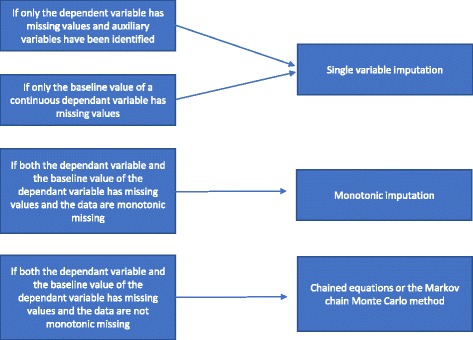
“Single imputation methods (modes for categorical variables and median for continuous variables) were used to hand the missing values before analysis (Schafer, 1999; Bennett, 2001; Dong & Peng, 2013; Jakobsen et al., 2017).”
MethodVeenis, J. F., Yalcin, Y. C., Brugts, J. J., Constantinescu, A. A., Manintveld, O. C., Bekkers, J. A., Bogers, A. J. J. C., & Çalişkan, K. (2020) · European Journal of Heart Failure · doi:10.1002/ejhf.1989 · Cited by 26
Agley, J. D., Jun, M. C., Eldridge, L. A., Agley, D., Xiao, Y., Sussman, S. Y., Golzarri‐Arroyo, L., Dickinson, S., Jayawardene, W. P., & Gassman, R. A. (2021) · JMIR Mental Health · doi:10.2196/25860 · Cited by 33
“Similarly, we produced 4 sets of output, the ITT analysis in which all data were analyzed in the arm to which they were randomized (with and without MI; 1537 pretest and 1209 posttest), and the PP analysis in which only data resulting from a completed protocol were analyzed (with and without MI; 1184 pretest and postt…”
Iannello, N. M., Camodeca, M., Gelati, C., & Papotti, N. (2021) · Frontiers in Psychology · doi:10.3389/fpsyg.2021.713081 · Cited by 28
Ketelaers, S. H. J., van Heinsbergen, M., Orsini, R. G., Vogelaar, F. J., Konsten, J., Nieuwenhuijzen, G. A. P., Rutten, H. J. T., Burger, J. W. A., & Bloemen, J. G. (2022) · Frontiers in Oncology · doi:10.3389/fonc.2022.832377 · Cited by 29
“In case the missing values of a variable in univariable and multivariable binary regression analyses exceeded 5% and were considered to be missing at random or completely at random, multiple imputation was performed to impute the missing data (23).”
MethodRangan, E. S., Pathinarupothi, R. K., Anand, K. J. S., & Snyder, M. P. (2022) · JAMIA Open · doi:10.1093/jamiaopen/ooac080 · Cited by 35
Stewart, J. C., Patel, J. S., Polanka, B. M., Gao, S., Nürnberger, J. I., MacDonald, K. L., Gupta, S. K., Considine, R. V., Kovacs, R. J., Vrany, E. A., et al. (2023) · Brain Behavior and Immunity · doi:10.1016/j.bbi.2023.05.007 · Cited by 31
Electronic Health Records as Source of Research Data
Wang, W., Ferrari, D., Haddon-Hill, G. W., & Ćurčin, V. (2023) · Neuromethods · doi:10.1007/978-1-0716-3195-9_11 · Cited by 43
Context of maternal intrusiveness during infancy and associations with preschool executive function
Broomell, A. P. R., Smith, C. L., Calkins, S. D., & Bell, M. A. (2019) · Infant and Child Development · doi:10.1002/icd.2162 · Cited by 36
Smits, F., Geuze, E., Schutter, D. J. L. G., van Honk, J., & Gladwin, T. E. (2021) · Psychological Medicine · doi:10.1017/s0033291721000817 · Cited by 34
“As this comprised 5% of the data, the a priori defined analyses were performed on the remaining sample (46 tDCS and 47 sham) (Jakobsen, Gluud, Wetterslev, & Winkel, 2017).”
Blomkvist, E. A. M., Wills, A. K., Helland, S. H., Hillesund, E. R., & Øverby, N. C. (2021) · Food & Nutrition Research · doi:10.29219/fnr.v65.7679 · Cited by 37
“All analyses were done on the complete cases since no new information can be gained from multiple imputation when only the outcome data are missing, and there are no available auxiliary variables related to the missingness (59).”
MethodCyr, C. P., Dubois‐Comtois, K., Paquette, D., Lopez, L., & Bigras, M. (2020) · Child Maltreatment · doi:10.1177/1077559520967995 · Cited by 38
“When missing data are MCAR, CC analyses are not considered biased, but may be underpowered due to reduced sample size (Jakobsen et al., 2017).”
MethodLi, S., Dou, R., Song, X., Lui, K., Xu, J., Guo, Z., Hu, X., Guan, X., & Cai, C. (2023) · Journal of Clinical Medicine · doi:10.3390/jcm12030915 · Cited by 25
“Features with absent proportions above 40% were excluded from modeling [38].”
BackgroundEisenschenk, A., Spitzmueller, R., Güthoff, C., Obladen, A., Kim, S., Henning, E., Dornberger, J. E., Stengel, D., & 1-2-KiWi Investigators (2019) · The Bone & Joint Journal · doi:10.1302/0301-620x.101b10.bjj-2019-0410.r1 · Cited by 27
Schwartz, H. E. M., Bay, C. P., McFeeley, B. M., Krivanek, T. J., Daffner, K. R., & Gale, S. A. (2019) · Alzheimer s & Dementia Translational Research & Clinical Interventions · doi:10.1016/j.trci.2019.09.008 · Cited by 26
“[45] for details of performing this sensitivity analysis).”
BackgroundHung, S.-P., Chen, P., Ho, T., Chang, K., Chou, W., Lee, C., Wu, Y., Chen, P., Lin, C., Chou, Y., et al. (2020) · Cancer Medicine · doi:10.1002/cam4.3650 · Cited by 27
Abdominal Surgical Patients Randomized to Aromatherapy for Pain Management
Welden, L. M. S., Leatherland, P., Schitter, M. B., Givens, A., & Stallings, J. D. (2021) · Journal of PeriAnesthesia Nursing · doi:10.1016/j.jopan.2020.08.005 · Cited by 25
Wang, Q., Mol, M. F., Bos, P. K., Dorleijn, D. M. J., Vis, M., Gussekloo, J., Bindels, P., Runhaar, J., & Bierma‐Zeinstra, S. (2022) · JAMA Network Open · doi:10.1001/jamanetworkopen.2022.4852 · Cited by 32
“Pain attacks but pain free in between 38 (26) 21 (29) 16 (24)”
BackgroundOjala, O., Kuja‐Halkola, R., Bjureberg, J., Ohlis, A., Cederlöf, M., Selinus, E. N., Lichtenstein, P., Larsson, H., Lundström, S., & Hellner, C. (2022) · BMC Psychiatry · doi:10.1186/s12888-022-04311-5 · Cited by 26
“Based on the low amount of missingness [52], only participants with complete data were included in the analyses.”
BackgroundShirazi, D., Haudenschild, C., Lynch, D. H., Fanous, M. M., Kahkoska, A. R., Jimenez, D. E., Spangler, H., Driesse, T. M., & Batsis, J. A. (2022) · Archives of Gerontology and Geriatrics · doi:10.1016/j.archger.2022.104913 · Cited by 26
Oei, C. W., Ng, E. Y. K., Ng, M. H. S., Tan, R., Chan, Y. M., Chan, L. G., & Acharya, U. R. (2023) · Sensors · doi:10.3390/s23187946 · Cited by 30
Farias, Y. N., Leite, I. D. C., Siqueira, M. M., & Cardoso, A. M. (2019) · Cadernos de Saúde Pública · doi:10.1590/0102-311x00001019 · Cited by 45
Weiss, L., Voshaar, M. A. H. O., Bohlmeijer, E. T., & Westerhof, G. J. (2020) · Health and Quality of Life Outcomes · doi:10.1186/s12955-020-01416-x · Cited by 29
“The MI procedure was performed in accordance with guidelines for MI with clinical trial data [49], which suggests, as a rule of thumb, that MI should not be applied if the percentage of missing values should exceed the cut-off value of 40%.”
MethodUtilization of mental health services among university students in Vietnam
Nam, P. T., Thanh, T. P., Hanh, D. N., Hoang, A. D., The, A. B. D., Giang, K. B., Huong, G. D., Thu, H. N. T., Ngoc, H. P., Thanh, H. N. T., et al. (2020) · International Journal of Mental Health · doi:10.1080/00207411.2020.1816114 · Cited by 32
“To account for the missing data in our regression analysis, multivariate imputation by chained equations was used in Stata (mi chained command—without statistical interaction) (Jakobsen et al., 2017; Sterne et al., 2009).”
MethodJenkins, Z., Tan, E. J., O’flaherty, E., Knowles, S. R., Thompson, D. R., Ski, C. F., Rossell, S. L., Coco, C., Ierino, F. L., Gock, H., et al. (2021) · Nephrology · doi:10.1111/nep.13850 · Cited by 26
“4%), resulting in incomplete required data for the secondary outcomes, the complete case analysis approach was adopted.(29) Therefore, only the data and results from the 30 full completion cases are reported for preliminary efficacy.”
BackgroundHIOC: a hybrid imputation method to predict missing values in medical datasets
Rani, P., Kumar, R., & Jain, A. (2021) · International Journal of Intelligent Computing and Cybernetics · doi:10.1108/ijicc-03-2021-0042 · Cited by 26
Lee, K., McMorris, B. J., Chi, C., Looman, W. S., Burns, M. K., & Delaney, C. W. (2023) · Journal of School Psychology · doi:10.1016/j.jsp.2023.03.002 · Cited by 33
Kleinschlömer, P., & Krapf, S. (2023) · Journal of Social and Personal Relationships · doi:10.1177/02654075231201564 · Cited by 41
“With such a small share, the potential impact of the missing data on the results is negligible (Jakobsen et al., 2017).”
BackgroundWaki, K., Nara, M., Enomoto, S., Mieno, M., Kanda, E., Sankoda, A., Kawai, Y., Miyake, K., Wakui, H., Tsurutani, Y., et al. (2024) · npj Digital Medicine · doi:10.1038/s41746-024-01114-8 · Cited by 28
“0%missingHbA1cdata,weused standardmethods 56,57 without imputation for missing data.”
Bally, E., Korenhof, S. A., Ye, L., van Grieken, A., Tan, S. S., Mattace-Raso, F. U. S., Procaccini, E., Alhambra‐Borrás, T., & Raat, H. (2024) · Scientific Reports · doi:10.1038/s41598-024-64539-x · Cited by 31
“Therefore, the analysis was conducted without imputation as the impact on the results of the analysis would likely be minimal 28 .”
MethodTang, H., Donahoo, W. T., Svensson, M., Shaaban, C. E., Smith, G. E., Jaffee, M. S., Huang, Y., Hu, X., Lu, Y., Salloum, R. G., et al. (2024) · Alzheimer s & Dementia · doi:10.1002/alz.14048 · Cited by 26
“32,33 We tested the balance of all covariates between the SGLT2 inhibitor and sulfonylurea groups using standardized mean differences (SMDs) before and after inverse probability treatment weighting (IPTW), considering SMD ≤ 0.10 as the threshold for negligible imbalance.”
Influentialde Graaff, A. M., Habashneh, R., Fanatseh, S., Keyan, D., Akhtar, A., Abualhaija, A., Faroun, M., Aqel, I. S., Dardas, L. A., Servili, C., et al. (2024) · JMIR Mental Health · doi:10.2196/63515 · Cited by 29
“The internal consistency of the online-administered measures was good, and the item nonresponse was low [44], indicating that the set of questionnaires selected was acceptable.”
Wilson, K. S., Mugo, C., Moraa, H., Onyango, A., Nduati, M., Inwani, I. W., Bukusi, D. E., Slyker, J. A., Guthrie, B. L., Richardson, B. A., et al. (2019) · AIDS · doi:10.1097/qad.0000000000002217 · Cited by 28
“A complete case analysis was used because missing data were minimal (<5%) for key variables [31].”
MethodA machine learning approach to explore cognitive signatures in patients with temporo-mesial epilepsy
Roger, É., Torlay, L., Gardette, J., Mosca, C., Banjac, S., Minotti, L., Kahane, P., & Baciu, M. (2020) · Neuropsychologia · doi:10.1016/j.neuropsychologia.2020.107455 · Cited by 25
Community Racial Composition and Hospitalization Among Patients Receiving In-Center Hemodialysis
Golestaneh, L., Cavanaugh, K. L., Lo, Y., Karaboyas, A., Melamed, M. L., Johns, T. S., & Norris, K. C. (2020) · American Journal of Kidney Diseases · doi:10.1053/j.ajkd.2020.05.019 · Cited by 24
Munch, M. W., Granholm, A., Myatra, S. N., Vijayaraghavan, B., Cronhjort, M., Wahlin, R. R., Jakob, S. M., Cioccari, L., Kjær, M. N., Vesterlund, G. K., et al. (2021) · Acta Anaesthesiologica Scandinavica · doi:10.1111/aas.13795 · Cited by 25
Self-citationGolovchanova, N., Owiredua, C., Boersma, K., Andershed, H., & Hellfeldt, K. (2021) · Frontiers in Psychology · doi:10.3389/fpsyg.2021.730724 · Cited by 32
Bartoszko, J. M., Callum, J., Karkouti, K., & the FIBRES study investigators (2021) · Canadian Journal of Anesthesia/Journal canadien d anesthésie · doi:10.1007/s12630-021-02100-4 · Cited by 24
Gao, Y., Wang, Y., Mi, X., Zhou, M., Zou, S., & Zhou, H. (2021) · International Journal of Environmental Research and Public Health · doi:10.3390/ijerph181910138 · Cited by 26
The COVID-19 alcohol paradox: British household purchases during 2020 compared with 2015-2019
Anderson, P., O'Donnell, A. J., Jané‐Llopis, E., & Kaner, E. (2022) · PLoS ONE · doi:10.1371/journal.pone.0261609 · Cited by 28
“We imputed the missing income data using monotonic multiple imputation [14].”
MethodChen, C., Sun, J., Zhou, Y., Xie, Q., Wang, L., Kong, X., & Sun, W. (2022) · Journal of Clinical Hypertension · doi:10.1111/jch.14528 · Cited by 37
Obaïd, S., Chen, J., Ibrahim, G. M., Bouthillier, A., Dimentberg, E., Surbeck, W., Guadagno, E., Brunette‐Clément, T., Shlobin, N. A., Shulkin, A., et al. (2022) · Epilepsia Open · doi:10.1002/epi4.12663 · Cited by 32
Goffredo, M., Pagliari, C., Turolla, A., Tassorelli, C., Tella, S. D., Federico, S., Pournajaf, S., Jonsdottir, J., Icco, R. D., Pellicciari, L., et al. (2023) · Journal of Clinical Medicine · doi:10.3390/jcm12093178 · Cited by 29
“Missing data for the outcome measures comprised in the principal dataset w re handled according to a single imputati n procedure replacing missing values with the m dian value in each group at a specific time point in case of missing data less than 5% [61].”
MethodInfluentialChen, J., Or, C. K., Li, Z., Yeung, E., Zhou, Y., & Hao, T. (2023) · Digital Health · doi:10.1177/20552076231203599 · Cited by 40
Koch, M., Matzke, I., Huhn, S., Sié, A., Boudo, V., Compaoré, G., Maggioni, M. A., Bunker, A., Bärnighausen, T., Dambach, P., et al. (2023) · JMIR mhealth and uhealth · doi:10.2196/46980 · Cited by 30
“With the large proportion of missing data, our study results should only be considered as hypothesis generating [47].”
Mortensen, C. B., Andersen‐Ranberg, N. C., Poulsen, L. M., Granholm, A., Rasmussen, B. S., Kjær, M. N., Lange, T., Ebdrup, B. H., Collet, M. O., Andreasen, A. S., et al. (2024) · Intensive Care Medicine · doi:10.1007/s00134-023-07282-7 · Cited by 27
“To mitigate the potential bias of missing data, we performed multiple imputations and best–worst/worst-case analyses according to protocol and recommendations [18, 52].”
Hiemstra, B., Eck, R. J., Wiersema, R., Kaufmann, T., Koster, G., Scheeren, T., Snieder, H., Perner, A., Pettilä, V., Wetterslev, J., et al. (2019) · Critical Care Medicine · doi:10.1097/ccm.0000000000003897 · Cited by 25
Self-citationBorsari, B. E., Li, Y., Tighe, J., Manuel, J. K., Gökbayrak, N. S., Delucchi, K., Morasco, B. J., Abadjian, L. R., Cohen, B. E., Baxley, C., et al. (2021) · Addiction · doi:10.1111/add.15401 · Cited by 28
van der Asdonk, S., Cyr, C., & Alink, L. (2021) · Attachment & Human Development · doi:10.1080/14616734.2020.1799047 · Cited by 23
“According to Jakobsen et al. (2017), a maximum of 40% missing data is recommended as a rule of thumb for applying multiple imputation.”
BackgroundWong, D., Allen, K., & Cordoba, B. G. (2022) · Contemporary Educational Psychology · doi:10.1016/j.cedpsych.2022.102113 · Cited by 28
The development and validation of the assessment engagement scale
Evans, C., & Zhu, X. (2023) · Frontiers in Psychology · doi:10.3389/fpsyg.2023.1136878 · Cited by 32
The Effectiveness of Actively Induced Medical Rehabilitation in Chronic Inflammatory Bowel Disease
Hüppe, A., Langbrandtner, J., Lill, C., & Raspe, H. H. (2020) · Deutsches Ärzteblatt international · doi:10.3238/arztebl.2020.0089 · Cited by 29
Relationship quality and 5-year mortality risk.
Bookwala, J., & Gaugler, T. L. (2020) · Health Psychology · doi:10.1037/hea0000883 · Cited by 25
“Because these analyses show that the data are MNAR, we follow the recommendation to present the complete case analysis (Dettori et al., 2018; Jakobsen et al., 2017).”
MethodSocioeconomic Correlates of Obesity in African-American and Caribbean-Black Men and Women
Barrington, D. S., James, S. A., & Williams, D. R. (2020) · Journal of Racial and Ethnic Health Disparities · doi:10.1007/s40615-020-00798-4 · Cited by 26
Chatha, Z. F., Rashid, U., Olsen, S., Din, F. U., Khan, A., Nawaz, K., Gan, S. H., & Khan, G. M. (2020) · BMC Infectious Diseases · doi:10.1186/s12879-020-05571-w · Cited by 31
Mahmood, A., Needham, K., Shakur‐Still, H., Harris, T., Jamaluddin, S. F., Davies, D. J., Belli, A., Mohamed, F. L., Leech, C., Hamzah, M. L., et al. (2020) · Emergency Medicine Journal · doi:10.1136/emermed-2020-210424 · Cited by 25
Multi-chaos, fractal and multi-fractional AI in different complex systems
Karaca, Y. (2022) · Elsevier eBooks · doi:10.1016/b978-0-323-90032-4.00016-x · Cited by 30
Trends and Disparities in Maternal Self-Reported Mental and Physical Health
Daw, J. R., MacCallum-Bridges, C. L., & Admon, L. K. (2025) · JAMA Internal Medicine · doi:10.1001/jamainternmed.2025.1260 · Cited by 23
Roberts, S. B., Choi, W. J., Worobetz, L., Vincent, C., Flemming, J. A., Cheung, A., Qumosani, K. M., Swain, M. G., Grbic, D., Ko, H. H., et al. (2024) · JHEP Reports · doi:10.1016/j.jhepr.2024.101168 · Cited by 33
“28 Instead, we replicated our analyses in a database of completely external patients (external validation) and within a second randomly selected imputed dataset (sensitivity analysis).”
Mboya, I. B., Mahande, M. J., Obure, J., & Mwambi, H. G. (2020) · PLoS ONE · doi:10.1371/journal.pone.0231636 · Cited by 25
Riberholt, C. G., Olsen, M. H., Søndergaard, C. B., Gluud, C. N., Ovesen, C., Jakobsen, J. C., Mehlsen, J., & Møller, K. (2021) · Frontiers in Neurology · doi:10.3389/fneur.2021.626014 · Cited by 25
Self-citationResponse and Adherence of Nursing Home Residents to a Nutrition/Exercise Intervention
Karlsson, E., Grönstedt, H. K., Irving, G. F., Franzén, E., Luiking, Y. C., Seiger, Å., Vikström, S., Wimo, A. B., Cederholm, T., & Boström, A. (2021) · Journal of the American Medical Directors Association · doi:10.1016/j.jamda.2021.04.001 · Cited by 28
Metadata
- Authors
- Jakobsen, J. C., Gluud, C., Wetterslev, J., & Winkel, P.
- Affiliations
- Copenhagen University Hospital (DK)
- Corresponding author
- Jakobsen, Janus Christian
- Venue
- BMC Medical Research Methodology
- Published
- 2017-12
- Volume
- 17
- Issue
- 1
- Pages
- 162-162
- ISSN
- 1471-2288 (ISSN-L)
- PMC
- PMC5717805
- OpenAlex
- W2772803673
- Semantic Scholar
- 601b9d1445292bcdfd372c11b5a2eb752d7cf39e
- Cited by
- 2,747
- References
- 29
- Citations by year
- 2026: 287 · 2025: 433 · 2024: 455 · 2023: 443 · 2022: 468 · 2021: 361 · 2020: 205 · 2019: 78 · 2018: 15 · 2017: 1
- FWCI
- 56.41
- Type
- journal article
- Language
- en
- Open access
- gold
- doi.org
- Licence
- cc-by
- Locations
- BMC Medical Research Methodology (publishedVersion, cc-by)
- Europe PMC (PubMed Central) (publishedVersion, cc-by)
- PubMed Central (publishedVersion, cc-by)
- PubMed (publishedVersion)
- DOAJ (DOAJ: Directory of Open Access Journals) (submittedVersion, cc-by-sa)
- Funders
- Copenhagen Trial Unit, Centre for Clinical Intervention Research
- Topics
- Physical Sciences › Mathematics › Statistics and Probability › Statistical Methods and Bayesian Inference
- Physical Sciences › Mathematics › Statistics and Probability › Statistical Methods in Clinical Trials
- Social Sciences › Decision Sciences › Statistics, Probability and Uncertainty › Meta-analysis and systematic reviews
- Keywords
- missing data, multiple imputation, randomized controlled trials, full information maximum likelihood, missing data mechanisms
- MeSH terms
- Data Accuracy, Data Interpretation, Statistical, Humans, Models, Statistical, Randomized Controlled Trials as Topic
About these checks
Registry, retraction, Cites and statistics results are computed, not judged, with one exception: a printed reference that no index lists is read once by a model before it counts as a citation error. Claims are extracted by a model and kept only when their quote appears verbatim in the text; each cited source is then checked, with a model’s help, for whether it says what the claim relies on. Those verdicts can be wrong — read the claim’s quote and the cited source before relying on one.
Statistics and arithmetic are recomputed, not judged.
Confidence bands are shown only for fields calibrated on our annotated test set. None is calibrated yet, so no band is shown.
What counts as a claim ›How we measure confidence ›How we check this ›
Are you an author, or do you see a problem with this page? Request a review
Data sources
Bibliographic data: Semantic Scholar, OpenAlex, Crossref.
Contains information from the Semantic Scholar Academic Graph Datasets, made available under the ODC Attribution License (ODC-BY 1.0).
Semantic Scholar’s data is described in: Kinney, R., et al. (2023). The Semantic Scholar Open Data Platform. arXiv:2301.10140.
